The Last Thursday Beery News Notes For October 2020, The US Election And My Tomato Plants

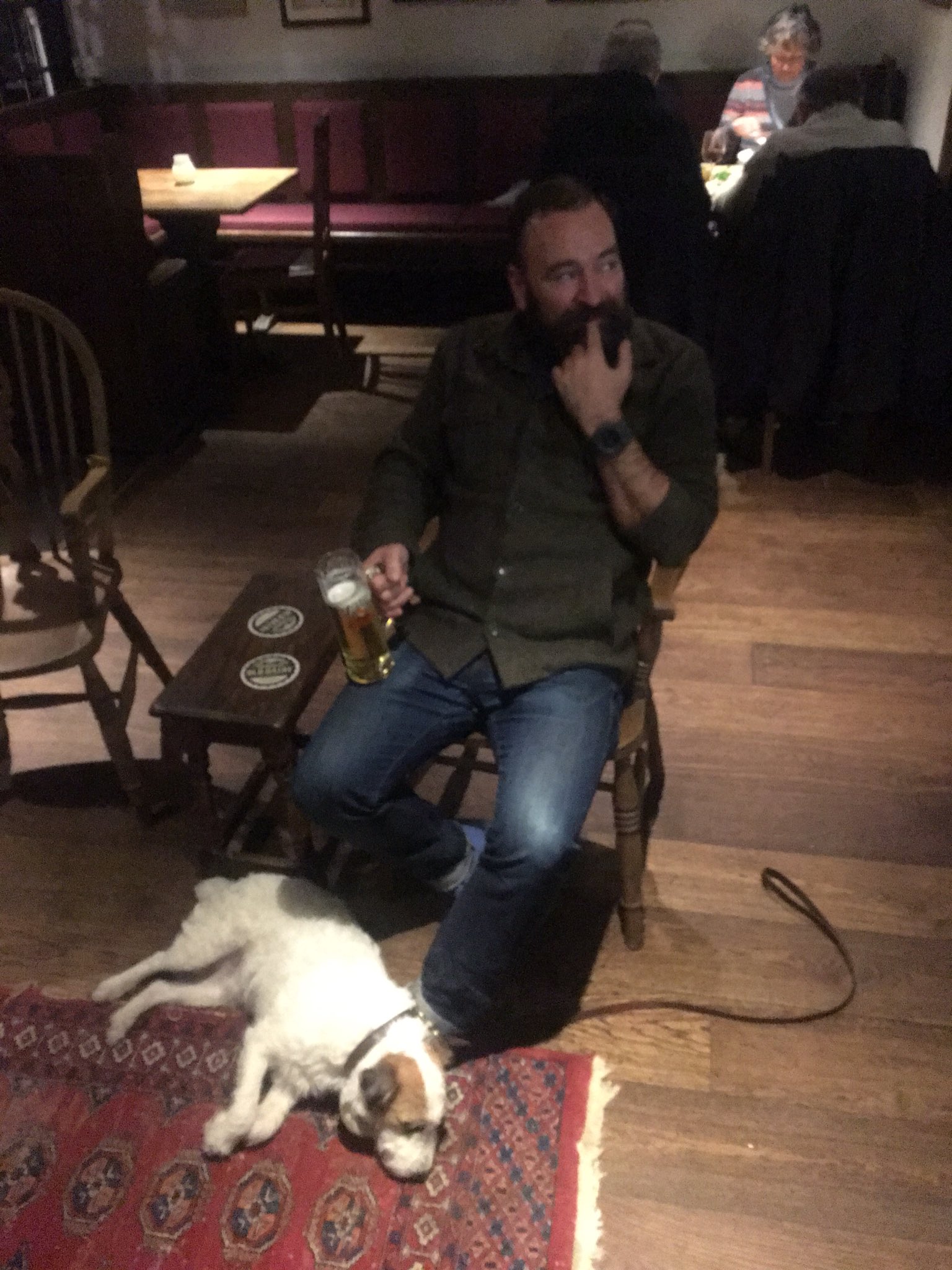
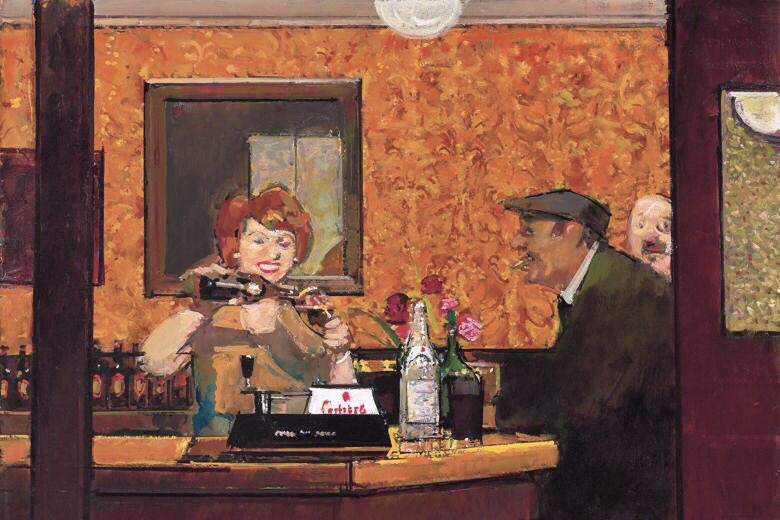
It’s been difficult to cope with the changing of the seasons as I have for every other year I’ve ever been on the planet. Familiar things – like heat or evenings – just seem to have gone away. But the week of Hallowe’en every four years helps set a milestone that’s hard not to stub your toe upon. So here we are. Orange leaves turning to wet bran flakes in the ditch.  Speaking of orange, I saw the image above passing by upon the glowing screen this week, one of a series of four pub scenes by Ruskin Spear (1911-90) whose art included “the citizens of Hammersmith relaxing in local pubs.” Happy people in pubs… or not… also was the topic of my Zoom chat with Boak and Bailey. We had never met before but we chatted away for two hours last Sunday. Blogging. Brewing history. Pandemic. Gossip. Very grateful to have been invited by them.  I took a very fuzzy photo to commemorate the moment.

Out there in a more focused reality, Jessica Mason wrote wonderfully about visiting a neighbour:

I wondered, momentarily, if I should tell her what I did for a living when I wasn’t visiting people in the mornings. Tell her about the industry I worked in. About the drinks and hospitality sector or any of the magazines for which I’d written. I wanted so much for her to know that it wasn’t just her feeling lost and alone. That entire sectors of society had been overlooked and that the paucity of support for those in need had begun to force people into poverty. Do I tell her that I’m really a drinks and pubs writer? That later on that day I’d be at a desk looking for the right words to describe something that made people feel good and interested. Things that reflected our thoughts, tastes and individuality.

In Scotland, a ruling has come down on the meaning of cafe during pandemic, the sort of ruling we may be seeing more and more of in the coming weeks and months as the cold and dark comes upon us. In this case, an injunction was granted against a municipal order to shut based upon the legal principle “surely to heavens this could not be a cafe!”:

“The council’s main, final reason for forcing us to close was that some of our dishes were ‘too smart and too fancy’ for us to be considered a cafe. “Nothing in the law dictates how smart you can or can’t have your food in a cafe.” One20 was granted an interim suspension order by the Court of Session after an online hearing on Friday, 23 October and remains open this weekend.

Further to the south, in Manchester a different legal consideration on the nature of food service was before the Covid considering authorities:

The head of Greater Manchester Police Licensing got on the blower to let us know that Slice Gate has been revisited and our Nell’s Pizza slices (cut from 22 inch pizzas) are now officially deemed substantial.

And to the left, further west, we learn of this heartwarming tale from Northern Ireland:

A man threw a tin of beer over a PSNI officer and shouted “Up the ‘Ra” after being told to return home during the lockdown, a court heard yesterday. Neil Murphy (37) was given 12 months probation for the assault on police and disorderly behaviour outside his flat in north Belfast.

Nice one, Neil. Well handled pandemic response. What’s the “‘Ra”? Short form for the “‘Rona”?

Ryan Avent of The Economist wrote a worthwhile series of tweets that add up to a good remembrance of the phenomenon of blogging which, of course, continues hereabouts and many other places under other names including journalism:

Blog posts could of course blow up. But the potential for instant mass virality was smaller, because drawing attention to blog posts meant creating a post of one’s own, and even link roundups took a bit of effort… As snarky as blogging could be, the medium generally demanded a minimal level of argument and contextualization greater than what’s asked of twitter users: if, at least, one wanted to attract others’ time and attention.

Going further back, Eoghan posted a photo of his beer book bookshelf and started a trend in posting photos of one’s beer book bookshelves.  Me, I have more piles and piles of piles of books by the easy chair myself. There’s a copy of The Chronicles of the Maltmen Craft in Glasgow 1605-1879 in there somewhere. Which I know makes you all riddled with jealousy.

Be prepared. Whenever anyone posts a graph for any reason at all, I am going to quote this guy who wins for this week’s most fabulous gnumbskullery*:

I think that’s hard to conclude from this chart. It might still be true, but i think it’s a lot more complex with alot more unanswered questions.

One of my personal heroes is Katie Mathers, as you may have guessed, and I am saddened to hear that she has met up with the virus… but cheered that she’s found a positive angle:

…it’s actually quite cool that I have something that’s spread all over the world. A big viral connection to the globe…

Here is an update to the story from the Ithaca NY area, the one about the brewery that had to close because it brewed old school micros that no one wanted. Well, the facility has been bought but some downstate operation”

Big aLICe, headquartered in Long Island City, Queens, has reached a deal to buy the former GAEL Brewing Co. on State Route 14 just south of Geneva on Seneca Lake. GAEL owner George Adams announced his brewery’s closing earlier this month. Big aLICe co-owners Kyle Hurst and Scott Berger hope to have the new brewery and taproom open early in 2021. Big aLICe, which also has a tasting room in Brooklyn, is known for a wide range of beers, from hazy New England IPAs and pilsners to sours and barrel-aged brews.

Well, there is some sort of lesson there. You can shape it as you like.

In other business news, we hear a lot about the challenges faced by the hospitality sector and how it affects brewing but here is an interesting story about the challenges faced by Canadian drinks exporters:

…beer exports are down too. Year-to-date sales to the end of July are down 13 per cent compared to the same period last year, trade association Beer Canada data show. Pacific Rim Distributors, the leading distributor of B.C. craft beer, has certainly felt pandemic pain. “We saw a deeper drop in sales in the first quarter because COVID-19 hit Asia before North America,” says Garett Senez, vice-president of marketing for the North Vancouver-based firm representing 13 craft brewers in 19 foreign markets.

Interesting that Ontario’s own “Collective Arts plans to open a satellite brewery in Brooklyn next year.

Otherwise, beer continues to get more and more boring according to the latest Euro-gak news:

Drinks giants have reported higher alcohol-free beer sales in the latest sign the low- and no-alcohol drinks sector continues to grow. Heineken and Carlsberg have both created alcohol-free versions of their flagship beer labels, Belgian brewer AB InBev recently launched a low-alcohol alternative to Stella Artois, and this week drinks giant Diageo launched a booze-free version of Guinness in Britain and Ireland. Danish brewer Carlsberg – behind the Tuborg and Kronenbourg brands – on Wednesday reported a 29% growth across its alcohol-free brews in the three months to September, compared to the same period last year.

Similarly, the Boston Seltzer and Hard Iced Tea Co. has seen its shares soar.

Speaking of the tactics of macro-gak, Heineken in the UK has been caught forcing its own pubs to sell its own beer… which sounds a bit weird to someone not in the UK:

Heineken has been fined £2m for forcing publicans to sell “unreasonable” amounts of its own beers and ciders. The pubs code adjudicator (PCA), an official who oversees the relationship between pub-owning companies and their tenants, said Heineken had “seriously and repeatedly” breached laws that protect publicans from company behaviour aimed at prohibiting pubs selling competitor brands.

Finally, to top off a less than cheery week, Jeff noted the extinguishment of the All About Beer online archives. I was more written of than wrote in that organ but it did speak to an era or two, thriving in micro times, collapsing under a shoddy hand through perhaps the peak of craft. We have left that behind.

There you are. Less actual beer news that most weeks. But remember that, as the days shorten in the coming darkest third of the year northern hemispherically speaking, there’s more out there. Boak and Bailey mostly every Saturday, plus more at the OCBG Podcast on Tuesdays (this week Jordan skips his obligations to the sponsors!!!) and sometimes on a Friday posts at The Fizz as well.  And sign up for Katie’s weekly newsletterThe Gulp, too. Plus the venerable Full Pint podcast. And Fermentation Radio with Emma Inch. There’s the AfroBeerChick  podcast as well! And have a look at Brewsround‘s take on the beer writing of the week. Not to mention Cabin Fever. And Ben has finally gone all 2009 and joined in with his own podcast, Beer and Badword. And remember BeerEdge, too.

*The “g” is sometimes even silent.

Your Quieter Mid-September Thursday Beer News Update

Quieter? Why yes,says I. Quieter. We have begun the long slide and climb towards the Vernal equinox, the true beginning of the year. By which time my carrots for 2020 should be up. I have yet to pick a carrot. Not one. Before you pick a carrot you have dreams that they are all sweet as candy and the size of baseball bats. Like the feeling you have the day before the lottery is drawn, the anticipation felt walking to a first date.  You can eat those little green young stems, you know. You can’t eat a lotto ticket.


So what is going on? First off, Martyn posted another great essay – this time on a small Greek craft brewery which opened in the town where he has been holidaying for years… oops… and now it seems it is gone. Did I see only a draft? It was titled “How Heineken Tried To Bully A New Small Greek Brewer And Failed” and it was wonderful. I know it was named that because I saved the URL in an email to myself. Some of his best stuff. I hope he didn’t get bullied and it did not fail. Please check in, Martyn.

Speaking of locals explaining the local experience rather than the fly-by experts from away who seem to get most everything wrong, Ben Keene* has written a lovely detailed piece about the breweries to be found along the Hudson River Valley train line:

Between the cities of Yonkers and Poughkeepsie (the terminus), no less than a dozen breweries can be found in the small towns dotting this historic river valley, almost all of them a fairly short walk from the corresponding Metro North railroad station. So whether it’s one more hurrah to cap off summer travel, or a trip meant to dovetail with the Hudson Valley’s colorful peak fall foliage, here’s your guide to breweries near the Metro North train line from Westchester to Dutchess County.

As an Upper Hudson Valley Beer and brewery man myself, I find the idea of doddling along the rails for days by the more southerly river shorelines very compelling.

The inclusivity anti-bigotry hashtag #IAmCraftBeer has reached every continent now. Sweet.

I liked this brief photo essay entitled Why Oh Why Do We Cellar / Horde Beer. Time To End This. Sorry, I Have Been Stupid. No More. I only have a few bottles left that I stuck away years ago and they give more pain than pleasure. Weren’t we all silly? Jeff Scott aka @beergeek might agree, I think, as he finds finds cleaning out his hoard, too.

Is 2013 the year the original hyped breweries of the American craft beer scene were opening? No.

As mentioned in the 29 March 2018 edition of these Thursday notes, some questions as to the actual history of lambics have been raised by Roel Mulder of the blog Lost Beers. Remember that next time someone suggests blogging is not a higher form than, say, periodical publishing for pay… as Punch magazine has apparently now** taken notice of the question at whiplash speed and run an article on the situation:

…according to Mulder, that’s a flawed family tree. “Lambic certainly wasn’t the first of the family to surface,” he says, citing evidence that sweet faro, in fact, came before, with the earliest mention dating to 1721—more than 70 years before the arrival of lambic. Gueuze, meanwhile, a merger of young and old lambic, didn’t appear until the early part of the 19th century, while kriek came about at the century’s end. But perhaps the most firmly held belief in the legend of lambic is its adherence to the idea that the beer can only be produced within tight Belgian parameters, the regional microflora supposedly crucial to its creation. Yet Mulder has found lambic brewing records from the Netherlands dating as far back as 1820.

Someone help me out with this – just as soon as we locate Martyn. Do that first.

This is interesting. A new Molson Coors macro brewery is opening in British Columbia. I did like this quote from the firm:

“We’re constantly looking at innovation and introducing new products to the market, knowing that there’s interest in changing things up,” said Andrew Molson with Molson Coors. 

Fascinating. But that much capacity, the capacity to produce more beer than the total amount of craft beer sold in the province in the 2018/2019 fiscal year, is an odd investment. A question. Consolidation is the logical answer with brewing but whose production is going to get rolled into this facility to justify the scale? Not folk in the province’s craft scene, that’s one thing that’s for sure. Odd.

In this week’s beer label lawsuit news, some knuckleheads out near the Pacific used the image and name of UK TV baker Mary Berry and then blurted the classic excuse:

“It was totally intended as an homage, but I get it, people gotta protect their image to the public,” Armistice cofounder Alex Zobel told SFGate. That sounds fairly conciliatory, but the brewery’s Instagram post is more pointed, stating in part: “Somebody’s agency has a very soggy bottom, indeed.” The brewery told SFGate it plans to rebrand the beer as Cease And Desist Berry (reminiscent of Lagunitas’ Undercover Shutdown Ale, if you ask me).

Boring. Boring idea in the first place. Boring style. Boring. Homage? Free advertising stunt more like it. Boring.

Finally, a note*** from the eldest brother:

Therefore one should not discuss geometry among people who are not geometricians, because they will not recognize an unsound argument. The same applies to all other sciences.” 

Seems applicable. Right?

There. A bit quiet. That’s OK now and then. Now, off to think about that carrot patch for another week. In the meantime, Boak and Bailey will have more news on Saturday and Stan will be with us on Monday. The OCBG Podcast is ready most Tuesdays by the recess bell, too. Their review of TIFF and TBW are good listens this week.  That’s a lot. Is there too much updating. What if someone comes out with a mid-week update by way of a Wednesday evening edition? I’ll be ruined… ruined!!!****

*Also author of Best Hikes Near New York City and Camping New York: A Comprehensive Guide to Public Tent and RV Campgrounds.
**In an article dated 10 September 2019 with the very odd statement “The Dutch historian had just published his 2017 book…” I am sure someone can explain.
***Aristotle, Posterior Analytics 1.12… as if you didn’t know…
****As if I get up at 4 am Thursdays and write all this!

Beer News For The Week When You Learn 1/52nd Of All Human Thought Relates To The Super Bowl

Well, that was quite a something. The game was dull and boring the halftime show was worse. But it’s over. And, really, you only get one “Prince in the rain for your halftime” experience in a lifetime. It’s all degrees of sucking from there. Otherwise, three weeks to March. That’s all I know… so, let’s go crazy with some beery news on a Thursday.

In a surprise move, the beer ads on the Stooper Stupor Super Bowl broadcast actually triggered actual discussion. It started with the odd message from ABInBev summed up neatly with this tweet.

To be clear, Bud Light is not brewed with corn syrup, and Miller Lite and Coors Light are.

Which immediately pissed off big corn. So MillerCoors sent corn farmers their beer! Since then we have been reminded that much high test US craft also relies on corn sugar to boost its strength. This is called chaptalization in wine and it is not considered good. Mainly because it is considered bad. But with US craft beer it is apparently considered – on the near highest authority – to be very good. A rice v. corn debate then broke out. It was exciting. Me, I was caught up in the moment and noted that “138 years of a massively popular rice-based beer and its cultural place still confuses some commentators.”  Stan piled on historically and noted with both flair and panache:

On January 30, 1881, well before A-B took aim on beers brewed with corn, the author of a full-page article in the Chicago Daily Tribune chose the side of rice in the rice versus corn debate. The author stated, “Corn beer is not a drink for Americans or Germans. It is good enough for the Spaniards, Greasers, Indians, and the mongrel breeds of South America.” Instead the author lauded the exceptional crisp taste that resulted with rice, and added, “for years the ‘blonde,’ or light colored beers have been fashionable and grown into public favor in America.” The author also suggested most breweries in Chicago used rice, while Milwaukee brewers used corn.

Me, I’m pro-corn since at least 2008. And I am pro–rice, too. And Jeff’s from sugar beet farming stock. So we are all the better for the whole thing.

Changing gears but still on the general theme of “Knowing v. Not Knowing What’s Real” last Saturday England’s newspaper The Telegraph broke the news that no one had considered ever before – that there is a craft beer bubble! To be fair, the article mainly focused on the bubble from an investor’s point of view.

“There is still growth, but the market is now much tougher for new entrants,” says Jonny Forsyth, global drinks analyst at market research group Mintel. “The number of brands is outstripping the growth and now people with money are wising up to the market. If someone asked me to invest in a craft beer company now, I’d say ‘no way, that ship has long sailed.’”

Hard to disagree with that.* And in Colorado, a fourth brewery had announced its closing – the fourth just since 2019 began. Remember: money likes money, not fads. Apparently thermometers are sorta fads… or at least not traditional…. or someone was having a bad day. Speaking of making money, there was an interesting follow up to the news last week of Fuller’s sale. Head Brewer, Georgian Young tweeted:

Thank you @Will_Hawkes it has been a strange week with so many uncertainties for some colleagues but my great team @FullersHenry @FullersHayley @FullersGuy along with the Engineers, Tech services, Quality et al are looking forward to the next chapter friends

Then the former Head Brewer, John Keeling, tweeted: “Today I took people on a Fullers Tour, not sure if there will be many more.” Melancholy days even if the future is arguably… well, hopefully no less as bright.

Attentive readers will remember Robert Gale. He won the 2012 Christmas Beery Photo Contest. Well, Robert is living with Crohns Disease and recently had a stoma  – or alternative nether region – installed. He recently tweeted about a post he placed on his blog with this fabulous invitation to readers: “Here’s my experience when I tried beer for the first time since having a new bum installed“! Here is his post entitled “Beer and Stoma.”

Once upon a time, an anonymous brewer berated R(Hate)Beer on this here blog. Now, with the announcement that it has been fully owned by ABInBev, he is not alone.  Which is a bit unfair but not entirely unfair. Oddly, the former principle owner wrote on the competing – and for my money superior – BeerAdvocate:

RateBeer is a quality-focused organization, and our value to the community has always depended on our integrity, and willingness to put in greater effort to produce more meaningful scores and information. I’m very grateful for having the opportunity to serve you all. It’s been a great pleasure meeting so many of you in person, and through this more fully understanding our important role in industry, and the joy, pride and responsibility felt by so many out there in RateBeeria.

That’s nice. As I have reminded you all often, always remember there are people out there behind the blogs, forums, tweets and… what else is there? People. And money. People and money. And beer. People and money and beer.

#FlagshipFebruary is one week in and – boy oh boy – are there ever more days in the month than actual flagships out there, aren’t there. We learned that macro brewed Euro-imports are allegedly flagships. We learned that a brewery can have eight flagships.  And another can have a sexist flagship. We learned that it’s  departure lounge beer, “stupid” and a “legacy craft promotional thing.” It’s cloudy and new, too! We also learned that all the sponsorship were only to make sure the writers chosen to write blog posts got paid.  [Ed.: we are just having a personal fugue state experience for a mo… and… we are back.] That’s nice. The upside is that it did not die a dumb death.** And this one won me (even with the “moule frites” for mussels and fries***) by proving this is not just, not solely #OldBeerForOldGuysFebruary. Plus I was reminded how wonderful McAuslan Oatmeal Stout is from a modestly priced can. Fabulous! The downside is we still have no idea what it all really means other than some sort of odd booze-laced homage to the Counter-Reformation. Whatever it is, what it is now won’t likely be what it is a couple of weeks from now. Stay tuned. I’m rooting for it. Really. Like almost 50/50 on the upside. Well, except for money for writers. I’m 100% on that especially given how much money they are getting each!

That is it. Early February ice storm out there as this goes to press. Need to shuffle along not knowing exactly when my feet will be cut out from underneath me. Meantime, look to Boak and Bailey on Saturday and then Stan on Monday for updates on these and many more good beer news stories.

*Some always try.
**An actual phrase in our household: do not die a dumb death. Like the award winner “Doubt it, Ralphie!” which I thought was a line from some forgotten early 1960s TV comedy until Dad told me that when there was a neighbourhood kid who hung around when I was maybe four who just lied all the time. Name? Ralph.
***I just can’t shake the sub-motif of Turgenyev’s Fathers and Sons.

Your Thursday Beer News Notes For The Week Winter Showed Up

I should not complain about having to shovel snow on the 20th of January when its the first real snow of the winter. It’s not that tough a life. Five weeks to March today means it won’t be all that bad from here on out. What effect has this on my beer consumption? Not so much in volume but now is the time when a pint of stout and port is added to any sensible diet. I say “a” pint with care given the concoction should be somewhere in the area of 10% alc. Yowza. But when does great reward comes without some risk?

Not long after last week’s deadline for news submissions, Ed tweeted that he had “[j]ust been sent an excellent article on rice malt beer 😉” The study describes the potential of rice for brewing and sets out an optimized malting program allowed water saving.  Which is cool. But it is also cool that it is about the use of rice which, except for corn, is the most hated of fermentables. This is despite the fact that rice beer came to Canada about 93 years ago – well after it was brewed in the U. S. of A. – a fact which has been fabulously preserved for us all in the Supreme Court of Canada ruling in the case The King v. Carling Export Brewing & Malting Co. Ltd., [1930] S.C.R. 361 at page 373 about the production of beer during the era of US prohibition:

I do not think we can accept the suggestion that there was no market for lager beer in Ontario. The learned trial judge dwells upon the fact that rice beer is peculiarly an American taste, and infers that it is not sold in Ontario. The evidence in support of this does not proceed from disinterested sources and I wonder whether the boundary line so sharply affects the taste in illicit liquor. In truth, it is stated by Low that it was not until some time in 1926 that the respondents began the manufacture of rice beer, and we are not told at what date, if ever, in their brewery, rice beer wholly superseded malt beer.*

Wouldn’t it be interesting if we stopped calling it “American-style lager” and just called it rice beer… or corn beer as the case may be? Will it take another century to pass for good beer to admit this fundamental reality of North American brewing culture?

Beer at the Post Office? Thanks Vlad!

I am still not sure what to make of #FlagshipFebruary.** Like a lot of you, I have been making up alternative hashtags like #GoldenOldieAles, #FlogshipFebruary and #PartyLikeIts1999. But it’s earnestly offered and, you know, as long as there isn’t a secret spreadsheet being sent around to members of the good beer PR-consulto class prearranging who are going to each write about this or that fabulous flagship as a way to artificially drum up interest and maybe future paying PR gigs, I think we might actually come away with a reasonably good taste in our mouths.

It reminds me a lot of by far the most successful of such hashtags, #IPADay created in 2011 by this blog’s friend Ashley Routson aka The Beer Wench.*** But (and this was not really the case in 2001 so laugh not) I would argue was easier to determine what an IPA was in 2011 than figure out what “flagship” mean today. As I am l not clear what a flagship really is, I asked some questions like if the Toronto brewery Left Field consider their oatmeal brown Eephus (1) their foundation (2) their flagship (3) both or (4) neither. They wrote:

We’d be comfortable calling it a foundational beer. We don’t really refer to any beer in the lineup as a flagship. Along with a few others, it’s one of our year-round offerings.

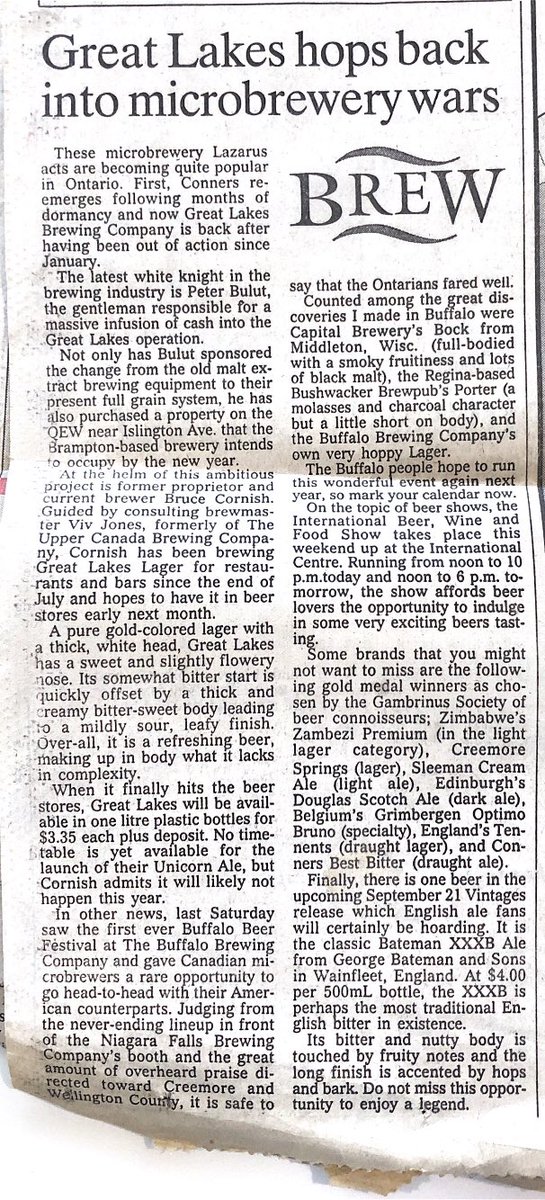
Seefoundational does not (usually) mean flagship. More evidence? Consider this September 1990-ish beer column on the state of affairs in Lake Ontario land. It mentions the venerable and largely forgotten Great Lakes Lager. Foundation? Sure. Not the flagship. That’s now Canuck Pale Ale. You know, flagship might also even be a slightly dirty word in the trade. A tough row to hoe for the industry marketers behind this scheme. But hope lives on eternally in such matters as we learned from the new CEO of Sierra Nevada who, faced with the task of turning things around for the musty ales of yore, stated:

…he’s bullish on Sierra Nevada’s prospects heading in 2019 and he’s projecting 5 percent growth. He believes that advertising will help turn around Pale Ale’s negative trajectory, and that continued growth for Hazy Little Thing, combined with increased focus on Hop Bullet and Sierraveza, will propel the company forward this year.

Advertising! How unlike beer macro industrial crap marketeers!! If that is the case, me, I am launching #FoundationAlesFriday come March to get my bit of the action. Join my thrilling pre-movement now.

Beer so horrible that it can’t really be called beer is rising in popularity in Japan as sales of the real stuff and the semi-real stuff drops.

Elsewhere, I tweeted this in response to the wonderful Dr. J and I quite like it:

Well, the multiplication of “style” to mean just variation leads to a dubious construct that bears little connection to original intent and leaves beer drinkers more and more bewildered when facing the value proposition of fleetingly available brands however well made.

Let’s let that sit there for a second. Fair?

Send a furloughed US Federal employee a beer. Or help with some unplanned bridge financing for an out of luck new brewery.

Even elsewhere-ier, Matt Curtis is to be praised and corrected this week. Corrected only in the respect that he wrote the utterly incorrect “in true journalistic style I was too polite to say” in his otherwise fabulous piece**** on what it was like going booze free for three weeks:

As I walked down Shoreditch High Street on my way to an event from the British Guild of Beer Writers showcasing alcohol free beers I passed some of my favourite bars and restaurants. I found myself pining to sit within them, simply to soak up the atmosphere. In that moment I felt that merely the sound of conversation and conviviality would sate my urge to drink more than any can or bottle of low alcohol vegetable water that has the indecency to call itself beer.

Lovely stuff.

Note: an excellent lesson in what it means to understand beer.  “It’s what [XYZ] told me…” is never going to serve as reliable research. Just ask, beer writers! Ask!!! Conversely, this article in The Growler serves as an excellent introduction to the 18 month rise of kveik on the pop culture commercial craft scene. I say pop culture commercial craft as it has been around the actual craft scene for a number of hundreds of years. Much more here from Lars.

How’s that? Enough for now? Winter getting you down? Remember: things could be worse. I think so. Don’t forget to read Boak and Bailey on Saturday and then Stan on Monday if you want to stay on top of things. Perhaps he will update the impending contiguous v. non-contiguous acreage rumble we’ll all be talking about in a few weeks.

*Buy Ontario Beer for more fabulous facts like this!
**Though I do like the concept of the pre-movement.
***Note: I make no comment on the wide variety of beer “wenches” or “nuts”… or “foxes” or “man” or any such other monikers. At least they don’t claim to be an expert.
****The current edition of Boak and Bailey emailed newsletter contained this bit on Matt’s experiment: “…it all seemed pretty reasonable to us. But even if it didn’t, it wouldn’t be any of our business. We did wince to see people in the business of beer berating him for his decision, and winced even more deeply when we saw people nagging at him to break his resolution.” I agree that this is sad and, I would add, smacks of the nags shouldering the alky’s burden themselves.


Your Thursday Beer News For That Day Just Five Weeks Before March

It gets like that in January. Counting the days to the warmer ones like prayers upon beads passed through the fingers. It’s time. Please be March soon. Please. Warmth. Now! Come on!! Time, like grace, arrives in its own pace I suppose.  Even calling this a Thursday post is jumping the gun a bit. These things get plunked together mostly on Wednesday. These things matter. Anyway, what’s been going on in the news?

I lived in PEI from 1997 to 2003 and am pretty sure John Bil shucked my first raw oyster. Love struck I wasCarr’s was an eight minute drive from my house and I often bought a dozen or two there to take out to the back yard and suck back on a Saturday afternoon. RIP.

Our pal Ethan and Community Beer Works are working with the owners of Buffalo’s Iroquois brand to revive a version of the venerable brew. An interesting form of partnership where craft leans of community pride in legacy lager.

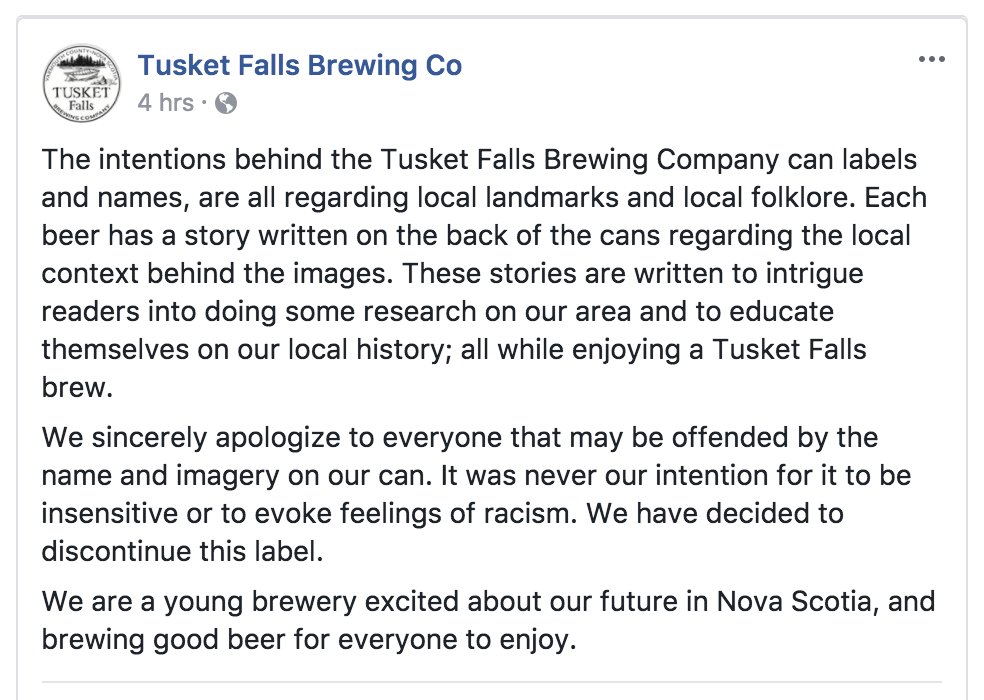
Carla Jean Lauter tweeted the news Wednesday afternoon that Nova Scotia’s newbie Tusket Falls Brewing had decided to withdraw its Hanging Tree branding for one of its beers. Rightly so and quickly done as far as I can tell. That’s the Facebook announcement to the right. This was a good decision on their part but not one that goes without consideration. I grew up in Nova Scotia and, among other lessons learned in that complex culture, had the good fortune to be assigned as law school tutor in my last year to one of the leaders of the Province’s version of the Black Panther movement when he was in first year, the sadly departed, wonderful Burnley “Rocky” Jones. He did all the teaching in that friendship. I would have loved to have heard his views on the matter. See, Loyalist Canada was settled in the 1780s by the British Crown as a refuge for the outcasts, including African American freed former enslaved Loyalists, seeking shelter after the dislocation of the American Revolution. Court justice there as it was here in Kingston included hanging as part of that. Hell, in the War of 1812 at Niagara there was still drawing and quartering. As I tweeted to Ms Pate, another Bluenoser, the hanging tree could well symbolize peace, order and justice in Tusket as much as bigoted injustice elsewhere. Or it could represent both… right there. Were there lynchings in southwestern Nova Scotia? Some stories are more openly spoken of than others. Slavery lingered on a surprisingly long time here in Ontario the good. We talk little about that. And Rocky and others do not fight that good fight without good reason. We might wish it should and could depend on what happened in that place. But somethings are no longer about the story of a particular place. Somethings about beer are no longer local. And its not “just beer” in many cases. Yet, we happily talk of war. Q: could a Halifax brewery brand a beer based on the story of Deadman’s Island?

My co-author Jordan has made the big time, being cited as “Toronto beer writer and expert” by our state news broadcaster.* With good reason, too, as he has cleverly taken apart the fear mongering generated around the reasonable taxation of beer.

This is really what it is all about, isn’t it? Well done, Jeff. The setting, style and remodeling of his third pub, the
The Ypres Castle Inn all look fabulous. Good wee dug, tae.

I don’t often link to a comment at a blog but this one from the mysterious “qq” on the state of research into yeast is simply fantastic: “[t]o be honest anything is out of date that was written about the biology of the organisms making lager more than three years ago…” Wow! I mean I get it and I comments on the same about much of beer history, too, but that is quite a statement about the speed of increase in understanding beer basics. Read the whole thing as well as Boak and Bailey’s highly useful recommended lager reading.

Max finally gets a real job.

Gary Gillman has been very busy with posts and has written one about a very unstylish form of Canadian wine, native grape Canadian fortified wine, often labeled as sherry. Grim stuff but excellently explained. As I tweeted:

Well put. These were the bottles found, when I was a kid, empty up an alley or by forest swimming holes. I thought we had a few examples of better fortified wine ten or so years ago. But, likely as the PEC and Nia good stuff sells so well, no attraction to a maker.

Gary gets double billing this week as he also found and discussed the contents of a copy of the program from the first Great American Beer Festival from 1982. I have actually been pestering Stan for one of these off and on for years only to be told (repeatedly) that archiving was not part of the micro era. Tell me about it, says the amateur boy historian. The 1982 awards are still not even listed on the website but that seems to be the last year of the home brew focus.  Anyway, Gary speaks about the hops mainly in his post. I am more interested in the contemporary culture: which presenter got what level of billing, what the breweries said of their beers. Plenty to discuss.

More on closings. Crisis what crisis?  In the room the women come and go / Talking of Michelangelo. What’s it all about, Alfie?

That’s enough for this week. Plenty to chew on. See you in February!

*All I ever got was “an Ontario lawyer who reviews beers on his blog…” like I am some sort of loser…

As I Consider Bert Grant, Torontonian

I have been thinking about the Torontonianness of Bert Grant,* the owner of the the first brewpub to open in America since Prohibition. We are told that after “a long career working in big breweries on the other side of the country, Burt* Grant moved to Yakima in 1981 to build his own brewery: Grant’s Brewery Pub.” This 1997 news item on that year’s sale of his brewery (which includes some timely puff about expansion tied with quality control all care of his new partners whose skill set including running a big tobacco firm) describes his origins in this brief passage:

The Scottish-born, Canadian-bred Grant, 68, began honing that palate at age 16, when he went to work for Canadian Breweries Ltd. (now Carling). His brewing career led to jobs in the hops supply business, which brought him to the heart of Washington’s hop country in Yakima, where he opened a tiny brewery in 1982.

On 3 August 2001, Michael Jackson published a rich obituary for Grant that is still there online which describes, along with a few of his odd character traits, his early hop obsession:

“When you were brewing Canada, ales were still very popular. How many units of bitterness did they typically have?” I once asked. “I don’t know. I hadn’t invented the scale,” he replied. He was reputed to carry a vial of hop oil, and to add it to glasses of Bud, Miller or Coors when they were the only brews available. He was said to have done this at meetings of Master Brewers in Milwaukee and St Louis, dismaying his peers. “Michael Jackson adds it to his coffee,” he is alleged to have said, in his defence. Did he really say that? I think that joke was coined by beer-writer and consultant Vince Cottone.

I am nosing around working on the hypothesis that I was discussing with Jeff on the weekend via tweet. And down one alley I found this fabulous passage below from the Fred Eckhardt Oral History Interview of July 23, 2014 stored as part of the Oregon Hops and Brewing Archives Oral History Collection at the Special Collections and Archives Research Center, Oregon State University Libraries. The interview of Fred Eckhardt (FE) was conducted by Tiah Edmunson-Morton, Tim Hills (TH), and John Foyston (JF):

FE: Yeah. Yeah. And then, the fella from England. What was his name? He was a nice guy too. Um…
JF: Not Michael Jackson?
FE: No, another…
JF: Oh. Was he a brewer here?
FE: Yeah, he had a brewery finally, over in Washington, and then here. I can’t think of his name either.
TH: Oh, Burt* Grant?
FE: Burt Grant! Yes.
TH: He was English?
JF: That was the “nice guy”. That threw me off. [All laughing]
FE: You knew him?
JF: Yeah, I knew him.
FE: And you didn’t think he was…
JF: Well, he was uh, a character, but see, you were an equal, and I was not. I was a mere sprout. So… [Laughter]
FE: [Laughter] You just got older recently. [All laughing] I’m not gonna tell everybody you were 67.
TH: Happens all of a sudden. But yeah, Burt was really early.

Beautiful. Makes sense. I have not read as widely about Bert Grant as I hope to soon but it is so nice to read that he was a bit weird, maybe uppiddy and a touch disagreeable. We are all so quick to praise and beatify to the point of blandification that coming across the mere human in craft is becoming sadly rare.

*Oddly, seeing his name spelled as both “Burt” by some sources like the interview transcription but “Bert” by Michael Jackson and The New York Times.

Still Not Backing Down For Four Hundred Years

What a great ad. It basically sums up everything about American brewing for the last four hundred years. It’s so absorbing you hardly notice how weird the music is. Part movie soundtrack when Gene Hackman smashes the Mopar though downtown. Part Eminem run through the graphic equalizer. It sounds like it starts at a point about a minute, fifteen seconds into the crescendo that started in last fall’s “Choices Have Consequences” ad. And the message builds, too. Poor widdle cwaft thinks that it is all about the big bad brewer running scared but it’s not. It’s gleeful assertion meeting commercial reality. The upstretched middle finger to some. The assertion of tribe to many others. An umbrella for those who buy the 80% or more of beer that is still light, inexpensive and easy to drain. It’s lovely. The greatest part of the loveliness is, however, not just its in the design elements of the presentation but that it addresses the same set of themes which have consistently sprung from or imposed upon brewing on this continent ever since warmed water was poured over cracked grain by our first founders around four hundred years ago.

=> Beer creates aggregation. Obviously the ad is about might. Brewing in North America has always been about the generation of might. A powerful place within the industry. Leveraging the wealth it generates out into society. It took a few generations of the pre-industrial pre-Revolutionary Dutch brewers of New York state to achieve it. It took brewers like John Taylor a lifetime in Albany of the mid-1800s. It took E.P. Taylor about a few decades in the mid-1900s. And it took a decade for microbrewing to spawn millionaire and billionaire big craft from 2005-15. Through co-operation, collusion and control brewing creates the opportunity to generate wealth, independence and even power. This is good as it is success. Sipping is not so good for success.

=> Beer is a means to an end. Not only does brewing aggregate but it does so in a repeated similar pattern. If you follow Michigan brewer Larry Bell on Facebook you will notice he spends a lot of time not brewing in Michigan. He in on a boat in the Gulf of Mexico or some such place. Interestingly, members of the mid-1750s Dutch brewing dynasties did the same thing. Anthony Rutgers IV was a privateer and lived on Curacao tending to the Hudson valley Dutch plantation trade that extended well past the British invasion as well as the American Revolution. Beer actually appears to dislike folk not improving their station in life. It attracts money too readily. Big craft branch plants on the east coast or in Europe are just another form of expansive market control that beer has always undertaken.

=> Beer is cyclical. Just as Mr Bell is retracing the wake in the warm water Mr Rutgers sailed in the 1700s, brewing repeats itself in overlapping cycles. Anything that imposes on the production of grain seems to restart the clock. The Hessian fly causing the deprivations and hardships of 1788-90 are not unlike the relationship between the Civil War and, as with the standard rules of baseball, the development of a homogenized taste for premium lager… not to mention the later dominance of industrial light lager after World War II. It also takes on and defeats – or at least holds down – the challenges of traditional brewsters’ beer houses, self-sufficient estate brewing, temperance drinks, imports, brew-your-own operations, micros, home brewing and now new nanos as they come forward each in their turn. These things come in waves but brewing continues. It knows it needn’t back down.

=> Beer is responsive. It needs to react to external forces. The overlapping cycles are not determined by brewing. It is the natural response of brewing to reassert itself in the face of crisis to maintain production and profit. It also reflects simple cultural change. It’s not by chance that micro brewing takes off in the 1980s concurrent with factors like the variety of cable TV and androgyny in pop music. It’s the decade that the range of choice explodes. Micro brewing follows that greater trend. Had the pioneers of micro not come forward rest assured other pioneers of micro would have come forward in the same cities in pretty much the same way. Beer responds in the late 1700s and early 1800s to scientific advances in agriculture in the same way. The Agricultural societies which arose after the end of the War of 1812 gave stability to the new farming lands and spread the news about scientific brewing just like cable TV informed consumers that they wanted the new beer because they wanted new cheese. Beer is responsive because it is one man – the ancient everyman – now carrying the keg, now armed with stainless steel at scale. He (or she) is fighting ocean going container ships stacked with uniformly Heineken green cargo boxes.

=> Beer is pervasive. Because brewing has transitioned in response to societal change over and over it has earned its place. Unlike, say, the mustards on the grocery shelf the aggregating tendency of beer needs a team. It asks for loyalty and gets it. Why would inexpensive joy juice not? It’s the mild affordable anesthetic that gets you through life. Tribal affinities are natural whether they are constructed of the cult of craft or light lager in the NASCAR stands. It’s heavy metal and new country. Craft and social media. Trains in the late 1800s sent out the message of better cheaper beer than the local brewer was making or charging. Trains from places like St. Louis and London, Ontario carrying casks branded with names like Anheuser-Busch and Carling reaching out from larger and larger breweries placed near those other train tracks which reach out into the grain fields. Beer informs you about both progress and legacy. It’s where you’ve been and where you are going. Get in line.

=> Beer resists. Because beer wants to keeps its rewards it pushes back and fights. If the fluid in the Bud ad up there was Sierra Nevada Pale Ale you would not have to change out many of the other elements. The boosters would just have to swap places. It does not like to hear other points of view. Big craft – including its co-opted communicators – is as much in lock step as the Bud ad as much as the 1600s to 1700s Dutch then 1800s to 1900s German brewing dynasties, each taking care to include all the cousins in the benefits. The business formula is too certain, too successful to do otherwise. No wonder we have identatext book after identatext book. Beer likes puff. We already see discussion in craft like this has fallen away. Disagreement is now disagreeable. It’s all the Borg. Bud is truly not backing down. No beer backs down. Because? America.

I love it. I had a Bud on Thursday night. I have one a couple of times a year. About as often as I have mashed turnip. They are both unpleasantly bitter and they are both cultural touchstones. Neeps are the ultimate statement of Scots cuisine. Bud is America. I get four clear phases: sweet rice, lumber, dirty bitter hop and a stale finish which more of that sweet rice quickly remedies. You are not supposed to like it. Turnip? It’s not yummy either. You are supposed to accept it like the other realities of life and be grateful for the comfort it brings. Bud tells you about North American life, too. It’s not fussy. Lemon flick. It meets you on the level. Given the existing kit that’s long paid off, it’s easy to make following instructions out of readily available resources – even as it tells you it’s difficult to make. You need to rely upon its word on that point even though you can make an acceptable substitute for less in your own kitchen. You can actually make good beer easily in your own home. But you don’t. Because you are part of something bigger. Something that works. The same way. Every. Time.

Divisive “Local” Craft Culture Clash Marketing

My own favorite local.
 

Stan linked to this story a few days ago. It got me thinking… but not fast, “get me to the keyboard” thinking. It was this bit at the beginning that got me mulling:

I was watching a video online when it was interrupted by a commercial for Budweiser. The name of the spot was “Do You Know Where Your Beer Is Brewed?” Soft guitar music played while clips of idyllic landscapes and sunrises peaking over breweries slid across the screen. Nothing out of the ordinary there. The gentle voice of the narrator says, “With 12 breweries spread all across the United States, your next Budweiser is closer than you think.” Budweiser hangs its hat on the fact that it can produce the same beer at 12 facilities and it will always taste exactly the same no matter where you drink it. No small feat, to be sure. But then the voice adds, “You might even say we’re America’s largest local brewer.” My eyes narrowed and my brow furrowed. ‘What in the heck is this?” I exclaimed. “That is our word!”

Our word? There’s a lot of weird words in there. Not the least of which is “our” – whose the hecks is that referring to? Don’t get me wrong. I like the work of the author Jeff Baker just fine. He’s the manager of the Farmhouse Bar and Grill in Vermont. Nice place. Real nice. Just not my local. Because “local” can mean that, too. The distance of the drinker from the drink.

But that’s not his point. It sorta illustrates mine but that’s not really the goal of where I am going. He is asking about local ingredients. If you want that world, go back 200 years and have a look at the Vassar day book with local beer being made of local grain and hops being sold back in small batches to the farmers and tavern keepers of the central Hudson Valley just getting back to some sort of normal after the devastation cause by the Revolution. This is the mid-1830s book but in the 1808-11 book the economies of beer are clearly still defined by the cart horse. That is actual local brewing. Are we willing to go there? Doubt it. You don’t really want local. You want some local. Now and then. But you want the global economy beer made with the best ingredients brewed on the newest, bestest equipment. Right?

Craft beer and macro are not all that far apart in this respect. Brewed on computerized stainless steel to a scale and upon a recipe that meets the needs and budgets of their respective clients. The only actual local thing that is reliably present at the brewery is the staff. Hard to be a brewer who lives over 45 miles from the brewery. There’s a hint by the way. If the person discussing the beer in your glass doesn’t live about that close, not a brewer. Sales guy, likely… owner, sure… but that’s all. Both use good foreign malt and distant, shipped in hops. Both tweek their water and yeast to match those found elsewhere. Don’t get me wrong. I like “local” just fine. It just means, for me, the bok choi and beets I have growing out there in the yard. Not beer.

When anyone in beer – whether Bud or craft – claims a word like “local” or “small” or “real” there is marketing going on – even if only to a small circle. Even if only to the speaker. It’s all unnecessary. When I think of Bud, I think of the brewery at Baldwinsville, New York to my south where local people earn a decent wage. If I have a decent hoppy IPA, I think of the three nations and seven generations needed to make the beer exist. Beer is global and has been since at least the 1400s when the Hanseatic League was beginning to ship Baltic brewed hoppy beer to the Low Countries. Except for odd examples like postwar agricultural collapses like Vassar faced in 1808. Except for that, it’s been beer or large parts of it hauled out from the hold as often as not since the Dark Ages. Good non-local beer.

Isn’t It Sad When The Advertising Money Tightens?

Macro beer ads are so weird. There is so little connection to beer involved in them that it is quite the thing to read them being discussed seriously as in this St. Louis Business Journal article:

“The free-wheeling, let’s-give-it-a-try attitude is changing,” said Jeff Goodby, co-chairman and creative director at San Francisco-based Goodby, Silverstein & Partners, the agency responsible for Budweiser’s commercials featuring Louie the Lizard. “I think things are scrutinized and calculated a lot more now.”

Louie the Lizard. Now that just screams of quality, no? No doubt Gary the Goat was an idea dropped in an earlier round of free-wheeling, let’s-give-it-a-try thinking-outside-the-box. Apparently ad agencies are shocked that big big brewers want ads that sell beer. Problem is I can’t think of a single quality in an ad an agency could make that would “incentivize” this consumer to pick up that sort of product. A crazy idea – but maybe tell me about its actual characteristic? That it is good value? That I might, you know, like the taste?

Michigan: A Two Hearted Ale And Then A Miller

When we got to Lansing it was too late to do anything like shop for beer. We had a hotel pool to cannonball into, then a supper to find as well as a baseball game to attend. The tickets seven rows back of home were nine bucks, my Two Hearted Ale was four-fifty with dinner and huge mug of Miller at the game was six. It was all good. The Miller was perfect on a hot hot evening, sweet corn and grainy barley with none of the off tastes like boiled veg and damp cardboard that too many of the basic macro brews get labeled with. Cooling with no bothersome strength to speak of. A craft beer would be spoiled by the temperature that I wanted with this stinking mid-western humidity.