Beer Shopping: Oliver’s Beverage, Albany, New York


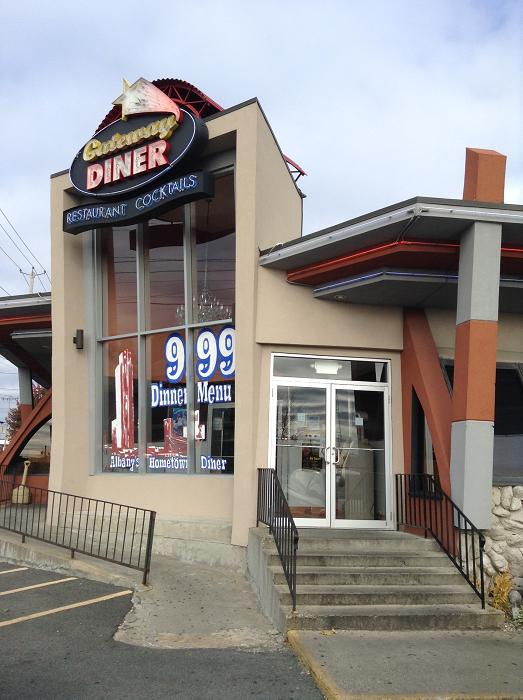
oliv1So, did you know I went to Albany, New York last week? It was a five hour drive down last Tuesday and another five back the next day. I enjoy the drive inordinately as it is a drive back in time south through lands settled in the early 1800s, along following the Erie Canal finished in the 1820, past pre-contact Mohawk communities, past the noses and down into the Hudson Valley first settled by the Dutch in the 1610s. And there is a great beer store. Which sorta covers two of my interests fairly well. The beer store is Oliver’s Beverages, nicknamed the Brew Crew, associated with but legally distinct from Albany Wines and Spirits presumably due to the state’s liquor laws. It’s all there in the photo above.

oliv2

oliv3


oliv4

oliv5


Craig, as master of ceremonies for the trip, took me there on Tuesday night and I went back to buy a mixed box to take home on my way out of town. This is a point to be understood clearly. It is amazingly handy for the traveling beer nerd. You pass the place if you are driving from Boston to any points west of Albany. You pass the place if you are driving from Quebec or any part west of it in Canada to New York City… or Boston. It sits near where Interstate 87meets Interstate 90 and is only, as we say, one jig and one jog from exit 5. Handy does not explain how handy this place is for the motoring beer nerd.

Second… and appreciate this coming from me… I think this is the best beer store I have ever seen. Let me explain “best”… it is massive. 1500 types of beer. I did not count. I was told. But the selection is mind boggling. And I mean this as someone whose mind in fact boggled. If you click on the two thumbnails above to the left, you will see Craig illustrating the scale of the place by first pointing to a bottle near the camera. And then running to the far end of the aisle and pointing at one there. I have a rule about US beer stores. I touch no bottle for five minutes as the whole boggling thing is to be expected. Twice this year I have read the phrase “well curated” in relation to a beer selection offered at an establishment. Screw that. I want it all. I did notice an absence of Girardin but there wasn’t much else I would miss.

The prices were also quite fair. Dupont Bon Voeux was $11.59 before the 10% mixed case discount. Ale Smith Nut Brown was $6.49. And, while it is not curated, there is curator. If you click on the thumbnail to the centre-right you will see Nico, the craft beer selection manager down at the end of another aisle. Nico, as he kept loading shelves, had all the time to chat with Craig and me on both visits, was very knowledgeable about beer nerd culture as well as his stock. I asked him about the effect of the scale of the selection and we discussed how the store was organized in such a matter that it helped the buyer cope with that. Styles and breweries are gathered within an overall geographical location, There are also shelves and shelves of ciders and perries and such.

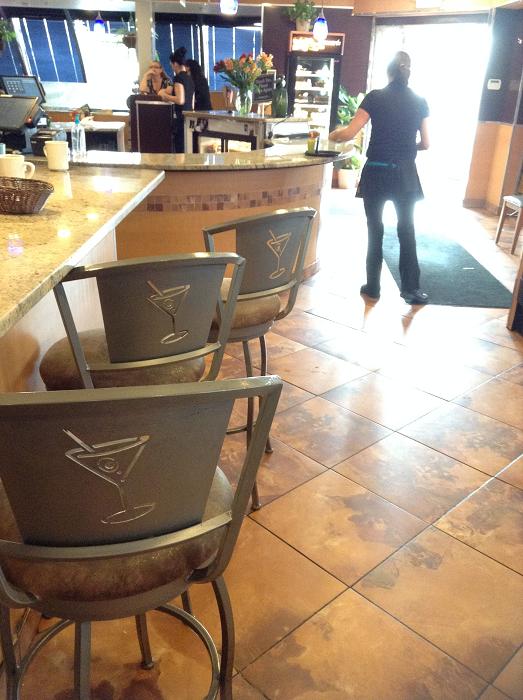
It is in a way an artefact of this point in time. The physical space, the need to organize, the warehouse style shelving, the data all around you on signs, cards, stickers, labels and bottles. I am increasingly aware of how I am informed by space. If you look at the thumbnail to the far right up above you will see another example. It’s taken on Beaver Street just by the intersection of Green. The corner is the site of the mid-1700s King’s Arms, the 1776 flashpoint of the American Revolution in the Albany area and the founding business of the Cartwright clan of Loyalist Tories that were key to the establishment of my city of Kingston Ontario and in fact, the entire province and indeed the nation of British North Americans. But that, oddly, is not my point in posting that picture. Do you see how the street distinctly turns to the left? That turn expresses something a hundred years older than the King’s Arms, the southern design of the palisades of the original settlement. You can see it in this map from 1770 but, more particularly, you can see it in the 1695 map Craig posted to describe the community in the 1600s Dutch era. The intersection of Beaver and Green is located to the left, mid-way up. Beaver Street arcs in parallel to the settlement’s wall.

Which is interesting. Which reminds me that you can see things even when they are no longer there or, even, see things implicit in a space. Like the wall of the palisade that hasn’t been there for the best part of 300 years. Or the sound of that tavern brawl two hundred and thirty-seven which, in part, led to the creation of two countries. Or the state of good beer culture from the scale of a store.

Garden 2013: Lots To Eat… Including By Rabbits

Rabbits. I have seen them around the raised beds out front in the mornings when I head to work. But I had no idea that it had come to this. Beet eating. Frigging cheater pants rabbits are eating my beets and swiss card even if they are leaving the mustard greens, spinach and basil. Thing is… I like beets. Which is, of course why I planted them in the first place. For my eating, not theirs.


Out back there are parsnips, carrots, bok choi, onions, leeks, grapes, radishes, lettuce, peas and the amazing tower of potatoes. A chipmunk is eating the sunflowers but I feel less offended by that. I don’t eat sunflowers or chipmunks. And I am not allowed to trap the rabbits to eat them. It is an unfair deal. The tower of spuds is the year’s biggest innovation. Multilayer rings of seed potatoes on the outside of the tower, compost rich soil in the core and layered between the rings. They grow out the top and through the sides of the mesh. We’ll see what happens.

1750-60s New Yorkers Drank Lots Of Taunton Ale

taunt17 taunt16 taunt15 taunt13 taunt14 taunt12 taunt11 taunt10 taunt9 taunt8 taunt7 taunt5 taunt6 taunt4 taunt3 taunt2 taunt1


Three years ago, I asked what the heck Taunton ale was. I found a few more things that I noted in the comments but, still, was pretty much left with the idea it was a bit of a fringe thing, a bit of a one off. After all, India Pale Ale gets all the attention because it deserves its adoration and the long haul beer of the Georgian era, right? But there I was in the New York State Library’s reference section this morning. Looking for ads for brewers by last name when I started to play around with other odd words and – whammo – 17 ads for Taunton Ale being shipped into New York harbour in the 1750s and 1760s. It was a commonly traded good. One note. Up at the top is the metadata on the image. These are screen shots.

A few preliminary thoughts of mine for your consideration, correction and elaboration. First, I had understood it was a bottled beer as part of the trade in Bristol glass. See, someone had figured out that shipping a full bottle was shipping two products – the bottle as well as its content. Second, it appears to be a product of quality. See the 1764 advert from Thomas Fogg? He’s importing something he doesn’t name but it is as good as Taunton. Sure it was. Sure it was. Third, what the heck is Dorchester beer? Fourth, Craig and I are working on the idea of what 18th century New York state… err… province beer was like and we are working on the idea of a few overlapping things or production techniques: weaker tavern brew, stronger northern Dutch-style wheat ale, NYC-made English/British-style barley ale and with this information there appears to be a fourth class. Wide – spread premium imports.

Four ideas is enough for now. Lots of data. What else do you see?

Albany Ale: How Was 1700s Brewing Structured?

More books in the mail today. Books on colonial American economics – trade and agriculture. As Craig pointed out the other day, the last third of the 1600s and the first two thirds of the 1700s is the last bit of the story of Albany ale and associated Hudson Valley brewing that we have been looking at though he has an excellent post on the big picture. Happy, then, was I to find the following passage in 2002’s Merchants & Empire: Trading in Colonial New York by Cathy Matson:

Brewing beer, on the other hand, was a ubiquitous household undertaking and could be expanded to export production with readily available local commodities. Females throughout the countryside were probably taught at an early age how to brew for household consumption, but New York’s demand for publicly sold beer grew steadily as well. The earliest brewing houses were owned by the distillers De Foreest and Van Couvenhoven. Soon, merchant families such as the Beekmans and the Gansevoorts also brewed beer for public sale. But by the 1730s, families that ran taverns or inns owned most breweries, as in the case of Nicholas Matteysen and John Hold. Moreover, since beer was cheaper than distilled spirits, and increasingly identified with the tastes of the “lesser orders,” its production dispersed over time into the various neighbourhoods, where brewer-tavernkeepers also dealt directly with rural producers for hops, barley, and containers.

This description of production is consistent with the 1810-11 Vassar log, sibling to the mid-1830s one, that shows local farmers supplying casks, hops and grain. This makes sense as there was no great technological shift between 1700 and 1800 that should have shifted patterns of production – especially in a region still struggling with the difficult economic aftermath of the Revolution. Unfortunately, wide-spread small scale commonplace activity tends not to get recorded so we get only glimpses as in diaries from 1670 and 1749.

So, I am off to Albany tomorrow for a couple of attempts to find sources on the topic and to talk with Craig. Do they still have card catalogues? Someone must have done a study of the economics of upstate NY’s farmers between the exit of the Dutch empire and the convening of the Sons of Liberty. Surely, there is an economic argument or at least observations being made that describes the British era as not simply the prelude to independence. We’ll see.

Ontario: Byward Brown, Big Rig Brewing, Ottawa

A mad half week on the road. Two business meetings, a ball game plus a 97th birthday party in the family saw me driving from Eganville to Ottawa to Toronto to Owen Sound and back. Good thing I picked up a growler of this nut brown ale as I was passing from highway 417 to the 416. Big Rig sits in a small mall in Ottawa’s east end next to the big Ikea and serves both local passing car traffic as well as nearby residential community. The on-site restaurant was packed when I stopped in with folk catching the NHL playoff game happening in another part of town that evening.

After a morning of gardening and, err, home organization this hits the spot. The beer pours an attractive reddish mahogany with a fine creamy off white head. Nuts and dried fruit on the nose. In the mouth, there is a good bracing jag of twiggy hopping paired with a minority vote from something adding some citrus rind. As the beer warms, the malts open up with flavours of cola, dark sugars, dates and other brown things. The level of hopping might have attracted an earlier craft era designation as a Texas brown ale but that’s a label that seems to have faded away, a style that wasn’t then might have been but now may not be anymore. A black tea dry finish highlights the hazelnut notes and grainy texture.

A reasonably drinkable 5.2%, not enough BAer reviews to warrant an average. I like.

No, I Do Not Want An Imported Man Mug Thanks

So, could the menu offer a Woman Wine? I would have preferred that the mug was manly as opposed to simply masculine. I had no idea mugs were, in fact, gendered. What do they get up to in the dishwasher? I also didn’t know that while their masculinity was superior when not in frosted form – something many males might agree upon – that they were inferior to pitchers. Makes one want to work on that two fingered fastball a bit more… if you know what I mean.

Sad News Of The Loss Of A Great Guy

scoop1I have been on the road all day so am just seeing now that one of my favorite beer bloggers, Simon “Reluctant Scooper” Johnson of England, has passed away far too young. That’s my favorite of the portraits of himself he posted over the years. I never met Simon but we talked now and then through emails, tweets and blog comments. I completely enjoyed his writing. His optimism, bimbles and – perhaps more than anything else – his sheer interest and joy in so many things. And his humour. Here’s his bio:

A bloke who likes beer. What, you want to know more? OK. Ex face-painting clown, lives in the English Midlands, works with data, loves pork pie, hates couscous. Married with one barbecue. Knows some brewers and publicans. And politicians. And, ahem, “characters”. Has written for papery stuff like Beer (the CAMRA quarterly magazine), Gin & It (UK drinks journal) and Beeradvocate (US beer magazine) but is still holding out to be the pub reviewer for Country Gentleman’s Pig Fertilizer Gazette.

Not sure many others could have pulled off the craft rope post or levened it with a bit of meaning as he did. And he thought to give thanks, too. He loved Orval. He helped with the grunt work of the OCB wiki. A friend has posted photos of how he spent last Saturday with Simon, goofing around. His sense of infectious fun came through in everything he wrote. You know, were this rotten news today to turn out to be a massive wind up of us all on his part I would think it a classic. But it isn’t. It’s just rotten sad news.

His blog can be found here and responses to the sad news can be shared on Twitter under the hashtag #RIPscoop. My thoughts are with his family and friends.

Photos By Winemakers Fighting Mid-May Frost

pecfrost5pecfrost4pecfrost3


Some amazing photos came out of last night’s efforts in nearby Prince Edward County with the risk to early tendrils which will, with luck and skill, become the vines that make the grapes that make the wine. The photos above are from a collection posted on Facebook by Norman Hardie, makers of excellent pinot noir loved by Joe Beef which means likely enjoyed, in turn, by Mr. Bourdain. And me, of course. Three degrees of vineous bacon… or beef… or something. Below is a shot posted on twitter by Harwood Estate in the western end of the county.

pecfrost1

What is going on? Bales of hay are lit when the temperature sneaks down towards freezing in the spring when the buds have just opened or in the fall when the grapes are just about right. The smudgy smoke takes advantage of an inversion layer holding just enough warmth to push up against the dropping cold. I think. See, I learn about stuff like this from the internets. If twitter is to be believed, success all around on the ground with the cold beaten off.

pecfrost2

Your Friday Night Beer Blog Reading Highlights

It’s a distracted time. The game between Toronto and Boston is interfering with the game between Toronto and Boston. The first thunderstorm of the spring is moving through giving parched seedlings out in the garden as heavier duties of life nibble at the back of the mind. Yet, it is a warm Friday evening. The kids are out. The smells of that season we Canadians call “not winter” float in through the one open window as the first large drops pat pat pat on the bags of compost waiting to be settled into their plots on the next dry day. As good a time as any to see what’s going on out there on the internets.

→ In two weeks or so, I have a chance to hit the one orchard estate perry maker I know of in Ontario. Which makes me utterly jealous of Pete Brown. A folk music, cheese and perry/cider fest. Pleasures unimaginable.

→ Please just leave Bieber alone. In Canada, he is now a grown up… sorta.

→ Jeff makes some very good points on the impending reaction from big beer should what’s been considered (for about five years now and still maybe a few more to go) as craft beer not eat itself or, who knows, actually gain a significant market share… as in something approaching 20%. Me, I am quite comfortable knowing that big brewers will quite happily flood the market if need be with cheap and excellent beers inseparable from those offered by the current profitable puritans of craft marketing. I do like his idea that the approach is to add more flavour to lagers but I think this is but one prong of attack. Watch your flank, big craft.

→ Boak and Bailey started early and didn’t have to deal with the thug.

Stan then Craig reacted to a xenophobic article on how US craft brewers woujld teach Germany a thing or two by being boring and hoppy and achieving <1% marketshare. No consideration on the role of Mosel in the overall equation. Much hand wringing over ugly American interventions but, believe me, far better than dealing with the ugly side of Canadians.

There. The hockey is 1-0 in favour of my team at 8:23 pm while the baseball is the same score for… my team. JINKS! Better quit while I am ahead.

Ontario: Weissbier, Denison’s Brewing, Toronto

Brewed since 1990, this wheat beer is one of the best arguments against worrying at all about tenancy forms of brewing in principle. While one might unkindly point out the web 1.0 nature of the brewer’s web presence, it does give you what you need to know and, more to the point, sets the tone. Fairly focused small batch niche brewing at a high standard for the best part of the craft beer revolution. Quite Toronto-centric in business terms, the stuff never gets out here much, here in the rude and rustic hinterlands 200 km to the east. I get there so rarely but did share part of an evening with the brewer, Michael Hancock back in 2009. I recall him complaining or at least explaining the trials of keeping on top of quality control whether in the then new can or as served from taps watched by the eyes of others.

What about the beer? Deft as much as anything. Even from the can, creamy wheat. Then there’s banana, a bit of white pepper and a bit less clove than the other guys. Clouded gold under whipped egg white froth and foamy rim. Leans slightly towards coconut creamy aroma. Lightly soured and spiced in the finish. An insane $2.70 a can, probably the best value in Ontario beer. Would a younger brewer would ruin this with a tiny fleck of shrubbery root or the bark of a tree? It needs none of it. Not so much a vestige of brewing past as a reminder of the days of easy adulteration by adjunct or showboating by faddish hop.

Oddly, the BAers tell you how the RBers rate it #1 then rate it not as highly.