Three 1700s English Court Cases About Hops

hops1700-1

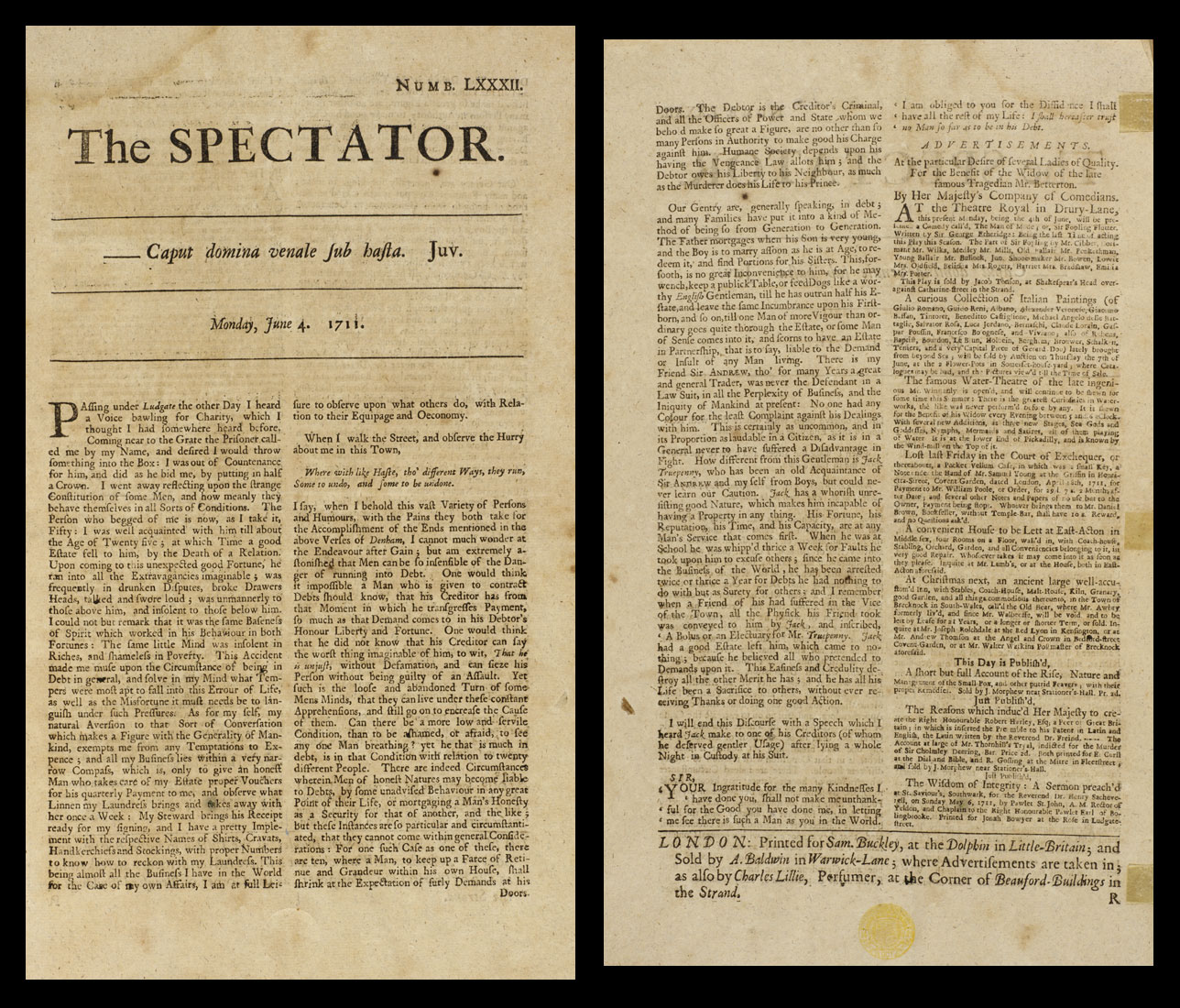
Have you even noticed I particularly like beer related stuff from before 1800. Have you noticed I like beer related stuff related to the law? Imagine then my joy when I came across a searchable database for the English Reports, the law reports series from the Magna Carta in 1215 to the Judicature Act of the 1870s… or so. The first word I put in the database was “hops” and then “hoppes” just like I did when I cam across this early modern print aggregator tool a few months back. Why hops? Something of value worth arguing over, something with a relatively clear entry point into English culture. Plunk it into the English Reports and, right off the top, three court cases pooped up from the second half of the 1700s. A perfect moment to pull out the image I tucked away for just this situation, the mid-1700s hop picking scene “Hop Pickers Outside a Cottage” by George Smith (1714 – 1776). Notice how in the image, the hop polls are brought into the yard and then are picked by hand there. It’s not without relevance.

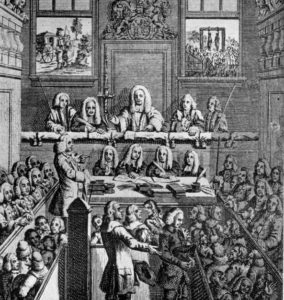
The first case has the best narrative. In the ruling in Tyers v. Walton T. 1753. 7 Bro. P.C. 18, there is a dispute between Rev. Walton, rector of Mickleham in Surrey and vicar of Dorking, and Mr Tyers who had a certain acreage of hops within those parishes. The dispute arose because the good vicar had the right to be paid a tithe of the hops in all these two parishes. In 1745, Tyers paid the tithe in the form of 20 guineas. from 1746 to 1750, he provided a tenth of the crop after the hops were picked. 1751, however, was a bumper year and great quantities of hops grew upon the 28 acres that Tyers controlled. Tyers got greedy. He offered a maximum of 20 shillings an acre. This was refused. In response, Tyers seems to have cut the bines on every tenth hill, did not pick the hops and told the vicar to gather them himself. The law was not amused. At trial the court held that “that hops ought to be picked and gathered from the binds before they are titheable” meaning, pick ’em then divide out the 1/10th share. At the appeal hearing, the court held “the appellant had not made the least proof that the tithe of hops were ever set out before they were picked from the bind or stem.” Not the sort of thing an appellant like to hear. 1-0 vicar.

In the second case, Hunter v. Sheppard and others 1769 IV Brown 210, there is no vicar. Just a hop merchant and his purchasing agent. London-based James Hunter is described as being “one of the one of the most considerable dealers in hops in England.” His agent, named Rye, worked in the Cantebury area for years had been well known as Hunter’s man. But in 1764… there was another good year with hops bearing top price. Rye set out to make deals as an independent – without telling Hunter or anyone else. The case gets quite involved. There is much unraveling of what each landowner knew, which agent was working for which buyer and what the prices were. The Court took the matter seriously as Hunter’s purchases for that one autumn in just the Canterbury area were worth a total of 30,000 pounds. In current UK currency, that is worth £394,200,000! Money. At trial, Mr Hunter did not win the day. The judge ordered an elaborate sharing of the proceeds among a number of parties. Hunter appealed and at the appeal the Court made a wonderful observation on the nature of Hunter’s business:

The trade was at that time very particularly circumstanced, hops being in 1764, like South Sea stock in 1720, or India stock in 1767, and it required great precaution to deal in them with safety and advantage; in all which cases, the great art is to conceal the real intention; and the appellant being the most considerable dealer in England, was not obliged to let into the secret every man who pleased to speak to him on the subject, whether upon the road or elsewhere.

The panel hearing the appeal was not impressed with Hunter. One is never encouraged in court when being compared to the South Sea Bubble. The Court held Hunter sought to seriously play the Canterbury hops market and “to support these propositions he had entangled himself in a series of contradictions; and the assertions in both the answers were in many respects falsified by the evidence for the respondents.” The word fraud is then used. Too bad for you, Mr. Hunter.

In the final case, Knight v. Halsey 1797 7 T.R. 88, we find ourselves thirty years in the future but back to the question of tithes. Unlike the previous two cases, the interesting thing is not the narrative tale like something of a distant backstory employed by a Victorian novelist to establish why two families in the 1860s hate each other. The interesting thing is the recitation of the law. Knight is described as “the occupier of a certain close in the parish and rectory of Farnham” while Halsey grew hops. The dispute arose in the manner in which the hops were to be picked and divided. The Court considered the 1753 case of Tyers v. Walton discussed above but reached back farther in time to a case called Chitty v. Reeves in the Court of Exchequer, from Michaermas term 1686 brought by Ann Chitty, the widow and executrix of C. Chitty, against Reeves of the parish of Farnham. It quickly gets even better as in that case, the Court relied on even earlier evidence and held:

It fully appearing to the Court that the custom, usage, or practice of paying tithe hops in the parish of Farnham, in the county of Surrey, for above sixty years past, hath been that the impropriator or his lessee hath had for their tithe the tenth row when equal, or else the tenth hill; that the same have been left standing with the hop binds uncut, and that the impropriators, &c. have always had convenient time to come and cut the said binds the hops upon the grounds…

Fabulous. This means that in the 1797 case, the court is relying on a finding of fact based on evidence from the 1620s that people, like those in the painting above, could take their time to gather the hops owed to the church when it suited them. Boom! That is law as good clean fun. The court reviews a heck of a lot of tithe law but keeps coming back to dear widow Chitty from the time of Charles I. It also points out, conversely, that a custom which is against reason cannot prevail and is, accordingly, legally void. We gotta move on. At a time of transition into the next century’s looming industrial era, it is quite extraordinary – and Lord Kenyon, the Chief Justice admits as such when he states “[w]hether tithes be or be not a proper mode of providing for a numerous class of persons of great respectability, the clergy, I will not presume to say…” In the end, Kenyon throws up his hands at all the information before him and, I understand, orders a new trial to get to the bottom of this claim of a long standing custom versus commercial common sense.

Wow. Such drama. The good widow Chitty and the mercenary Mr. Hunter all jump out off the page, all in the name of their share of the value of the hops crop as England is balancing its rural traditional past and its modern commercial future. Neato!

Is The Data Overload Becoming An Issue?

It was a bit of a revelation. Well, a joke and a revelation. I have a brother who is a bookman who sends rare finds for birthdays and holidays. This year for my 52nd I got this book on cheese. Published in 1960, it is a simple thing. More like a long magazine article than a full book. The author describes one trip taken in a car traveling from farmhouse cheese maker to farmhouse cheese maker. Cheeses are gathered in the back seat and the trunk… sorry, boot… and the taken back to London where they are eaten at dinners and parties with guests like Dame Margot Fonteyn and Stirling Moss. It’s all very light and comforting. It’s not all that unlike Everyday Drinking – The Distilled Kingsley Amis which I reviewed six years ago now. Yes, a voice from another era and one imbued with class and cultural distinctions which don’t matter anymore. Yet it is filled with discovery:

Mrs. Roberts DOES still make Caerphilly but not in her cool dairy, which I had foolishly asked to see. That is only used for storing milk and cream! Her cheeses are made in the kitchen, with vats and presses a hundred years old, and they mature in the bedroom. As these ancient, heavy wooden vats are irreplaceable, she may soon have to give up her cheesemaking.

OK, like Amis perhaps without the ever present danger of arrest for driving whilst intoxicated. Perhaps. There are still bottles consumed as she goes about. But there is nothing snobbish about any of it. In the second paragraph, snobbery is the word used for the one who sniffs contemptuously at the mere mention of the cheeses of ones own country. It’s an essay about the pursuit of the real in a world where imports and processes have become the norm. Sound familiar?

This is a voice like the one in my head when I became interested in beer. Not a voice I hear very much of anymore, sadly. Between the quantity chasing tickers and the off-flavour seminarians and the worshipers of the next ever so slightly different hop strain, there seems to be little being left to individual discovery. Too much expertise in the beer to be assimilated from above. Not enough simple pleasure in the experience of it. The current bleat about poor quality in new craft is just the latest twist. The hand of industrial process now reaches down as one’s betters warn that if you eat that cheese matured in the bedroom you might encounter something unexpected, unplanned.

This is not to suggest all was better. The second half of the book is filled with recipes which range from the traditional – like that very attractive cheddar biscuit – to the weirdly experimental. I will not, for example, take up the recommendation to wrap eight bananas in ham and bake them in a sauce made with a whacking pile of grated Lancashire cheese. But there is a joyfulness about it all which big craft seems to be drumming out of me, drumming out of good beer. I don’t care. The errors and trials and surprises of all these new actual small brewers are too interesting to care about their elders and betters, the self-appointed senex with the standard operating procedures, marketing staff and strategic plans for the annual trade show.

Oh, What A Loverly Word Usage Graphing Tool…

hoppes

See that? Click on the image and you will see it better. That is a word search for the word hop[pe]s in English language texts from a site called Early Modern Print: Text Mining Early Printed English which explains itself as follows:

Early Print offers a range of tools for the computational exploration and analysis of English print culture before 1700. Early Print offers a range of tools for the computational exploration and analysis of English print culture before 1700. The site was designed to help scholars make sense of the incomparable textual archive produced by the EEBO Text Creation Partnership, consisting of a set of transcriptions of the first two centuries of English print. While EEBO-TCP provides access to a massive collection of texts that promises to transform the way scholars approach this period, it also presents significant technical and conceptual challenges. The relative accuracy (given its scale) of the EEBO-TCP corpus that makes it such a valuable resource for scholars also makes it complex for computational analysis.

Got it? Yikes. It appears to be a far more complex version of the New York Times search tool that is so useful in confirming how late “craft” beer came into accepted usage. Except, this fun widget focuses on texts from 1480 to 1700. I am still having some problem figuring out how to properly run searches given all the swell code that can be used to run searches. But when you do, you get wonderful – even if possibly misleading – results like this one confirming that “hops” or “hoppes” came into far more common use on a very particular date roughly around 1518. Look at “ale“! I am sure folk more clever than I may make more interesting use of it so let me know what you find. Be careful. Remember that around 1577 “biere” was a common spelling. Have a go. Meanwhile, I wonder if anyone mentioned “craft beer” during that era…

Pre-1600 Ale And Beer Not All Dark And Smoke-Laced

1885malttable2

This has been a bit of a brain worm for me for a while. No, not that kind. The other kind. And for a longer while, I’ve been reading about how, before a certain point, all English beer and perhaps elsewhere was brown and smokey. But, quite rightly, the other day I was righteously snapped at for referring to the one post I have written on the idea. I should do a better job that that if I am going to get any sort of passing grade. So, here are some ideas that I am plunking together now. This is not to be definitive. I am showing my work and will build it upon going forward:

• Mid-1200s: In the first half of the 1200s, when England and northern France were under one government but still two cultures, Walter of Bibbesworth wrote Le Tretiz, an English-French primer to teach Anglo-Norman children about life and language. He describes the things in the world including ale making. A current edition of the book ishere. This is a translation from which we find this passage about malting:

Now it would be as well to know how to malt and brew
As when ale is made to enliven our wedding feast.
Girl, light a fennel-stalk (after eating some spice-cake);
Soak this barley in a deep, wide tub,
And when it’s well soaked and the water is poured off,
Go up to that high loft, have it well swept,
And lay your grain there till it’s well sprouted;
What you used to call grain you call malt from now on.
Move the malt with your hands into heaps or rows
And then take it in a basket to roast in the kiln;
Baskets, big or little, will serve you in plenty…

That tells us the basics of malting in a way that one commentator states “…medieval malting was, except for the lack of mechanical processing equipment, essentially identical to modern techniques.” Maltings from the 1200s were discovered this year in Northampton.

• Mid-1300s: One hundred years and more after Walter of Bibbesworth, there is a record that confirms, ale was not uniform within a single local market for as reasonably a long time as one needs to consider it a hell of a long time. In 1378 or so, in a moral narrative called Piers The Poughman at least three sorts of ale: thin or mean ale, good ale and best brown ale. He also uses the phrase “halfpenny ale” but that may well be good ale. Variety of ale brewing must include consideration of the potential for variety in malting techniques.

• Mid-1500s: As discussed in February of 2013, in his “Dietary” of 1542, Andrew Boordemade himself clear about what he considered was the best ale:

“Ale is made of malte and water; and they the which do put any other thynge to ale than is rehersed, except yest, barm, or goddesgood doth sophysicat there ale. Ale for an Englysshe man is a naturall drinke. Ale muste have these properties, it muste be fresshe and cleare, it must not be ropy, nor smoky, nor it must have no wefte nor tayle. Ale shulde not be dronke under .V. dayes olde. Barly malte maketh better ale than Oten malte or any other corne doth…

Not smokey. Pretty clear statement.

• Later-1500s: In this 2004 report on an archaeological excavation of a medieval malting kiln it is stated:

The fuels used in the malting process were documented in 1577 by William Harrison, who wrote: “In some places it (the malt) is dried at leisure with wood alone, or straw alone, in other with wood and straw together, but of all, the straw dried is the most excellent. For the wood dried malt, when it is brewed, beside that the drink is higher of colour, it doth hurt and annoy the head of him that is not used thereto, because of the smoke.

Notice that again we see grades of now hopped beer just as we did in 1378 but it is not quality of strength that differentiates but the quality of the malt. And wood-kilned malt is noted to be both darker and the means to make a poorer beer – because of the smokey quality wood added. Harrison published his book A Description of England in 1577. Here is a full copy of the text posted by Fordham University in which you will find this: “The best malt is tried by the hardness and colour; for, if it look fresh with a yellow hue, and thereto will write like a piece of chalk. Chalk is, you will note, pale.

• Late 1500s to early 1600s: Also as stated before, there was something of a crisis in malt and fuel supplies as far back as the mid-1500s:

…the forests around York had greatly diminished and receded. Chiefly for this reason the malt kilns were in 1549 closed for two years and a survey of disforestation for eight miles around was instituted. At this time, too, the commons included the dearness of fuel in their bill of grievances and ten M.P.s were asked to seek a commission from the king to check disforestation.

The crisis of English deforestation led to a search for fuel alternatives and the main alternative was coal. The timber crisis was most acute in England from about 1570 to 1630 during which making coke from coal was invented.

• Mid-1600s: In an edition of A Way to Get Wealth by Gervase Markham from 1668, a book first published in 1615 we have an opinion on the preference for straw… and not just any straw:

…our Maltster by all means must have an especial care with what fewel she dryeth the malt; for commonly, according to that it ever receiveth and keepeth the taste, if by some especial art in the Kiln that annoyance be not taken away. To speak then of fewels in general, there are of divers kinds according to the natures of soyls,and the accommodation of places-in which men live; yet the best and most principal fewel for the Kilns, (both tor sweetness, gentle heat and perfect drying) is either good Wheat-straw, Rye-straw, Barley-straw or Oaten-straw; and of these the Wheat-straw is the best, because it is most substantial, longest lasting, makes the sharpest fire, and yields the least flame…

Again, as Harrison half a century before, you have grades of malting based on the fuel used but now not just wood or straw are described but in this passage four separate sorts of straw. But Markham continues. After these light grain straws he lists fen-rushes, then straws of peas, fetches, lupins and tares. Then beans, furs, gorse, whins and small brush-wood. Then bracken, ling and broom. Then wood of all sorts. Then and only then coal, turf and peat but only of the kiln is structured to keep the smoke out of the malt. If you go back to that 2004 archaeological report you will see a reference to evidence of that sort of malt kilning in practice in the 1400s: “… [A] charred deposit overlying the brick floor of the cellar was sampled and found to comprise mainly charcoal fragments from narrow twigs, several straw culm nodes and occasional charred weed seeds.” You can learn more about culm nodes here.

• Late 1600s: In his book A New Art of Brewing Beer, Ale, and Other Sorts of Liquors…published in 1690, Thomas Tryon discusses malting. Large parts of the book was reprinted in the 1885 text Malt and Malting: An Historical, Scientific, and Practical Treatise… by Henry Stopes. Tryon confirms the ascendancy of coke over straw due to its “gentle and certain heat.” Straw, he has to admit, is still a close second but depends more on the skill of the maltster. Wood kilning is called unnatural in that it leaves a smokey taste.

• Late 1800s: A big jump in time to the document from which that table waaaaay up top comes from page 66 of the Transactions for 1884 of the Society of Engineers based in London, England. That table is found in an article “The Engineering of Malting” read by one Mr. H. Stopes at the meeting of that organization. He also read it at the eleventh meeting of the Society of Arts on 18 February 1885. In his article, Stopes describes the malting process briefly in this way: “The English system, briefly, is steeping corn in an open vessel, germinating it upon flat exposed floors at very shallow depths, and drying upon an open-fire kiln with single floor at from nine to twenty-one days after steep.” As noted above, that sort of description could have been written by Walter of Bibbesworth 650 years earlier because the making of malt was an incredibly stable practice. He goes on to describe many sorts of malting he has witnessed including the most basic:

The simplest form of malt-house possessing any capacity for work is a plain two-story building, having attached to it a kiln or drying-house, and consisting of a ground floor of clunch, a brick steeping-cistern, and a first-floor of timber, with or without partitions for separating the stored grain or malt. The only implements are a wooden shovel and a winnowing-fan or sieve to separate the roots or “combs ” from the malt prior to its use in the brewhouse. The author has seen malt made in Italy in an open court or loggia, where the barley was steeped in a tub, allowed to germinate upon the stones in the open air, and dried in a small lean-to building, with only a hole in the roof for the exit of smoke and vapour. This was furnished with a floor of perforated sheet iron and a furnace similar to that used under an ordinary washing copper in an* English scullery. Even more primitive operations are performed in Nubia, as there millet, when malted, is dried in the sun. Such rude malteries Concern us only so far that they occupy the lowest end of the scale, and indicate the necessity for moisture, growth, and curing or drying, the three essential conditions of making malt.

Sun dried malt. That’s be pale. Stopes does not really explain his table. But he includes a column for sun-dried or air-dried malt as opposed to kiln dried. And shows that it, like plain barley, it contains no products of torrefaction. Torrefaction is toasting, roasting, etc. He does however state that kilning pale malt and amber malt is a difference of 200° to 240° F and that the time for malting is counted in days. Plenty of time to control the process. Not something in 1885 that needed scientific instruments. And if not in 1885 likely not in 1385.

I am going to keep working on this and posting updates. I may also be seeing this rudimentary traditional pale malt production evidenced in frontier New York in the first decade of the 1800s. I need to think more about that. And all of this. Suffice it to say, I am pretty certain there is evidence that the making of pale malt was not dependent on the invention of coke and that English speaking peoples in centuries past enjoyed ales which were not dark and smokey. This is in no way to say that most beer was not dark and smokey. It just seems to me that this may be found where (i) the folk are poor, (ii) resources and skills are limited or (iii) standardized industrial techniques such as – or rather concurrent to – the use of coal and coke beginning in the 1600s forced people to put up with beer that was dark and smokey. I also need to tie it into grain drying as well as bread ovens, both technologies used since the middle ages which could be overlapped with the kilning of malt.

239 Years Ago There Was This Tavern And These…


1775tavern1

“Settling the Affairs of the Nation”… that is what it’s called. After yesterday’s 1919 barroom scene from New York City, I was looking for an earlier characteristic tavern scene. Sadly, photography did not exist in 1775 so this print will have to do. Click for a bigger image. The first thing that caught my eye was the architecture with that serving stall in the corner. Late 1790s and early 1800s Ontario taverns were build with that sort of structure according to In Mixed Company by Julia Roberts. There are a few interesting commentaries on this image.

The British Museum dates it at 1784 describes the copy of the print above in fairly technical terms:

Interior of a tavern, where four men are sitting in the left foreground, one carrying a basket on his back, listening to a soldier who stands with his back to the hearth, one hand raised as he talks, while a woman pours out a glass behind a counter on the right; shelves with plates, a pot over the stove, a gun by the counter, leaves tucked into the panes of the window, bird-cage and branch of foliage hanging from the ceiling, a print of Pine’s portrait of John Wilkes above the door, and two tubs of vegetables on the flagged floor in the foreground.

1775tavern2The blog The Still Room provided an alternative version of the image – which is under that thumbnail to the right. Another male figure is added to the right:

There are a lot of fun things to explore in this print sold by Bowles & Carver in London. I’m enjoying the tavern maid’s cap, the spitjack (which rotated roasting meats over the fire, the standing man’s pack basket, the sprigs in the tavern windows (anyone know the purpose? and the branch hanging from the ceiling next to the bird cage?), the vegetables in the bucket and tub on the floor, and so forth.

The blog Hiddendirk dates it at 1775 and explains the purpose in this way: “Notice the mistletoe hanging from the ceiling, the wreaths on the door and the evergreen cuttings in the windowpanes. It is a Christmas scene. The image discussed is again the one with the extra man to the right. Even bigger version here. Still more on the Christmas theme of the image at this Colonial Williamsburg webpage.

The thing I noticed first is the man sitting nearest the center is drinking a quart. Not sure how he can be wrapped up in a coat when he is about sitting six feet away from about 300 pounds of blazing charcoal. The first does look a little over stoked. The officer with the roasting buttocks is holding court. All eye’s are upon him. The version with the man by the door is finer. The sign above the door and at the drinks stall are legible. The latter says “Punch in Large Quantities”. Does the other read “Heart’s Ease”? There is a cask labeled “GIN” on the counter behind the server. There is no cask in the British Museum version and tankards are hanging from the shelves.

The painting above the door is described as being a portrait of John Wilkes the member of the British Parliament who was a radical and supporter of the American Revolution. The soldier is facing it as he expounds. I like the way the gun is resting by itself in the corner. There are a few messages about plenty. Is the message that the authority of the soldier is out of place? Or is he back from the wars? The pamphet on the table reads “The King’s… [something]”… is it “speech”? The pot is about to boil over. The man attending the fire is asleep as his his dog.

What A Bumper Crop Of Maris Otter Might Mean

Fabulous news out of England for those few remaining beer drinkers who enjoy the taste of beer:

With much of the harvest already in store, Robin Appel Ltd suggests the low nitrogen levels required by ale brewers have been achieved, with an average of 1.37 – 1.40 per cent against a five-year average of 1.65 per cent. Yields of Maris Otter barley, which normally average two tonnes per acre, look like running at nearer two and a quarter, with good harvests reported from Norfolk, Suffolk, Cambridgeshire, Yorkshire, Shropshire, Herefordshire, Hampshire, Wiltshire, Dorset, Oxfordshire, Gloucestershire and Cornwall. Maris Otter is winter-sown, and the damp winter and wet May have ensured good yields. A disease-free growing season has meant the highest ever planted area looked the best in years.

Granted, this might not be of much interest to those watching the North American adjunct market, those day trading in the cherry syrup markets and watching the after hours stemware trading but this should be good news, shouldn’t it? I remember my first bag of Maris Otter like it was yesterday. While other pale malts smelled of grain, this was all summer fields and scything maidens. We cross the big water soon heading to hang out with family for a bit on the sunny south shore of the Firth of Forth. While there, I hope to avoid all contact with DIPAs, miss every bourbon barreled apricot saison and dodge all the pop star brewers. But, with any luck, there shall be the fermented steepings of Maris Otter with nary a cicerone in sight. Can it be done?

And, just to be clear, I have no plans whatsoever to visit the beer can tree of Aberdeen.

Session 89: A History Of The Hop And The Malt And The Beer…

sessionlogosmIt’s that time again. The monthly edition of The Session. Beer blogging boys and girls gather ’round the coal fired ISPs throughout the world to share their thoughts on a topic. This month our host is the Pittsburgh Beer Snob who writes:

At many points in history you can look back and find alcohol intertwined. A lot of times that form of alcohol is beer. Beer is something that connects us with the past, our forefathers as well as some of our ancestors. I want this topic to be a really open-ended one. So, it should be fairly easy to come up with something and participate. If you were among any readers I had when I posted most of the time you have a very good idea of where I might be going with my post when the time comes. The same doesn’t apply to you. Do you want to write about an important beer event with great historical significance? Famous figures that were brewers? Have you visited an establishment that has some awesome historic value? Maybe a historically-themed brewpub? I wouldn’t be surprised to even see a few posts on Prohibition. It doesn’t really matter when it comes to history!

History is good. I am actually of the opinion the best histories of beer and brewing are yet to be written. But I also believe the best beer writing, thinking, constructs, descriptions and criticism are all a fair ways off, too. We wallow in times of self-satisfaction. Would you just look about you at the works so far, Ozzy?

Anyway, that being or not being the case, what to make of the state of brewing history? I have written a bit of my bit to be sure but I am still not satisfied. I have come across beer in the Arctic in the 1570s, the 1670s and the 1850s. Fabulous facts. Beer for those living on the edge. Why? Because it kept them alive. Happy and alive. Billy Baffin, that giver of what I think the most Canadian surname, on his fifth voyage in 1616 got into a real pinch and had to hightail it to an island off Greenland and make a tea to keep he and his crew alive:

Now seeing that wee had made an end of our discouery, and the yeare being too farre spent to goe for the bottonie of the bay to search for drest finnes ; therefore wee determined to goe for the coast of Groineland to see if we could get some refreshing for our men ; Master Hei’bert and two more having kept their cabins above eight days (besides our cooke, Richard Waynam, which died the day before, being the twenty-six of July), and divers more of our company so weake, that they could doe but little labour. So the winde favouring us, we came to anchor in the latitude of 65° 45′, at six a clocke in the evening, the cockin eight and twentieth day, in a place called Cockin Sound. The next day, going on shoare on a little iland, we found scuruy great abundance of the herbe called scuruie grasse, which we boyled in beere, and so dranke thereof, using it also in sallets, with sorrell and orpen, which here groweth in abundance; by meanes hereof, and the blessing of God, all our men within eight or nine days space were in perfect health, and so continued till our arrivall in England.

God is good, indeed. Beer is a bounty that is provided to us for health and joy and the lessons of history prove it. Yet, history also proves the wages of not only drunkeness but seeking out the best and brownest. Beer is neither benign or neutral but a powerful tool. That is what history teaches us. It can trace empires for us. Fortify a frontier. Collapse a region. Give hope. And bring despair.

Another Candidate For First Beer Downed In North America

1578beer

Martin Frobisher. He was taking a group of miners to what later gets called Baffin Island¹ in the Canadian high Arctic to dig for ores. The image is from The Three Voyages of Martin Frobisher, a book from 1938 that reprints the 1576-78 journal of crew member George Best along with other records. It is very likely that this is not of the first beer in any respect. Almost certain. Because it is from the second of the expeditions. The 1576 expedition had five tons of “beare” listed amongst the “furniture” – as in things furnished – for the voyage. So it’s nearly the first… maybe.

The thing I thought I would find as I have seen elsewhere was barrels of malt and hops being shipped over. I’ve seen it on Newfoundland’s shores about twenty years later as well as in Hudson Bay a century later. But this was no crew of masterless West Country men salting west Atlantic cod or factors left to overwinter to trade in northern furs. Nope. Frobisher’s crew was funded by Earls, Countesses and Lords to the tune of 50 to 200 pounds each. The Queen’s Majesty herself threw in a rounded thousand. There was a surgeon on board as well as four tons of cheese. Almonds and raisins plus two firkins of prunes. Just in case. They are living in style. There is both Malmsey and sack, for heaven’s sake. That would now be described as Madeira and sherry respectively.

A gallon of beer for each man each day. Likely downed in wooden tankards like these. A gallon. That is the equivalent of twelve 12 oz or 350 ml bottles a day every day. In 1576, it was two pounds two shillings for a ton of beer but two pound five shillings in 1577. Seven percent inflation over one year is unlikely. Maybe a better grade of beer? Not a lot of detail of the life on shore in the accounts. Just interaction with the local Inuit as well as the work gathering of tons of ore. Each group seemed to appear pretty silly to the other.

¹… because our lad Billy Baffin isn’t even born until around 1584.

The Math Of 1600s Beer Can Befuddle Me

image55

I was never much good at math. I liked patterns and making the calculator make words if you loaded in a certain formula. “Esso Oil” could appear on the small LCD screen if you knew the right numbers. So I never became an accountant or an engineer. I was reminded of this when I came across this 1674 entry in the minute books of the Hudson’s Bay Company in London, part of that year’s provisioning of that year’s expedition to Canada’s Arctic coast. I understand that 17 men x 28 days x 3 months x 3 quarts = 5 tunns. Or 4284 quarts. But is it true that 4284 quarts equals 5 tunns? What is a tunn? Is there 4284 quarts ÷ 4 quarts in a gallon ÷ 5 tunns mean there are 214.2 gallons to a tunn? This would be a measure way off the pottle chart of the 1840s. Unless I have the math wrong.

Which is exactly the point at which I try to make words appear on my Texas Instrument solar powered pocket calculator in early 1981 or look out the classroom window daydreaming of Friday nights, past or future.

Sad News Of The Loss Of A Great Guy

scoop1I have been on the road all day so am just seeing now that one of my favorite beer bloggers, Simon “Reluctant Scooper” Johnson of England, has passed away far too young. That’s my favorite of the portraits of himself he posted over the years. I never met Simon but we talked now and then through emails, tweets and blog comments. I completely enjoyed his writing. His optimism, bimbles and – perhaps more than anything else – his sheer interest and joy in so many things. And his humour. Here’s his bio:

A bloke who likes beer. What, you want to know more? OK. Ex face-painting clown, lives in the English Midlands, works with data, loves pork pie, hates couscous. Married with one barbecue. Knows some brewers and publicans. And politicians. And, ahem, “characters”. Has written for papery stuff like Beer (the CAMRA quarterly magazine), Gin & It (UK drinks journal) and Beeradvocate (US beer magazine) but is still holding out to be the pub reviewer for Country Gentleman’s Pig Fertilizer Gazette.

Not sure many others could have pulled off the craft rope post or levened it with a bit of meaning as he did. And he thought to give thanks, too. He loved Orval. He helped with the grunt work of the OCB wiki. A friend has posted photos of how he spent last Saturday with Simon, goofing around. His sense of infectious fun came through in everything he wrote. You know, were this rotten news today to turn out to be a massive wind up of us all on his part I would think it a classic. But it isn’t. It’s just rotten sad news.

His blog can be found here and responses to the sad news can be shared on Twitter under the hashtag #RIPscoop. My thoughts are with his family and friends.