Ontario: Did The Beer Stay In Town In The 1830s?

I am thinking I may have a theory or at least a bit of half an idea. I was in the library yesterday waiting for the kids swim lessons next door at the Y to end and came across a copy of a book from 1913, a History of the County of Lennox and Addington by W.S. Herrington from which I found this passage from an interview of a man then in his nineties:

I remember the first election I ever witnessed. It was over seventy-five years ago, about the year 1836. John Solomon Cartwright and George H. Detlor, the Tory candidates, were running against Peter Perry and Marshall Spring Bidwell. They ran in pairs; Perry and Bidwell were called the rebels by the other side. There was only one polling place and that was in Bath. It was a little booth at the edge of the village. I was quite a young man at the time and didn’t know much about the issues; but I could understand that the people were greatly excited. The taverns of Bath were crowded with men wrangling about the votes. Whiskey was flowing freely, and there were plenty of drunken men and brawls in the streets. There were plenty of taverns all over the county. There was Charter’s tavern near the head of Hay Bay; John Davy’s over near Sandhurst, and Griffith’s in the second concession about four miles west of Charter’s. Ernesttown must have had a dozen at least.

I like these sorts of old guy interviews. Like the one from 1899 with the recollections of a ninety year old guy of his pre-Victorian youth including Albany Ale. In this recollection above, the guy being interviewed is from a farm outside the village beyond the smaller town to the west of the military, mercantile and brewing centre of Kingston. He grew up in a log cabin. The degrees of distance from the big centre, the layers of the hinterland, describe distribution. See, Ontario – or rather Upper Canada – at this time was still a tenuous proposition given the continuing uncertainty of the Republic’s intentions. It was also one run on a combination of an imperial demand economy tied to local sustainable farming. Before the 1840s repeal of the Corn Laws, crops from here were shipped to Britain and manufactured supplies were shipped back. We were part of the great Georgian hive.

It seems to me that the references to whiskey in the book are what they are – not a euphemism for drinks so much as confirmation of the drink that’s on offer. The same man quoted above stated all the crops were wheat and corn. He did’t see barley until he was in his twenties – right about the time of the repeal of the corn laws in the 1840s and the end of guaranteed supply to the empire. Elsewhere in the book a country store ledger is described. Plenty of spirit references and a few wine sales but no mention of beer. I had in my mind for a while that all the references to whiskey may have meant they were brewing their beer at home but if there’s no barley being grown that’s unlikely.

So, where was the beer going in the 1830s? Likely it stayed in town, was sold to the military or was moved by sailing ship in multi-cask loads to other centres along the shore of the big lake like York, later named Toronto. It maybe takes the railroads in the coming decades for beer to get more deeply distributed. In a world of coastal sail and carts on questionable roads, a cask of the hard stuff is probably the safer bet, the better investment for the families operating the taverns and the country stores.

Albany Ale: How Was 1700s Brewing Structured?

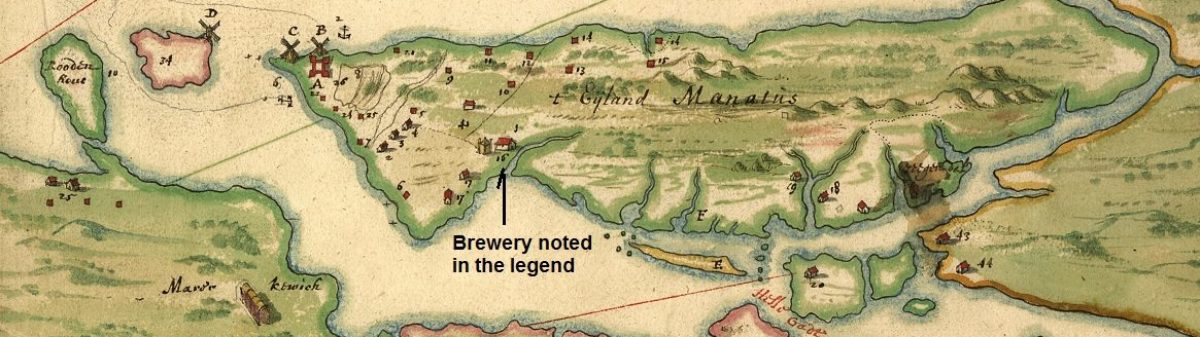
More books in the mail today. Books on colonial American economics – trade and agriculture. As Craig pointed out the other day, the last third of the 1600s and the first two thirds of the 1700s is the last bit of the story of Albany ale and associated Hudson Valley brewing that we have been looking at though he has an excellent post on the big picture. Happy, then, was I to find the following passage in 2002’s Merchants & Empire: Trading in Colonial New York by Cathy Matson:

Brewing beer, on the other hand, was a ubiquitous household undertaking and could be expanded to export production with readily available local commodities. Females throughout the countryside were probably taught at an early age how to brew for household consumption, but New York’s demand for publicly sold beer grew steadily as well. The earliest brewing houses were owned by the distillers De Foreest and Van Couvenhoven. Soon, merchant families such as the Beekmans and the Gansevoorts also brewed beer for public sale. But by the 1730s, families that ran taverns or inns owned most breweries, as in the case of Nicholas Matteysen and John Hold. Moreover, since beer was cheaper than distilled spirits, and increasingly identified with the tastes of the “lesser orders,” its production dispersed over time into the various neighbourhoods, where brewer-tavernkeepers also dealt directly with rural producers for hops, barley, and containers.

This description of production is consistent with the 1810-11 Vassar log, sibling to the mid-1830s one, that shows local farmers supplying casks, hops and grain. This makes sense as there was no great technological shift between 1700 and 1800 that should have shifted patterns of production – especially in a region still struggling with the difficult economic aftermath of the Revolution. Unfortunately, wide-spread small scale commonplace activity tends not to get recorded so we get only glimpses as in diaries from 1670 and 1749.

So, I am off to Albany tomorrow for a couple of attempts to find sources on the topic and to talk with Craig. Do they still have card catalogues? Someone must have done a study of the economics of upstate NY’s farmers between the exit of the Dutch empire and the convening of the Sons of Liberty. Surely, there is an economic argument or at least observations being made that describes the British era as not simply the prelude to independence. We’ll see.

More International Insurance Map Brewery Fun

insrurmap1insrurmap2insrurmap3insrurmap4insrurmap5


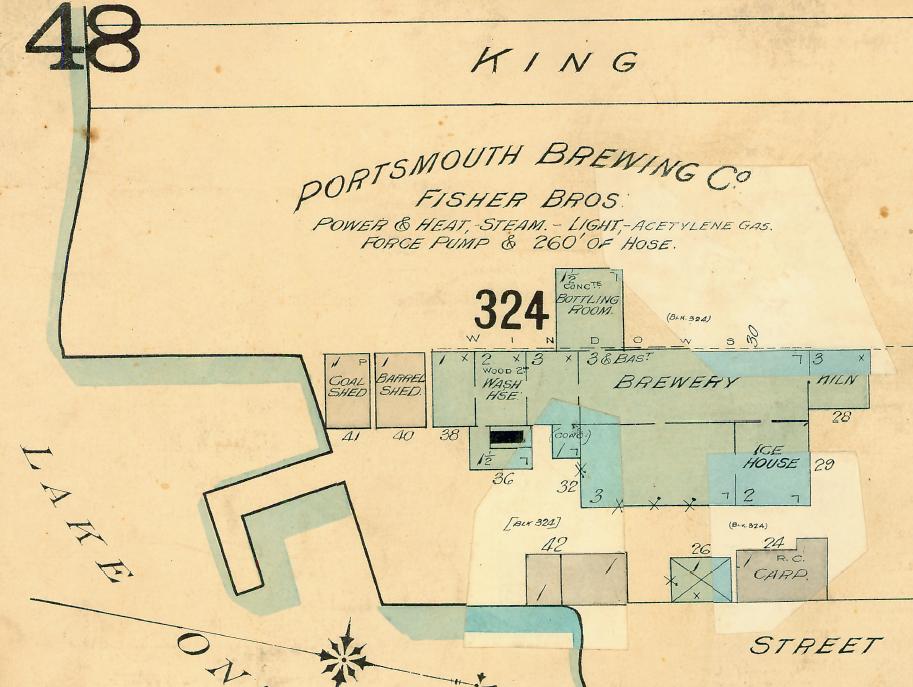
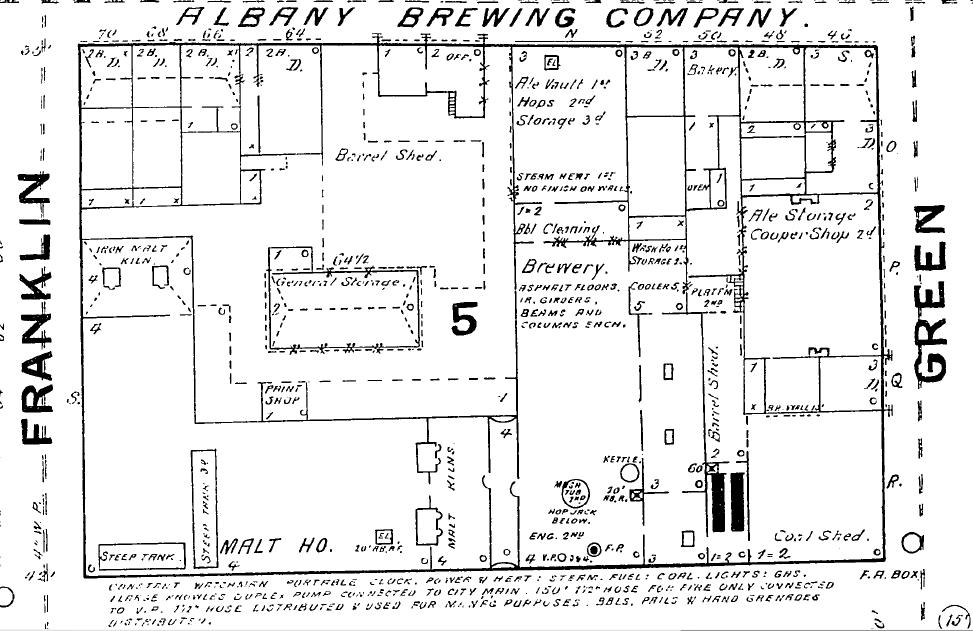
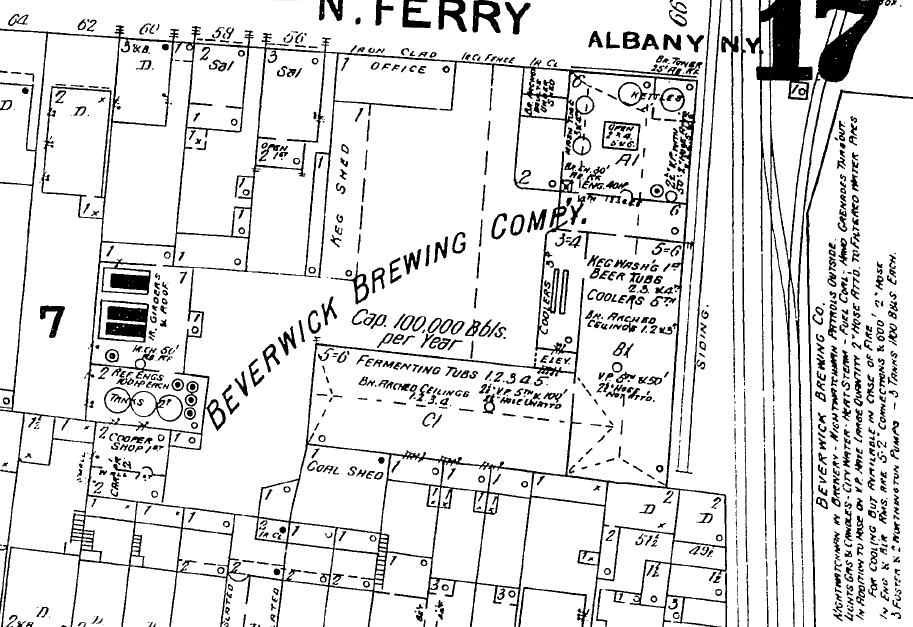
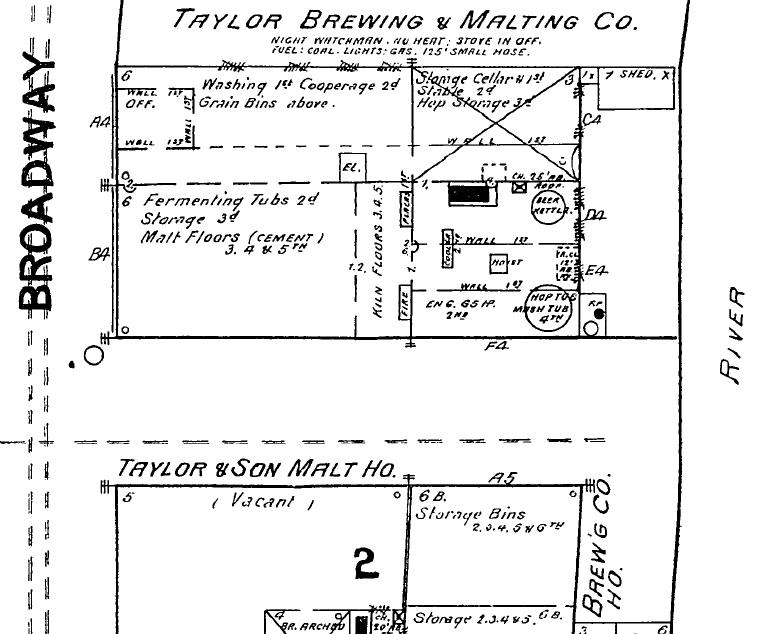
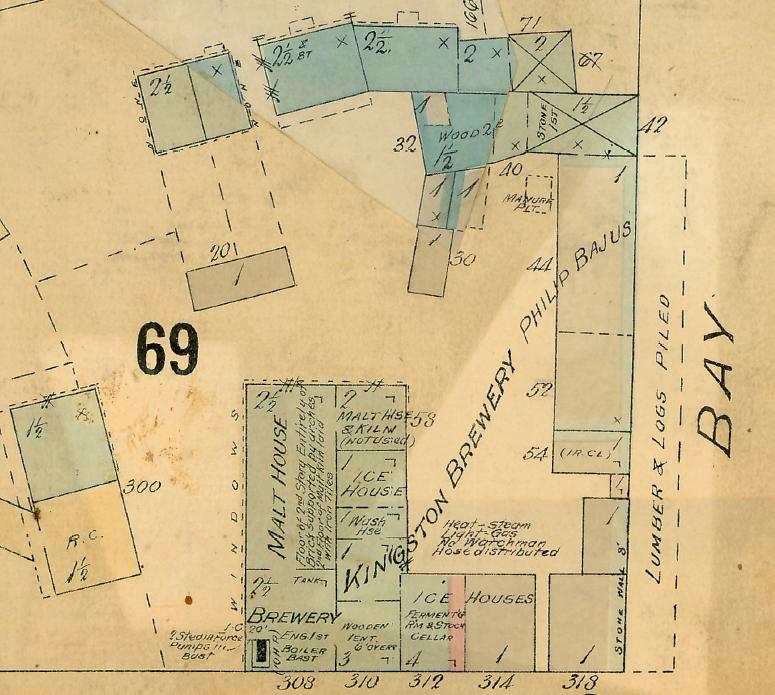
It was the best of times and insurance maps. It was the worst of times, you know, and… insurance maps. Errr. a tale of two cities of sorts, I suppose. From the upper left we have the Kingston Brewery as well as Portsmouth Brewing of my town from 1908 plus, to the upper right, the Albany Brewing Company, then below left Beverwick Brewing Company and, lower right, Taylor Brewing and Malting all of Albany in 1892. What can we learn from these images? Click on each image and find out for yourself. Here is what I see:

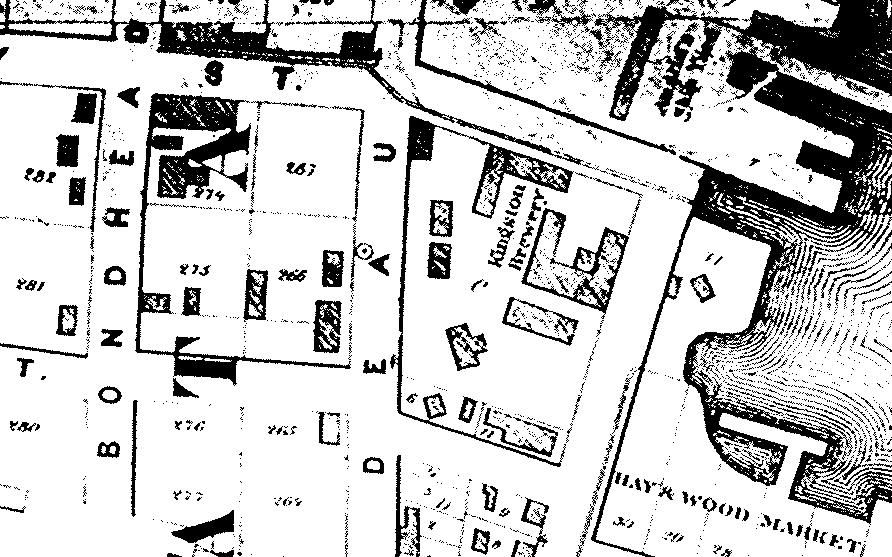
UL: As discussed last August, the Kingston Brewery dates from at least 1791. The badly digitized 1824 map shows a set of buildings on the inland side of the inner harbour road. The 1908 map shows much of the same complex built up overtime. The malt kiln, laid with iron tiles, is no longer used and a lot of space is dedicated to ice houses as part of the lager operations. And there is a manure pit. Dangers which might be faced by fire crews are noted. Where a boiler might be found or a pump. The notes state that hoses are distributed meaning there is water throughout. The basic set up is a courtyard. There is a four story tower as well as a basement with a fermentation room and a stock cellar.

UM: By comparison, Portsmouth Brewing in is more orderly. Based more about access to the lake than the older cross town competition. The kiln is on the land side of the property and leads into the brewery proper which leads to the bottling room. The coal and barrel sheds are separate. There is a basement and the main building is three stories high. Our commentator Steve Gates, author of The Breweries of Kingston and the St. Lawrence Valley has an excellent photo of the brewery from the next year taken from the vantage of someone under the letter “F” in “Fisher” as shown on the map. He also tells us that they had been brewing lager since 1872. Hence the ice house.

UR: Next, the Albany Brewing Company neatly fills a city block as this picture from the coal shed view of 1865 to 1870 shows. I am sure there is a very good reason that hand grenades were distributed throughout the brewery for fire fighting purposes but I am not sure what that might be. Unlike the Kingston breweries above or Taylor below, there is no access to waterfront. Unlike Beverwick below, there is no train spur leading to the building. To the right center, there is a five story tower where it appears the coolers are located. The office is across the street to the south and a police station to the north. It’s in the middle of things. Looks like there are horse stalls near the coal shed that open out on to Green Street to the left of the image.

LL: The Beverwick Brewing buildings appear to be more modern again. Founded in 1878, it has a rail siding… which apparently leads it to be suitable for a model railway set. The main building looks impressive. Five stories with a sixth in the attic. Brick arched ceilings on multiple floors frame fermenting tubs and beer tubs. Coolers are located in the fifth floor. A more compact footprint but, at 100,000 barrels a year, very productive and, therefore, famous. A very industrial set up compared to the others.

LR: Last, good old Taylor Brewing in its elder years. The neighbouring buildings have been left vacant with only the core brewery seemingly in operation. Six stories very much oriented towards the river. When I saw this and saw the images of de Hooch yesterday, its position by the water looked like Dutch breweries lined up along the shore in Haarlem in 17th century paintings. I think that’s the building to the middle right in the image at Craig’s post on the brewery, though that was almost half a century earlier.

What does that tell us? You tell me. I see a range of brewing systems laid showing about 120 years of technological advances. Still plenty of ale brewing going on but a range of transportation methods from horse carts to ships to trains. For the most part, the breweries are all still malting at the turn of the 20th century.

My Place Of Work About 160 Years Ago

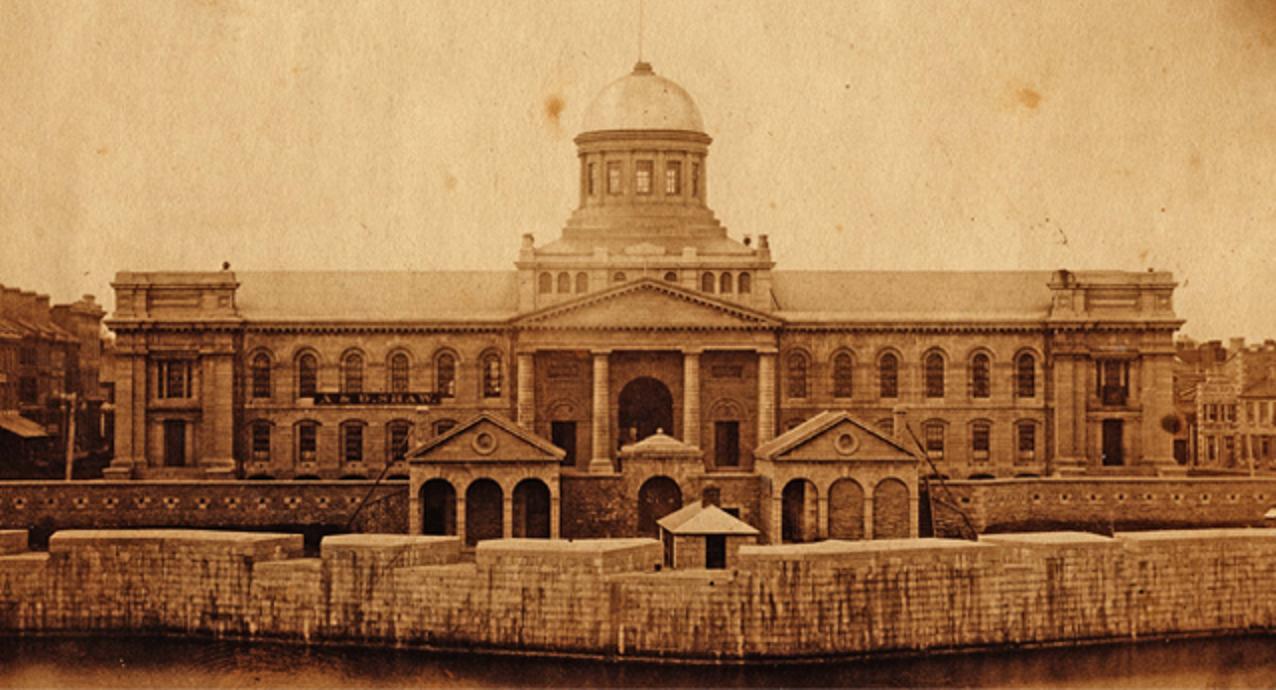
My place of work in the 1850s when the waters lapped up to the stone wall of the market battery. As in a battery of cannon that protected the market. Because City Hall was built in the 1840s on part of the market square that he been there for decades before that. If you click on the picture you will see more detail. Like these bits:


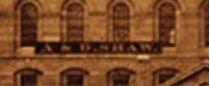
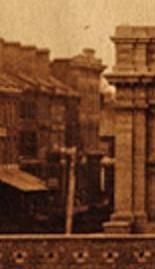
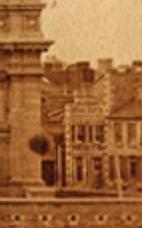
To the left, you see the sign for “A & D Shaw” but I am not sure why there was a sign like that on the front of a government building. Were there businesses in the building, too? In the middle there is the detail to the left, a week glimpse up Market Street. To the right there is the same thing up Brock. The Market Street buildings are still there but there is no awning or porch on the south side as there was back then. An one of the buildings on Brock could be Sipps or Casa Domenico.

Albany Ale: Bringing Together Different Perspectives

One of my favorite things about thinking about beer is realizing that it is actually a hugely diversified discussion even if there are significant forces trying to homogenize and standardize and prioritize the discourse. The upcoming beer school at Beau’s Oktoberfest is framing this varieties of views neatly for me. Craig has been out hunting for early central NY hops and was contacted by a home brewer who has made an attempt at one possible take of Albany Ale. Ron has been discussing the early 1800s Hudson Valley brewing logs from Vassar’s brewery and connected with alumni from the college that the brewery helped found.

Me? Me I am most interested in tracking the cultural aspects and how they fix into the context of history. I wrote Stan an email yesterday to see if he had considered the tracking of the name of CNY hops in the 1800s and had to confirm that it was not, unlike one aspect of his focus, the DNA of the varieties that I was interested in but the names given over time to the varieties. I summarized the changes and the reasons for the changes that I have been seeing in an email back this way:

♦ Post-Revolution – economic crisis that sets CNY back for best part of three decades 1775-1805. Hessian fly affects crops during this time moving beer production from wheat to hardier barley. Dutch wheat beers in Albany becomes “Bostonian” or New England style as majority of population shifts culturally. Hardscrabble farming becomes stablized farming.
♦ Post-1812 – agricultural societies, fall fairs and some scientific farming journals start. New England “improvement” moving west. Erie canal helps this take off.
♦ 1822: some sort of crisis in hop crop in UK requires reaching out for more sources, including CNY.
♦ 1830s – Robust export ale trade well underway. CNY brewers not referring to hops according to species but local supplier / grower. Exporting via ship.
♦ 1848 – UK brewers note “American hops” in their brewing log. Not by variety. [Ron has a post on this.]
♦ 1840s-60s: large and small cluster described in CNY. Geographical named hops also being referenced like “Pompey” and “Canada”. Pompey is a town. Canada is a variety that moves south, faces a false imposter and becomes “True Canada” soon after Civil War – the arse is out of all of it and mad breeding and diversification underway. Science meets money.

Keep in mind “Albany Ale” in this sense is all about the barley beer that ruled before lager takes over in around 1875 after four or so decades of expansion. Before 1775 and likely for a bit after, it remains my belief that the Dutch wheat farming of the colonial era was logically – and in accordance with the evidence – also the source of indigenous wheat beer brewing that relied on hops that were a hybrid of local wild hops and Dutch introductions. Others may have a greater interest in the industrial era when Albany was king. Or with the actual techniques of brewing. Or discovery of the actual ingredients of the beers.

Which is great. Because that is what makes the discussion complex and interesting. No one person has it right or framed the discussion.

Ontario: An Early Reference To The Kingston Brewery

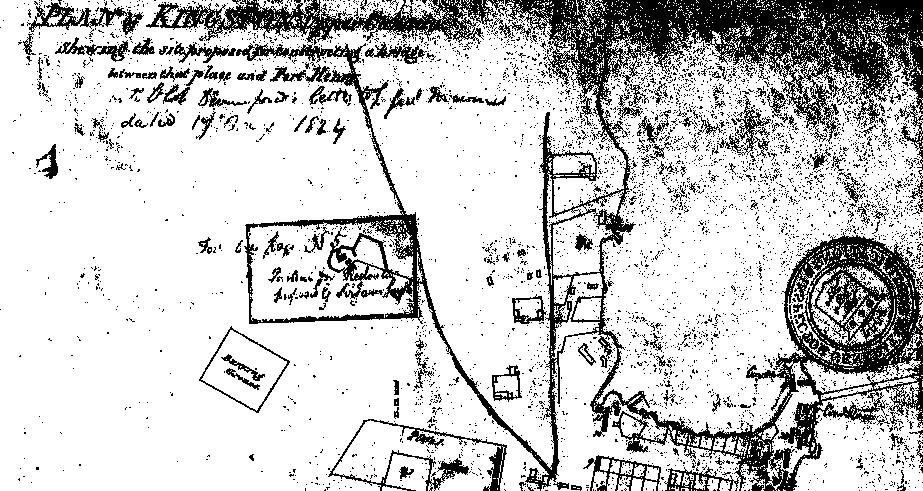
kingston1824The funny thing about Ontario is it started as a part of Quebec. Until the division of Upper and Lower Canada in 1791, this was all the one unified colony that Britain took from France in the conquest of 1760. Settlers started moving in 1783 first from central New York in the first direct Loyalist wave, then over the rest of the decade from the eastern US seacoast as the losers of the Revolution filtered their way around up from New York, Nova Scotia and then down the St. Lawrence. An oblique reference in a land document for a Lieut. Mackay from 1794 gives an interesting hint as to the development of brewing here in Kingston, the commercial center of this new colony:

On May 27, 1794, a petition had been presented in Council on his behalf for “a Piece of Land about the usual Size of a Town Lot, situated on the West side of a Lot lately laid out for the Kingston Brewery, to be bounded on the North by the said Brewery on the East by a small run of Water, on the South by the Common, & on the West by the top Bank…”

The passage is from The Parish Register of Kingston Upper Canada 1785-1811, an online resource that also confirms that by 1797 it was managed by one John Darnley. That is it above shown on a map of my town from 1824. It is also shown on a map from 1865 and later additions are still there – as the 2003 photo at this post shows. There was earlier brewing in the colony but likely tied to taverns like Finkle’s in nearby Bath. Steve Gates, our comment leaver and author of the excellent book The Breweries of Kingston & The St. Lawrence Valley pegs the building of the brewery in 1793 by merchant John Forsyth but it is John’s brother Joseph who is more of the man about Kingston in the 1790s. But, as a garrison town and a depot supplying deep into the continent from the main colonial centre of Montreal, it is entirely likely that their Kingston business affairs overlapped repeatedly.

Creation of the brewery reflected some level of certainty after years of difficulty in ensuring the grain crops could supply the expanding colonial population. A 1796 letter noted in Preston’s Kingston Before The War of 1812 even speaks of the continuing infestation of Hessian Fly affecting the area. Building a brewery spoke to an expectation of peace.

Albany Ale: An Annotated Brewing Log From 1834

vas140a

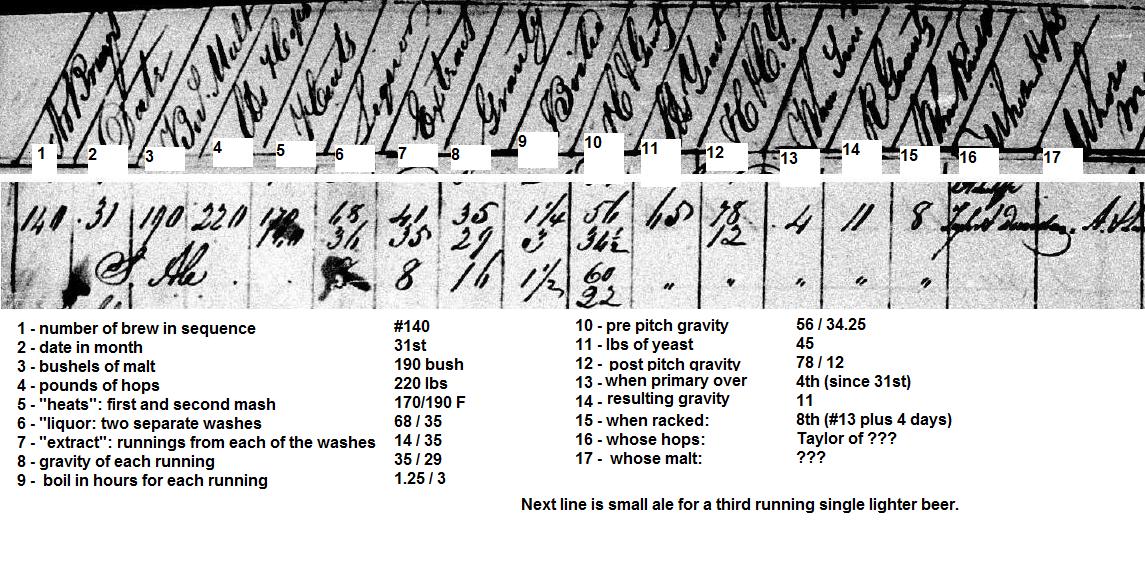
A bit of a question for you today. Above is a brewing log from just before the world of US brewing learned about lager. I won’t get into the details of whose log it is for now* as I am hoping you may be able to help draw out a few more details than I have. If you click on the image you will see my annotated notes. For the most part, I am clear on the numbers but would like to know more about the techniques involved. You will see that there are three beers made from a single mash but that the two stronger are recombined. That makes for what the brewer calls a double and a single beer. Here is what else I see:

♦ The double seems to have 104 barrels of liquor before the boil. A US barrel has 119 litres. So that is 12,376 litres.
♦ The 190 bushels of malt works out to 6460 lbs at 34 lbs a bushel of malt.
♦ The 220 lbs of hops would be local CNY Cluster hops
♦ The malt would also be local pale malt.
♦ This beer made 7 barrels of small ale and 60 barrels of double ale. I don’t understand how 68 and 36 barrels before boil makes 60 as a result. I ran the malt and liquor through a standard calculator and see the result is a 5.1% beer. But I am missing something. That much concentration should make a stronger beer. Or am I making an assumption.
♦ The notes on the opposing page for batch 140 say this is a Pale Stock NY ale. Also, it is noted that this is a particularly good batch.
♦ Unlike some other brews logged and also comments from the time, no salt is added.

Anyone handy with the abbreviations “HVG” and “HHG” at the tops of columns #10 and #12? I assume the G stands for gravity. Also, note that there are slightly different hand writing. The log is filled in over 9 or 10 days. So, the two numerals “6” in column #10 differ. Also, I am now thinking that the number in column #11 may actually be a “65” when I compare it to other numbers. That might make this a notation from degrees F rather than weight or quantity.

Anyway, all thoughts appreciated. This is part of a bigger project so I am hoping the power of the collective brain effect that the internets always promised will nudge us along. Let’s see.

*OK, it’s Vassar’s log.

Albany Ale: Did The Hessian Fly Play A Role?

tdaf1It has been a bit part of the puzzle for me. As I have mentioned before, Craig as taken more of an interest in Albany Ale as reflected in the 1800s industrial period where I am more interested in the pre-1800s experience. The weird thing has been that not only do the two eras reflect issues of scale but there is that back of the brain niggling question about how, prior to a certain point right around that date, they seem to shift from using wheat malt to barley malt as the base grain. I sense Craig may be less firm than me on this. He may think I am off on a tangent. Which might be right. I think I live at the tangent most days and I trust Craig’s opinion – especially as he actually works in the world of fact at the New York State Museum where I live in the world of rhetoric as a lawyer. But I persist and, pursuing that question, ordered a copy of The Dutch American Farm by D.S. Cohen to see if I could find anything that might help me. I think I might have.

To review, Albany is the capital of New York State. Craig lives there. One of the oldest cities in the US, it is an inland port that was settled by the Dutch in the first half of the 1600s as a fur trading centre. It sits where the Mohawk River, the eastern section of the Erie Canal, empties from west to east into the north to south running Hudson River, a couple of hours drive north of the city of New York, which itself sits at the mouth of the Hudson. As a Dutch settlement distant from other colonial settlements and, from the 1660 to the 1780, being culturally isolated from the British American experience around it, Albany took its own path for a significant period of time. Cohen states:

It is debatable, however, whether a colony in which the Dutch Reformed Church was the established church and the only religion that could be worshipped in public, in which there were large, tenanted patroonships and a company monopoly on the fur trade, and in which there was slavery, could be described as either tolerant or democratic.

As part of this singular colonial economy, Cohen describes the role wheat played in pre-1800s Albany and vicinity and includes that passage from mid-1700s traveler Swedish professor Peter Kalm that I posted earlier describing the malting of wheat as well as the volume of production. Wheat was a cash crop that was shipped south to New York city as early as 1680. Barley along with oats and rye were planted at no where near the volume of wheat. Yet wheat collapses as a Hudson Valley crop in the first half of the 1800s. In part this is due to the Hessian fly that was introduced to New York during the Revolution: “[t]he insect had apparently hitched a ride from Europe with some Hessian mercenaries employed as soldiers by the British, hence its name. First noticed in straw used at a military encampment on Long Island, the fly slowly extended its range, endangering the continent’s wheat fields for many years.

So, there was change from pre-Revolutionary hinterland bubble of Dutch culture to post-Revolutionary national American project. And there was the transportation change from Albany as edge of Empire before the war to being just the left turn to the west after the building of the Erie Canal in the 1820s. But on top of that there was a pest that struck at wheat just as the records indicate that Albany brewers moved from making strong wheat beer in the old Dutch style to making barley based Albany Ale which was exported widely through the 1800s. Combined, all these factors explain the shift from one sort of beer to another. Which leads to the next problem of what each of them tasted like.

I Was Looking For The Moon Under Water Mug… Again

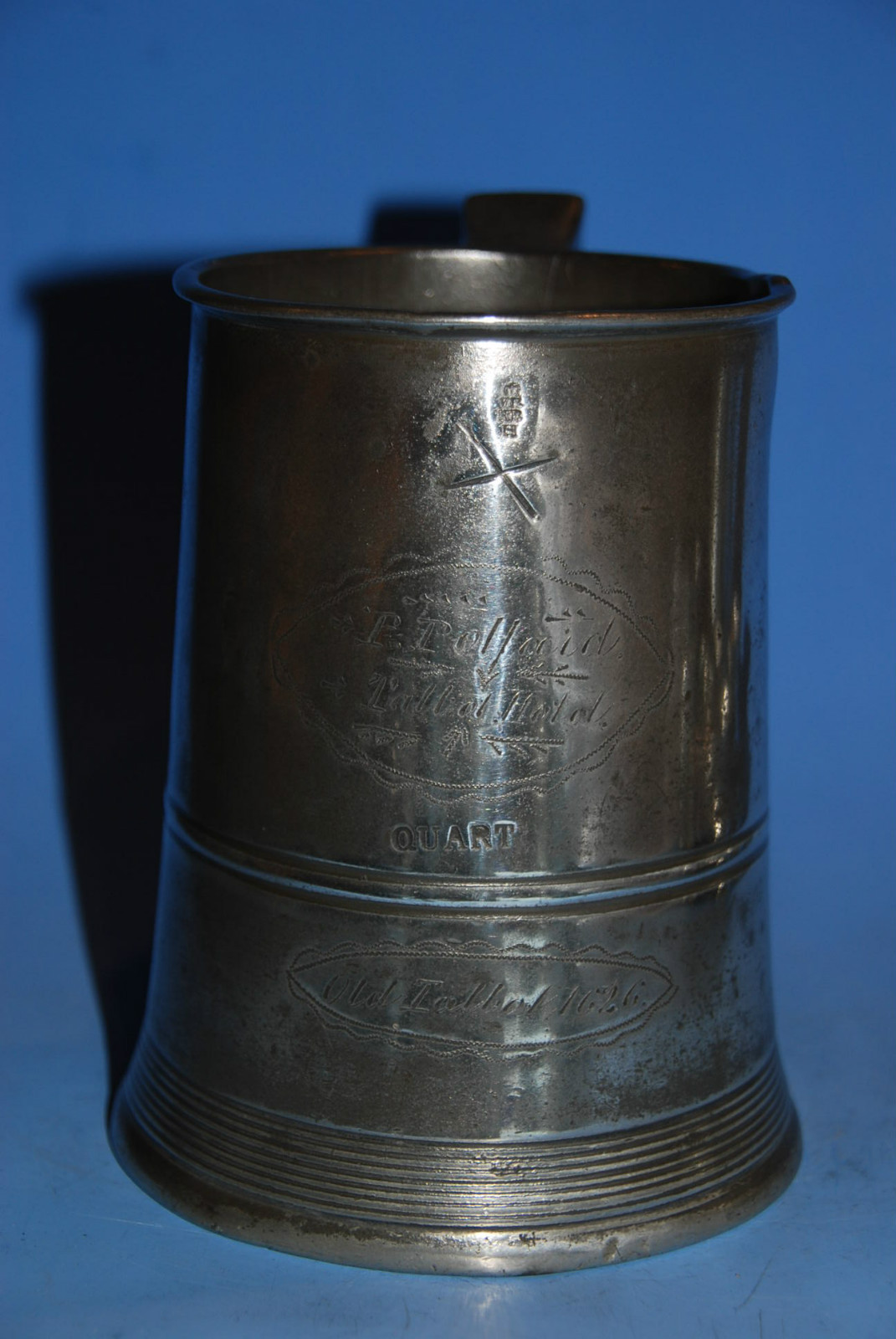
pewt1

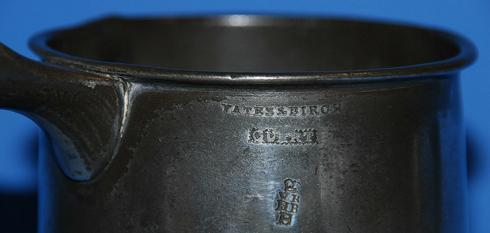
So, you recall that I bought that rather swell Wedgewood 1940s sage green tankard? I seem to have caught a bit of a fever. And there is only one cure for that… a tankard you can play like a cowbell. For the record, here is the information which came with the online listing:

This quart mug which is of quart capacity, dates to around 1840, and is by the well known Birmingham makers Yates & Birch, whose mark is to the right hand side of the handle above “QUART”. There are three verification marks below the rim, two of which are a crowned VR over HB above H (Haslingden in Lancashire – see Marks and Marking of Weights and Measures of the British Isles – Ricketts & Douglas). ). There are two wrigglework cartouches to the front of the body which read “P. Pollard, Talbot Hotel” and “Old Talbot 1626”. The inscriptions suggest the mug was originally used in the Talbot Hotel, Oundle in Northamptonshire which was rebuilt in 1626, using stone and a staircase from the ruins of nearby Fotheringhay castle. Mary Queen of Scots was executed at the castle in 1587 which led to it being subsequently demolished by Mary Queen of Scots’ son and grandson. How the mug acquired verification marks for Haslingden in Lancashire remains a mystery. The mug is in good condition with general wear commensurate with age (see images) but no splits, holes or repairs, and would make a great display piece.

A mystery. Neato. Came in the mail today. Picked up at eBay, it ended up being $75 bucks all in for door to door delivery across the ocean. Best of all, it is a quart with plenty of interesting markings indicating that it was from this still functioning hotel in Northamptonshire from perhaps the 1840s. Definitely marked for the Victorian era. But it is old pewter so I may have to do a bit more research before I make it my primary drinking tankard. Never cared much for the look around the gills of any Victorians I have run across. But it does pose the prospect that a few more could be acquired with a good chance of having a thinking persons quart tankard drinking association. Extra points for showing up with one like this.