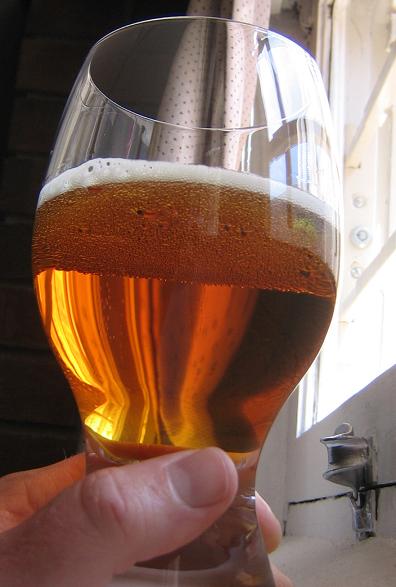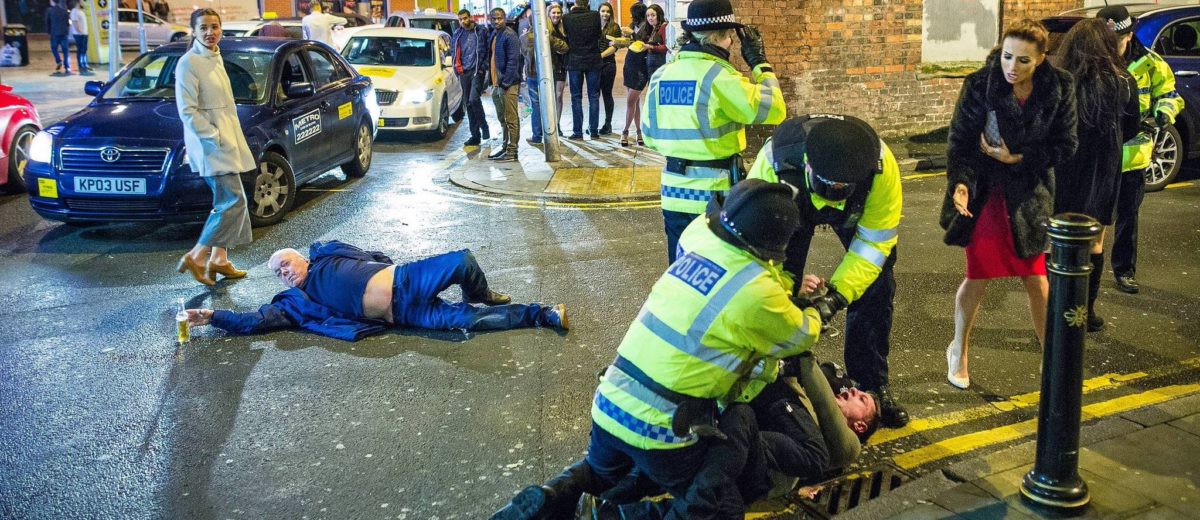
Thursday’s Beery News Notes For The Clampdown

What are we going to do now? It appears the summer has ended with a thump. The clampdown. The BBC reports that social gatherings above six are banned in England from 14 September.  The nightclubs of British Columbia are now shut. Greece has shut down.  Kinda makes reading about beer a side show… kinda. Jeff, however, connected the dots and spoke for all of us when he wrote:

I’d like to raise a mug to all those workers out there who make possible the pint of beer it contains. This has been a rough year. Depending on how you count, the pandemic put somewhere between thirty and forty million people out of work. Many breweries were forced to lay off staff as volumes fell.

The BBC (again) published about the why for those being displaced in shops, restaurants and bars serving the now empty high-rise office block with particular attention paid to the underground network beneath much of downtown Toronto:

For businesses in areas like the PATH, the Covid emergency phase is not over,” says Dan Kelly, president of the Canadian Federation of Independent Business. “Yes, the government is no longer imposing closures, but effectively you may be closed because you have no customers.” While no agency has calculated the estimated cost of these closures yet, the businesses in the PATH typically generate $1.7bn in revenue annually and generate about $271m in tax revenue, according to the city of Toronto, and many have been shuttered since mid-March.

What is a bar to do when its whole model is predicated on the presence of humans? Maureen asked a similar question. I answered: “goats!

What news of beer otherwise? First, some law and an application for municipal planning approval for the replacement of everything on one (again) Toronto City block has caused great upset. Because it is the location of a dive bar called Sneaky Dee’s:

Local Toronto bar Sneaky Dee’s could be torn down after the city announced it has received a proposal for a 13-storey building in its place. The proposal, which was submitted Sept. 4, calls for a mixed-use building that would cover the current residents of 419, 421, 423, 429, and 431 on College Street. It would also consist of a total of 169 units and more than 13,000 square metres of “combined residential and non-residential gross floor area.” Some Torontonians took to Twitter to express their unhappiness about the proposal, and a petition has been started calling for it to be rejected.

In other legal unhappiness, much has been made of the implications of the firing of many staff by Surly, a craft brewery in Minneapolis, coincidental to a union drive. “Arise, Surly Workers” wrote Dave Infante who noted an obvious trend:

In the few instances where workers in the craft brewing industry have seen through the charade and decided “lol this sucks, let’s organize,” owners have dropped the #oneteamonedream pretense with the quickness. It happened at Rogue Ales in Newport, OR in 2011; and again at Pyramid’s Berkeley, CA brewpub in 2013; and in 2019 in San Francisco, where workers at Anchor Brewing, the country’s oldest craft brewery faced a decidedly corporate union-busting campaign that featured high-powered anti-labor law firms and managers shouting “fake news” at workers exercising their federally protected right to unionize. Very cool shit, nice work all around. 

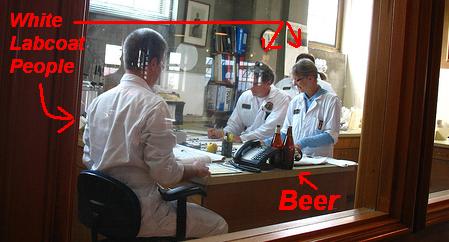
T-Rex understood what was what as illustrated to the right. Beth, too. And GBH published something a wee bit adrift on the topic but, surprise, could not come to clear conclusions. In sum:

The tension between the two narratives shows that despite businesses reopening, the pandemic’s dramatic effects on the hospitality industry are far from over… It’s currently unclear whether the Unite Here union has any legal avenue to fight the layoffs or planned Beer Hall closure.

Displaying greater clarity, this explanation about pouring central Euro lager is excellent. Effective use of social media. Twenty-seven 600 word articles on the subject could not have put it so well.

Note: not a brewery. A beer company, sure.

Note: not small. Not really even a beer company anymore, either.

More law. Ron wrote an interesting post on a question of Scots law, circa 1948 in the case of more than one case of “Dodgy crown corks”:

The defect in their condition was due to being kept in the damp cellar since February 1948. Dunn knew that corks should be stored in a dry place, and that dampness encouraged the growth of various moulds. Moreover, he failed to use the corks in the order in which they were sent to him. Further, he or his servants ought to have inspected the corks within a reasonable time after delivery, and in any event prior to using them.

Nice touch in the report on the use of “various moulds” indicating, perhaps, a particularly unpleasant multi-coloured effect.

Completely separate from either the situation today and the law, Merryn published a piece on the conclusions drawn in her thesis on pre-historic brewing – very high on the neato scale:

Brewing uses few ingredients, only requiring malted grain, herbal preservatives, water and yeast. These ingredients may survive in the archaeological record in a number of ways. Accidents in drying the malted grain, as happened at Eberdingen-Hochdorf can occur. Residues or sediments of the brewing process may occasionally survive in unusual contexts, such as in the sealed Bronze Age cist graves at North Mains and Ashgrove. Residues of barley without any other plant remains indicate the residues that result from washing the sugars from the mashed barley or ‘sparging the wort’. Those barley residues that contain pollen or macro plant remains indicate the addition of herbs during the boil prior to fermentation.

Again, and without a thought for the law, Retired Martin has again taken us to a place without the cares of the day… except in this episode of his series entitled “287,392 UK Pubs” he explains how those at the Blake Hotel in Sheffield are managing the Covid-19 social distancing rules:

3 pm on a Saturday, filling up but quieter than you’d think, a landlord giving the now customary speech. “Take a seat, fill in the track and trace, follow the one way system, one at a time in the loos, leave glasses on the table“ I felt sorry for him. “I’m sounding like a stuck record !“. “We’re trad drinkers, we miss the interaction at the bar” said the next group. I know how they felt.

Speaking of ye olden times, Eoghan Walsh published a good story of a gruit revival, something I may now have lived through two or three times. While a nod to Unger‘s clarifications on the important role control of gruit played in medieval society would have been nice, I love this level of detail:

Invaluable input came from a most unexpected source: a rich seam of human excrement mined by archeologists from the bottom of a medieval latrine. “They found the remains of hops, juniper, caraway, and bog myrtle, and they asked me how this could be possible that in one stratum of this toilet are these four ingredients appearing together at the same time,” Overberg says. “They thought this clearly had something to do with brewing.” And Overberg naturally agreed. “They have excavations for a period of 300 years, and it is all the same. It’s always hops and bog myrtle, caraway, juniper.

Lastly, The BeerNut wrote a review (no, really he did!) that contained a passage that triggered another thought:

Pyynikin has really missed the mark on “Pacific” here. There’s not an iota of tropicality about this, and nothing American either. Maybe it’s a Finnish take on New Zealand’s ubiquitous Canterbury Draught, because that’s about the only way it makes sense. As beer in its own right it’s inoffensive, and might even be enjoyable as a dark-evening sipper. I couldn’t deal with the surprise, however, and resented it for the rest of the glassful. Adjust your expectations accordingly.

My first thought was it was clearly a tribute to the possible first brewer in Quebec Brother Pacifique Duplessis. But then I thought… how little I care about branding of beers. Then I realized how much I have to wade through every week is basically (i) folk writing about the branding of beer especially as displayed on the container. As opposed to the beer itself … and clearly unlike the TBN above who makes note of the  missing connection. Then I wondered what else are similar categories for me: (ii) fun and pozzie but samey brewery owner interviews, (iii) conversely, greater important questions of rights contextualized in brewing,  (iv) then, conversely again, dreary cut and paste posts of others’ research labelled as “reporting” and… (v) all the superlatives. Always the superlatives. Each theme has its audience I suppose and certainly varies in ultimate value… but what percentage of the weekly collective output isn’t one of the five categories above? Sure, these things come in waves – like yesterday’s topics of food pairing and sell outs – but more would be good to add. Please advise by next Wednesday. A fella has deadlines, you know. Next big thing could be canals. Could be.

There. Done. For more please check in with Boak and Bailey Saturdays, plus more at the OCBG Podcast on Tuesdays (where Jordan points a particularly pointy finger at the letter “B”!) and sometimes on a Friday posts at The Fizz as well.  And sign up for Katie’s weekly newsletter, too. Plus the venerable Full Pint podcast. And Fermentation Radio with Emma Inch. There’s the AfroBeerChick  podcast as well! And have a look at Brewsround‘s take on the beer writing of the week. Not to mention Cabin Fever. And Ben has finally gone all 2009 and joined in with his own podcast, Beer and Badword. And BeerEdge, too.
The “All Stories Have Ground To A Halt” Version Of The Thursday Beery News

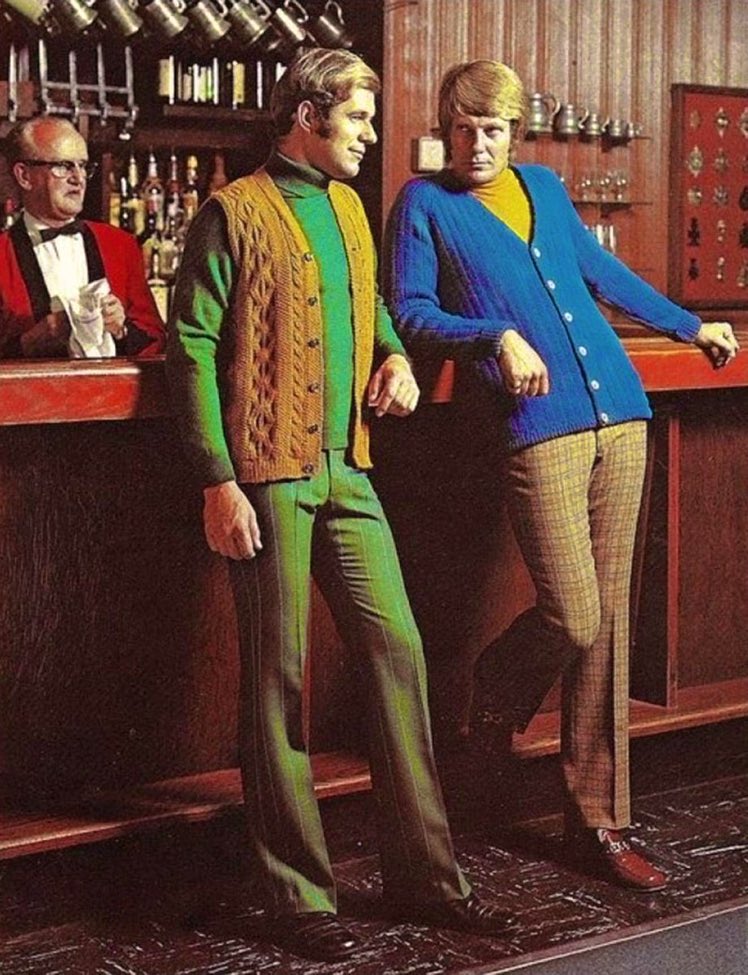
Things are slow out there. True, I was no paying much attention but the beer news is a bit dribbly. So dribbly in fact that I did not realize I had been blessed with a comment from Tandyman himself five days ago.  To tell me I was wrong about something. So slow that I post this picture to the right* in a desperate attempt to drum up the slightest interest in this week’s edition of the news notes. If this whole thing goes on long enough, it might be what the dapper gent will once again where to the pub. Might be wrong about that, too. Who can tell these days? Other than the Tand.

Note: a salad bar now filled with booze minis. [“Nippy sweeties” according to Billy Connolly and his skit “The Jobbie Weecha !!!!“] And Nate is apparently doing very well in all this. Perhaps, Robin not always so much. And Katie is very much on the doorstep. Boak and Bailey are mini-kegging it at home… with maps.

Elsewhere, Stonch was figuring out the rules for English licensees without folk propping up the bar, rules about how to sell their beer, like he does by delivery in milk cartons, but closed with some of his best legal advice ever:

I’ve written a lot of replies there (sorry Matt!) but in general I think I agree with Matt that pubs should be careful doing this. It doesn’t *feel* right, even if it’s legal – and in any case we’ll all be open again properly in a few weeks so why jump the gun?

This tweet purported to show how 2 meter distancing would not work in an English pub but, to my eye, I would assume removing a few chairs could make it possible.

To the east of Stonch, Max wrote a series of tweets about the joys of the reopening of pubs in his Czech hometown, of the first meal on a patio (right) and the first pub visit (below):

I thought a lot about which pub will be the first I would walk into and when. But, sod it! I was in the neighbourhood and simply couldn’t resist…

Nearby, Evan wrote about a few Czech beers, too – but from there, still in his lock down. He was not so thrilled but gave an update on what was allowed:

Flash forward 10 weeks and it feels like we’re over the (first?) hump. Things in the Czech lands are cautiously reopening, at least for now, with pubs and restaurants allowed to serve drinks and food indoors as of May 25, and mask usage no longer required outside, provided you can maintain a 2-meter distance from others. (Masks do not have to be worn by customers while eating and drinking indoors, though they still must be worn by servers and there are new restrictions on customer counts and spacing between seats. Masks still must be worn on public transportation and in shops.)

We can all agree that we need to hate the Astros, right? Now there is a beer for that. Conversely, GBH has decided that beer price rises are not gouging and took the trade association’s word on it:

Uhrich attributes the pricing spike to reductions in discounting. Retailers are simply putting less beer on sale than they normally would at this time. 

Really. Never saw one that coming. Somewhat similarly, I was sent links to this story about how the Black Death created the pub. It’s OK but it feels a little like someone took a jigsaw puzzle and gave it a good shake before packing it in a pile and telling folk it was complete:

“The survivors [of the Black Death] prioritized expenditure on foodstuffs, clothing, fuel, and domestic utensils,” writes Professor Mark Bailey of the University of East Anglia, who also credits the plague for the rise of pub culture, over email. “They drank more and better quality ale; ate more and better quality bread; and consumed more meat and dairy produce. Alongside this increased disposable income, they also had more leisure time.” Not every establishment looked like a modern pub: Alehouses were often still literally brewers’ homes, inns offered ale and accommodation, and taverns were a sort of medieval wine bar, a lasting legacy of the Roman Taberna.

I blame the editors, as always.  Refresh yourself with Jeff on the fragrant and rich thing that is Italian Pilsner.

Westwardly, Dr. J. Jackson-Beckham wrote a post about, first, what a horrible job she did at social media polling but then how it gave rise to unexpected considerations on how craft breweries might address inclusivity in terms of employment practices:

I was curious if there might be some correlation between perceptions of inclusion and equity and the level of formalization of any given part of the employee journey. As expected, performance reviewing was reported to be the least formalized. Without standard operating procedures that make inclusive and equitable practices transparent, it’s less likely that these practices will be used at all or perceived as such by employees…right? Wrong.

To her east over in Glasgow, Robsterowski wrote about having a 42 year old beer, a 1978 Courage Russian Stout:

First waft of the 1978 bottle on opening: well they certainly didn’t forget to dose this with Brettanomyces. The secondary yeast has completely taken over, leather, prunes, balsamic vinegar. Residual sugars have almost completely dried out since 1978, but the beer is still drinkable: still some carbonation, still quite viscous and oily, though lighter than it once would have been, yet no sweetness. Blackcurrant and some empyreumatic flavours reminiscent of wood smoke, perhaps a little smoked beef, any acrid or chocolatey notes long since mellowed out. There is still quite a bitter aftertaste on this, though it is camouflaged by the massive Brettanomyces aroma. Would probably have been better not quite so old. If you happen to also have a 42 year old bottle of Russian Stout, drink it fifteen years ago.

Fine. That’s enough. Cooler weather by the weekend around here. It’s been like August for a few days so it will be good to see late April again. Keep writing and reading and keeping up with the chin uppitry. Check in with Boak and Bailey most Saturdays, plus more at the OCBG Podcast on Tuesdays and sometimes on a Friday posts at The Fizz as well. And sign up for Katie’s weekly newsletter, too. Plus the venerable Full Pint podcast. And Fermentation Radio with Emma Inch. There’s the AfroBeerChick  podcast as well! And have a look at Brewsround‘s take on the beer writing of the week. Not to mention Cabin Fever. Thanks for stopping by while not leaving the house.

The Last Thursday Beer News Notes Before The UK General Election

It’s not often that I get to headline the weekly update with something so.. so… unbeery – but is beer ever really that much removed from politics? Consider this photo to the right that circulated about a man to the left. I was as sad that it was Coors Light, the faceless multinationals of beer that he was pouring as much as I was saddened by the mleko* pour.  The Late Great Jack Layton held the red banner high here in Canada for years and he also knew how to pour a beer with a bit of style.

Given it is Yule, I will start with Ben Johnson and his list of ways to avoid the Christmas party hell you fear most, other drinking your good stuff:

Hosting at home guarantees my own access to good hooch but it also opens the door to the undesirable possibility that my guests might assume that they will be graced with the same luxury, which of course they are not. Indeed the one downside to hosting is that it means people might drink my beer. Thankfully, over the years, I’ve learned ways to keep my guests from dipping into my stash and I’m here to pass that wisdom on to you.

Speaking of Yule, Merryn in Orkney and Lars in Norway were discussing Christmas brewing obligations in Norway when Lars made this extraordinary statement:

This was not even the law for all of Norway: it only applied in western Norway (the Gulathing area). The other regional laws did not have this provision. (The Frostating law required brewing for midsummer.) Neither did the Swedish regional laws.

The Frostating law? Now I have to get my brain around the legal brewing requirements of other jurisdictions. It would be interesting to have a great big list when folk had to brew and why.

Katie of the shiny and the biscuit gave us a wonderful portrait of and an interview with two Mancunian fans leading the cause of cider from their demand side of the commercial transactional teeter totter, this week at Pellicle:

With Dick and Cath leading the march, Greater Manchester has become the centre of “real” cider in the North in the space of two years. Together, they created the Manchester Cider Club, and in doing so have brought cidermakers like Tom Oliver, Albert Johnson (Ross-on-Wye) and Susanna and James Forbes (Little Pomona) to the city. At regularly sold-out ticketed events and inclusive meet-ups, they are encouraged to answer questions and share their cider with a new, northern audience.

From further east, the tale of Vienna Lager was told at scale in the seven days at A Tempest in a Tankard:

Four hours east of Munich as the RailJet flies, the Viennese were marking a milestone anniversary of their own, albeit with much less fanfare: 175 years of Vienna Lager. Even if no museums commemorated the fact, and even if the media resonance was akin to the sound of one hand clapping, Vienna had good reason to celebrate its contribution to the culture of brewing. Bottom-fermented beer had been produced for centuries in Europe’s Alpine regions, but it wasn’t until Anton Dreher, owner of the Brauhaus zu Klein-Schwechat, brought together technological advances he learned in Britain and Bavaria that he was able to produce the first lager beer that could be brewed year-round. That happened in 1841. **

Big Beer Corporate News? Apparently darling of a decade ago Stone is maybe up for sale, a rumour of a story almost entirely confirmed by the denials of the brewery. In another sort of bad brewery news reporting… or rather reporting on bad news for a brewery… it appears that New Belgium may have new clients amongst the authoritarian military elite!

The New Belgium Brewery insists it is not like other companies. Its owners, who are also its employees, are devoted to fighting social inequity and climate change, proving business can “be a force for good,” its website says. Their CEO Kim Jordan was honoured among 30 “World-Changing Women in Conscious Business” last year. Employees even get free bicycles. But those ethical credentials have not stopped them planning to sell their firm, which has breweries in Colorado and North Carolina, to a beer giant accused of funding genocide against the Rohingya in Myanmar.

Wow. Too bad there was no way for the governing hands on the nNew Belgium transaction to be warned of the situation, like a hearing of the International Court of Justice or anything. Speaking of things end-timesy, beer in the U.S. of A. is dying again:

The trend doesn’t appear to be reversing itself. Sales of domestic beer slipped 4.6% between October 2018 and October 2019, according to Nielsen. Microbrew and craft beers are also in a minor slump, down 0.4%, despite Big Beer companies scooping them up left and right (AnheuserBusch just purchased Craft Brew Alliance, which makes Redhook Ale).

“Microbrew” can only be a word used by someone who knows very little about microbrewing, rights? Aside from that, the story is White Claw and, if we had any sense, no one would care as that is something other people buy like purple velvet trousers or quadrophonic stereo systems. So why do we care? I don’t care. Affects me in no way. Nada.

All of which leads to the news in Ontario that the national brewpub chain Les 3 Brasseurs has announced that four of its locations in Ontario are closing:

Ten years ago, we entered the strategic market of Ontario and, over that time, experienced some great victories, notably our Yonge and Oakville restaurants, but also some challenges,” said Laurens Defour, CEO of 3 Brewers Canada, in a statement. “This is a difficult decision, but we have concluded that we need to close some sites in order to support the evolution of our business.

Careful readers will recall that I happily attended on of the busier outlets in Oakville last year and was quite happy with the carrot pale ale I was served.

Barry in Germany posted an afternoon’s worth of photos of old apple and pear trees taken during a walk with his dog. Elsewhere in Germany, there is a pub branded with the likeness of Roger Prozt but denying it is a pub branded with the likeness of Roger Prozt. Protz commented thusly:

I’m not even allowed to be flattered. They deny any connection to me because they think – wrongly – I’m going to sue them. I recall the image that was produced for a beer event, same style for all participants.

Note: of the two being depicted, I’d suggest the dandy, the fop, jack the lad was more mocked than Peg. Interesting that the powdered wig was not a wig at all. And speaking of the Irish of yore, here is the tweet of the week:

“Ale has killed us”? Short memories of the Vikings apparently. But enough! I have a long day’s work ahead of me then need to settle in for the the election results. Don’t forget that there’s more news at Boak and Bailey’s on Saturday, at the OCBG Podcast on Tuesdays and sometimes a mid-week post of notes from The Fizz as well. And sign up for Katie’s weekly newsletter, too.

*A teacher in Poland I once was…
**I used a slightly different quotation than Boak and Bailey so I feel justified.

The Resistance to Change As Spring Arrives Edition of Your Thursday Beer News

Spring! Let’s get going right away with this tweet from Joe:

I am against fetishizing containers and dispense methods. I am for glasses of beer with sturdy foam in comfortable pub and home settings. Vote for me.

Interesting. In these last weeks of by 56th year, I am a friend to such an idea. I long for the first warm Saturday, a late morning beer after a few hours of digging in the garden. That’s the dream.  But is that reality? Is it healthy? I mean we all want to be healthy, right? But there is this great unhappiness that things are not what they seem which seems to be downright toxic and very 2019. Let’s see if I can put a thought or two together… well, let’s do that a little later. I am enjoying the first full day of spring too much to be too cranky right away.

There – that’s a better way to start. By the way, I really liked this photo posted by Boak and Bailey on Twitter. A cheery scene. By the way, I hear Jessica grabbed guzzled the pint – and then  was licking the mustard straight off the knife. Weird. Still, a lovely still life. Now, some actually interesting reading: the tale of brewer Wilhelm Kohlhoff, Peoples Brewing Company in Oshkosh, Wisconsin (1953-1968):

Kohlhoff is now 91 years old. He still recalls details of the brewing process he followed at Peoples. He also still has the original, handwritten notes he made when he first went to work in the brewhouse. They form a step-by-step, minute-by-minute outline of his brew day. The notes are written in a mix of German and English and give temperatures in degrees Réaumur, a unit of measure favored by many brewers of the period.

More actually interesting reading: the story of Italy’s relationship with Tennent’s Super Lager:*

It’s a scene that has been repeated for loads of folk from Glasgow who have made the trip over to Italy on their holidays in the last decade or so. A holiday that, while the stunning architecture, frescos, ice cream and pizzas might seem like the most obvious talking points when you return to work the next week, they all play second fiddle to the fact everyone drinks Rab C Nesbitt’s favourite swally, Tennents Super.

I love this. Nothing better than the happy confusion my Scots folk feel finding out they are actually loved for one thing or another.

Next, Jeff has proven himself a big fat liar** about the quality of his writing with this piece entitled “The Sound of History Rhyming.” Now, don’t get me wrong… I fundamentally disagree with his premise, and his timeline… as well as all his examples. It is all too clever and neat. But the writing is compelling. And I might be entirely wrong. Utterly. Consider this bit of a tid:

As products, there is very little in common between mass market lagers and milkshake IPAs. The intention brewers have in creating highly engineered beer in 2019 is flavor, not cost. That’s a huge difference. But what the two eras have in common is a comfort in harnessing science to achieve an end without considering tradition.

See, that is fundamentally wrong. We are given this fib that somehow folk after WW2 were suckers and the brewers took advantage of their naivety. Nothing is further from the truth. Throughout the 1900s was a rush for lighter and zestier flavoured beers that, yes, were cost effective but were also celebrations of the progressive confidence of the era. The Champagne of Beers was so labeled in 1905. In Canada, rice based beers show up in the 1920s. They were modern – even if we*** are no longer modern in that way. Milkshake IPAs are also speaking to today in their way, even if I do not speak the language. I am, as I keep telling you, an anachronism.

One more thing before, you know… here’s a fabulously boozetastic giffy graphy.

Now, the gloom. First, beer writing. Mr Beeson went right after something called in a way that raised two concerns for me right away:

The Beer Boutique is closing/going into administration. In six months writing for them they never paid me once on time, and by the sounds of it they’ve treated their employees & investors just as appallingly.

So, obviously not being paid is a rotten stinking thing. But I am not sure what “writing for them” means.  It is a store? Ms. K. shared the other day that she was “going back to the client-based blog posts” which indicates the way she earns a living, in addition to her rightly proudly proclamation that her work is found in @fermenthq and @ogbeermag. Similarly burdened by the slog, Jeff admittedI can see how my writing has degraded as a result of the constant hustle. It ain’t a good thing” in a follow up to an odd tweet by GBH – and by odd I mean MK’s boast that the reason he started “GBH was that beer media was boring (with a few exceptions) 15 years ago!” strikes me as odd given I have seldom seen so much claimed for (with a few exceptions) such exuberantly tepid writing, known mainly, yes, for moving the mid-point firmly from the comparative to the superlative while, oddly, keeping the foot on the clutch when the time for a conclusion comes around. It’s not that it’s wrong or ill-intentioned. It just… falters. Like somewhere else someone not including the obvious reason for changing a recipe of a brand of beer – the making of the more of the money. Is that why folks are turning away from reading paid beer writing?

Maybe. It’s all so uncertain. We are next inevitably drawn to “The Fraudulent Influencer” by Doug the CPA as posted at Beer Crunchers V.2.0:

Despite this NOT being a lucrative field, the prospect of being insta-famous and the money, free beer, glassware, tickets, and access that accompanies it has resulted in a vast sea of wannabe influencers. Like authentic versions, the imitators come in all shapes and sizes, each in search of a piece of the action. The time it takes build a strong following by generating meaningful content is too daunting. They look for shortcuts to appear more influential than reality, in hopes of getting noticed by breweries, or agencies working on their behalf. 

Is it the glam? Apparently the glam ain’t all that glam. It can’t be the glam. You may now want to listen to Andy Crouch on the Full Pint Podcast. You might want to tighten your seat belt before you do. And it’s not just the writers. Consider the brewers next. The Beer Nut offered this second hand observation:

Chatting to a brewer yesterday who said his access to international markets is determined by his Untappd scores. Terrifying.

What does that do? Does it lead to things like the “uncomplicated and easy drinking“or a pastry stout named Chocolate Lagoon? Fact jostles with fiction these days as far as what is on the shelf or in the tap. I’d be getting skitterish, too. Breweries are dropping like flies. It’s the era of “a miniaturized version of industrial lager’s vision” for heaven’s sake. And then what about the drinkers? Well, it seems that some older guys of The Men’s Shed sort can’t get a break when they gather in congregation and discuss, likely, boring brown beer. Jings.

These are tough times. But is it all bad? I don’t think so. I can get a better selection at better prices than ever. Value reigns even if sucker juice beer is getting its day in the sun. Ah, the sun. Spring is here. Hopefully folks will get out and find something other to do, other than to buy than beer. Other than to seek a living writing about beer. I don’t really depend on beer culture, me. I just want that corner with a bit of warmth in the sun, a ache in the shoulder, dirt under the nails and an excuse to open something nice on a Saturday soon. Before then, check out Boak and Bailey on Saturday and Stan on Monday. It’s probably warmer wherever they are already. Spring!

*H/T to Cookie.
**See “…my writing has degraded…” below… well, now above seeing you are reading a footnote.
***Well, the “we” who are not the majority of beer drinker everywhere who prefer light industrial lagers still today.

Some Beery News Links For The Sudden Coming Of Spring

It is obviously a tough time here in Ontario and in Canada. The mass murder on Yonge Street in Toronto on Monday has struck hard and will affect many for years to come. It has come so soon after the  Humboldt tragedy. And for our house, a neighbour – dearly liked, always been good to the kids – passed suddenly. It’s a rotten end to a hard winter. Ten days we were in a two day ice storm and now suddenly it’s warm. It’s a hard segue, like any sudden transition. Yet when I read Jon Abernathy’s thoughtful warm memorial to his own father who also passed away recently again with little warning, we are certainly reminded there are bigger things in life than beer yet – as Jon put it – it’s hard but we are doing OK. I hope.

So, this weeks links are offered to give some lighter thoughts. One delightful small thing I saw this last week is this tiny 12 inch by 12 inch true to scale diorama of the old Bar Volo on that same Yonge Street in Toronto. It was created by Stephen Gardiner of the most honestly named blog Musings on my Model Railroading Addition.  I wrote about Volo in 2006 and again in 2009. It lives on in Birreria Volo but the original was one of the bastions, a crucible for the good beer movement in North America. The post is largely a photo essay of wonderful images like the one I have place just above. Click on that for more detail and then go to the post for more loveliness.

In Britain, after last week’s AGM of CAMRA there has been much written about the near miss vote which upheld the organization’s priority focus on traditional cask ale. Compounding the unhappiness is the fact that 72% voted for change – but the change needed 75% support from the membership. Roger Protz took comfort in how high the vote in favour of change actually was. Pete Brown took the news hard, tweetingcask ale volume is in freefall.” He detailed his thoughts in an extended post.  And B+B survey the response and look to the upsides that slowly paced shifts offer. The Tandly thoughts were telling, too. While it is not my organization, I continued to be impressed by the democratic nature of CAMRA, the focus on the view of consumers rather than brewers as well as the respect for tradition. I am sure it will survive as much as I am sure that change will continue, even if perhaps at an increasing pace and likely in directions we cannot anticipate. Q1: why must there be only the one point of view “all good beer all together” in these things? Q2: in whose interest is it that there is only that one point of view?

While I appreciate I should not expect to link to something wonderfully cheering from Lars every week, I cannot help myself with his fabulously titled post, “Roaring the Beer.”  In it he undertakes a simple experiment with a pot and rediscovers a celebratory approach to sharing beer that is hundreds of years old. Try it out for yourself.

Strange news from Central Europe: “In 2017, the Czech on average drank 138 litres over the course of the year, the lowest consumption in 50 years.” No doubt the trade commentators will argue self-comfortingly “less but better!” while others will see “less but… no, just less.” Because of course there’s already no better when we’re talking about Czech lager, right?*

As a pew sitting Presbyterian and follower of the Greenock Morton, I found this post at Beer Compurgation very interesting, comparing the use of Christian images in beer branding (usually untheologically) to the current treatment of other cultural themes:

To try and best create an equivalence I have previously compared being a Christian in modern England to being a Scottish football fan in modern England… On learning your love for Scottish football people in general conversation would automatically make two assumptions: 

a) You believe domestic Scottish football to be as good as domestic English football; 

b) You believe Rangers and Celtic (The Old Firm) are capable of competing for the English Premier League title…

The accusations and derision came from assumptions of your beliefs and the discussions would continue this way even after explaining that their conjectures were false. Talking about Christianity here is similar. By existing I am allowed to be challenged directly about my thoughts on sexuality, creationism, mosaic period text, etc.. and people often assume they understand my attitudes beforehand.

Personally, I think the Jesus branding is tedious bu,t thankfully, all transgressors all go to hell to burn forever in the eternal fires… so it’s all working out!

Homage at Fuggled to the seven buck king.

Question: what am I talking about in this tweet?
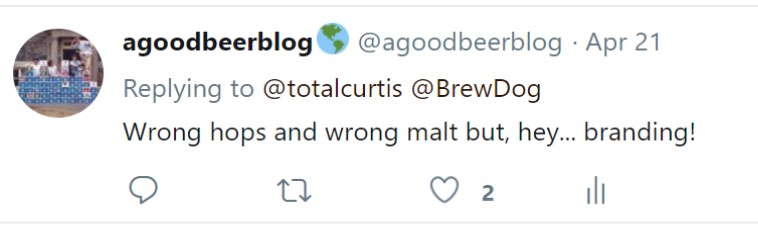
Hmm. Oh yes! The news that Brewdog is claiming they have brought back Allsopp India Pale Ale. First, it appears that someone else has already brought it back. Weird. Second, as was noted by the good Dr. David Turner last year, this can only serve as a marketing swerve for the hipsters. AKA phony baloney. Apparently, the lads have been quietly cornering the market in some remarkable intellectual property including, fabulously, spontaneity! My point is this. You can’t recreate a 1700s ale until there is 1700s malt barley and a 1700s strain of hops. [Related.] Currently, I would say we can turn the clock back to about 1820 if we are lucky given the return of Chevallier and Farnham White Bine. There is no Battledore crop and I couldn’t tell you what the hops might be even though there was clearly a large scale commercial hop industry in the 1700s, not to mention in the 1600s the demands of Derby ale and the Sunday roadsfull of troops of workmen with their scythes and sickles,”. The past is a foreign land, unexplored. Perhaps Brewdog have found a wormhole in time that has now overcome that. Doubt it but good luck to them.

Well, that’s likely enough for this week. Remember to check in with Boak and Bailey on Saturday and then Stan on Monday for their favourite stories and news of the week that was.

*Note: see also the work of CAMRA and the protection of cask ale.

Session #114: I Know Nothing About Pilsner

This month’s edition of The Session sees Allistair Reece asking us about pilsners.

I know zippo about pilsners. I never went on one of those five-day long weekend holidays to Prague that made me a drive-by insta-expert. I never lived there spreading the cultural imperialism of English as a Second Language either. When I was teaching overseas after university standing before a group of sweaty ignorant teens in 1991-92, I went to northern Poland and drank Gdanski. So I can tell you all you might want to know about tripe soup and how to say bad words in another Slavic language. When I worked in Aalsmeer in the Netherlands in 1986 I drank a lot of the local big named stuff – Grolsch, Amstel and Heinekin – and even learned how to pronounce the first one “[hork]-rols-[hork]”… but I am not sure that is what Alistair is thinking about. It’s not like I pretended. When I needed Czech-based pilsner content, Evan wrote a post. Why pretend? It’s not that I haven’t experienced beers branded as pilsner. But I’ve never heard the mermaids sing about it. Is it maybe that pilsner gets lost in the shuffle of the more generic “lager” thing now and in the past? It has suffered indignities at the hands of craft even when others make honest efforts.

You know, in 2006 I made something of an admission when I wrote “I just can’t imagine when I am supposed to crave steely stoney dry grassiness.” Is that it? It’s just not my thing?

So – When Was Lager Invented… Discovered… Evolved?

This is either just a bit weird or I have completely missed something. Apparently some scientists have been looking to find the yeast strain that started lager… and they think they have found it:

When the team brought the yeast to a lab at the University of Colorado and analyzed its genome, they discovered that it was 99.5% identical to the non-ale portion of the S. pastorianus genome, suggesting it was indeed lager yeast’s long-lost ancestor. “The DNA evidence is strong,” said Gavin Sherlock, a geneticist at Stanford University who has studied lager yeast but was not involved in this study. But Sherlock wondered how S. eubayanus could have traveled the nearly 8,000 miles from Argentina to Germany. “We all know that in 1492, Columbus sailed the ocean blue,” he said. “Lager was invented in the 1400s. It’s not really clear how that progenitor would have gotten from South America to Europe.”

Whazzates’sayin’?!?! Look, don’t get me wrong – yeast is interesting stuff. But to say lager was “invented” in the 1400? Now, if I dip into my copy of Hornsey, I don’t run into lager until the 1800s at page 485. Yet this story I posted in 2008 speaks of lager yeast evolving in the 16th century in a Bavarian cave which gets us in the ball park in terms of centuries. Maybe it’s the use of the word “invented” in the article that threw me off.

Most interesting of all, Gavin Sherlock posted a comment at this here blog back in 2008 as did Drs Dunn and Sussman all involved in this project. I will stay well away from the term “egg head” this time and invite some direction on their work and the implications for the lagered time line.

Delaware: Golden Shower, Dogfish Head, Milton

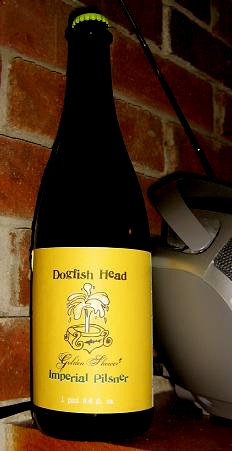
An imperial pilsner. This is a sort of beer I never imagined I would need to concern myself with. Unlike stouts or pale ales with their history of bigness, surely no one would bother upping the game of brewing the steely king of lagers. No one told Dogfish Head from Delaware, however, and they went ahead and did it as they tell you about at no lack of length on their website, including this:

The big breweries are as guilty of any company in any industry of brainwashing the consumer through the sheer oppressive magnitude and breadth of their marketing efforts. They are selling a brand name and an image with such zeal that they have forgotten about the product behind all of this horseshit and hyperbole – the beer itself. Dogfish Head Golden Shower is the beer itself. A true Pilsner brewed with 100% Pilsner Barley, and impressively hopped using our self-developed continuing-hopping method. At 9% abv it’s also nearly twice as strong as the American, wanna-be pilsners made by the big boys.

If you have read my reviews here before you know I have questions about my relationship with pilsners. I respect the fact as much as the next guy that it is a noble and traditional style but then there is that metallic zing…or is it a zang…that fills my mouth as if I was chewing a quarter pound of four penny nails that have been laying around the shed. So I approach this beer with some trepedation. And some of the low rating BAer reviews are backing that up – like this one:

…Not drinkable at all. Really sad for such a great brewery. I dumped the remainder of my $12 bottle in the toilet, where it belongs. Don’t waste your money on this golden shower…

Yikes. I only paid $8.99 for mine but still. Intersting to note, however, that the highest BA raters consider many of the same elements but like them. I don’t know what to expect now.

The beer pours a very attractive bright burnished gold with a white head that resolves to a rim what with the low carbonation. When you shove your nose into the glass there is plenty of sweet apple and pear concentrate. The first thing I think of when I sipped was triple. It is sort of like a Belgian triple – candy-ish sweetness and all – but also with a fall fruit aspect like calvados. It is also thickish and does not have the overly metallic hop profile I feared – the hops are tightly herbal as much as anything. In fact, it is far more pale malty than anything else. And that is a remarkably well hidden 9%. The beer is not hot in the mouth but it certainly does warm otherwise.

Where does this beer fit in? It is a near neighbour to Belgian golden strong ales like Duval or triples like Chimay Cinq Cents with the white label – but without the bubble gum or candy floss notes Belgian candi sugar provides. A beer to contemplate the coming autumn. A beer to eat apple pie and vanilla ice cream along with, oddly enough. It would be interesting to have this beer condition in a wood cask as there is that butter and/or vanilla richness that could be umphed one notch for experimental purposes.