Your Super (Not All That Scary) Boo-tastic (But Without Any Fake Blood Splatters) Halloween Week Beery New Notes

Frosts? Yup. Green tomatoes brought in? Check. Furnace? On. It’s that time of year. Darker beers. Browner liquors. Higher natural gas bills. I feel a bit like the unnamed gent in the painting, “A Man with a Pint” from 1932 by Fred Elwell. Layered clothes. Sitting in a lower light. Pointing at things in newspapers and telling the person across the table about it. I feel badly for the lad. He just missed out on the first wave of beer blogging by about seventy years so, given that, all he could do was sit in pubs, pointing at things in newspapers and telling the folk who were with him about it.

Before we get into the newsy news, perhaps speaking of him… and even maybe me, The Guardian shared a story this week on hangovers and aging and what’s going on:

The liver breaks down alcohol with the help of enzymes, but as we get older it produces fewer of them, meaning toxic byproducts such as acetaldehyde – the compound responsible for many hangover symptoms – linger in the body. It’s not just the liver. The body’s water content drops by about 5% after the age of 55, partly because levels of muscle, where a lot of it is stored, decrease. Less water means alcohol is more concentrated in the bloodstream, and dehydration caused by its diuretic qualities – a key culprit behind hangover headaches and grogginess – hits harder. Kidney function also declines with age, slowing the removal of waste products. “You get this buildup of waste products in the body that have a longer circulating time to exert their effects…”

Tell me about it! Scary. Getting back to with the ghosts and ghouls theme, The Beer Nut has put on his STASH KILLER! costume this week and has put together an exploding can special post:

I don’t know why I even had these. It certainly wasn’t with the intention of seeing if they improved with age: the styles involved aren’t really built for that. This summer’s warm weather resulted in some warped cans, and I lost a few which ruptured, so I took that as a signal to try these out before they explode completely… For the most part, these were better than I expected. While of course I don’t recommend that anyone age pale ales or hoppy lagers in the hope of improving them, not least because of the risk of explosion, it seems it takes a lot to properly ruin a beer once it’s in its aluminium jacket.

BREAKING PERRY NEWS!!! A solid rebuttal from Barry Masterson this week in Cider Review on a statement by cidermakers Westons declaring that perry is dead!! and using the term “pear cider” instead:

One would think it is incumbent upon established (and let’s admit, pretty large) producers like Westons to protect and promote the uniqueness of perry, not wash it away for the sake of a quick sales boost. The move is especially troubling coming from a company that touts its family history and traditional production methods. You cannot claim authenticity while simultaneously erasing the very tradition that underpins your reputation. Rather than declare perry “dead,” Westons should lead the way in educating new drinkers about its heritage and distinctiveness. Younger consumers are curious, discerning, and increasingly interested in authenticity and provenance.

Quite right. We can’t even get perry in Ontario – but I wouldn’t be buying anything called “pear cider” if it was for sale here. Strikes me, like “Canadian Sherry” or “California Burgundy”, as a sign… and a sign that says “beware!“* By the way, James Beeson wrote the story in The Grocer about Weston’s decision to change the name and dumbdown the drink – and is now getting grief from a key trade association which seems to be a bit confused about the difference between publishing a story and being the topic of a story:

In response to the article “Perry is ‘dead’ declares cidermaker Westons” published by The Grocer on the 21st October 2025, the Three Counties Cider and Perry Association (TCCPA) launch their Perry is Alive campaign. Westons’ justification for their removal of perry from their labelling is to increase their sales figures. The TCCPA believe this dismissal and removal of language to be damaging and a danger to the relationship drinkers have with the rich history and heritage of perry, pears and the land they come from.

And it’s all about the orchards this week as Pellicle‘s feature is a portrait of Virginia’s Diane Flynt of Foggy Ridge Orchards penned by my fellow Tartan Army follower, Alistair Reece:**

Sitting on the patio overlooking the lush verdant slopes of the orchards, the creek—from which mist rises in the morning, the inspiration for the cidery’s name—in the distance, Diane and I talk about apples, farming, and the making of cider. “It’s not just apple cider varieties—that’s one thing—it’s apples grown for cider,” she tells me. “When I bought Goldrush, I paid in advance for my apples and said ‘I will buy every apple on that tree, but I do not want you to pick them until they are falling off the tree.’ That’s growing apples for cider—they have to be dead ripe on the tree.”

That right there is a nice nugget of knowledge. And, speaking of the sensible, there was a measurably more reasonable response*** to that NYT item was this by Tom Dietrich in Craft Brewing Business on the four steps to “save” craft including one approach to improving the branding:

A big reason “wacky” beer names exist is because the beer trademark landscape is more crazy and crowded than a New Found Glory mosh pit (millennial reference alert!). If you’re applying to register a beer mark, your mark can’t be the same as or similar to any other mark for (a) beers and breweries, (b) wine and wineries, (c) any other spirits or alcoholic beverages or mixers, and (d) bar and restaurant services… In a crowded industry where creative names are increasingly hard to come by, understanding how to lawfully identify, clear, and acquire abandoned trademarks can be a competitive edge. 

Another sensible nugget of knowledge. And, continuing the theme, while the periodic column from Pete Brown in The Times can be a bit structured given its tight bit of space some weeks, this time his theme of twelve great London pubs with £5 pints provided for a bit more leeway for neatly balanced comment:

This reinvention of the happy hour is surprisingly widespread. Every pub in the Brewhouse & Kitchen chain has its own on-site brewery. The two currently open in London, at Hoxton and Highbury Corner, fill up in the evenings, when pints cost £6-8. But to get people in during the day, the pubs sell their own cask ales — usually a best bitter and a session IPA — for £3.50 before 6pm…  “We have to recognise what session drinkers can afford.” Most pubs aren’t trying to rip you off. They know that cheaper pints mean more customers. It’s far easier to find the £5-ish pint in north, east, and southeast London than in the west… But if you explore, especially via Overground rather than Tube, you’ll find pints in London at prices that make even a Yorkshireman happy.

Good advice. See also Ruvani at Beer Professor and her sensible recommendations for everyday beers. Exercise your right to choose when to drink. And what! Or where!! Like Martin who enjoyed himself at the posh confines of Ye Olde Bell in Nottinghamshire: “You need to walk past several interception points where you feel you might be asked “Can I HELP you Sir…” Or like Katie who was in Koblenz, studying the scenery:

I stare into the shiny window of a cigar cellar for quite a while before turning down a side street to find Spritz Atelier, a brand new bar specialising in fancy cocktails. I order one made with a local quince liquor called Kowelenzer Schängelche and watch from the window as a man finishes his workday with a take-out spritz of his own. He sips from the straw as he pushes his bike down the cobbled street, before disappearing out of sight.

You don’t even have to be there to choose whether you would want to be there. Consider Boak and Bailey‘s thoughts on the Prospect of Whitby as genius loci:

A few weeks ago, Ray visited The Prospect of Whitby with friends and had the usual experience of too many tourists crammed sharing a generally uninspiring chain pub atmosphere. Even in that context, though, there’s something magical about drinking a pint of Old Peculier while looking out over the water while the novelty noose set up for the amusement of visitors swings in your peripheral vision. It gets better again when you detour up the side of the pub, pass through a gate, down some hazardous steps, and onto the beach at low tide. There, the full power of The Prospect really hits you. Not least because you’ve seen this view a thousand times.

Changing themes with wanton abandon, I am enjoying this year’s continuing strained arguments about youth today. Like this in The Morning Adverstiser, taking the “drinking differently” approach:

While younger consumers remain less likely to drink than older age groups Lumina’s data shows more 18- to 24- year olds now describe themselves as drinking ‘often’ or ‘sometimes’ and fewer arre opting out completely. The long term fall in alcohol participation has plateaued.

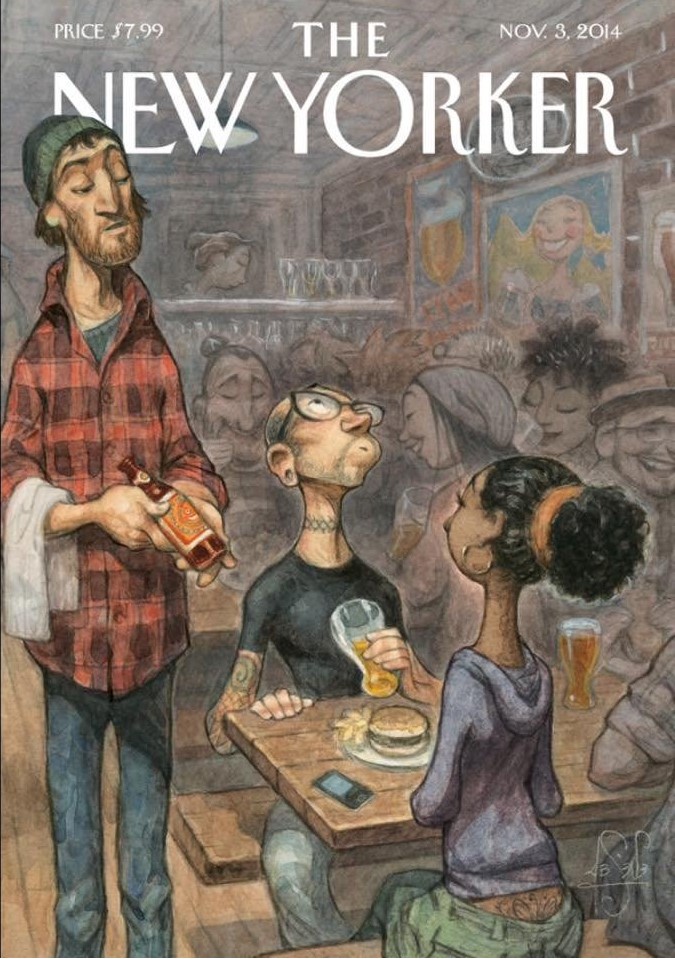
The article goes on to then describe how younger people are, you know, still less drinking of alcohol. Don’t get me wrong. It’s obvious that turning social settings like pubs and tavs into something other than boozers is healthier and economically beneficial. I am all for skittles. But drinking low to no alcohol beers is not maintaining “alcohol participation.“**** It’s reducing it while maintaining social participation which, as I say, is really good. Anyone who actually believe the clinky-clinky is a fundamental social bond or, you know, builds community as the wise said in 2014 is fantasizing.

Which reminds me of something else. Over on FB, a memory from twelve whole years popped up in my feed this week and it gave me some perspective on that whole “the young folk ain’t drinking craft no more” story. Look at the brown graph in the lower left. It was created with data from the British food and marketing trade associations. In 2013 I was irritated by the incompetent bar lengths in the graph. In 2025, I am more interested in the percentages.  Keeping in mind these are UK figures, they indicated that two-thirds of craft beer drinkers at the time were over 35. Those people are all over 47 now.  Only just over 5% of people who were 21 to 25 at the time admitted to drinking craft beer. So when was this time when “the young folk drinking craft“?***** (This diagram from 2014 might suggest the same was not the case in the New York of the very next year. Maybe.)****** But whatever it was then, Stan is wondering if a key aspect of what made craft interesting back then has disappeared:

Will Curtin said the brewing landscape has changed significantly over the years, and believes that the traditional “garage brewery” model may be waning. “I think sort of the age of a garage brewery is sort of, if not gone, going,” he said.

I wonder if the cause of the going is not so much the loss as the lack of a compelling replacement. Whatever happened to the shock of the new? Well, unless you are in Spain next year, when drivers may get a shock:

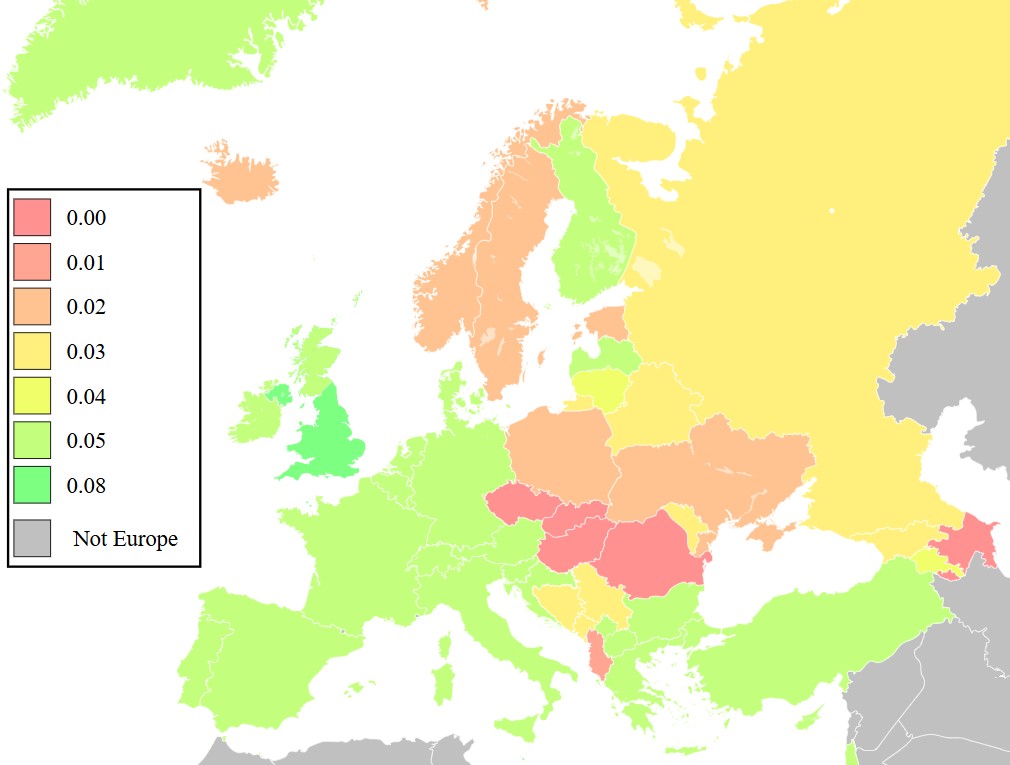
Tourists, be warned:  Spain is proposing stricter drink-driving laws, and they could be enforced by the end of the year. The country’s Dirección General de Tráfico (DGT) wants to introduce new alcohol rules for all drivers — including those on bicycles and e-scooters — by the end of the year. The aim is for a universal alcohol limit of 0.2g per litre in the blood or 0.1mg per litre in breath. That would mean almost zero alcohol consumption before getting behind the wheel. Even a small glass of wine or beer could put you over the threshold.

That’d be one-quarter of the limit we face here in Canada. Be prepared. You can practice the pronunciation of these handy phrases for your next trip to Spain: “Propietario! ¿Duermo en tu cobertizo? Hmm ¿Tal vez debajo de tu árbol?

One last thing before we go. There was a call for papers from the people of Beeronomics:

The 2026 Beeronomics Conference will take place at ESSCA School of Management, Bordeaux, France, 24-27 June. Main panels and sessions will be held at the ESSCA Bordeaux Campus. The Conference Organising Committee, led by Gabriel Weber and Maik Huettinger, welcomes all high-quality research on the economics of beer and brewing. With a strong interest in interdisciplinary research, we are looking for submissions covering topics including…*******

Check it out, people. And with that, we are done. Adios and farewell to October! Next week the World Series will be over, Halloween will be in the past and I probably will have ripped up and rammed all the tomato plants in the compost bin. In the meantime, please also check out, Boak and Bailey on this and every Saturday and then sign up for their entertaining footnotes, too. Look out for Stan when he feels the urge now that he’s retired from Monday slot… maybe … maybe not. Then listen to a few of Lew’s podcasts and get your emailed issue of Episodes of my Pub Life by David Jesudason on certain Fridays. And Phil Mellows is at the BritishBeerBreaks. Once a month, as noted, Will Hawkes issues his London Beer City newsletter and do sign up for Katie’s wonderful self-governing totes autonomous website featuring The Gulp, too.  Ben’s Beer and Badword has returned from his break since April so you can embrace the sweary Mary! There is reading at The Glass which is going back to being a blog. Any more? We have Ontario’s own A Quick Beer and All About Beer is still offering a range of podcasts – and there’s also Mike Seay’s The Perfect Pour. Plus follow the venerable Full Pint podcast! And there’s the Craft Beer Channel on Youtube. Check out the archives of the Beer Ladies Podcast. That’s quite good and after a break they may well be are back every month!

*See: Perth Pink.
**Note: not aka Alice DuRiz!
***Just for example, see same publication in 2023 making the pretty much the same point but in 2025: “HOW DARE THEY!!!
****Customer: “I’d like to participate in some alcohol please” Bartender: “I shall be delighted to perloin you said chemical…” (Mutual winkies) CURTAIN!!!
*****By the way, New Buffalo seems to have stopped brewing a year after they published the diagram before getting caught into a legal dispute.
******You know, sometimes a parenthetical sentence is a good as a footnote. No, it really is.
*******… topics including (i) trends and driving forces in local and global beer production, consumption, and distribution; (ii) management, marketing, market structure and industrial dynamics, individual beer choice, health and well-being; (iii) policy and regulations related to the beer brewing industry; (iv) impact of beer on society and culture (v) environmental issues affecting beer and brewing and (vi) other stuff like food industry and alternatives to beer. You could write something about one of those. Birdeaux is nice in June. Why not? Give it a go.

Your Totally Excited And Entirely Distracted Beery News Notes For Wildcard Week

Just in case, you didn’t know the baseball playoffs are brutal. Four rounds of MLB games take place between last Tuesday and end no later than November 1st. By way of comparison, hockey takes months and months and months to figure out who gets their names on the cup. So… I have been distracted and annoyed. Distracted because my Red Sox are playing October baseball for the first time in a while and annoyed by all the instant Toronto fans who think Canadians all have to root for the Jays. If the gods will it so, the Sox will get past the Yankees* and will then see off Toronto around about October 10th. If not… oh well.

Sticking with sports, over at Real Ale, Real Music the story from Chris was about a trip away to a fitba match at Southend and all the beers along the way:

We finished our beers, and set off walking to the football ground. It was about a 20 minute walk as we moved out of the city centre into the suburbs, passing modern blocks and more traditional housing as we approached the ground. We were directed around to the away end by a couple of friendly bobbies, and we got in pretty quickly, and immediately spotted one or two familiar faces. Roots Hall is very much a traditional football ground, with individual stands on each side of the ground with the one behind the goal opposite the away end having an upper level.   The club though would win no awards for their catering, the cheeseburger we sampled having the consistency of a hard rubber disc, and it was presented in a dried-out, crumbling defrosted bun.

I really like the pace of those pieces. On the other hand, the Netflix series “The House of Guinness” has received some disappointed reviews from those well placed like Liam – “ludicrous and pointless” – but perhaps none so well placed as the one provided by Ms. Molly Guinness as reported in The Times:

We hooted with laughter through the first two episodes. As Sean Rafferty, Norton specialises in lines such as “Oi’ve worked for your family for 20 years and I know that inside every one of yous there’s a woild, woild black cat.” Alas, I suspect this characteristic has been bred out of us over the generations. When a corseted lady (great-great-aunt Olivia, since you ask) says, “I can take your money, but I don’t have to take your cock,” unlike all modern Guinnesses, she is not talking about poultry.

Speaking of disputes, another week and another question of law in the world of beer, this time over the right to the word “wor” – if, you know, it is even a word and not a sound… ok, fine… it’s a word:

A dispute has erupted between two breweries over the trademark of the word Wor on beer associated with a group of football fans. Tyneside-based Wylam Brewery re-branded its Wor Flags beer to NCL Flags last week – the sales of which support the Wor Flags fan group best known for creating Newcastle United banner displays. Anarchy Brew Co, also based in Tyneside, said it registered the trademark for beer products in 2022 during its own similar partnership with Wor Flags, which ended before the start of the new season. Wylam Brewery said it was “disappointed” to be put in that position. Anarchy said it could have been avoided if the other company did its due diligence.

Conversely and more about getting it right, I enjoyed this excellent and detailed potrait of Master Sommelier Agnieszka Swiecka in The Buyer which describes the years of work it took for her to earn the designation this year:

I was fortunate to pass the blind tasting and practical parts of the MS exam at my first attempt in 2023, but the theory was my achilles heel. I have created self-limiting beliefs in my head that hindered my chances to pass. For example, I was telling myself that, to pass the exam I don’t need to have a deep knowledge of spirits and cocktails, as this is a sommelier not a bartender certification. It wouldn’t be fair to ask too many spirits questions. Or things along the lines – if last year there were questions about Chile maybe it’s better to focus on Argentina for this year’s exam? Can I skip studying about Bulgaria? It’s likely that I will get one question if any, and I need 75% to pass. You get the idea.

Skip Bulgarian wine? Come to think of it, as a teen I often thought somewhat after the fact that it might have been wise for me had I done just that.

Speaking of unpleasant drinking habits, I found this graph from the AAWE on BlueSky useful in detailing how big wine coolers were in the 1980s. It also got me thinking of where that segment of drinker preference has gone, say, since the early 1990s. People who want sweet trendy gak.  Jordan helpfull reminded us back in 2020 how Mike’s Hard Lemonade arose starting around 1996:

Michelle Shephard, writing in the Toronto Star on April 19, 1998, clutches pearls magnificently: “It looks like lemonade. It tastes like lemonade…” Shephard interviews two female Ryerson students who are quoted as saying “we went to the bar downtown and just decided it was a night to drink Mike’s. We had one then oh, this is gone. Then, oh this one’s gone so let’s get another…” and “They’re just so easy to drink you don’t even know you’re getting drunk.” One feels as though this might have backfired somewhat.

Jordan was comparing Mike’s to the White Claw boom of the early pandemic months of 2020. But haven’t the fruit flavoured craft alcopops called kettle sours also played that same role? Discussed in VinePair in 2018, I know from the archives that I had my first overly fruity IPA in 2014 and maybe the first sweetie pie kettle sour around 2016 at Folly Brewing, both in Toronto.** So were there gaps in the candy coated timeline or has there always been a form of sweet gak that lets kids say “oh this one’s gone so let’s get another” while having fun? Or put it this way… was there ever not a cheap sweet gak of choice and head cracking aches?***

Slightly related, I had never heard of the UK’s Boring Beer Index until this week which I suppose is good. But as it appears to be some sort of PR counter-insurgency I suppose that indicates something about it isn’t all that good, as perhaps clarified in the Morning Advertiser:

Some premium lager brands have seen sharp increases, such as Madri, which has seen the number of respondents claiming to be bored of it almost double since the previous report. John Smith’s topped the survey’s list of so-called boring ales while Guinness was cited as the most unexciting stout brand…

Very unpopular, that Guinness stuff. Out and about the planet, The Beer Nut was in Germany and hunted out some beers in Dusseldorf other than their famous Alt with much success except at…:

…Schumacher. This was my first time in their downtown pub, Im Goldenen Kessel. It was crowded, the service surlier and less responsive than anywhere else in town, and I got stuck at a table where there probably shouldn’t be a table. To top that off, their Alt alternative was… an Alt. Now, 1838er is 5% ABV and claims to be brewed with Cascade hops, but it’s the clear dark brown of an Alt and has the same medium-roast base. Unfortunately, it also has diacetyl in spades, and tastes more like a Danish butter cookie than anything else. This smacks up against a sharp gastric acidity, rendering it a complete mess and somewhere close to undrinkable. The brewery advises us to look out for the hint of lemon in the aroma. Nah mate; that ship has sailed. It’s just as well Schumacher’s proper Alt is pretty decent.

And Ron was on the road again, this time (again) he headed to Singapore to judge (again). His description of his arrival on the otherside of the planet leaves me a bit boggled myselg given, you know, I’d be more inclined to nap for 36 hours:

The arrival gate isn’t quite in Malaysia this time. It’s not so far to immigration and baggage retrieval. My bag comes out pretty quickly. Soon I’m speeding towards my hotel in a taxi. I’ve a couple of hours before the welcome dinner. Which I kill with some internet fiddling and duty-free whisky. It’s a pretty nice hotel with a decent-sized room. At 18:30, we take a bus to the venue. Which is a rooftop restaurant in a small hotel. With stunning views of the city. There’s just the one downside: no bogs. You have to go down to the ground floor for toileting purposes. Which is a bit inconvenient. Especially for oldies like me.

Back here at home, an interesting discussion is going on hereabouts about the retail rules. It’s on the question of whether big grocery chains in Ontario are going to be forced into participating in the return of recyclable empty beer bottles as part of their right to sell beer, cider and wine, as reported on by TVO Today:

…there are, legitimately, some small grocers who face some real hardship from being forced to choose between stocking beer and wine or accepting empties. That’s why the province’s current policy exempts stores under 4,000 square feet — if your local convenience store or small green grocer has added some beer fridges in the past year, they’re almost certainly fine. Nevertheless, maybe that number needs to be modestly increased; I’m certainly not going to vouch for the Ford government’s perfection in rule-making. Ultimately, however, the question of what to do about small stores is a distraction. The actual fight in Ontario this year is over whether big grocers will, once again, get the province to bend and relieve them of any obligation to collect empties.

And ATJ got the nod for Pellicles feature this week and provided a protrait of Proper Job, an early English clone of a hoppy US IPA. I really like this description from the brewer who makes it now:

“If you want an IPA but have never had one, this is the one to get,” Georgina Young, Roger’s successor as St. Austell head brewer, tells me when we meet at one of St Austell’s Exeter pubs, the Mill on the Exe. “It’s a great example of a punchy, hoppy IPA. To me it represents a real ‘god I really want a Proper Job lightning hop tingling on the tongue’ moment, it’s an exciting beer to drink and I think that is the draw of it.” “If I am going out for a ‘watering’ pint I will go for a Tribute,” she adds. “If something is going to excite me then it will be a Proper Job. Roger was very much into his Def Leppard, AC/DC, metal, he loved it. When you sit and drink Proper Job you can feel that. It is quite heavy metal, a bit scratchy.”

Finally, Japanese brewer Asahi has been hit with a pretty dramatic cyber attack which has led to some serious consequences:

Asahi Group Holdings has not been able to resume production at domestic factories a day after a cyberattack and cannot foresee when it can be resumed, a company spokesperson said on Tuesday… The maker of Asahi Super Dry Beer, Nikka Whisky and Mitsuya Cider last night said its group companies in Japan suspended operations, including order processing, shipping and call centre functions, due to a cyberattack-caused system outage, although no personal information leakage has been confirmed.

How odd. Who gains from that? Economic terrorism or just pesky teens messing around on the internets. Gotta keep an eye on that one. But now I need to get back to the baseball. As you root root root for whichever is your home team of choice, please also check out Boak and Bailey every Saturday and sign up for their entertaining footnotes, too. Look out for Stan when he feels the urge now that he’s retired from Monday slot… maybe … maybe not. Then listen to a few of that now newly refreshed Lew’s podcasts and get your emailed issue of Episodes of my Pub Life by David Jesudason on certain Fridays. And Phil Mellows is at the BritishBeerBreaks. Once a month, as noted, Will Hawkes issues his London Beer City newsletter and do sign up for Katie’s wonderful self-governing totes autonomous website featuring The Gulp, too.  Ben’s Beer and Badword has been on hiatus since April but the archives are out there with the all the sweary Mary! There is new reading at The Glass which is going back to being a blog. Any more? We have Ontario’s own A Quick Beer and All About Beer is still offering a range of podcasts – and there’s also Mike Seay’s The Perfect Pour. Plus follow the venerable Full Pint podcast! And there’s the Craft Beer Channel on Youtube. Check out the archives of the Beer Ladies Podcast. That’s quite good and after a break they may well be are back every month! Such is life. Such is beer podcasting and newslettering… which, as Ray says, are blogs! And he’s right.
*Tuesday’s Game 1 result? Sox sorta evicerate the Yanks after seven innings of a pitcher’s duel. UPDATE: Wednesday had a similar plot but the Yanks were the beneficiaries. Great baseball.
**No comment as to the relation to the 2025 Blue Jays… perhaps…
***I am reminded of my late great parents and confirming the nickname for cheap sweet gak in the 1950s just to the west of Glasgow was “electric soup”!

The Very First And Initial And Even Inaugural Beery News Notes For Autumn 2025

Once again, take a moment to consider the words recommended this time every year, the words of Mr. J.Keats first posted to blog twenty-two years ago:

Season of mists and mellow fruitfulness,
Close bosom-friend of the maturing sun;
Conspiring with him how to load and bless
With fruit the vines that round the thatch-eves run…

Load and bless! I like that. People fret about autumn coming. As if, you know, it’s February. But you get both loaded and blessed these days. I have been blessed with a load of produce including the tomatoes discussed a few weeks ago. But there’s also the easiest and laziest crop of green onion to be brought in. All winter we save the bottoms of the onion bunches and keep the roots going in jars of water. Come spring, plunk them in a pot or in the ground and you have a perpetual green onion crop to be saved in the freezer. Free free free. Never abandon your roots.

Speaking of free, Dr Christina Wade is doing a free online talk about her book Filthy Queens and the history of Beer in Ireland for the Dublin Festival of History on Sept 30th from 5pm Irish time. Here is the link to sign up. Unrelated, I give you drinking with Brian Eno, circa 2015:

My best wine experiences have been with French wines, so I think the best French wines are the best wines. But there are also so many bad French wines – there’s such a range. A long time ago I wrote an essay called “Wines Classified According To Their Effects” because I was convinced there was a different type of drunkenness from each kind of wine. That was the reason I got into Burgundy, because I noticed Aloxe-Corton in particular made people laugh. Bordeaux is a bad drunk for me. I think Bordeaux wines are largely responsible for the decline in French philosophy in the last fifty years. I think the problem is that Bordeaux makes you think that everything you are saying is really quite important.

Is there an alcohol that doesn’t? Perhaps we should do a survey of our significant others. Speaking of studies, suddenly the stats on the lower levels of drinking by the kids in America* is to be relied upon after yoinks of denials. I dunno what happened – but Kate B reports on the numbers:

The kids are alright. New federal data shows young people ages 12-18 showed statistically significant decreases in alcohol use, cannabis use, major depressive episodes, and suicidality compared to four years ago. Why? Changes to the way kids socialize… It’s partially a COVID ripple effect: With kids more isolated, teens’ reported use of almost all measured substances decreased dramatically between 2020 and 2021. Notable: Teen drinking and drug use have remained low—or continued to decrease—since the pandemic, even as public spaces have reopened.

It’s all about the damn numbers, isn’t it. [See also Mr. Gladman on the grasphical representation of data as it relates to matcha: “The green bar makes it look like we’re gulping down matcha-flavoured fluids by the bucketful…“] And David J is also on the question of “youth ‘n’ booze” for CAMRA’s What’s Brewing with a focus on cask ale and who is interpreting the numbers:

I’m very sceptical when anyone speaks about Gen Z or any demographic cohort with seeming authority. Usually the characteristics of each generation seem very similar to the previous one and a lot of these supposed behaviour patterns could be just attributed to anyone who is lucky enough to be young… So when I read that Gen Z could save cask beer from extinction, I raised an eyebrow. I then raised the other eyebrow – a unique skill – when I read in the same article an industry grandee being quoted as saying Gen Z want variety when they drink, like they’re one homogeneous person tapping their beer order into the app on their phone to avoid the queue.

It would have been better if Mel in Braveheart had shouted “METHDOLOGY! METHODOLOGY!!!” wouldn’t it.

Changing topics with abandon, we see that Boak and Bailey posted their thoughts on holding Oktoberfests in England and added a few more in a footnote that was in addition to their weekly footnotes. Therein, they offered five observations but I was caught on the fourth:

Fourthly, we recall someone suggesting that Oktoberfest events in the UK were a form of cultural appropriation. This is a fair challenge although we tend to think that countries or cultures which had empires and colonies probably don’t get to complain about that.

I shared that I wondered where the limit of cultural appropriation should sit. Here in Canada, it’s mainly illustrated by people pretending to be Indigenous for advantage. So if Germans are selling a welcome product into Britain as they have been (as your excellent book proved) why not celebrate it? If you have seen 1983’s Strange Brew you will know that Ontario’s twin cities of Kitchener-Waterloo, the former once named Berlin, has the second biggest Oktoberfest in the world. Because we had many German-speaking immigrants in the 1800s. And as the Bs wrote about in their Gambrinus Waltz there was also heavy marketing of German lager into the UK at around the same time along with the rest of the globe. Cultural expansion can’t then be relabled as an appropriation. That’s a bit too colonial for me.

Merryn linked to another archaeological report that seems to be bending backwards to not find evidence of brewing in pre-historic Britain:

An early Neolithic settlement on the small island of Wyre, Orkney, where a huge amount of carbonised grain on a clay floor was discovered. Interpreted by the excavators as a granary. But I reckon it could’ve been a malting floor and a grain barn.

Here is the report on the study referred to. Note the passage: “But why would a drain begin under a hearth? We can find no logical explanation.” Because maybe it had a log gutter sat in the stone channel drawing off the wort? In my work I am aware that as late as the 1970s pipes made of wood were found in the oldest serviced areas of my fair City. So that could be it. Beats the heck out of “no logical explanation.”

Speaking of science and explanation, Lars took the “monkey fruit booze” story mentioned by me last week as a goof and disassembled the story to create some serious observations on the nature of the human beast itself… ourselves:

…about 10 million years ago, a mutation made that gene much more efficient at breaking down ethanol, the ordinary alcohol that makes us intoxicated. This suggests that we started consuming alcohol already then… the story that our relationship with alcohol began before we were human, at the time we came down from the trees, seems to hold up very well. We have other adaptations against alcohol as well, some of which seem to have appeared when agriculture began, but that’s another story.

As a practicing lawyer, one is never surprised by the news about what hasn’t been pulled off by other lawyers:

Cole Palmer rarely tastes defeat on-the-field, but the Chelsea and England star has lost a bizarre battle off-the-pitch with a French vineyard. The tussle in question has been over his attempts to trademark his ‘Cold Palmer’ nickname and using that to launch his own wine company under that moniker. Last year, Palmer made a move to trademark both his ‘ice cold’ celebration and the name ‘Cold Palmer’, in the hope of using it to sell a number of different products. These include clothes, food, toys, toiletries, razor blades, diet drinks and alcohol. However, the latter was opposed by a revered vineyard in the south west of France. Chateau Palmer, which is in the Margaux region in Bordeaux, believed a trademark of the name would be a threat to its own image.

Having distanced myself from Mr. Palmer in the Pellicle-run FPL league I can take issue with the first proposition set out above but, even having distanced myself from Ch. Palmer economically, I can’t disagree with the outcome. Palmer is to Bordeaux as Mcdonalds is to fast food in terms of notariety. What were they thinking?

Evan has suggested what might be the hot new thing is Czech beer service – řezané pivo:

Roughly translated as “cut beer,” řezané pivo includes both dark lager and pale lager, often (though not always) poured in two separate layers, giving each glass plenty of visual appeal, just like mlíko. (Starting with the famously difficult Ř sound, the full name sounds a lot like “rzhez-on-eh pee-voh,” depending on how many of them you’ve ordered.) As with the all-foam pour, řezané fits perfectly into the burgeoning craft lager movement. But unlike mlíko, řezané is more clearly rooted in Czech tradition, feeling less like a parlor trick, at least for some locals.

I no more have a stash of Chateau Palmer than I have what would be called a “parlor” but, really, wouldn’t that be the best place for a good trick? And a somewhat familiar one as I recall seeing – both in Scotland with a cousin as well as in my old hometown of Halifax, NS – bartenders who could float Guinness on a lighter ale. As Even notes, a half and half is a fun thing.

And on the theme of things formerly sipped gingerly, Alistair wrote about and old fabourite beer, Leffe Blonde. I won’t ruin his findings but his remembrance of the ale past starts out very specifically:

Back in the days when I was a college student in Birmingham, I got the train from New Street early one Saturday morning to go to Esher in Surrey. The main purpose for the trip was to spend the day at the Sandown races with my eldest brother, who lived down that way back then. Having spent the day frittering money away on thoroughbreds of varying uselessness, we headed into central London for dinner at a non-descript curry house, non-descript in the sense that I don’t have the foggiest as to what I ate, but weirdly 2 beers are lodged in my memory, the Żywiec I was drinking and the Leffe Blonde that was my brother’s choice that night.

I got a similar heads up about the state of Cantillon sales from Jeff who directed me to an article in VinePair by Aaron Goldfarb in which he speak of the blip in time when lambic was really cool:

…by 2013, everything had changed and the U.S. beer landscape was now ready for such challenging flavors. By then, Beer Advocate’s top 250 beers list included 11 Cantillon beers. highlighted by Fou’ Foune at #11, the brewery’s Lou Pepe – Kriek at #28, Saint Lamvinus at #36, and the European-only release Blåbær Lambik at #39. Today, it seems hard to imagine a time when Belgian lambic was possibly so hot. If you’re in your 20s or early 30s, it’s possible you’ve never even tasted one. And it wasn’t just Cantillon. Among a list then dominated, as it still is today, by IPAs and big, boozy stouts, a shocking number of sours beers — mostly Belgian lambic but also American wild ales — dot the top 250.

I was definitely into sours in the sense that I created a category for sour beer studies in around 2005 but I wasn’t always a big fan. From the archives, I see that I really liked Lindemans Gueuze in 2005, Kriek De Ranke in 2007 and loved Girardin Gueuze in 2008 but, man, I really really didn’t like Bruocsella 1900 Grand Cru by Cantillon in 2006:

Quite plainly watery at the outset then acid and more acid…then one note of poo. Not refreshing to slightly sub-Cromwellian stridency. Annoying. Then at the end a hint of apple cider. Foul. I wonder if this is an example of mass reputation piercing the veil of reality – mob craftism. I cannot hate it. Yet I am sure it hates me.

Check the comments to that post! By 2012, I had coined the phrase “to be Shelted” once my studies had gotten into the economics of what was going on.

Finally, Jeff also announced that he is taking a bit of a  well earned break. He explain a bit about the moment he finds himself as he does so in through this post:

Journalists cover a broad range of topics, and reporting about the actions of their elected leaders and government officials is an important load-bearing wall in any democracy. It’s why, during democratic backsliding, one of the first things the aspiring autocrat does is taking control of the media. I write about beer, and to a small, niche audience, so there’s little worry the government would come after me. (Trump, famously, is not a drinker, so my hot takes about icy beer is unlikely to draw his ire.) Yet as a citizen and as a freelancer, all of this feels very personal. Written speech is not just my livelihood, but it has been a central part of my life. I wasn’t surprised to see these developments, but they did cut me deeply.

Something to think on for all of us. And that’s it for now. A bit shorter this week but I have been hammered with a late winter cold for over a week now and I just want to go to bed. Can I please just go to bed ?!?!?  As you consider Jeff’s decision and my simple request over the next few days, please also check out the below mentioned Boak and Bailey every Saturday and sign up for their entertaining footnotes, too. Look out for Stan when he feels the urge now that he’s retired from Monday slot… maybe … maybe not. Then listen to a few of that now newly refreshed Lew’s podcasts and get your emailed issue of Episodes of my Pub Life by David Jesudason on certain Fridays. And Phil Mellows is at the BritishBeerBreaks. Once a month, as noted, Will Hawkes issues his London Beer City newsletter and do sign up for Katie’s wonderful self-governing totes autonomous website featuring The Gulp, too.  Ben’s Beer and Badword has been on hiatus since April but the archives are out there with the all the sweary Mary! There is new reading at The Glass which is going back to being a blog. Any more? We have Ontario’s own A Quick Beer and All About Beer is still offering a range of podcasts – and there’s also Mike Seay’s The Perfect Pour. Plus follow the venerable Full Pint podcast! And there’s the Craft Beer Channel on Youtube. Check out the archives of the Beer Ladies Podcast. That’s quite good and after a break they may well be are back every month! Such is life. Such is beer podcasting and newslettering… which, as Ray says, are blogs! And he’s right.

*Not these Kids in America… that was me and mine. It probably was suppose to be “We’re the Kids In North America” but, you know, the suits…

Your Beery News Notes That Entirely Capitivate… Yet Offer No Real Clues To Get Outta Here… Not Even A Key Or Nuttin’

August planting is underway. With any luck there will be peas in late September and October. And maybe baby carrots. You always think that the plantin’ is done once you are in full pickin’ mode… but no. No way. Still ten weeks to a frost that kills. Or more. Plenty of time for peas. By the way, I learned something through the month and a half of drought, humidity and heat that now seem to have finally broken. Tomatoes do not turn colour until it cools a bit. So while the peas are doing there bit it’s now also time to hit the sauce… no, not that sort of sauce. Sauce sauce!

OK – fine. What else is going on around here. Oh, yes – one of the main differentiations between beer drinking cultures found in nation to nation is the local tipping habit. Here in Canada we tip but we are left to our own decision as to how much. But, more generally, it’s not just the tip but the markups added on. I could be a tax or two, a mandatory service tip but… an administrative fee? That’s what seems to have started in the UK where, as reported in The Times, one pub is adding 4% to the price of a beer for the premium service of giving the beer to you:

The Well & Boot is banking on customers not noticing the difference between £7.65 for a pint of beer and £7.96 for a pint of beer, and it’s a safe bet. Once you’ve paid £7.65 for a pint your subconscious is already doing everything it can to suppress the pain, just to allow you to enjoy it…  Is it a rip-off? I don’t know. Pint number two — all in the name of research, obviously, was a Guinness — and that one was brought to the table, at which point a 4 per cent charge for table service is quite good value. All the other customers were having a lunchtime meal, ordered and brought to the table, so 4 per cent for that sort of service is extremely cheap.

The pub is in London as I understand in a transit hub Waterloo Station. So you are already dealing with captive audience pricing of a sort. But that base price is nuts.* You know, if I were you… I would walk a few steps to Mamuska! which, yes I disclose, is run by a college pal but also the beer is a little cheaper – but you can order a Placki Ziemniaczane to go with it!  Ask for Ian, say you know Big Al and you may get a slap on the back, too. There. You’re set.

What else… well, some bad news for those of you rootin’ for booze. The NYT reports that US drinking has hit an all time low – and its not just the kiddies this time:

The Gallup poll found an especially pronounced drop in drinking among middle-aged respondents: Just 56 percent of respondents 35 to 54 said they drank alcohol, falling from 70 percent in 2024. That “suggests the message is sinking in across the board, not just with young people,” said Johannes Thrul, an associate professor at the Johns Hopkins Bloomberg School of Public Health. The share of adults 55 and older who said they consumed alcohol increased slightly from 2024 to 2025, but is still lower than in 2023. Only 50 percent of those aged 18 to 34 said they drank alcohol, the same as in 2024 and down from 59 percent in 2023.

Jeff has his own thoughts but clearly people are not doing their part. Perhaps relatedly, Mr. Mudge wrote about the planned drop in acceptable blood alcohol limit from .08 to .05 in England and he argues against it:

Whatever the safety implications, such a policy would inevitably have a significant effect on the pub trade. While those who inhabit an urban bubble may be reluctant to acknowledge it, nationwide there are a very large number of pubs to which a majority of customers travel by car. There will be several thousand where that accounts for over 90% of their trade. Every week, hundreds of thousands of people drive to pubs and consume alcohol within the legal limit. Yes. a few customers do break the law, as people still will with a lower limit. But, given the severe potential consequences, the vast majority of drivers abide by it, and indeed generally leave a wide margin below it. 

Sadly, having practiced criminal law including as duty counsel, I can report that deaths from drunk drivers aren’t statistical matters. Neither is crime. We can as easily say “every week, hundreds of thousands of people go about and and all aspects of their lives within legal limits.” In all cases, crime is perpetrated by the few and upon the not quite so few but in each case the act and loss is a singular event. As a result, deterrence is one of the greatest benefits of criminal law. So making driving under the influence itself a crime deters many – indeed by a wide margin – from taking the step that, yes, only sometimes leads to tragedy just because some asshole decided to take the chance.

And, as reported in the Morning Advertiser, BrewDog has pushed back on the story that is has lost access to customers at about 2,000 pubs with industry voices speaking out from both sides of the fence:

“Wetherspoon trades with Brewdog on the basis of a long-term contract, which is the normal case for our regular suppliers. “BrewDog has always been a reliable trading partner and draught Punk IPA, available in almost all of our pubs, continues to be a popular craft beer, as do their bottled products; Hazy Jane, Elvis Juice and Punk AF.” All pubs within the Tim Martin-chaired business serve one BrewDog product on draught and a number of BrewDog bottled drinks too. Meanwhile, a spokesperson for Star Pubs said: “We have not supplied BrewDog products to our pubs since the end of 2023.”

PR v PR. On this side of the Atlantic but not dissimilarly, there were two interesting stories last week from Beer Marketers’ Insights, the first one being about an outreach from a group of AM distributors saying without at all be coaxed that AB is great. Then, in summary from the weekly newsletters, the response from other AB distributors:

None echoed the endorsements so pervasive on the call. Most saw this as an AB-directed initiative. “This has AB written all over it,” said one AB distrib. Another remarked: “This reminds me of the current state of politics. Everyone is scared to say something negative, knowing they will be attacked by a party at some point. If you praise your allegiance to the party, then you will be rewarded.” Some responses were angry and disbelieving that so many distribs espoused a party line. “I can’t believe what’s occurring,” said one long-term observer. “I was just appalled.”  

A free press is a wonderful thing. Speaking of appalled, have you seen the prices of things?  Sam Tierney wrote this very week thusly:

Mexican 2-row seemed mildly interesting until I saw that it was 30% more expensive than domestic or Canadian. In this economy!?! I can get German pils for that price.

And aluminum is, again, a topic at the check out this week. The Brewers Association issued a notice on the addition of beer can tops to the list of things subject to US tariffs this week noting “The Brewers Association continues to monitor developments around aluminum trade policy…” Hurrah! My two cents were these:

Consider us. Canada exports 88% of bulk aluminum the US uses. It’s sent south, gets hit with a 50% US tariff, turned into packaging, cans come back north and get another 25% tariff from Canada. So the 75% tariff will see us redevelop our can factories. Not sure the US can replace our bulk aluminum.

So, US consumers should not expect any relief soon unless someone gets into the bauxite smelting game and can replicate Quebec’s cheap hydro power to fuel the industrial process at scale. Up here, we just need to retool the manufacturing line.**

Speaking about shopping, Lew Bryson has announced that this week’s offering at Seen Through a Glass is going to be about…

Next episode will be about the great local grocery stores in central PA, everything from four aisle markets to ten-store chains with full-service butcher shops and fresh seafood. They aren’t Whole Foods or Wegmans, but they’re not 7-11s either, and they’re out here where central PA actually lives. Let’s go shopping!

Excitement reigns! Back when people published (and bought) books about beer, Lew’s guides were great support of family trips when the kids were little. Not because I would drink my face off but he included shopping and side trip hints that kept everyone happy. How else would I have learned about the garbage plate?

Note: traditional German naked ass wine. Not sure I want naked ass wine but now I know I could if I would even if I won’t.

Luxembourg! How many of you have clamoured in the comments and emails for more Luxembourgian news. Well, Jessica M found a way this week to fill that need:

Brasserie Nationale de Luxembourg, the country’s largest brewing company, has told bar operators that they will soon be able to stock beers from craft brewers without violating their contracts. While leading breweries Brasserie Nationale de Luxembourg and the AB InBev-owned Diekirch currently own many of the venues and the attached alcohol licences, it gives them exclusivity rights for stock, but things may change in the coming months. According to Finance Ministry, the country’s two largest breweries hold about a third of the nearly 3,300 bar licences and 40% of the alcohol licenses in use.

Freedom!!! Sorta. For the double, Jeff raised an eyebrow to the first list of entrants into the Craft Beer Hall of Fame:

I dunno. A “landmark” anything is always going to be a semantic/definitional category. If I were to consider American brewing in the past half century, I’d be looking at where we are and how we got here. Only one of the beers on this list played a role in that. Steam beer is a basically defunct 19th century style. Witbier is a commercial success, no thanks to Celis (Blue Moon and Allagash get the credit there.) Boston Lager was another commercial success, but the beer was also just an all-malt European-style lager (as the brewery has always proudly proclaimed).

I would add backdating to any lucid notion of “craft”, a term only widely adopted a bit over 20 years ago. If it is anything, Boston Lager is a micro… even if it’s now a macro micro.  It reflects the 1980s intention to mimic imports, not to take on big beer. But, also, where is Pete’s Wicked Ale, a top seller until it wasn’t? Does “fame” in this case really speak more to the identifiability of the brewery owners who survived?  If so, that’s craft for you.

Finally, in the weekly feature, Rachel Hendry brings it all back to where it matters, the individual experience. And she frames it with one of the most humble aspects of the beer fan’s joys – the beer mat:

A small pile sits on my desk whilst I write: vintage Double Diamond and Babycham given to me as gifts by friends—‘I saw these and thought of you’—a Beamish emblem from a trip to see family in Ireland; another of a brewery I associate with a recent romantic encounter. When I am nervous I trace their cardboard circumferences with my finger. They punctuate the bar I work in, propping up tables, ripped into shreds by skittish or destructive hands, knocked to the floor, stolen as mementos. They see so much, these beer mats. They suffer for it. It wasn’t always like this.

What a lovely bit of writing. For more of that, please also check out Boak and Bailey every Saturday and sign up for their entertaining footnotes, too. Look out for Stan when he feels the urge now that he’s retired from Monday slot… maybe … maybe not. Then listen to a few of that now newly refreshed Lew’s podcasts and get your emailed issue of Episodes of my Pub Life by David Jesudason on certain Fridays. And Phil Mellows is at the BritishBeerBreaks. Once a month, Will Hawkes issues his London Beer City newsletter and do sign up for Katie’s wonderful self-governing totes autonomous website featuring The Gulp, too.  Ben’s Beer and Badword is out there with the all the sweary Mary! And check out the Atlantic Canada Beer Blog‘s weekly roundup. There is new reading at The Glass which is going back to being a blog. Any more? We have Ontario’s own A Quick Beer featuring visits to places like… MichiganAll About Beer offers a range of podcasts and there’s also The Perfect Pour. Plus follow the venerable Full Pint podcast! And there’s the Craft Beer Channel on Youtube. Check out the archives of the Beer Ladies Podcast. That’s quite good and after a break they may well be are back every month! Such is life. Such is beer podcasting and newslettering… which, as Ray says, are blogs! And he’s right.

*Yet, I wouldn’t notice at all if the pint was served at this gem Martin visited in Edinburgh.
**Did you know that 25% of the world’s bauxite comes from Guinea? Me neither. Trump has, it is worth noting, not tariffed Guinea. 15% for New Guinea. 15% for Equitorial Guinea. None for Guinea. Perhaps he thinks he did.

Your Beery News Notes For A Thursday When The Deep Dark Recesses Get Examined

What does that headline mean? More BrewDog financial disclosures? Another exposé of some distasteful behavious be a well known brewer. Nope. Not this week. No, the real news is it’s my regular quinquennial colonoscopy day! Today!! When I got the call I laughed “YES!” into the phone much to the clinics receptionist’s surprise. This’ll be my fifth. Or maybe sixth. Lost count. It’s good to have your innards examined, folks. And trimmed by the little clippers that show up on screen once in a while. Like a good dental cleaning… just at the other end. I wish you all your own happy colonoscopy days.

Note: up there in other health news, in 1936, tonic wines work for smokers too! I’ll take the c-scope, thanks.

Not at all related, Barry filed an article for Cider Review with himself on the Kemker Kultuur ciders of Münsterland:

Rather than emulating mass-produced, filtered and sweetened ciders that would probably sell more easily in northern Germany, the Kemkers draw inspiration from the rustic ciders of northern and central Europe: dry, unfiltered, with a sense of place in every bottle. Each batch is a reflection of that year’s harvest, the varieties of apples available, and the unpredictable beauty of wild yeast. And it is this that is perhaps the most defining aspect of Brauerei Kemker’s cider, their commitment to spontaneous fermentation. This wild process takes time, and the results are never entirely predictable, which is exactly as intended. Wild fermentation can yield ciders that are complex, dry, sometimes funky, with layers of flavour that reveal themselves gradually, though it is not without risk.

This is no puff piece. Barry’s ensuing notes include “…luscious yet arrestingly bitter…” and “…Like engine oil, so, so dark, like undiluted Ribena…” and “…an astringent, tannic grip hits the throat on the swallow, and does not release easily…” not to mention “…ciders that are reminders of what is possible when nature is allowed to lead…” And ATJ also shared a nice bit of honest observation this week:

On another table I spotted a man in a suit who still had his bicycle clips on. He was humming and then stopped to talk to a woman sitting on a stool at the bar. A man at the fruit machine next to the bar joined in. By the time I left, the man at the fruit machine was standing at the bar next to the woman on the stool and had swapped his half-pint for a pint. Walking back up the hill I wonder how their evening progressed. I never saw them again. A pub is nothing without people

In other international news, Auntie Beeb has reported on the collapse of the bourbon market which warmed my heart – almost as neatly as a glass of Makers Mark:

…most provinces in Canada have stopped importing American alcoholic beverages in retaliation. The country accounts for about 10% of Kentucky’s $9bn (£6.7bn) whiskey and bourbon business. “That’s worse than a tariff, because it’s literally taking your sales away, completely removing our products from the shelves … that’s a very disproportionate response,” Lawson Whiting, the CEO of Brown-Forman… said back in March when Canadian provinces announced their plan to stop buying US booze… In Canada, where bourbon imports have slowed to a trickle, local distilleries have started experimenting with bourbon-making methods to give Canadian whiskey a similar taste. “The tariff war has really done a positive for the Canadian spirits business…”

And, perhaps relatedly, from the ever reliable Beer Marketer’s Insight weekly newsletter, there was this interesting info during the time of tariffs:

Leading aluminum packaging supplier Ball Corp posted one of its strongest qtrs in yrs with high rev growth and solid volume growth vs yr ago across all regions in Q2 2025. Global net revs jumped nearly 13% to $3.3 bil for the qtr off of 4.1% volume increase in aluminum packaging shipments, benefitting from a sizable price increase. North & Central America region revs rose 9.5% to $1.61 bil in Q2 and volume up “mid-single digit percent” vs yr ago. Tho oper margin in the region slipped 140 bps as oper profit dipped to $208 mil vs $210 mil yr ago, “primarily” due to price/mix and higher costs.

One thing we have learned in 2025 is that Canada supplies most of North America’s aluminum much of which is shipped south to be turned in to cans to be sent back to Canada to be filled with beer. Which makes me wonder if the unexpected bump in revenue described above which was twinned with a drop in operating margin is a sign of the two sides of an increased tariff regime. We are now buiding the tin can factories of liberty.

Speaking of freedom, over at Pellicle, Eoghan Walsh has given us a bit of treat just as the European fitba seasons take off with a story of good local beer at good local matches in Ireland:

Dublin’s breweries and its football clubs would have been successful without their respective collaborations, but that they’ve experienced their twin revivals in parallel but interconnected journeys like a double helix speaks to a more fundamental change in Irish attitudes, a renewed self-confidence and a reaction to the flattening impulses of globalisation, that encompassed not just sport but also the creative arts and the wider culture.  “I wouldn’t call it a cultural reawakening,” says Barry Crossan, friend of Donnchadh, fellow ‘Riversider,’ and editor of club fanzine Red Inc. “But there is a bit of a feeling of, ‘These are our bands, these are our clubs.’ It’s phenomenal.”

Sports can define identity. Which sorta reminds me of Big Pappy.  And along the lines of language usage, Mikey Seay asks us all the question “Are you a Private Brewer?” and in doing so coins a handy phrase:

Home Brewer sounds too much like just a hobby – a goof in a garage. PRIVATE Brewer sounds more legit. It puts you, the home brewer, and the person who drinks beer from home brewers, in a more sophisticated space. Same as Private Chefs. Home Chef doesn’t sound all that cool. But PRIVATE Chef does. I want to commission a Private Brewer. A Home Brewer? Not so much. Do Home Brewers sell their beer under the table? I am sure they must, I have just never heard of it. Home Brewers are always too eager to have you try their beer and end up giving it to you.

And, speaking of laying down the law, Phil Mellows brought a recent ruling by the shadowy Portman Group on, of all things, Radler can branding:

The Panel assessed the front label of the drink which included the word ‘Radler’ in a prominent large font. The Panel discussed that while the term ‘Radler’ may be recognised by some consumers as a citrus-based beer, this was not a universally recognised term to denote alcohol in the UK.  The Panel acknowledged that the term was better known with a younger drinking demographic but noted that it had not been understood by the underage person who had accidentally consumed the drink. Therefore, the Panel considered that ‘Radler’ on its own did not sufficiently communicate the product’s alcoholic nature.

As usual, the ruling is weird. The complainant is identified as “underaged” but no actual age is provided. It is a very diferent thing if the person was nine years old and drank a radler as opposed to someone who is seventeen. The label clearly indicated the alcoholic strenth of 3.4% and also had the words “beer” as well as “brewing” – but the shadowy panel found the label “was predominantly focused on fruit-flavours and bore resemblance to a soft drink.” Most oddly, the panel did not consider the absence of indicia that the drink was a soft drink as they claimed. The ruling lacks obvious evidentiary foundations. The British Soft Drinks Association, for example, has a code related to labeling of their products. Food Standards Scotland also offers guidance. The SPG’s failure to consider these obvious sorts of rules for what they consider the packaging looked like leaves one scratching the old hockey helmet holder. But, you know, I’m just a lawyer so…

And, finally, there was a lot of response to a greasy pervy tone found at the Great British Beer Festival this year, including from Kimberley in her piece “It’s a nice day for a beer festival (if you’re a man)“:

As soon as I got my festival glass I made a beeline for a bar that didn’t look crowded, so I could get my back against a nearby table/bar so I didn’t feel so vulnerable. The vast open space and the weird “welcome” got me off to a ropey start. I didn’t even feel comfortable making the long walk to the bathroom in that wide open space.  I knew I needed a gameplan to get through the trade session and because I was late, I wanted to stay a few more hours after because there were breweries I wanted to connect with and support. I’ll provide more context on why I was late to GBBF later – it’s relevant to give a whole picture of the day.  In the first hour of being there I had several interactions that made me feel uncomfortable. I nearly left after just one hour – a friend reassured me I’d be ok staying.

Fests. David J. also says he avoids them for similar reasons. I do not go to beer fests. I’ve hit a few where the transportation failed the amount of drinking by shitfaced strangers. Rachel H. is really ticked that there was no outreach to people who actually know how to plan for bad behaviours and role out anti-sexist strategies. Hopefully more useful than the admittedly successful “designated boyfriend” role I sometimes happily played in bars in the 1980s. Boak and Bailey asked “what can be done?” given “the easy fixes have been tried.” Lillput at What’ll You Have might be on to something as explained in her piece “Don’t Be A Dick” at :

I work with young people – mostly young men, most of whom are socially somewhat awkward and at risk of missing social cues.  We have an extensive “Code of Conduct” which everyone has to read and understand.  “So what you’re saying is – don’t be a dick – in essence”?  Said one lad.  Yeah, that’s it – and everyone knows really what it means – they don’t really need a list.  I don’t believe any poor behaviour is because they don’t understand the rules.  They understand, but they choose – for whatever reason – to ignore or flout them.

Lordy. Which is one reason why I avoid fests. The arseholes.

Well, I am going to leave it there this week. Alpha-ed and Omega-ed, I did. Being Wednesday as this is writ, I now need a drink. No, not that sort of drink, this sort of drink.  Friday? Friday I may drink. As you ponder these inevitables, please also check out Boak and Bailey every Saturday and sign up for their entertaining footnotes, too. Look out for Stan when he feels the urge now that he’s retired from Monday slot… maybe … maybe not. Then listen to a few of the now rarely refreshed Lew’s podcasts and get your emailed issue of Episodes of my Pub Life by David Jesudason on the (sometimes even but never) odd Fridays. And Phil Mellows is at the BritishBeerBreaks. Once a month, Will Hawkes issues his London Beer City newsletter and do sign up for Katie’s wonderful self-governing totes autonomous website featuring The Gulp, too.  Ben’s Beer and Badword is out there with the all the sweary Mary! And check out the Atlantic Canada Beer Blog‘s weekly roundup. There is new reading at The Glass which is going back to being a blog. Any more? We have Ontario’s own A Quick Beer featuring visits to places like… MichiganAll About Beer has given space to some trade possy podcasts and there’s also The Perfect Pour. Plus follow the venerable Full Pint podcast with an episode three weeks ago!. And there’s the Craft Beer Channel on Youtube. Check out the archives of the Beer Ladies Podcast. That’s quite good and after a break they are back every month! Such is life. Such is beer podcasting and newlettering… which, as Ray says, are blogs! And he’s right.

The Much Abbreviated But Apparently Almost Drought Resistant Beery News Notes For A Thursday

Welcome to August. No rain to speak of. Not for weeks. Lawns look like Nabisco Shredded Wheat testing plots. I’ve spent days and days schlepping the garden hose and watering can all over the estate. Which has reminded me  of how wise it was to buy 6,500 square feet of land back in 2006. Once upon a time I had four acres to take care. Now? No mow no mo… practically speaking. As a result, I have barely looked at the beer news which is good as there is barely any beer news these days. That up there? A very nice ferry last Saturday night, a side trip I took on 87 seconds notice after a desperate call from across the waters. A very pleasant inconvenience.

First up… is there history in North America?  I ask this as a writer, if lapsed, of history. So first, consider this unexpectly deep and oddly twisty history of the word “dude“:

“They were young. They were vacuous. They were effeminate — and they were drawing a bit of attention from the humorists and the cartoonists,” Cohen told NPR. He says this crowd had a certain way of dressing — usually over-the-top and fancy — and leaned into an Anglophile lifestyle that was often perceived by many as fake or trying-too-hard. Eventually, these men became known as “dudes,” likely in reference to Yankee Doodle, who, as the old war song goes, was an unsophisticated American who “stuck a feather in his cap” in an attempt to parade as a kind of European “dandy” in high society.

The very next paragraph or two takes you through cowboy dude ranches and then on to slacker dudes of today, each phase of the word’s meaning being largely unrelated to the last. None of which is retained culturally knowledge. Which makes one wonder about one’s awareness of such things. I raise this in relation to beer by way of intro to Jeff’s lamentations on the state of US brewing history:

“Craft breweries” were a peculiarly American kind of thing. If you don’t have a past, you’re not bound by it. Lacking a native beer tradition—domestic lagers were functionally German beers—Americans were freed up to do what they do. We made beer styles from elsewhere, borrowing and almost immediately riffing on them. This improvisational style would become hugely influential, and it was never going to start the way it did in a traditional brewing country like Germany or Britain. Much like Americans were never going to found a club that merely venerated an old brand of beer.

What is weird is that the land mass that is now the United States has over 400 years of brewing history but, as Jeff says, has no sense of brewing tradition. So it is possible to speak of IPAs being new even though they have been brewed for coming up on a couple of hundred years, winning awards overseas in the early 1900s and at least as good a continuity as Belgian strong ales. Why does no one care? Because no one cares. It’s that deep. A tradition of amnesia.

Speaking of forgetting, someone in Dalton, England has been breaking the law and the neighbours aren’t having it:

People living near a pub have claimed that their privacy is “under threat” after the business began expanding its beer garden without permission. Residents of Dalton, near Huddersfield, have complained to Kirklees Council after the Brooks Arms began extending its garden towards the pavement, including erecting fencing and 10ft poles with fairy lights. Stonegate Group, which owns the pub, said it was in contact with the council and contractors had paused work while they “reviewed the next steps”. Kirklees Council confirmed there was no planning permission in place for the works.

Interestingly, the property owners have claimed the “works undertaken relate to fencing and posts to hang festoon lighting” which leads to that important legal question – are they fairy or festoon lights?

Do you stand up against bigots in pubs or elsewhere? I am lucky because I am such an ox that I’ve always been able to grunt some version of fuck off and people generally, you know, fuck off. But I am older now so paid attention when noted thoughtful folk who may well be less ox-like than me considered this the other day. I admired this exchange:

DJ: “The idea of challenging someone being anti-inclusionary is really interesting. A friend was in a Kent pub and a landlord used a racist slur about an East Asian in conversation. He said you ‘can’t say that’ and left it at that. That’s all that’s needed tbh to make sure it’s not ever unchallenged”

B+B: “We would certainly be quicker to do it if we were actually in conversation with the person. We’ve had some practice at that. When it’s happening on the other side of the pub, getting up and going over to have a word with a stranger takes some nerve.”

Speaking of standing up, Anaïs Lecoq wrote on the poor conditions brewery workers in France can find themselves working under. There is a paywall on this one but, especially as I am working on my French, I thougt it worth noting in case any of you lot have a work around:*

Quand je dis que je suis brasseur, tout le monde trouve ça stylé, mais quand je rentre dans le détail, beaucoup ne se rendent pas compte de ce qu’implique le métier », déplore Sam*. En 2022, le trentenaire a quitté un travail de bureau dans lequel il ne trouvait plus de sens pour une brasserie située en Île-de-France.

Update!! Paywall begone! Here is the full story care of the author herself.

Question #1: did craft try to be champagne? Above a beer?

Question #2: Ron’s been in Australia… did he try the beer?

Question #3: was the GBBF really as dead on trade day as Will Hawkes felt it was? (Another Update: correction on my assumption from Will received vai Bluesky!)  Some were doing their part, according to Bluesky after the trade day events…

Forget the adults… what is up with teens today? Apparently not levels of drinking of Beer Marketer’s Insights is to be believed:

The largest federal survey on alcohol consumption confirmed continued declines in underage drinking alongside relatively consistent levels of adult use. The National Survey on Drug Use and Health, fielded to tens of thousands of Americans aged 12 and up, once again found a substantial decline in the prevalence of past month alcohol consumption by 12-20 year olds. Reports of any past month alcohol consumption by 12-20 year olds steadily declined from 15.6% in 2021 to 13.3% in 2024.

That’s crazy. I mean it’s not a crisis and it’s probably good but, speaking as one who drive the kids to Quebec to drink legally at 18, it’s still a bit crazy.

Who will take our empties? That’s the question in Ontario these days as the expansion of the retail market to grocery stores has left the good old Brewers Retail aka The Beer Store rapidly shutting down locations. Will charities benefit?

With more and more Beer Stores closing across Ontario, charities and non-profits that rely on bottle collection are hoping to cash in on your empties. The Beer Store currently processes about 1.6 billion empty alcohol containers per year. But it has closed dozens of locations across the province since the arrival of beer in convenience stores, and plans to shutter still more this September. At least five of the actual or planned closures are in Ottawa, including one in the Glebe, where Operation Come Home runs a bottle drive as part of its BottleWorks social enterprise. Executive director John Heckbert hasn’t noticed any impact yet — but he’s hoping more residents will call on BottleWorks to collect their empties.

Hockey? Who the hell talks about NHL hockey in August?  The Athletic, that’s who. And the talk is about beer:

Charlie Coyle had yet to be drafted when Tony Amonte, his cousin, concluded his NHL career in 2007. But what the veteran of 1,174 NHL games shared years ago with Chuck Coyle, the center’s father, left an impression. “You go out, you drink, you have a good time, you won’t be the same for a month. That’s what I always remember him saying when I was younger,” the Columbus Blue Jackets forward recalled his dad’s telling of Amonte’s belief. “Maybe that’s an exaggeration. Maybe not. But I have that in my head.” Amonte’s formula may not be scientific. But part of the reason the 33-year-old Coyle rarely drinks during the season is that he wants to avoid, whenever possible, any disruption to a key part of his life as an athlete: sleep.

Bad sleep for a month?!? Who do they think they are? Gordie Howe?

Martin came across an odd scene in Stannington, a district of Sheffield when he was hunting out new spots:

Of the 3 Stannington pubs, this looks the smartest, like an M & B all day diner, and perhaps at 3:30pm the lunch trade has gone home, as it’s empty. Completely empty, bar me. Two bars, no-one behind them, or any sound at all. If I was still ticking the GBG I’d have been panicking, but “finishing a Sheffield suburb” isn’t that important, and after five minutes I consider starting the 40 minute walk home. But then I notice the bell. And ring it, instinctively deadening the noise almost immediately like I do in my Waterbeach local. Nothing. I walked out, stared into the distance, then returned, unwilling to be beaten. Oooh, they’re out of Guinness. And Moretti. That’s worrying. And at that moment, a young man emerged from the kitchen, replete with tales of minor injuries I probably shouldn’t trouble you with. He puts on Aerosmith “Love In An Elevator“, then turns it down. Good lad.

Speaking of finding oneself in a pub, Jess aka the B in B+B returned to their former home of Cornwall to report on the role that popular new brewers Verdant have changed the scene and in doing so made a confession:

Now close observers of our blog and social media, or subscribers to our Patreon, will know that I have a particular aversion to beers with mosaic hops and similar. At best, I find they taste of onions and, at worst, something I can only describe as rank armpit. And that’s all I can taste, with none of the juicy tropical fruit flavours that people talk about. I get that this is a me problem, that other people don’t taste these hops this way, and that Verdant are an extremely popular and rated brewery. However, they do tend to like using these hops and as a result I’ve never really got on with them. And the first evening, I’m afraid, did little to convince me otherwise. That the beers looked like water that had been used to clean paintbrushes didn’t help.

And Pellicle‘s feature this week is an interesting story by Mike Clarke of a pub that was lost and reborn, demoished and rebuilt – the Vulcan of Cardiff in Wales:

Until 2012, this building housed a pub in Cardiff City centre—a very ordinary pub that had stood for over 150 years serving an eclectic urban community. Its interior, crammed full with fruit machines, a jukebox and an outsize ship’s wheel on the wall, was a sanctuary from the relentless redevelopment and expansion of the capital city—development that eventually forced its demolition… The Vulcan Hotel reopened in May 2024, having been demolished, transported, and rebuilt brick-by-brick in the museum, restored to its appearance a century ago within the curated historic village. Even though rebuilding it took just over a decade, the Vulcan still holds fresh memories. Many visitors around me point out familiar architectural features, like the two front doors or the two-room layout, and remark that it feels like “only yesterday” since they last visited.

It’s an interesting approach to pub preservation but has led to questions about whether the urinals are correctly glazed (yes) and what beer should be sold (Ron sticks his toe in… not in the beer, in the topic) and whether it is still a pub or has that changed.

Well that is it. Not as short as I feared and there was plenty of reading once I had a look. While there is a lot up there, please also check out Boak and Bailey every Saturday and sign up for their entertaining footnotes, too. Look out for Stan when he feels the urge now that he’s retired from Monday slot… maybemaybe not. Then listen to a few of the now rarely refreshed Lew’s podcasts and get your emailed issue of Episodes of my Pub Life by David Jesudason on the (sometimes even but never) odd Fridays. And Phil Mellows is at the BritishBeerBreaks. Once a month, Will Hawkes issues his London Beer City newsletter and do sign up for Katie’s wonderful self-governing totes autonomous website featuring The Gulp, too.  Ben’s Beer and Badword is out there with the all the sweary Mary! And check out the Atlantic Canada Beer Blog‘s weekly roundup. There is new reading at The Glass which is going back to being a blog. Any more? We have Ontario’s own A Quick Beer featuring visits to places like… MichiganAll About Beer has given space to some trade possy podcasts and there’s also The Perfect Pour. Plus follow the venerable Full Pint podcast with an episode three weeks ago!. And there’s the Craft Beer Channel on Youtube. Check out the archives of the Beer Ladies Podcast. That’s quite good and after a break they are back every month! Such is life. Such is beer podcasting and newlettering… which, as Ray says, are blogs! And he’s right.
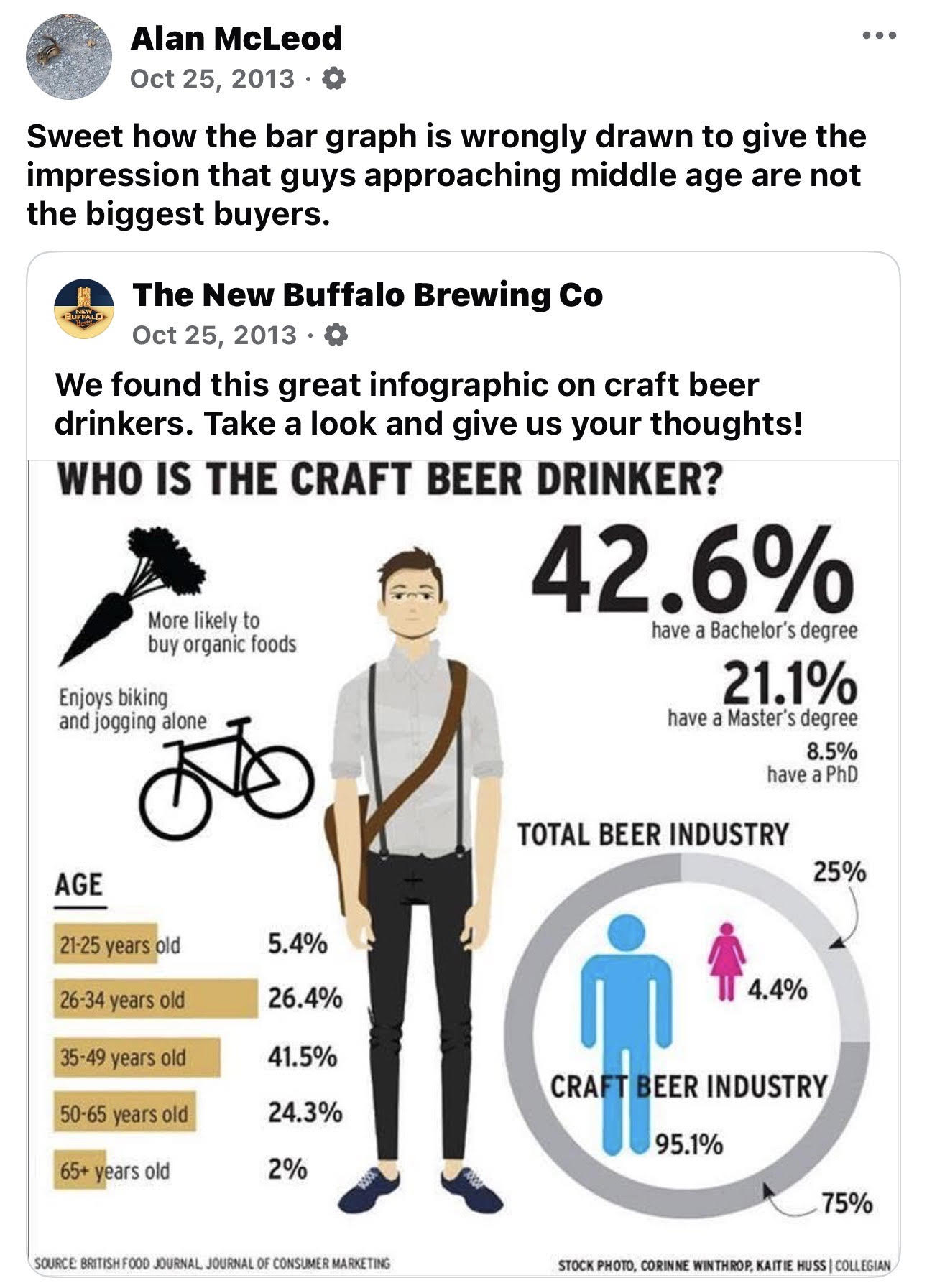
*Here’s the blurb in English: “Precarious and dangerous working conditions, unpaid overtime and exploitation: the daily lives of employees producing artisanal beer are sometimes at odds with the values conveyed by the sector and the positive image it enjoys.”

Your Highly Organic Beery News Notes From The Backyard Raspberry Patch

Raspberries. I’ve let them run a bit wild but for about one week you get a pint or so every second day or so, coming in waves as long as the squirrels stay away… which they seem to be, thanks to the foxes. Speaking of pints, I bought beer last weekend. No, really. I haven’t really had much laying about time but I added to my tariff transition coping mechanism by buying a few cans of Miller High Life. Unlike Maker’s Mark and all the other bourbons*, you can actually buy Ontario-brewed Miller HIgh Life at the LCBO here without any accompanying pangs of disloyalty. An old pal, it was sorta not good on the first drink last Saturday afternoon but then – magically – it was quite quickly sorta not bad. I felt connected to something bigger.** Small pleasures.

Speaking of small pleasures, it’s also been a bit quiet on the beer writing scene. Very quiet. Is this what’s happening out there?

“Why are you banging your head against the wall?” asked Frog. “I hope that if I bang my head against the wall, it will help me to think of a story,” said Toad.

Never fear. It’s the end of the month this weekend so The Session is here. Hosted this month by David Jesudason who enticed and encouraged us all with his tale of an entirely foreign business model around my town:

I want to examine the growth of Yard Sale Pizza in London and what it says about the state of pubs in 2025. For those who have never experienced this recent phenomenon Yard Sale delivers to taprooms, pubs and bars around the capital in spaces that often don’t have a kitchen or can’t make selling food economical… The list of venues where you can use an app to get a pizza handed to your table is huge; I counted that Yard Sale is the only food option at a staggering 128 places. All of these 128 spaces tend to be indie and/or crafty…

Pubs with no kitchens meet a pizza chain with no retail face. Is that it? Me, I haven’t started writing but if I am honest I would likely fall into the equivalent of what looks like a gastropub as Laura discussed this week for What’s Brewing:

Since the term was coined in the mid-nineties, and popularised from the 2010s, I have sought to find the unicorn – a great pub with excellent beer and an uncommonly high level of food quality. There’s nothing wrong with standard pub grub, I enjoy it regularly, but sometimes I like a little bit of fancy. But finding a genuinely excellent example has been next to impossible, because I care about my beer. While there are many venues out there who offer an elevated menu, I have almost universally found their beer lists are distinctly lacking. You can have all of the locally foraged ingredients and nose-to-tail eating you want, but if you can’t choose a quality pint or bottle to pair with it, disappointment ensues. 

That is actually not a problem we face over here as what were once probably called craft beer bars have often had a side of good food to meet the exactly need that Laura has identified.

What else is going on? Sticking with that fair city, Will Hawkes shared the August edition of London Beer City and included the news about another angle on selling good beer that I really hadn’t considered:

Stephen O’Connor, co-owner of the Green Goddess beer cafe and microbrewery in Blackheath, chuckles down the line as he discusses the significant intersection of beer and bus enthusiasm. “There should be a Venn Diagram of people who are into buses, people who are into beer, and people who turn up to events like the one we’re running this Saturday…”  But isn’t it stressful driving a bus in London, anyway? “Well technically driving a bus is no harder than driving a car,” Stephen says, which may be true but I remain to be convinced. “The ones I drive are 30, 40, 50 years old, so they do tend to be a bit more challenging. But because you’re that bit higher, you can see what’s going on.”

I had never considered catering to bus enthusiasts. Mainly because I have never considered bus enthusiasm. We also learn from himself that the Dulwich Woodhouse has “unbelievably grumpy staff” and is expensive while The Alleyn’s Head is “a good-value option with a slightly oppressive atmosphere.

Possible related complaint driven note from 1898: “… he is not likely to waste his time mixing freak drinks with flashy names…” Zing!!

Esquire magazine published a history of events leading to the collapse of Schlitz, the brewer careful readers will recall, which was still the #1 US brewery with 6.92% of the national market in 1956 before much changed.***

The year is 1965. Thirty-four-year-old Bob Martin relaxes in his high-backed leather chair and exhales with satisfaction. His office, perched within the imposing headquarters of the Joseph Schlitz Brewing Company in downtown Milwaukee, hums with the quiet authority of power. As well it should for the guy who’s running the marketing department for “the Beer That Made Milwaukee Famous.” Schlitz is the second-largest beer empire in the world behind only Anheuser-Busch. And it is Martin’s playground, his kingdom to control. A secretary’s voice crackles through the intercom. “Mr. Martin, there’s an unidentified caller on the line. Won’t give a name. Says it’s urgent.” Martin frowns as he picks up the phone. A voice on the other end—flat, emotionless—says, “The baby has arrived and is doing nicely.”

The tale goes on to explain “It wouldn’t be the last time Martin used a fat stack of cash to cut a deal.” Hmm… in brewing? Whoever saw that coming?

Do you waste years of your life on social media reels watching people wander about Japan and finding cool places to eat? Me neither. But… I was moderately amused by this photo essay of the hunt for a beer garden on the roof of a multi-story car park in Tokyo:

He thought he might be imagining things, but once he got to the garage, there was indeed a giant banner advertising the “Tachikawa in the Sky Beer Garden.” He also spotted a few signs on the ground level doubly confirming the fact that beer and yummy things were just an elevator ride away… Next to the rooftop level button was a small visual for the beer garden. What exactly would be waiting for him when the door opened…? There was a particularly good-looking deal called the “Cheers! All-you-can-eat and all-you-can-drink course.” For 90 minutes, you can have unlimited alcoholic drinks, soft drinks, and five kinds of food, all for only 2,580 yen (US$17) per person.

WIse choice. Probably. Not utterly dissimilar, as part of the response to tariffs, Canada is taking on the task of reorganizing the economy with new vigour, including removing interprovincial obstacles to the beer trade. Careful readers will recall the Supreme Court upholding their legality in 2018 but, now, even if they pass muster they aren’t passing the smell test according to CTV News:

All but one province, Newfoundland and Labrador, as well as the Yukon are on board. Some brewers, however, say the trouble of moving beer across borders outweighs the benefits. “It’s probably not something that we would look to offer in the near future, based on the logistical challenges and the costs of shipping,” said Jared Murphy, co-owner of Lone Oak Brewing Co. in P.E.I. Beer is heavy, shipping in bulk is pricey and ideally it should be kept cold. For small producers, those are bigger problems, Murphy said. However, the plan could create opportunities for transport companies, said Christine Comeau, executive director of the Canadian Craft Brewers Association. She doubts it will move the needle if costs stay high. “I don’t think that it’s going to be a huge kind of market opportunity for us,” she added.

An in their footnotes to their Saturday news update – a feature to which you really need to subscribe – Boak and Bailey admitted a very clear admission:

Oh, good – Pellicle has an article about beer this week, rather than wine or cider or sausages or something. To be clear, we applaud the range of stuff they cover, but we’re really only interested in beer for the purposes of the weekly round up.****

What!!! Sausages or something?!? How focused. I have never been accused of being particularly focused myself. So happy am I to see that Pellicle is well into the something zone care of Anaïs Lecoq with something of an almost eponymous topic:

Daniel Price thought the same the first time he tried Brets in London, and ultimately decided to stock it when he opened Two Sevens Deli in the Suffolk market town of Sudbury. “We have chicken and beef crisps here [in the UK], of course we do,” he says. “But there is something about Brets poulet braisé that tastes just like the crispy chicken skin, and it’s amazing. Even the côte de bœuf has got a slight char to it, a sweetness and a savoury quality. It tastes like it should.” If the chicken flavour actually tastes like chicken, a simple look at the ingredient list will tell you why: potatoes, sunflower oil, flavoring, salt, chicken meat powder. 

Yum. I grew up in Nova Scotia where Roast Chicken chips which are forbidden to all other Canadians for some reason. If you are there and arriving here you will be packing Roast Chicken chips.

And there was some great reporting at the end of last week in the Financial Times on the financial mess that’s BrewDog which illustrates what I have long written about the idea of “independent” needs to dig into the debt obligations of breweries. Just look at the clarity concisely offered by the piece’s author, Dan McCrum, showing how BrewDog doesn’t really own BrewDog like you own that cat over there, given the 2017 deal with private equity outfit TSG Consumer Partners:

TSG ended up with 22.3 per cent of the company at an enterprise value of £895mn or, in dollar terms, a round unicorn billion… The change highlights the effect of the prefs’ entitlement to a compound annual return of 18 per cent at the moment of any sale, initial public offering, or liquidation, ahead of the other shareholders. BrewDog’s equity value had fallen to about £900mn, but TSG could then claim £520mn of that amount. The value of everyone else’s equity had fallen by three quarters. The theoretical value of the £213mn spent by TSG in 2017 has continued to grow at 18 per cent, passing the £800mn ($1.1bn) mark in April.

Eighteen Percent! Who borrows at eighteen percent??? I’ve had credit cards with lower rates of interest. Hmm… but in brewing? Whoever saw that coming? Relatedly perhaps… most likely I mean, Pub & Bar Magazine reports as follows:

Brewery and pub chain BrewDog has announced plans to close 10 of its bars as part of a strategic review of the business.  In a note sent to staff today (22 July), CEO James Taylor says the decision was made to outline a more focused strategy, including the rationalisation of its bar footprint to focus on “destination hubs” (large-format, high-impact immersive venues) and “community bars” to drive long-term, profitable growth.  “As part of this strategic review, we have made the decision to close 10 bars,” adds Taylor. “This includes some venues that are woven into our history, including Aberdeen, which was our first ever bar, and Camden, the first bar we opened in London….

And so it goes… while we wait on others to write more about the brewing trade, please check out Boak and Bailey every Saturday. Look out for Stan when he feels the urge now that he’s retired from Monday slot… maybe. Then listen to a few of the now rarely refreshed Lew’s podcasts and get your emailed issue of Episodes of my Pub Life by David Jesudason on the (sometimes even but never) odd Fridays. And Phil Mellows is at the BritishBeerBreaks. Once a month, Will Hawkes issues his London Beer City newsletter and do sign up for Katie’s wonderful newsletterThe Gulp, too.  Ben’s Beer and Badword is out there with the all the sweary Mary! And check out the Atlantic Canada Beer Blog‘s weekly roundup. There is new reading at The Glass which is going back to being a blog. Any more? We have Ontario’s own A Quick Beer featuring visits to places like… MichiganAll About Beer has given space to some trade possy podcasts and there’s also The Perfect Pour. Plus follow the venerable Full Pint podcast with an episode three weeks ago!. And there’s the Craft Beer Channel on Youtube. Check out the archives of the Beer Ladies Podcast. That’s quite good and after a break they are back every month! Such is life. Such is beer podcasting and newlettering… which, as Ray says, are blogs! And he’s right.

*From time to time I find myself being a little sad about the whole bourbon thing and then ask myself “who the hell gets sad about booze!?!
**… and got to once again laugh at the idea circa 2011 of “Toronto beer celebrities“!
***Tremblay and Tremblay, page 69, table 4.2.
****What’s that? You think I am stretching for content this week? Me? And adding unnecessary footnotes, too? How dare you!!! At least I did’nt mention this.

Your Sum-Sum-Summah-time Beery News Notes For The Last Thursday Of June 2025

Who knew? See, I now do all those NYT puzzles now, along with my 6:37 am big black coffee, as I try to wake up my brain cells first thing in the morning. This was never my thing. Ever. Until I joined the Wordle covid coping crew. Yet there it is – a clever observation in a Connections solution this week. Those who head out and those who stick around are both the left. Leavers v. leavings. I suppose you knew that one. I spot some sneaky things in this life but miss plenty of the obvious. We all do, I suppose. Just not the same things. We are all framed by our own individual gaps. Which I was thinking about this week when I noticed something this week, bits of writing about writing. Not meta blogging. Just a few little observations. Like Phil Cook who wrote this comment on Boak and Bailey’s on them not spilling all the beans:

I’ve been fascinated by that piece. I guess I still don’t understand why you’d keep those concerns as subtext — or cover them at all, if you didn’t feel you could be more plain about them. The rise and fall of Fox Friday in Australia (rapidly expanding, slickly designed, all that) when the law finally caught up with their shady financier haunts me as a comparison. Lots of people got burned in that collapse. In that case, there wasn’t a Wikipedia page full of priors to point to that might encourage people to be more on guard. But when there is, why not highlight it?

My two cents is that their habit of keeping a few things back helps make their writing so good. A polite but informed reticence. It’s part of their tone that, frankly, keeps you connected as a reader. Conversely, have you ever get a PR email like I did this week – and you know they’ve never read your beer related website?  One that says…

We thought a roundup story of Canadian long weekend brew pairings could be of interest to your audiences…

Lordy. I never though I would have multiple audences. Sweet! Identify yourselves!! Their client will go unnamed. It’s not their fault. (See I can do it, too. I can be restrained.) Somewhat similarly and adopting a stream of consciousness fantasy futurist approach, Dave Infante thinks someone somewhere is willing to pay for a generic PR media campaign for draft beer because it worked for milk a few decades back:

…a cold glass of beer? Normal. Better than normal: aspirational. Colorful in the glass; dynamic with an effervescent head. Emphatically not weirdo sh*t. “Got Milk?” was brilliant because the dairy industry — the f*cking dairy industry — was able to harness the power of marketing to convince the American drinking public that milk — f*cking milk — was glamorous. That was a very deep hole to climb out of! And “Got Milk?” did it. With such a built-in advantage, don’t you think a beer-industry analogue boosting draft beer, which people already like, might be able to generate sales in addition to goodwill?

Lordy Lordy. Who’s paying for that? Not quite as unrestrained this week – yet perhaps also a tad wild eyed – was one Mr. Beeson on the beery business story of the splitting of the UK’s Signature Brew, they now putting the debt in one half and the assets in another to see if some part of the overall thing survives. He posted his story in The Grocer with a 23 June dateline, as he announced on BlueSky as an exclusive, which included a quote from co-founder of said division in progress, Tom Bott, that the “restructure allows us to finally put the challenges of the past behind us and focus on building the future we know Signature Brew is capable of…” mentioning the need to address the “legacy debt” – aka debt. But then on the very same day, Jessica Mason had her story on the same subject published in The Drinks Business:

Speaking exclusively to db about the ordeal that the company has faced to stay afloat, Bott explained: “This restructure allows us to finally put the challenges of the past behind us and focus on building the future we know Signature Brew is capable of. We have built a business that is profitable, resilient and unique, blending great beer with incredible live music experiences. By addressing legacy debt in a controlled way, we are…

Much of the quoted wording attributed to the same Mr. Bott in each story is identical to the other.* Now, we can’t find fault that part of the team guiding Bott and Co. through insolvency restructuring includes a PR / comms specialist who handed out very firm speaking points – but why give both Beeson and Mason the expectation that these were exclusive interviews when they simply were not? No need to leave that hanging implication.

But there is more. The beating that truth and good sense get even worse in this brave new world – as Lars found out this week:

I’ve been preparing for our upcoming holiday in Georgia, and was looking for beer places in Kutaisi. Georgia still has farmhouse brewing, but it’s not 100% clear where, so I was really excited to read this on a site about tourism in Georgia. So excited, in fact, I emailed a woman in Kutaisi who… wrote a bar guide. She’d never heard of it, and suggested it might be AI hallucinations. The moment I read that my doubts about this photo (that’s not a traditional Georgian cauldron) came back with full force. Looking at the page again I see that the whole thing is AI garbage… It’s depressing really. It used to be that you could be fooled by people deliberately lying to you, but now you can even be fooled by a bunch of numbers employed by lazy assholes. They’re not even trying to fool you, just randomly bullshitting.

Wow. Yet, if we reflect upon this, it is even less than bullshitting, too, as there is no intention behind the formation of the falsehood. No thinking mind. It’s less than a lie, less than even the PR fluff stuff we choke upon every week. It all reminded me of something Jordan wrote me a few weeks back:

Do you realize how lucky we were to get into the sweet spot of the internet with Ontario Beer? You couldn’t research it now. The AI has gummed up the works.

Truuf. There was a golden era but this ain’t it. Speaking of modernity induced head scratchers, this set of 1967 interviews on the introduction of drunk driving laws in the UK includes a few suprememly nut-so arguments:

The pedestrian could have too much to drink. He could cause an accident. He doesn’t get tested. It’s the driver who gets tested, and I think that’s unfair… For many many years, I’ve drove with far more liquor in me than I have now…

Would one name and shame now? Or just fondly remember: “… and right there – that’s your great aunt Peggy right there, son, after she came back from Africa and before she went to jail.” Personally, I may not have driven in Kenya or Uganda but I remember working with a guy in 1982-ish Nova Scotia who had cut a hole in the floor of his truck’s cab just below his steering wheel that let him drop the beer cans down to the road at the end of the work day. The past is a foreign land. Or is it?

Moving to the same sort of themes today, Reuters reports that it’s going to be yesterday once more for the US when it comes to the government’s recommendations for healthy drinking:

The U.S. government is expected to eliminate from its dietary guidelines the long-standing recommendation that adults limit alcohol consumption to one or two drinks per day, according to three sources familiar with the matter, in what could be a major win for an industry threatened by heightened scrutiny of alcohol’s health effects. The updated Dietary Guidelines for Americans, which could be released as early as this month, are expected to include a brief statement encouraging Americans to drink in moderation or limit alcohol intake due to associated health risks…

Is that so wrong? We may not have to concern ourselves with the counting of fingers and who’s wiser than who if the focus moves to the results rather than how many got you there. After all, no one argued that this or than number of ciggies or cheese burgers shorten your life… it was just confirmed that they did.

Speaking of science, I really liked this post by Jeff and the woodland secrets of yeasty studies by two brewers in Oregon including Ferment Brewing’s Dan Peterson:

…he started tinkering. He started by putting the microbes he collected in an incubator, and then growing up little colonies.

“Then, some of them you could start identifying like, yep, these are bacterial colonies, these are yeast colonies. And then there’s always mold at that point, trying cover everything. So as they’re growing, it’s a a race to get colonies [established] before the mold takes over. But once those are split up and on their own petri plates, they’re free of mold and completely isolated from each other.”

Speaking of yeast coated containers, Chimay is selling cans of the good stuff:

The Chimay Dorée, Rouge and Triple – ranging in alcohol content from 4.8% to 8% – are now available in 33cl cans. The heavier Bleue and Verte varieties will remain bottled for the time being. “You don’t drink those in just a few gulps,” said CEO Pierre-Louis Dhaeyer. The abbey has been developing the canned versions for over three years, and has already conducted initial market trials in the United States and Japan, where canned craft beer is far more common.

Can o’ Triple? Mmmm… refreshing. That’s not going to lead to any problems, no sir-ee!

And speaking of the fine arts, this week’s feature in Pellicle has many good paragraphs but this one by Robin Vliebergen in her piece “The Apples of Limburg”  is among the finest paragraphs on the drink I have read this year:

The older they are, the higher these trees grow, and therefore it becomes more difficult to pick their fruit. As their owners also grow older, this creates a very practical problem: the trees become too difficult for them to harvest. They are left with a glut of high-quality local apples, in need of young fit people to pick them. Reinier mentioned this problem to Bonne and Job, and so the first vintage of Cidre Sauvage was born.

Fabulous. The only tweek I might have added would be somehow weaving in “high quality on high limbs” but, as you know, I am a bit of a wag. And finally remember – speaking of waggery – this very weekend is the exact time to post your thoughts in response to Laura Hadland‘s question for The Session this month:

It doesn’t matter whether you have hosted a pub quiz, or just attended one. Or maybe you’re vaguely aware that pub quizzes exist, but you’ve made it your mission to steer clear. What is the best, most entertaining set of questions or challenges that can be posed to the punter? What single topic has engaged you the most? What is it that makes a great pub quiz stand out head and shoulders above the rest? What might tempt you into attending if trivia night is something you usually swerve?

I know what I’m going to say… but I’m not saying it yet! And it isn’t “name that smell!”  You. You should submit something. Do it? Tell your grandchildren when you are old that you did, too. They will be both flatout amazed and rippling with pride.

That’s it. I am settled in for summer now. Canada’s next week. Brace yourselves. In the meantime, please check out Boak and Bailey every Saturday. Look out for Stan as he is posting irregularly now that he’s retired from Monday slot. Then listen to a few of the now rarely refreshed Lew’s podcasts and get your emailed issue of Episodes of my Pub Life by David Jesudason on the (sometimes even but never) odd Fridays with the new addition of his Desi Food Guide now on Tuesdays. And maybe The British Food History Podcast. Maybe? And Phil Mellows is at the BritishBeerBreaks. Once a month, Will Hawkes issues his London Beer City newsletter and do sign up for Katie’s wonderful newsletter, The Gulp, too, now relocated to her own website, Katie Mather Writes.  Ben’s monthly Beer and Badword is on its summer break but there’s plenty to catch up on! And check out the Atlantic Canada Beer Blog‘s weekly roundup. There is new reading at The Glass which is going back to being a blog. Any more? We have Ontario’s own A Quick Beer featuring visits to places like… MichiganAll About Beer has given space to some trade possy podcasts and there’s also The Perfect Pour. Plus follow the venerable Full Pint podcast with an episode just last month!. And there’s the Craft Beer Channel on Youtube. Check out the archives of the Beer Ladies Podcast. That’s quite good but, hmm, they’ve also gone a bit quiet this year. The rest of these are largely dead. And the long standing Beervana podcast …except they have now stood down.  As has We Are Beer People. The Share looked to be back with a revival but now its gone quiet. And the Boys Are From Märzen podcast appears suspended as does BeerEdge, too. VinePair packed in Taplines as well. All dead and gone.  There is more from the DaftAboutCraft podcast, too. Nope – that ended a year ago.   The Moon Under Water is gone – which is not surprising as the ask was $10 a month. Pete Brown’s one cost a fifth of that – but only had the one post. Such is life. Such is beer podcasting and newlettering!

*Far more obvious than the big news in rice v. the big news in rice, right?

Your Beery News Notes For The Start Of The Last Month Of Spring

Here we are. Growing season. Well, it’s been hovering between 11C and 14C in these parts mid-day so perhaps not very much growing but at least there is no frost. That’s my Pinot Noir there. I hacked out most of the Concord this year to let the swankier sibling get more sunlight. That pink edging fades soon enough but it’s a great guide to assist with what lives and dies. Is that why I garden? To judge? To dispense edict? That and salads, sure why not?

First, and sticking with the theme vinous, Katie Mather has been reporting from the front lines of the wine trade and has a discovery to share – well, two after her thoughts on what was once all in black is now very much back:

Ice in wine is becoming a *thing*. Don’t believe me? Do a couple of shifts in your local pub. Over the past year I’ve noticed more and more women (it has been primarily women) ordering white or rose wine and insisting on having ice in their glass. Perhaps it’s because they don’t really like the flavour, and the ice dulls it down. Perhaps pub fridges aren’t cold enough. Perhaps — and this is what I think — it reminds us of being on holiday. Oh god, I am doing everything I can at the moment to pretend I’m not really here. Aren’t you? The world is a nightmare, a giant morality eclipse, and if a little clinky-clinky in my glass helps lift me out of it even for a second, I am going to do it. Black Tower is an ideal icy wine, because it’s heavy in syrupy flavours. And also because you don’t really want to taste it.

Viva cheap sweet wine on ice! Our government is also all about the viva! This week as there was good news for good beer this week was in Ontario’s provincial budget:

The beer, cider, and premixed cocktails you buy at the LCBO could be a lot cheaper as of August 1, with the government cutting the markup rates the LCBO charges for those products. So long as manufacturers don’t increase their prices, the cost of beer, cider and ready-to-drink beverages could drop between 21 per cent to 50 per cent. For example, the government is slashing the markup on Ontario craft beer by 50 per cent. It’s a move that is going to further impact already falling revenues. LCBO revenues are down sharply since the Ford government started allowing the sale of alcohol in convenience stores. 

Really? Booze prices could drop 50%? Really?? Jordan ran the numbers and noticed that is not quite correct:

…for every six pack sold, the LCBO gets $1.836…  That’s not really helpful math since most breweries sell 473 ml cans. Translated, that’s $0.0939 cents per can. Going by the earlier example of 2,000 hL of cans sold, you’re actually doing better by about $39,700. If you were a larger regional like a GLB or Nickel Brook doing 10,000 hL in cans, you’re looking at a couple hundred grand. The government gets a nice win, because they can say they cut a tax by 50%. No one really wants to understand what I just explained, so there won’t be any probing questions about tax vs. retail markup.

Interestingly, the budget also weakened the regulations around what arrangements qualify as craft beer, as changes “would permit microbrewers to enter into a contract with another brewer that is not a microbrewer” while retaining its status.  Don’t know who in particular will benefit from that change…

There was also not so great beer related news from Ontario. Unlike those high hopes I mentioned a couple of weeks ago, on Monday morning I found my Leafs jersey on the basement floor. Inside out. In a bundle. In the corner. You know, it’s reasonable – mathematically speaking – to say that the only team that loses in the seventh game of the quarter finals is the fifth best team in the playoffs. Didn’t feel that way. They certainly did better than I’ve done in the Pellicle FPL pool where me, I sit by myself at 36th out of 55 in the table – but at least I didn’t do what people at the game did:

On Sunday, the Florida Panthers ran the Maple Leafs out of their own building to the tune of a 6-1 blowout. It’s the second 6-1 loss in a row the Maple Leafs have sustained on home ice in this series and Toronto’s 2025 Stanley Cup hopes have officially ended thanks to this defeat… It’s safe to say that Maple Leafs fans have had enough of the disappointment. In the middle of Sunday night’s Game 7, multiple jerseys were thrown onto the ice and beer was reportedly thrown at Toronto’s bench as well.

I’ve seen baseball fans throw beer onto the field in Toronto but never hockey fans. At the prices they charge, it means they have to have been seriously pissed off.*

Could be worse, of course. You could be a US craft beer exporter who had to listen to this sort of weirdly denialist argument from a rep of the US Brewer’s Association as reported in VinePair:

the in-person attendance of Chinese and Canadian buyers in last month’s 2025 Craft Brewers Conference as proof of the “lasting reputation of U.S. craft beer for quality and innovation — even amid ongoing trade uncertainty for markets,” while conceding that importers from those two countries in particular have scaled back or stopped down on ordering in the opening months of Trump’s trade war. This, after craft exports saw a 15 percent decline in 2024, outpacing the category. Still, Parr argues, “for breweries with a long-term, quality-driven approach, global markets continue to offer meaningful opportunities.”

That’s a funny thing to say. Seeing as the largest importer in the world is our very own LCBO and (i) that 15% drop was pre-Trump and (ii) for the last ten weeks with no sign of a pending policy reversal, the LCBO has entirely cut off your all your exports (in coordination with other Canadian booze commissions), well, I am not quite sure where the “meaningful opportunity” is to be found in Canada. But, you know, it’s the BA! Beer Market’s Insights continues to tell a different story for US trade:

For 4 weeks, beer biz looks a little better. Down 2.9% for 4 weeks thru 5/4, -4.6% for 12 weeks. Wine down just 2% for 4 weeks (including Easter this yr), spirits up 5.6%.

By “a little better” read “not as bad” perhaps. Note the reverse is happening in the UK with the news this week of a UK-EU trade deal as noted in TDB:

Miles Beale, chief executive of the Wine and Spirit Trade Association welcomed the reset, noted that anything that improves the relationships and practical arrangements with the EU is “great news”. However he warned that “as ever the devil is in the detail” and he looked forward to seeing the legal texts over the coming weeks. “For the UK wine sector, where imports account for 99% the wine enjoyed by UK consumers, we want to ensure that any new rules and obligations work for the UK market,” he said.

Well, that’s looking like actual opportunity. Viva! Speaking of which in only the most oblique sense which I will let you figure out on your own, this week’s feature in Pellicle is a postcard from local author, Ewen Friers, who introduces us at a pace to the pubs about the town, as illustrated by some lovely photos from MC Himself:

Quite rightly, Kelly’s and The Crown have changed little over the years, but that’s not to say Belfast and its beer is an entirely fixed concept. The place brims with lively modern bars like any small touristic city in Europe, and new takes on age-old traditions have been popping up more and more. This is true for smaller breweries too. The now sadly defunct ABV Festival and the aforementioned more recent Belfast Beer Festival have been crucial in pulling the beer environment forward. Whilst some small breweries have come and gone in recent years, like the much missed Farmageddon, the scene has continued to grow.  

Entirely contrary to that sort of familiar stability and reassuring comfort, Evan Rail followed up on that weird SNPA as ESB story for VinePair this week, sensibly seeking some common sense:

For Chris Williams, competition director at World Beer Cup, SNPA’s win as an ESB shows how well Sierra Nevada Brewing Co. understood the character of its beer, as well as the changes in the pale ale category over the years. For about a decade, the competition’s otherwise English-focused ESB category has included an additional set of style guidelines for an “American-style ESB” subcategory, into which Sierra Nevada Pale Ale fits perfectly. “They looked at the specs, they looked at how their beer stacks up, and they were like, ‘That American-style ESB category is a match for our beer…

I’ll ruin Evan’s punch line: “…fans didn’t seem to notice.” Which is definately fair comment… even maybe when taken out of context. For me the whole thing is a bit of a mini-mummer of a muddle that mainly points out that it’s hard to have 1257 styles (or so) and sub-styles (or whatever) then have them shift around over time and space, then expect a clear outcome… or even a useful one! Once again, it’s good to remember this sort of judging is a nice hobby interest for all the participants. Jeff added his thoughts but, I have to say and with respect, the entire discussion has only convinced me again that the main goal of this sort of approach to style is the perpetuation of this approach to style.  Does that qualify as what the kids these days are calling propaganda? Me, if I have a SNPA in front of me, I am really only concerned with the taste of the thing in front of me, not whether it has hit the bullseye on the shifting dart board of style. Still, it’s quite a nice hobby for all involved. Nothing wrong with that.

Speaking of what is in the glass itself, still on the run… err… on vacation, Boak and Bailey have been drinking a lot of lager and have come to some conclusions as discussed at and within their monthly newsletter:

When we’re drinking these half-arsed efforts we find ourselves thinking: “Why didn’t they just give that tap over to a lager from another craft brewery that knows what it’s doing? Or to the best of the local mainstream products?” This would, at least, demonstrate good taste. It’s an opportunity to ‘curate’ and to guide. And, yes, some of the national brands in Romania and Bulgaria struck us as pretty decent beers – as if they’ve been overlooked for so long that someone forgot to make them bad. We’d be happy to see them in offer in craft beer bars. If your £6-a-pint in-house lager isn’t better than something we can buy at a normal pub for half the price, or pick up from a cornershop in a scuffed brown bottle for a quid or two, what’s the point?

And The Beer Nut has been considering what to have in his glass (though not yet pouring a cheap sweet wine on ice) as he finds himself right here at the very toe tippy verge of another hot summer, and also drew conclusions:

Probably to be expected given the lactose, it tastes mostly like lemon curd, and can only make the woolliest of claims to being sour. It’s barely even bitter. Half way down I decided to add ice, and honestly I think it improved it. The flavour became less blurry, more spritzy, although less beery as well. I suppose that with “limoncello sour” it’s unsurprising that it would taste quite like an alcopop. As such, it’s a nice and undemanding summer drink, but it doesn’t press the beer buttons. And doesn’t even know where the sour buttons are. I’m unimpressed but I see what they were trying to do.

Is that so very far from Black Tower on ice?  Hmm? Well, except for the price I suppose.

Finally, a fond farewell to actor George Wendt who played TV’s favourite guy at the end of the bar, Norm. His obit in The Hollywood Reporter including this explanation of how he managed the role:

The portly, curly-haired Wendt was self-deprecating about his well-honed delivery, contending that the toughest part of his job was drinking the “beer,” a warm, flat, non-alcoholic concoction that was layered with a pinch of salt in every mug to create a TV head. “There I was slamming those down for a whole day. It not only tastes disgusting, I was afraid of keeling over from high blood pressure,” he told The Washington Post in 1985. “Then I got the knack. I didn’t have to put all those brews away. It only mattered when the camera was pointing my way. It took a couple of years, but now I watch the camera. That’s how I make my money. That’s acting.”

Well, there you go. See you, Norm!  And until we (not George and me… you and me!) meet again, please check out Boak and Bailey every Saturday (…as long as all their holiday fun doesn’t get in the way…) and Stan (….not quite every week but yes, he was there this time…) each and every Monday. Then listen to a few of the now rarely refreshed Lew’s podcasts and get your emailed issue of Episodes of my Pub Life by David Jesudason on the (sometimes even but never) odd Fridays. And maybe The British Food History Podcast. Maybe? And Phil Mellows is at the BritishBeerBreaks. Once a month, Will Hawkes issues his London Beer City newsletter and do sign up for Katie’s wonderful newsletterThe Gulp, too.  Ben’s Beer and Badword is out there with the all the sweary Mary! And check out the Atlantic Canada Beer Blog‘s weekly roundup. There is new reading at The Glass which is going back to being a blog. Any more? We have Ontario’s own A Quick Beer featuring visits to places like… MichiganAll About Beer has given space to some trade possy podcasts and there’s also The Perfect Pour. Plus follow the venerable Full Pint podcast with an episode just last month!. And there’s the Craft Beer Channel on Youtube. Check out the archives of the Beer Ladies Podcast. That’s quite good but, hmm, they’ve also gone quiet this year. The rest of these are largely dead. And the long standing Beervana podcast …except they have now stood down.  As has We Are Beer People. The Share looked to be back with a revival but now its gone quiet. And the Boys Are From Märzen podcast appears suspended as does BeerEdge, too. VinePair packed in Taplines as well. All dead and gone.  There is more from the DaftAboutCraft podcast, too. Nope – that ended a year ago.   The Moon Under Water is gone – which is not surprising as the ask was $10 a month. Pete Brown’s one cost a fifth of that – but only had the one post. Such is life. Such is beer podcasting and newlettering!

*Superior reportage from The New York Post: “The Maple Leafs’ alternate captain, Marner, is set to hit free agency this offseason and is expected to depart. After the Maple Leafs allowed three unanswered goals in Game 7, completely taking the air out of their raucous building, Marner yelled at his team on the bench, screaming “wake the f–k up.””

The Beery News Notes You Need To Get You Through Victoria Day Weekend

If we are honest, we should celebrate the Georges as much as Queen Victoria.* Sure she invented the fifth version of Canada but it was the Georgians who made us, they being the people (and, yes, their red clad dutiful doers) who kept us from being just another slice of Americana. Timely thoughts, you will agree. Some call this coming long weekend not Victoria Day but May Two Four – my greatest gift to Linguista Canadiana being the alt, May Too Far. When the Georgians were running the place, the birthday of the monarch was one of the greatest spectacles in the year as the account of 12 and, I suppose, 13 August 1827 at Guelph, Ontario on the celebration of the King’s birthday bears witness:

…all sat down and enjoyed a hearty meal. “After the cloth was removed,” toasts were drunk to everybody and every conceivable thing, the liquors, of all imaginable descriptions, being passed round in buckets, from which each man helped himself by means of tin cups, about two hundred of which had been supplied for the occasion… those who remained continued to celebrate the day in an exceedingly hilarious manner, most of them, who had not succumbed to an overpowering somnolency, celebrating the night too, many of them being found next morning reposing on the ground in the market place, in loving proximity to the liquor pails, in which conveniently floated the tin cups…

Always solid advice. By the way, the 200th anniversary of that event on the Guelph frontier is just two years and three months away. We need to recognize that boozy bicentennial! Time to apply for those government grant to celebreate our great heritage for celebration. I just hope the application form has a space for indicating the number of tiny tin cups required for the event. By the way, just seven years later, as explained up there in the Kingston Whig newpaper of 12 August 1834, not so much fun. None at all. But the advice still stands today: lay off the opium, buster.

Enough of then! What of the now? First up, Rebecca Crowe shared some of her love for her local, the The Little Taproom on Aigburth Road in Liverpool in Pellicle this week, a place of cheery activity and welcoming hosts, Si and Aggie:

If you’re in the Tap on a Wednesday night, you’ll be greeted by groups of people staring at their phones. However, this isn’t an unsociable act—it’s the Big Quiz in the Little Taproom. When you look around the regular teams, you see couples, groups, solo players, university-aged friends, alongside seasoned quiz addicts, and people just looking for some time out of the house. Si mentions how quickly the quiz has grown as a regular pub fixture. “At first, it was just a regular event to increase revenue on an otherwise relatively quiet Wednesday night,” he says, with his trademark full-hearted honesty.

Next, and perhaps quite conversely,  a bit of disappointing news for the efforts being undertaken to have cask ale and pubs recognized as Intangible Cultural Heritage by UNESCO as explained in Pellicle by lobbying leader Jonny Garrett:

During brief discussions with the civil servant in charge of the project, I was told there would be a “relatively low bar of entry” to the national list, but that there was no intention to put any submissions to UNESCO for the first few years. The reasoning was that the government was not certain how to select which cultures should be submitted, but it also feels like they are reluctant to do so until they fully comprehend the implications for governance of any that make the grade.

Seems that as the UK is late to ratifying the underlying treaty, the government has to determine how to prioritize the many claims to being awarded the designation. So cask beer is up against things like all of Scotch Whisky (a good bet to beat out cask), Welsh mens’ choirs (obvs ahead of cask) and all those charming English fetes on the village green on lovely summer Saturdays that we see on TV, the ones  where half the upper middle class villagers who live there are murdered – and it was the church choir master, jilted by school teacher all those years ago, who was to blame after all!!

If, however, any evidence of the vibrant Life on Cask is required for  governmental purposes, the entirity of reportage from Martin is right there for the taking. Just this week he visited wrote about his recent trip to The Castle Hotel of Manchester providing us with a lovely photo essay – including this image of the entry way like something from one of those episodes of Time Team where they uncover a Roman mosaic in a farmer’s field. Heritage.

More bad news for the US booze and craft trade. BeerBoard reported that “total alcohol sales declined -7.3% year-over-year across same-store locations during the May 2–5 weekend” as Beer Marketer’s Insights shared:

Craft beer sales continue to soften in tracked retail channels thru first few wks of April. As total beer sales “improved” a bit to $$ down 2.2%, craft beer softened to $$ down 6.3% for latest 4 wks thru Apr 20 in Circana multi-outlet + convenience channels. Keep in mind, that’s excluding non-alc craft brands tracked in separate NA segment by Circana.

It’s interesting how heavily those still wishing on that star rely on non-alcohol beer stats to prop up the decline while also squeezing that Bourcard report** dismissing the demographics hard. If all the energy to ignore the trend was employed in addressing the trend… would the outcome change? Speaking of tinier trends, has anyone actually noticed the rise of Thai beer in America?

According to reports via The Manual, Group B USA has claimed to be the first and only Thai craft beer distributor in America and now it has also started brewing stateside too. Beer lovers and Thai cuisine connoisseurs have previously only been familiar with Singha and Chang beer brands, but in a deep dive interview with Group B CEO Bamee Prapavee Hematat there is now a growing Thai craft beer movement featuring IPAs and beers flavoured with dried bananas.

Despite all those Thai beers coming it, less is still more for the rest of the US beer trade, as Evan Rail reported in VinePair this week:

“That was the height of craft beer—it was easy to keep 28 handles on tap,” says Zak Rotello, the bar’s third-generation owner. “Now, fast-forward 10 years and I have less beer on tap than ever: 21 beers out of a total of 30 handles. The others are wine and spirits.” It’s not just Rockford. Across the country, a number of bar owners are moving away from the massive tap lists of the craft era. Back in the days of what Rotello calls “rotation nation,” enthusiastic beer drinkers were always hoping to find something new on tap—and bars were happy to oblige. Instead, many bars today are offering fewer draft beers, often using those same lines for pre-mixed cocktails, bulk-packaged wine or other beverages.

And Alistair shared some related thoughts over at Fuggled, too, as he bimbled in his dotage:

Maybe I am just entering my curmudgeonly dotage as I creep ever closer to my 50th birthday later this year, but I have found little joy of late browsing the aisles and shelves of the beer retailing world, whether supermarket or specialist. Of course there are beers, usually seasonally available lagers such as Tröeg’s Little Nator, that I happily stock up on when they are available, but usually my little bimbles are more a ritual performed through a misplaced sense of duty, with a hint maybe of self-flagellating hope of something other than yet another “innovation” in the form of an IPA.

Getting a bit legal for a moment, I came across some excellent discussion of  an important topic in the hospitality trade from a team of Australian academics, thoughts about the alleged “perks” in the tavern and grub trade and how they undermine hospitality workers’ rights:

As one chef put it: “Free steak dinners don’t pay my rent or stop my boss docking pay for smoke breaks.” Our data also show that workers with formal agreements were significantly more likely to receive their legal entitlements, including proper rest breaks and overtime pay, compared to those without. Why does this matter? Because protecting rights is not just about fairness. It is about safeguarding the sustainability of an industry we all rely on. Research shows when businesses rely on unpaid labour or ignore basic entitlements, they undercut fair competition, contribute to worker burnout and drive talent out of the sector.

Remember when craft brewing workers were expected to be more interested in passion than pay? What? Still?!?! Boak and Bailey (much to the contrary being unfailingly fair competators in the weekly beer new update scene***) have taken time out from their eastern European sojourns to discuss the source of skull iconography in the craft beer scenic landscape:

David Ensmiger, quoted above, suggests that in the context of punk music and skateboarding, skulls and skeletons represent a certain ‘apartness’ from mainstream culture. To paraphrase his argument, skaters, punks and bikers are monsters created by society, who delight in horrifying and repulsing ‘normies’. There’s also a more obvious sense in which skull imagery is about confronting death, and embracing life. People who fly skull flags see themselves as fearless risk takers, in both physical terms (skateboarding accidents hurt) and in terms of their cultural status. Again, this is exactly the kind of attitude craft beer producers either wanted to tap into (appropriate) or which actually reflected their lifestyles.

Fabulous stuff from they themselves, as is so often the case. I added my two cents that there was an association of the imagery with the Motörhead influenced X-treme beer era which picked up 1980s Mad Max post apocalyptic cool. Rock. On.

Speaking of the 1980s, I had no idea that stubbies were a thing outside of Canada before 40 years ago but here were are… or rather there we are according to Anthony Gladman:

The area around Fressin, known as Les Sept Vallées, is nice enough in a damp kind of way, but it’s not exactly what you picture when you hear ‘holiday house in France’. It soon became clear Dad had chosen it just to be close to the Wine Society’s outpost in nearby Hesdin. Still, when I think back to my visits there — which took me from callow teen to knackered young dad myself — what I remember drinking with Dad was beer. Or stubbies, to be precise: little 250 ml bottles of Kronenbourg, bought dirt cheap by the slab from the local hypermarché.

Are you a curious person? I know I sure am and I also know you probably are because you are here reading this very sentence. This one too. Well, in order to compensate for your undoubtedly regular sense of disappointment founded here week after week, Eoghan Walsh has a plan designed just for you – and for you and especially just for you:

Before the big announcement, a slightly smaller one – Brussels Notes turns 100 next week! That’s 100 newsletters from me to you since I first started sending them out over four years ago, and since I revived the format at the beginning of last year. A huge thank you to every one of you who’ve signed up to get them in your inbox, and to everyone who’s reading this or has read an article in the past. To mark the occasion, I thought I’d do an Ask Me Anything edition for newsletter #100. What’s my favourite bar? My favourite building? Best beer? Worst beer? The worst thing about Brussels? The best thing? Weirdest thing that’s ever happened to me in the city? Oddest thing I’ve ever seen. Best sandwich? How I actually pronounce my name?

My bet it’s pronounced “Ewan”, right? Jason Wilson is actually also possibly pronounced “Ewan” but that is entirely not the point. The point is he made a very interesting observation on US wine buying habits these days as it relates to place:

These days, in the middle of a worldwide wine crisis, it’s never been tougher to sell wine based on place. In fact, over the past couple of years, I’ve observed that a certain type of wine influencer/educator has begun to steer completely clear of talk about terroir. At the low end, the focus is on a certain populism focused on, say, wine in cans or alternative packaging. But much of the higher-end natural wine chatter also avoids a deep discussion of place. While the best natural-wine producers are committed terroirists, a lot of the derivative, middling natty wine talk is way more about winemaking technique and philosophy…

The comments are in the context of the risks inherent in the German legal wine standards adding concepts equivalent premier cru and grand cru to the labels of their bottles. The risks being that the promise better be fulfilled. Does this relate to good beer? “Local” in terms of a beer made of things from this or that “here” (or even a “there” for that matter) has never really taken off even when the best examples ring true. In a trade where popular populisit “IPA” branding has devolved to a euphemism for “maybe better” how could that little old charmer “local” have ever hoped to rise to the top?

Question: is there value in Vittles?

Finally, as you can see to the right, Mr. DJ made all my dreams come true with this post on BlueSky.  And that is it! Until we meet again, please check out Boak and Bailey every Saturday (…as long as all their holiday fun doesn’t get in the way…) and Stan (….not quite…) each and every Monday. Then listen to a few of the now rarely refreshed Lew’s podcasts and get your emailed issue of Episodes of my Pub Life by David Jesudason on the (sometimes even but never) odd Fridays. And maybe The British Food History Podcast. Maybe? And Phil Mellows is at the BritishBeerBreaks. Once a month, Will Hawkes issues his London Beer City newsletter and do sign up for Katie’s wonderful newsletterThe Gulp, too.  Ben’s Beer and Badword is out there with the all the sweary Mary! And check out the Atlantic Canada Beer Blog‘s weekly roundup. There is new reading at The Glass which is going back to being a blog. Any more? We have Ontario’s own A Quick Beer featuring visits to places like… MichiganAll About Beer has given space to some trade possy podcasts and there’s also The Perfect Pour. Plus follow the venerable Full Pint podcast with an episode just last month!. And there’s the Craft Beer Channel on Youtube. Check out the archives of the Beer Ladies Podcast. That’s quite good but, hmm, they’ve also gone quiet this year. The rest of these are largely dead. And the long standing Beervana podcast …except they have now stood down.  As has We Are Beer People. The Share looked to be back with a revival but now its gone quiet. And the Boys Are From Märzen podcast appears suspended as does BeerEdge, too. VinePair packed in Taplines as well. All dead and gone.  There is more from the DaftAboutCraft podcast, too. Nope – that ended a year ago.   The Moon Under Water is gone – which is not surprising as the ask was $10 a month. Pete Brown’s one cost a fifth of that – but only had the one post. Such is life. Such is beer podcasting and newlettering!

*See also 2024, 2019 and 2008 for more Vicky Vicky fun fun fun.
**It’s terrible sweet how, in part, Bourcard relies on a theory that it’s cell phone photos and tracking by parents that has deterred youth drinking – but that they will snap back to act and drink like good boomers as soon as they get their own iPhone accounts.
***According to an unsolicited report authored by something called BB Consulting Associates International that I received by email spam filter in, umm, June 2024.