The Beery News Notes For When You Dream Of Sweater Weather

As you all know all too well, I taught English to rude high school kids and bored adult evening classes in Poland in 1991. So sweater always strikes me as a word that should raise and eyebrow or two:

Student: “You wear that just to sweat in it!?!?” Teacher: “No, it’s for when it’s cold.” Student: “So… you don’t have something to wear when you sweat?” Teacher:  “Well, there is a sweatshirt, sure.” Student: “Wait, a sweater and a sweatshirt and different things?” Teacher: “Yes – but a sweatshirt is not a shirt.” Student: “WHAAAAT??” 

(Next class… you have to explain what a “bunny hug” is.)  I was thinking of sweaters, sweatshirts and bunny hugs as I did crofter cos-play all weekend out in the yard. I should feel guilty for wishing away the warmth as I dig, haul, dig, haul, get lightheaded, sit, get up, dig, haul… repeat… daydream of sweater weather… have a cold beer… plan putting the garden to bed for winter… shorter nights… and sooner or later nap. And to dream of sweater weather. Cooler weather. OK, maybe not that cold.

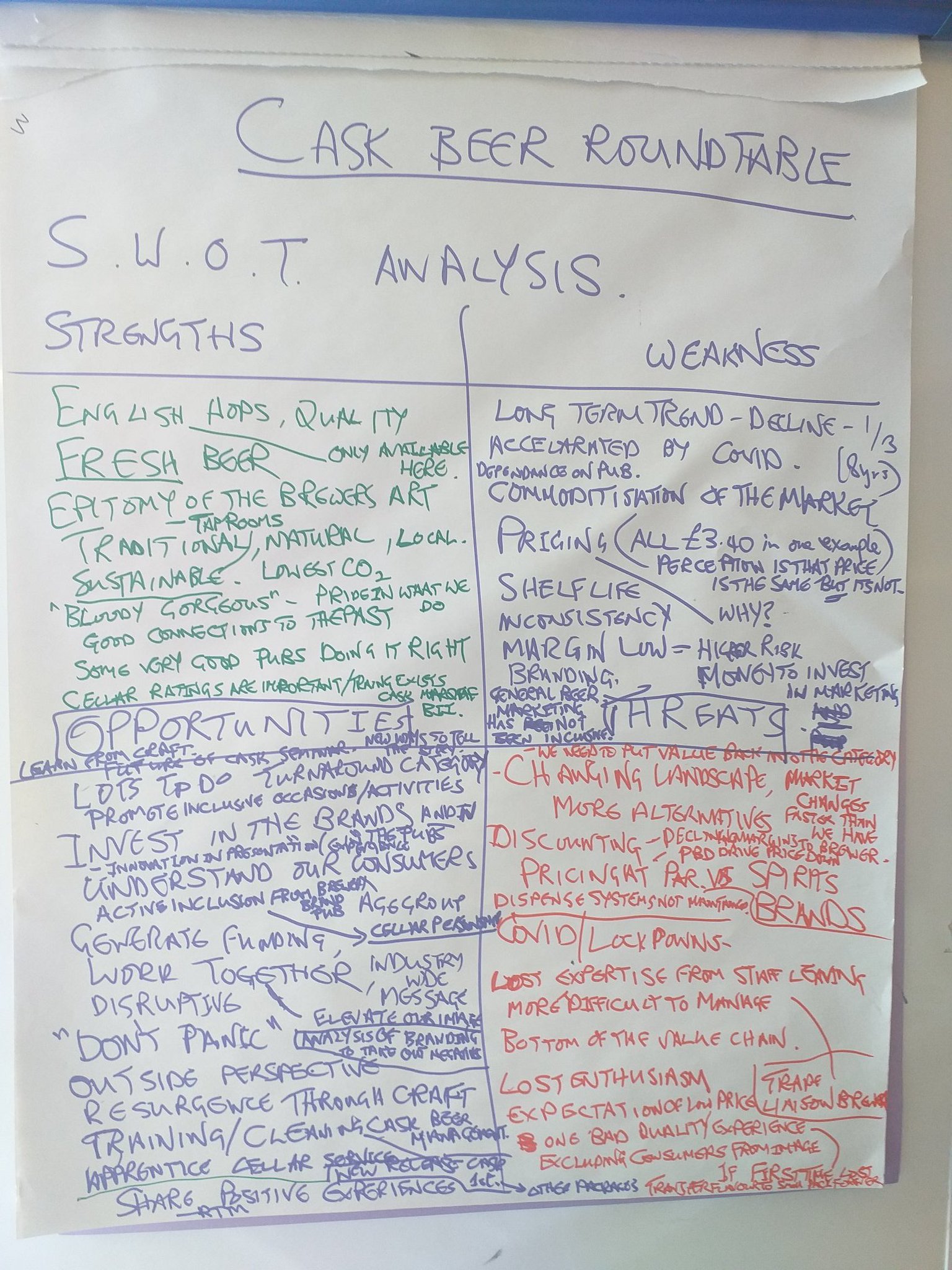
Good to have dreams. Many are living theirs at the Great British Beer Festival. Not Matthew sadly – but many others. Lots of happy faces at the hashtag even if Des de Moor can’t find enough mild. Ruvani held court. And Ed posted this excellent cheat sheet clearly created in some sort of trade feedback meeting setting. SWOT. About cask ale. See? I can read the big letters up top. It’s interesting in a direct sense but also in an indirect one.* It’s an interesting sign of hope that something can be worked out. Best line. “Lost Expertise From Staff Leaving” under threats.  And the worst?  “Learn From Craft.” Don’t be doing that sort of thing.
Speaking of doing, Ontario small rural brewer John Graham of Church-Key Brewing in Campbellford continues to volunteer as a driver of goods and people in and out of Ukraine. I am absolutely struck by his dedication to humanity and the effort he is putting in towards that end. Here’s a video from Monday of what he doing. What’s he doing? Doing good.

What else went on this week? The Morning Advertiser in the UK published** a very messy argument in favour of ramming the square peg of today’s range of beers into the round hole of the reasonably now long departed concept of “craft” referencing such terms as “real craft” “craft-washing” “craft-style beer” “craft-influenced beer” and “in the style of craft” for fear that otherwise “the craft beer scene will be watered down”!  I am not sure if I missed the time loop portal but that argument is about a decade too late. Stop digging up the empty grave! It’s all about fruit sauce, adjuncts and scale these days.  And money. And, by the way, who would have predicted back in 2005 that the much maligned too sweet and reasonably sour and slightly funky dud known as Chapeau Exotic would have ended up as the archetype for craft beer in 2022?

And there may not be enough money going around these days, according to Heineken:

The company recorded 24.6% organic growth in operating profit, while it generated sales of €16.4 billion, a rise of 22.4% on an organic basis. However, Heineken said that while consumer demand has been resilient in the first half, “there is an increasing risk that mounting pressure on consumer purchasing power will affect beer consumption”.

But while Molson Coors is forecasting a similar low coming in from the horizon they have taken that possibility into account:

A year ago, Molson Coors began trimming its portfolio of lower-priced beers to focus on more other options. Some investors wanted the company to ditch the segment altogether and instead focus entirely on more expensive beers, which have performed better in recent years. “What some would regard as an Achilles heel, in the past, has positioned us perfectly at the moment,” Hattersley said. “Some of our competitors only operate in the premium space, which is obviously not a place I’d like to be as we’re heading into what’s clearly going to be tough times.”

Always interesting to see beer businesses seeking to be where the beer buying public is going to be. People can’t buy what they can’t afford.

Note: Canada waaaaay over invested in pot. 425 million unsold tons destroyed in 2021.

The scene. The poem.

Breeze Galindo is the focus of this month’s edition of Beth Demmon’s Probibitchin’. She’s a west coast turned east coast brewer who is also involved with the Michael James Jackson Foundation for Brewing & Distilling:

“Garrett had never heard of me at all,” Breeze laughs. That changed when an acquaintance on the West Coast reached out to Oliver to recommend her as an MJF Board member. (Note: boost! your! friends!) With Other Half’s blessing — and a glowing reference — the position was hers by October 2020. Now with the Foundation’s resources, Breeze hopes to take it to the next level by chairing a brand-new mentorship program, slated to formally launch this fall.

Jess of Boak and Bailey published an excellent piece on a disappearing aspect of pub architecture – the function room that served as the location of many of life’s milestones in the past:

You’re dealing with customers who are struggling emotionally and can’t or don’t want to have boring conversations about logistics. Undertakers are trained to deal with this; publicans not so much. And they can’t be sure about how many people are going to turn up – “No, we’re surprised too, we didn’t think he had any friends!” – and so fixing a price that works for both parties is a challenge. Because of a general trend towards hosting weddings in posher places (country hotels, stately homes, the Maldives) it’s also harder to justify holding a room that only does any business when someone dies.
Long time pal of this here blog and fellow Scot abroad Alistair Reese of Fuggled fame has had a very interesting article published in Pellicle this week on the rise of Murphy & Rude Malting Co in Charlottesville, Virginia:

Sitting by the open roll door of an industrial unit in the historic Woolen Mills district of Charlottesville, Jeff, owner and maltster at Murphy & Rude Malting Company tells me how he started learning about craft beer’s supply chain as a result of the new law. Jeff had assumed that in a state in which agriculture plays such a significant role in the economy there would be several malting companies already in-state ready to work with the coming tsunami of new brewers. What he discovered shocked him, there was not a single malt house in the entire state.

Note: the image next to the story above is not related to the story above but I liked it so much when I saw it this week at a store in town that I added it anyway. Sorta ag, though, right? Rude ag. What would the children think it meant? Rude. Ag rude.

And finally in sadly negative news,*** a small brewer in Canada’s tiniest province received a whack of play hate cowards this week when it posted images of the Prime Minister’s visit.

“So within a few hours, we had thousands of comments, we were getting hundreds of private messages, we are now getting phone calls to the brewery and all of these comments are extremely negative, vulgar, there is a lot of profanity being used, sexualizing our staff,” Murphy said in an interview outside the pub. 

Nutso.

So there you are. Have fun. But not too much fun. You know what I mean. While you exercise moderation, check out the updates from Boak and Bailey mostly every Saturday but not from Stan every Monday as he is on his summer holiday. Check out the weekly Beer Ladies Podcast, and at the mostly weekly OCBG Podcast on Tuesdays or Wednesdays and sometimes on a Friday posts at The Fizz as well. And the long standing Beervana podcast (Ed.: which I have missed from this list for some unknown reason.) There is a monthly sort of round up at The Glass. (Ed.: that seems to be dead now… nope, there was a post on July 25th… 2022 even.) There is more from DaftAboutCraft‘s podcast, too. And the Beervana podcast. And sign up for Katie’s (Ed.: now very) irregular newsletterThe Gulp, too. And check out the Atlantic Canada Beer Blog‘s weekly roundup. Still gearing  up, the recently revived All About Beer has introduced a podcast, too. (Ed.: give it a few weeks to settle in and not be as agreeable.) Plus follow the venerable Full Pint podcast. And Fermentation Radio with Emma Inch. The AfroBeerChick podcast as well! And also look at Brewsround and Cabin Fever. And Ben has his own podcast, Beer and Badword (Ed.: …notice of revival of which has been given… still not on the radio dial…)  And remember BeerEdge, too, and The Moon Under Water. There has also been the Beer O’clock Show but that’s now winding up after ten years.

*No, I don’t know what I meant either.
**Word spread through a Mudge-Alert!
***Finally more unnecessary neg – or perhaps just this week’s clangers – conveniently all lumped together down here for easy and brief reading. Or ignoring. First, we have a complaints department update… I am not sure which complaint is worse: the beer, the scoring, the basis for the scoring or caring about the first three. And perhaps relatedly, there was a sighting of the denialists oath this week – craft beer working conditions are apparently A-OK… so stop your complaining… as if that makes a difference. And, sticking with the theme of wasnotwas, the style experts have now determined (in a bit of a bizarre twist) that style is not a construct so much as a result… meaning any trending branding label can go on any old thing. Takes experts to tell you that there sort of thing… or not thing… beware! Beware too those who think appreciating this all stuff requires professional expert guidance! This too!! The fruits of these scholars are a glory to behold. Also really beware of the long thread that makes something pretty simple look reeeealllly hard – you can usually spot one of these by first going right to the end to see what the point is. In this case, trying to sell you consultancy services! It’s a frikkin’ dog and pony show! Because there is no way anyone in the trade could figure out the tap configuration of their bar. PS and finally… it’s like there’s a few sentences missing, with all due respect, as doesn’t this only make sense if books, beers of the world bars, pencils and note books, trade gatherings of any sort, telephones, word of mouth and you know humans talking to humans did not exist prior to 1990?
Yet Another Week’s Worth Of Beery News Notes On A Thursday

Here we are. Again. Growing in wisdom. Me, I’ve been reading more books this year and keeping track. Keeping track of a lot of things. Self-improvement? Do more of this cut down on a bit of that. Twenty-seven books so far this year, not one of them about beer. Currently (after reading the highly recommended book The Shipping News,* ultimately a comedy set in a fictional version of small town Newfoundland in which beer – and screech – make appearances) I am on a third by Questlove, this one Creative Quest, an encouraging book about the creative process. I usually avoid self-help books… but then again I avoided books, too… too many law books can do that. You can help decide if it has any positive effect.**

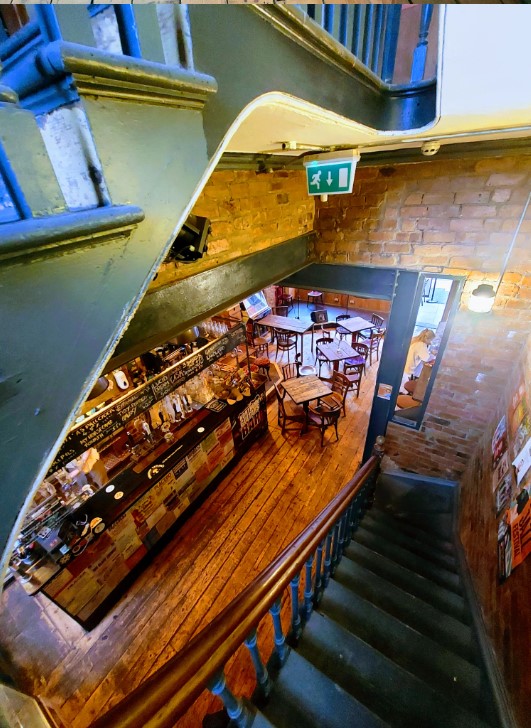
Martin was particularly creative in his photo work, the image right there from his post about a guitar themed pub, Northern Guitars in Leeds. Love the angle.

Just to prove I do occasionally (mostly by accident) take advice, I did take a pub tip from Chris Dyson for my second pre-gig pint in Leeds. Perhaps the pace of change has slowed a little in the east of Leeds, but the Calls District was busy enough, though Northern Guitars was only ticking over. I guess their trade comes from music nights.

For the Jubilee, the ever excellent A London  Inheritance posted photos of processions, streets crowded with people and/or bunting from past royal celebrations – including a few pubs covered in banners including The George in the Strand.  Some not pleased with last weekend’s events – which is fine. Here is a live action photo of the madcap goings on. We are advised by The Daily Star that the event was pretty boozy as to be expected:

The streets of Soho, in the heart of London, were lined with drinkers and Ripe in East Sussex was just one of hundreds of villages that celebrated with an open-air party. Everywhere you looked, it seemed, someone was enjoying the day. James Heale tweeted: “Horse Guards Parade. Man singing lustily in an England ‘96 shirt, six pack in one hand, fag in another. Union Jack billowing behind him, Tesco crown on his head. The lion roars”. In fact, some people appeared to be enjoying themselves a little too much.

Rooting for an Oaken Joob myself, now. That would be fun. And a bit of a surprise for those most involved. Oh, one last but not least thing – Maureen won the prize so a parcel of goodness shall be sent her way…

Now that the bunting is folded up and put away, reality strikes. First up, why is lager more expensive in London and Northern Ireland compared to other parts of Britain? Less of a puzzle, sanctions against Russia appear to be effectively stopping beer imports:

That has pressured the economy and affected the habits of Russians used to a lavish selection of foreign-made alcohol. “The beer situation is very cheerless,” said Anton, a 36-year-old IT expert who works for a state financial organisation in Moscow. “Not to mention Paulaner, Pilsner Urquell and other tasty stuff, I’m not at all confident if Russian beer is here to stay. There are problems not only with beer imports but even with imports of hops,” he added. Russian breweries depend heavily on imports of raw materials, such as hops.

Another sort of shortage is also at play as the North America is undertaking the rare step of importing malting barley to make up for a poor 2021 crop. Keep an eye on that.

In another sort of dreary news, the iconic Buffalo Bill‘s brewpub of the San Francisco Bay area is shutting – after inflicting the dubious upon us all!

Buffalo Bill’s is best known for putting pumpkin ale on the map in 1986 when Owens was inspired by the beer first enjoyed during colonial America. Owens became obsessed with crafting a modern take on pumpkin ale after learning that even President George Washington once brewed the orange-hued beer during a time when pumpkins often substituted malt. Not long after Buffalo Bill’s resurrected the polarizing beer, other brewpubs around the country began to follow suit and devised their own renditions of pumpkin ale.  

Jay wrote about the original owner, Bill Owens, and the place calling it “one of California (and America’s) earliest brewpubs.” Pretty sure I had their Orange Blossom Pale Ale once, found in a NY state beer store over a decade ago. But do you think I can find the review? Who runs this place? What a mess!

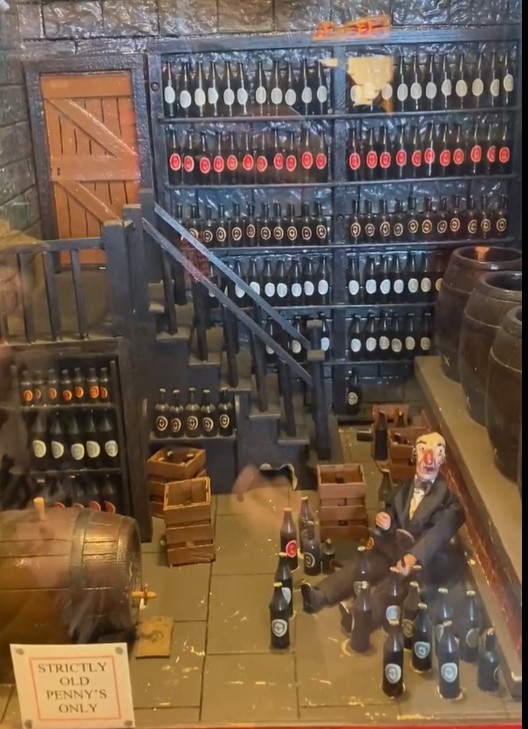
Enough! Something fun. The screenshot to the right [Ed.: my left] was grabbed from this short vid of an old pre-decimalization penny auto bot thingie – which still works.  Called The Drunkards Dream. More info here, here and here.

And something uplifting. Beth Demmon has published another interesting bio of someone in beer, this time April Dove who balances her interest as a roaming brewer with her professional life as a nurse:

For now, that life means remaining a nurse. It “pays the bills,” April says, although moving into beer full-time remains the dream. The first years of working through COVID-19 left April with nightmares and PTSD. “I did things I hope I never have to do again,” she says. “I saw things I never want to see again.” But she’ll continue to invest in a future in beer, setting goals for herself like pouring one of her beers at a beer festival in the next year. Despite the challenges she’s faced, April hopes that by sharing her experiences with others who have been systemically excluded from craft beer, she’ll be able to introduce her passion to many more.

Ron‘s been on a bit of a roll in terms of writing about his experience of beer, he kissed a squirrel… errr… had a Newkie Broon this week and also featured a trip to Folkestone with Mikey:

It was at least three years since I’d last been. The longest gap, probably, ever. Well, since we started going there. Mikey went twice every year. I’d accompany him on at least one of those trips. I became weirdly fond of the place. Perhaps because of its ordinariness. And the really good chippy. Andrew asked on my return: “What did you do other than hang around in pubs and cafes?” “Nothing, really. Other than a little light shopping.” It genuinely was all breakfasts and beer. And the odd whisky.

The story goes on to end up being a neat and tidy description of two classes of pub, the pricy mini and the cheap maxi. Which makes one wonder if the lounge and the public bar have really just relocated. Boak and Bailey and their wise comment makers wrote about the gradations of such spaces exactly one yoink ago.

And there was an excellent example of Twitter as helpful tool in the form of a description – from the hand behind the Glasgow brewery Epochal – of drinking a 126 year old bottle of McEwan’s Pale Ale which was recovered from The Wallachia which sank in 1895 in the Firth of Clyde:

This one still had a good amount of carbonation. It smelled old but in a peculiarly musky, libraryish way rather than an excess of oxidation. It had a pronounced Brettanomyces character with subtle aromatic acids and miraculously retained a clear hop character, clear enough that I could have a guess that they used Fuggles and Goldings. On the palate it was very dry and still had a powerful, clear bitterness.

Connectedly, Gareth Young of Epocal was also featured in Jeff’s well researched article “Lost, Stock & Barrel: The Forgotten Funk of Old Ales” published by CB&B with this wise observation:

The flavors that marked stock ales of past centuries lacked many of the problems that can trouble mixed-culture brewing: excessive acetic acid, intense funkiness, chemical off-flavors. Instead, using what we would now call “heritage” barleys, techniques like long boils, cleansing tanks, and dry-hopping, brewers are edging back toward the refinement for which old stock ales were renowned.

You know… there is a school of beer history writing, now largely retreating in the rear view mirror fortunately, one based too heavily on supposition and assumption. We heard too often that old brewers made smoky even though there is plenty of evidence against it. Competent brewing starts in the 1800s we are told even though there is plenty of evidence against it. What really needs doing is reading some good history books.

Speaking of being in the good books, The Beer Nut is on the job this week examining if one brand extension has succeeded… and was not impressed:

The aroma is sweet and fruity: lots of very obvious hard caramel, sitting next to softer plum and raisin. The flavour is rather less complex. I was hoping that Landlord + caramel would unlock some new dimension of taste, but I could not perceive anything other than a quite hop forward English bitter — meadow blossoms and earthy minerality — spiked with thick and gloopy treacle. It’s sticky, not wholesome, and the two aspects don’t meld well together. The label promised chocolate and roasted malt, like a proper dark ale, but the flavour doesn’t deliver that.

Question: why a lottery?  Why not just promote a program you create, find sponsorship for and provide for free with next level resources identified? We have so much green-washing, #MeToo and #BLM cap waving but never quite cheque sending, Ukrainian net profits only giving corporate PR under the guise of charity. The price of the Sam Adams Pride packaging alone would likely pay for the program’s costs.

Apparently, in a case of un-red-tape, the Province of Saskatchewan’s Auditor has noticed that craft brewing is not getting noticed:

…according to the provincial auditor, the province is struggling to keep pace when it comes to meeting its regulatory oversight targets. The auditor’s latest report notes that of 83 approved craft alcohol product lines, over half (43) did not have valid lab test report certificates. These certificates prove products are untainted and that their alcohol content matches the label. Saskatchewan Provincial Auditor Tara Clemett says the SLGA [Ed.: the Saskatchewan Liquor and Gaming Authority] is failing to follow up when producers fail to submit a new certificate, which is required every two years. One producer, she noted, had not provided an updated certificate more than nine months after its two-year deadline.

Craft brewers are not concerned. The best way to not be spoken about.

Finally: are we tired of discussing mild yet? No! Are we tied of The Tand winning awards? No!! Are we tired of NA bevvie trade associations? Probably.

There… a middly sort of week I’d say overall. For more, check out the updates from Boak and Bailey mostly every Saturday but not from Stan every Monday as he is on his summer holiday. Check out the weekly Beer Ladies Podcast, and at the weekly OCBG Podcast on Tuesday (Ed.: back again this week) and sometimes on a Friday posts at The Fizz as well. There is a monthly sort of round up at The Glass. (Ed.: that seems to be dead now.) There is more from DaftAboutCraft‘s podcast, too. And the Beervana podcast. And sign up for Katie’s irregular newsletterThe Gulp, too. And check out the Atlantic Canada Beer Blog‘s weekly roundup. Plus follow the venerable Full Pint podcast. And Fermentation Radio with Emma Inch. The AfroBeerChick podcast as well! And also look at Brewsround and Cabin Fever. And Ben has his own podcast, Beer and Badword (Ed.: …notice of revival of which has been given… still not on the radio dial…)  And remember BeerEdge, too, and The Moon Under Water. There has also been the Beer O’clock Show but that’s now winding up after ten years.

*No, never saw the movie with Mr. Creepy in the main role. The book is excellent even if it can’t really be taken as a documentation of Newfoundland life. [It caused me to buy The Ashley Book of Knots, too, and doubt every half-hitch I make out in the garden.] Yet as in the book Newfoundlanders do, however, shoot off shotguns in their front yards in enthusiastic celebration still in some out ports. My pal, married on Fogo Island, was under attack as they were driven, post vows, about the place, from village to village. BLAM BLAM BLAM!!! Over and over. Were they in a convertible or standing in the back of a pickup? Can’t remember that bit of the story. BLAM BLAM BLAM!!!
**as Martyn helpfully did in last week’s comments.

The Thursday Beery News Notes For May Two-Four 2022!

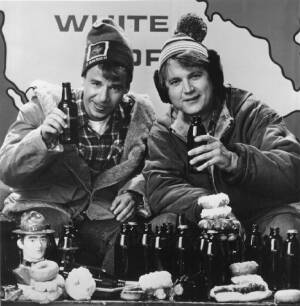
May two-four. Back again. I explained it back in 2014 when I included the photo to your right (my left) of Bob and Doug McKenzie who were Canada’s #1 export forty years ago and whose 1983 movie, Strange Brew, is the last cultural statement about beer before microbrewing struck in earnest. Even though the movie isn’t set on the Victoria Day holiday in the second half of May, you can see many aspects of our drunken mildly retro-pro-monarchist celebrations replayed in Canadian homes as well as at campsites and cottages throughout the land this weekend as people feign gardening and practice inebriation. And it’s a big year for our top dog, our numero uno, our favourite anti-Nazi. Speaking of which… you know what broke? That cap thing on my whippersnipper that keeps the weedwhacker’s string coil in place. How the hell does that break? Spool went flying and the lawn’s all half haggy still. Didn’t so much break as ‘sploded. Now I have to hunt down a replacement lawn trimmer line cap or I have to buy a whole new thing-a-ma-jig. Pray for me.

Now… to the beer news. First up, a set of photos posted by the Glasladies Beer Society of a recent Glasgow beer fest set up in what looks like a somewhat permanent outdoor space. Being who I am, a child of children of the Clyde, the event looks like a mass gathering of aunties and uncles and masses of cousins. The use of steel container boxes is interesting as a relatively cheap but cheery but secure set up. Looks like it was held at the Glasgow Beer Works in the Queenslie Industrial Estate. This may be a common site for some of you but sometimes that’s still remarkable.

Next, Ron wrote a piece he titled “The Future of Mild” which serves as an interesting counterpoint to the fan friendly writings on the style mentioned two weeks ago. Ron provides an interesting set of thoughts about Mild itself and how styles may or may not make a comeback:

I’d love to go to Cross Green and drink 10 pints of Tetley’s Mild again. But it isn’t going to happen. The world has moved on. Beer styles come and go. And almost never return. I’ll just cherish the memories of a time that’s gone forever. Like a Porter drinker in the 1940s. The same fate, incidentally, awaits Pilsner and IPA. All styles have their day.

The fate of Mild has been formed he suggest as “it’s harder to throw all sorts of random shit into a Dark Mild.” That would seem to be where we are at. The post also lead to an interesting considered discussion on the nature of revivals. Jeff wrote:

…I wonder if a style that was once quite popular ever came back as a major style, perhaps not as popular as it was during its heyday, but with significant production. It’s probably happened, but I suspect it’s very, very rare. Once fashions change, styles sunset.

TBN reminded us of the classic example of style revival – Hoegaarden. I expect this is as much framed by the word “style” and its imposition limiting structure but the entire micro (1980-2003)) and craft eras (2003-2016) were based on revival of lost beers. Hoppy malt rich ales were descendants of earlier strong ales like Ballantine IPA and Dominion White Label as much as they were clones of imports.  So… revivals common enough in the days when brewing was not so wound up with novelty and amnesia. We always have to remember how quickly we forget. As recent at 2011, SNPA’s place in the pantheon was still somewhat speculative. Now, of course, it was always the source of all things including those that came before it – thanks to the nation’s PR professionals!

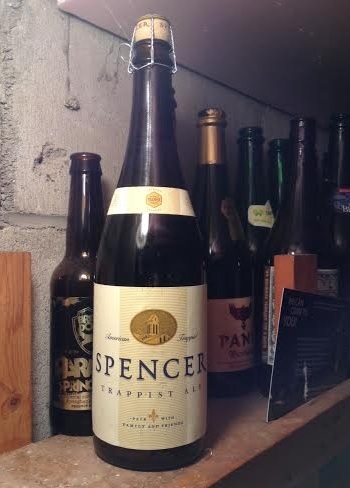
Speaking of perhaps one revival or perhaps homage that has not lasted, one bit of news that I was a bit surprised to learn about this week was how St. Joseph’s Abbey of Spencer, Massachusetts is no longer brewing its beer. This was all the news in 2015 and I reviewed their first beer as you can read here. The monks announced:

After more than a year of consultation and reflection, the monks of St. Joseph’s Abbey have come to the sad conclusion that brewing is not a viable industry for us and that it is time to close the Spencer Brewery. We want to thank all our customers for their support and encouragement over the years. Our beer will be available in our regular retail outlets, while supplies last. Please keep us in your prayers.

Jordan thought it a particularly worrying development based on their low labour expenses. Greg reported that the equipment was already listed for sale before the announcement. I gratuitously added the 2015ish image up there from the celler’s stash for Stan. Pretty sure the bottle has move about six inches in seven years.

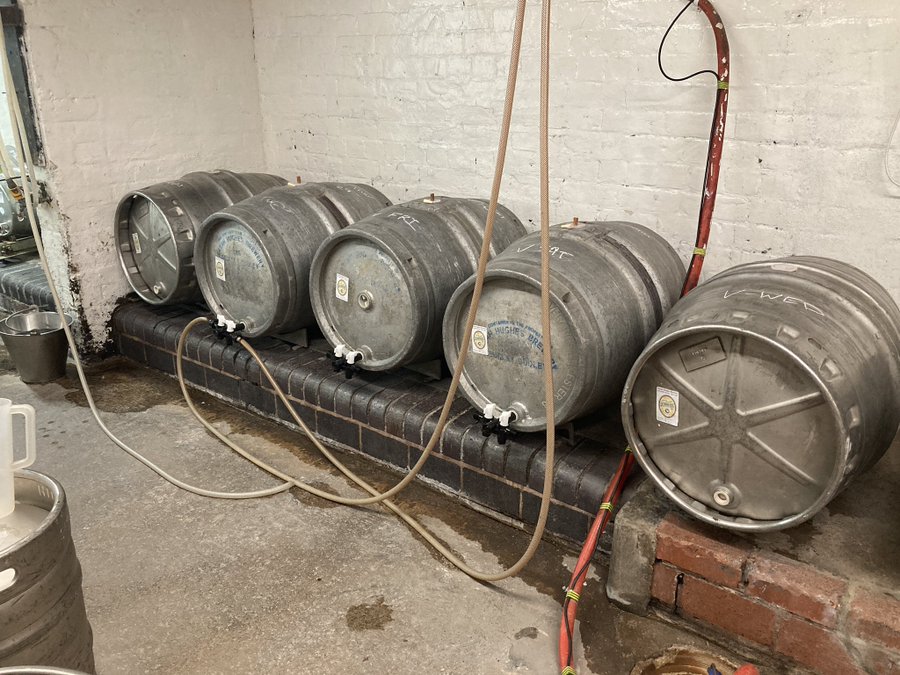
Des generated a wonderful cascade of comments related to cellered casks with this big barrelled beery buttery – including these cautionary ones:

Not being funny, but going on that photo, “immaculate” is a strong word. Serviceable, cleaner than many, maybe. And as I’m sure has been pointed out, a 36 (massing the best part of 200kg) is a H&S nightmare. You romantic.

Note: please don’t send out bleggy emails saying “ I don’t have limitless cash on hand to subsidize this project, but it’s reality nonetheless. I need at least [XXX number of] paid subscribers…” Listen to the wind… the marketplace of ideas is speaking… write for joy or get a job to support your hobby interest in booze.

Boak and Bailey elaborated something at their Patreon widget-a-thing  that was evident in their (lovely and highly recommended) account of Ray’s out for hike and stopping at rural pubs with pals:

…at least part of the joy we took in drinking it on this occasion must be down to having “earned it”. The same goes for that first beer of the weekend, after a tough week at work. Or, as many people have observed, almost any mediocre lager you drink on holiday. How do you compensate for this effect? Well, you don’t, unless you’re a Top International Beer Judge. Instead, you report the context when you give notes on a specific instance of drinking a specific beer. And you make judgements about the overall quality of a beer based on mutliple encounters in multiple contexts. A beer that tastes good every time you bump into it is probably a good beer, full stop.

I wonder if we have become so enthralled with these beer judging events for hobbyists that we miss the obvious – that those beers actually do taste good in those contexts. And that judging contexts make beer taste bad. Because they are geared to ensure failure. Because that is what institutionalizing human experience does, makes you distrust and then outsource your own experience of life. Stop feeling bad because someone who has a certificate for passing the equivalent of a grade 11 history class says so.* Not to suggest TBN is not correct when he explains “Beer is weird. You’re lucky to have me here, putting things straight.” It is. We are.

Handy example: print off and cut into separate burger and beer images. Throw all in air and match the beer with the nearest burger. Equally valid. Every. Time.

Rolling Stone put out a story about beer prices this week under their “Culture Council” tab, not something I have notice from them in all my years at the coal face. The author, Kevin Weeks of Anderson Valley Brewing (who actually follows me on Twitter so I feel extra bad for not noticing before), argues interestingly that any increased costs faced by brewers are likely not going to justify the level of price increases that consumers are going to see on the shelf from the big brewers so…

For the smaller craft breweries facing this dynamic, this is an excellent opportunity to differentiate their brands by both managing pricing and clearly conveying priorities to the consumer. The most obvious tactic is to hold price (or implement only slight increases) to create an opportunity to increase market share through a comparable pricing advantage over the larger brewers that are grasping for margin.

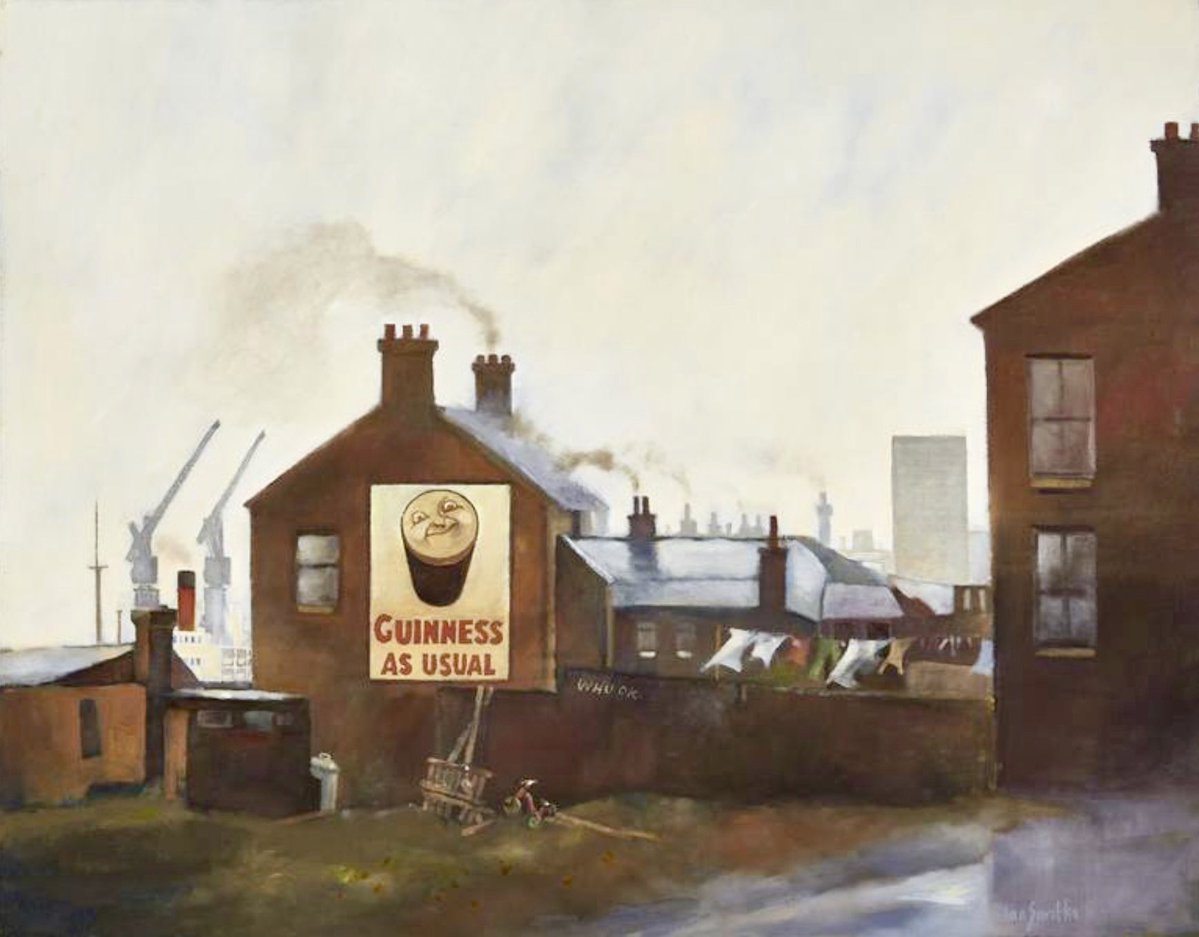
And this passed by my eye this week, “It always rains on Monday” by Ian Garstka. More of his work can be found on IG. Prints available from the artist.

Perhaps relatedly at least atmospherically, Gary posted about “Birmingham Beer Detectives, 1937” who in plain clothes were sent out to protect the interests of the beer-drinking public and augment lab testing quality controls:

It seems therefore, at least for a time, a two-track beer-tasting inspection system existed, city and industry, to control beer quality in pubs. Perhaps the whole thing, at city level, collapsed with the Second World War – bigger fish to fry, if you will, but this remains to be known. Certainly at industry level, tasting onsite continued into the postwar era. A number of press reports, one pertaining to Ansells in 1949, attest only too graphically, a conviction of an inspector for drunk driving.

There’s a BBC historical drama script right there for the taking. I can smell the damp tweed and ashtrays now.

Note: “Finnish brewery release new beer celebrating Finland joining NATO“!

Note also: “TikTok star says Wetherspoons ‘scammed’ him out of £2,000 of food and drink.” Star!

Finally and falling under Stan’s reminder “no one cares what you think, Alan” I upset Maureen a bit a tiny bit (which I never like to do) when I commented about this article on Hogarth’s Gin Lane and Beer Street as I mentioned it amounted to was a bit of a sneeky apology for mass drunken frenzy. My observation was quite specific so I should explain so that all you all can correct me. The first half of the article is fairly straight forward GBH-style with loads of quotes from other sources framing the well understood topic. But then it goes in an odd direction mid-essay with the statement that those “in positions of power in England sought to create an all-around negative image of gin.” According to the article’s own previous paragraphs rightly describing the generally understood hellscape unleashed by gin at the time, I was left wondering if it could also be said that people in power now are perhaps creating an all-around negative image of the Covid-19 virus. My wonderment didn’t last. I found this key angle within the article odd. Odder still the suggestion that the works of Hogarth were for an elite:

Because of the timing, “Gin Lane” and “Beer Street” are often viewed as a work of moral propaganda, and some have speculated they were commissioned by the government to help reach gin’s working-class imbibers. Tonkovich points out this is not the case, however, because that working-class target couldn’t have easily accessed these prints. “These prints would not have been affordable for the working class,” she says. “They might have seen them in a tavern or through a window, but they couldn’t buy prints, so who is the audience for these? People of the press and the merchant class.”

The thing is… I just don’t think that is correct. Because I don’t think that is how mass communications and specifically those on virtue and vice worked at the time. If you look about at English political pamphleteering in the 1600s and 1700s, you see a wide-spread, robust and even salacious debate within a highly literate population. Vibrant grassrootism. You also see in the first bits of the 1700s, the development of the First Great Awakening and proto-Methodists sermonizing to many millions.** Consider, too, 1751’s Essay  on the Characteristicks and the “frenzy” of gin. Ideas related to a proper and healthy society were flying about. These and other Hogarth pieces fit into that scene. And, as the Royal Academy explains, fit into it in a very specific and intentional way given Hogarth’s process:

Hogarth aimed the prints at the popular, rather than fine art market, stating in his prospectus for the prints that: ‘As the Subjects of those Prints are calculated to reform some reigning Vices peculiar to the lower Class of People in hopes to render them of more extensive Use, the Author has published them in the cheapest Manner possible’. As a result the line in these prints is thicker and less sophisticated than in other prints engraved by Hogarth, both to enable the printing of more impressions without significant loss of quality, and to approach the characteristic style of popular prints.***

We are assured, via the hive, that the two prints were in wide circulation and that Hogarth’s works were even used for moral instruction by schoolmasters. So if they are not luxury items but rather something of a targeted public service announcement to those at risk, the paragraphs that follow seem strained, racing through the Victorians and US Prohibition then on to us today with a suggestion of the elites guiding government overstep. And, on the rebound, inappropriately sewing  doubts as to Hogarth’s good faith intentions under the guise of some sort of shadowy social engineering as opposed to improving public health. Had gin been slandered? Seems all a bit goal oriented.****

There. More fodder for a good general public debate. Away you go! And for more, check out the updates from Boak and Bailey mostly every Saturday but no longer from Stan every Monday as he’s on another extended leave of absence. Plus more with the weekly Beer Ladies Podcast, and at the weekly OCBG Podcast on Tuesday and sometimes on a Friday posts at The Fizz as well. There is a monthly sort of round up at The Glass. (Ed.: that seems to be dead now.) There is more from DaftAboutCraft‘s podcast, too. And the Beervana podcast. And sign up for Katie’s irregular newsletterThe Gulp, too. And check out the Atlantic Canada Beer Blog‘s weekly roundup. Plus follow the venerable Full Pint podcast. And Fermentation Radio with Emma Inch. The AfroBeerChick podcast as well! And also look at Brewsround and Cabin Fever. And Ben has his own podcast, Beer and Badword (Ed.: …notice of revival of which has been given)  And remember BeerEdge, too, and The Moon Under Water.

*If you are unaware of this phenomenon, I recommend the works of Ivan Illych to you, starting with 1973’s Tools for Conviviality.
**and they themselves mocked in return.
***See also “The marketing techniques of William Hogarth (1697-1764), artist and engraver” by Mark McNally at page 170 “The conscious decision to set the price of prints according to the theme and the intended audience was further demonstrated with the distinctively didactic Gin Lane, Beer Street and the Four Stages of Cruelty which were advertised twice in the widely read London Evening Post on 19 and 26 February 1751 priced at one shilling each being ‘done in the cheapest manner possible in hopes to render them of more extensive use’ with an alternative set priced at 1/6d being done ‘in a better manner for the curious’. Despite the relative lack of sustained advertising for these key prints, which formed the basis of Hogarth’s campaign with his friend and magistrate Henry Fielding to draw attention to the moral decline of the lower classes, they became as popular as many of his more heavily publicised prints. This was perhaps due to the fact that they were primarily meant as social commentary and evidence of the need for reform rather than for commercial interest…” and also especially at footnote 123: “Hogarth noted with satisfaction in how ‘some masters gave their apprentices sets of the prints as Christmas gifts’ and that ‘he had even heard of a sermon preached on the prints’.”
****PS: a word about disagreement. If we are going to take beer writing seriously at all, we need to get used to the idea that a reader may either (i) disagree with aspects of what they read (as I have above with backing supporting research) or (ii) call out poor writing (which I have not done above.) One of the saddest things in good beer culture is the “hooray for everything!” mantra and, its cousin, the abusive response for those who who don’t buy in to the hooray. Let’s be honest – rooting for booze is weird. I blame too much booze and good folk struggling for not enough money as the commissioning organs do just fine. In this case, my comment to Maureen attracted the less than attractive, the dropped turd. Let’s be honest. I get negative comments and labels all the time and have for a couple of decades from publications high and low,***** sometimes from people I can’t imaging deserving one’s full respect. One scribbler who has my respect once even told me “hear that – that’s all the beer writers in Toronto mocking you” to which I responded “who gives a fuck about beer writers in Toronto?” We don’t worry about such things, especially now that the beer writers in Toronto either either have moved on now and are mowing the lawn somewhere in the suburbs, arguing with themselves. None of which relates to the article above that, in small part, I disagreed with. It is a well enough written if skimmy summary with a mild expression of the standard beer writer political slant on public health (“…nanny state! …neo-prohibitionists!! …folk putting my income at risk but mentioning health!!!“) but, no Maureen, it is not an example of something that did not exist before. The wheel that was invented long ago still turns round and round. Which is good. Because it gets thoughts going and leaves conversations enriched. Which is why I do this every week – to think about what is being written. If you aren’t doing that, why do you bother?
*****Funny ha-ha joke…no really… just kidding… footnote to a footnote, too! Very light and amusing, right?

The Beery News Notes For The End Of January And Perhaps Of BrewDog

What an odd week. Very bad stuff about craft beer in the UK then more about very bad things in Ontario craft beer. Didn’t help that I was reading Motherwell, a recent memoir about someone about my age whose family didn’t emigrate from the same bit of Scotland mine left behind for Canada in 1956. Grim pain and judgemental negativity pulsing through a hardscrabble family living through hard times in an industrial town near Glasgow. We dodged. Just a few phrases I heard growing up echoed. I hated “know your place” the most, especially as I didn’t have to. Why bother? Why should anyone? Why in craft beer now? Who are these assholes?

MindbogglIng. Let’s start somewhere else. Stan’s latest edition of Hop Queries came out this week with good news from the Czech Republic:

Czech farmers harvested 18.2 million pounds of hops (for perspective, that’s about as much as Americans grow of Citra alone), 40 percent more than 2020 and 34 percent more than the 10-year average. Average yield of 1,467 pounds per acre was an all-time high. (American farmers average 1,900.)

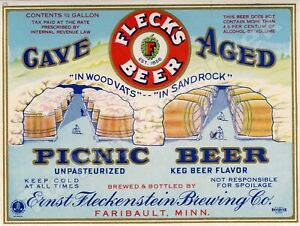
Gary updated a series of posts that he began in 2020 – who hasn’t been up to that sort of thing? – and included the image to the left. It’s not a super huge .jpg but worth a click. I love the name of the beer – PICNIC BEER. It needs an exclamation mark. It needs to be on every brewery’s list of brands. Anyway, Gary was actually not writing so much about PICNIC BEER out of Minnesota as the use of the term “sand porter” in Montreal brewing in days of yore – by which I mean the late 1800s aka The Gilded Era:

Until recently I felt the sand-topped lid idea made the most sense (some English brewers still practiced it into the next centuries, using “marl”, a similar idea). However, in studying recently the history of a Minnesota brewery, Fleckenstein, I now have a further idea what sand porter meant.

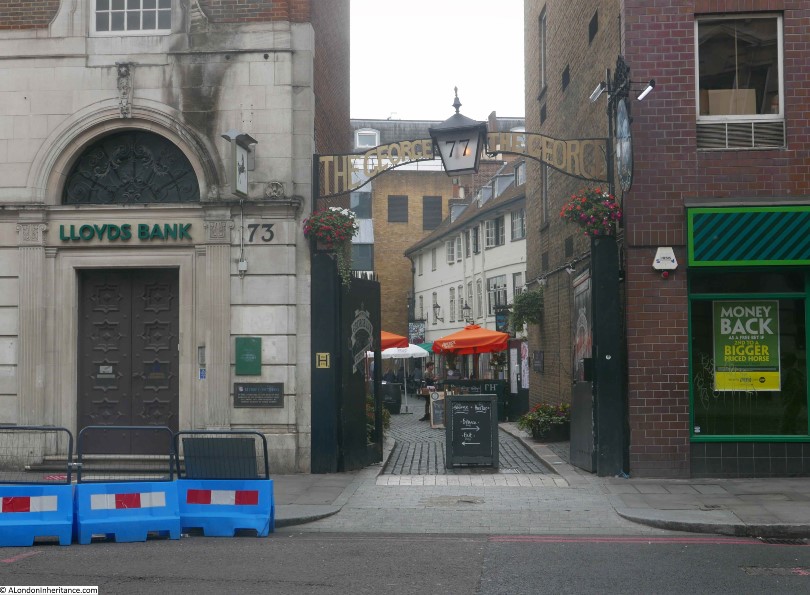
Speaking of yore, the free web service known as A London Inheritance included a post on the George Inn in Southwark which was, as we all recall, the subject of Pete Brown’s book Shakespear’s Local. Lots of unconventional photographic views and mapping, like this one to the right giving a very unromantic vision of what you actually see from across the street. It is actually a massive post. A data fest. Well worth reading. The post includes this astute observations about the value of certain second hand books:

Old books help as they provide information closer to the time they are recording. Some care must be taken to double check, but they are a good source of information. These books also have their own history as they pass from owner to owner over the years, accumulating a memory of their time with some of the owners of the book.

The post then goes on to highlight photos and even a letter relevant to the subject that had only been stuck in copies of books that he had found over the years. All fabulously illustrating the unique archival value blogs. Much praise to the author… whose name is not particularly highlighted on the site. Freddie?

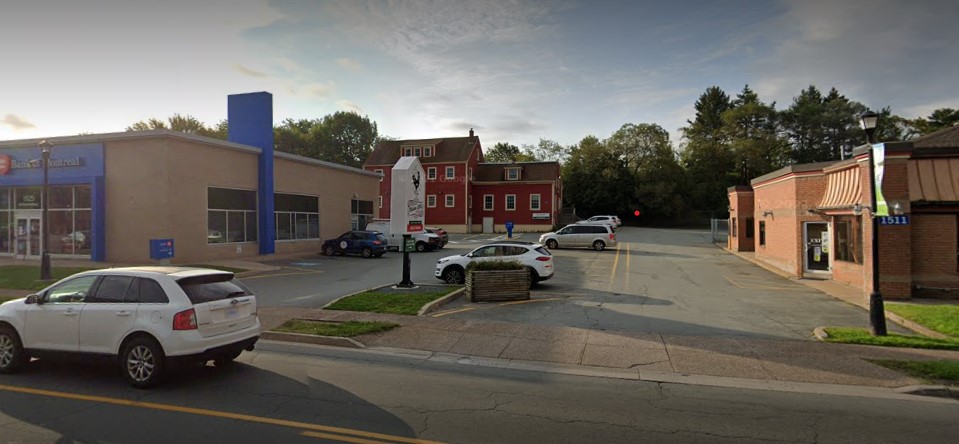
On a similar theme but in a colonial context, I saw a reference on Facebook to Ten Mile House in Halifax, NS (my old home town) this week and wondered what shape that was in:

The house was located ten miles from Halifax on the Bedford Highway. It was built in the late 1700s for Colonel Joseph Scott on land granted to him in the 1760s. In 1798 it was called Scott’s Inn, and opened as a House of Entertainment by John Maddock. Joseph Scott died in 1800 and his widow Margaret conveyed property to John Lawlor. Who opened and operated Lawlor’s Inn from 1802- 1809, possibility later.

Nice image at the Nova Scotia Archives website. As you can see from the thumbnail it is now sitting well back of the main road, the Bedford Highway, but looks from photos on Google to be in very good shape right by The Chickenburger. There are plenty of these colonial taverns and inns out there if you know what you are looking for. Like a favourite of mine, the Fryfogle. Interesting note: at the time Ten Mile House was in operation as Scott’s Inn in the late 1790s, it was just down the road from the estate of Queen Victoria’s father, the Duke of Kent. The tavern not the Chickenburger. The Chickenburger is old but not that old. I will pay it a visit when I am back there in early March.

And in one last note about built heritage of pubs, taverns and inns this piece in Eater Chicago was interesting in terms of how one preservation project was undertaken:

While Lincoln Square reconfigures during the pandemic — across the street from the Brauhaus space, the Huettenbar has quietly closed (owners hold to hope that it could eventually reopen) — fans can take solace that the Brauhaus has returned in a slightly different format. The bar, at least in spirit, is now located on the second floor of the DANK Haus German American Cultural Center.

In a less physical form of preservation, Edd Mather posted this bit of video on facebook, a fabulous step back into the near past of Ireland and the question of corks v. crown caps which relies on any number of associated technologies:


OK – the bad news. I have mentioned this before so let’s be upfront. Once upon a time, BrewDog sponsored this blog. When they were tiny, not the £2 billion international corporation they are now. I still have that label from a sample they sent at the time and it was put on with Scotch Tape. Well before the stupid squirrel and certainly well before BBC Scotland News detailed what apparently everyone in the trade knew but too often was not willing to put into print. The main allegations so far:

a. James Watt owns a massive amount of shares in the global beer brand Heineken hypocritically contrary to his “big beer is bad” stance.
b. James Watt is accused of being a pervy boss;
c. BrewDog falsified paperwork submitted to allow it to import into the United States; and
d. BrewDog carefully structured the Equity for Pinks fundraising to benefit the brewery and not the investors.

This reaction to the first bit of news is gold. Deals between breweries started to come apart. Punks with Purpose said the fight goes on. There were also calls for a resignation. Also questions: “why the obsession?” I will leave it there* as you all know this – and my job is to root out the unknown and beery for your reading delight.** BrewDog has not been delightful for many many years. But we need to remind ourselves, while they are big they are just one of many – as @esbroadfoot helped remind us by inviting  and sharing stories of rotten treatment, largely in the Canadian craft scene.

Still, by Wednesday, it all seems to have put JJB/Stonch in a reflective mood:

Placing orders to fill an empty pub cellar has made me realise what an amazing choice of absolutely superb beer from independents I have. Yes, the craft beer industry has its bad sides, and faces daunting challenges this year, but let’s not forget how brilliant it is.

He’s always hated BrewDog pubs (“…Awful aesthetic, odd places….”) but appreciates how others feel cheated. He also reminds us to be kind to the good folk who distribute our beer. He also posted a link to a 15 year old post about the horrors of a pub crawl in St. Albans, home of CAMRA, for a fair and balanced set of thoughts.

Elsewhere in space and time, Ron has been exploring the colour of milds and has come across a new unit of measurement – tint!

The biggest problem is the lack of hard data. It’s tricky calculating the colour from the ingredients, especially when sugar is involved. As this is mostly only described very vaguely. There are very few records of beer colour before WW I. Occasionally chemical analyses will include a number for the colour, mostly in some weird scale that died out 100 plus years ago. Only a handful of Barclay Perkins records from the Edwardian period include the beer’s colour. At least that’s what I thought. Until I happened to notice that line in a Fullers brewing record. That “Tint” number looked like it was in an understandable scale. The type of Lovibond used before WW II.

Even further afield, does Syracuse have a low estimation of its own worth in the beer world? Like Toronto?  As bad as that? I spent a lot of time in Syracuse up to a certain point… the point at which the Canadian dollar collapsed from parity to 75 cents frankly. For AAA baseball. For the beer shopping day trips. For bars now long gone like The Blue Tusk and Clark’s Ale House. For Wegman’s. I love Syracuse. I used to cross sometimes just for the white hots. Je me souviens… but more to the south…

Finally, note: union made. Nova Scotian beer cases always said that too. Plus health tax included. So by drinking beer you knew were doing your part. I might do a bit of that when I head out east in March, too.

That’s it for now. Too much. For more check out the updates from Boak and Bailey mostly every Saturday and from Stan every Monday, plus more with the weekly Beer Ladies Podcast, and at the weekly OCBG Podcast on Tuesday and sometimes on a Friday posts at The Fizz as well. There is a monthly sort of round up at The Glass. (Or is that dead now?) There is more from the DaftAboutCraft podcast, too. And the Beervana podcast. And sign up for Katie’s irregular newsletterThe Gulp, too (… back this week!) And check out the Atlantic Canada Beer Blog‘s weekly roundup. Plus follow the venerable Full Pint podcast. And Fermentation Radio with Emma Inch. The AfroBeerChick podcast as well! And also look at Brewsround and Cabin Fever. And Ben has his own podcast, Beer and Badword (which I hope is  revived soon…)  And remember BeerEdge, too, and The Moon Under Water.

*But if this is correct and such acts are common in craft beer, well, we can all agree that anyone who knew this and is claiming to be reporting on the beer trade… is pretty much a fail, right? If not complicit… right?
**Plus I am aware of my own little realistic chance of not ending up in HELL!!!

Addendum: Cream Beer Was Once Cream Beer

Over five years ago now I wrote the last of a few posts on the question of cream beer.  It co-existed with cream ale and Imperial Cream Ales and all the other creamy drinks. I traced it from Ohio in the 1840s back to NYC and Pennsylvania in the 1820s. It has been referenced as a predecessor to Kentucky Common. It was a thing until it wasn’t:
‘The scent of roses clings round it still.’ Cream beer, which was brewed by our best brewers, is, like the ale-sangaree, is a thing of the past. The rich cool beverage has gone out of use…*

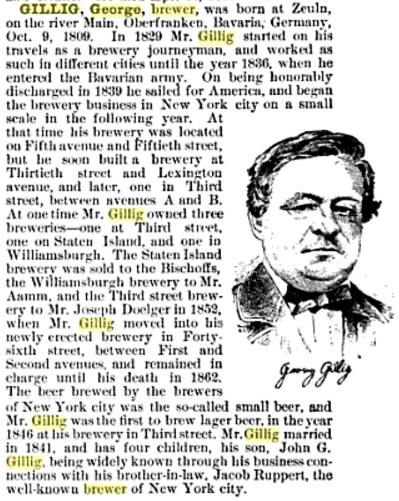
Note: cream ale as not “a thing of the past” when that was written. One of the puzzles was whether it was something from Germany. One of the records I came across referenced “…cream beer, or Lauderschaum…” My problem was I thought there were two waves of German immigration to the USA which did not line up with this timing: the Pennsylvania Dutch from before the American Revolution in the mid-1700s and then the Germans of the 1840s escaping the backlash against other revolutions like George Gillig, bringer of lager.

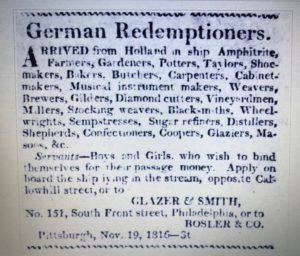
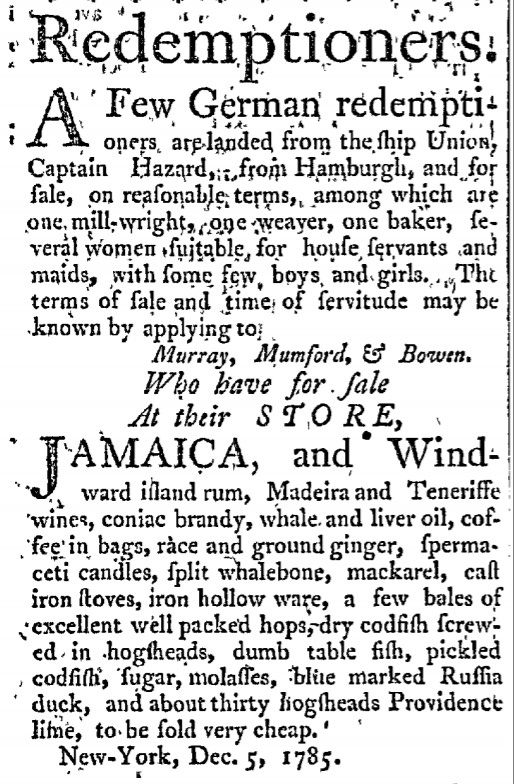
So much pleased was I to come across that notice up at the top from the Pittsburgh Weekly Gazette of 19 Nov 1816. A notice for the sale of indentured servants, or German Redemptioners. To the right is another notice for Redemptioners from New York City in 1785. No brewers were mentioned in this group unlike the notice from thirty one years later. According to Wikipedia, redemptioners were continental European immigrants in the 18th or early 19th century who sailed most often to  Pennsylvania by selling themselves into indentured servitude to pay back the shipping company for the cost of the ticket. Including brewers.

Which means there was a third sort of immigration, one with a supply of brewers with contemporary brewing skills within the right time frame who would be able to make “…cream beer, or Lauderschaum…” just like Gillig was able to bring his lager brewing skills a few decades later.

Update: I should also link to this 2018 post about schenk and Bavarian beer.

*What the hell is ale-sangaree?

Your Mid-December 2021 Edition Of The Thursday Beery News Notes

Just two weeks and a bit to go. Remember how 2020 dragged on and on? 2021 seems like it was less than a month long. Got my third jab. Thanks for asking, the only side effect has been just a bit of a lingering cold. Are you Christmassy? Me, not like in 2015 when Boak and Bailey won the last Christmas Yuletide Hogmanay Kwanza Beery Photo Contest with the entry above. Why? Just nine days to go but we are having a big big wave* of da-‘Vid around here so joining last minute shopping crowds might not be wise. Good to substitute:

Look, kid – mustard is a perfectly good stocking stuffer. Stop crying… please… have a Brazil nut… no, that’s all there was left at the gas station… check at the bottom of that stocking… yup… handkerchiefs… what, again with the crying?

Ho ho… ho. First up, if you yourself in need a bit of a Christmas gift, The Lars himself is speaking on line next Tuesday at 3 pm Eastern (my time zone is the best!) as he is set to speak at the Chicago Brewseum’s latest event:

Yule, the multi day festival celebrated by pre-Christian Germanic peoples, begins every December 21st. The modern Christmas celebration is very different from the old celebration of Yule as Norwegian farmers knew it, yet at the heart of both sits the feast with the Christmas beer. On this Winter Solstice, Lars Marius Garshol joins us from Norway to take a long look back to the origins of the Christmas feast, and why beer was so central to it. At the center of the mystery we find not Santa Claus, but his forgotten cousin.

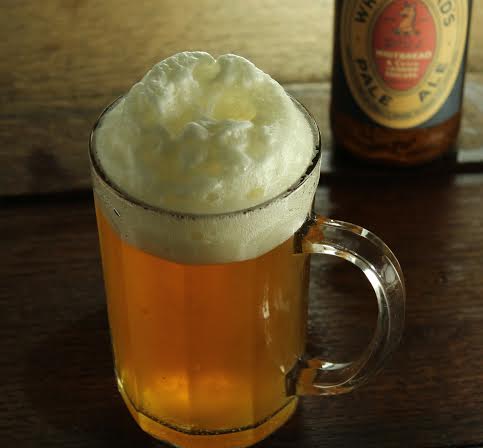
Also, just in time for the holiday joy, Dr. Wade at braciatrix reached back 400 years or so to the early 1600s offered some top advice on how to get through this challenging holiday season – butter beer!

Butter beer, or buttered beer, has a long and storied history. There are many recipes all containing at least the butter, sugar, beer and eggs, though the variety of spices seems to vary greatly with some including nutmeg, cloves and ginger, whilst others opt for aniseed and licorice.

That might be worth a try. My go to mulled ale is usually just Chimay Red in a pot warmed with a cinnamon stick. Speaking of fun, there was lots of follow up from last week’s post on the problem of style. I understand it is referred to in Finland as se in certain circles. And this week, we learned that there is another convoluted BJCP style update coming and I also read the words “spicy-guava Lithuanian-influenced Meadow Land IPA” written by Ruvani de Silva.  I am inclined to consider that hard to the one end of the newly christened “style<->fun” continuum. Ron also contributed to the question when he questioned the relevance of the construct when considering Edwardian ales:

Whitbread’s Edwardian beers are bound to get a style Nazi in tizzy. Because they certainly don’t fit with the modern hierarchy of Pale Ales.  With their IPA being significantly weaker than their Pale Ale. Whitbread IPA was a latecomer to the party, first brewed in October 1899. They’d been in the Pale Ale game since the 1860s and already brewed three different ones – PA, 2PA and FA, in descending order of strength. With IPA slotting in just above FA. So, what made this beer an IPA? The fact that the brewery called it that. I can’t work on any other basis. Were British breweries consistent in their use of the term IPA? Like hell they were. And particularly liable to use PA and IPA pretty much randomly. There’s no point searching for a pattern, because there isn’t one.

Noticing things as they were and are can get a bit sticky. The Tand himself captured this idea in a post yesterday about stout:

It isn’t that I’m against such stuff, and I agree and recognize that there are plenty out there that like these additions, but what I do dislike is that a bit too often, there isn’t just a straightforward stout that tastes of, well, stout.  There are exceptions of course, and maybe too many brewers feel that a “normal” stout doesn’t get them sales in a crowded market. Well that’s fine, but let’s at least have an unmucked about version as the default, with the additions as specials.

Where does that sit on the “style<->fun” continuum? Interesting and perhaps somewhat related observations from Boak and Bailey on the role craft beer can play as harbinger of change in gentrification of neighbourhoods, whether those living there like it or not:

Bedminster is made up of multiple neighbourhoods, from the theatre and coffee shop gentrification of Southville to the betting shops and greasy spoon caffs of East Street. The pubs there tend to be either (a) busy and down-to-earth, with stern warnings to shoplifters in the windows; or (b) shut. The borders, though, have fuzzy edges and are porous and, as you might expect, the gentrification is leaking. There are now vegan delicatessens and houseplant emporiums alongside branches of Gregg’s and Poundland. Alpha occupies a retail unit in a 1980s red-brick shopping arcade, across from a kebab house and next door to a charity shop. It feels out of place, for now – but probably won’t in five years’ time.

Change is odd. You can spot it in liminal spaces. Or does it sometimes create the liminal space, the bit that gets abandoned to become a space between before it gets repurposed? Craft beer is probably a follower as often as not in  these things even if it sounds like may receive undo attention compared to the fifth column of big houseplant in these matters. Fern pushers. No good comes of ferns.

Elsewhere… good news in another remote pub story from Britain!

A community on the Isle of Bute has raised more than £92,000 to put towards the purchase and refurbishment of their 200-year-old pub. The Anchor Tavern in Port Bannatyne was put up for sale after it was shut due to a downturn in business caused by the Covid-19 pandemic. It was the last pub in the village following the closures of other licenced premises.

Among the things I wrote these last few days that caused upset for some poorly enunciated reason or another** was the idea that best of lists sorta suck. While Robyn and Jordan make good case for properly run awards in this week’s podcast (while rejecting guava – are they really that fun?)… like the minor league golf tour of weekly sponsored events that beer awards have become (no doubt to give all those vitally important awarding people enough opportunity to prove their really important judging powers by awarding awards) I’ve long wondered whether there any other part of pop culture where the “best of” lists are filled with generally inaccessible items like we see with beer? Eric Asimov in the NYTs shared his best of 2021 wines and I was immediately struck by this first item in his list:

This bottle is a thirst quencher, an uncomplicated $19 liter of red from the Bío Bío region of Chile. So what’s memorable about it? For me, it epitomized how wine is evolving.

Modest price, an over-sized bottle and contextualized to make a greater point. Beer reviews rarely even mention price let alone distribution. We deserve better. Now consider NPR’s Sound Opinion‘s best albums of 2021. In their newsletter they asked “What We Mean By Best Albums”:

…let’s call our Sound Opinions best-of lists what they really are: idiosyncratic, no-two-exactly-alike rankings of personal favorites. We’re not looking for consensus, we’re aiming for let-it-all-hang out personality as reflected by the music each of us love the most. That’s why we devote an entire show to this imperfect exercise every year. It’s fun to reflect on the recordings that sustained or inspired us when we were running errands, washing dishes, hosting a party, recovering from a long work day or just getting lost between the headphones on the couch.

Self-deprecating, accurate and personal. An imperfect exercise. Look for these sorts of qualities in any recommendations before you fall in behind the fog offered otherwise.*** Look for price, actual personal comment and not just the PR notes – plus whether there was actually any sort of possibility anyone (aka you) beyond the sample receiving set was ever going to have a taste.

Very related, sometimes you read things that make you think “hmmm, interesting” and sometimes you read things that make you think “is anything in this actually true?” Oh dear. “Style”? Not in 1977. “Juicy”? More like 2007. Still, expect a NAGBW award for that one. For sure. Meets the club house requirements.

Conversely, speaking of context and reality, I heard a great show on one of CBC Radio’s schedule challenged broadcasts, Now or Never, Saturday aft. It was all about the relationship people have with alcohol. The episode has not popped up on the podcast page yet but keep an eye out for it. There’s a great interview with one Winnipeg craft brewer on the conflict of producing something that harms some while is fun for most. [Update: here it is!]

Want a bit more reality, I hope you are taking a moment to see the green dot in the sky these days. Not a lot of green dots in the sky. Green dot? Yup:

Your once-in-a-lifetime chance to see a green comet named C/2021 A1 — a.k.a. Leonard — is here. Astronomy experts, including the comet’s discoverer, offer tips on when and how to see the comet. Like other comets, Leonard is a ball of frozen gas, rocks and dust. When its orbit brings it close to the sun, the heat causes some of that material to vapourize, which makes it glow and sprout a tail of gas and dust.

Leonard? Hallelujah! Because when the world is a bit too grim and people are just too much face, why no climb way up to the top of the stairs where your cares might just drift right into space. Because you are gawking at a green dot. And you can take a drink up there with you. Something festive.

There. I tried to keep it short. Can you believe it? No? Well, the holidays are here. Be happy – and while you are being happy please also check out the updates from Boak and Bailey mostly every Saturday and from Stan every Monday, plus more with the weekly Beer Ladies Podcast, and at the weekly OCBG Podcast on Tuesday and sometimes on a Friday posts at The Fizz as well. There is a monthly sort of round up at The Glass. (Or is that dead now?) There is more from the DaftAboutCraft podcast, too. And the Beervana podcast. And sign up for Katie’s weekly newsletterThe Gulp, too. (That’s a bit now and then now.) And check out the Atlantic Canada Beer Blog‘s weekly roundup. Plus follow the venerable Full Pint podcast. And Fermentation Radio with Emma Inch. The AfroBeerChick podcast as well! And also look at Brewsround and Cabin Fever. And Ben has his own podcast, Beer and Badword (which he may revive some day…)  And remember BeerEdge, too, and The Moon Under Water.

*Sadly, the recent events in Kingston around anti-vaxx also caught up a neighbouring craft brewery, Signal. The owner died of Covid-19 Wednesday. It might have triggered further outbreaks.
**Huh?
***Co-opting a crisis is one of the more distasteful things you can do so it was sad to see one of the worst examples of appropriating aggrandizement in a headline I read this week: “Kentucky Breweries Lead Relief Efforts Following Deadly Storms.” What they meant to say, as the story does, is some brewery owners are pitching in as they would and should but pretty sure the normal authorities and charities are leading relief efforts.


Your Beery News Notes For The Start Of This The Coming Darkest Month

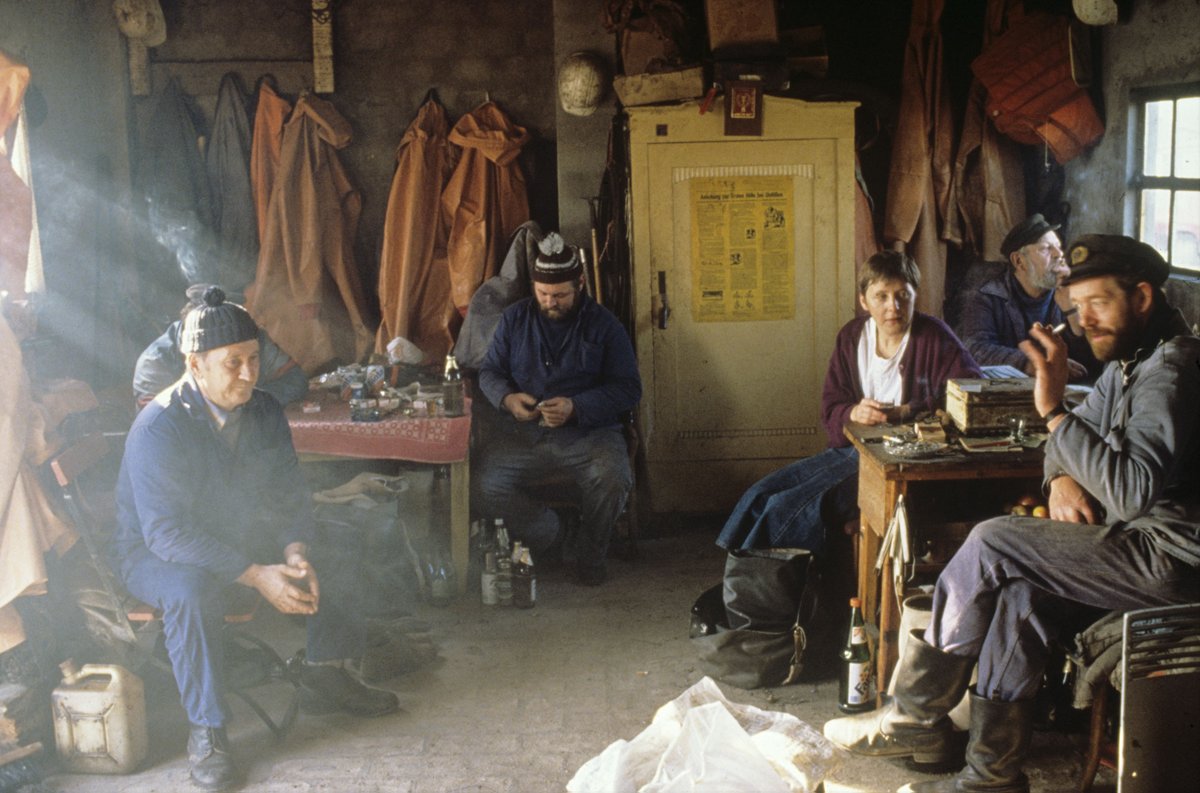
It gets better. We tell our teens that but it is a bit hard to believe sometimes. Like in a pandemic exiting its second year when the sun is well below the horizon. But there’s only a few weeks of this darkness and there is beauty all around even in these troubled times. Up there? That’s Angela Merkel, in November 1990, at 36 campaigning on the Baltic coast in Germany’s first election after reunification. Fabulous. She reportedly drank five schnapps with them. As discussed in early 2019, Merkel has always been handy with a beer glass. I probably disagree with most of her politics but that presence and style will be missed. She strikes me as an excellent example. Do what needs doing. My mother would say that: “it just takes doing.”

There. A bit of positivity. Let’s keep it going until we can’t. First up, I loved this duo of tweets, each of which is oblivious to the other. One, a map of the inns of Southwarke England circa 1550. The other?

What a thrill to discover a 17th C traders token in the Thames mud from the Bell, a tavern mentioned by Chaucer at the beginning of the Canterbury Tales as being close to the Tabard where him & the pilgrims met en route to Thomas Becket’s Shrine in Canterbury.

The Bell and the Tabard are both on the map. Neato. Also neato was an excellent piece that I missed last week by Evan Rail on the problem of appropriation of Indigenous matters in beer branding as well as some very fundamental misunderstandings:

“I can only speak from my point of view, and my point of view is that we—meaning society—mistakenly think of Native Americans as a race,” Keyes says. “And what we’ve got to remember is that each of these tribes individually are sovereign nations. They have their government entities. And every tribe has its different culture. Not all tribes are just a Native American culture that’s the same.”

Getting thing wrong is always central to bigotry. The bigot always wants to control the narrative. This all particularly caught my eye as I am also in a family with Indigenous members and work with Indigenous governments as part of my work. And what mystifies me about the bigots is how they miss how fascinatingly rich Indigenous culture actually is. This article also caught my eye as this very week I had to give the heads up to another major brewing publication that it had very recently published that same very derogatory racist obscenity that Evan discussed in that recent piece. Happily, it was immediately removed – and was removed with thanks.

Also, see this post from the Oregon Hops and Brewing Archives about a very specific question on the similarity among brewing competitors advertising a century ago:

I’m left with some lingering questions, the biggest being these: did these two breweries hire an advertising firm, did the newspaper have this book and create the advertisements, or did the brewery have a book of phrases they chose from? My sense is that the book is for a newspaper, given the instructions for setting up a printing machine and information about inks in the latter part of the book.

Conversely perhaps, did you know that Instagram may hate beer? How about these these outfits? Do you like them? No? Me neither, but I do like honest tasting notes:

I think perhaps if I have a lifetime of connections like this I can handle a lifetime of being told my tasting notes are too personal, that who I am is wrong, of failing future wine exams. I think perhaps, if anything, I will make it more so. 

That makes much more sense that a concept limiter, the expertise in narrowing – like a little wheel. Look at that: water’s contribution is actually a binary. A toggle switch. Little good comes of toggle switch understandings. No, no need of that. Stretch your own arms wide, as wide as you can. There was an exceptionally fine example of this in terms of personal tasting in Kate Bernot’s best beers of 2021 as published in (Craft) Beer & Brewing mag. Consider this:

The aroma promises an herbal, not-too-sweet blend of licorice, Tootsie Roll, star anise, gingerbread, and dark cocoa, while the flavor delivers bigger fruit that lends a cherry-cordial and Black Forest–cake impression. It’s like dessert and digestif in one. Gorgeous.

Impression! Less of the style guide references or list of ingredient and more of the personal and taste memories. Good. It’s my personal approach, too. Along with this.* Don’t be sucked in by the actual negs, the forces of poor widdle cwaft. You be you.

In other news, the beer writers of Britain gave each other** awards this week. It lead to some unhappiness and subdued response to that was offered: “The bigger story here tho is how many new writers were recognised for first time in these awards.” In another sort of awarding, Ron finished up his fun in Brazil with a few more interesting and honest notes about the integrity of the process:

“What will we be judging today? We already awarded medals yesterday.” I ask Gordon over breakfast. “Not all the categories have been judged yet.”

You quickly see from Ron’s posts that they center on styles and that styles are more like a skills competition as opposed to playing the actual game. In addition to judging submissions after awards have been given, we also learn that the best may be rejected if they are not fitting into that square peg of style. What’s that about? So much for best of show. Surely, not great.

The process of awarding awards is often a funny thing. Consider Drake’s actions this week to remove himself from the Grammys. People think I am just a bit of a crank about these things but it isn’t so. I do this for a living. Let me tell you something about myself.  As part of my work, I oversee and advise upon many aspects of the process and substance of awarding contracts at a very high level, for up to nine figure procurements. I buy things bigger and more complex than very large craft breweries. Right down to the details. I have worked with engineers to draft specifications for evaluating grades of steel that consider the stages from the fabricator back to the steel mill back to even the mines where the ores were dug. I love it. And those experiences inform these other experiences. Which leads me to the observation that I would not select the award of a pencil supply based on the process Rob described. It’s like folk are just making stuff up!***

We need to pay attention. These sorts of awards that Ron participated in are based on the construct of style. Which is really little different from the characteristics of the various concretes or the range of coverages one needs to consider to ensure the proper sort of workers compensation policy is acquired for a particular job. All of which is timely as the question of style keeps on giving and, weirdly, not one opinion seems to be the same… even when – and perhaps especially when – people think they agree with each other. Only for example, let’s start with Boak and Bailey who approved this comment from Stan’s summary of the situation:

What a frustrating discourse! It is pretty obvious that it is helpful and sometimes demystifying to categorize beers by style. It is also obvious that some people police the style taxonomy in a way that is off-putting and hostile to outsiders.

Oh, simple comment maker. It isn’t that at all. Nothing is binary. And nothing is obviously obvious. No, we can ignore that. “Get a therapist!” says one Aristotelian. Another thoughtful person, who loves the whole thing so much they seem to really want an end to all beer – even for the best of reasons – didn’t like the idea that style is even being discussed.**** But discussed it has been. Lesson: ignore folk who tell you to shut up.

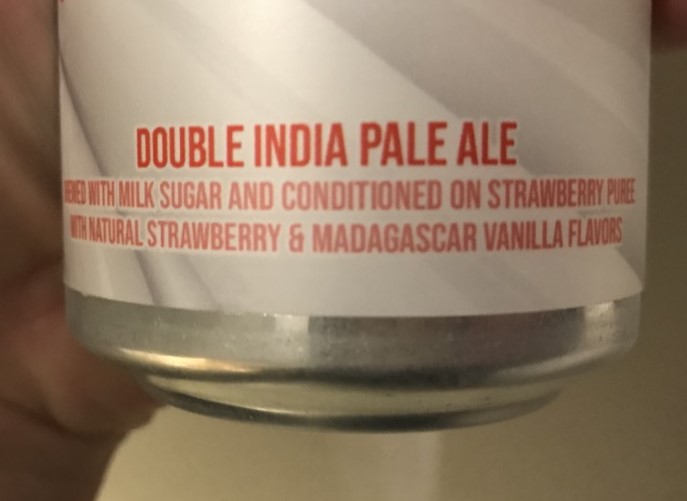
Next, the call that everything is great. Think William Blake, “All Religions Are One” for a mo. Maybe that’s it. So “Drink what you like!” we are told, conversely. We are told style and those who define it are gatekeeping and that this “reinforces the negative stereotypes of the industry.” That may be a very good argument with a very good goal – exploration and inclusion. Other cultures can be actually wonderfully enriching. But, as we see to the up and the right, that can lead to appropriations, circumstances where anything in a can can mean anything now. Nothing demystifying about that. Just a blurrier blur.

So, we have these structures and they help us to avoid the blur. We see, accordingly, Mr. B declared his entire agreement with Garrett Oliver when he rightly and righteously proclaimed:

…[he] says quite simply something I’ve been ranting about — hello, IPA category! — literally for years. Words matter. Styles matter. Expectations based upon words and styles on a label matter…”

…err… right before Mr. Oliver wrote a significantly but not entirely different thing:

Brewers can – and should – call beers whatever they want to. What I want is for brewers to WANT to hold the line on some things. I don’t think calling a deep amber beer “Pilsner” is good for customers or for brewers. That said, in the end…self-respect is always voluntary…

Voluntary. Which raises a point: really? When is a rule voluntary? If style is so central to understanding beer why can it be applied or not applied here and there however folk want. Should it be voluntary? Jings. What ever did the poor folk do before the early 1990s when the concept was invented? Were they happy? Were they maybe happier?

No wonder folk throw up their hands. It wasn’t always so. I came across a voice from the past this week, echoes of the past in something called Brewing & Beverage Industries Business magazine in which you can learn (on page 8) that folk today lack a proper understanding of brown bitter: “…balance in beer, how very uncraft…” You can also learn (on page 10) that folk today lack a proper understanding of Belgian beer:

I remain convinced that, were you to package them differently, or present them already poured rather than in the bottle most younger drinker (sic) would be every bit as enthusiastic about them as they are about Brewery X’s new bourbon barrel-aged Imperial porter or Y Brewing’s guava milkshake IPA…

See, it’s all their fault. Folk who don’t get it. The “younger drinker”! Can we tie that argument all together: awards now suck because the disfunction of style sucks because new craft sucks because young people who want new craft today… suck? Really? Isn’t something else the problem?  Hasn’t uncontrolled style division and propagation as a top down exercise itself caused craft’s cacophony as opposed to clarifying anything? Who pushed that propagation of sub-style after sub-style? Those who benefit from manufactured complexity. And who is that? Surely not the reader of a well thumbed copy of Modern British Beer.

What to make of these ye oldie fartie views? Are they the last bastion of the fight against all these young people***** and all these  strange tastes? There are a lot of strange tastes going around, it’s true. There ought to be a limit. Or at least proper labelling.  Which leads to one last thing, that I think I would be more concerned about supply chain issues if the supply on the chain were not lychee:

His shipment never left Southeast Asia, posing big problems for Urban Artifact’s Petroglyph beer, a top seller. But then, Kollman found a different supplier who already had a container of lychee sitting at the Port of Los Angeles. A lychee lifeline? Not so fast. “Two and a half months later, that [order] never left the port” either, Kollman tells me in a recent phone interview. “So we just dropped that product line.”

If the lychee supply fails, drop the product line. Make something else. Because the next thing is just as good as the last. Transitory. So lacking of structure that the next fruit flavour that comes along is tomorrow’s darling. Somewhere eight or ten years ago, did we see this coming?  Isn’t it like a culture that we have just encountered for the first time – even though it’s been there all along? What do we call this anti-style thing? Is it just… fun?

As you think about that over the week, please also check out the updates from Boak and Bailey mostly every Saturday and from Stan every Monday, plus more with the weekly Beer Ladies Podcast, and at the weekly OCBG Podcast on Tuesday and sometimes on a Friday posts at The Fizz as well. There is a monthly sort of round up at The Glass. (Or is that dead now?) There is more from the DaftAboutCraft podcast, too. And the Beervana podcast. And sign up for Katie’s weekly newsletterThe Gulp, too. (That’s a bit now and then now.) And check out the Atlantic Canada Beer Blog‘s weekly roundup. Plus follow the venerable Full Pint podcast. And Fermentation Radio with Emma Inch. The AfroBeerChick podcast as well! And also look at Brewsround and Cabin Fever. And Ben has his own podcast, Beer and Badword (which he may revive some day…)  And remember BeerEdge, too, and The Moon Under Water.

*I really need to print off some of these and sell them. I hear that 15 quid is the going rate.
**Surely a top journalism award.
***The “style beer” thing kills me. Just made up. Except it really isn’t. But is that what is happening? Stay tuned!
****Eine selbst beschrieben Auslander.
*****Diese lästig Jugendlichen!

Your Thursday Beery News Notes For The Coming of Yule and Omicron

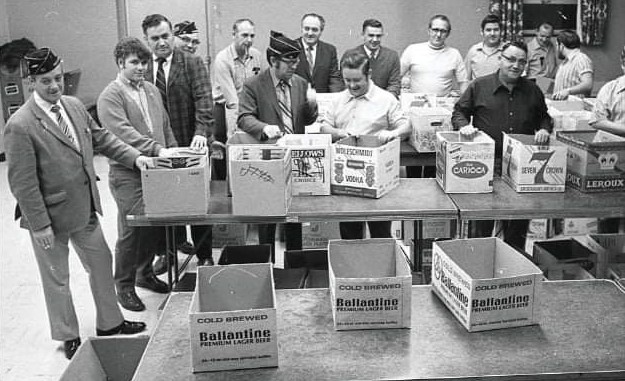
It’s beginning to look a lot like… Yuletide fifty years ago right about now when they were packing the Christmas parcels for families in need down at the American Legion post in Watertown, NY in 1971 – back during the Vietnam War era. The lads. WW2 vets I imagine. I noticed those front three boxes just waiting to be filled – Ballantine. The brewery’s share of national brewing sales had tumbled through the 1960s from over 5% of the market to just 1.75% by the time the photo was taken.*

First up, here is some fabulously interesting news about successfully managing a pub during crisis times from Stonch:

I open my pub Thurs-Sun only so that it’s a joy rather than a burden… it means i usually go down to one [cask] ale by late afternoon on Sunday. anything left at closing time we drink, give away in takeaway containers or as a last resort pour down the drain. wastage is low though. remember my london pub was a 5 day a week place so i have experience…

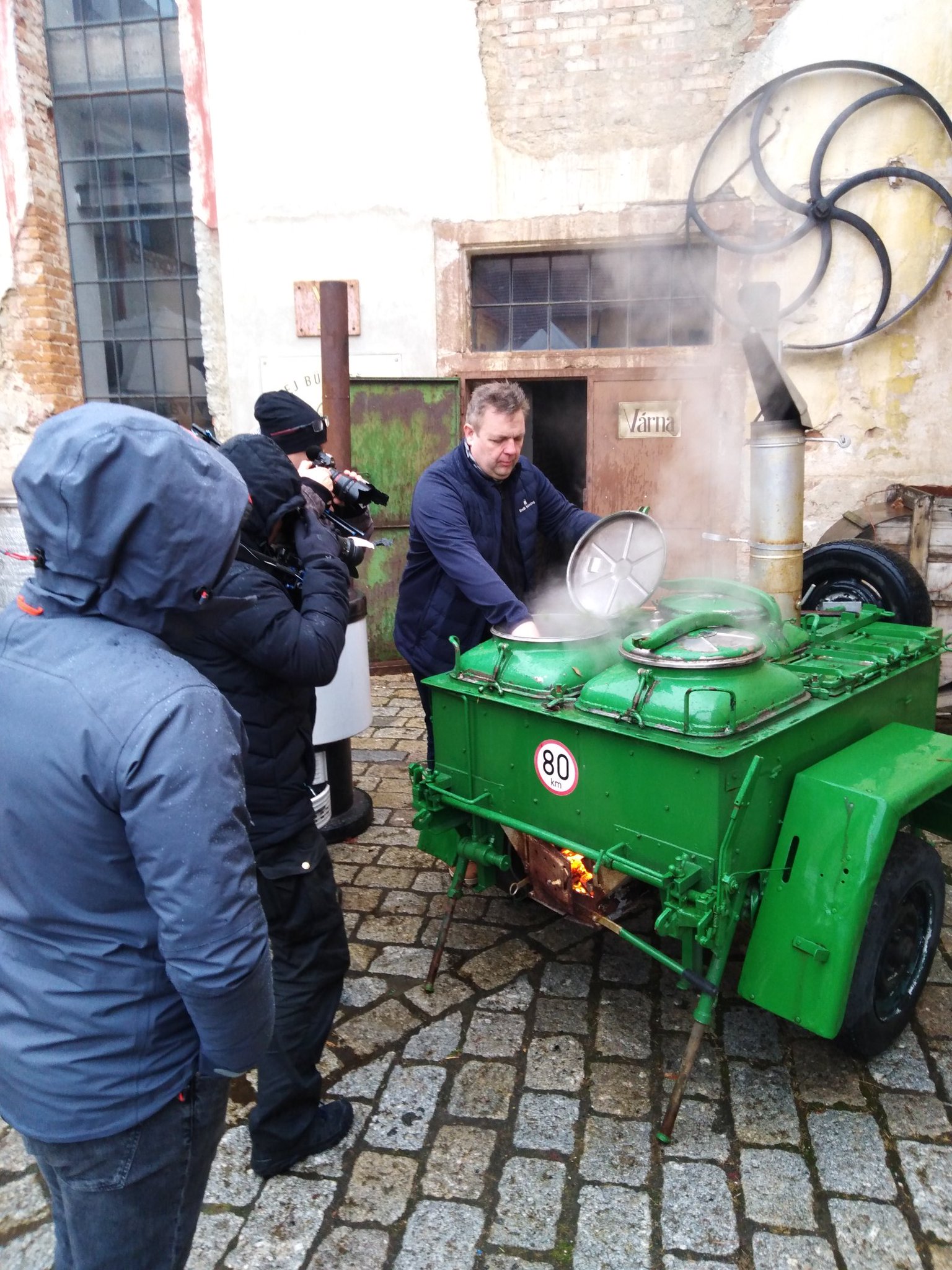
Equally fabulous is this image to the right from Max on a brewing day in Czechia. Click on it to get the full view but from what I understand he was withwith my man Sigurd we are brewing Kveik raw ale for Česká Televize at Cernokostelecky pivovar” where the green trailer was being used “for the juniper liquor used for the brew.” Neato.

Breaking: Newfs lack gas.

Sad to see Shmaltz Brewing bowing out after 25 years:

The biggest, the smallest, most award-winning, and still the only Jewish beer company in America, Shmaltz Brewing Company announces its farewell season after 25 years in the beer business with the first and final release of Bittersweet Lenny’s RIPA in 16oz cans, vintage gems from the Shmaltz beer vault, and a fitting tribute, Exodus 2021 Barleywine Ale (8.8% ABV) brewed with Date, Fig, Pomegranate, and Grape. Shmaltz goes out with a bang with a nationwide “Farewell to Shmaltz Tour” a.k.a. the Class of ’96 Celebration a.k.a. Let My People Brew a.k.a. The No Shmucks Tour…

Long time readers will recall my regular reviews of Shmaltz beers when I used to drive over to northern NY regularly on beer shopping runs. One of the rare breweries which knew how to add fruit to beer while leaving it tasking like beer. Not like the gakky end of the market today.

And in continuing coverage of craft’s retraction, Jordan has his red marker out, deleting the dearly departed contract brewers of Ontario from his list. And Toronto’s Thirsty and Miserable will be gone soon. Sadness. Further news to their south across the big waters,  The Tap and Mallet of Rochester, NY has announced its closing.

It is with a heavy heart that we have decided to call time on what has been a truly amazing 14 years… When the pandemic hit it came at a tough time as the pub was already feeling the effects of changes in the craft beer industry that we all continue to enjoy. We all soldiered on but have reached the tough decision that it’s time to call last orders. Our last day will be December 31st…. 

Fans are sad. There was another sort of lock down and a surprise for other pub goers at the rather elevated Tan Hill Inn seeking an evening with an Oasis cover band this week in England’s Yorkshire Dales:

People travelled to the remote pub, which is 1,732ft above sea level, on Friday to enjoy a performance by the Oasis tribute band “Noasis”. But it soon became clear that they would not be leaving that night due to a Storm Arwen snow blizzard. Makeshift beds had to be laid on the floor of the bar. When guests woke up, most cars outside – and parts of the pub itself – were buried in snow.

They spent three nights there. Were these fans also sad by the end? Dunno.

The Admiral Benbow. And the Admiral Benbow.

Garrett Oliver led a fabulous tweetfest over the weekend on the role of, what, branding versus clarity? IPA v. reality? Authority v. assertion? It all starts here with Joe Stange but goes all off in wonderful directions with loads of viewpoints and counterpoints, entirely rich.  I liked this:

I don’t “know” a lot about jazz, but I still enjoy jazz. And I really don’t care what a jazz critic thinks I need to know – I’m having my own good time and I will not be fenced in by anyone. I’ve worked to demystify beer for more than 30 years. It’s supposed to be fun. And it is…

These are the sorts of back and forth self-anointed beer experts either scream in or now totally avoid, the latter given far more wonderful information than these beer experts themselves know, I presume. Not similarly, Oliver Grey had a piece published on the basics of saison this week:

The story of Saison—and its journey from seasonal brewing in Wallonia, Belgium, to year-round availability in taprooms all over the U.S.—is arguably not one of evolution but, rather, mutation. The style, at its core, thrives off the randomized power of genetics. It generally eludes consistent definition and tasting notes, as explained by Phil Markowski in his book, Farmhouse Ales, “expecting Belgian and French beers to follow [a] pattern can lead to disappointment and frustration.”

I wish one point had been added. What we know as Saison and Biere de Garde, as Markowski explains,** was largely made up in the 1970s to meet student and other trendy drinking demands in the 1970s.  Makes for a great foundation of the various US craft creative takes, both disconnected from the 1800s.

Seems like a rather generalist approach to the subject.

Me, I am with Delores. Always. He’s crazy. Who? Ron – who is swanning about a tropical  beer junket in Brazil where which he will nod and scribble while day dreaming about getting to the buffet and then back to the beach.*** I must stay, the terms and conditions of his compensation package are pretty meagre as he reports:

The organisers of the Brasil Beer Cup paid for my accommodation and food during the period of judging (four nights and three days) Beer, too, which was provided by one of the sponsors. I had to pay for my own cocktails. And all other expenses, such as flights and extra hotel nights.

Cheapskates!! Who are the organizers? Seems to be run by something called the Science of Beer Institute, a joint project of  Instituto Cervezas de America (Chile), Berlin Beer Academy (Germany) and Beer Matters (Belgium), Science of Beer and Bier Akademie (Germany). Seems to me they would have the ability to cover a plane ticket for poor Ron, knowing what money sponges these junkets are.

Finally and fairly similarly, the inaugural Canada Cup of Beer… no, Canada Beer Cup ran discount pricing in November but that is over. Not entirely sure it is a good look. The echoing of Brazil’s Beer Cup in the name is odd, too. Won’t match the weather!  I’m not yet sure who is running this one as everyone involved seems to describe the event’s organizers as “they.” This sorts of vague thing doesn’t help either. I expect no one wants to take credit for the Toronto Tourism grant (or however it was structured) providing the generous funds which should be involved (if they know what buttons to push) given (reliable sources say) this is really about marketing the town and attracting folk who will write praising articles about “Toronto the Good” during the dark winter days of icy pandemic (“judging is sort of an excuse” sources share) – including a particular wish for (again I am told) Kate B of GBH to show.  Hope they don’t sell hats.

There. Your beer nerd cred is topped up for another week. Meantime, check out the updates from Boak and Bailey mostly every Saturday and from Stan every Monday, plus more with the weekly Beer Ladies Podcast, and at the weekly OCBG Podcast on Tuesday and sometimes on a Friday posts at The Fizz as well. There is a monthly sort of round up at The Glass. (Or is that dead now?) There is more from the DaftAboutCraft podcast, too. And the Beervana podcast. And sign up for Katie’s weekly newsletterThe Gulp, too. (That’s a bit now and then now.) And check out the Atlantic Canada Beer Blog‘s weekly roundup. Plus follow the venerable Full Pint podcast. And Fermentation Radio with Emma Inch. The AfroBeerChick podcast as well! And also look at Brewsround and Cabin Fever. And Ben has his own podcast, Beer and Badword (which he may revive some day…)  And remember BeerEdge, too, and The Moon Under Water.

*See Tremblay and Tremblay, The U.S. Brewing Industry, tables 4.3 and 8.2.
**I looked for my copy of the book to quote the passage but the effort got too great about 45 seconds. Found it. Look at page 36-38.
***From an alternate universe, another way forward: “I was hired by Robert Parker in 2008, and I will always be grateful for the opportunity he gave me and all that he taught me. In 1978, Parker created a groundbreaking wine publication that was free from financial ties to wineries and merchants, a guide that produced wholly unbiased views on wine, and reviews that served only the interests of wine consumers. It was a magazine funded purely by subscribers—the people that bought, read, and drank by it. Parker’s ethics, as much as his incredible talent, inspired me. I am honored to have worked with him up until the day of his retirement.

The Beery News Notes For The End Of 2021’s 10/12ths

Here we are. November looms. I’ve never thought Halloween was all that scary given November is right there behind it.  The dreariest month. If it snows, winter will be too long. If it rains, the rain is bone achingly cold. Dreich. But a big month for beer. Big beers, in fact. I’ve been laying off but maybe it’s time to lay on again. Treat yourselves nice in November. It’s like it needs its own month to celebrate itself. Like gag-tastic #RauchBeerMonth but with, you know, the prospect of someone actually being made happier. And that’s what we want. To be happy. Despite the dreich.

This November marks the seventh anniversary of perhaps the high point in the craft phase of good beer, circa 2003 to about 2016. The cover of The New Yorker from November 3, 2014. Mere months after the publication of the cult classic The Unbearable Nonsense of Craft Beer. Josh Noel‘s comment was spot on – a moment in time before hard seltzer. And perhaps a moment that had some aspects we are well rid of – if this article on Colorado’s New Image brewery is anything to go by:

The idea that brewery employees should expect less money because they are “doing what they love” is a cliché that needs to go away, he adds. “We are trying to take that out of craft-beer culture. It’s about damn time we have good benefits and good pay for people making beer.” Having a second taproom with higher margins on sales will help that effort as well, Capps says. And New Image is now “aggressively” seeking out locations that it can buy to add a third or even a fourth taproom.

The past is a foreign land. Conversely, there are a lot of words that come to mind in this story of today. Gall. Cheek. Privilege. Arseholes probably the correct term as the Manchester Evening News reports:

The Pack Horse, which is in the Peak District village of Hayfield, was visited by a group who didn’t flag any problems with their food when staff checked in with them, but chose to complain when they’d already eaten most of the meal, staff said. They allegedly tried to demand a new dish – which was refused – and eventually left without paying their bill. Owner and chef Luke Payne said that one member of the group then had the nerve to wink at him as they left.

The article goes on to suggest that manners have dropped in these later pandemic months. Arseholes, I say. Matt C. explored other forms of late pandemic angst in an article in Pellicle this week:

Before the pandemic, one place in particular I would find both solace and kinship was at a beer festival. In my search for remembering what it was like to feel more normal, I fondly recalled the deep-seated warmth I felt from head to toe as I travelled home from Cloudwater Brew Co.’s Friends & Family & Beer in February 2020. While there I had a wonderful time enjoying many delicious beverages, and spending quality time with friends old and new—some who had travelled half-way across the world to attend. The festival took place in Manchester, too: a city my partner and I had decided we would soon make our home. I felt ready for the next chapter. Then the wheels came off, the world grinding to a halt at the mercy of the bastard virus. 

I’ve never liked beer fests myself. Don’t miss them.  Too many drunks. Perhaps I differ in this regard from The Beer Nut who celebrated 30 years of the European Beer Consumers Union, the sort of institution North American beer culture lacks. No fest to back up the celebration, however. Just Zoom.

Another venue for drinking that’s much more to my liking is also disappearing as The New York Times reports:

Several decades ago, the beer bar, with its dozens of draft options and deep bottle lists, delivered a liquid education in bitter I.P.A.s and monk-brewed Belgian ales alike. They were places “where customers discovered craft,” and helped the genre grow, said Bart Watson, chief economist for the Brewers Association trade group. But with growth of the taprooms, craft-bar release parties for special beers dried up. What was once “a prime way of bringing people into bars was gradually taken away by the breweries themselves,” Mr. Black said.

No, beer bars were not where folk discovered craft. They predate craft. (You’d think people would get it. Obey the chronology.)  In their finest form they are a dive with very good stock. Like Max’s in Baltimore. Conversely, craft is the taproom. But it is true. Craft killed the beer bar. Including by aggressively opening new taprooms, as we read above. (I know… I’ve been quoted as an expert in the subject. Sorta.) But I was quoted by Stan who posted a follow-up post (a post that poses possibilities predicated on the prior post) on the question “wuzza beer bar?“:

Two names I heard more than others were Rino Beer Garden and Finn’s Manor. Finn’s has a shorter tap list — curated, as the kids say — and a cocktail menu. Rino has more than 60-plus taps. Would both be classified as beer bars? Pat Baker provided a definition in his “Beer & Bar Atlas” in 1988. His classifications included classic bar, neighborhood bar, beer bar, Irish bar, German bar, English Pub and fern bar. (Yes, neither wine bar nor sports bar.)

At this point, I pause to consider this week’s candidate for the wonderful graph award. Gaze upon this for a moment:

Look at that graph. I have stripped a few identifiers from it to get to the nub of the matter but it is from Colin Angus as posted under his handle @VictimOfMaths and came with this message:

The UK’s approach to taxing alcohol is stupid. In the budget next week there is a strong possibility the chancellor will overhaul it. Before we find out what he has planned, here’s a thread on what is the current system and what exactly is wrong with it? 

Thread. And it does all look stupid when put that way. Why is beer taxed at a higher rate as it strengthens while wine moves in the opposite direction? The actual changes to taxation were announced Wednesday. CAMRA wrote of games being changed. Matt had a summary as well as  particular view as to the taxed event within the supply chain which is useful:

…the consumer doesn’t pay that duty, nor does the pub. The producer does. So on a 9 gallon cask of 72 pints, that’s £2.16 off costs. Maybe a bigger saving if its below 3.5%…

Speaking of the graphical representations of data, Lars has updated his yeast family tree based on a number of recent studies and included lots of wonderful graphs as well as new info:

They also found a separate subgroup of African beer yeasts, which is very interesting. Africa has an enormous variety of traditional farmhouse brewing going on in many different countries over much of the continent, and many of those brewers still maintain their own yeasts. (Martin Thibault spoke about Ethiopian brewers and their yeast at Norsk Kornølfestival in 2020.) Now it looks like they, too, have their own genetic subgroup of yeasts.

Note: be flexible.

Finally, Boak and Bailey’s post this week on the Stokes Croft Brewery, Bristol, 1890-1911 contains this fabulous image which goes a long way to explain the gradation of late Victorian stouts and ales. I got all excited when I saw it. Lovely. Place a laminated copy in your wallet for handy reference.

There you go. A bumper crop this week. For more, check out the updates from that same Boak and Bailey mostly every Saturday and from Stan now on a regular basis again every Monday, plus more with the weekly Beer Ladies Podcast, and at the weekly OCBG Podcast on Tuesday and sometimes on a Friday posts at The Fizz as well. There is a monthly sort of round up at The Glass. There is more from the DaftAboutCraft podcast, too. And the Beervana podcast. And sign up for Katie’s weekly newsletterThe Gulp, too. And check out the Atlantic Canada Beer Blog‘s weekly roundup. Plus follow the venerable Full Pint podcast. And Fermentation Radio with Emma Inch. The AfroBeerChick podcast as well! And also look at Brewsround and Cabin Fever. And Ben has his own podcast, Beer and Badword which may revive some day.  And remember BeerEdge, too, and The Moon Under Water.

The New And Improved Beery News Notes For A Thursday

Take a week off and you get all sorts of ideas. Like packing it in. Like… really… why do I do this? Then, after I read this “see you later, blog!” post from The Kitchenista I remembered – I do this because it is easy! No one picks on me or gives me crap like she had to put up with. Sure, playing the role of an irritated grump helps with that but, really, this is a doddle. Why? Because beer does not matter. Sure – if you are in the trade, it’s your investment or your career but that’s maybe 1% of all the people who encounter beer. There is a whole whack of beer writing aimed at that audience, little of which gets noted here given it’s a yawner. That being said, what is up?

Speaking of not yawner, I like this bit of a major culture backstroking from Dogfish Head on Tuesday. Click on the thumbnail. It’s the response they had to put out after someone had the bright idea to repost Sam’s Big Lie that craft beer is only 1% asshole. It’s not like it’s an apology as that would be admitting how stupid the statement is but still…

Speaking of dinosaurs, I also noted this comment on Tuesday by brewer Jenny Pfäfflin which goes off in another direction:

There’s a huge lack of self-awareness from an older generation of established brewers who have obviously failed to look beyond their own success—but still get a pass because of who they are. 5 yrs ago, I would have killed to work at certain breweries, today I’m relieved I don’t!

There is a whole lot of presentism in the discussion that ensued. Older being five years ago is a bit weird but also weird is the idea that the present is some sort of stasis. 2027? All that you see around you in beer will be like wide leg jeans and 8-track cassette decks. Have a brown ale and think about that for a mo. As the wise Chrissie Hynde once put it, time is the avenger.

While you do that, consider how fine a thing an endorsement from NHS Martin is. He recommended a very minimalist blog with the URL of evoboozyscribbler.co.uk this week and I might just add it to the bookmarks if only for its rather earthy tone:

With Liam working yesterday and needing to head off early we moved onto The Royal George. Bit of history as this is the first pub that I ever fell asleep in. Not through booze, a secondary school friend lived here and I stayed over a few times back in the 80’s. Nice cool pint here, sat outside in the impressive seating area with Euro 2020 bunting flags still in position flapping around merrily. And there is a Dyson Airblade in the toilet so it’s win win here.

Perhaps conversely, an interesting set of arguments were made by Courtney Iseman during my brief sabbatical which I think is worth noting even though it is a reflection on something I avoid – fests:

People, Kimberley and I both express in our conversation, seem to have forgotten whatever sense of social etiquette and what’s right they may have had during the pandemic. Now that some events are happening again and folx have been getting back to gathering at bars and pubs and breweries, it’s been a rude awakening: it’s like some people have pent up energy that they’re letting out in problematic, discriminatory, even dangerous ways. With this in mind and certain big festivals, in particular, looming on the horizon, Women of the Bevolution founder Ash Eliot reached out to me a couple of weeks ago with the idea to take a deep dive into the current state of safety at festivals…or the lack thereof.

See, I am one of those guys who also find drunk guys piggish and fests often a bit of a flaming mess so, you know, I agree but I don’t seek to make them safer. I just avoid them like the sensible avoid anti-vaxxer rallies.

I would also be remiss and a false friend to Lew Bryson if I didn’t link to the story of the white hot, a upstate NY phenomenon he introduced to me via a side bar in his book New York Breweries a decade and a half ago.

Few food items are more synonymous with summertime in Rochester than the White Hot. Though Zweigle’s is the most famous manufacturer of the local delicacy, it was first produced by a lesser-known company. The details of the White Hot’s origin story lie largely with the recollections of Frederick Tobin, the first president of the Tobin Packing Company (formerly the Rochester Packing Company). According to the meat magnate, the iconic tubular treat was first dispensed at the Front Street establishment of the Ottman Brothers.

From the archives I would note that fifteen years ago I posted about an early encounter with a Tobin’s hot. The comments from old employees and feuding family members are charming.

Beer styles: genres, agreements, important or just unimaginative puffery? As a means to that end, consider the meaninglessness of IPA as you think about that question and this newbie guide:

Safe to say, IPAs are a beer universe unto themselves. Brewers are continuing to push the limits of what this style can encompass, both in terms of the ingredients and the techniques used to brew them. But there is one unifying factor to IPAs: hops.

See, I think that is another sustaining fib of this present framework, as sustaining as the 99% crap was for the big craft set. Me, I got suckered into drinking an IPA the other day and, there it was, another Sunny D clone. Nothing hoppy about it. It could have been labeled a fruit beer – which would have been most truthful. It even had “sour” on the can even though it was all sweet and sugary fruit candy. Cloying gak. But it also had the magic three letter I-P-A and that was all the buyer, a pal, needed to know when he bought it to proudly hand to me one evening in his back yard.  If that is the present that Jenny Pfäfflin is happy about, well, call me Dino.

Update: compare and contrast with Ron’s guide to IPAs:

I’ve been thinking a lot about beer styles as I pound the local streets two or three times a day. Dodging dogs as much as possible. IPA is incredibly popular. But what is IPA? After much thought, I think I’ve cracked. It might be a bit too prescriptive so I may have to loosen it up a little.

That’s it for now. We can benchmark this week’s roundup with the observation that good beer seems overdue for the next big thing. Perhaps it will be something other than beer. Perhaps it already is. Should we care? Not really. It’s just not that important.

As you start at the bottom of the glass or at the floor before you, for more check out the updates from Boak and Bailey mostly every Saturday and (if I dare say) from Stan mostly every Monday, plus more with the weekly Beer Ladies Podcast, at the weekly OCBG Podcast on Tuesday and sometimes on a Friday posts at The Fizz as well. There is a monthly sort of round up at The Glass. There is more from the DaftAboutCraft podcast, too. And the Beervana podcast. And sign up for Katie’s weekly newsletterThe Gulp, too. And check out the Atlantic Canada Beer Blog‘s weekly roundup. Plus follow the venerable Full Pint podcast. And Fermentation Radio with Emma Inch. The AfroBeerChick podcast as well! And also look at Brewsround and Cabin Fever. And Ben has his own podcast, Beer and Badword – when he isn’t in hiatus as at the mo, more like timeout for rudeness! And remember BeerEdge, too, and The Moon Under Water.