The Panicky Two Weeks Left In Summer Edition Of Thursday Beery News Notes

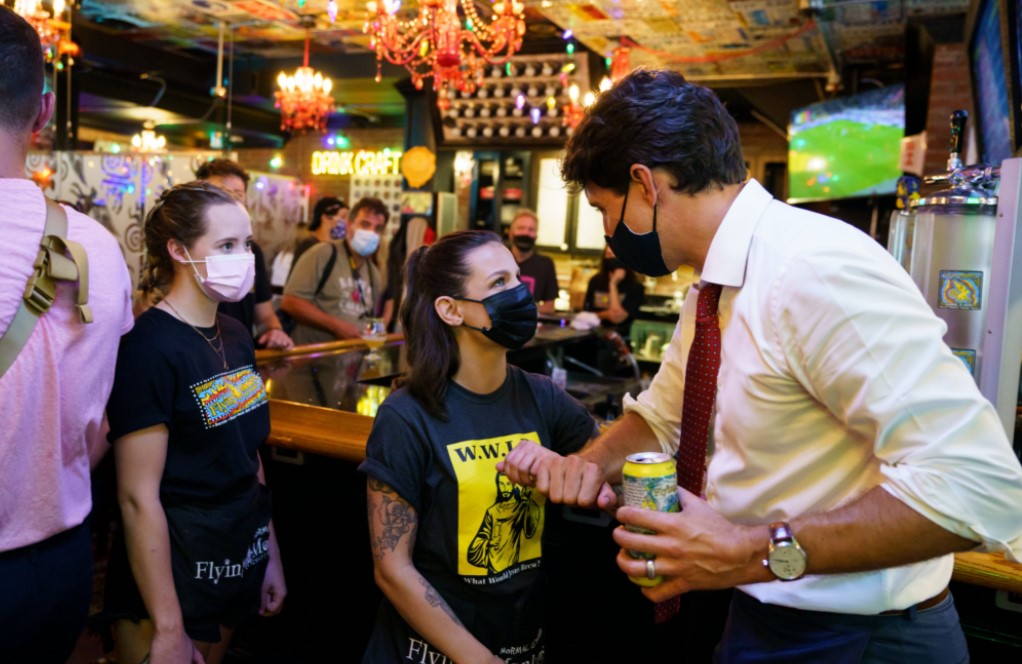
“Of course, you know there are more weeks in summer than that” say all the really boring people. No, that’s it. Soon it is corduroy and scarf season. And you will ask yourself what it was you did with those two last weeks of summer. You know you will. Here in Canada, we are having a national election all of a sudden – or at least now that the coming fourth wave is leaving a very small window for these sorts of things. As the photo above from the PM’s campaign shows once again, you can’t campaign for election in Canada without being seen with a beer. The choice of the can is clever – can’t see how little he’s had.

First up, Jeffery John linked to a story in The Observer this week asking the question “Can hospitality’s recruitment crisis ever be fixed?” which mentions the twin issues faced by the UK: (i) pulling the visas on much of your hospitality working cohort right before (ii) bumbling and stumbling with the regulation of the hospitality trade all through the biggest pandemic in a century. So people move on and likely should:

In March, former London restaurant manager Sam Orbaum decided that, after three years, he was done with regular restaurant shifts. Previously, he sailed through weeks of long hours but the freedom of furlough prompted the 30-year-old to question that lifestyle and, particularly, the “strain” of stop-start Covid-era reopenings. A lot of the pressure, insists Orbaum, was “self-inflicted. The team [at my employer] were always very, very supportive.” Rather than owners or managers cracking the whip, he observed a tendency among young, ambitious staff to “take on burdens voluntarily”.

Yeah, that sucks. Jeff noted that he “…mothballed the kitchen at my pub and just do drinks and snacks partly because of the chef shortage, but also because as a publican providing a ‘gastropub’ (hate the word) offer is more trouble than it’s worth.” Could it also be that the public has also revisited, reviewed and revised its own needs… and gastropubs didn’t make the list?

What do we need? In Scotland, apparently pubs need beer according to the BBC but they can’t get it because something has run short:

Scottish Hospitality Group spokesman Stephen Montgomery said a broken supply chain for an industry already under pressure following lockdown restrictions was “an utter disaster”. “Piling this stress onto the already existing anxiety of recruitment, the pingdemic, debt and HMRC starting to knock on business owners’ doors, this is beginning to push people over the edge,” he said. The SLTA has raised concerns over a potential shortage of carbon dioxide supplies, three years after the industry – along with others – was hit by a previous CO2 shortage.

[What’s a pingdemic?] While we are at it… you know, it might be good if some brewers could get behind promoting another type of CO2 shortage:

During a routine quality control panel, we identified that some cans have undergone secondary fermentation, causing higher levels of CO2 in the cans which has resulted in higher than normal internal pressure inside the cans. With this increased internal can pressure there is the risk of these cans leaking, coming apart at the seal, or potentially bursting at higher temperatures.

Matty C. asked the question “why add CO2 when cask make the stuff itself?” OK, he didn’t ask this question but recently he went in search of cask in pub and found other questions:

Personally, I’ve really taken a shine to table service and the more relaxed, dare I say more continental approach to service we’re currently being treated to. The reality is however, that many British establishments simply aren’t equipped to operate this way, and will continue to lose revenue until they can trade as normal.

Normal? Nice try. Jordan’s all over you when it comes the coming endy times:

Day 521: Say, listen: Import beer sales were down 39.4% in June. Supply chain on grain from Europe is looking real dodgy. One of the threads I follow suggests that China’s ports are temporarily closed and shortages of goods are likely to be a thing. If you think you’ll need items six months from now? Stuff you know you need? Maybe start thinking ahead in a non-panic kind of way. They may be more expensive later. To quote a deep voiced fellow: things are going to slide in all directions.

That is a strong statement. Perhaps to save the day, locally our prog heroes Rush are making a beer. Perhaps that will save the day… Perhaps…

Interesting trend. Two weeks ago it was InbevABBigThingie saying the money is coming in just fine and now Carlsberg is doing the happy dance:

The world’s third-biggest brewer said beer volumes in key markets China and Russia had risen to “well above” pre-pandemic levels while European markets such as France, Switzerland and Sweden remained below levels achieved before the coronavirus crisis. “While the uncertainty about the remainder of the year continues, we’re satisfied with the strength of the first-half results and the good start to the third quarter,” Chief Executive Cees ’t Hart said in a statement.

Wow. So… is macro winning?

Jeff wrote an ever so slightly hyperventilated piece about the beer known as  Pliny the Elder – but perhaps I feel that way as I have never had one. There are two sightings of “important” as well as a “more important” and a “very important” in there but I will defer to Stan who says it is so that is fine.* And at least there is something being written. Even unending newbie identi-guides like this are sorta something. But you know how it is. You point out how little actual writing is going on and people get all uncomfortable and weirded out. Weirded. Out. Don’t be doing that. It is just beer.**

Speaking of which… Stan was active again Monday. I think he is getting almost regularly active on almost every Monday. I hope he is OK. I do like how he was clear on this point about the former brewery known as Sam Adams:

…not caring about Truly, robot waiters and beers from a brewery I don’t patronize is perfectly OK. Climate change is something to pay attention to. Hard seltzer is not a threat to the world our grandchildren will live in.

What I find most amazing in the whole conversation related to the brewery is how Sam Adams continues to get a pass despite its pervy past. But folk don’t care about that either.**

Much more open and honest, Ron published an ever so slightly concerning account of his weekend in that place in Germany where those things fly over the river taking you from this place to that place and back again:

Just around the corner, there’s a little pub. Im Kipchen. Quite a few football fans, but also quite a bot of space right at the back. Mikey goes in search of beer. Weissbier and Alt, as usual. When he gets back, he asks: “Do you fancy a shot?” “No. I’m stopping all of that. It’s unhealthy.” “What? You were knocking back the rum merrily enough this morning.” “Just kidding. Of course I want a shot. Several, in fact.” “You had me worried there for a minute.”
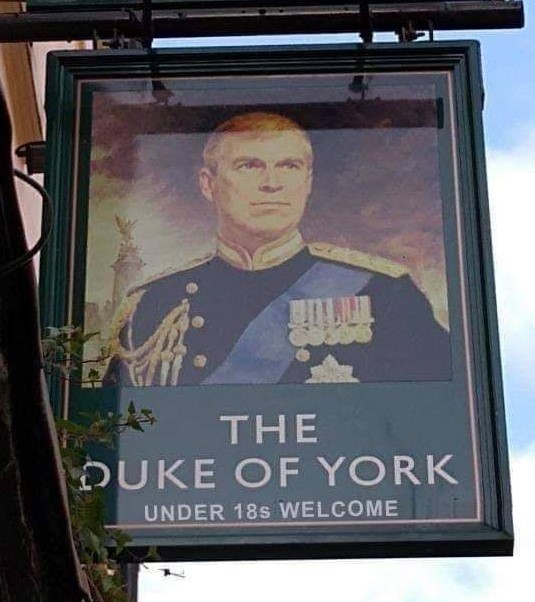
It all gives pause, doesn’t it. Still, things could be worse, as the image to the right reminded me as it slipped by on the river of social media this week. As the all the grim news this week seems to remind us. Hmm. Best go out and see if there is a tomato or two lurking out there waiting to be found under a lower leaf. As I do, remember there are always updates from Boak and Bailey mostly every Saturday, plus more with the weekly Beer Ladies Podcast, at the weekly OCBG Podcast on Tuesday and sometimes on a Friday posts at The Fizz as well. There is a monthly sort of round up at The Glass. There is more from the DaftAboutCraft podcast, too. And the Beervana podcast. And sign up for Katie’s weekly newsletterThe Gulp, too. And check out the Atlantic Canada Beer Blog‘s weekly roundup. Plus follow the venerable Full Pint podcast. And Fermentation Radio with Emma Inch. The AfroBeerChick podcast as well! And also look at Brewsround and Cabin Fever. And Ben has his own podcast, Beer and Badword – when he isn’t in hiatus as at the mo, more like timeout for rudeness! And remember BeerEdge, too, and The Moon Under Water.

*Unlike this very ungentlemanly comment in, you know, the comments: “Just reading about this swill gives me a headache. Ugh… When will the IPA trend end?” That’s a bit much.
**But these are my friends on the internets you speak of?!?! My internet friends?!?!??!” BTW good luck with the quality of the entries this year. I’d have more confidence if the word “prorated” was used correctly. And, yes, I meant to drive two **’s to the one footnote…
Your Final Thursday Beery News Notes For November 2020

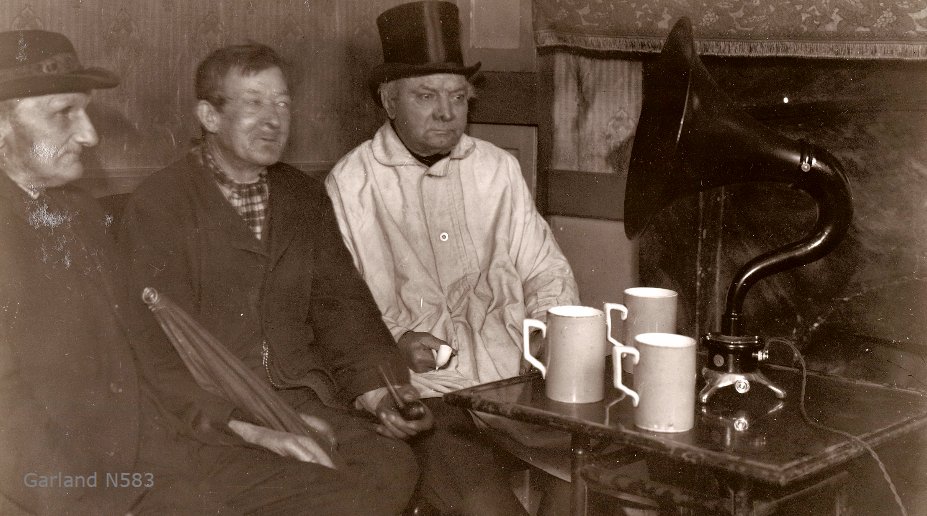
Time flies when you are having fun. I’ve likely started more than one of these posts with that quip since this all began, haven’t I. Probably should have my head examined. Except. I have. Twice this week. Drove a pleasant drive to an hour and a half to a sleepy rural district hospital for one sort of probing on Monday and another sort nearer by this week. Nothing serious.* Poking and prodding. The joys of middle age with the next stage coming into view. If I get a third test this week, perhaps I might be given a top hat like the gent above. The image from the West Sussex Archives triggered a lot of interesting chat about the nature of their outfits and that clay pipe but it’s the beer mugs that are the show stopper. Are they pints or quarts? I have one smaller version, a 1940’s green Wedgewood which sits proudly on a shelf.

Speaking of which, the distinctions and differences between a Czech dimpled mug and an English dimpled mug were excellently explored this week by Casket Beer:

Yes. The distinction between these two glasses matters based on history and tradition. Aside from the subtle differences in design, they come from different places and have been vessels for different styles of beer. Further, getting it right adds to our experience when we drink, which is important for breweries in today’s market.

Me, I prefer to get some things wrong and take pleasure in how well they work out – like having IPA in a weissebier glass. Or in a frozen one. Speaking of being one’s own master in small matters, Matthew L wrote about the state of his personal nation as another lockdown struck from a consumer’s point of view:

The final straw for me was the aforementioned Tier 3 announcement.  All pubs not serving a “substantial meal” were to close.  That kiboshed most of my typical weekend.  I contemplated walking to Spoons, or any of the nearby places that do food, sitting on my own with a pizza and 2 pints, then going home (how many “substantial meals” can anyone consume in one day).  Any fun I’d have just wasn’t worth the effort on top of everything else I’d have to do.

Also from one consumer’s point of view comes this post from Kirsty of Lady Sinks the Booze on the moments she has missed, including missing the train:

Since getting a promotion and a pay rise I have done what many working class people do and tried desperately to avoid working class people. Instead of the bus (albeit the wifi enabled fancy express bus with nightclub style lighting) I now get the train, and pay over a ton for a monthly season ticket. Of course since privatisation there are three different trains home and because I’m tight I will never pay extra to get a different company’s train if I miss mine. Hence I will spend £9 on beer, to save the £5.60 train fare. 

Vaccines soon. That’s what I’m thinking. Others too – rather than pretending that owning a brewery means you know more than public health officials, Kenya‘s Tusker is sharing the safety message:

Speaking on the campaign, EABL Head of Beer Marketing, Ann Joy Muhoro, said, “Tusker believes that Kenyans can enjoy their favourite drink with friends in a safe and responsible manner, in line with the set protocols. That is why through the “dundaing” campaign, we are encouraging our consumers to adhere to the set health protocols, as they enjoy their Tuskerat home or at a bar.”

Historically-wise, Bailey and Boak studied the introduction of the jukebox into the UK pub and shared their findings:

This turns out to be surprisingly easy to pin down thanks to the novelty value of these electronic music boxes which guaranteed them press coverage. We can say, with some certainty, that the first pub jukeboxes arrived in Britain in the late 1940s. Even before that date, though, the term ‘jukebox’ or ‘juke-box’ was familiar to British people through reportage from the US.

Best “political tweet with a side of beer” of the week. Second best “political tweet with a side of beer” of the week. Best tweek of the week:

Currently slightly obsessed with TGL-7764, the East German standard for beer. It‘s basically a beer style guideline with some brewing instructions. Only thing I struggle with is colour, though, it‘s provided in NFE and „Einheiten nach Brand“ and I have no idea what these are.

And then he followed up with a link to the TGL-7764. Neato. Similarly mucho neato, Stan wrote about the 107 words to describe hops but neither “twiggy” nor “lawnmower driven into a weedy ditch” appear so I am not sure I can give it all much credit. But that’s just me.

In China, new fangled hydrogen fueled trucks are being used to deliver beer:

The Asian subsidiary of beverage giant Anheuser-Busch InBev SA/NV, meanwhile, added four hydrogen fuel-cell trucks to its fleet, the company announced Sept. 28. It plans to deliver beer using the trucks, making China the first nation where the company has deployed such vehicles for beer shipments.

Martyn found an excellent  cartoon from 32 years ago, framing the thoughts from the time about low and no alcohol beer. I have to say I am of the same mind. It can lead to things, that sort of thing. Just this week I watched as two fully grown adults who have always appeared to have a complete set of marbles going on about the wonders of sparking water. Which they seem to be paying money for. Money they earn. With effort.

My thoughts, as always were, “historic beer style” is an oxymoron. “Style” is a modern international construct, a form to which brewers brew. As Ron has effectively proven, forms of beer in the past were brewed to brew house standards to meet local market expectations. Different names for similar things and similar names for different things were far too common.** Andreas Krennmair*** explored both the oxy and the moron in his post this week about Dampfbier which has that added excitement of relating to a variant of “steam” – a word so many want to own but never seem to understand:

The problem here is… if a beer style’s origin story sounds too good to be true, it probably is not actually rooted in history. Naive me would simply ask why other beers like Weißbier brewed with wheat malt wouldn’t be called the same name because supposedly, the yeast would ferment as vigorous. When we actually look at historic sources though, an entirely different picture is unveiled…

And lastly, Matty C. had an article published this week on a topic near and dear to my heart – the disutility of all the artsy fartsy craft beer cans:

Important stuff like beer style and ABV is too often – in my opinion – printed in a tiny font to make space for more artwork, or isn’t even featured on the front of a can at all. And while this isn’t an issue for most hardened beer fans, for those who exist outside of beer fandom’s bubble (and let’s be honest with ourselves here, that’s most people) it’s actually making it more difficult for people to differentiate between brands. The result of this? Consumers turning back to old, faithful brands – probably owned by big multinational corporations – and turning away from craft beer. 

The phrase I shared was “barfing gumball machine” for these things. Much other similarly thoughtful comment was shared.

Done! Soon – December!!! Meantime, don’t forget to read your weekly updates from Boak and Bailey mostly every Saturday, plus more at the OCBG Podcast on Tuesdays and sometimes on a Friday posts at The Fizz as well.  And sign up for Katie’s weekly newsletterThe Gulp, too. Plus the venerable Full Pint podcast. And Fermentation Radio with Emma Inch. There’s the AfroBeerChick  podcast as well! And have a look at Brewsround and Cabin Fever. And Ben has his own podcast, Beer and Badword. And remember BeerEdge, too. Go!

*Weirder and weirder I am. Seems I have a fully formed molar deep set up into my cheek bone. It is not doing anything. Just sitting there. Thanks for paying your taxes so that could be confirmed.
**I linked it up there! Why are you looking here, too?
***Pour le double!!!!

The Days May Grow Short When You Reach September, Frank, But There’s Still Time For Beery New Notes

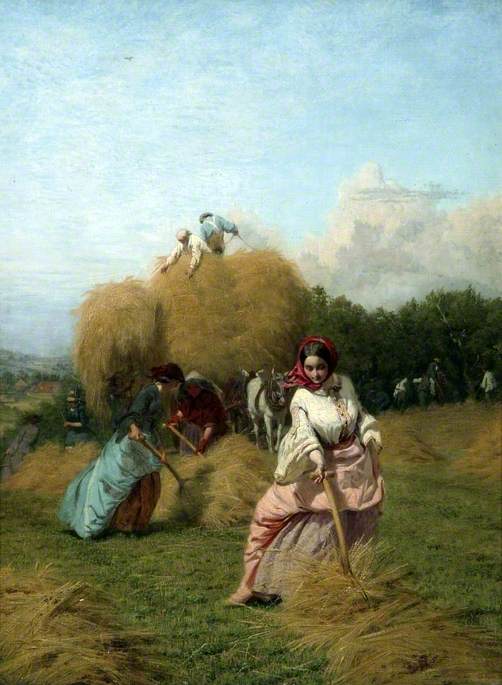
The summer has raced by. We only have a bit of lingering warmish things left. Then false summer comes, followed by the now doubly  questionable Indian summer, then lastly a few surprisingly cool rather than cold days. Harvest is coming in. Season of mellow fruitfullness and all that entails. For the ladies to the right it included rather nice dresses. I saw this image on the Twitter feed of The Georgian Lords but have no idea where it is from. I suppose it indicates all hands on a day where there were deck as it’s hardly The Gleaners of months later on in the cycle. But, perhaps surprisingly, not unlike The Harvesters of 1565.

First up and as an excellent introduction for an effort which seeks to separate from chaff from the grain, Stan wrote about an article about wine writers and junkets and other seductions. Like the author, the excellent Jamie Goode, he uses the word “satire” but, as is usually the case with satire, it is framed as such to make a point about a truth:

Good reading from an author who writes, “Personally, I’d rather drink beer than suffer these dull, dishonest, trick-about wines.” Not sure what alternative he’d suggest for dull, dishonest, tricked-about beer.

Is it the beer that is dishonest? In some cases, yes but not always.  Anyway, excellent thoughts as we seek out the good as well as… the Goode in what’s out there to read this week. A reasonable contrasty comparison is this article that Matt noticed by Alicia Kennedy which in part covered similar ground with less of a satirical veneer and more of a personal reflection:

When I was 31 and used my passport again, it was to go to Spain on a trip paid for by a winemaker. The next month, it was a two-week trip to Italy with family that completely drained my meager savings (until I moved to Puerto Rico, this was the longest I’d ever been out of New York), and the next, it was to Scotland for whisky tasting. From 2017 through my move in 2019, I traveled somewhere pretty much every month. These professional opportunities (some personal), about which the ethics were and are always dubious, suddenly began appearing in my inbox at just the right time: after my brother passed away at the end of 2016 and I needed not to wallow, not to continue having panic attacks. 

Staying at home, Martyn triggered a lot of arge and the barge when he himself wrote triggered about changes to the small brewery taxation laws of England and Wales.* It’s all the same to me in that I think reasonably healthy taxation of beer and other strong drinks is a perfectly normal thing to do but decide for yourself:

Much of the outrage seems to come from exaggerated claims of how many and how much brewers will be adversely affected by the proposed reforms, and allegations that the changes will mean large brewers gaining at the expense of small brewers, though the group that led the call for a change in SBR, the Small Brewers Duty Reform Coalition, includes a fair number of brewers making less than 5,000 hectolitres a year among its 60-plus members.

Plus, and I presume some brewers read this so I appreciate it’s not what everyone wants to hear, the idea that the outrage is “manufactured” is not necessarily an accusation. It’s a reality that the discourse is bent and pushed and pulled for any number of reasons and interests. This is one of them.

According to the NME, 99 metal bands have signed up for a ’99 Bottles Of Beer’ charity cover:

The idea for the cover was put together by The Boozehoundz, the moniker of Scour members Derek Engemann and John Jarvis alongside Robin Mazen of Gruesome. It sees 99 musicians all singing a single line of the song, amounting to a mammoth 23-minute song.

All of which is entirely excellent.

Speaking of music, the earlier Matt in my life on these information superhighways linked to an excellent remembrance of being a teen at raves in Preston 30 years ago:

There was an abundance of places to go out to in Preston in the early 90s. The country was in recession but everyone was partying hard. Friday was rave night at Lord Byrons and Saturday was indie/dance. After a grim experience at a club in town when I was 16, Saturday nights at Byrons became part of my life. Most Saturday nights from the beginning to the end of 1991 we were there, drinking cider and black, dancing to our favourite music and forging friendships that would continue for three decades and more.

Reads as true as a witness statement in a criminal proceeding.

Andreas K. wrote about Carinthian Steinbier this week, an Austrian beer that disappeared over 100 years ago, and in doing so gave us a great intro into the world of hot rocks in cauldrons:

Carinthian Steinbier is interesting because it survived for a fairly long time, until 1917 to be exact, despite repeated attempts to completely supplant it with what was called “kettle brewing”, i.e. brewing involving metal kettles. During other research, I recently stumbled upon a 1962 article that is probably the most detailed description of Carinthian Steinbier tradition that I’ve found so far.

Things You Gotta Try” on NPR’s Splendid Table included dipping Oreos in red wine. Oatmeal Walnut cookies in Imperial Stout anyone?

I have to admit, I have no interest in hard seltzer or hard soda or hard kombuchca and even little interest in most beer writing about cider but I do appreciate Beth’s argument that at least for the business of brewing, non-beer may be one of the ways forward:

They’re not the only San Diego brewery to fully embrace the seltzer craze. Mikkeller’s own line of hard seltzers—dubbed “Sally’s Seltzer” as a nod to one half of their iconic character duo Henry and Sally—launched in January 2020 in response to craft consumers’ changing demographic. “It’s a perfect change of pace for any type of drinker—and a cool opportunity for us to connect with a wide demographic,” explains founder/CEO Mikkel Borg Bjergsø. “It also fits with our desire to be inclusive and reach as many people as possible.”

Let’s be honest. They are end-times beverages, just the same coolers which have been with us for almost thirty years and just gak by another name. As relevant to an interest in good beer as the brand of bubble gum stuck under a pub’s table top. Mr. B. noted the latest abomination: “India pale hard seltzer.” FFS.

Finally, it was with great sadness that I heard the news about the death of Jack Curtin, dean of Philadelphia’s beer writing scene. He was a great supporter of this beer blog from day one and someone with whom I shared an interesting email relationship even if we never met. One of his greatest skills was ripping into his pal Lew Bryson, who I know will mark the loss deeply.

Enjoy the rest of your summer days. As you do, check in with Boak and Bailey most Saturdays, plus more at the OCBG Podcast on Tuesdays (where Jordan shits on church ladies and is dead wrong about coconut macaroons) and sometimes on a Friday posts at The Fizz as well.  And sign up for Katie’s weekly newsletter, too. Plus the venerable Full Pint podcast. And Fermentation Radio with Emma Inch. There’s the AfroBeerChick  podcast as well! And have a look at Brewsround‘s take on the beer writing of the week. Not to mention Cabin Fever. And Ben has finally gone all 2009 and joined in with his own podcast, Beer and Badword. And BeerEdge, too.


*Never sure when these things apply to the whole or the part.

The Two-Thirds Into Spring 2020 Edition Of Thursday Beery News Notes

I am having trouble with time. I thought it would drag but it’s racing for me. I thought it was maybe May 9th when I woke up. 11:45 am comes at an alarming pace each day. Things are opening up here. Tennis but no football. Playing catch as long as no one get tagged out at home. It’s sensible as we have done a good job locking the damn bug down… but then what. Society is temporarily reorganizing to maximize activity safely. I want to get a beer at a patio but so far it’s still my own patio in my own backyard. Just grateful that this isn’t happening in any November I’ve known.

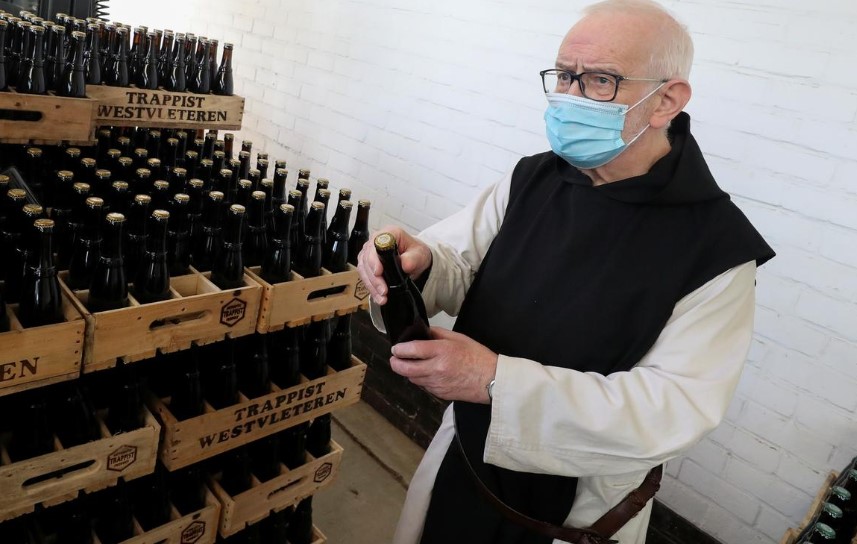
As excellently illustrated above by Yves Harman, Reuters reported that the Mons of the Saint-Sixtus abbey are up and at’em:

The Saint-Sixtus abbey, home to 19 monks, launched an online sale on Thursday evening of 6,000 crates, with pick-ups starting Friday. Exceptionally, customers can buy three crates. Normally it is just two. Customers can come as usual by car, but are told not to leave their vehicles while queuing until they pass a newly installed traffic light before the pick-up point. There, a lay worker in mask and gloves passes their 24-bottle crates through a small gap in a plastic screen. 

Good for them. I am not obsessive about the stuff but nice to see money flowing. Beer Ritz is opening, too, and Buckfast is back – buct Cookie wants more. You know, it’ll be interesting in the post-mortem if we learn that Covid-19 can actually be transmitted though small gaps in plastic screens.

Matthew has gotten his game going, too, as illustrated by this post on how beer bloggers are coping with Covid-19. I must be losing my touch as all the targets are not obvious to me (but interesting to see Tandyman disappointed in being left out):

Any kind of pub-type experience is at least ten weeks away at this point, so at best we’re not even halfway through this yet.  But if you, dear reader, think that you are suffering, imagine the travails of those most affected by this ordeal – the pub and beer bloggers of the UK.  As this particular blog is among those that are most well-regarded and connected, we at Seeing The Lizards have asked a select group of other bloggers on how they’re coping while cut off from their usual stimuli.  And, importantly, how much they’re drinking as a result.

Dr. J. J.-B. tweeted some excellent thoughts about her role in the overall construct of social justice advocacy within craft brewing and lessons learned from both Covid-19 and her carpentry skills:

Keynote speaking, workshops, and intensive on-site consulting are simply not tools that we can rely upon in a post-COVID world. And those tools had severe limitations that I am enthusiastically addressing over these weeks of physical distancing.

Good. She has shared hints of this before and I have to admit I am pleased. I have had at times a role in advocating for indigenous rights among legal circles as well as the importance of records related privacy rights and the public speaking role can seem to trigger a easy nod from the audience rather than a revivalist’s commitment. I am rooting for her. Fight!

Gary has posted a very good discussion on California Steam Beer which I like most of all because it aligns with my own thoughts on the matter while going into more detail:

The one area I do not necessarily agree with these authorities, contemporary as they are, is their assignment of steam beer as solely bottom-fermented. Clearly they state this, indeed Wahl & Henius state that lager yeast is a special type of bottom yeast. Kummerlander simply states that steam beer yeast is “a bottom-fermenting yeast”, but that’s clear enough. Buchner ditto. I find the area much less clear. To scientists and technical brewers after about 1900, classification was increasingly important, as of course today. Between 1850 and 1900 when steam beer was in ascendancy in California and still often made in rude conditions, e.g., without mechanical cooling of wort, such distinctions would have been less important.

It also serves as a good companion to Jeff’s post on Anchor Steam of a few weeks ago. It is settled. “Steam” was just useful techno-branding.

Speaking of early 1900s brewing, Ron posted an interesting piece on German WWI brewing constraints:

I’ve seen UK brewing records where ther’s (sic) the odd much stronger version brewed, which is then blended with weaker beers post-fermentation. The point being to get healthy yeast to be pitched into later brews. And that was when worts were in the 1020ºs, considerably higher than the 3º Plato (1012º) they had been forced down to in Germany.

And in more brewerio-historique news, Martyn has made a plea for today’s brewers to record what is happening during this pandemic for the future Rons out there:

…even though brewers have plenty and more to do just to try to survive right now, I have a request, as a historian: when this IS all over, or even before, if you have a moment, please, take time to record what you did, what you’re doing, to survive, what strategies you adopted, what changes you made, from organising home deliveries to turning your beer into hand-sanitizer. Because in ten, 20, 50 years’ time, people will be looking back at this and saying: “Wow – what must it have been like to have lived through that, to have tried to run a company, keep it going, while all that was going on?” And you can let them know.

Katie is taking sensible breaks.

For the double and as part of the Twitter discussion on the utility and limits of style as a construct, Ron has posted a challenge to identify which late 1930s British ales were branded at IPAs:

To emphasise the difficulty, nay, impossibility of splitting apart UK Pale Ale and IPA in the 20th century, I thought up a little game. It’s called spot the IPA. The table is of various beer brewed in 1938 and 1939. Some were called as Pale Ale and some were called IPA. Can you tell which is which? The IBU value is my calculation, based on the recipe. Got gospel, but at least a general indication of the bitterness level.

I am of the “style = branding” school of grump but many other well stated views are in the thread which may have started back here with Jeff (double) on May 10th… (who cites Ron which may make for a treble.)

And, if you squint, you can read Beth‘s contribution to Craft Beer & Brewing mag on the situation in Oakland. Excellent.

That’s it for now. Might have a couple of beer after work tomorrow. Now that the blood pressure is back down. Gotta watch out for bad habits in these times of stress. Keep writing and reading and keeping up with the chin uppitry. Check in with Boak and Bailey most Saturdays, plus more at the OCBG Podcast on Tuesdays and sometimes on a Friday posts at The Fizz as well. And sign up for Katie’s weekly newsletter, too. Plus the venerable Full Pint podcast. And Fermentation Radio with Emma Inch. There’s the AfroBeerChick  podcast as well! And have a look at Brewsround‘s take on the beer writing of the week. Not to mention Cabin Fever. Thanks for stopping by while not leaving the house.


Your Brief Beery Thursday News Notes For Boxing Day

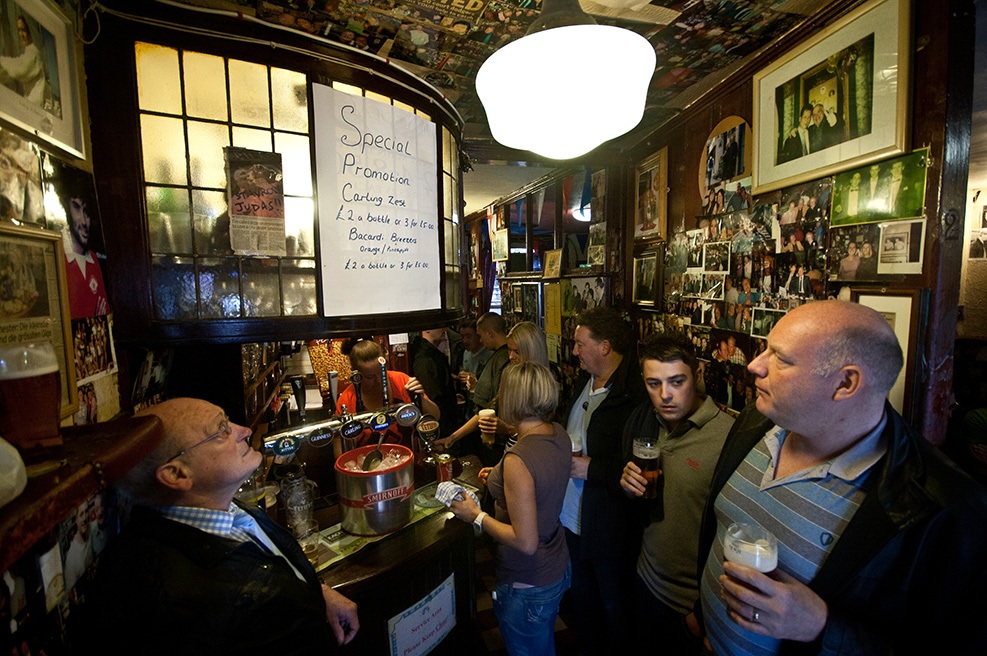
Like you, I am tired. End of year tired. I was tired on Christmas Eve and Christmas Day offers no rest. It feels like the end of a university term and tomorrow we travel. 2019 was a good and busy year – and next week, in my fifty-seventh year, I enter my seventh decade on the planet. I need a rest. So I will be brief this week if only to see if I can get in another nap. Ray of B+B perhaps captured my mood with the tweeted image to the right accompanied by the one word “England.”
I had no idea that Dec 23rd was celebrated as Tibb’s Eve in Newfoundland. Fabulous. And Cookie gave tips on how to survive the 25th by being sensible on the 24th.

Jeff at Beervana had a good bit on style evolution. He uses the example of an oat ale from twenty years ago. Somewhere, I have similar notes on a hot IPA from the late 1980s. I am not sure if these illustrate a continuity of evolution or the fact that evolution is a cycle of organic unplanned diversification of traits followed by crisis out of which only a few of the diversifications survive followed by more organic unplanned diversification of traits.

Alistair at Fuggled is reviewing the year in a number of posts, including on his pale beer experiences of 2019.

@oldmudgie noted something endtimsey in the Morning Advertiser‘s round up of the year 2019 in craft. Seems like most popular craft brands in the UK are part of big industrial brewers’ portfolios. Only four years ago, it was something just starting to get confusing. Where will be be in another four?

Gary did us all a big favour with finding and exploring a reference to Labatt IPA from 1867 as yet uncovered in the English discussion:

I searched carefully and could not locate an English version, I believe none was prepared. The author was A.C.P. R. (Phillipe) Landry, whose biography may be read in the Dictionary of Canadian Biography, here. He wrote the study when at Laval University in Quebec City. He was trained in chemistry and agronomy, and was later a noted federal politician, surviving to 1919. I’m not aware that his work has been previously cited in Canadian beer historiography. I have not read every single brewing history resource, so if anyone did raise Landry’s study, I’m happy to know of it.

What thrills me is how it fills a gap in my much suspected continuity of indigenous strong ale in eastern North America from the 1700s to today:

This creates a very useful stepping stone chronologically from NY state strong ales [edit: ie those brought in by the Loyalists] to Albany Ale (1830s) to Labatt (1860s) and Dominion White Label (1890s), to EP Taylor (1930s), to Bert Grant (1980s) and to today’s high test craft IPAs.

This is a different branch from the sequence that goes Albany Ale to Ballantine IPA to Sierra Nevada that Craig wrote about almost four years ago now. The idea that we can link the transmission of experience from generation to generation as part of general culture seems much more reasonable to me than anyone involved in first gen micro brewing having an “a-ha!” out of which the rest came.

And there was a hot blast of unhappiness aimed at the Cicerone server training program, much of which was unhappier than I thought warranted but much of which was also based on some obvious limitations. This is at the heart of objections: “…dropping coin on some private co. that clearly hoards prestige on specious grounds.” Plenty of people responded with the sort of authorized Party Central Communications Committee invocation of craft’s inherent right to silence we are sued to… or, stunningly, rooted for rote memorization as a intellectual pursuit. These, of course, are some of the most depressing things about good beer** and something I attribute to money or rather a lack of money in the complainant’s accounts. One does not bite the hand that feeds you.

My take is that it is always funny when folk compare it to law school* (as if the standards and candidates are equivalent) when the course and others like it isn’t formal education and not a source of new ideas like an academic process. It’s a social media propagated, non-accredited, proprietary, non-peer reviewed program that (given the intellectual property controls) sits outside of the marketplace of ideas. But it is a reasonably affordable and accessible certification for educating front of house staff to a proper standard. Which is good enough. And the basis for a good next step. Best new observation? Robyn’s:

Gonna give a slightly spicy take and add that it’s an industry cert that is both prohibitively expensive and made as a necessity for women and other marginalized folks to get in order to be taken with 1/10th of the seriousness a straight white male homebrewer gets by default.

Me? Until I see the published archive including the thesis of every graduate, I’m not going to look to the program for too many interesting new ideas. But whenever someone serves me a good beer with a reasonably knowledgeable comment, I welcome the skill and assume they are a graduate with some level in their back pocket.

Actually seriously, New Belgium’s owner-employees voted to sell to Kirin despite, as noted two weeks ago, the problems with a profitable authoritarian military branch in Myanmar being in the mix. As one report noted:

Activists are hoping the publicity surrounding the trial will increase the pressure on international businesses like Kirin to sever ties with the Myanmar military. “The profits are being pumped back into the military, helping to fund their operations,” said Mark Farmaner, director of the Burma Campaign UK, which has published a “Dirty List” of about 80 companies linked to the Myanmar military. “Kirin are literally helping to fund genocide.”

Remember: it’s about money. Strike another brewery off my list of interests.

Well, that was more than I intended. As we head toward a new year, don’t forget to check in with Boak and Bailey’s on Saturdays, at the OCBG Podcast on Tuesdays and sometimes a mid-week post of notes from The Fizz as well. And sign up for Katie’s weekly newsletter, too.  I’m off to sing some Boxing Day carols and eat leftovers. Happy New Year to you all!

*Yet never oddly engineering of medicine…
**not just my view

Your “Is It Now Yule?” Edition Of The Beery New Update For A Thursday

December. The month that is three weeks long followed by two weeks of blur before real winter sets in. Winding up the year’s work is the main thing on my plate. From 2006 to 2015 this would have been the culmination of the annual Yuletide Kwanzaa, Hogmanay, Christmas and Hanukkah photo contest but I have long come to my senses. You can see the annual winners here. That is the 2012 Champion up there by Robert Gale of Wales. As I wrote then, click on the photo so you can see the full scale and explore all the detail for yourself. Robert explained in his email where the photo was taken:

Located in Manchester, England, the Circus Tavern apparently has the smallest bar in Europe. It’s also located in the hallway of the pub near the entrance which means it very easily gets crowded.

Well, did anything happen this week in beerland? OK, fine: the big news in craft was not just a buyout this week but that a minnow was seemingly swallowing a whale. The billion dollar baby that is Ballast Point was sold seemingly to a mere brewpub. It is not quite what it appears as the purchase was made with a bucket of moolah earned from a sale four years ago in the hospitality industry along with input from other friendly and wealthy investors. Within minutes of the announcement, Josh Noel on the scene in Chicago noted the reasons why the sale was made from the view of Constellation brands:

… on maximizing growth for our high-performing import portfolio and upcoming new product introductions, including Corona Hard Seltzer, scheduled to launch this spring.” That’s right. It all comes back to hard seltzer.

Excellent. Hard seltzer. The future is now. Anyway, Noel’s story in Wednesday’s edition of the Chicago Tribune will be your best starting point for the background. Me, I suspect that (even if not Plan A but at the fallback Plan C level of the original Ballast Point purchase) there was the opportunity for significant tax write offs down the road.

Elsewhere, I declared that one particular story was one of the best bits of beer writing I’ve read this year and I meant it. Just look at this:

The ditching of big-brand lagers was similarly controversial and Ashley’s attitude reveals the gulf between traditional attitudes and those of the modernisers. There is still lager on offer but it’s from Moor and Lost & Grounded. Though you might think these would appeal to Bristolian drinkers, there’s a weird loyalty to international brands brewed under licence, and these sometimes hazy, fruity, characterful beers bear little practical resemblance to Foster’s or Stella, despite the shared family tree.

An actual investigative research and writing piece from Boak and Bailey that takes a very immediate specific example of the life of a pub in our times and makes it a universal question cut with a strong note of sympathy: “it’s drinkers who prefer a more traditional, unpretentious atmosphere who have to schlep or catch the bus.” Fabulous.

Others have commented but I was – perhaps oddly – reminded of this when I read Matt Curtis and his reasoned argument for more UK breweries joining SIBA to promote independence. While he is correcting in stating this:

This still means that at least 86% of beer sold within the UK is produced by the multinationals. As such I am eager to see the next step in the discussion of independence, and some real progress in terms of presenting this argument to a greater number of industry members and bringing them together to form a unified front against increasingly tough competition and unfair access to established routes to market… 

I am mindful of the beer drinker of modest means seeking their refuge from craft. Is that not as much a cry for independence? For autonomy from the gaping maw of gentrification into which craft beer is poured?

Bad Guinness pours. All day. All bad.

I am never sure of anything that is based on the concept of “wine drinkers” and “beer drinkers” as being subsets of the population but I found this bit of discussion from Danielle Bekker of Good Living Brewing failure interesting. She asks whether it wouldn’t be better to describe beer according to flavour profiles as opposed to more familiar methods. Being a hearty believer in the uselessness of style as a construct I like the idea but then hit a wall with the notion of a beer that “will appeal to wine drinkers as well as women.

Sadly and as reported on this week’s edition of the OCBG, Waterloo Brewing Ltd. from Ontario says it has lost $2.1 million to a cyber scam:

The Ontario brewery says the incident occurred in early November and involved the impersonation of a creditor employee and fraudulent wire transfer requests. Waterloo Brewing says it initiated an analysis of all other transaction activity across all of its bank accounts, as well as a review of its internal systems and controls that included its computer networks, after becoming aware of the incident this week.

Martyn made a confession

I know there are beer writers who eschew any involvement with corporate freebies, but my argument has always been that I’m very happy to accept free stuff, from beer to trips abroad, when it enables me to put information in front of my readers that I would not be otherwise able to give them. Certainly I do not believe I have ever held the boot back because someone had dropped off a case of beer. 

At the risk of someone searching the blog’s archives, I don’t think this is ever the key points. My concerns are always two-fold: (i) you are telling the story that the brewery provides for you, even if you do put the boot in and (ii) you are not telling the story of the brewery which does not pay for the trip. So they all go to Asheville and then they all go to Carlsberg. Bo. Ring. There is a third point. You do not go to these junkets alone. Even if “it enables me to put information in front of my readers that I would not be otherwise able to give them,” well,  the same information will be put in front of same readers by the other members of the same traveling hoard sent the airplane tickets, the hotel room reservations and the buffet passes. There is no special story attached to a junket. Go find a unique story instead.

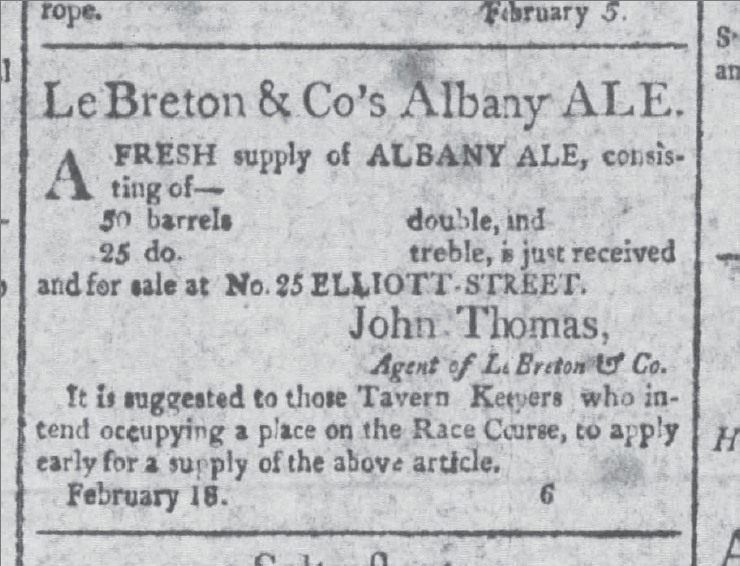
Two items from the co-authors. First, Craig has been digging more and found two very early advertisements for Albany Ale in the Charleston Daily Courier of 1808. Which not only means triple was being brewed in 1808 but it was being shipped to Charleston. Which is cool. I have seen “treble” spruce beer in New York City in 1784 but never a pale ale at that weight with that name.

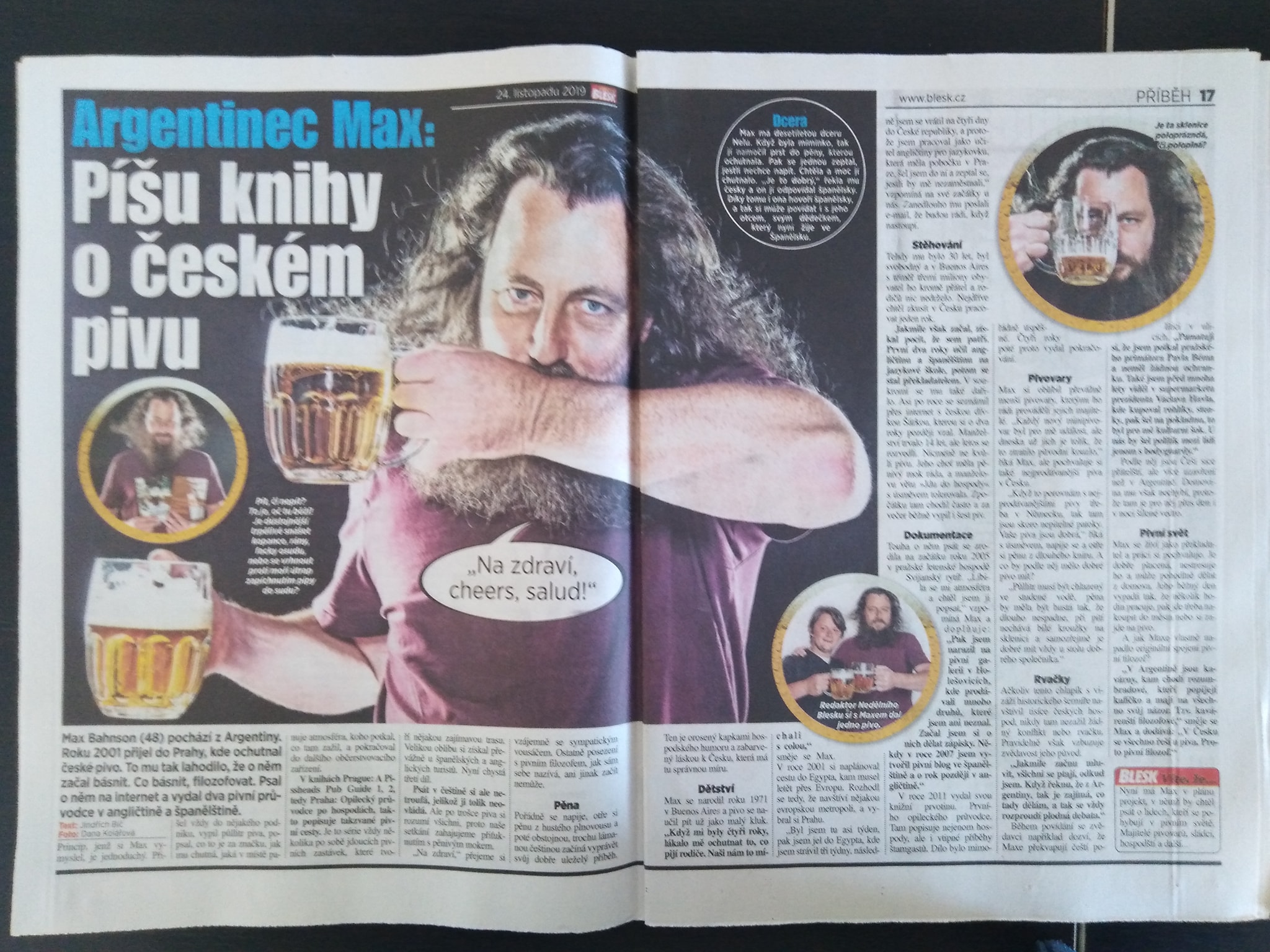
Second, Max. Max was the centerfold cheesecake pin up in a Czech newspaper this week. A very hairy centerfold. Wonderful.

The DC Beer 2019 year in review post is up.

That is it. I am on a train as you read this over your morning coffee. I’ll be back tomorrow. In the meantime,  there’s more news at Boak and Bailey’s on Saturday, at the OCBG Podcast on Tuesdays and sometimes a mid-week post of notes from The Fizz as well. And look for Katie’s weekly newsletter, too.

The “I’m Just Back From Toronto And Boy Are My Arms Tired” Edition Of Thursday Beer News

A pubby sort of place

It was a short visit. Twenty-two hours. Nine of which were used up at a conference. A very interesting one. Ten of which were the worst hotel stay that I have had in a very good hotel in my entire life.* And three of which I hung out with Jordan. [You may place these experience in their proper order in your mind as you see fit.]   We wandered and ended up down by the docks. The nice docks.** We talked about craft fibs, money, and the seeming draining away of fun in good beer culture.*** And then we asked the waiter if he liked his job, because he seemed to.  He did. A lot. When the waiter left, we asked why any place would make a beer that tasted like thin lemonade with a soapy hint of dish liquid. Jordan made me drink it. I made a funny face when I had the first sip of that one. Then made another sort of face when I gulped the rest of the sampler glass. I am sure it sells. What do I know?

Two bits of news related to getting things right. Getting the truth out. First, Maureen Ogle has finished her revisions to Ambitious Brew and is about to press the publish button. [Editorial note: she did… buy it now!]**** Fabulous.

And Martyn has written yet another post. It’s like 2009 over there at his blog. Active. So odd to see an active blog. Anyway, it is excellent set of complaints about how horrible the beer style information is in the Good Beer Guide 2020:

It’s not as if all the information on beer styles that the GBG gets wrong isn’t out there in easily discoverable forms: there are now a considerable number of books, blogs, magazine articles and so on giving the true facts about how the beer styles we know today developed. And yet the 2020 GBG still prints utter nonsense…

Excellent. And then there were comments this week about money. Money is like truth. Stan wrote this in passing in his Monday beer news update and it struck me as a particularly obvious point that I had not seen made yet:

The price question is a constant in beer circles (and pops up pretty much every day). But it is one that brewers must continue to consider if they are serious about inclusivity.

I was a bit less impressed with the opposite argument seeming to be be made, that expense and exclusivity were not a barrier to inclusion. But then that was put in a bit of perspective when I read someone arguing that if people really cared about working in craft beer that they should not be too concerned with being paid. These are some of the reasons craft beer culture sometimes seems like an alt-reality with whole necessary pieces simply missing. Then BeeryEd wrote this and the whole thing seemed to right itself again as fresh air returned:

Trust me. As someone that’s been in the game a lil while and spent waaaay too many hours on spreadsheets in regards to costings etc. I guarantee you there is enough to pay people fairly. I promise you. Hence why we have a bunch of brewers that do and are fine….

The comments that flowed from his string of tweets were instructive. And then they just got mean. Because craft beer is full of great people. And thin lemonade with a soapy hint of dish liquid.

Speaking of inclusion, I’ve learned there is a frequently updated list of “Black Owned Craft Brands and Other Diversed Ownership” drink makers map! And because I love maps almost as much as inclusion I am linking to it right => here. Add more data. The world needs more data.

Care of a Katie tweet, I found this fabulous review of the food and drink at the Hackney Church Brew Company by Jay Rayner in The Guardian which starts thusly:

Down a shadowed road an old man shambles. He’s wearing a secondhand pinstripe jacket and sensible shoes with cushioned soles. Pools of buttercup-yellow light spread from reconditioned railway arches, illuminating the uncreased faces of the Friday-night crew outside, bottles of the finest local microbrew in hand. Music booms. There’s a cavernous bar gilded in red neon with the legend Night Tales. Broad-shouldered bouncers stand sentry, thumbing their phones. The old man shuffles past, aware it’s not for him. I can’t help but feel a little sorry for him. This is because the old man is me.

I resemble that remark myself. And I even went to yet another bar this week. I never go to bars but last Friday for one at the Kingston Brewing Company after work. It’s like I never had children. And what a selection! I had a Vim & Vigor which I much prefer to think of as Vim & Vigour.
Fergie Jenkins beer! He once almost slapped me to the ground in 2006. At Cooperstown, NY. Hall of Fame Game crowd. Walking towards the game he was barreling from where he had been signing books to the field where he was to be introduced before the game between the Reds and the Pirates. He was 64. Felt like I was hit by a side of beef. Solid. Took one of my best photos ever – of a ball hit into the left field crowd just near me.

And finally, Lew has been recalling the first time he experienced a regular undergrad habit of mine:

I stopped at the border liquor store before returning home to the dry county of Hardin. The cashier weighed my empty milk jug, I filled it with draft Schlitz, and she weighed it again—the store sold beer by the pound.***** When I got home, I opened the jug and started drinking. I put away the groceries, and decided I needed a shower. On a whim, I took the beer along. It wasn’t long till I was soaped up, hot water rinsing off the day. I grabbed the jug, and tilted it back. Hot water pounding on my back, cold beer running down my throat. Wow! I’d found a whole new experience. The shower beer!

There. I need a rest. My fingers are all tipped with blisters from all this writing. No worries. I have time to heal. Boak and Bailey will be on duty for the beer news on Saturday and Stan will be covering on Monday. The OCBG Podcast is available most Tuesdays in plenty of time for happy hour at the mess, too. See ya!

*I checked my diaries all the way back just to make sure.
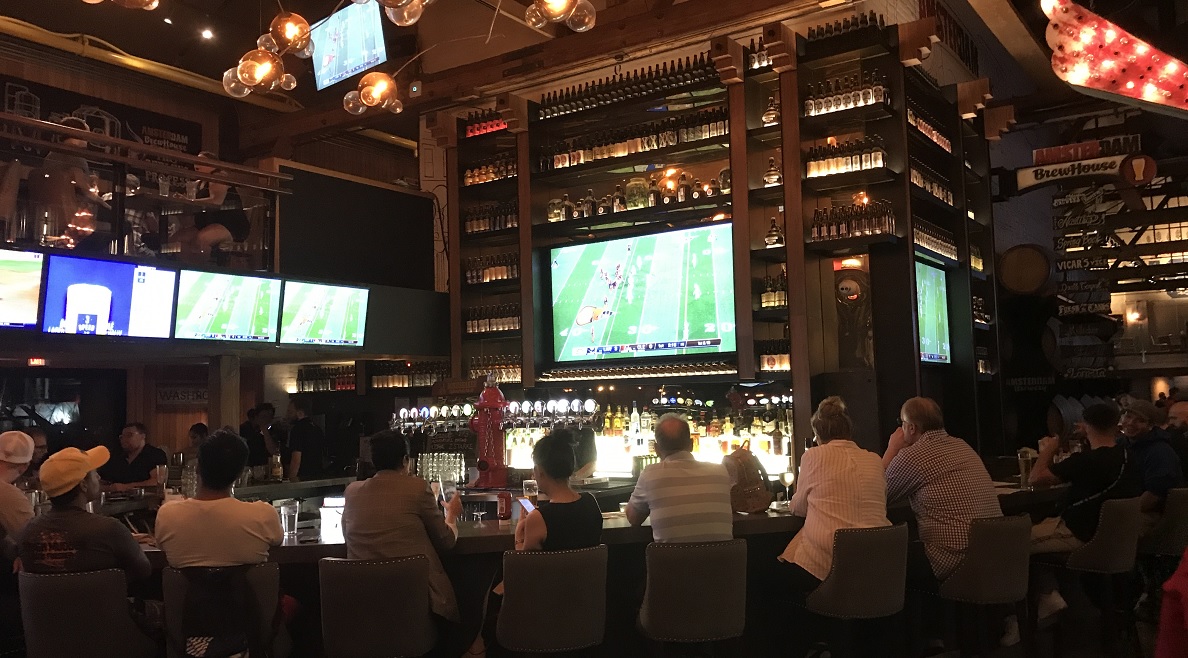
**Amsterdam’s Brewhouse on the Lake, 245 Queens Quay West. Everyone has a screen, watches a screen, is a screen.
***I blame all the off-flavour seminars teaching folk how much good beer is bad or at least flawed. Yet teaching people that soapy lemonade is OK. Haven’t got to the soapy lemonade bit yet? Wait for it.
****But please also seek out the actual vibrant story of colonial brewing in British North America from the 1620s and then its continuation in the USA before the Germans brought over lager in around 1840. Start here.
*****Beer by the pound is an even more interesting story that needs to be researched and reported upon.


The Week We All Decided Good Beer Is Anti-Fascist Edition Of The Thursday Beer News

Ah, the last few days of summer… as long as we were are in the northern hemisphere. The neighborhood is literally humming with sound of critters, birds and bugs out gathering in the last of their winter’s stores. It’s actually quite the thing. Consider for a moment Keats’s Ode to Autumn, would you? My grapes are in that place between perfect ripeness and being mobbed by robins and blue jays. The chipmunks are invited. Few others are.

First up, Jordan and Robin interviewed the principals of the kveik roadshow driving through central Canada this week. Note: Lars says “kwehk” at the 8:10 mark of the audio but everyone else is saying “kvehk” so I really need this cleared up. I had to give up my own ticket to the event but it was put to good use as the photo above shows.

Speaking of beery gatherings, an interesting comment was made about the reaction to beers at a festival by one Florida brewer:

I make beer, have had this happen countless times, and completely disagree. Not everyone is going to like everything. And in a festival setting, etiquette often goes right out the window. I’d suggest removing ego from the equation, but then we wouldn’t have 7,500 breweries.

My thought was it was important to leave buckets and spittoons at fests as the dumping of the unwanted beer is always so common, either by the frenzied ticker or the simply disappointed.

The Chicago Tribune has reported on the hugely positively social media phenomenon #IAmCraftBeer that Dr. J thought to use to redirect a discussion that began with a very ugly start:

Chalonda White checked her phone Monday afternoon and saw a strange and jarring email. It was just three sentences and 35 words, sent to the address on her Afro Beer Chick website, where White, a Rogers Park resident, has blogged about her love of craft beer since 2017. It came from a name she’d never heard of — she suspects it was a pseudonym — laced with hate, misogyny and racism, including three uses of the N-word.

I might have just gone straight to “hate mail” and “Nazi” myself having seen Chalonda’s reaction on Twitter soon after she posted it.  It was certainly good to see the hundred of positive reactions but also an important reminder that fascists find dirty corners to crawl into in every aspect of life. Good to make them uncomfortable anyway we can.

The Pursuit of Abbeyness has shared a welcome blog post on national parks in the British Peak District.

Given this longstanding industrial heritage, it is no surprise to find brewing prevalent in and around the Peaks. Burton-upon-Trent sits just 25km to the south, after all. Within the boundaries of the national park itself lie Thornbridge, Peak Ales, Taddington, Intrepid, Bradfield, Flash and the Wincle Beer Co. On its fringes there are a dozen or so more, including Abbeydale, Buxton and Torrside. And that is before we get to the thriving beer culture of Sheffield proper, or indeed Manchester.

Did someone say England? The BBC Archives shared video of the 1948 English hop harvest last Friday.
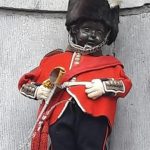
Furthermore and within that same decade, this series of photos commemorating the 75th anniversary of the liberation of Brussels when British troops arrived on the outskirts of the city in the evening of September 3, 1944 includes the image of Manneken Pis dressed as one of the liberating soldiers in full dress uniform.

The New Yorker magazine had an interesting article by Troy Patterson this week on natural wines which have always struck me as a partner to some of beer’s crueler styles. This snippet does not deter me from that suggestion:

One section featured the variety of skin-contact wines known as orange wines. One of these, from Friuli, glowed tropically in my candlelit glass. The list explained orange wine as a white wine that is made like a red; the skins and seeds, left to macerate in the juice for a while, impart color and texture. There was honey in the aroma. An intense whirligig of tannins metallically attacked my mouth and, on the finish, there was an astringent sizzle, with undertones of acid reflux. Tasting notes described this as a “long persistence.” I found it to be a test of stamina. While I waited for the wine’s acrid smack to wear off, I meditated on how this chic but peculiar elixir reflected the terroir of the urban social landscape.

Speaking of the cruelties of craft, Sophie Atherton has written in the UK’s Morning Advertiser about how craft has just gone too far:

What I see now is a hell of a lot of style over substance, with a glut of shoddy beers that appear to get away with it because they are on trend. The flip side is that more traditional beer is neglected, both in availability and keeping standards- which threatens to return us to the era of people viewing beer as a poor-quality drink.

This sort of succinct observation is one that you do not see made too often, given is it saying something bad in relation to brewing. Quite pleased to see it pop up in a major industry  periodical.

This weeks winner of le dubbel extraordinaire is Jordan who also posted this week on his blog about his family’s very small hop farm or rather his failure to tend to his family’s very small hop farm:

The Centennial hops on Mom’s property in Kingston have been growing all summer. Some other year, I will go and watch them train up the trellis and coir, straining sunward at midday in their ascent. This year, it has been hard to find time, but it becomes obvious that for a good vinedresser, time is something to be made. You cannot learn physical skills by reading books. Even Stan Hieronymous’s excellent book on hops does not really tell you how you are to harvest them: 15 bines that do not quite express their full height and cluster together decoratively but not optimally for growth. 15 bines that now in the late summer take on the allium tinge of garlic where they have been sunburnt. 15 bines that I am a week late for.

On that story of the summer of 2019, Lew Bryson has founds some more excellent facts on White Claw: (i) one in three people will buy it again, (ii) seltzers are brewed, not formulated, (iii) nearly every liquor store and supermarket carries White Claw, only 20 percent of bars and restaurants are currently selling it, and (iv) he underestimated the tie-in with the keto diets. I still don’t think I am going to buy it. But my kids might. And, really, who cares?

There. Dusk at 7 pm now. Time’s a tickin’!  I expect Boak and Bailey will have more news on Saturday and Stan should be there on Monday. The OCBG Podcast is a reliable break at work on Tuesdays, too. Except this week when it was on Wednesday. Go figure.

I Get It. It’s Lambeth Ale. But Why Is It “Lambeth” Ale?

For a while now I have been noodling around 1600s English brewing history and have a bunch of posts that you can generally find here with a few other topics from that century woven in. The important things to understand are: (i) there were distinct forms of beer easily recognizable by the consumer, (ii) they mainly were defined by their geographical source and (iii) they are often but not solely described according to that location. So, brewing elements like a local water table, the local produce including husbanded post-landrace barley malts and traditional local malt bill blends combined to create reliable and recognizable categories of beer called Northdown/Margate, Hull or Derby. John Locke’s letter of 1679 gives a good example of contemporary understanding. Poor Robin’s Almanac in 1696 sets a similar marketplace of diverse offerings under the definition of Cock-Ale:

But by your leave Mr. Poet, notwithstanding the large commendations you give of the juice of barley, yet if compar’d with Canary, they are no more than a mole-hill to a mountain; whether it be cock ale, China ale, rasbury ale, sage ale, scurvy-grass ale, horsereddish ale, Lambeth ale, Hull ale, Darby ale, North-down ale, double ale, or small ale; March beer, nor mum, though made at St. Catharines, put them all together, are not to be compared.

However, the penny has yet to drop in relation to one prominent beer in that system. Lambeth Ale.  Don’t get me wrong. It is pretty clear what it was:  a lower alcohol bottled pale ale that was highly carbonated. Consider this line from the 1712 play The Successful Pyrate at Act ii., scene 1:

Ha, ha, ha, faith she is pert and small like Lambeth ale.*

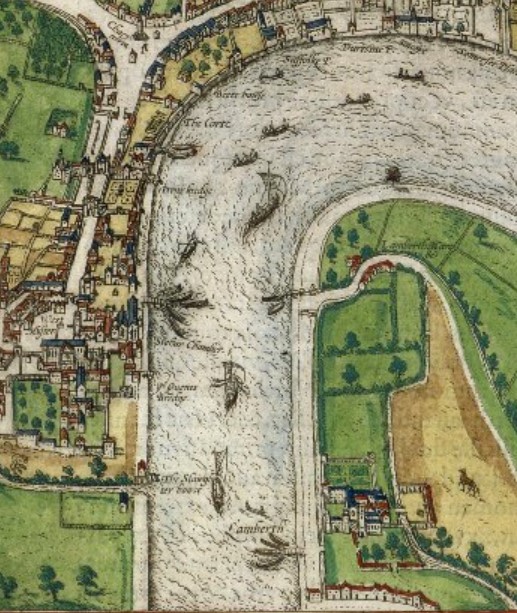
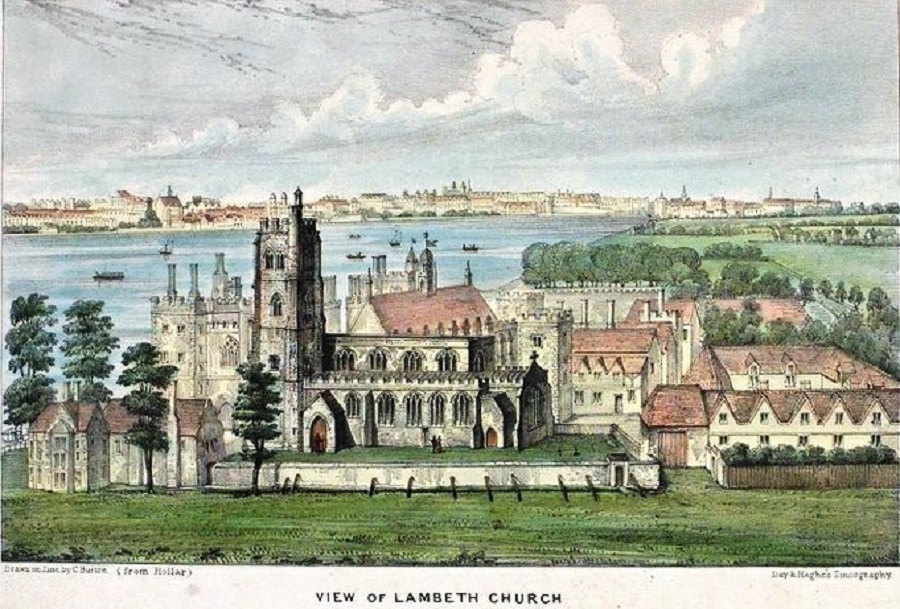
But why was it called “Lambeth” after a shoreline district along London’s southern bank?  One would think this is an easy question to answer but if we look at the facts on the ground at the time it is not one so simple to answer. For today’s purposes, let’s even call this part 1… or perhaps part 7… in my thought process.  A winnowing. A ruling out perhaps. See, what bothers me the most about it is how I can identify the who and why and what about 1600s Derby or Hull or Margate but there is a bit of an issue when it comes to mid-1600s Lambeth. There ain’t much there on the ground.

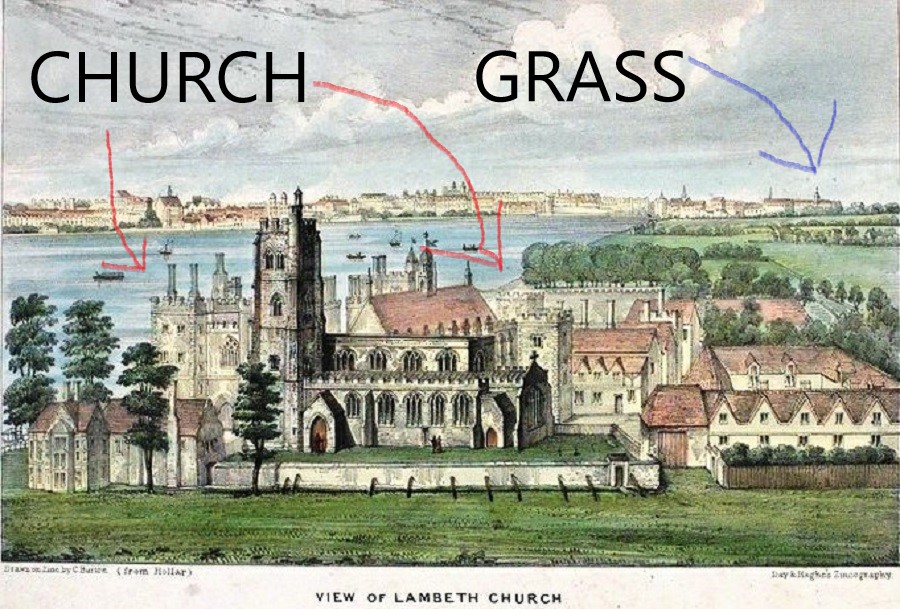
Let me illustrate my conundrum. If you look up at the image above, which I am informed is a 1670 illustration of the sights at Lambeth, you will note two things: a big church complex and a lot of grass. Here is a similar version dated 1685. I have further illustrated the concept here for clarity. Lambeth Palace is and was the London residence of the Archbishop of Canterbury, head of the Church of England.  It sits in what is known as – and what was at the time in question – Lambeth Marsh. Grass.

To the right is a bit of a map from 1574 which shows the scene. Lambeth faces Westminster across the Thames, combining to embody the authority of the church and state. But to the south there are a few buildings, you note. Yes. And it appears Lambeth as a zone was narrow and long with northern and southern districts. So Lambeth Ale could be from the south of the Palace and the Marsh. It is, after all, a parish. Could be. But the south seems to really only develop after the building of Westminster Bridge in the very middle of the mid-1700s.  And, as I noted a couple of years ago, when Samuel Pepys was downing lashes of Lambeth Ale, he was traveling over by boat when he was not finding it in town proper. Lambeth was a place, apparently, where one could do all sorts of things once the boat got you across. Here is Sammy P from his diary on the 23rd of July 1664:

…and away to Westminster Hall, and there sight of Mrs Lane, and plotted with her to go over to the old house in Lambeth Marsh, and there eat and drank, and had my pleasure with her twice, she being the strangest woman in talk of love to her husband sometimes, and sometimes again she do not care for him, and yet willing enough to allow me a liberty of doing what I would with her. So spending 5s or 6s upon her, I could do what I would, and after an hours stay and more, back again and set her ashore again.

Heavens. So, was it a pleasure ground with its own ale like the later Vauxhall? There is one problem I find with that. If we remember that Mr. Pepys is mentioning Lambeth Ale in the first half of the 1660s, we also find that there was a certain local someone who was not a big fan of brewing prior to that date. The Archbishop himself. Or rather an archbishop… as they come and they go. The one I am talking about is one who went in rather dramatic fashion: William Laud.

William Laud was Archbishop of Canterbury from 1633 to either 1640 when he was arrested in the English Civil War or 1645 when he had his head cut off.** In a 1958 article on 1630s English politics,*** there is a explanation of the word Laudian which indicates High Church Anglican and sits in opposition to Puritan reforming rabble. The illustration of the distinction is the Puritan distaste for churchales – local church fundraising fetes of a drunken happy sort. Laud took a political stance in support of this but mainly as a means to exercise his power early in his term of office, to fund his church repair project and to tick off the growing Puritan element within the church. He is not considered to have been all that pro-beer at the time.

He continues to not be a big booster of brewing. Writing to one Bishop Bridgeman, from Lambeth on 29th October, 1638, Laud enclosed a letter he had written to the Dean of the Cathedral of Chester “concerning your quadrangle or Abbey-court, & the Brewhouse, & Maulthouse there.” He stated that they had better do as he instructed or “I promise you they shall smart for it“! Here is some of the enclosed letter: 

After my hearty commend: &c. I am informed that in your Quadrangle, or Abbey-Court at Chester… the BP’s House takes up one side of the Quadrangle; and that another side hath in it the Dean’s house and some Buildings for singing men; that the third side hath in it one Prebend’s house only, and the rest is turned to a Malt house; and that ye fourth side (where yo Grammar School stood) is turned to a common Brewhouse, & was lett into lives by yo” unworthy Predecessors. This Malt house and Brew house, but the Brew house especially, must needs, by noise and smoke and filth, infinitely annoy both my Lo: ye BPs house and your owne… hitherto this concernes your Predecessors, and not your selves. That won followes will appeare to be your owne fault… Now I heare ye Brewer’s wife is dead, and you have given mee cause to feare that you will fill up yo Lease againe with another life. And then there will be noe end of this mischiefe…  And in all this I require your Obedience in his Ma’yes Name, as you will answer it at your p’ill. So I leave you &c.” 

In early 1640, Laud wrote another letter. This time to the Vice-Chancellor of Oxford:

I received a Letter this Week from Oxford, from an ordinary plain man, but a good Scholar, and very honest. And it troubles me: more than any Letter I have received many a day. “Tis true, I have heard of late from fome Men of Quality here above, that the Univerfity was Relapfing into a Drinking Humour, to its great Dishonour. But, I confess, I believed it not, because I had no Intimation of it from you. But this Letter comes from a Man that can have no Ends but Honesty, and the good of that Place. And because you shall fee what he writes, I fend you here a Copy of his Letter, and do earnestly beg of you, That you will forthwith set yourself to punish all haunting of Taverns and Ale-Houfes with all the strictness that may be, that the University, now advancing in Learning, may not sink in Manners, which will shame and destroy all.

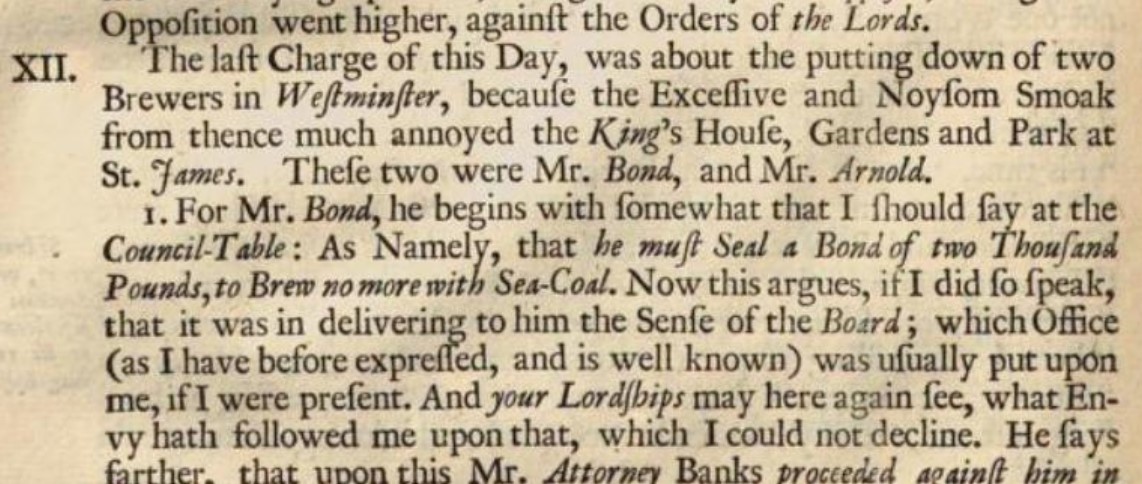
After his arrest in December 1640, Laud faced a number of charges including one that he caused the shutting and pulling down of a number of brew-houses across the river in Westminster because their smoke disturbed his enjoyment of life at Lambeth. Just there to the right under the thumbnail is the charge as published in a 1695 book, The History of the Troubles and Tryal of the Most Reverend Father in God and Blessed Martyr William Laud, Lord Archbishop of Canterbury. There are two witness supporting the charge, Mr. Bond and Mr. Arnold of the second of which the following is said by Laud in his response to the charge:

2. The other Witness is Mr. Arnold ; who told as long a Tale as this, to as little purpose. He speaks of three Brew-Houfes in Westminfter, all to be put down, or not brew with Sea-Coal; That Secretary Windebanck gave the Order. Thus far it concerns not me. He added, that I told him they burnt Sea-Coal : I faid indeed, I was informed they did; and that I hope was no Offence. He fays, that upon Sir John Banks his new Information, four Lords were appointed to view the Brew-Houfes, and what they burnt. But I was none of the four, nor did I make any Report, for or againft. He fays, Mr. Attorney Banks came one day over to him, and told him that his House annoyed Lambeth, and that I fent him over. The Truth is this; Mr. Attorney came one day over to Dine with me at Lambeth, and walking in the Garden before Dinner, we were very fufficiently annoyed from a Brew-House; the Wind bringing over fo much Smoak, as made us leave the place. Upon this Mr. Attorney asked me, why I would not fhew my felf more against those Brew-Houses, being more annoyed by them than any other ? I replyed, I would never be a means to undo any Man, or put him from his Trade, to free my felf from Smoak. And this Witness doth after confess, that I faid the fame words to himself. Mr. Attorney at our parting faid, he would call in at the Brew-House: I left him to do as he pleased, but fent him not : And I humbly defire Mr. Attorney may be Examined of the Truth of this.

So. What to make of all this. First, it is very unlikely that there was a brewery at Lambeth Palace that was putting the stuff out as an estate ale. Laud did not like brewing and malting on church property and his found the resulting smoke annoying and after Laud it was turned into a prison. Tauntingly to the contrary is one small reference I have found related to London’s Training College of Domestic Science:

The College was founded in 1893 by the National Society in the disused Brew House of the Archbishop of Canterbury at Lambeth Palace. Here, training was provided for teachers of Cookery and Laundry. Housewifery was added to the curriculum in the first decade of the twentieth century after the College had acquired additional premises in Charles Street, Southwark.

For now, I am putting that brew house down to the 230 years or so between the restoration of Charles II and the founding of the College.

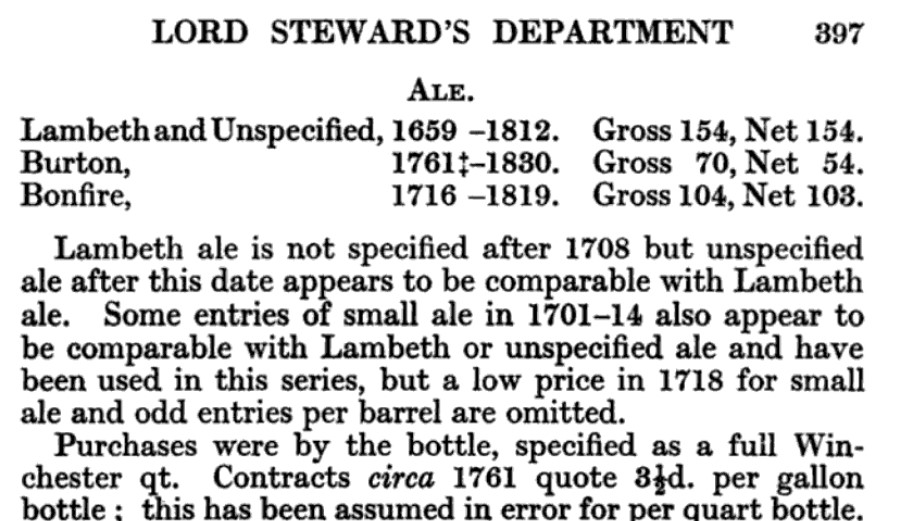
Second, Lambeth Ale really isn’t referenced at that exact time. It shows up very neatly a couple of decades later at the other end of the English Civil War. As early as 1660 Pepys, a fairly high government official, is drinking Lambeth Ale and apparently having time of his squalid life. The wonderfully named Lord Beverage in his Prices and Wages in England notes it as recorded by the Lord Steward from 1659 to 1708. Click on that thumbnail if you don’t believe me. I haven’t not found, in fact, any reference to it much before 1659 but I would welcome any who have.

Perhaps Lambeth meant more than just the place, just the Palace as a building. As I noted before, three years after Laud’s execution in 1648, Parliament placed a garrison and prison in Lambeth House which they also used as a prison. With the Restoration, came the rebuilding of Lambeth Palace as viewed by Pepys in 1665 but still he went there to gypsy fortune-tellers in 1668. And all this must be somehow laced into his contemporary understanding of the word Lambeth. Is it possible it started not as a geographical reference like Hull, Derby or Margate but as a bit of pre-Restoration political satire? Is the popping of the cork the popping off of the Archbishop’s head? The lightness and the fizz, a comment on his character?

I have no idea. But it does seem odd that the term appears in the middle of the great upheaval, comes out of a holy place turned into red light district and then continues on for decades, even respectably mentioned by John Locke in 1679 and the French Ambassador in the 1680s. It was so popular that it pretty much killed Christopher Monck, 2nd Duke of Albemarle, the Governor of Jamaica in 1688:****

Albemarle’s medical troubles began before leaving for Jamaica. In general the duke spent his nights, Sloane wrote, “being merry with his friends whence he eat very little … [and] drinking great draughts of Lambeth ale,” a practice that had secured him what Sloane termed a “habituall Jaundice if I may call it Soe.” Referring to the duke’s jaundice as “habitual” was no accident, for Sloane placed the responsibility for it squarely upon the duke’s lifestyle. Thirty-three years old in 1686, Albemarle practiced no regimen, “loves a Sedentary life & hates exercise, as well as physick,” his physician lamented. Prior to departing for Jamaica, the duke was attended by several physicians who prescribed “temperance & keeping good houres,” warning that “the voyage he intended for Jamaica it being a very hott place could not in probability agree with his body.”

Laud left a deep scar. He continued to be hated for his gross authoritarian excesses as we see from this 1730s letter from the non-conformist Samuel Chandler to theologian William Berriman:

Oh! how happy are the present times, and with what satisfaction may I congratulate my country, when titled divines, when reverend Doctors, when the dignitaries of the Church, hold up the blessed Laud as a perfect pattern for the imitation of the reverend Bench, and insert him into their calendar of Saints and Martyrs! How will discipline flourish under such spiritual Pastors! How effectually will the mouths of saucy laymen be stopped, and the liberty they take in censuring God’s anointed priests be suppressed J How secure will the Gentlemen of England be in their lives and properties and estates, when instead of the Courts of Westminster-Hall, they shall be again subjected to the Star Chamber, High commission and spiritual Courts! Oh what infinite blessings must spring up from a revival of the Laud, an principles and times!

I know this is a leap but it strikes me that the contemporary beer drinker could not but help make an indirect connection somehow between the role of Lambeth Palace and name Lambeth Ale. But, if so, what is the connotation? What is the connection? And despite that connection, it still appears to have been a singular beer – weaker, fizzy, bottled and worth rowing across a river for. And high status stuff. Worth shipping to France. Worth a Governor drinking  himself to death.

*See A Supplementary English Glossary, Thomas Lewis Owen Davies, at page 369 which defines Lambeth Ale based on that quote, concluding “seems from the extract to have been brisk and not heady.” Is that it? Is the idea that it is not “heady” the joke on the beheaded Laud?
**I really did not know that folk other than Charles I had his head cut off so this bit of research has already been instructive.
***“County Politics and a Puritan Cause Célèbre: Somerset Churchales, 1633: The Alexander Prize Essay,” by Thomas G. Barnes, Transactions of the Royal Historical Society Vol. 9 (1959), pp. 103-122 at footnote 1, page 103.
****at page 225.

The Mid-July Thursday Beer News You Need

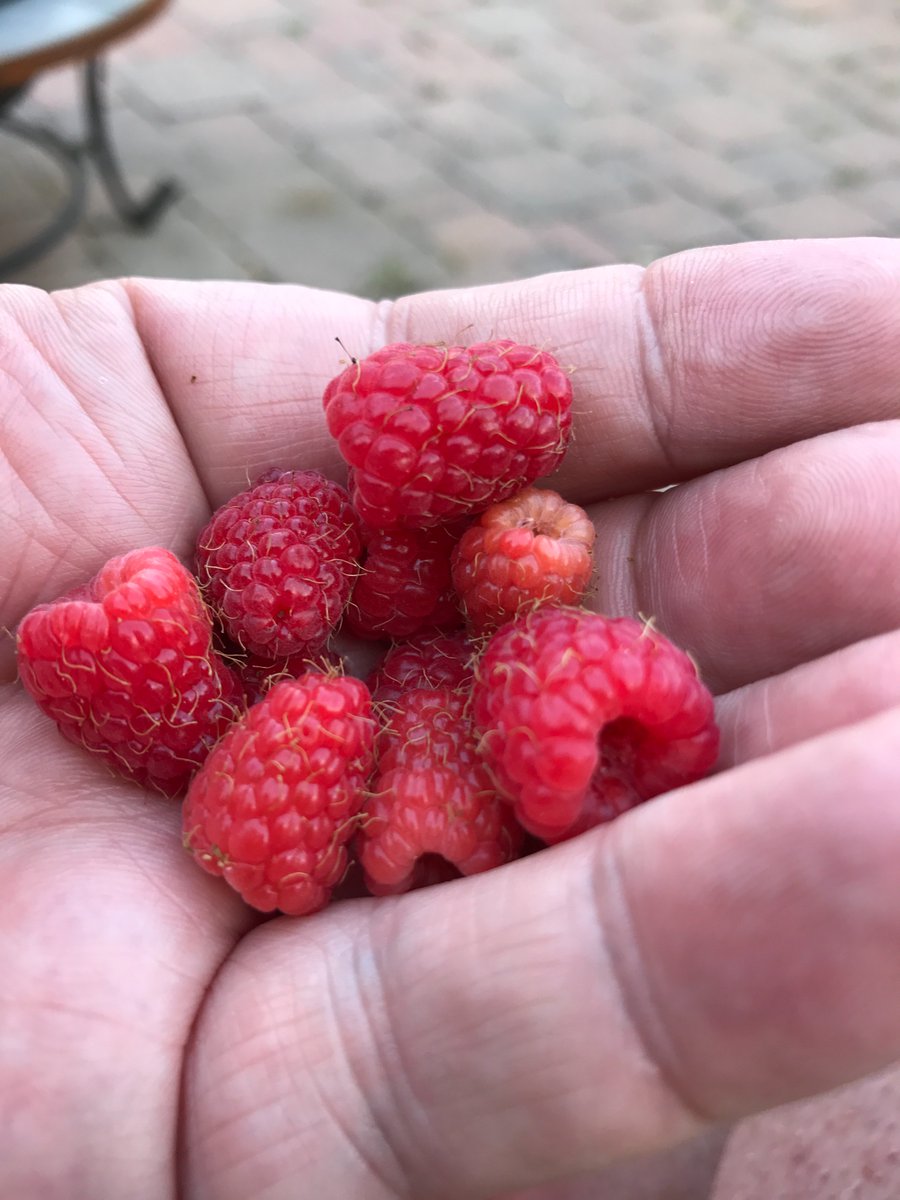
Mid-July! It’s lovely. Warm. Tropical even. We are actually getting the edgy remnants of Hurricane Barry into the Great Lakes basis so it’s all a bit thick out there.  Raspberries picked by my own sausage-like digits. And the fire flies are at their peak. I let the garden go a bit and they seem to love it. 100+ flashes a minute in one corner of the garden. Beer has its role, too. I even had one last night, mid-week. At a Denny’s.* A Bud Light. The weirdest thing was being handed a ice cold bottle and an ice cold glass. Entirely hit the spot. Mid-week, mid-month, mid-summer, mid-year, mid-aged.

What is going on? Well, Josh Noel, who admitted to needing something to wash out his mouth after writing about hard seltzer, has written a helpful article for the Chicago Tribune on dark lagers:

And that gets to the genius of dark lager. They’re beers that typically have a modest amount of alcohol — about 5 percent or so — but are long on aroma and taste. Flavors usually include a mild to deep roast character and can veer into chocolate, char or coffeelike terrain thanks to the roasted malt that gives the beer its dark hue. But unlike most of the porters and stouts they resemble, dark lagers tend to finish dry. The best dark lagers make for stealthily ideal summer beers: interesting layers of flavor, but refreshing. The color, which can range from deep amber to impenetrably black, winds up playing a visual trick.

We have an excellent local black lager, Blacklist from The Napanee Beer Company, so I am particularly grateful for this addition to the discussion.

Note: “bee boles were used before the development of modern hives to provide shelter to the skep…”

As we have been noticing over the last few weeks, beer writing and commentary seems to have divided into (i) “it is so dull and boring right now” for one reason or another** and (ii) HOLIDAY!!! So it was good to see some interesting travel being discussed by a couple of Brits abroad. Nate posted a top ten list of things to do in a city I have lived near – Gdansk, Poland – and gave ten top tips for visiting the old Hanseatic port including hitting up a museum about the Solidarity movement and this:

Shoot Some Guns – Maybe a controversial one, but I’d always wanted to shoot some guns since we can’t do it in the UK and I stumbled across a shooting range whilst doing some research. DSTeamStrzelnica was a great experience where we got to shoot four guns (A Glock 17, a revolver, AK-47 and another rifle) and it only cost us £18 each to shoot a full clip of each gun. It was a really fun experience!

Retired Martin has been in NYC and left us a photo essay with commentary:

How joyous to see a “Sorry, no samples” sign, by the way. 16 ounces (80% of a pint) is practically a sampler anyway.  I reckon the Five Boroughs Hazy IPA served in a plastic glass will have cost me £8 by the time taxes and Lloyds Bank conversion charge are added on.  Still cheaper than Port Street. “Tastes like Brew Dog” says Mrs RM.  It tasted like Hazy Jane. On to the High Line, the one place in New York where you can avoid craft beer and tipping…

Saskatchewan’s Pile O’ Bones Brewing Co. is getting a bit of heat for its name – folk saying its disrespectful to the local indigenous community – but according to this Cree language place name resource site, the location of what is now Regina was called “oskana kâ-asastêki” which meant “where the bones are piled.”

Beervana had a interesting guest blog post this week written by Ben Parsons is the co-founder/brewer, along with Rik Hall, of Portland Oregon’s Baerlic Brewing which unpacked the benefits in the US for craft brewers to self distribute their beers:

I would posit that if and when a brewery business does get into some troubled water—albeit from market conditions, saturation, losing chain grocery, etc—not owning their own distribution rights could easily be the last nail in the coffin. And although distributors are a very necessary part of the industry, their foothold on this particular part of the conversation is risky business and needs modernization so that it better fits with the current state of the industry.

Folk chatting about early brewing methods is always interesting. Who knew that bands in the pottery meant the line to fill with boiling water before topping up with cold before adding in the mash was so obvious?

At the Corrigall Farm, Orkney, large tubs that have marked lines inside, usually about one third to a half way up. Custodian told us (years ago, hope I have the details right) that you put in boiling water to the mark, then top up with cold and it’s the correct temperature.

Pilsner as the anti-NEIPA? Maybe.

This is an interesting piece, a remembrance of 16 of B.C.’s now shut early micro- and even some more recent craft era breweries. And it contains this interesting bit of history:

Horseshoe Bay Brewery was the first microbrewery in Canada when it was opened in 1982 by John Mitchell and Frank Appleton to produce beer for the nearby Troller Pub and became Ground Zero for the craft beer revolution. Mitchell and Appleton soon moved on to Spinnakers, and Horseshoe Bay briefly closed in 1985 before reopening and produced beer well into the 1990s, before closing for good in 1999. The original brewhouse, made from converted dairy equipment, is still in use today at Crannog Ales in Sorrento.

Now, that would be a real Canadian beer nerd’s pilgrimage: “honey, I am off to see the original brewhouse, made from dairy equipment!” It’s halfway between Kamloops and Sicamous, if you are planning the trip yourself.

That’s it! Have a great week as Q2 turns into Q3. I will be lounging myself. Well, dapper by day then lounging through evening. Such is the life of the office worker. Check out the beer news from Boak and Bailey on Saturday and maybe on Monday we will have a sighting of the inter-continental Stan now that he is back from Brazil.

*You can mock me after you’ve tried the burger. I was surprised, too.
**hard seltzer, everyone’s already been bought out, even glitter beer is so last year…