Illinois: Sofie 2012, Goose Island Beer, Chicago

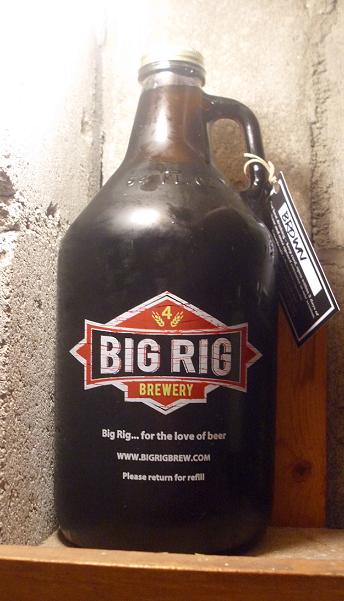
The beer that proves craft v. crafty is a big sloppy fib – and well within the range of possible futures for brewing generally. $8.99 last weekend just across the border. I look for it and its siblings whenever I cross over as it is one of the best values in good beer.

Lemon, pears and fine herb aromas. In the mouth, bright mid-weight beer with a creamy texture up front followed by slightly astringent green apple and lemon acidity. Overarching bready huskiness, light spice, a bit of sulfurous funk and a slightly yoghurty yeast. White pepper note in finish. Loverly and reasonable. Rare combination.

An absolutely swell beer made by a brewery owned by an international faceless monolith. Deal with it. BAers have the love.

Now There’s A Better Side-By-Side To Try

stupidglass1To the left, the Riedel O-Riedel Series Red+White glass: seven inches high, holds seventeen and one quarter US ounces of fluid. To the right, the Spiegelau IPA glass, seven and one third inches high and holds nineteen US ounces of fluid. Riedel and Spiegelau are closely related companies or perhaps even two brands of the same international firm. In the rush to question, mock or ignore the alleged new Dogfish Head and Sierra Nevada thingie, only one comment maker at Time magazine website’s story on the glass has bothered to suggest the relative lack of innovation which could be at play. Amazon reviews of the object associated with wine go back a few years. So, when a source like Fast Company magazine states:

In April, the Bavarian glassmaker Spiegelau will release the world’s first glass designed specifically for India Pale Ales, whose hops-heavy brewing process gives them an especially pungent, fruity aroma. Designed in collaboration with Dogfish Head and Sierra Nevada–two craft brewers known for their IPAs–the unusual glass features wave-like ridges toward the bottom that help bring out the beer’s flavor…

…where do the uses of the words “designed” or “specifically” or “in collaboration” or “unusual” come from? Still, it sure broadens the utility, no? Makes it more of a multi-purpose glass. Perhaps call it the “Red and white as well as bunch of shades of brown” glass… perhaps?

More Fibby Fibs They Tell Us About Beer

What is it about good beer that makes people layer ridiculous claims over it, against it or in its favour. What did beer do to deserve this? It’s just a fluid of simple natural ingredients that offers a little intoxication and a little nutrition. I had a Korea tea today made of green tea and brown rice. Something like this. Simple. Tasty. Like beer without the buzz. Why can’t beer be happy to be like that Korean tea? Here’s a few of the beer claims which have passed by in recent days:

⇒ Beer goes not cause weight gain: Again, with the magic of beer. Advocates of this silliness need to rely on the “guns don’t kill people, people do” argument as it is clear that beer has a significant number of calories and if you do not reduce your other caloric intake or begin to run daily, yes, beer will make you fatter. Unless you drink it in daily 100 ml doses. And if you swap out food for beer – what other nutrients are you losing? Note: it’s “industry-sponsored research” produced for the British Beer and Pub Association. Crystal Luxmore has a far more balanced view which includes a pragmatic warning to craft beer nerds.

⇒ You need to buy the glass: Advanced marketing science in the hands of US big craft have brought us the next thing – an IPA specific glass. Tragically, there is no double IPA version. Mr. B makes the point that the glass itself is harmless but, as with so many things related to good beer, much effort is being made to manufacture need. Me, I swirl the beer in whatever glass by – ready for it – slow movement of my hand. Experiment if you dare taking on unbranded responsibility.

⇒ Valentine’s means beer with chocolate: Brave is the man who tries this without giving warning. Sam Adams Boston Lager? Let me know how the relationship weathers that one, will you? Beers with chocolate flavour added? Safer but I’d still recommend giving fair warning. Days ahead. Likely too late now already. Perhaps plan for 2014 now. Or take Jordan’s advice and do something that’s self-evidently slightly nuts and may well actually taste good.

⇒ Beer innovation drives opportunity: Fun following along with the hashtag #beerinnovation today as marketing and PR placed adjectives like “passionate,” “inspiring,” “brilliant” and “excellent” before nouns like “networking” and “growth” and “future”! Hey, I didn’t type that exclamation mark!! Or those!!! Clearly, the computer is getting excited about inspring growth and a brilliant networking future. Best of all, it was a summit which is great because summits are brilliant.

Can we live without these things? Are we better off without them? Is beer? Imagine a world where people respect beer as an energy powerhouse, drank from normal glassware, gave loved ones treats the loved ones liked and passed on the saving from not layering marketing costs on to your beer. Simpler, cheaper, better balanced and happier. Like hyeonmi nokcha. Or yesterday’s parsnip soup. Who wouldn’t want that?

As Pleasant A Snow Day Lunch As Ever I’ve Had

Ron as Švejk caught in a beam of angelic light.
My favorite place to have a beer is a block from work and two from my folk’s place. Today, during today’s Snowmageddon, I looked outside at noon, then looked at my workload and realized an impromptu declaration of a half day vacation was in order. Five minutes later saw me within minutes stomping my snowy boots and brushing off my coat in the vestibule of the Kingston Brew Pub. I’ve been going here for coming on 20 years and love the place. Owner Van was settled into the corner of the bar. I joined him to chat and also try Beau’s Dubbel Koyt released today. Helping them brew the 1500’s gruit beer was something of Ron Pattinson‘s, as illustrated on the day, gift to Beaus for bringing him over for last fall’s Oktoberfest as the Vassar was mine, Craig and Chad’s… and Ron’s.

Like their Vassar with it’s unexpected mango tastes, the Koyt was surprisingly moreish. Slick even to the point of glycerol, I have yet to have a gruit beer until today that managed to place the herbal counterpoint as neatly in the back as this did. Honey and mineral tones in the front end reminded me of Mosel in a way. Others at the bar took tasting glasses on offer, too. With a well hidden 6.8%, the beer went down well with a strip loin and arugula sandwich.

Towards the end of the pint, I was reminded by something that Anders Kissmeyer, traveling Dane about the fest, shouted out at the end of a seminar at the fest. He said that there was no chance that the Vassar tasted anything like a beer from the lower Hudson Valley in the 1830s. Likely true. The same is likely the case with the Dubbel Koyt as well. The techniques and equipment used by Beau’s are too fine. The malts and gruit employed too well made. It’s all phony fun after all. This age’s consistency and top quality are something of a curse to the culinary archaeologist whether looking back to 1830 or 1530. But what can you do?

But does it matter? Never had a pale beer made with 50% oat malt and 20% wheat malt before. If something in the past inspires that experiment, why not? After all, it’s just a bit of relief here in the deep end of winter.

Wednesday’s Beery Thoughts From The Sick Bed

Kidney stones, a CT scan of my innards, visits to the ER as well as my GP not to mention a bunch of blood tests with a whack of other acronyms have literally put me off my beer. And not just because I have been reminded to be careful as we all should with the effects of malty goodness on our internal health. Given that I have been given the big pills that one takes when that invisible knife digs in and twists, you sorta have to be abstaining just in care you need to hit the big red button and take one. So, I am taking a break which has led to a number of observations:

⇒ One belt buckle notch has been gained. Already. At this rate, I might have my burly boyish figure back by next autumn. It is tempting… yet slightly shocking. It’s not so much that I am losing weight as deflating. Drinking 20 litres of water a day doesn’t hurt with this either. Taking a break may be good even when it is forced upon me.

⇒ The stash is looking good, too. I have a quite separate joy in shopping for beer, you know. In fact, during one particular bout of, shall we say, moderate flank mega-noogie, there was nothing I found more comforting than a stroll amongst beer shelves picking out a few to stick away. That, too, can be one’s happy place.

⇒ And samples will come in. I got a phone call last night during a very bad zap from the nicest people in beer, the good folk behind the new beer from the new Bush Pilot Brewing telling me a sample was on its way. Between wincing, I had to tell them I had to tell them the bottle would have to sit. But, as my friend in beer shared the 25 ingredients (listed on the label by the way) , I realized what a hypocrite I was. It’s a collaboration with a traveling Nordic brewer, a contract brew, a brew filled with fancy non-beer ingredients, it will be likely past my normal price point and, when the sample came, I saw it had a dipped wax top. And yet I want it. It may need a new name – as metheglin is to mead. But I want it.

⇒ Beer writing also fills a space. I actually have two pieces on the go, not just the longer bit with Max but a medium scale one with Craig. Both footnote laden, one is formal and one is not. One on request and one on spec. But both are serious. So productive I am.

Funny. The imposition is not turning out to be an imposition. Not sure I am ready to take up swishing, spitting and pouring out the stuff in the stash. But there is a heck of a lot to explore about beer other than beer. I had no idea.

Who Is Afraid Of Facts On Beer Bottles?

Interesting if light-ish article from the publication The Drinks Business on the question of labeling beer with their caloric content:

According to public health minister Anna Soubry, officials have been in talks with the drinks industry about the possible inclusion of calorie content on labels. Ministers are hoping that displaying the calorie content in beers, wines and spirits could encourage those who are watching their weight to drink less. Most manufacturers already include information on units of alcohol on labels in a voluntary agreement with the Government. A recent study by the Drink Aware Trust has linked the large amount of calories in alcoholic drinks to people being overweight and obese.

Makes perfect sense to me. Every box of crackers in the cupboard tells me how many calories are in a handful already. I can look up the calories in meats and other ingredients because they are fairly standard measure as these things go. But a beer is not a beer is not a beer. Who knows what people are sticking in there and what it means over the long term? Some of the big bombs out there might as well be mugs of piping hot icing and should be handled with great care. And the drive to have more proper sessionable low alcohol beers might get a kick if the truth about stronger stuff were wildly known. Makes sense.


And why stop there? One thing that drives me a bit nutty are abstract standards like the UK’s absolutely silly use of “units” as a measure of alcoholic strength. What we need on a bottle is the actual ml of pure alcohol. A 500 ml can of 7% of semi-DIPA has 35 ml. Two of these innocent pals are well within the ball park of a 750 ml corked top bottle of that swell 10% beer but far less, err, red flaggy. Is it too much to ask for a universal standard based on a standard that is basically universal?
Is there pressure to keep this sort of information away from the beer buying public? Or do you actually just not want to know. Are they, like price, things of no interest to the… umm… passionate?

Albany Ale: In 1670 The Best Ale Was Wheat Ale

You ever wonder why the reference you find after two and a half years took two and a half years to find? Look at this:

Their best Liquors are Fiall, Passado, and Madera Wines, the former are sweetish, the latter a palish Claret, very spritely and generous, two shillings a Bottle; their best Ale is made of Wheat Malt, brought from Sopus and Albany about threescore Miles from New-York by water; Syder twelve shillings the barrel; their quaffing liquorsare Rum-Punch and Brandy-punch, not compounded and adulterated as in England, but pure water and pure Nants.

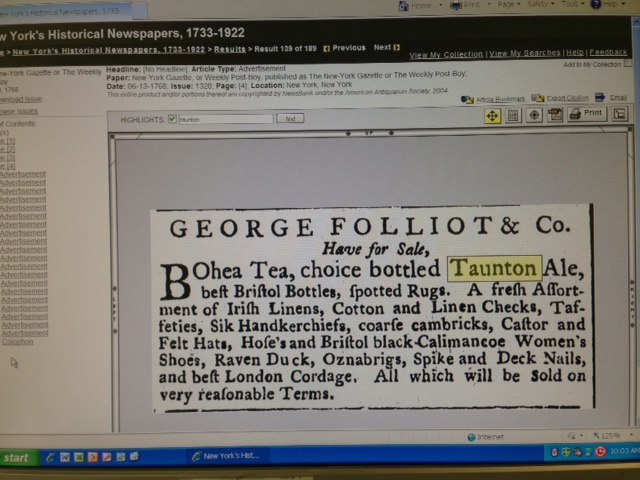
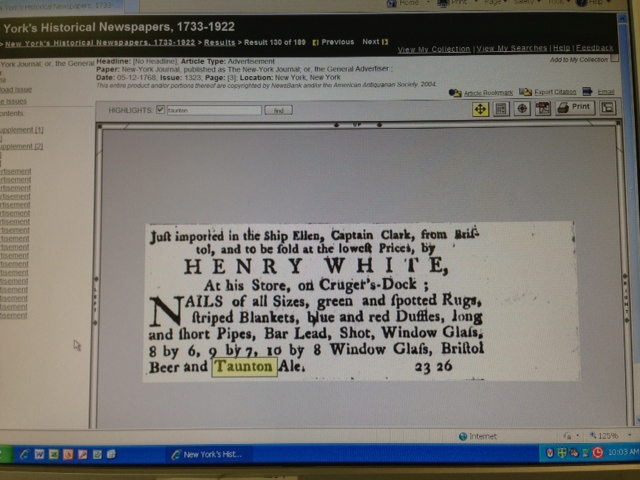
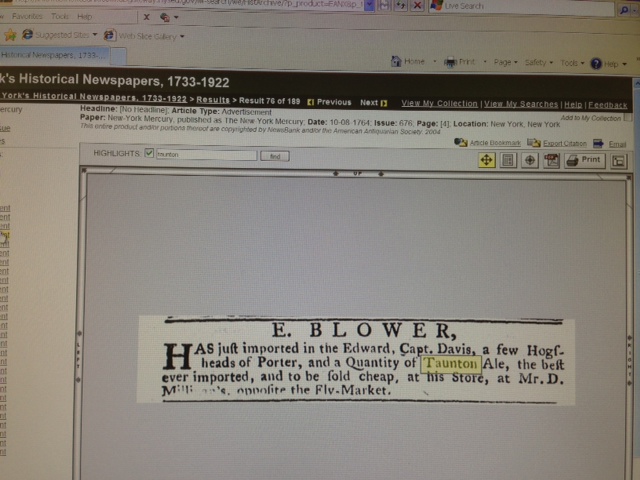
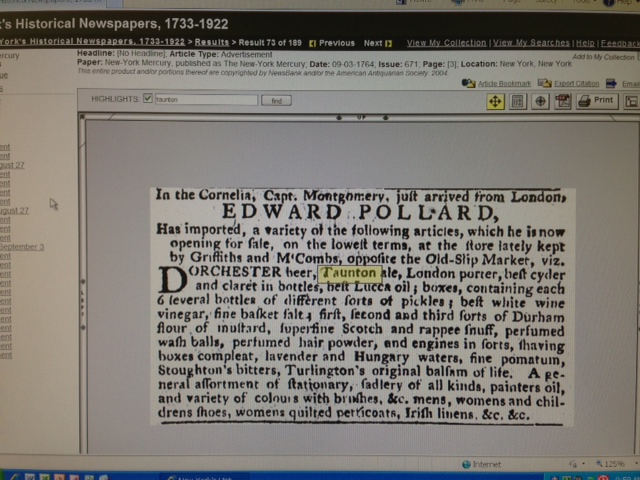
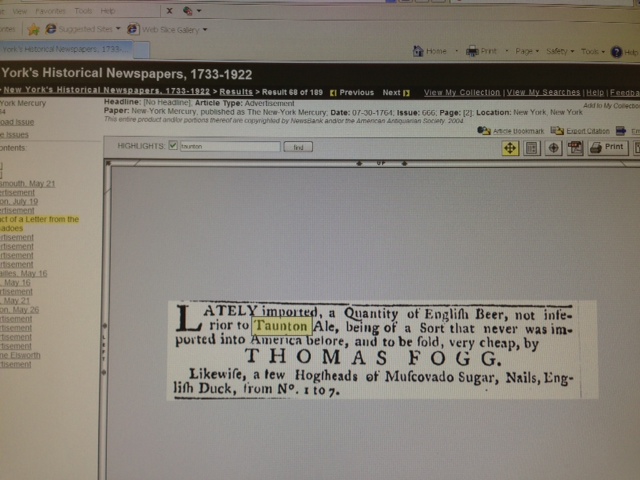
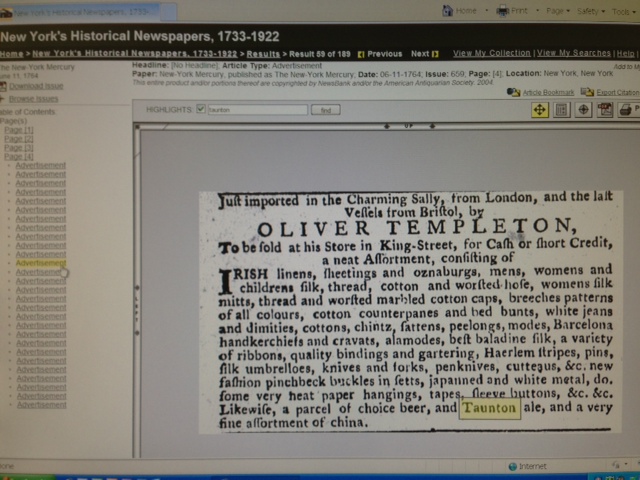
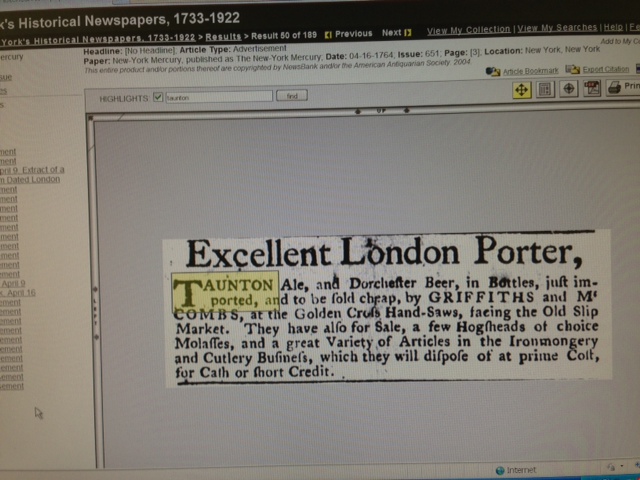
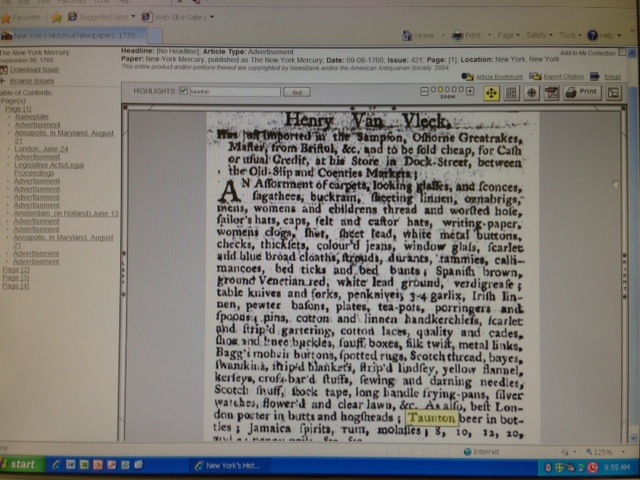
This is a description of the drinking habits of the Dutch population of the Hudson Valley of New York from page 35 of a journal published in 1670. It was written by Daniel Denton and was called A Brief Description of New York: formerly called New Netherlands, with the places thereunto adjoining. So in addition to the 1649 legal ordinance barring brewing with wheat during a crop collapse and the 1749 reference by a traveling scientist to the malting of wheat, we have not only confirmation that wheat ale was brewed but it was the best to be had. The description by Denton is particularly trustworthy as it is incidental to other cultural references about the Dutch, particularly about their smoking and drinking habits. There is another reference to beer in his writing, too, that is quite revealing. It sits in this passage about the freedoms being enjoyed in the newish New York:

Here those which Fortune hath frowned upon in England, to deny them an inheritance amongst their brethren, or such as by their utmost labors can scarcely procure a living—I say such may procure here inheritances of lands and possessions, stock themselves with all sorts of cattle, enjoy the benefit of them whilst they live, and leave them to the benefit of their children when they die. Here you need not trouble the shambles for meat, nor bakers and brewers for beer and bread, nor run to a linen-draper for a supply, every one making their own linen and a great part of their woolen cloth for their ordinary wearing.

There you go. Freedom loving prosperous newly absorbed New Yorkers making their own wheat ale and bread from good malt grown around Albany over 100 years before the American Revolution.

So who is going to brew some up? Are there any mid-1600 Dutch guides to household management that include brewing techniques?

Cabernet Sauvignon 2010, Devil’s Wishbone, PEC

devw1

Picked this up at the winery a few weeks before Christmas on a cloudy Monday off work. The Riesling and Cab Franc I bought the same day are gone already. The Devil’s Wishbone winery is a thirty minute drive west followed by a wait for the ferry followed by a five minute ferry and another five minute drive up the hill and back to the east at Lake on the Mountain just past the park next door in Prince Edward County, Ontario.

devw3As I mentioned recently, I have started a category for Prince Edward County wine because, well, it is tasty and nearby. While we have three actual production breweries, excepting Ottawa, in eastern Ontario there are over thirty wineries in PEC just over that wee ferry. Once I was up the hill and past the park, the sign for the winery soon came into view. Up a lane and past house, there was a parking lot by the barn with rows of grapes stretching out to the south.

Inside the barn, there’s a retail stop you duck under a beam to enter and a very helpful staff person. I picked this wine out for maybe 24 or 26 bucks. I picked this one just out of the sheer curiosity of finding the grape growing so close to my house. I was smart to do so even if opening it now is likely infanticide. After writing about beer so long what do I say? That it suffers from incredibly low levels of carbonation or that it’s the colour of kriek? It’s actually light for what I am used to in a Cab Sauv, not like the deep purple reds of a mass Aussie or Chilean plonk made with the grape after beaten down in the heat of the sun down under. I am going to say cherry juice red. Scent? Maybe cherry, raspberry and a little cigar or rather a bit of raspberry jam spread on on leather baseball gloves. More of the same in my mouth with maybe rosemary, tangerine and cedar… which may be expected given the local forest growth with bracing tannic. Tart berry woodsy finish.

Both Hugh Johnson and Oz Clarke mention PEC in their 2013 guides as a newer upcoming wine zone. But not the Cabernet Sauvignon. And Devil’s Wishbone is too new for the latest edition of Crush on Niagara, the surely needing renaming guide to Ontario wines by Andrew Brooks from 2009. But it’s handy to my place and on the way.

Are Contract Brewers Posing As Gypsy Brewers?

Because we are having so much fun with terminology and meaning, I thought I would mention this:

As the name suggests, all the breweries involved, save for one (the host), are gypsy brewers. The Brewers Association (BA) defines this type of brewery as a contract brewing company—essentially a business that hires another brewery to produce its beer. The contract brewing company is often responsible for recipe development and handles the marketing, sales and distribution of the beer. “Not-owning a physical brewery doesn’t stop us [gypsy brewers] from being extremely passionate, innovative and community-minded,” notes Band of Gypsies ring leader, Ashley Routson of Bison Organic Beer. “Our mission is to work together to promote and celebrate each other, and educate the craft beer community on the world of gypsy brewing.”

Now call me goofy, but I do think words should have meaning and my understanding that a contract brewer hires someone else to make their beer while a gypsy brewer uses the surplus time on the brewing equipment of another to make a separate line of beer. In each case, the owner of the brewing equipment does not own the beer… unless that is part of the behind the scenes deal to get access to the equipment. The contract may or may not include marketing, shipping and the rest. Depends on the terms of the contract, doesn’t it. Pretty Things, for eastern North American example, does not own its own brewery but makes the decisions so it is an example of the gypsy. These BAers have been forming a shortish list of likely actual suspects. You can provide your thoughts and accusations on that as you feel appropriate in the comments.

But there is something else to note. The fudging of the idea is alleged in the article to be based on the brilliant linguists of the Brewers Association whose recent work has been noted. The two ideas are muddled here, too. I am not sure that is correct, however, from this BA webpage which clearly described contract brewing for what it is – despite some of the other head scratcher definitions in there. Why would one widen the definition of “gypsy brewer” to include anyone who hires someone else to make beer? Because “gypsy brewer” sounds neato and swell while the more accurate “contract brewer” is laden with… accuracy? The trend towards adulteration of the language in the name of good beer is a bit weird, isn’t it.

This is not a crack at all against the project which I suspect includes far more hands on involvement than a contract brewer would sully themselves with. But there is something unseemly even needy in all the slipperiness, isn’t there. Again, thoughts and accusations on that as you feel appropriate.

And Steve Is The Crown-In-Parliament, Too

Today’s news speaks to some fairly basic constitutional ideas:

The Harper government said Monday it will not include Governor-General David Johnston in any future policy discussions with First Nations, further clouding its battle of wills with aboriginal leaders. A spokesperson for the Prime Minister said Monday Stephen Harper will meet with Assembly of First Nations’ National Chief Shawn Atleo “in the coming weeks,” and has no plans to abide aboriginal leaders’ demands for a summit Thursday. “[First Nations people] are very insistent on having the Governor-General there, but the Governor-General says this is a policy matter with the government and that [he] shouldn’t be there,” Andrew MacDougall said. “We agree with that.”

This is interesting stuff. What is a Prime Minister and what is a Governor-General? In his book Federalism and the Constitution of Canada, David E. Smith uses the proper name of one institution the Prime Minister leads: the Crown-in-Parliament. Even though the Glorious Revolution of 1688 changed a lot of the constitutional principles it did not great autonomous spheres of power so much as rearrange the existing ones. As a result, Smith can write:

Sovereignty in a constitutional monarchy rests in the Crown-in-Parliament (or, legislature), except where the subject is the reserve powers (dissolution of Parliament, for instance) that remain as a matter of prerogative in the hands of the Crown’s representative.

So, unless the topic is one reserved to the G.-G., it is a matter of Parliamentary oversight. In section 91 of our Constitution of 1867, part of the division of powers discussion it states “the exclusive Legislative Authority of the Parliament of Canada extends to all Matters coming within the Classes of Subjects next hereinafter enumerated; that is to say,” and then lists a number of topics. It is generally taken that the list serves to distinguish between the Federal level and the Provincial one but the assignment of the classes of subjects is to the Parliament of Canada. Item number 24 in the list is “Indians, and Lands reserved for the Indians.” Later in the constitution it states under the heading “Treaty Obligations” that:

The Parliament and Government of Canada shall have all Powers necessary or proper for performing the Obligations of Canada or of any Province thereof, as Part of the British Empire, towards Foreign Countries, arising under Treaties between the Empire and such Foreign Countries.

Interestingly, as Smith points out in his book, this only means that the Feds have the power to conclude treaties not to implement them. Where the subject matter is not in the list of subject matters assigned to the Federal Parliament, it is up to the Provinces to implement. And, in any event, the power relates to foreign countries. What was the nature of the “in Empire” domestic treaty that the British and then Canada happily signed from East to West as European Canada asserted itself? Mr. Harper is asserting that whatever it is, it is something that section 91(24) assigns to Parliament and he is the head of Parliament. Clearly an argument available to be made. Because he, like the G.-G. represents the Crown in his own way, too.