Maryland: Max’s Taphouse, Fells Point, Baltimore

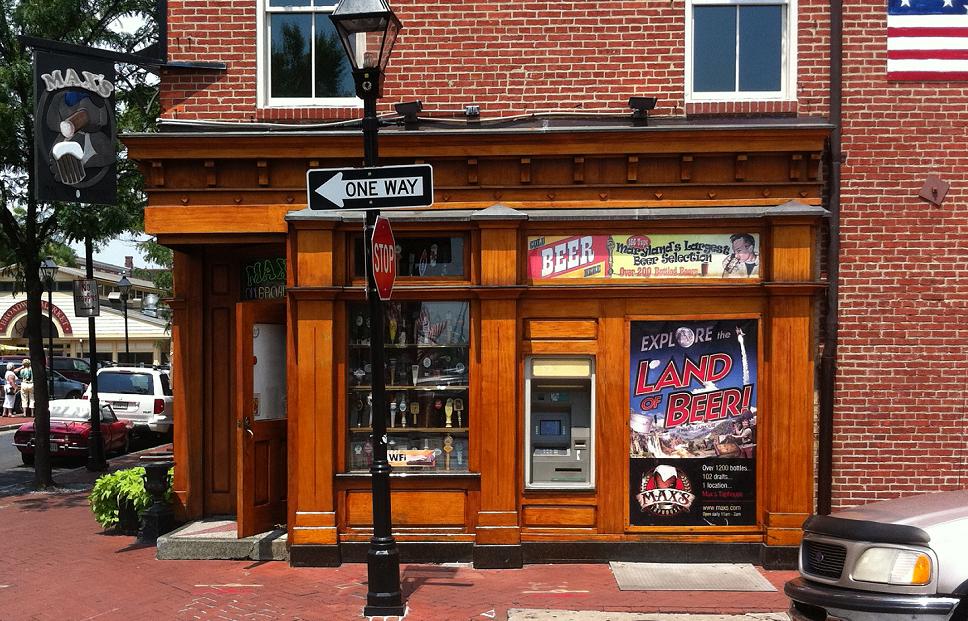
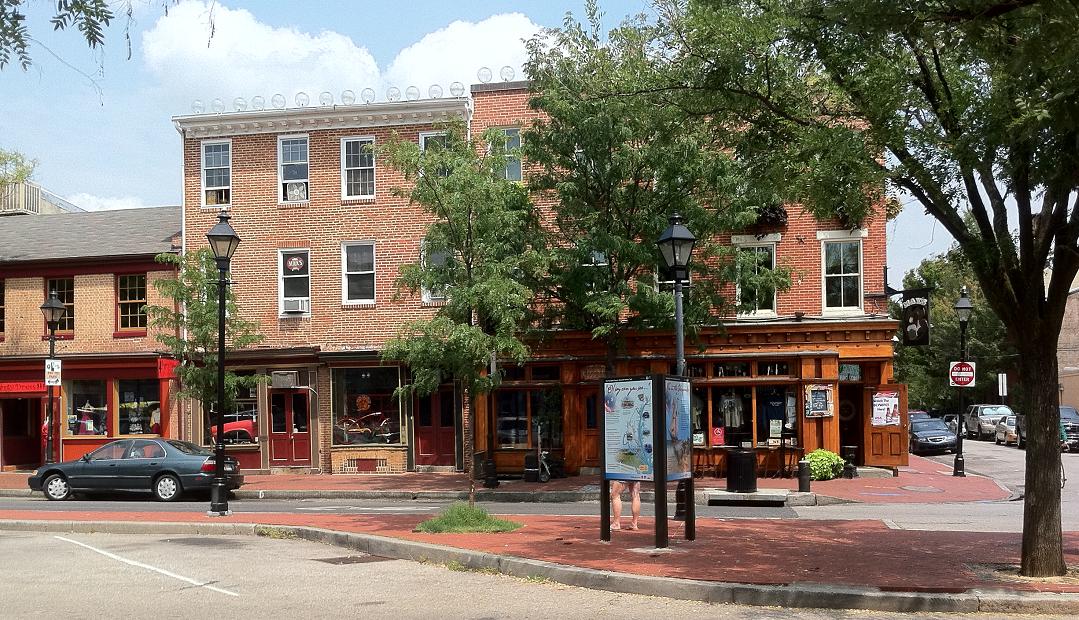
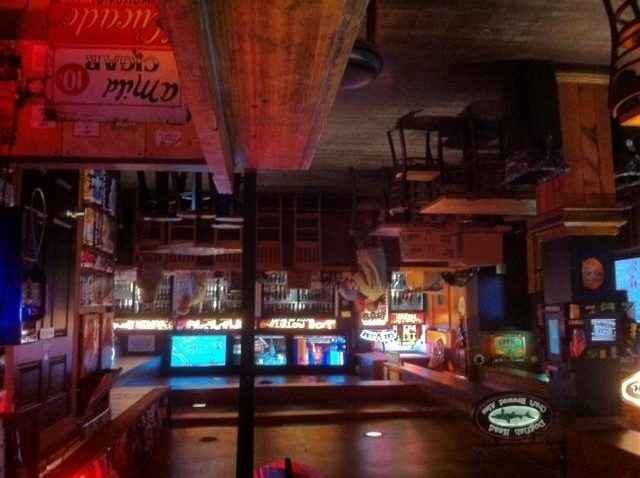
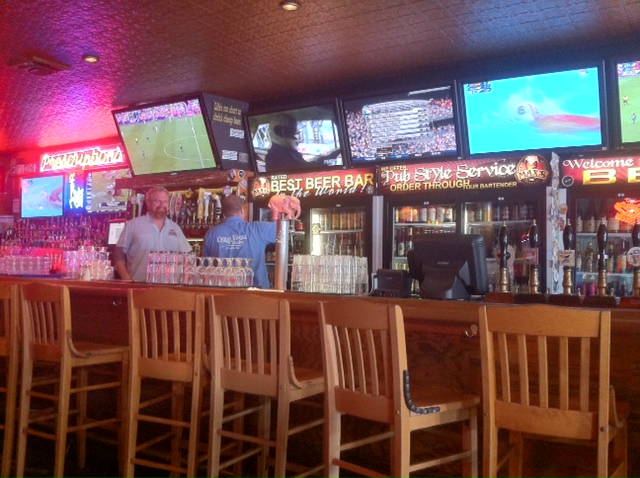
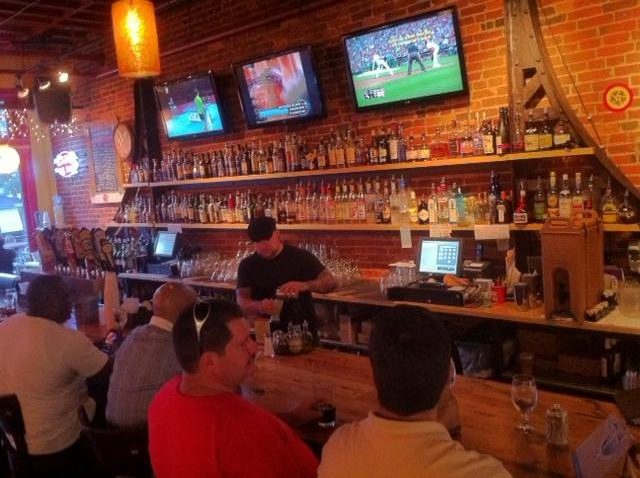
Baltimore has given me a very good argument for its place as a beer destination and no other spot has made the case as clearly as Max’s Taphouse. We stopped in with the kids after taking the tour of Fort McHenry and crossing back across the harbor all by water taxi. The Fells Point area is a bit like the old port of Portland, Maine with the neighbourhood bars, funky shops and interesting restaurants. Max’s sits in the middle of it. I had a cask Red Sky saison from Clipper City as well as the recently released Union Duckpin Pale Ale.


Liked them both. The bar service meant a chat with the tender was in order and, like most sentences he hears all day, it was mainly about the stock – cask, taps, bottles and even stored un-chilled beer. He also explained that they did off license sales in Maryland as well as growler sales. If I wanted one of the special beers to take away, they just needed a few minutes for someone to go retrieve it from storage. The free state indeed.

But it’s not just this one bar. You go into most any bar and there are local beers on tap. Every few blocks in the center of town seems to have a reputable bar. We were at Joe Squared pizza for supper and there were a row of Duclaw taps. I had their double IPA as well as a blonde. Both very tasty and, at five bucks a shaker glass, not overly priced. Max’s was pretty reasonably priced as well now that I think of it.
We are already planning to come back and explore the city a bit more deeply. Sure, you will get the “you watched The Wire, right” line from half the people you tell you are heading to Baltimore but for a good beer holiday with family and kids, the Inner Harbor can’t be beat. Next time, the Orioles will be in town, too.

Ontario: An Early Reference To The Kingston Brewery

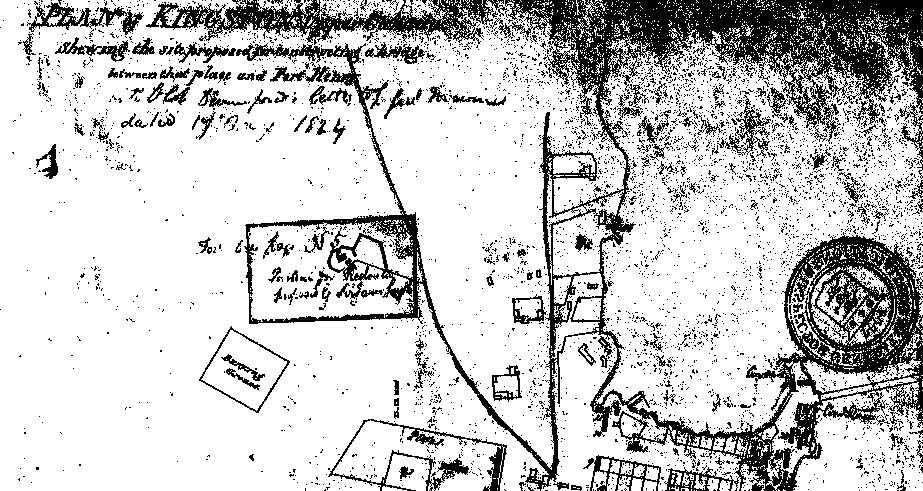
kingston1824The funny thing about Ontario is it started as a part of Quebec. Until the division of Upper and Lower Canada in 1791, this was all the one unified colony that Britain took from France in the conquest of 1760. Settlers started moving in 1783 first from central New York in the first direct Loyalist wave, then over the rest of the decade from the eastern US seacoast as the losers of the Revolution filtered their way around up from New York, Nova Scotia and then down the St. Lawrence. An oblique reference in a land document for a Lieut. Mackay from 1794 gives an interesting hint as to the development of brewing here in Kingston, the commercial center of this new colony:

On May 27, 1794, a petition had been presented in Council on his behalf for “a Piece of Land about the usual Size of a Town Lot, situated on the West side of a Lot lately laid out for the Kingston Brewery, to be bounded on the North by the said Brewery on the East by a small run of Water, on the South by the Common, & on the West by the top Bank…”

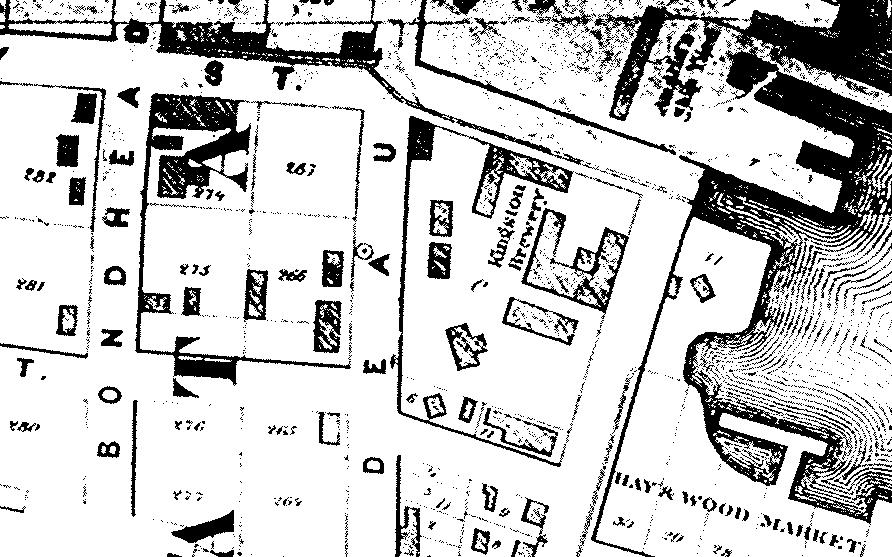
The passage is from The Parish Register of Kingston Upper Canada 1785-1811, an online resource that also confirms that by 1797 it was managed by one John Darnley. That is it above shown on a map of my town from 1824. It is also shown on a map from 1865 and later additions are still there – as the 2003 photo at this post shows. There was earlier brewing in the colony but likely tied to taverns like Finkle’s in nearby Bath. Steve Gates, our comment leaver and author of the excellent book The Breweries of Kingston & The St. Lawrence Valley pegs the building of the brewery in 1793 by merchant John Forsyth but it is John’s brother Joseph who is more of the man about Kingston in the 1790s. But, as a garrison town and a depot supplying deep into the continent from the main colonial centre of Montreal, it is entirely likely that their Kingston business affairs overlapped repeatedly.

Creation of the brewery reflected some level of certainty after years of difficulty in ensuring the grain crops could supply the expanding colonial population. A 1796 letter noted in Preston’s Kingston Before The War of 1812 even speaks of the continuing infestation of Hessian Fly affecting the area. Building a brewery spoke to an expectation of peace.

Garden 2012: Been Away And Back And What Survived?


The drought has had its effect. Something of a shut down by the onions. A refusal to go on. Squash and zucchini did not make it for a couple of reasons well studied already. But the leaves are booming. I have two sorts of mustard green as well as beet greens, red and green oak leaf lettuce as well as spinach. The salad bowl is full nightly. Beans boom. We are between flowerings so may well be looking at a late August harvest mirroring the mid-July one. A second planting of peas is taking off, too. Basil is booming. It will be pesto week. Collards have formed a blue green wall. All but two of the grave vines have excelled. Location is everything apparently. Having a yard full of berries now makes sense. There is nothing wrong with a yard full of berries. The rabbit has taken up residence. Were this 1870, he would make a swell stew along with the purple and yellow carrots. Starting to think about next year already. Five month to seed catalog ordering you know. Soil will need shifting, too. Much depends on soil quality.

Garden 2012: I Now Hate All Acalymma Vittatum


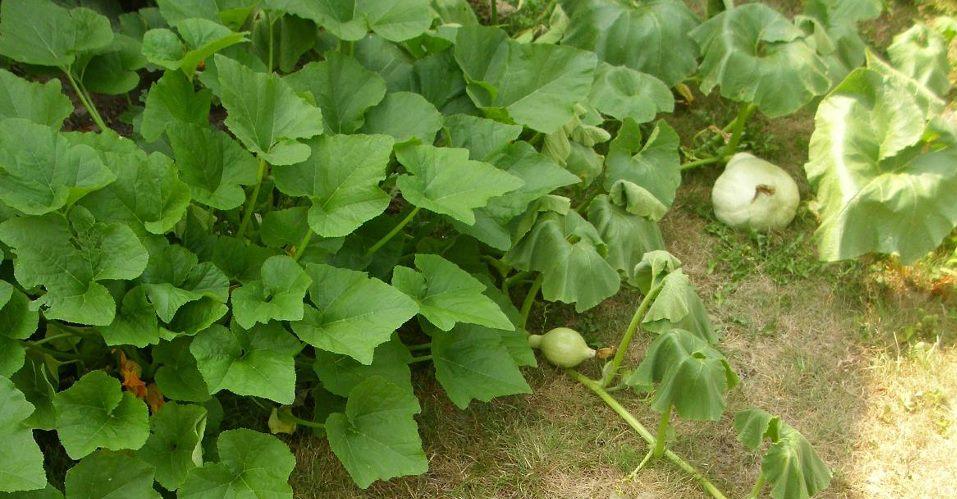
Acalymma vittatum or the striped cucumber beetle is the enemy of my now entirely dead blue hubbard squash. The wee bastards not only chop the plants themselves but carry the wilt bacteria in their propagating guts. Bastards. Anyway, all the vines are dead and I seethe with hatred. The only thing that calms me is the vast crop of green beans, lettuce and carrots.

We are eating our greens and have pretty much been since early June. I also built a second raised box bed out of cedar this week and have started to think more systematically about what the front lawn will look like. See, I have a system. And the system demands berries. So, out with the ornamental hedges of juniper and yew and in with the juneberries, raspberries, black currants and other stuff.

And it has rained. It began raining about 4 am and has been raining off and on since then. Big news since we’ve been mostly dry since early June.

Garden 2012: What A Difference A Week Makes

What a difference a week makes. The long vines to the right are yellowed and likely lost. I do not have the heart to photograph them. All for the lack or even delay in application of a little copper sulphate. Really? Apparently I also did not know the golden rule: do not water your winter squash from above but tickle only from below. Who knew? Lesson learned. Well, some are now saved but, as on the Day of Judgement that awaits us all, others may not be saved. In better news, the yellow pettypan summer squash are being eaten, the replacement zucchini are up, the cantaloupe show no sign of disease but no sign of fruit either, the green beans are heroic, the carrots are worth pulling from the ground and leaf lettuce continues to feed us. The grapes greens thrive. Leeks are holding their own. The raised bed built just last week shows good efforts from both the mixed greens and basil. I may mow but only to reshape the weeds. Still no rain.

“…107 Tons Of Beer And Six Tons Of Canary Wine…”

Later this summer, we are spending a few days in Baltimore. Looking forward to it in many ways including things beery… including brewing history. We know a bit about Baltimore and beer already. See, in the 1620s there was a brewery at the first Lord Baltimore’s colony at Ferryland, Newfoundland. And in their voyage of 1633-34, the Ark and Dove apparently carried 107 tons of beer and six tons of Canary wine to what would be the second Lord Baltimore’s colony at St. Mary’s City, Maryland. It would appear likely, then, that the pattern of settlement in the latter might include replication of provision seen in the former for that necessity for the community, brewing.

But can I find a list of the ships’ stores? Not a chance. There is a book The Flowering of the Maryland Palatinate from 1961 that appears to have a reference at page 15. There may even be a list of provisions in this article from the state’s historical society. But Lord Goog is either not so wicked or has not yet found a way to make a buck at displaying these full documents to me. Drag. You would think that lists of ship’s stores from early modern period trans-Atlantic sailing would be the hot item of the internets. The 1670s evidence is there for northern Canada. But Maryland? No. I blame Gen Y. I often do. I know it is easy but that’s why blaming them makes so much sense.

Book Review: Philadelphia Beer, Rich Wagner

3501As recently discussed, the past is a foreign land when it comes to US beer history. More like another planet it seems sometimes. I am not sure why this is but I suspect it has something to do with the drive to be authoritative rather than innovative when it comes to so many of the beer books being published. Sadly, there is more than enough problematic high level description of various qualities out there but far too little of the more interesting and accurate detail.

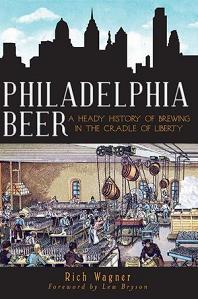
Then one comes across a book like Philadelphia Beer by Rich Wagner – or rather just pages 17 to 34 – and all my despair falls away. Why? Because Mr. Wagner admitted and actually investigated a portion of that seemingly secret or perhaps oddly discomforting tale of pre-lager moderate to large scale ale production that not only existed but thrived in America from somewhere around the 1630s into the late 1800s. In those few pages, he identifies brewers and breweries by name, location, production and beer brands that existed not only before lager in the 1840s or so but he does the same for pre-Revolutionary Philadelphia, the city that becomes the first US capital. And in doing so, he adds credence to all that follows. I trust his writing on what comes later in the first German lager breweries, the later industrial macro-lager breweries and the craft breweries because of it.

Why have we found ourselves here? There may be a reason for this lack of collective long term memory. The introduction of lager roughly coincides with the expansion of the US from a coastal eastern nation built on a colonial footprint to the nation we know today, care of the Erie Canal and resolution of First Nation, French, Spanish and Russian control of large tracts of what are now the central and western states… and Florida. In a way, American ale was an Atlantic focused thing while lager is mid-western to Pacific. The path of lager, as Maureen Ogle so well describes, defines America as much as the wild west and California surfers so. It is in itself exceptional in all the meanings of that word. This burden of national history bears upon the topic. And it is in addition to the simple fact that a deeper longer view takes the sort of hard work that Wagner takes on himself and builds upon from the few earlier studies. Too often we only see what happens when one confuses facts as they were and the evidence that is available today.

Get yourself a copy of this book. Then, start thinking about how the structure of this small book, applied large, might change the way we see the extraordinary phenomenon that is American brewing. And might create a new tie between craft movement of recent decades and that small scale craftmanship of hundreds of years ago. And then maybe we’ll start seeing not only the similarities but maybe even the links. I had a Yuengling yesterday as it turns out.

Garden 2012: A Raised Bed Is Born

On rolls the summer. The lawn has the texture of shredded wheat cereal. The squash display a range of coping that stretches from vitality to the grave. Next year more zucchini. Not the green hot dog shaped ones though I have rammed more of those seeds into the ground to compensate for the lack luster patch of blue hubbards. No, I want the yellow 1950s spaceship shaped ones, pattypens. Been watering like a mad man. Everything has made its case for increased acreage next year. I would not sow a second round of bok choi, however. Seems to be not liking the heat. Spring and fall for that one. Carrots have been eaten. Onions are robust. Made a box out front with cedar boards. The box itself cost maybe $35 bucks to build but the soil was more. Some handy, though. That’s what I said when I looked upon my work and saw that it was good. “You’re some jeesely handy” I said to myself. And so I was.

Albany Ale: An Annotated Brewing Log From 1834

vas140a

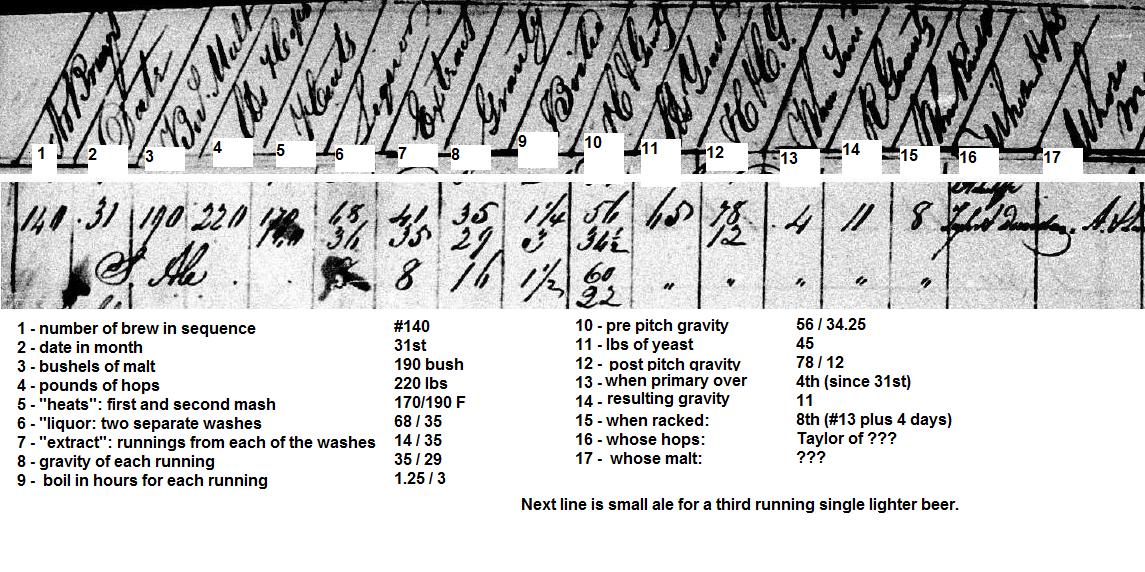
A bit of a question for you today. Above is a brewing log from just before the world of US brewing learned about lager. I won’t get into the details of whose log it is for now* as I am hoping you may be able to help draw out a few more details than I have. If you click on the image you will see my annotated notes. For the most part, I am clear on the numbers but would like to know more about the techniques involved. You will see that there are three beers made from a single mash but that the two stronger are recombined. That makes for what the brewer calls a double and a single beer. Here is what else I see:

♦ The double seems to have 104 barrels of liquor before the boil. A US barrel has 119 litres. So that is 12,376 litres.
♦ The 190 bushels of malt works out to 6460 lbs at 34 lbs a bushel of malt.
♦ The 220 lbs of hops would be local CNY Cluster hops
♦ The malt would also be local pale malt.
♦ This beer made 7 barrels of small ale and 60 barrels of double ale. I don’t understand how 68 and 36 barrels before boil makes 60 as a result. I ran the malt and liquor through a standard calculator and see the result is a 5.1% beer. But I am missing something. That much concentration should make a stronger beer. Or am I making an assumption.
♦ The notes on the opposing page for batch 140 say this is a Pale Stock NY ale. Also, it is noted that this is a particularly good batch.
♦ Unlike some other brews logged and also comments from the time, no salt is added.

Anyone handy with the abbreviations “HVG” and “HHG” at the tops of columns #10 and #12? I assume the G stands for gravity. Also, note that there are slightly different hand writing. The log is filled in over 9 or 10 days. So, the two numerals “6” in column #10 differ. Also, I am now thinking that the number in column #11 may actually be a “65” when I compare it to other numbers. That might make this a notation from degrees F rather than weight or quantity.

Anyway, all thoughts appreciated. This is part of a bigger project so I am hoping the power of the collective brain effect that the internets always promised will nudge us along. Let’s see.

*OK, it’s Vassar’s log.

American Brewing And The Pre-Lager Question

One of the odder things about the history of American brewing is the failure to get a handle on the extent to which pre-lager brewing existed before roughly 1840. Earlier this fourth of July, Jeff, who is pretty good with this stuff, described it in negative terms this way:

For centuries, it was an immigrant’s drink… Locals pretty much didn’t touch the stuff. In 1763, New England alone had 159 commercial distilleries, yet were only 132 breweries in the entire country in 1810. By 1830, the US had 14,000 distilleries, towns tolled a bell at 11 am and 4 pm marking “grog time,” and the per capita rate of consumption was nearly two bottles of liquor a week for every drinking-age adult. We only started drinking beer when another wave of immigrants, the Germans, brought it in the 1840s. Their lagered beer, in a time when no one understood the mechanism of yeast, was clean, tasty, and popular. We enjoyed a flowering of brewing in the following decades–German beer, brewed by immigrants. It was stubbed out by the great puritan experiment of Prohibition, which also says a lot about America.

Setting aside the question of who was a “local” in the pre-Revolutionary context – are we talking about Mohawks? – by any account, it is pretty clear that there was plenty of ales, beers and porters going around the US before the Revolution and even before that later lager revolution. Craig has mapped at least 18 identifiable pre-lager breweries in Albany, NY – one of the larger national brewing centres with a history there of beer that predates 1776 by about 150 years. Gregg Smith wrote an entire book entitled Beer in America: the Early Years – 1587-1840 which does not seem to get the attention it deserves. Heck, Ben Franklin himself welcomed Washington himself to Philadelphia in 1787 with a cask of dark beer.

As a Canadian, I am not sure why there is this national amnesia with our cousins to the south. Yes, there were certainly other drinks. I recommend highly the chapter on apples in Michael Pollen’s book The Botany of Desire which explains how apples were an important pioneer resource for milder cider, hard applejack as well as the sterilizing properties of alcohol. There was also a strong tradition especially at the frontier wherever it was found for home made fermentables and distilled booze. The Whiskey Rebellion of the 1790s in western Pennsylvania is called that for a good reason. But there also seems, despite the available record of ale production, a need to link light lager introduced to America in the 1830s and ’40s as being somehow something of a more American brewing genesis – even though pale light lager was at the time an unwelcome immigrants’ beverage that led to its own share of troubles. We also forget how few Americans there were in the colonial and Revolutionary times and how little of the present US they had actually settled. Beer is always part and product of a larger and a peaceful sort of economy.

American beer history is 200 years older that some would say – and far more complexly interesting, too. Last night I got to annotate a brewer’s log for an 1833 pale ale that, with a little more research, could likely be drilled down to where the field where the malt was grown. With any luck, it will be made for sampling this fall. By a Canadian brewer with pre-Revolutionary connections I won’t get into now. With a bit more luck, more of these brewing account books and day logs will be found and the actual pre-lager history of the US can be described.