Divisive “Local” Craft Culture Clash Marketing

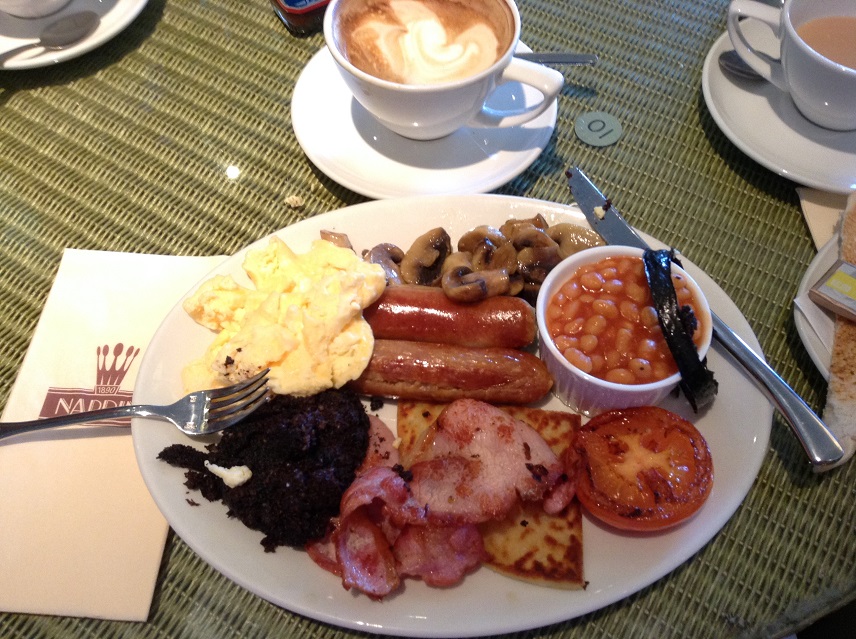
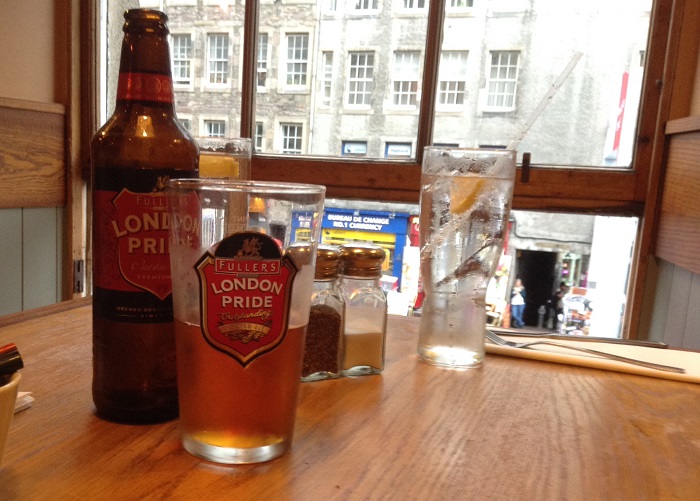
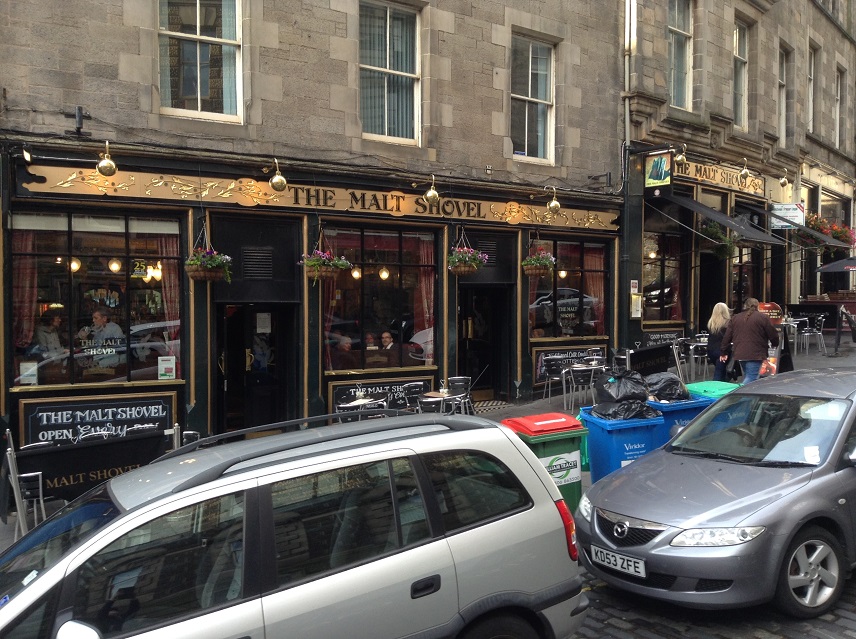
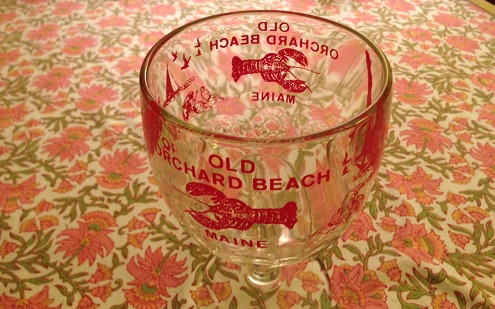
My own favorite local.
 

Stan linked to this story a few days ago. It got me thinking… but not fast, “get me to the keyboard” thinking. It was this bit at the beginning that got me mulling:

I was watching a video online when it was interrupted by a commercial for Budweiser. The name of the spot was “Do You Know Where Your Beer Is Brewed?” Soft guitar music played while clips of idyllic landscapes and sunrises peaking over breweries slid across the screen. Nothing out of the ordinary there. The gentle voice of the narrator says, “With 12 breweries spread all across the United States, your next Budweiser is closer than you think.” Budweiser hangs its hat on the fact that it can produce the same beer at 12 facilities and it will always taste exactly the same no matter where you drink it. No small feat, to be sure. But then the voice adds, “You might even say we’re America’s largest local brewer.” My eyes narrowed and my brow furrowed. ‘What in the heck is this?” I exclaimed. “That is our word!”

Our word? There’s a lot of weird words in there. Not the least of which is “our” – whose the hecks is that referring to? Don’t get me wrong. I like the work of the author Jeff Baker just fine. He’s the manager of the Farmhouse Bar and Grill in Vermont. Nice place. Real nice. Just not my local. Because “local” can mean that, too. The distance of the drinker from the drink.

But that’s not his point. It sorta illustrates mine but that’s not really the goal of where I am going. He is asking about local ingredients. If you want that world, go back 200 years and have a look at the Vassar day book with local beer being made of local grain and hops being sold back in small batches to the farmers and tavern keepers of the central Hudson Valley just getting back to some sort of normal after the devastation cause by the Revolution. This is the mid-1830s book but in the 1808-11 book the economies of beer are clearly still defined by the cart horse. That is actual local brewing. Are we willing to go there? Doubt it. You don’t really want local. You want some local. Now and then. But you want the global economy beer made with the best ingredients brewed on the newest, bestest equipment. Right?

Craft beer and macro are not all that far apart in this respect. Brewed on computerized stainless steel to a scale and upon a recipe that meets the needs and budgets of their respective clients. The only actual local thing that is reliably present at the brewery is the staff. Hard to be a brewer who lives over 45 miles from the brewery. There’s a hint by the way. If the person discussing the beer in your glass doesn’t live about that close, not a brewer. Sales guy, likely… owner, sure… but that’s all. Both use good foreign malt and distant, shipped in hops. Both tweek their water and yeast to match those found elsewhere. Don’t get me wrong. I like “local” just fine. It just means, for me, the bok choi and beets I have growing out there in the yard. Not beer.

When anyone in beer – whether Bud or craft – claims a word like “local” or “small” or “real” there is marketing going on – even if only to a small circle. Even if only to the speaker. It’s all unnecessary. When I think of Bud, I think of the brewery at Baldwinsville, New York to my south where local people earn a decent wage. If I have a decent hoppy IPA, I think of the three nations and seven generations needed to make the beer exist. Beer is global and has been since at least the 1400s when the Hanseatic League was beginning to ship Baltic brewed hoppy beer to the Low Countries. Except for odd examples like postwar agricultural collapses like Vassar faced in 1808. Except for that, it’s been beer or large parts of it hauled out from the hold as often as not since the Dark Ages. Good non-local beer.

Another Candidate For First Beer Downed In North America

1578beer

Martin Frobisher. He was taking a group of miners to what later gets called Baffin Island¹ in the Canadian high Arctic to dig for ores. The image is from The Three Voyages of Martin Frobisher, a book from 1938 that reprints the 1576-78 journal of crew member George Best along with other records. It is very likely that this is not of the first beer in any respect. Almost certain. Because it is from the second of the expeditions. The 1576 expedition had five tons of “beare” listed amongst the “furniture” – as in things furnished – for the voyage. So it’s nearly the first… maybe.

The thing I thought I would find as I have seen elsewhere was barrels of malt and hops being shipped over. I’ve seen it on Newfoundland’s shores about twenty years later as well as in Hudson Bay a century later. But this was no crew of masterless West Country men salting west Atlantic cod or factors left to overwinter to trade in northern furs. Nope. Frobisher’s crew was funded by Earls, Countesses and Lords to the tune of 50 to 200 pounds each. The Queen’s Majesty herself threw in a rounded thousand. There was a surgeon on board as well as four tons of cheese. Almonds and raisins plus two firkins of prunes. Just in case. They are living in style. There is both Malmsey and sack, for heaven’s sake. That would now be described as Madeira and sherry respectively.

A gallon of beer for each man each day. Likely downed in wooden tankards like these. A gallon. That is the equivalent of twelve 12 oz or 350 ml bottles a day every day. In 1576, it was two pounds two shillings for a ton of beer but two pound five shillings in 1577. Seven percent inflation over one year is unlikely. Maybe a better grade of beer? Not a lot of detail of the life on shore in the accounts. Just interaction with the local Inuit as well as the work gathering of tons of ore. Each group seemed to appear pretty silly to the other.

¹… because our lad Billy Baffin isn’t even born until around 1584.

The Fourth Internet

It has been a long time since I have been interested in an idea about the internet but this article linked to by kottke

The fourth Internet is scary like Darwinism, brutal enough to remind me of high school… If the first Internet was “Getting information online,” the second was “Getting the information organized” and the third was “Getting everyone connected” the fourth is definitely “Get mine.” Which is a trap.

It sums it up neatly. The end of information. The prostitution of data space. I am not sure it has caused me to consciously draw away from writing on this blog but it may have contributed. “Getting mine” includes those paywall spaces, too. Fees are necessary, agreed, but what ever happened to micro payments? Surely PayPal could be harnessed to let me reach newspaper articles for four pennies a piece. Not that I had high hopes all these years ago. I compared blogging or Web 2.0(a) to CB radio when it was mainly a hobby. Over eleven years ago as it turns out.

Perhaps it is because I make a little money from writing now. I used to make money from blog ads and now make money from book contracts. I am regressing into old media. Because it is reliable. Should I add a question mark to that? Because it is reliable? If I titled this post “Twenty one ways the fourth internet will make you angry… and then leave you amazed!” I would fit in better these days.

May Two-Four And Our Well-Wishing To The Crown

bobdoug1Even though it is just the 17th of May, this weekend is nicknamed May Two-Four. It is Canada’s non-much-observed celebration of the lass who was Queen Victoria. Monday is still called Victoria Day. It also has a quiet subtext of somehow being the celebration of the present Queen’s birthday. If those are the dimming antecedents, the once glowing purposes of the day – they are doubly wrong. Our current absentee monarch was born on an April 21st. Vicky was born in May 24th but, as you may note, that is not today’s date.

And yet this is the weekend of May Two-Four. Not next weekend which contains the twenty-fourth day of May. This one. Why? Because a two-four is the name of a cardboard case of 24 bottles of beer. Twenty-four 12 ounce bottles is that unit that is beyond personal consumption. It implies either sharing or duration. A long warm weekend is apt for both. And gardening and fireworks. Because we have no real remaining cultural focus on this long weekend, unlike any other long Canadian weekend, we are now free to create our own. So we think about drink in itself. We just enjoy ourselves.
It was not always so. In the course of co-writing one book on the history of beer in Ontario and another on Albany, I have written about three drink laced celebrations of the Monarch’s birthday in 1755, 1776 and 1828. As I mentioned the other week, Sir William Johnson supplied the Royal loyal allies of the monarchy, the Mohawk nation of central New York, with beer during the Seven Years War – aka the French and Indian War. One of those deliveries, as noted at page 572, was on June 4, 1755 when he obtained two barrels of beer from Hendrik Fry for the Mohawk at Conajoharee to drink to toast the birthday of George III. As I wrote a year ago, Craig and I located the scene of the drunken tavern brawl 21 years later in Albany which finally ripped that city’s Tories and Patriots apart triggered by overly vigorous toasting to the King. Perhaps my favorite Royal birthday celebration in British North American happened about half a century later. As you will see in Ontario Beer, at a celebration of the King George IV’s birthday hosted by the Canada Company on 12 August 1828, 200 settlers gathered at what is now Guelph when it was at the point where the forest met the clearing of fields. A whole ox was roasted held over the fire with logging chains. As there were few utensils, most of it was eat off of wooden shingle plates with a stick for a fork. After the eating was done:

…toasts were drunk to everybody and every conceivable thing, the liquors of all imaginable descriptions being passed round in buckets from which each man helped himself by means of tin cups…

It is recorded that many were found the next morning reposing on the ground in the marketplace “in loving proximity to the liquor pails.”

Now, I am not suggesting we take our Canadian admiration of the Crown to that point. But… it is a proud tradition. It brought together peoples as loyal allies, insulted our treacherous enemies and celebrated the new frontier in our new homeland. If I had my druthers, that would be what we celebrate today. Not so much the Crown or a particular monarch but the loyal pioneers who defended the cause and created the nation. And drank like idiots as they did and because they did. Because we are like that.

Ontario: All Quiet About Beer On The Election Front

4515OK, so far the Ontario provincial election appears to be playing out as an effort to ensure the same outcome as last time. As a result, even though it is an excellent time to discuss beer buying policy in the province, no one is doing so… yet. Fervent please by bloggers, newspaper columnists, commercial interests which were winding the story up just a few weeks ago have also gone quite quiet. Odd. Can’t be the interim blackout on political advertising. It was not always so. If we consult the book we see that in 1924, when Ontario was fed up with the strictest form of dry law under provincial law beer sales became a widely fought public issue:

Support for temperance was weakening based on the public awareness of the failure of the law and corruption it brought. In October of 1924, when another plebiscite on temperance was held, the vote against repeal had fallen to only 51.5%. Major population centres like Toronto, Ottawa, Hamilton and Windsor all voted against keeping the law. In response, Premier Ferguson raised the strength of permitted light beer to 4.4 proof from 2.5 and also redistributed the seats in the legislature to remove wet seats and add dry ones. Reaction to the new beer was not rabid as one newspaper noted:

To the imbibers who thought that they were going to get some kick out of the potation, the ordination was as disappointing as a cancelled marriage license to an old maid. Many of them claimed, in fact, that the new beverage bore such a family likeness to the old 2 percent that it might be its twin brother. Unlike the stuff that made Milwaukee famous, there was no blinds staggers accumulated from the new suds. Temperance people who thought the wolf was here in sheep’s clothing will have to wait a while.
Not surprisingly, Ferguson won re-election in December, 1926 on the platform of repeal of the temperance law and replacement with a system of government controlled liquor sales.

So, beer retailing can become a winning story even if it does not seem to be doing so now. Either one of two things is happening. Folk are not as motivated in 2014 to pursue the political route to effect beer retailing change as they were ninety years ago in 1924… or politicians have not had the interests of the public effectively brought to their attention as a vote getter. I suspect it is the first possibility as there has been plenty in the news. It’s just that the story has not been made compelling enough yet to actual inspire real action, to move people to switch habits at the ballot box.

The strangest thing, however, is how like Premier Ferguson in the early 1920’s any of the three main political parties could themselves use it to justify getting votes if they just framed it as an illustration of their core values. Sure, the Tories under Tim Hudak have supported corner store sales but only tepidly so despite it being a tale of small business and personal freedoms. Beer as the drink of the working class sure could be again framed as a boon to the left, the union made drink of the little guy and the NDP – but so far the party is only “open to new ideas.” The Grits under Premier Wynne have sided with the no vote so deeply that it might be tough to now shift, preferring to take the “we control stuff so you don’t have to” route. Gridlock.

What is needed is a compelling new angle for one of these parties to latch on to as a way to present itself as mirroring a compelling positive public need back to the public. What is it and who gets to it first?

Albany Ale: Beer Rewarded Loyalty Against New France


A month or less to go for the delivery of the Albany and Upper Hudson Valley beer history and Craig and I are putting on the almost finishing touches. One difficult stretch was the first two-thirds of the 1700s as, basically, the same families kept brewing and – surprise – got richer generation by generation. Fortunately, a war broke out in the middle of the century to spice things up. I had presumed that the only news would be about the suspension of brewing as that is what war does… among other things. But then I came across this in his papers:

johnson1

johnson2

johnson3


johnson4

johnson5


These are accounts from William Johnson, the 1st Baronet of New York and a personal favorite of mine. Near my work there are two streets, “William” and “Johnson” which commemorate the guy whose son helped settle our fair city. But that was after the war after the one just begun when these accounts were noted in 1755. In 1755, the Mohawk, the British and the Dutch were all united against New France and its plans for invasion from the north. In the defense of the empire, Billy Johnson did everything he could think of including, apparently, shelling out beer.

I had known he was a beer buyer but not like this. Names like Hendrick Fry appear in these accounts, some the same as names that appear over a decade later in the lists of members in the Masonic Lodge at Albany. The accounts show how barrels of beer were used to retain and reward loyalty with the Mohawk allies in the summer leading up to a campaign at the south end of the Champlain valley when Johnson took on the French and kept them from marching farther on to Albany.

The last image on the right is interesting. It makes passing reference to one Barent Vrooman. Vroomans were a Dutch brewing dynasty who, like their fellows, expanded from the Hudson valley into Schenectady in the late 1600s and then into the western stretches of what was then called Albany County in the first half of the 1700s. Barent the brewer died in 1746 so this must be a nephew or a cousin. In any event, Johnson seems to have sent him something more useful than beer. He sent a Mohawk warrior to guard him.

Yeast News: Migrating Birds And Sheboygan

One of my slowest moving interests in beer comes in the form of a trickle of stories about the origins of lager yeast. In 2008, there was the tale of the two Bavarian caves. Then there was the dinosaur era yeast story. Then in 2011, the ur-yeast for lager was found in Argentina. Now, it turns out that little bit of goodness shows up elsewhere, too:

It is the first time the microbe has been found in nature in North America, or indeed outside of Patagonia. Found by UW-Madison undergraduate student Kayla Sylvester, a member of Hittinger’s group, the yeast occurs only at a very low frequency and was likely accidentally introduced, just as an ancestor found its way to Europe and kick-started the production of cold-brewed lager beer hundreds of years ago. “If I had to bet, I’d lay money on ski bums or migrating birds” as the agents responsible for transporting the microbe to Wisconsin, says Hittinger. “What we think is happening is that well-established, genetically diverse populations are sending migrants around the world. Generally, they’re not successful, but occasionally they are.”

I love this stuff. One of my proudest moments was when the yeasty eggheads jumped in the conversation and gave me more details in the comments. I even got corrected and edjificated that the proper written form is “egg head.” The goal of all this is “to tap into biodiversity and find the strains that ferment better” according to study lead UW-Madison Professor of Genetics Chris Hittinger. Which beats the hell out of making synthetic yeasts to get more of that candy store mango taste into out future beer.

As Boak and Bailey noted today, there is an end to the pursuit of the merely novel, the manufactured. The law of diminishing returns demands no less. But the exploration of the actual, the natural and traditional? I’ll buy that, too.

Ontario: It’s Beer Book Page Proof Reading Time

obbpage21Even though I have been writing about beer for over a decade, I have not had the pleasure of the page proof experience before. It balances between sheer terror and giddy delight as I see that so much of what I hoped for the book Jordan and I have been working on since last summer has come into being – while at the same time I am still correcting myself on a few last tiny things. Oh. Me. Nerves.

The best stuff frankly relates to things beyond my doing. That is the top of page 21 over there. Jordan selected the photo and wrote the caption. The good folk at History Press chose the font and prepared the layout. And, as noted, even a major concept at that point of the story was provided by sometimes comment maker around here Steve Gates. The bibliography sets out a selection of the sources relied upon but it still runs for three and a half pages. I just wrote the text at that bit. I wrote it before Christmas. Rereading your own work at page proof time confirms the adage that the past is a foreign land.

I like the cover, too. Didn’t know I would. Someone else took care of it. It’s odd. There are so many people involved. I had no idea. Blog writing is so private by comparison.

Why Does The NYT Perpetuate A US Craft Fiction?

Stan linked to a NYT opinion piece by Steve Hindy who is correctly identified as “a founder and the president of Brooklyn Brewery and a member of the Brewers Association board of directors.” I think it struck me a little differently from Stan. Consider this:

…state laws continue to empower distributors to select brands and manage them however they want — selling those they choose to sell, while letting other brands sit in their warehouses. The only recourse is to sue, and many small breweries lack even a fraction of the resources needed to take on a big distributor in court. As a result, they’re stuck with the bad distributor, which severely hampers their ability to perform and grow as a business. Buy a small brewer a beer, and pretty soon he or she will be regaling you with war stories about fights with distributors…

See what’s going on? Small brewers. No discussion about the different effect regulations have on actual small brewers compared to big national craft brewers like Brooklyn and the other oft cited Dogfish Head. As the owner of Notch Brewing, Chris Loring, recently shared with Max, the interests of big national craft are very much at odds with the interests of actual small and local breweries. The opinion piece, as would be expected from its source, references nothing of that. Gripes about regulations from state to state are only a burden to those business folk whose aims include 18 wheel transportation and national advertising campaigns.

So, while the title of the bit is “Free Craft Beer!” it really could better be “Unleash The Opportunity For Brewers With Scale!” We know what would happen were this sort of shift to occur. We’ve seen it before. It happened in North America in the 1860s to 1890s. It wasn’t that laws were change so much as the railway established itself. All over Ontario many many small brewers making good beer were crushed when previously local brewers like Labatt and Carling out of the southwestern town of London got their casks out of their towns and into the province, the nation and then the world. Yes, that Labatt and that Carling. Prohibition did not close the breweries. Advantages of scale did. The wiping away of borders and other obstacles did. As you can read in the article “The Canadian Brewing Industry’s Reponse to Prohibition 1874-1916” by Matthew J Bellemy in Brewing History, there were 61 breweries in Ontario at the turn of the twentieth century. There were 49 in 1915 and 23 two years later. The strictest form of temperance law imposed locally came into force in 1916. Historically, it is clear that beer and brewing likes a few things like peace and a good growing season. It also likes oligopoly. Beer responds well to aggregation. We know that because all big beer was once small.

Actual small, local and well made beer is antagonistic to oligopolistic economic forces. Actual small batch beer made by actual small brewers is easily crushed. By perpetuating the idea that there is that one homogenous thing called “craft beer” and “small brewers” we ignore that big commercial brewing enterprises are different. We cover over the fact that intra-national importing brewers moving beer coast to coast in the US like Brooklyn, Dogfish Head, Stone or Sierra Nevada pose as much or a greater danger to actual small brewers than Bud or – what ever is like Bud but not Bud – does. It is not wicked that this is the case… but it is a natural economic force. If you want to live in a world with brewers making good beer in every second town you may want to take what national and now exporting international craft argues with a healthy dose of skepticism. A healthy dose of skepticism actually pairs extremely well with actual small scale, local and good brewing.

Albany Ale: Horatio Spafford’s Gazetteer Of 1813

It is not often you get to see such ripping drama in the very first paragraph of a gazetteer of two hundred years ago but there it is. He had to radically alter the plan of his work. Wow. What did he mean by this? Well, he wrote letter to people. See, he had planned to travel around and then got tired of it. So he used letters to gather information instead. Amazing!

Anyway, the really neat stuff in the Spafford Gazetteer are the stats that feed the narrative of that point in Albany ale story and also line up with later Gazetteers to sketch a greater picture of change over time. But then you find these great passages which illuminate the author’s own observations and perhaps prejudices. Like this on page 36:

The increasing use of ardent spirits, calls for consideration of these matters but to examine the characteristic diet of our varied population, would be deemed invidious. If breweries of malt-liquors were multiplied over the country with the rapidity of small distilleries of grain and fruit-spirits, the increase might prove a national blessing instead of a curse. I do not know that intemperance is more prevalent in this, than in the other American states ; but I know that social meetings depend too much on the bottle for their convivial pleasures; and that hilarity is dearly purchased, when obtained from this source.

You know, if someone had said that I ought to consider how dearly I was purchasing hilarity back in my twenties maybe things would have turned out differently. Here embarking on my sixth decade, however, it is more obvious and especially obvious now given all this history, research and writing. There is one thing pretty clear that jumps out when one considers eastern North America circa 1620 to 1820 and that is that temperance was not only inevitable but a pretty good thing. Temperance won and we are it. Just as we have to put up with people who say beer is greater than wine we all know the wag who will use phrases like neo-prohibition, folks talking down temperance. Don’t believe it. All that hilarity was in fact dearly purchased and sure needed someone to turn on the lights, lift the needle off the LP and let them know the party was over. Or at least that sort of party was.

Just have a look at what Horatio found out about Jefferson Co., NY. That is the county nearest me as I sit across on the royalist side of the river. At pages 80 to 81 he says it was divided off the neighbouring county in just 1805 and has a population of 15,136. There are two breweries there already as well as a whopping sixteen distilleries. Large ashery operations are selling large qualities of pot and pearl ash likely into the Montreal market, bringing “much money into the country.” Boom times even with the War of 1812 begun.

At pages 50 and 51 there is a handy table that has masses of data. It states that the price of beer was 17 cents a gallon while the local whiskey was 80 cents a gallon. The two breweries produced a total of 25600 gallons or 31 gallon barrels or around 826 barrels. The sixteen distillers made 32000 gallons of the hard stuff. “Fruit spirits”? Maybe apple cider hootch? Maybe it was too soon for that many apple trees to be in place. There are cloth mills about which Spafford says quite extraordinarily:

The automaton habits, and the immoral tendencies of these establishments, will be better understood in this country 50 years hence.

The grim satanic mills of Watertown, NY? Carding machines and fulling mills. We learn at page 323 that the city was first settled in 1798 and that five of the 16 distilleries are there along with both breweries. For 1849 souls with almost 14 gallons of beer each between them. Plus the rot gut. Ah, the pre-temperance world of Watertown. Spafford what all very Old Testament prophet raging in the storm about these things… except without the religiosity in his concerns as we see again at pages 36 and 37:

The vast number of inns, taverns, and groceries, licensed to retail strong drink, is a growing evil, felt most in cities, but extends in some degree to every borough, village, town, and settlement in the state. By an actual enumeration in 1811, of those in the city of New-York, there were 1303 groceries, and 160 taverns. A small revenue, is collected from licenses, but it is the moral duty of the Legislature to attempt a remedy for the growing evils of intemperance, the source of numerous ills. It is presumed that Albany has as large a proportion of these houses as New-York ; and there is hardly a street, alley, or lane, where a lad may not get drunk for a few cents, and be thanked for his custom, without any questions how he came by his money, or perhaps any care. Parents and guardians face the evils of this system most sensibly, and first perceive the deep wounds thus inflicted on the public morals. The inn, is the traveller’s home, and groceries are also convenient, if duly restricted in number, and well regulated. But the multitudes of mere grog-shops serve only to encourage idleness, dissipation, intemperance, and as the prolific nurseries of vice.

OK, maybe a little moralizing but he likely had a very good point. Frontier hellholes and urban booze shacks abounding. That’s New York State a couple of hundred years ago. You know, unlike a lot of Gazetteers, this one hardly comes off as being commissioned by any chambers of commerce. Which makes it – as well as the inevitable reflections on the two hundred years of progress since – quite pleasant reading even if the implications are grim.