The “Happy False Thanksgiving Week !” Edition Of The Thursday Beery News Notes

We started watching the Ken Burns documentary on The American Revolution – which is a bit of a weird experience for someone living in a city settled by Loyalists. To be fair, regular mention is made of the experience of people enslaved in the third quarter of the 1700s as well as the fact that Indigenous nations were facing further dislocation. But the usual balance of one-third Revolutionary/Patriot, one-third Loyalist/Tory and one third just wanting the whole thing to go away doesn’t yet seem to be the guiding principle.* We’ll wait for further review after the next few episodes but seeing as we are (i) seven weeks after True Thanksgiving and (ii) a week out from “The Day before Black Friday” – aka the true start of the holiday madness – we’ll still raise a glass and wish you readers to the south a happy turkey day next week. The results of my own micro-colonial style dried bean harvest picked this very week is offered in solidarity.

Plenty of good reading this week. Let’s start a bit further back in history. Merryn gave the heads up that there was report published on the making of malt in the Paleolithic including at archaeological sites in Greece and Iraq:

The authors concluded that there was diversity and complexity of plant preparation at both sites, based upon the condition of the plant macrofossils that they found. People were processing wild pulses, nuts, grasses and cereals using several techniques, including crushing, pounding and grinding as well as soaking, steeping and mashing. Although many were made from pulses and nuts, some of the carbonised food fragments resembled charred bread-like foods or finely ground cereal meals, similar to those found at Neolithic and later prehistoric sites.

More recently – though personally it feels about as long ago – once upon a time about twenty years ago, Rogue had good representation on the shelves of Ontario’s LCBO with their reviews** being a regular topic around here. From 2004 to 2012 or so it was personal favourite, then a nation and then it was, for folk like me and Ed, a bit of a disappointment that lost my patonage. And now it is gone, as Jeff records in yet another brewery obit.

The news that Rogue had suddenly slammed shut the doors on all their pubs and breweries is growing more shocking the longer we have to consider it. As recently as last year, Rogue was still one of the largest breweries in the US—50th, according to the Brewers Association’s most recent report. It had been declining a bit in relative numbers on that list, but apparently still selling quite a bit of beer. It wasn’t a new start-up managing risky gambles, either. Rogue has been around 37 years, over three decades of them in their large brewery in Newport… These kinds of breweries don’t just close up in the dark of night. And the way the announcement was handled, with nary a word to the press and crudely-scrawled “closed” signs on the doors of their properties made it all the more surreal.

Interesting. “Crudely Scrawled” was the name of my punk ban in high school back in ’79. Little known fact.*** Chronologically speaking, Ben wrotes about the next stage in Ontario’s beer retailing history tightly following the entry of Rogue into the market – the era of the chosen of Toronto:

We – and by we I mean the brewers, the sales reps, the owners and the collective, foaming-at-the-mouth weirdos on the fringes — we beer writers and nerdy zealots with ink-stained tasting note Moleskins and Untappd obsessions — were a tribe of rabid gatekeepers. We knew what craft beer meant and, brother, if you were trying to fake it, you’d get fucked six ways to the weekend.  Pretenders were roughly shown the door — given a tongue-lashing by a frothy-mouthed and petulant Jordan St John at a beer festival, thoroughly trounced in posts on that esteemed journal of record, blogTO, or – worse – eviscerated in the merciless hellscape that was bartowel. Authenticity was the only currency worth a damn, and it was guarded and fawned over like a dusty six-pack of Westvleteren purchased from Brock Shepherd when he closed Burger Bar. Many a contract brewer was sent packing, red ink on their balance sheet, a case of Hogtown Brewery glassware rattling under their arms and their tail between their legs. But every revolution devours its children. And the fever broke. 

Then came fruit flavouring, then kettle sours and then it all went to fruity IPA Hell. And then… we’re here! The end. And where is here now – and what level of Hell is this now? According to Mudge, it’s Malebolge Level 3.4:

…the latest domino to fall is Fosters Lager, whose makers Heineken have announced that its strength will be reduced from 3.7% ABV to 3.4% with effect from February next year. It’s perhaps surprising to remember that it was 4.0% as recently as early 2023. Heineken claim that this is due to the drinking public demanding lower-strength beers, but in reality that is totally disingenuous, and the underlying reason is obviously the immense saving in beer duty. The British beer market was once dominated by what were regarded as “ordinary strength” session beers in the 3.6-4.0% strength range. But, over the past couple of years, since the duty cut-off at 3.4% was introduced, this entire sector has been pretty much wiped out, at least as far as keg beers are concerned. Carlsberg, Fosters, John Smith’s, Worthington, Boddingtons and Tetley have all been cut, leaving Carling as the last mass-market beer standing at 4.0%.

And in addition to the increasing weakness of the stuff, Pete asked us to consider the increasing price:

By March 2020 the average price of a pint of lager in the UK, according to the Office for National Statistics, had hit £3.75. In January 2025 it reached £4.83 and soon breached £5. Maybe those men in Stockport aren’t going to the pub any more. But what about everyone else? How much is too much for a pint? “I think we’re already through the barrier,” says Kate Nicholls, who chairs the trade organisation UKHospitality. “The £5 pint was a watershed for a lot of people. It’s different around the country, of course — it’s already more than £10 a pint at some London venues — but people everywhere are staying at home and pubs are closing. Our main competition is the sofa.”

And he shared a follow up cartoon in The Guardian on the same theme. Being a great indoorsman myself, the sofa has been a big part of my life so, yes, a night it the pub has been a rarer sort of event even for me. Drinks on top of meals while looking across the table at kids who all are card carrying drinking adults does put a chill on the thrill of a night out. Special occasions only. Miself out and about, reporting from the entertainments, Ed says “Quarts are Back!”:

I have been delighted to see the return of beer served in quart measures, albeit in plastic skiffs at concert venues. But sadly the word quart has become archaic in British English, and there was some confusion when I asked for two pints at the bar. Did I want two separate pints or two pints in one container? If we bring back the work quart this wouldn’t be a problem.  The quarts were advertised by a sign behind the bar encouraging people to “Upgrade to a two pint cup”. My humble suggestion is that they could start the re-education by simply adding “(quart)” to the sign after “two pint”. I’m sure people would soon catch on, after all we’ve managed to get by a random mix of metric and imperial measurements for decades.

That’s the whole post! As he is named, so he writes. Briefly. And as with sofas, so too I am with quarts. Though it has been a few years since I pulled my 1850s pewter pot down from the shelf. In the upper Ottawa Valley of the 1990s, one could refer a night out in the pub (before there ever were any kids!) as “going pinting” which led to uproarious laughter one day when I said I was “going quarting” as a lot of plain old beers like 50 or Laurentide could be bought just over the river in Quebec at a dep by the box of six… or was it by twelves?

So quarts are back… but you know who isn’t coming back? “Billy No Mates” sure ain’t – if it’s later than 9 pm and he’s trying to get into the Alibi in the suburbs of Manchester:

In an Instagram post founder and owner Carl Peter said the policy is in place ‘for the safety of guests’ and to prevent groups being ‘mithered’ by solo drinkers and to protect them from a ‘nightmare’ should ‘something happen to them’. After then citing an example where a hopeful customer described the policy as ‘discrimination’ and a disagreement about ‘being woke’, Carl said: “Sorry mate, you’re very easily offended. Are you single? Do you mean it’s because you’re single? Is that what you think this is saying?” The clip also shows an image of the bar’s entrance policy sign, which reads: “No single entry. After 9pm, Alibi does not permit single entry. If you are with guests already inside the venue, please contact them in advance of entry. This is for the safety of all guests.”

Seems like a nice spot, a cocktails bar featuring karaoke. Sounds like a simple “no arseholes” policy to me. Conversely but also in Greater Manchester, look who they did let in… pub quiz cheats!!!

Huddled around their tables, locals poured into The Barking Dog each week to take on a pub quiz – but one thing was amiss. The same team kept winning the prize of a £30 bar tab, leaving regulars scratching their heads and some stopped turning up in protest. Then, a twist. Bosses at the pub in Urmston, Greater Manchester, said they received an anonymous tip-off and caught the team “cheating red-handed” when players were spotted whispering into their smartwatches to get answers.

Along with the barred cheats, the union sets of Marston are now wandering around and may have even gone into hiding, as Laura Hadland illustrates in her report from Glasgow:

The business experienced significant financial distress, despite its recent injection of crowdsourced funds. Gareth Young, the brewery’s founder, has confirmed that Epochal has ceased trading, as efforts over the last six months to find a brewery partner to help revive the brand, have been unsuccessful. The company from which Epochal rented their Payne Street location, Cairn Business Solutions, reclaimed the unit in April 2025, taking back the keys and claiming ownership of the goods and equipment inside – including the historic union – due to a significant accrual of unpaid rent. The union itself remains safe inside the warehouse. 

Safe inside. That’s me. Man of the sofa. Which reminds me – the bumper crop this week now means I have to offer a few quick notes:

Note #1: pro-level whisky tasting.
Note #2: pro-level tariff fighting.
Note #3: “The Generosity of Beer People at the Bar“.
Note #4: “Eating and drinking in South Tyrol“.

Pellicle‘s feature this week is also about one sort of pub, the much mentioned often at the receiving end of comment – but perhaps not so fully unpacked thing, the micropub… specifically The Dodo in London operated by Lucy Do all as portrayed by Joey Leskin:

What makes a micropub? Lucy defines it clearly: “Micropubs are fiercely independent, supporting not only breweries but producers from graphic designers to crisp makers.” They have limited capacity and typically reject TVs and loud music, prizing conversation as the main form of entertainment. The forming of community is inherent and inevitable, with patrons unlikely to sit in isolated silence because—simply put—everyone is physically close. Over time, a community of ambassadors for The Dodo has emerged, calling themselves (with some irony) The Hanwell Massive. They’re easy to spot: Donning Dodo T-shirts at every beer festival, they span age, race and gender, and represent an almost cult-like following. Lucy laughs at the cult comparison, but knows it’s not that inaccurate.

A pretty attractive concept. Totally foreign to these parts. As foreign as those backstreet Tokyo ramen dives on TikTok. As foreign… as a very foreign thing.

While I am a fully signed up member of the Flag Institute,**** Boak and Bailey’s observations at Patreon about the English flag as poltical symbol in pubs was a good reminder that some foreign things are not as charming but it may be something that is undergoing change:

One of our local establishments has been flying several such flags as long as we’ve known it. Then, in around September, the management chose to take them down. Whatever was going on nationally they wanted no part of. The George on the Isle of Dogs wasn’t flying its own flag either, and The Alex in Canning Town was also unadorned. In reality, we’ve seen very little flag flying anywhere, except in the occasional outlying Bristol suburb. Even on the Isle of Dogs it seemed to be emanating from a single house with the concentration of flags reaching a bizarre intensity in and around its back yard. Presumbaly just one slightly odd person who really ought to get out more.

You want to get out? You should – and when you do you should take the advice that was a starling revelation within seven seconds of me reading the following words of Courtney Iseman at Hugging the Bar after two seconds of an intial mindless “yeah right… pfft!” reaction:

Just this past month or so, I’ve been upstate New York; in New Hope, Pennsylvania and nearby areas in New Jersey; and around New England—western to eastern Massachusetts, New Hampshire, and Portland, Maine. At 90 percent of those bars, you’re much more likely to find vanilla appearing in more than one cocktail, and an overall menu so loaded with fruit that it’s clear the alcohol is supposed to be all but hidden. As a drinks writer, it’s an important reminder of how small our scopes can get when they should be sprawling—sure, savory cocktails are absolutely a trend, but it’s important to remember it’s not what the average Joe is sipping on. As a savory cocktail lover who involuntarily gags at the mere thought of a sweet drink, I wish this trend were indeed to grow further.

Why my strong reaction? My dream of a global savory porridge industry.**** Cheddar cheese with rosemary tips mixed in a steaming bowl of Quaker Oats. Bacony Red River cereal with brie and basil. Why not? Why is this not a thing? Something to have with a savory cocktail. Something… to pair…

That’s it. Another week goes by. As you contemplate my unfortunate sharing of thoughts on the Loyalists, sofa dwellers, flag collecting and savory oats,**** please also check out, Boak and Bailey on this and every Saturday and then sign up for their entertaining footnotes, too. Look out for Stan when he feels the urge now that he’s retired from Monday slot… maybe … maybe not. Then listen to a few of Lew’s podcasts and get your emailed issue of Episodes of my Pub Life by David Jesudason on certain Fridays. And Phil Mellows is at the BritishBeerBreaks. Once a month, as noted, Will Hawkes issues his London Beer City newsletter and do sign up for Katie’s wonderful self-governing totes autonomous website featuring The Gulp, too.  Ben’s Beer and Badword has returned from his break since April so you can embrace the sweary Mary! There is reading at The Glass which is going back to being a blog. Any more? We have Ontario’s own A Quick Beer and All About Beer is still offering a range of podcasts – and there’s also Mike Seay’s The Perfect Pour. Plus follow the venerable Full Pint podcast! And there’s the Craft Beer Channel on Youtube. Check out the archives of the Beer Ladies Podcast. That’s quite good and after a break they may well be are back every month!

*One of my American cousins is making fun of me for this position.
**Remember reviews?  Like “the ten imperial stouts I had this weekend“? Lordy!
***Because the logo was so hard to read! Total lie. Totes fibafibironies.
****Neeeeeeeeeeeeeeeeeeeeeeeeeeeeeerd!!!

The Very First And Initial And Even Inaugural Beery News Notes For Autumn 2025

Once again, take a moment to consider the words recommended this time every year, the words of Mr. J.Keats first posted to blog twenty-two years ago:

Season of mists and mellow fruitfulness,
Close bosom-friend of the maturing sun;
Conspiring with him how to load and bless
With fruit the vines that round the thatch-eves run…

Load and bless! I like that. People fret about autumn coming. As if, you know, it’s February. But you get both loaded and blessed these days. I have been blessed with a load of produce including the tomatoes discussed a few weeks ago. But there’s also the easiest and laziest crop of green onion to be brought in. All winter we save the bottoms of the onion bunches and keep the roots going in jars of water. Come spring, plunk them in a pot or in the ground and you have a perpetual green onion crop to be saved in the freezer. Free free free. Never abandon your roots.

Speaking of free, Dr Christina Wade is doing a free online talk about her book Filthy Queens and the history of Beer in Ireland for the Dublin Festival of History on Sept 30th from 5pm Irish time. Here is the link to sign up. Unrelated, I give you drinking with Brian Eno, circa 2015:

My best wine experiences have been with French wines, so I think the best French wines are the best wines. But there are also so many bad French wines – there’s such a range. A long time ago I wrote an essay called “Wines Classified According To Their Effects” because I was convinced there was a different type of drunkenness from each kind of wine. That was the reason I got into Burgundy, because I noticed Aloxe-Corton in particular made people laugh. Bordeaux is a bad drunk for me. I think Bordeaux wines are largely responsible for the decline in French philosophy in the last fifty years. I think the problem is that Bordeaux makes you think that everything you are saying is really quite important.

Is there an alcohol that doesn’t? Perhaps we should do a survey of our significant others. Speaking of studies, suddenly the stats on the lower levels of drinking by the kids in America* is to be relied upon after yoinks of denials. I dunno what happened – but Kate B reports on the numbers:

The kids are alright. New federal data shows young people ages 12-18 showed statistically significant decreases in alcohol use, cannabis use, major depressive episodes, and suicidality compared to four years ago. Why? Changes to the way kids socialize… It’s partially a COVID ripple effect: With kids more isolated, teens’ reported use of almost all measured substances decreased dramatically between 2020 and 2021. Notable: Teen drinking and drug use have remained low—or continued to decrease—since the pandemic, even as public spaces have reopened.

It’s all about the damn numbers, isn’t it. [See also Mr. Gladman on the grasphical representation of data as it relates to matcha: “The green bar makes it look like we’re gulping down matcha-flavoured fluids by the bucketful…“] And David J is also on the question of “youth ‘n’ booze” for CAMRA’s What’s Brewing with a focus on cask ale and who is interpreting the numbers:

I’m very sceptical when anyone speaks about Gen Z or any demographic cohort with seeming authority. Usually the characteristics of each generation seem very similar to the previous one and a lot of these supposed behaviour patterns could be just attributed to anyone who is lucky enough to be young… So when I read that Gen Z could save cask beer from extinction, I raised an eyebrow. I then raised the other eyebrow – a unique skill – when I read in the same article an industry grandee being quoted as saying Gen Z want variety when they drink, like they’re one homogeneous person tapping their beer order into the app on their phone to avoid the queue.

It would have been better if Mel in Braveheart had shouted “METHDOLOGY! METHODOLOGY!!!” wouldn’t it.

Changing topics with abandon, we see that Boak and Bailey posted their thoughts on holding Oktoberfests in England and added a few more in a footnote that was in addition to their weekly footnotes. Therein, they offered five observations but I was caught on the fourth:

Fourthly, we recall someone suggesting that Oktoberfest events in the UK were a form of cultural appropriation. This is a fair challenge although we tend to think that countries or cultures which had empires and colonies probably don’t get to complain about that.

I shared that I wondered where the limit of cultural appropriation should sit. Here in Canada, it’s mainly illustrated by people pretending to be Indigenous for advantage. So if Germans are selling a welcome product into Britain as they have been (as your excellent book proved) why not celebrate it? If you have seen 1983’s Strange Brew you will know that Ontario’s twin cities of Kitchener-Waterloo, the former once named Berlin, has the second biggest Oktoberfest in the world. Because we had many German-speaking immigrants in the 1800s. And as the Bs wrote about in their Gambrinus Waltz there was also heavy marketing of German lager into the UK at around the same time along with the rest of the globe. Cultural expansion can’t then be relabled as an appropriation. That’s a bit too colonial for me.

Merryn linked to another archaeological report that seems to be bending backwards to not find evidence of brewing in pre-historic Britain:

An early Neolithic settlement on the small island of Wyre, Orkney, where a huge amount of carbonised grain on a clay floor was discovered. Interpreted by the excavators as a granary. But I reckon it could’ve been a malting floor and a grain barn.

Here is the report on the study referred to. Note the passage: “But why would a drain begin under a hearth? We can find no logical explanation.” Because maybe it had a log gutter sat in the stone channel drawing off the wort? In my work I am aware that as late as the 1970s pipes made of wood were found in the oldest serviced areas of my fair City. So that could be it. Beats the heck out of “no logical explanation.”

Speaking of science and explanation, Lars took the “monkey fruit booze” story mentioned by me last week as a goof and disassembled the story to create some serious observations on the nature of the human beast itself… ourselves:

…about 10 million years ago, a mutation made that gene much more efficient at breaking down ethanol, the ordinary alcohol that makes us intoxicated. This suggests that we started consuming alcohol already then… the story that our relationship with alcohol began before we were human, at the time we came down from the trees, seems to hold up very well. We have other adaptations against alcohol as well, some of which seem to have appeared when agriculture began, but that’s another story.

As a practicing lawyer, one is never surprised by the news about what hasn’t been pulled off by other lawyers:

Cole Palmer rarely tastes defeat on-the-field, but the Chelsea and England star has lost a bizarre battle off-the-pitch with a French vineyard. The tussle in question has been over his attempts to trademark his ‘Cold Palmer’ nickname and using that to launch his own wine company under that moniker. Last year, Palmer made a move to trademark both his ‘ice cold’ celebration and the name ‘Cold Palmer’, in the hope of using it to sell a number of different products. These include clothes, food, toys, toiletries, razor blades, diet drinks and alcohol. However, the latter was opposed by a revered vineyard in the south west of France. Chateau Palmer, which is in the Margaux region in Bordeaux, believed a trademark of the name would be a threat to its own image.

Having distanced myself from Mr. Palmer in the Pellicle-run FPL league I can take issue with the first proposition set out above but, even having distanced myself from Ch. Palmer economically, I can’t disagree with the outcome. Palmer is to Bordeaux as Mcdonalds is to fast food in terms of notariety. What were they thinking?

Evan has suggested what might be the hot new thing is Czech beer service – řezané pivo:

Roughly translated as “cut beer,” řezané pivo includes both dark lager and pale lager, often (though not always) poured in two separate layers, giving each glass plenty of visual appeal, just like mlíko. (Starting with the famously difficult Ř sound, the full name sounds a lot like “rzhez-on-eh pee-voh,” depending on how many of them you’ve ordered.) As with the all-foam pour, řezané fits perfectly into the burgeoning craft lager movement. But unlike mlíko, řezané is more clearly rooted in Czech tradition, feeling less like a parlor trick, at least for some locals.

I no more have a stash of Chateau Palmer than I have what would be called a “parlor” but, really, wouldn’t that be the best place for a good trick? And a somewhat familiar one as I recall seeing – both in Scotland with a cousin as well as in my old hometown of Halifax, NS – bartenders who could float Guinness on a lighter ale. As Even notes, a half and half is a fun thing.

And on the theme of things formerly sipped gingerly, Alistair wrote about and old fabourite beer, Leffe Blonde. I won’t ruin his findings but his remembrance of the ale past starts out very specifically:

Back in the days when I was a college student in Birmingham, I got the train from New Street early one Saturday morning to go to Esher in Surrey. The main purpose for the trip was to spend the day at the Sandown races with my eldest brother, who lived down that way back then. Having spent the day frittering money away on thoroughbreds of varying uselessness, we headed into central London for dinner at a non-descript curry house, non-descript in the sense that I don’t have the foggiest as to what I ate, but weirdly 2 beers are lodged in my memory, the Żywiec I was drinking and the Leffe Blonde that was my brother’s choice that night.

I got a similar heads up about the state of Cantillon sales from Jeff who directed me to an article in VinePair by Aaron Goldfarb in which he speak of the blip in time when lambic was really cool:

…by 2013, everything had changed and the U.S. beer landscape was now ready for such challenging flavors. By then, Beer Advocate’s top 250 beers list included 11 Cantillon beers. highlighted by Fou’ Foune at #11, the brewery’s Lou Pepe – Kriek at #28, Saint Lamvinus at #36, and the European-only release Blåbær Lambik at #39. Today, it seems hard to imagine a time when Belgian lambic was possibly so hot. If you’re in your 20s or early 30s, it’s possible you’ve never even tasted one. And it wasn’t just Cantillon. Among a list then dominated, as it still is today, by IPAs and big, boozy stouts, a shocking number of sours beers — mostly Belgian lambic but also American wild ales — dot the top 250.

I was definitely into sours in the sense that I created a category for sour beer studies in around 2005 but I wasn’t always a big fan. From the archives, I see that I really liked Lindemans Gueuze in 2005, Kriek De Ranke in 2007 and loved Girardin Gueuze in 2008 but, man, I really really didn’t like Bruocsella 1900 Grand Cru by Cantillon in 2006:

Quite plainly watery at the outset then acid and more acid…then one note of poo. Not refreshing to slightly sub-Cromwellian stridency. Annoying. Then at the end a hint of apple cider. Foul. I wonder if this is an example of mass reputation piercing the veil of reality – mob craftism. I cannot hate it. Yet I am sure it hates me.

Check the comments to that post! By 2012, I had coined the phrase “to be Shelted” once my studies had gotten into the economics of what was going on.

Finally, Jeff also announced that he is taking a bit of a  well earned break. He explain a bit about the moment he finds himself as he does so in through this post:

Journalists cover a broad range of topics, and reporting about the actions of their elected leaders and government officials is an important load-bearing wall in any democracy. It’s why, during democratic backsliding, one of the first things the aspiring autocrat does is taking control of the media. I write about beer, and to a small, niche audience, so there’s little worry the government would come after me. (Trump, famously, is not a drinker, so my hot takes about icy beer is unlikely to draw his ire.) Yet as a citizen and as a freelancer, all of this feels very personal. Written speech is not just my livelihood, but it has been a central part of my life. I wasn’t surprised to see these developments, but they did cut me deeply.

Something to think on for all of us. And that’s it for now. A bit shorter this week but I have been hammered with a late winter cold for over a week now and I just want to go to bed. Can I please just go to bed ?!?!?  As you consider Jeff’s decision and my simple request over the next few days, please also check out the below mentioned Boak and Bailey every Saturday and sign up for their entertaining footnotes, too. Look out for Stan when he feels the urge now that he’s retired from Monday slot… maybe … maybe not. Then listen to a few of that now newly refreshed Lew’s podcasts and get your emailed issue of Episodes of my Pub Life by David Jesudason on certain Fridays. And Phil Mellows is at the BritishBeerBreaks. Once a month, as noted, Will Hawkes issues his London Beer City newsletter and do sign up for Katie’s wonderful self-governing totes autonomous website featuring The Gulp, too.  Ben’s Beer and Badword has been on hiatus since April but the archives are out there with the all the sweary Mary! There is new reading at The Glass which is going back to being a blog. Any more? We have Ontario’s own A Quick Beer and All About Beer is still offering a range of podcasts – and there’s also Mike Seay’s The Perfect Pour. Plus follow the venerable Full Pint podcast! And there’s the Craft Beer Channel on Youtube. Check out the archives of the Beer Ladies Podcast. That’s quite good and after a break they may well be are back every month! Such is life. Such is beer podcasting and newslettering… which, as Ray says, are blogs! And he’s right.

*Not these Kids in America… that was me and mine. It probably was suppose to be “We’re the Kids In North America” but, you know, the suits…

The First Beery News Notes For The Good Part Of The Year

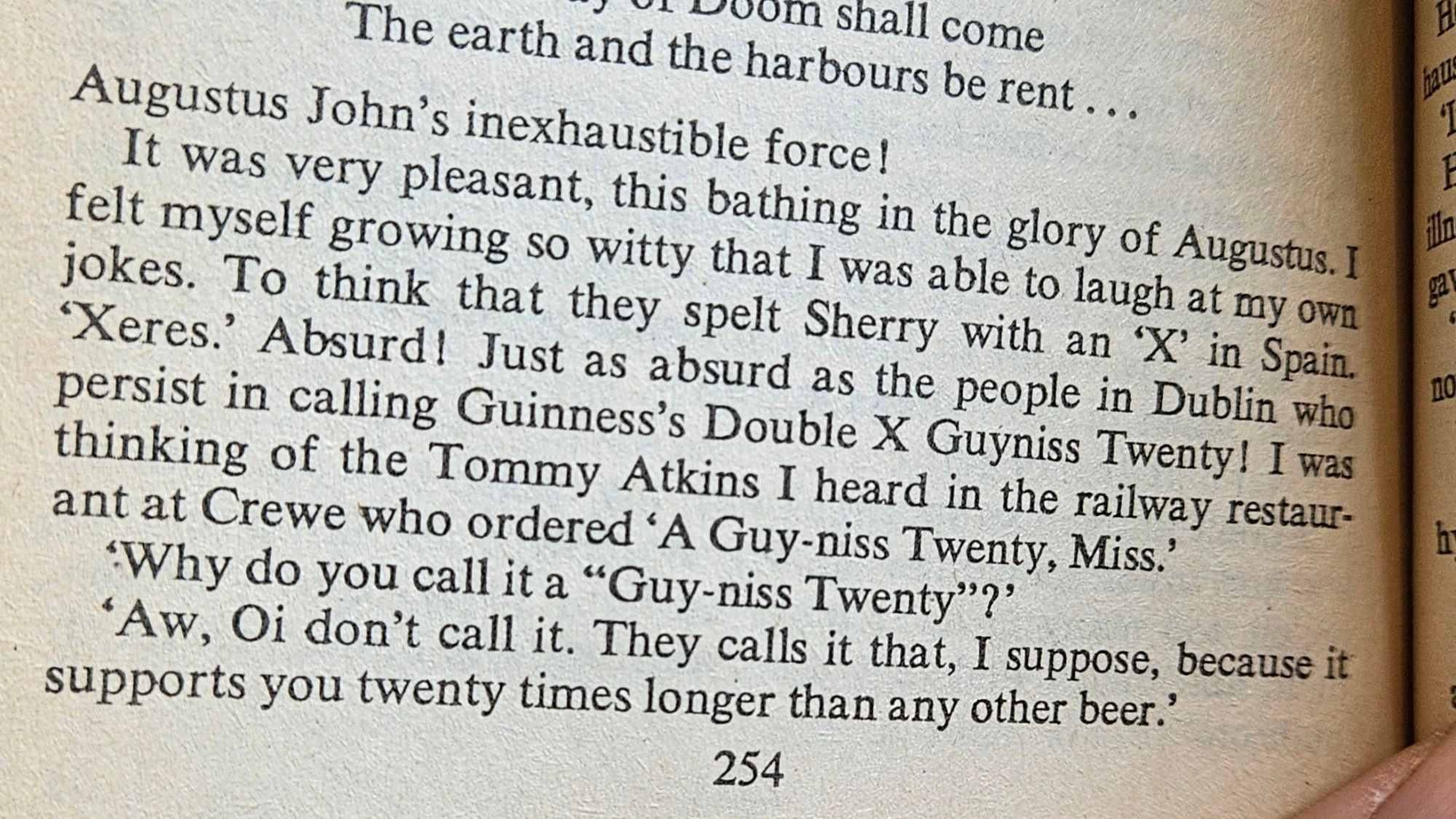
This is great. Up there is an image posted this week on Bluesky by Liam of IrishBeerHistory, a quote from the book As I Was Going Down Sackville Street by Oliver St. John Gogarty which is just excellent. I will refer to it as such from now on. Govern yourselves accordingly. You know what else is great? Now is great. March 1st to January 1st inclusive – totally great.* Napping with the windows open even if bundled up because it is only +5C. The same thing occurred to Katie apparently:

I managed to have a lovely half hour nap in my garden today without freezing solid. I’m doing the Scandi baby version of whatever that ice water guy does. Wrapped in blankies, having a lil sleepy outside.

These are the actual joys. So what’s out there for our beery naptime reading? First up, if you are looking for that rarest of things in these times – some good happy positive brewing news – look no further than David Jesudason’s almost alarmingly optimistic study in Pellicle of an almost alarmingly optimitic brewer, Andy Parker, the founder of Elusive Brewing in Wokingham, Berkshire:

The word ‘nice’ has often been banned by editors I’ve worked with. The attributive adjective is seen as a nothing word, used to describe anything from Rich Tea biscuits, to mild weather, or a stranger’s demeanour. It’s an archetypal British word, and one Andy is forever linked to. Worst of all, it’s a term that does him and his incredible brewery a disservice. Firstly, yes he is the nicest guy in beer, but there’s nothing superficial about why he’s ‘nice.’ Many people I speak to describe him as one of the most thoughtful, kind and—above all—considerate humans they’ve come across. I found him to be a great listener in the numerous times we’ve met.

In their Patreon footnotes to last Satuday’s post, B+B indicated** that they were having an issue finding note worthy writings, a problem I can empathize with – but that bears no connention to my mentioning this post by The Beer Nut who highlights some very proper quality control measures being taken in the face of an issue popping up:

The prologue to today’s beers is that they were both recalled from the market. A problem with the can seamer meant that not all of them were properly sealed, running the risk of oxidation. Craft Central were kind enough to refund me the cost of the beers and I checked with the brewery, Lineman, if it was OK to review them, since I couldn’t detect any flaws. Mark showed me how to spot the defective cans and I’m confident that neither of these were affected by the issue.

Bonus quality control about quality control right there, that’s what that is. Conversely, thinking about things getting out of control, some interesting news out of Britian as cuts to taxes imposed on beer have not had any particular positive effect on trade:

The relief reduced the tax on them by 9.2%. Mr Hunt said: “we’re protecting the price of a pint”. But beer prices have continued rising. The Office for National Statistics (ONS) said they were up 7.5% in January 2024 compared with the same month last year, with prices increasing every month of the year, despite draught relief…  figures show that almost exactly the same number of pubs closed in the UK in the second half of 2023 (266) as had closed in the first half (265).

The Cookie and the Mudge shared thoughts on this matter:

C: Does anyone really believe that if all the beer, pub, and Camra groups got everything they wanted in the budget, then pubs would enter a golden era of prosperity and success? They’d continue to die on their arse but just pay less tax in the process.
M: Yes, the long-term decline of pubs is primarily caused by social change, not by price.

I have to agree with that. It’s all bad news on both sides of the cash box and in other areas of life.  What’s a good sign that beer in the UK is priced at a pretty penny? Crime:

A haul of suspected illegal beer equivalent to 132,000 pints has been seized at a ferry terminal in south Scotland. Police worked with the Serious Organised Crime Taskforce and HMRC as part of the clampdown at Cairnryan Port, near Stranraer. … An HMRC spokesman added: “Disrupting criminal trade is at the heart of HMRC’s strategy to clamp down on the illicit alcohol market which costs the UK around £1bn per year.” 

Speaking of taxation of the pleasures of the nation, something of a milestone was passed here in Canada which bodes ill in another way.

Canada’s federal government collected more excise tax revenue from cannabis than it did from beer and wine last year. That comes as a parliamentary committee is recommending the government ease up on the cannabis tax. In the 2022-23 fiscal year ended March 31, the federal government received 610.1 million Canadian dollars ($450 million) from excise duties applied to beer. Beer and wine excise revenue combined was CA$887.7 million. Federal excise duties from cannabis that year, meanwhile, amounted to approximately CA$894.6 million, of which CA$667.6 million was transferred to provincial and territorial coffers.

See here, folk aren’t turning to crime so much as the now decriminalized. Yet… the national spliffy trade still complaining about facing headwinds… get it? But that is not really what has gone on:

Beer sales fell by 96 hectoliters per 100,000 people immediately after adult-use legalization, and by a further 4 hectoliters per 100,000 people in each following month, equalling an average monthly reduction of 136 hectoliters per 100,000 person.

So why they complaining when they are facing being the beneficiries of inevitable cultural change? Same as it ever was. And just to pile on the reasons for the miserable forecasts for beer’s future, Jeff explores another bummer of a story – did Covid make hangovers worse?

A recent paper suggests that hangovers are worse for people with longs Covid… The study only looked at four people and it’s just a review of their cases. Statistically, not much there… [but] – what portion of the dip in alcohol consumption and the rise in N/A may be due to people just feeling super crappy when they drink? We’ve had four years of young people coming into their drinking years. If their experiences were mostly negative—especially because drinking’s social component was dulled or absent—might they just have abandoned alcohol before developing the usual youthful infatuation with it?

Youth! What the hell do they know? Speedy if tenuous advice to youth segue! I came across a social media reference to The Instructions of Shuruppag, a Sumerian document from around 4500 years ago reciting older sayings predating the Flood. What I first noticed was one of those decontextualized “hey cool!” quotes people share just because it mentions beer a couple of times. But if you look at the text itself, you realize that the sayings are warnings of the wise aimed at a youth – as well as a window to a very alien, even very tenuous culture:

You should not boast in beer halls like a deceitful man… You should not pass judgment when you drink beer… You should not buy a free man: he will always lean against the wall. You should not buy a palace slave girl: she will always be the bottom of the barrel… Fate is a wet bank; it can make one slip… To have authority, to have possessions and to be steadfast are princely divine powers. You should submit to the respected; you should be humble before the powerful… You should not choose a wife during a festival… A drunkard will drown the harvest.

Grim life that, living in the shadow of the clay walls and those slippy dirt embankments that save you from the mountain people. Even with the beer. Somewhat related to the bottom of the barrel, VinePair has illustrated the lack of facinating beer writing by publishing the story you’ve perhaps not been waiting for:

Yes, it’s fine to drink the stuff hanging out on the bottom of the bottle. “It doesn’t give you the sh*ts. That’s preposterous,” Grimm says of brewing byproduct. “That’s where a bunch of the good B complex vitamins live.” And it’s true: Most brewer’s yeast is rich in vitamins. This doesn’t apply to hop particulates like one would find floating around in an unfiltered IPA like Heady Topper — we’re talking about the yeast, which tends to pile up at the bottom of saisons, mixed culture beer, and spontaneously fermented brews.

And here I thought the 2016ish “off-flavour seminar” fad was the dullest form of beer fan education that could be fashioned by humankind.*** Sludgy gak studies. Speaking of echoes of craft’s peaks past, at the end of last week and at the website of a homebrewing supply service, Matt discussed an interesting phenomenon of the lingering trade in sour and wild beers that once were craft fans’ darling but are now brewed perhaps as a bit of nod to nostagia:

The existence of each of these breweries is a statement. A financial analyst would probably describe them as being commercially unviable. But a romantic? They would call them bold, boisterous, and even necessary. Beer would be a hopelessly boring place if we just had a handful of similar beers to choose from, after all.  Considering their existence, it still leaves me with the question: who’s buying these beers? Or perhaps more pertinently, who’s going to be buying them in the future?

The future. It’s all about the future this week, it seems. It’s like no one took the advice of old Shuruppag. Makes me wonder if craft beer is like cable TV facing the onset of the information super highway… what did we call it 25 years ago? Convergence! We are now converged. How big is your cable TV bill or your landline for that matter? So many other things to do, so many means to an early death to avoid, so many other things to spend money on, so many other states of mind to achieve – including good old sobriety. Note:

Athletic Brewing is now the number one beer of any kind at Whole Foods. More than all of beer brands with alcoholic contents.

Not good. Or maybe real good. And things appear to be getting worse in China (if you can wade through the AI generated shit text) and Will Hawkes alerted me to the plug being pulled on Meantime in London:

BREAKING: Asahi is closing the Meantime Brewery and moving all production to Fuller’s… Staff were only told today. Asahi says ‘intention is for Meantime to retain a footprint in Greenwich … Plans are underway for the creation of a new standalone consumer retail experience, including a continuation of brewing’

Meantime was a pretty Wowie Kazowie! brewery in its day. My first encounter was on an August 2007 shopping spree in glorious Rochester NY,  with reviews of their Coffee Porter and the IPA the next couple of years. They got in to the LCBO here in Ontario in late 2009 or 2010 and were a regular for a while, perhaps last seen in 2019.  There you go. The past is a foreign land. Ron confirmed that truth to perhaps the contrary when he shared this week news of a revolution in 1970s pub gub in the UK:

There are three recipe booklets, one gives 50 meals using Batchelors savoury mince or farmhouse stew, the next giving 50 recipes for sweets from Batchelors and the third with 50 recipes for entrées from Batchelors ready dishes. All the products, from soup to coffee, and including quick-dried vegetables, are convenience foods. They offer no shelf-life problems, all being guaranteed for at least 12 months under normal conditions. Reconstitution is by the addition of water, bringing to the boiling point and simmering for varying periods up to about 30 minutes…  They may be made to suit the custom and, in particular, the evening out — when it is a natural thing to go to a pub for a few drinks and a meal not encountered in everyday household catering.

Holy Hanna! Sounds disgusting. You know why food like this is only sold to insane backwoods hikers and astronauts, don’t you!?!

That’s it! I can’t take it no more. Done. There we are… and again … we roll the credits… well, the credits, the stats the recommends and the footnotes. There is a lot going on down here and, remember, ye who read this far down, look to see if I have edited these closing credits and endnotes (as I always do), you can check out the many ways to find good reading about beer and similar stuff via any number of social media and other forms of comms connections. This week’s update on my emotional rankings? Facebook still in first (given especially as it is focused on my 300 closest friends and family) then we have BlueSky (124) rising up to maybe… probably… likely pass Mastodon (914) in value… then the seemingly doomed trashy Twex (up again to 4,463) hovering somewhere above or around my largely ignored Instagram (165), with sorta unexpectly crap Threads (43) and not at all unexpectedly bad Substack Notes (1) really dragging up the rear – and that deservedly dormant Patreon presence of mine just sitting there. I now have admitted my dispair for Mastodon in terms of beer chat, relocated the links and finally accept that BlueSky is the leader in “the race to replace” Twex even while way behind.

Fear not! While some apps perform better than other we can always check the blogs, newsletters and even podcasts to stay on top of things including the proud and public and certainly more weekly recommendations in the New Year from Boak and Bailey every Saturday and Stan promises to be back next Monday. Look at me – I forgot to link to Lew’s podcast. Fixed. Get your emailed issue of Episodes of my Pub Life by this year’s model citizen David Jesudason on the odd Fridays. And Phil Mellows is at the BritishBeerBreaks. Once a month, Will Hawkes issues his London Beer City newsletter and do sign up for Katie’s now revitalised and wonderful newsletterThe Gulp, too. Ben’s Beer and Badword is back with all the sweary Mary he can think of! And check out the Atlantic Canada Beer Blog‘s weekly roundup. There is new reading at The Glass which is going back to being a blog in this weeks best medium as message news. Any more? Yes! Check to see the highly recommended Beer Ladies Podcast. That’s quite good. And the long standing Beervana podcast . Plus We Are Beer People. There is the Boys Are From Märzen podcast too and Ontario’s own A Quick Beer. There is more from DaftAboutCraft‘s podcast, too.  All About Beer has introduced a few podcasts… but some may be losing steam. And there’s also The Perfect Pour. Plus follow the venerable Full Pint podcast. And the Craft Beer Channel on Youtube and remember BeerEdge, too, and The Moon Under Water… if you have $10 a month for this sort of thing… I don’t. Pete Brown’s costs a fifth of that. There was also the Beer O’clock Show but that was gone after a ten year run but returned renewed and here is the link! Errr… nope, it is gone again according to Matty C.

*Minus of course half of November. That’s it. Otherwise, best part of the year. The other ten weeks suck. The Leap Year thing made it worse, too. But the rest is great. Except… when the clocks change. That’s another bit of totally sucks coming up this weekend. Going to be totally baked next week, sun coming up at like 11:53 pm the night before. That really sucks. What’s the best beer for clock change Sunday? Coffee?
**“…we didn’t bookmark anything during the week, which is unusual. Then, when we checked our usual sources, we didn’t find tons of fresh writing that grabbed us. So, we dug deeper, and found some websites and blogs that were completely new to us… Heroes!
***Up there with branding consultants proclaiming the brand of their local business development clients is the best! The university’s press release is hilarious: commission a study to affirm a claim then reframe it as the awarding of a title.

The Near Mid-October 2023 Edition Of Your Beery News Notes

Took a week off this week just to make sure, you know, all the turkey leftovers were consumed and all the necessary prep chores were done well ahead of winter. To the right is half of the garlic crop as well as the bundle of garlic greens that will be tomato mulch next year. They get replanted soon. Haven’t noticed any particular theme this week but no doubt that quiet is due to the horrors in the Middle East piling upon the horrors in Ukraine. Facing uselessness in the presence of such evil, what do you do? Keep garden and scribbling? Yup.

First up, being October, Pellicle has a timely feature this week by Ariana DiValentino on one of the more venerable and more drinkable pumpkin ales out there, Pumking by Southern Tier of western New York State:

“Pumking should be the brewer’s target for a pumpkin beer,” he adds. Critics and craft beer fans alike echo this, crediting the balance between spicy, sweet, bold, and bitter. Personally, I think it manages to strike a balance in another way: the type of drinker it attracts. Though pumpkin ales are traditionally maligned, there’s something about taking one and turning the volume up to 11 that transforms it into a magnet for craft devotees. And yet, you don’t need to be a beer geek with an encyclopaedic knowledge of hop varieties to appreciate Pumking. You don’t even need to be a beer drinker, really; anyone who likes pie is likely to find the phrase “pumpkin pie in a glass” tempting. Drinkers come for the pie and stay for…also the pie, because in this case, there’s truth in advertising.

Southern Tier was a favourite of mine in the old cross border beer shopping days of ten to twenty years ago. I played a role in  bringing their beers into the Ontario market after years of enjoying their range of beers, especially the big ones that led up to Pumking. My first note on Pumking dates to 2009 when a bomber cost you $6.49, well after the after-party. My first pumpkin beer note goes back five years earlier to October 2004 when I bought Post Road by Brooklyn Brewing. But by 2011, unlike what the Pellicle article seems to suggest with the phrase “the nascent hype in the early 2010s“, cracks were already starting to show in the reputation of the long established style. Even the venerable The Atlantic in 2011 questioned their place:

Some beer styles are loved, some are ardently despised, but none is more divisive than pumpkin ales. Those who love them wait all year for their seasonal release; others can’t even broach the subject without foaming at the mouth. “I hate pumpkin beers,” wrote my friend and Washington City Paper beer writer Orr Stuhl. “Even picking a ‘favorite’ — say, Dogfish Head’s — is like picking a favorite airborne illness.”

Hah!! Good one. More timely and far less snippy, Jessica Mason has reported on some new solid data on inflation in the UK’s beer maket ‘Spoons sub-sector:

Using pricing data gathered at every Wetherspoons pub in October 2022 and October 2023 via the pub group’s app, the analysis identified how, currently, the average price of a pint of Carling in a Wetherspoons pub is £3.35. This has increased 11% since Oct 2022, when it was £3.02. According to the findings, 740 Wetherspoons pubs have seen inflation over the last year, 58 have seen deflation, and five saw no price change. Drilling down into the data, the Wetherspoons pubs with the highest inflation rates are The Rann Wartha, Cornwall (42.2%), and The John Francis Basset, Cornwall (42.2%) while the Wetherspoons pubs with the highest deflation rates are The Golden Beam, Leeds (-20.1%), and The Myrtle Grove, West Yorkshire (-19.7%).

I’ve always liked The Myrtle Grove… or at least I would have if I had ever heard of it. And it’s not just in the ‘Spoons. Sucker Juice is always right there begging for your attention:

Brewed independently by the artisans at Freetime Beer Co in Wales, Nothing Beer embraces a minimalist ingredient list; just water, rice, malted barley, hops, and yeast. “As a London-based tech company we are proud to have partnered with another independent British brand in Freetime Beer Co for this launch,” says Ryan Latham, Nothing’s Global Director Brand & Creative. While the limited-edition release (at £20 for a pack of six) is only available in the UK at the moment…

That’s $33 a six. Nuts. Everyone is on the take. Same as it ever was. Except it isn’t. Because inflation is also tied with contraction as Nickolaus Hines explains at the InsideHook:

“…beer as a whole [is] losing out to other alcohol categories, as well as the rise of people who abstain from alcohol altogether… “In plain English, the industry has lost about 30%, or 2.2 million, of its youngest LDA consumers in five years,” Purser said. “This is a pattern, and the current brand crisis has accelerated this broader category concern.”*

Somewhat relatedly in terms of the scramble, here’s a bit of a sad turn from the world of wine which I am quite aware of being replicated in a way in beer, a private financial exchange need to receive a tasting note back from a known beer writer – thus underlining any semblance of the writer’s independence. But in this case, it is the publisher limiting access to the notes issued by a group of critics to those out there who pay 160 Euros. Wine writer Jon Bonné considers the situation thusly:

The fascinating part: This is the first time I can recall anyone has taken a stab at putting a dollar figure (euro figure) on this specific bit of content generation. I won’t say it’s what the market has determined, but it’s what someone thinks the market will bear. It also cuts off at the knees one of the more wobbly arguments of recent years: that these tasting notes and scores are for consumers. Consumers are grabbing bottles from the aisle cap, or checking on the latest orange fad. These are for producers + their agents. If that’s so, then how much more ripping off of the fig leaf is this than the many existing shades of trade-writer clubbiness?

Speaking of wine, the Count Alexandre de Lur Saluces has died… which surely leads each of us to ask “who hasn’t been in this situation?”:

Unknown to the public at large, however, the count owned only 7 per cent of the estate with 48 per cent held by his elder brother and smaller amounts by other members of the extended family. They rebelled against his autocratic behaviour and lack of dividends, which led to an embarrassingly public fight,  when in 1996 they agreed to sell majority control to Bernard Arnault, the billionaire owner of the luxury goods conglomerate LVMH. Bitter words were spoken by all sides of the family, with the count declaring “Mr Arnault is financing [other family members] to get rid of me. If he gets hold of this château he will install his fashion models here and start producing a perfume called Yquem!’’

Indeed. And the no doubt well-perfumed Ron’s gone a bit further back, lingering in the early 1970s for a bit this month:

I’m just getting the mixture right between water and dirt to let me have a good old wallow in nostalgia. Or at least, casting a glance back at the past. And hoping no-one is returning my gaze. We were looking at Whitbread’s 1973 set of beers. Time now for the other fermentables: adjuncts and sugar. What should be remembered here is that Whitbread had long been a holdout in the use of adjuncts. Only starting to use them in 1965. Much later than most of their rival brewers. Other than wartime, of course, when they had no choice but to.

For Cider Review, Barry Masterson went a bit further back in time to the Middle Ages of Bavaria to tell the tale of perry’s hayday there:

A chance discovery I made while reading some older articles tracing the ancestry of Austrian perry pear varieties yielded one of the earliest definite mentions of perry in central Europe. The Bavarian-Austrian poet Neidhart von Reuental, probably one of the most famous Minnesänger or minstrels of the period, made a reference to perry in one song. Around 1240, after he had moved from Bavaria to the area near Melk in current day Austria, he added two verses to an existing song, written of course in Middle High German…

A great tale of daring do was set out in Twex this week, a story of inebriated public menace once upon a time in New York City:

In September 1956 after drinking heavily at a bar in New York City, Thomas Fitzpatrick made an intoxicated barroom bet that he could travel from New Jersey to New York City in 15 minutes. At 3 a.m. he stole a single-engine plane from the Teterboro and flew without any lights or radio before landing on St. Nicholas Avenue near 191st Street in front of the bar where the bet was made. The New York Times called it a “fine landing” and a “feat of aeronautics”. For his illegal flight, he was fined $100 after the plane’s owner refused to press charges.

For the double, we have another story of dissent from about the same time – but this time from Belgium:

Never forget how on Nov 16, 1949 a bunch of Belgian students from Ghent took over a fortress and attacked the police with fruit because the city had raised the price of beer. On November 16, 1949, 138 students (including one girl) entrenched themselves in the Gravensteen in Ghent. The battlements are adorned with playful student slogans, while the police and fire brigade are treated to overripe fruit and smoke bombs. The student-like violence can only be contained with the greatest difficulty by the police. The student joke is front-page news in the international press.

And you think you’re a beer evangelist. Pffft! Sadly, such clear-headed thinking, taking on issues head-on does not seem to exist in all quarters:

Paul Leone is the executive director of the New York Brewers Association, and he says craft beer simply isn’t a growing industry anymore. Before 2016, the growth of the industry was 10% year over year. “No doubt there are breweries that are looking to sell, there are breweries that are not going to make it for the long haul, unfortunately, but I would caution people and say that this is a business like any other business,” Leone said. “There are breweries that are no doubt struggling, and there are some that are expanding… We are not over-saturated and there is no bubble.”

I don’t know what to make of that… don’t worry be happy… whistling in the dark? Also not sure how homogenized craft beer culture is across North America. Can we even make generizations about the politics? I would note if pressed (contrary to Jeff’s suggestion that it identifies as left/liberal rather than right/conservative due to the Bud Lite botch of just a half a year ago) that in 2013 this was the results of a study involving a number of prominent breweries, mainly in Colorado – progressive as anything:

Craft beer drinkers tend to embrace healthier active lifestyles as well as exist on the fringe of conformity. This segment typically enjoys riding bikes, walking from place to place, hiking, camping and in general embraces an outdoor lifestyle. Consequently, they frequent places such as Whole Foods, Sprouts, local fresh markets, REI and national parks. Their choice of music is more generational than driven by their consumption of craft beer; most of the brew pubs we visited played indie-pop music like Dave Matthews, Mumford & Sons or Dawes. Our local observations revealed that many craft beer drinkers value independent thinking, counter-culture, progressive politics, creativity, intelligence, an appreciation of art and indie-rock, and witty banter.xxix  This definition matches the “hipster” sub-segment of the millennial generation. Craft beer drinkers did not appear to be lazy as they aspire to be accomplished and productive. Craft beer drinkers tend to be more professional than then the blue collar working-class.  

And remember: that New Yorker cover is coming up on its ninth anniversary. Still holds up… unlike Mumford & Sons. I am more in alignment with Jeff’s post this week, “The State of Beer Education” or at least the conclusion:

…as the everyman (everyperson) drink, most people feel comfortable ordering and drinking it without deep engagement. What makes it so popular is the very thing that leads to incuriosity. I have reconciled myself to this reality and, on balance, I think it’s a good thing. Beer is wonderful because its accessibility enables it to be the mass social beverage. That requires a simple, unfussy product.

I like that. But I don’t fully buy the route he gets there. Let’s be honest. Beer as a subject for an education just does not attract all that much actual independent study or scholarship other than perhaps in the bio department. Resulting titles are a bit overblown, newbie guides are praised as if they are a thesis while actual thoughtful writers are still refused footnotes by publishers. There isn’t even anything as detailed and complex as the popular annual guide for consumers published under Hugh Johnson‘s name but long overseen by Margaret Rand. [Get yourself a copy.] And too often beer courses are often proprietary, without a published syllabus or independent peer reviewing in any true academic sense. And beer (sorry to break it to you) is simply not “every bit as complex and nuanced as wine“* – especially in these days of adjunct focused, easy-to-please kettle sours and fruit sauce variants. But do you care? No! As Jeff says, the best of the many beer courses you can take online or at say a community college are very helpful entry points especially for ambitious brewery and bar staff but it is self guided study that creates the best education you can gain – whether with wine or with beer. On you way! Hit the books. If that’s your thing. If not, have a beer.

And… there are still no drunk elephants stories for Stan again this week. Just a drunk monkey on the loose in Indianapolis which… makes one wonder whether this is really news:

A monkey named Momo is on the loose in Indianapolis — and one neighbor reported seeing the simian sipping a beer. Indianapolis Metropolitan Police Department said Momo escaped from his owner’s home in the Ironridge Court area of the city’s east side on Wednesday and was subsequently spotted the Gate Drive neighborhood, about a quarter mile away. Police said they were unable to confirm whether Momo has bitten anyone while on the loose.

What the hell kind of good is a “monkey on the loose!” story if there isn’t any biting?!?! Fine. That’s it. As per always and forever, you can check out the many ways to find good reading about beer and similar stuff via social media and other forms of comms to connect. I have an update on the rankings. TwitterX is now really starting to drop in the standings. I am actually deleting follows there when I find strongly established mirroring accounts set up by favourite voices elsewhere. Now, for me Facebook is clearly first (given especially as it is focused on my friends and family) then we have BlueSky rising up to sit in a tie with Mastodon then the seemingly doomed trashy  Twex hovering somewhere above or around Instagram with Threads and Substack Notes really dragging – and that deservedly dormant Patreon presence just sitting there. Seven apps plus this my blog! I may be multi and legion but I do have priorities and am getting them in a row. All in all, I still am rooting for the voices on the elephant-like Mastodon, like these ones discussing beer, even though it is gardening Mastodon that really wins:

Alan McLeod | A Good Beer Blog (… me…)
Stan Hieronymus | The Man!
Boak & Bailey | The B² experience
Curmudgeon Ale Works | Jonathon is Brewing
Katie Mather | Shiny Biscuit and Corto
David Jesudason | “Desi Pubs” (2023) author
BeoirFest | They say “Let’s Talk Beer”
Ron Pattinson | The RonAlongAThon Himself
Al Reece AKA Velky Al | Fuggled
Jennifer Jordan | US hops historian
Andreas Krennmair | Vienna beer and lager historian
Beer Ladies Podcast | Lisa Grimm and colleagues
The Bar Towel | Toronto’s chat zone for beer lovers
Chicago Beer Society | Folk in Chicago getting social over beer
Jay Brooks | Brookston Beer Bulletin
Joe Stange | Belgian beer expert, beer magazine editor
Cider Bar | Barry makes Kertelreiter cider
Laura Hadland | CAMRA historian and beer writer
Brian Alberts | US beer historian
Jon Abernathy | The Beer Site
Maureen Ogle | US Beer Historian
Lars Garshol | Norwegian Beer Historian and Kveik Hunter
James Beeson | Beeson on Beer
Carla Jean | MAINER!!!
Thandi Guilherme | Beer Ladies Podcast Co-host
Lisa Grimm | Beer Ladies Podcast Co-host
Roy of Quare Swally | Beery ramblings from Northern Ireland
Rob Talksbeer | Podcaster and Youtuber
Anthony Gladman | UK Drinks Writer
Jeff Alworth | Manna Of Beervana
Northwest Beer Guide | Fairly self explanatory… but not NW Latvia…
Evan Rail | Prague based GBH editor, freelance writer, NYT etc.
Todd Alström | 50% of the Alströms
Jacob Berg | Beer talking librarian

Anyone else? And, yes, we also check the blogs, podcasts (barely!) and even newsletters to stay on top of things (though those things called “newsletters” where 1995 email lists meet the blogs of 2005 may be coming to an end of value… if the trend with so many towards the dull dull dull means anything… Lordy… it’s not my place to say but there’s at least two that seem think you still get paid by the word…) including the proud and public and certainly more weekly recommendations from Boak and Bailey every Saturday and Stan at his spot on those Mondays! Get your emailed issue of Episodes of my Pub Life by David Jesudason on many Fridays. And Phil Mellows is at the BritishBeerBreaks. Once a month, Will Hawkes issues his London Beer City newsletter and do sign up for Katie’s now much more occassional but always wonderful newsletterThe Gulp, too. Ben’s Beer and Badword is back with all the sweary Mary they can think of! And check out the Atlantic Canada Beer Blog‘s weekly roundup. There is new reading at The Glass. Any more? Yes! Check to see the highly recommended Beer Ladies Podcast. That’s good. And the long standing Beervana podcast . There is the Boys Are From Märzen podcast too and check out the travel vids at Ontario’s own A Quick Beer. There is more from DaftAboutCraft‘s podcast, too.  All About Beer has introduced a podcast…… but also seems to be losing steam. And there’s also The Perfect Pour. Plus follow the venerable Full Pint podcast. And the Craft Beer Channel on Youtube soon celebrating a decade of vids.   And remember BeerEdge, too, and The Moon Under Water… if you have $10 a month for this sort of thing… I don’t. Pete Brown’s costs a fifth of that. There was also the Beer O’clock Show but that was gone after a ten year run but returned renewed and here is the link!

*Phillies v. Braves fourth inning update!
**It is an observation often paired with “I don’t know much about wine…”  (Update: A point Jeff later sorta took pains to illustrate.) Sure, there are many excellent examples of fine and facinating beers but only a fraction of those found in good wine. Why? Vintages for one. In the twenty years since my first pumpkin ale, each decent winery has put out twenty versions of the same one wine and each winery puts out any number of wines. And then each one changes usually beneficially with understood time frames. There is so much to explore. Beer aging is now often sort of a joke – when it isn’t a source of familial accusation and humiliation!

Your Mid-February 2022 Edition Of The Beery News Notes And That Odd Problem With Rice

What a week! A trip to the dentist and the Federal imposition of the Emergency Measures Act!! It could drive one to drink. Except I haven’t. Had a couple of really good beers on Saturday, though. Stone City’s Ships In The Night. Oatmeal stout is rarely not a good call. But I have acquired my protest gear as illustrated, should any protests come my way. One must be prepared.

What else? Super Bowl. Stupor Bowl. Superb Owl. It also happened this week. Unlike much of the continent, me I had not one beer. I paid little attention to the game itself on TV which ended up as a bit of a yawner even with the close final score. But would it be better live? Well. it’s not exactly for the snack bracket me and my peeps, is it?

…a double measure of Don Julio, Ciroc or Tanqueray 10 would set punters back US$25. Meanwhile, the craft beer selections clocked in at $19, which would get drinkers a serve of Kona, Golden Road Mango Cart or Elysian Space Dust. The premium beer serve was Michelob Ultra, which was priced at $17. And it’s fair to say that fans were taken aback by the prices.

More breweries closed this week. As Jeff reported, Hair of the Dog and Modern Times -both of the US West Coast wound down in whole or in part. The latter announced it this way:

Today is the most difficult day we’ve ever had at Modern Times. Over the last two unimaginably challenging pandemic years, we’ve done everything we could to keep all of our newly-opened locations afloat in a landscape we never could have imagined when we began building them. As new leadership has stepped up and taken the helm over the last few weeks, it became clear that the financial state of the company that we are now tasked with directing is not just unsustainable, but in immediate and unavoidable peril

Hair of the Dog is/was one of the greats that never had dreams of delivery fleets and HR departments. Retirement is well earned. I put the last cardboard box from the fabulous HOTD misadventure of 2006 out with the recycling just last Sunday.

Elsewhere, building on the momentum to challenge the ethics within Ontario’s brewing industry led by Erin Broadfoot,  Mallory Jones the brewer and co-owner of my beloved Matron Fine Beer in nearby Prince Edward County on behalf of herself and fellow brewer and co-owner Jessica Nettleton, shared experiences of their lives in beer, starting with this remarkably concise statement:

Behind the ‘good times and camaraderie’ there is a dark underbelly, a booze-fuelled side, a sexist and skewed patriarchal side, a side that desperately needs to change.

Note in particular this statement: “…beer events often (read: all of them) result in over consumption which always equals disgusting behaviour from a wide variety of individuals on both sides of the bar…” It boggles the mind how it took so long for such obvious and open behaviours to be simply and plainly stated after years of the trade and trade writers telling us how it’s all one community and craft beer people are good people. I am very careful who I buy from now as well as whose word I take.

There was a great short video of a Polish railway standup tavern car on Twitter this week. One of my favourite memories of working in Northern Poland thirty years ago was the the Polish railway standup tavern car from Kołobrzeg to Gdansk. The good old PKP (“puh-ka-puh”). There is even “fruit syrup for beer” now.

Over in India, the government has taken a very sensible approach to the healthier regulation of the beer market that would be a great first step towards the listing of ingredients:

The Food Safety and Standards Authority of India (FSSAI) will soon come out with fresh regulations for two important everyday consumption items – bread and beer. Beer brands will have to disclose the calorie count per bottle or can while bread makers will be allowed to label products as ‘multigrain’, ‘whole wheat’, and ‘brown’ bread only if the items have specified amount of multigrain or whole wheat in them, FSSAI CEO Arun Singhal said.

There will be boo-hooing from the please-do-nothing crowd but calculation of beer calories is a reasonably straight forward matter. The only problem is how surprised the beer buying public might be.

Everyone one loves a story about a truck load of beer crashing across the roadway. I think only a load of fish thrown upon the hot asphalt is considered more remarkable but that’s because of the gross immediate squishy slippy driving conditions.

Martin wrote this week about the experience at a little investigate site of beer imbibations – a fitba corporate hospitality suite  – and found it… a bit sad:

£6.50 your pie and mash and peas from memory, and beer not much above Northern Quarter prices (double Kelham prices, of course). This is the cheaper end of the hospitality market, giving you a nice seat with your pre-match pie and pint, and seems to be a treat for the old fellas and the well-off bloke dragging his girlfriend to the match. And then you walk from the social club style bar to your padded seat and get distracted by Caitlin Jenner and goal flashes from Blackburn.

He then had a bit cheerier but also reflective experience with his Pa, down at the Plough & Fleece:

Across the road, we could see the nondescript cafe at Scotsdale Garden Centre busy as usual. The coffee and cake at the garden centre has long replace fish and chips and a pint at the pub, even though the pub is often cheaper and always the more homely option.

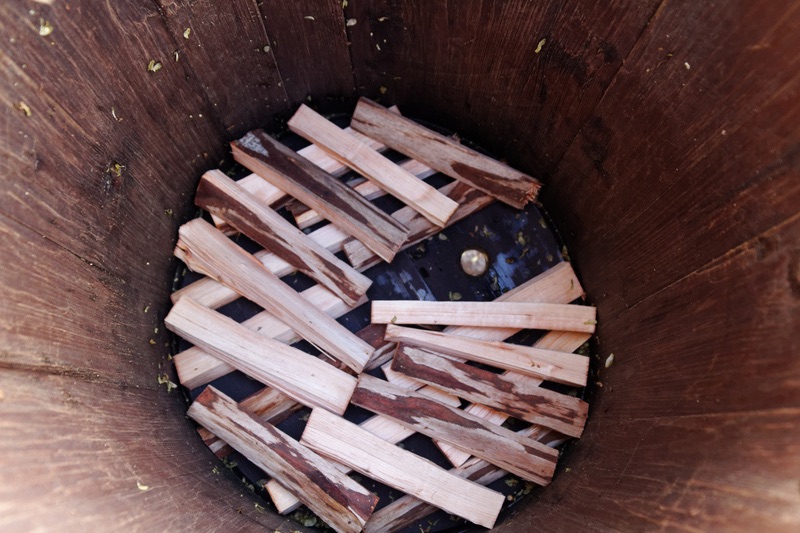
Lars as usual used social media to the fullest this week to discuss the role of alder wood as a filtering tool in Norwegian farmhouse brewing undertaking both hallmark mapping excellence and scientific journal review enroute:

I found a modern scientific paper which extracted substances from alder bark that they found to be antibacterial. Unfortunately, they were also antifungal and very effective against yeast, so clearly the concentration in beer isn’t enough to have an effect.

Q: has beer historian Amy Mittelman returned to beer blogging?

And just before the long last topic,  this week we received the sad news of the death of one of the leaders in the early years of the UK’s craft beer movement of 12-15 years ago. Dave Bailey was the owner of the Hardknott Brewery which was founded in 2006 and closed in 2018. He was sought out and sought out others who were thinking about beer, like we see in 2009. Alistair at Fuggled interviewed him in 2010. Dave’s brewery was as well known and certain as central to the scene as BrewDog in those years. He was only in his mid-50s when he passed. Dave was a great friend to those interested in discussing good beer and was a regular chatting in social media. My earliest Twitter chats go back to 2009. He kept an excellent beer blog that gave the straight story about life as a small scale brewer like when in 2017 he shared painful business realities connected to the question of how far to capitalize his venture. He had announced in 2020 that he was living with cancer. Very sad news of the loss of a pioneer. Thoughts are with his partner in life and business, Ann.

Finally, there was a bit of faff over the weekend about something claimed to be “Japanese Pilsner” which was neatly summed up by Jenny Pfäfflin this way:

Anyway, brewers using rice in their beer =\= a “Japanese Lager”—it’s a made-up style in that sense—but I don’t think you can write off the possibility there are distinct ingredients and processes that make Japanese-made rice lagers a style of its own…

I called it a fiction and some poor widdle cwafters went a bit boo-hoo. But were they right? It is always important to understand you may be 100% wrong 100% of the time. So let’s see.

First, the thing is even with that narrowing of focus that Ms. Pfäfflin recommends, we have to consider how late brewing beer came to Japan as well as how rice came to be in beer. Until around the time of the US Civil War in the mid-1860s, Japan was governed under a feudal system which had a strict cultural and economic isolationist policy that the western powers were actively seeking to break down. Breweries founded in the ensuing Meiji period were European and even American affairs. As I mentioned last November, the Spring Valley Brewery, founded in Yokohama in 1869 by Norwegian-American brewer, William Copeland. That brewery later becomes the Japan Beer Brewery Company and then Kirin. In line with the new general national policy of opening up to industrialization, what is now Sapporo was founded by what looks like a government agency, the Hokkaido Development Commission which hired Seibei Nakagawa, a Germany-trained brewer, as its first brewmaster in June 1876. Sapporo still brews Yebisu a Dortmunder/export lager, and Yebisu Black, a dark lager which were  first brewed in Tokyo in 1890 by the Japan Beer Brewery Company. These breweries were brewing German beers. As the CEO of Kirin Brewery, Kato Kazuyasu, in 2011 stated:

The Japan Brewery Company shared its primary objective of brewing authentic German beer. Veteran German brewmasters were recruited and the most advanced equipment and steaming systems of the time were acquired, all under the mantra of providing Japanese consumers with the most authentic quality and satisfying taste possible…

Now… consider Japan’s next few decades. Expansionist military imperial government leading through the Russo-Japanese War of 1904-05 through to the end of WWII. European influence continued in partnership with government industrialization policy as described in the 2014 article “Structural Advantage and the Origins of the Japanese Beer Industry, 1869-1918” by Jeffery W. Alexander*:

Like Kirin Beer, the firm that we know today as Sapporo Breweries Ltd. underwent a rather complex evolution – one that would take twice as long to unfold and would involve four unique phases through 1949. The first three of those phases are of interest to us here, for between its founding as a government-directed and development project in 1876, its reestablishment by private investors as a limited company in 1888, and its merger with two major rival brewers in 1906, the brewery received extensive technical assistance from a variety of foreign experts.

Through this merger, the Dai Nippon (Greater Japan) Beer Company, Inc. was created on 26 March 1906. It was only broken up in 1949 as the Allied Occupation forces sought to reverse the imperial policy of concentrated economic power. And, as Alexander states, beer in Japan “was brewed, advertised, and sold in Japan as a proudly German-styled commodity into the late 1930s.

After WW2, the United States occupied Japan from 1945 to 1952. There was an economic boom starting in 1950 due to the UN using Japan as it base for the Korean War. Starting at this time, breweries like the smaller Orion shifted from German style brewing to beers which more reflected American tastes. Not much of a vernacular brewing tradition to this point. For the next few decades that consolidated industrial approach continued as a handful of macro industrial brewing supplied the market (as Alexander states elsewhere**) “until Japan’s government decided in 1994 to again permit small-scale brewing.” Kirin held over 60% of the market during those years and competition was primarily related to draft innovations, packaging design and the dry beer market. Japan’s generic international-style macro adjunct lagers which required a minimum of 67% barley malt*** were joined by sub-standard happoshu starting in 1994 and in 2004 sub-sub-standard zero-malt dai-san biiru, a third-category beer all to feeding, one supposes, the salaryman market.

As Lisa Grimm explained in her 2018 Serious Eats article, early Japanese small breweries replicated the adjunct lagers:

The first craft brewery to open in Japan was Echigo Beer, and they struck something of a balance between the entrenched ‘dry’ beer trend and German- and American-influenced craft brewing techniques. In addition to pale ales and stouts, they also made (and continue to make) a rice-based lager that competes with the bigger players in the market—something of a gateway beer.

By twenty years ago, the Japanese branch of the globalist craft beer movement was moving at pace. Created in 1996 as the brewing division of an establish sake maker, Kiuchi, Hitachino Nest is one of Japan’s best known craft brewers. Its Red Rice Ale is first logged by a reviewer at the BeerAdvocate in 2002. So it’s done… even if only as a recent thing. But whatever is done, like German lager brewing in the later 1800s as well as US macro brewing in the mid-1900s, it is being done on the crest of another wave of globalist economic and technological innovation – craft.

So when you read about an American-made Japanese pilsnerbrewed with rice in the Japanese tradition” you have to understand this is really a sort of untruth. And a bit of cultural appropriation, I suppose. Rice in beer is an American innovation. American restructuring of the economy of Japan in the mid-1900s introduced rice into beer brewing because that is how Americans brewed. But that may make it actually a sort of truth as long as we set aside the fibs of craft and look at the situation with a more open mind. Let’s continue to look around a bit more.

When does rice get into beer? In Ambitious Brew, Maureen Ogle tells us in detail how Adophus Busch in the 1870s experimented with a form of what looks like a decoction brewing method which had eight pounds of rice to every five bushels of high quality barley.**** Light and bubbly beer. Tremblay and Tremblay explain how rice is used in the best US adjunct beers still to produce the effect they call “crisp” with again a fairly limited amount being all that is required. Budweiser, Coors and Miller Genuine Draft all having just under 5% rice in the mash which include +/-20% other adjuncts.***** They also explain how around 1950 US national advertising of beer hits its stride with Anheuser-Busch, Pabst and Schlitz being the premium brands.****** What America wanted. Home or away. It is so popular that the brewers of Canada in the mid-1920s******* during US Prohibition started brewing rice beer to serve the huge and very lucrative bootleg market. Including in Japan where they were the occupying government restructuring the economy including a oligarchical macro brewing industry that stayed in that form of few players, big players for the next 45 years. Which makes Japanese premium rice lager US premium rice lager.

Not only does rice make beer crisp, it makes production cheap. Barley malt is the best barley, the rest going to cattle feed and Scottish soups. Rice for brewing, however, is broken rice:

As brewing adjunct, rice has a very neutral flavor and aroma, and when properly converted in the brewhouse it yields to a light clean-tasting beer. Rice for brewing is a by-product of the edible rice milling industry, any kernels that may get fractured during the milling process (~30%) are considered undesirable are therefore sold to the brewing industry at a cheaper price. ********

The adoption of rice in brewing was part of a general move over decades to move away from heavier foods and drink, what Tremblay and Tremblay call “the growing mass appeal of lighter beer which drove most of the domestic brewers of dark beer out of business.“********* Short-grained or japonica rice is preferred in brewing.+ Japan’s brewer ride that wave, too, as part of the globalization of US macro industrial adjunct lagers that made Carling out of a Canadian beer, gave Kenya Tusker, gave Australia Fosters, etc. etc.

One more thing. How does rice get to the US to get later into the beer? In The Cooking Gene Michael W. Twitty explains how the Asian strain of rice came to colonial America in 1685  care of a very lost ship from Madagascar. Captured and enslaved people from Africa who knew how to grow rice were used forced agricultural labour and by 1770 150,000 acres of the US eastern shoreline were slave labour concentration camp rice plantations with 66 million pounds produced annually.+* After the US Civil War, about when Japanese isolationism policy weakens, rice production drops with emancipation but then shifts inland and become mechanized in Louisiana and Texas which, by the 1890s, are producing 75% of the US rice crop.+** Which creates a lot of broken rice for brewers, notably quite distinct from the top quality rice used in sake.+***

So if, starting in 1685, short grain japonica rice comes to the US, becomes a massively valuable cash crop with a very useful by-product of broken rice that is found to have a role in US macro brewing and then is taken to Japan as part of the post-war era of US Occupation… hasn’t that strain of rice circled the globe over about 260 years? And hasn’t the history of Japan been so affected by these global influences… even if they are arguably economic colonial or even technological hegemonistic influences… that their culture legitimately has a tradition of international rice adjunct premium lager that could be called “Japanese rice pilsner”? Hasn’t Japan’s brewing history been almost entirely based on international influence from the 1860s to now? But can you have a national tradition which is not… vernacular? I will leave that question with you as you next look at a bottle of craft beer labelled Japanese traditional rice pilsner which says “made in the USA” on the back. +****

Nice. There. Done. For more check out the updates from Boak and Bailey mostly every Saturday and from Stan every Monday, plus more with the weekly Beer Ladies Podcast, and at the weekly OCBG Podcast on Tuesday and sometimes on a Friday posts at The Fizz as well. There is a monthly sort of round up at The Glass. (Or is that dead now?) There is more from the DaftAboutCraft podcast, too. And the Beervana podcast. And sign up for Katie’s irregular newsletterThe Gulp, too (… back this week!) And check out the Atlantic Canada Beer Blog‘s weekly roundup. Plus follow the venerable Full Pint podcast. And Fermentation Radio with Emma Inch. The AfroBeerChick podcast as well! And also look at Brewsround and Cabin Fever. And Ben has his own podcast, Beer and Badword (which I hope is  revived soon…)  And remember BeerEdge, too, and The Moon Under Water.

*Brewery History (2014) 158, 19-37.
**Brewed in Japan – The Evolution of Japanese Beer Industry” (UBC, 2013) sample introduction at page 5.
***Not the main ingredient as some claim.
****Ambitious Brew (Harcourt, 2006) at pages 76-77.
*****The US Brewing Industry (MIT, 2005) at page 7.
******Ibid., page 52-53.
*******The King v. Carling Export Brewing & Malting Co. Ltd., 1930 CanLII 46 (SCC), [1930] SCR 361 at page 373.
********The Use of Rice in Brewing” in Advances in International Rice Research (InTech, 2017) by O. Marconi et al. at page 57 as well as this at page 51: “Usually, brewer’s rice is a byproduct of the edible rice milling industry. Hulls are removed from paddy rice, and this hulled rice is then dry milled to remove the bran, aleurone layers and germ. The objective of rice milling is to completely remove these fractions with a minimal amount of damage to the starchy endosperm, resulting in whole kernels for domestic consumption. The broken pieces are considered esthetically undesirable for domestic use and sold to brewers at a low price. Rice is preferred by some brewers as adjuncts because of its lower oil content compared to corn grits. It has a very neutral aroma and flavor, and when properly converted in the brewhouse it results in a light, dry, clean-tasting and drinkable beer.”
*********Tremblay and Tremblay, supra, at page 107.
+O. Marconi et al., supra, at page 50.
+*The Cooking Gene by Michael W. Twitty (Amistad HarperCollins, 2017) at page 243.
+**See Wikipedia article “Rice production in the United States” at section on 19th century.
+***See MTC Sake and Home Brew Sake websites.
+****Heck, name a brand “1685+1876+1945+1994=???” if you like.

Fine… It’s March And Here Are The Thursday Beery News Notes

I thought the new month would have made a big difference. But a couple of twelve hour days in hard black shoes and a snow squall meeting me as I got off the bus that finally made it through rerouted traffic and, well… well… well, at least it ain’t February any more. Let’s see what is going on!

First, there was much fretting in Engerlant over the shadowy Portman Group issuing an edict against a beer label. Now, I’ve beer posting about the shadowy Portman Group’s edicts since at least 2008 so I don’t really care that much now. But the fretting of others was remarkable. SIBA objected to the lack of much due process. The BBC covered it like it was an actual news story. Martyn wrote: “Running with Sceptres is not the ditch to die in over the Portman Group and its bans…” and then wrote more. Folk were cloyingly superior, spitting angry and even spent all the rent money. Pete went all Pete and shouted from the barricades that we need to “…check out the beautiful, sometimes strangely moving, artwork.” See, that is my issue. To me, that label on the can looks like panels stolen from a 1950s Rupert the Bear book.  And me, I don’t buy beer for the artwork and especially not Rupert the Bear rip-offs. In fact, if the art is too good, I assume they are cutting corners on the actual brewing resources. The money can only be spent once after all. Watch yourselves out there.

In another chapter of the tale how craft goes bad, we learned that Goose Island tri-packs with bottles of 2017, 2018 and 2019 Bourbon County stout have been marked down in the US Midwest to about 20% of their original inflated price. Imagine how many casks of the 2020 and even 2021 are sitting there in brewery warehouses… err… cellars with operating managers knowing how little it is really worth now. With such bad value, maybe they will be candidates for that #FlagshipFlotsam* thing one day.

In yet another sign of craft’s collapse, I had originally thought that this was a parody post from Ben, the tale of a overly-branded vegan brewery in Toronto shutting:

It’s like gentrification on human growth hormones, delivered by “The 5700,” a company that “manages a growing portfolio of lifestyle and entertainment brands that live online.” Now excuse me while I clean up the rage-induced blood-vomit typing that phrase has induced. Vegandale Brewery, which seemed to actually just be a coat of paint and a new name for the main floor of the existing Duggan’s Brewery, who officially moved to the basement of the location six months ago, wasn’t helping the image of veganism. Vegandale Brewery launched with the slogan “Morality on tap” and poured beers like Morally Superior IPA and Shining Example Stout. Yikes.

One last bit of endtimesy-wimsey news from CNY:

The Gordon Biersch Restaurant Brewery in Destiny USA closed today, joining a growing list of locations the national chain has been shutting down across the country. The brewpub — a restaurant with an attached brewhouse — opened in the Syracuse mall in 2012 and occupied a space on the first level, near the Hiawatha Street entrance.

I went there once as the family shopped out in the unending megamall for transitory branded objects. I came away with no actual recollections of the experience. Apparently, I was not alone… or at least not as alone as the bartenders were.

More in line with the “get in line” section of the news, I was glad to see this bit of law enforcement in Ontario’s news this week:

Jason Fach, 38, pleaded guilty to impaired driving causing death in December. An agreed statement of facts says that he had had four 20 oz. beers in a little more than an hour at St. Louis Bar and Grill the night of the crash. Fach has been sentenced to six years in prison. On Feb. 28, police announced that they had charged the restaurant, its owners and two staff members. The charges include selling liquor to an intoxicated person, permit drunkenness on licensed premises and failing to facilitate inspection. Under Ontario law, an establishment and its ownership can be held responsible for overserving someone.

The liability of a licensed establishment is distinct from social host liability in which responsibility is much reduced here in the land of the maple and the moose.

On another sort of establishment in another land, Retired Martin posted a lovely photo essay, a snippet of one of which sits above, on a very specific topic this week:

“Should it be open ?” I asked the chattiest of the group, all of whom had OS maps in plastic wallets round their necks. “Oh yes, I phoned them up before we set off. They SAID they’d be open”. Hmmm.

Even more elsewhere, it was Icelandic Beer Day last Sunday.

A nice posi-post of a piece on a lager was sent out via the internets by Pellicle this week:

Thankfully, there was Keller Pils, a lemon-bitter pale lager from Bristol brewery Lost and Grounded. The first barely touched the sides: one gulp, two gulps, three gulps, gone. The second, golden and glistening with condensation in a Willi Becher—a classic straight German glass that tapers elegantly towards the top—took longer. It was crisp but rich, toasty and bitter, direct and deeply rewarding.

One problem with these sorts of nice posi-posts is how they remind you of other positive experience unrelated to the subject matter. I can think of fifty other beers that have happily let to “one gulp, two gulps, three gulps, gone” which is not, I suspect, the point of writing about a particular thing. I did notice the pretty can, however. And this rather honest comment from a co-owner of the brewery:

“It’s like a Rubik’s cube, you know?” Alex says. “It’s about the branding. It’s the communications. It’s the quality of the product. It’s about people out on the road talking about it. It’s about how you work with the wholesalers … it’s all sorts of everything.”

And speaking of nothing in particular, here’s an interesting bit of spam by email:

I am the marketing director for Jolly Pumpkin Artisan Ales. As you may know, Jolly Pumpkin is an all wild, oak-aged brewery. We are announcing the launch of a new canning line for our wild ales and thought that your readers might be interested in the news. The first beers off the line will be year-round favorites, Bam Bière and Calabaza Blanca. We will also be canning Hyrrokkin, the first release of a new fruited seasonal saison series. 

Jolly Pumpkin in a can! Long term readers will recall when I spent a happy late afternoon in the company of owner/brewer Ron J back in 2007 when beer bloggers were still unique enough to not have the parking lot lights turned off and all the doors locked when one showed up to check out a brewery.  Now they sell the stuff in a can. Pretty cans. Life comes at you quickly.

Speaking of the most fabulous thing I heard related to the drinks trade this week…

The bartender at the Radisson Kingswood Hotel in Hanwell, near Fredericton, helped deliver a baby in a snowstorm on Thursday night. Storey said she got the call when she was closing down the bar for the night. “The person who works the front desk, Nick, comes over and says, ‘There’s someone having a baby in our lobby,'” said Storey. “At first I thought he was kidding.”

That’s enough. Once a child is born we have hit peak beer news for the week. And remember, if you want more beer news, check out Boak and Bailey most Saturdays, plus more at the OCBG Podcast on Tuesdays and sometimes on a Friday posts at The Fizz as well. And sign up for Katie’s weekly newsletter, too. There’s the AfroBeerChick podcast now as well! Plus the venerable Full Pint podcast. And Fermentation Radio with Emma Inch. Check them out. They are like blogs but with people speaking and saying “umm” a lot instead.

*…which is still really better than #JetsamJanuary if you think about it.

These Be The Final Thursday Beery News Notes For February 2020

Go. Go put on your 45 of Don McLean singing “American Pie,” his lament for the milestones marking the ends of innocence during the first two decades of the rock ‘n’ roll era. Go put it on and have have a good cry because that’s sorta what happened this week. BeerAdvocate got bought.  They didn’t “join forces” with anyone.* As they explained on Monday:
A large portion of our business relied on revenue from BeerAdvocate magazine. As the focus of readers and advertisers shifted over recent years, our publication wasn’t immune to the issues that have impacted the entire print media industry. Next Glass stepped up to ensure that our awesome community that we’ve all worked hard to cultivate since 1996 can continue to thrive for years to come.

They ran out of dough and needed someone to take them over. Which is fine.  Next Glass runs that Untappd thing I don’t use but others do. So that is good. BeerAdvocate  will continue in a fashion but just not what they have been doing excellently for over twenty years.  I share the photo to the right as testimonial to their excellence. I took that photo and they like it so much they put it in their magazine in the December 2007 edition. Didn’t ask. Didn’t pay me for it. But I got a good complaining post out of it sixteen years ago so it all worked out in the end.** But it sucks that they had to take a buy out.

From the archives and related: the state of beer mags in 2007.

As mentioned last week, Jancis Robinson is asking questions about the transport weight of wine bottles in a world more and more concerned with sustainability:

The most sustainable way of shipping wine is by sea in a tanker. A wine shipped in bulk to New York from Australia could easily have a lower carbon footprint than one trucked in bottle from California (though behemoth Gallo has long shipped wine across the country by rail). A container of bulk wine holds two and half times as much wine as a container packed with conventional 75-cl bottles. It may sound dreadfully unromantic, but the technology of bulk shipping of wine has improved beyond recognition in the last few years, as has the expertise of professional wine bottlers in major wine-importing countries in northern Europe.

What weight of beer is shipped around the world and how big a carbon footprint does that represent? Should that be calculated into the value of an imported beer – or a big craft beer shipped by truck across the continent?

Best image in beer this week from B and the other B.

Ben, Canada’s leading beer writer best known for not writing that much about beer anymore,*** took the time to do what I can’t be bothered to do – complain about #FlagshipFebruary which is on its last legs… err, week! I meant week!

At the risk of opening my door tomorrow morning to find a frothy-mouthed Beaumont on my porch with a straight razor in his hand, I’d suggest the way to move the needle forward in craft beer isn’t to have a handful of established beer writers talk about a handful of beers that were once relevant. They (the beers that is) are essentially relics of a bygone era and while they broke down doors for today’s craft beers, our interest in them now is and should be a sort of reverential nostalgia and tolerance. Instead of endearing icons, I’d suggest they’re now a bit more like once-great athletes, hanging around their respective sports just a little too long.

Yesterday’s beer for yesterday’s fans brought to you by yesterday’s… Oh. Yes… err… no… that would be unkind.

Note: …and then Ben goes and posts one of his best posts ever**** on Wednesday on the cancellation of the Ontario Beer Summit, a beer diversity conference in Toronto that was being organized by indefatigable Ren Navarro, due to lack of buy in from the target audience, aka the local craft brewers.

Katie is writing something… but what?

In the hot legal new department, Brendan tweeted about the Estate of Johnny Cash (yeah!) suing something called Cash Brewing Company Inc. (boo!) for ripping off the man in black’s trademark.  They even have a beer named “The Can in Black” which I think qualifies as a bastardly thing to do to the memory of old Johnny.

Dr. Christina Wade has written about on the connection and disconnections between alewives and witches in early modern England:

While we may never truly know if alewives were accused of witchcraft simply because they were alewives, it is clear that women who brewed were perhaps particularly vulnerable to the witch-hunts.

Not moving far in space but certainly in time, a brewer in Norfolk, England is pushing a beer barrel on a 140 mile trip. Why? To to raise money for the testicular cancer charity, It’s On The Ball. BBC Radio Norfolk has the story somewhere in this three hour broadcast at about the two hour and fifteen minute mark.

Stan’s Hop Queries digi-hop-zine came out this week and included this observation:

Peter Darby, who has been breeding hops in England for almost 40 years, once said this: “English flavor is like a chamber orchestra, the hops giving simultaneously the high notes and the bass notes. In comparison, a Czech beer is more like a full orchestra with much more breadth to the sound, and an American hop gives more of a dance band with more emphasis on volume and brass. The recent New Zealand hops (e.g. Nelson Sauvin) are like adding a voice to the instrumental music.”

I usually hate that sorta thing but I don’t fully in this case. Almost. Analogies? Really? So 2008. I really only mention it to remind you to sign up. That up there is just a tidbit and a bit of a blip at that on on the great information he periodically produces through the periodical. Did you know that there were 770 attendees at the 2020 American Hop Convention? Neither did I… until Stan told me so.

Stan also sent me an email asking my thoughts on this book, How NOT to start a F@ck!ng Brewery. I checked out the Amazon “Look Inside!” thingme and had flashbacks from writing the Al and Max book. So much dirty language. So much. 

And finally, sad reality in the form of far grimmer bit of news than anyone would want to have to face was shared on Wednesday with the shootings at MillerCoors in Milwaukee. Terrible news. Yes, be excellent to each other.

Next week, on to March. In the meantime for more beer news, check out Boak and Bailey most Saturdays, plus more at the OCBG Podcast on Tuesdays and sometimes on a Friday posts at The Fizz as well. And sign up for Katie’s weekly newsletter, too. There’s the AfroBeerChick podcast now as well! Plus the venerable Full Pint podcast. And Fermentation Radio with Emma Inch. What else? What indeed.

*They also confirmed on their blog post that they didn’t run a blog, either.
**…and I never saw a case of beer either, Evan.
***A remarkably packed field competed for this award.
****Blogs are back, baby!

The First February Thursday Beer News Notes Of These Our Roaring Twenties

When I was a lad, there were common end-of-the-world tales and prophecies that circulated in the grocery store checkout newspaper headlines and junior high hallways. Nostradamus and his fanboys. I think all the dates that were ever suggested are now in the past. Twenty-twenty was never actually much on my mind. But it has a certain ring. We even had reverse twenty twenty / forward twenty twenty this week. Which is very cheery. Pink dress shirt with key lime necktie cheery. Be of good cheer. March is just four weeks away. The dark days are coming to an end.* As Katie** wrote in her latest newsletter, The Gulp:

The soil is warming up. The snowdrops have started meeting in their cabals, in open defiance of the iron grey sky. I’ve seen them. We’re nearly there.

You know what is very 2020? Sobriety. There is talk of it, for example by brewery staffer Jemma:

Not that I was a raging alcoholic, but the daily drink (or two or three) is considered normal and expected, and it was time for me to just kinda put myself in check. I had to prove to myself that I could go without alcohol and I’m proud I was able to.

There are sober bars out there, sober event spaces, calls for sober diversity and there was even a bit of a messy wander in PR publication October, too. But it would be messy, wouldn’t it.  I’d worry about any self-clearing self-diagnosis… you could be a raging alcoholic… I’ve sat with many a yellow eyed beer worker telling me about the distance between themselves and alcoholism. Consider Greta, too. Sobriety may be the new glitter. Or it may be made up of admissions others would do well to heed.

Noteworthy #1 : Chibuku from Botswana.

Noteworthy #2: the shadowy Portman Group*** neatly summerized.

Noteworthy #3: Jeff considers his tenth ‘lance-a-versary.

TBN congratulated Englishman abroad Ron on his subtle celebration of Brexit this week, as illustrated. Ron fell back on his regular “I’m thinking now I should pretend it was deliberate” but I don’t buy it. More to the point, what does it mean. Barm is yeast. Was it a yeasty stout? Why can’t people think of my needs when discussing things in my absence?

JJB posted another of his wonderful vignettes of his beloved Italy, of a bar he visited in Sicily while also exercising his right to be an Englishman abroad:

Despite the silly English language beer names and descriptions, I was mightily impressed with Ballarak during what was by necessity a fleeting visit. I subsequently learned that the brewery has another, more food-led venue in the Kalsa, a much less sketchy district of central Palermo (the Ballarò is wonderful, but not for the faint-hearted). I’ll be sure to visit both sites when I’m next about.

Elsewhere… hmm… let’s see… you know, I wonder sometimes about the regularly recycled beer topic like explaining freshness, food and beer and Stan’s favorite, the wonderful world of off-flavours.  Too bad Ladybird Books don’t put out a series of “Craft Beer for Youth” so that they could all be under one cover and on a bookshelf I don’t have to encounter. Next to the newspaper rack coated with fabulous headlines like “Three guys who like beer start a brewery.”****

Somewhat related, in my spam email folder, I found a letter of complaint sent by Arran Brewery of Scotland about a bottle deposit scheme proposed by the government in Edinburgh:

Gerald Michaluk the Managing Director of the brewery, like the vast majority of his fellow brewers, are set against the Scottish Governments proposals.  “It is clear this is a terrible scheme, ill thought through and will disadvantage the small brewers and the smaller shop keepers. At a time when, along with other policies, is seeing the brewing industry is being tightly squeezed from all directions this could be the final straw that breaks the camels back.  

The BBC covered the story back in May 2019. I mention this because Ontario has had standardized beer bottles for yoinks and a cooperative returns system since 1927 and it seems to work wonderfully with significant public acceptance.

Another sort of mental rut was noted in relation to Tony Naylor’s article in the Guardian headlined “£96 a bottle: the exotic beer that is as expensive as vintage wine” which rather sensibly points out the factors which caused such a fright. When challenged, the author tweeted this:

Who’s this “we”? I’ve always been 100% against ‘refined connoisseurship’ & the whole cultural cringe of a wine-beer equivalence, particularly where used as cover to drive-up £££ (as it has been) of average beers. Lot of “super-premium” things in beer now really ain’t that super.

Well said.

Old Mudgie has noticed another bit of a new slag being offered by the craft keener contingent: “pint culture“! Seems a bit unnecessary to me. As the OM says, “smaller measures are available in every single establishment that sells draught beer” so why bother making a thing of  norms. I am, as you know, all in for quart culture. Don’t even get me started on communal pottle culture.

Speaking of false constructs, Matt asked if the “rebel” culture of craft was going away. Despite efforts by the BA to rewrite the Book of its Genesis glowingly, I am of the class who is aware “rebel” was a bit of a manufactured stance created in the early 2000’s in large part to counteract the salacious drunken tone of micro which was best… or worst… exemplified by the “Sex For Sam” campaign dreamed up by Jim Koch and still illustrated by the sexist labels that pop up from time to time. Matt wrote:

It’s an attitude that has spawned a thousand imitations. Most notably from BrewDog here in the UK, which, with beers like Punk IPA (now the largest selling craft beer in the country), fought its own version of a guerilla war in the beer aisles. The brewery, which now produces beer on three different continents, even held “craft beer amnesties” at its chain of bars, where you could trade “macro” beer for a pint of its own.

I think of it more this way: making vast sums off of brewing is no more novel or rebellious than Mr. Trump’s 2020 State of the Union address proved that things were more unified. Like the fib of small as noted by Evan, rebel is one of the great foundational fibs of craft. Brewing is always about money. The rest in large part fluff, PR and untruth still quietly bowing to mammon. Pick your heroes wisely.

Speaking of himself, very good news that Evan has been appointed an editor at that thing that must reference itself as GBH 27 times in most of the blog posts they run.  Hopefully, a more serious and less self-congratulatory approach may result.

In even more good news, there is a brewing collective in Minnesota, the Brewing Change Collaborative that aims to foster diversity a bit more actively:

Despite national statistics that not only show little diversity in the brewing arena but also a disproportionately white workforce, Louder, along with industry colleagues Elle Rhodes and Nasreen Sajady, began to devise a plan that would empower people of color to become more involved in the brewing industry. Using a platform of advocacy, education, and most of all, a safe space to talk about issues in the industry that impact people of color, the Brewing Change Collaborative was conceived.  “I am already tokenized and one of the few people of color that owns a brewery,” says Louder. “I would go to work every day and still be that lone person. I didn’t want to be the ‘only other’ in my ‘only other’ situation.”

Conversely, some very sad news that one of the heroes of micro is packing it in, facing not only, first, the beast released by craft but also, now, the taproom and even time itself:

The first female brewer since Prohibition has announced her retirement. Carol Stoudt, who kickstarted this region’s craft beer boom with Stoudts Brewing Company in the late ’80s, has announced via press release that she will retire and take the brewing company with her. “This was a difficult decision to make,” says Carol in the press release, “but we’re not moving enough volume to justify the expense of keeping the brewery open. However, we’re not closing the doors to any business opportunities that could help the Stoudts brand live on.”

Stoudts were a go-to delight for me in my early days of beer hunting in the wilds of central New York fifteen years ago. I guess I stopped doing that. I especially loved their Double IPA with the lovely elephants on the label. But as Ontario’s brewing scene grew, I transferred my allegiance in such matters to Nickelbrook Headstock. One problem Stoudt faced in miniature.

And speaking of old beer for old folk, it’s well-sponsored and perhaps overly-rouged #FlagshipFebruary time once again. Jordan wrote about 10W30, featured here in 2013, and how it’s a funny thing to find a hold out in Ontario – but the first feature was also about another elderly ale from Ontario.

If such tales from the crypt aren’t enough to keep you occupied, don’t forget to check in with Boak and Bailey’s most Saturdays, at the OCBG Podcast on Tuesdays (bonus Kingston references this week) and sometimes a mid-week post of notes from The Fizz as well. And sign up for Katie’s weekly newsletter, too. There’s the AfroBeerChick podcast now as well! Plus the venerable Full Pint podcast. And Fermentation Radio with Emma Inch.

*The sixth day of February is about sunny as the fourth of November. Unless it was cloudy. Or is now. Wherever you are.
**Who tweeted entertainingly on the sound of a sub-Boris.
***see, for example, 2009.
****Actually published in The Daily Standard.


The Victoria Day Week 2019 Thursday News In Beer

Victoria Day. Is that done only in Canada? Probably. Well, we spent it in Ottawa with the fam and the friends of the fam and it ended up with me paying for it all. Warning to parents of young children: they grow up and they can’t afford their own needs. Anyway, we had fun and in two spots, Brothers as well as the hotel bar  I enjoyed the local Dominion City’s Town & Country  Blonde Ale. And I can confirm that Irene’s is still one of my homes, the honeyed wood even richer 15 years later.

You can now lose hours and hours and hours to the excellent interviews of folk from the recent history of the British brewing trade care of brewingstories.org.uk.

Stan wasn’t really contradicting Jeff and Jeff really wasn’t saying it as any sort of main point but this is an important observation:

I agree, but would another clause. These brewers do have a vision for what they want to create, but they also have enough of an ego to think that they are making beer that will appeal to an audience broad enough to support a thriving business. They may not want to print money, but many like ending up on something of a stage and more look forward to feeling money in their pockets.

Show me a brewery that is not based on the profit making model and I will show you an impending failure.  Everything else has to be built upon that foundation one way or another if it is going to be sustained: capitalist or socialist, private or public. But pretty much anything can be built upon that model.

Beer in corner stores is coming to my province. I like it.

I was really taken by this answer wine writer Oz Clarke gave on why you need to keep an old copper coin in your wallet if you are in the habit of being in places where you are presented with dodgy red wine from time to time.  Now, while I have happily avoided any interest in taking an “off flavours” class (aka misery mongery) I am now interested to see if the copper coin works with any poorly made beers – and apparently I should be focusing on lagers. Any particular candidates for experimentation?

I had no idea there were jazz bagpipers. I approve.

I was quite pleased with the news in this brief article on the beer coming out of Grimbergen Abbey, a brewing monks’ collective that sold their branding in the 1950s. Sounds like it’s reasonably actually actual:

“We had the books with the old recipes, but nobody could read them,” Stautemas said. “It was all in old Latin and old Dutch. So we brought in volunteers. We’ve spent hours leafing through the books and have discovered ingredient lists for beers brewed in previous centuries, the hops used, the types of barrels and bottles, and even a list of the actual beers produced centuries ago… Stautemas, who lives with 11 other monks at the abbey, said: “What we really learned was that the monks then kept on innovating. They changed their recipe every 10 years.”

I like that last bit. Instability is at the heart of brewing. But TBN may well be right: ultimately, it’s really just big-brewery PR.

In this week’s stolen IP news, an Alberta brewery has been allowed by the trademark holder, the municipal government, to use up the last of its stock labeled “Fort Calgary“:

On Wednesday, city officials met with Elite Brewing and Bow River Brewing to discuss the cease-and-desist order over the use of the name, which is trademarked by the city. According to a memo that went to councillors from administration, the city has agreed to allow the brewery to retain the name until the beer is sold out “in the spirit of co-operation.” If any beer is left on July 30, when it’s projected the beer will be sold out, it must be stripped of the name. 

What is it with craft brewers and purloined intellectual property ? Do small bakeries steal the brand names of others? Do weavers and potters? Nope. This story is a bit different as there seems to have been a discussion and a resulting understanding that then was not fully understood.

Here is an interesting stat:

Prince Edward Islanders spend less money on alcoholic beverages than anyone else in Canada, according to a recent report by Statistics Canada. The report found Islanders spend $614.70 per capita on liquor. The national average was $756.90.

Apparently, folk in Newfoundland and Labrador spend $1,029.20 each a year for the national leadership. But note that this is not average sales per unit, just gross sales. And prices in Newfoundland, I suspect, are way higher per unit. But that’s not the interesting thing. The interesting thing was when I lived in PEI from 1998 to 2003 I had pretty much unlimited access through my neighbours to an excellent moonshine vodka called, in its finest form, Augustine. They also still had speakeasies. Everybody and his dog also home brewed. So the stats may mean less than the little they appear to mean.

Neato: six 5,000 year old yeast strains extracted from brewing related pottery in Israel.

Finally, this is weird. Apparently the deadbeat brewery left an unhappy employee in charge of the social media account:

After nearly 30 years Ironworks has come to a shameful end. Yesterday @ 3pm, five armed police officers and a tax enforcement official seized the brewery and changed the locks, and ushered the employees out.

The news is not good: $15,409 in taxes and fees. A pretty modest amount but then add on that no employees have been “paid in the last several months, as well as he stopped paying their payroll taxes over the last year” and you have a sense that there was much going wrong here. H/T Robin.

Well, another week goes by. A bit of a slow one. Such is life. Lessons? Pay your bills. Name your beer a name no one else owns. Simple! Check out Boak and Bailey this Saturday but be warned that Stan on hiatus this Monday. He does that. Hiatuses. Hieronymustic Hiatuses. It’ll be OK.

Session 141: The King Is Dead! Long Live The King!!

My reaction was immediate when I heard the news:

At first I was afraid, I was petrified…
Kept thinking I could never live without you by my side…

In fact, I was so strongly moved by the idea of shutting down the sentence that I tweeted out my congratulations to Stan and Jay on their retirement, as opposed to that of The Session – the monthly collective writing exercise that has been a constant in the last 7/8th of the history of beer blogging. But then Stan and Jay wrote to tell me it really was time to let go. I wonder if they are right. They might be.

My problem is not that beer blogging is one type of writing in a broad range of formats.  It’s the only one that provides for long form creative writing on anything that strikes the author’s fancy, without concern for pay or editorial intrusion. The Session was one way that the fellow minded stayed in touch with each other. Interestingly, Jonathon Surratt is reviving another old tool – the very former RSBS – with the same goal through his new beer aggregator, readbeer.com.

I think there is a place for such things. Folk new to writing need encouragement. Folk with opinions need a venue when their writing is more personal or quirky than editors will pay for. Despite more ways for more people to express their thoughts about beer, there is an unfortunate drive to homogeneity driven by the unreasonable hope of some day making some sort of living from beer writing. Wasn’t likely when The Session was new. Likely less likely now. It’s a side gig for 98% of us. A fun gig, sure. But that is sorta it.

There is nothing wrong with this. Writing is a pleasure. Sharing your writing is a way to make that experience richer. Maybe Jay’s work on The Session will continue in another form. Maybe not. Either way link you writing to readbeer.com so as many people as possible can find it. If you have enough interest in writing you should have interest enough in putting in it front of a few more eyeballs. Sign up.