
Thursday’s Beery News Notes For The Clampdown

What are we going to do now? It appears the summer has ended with a thump. The clampdown. The BBC reports that social gatherings above six are banned in England from 14 September.  The nightclubs of British Columbia are now shut. Greece has shut down.  Kinda makes reading about beer a side show… kinda. Jeff, however, connected the dots and spoke for all of us when he wrote:

I’d like to raise a mug to all those workers out there who make possible the pint of beer it contains. This has been a rough year. Depending on how you count, the pandemic put somewhere between thirty and forty million people out of work. Many breweries were forced to lay off staff as volumes fell.

The BBC (again) published about the why for those being displaced in shops, restaurants and bars serving the now empty high-rise office block with particular attention paid to the underground network beneath much of downtown Toronto:

For businesses in areas like the PATH, the Covid emergency phase is not over,” says Dan Kelly, president of the Canadian Federation of Independent Business. “Yes, the government is no longer imposing closures, but effectively you may be closed because you have no customers.” While no agency has calculated the estimated cost of these closures yet, the businesses in the PATH typically generate $1.7bn in revenue annually and generate about $271m in tax revenue, according to the city of Toronto, and many have been shuttered since mid-March.

What is a bar to do when its whole model is predicated on the presence of humans? Maureen asked a similar question. I answered: “goats!

What news of beer otherwise? First, some law and an application for municipal planning approval for the replacement of everything on one (again) Toronto City block has caused great upset. Because it is the location of a dive bar called Sneaky Dee’s:

Local Toronto bar Sneaky Dee’s could be torn down after the city announced it has received a proposal for a 13-storey building in its place. The proposal, which was submitted Sept. 4, calls for a mixed-use building that would cover the current residents of 419, 421, 423, 429, and 431 on College Street. It would also consist of a total of 169 units and more than 13,000 square metres of “combined residential and non-residential gross floor area.” Some Torontonians took to Twitter to express their unhappiness about the proposal, and a petition has been started calling for it to be rejected.

In other legal unhappiness, much has been made of the implications of the firing of many staff by Surly, a craft brewery in Minneapolis, coincidental to a union drive. “Arise, Surly Workers” wrote Dave Infante who noted an obvious trend:

In the few instances where workers in the craft brewing industry have seen through the charade and decided “lol this sucks, let’s organize,” owners have dropped the #oneteamonedream pretense with the quickness. It happened at Rogue Ales in Newport, OR in 2011; and again at Pyramid’s Berkeley, CA brewpub in 2013; and in 2019 in San Francisco, where workers at Anchor Brewing, the country’s oldest craft brewery faced a decidedly corporate union-busting campaign that featured high-powered anti-labor law firms and managers shouting “fake news” at workers exercising their federally protected right to unionize. Very cool shit, nice work all around. 

T-Rex understood what was what as illustrated to the right. Beth, too. And GBH published something a wee bit adrift on the topic but, surprise, could not come to clear conclusions. In sum:

The tension between the two narratives shows that despite businesses reopening, the pandemic’s dramatic effects on the hospitality industry are far from over… It’s currently unclear whether the Unite Here union has any legal avenue to fight the layoffs or planned Beer Hall closure.

Displaying greater clarity, this explanation about pouring central Euro lager is excellent. Effective use of social media. Twenty-seven 600 word articles on the subject could not have put it so well.

Note: not a brewery. A beer company, sure.

Note: not small. Not really even a beer company anymore, either.

More law. Ron wrote an interesting post on a question of Scots law, circa 1948 in the case of more than one case of “Dodgy crown corks”:

The defect in their condition was due to being kept in the damp cellar since February 1948. Dunn knew that corks should be stored in a dry place, and that dampness encouraged the growth of various moulds. Moreover, he failed to use the corks in the order in which they were sent to him. Further, he or his servants ought to have inspected the corks within a reasonable time after delivery, and in any event prior to using them.

Nice touch in the report on the use of “various moulds” indicating, perhaps, a particularly unpleasant multi-coloured effect.

Completely separate from either the situation today and the law, Merryn published a piece on the conclusions drawn in her thesis on pre-historic brewing – very high on the neato scale:

Brewing uses few ingredients, only requiring malted grain, herbal preservatives, water and yeast. These ingredients may survive in the archaeological record in a number of ways. Accidents in drying the malted grain, as happened at Eberdingen-Hochdorf can occur. Residues or sediments of the brewing process may occasionally survive in unusual contexts, such as in the sealed Bronze Age cist graves at North Mains and Ashgrove. Residues of barley without any other plant remains indicate the residues that result from washing the sugars from the mashed barley or ‘sparging the wort’. Those barley residues that contain pollen or macro plant remains indicate the addition of herbs during the boil prior to fermentation.

Again, and without a thought for the law, Retired Martin has again taken us to a place without the cares of the day… except in this episode of his series entitled “287,392 UK Pubs” he explains how those at the Blake Hotel in Sheffield are managing the Covid-19 social distancing rules:

3 pm on a Saturday, filling up but quieter than you’d think, a landlord giving the now customary speech. “Take a seat, fill in the track and trace, follow the one way system, one at a time in the loos, leave glasses on the table“ I felt sorry for him. “I’m sounding like a stuck record !“. “We’re trad drinkers, we miss the interaction at the bar” said the next group. I know how they felt.

Speaking of ye olden times, Eoghan Walsh published a good story of a gruit revival, something I may now have lived through two or three times. While a nod to Unger‘s clarifications on the important role control of gruit played in medieval society would have been nice, I love this level of detail:

Invaluable input came from a most unexpected source: a rich seam of human excrement mined by archeologists from the bottom of a medieval latrine. “They found the remains of hops, juniper, caraway, and bog myrtle, and they asked me how this could be possible that in one stratum of this toilet are these four ingredients appearing together at the same time,” Overberg says. “They thought this clearly had something to do with brewing.” And Overberg naturally agreed. “They have excavations for a period of 300 years, and it is all the same. It’s always hops and bog myrtle, caraway, juniper.

Lastly, The BeerNut wrote a review (no, really he did!) that contained a passage that triggered another thought:

Pyynikin has really missed the mark on “Pacific” here. There’s not an iota of tropicality about this, and nothing American either. Maybe it’s a Finnish take on New Zealand’s ubiquitous Canterbury Draught, because that’s about the only way it makes sense. As beer in its own right it’s inoffensive, and might even be enjoyable as a dark-evening sipper. I couldn’t deal with the surprise, however, and resented it for the rest of the glassful. Adjust your expectations accordingly.

My first thought was it was clearly a tribute to the possible first brewer in Quebec Brother Pacifique Duplessis. But then I thought… how little I care about branding of beers. Then I realized how much I have to wade through every week is basically (i) folk writing about the branding of beer especially as displayed on the container. As opposed to the beer itself … and clearly unlike the TBN above who makes note of the  missing connection. Then I wondered what else are similar categories for me: (ii) fun and pozzie but samey brewery owner interviews, (iii) conversely, greater important questions of rights contextualized in brewing,  (iv) then, conversely again, dreary cut and paste posts of others’ research labelled as “reporting” and… (v) all the superlatives. Always the superlatives. Each theme has its audience I suppose and certainly varies in ultimate value… but what percentage of the weekly collective output isn’t one of the five categories above? Sure, these things come in waves – like yesterday’s topics of food pairing and sell outs – but more would be good to add. Please advise by next Wednesday. A fella has deadlines, you know. Next big thing could be canals. Could be.

There. Done. For more please check in with Boak and Bailey Saturdays, plus more at the OCBG Podcast on Tuesdays (where Jordan points a particularly pointy finger at the letter “B”!) and sometimes on a Friday posts at The Fizz as well.  And sign up for Katie’s weekly newsletter, too. Plus the venerable Full Pint podcast. And Fermentation Radio with Emma Inch. There’s the AfroBeerChick  podcast as well! And have a look at Brewsround‘s take on the beer writing of the week. Not to mention Cabin Fever. And Ben has finally gone all 2009 and joined in with his own podcast, Beer and Badword. And BeerEdge, too.

The Nights Have Gone Cool But Thursday Beery News Notes Go On

Achy. A bit from leaving the window open all night despite the forecast of quite cooler air. And me swimming in the big lake when its no longer quite so warm. Winter is coming. I’ve been in the lake maybe seven or ten times over the last few weeks. How long will it last? I grew up swimming in forest rivers as well as the North Atlantic Ocean back home in Nova Scotia. Lakes were always a bit stagnant by comparison. Folk call that “wild swimming” these days. I just call it swimming. Who knew the big water in the nearby big lake would be so big? Beach sand in the car. Beach toys in the trunk. Battered and beaten and happy am I.

First off, before the snow blows, Retired Martin has taken us on a trek to a pub in a lovely traditional thatched roof village in Devon, the Globe Inn in Beaford:

…turns out to be the most crafty of any place I visited in Devon. Plain but welcoming, a good all-rounder whose GBG credentials are a bit mystifying till you taste the beer. That little fridge on the right (below) was packed full of 10% DIPAs and mango sours…

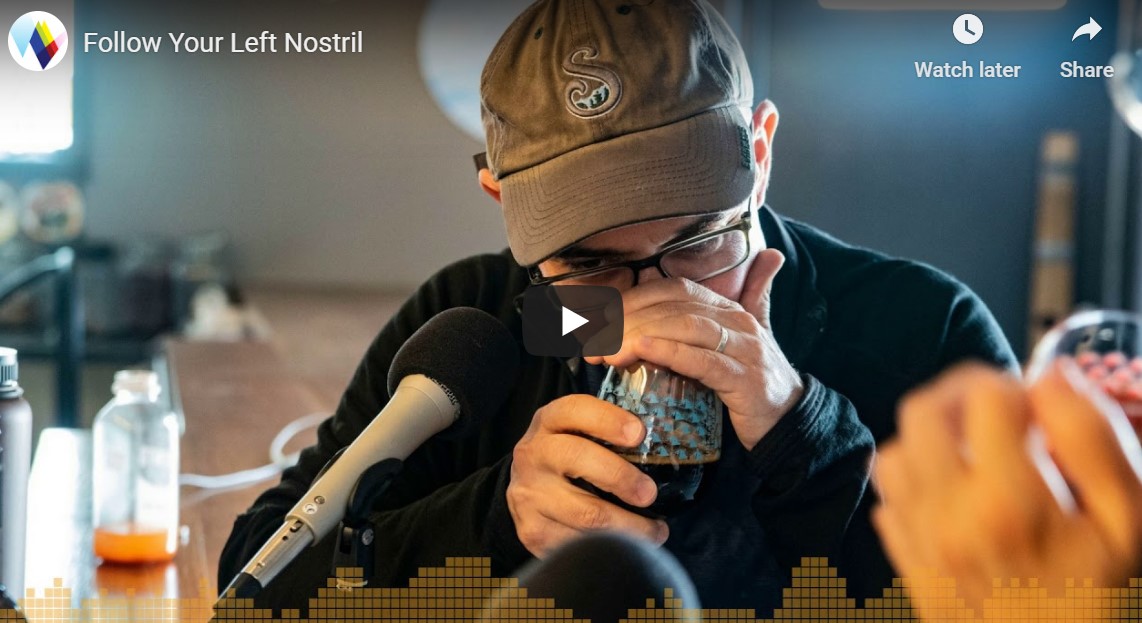
Last weekend, I listened to a repeat of a short piece on the NPR radio show TTBOOK on the changes for the worse that have been imposed upon Bourbon County Stout through the sale of Goose Island to evil big industrial beer. It was particularly gratifying to see guest Josh Noel demonstrating the “nostril in the glass” technique I have been advocating for for about a decade and a half. Not unrelated but to the contrary, Mike reminded us on Twitter of the upside of the buy-out of craft:

You know when a brewery sells to the big guys and they say that it offers them more resources than they would have normally? This example shows that perfectly. Safe place for customers and their employees continue to have jobs. Just sayin.

Everyone’s favourite Midwest bar, the Olympic Tavern, that they have never visited had a rough bit of bad customer experience this week, something that highlights that during times of crisis some folk place having a beer and a Margarita high up on their priorities. Handled well. Along a similar vein, Pellicle has posted the tale of a Scottish drinking habit that, being Scots, I’ve never quite heard of:

The hauf an a hauf is traditional and modern at the same time. It’s a Scottish cultural institution we can be proud of: a combination in which to luxuriate, rather than down in pursuit of a buzz. The hauf an a hauf is about savouring both, two halves coming together to create something new, whole, and wholly wonderful. 

There must be an alt-tartan reality that excluded the generations before me as the idea that there is some long  pervasive history of buzz avoidance going on north of Gretna Green is news to me. Rather than suggesting it is a tradition, in 2014 TheBeerCast described the novelty in this way:

I guess the bottom line here is what do you want from a hauf and hauf? To get loaded, quicker? A US-style ‘Shot and a beer, Dolores’? Or to give a depth of flavour to each drink? It seems, judging from the conversation, that the way half and halves are being seen is changing, as a newer generation of beer/whisky fans indulge in the practice as a tasting exercise, rather than an end-of-shift exercise…

That makes more sense. That’s more in line with Great-Grannie Campbell between the wars being banned for life – a number of times – from the James Watt pub in Greenock even though she lived right above it. Or more likely because. Then the grandchildren being kicked out when they were sent to get a gill on her behalf.

More currently, Matt noted with some hesitancy the creation of something called the Small Brewers Forum in the UK. It is open to breweries:

The Small Brewers Forum has been formed to protect and preserve small British breweries and those who operate them. We have a successful and strong collective voice and campaign on behalf of our members to ‘fight for fairness’ in the industry. We take our campaigning to the highest level at national government as well as local government and within the brewing industry.

The published material indicates that the “only let small brewers join (sub-10000hL) so I can be sure that they represent what’s good for me without any of the big guys pulling the strings.” This makes a lot of sense to me. The numerical majority of brewers are small and have local markets. Their issues are very different from regionals and big craft. Here in Ontario, while there isn’t a second organization after OCB, the membership of that organization represents only the minority of the province’s brewers. Trade organizations structured on “craft” or geography make less sense than those with common issues based on scale.

In the ha ha dumb dumb news item of the week, Budweiser was caught echoing Eco*:

On Friday, the company wrote, in a now-deleted tweet, about two of their brands, Budweiser and Bud Light. “Reject modernity, embrace tradition,” the tweet read, telling consumers to enjoy the original beverage over it’s lower-calorie counterpart. Pictured were the sleek, modern-looking Bud Light can, along with the classic designed Budweiser beer. However, the seemingly simple message raised some eyebrows. One Twitter user, Joshua A.C. Newman, pointed out the origins of the text for the ad. “Are you deliberately quoting the first two elements of Umberto Eco’s 14 elements of Fascism?” he responded to the since-deleted tweet.

There’s that concept of “tradition” again. Calling card of the casually ahistorical.

And, as recommended by Andy, I signed up for the beer newsletter by David Infante – and was pleased to find out it was also a blog. There are a lot of beer blogs holding themselves out as online beer magazines and newsletters these days. It’s a bit sad that self-publishing is that little bit needy that it needs to hide itself behind odd labels and a thin veneer of exclusivity. Anyway, his latest blog post “Hire me, White Claw” caught my attention primarily as it confirmed what I should have known – this year’s trendy cooler White Claw is Canadian!!!** While Jordan mentioned it in passing in his recent post he did not hit me over the head with the fact. Never had one sip myself. Nope. So virtuous I am.  Plus I have Pickled Green Bean Clamato for that.

Stan has been telling tales again – this time about new hops being named and brought to market:

By announcing a name for the experimental hop previously known as HBC 692 the company signaled she is her own brand. “We were getting very significant pull (demand),” said Jason Perrault, CEO and hop breeder for Yakima Chief Ranches. HBC is a partnership between YCR and John I. Haas. “We’ve seen the impact it can have in a beer. Unique, but appealing. It was just time to give it its own identity.” The name, Talus, is a nod to the talus slopes found in the Yakima Valley. She is a daughter of Sabro, the hop formerly known as HBC 438 and commercialized in 2018.

I’m not a hop spotter myself, preferring to drink and think about beer once made but it is interesting to see how in the hop trade these sorts of things matter. Mr Stange even admitted to having been aware of the name (before the name was released) by way of  an embargoed press release – which made me wonder if new shoe lace tech also comes with embargoed press releases. You should also sign up for Stan’s newsletter Hop Queries to really keep up. It’s a blog he sends to you monthly by email.

Finally, Jeff posted a post on Wednesday about the brewing volume stats coming out of the Oregon Liquor Control Commission so far in this very odd year:

The Oregon Liquor Control Commission tracks the taxable barrels sold by Oregon breweries in Oregon. I’ve been watching to see when the June report would drop, because that will give us six months of data to see what kind of violence COVID-19 has done to breweries. The upshot: it’s been bad, but maybe not as bad as we might have guessed back in March. Thirteen of the top twenty breweries were down from this time last year, some substantially. But overall, the top 20 breweries were only down 2% from the same period in 2019.

While that is an average that is great news. If I could go back to myself five months ago, in the middle of the beginning of the stress of what was to come, and say “don’t worry it’ll only be 2% off” I’d be ecstatic. Now, it’s clear that it is an average and some are suffering more than that but for an economic snapshot that’s a pretty sweet picture.

In news of the ancient, Merryn gave me the heads up about a weekly web event put on by EXARC, “the ICOM Affiliated Organisation on Archaeological Open-Air Museums, Experimental Archaeology, Ancient Technology and Interpretation”:

Historical-archaeological Beer Brewers unite! We meet for a chat, this Saturday, 20:00h CET. It’s free, it’s open access and for anybody with a serious interest and / or experience with historic, archaeological craft brewing, anywhere in the world.

You sign up, too! Now!! I may be mowing as that’s mid-afternoon on the best day of the week. The heart of Saturday afternoon which is prep time for the heart of Saturday night.***

Here’s an interesting bit of news. An Albertan laboratory ran a study of beers entered into an awards judge-y thing to see if there were patterns in award giving outery:

The Raft Beer Labs analysis, published on its website, showed a few trends among medal-winning beers. Fresher beer was more likely to win an award. Medal winners were more likely to have a dry-finish than non-winners. Award-winning beers also tended to be clearer, with less turbidity than non-winners. Medal winners were also found to have lower free amino nitrogen levels and tended to be slightly higher in alcohol content than their target. The analysis also showed that both winners and non-winners were less bitter — measured in IBUs, or International Bittering Units — than the listed level, and both winners and non-winners had some microbial contamination, from wild yeasts or bacteria.

Interesting. Clearer, stronger and less bitter beers were preferred. The opposite of trendy low-alc murky hop bombs the blogs and micro blogs and photo blogs and podcast blogs and multi-author blogs are all talking about.

Finally, I am not sure I understand the point of this story. Why care about a brewery that many have written off? Why write and publish “Founders continues to defend its corporate culture”?

Done! For more of the good stuff but from a different view and in a range of blog formats, check in with Boak and Bailey most Saturdays, plus more at the OCBG Podcast on Tuesdays (listen as they shit on Belleville this week!) and sometimes on a Friday posts at The Fizz as well.  And sign up for Katie’s weekly newsletter, too. Plus the venerable Full Pint podcast. And Fermentation Radio with Emma Inch. There’s the AfroBeerChick  podcast as well! And have a look at Brewsround‘s take on the beer writing of the week. Not to mention Cabin Fever. And Ben has finally gone all 2009 and joined in with his own podcast, Beer and Badword.**** And BeerEdge, too.

*I know – excellent, right?
**Which is sorta like saying “Soylent Green is people!” in some circles.
***Yup.
****The greatest Great Lake is obviously Lake Ontario as it contains all the other Great Lakes.

As I Lay On The Sofa During A Week Off I Daydream Of Thursday’s Beery News Notes

There. I said it. I’m off this week. I think everyone else is too as there has not been much reading to do. Or is it that I have not been reading? Look, I’ve been in a hotel for two nights in another city, an experience which was 87% comfortable, 13% covid angst.  I’ve slept in, napped, dozed and generally watched the lawn grow from various angles and elevations. And I’ve drifted pointlessly on the internets.

Maybe I just needed to get off my butt and have a look around.  So I did and to the right is my favorite and rather science-laced photo of the week posted by Sir Geoff Palmer along with this explanation:

Barley to Malt: 1972 Electron Micrograph of transverse section of a starch granule from barley (left). After the barley is grown (malted) channels of enzyme digestion (starch to sugar) in a starch granule can be seen (right). Starch to sugar digestion also occurs in our mouths…

Excellent. And made of actual science. The best read of the week has to be this story which is also a bit science focused about how animals use alcohol including a phenomenon I’ve actually witnessed, the drunken starlings at the Rowan tree:

North American songbirds sometimes get grounded when they eat too much fermented fruit. This can easily happen in the spring when migrant birds gorge on crabapples which have overwintered, or arrowwood, juniper, winterberry, and other native berries still clinging to branches. Cedar waxwings, which feed largely on fruit, are especially vulnerable to intoxication or even fatal alcohol poisoning. Certainly some of this is accidental, but birds have been observed breaking the skin on fruit, thus exposing the juices to airborne yeast spores, and returning 24-48 hours later to selectively eat the fizzy fruit.

Forty years ago in high school, we sat watching out the front window as the row of starlings did 360 flips on the telephone wire, holding on all the time but each losing grip over and over. Magic.

In more sober news, Jeff has been running a reader’s survey. Have a look.

In less sober news, Don Redmond posted a posted about a brewery crawl in my home town six months ago during the pre-times.  And he included some business-side stories, the sort of information that never comes out when folk are reporting as opposed to writing:

…he added that outside money people had approached him on occasion, asking if he’d like investors. While outside interest is obviously a good sign for any business, simply because it means others see your potential and would like a piece of that pie, there’s also a downside. Silent partners never stay silent. In fact, they tend to forget what the word ‘silent’ actually means. And since they would like to see the best return on their investment, it isn’t long before they start suggesting cost-cutting measures…

Quite conversely, extravagance reigned as the BBC reported in 1983 on the new quiches of Glasgow’s pub life. And speaking of odd food and beer but more of a not pairing, here is a tale of engineering and brewing and seafood out of the Philippines which I am not sure I can quite follow:

The conglomerate, also the nation’s largest beermaker, will plant 190,000 mangroves in coastal areas near the capital to prevent flooding at the site of the proposed largest gateway in the Southeast Asian nation. To protect these forests, San Miguel will also grow 100,000 mud crabs monthly at the 10-hectare mangrove plantation in Bulacan province, President Ramon Ang said in a statement. Mud crabs can be a source of livelihood for people in the area, he said.

On the other side of the planet, Evan wrote an excellent piece on decoction brewing which included a bit of technical detail of a science-y sort which you might expect from Beer and Brewing* magazine:

Polyphenol levels? Highest in triple-decocted beers, followed by double-decocted beers, and then single-decocted beers, with infusion-mashed beers down at the very bottom, according to a 2004 monograph written by scientists at the Czech Republic’s Research Institute of Brewing and Malting. Dimethyl sulfate (DMS) and acetaldehyde? Lower with decoction, higher with infusion, in both green and finished beers, both of which also improve in direct relation to the number of decoctions, according to a 2005 paper by researchers at Pilsner Urquell. That paper also credits decoction with improving bitterness, cold-break content, sedimentation, and soluble nitrogen.

While I can’t imagine anything more tangential to a political scene that beer in Hong Kong at the moment – this moment when their democratic rights are being stripped – apparently GBH did find a way:

By and large, Hong Kong’s craft beer community was supportive of the protests, although few bars could advertise their support openly, because the police control the issuing of liquor licenses. Now the protest chants have been silenced and banners removed because of the national security law, whose broadly defined crimes include obstructing the government and promoting hatred of China. At least one employee of a local brewery has quit his job and fled the city because he feared he would be targeted under the new law. Although legal analysts say it’s unlikely the law will have a direct impact on employers such as breweries, it does give police new powers to search and seize property without a warrant if they suspect it has been used by someone violating national security.

I have no idea which “legal analysts” speak to the potential that a regime with a massive cultural genocide on the go in one end of the country would not want to bother with craft breweries – but the author appears to still live half time in Hong Kong so there is that reality.

Beer for dullards?

Back to the science based reality, Stan posted an excellent piece that apparently could not wait for his newsletter (which you must and should sign up for) on the new hop varieties which are coming down the pipeline:

The most anticipated new name this year is whatever HBC is calling HBC 692. Releasing the name is an event is on the calendar (Sept. 9, 9 a.m. PST) for Yakima Chief’s virtual hop harvest. HBC 692 is a daughter of Sabro and depending on who is describing the aroma and flavor is packed with “grapefruit, floral, stone fruit, potpourri, woody, coconut, and pine.” She is a high impact hop, bound for plenty of hazy IPAs.

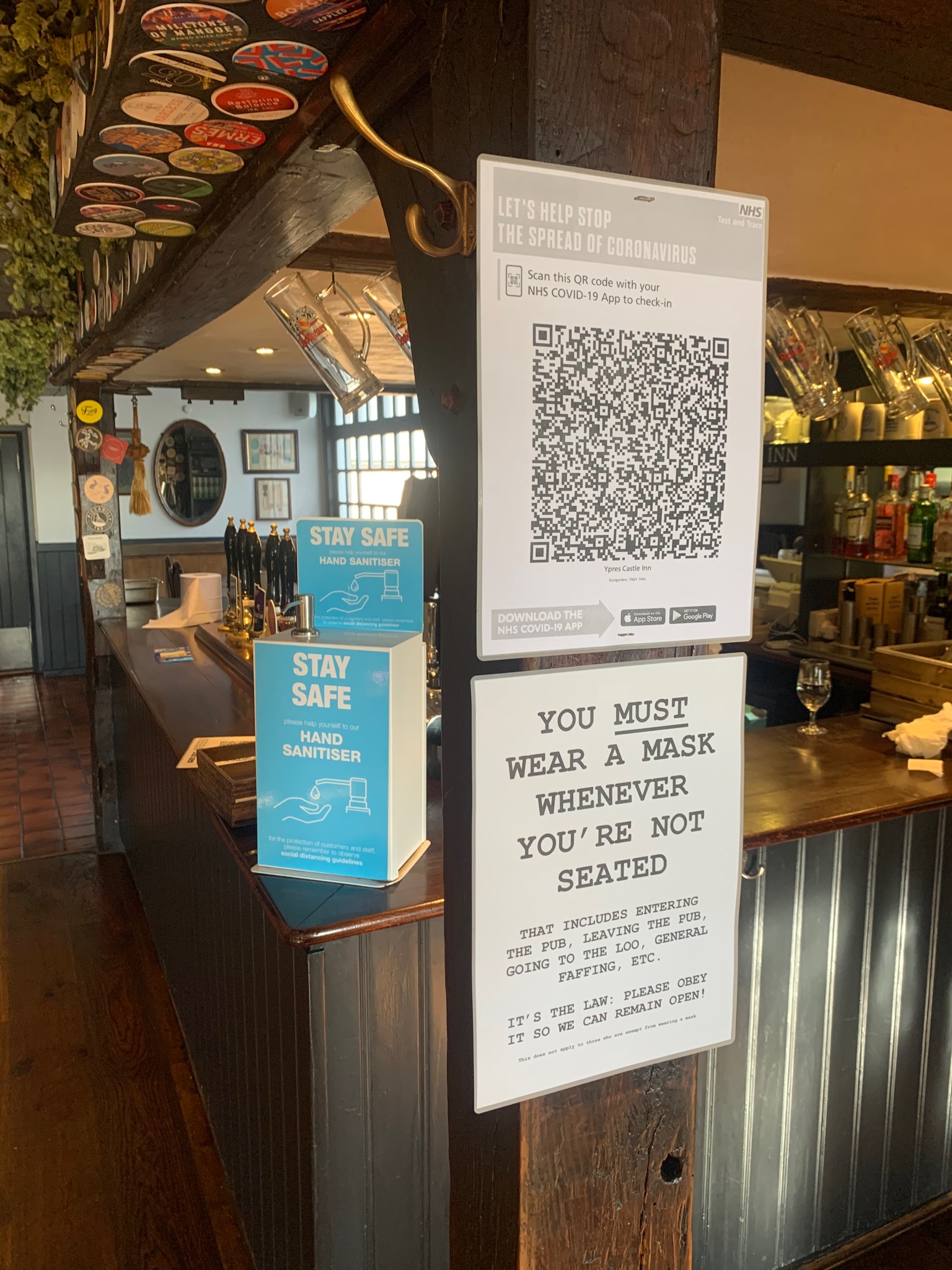
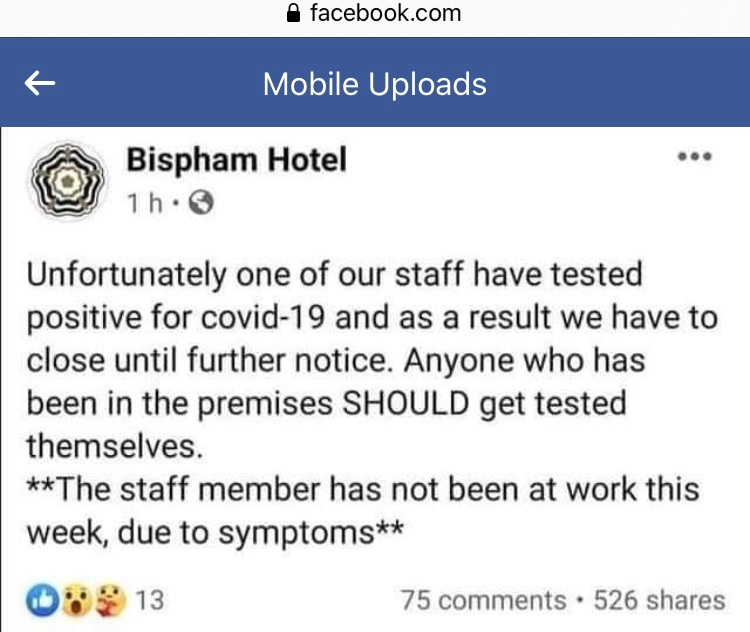
Again in less science based news, we are told that a Sam Smith’s pub posted a Covid-19 notice on Facebook (as shown to the right) then removed it then indicated that it is not participating in track and trace due to privacy concerns… whatever that means… speaking as a privacy lawyer… Not where I’d be spending (i) my hard earned and/or (ii) remaining time on this mortal coil.

Brewing science is also dangerous. But it is also tasty and even edgy as this tale from western Canada shows:

A Calgary brewery is hoping to convince beer lovers that an ale made from municipal wastewater is tasty and safe. Village Brewery has teamed up with University of Calgary researchers and U.S. water technology company Xylem to create a limited-edition batch. The water comes from the Pine Creek wastewater treatment plant by the Bow River in southeast Calgary. Partially treated water was run through an advanced purification system that involved ultrafiltration, ozone, ultraviolet light and reverse osmosis.

Perhaps even less appealing is this piece starting at the outset of this odd story about an anti-police brand of beer, there was this intro which gave me such great faith about what it takes to be a beer reviewer these days:

A fellow recently asked me if I would participate in online beer reviews.  There would be a paycheck attached.  I don’t drink whiskey (my only memory is something that would taste like a used sweat sock) and wine is like cough syrup.  I hated Formula 44 as a kid.  My mom would nearly fight me to take a teaspoonful. I got in touch with the editor of a national beer magazine.  He’s a former broadcaster and the grandson of a Stroh’s distributor.  The editor gave me a long list of smaller breweries here in the Northwest.  It’s a good jumping off point. 

Note: having worked as both a criminal defence lawyer and also with the police, I’m convinced there are certainly bastards and scumbags but there are also a lot of hard working good folk who do the things that need to be done that no one thanks them for. So I’d likely pass on the beer, too. And backing anyone fighting for BLM and other forms of holding officers and officials to account while doing better.  But without a doubt I’d never read this guy’s reviews.

How is the macroeconomic scene looking here well into month six of the pandemic lockdown? Good or horrible depending who you are:

During the COVID-19 period (from the week ending March 8 through August 8), beer category volume growth has averaged 15.3%. Nielsen estimated that the beer category would need to average 22% volume growth in off-premise retailers to offset the loss of on-premise sales — which hasn’t happened. That estimation assumes the on-premise accounts for 20% of the industry’s total volume and sales declines of 90%, the firm said.

Not helping is the reintroduction of US tariffs on Canadian aluminum which goes into those cans that are keeping good beer sales moving. One brewery notes:

Ninkasi’s CEO Nigel Francisco says it is pushing out their planning and their ability to quickly react to a changing market place. “We’re experiencing a can shortage,” Francisco said. “So, what’s happening is, there’s so much package product being sold and consumed in the market right now. It’s pushing some of the small breweries like us to supply shortages. We haven’t experienced any true supply shortages yet, but we have experienced longer lead times.”

Hangover science? Not that I am going to write about hard seltzers… but this is interesting information:

On the other hand, because it doesn’t containcongeners, a byproduct of the fermentation process that produces chemicals like acetone, acetaldehyde, and methanol, the hangover from White Claw could be less intense for some people, especially if they don’t generally experience stomachaches. “Hard seltzers have a very low concentration of congeners, which are thought to contribute to hangover symptoms,” Dr. Braunstein says. “Certain alcohols, such as red wine, brandy, and whiskey, are known to contain much higher levels.”

Finally, and as Martyn advised, BrewDog valuation has passed that of both Carlsberg and Stella each according to something called Brand Finance… according to the Morning Advertiser:

Brand Finance also used factors such as marketing investment, customer familiarity, staff satisfaction and corporate reputation to name Budweiser the world’s strongest beer brand… Interestingly, among this year’s climbers was independent Scottish craft brewer and pub operator BrewDog which bounded ahead of bar top mainstays such as Stella Artois to take 18th place…

“Craft” meaning exactly what in this context…? anymore…? ever…? BTW: also craft… while also “?”

There. Done. That’s a bit better this week. A reasonable mix, a bit of volume. And a lot less angst. I did see a dreary article which will go unnamed that combined “neo-prohibitionist” with a passing science-less denial of alcohol’s health risks** so there is bad stuff out there. Be warned. For more of the good stuff but from a different view, check in with Boak and Bailey most Saturdays, plus more at the OCBG Podcast on Tuesdays and sometimes on a Friday posts at The Fizz as well.  And sign up for Katie’s weekly newsletter, too. Plus the venerable Full Pint podcast. And Fermentation Radio with Emma Inch. There’s the AfroBeerChick  podcast as well! And have a look at Brewsround‘s take on the beer writing of the week. Not to mention Cabin Fever. And Ben has finally gone all 2009 and joined in with his own podcast, Beer and Badword. And BeerEdge, too.

*The addition of “Craft” in the title seems to be a bit nouveau, a tad post-URL so I’m a bit confused as to branding versus identify.
**There is still no J-curve. People don’t get sick because they don’t drink. They don’t drink because they are sick… or against it as a Scottish Presbyterian or Muslim and sick… or because they just don’t like the taste and sick… or they are a child and sick. Science.

Your Thursday Beery News Notes For Mid-July

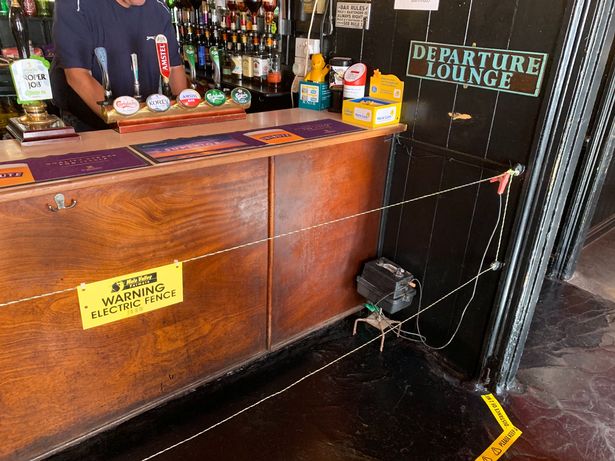
The heat had broken for a bit, we here just having a bit of summer for now but more storms and heat start to roll in today. There. Your weather update. The garden is doing great. Thanks for asking. Peas just about done. Third planting of spinach underway. Elsewhere, things are unhappy in good beer land. Gütbierelandia. People are cranky about this that, and the other. One pub in Cornwall, England even put up an electric fence to protect the bar, as excellently illustrated above. We all know why it’s like this and it almost pains me to mention it. Gütbierelandia ist traurig unt launisch. But that is all I do in this here weekly round-up, noting the week’s zeitgeist once again through sifting clues scattered on these information highways. That’s what I do. And what did I find this week?  Unhappy people.

First, Stan gave me a bit of a zing in his post about the future of beer writing:

Blogging allows writers to distribute words that would not otherwise be published. It is a hard way to earn money. On Thursday, Alan McLeod repeated his pitch for more beer blogging, more new voices. (Suggesting how complicated this might be, his weekly news wrapup included only one link to a personal beer blog, and that one has a corporate sponsor).

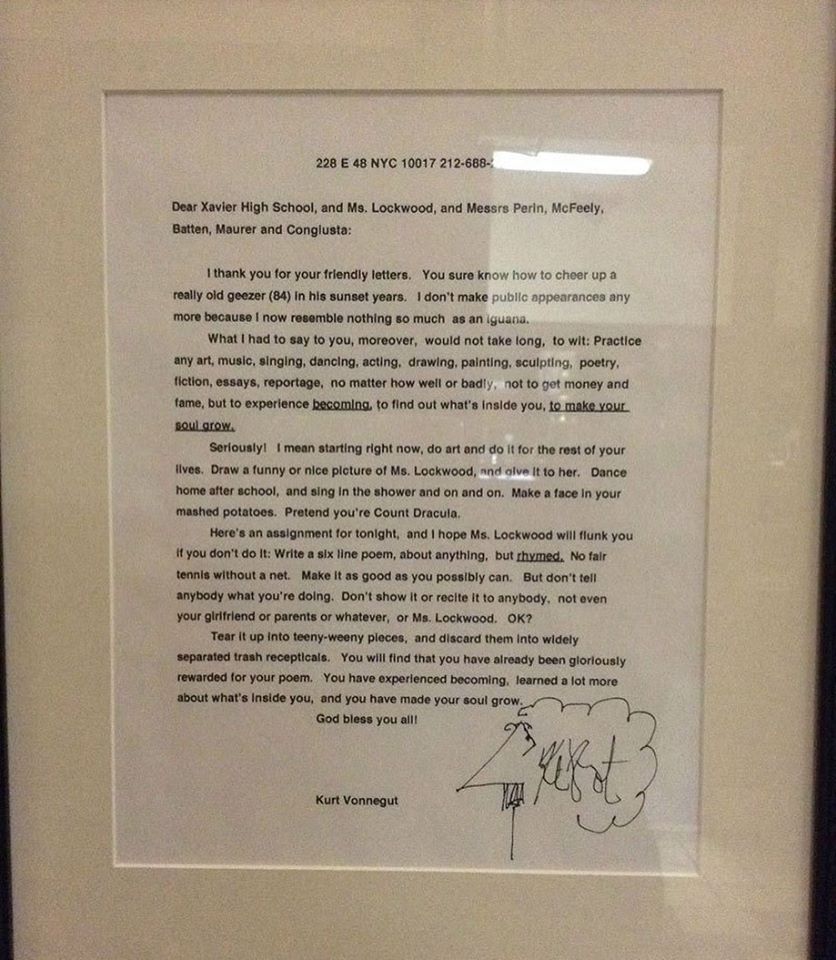
Of course, I went to go after him immediately on social media but then, as the blood red rage abated four seconds later… I realized he was right. Look at this list of beer blogs and notice how few are beer blogs.* And he was perhaps more right than even he realized, as I went on a’ commenting that too much quality beer writing started chasing a few trade writing bucks leaving only impecunity, edited-in samey banality, semi-heroic but years late taking of obvious stances, culminating with a drought of good personal writing related to the experience of beer. So different from investigative reporting.** I don’t know if there is any hope of a revival.  I don’t share his (or Boak’s/Bailey’s) hopes for e-publishing given that’s been around for yoinks.  Folk just need to write more and forget about the money. There isn’t a future in it. Never has been. Be like Kurt say. Click on the thumbnail.

Tales of Covid abound. How to have a gentlemanly BBQ is explored in what might actually be a parody. And the New York Post reports that teens are dressing up as mask-wearing grandmas to try to score alcohol. This from UK sugar makers Ragas may serve as a good benchmark from here on out:

Lockdown also resulted in the closure of on-licensed premise businesses such as pubs, bars, event venues and restaurants, with these accounting for 62% of alcohol consumption in the UK in 2019. As a result, demand for casks and kegs beer fell sharply. Larger breweries that have canning and bottling lines were able to ride this out. Regional, micro and craft producers that rely purely on keg and cask sales, however, did not have this option, and instead were forced to shutdown indefinitely.

Covid tweet of the week: “The waiter served tapas in a hazmat suit…

And Jeff in Beervana considered how the pandemic is going four months in and makes this interesting observation about the Times Before Now:

The arrival of seltzer and FMB was actually a warning sign, signaling exhaustion with the rather baroque shape beer had taken. People wanted an uncomplicated buzz. All that excitement and energy buoyed a product that was, in volume terms, not actually growing. If a year-long pandemic saps consumers’ interest in going out for ten-dollar pints, if they seek refuge instead in simpler, cheaper beer, what becomes of those halcyon 2010s? Will beer still be fun?

Now, consider this and tell me Jeff is wrong:

Kombrewcha CEO Garrett Bredenkamp is looking to the hard seltzer segment for inspiration as the hard kombucha brand backed by Anheuser-Busch’s ZX Ventures looks to compete in the fast-growing segment.

That’s about seven layers of dumb right there, folks. And it’s all not to mention the less than passive aggressive attitude stuff from breweries. And as Norm noted, what all started with one brewery, Trillium, putting out bad beer in bloated cans what go boom in the night… or the hand… ended up with much comment ensuing when they declared it more of a feature than a bug:

We don’t want anyone to have to clean up a mess and advise that you store these cans in a refrigerator immediately. Refrigerated (38ºF) batch samples that our QA team retains have not burst and upon further testing, we’ve seen no yeast growth from the time of packaging.

Speaking of which almost, elsewhere people (again) are unhappy with BrewDog. This time about the use of the new ideas of others:

Scottish multinational brewery BrewDog has been slammed for allegedly “stealing” marketing ideas… A Reddit user wrote: “Brewdog commissions work or sets fake interviews to solicit marketing ideas, steals them without paying or crediting the contributors. Owner doesn’t understand when people take issue…”

The story does not exactly have solid sources but, you know, who does these days?** I will leave you to your own conclusions.

And this sounds like a reason for a full on boycott, I’d say. #HTKT

In the story of the week and perhaps echoing Stan above in asking the musical question “where have all the good times gone…” Lew Bryson went all universal theory of what is bad, evil and ungood about craft beer today and in doing so slammed (excellently, I might add) the thirty years legacy of the core pre-craft and then craft ethos of having a hate on for the “other”:

That’s what happens when there’s no hate in your heart. You can work on the things that are based in love: improvement, care, transparency and truth, good flavor, authenticity. Craft beer has that, in plenty, but damn, we keep fighting about it. If we hadn’t made such a big deal about what craft brewing wasn’t…we wouldn’t have had these big fights when craft brewers decided that they were going to blend, and brew with corn (and donuts!), and put beer in cans, and make light lagers.

Oddly, this reminded me of the efforts of eight or more years ago to have craft take on 20% of the market by 2020… which is where we are now.  If we are honest, any movement towards that goal was only going to achieve it by adding bulk non-craft quantity like Yeungling and also allowing Sam Adams to stick around well after the stale date. What it might have in common is that head scratch as to why US craft finds the has needed to be so… so… so macro. Ah, the path not taken…

Which leads us right into the next tale,  on the question of the governance of the Brewers Association itself and in particular people calling for the resignation of head honcho, Bob Pease. As I mentioned last week, I found the mind boggling level of remuneration a bit… mind boggly. Now, care of a podcast interview with Andy Crouch, things have shifted to the lack of diversity and complacency with members’ bigotries in the BA itself. What exactly does the actual small hardscrabble brewer get for his or her membership dues anyway? Suits. But your own suits!!! Then even Andy got heat for asking the questions. Or is it “caught heat”? Yowza. Yet… the idea that a Euro-sort interviewing a Euro-sort will not lead to greater understanding of the lot faced by non-Euro-sorts is compelling.

Best non-covid tweet.

Finally, there was one break in all the pent up unhappiness. Some good news in Boak and Bailey’s review*** of Lars’ new book on “being Lars and finding kviek was there just waiting to be found”:

Lars’ subject matter was, until recently, the kind of stuff of which footnotes are made. Here, commercial brewing of the type that dominates globally is the footnote, or at least the over-familiar postscript to a much longer story that is rarely told.

I’d buy it based just on that one review but… bought it already.

Remember – keep writing and tell us what you see. Be brave. Do it! Make Kurt proud. And check in with Boak and Bailey most Saturdays, plus more at the OCBG Podcast on Tuesdays and sometimes on a Friday posts at The Fizz as well.  And sign up for Katie’s weekly newsletter, too. Plus the venerable Full Pint podcast. And Fermentation Radio with Emma Inch. There’s the AfroBeerChick  podcast as well! And have a look at Brewsround‘s take on the beer writing of the week. Not to mention Cabin Fever. And Ben has finally gone all 2009 and joined in with his own podcast, Beer and Badword.

*What’s a blog? Start with Scripting News.
**not so much…
***Sweet reference to They Might Be Giants, too.

The First Thursday Beer News Notes for A Q3 2020 Week

See, we made it to Q3! Now we can sing all the Q3 carols, dance the Q3 dances and enjoy all the hot mulled ales of Q3s of old. It’s stinking hot here. Nutty hot. +40C with the humidity hot. Too hot – I might add – even for a beer. At a certain point, I’m just of the iced club soda sorta guy. And busy. This has been a nutty week already. I’m writing this wearing a tie in my laundry room waiting for my chance to answer a question over the next five or six hours on another Zoom meeting. Oh, no… a Webex meeting. Choppier Webex.

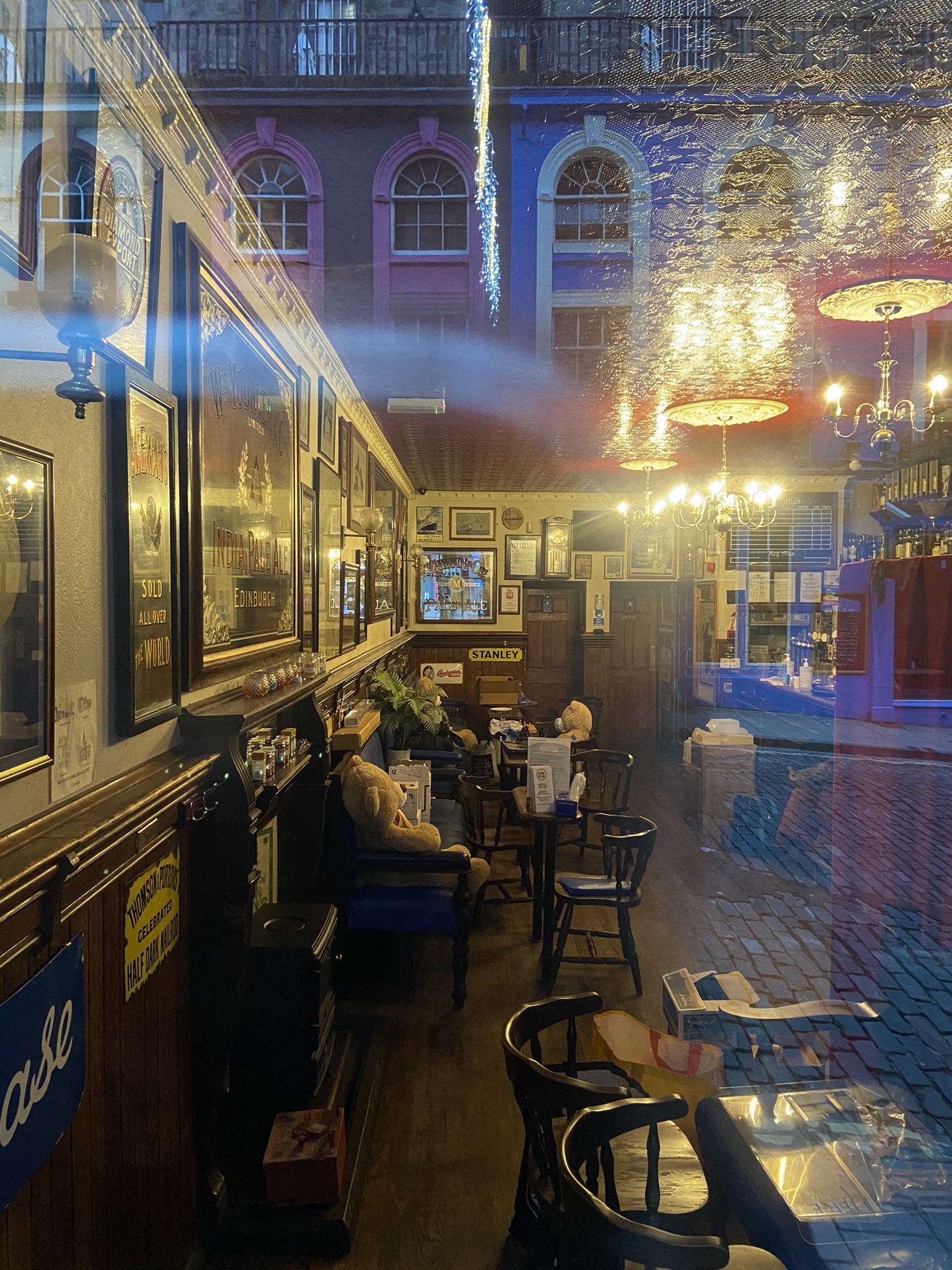
The return to pubs in Britain, as Mudgie noted, led to a lot of chat about whether we are being fair to all our brothers and sisters in ale and lager when we think of who got to the newly reopened door first. I liked the image above tweeted from that good day which included the comment ” Jimmy hasn’t gone to bed after his night shift tarmacking the roads.” Nice. I’m on Team Jimmy. Jeff marked the last day of carry-out at his pub with another great image and I am convinced he, too, is on Team Jimmy. We all, however, hate the no-shows and, as Katie noted, hate the bad reviews on day one. But beware the worst beer garden in Scotland.
Jeff at Beervana has been sharing some stories provided by the breweries and brew pubs and bars in his part of the world and what Covid-19 has meant for their businesses. Matt Van Wyk of Alesong Brewing shared some thoughts about the problem that his clients are mainly human beings:

…if you don’t work very hard to keep order in your facility (rules, signs, verbal herding) people will certainly move toward chaos and do whatever the heck they want without remembering we are in a world pandemic. “Please don’t touch that water pitcher with the sign ‘Staff only!’ on it.” Most people are very respectful of what we in the industry have to deal with but it’s hard to serve both sides of the “caution spectrum.”

The US Brewers Association has been in the news – but not perhaps for one item that caught my eye, the salaries paid top staff:

CEO Bob Pease earned $341,950 in compensation in 2018, plus $44,370 in “estimated other compensation from the organization and related organizations.” That’s down from the $409,000 he earned in base compensation in 2017, and more than Charlie Papazian earned in the same position in 2014. Papazian’s salary at that time was $258,000.

Yowza!*  That’s hospital chief executive coin! And a hell of a lot of coin for an organization which in its hymnal offers the regular refrain “there is no money in craft beer.” GBH much to my surprise did some good digging, letting Kate Bernot do the job properly and and did a follow up with a post contextualizing recent staff shifts in a very neat and tidy way. Others raised other issue related to the value proposition including this:

I’ve been vocal about my concerns with @BrewersAssoc harboring racist members recently, and in response they followed me (perhaps to spy), and I’ve been ignored here and on Instagram while white folks both places get responses.

Not good. Dr J. invited folk to step up and get in there to make the change. Similarly from Beth,

…whoops just wrote a 1,500 word critique about San Diego beer for a local beer magazine, brb gotta go prime my inbox for hate mail.

Timely and excellent news, then, on the creation of a scholarship fund to increase diversity in brewing and distilling:

Renowned Brooklyn Brewery brewmaster Garrett Oliver announced the formation of the Michael Jackson Foundation for Brewing and Distilling (MJF) to help people of colour in, or who wish to join, the brewing and distilling industries. The MJF will be helping ‘predominantly people of colour’ by funding scholarship awards to ‘directly fund a more equitable and dynamic future for brewing and distilling’, Oliver said on Twitter…

Happy to see that the brewing scholarship is named as Sir Geoff Palmer Scholarship Award for Brewing. I have been following Sir Geoff on Twitter for a while but have to admit that I did not do so for any reason related to brewing. My parents came from Scotland, Dad from a sugar refining city, and I found him solely through his writing on racial discrimination there and through Scotland’s connections to the sugar slave trade. Fabulous decision.

Crowds of actual modernists – some wearing boaters! – flooded the streets of Dublin as noted by Monsieur Noix du Biere himself.

And Matt C himself had something dear to my heart published this week – an essay entitled “How to Start a Beer Blog“!!

The first piece of doubt you’ll form when you consider starting out as a blogger is that there are already loads of beer blogs in existence, so why does the world need another? In truth there really aren’t that many voices in beer, and there is no such thing as too many beer bloggers. Sure it might take a few good posts to earn your stripes from some of those who’ve been doing it for a while, but people love reading about beer, and a new voice providing fresh content is always welcome.

Boom!!! I’ve been saying that all month… or more… probably more…

Finally, traces of Iron Age beer have been found in Sweden.

Another week in the books. And as Matt said, keep writing and tell us what you see. Be brave. Do it! And check in with Boak and Bailey most Saturdays, plus more at the OCBG Podcast on Tuesdays and sometimes on a Friday posts at The Fizz as well.  In their latest episode, Robin and Jordan are showing signs of losing it from da ‘Vid… or they just really have an odd sense of geography and time. Never mind! And sign up for Katie’s weekly newsletter, too. Plus the venerable Full Pint podcast. And Fermentation Radio with Emma Inch. There’s the AfroBeerChick  podcast as well! And have a look at Brewsround‘s take on the beer writing of the week. Not to mention Cabin Fever.


*Ms. Ogle did not share my thoughts.


Thursday Beery News Notes For The Week The Patios Reopened

A better week. Not a perfect week in any sense but a better week. Here in Ontario, more coming back to life. As of this Friday, where I live I can get a haircut, go to a church that is 30% full and hang out with ten people at a time. Things are moving forward. One key issue: should pubs still have a proper level of grot as they reopen? Hmm… And when Her Majesty the Queen told us “we will meet again” did she imagine it would be on asphalt in a parking lot?

Furthermore on the hereabouts, on Monday the AGCO announced the expansion for outdoor service on Monday, effective in most of Ontario this Friday. Toronto and the surrounding areas as still considered too much at risk and will open at a later date. The rules for creating a bigger outdoor area are interesting:

1. The physical extension of the premises is adjacent to the premises to which the licence to sell liquor applies;
2. The municipality in which the premises is situated has indicated it does not object to an extension;
3. The licensee is able to demonstrate sufficient control over the physical extension of the premises;
4. There is no condition on the liquor sales licence prohibiting a patio; and,
5. The capacity of any new patio, or extended patio space where the licensee has an existing licensed patio, does not exceed 1.11 square metres per person.

Even more interesting, those who meet the above criteria are not required to apply to the AGCO or pay a fee to temporarily extend their patio or add a temporary new licensed patio and they are not required to submit any documentation to the AGCO to demonstrate compliance with the above criteria.  We aren’t in Kansas anymore, Toto.

Elsewhere, Boak and Bailey have celebrated another step towards liberation with the takeaway service at their local micropub being now a going concern:

…the reopening of The Drapers is definitely next level, game-changing stuff. Not necessarily because every single beer is utterly brilliant, but because [w]e suddenly have access to a range of cask beers, not just one at a time; [w]e don’t have to decide a week in advance what we want to drink, and we (probably) don’t need to worry about running out between deliveries[; and T]he range that’s been on offer so far includes things we would not have been able to get hold of easily. It also includes new-to-us beers that we wouldn’t have wanted to risk buying in bulk, on spec.*

Stonch tweeted about one of the pains in the neck he has to deal with as he moves to reopening:

The shysters trying to cash in hospitality operators’ anxiety about re-opening at the moment are something else. Steady trickle into the inbox offering weird, unscientific and unnecessary products and services in the name of “COVID-19 secure”. Fuck off, spivs.

The timing and rules for reopening in Britain remain murky at best but Mr. Protz celebrated one  wonderful milestone, the return to brewing cask at Timothy Taylor’s:

We are incredibly chuffed to announce that today is the first day since lockdown that we have produced CASK!! Thank you so much to every single one of you for your support through this incredibly difficult period! Slowly but surely, we are getting there!

Katie wrote an excellent bit on the lockdown’s effect on small brewers… when they weren’t brewing including preserving, returning to home towns and this:

For the synth-aware, Adrian’s current kit (at the time of writing this) was his Eurorack, AKAI Pad controller, Yamaha mixer and Roland Boutiques SH-01, TR-09 and TB-03. If you fancy hearing his creations in action, find him on twitter at @wishbonebrewery.

Catching up elsewhere, Gary has been busy and I particularly liked this piece of his on a 1935 conference which added helpfully to the question of 1800s adjectives in North American beer labeling:

Rindelhardt stated that cream ale and lively ale, which he considered synonymous, were devised in the mid-1800s to compete with lager. He said they were ale barrelled before fermentation had completed to build up carbonation in the trade casks, or krausened in those casks, and sent out. In contrast, sparkling ale and present use ale – again synonymous – might also be krausened, and later force-carbonated, but were a flat stored ale blended with lager krausen. This form, provided the lager krausen was handled correctly, still offered an ale character but in a fizzy, chilled way as lager would offer.

“Cream ale”  and “cream beer” are of special interest as careful readers will recall. Check out his thoughts on the revival of Molson Golden, which I can only pronounce as if I were from Moncton, New Brunswick.

Speaking of history, I was reading through Canadian artist Tom Thompson’s diaries of the summer he disappeared over a century ago and was struck by this:

June 7, 1917: I had a hell of a hangover this morning. The whisky we had yesterday hit me hard but at least I didn’t go blind. That happened numerous times after the Temperance Act went into effect and people started making their own alcohol  Sometimes the alcohol wasn’t right and people would go blind drinking it.

Note that he did not say prohibition and indicated activities not akin to prohibition. Never really right to use the US term and apply it to the Canadian context.

Closer to the present, Jeff wrote about the great Bert Grant (and I added my two pieces in the cheap seats of Twitter replies), Canada’s true gift to craft beer:

The West Coast was divided into segments, and the cities of Portland and Seattle followed a parallel but separate track. The breweries there had their own founders and in one is a historical lacuna that explains a great deal about the influences that guided hoppy ales in the Pacific Northwest. That forgotten figure is Bert Grant, who left the hops business to start his own brewery in 1982 and whose first beers created an instant appetite, decades ahead of the rest of the country, for hoppy ales.

Read all three pieces as you only understand 1982 if you understand 1944.

Jordan celebrated a milestone, hitting a decade in the beer soaked life.  What did he learn? “Soylent Green is people!!!” No… let’s check that… no, beer is people:

If you wanted to play around with ingredients, you’d be a home brewer. A professional brewer, by default, brews for someone else. One assumes that a professional brewer does that because they enjoy it. One assumes that they make a product they believe in to the best of their ability and share it with the world. One assumes they are mindful of all the collective effort that goes into that.

Speaking of home brewers, in 1973 the BBC sent the fabulous Fyfe Robertson in search of the perfect pint made in an English basement. Have I posted this before? If I have it’s worth a second look. Speaking of Auntie Beeb, Merryn linked to a BBC 4 story on bere barley in Orkney.

One last thing. I have seen a few calls from part time editors feeling adrift who are encouraging vulnerable beer writers to turn to them in exchange for the usual pittance and a scraping of your voice in exchange for theirs. Do not be fooled! This is the time for you to be you:

Beer writers! What have you wanted to cover that might not appeal to a mainstream site? An underreported subject that merits a quick dive? An aspect of beer culture that deserves a closer look? Get a blog!

[What is a “quick dive” anyway?]

There. A better week. Keep writing and reading and keeping up with the chin uppitry. Check in with Boak and Bailey most Saturdays, plus more at the OCBG Podcast on Tuesdays and sometimes on a Friday posts at The Fizz as well. And sign up for Katie’s weekly newsletter, too. Plus the venerable Full Pint podcast. And Fermentation Radio with Emma Inch. There’s the AfroBeerChick  podcast as well! And have a look at Brewsround‘s take on the beer writing of the week. Not to mention Cabin Fever. Thanks for stopping by while not leaving the house. Except now you can leave your house a bit more. Do it!

*Edited only to make things as I wish they were.

Here Be Yon Beery News Notes As Easter Weekend Approacheth

Another quiet day. Sitting at home. My butt is in a state of perpetual “sat too much” ache now. I better lay down for a bit to see if it goes away. On the upside, the over-wintered carrots have been crisp and sweet. Gotta eat them now before they start to convert and prepare for flowering. As shown above, I saw bees this week. Wild ones I think. Grabbing all there was to be gotten from the flower of a willow tree, the catkin turning in one last very slow fireworks display.

Beer… hmm… where to start… Jordan posted an interesting proposal to encourage the use of locally grown hop in Ontario.

This is Ontario. It is four times the size of Great Britain. A run from Windsor to Vankleek Hill would take eight hours if you adhered to the speed limit and there weren’t any delays on the 401. The idea that there is such a thing as an Ontario specific cultivar is nonsensical. We’ve already established that Hallertau grown in Germany and New Zealand is different. The Huron Coast isn’t Tillsonburg isn’t The Golden Horseshoe isn’t Prince Edward County isn’t The Ottawa River Valley.  There are microclimates and different substrates and soils and aquifers.

I was helpful in the comments, adding the 1948 soils mapping links as the land and its crops know nothing of county boundaries as well as questioning the insta-profession of sensory professional.  I like it but find a way to fill that not with self-identified volunteers and then add a mechanism for shared calibration and I might buy in completely. Sadly one response suffers from that old suffocating chestnut Jordan is working so hard to break, the closed circle: “… This is far to complex of an issue to describe in a fb box – so lets chat off-line. I’ll send you my contact info…” Open discussion is better discussion.

Next, Lars has two bits of big news. First, the gong bomb:

I got the tip-off from Jørund Geving, a farmhouse brewer in Stjørdal. He’d gotten into a random conversation with a farmer from Ål in Hallindal, who said there were people there who still brewed. That’s in eastern Norway, so that was remarkable news in itself: a new brewing region! But then he dropped the real bombshell: these guys had their own yeast, which they called gong.  This was really exciting, because so far, every brewer in western Norway who has his own yeast has turned out to have yeast that belongs to a single family, which we call kveik

This is interesting. In the post pandemic retracted world of post-craft, will gong become at thing? Then Lars wrote something on Wednesday that saddened me: “Writing ~7000 beer reviews on @ratebeer was basically my education. Here my rating notebooks, before they go in the trash.” They might deserve keeping. Nice floor, though. Norwegian wood.

Tom Morton, a well loved radio hand in Scotland, has written a useful piece about drinking in the new era of social media pubs:

Twitter is one of those horrible airport departure lounge bars on a (pre-virus) bank holiday Friday night or Saturday morning. You’ve got everything there from stag parties breakfasting on Special Brew to ginned-up delegates for a conference in Estonia on Signifiers of Loss and Alienation in The Later Works of S Club Seven. There are sherried tourists, single-malted fish farmers, absinthed sales executives. There are the brilliant and the fuckwitted, and they’re all shouting, all grabbing your arm, all breathing fumes into your face. Ninety-nine percent of them are talking shite.

A few more months and I might be with him. Meantime, the social experiment (for those who are not directly fighting as patient or caregiver, of course) is interesting.

Corona tricks during corona time.

Some more blogs are back up and running  – and what I like about them best is the immediate reflection on what is happening around us. Not recollections of the pub or desperate attempts to maintain the consultancy micro-payments as if nothing were happening. First, Matthew Lawrenson at Seeing the Lizards told the tale from the shelf stocking floor:

…that is why I had that Thursday off.  It was likely the last time I’d be able to go out for the forseeable future.  I packed my bottle of isopropanol (usually used for cleaning electronics, but hand sanitiser had long ago run out) and went to town.  And yes, dear reader, I got absolutely hammered.  Buckfast, Bud Light, evil keg filth, cask ale, spirits.  I had it all that night.  I even went to Spoons.  I’m glad I did, as on Friday afternoon, the Government announced that all pubs were to close from midnight. After that, back to work it was.  Prioritising lines, moving labels around to maximise fill, watching pasta and toilet rolls vanish in minutes.  All the usual panic buying fun and games. 

And Old Mudgie wrote a very interesting argument lamenting the loss of cash that is being caused by Covid-19 and the implications for the bankless in pubs and beyond:

It is estimated that there are 1.6 million unbanked workers in the UK, and there must be many other non-workers who have no access to banking facilities. While there may be technological solutions that can address this issue, their interests cannot simply be breezily dismissed. Added to this, there are many people, not by any means entirely elderly, who have a strong preference for using cash and are uneasy about card payments, even though they may theoretically be available to them. Is it reasonable to ride roughshod over their wishes in the name of progress?

In the past, I have been grumpy about the US Brewers Association (as it seems to want to fill the role that CAMRA plays in the UK, just without all those pesky consumers) but the Bart has been doing a great job running the numbers through this crisis:

The first analysis of our second COVID-19 impact survey is done, and the numbers aren’t pretty. 2.5% of breweries say they are going to close. 12.7% say they have a month or less based on current conditions.

Right off, I was wondering how far off the normal annual churn 2.5% closures might represent. And to stay that tide, the BA also announced that what they are calling #CBCOnline starts on this coming Easter Monday:

…a five-week virtual version of CBC including 40 of our educational seminars across all 14 CBC tracks.

I am most interested as all you all all will be to hear Dr. J speak on the topic of “Real Talk: Performing Cultural Climate Audits to Benchmark Organizational Inclusion, Equity, and Justice.” Audits. Excellent. Like having calibration for sensory experience. Doing something real.

Similarly, there are plenty of opportunities to improve one’s wine knowledge during these days of sheltering in the shed. And if you have something to share, there is also a Beeronomics call for papers.

And finally Pellicle published an excellent piece by Jonny Garrett on the Old Fountain pub on Old Street in London (just a bit to the east of my beloved Golden Lane) and the family that has kept it in operation:

They were never tied, but the Durrant’s still leased the pub from Whitbread, who in turn leased it from the local parish church, St Luke’s. It seems the church mistrusted Whitbread and had only been granting it three-year terms. The family had kept a close eye on the situation and, in the early 2000s, an opportunity presented itself. After decades of renewal without gaining a lease extension, Whitbread decided to give up the lease and offered Jim another pub.

Now, I want to know why and for how long the church owned that parcel of land on Old Street. Let the mapping begin!

There you are – but one last thing. A new news round up has sit the presses. Brewsround has started commenting on the beer writing of the week. That/they/her/him/thems/the bot joins the beer news broadcasts we follow each and every week with Boak and Bailey most Saturdays, plus more at the OCBG Podcast on Tuesdays and sometimes on a Friday posts at The Fizz as well. And sign up for Katie’s weekly newsletter, too. There’s the AfroBeerChick podcast as well! Plus the venerable Full Pint podcast. And Fermentation Radio with Emma Inch. Stay well.

When The Second Week Of February Strikes And All You Have Are Thursday Beer News Notes…

It’s a funny time of the seasons. Photos on social media from the mid-Atlantic and southern England definitely look like spring to me but it’s going to top out at -15C here on Friday. One last kick from the angry gods, just the one I  hope. Hope. Oh… and just don’t fall for the matchy matchy beer and candy stuff. Don’t be hoping that is going to work out. Unless your spouse is already bought into good beer, don’t ruin your relationship by mixing hope with your hobby addiction.

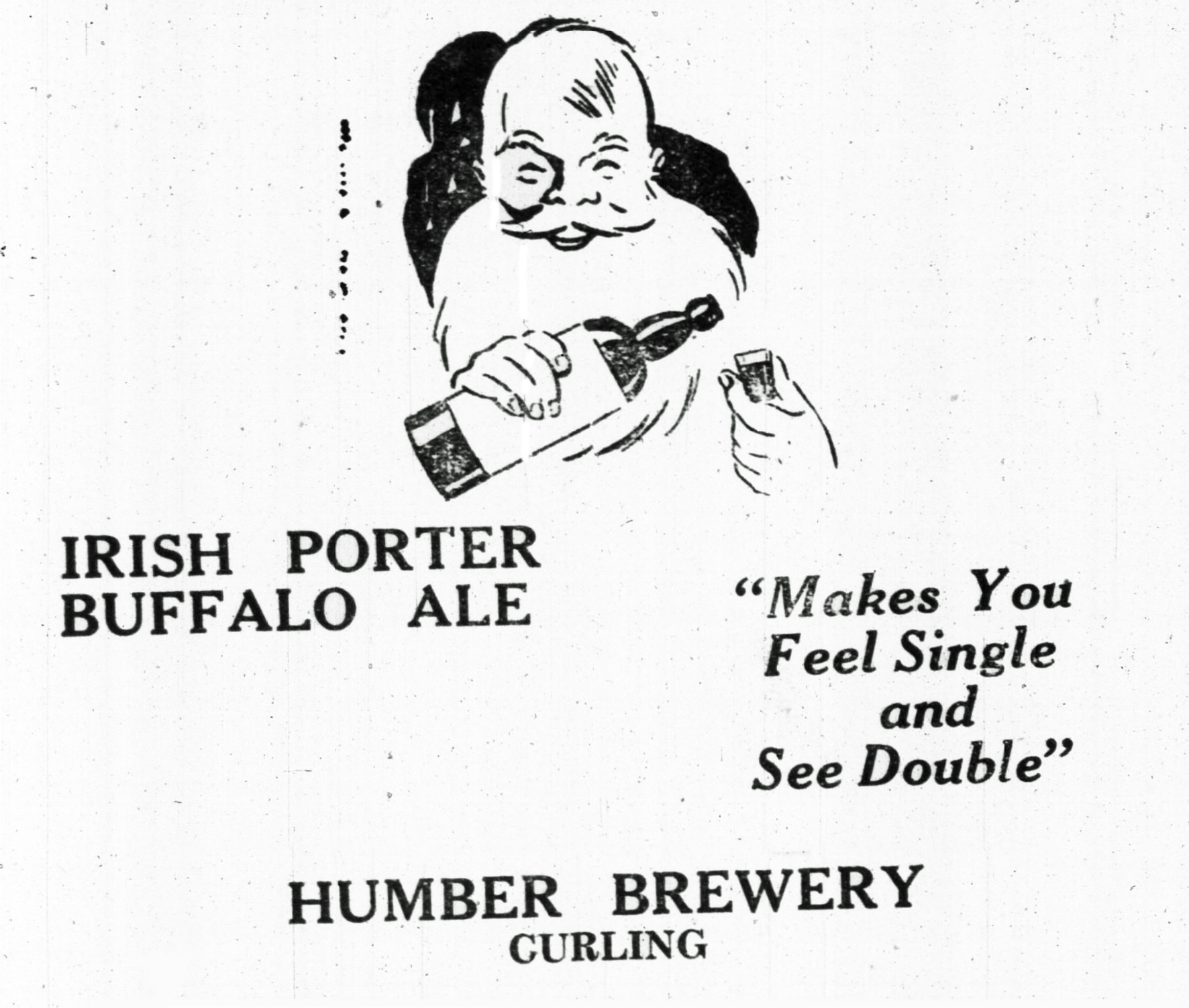
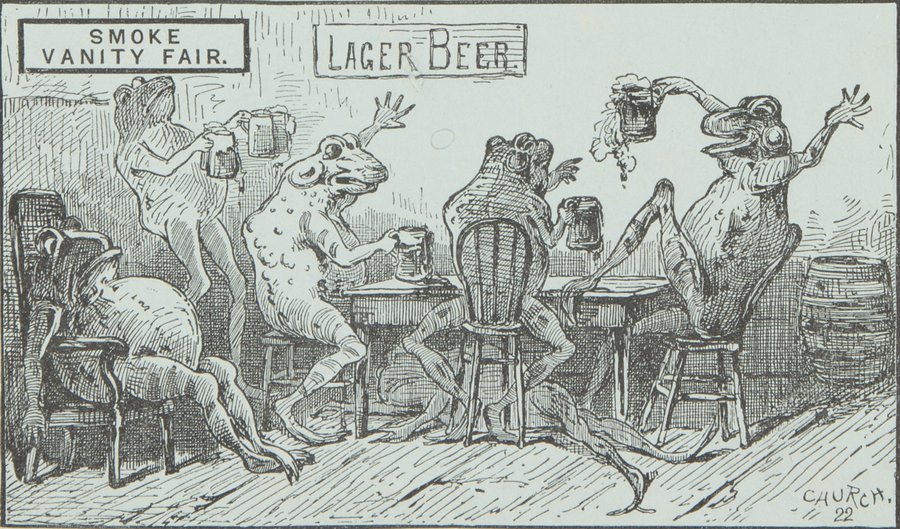
Speaking of dopey, drunken History posted this century old ad up there and it sorta speaks to the moment. Maybe. Not a lot making sense these days. Odd times. So please remember that image next time some half-read blab goes off over the temperance movement. Temperance won. Winter won’t win but temperance did. If you are reading this, you happily live in a temperance-based  society.

Except perhaps… well… anyway, the Beer Nut discovered a media campaign that makes also absolutely no sense at all. And… there was this odd story of a beer release line up facing off with a man and his Glock:

No shots were fired during the squabble outside the Other Half Brewing Company in Carroll Gardens — and a suspect was being questioned Saturday, police said. The gun-slinging skeptic struck around the corner from the brewery, on Garnet Street, where beer lovers with camp chairs and hand trucks regularly line up overnight to buy limited-run, $18 four-packs in collectible cans, sold when the doors open Saturday mornings.

Even odder, he waited around until the cops came. Odd times.

Conversely, Life After Football painted portraits of favorite characters he has met on his pub ticking travels in England:

For me, the best boozers are ones that are full of characters and not necessarily for the faint-hearted. A pub where you can walk in, have a chat with a complete stranger and time flies.  O[f]* course, you also have the riotous evenings where pubs are jam packed and anything goes! Over the past 500+ pubs there has been plenty of characters and I’ve uncovered a few photos from the Lifeafterfootball archives to recall some of the Midlands’ finest #pubmen.

Matt posted another in his thoughtful and open posts about how breweries should deal with beer writers, this time on the topic of samples. I don’t know if in a 10,000 brewery world the idea of chasing a very few folk paid to write 100 word notes for newspapers makes all that much sense – especially given the apparently urge to give repeat attention to a handful of blabby brewery owners or their PR staff** – but the post is full of realistic good advice like this:

Consider how much beer you are sending out. One can or bottle is enough. Seriously. There is no need to send out a case to try and curry favour among your selected media. Consider what I said earlier about the limited amount of time said media has to work their way through the amount of samples they might be receiving. One is plenty.

Exactly. I don’t know how many times I’ve seen the sad puppy face on a brewery or brewery owner when I take far less of the sample than offered whether in the tap room or the store house. Hint: your favorite pet thing is often not going to be the favorite of others.

A sad bit of news out of central New York with the passing of Joe Fee but an excellent obit from Don Cazentre that explains his family’s business was in bitters for your drinks:

Fee Brothers got its start in the middle of the Civil War, when Joe Fee’s great-grandfather and his brothers began making and importing wine in a location overlooking the Genesee River. That led to the company’s long-running tagline, which Joe Fee liked to recite: “The House of Fee / by the Genesee / since eighteen hundred and sixty-three.” The company evolved over the years, and moved to its current location on Portland Avenue after a fire. During Prohibition, it survived by producing altar wine. It also started making flavored syrups or cordials with flavors like Benedictine, Chartreuse, Rum and Brandy.

Jancis, who we all should follow, shared an “Australian bushfire report through the eyes of our winemakers” including this assessment of the situation from Stuart Angas, Hutton Vale Farm wines:

In the Hunter region it is perhaps a different story with some producers (Tyrrells for example) declaring their 2020 vintage lost, but let’s keep this in perspective, the Hunter region is over 1500km from us! For the media to paint us all with the same brush…is so irresponsible.  We have the utmost respect for what the Tyrrell family has done, we ourselves declared our 2015 vintage unsuitable for our quality of wines and didn’t make any red wines that year. (Our next release will be 2016s).

Another, Alex Peel, Greenock Creek wrote:

Very fortunately, the Barossa Valley was not in the direct fire front of any South Australian Fires and our vineyards are in great shape. We expect to harvest in the next 2-3 weeks and already colour intensity, tannin development and flavours in the berries is indicating a very strong, quality vintage. We just had 20mm of rain over the weekend and this has been received at the perfect time in our vineyards to see us through to harvest with some water reserves for the vines to ripen the fruit evenly and un-stressed. 

Speaking of wine, Katie put her thoughts on spending extended quality time with one winery in the Mosel last summer in order for Pellicle this week including encountering the noble rot:

On my next bunch—smaller, but beautiful all the same—a lacing of powdery botrytis [or noble rot, a fungus that sweetens and intensifies the flavour of the grapes as it wraps them in decay] turns plump, shining berries luxurious velvety shades of lavender and mauve. On my first day, Rudi had told me about the magic of this fungus. No doubt reading my reactions (I have no poker face) he’d encouraged me to eat the nobly rotten grapes I’d picked to understand their value. The flavour was spiced and honeyed—much richer than I expected from a grape—and the tang that came from the seeds as I crunched reminded me of sherbert. 

Next time you read someone raving on about the “just add  fruit syrup” sort of brewing or how wine all tastes the same, think of Katie and her prized fungus.

Martyn shared his thoughts about sitting along in a pub in an excellent piece he published yesterday:

Of the thousands of hours I have spent in pubs over the past half a century, in a fair proportion I have been on my own, and I’ve enjoyed them all. I love the sociability of pubs, I love the interplay between people, the crack, in groups small and large: I married the woman who is the mother of my child in part because she was the person I most enjoyed going down the pub and chatting with. But I also love being a solo pub goer, sitting, sipping and thinking.

Speaking of pubs and care of Mudgie, the Morning Advertiser struck a slightly paranoid note with this piece by on the point of the pub being about alcohol:

Dry January may be behind us, but I’m sure many in the trade will agree that the booze bashers seem set on pouring cold water on enjoying a drink all year round. The cynic in me has started wondering if all the noise around the alcohol-free category is less about marking and more focused on manipulation.

“Bashers”? “Manipulation”? Play to audience much?  This rivals the independent eye found in the 1940s journalistic style of baseball writers. Hard to carry on with the article at that point.

Finally, as Alistair wrote, something surely worthy of a shout out in @agoodbeerblog‘s weekly round up: a Scots Gaelic language beer reviewer. Slàinte mhath!!

That’s it.  I keep meaning to get shorter and shorter but these hings keep having a life of their own. For more, check out Boak and Bailey most Saturdays, plus more at the OCBG Podcast on Tuesdays and sometimes a mid-week… or Friday… post of notes from The Fizz as well. And sign up for Katie’s weekly newsletter, too. There’s the  AfroBeerChick podcast now as well! Plus the venerable Full Pint podcast. And Fermentation Radio with Emma Inch. Anyone else? Let me know!

*Sic. Sick!
**Hint: find those actual thoughtful expressive people to foster an actual continuing relationship with.

The First February Thursday Beer News Notes Of These Our Roaring Twenties

When I was a lad, there were common end-of-the-world tales and prophecies that circulated in the grocery store checkout newspaper headlines and junior high hallways. Nostradamus and his fanboys. I think all the dates that were ever suggested are now in the past. Twenty-twenty was never actually much on my mind. But it has a certain ring. We even had reverse twenty twenty / forward twenty twenty this week. Which is very cheery. Pink dress shirt with key lime necktie cheery. Be of good cheer. March is just four weeks away. The dark days are coming to an end.* As Katie** wrote in her latest newsletter, The Gulp:

The soil is warming up. The snowdrops have started meeting in their cabals, in open defiance of the iron grey sky. I’ve seen them. We’re nearly there.

You know what is very 2020? Sobriety. There is talk of it, for example by brewery staffer Jemma:

Not that I was a raging alcoholic, but the daily drink (or two or three) is considered normal and expected, and it was time for me to just kinda put myself in check. I had to prove to myself that I could go without alcohol and I’m proud I was able to.

There are sober bars out there, sober event spaces, calls for sober diversity and there was even a bit of a messy wander in PR publication October, too. But it would be messy, wouldn’t it.  I’d worry about any self-clearing self-diagnosis… you could be a raging alcoholic… I’ve sat with many a yellow eyed beer worker telling me about the distance between themselves and alcoholism. Consider Greta, too. Sobriety may be the new glitter. Or it may be made up of admissions others would do well to heed.

Noteworthy #1 : Chibuku from Botswana.

Noteworthy #2: the shadowy Portman Group*** neatly summerized.

Noteworthy #3: Jeff considers his tenth ‘lance-a-versary.

TBN congratulated Englishman abroad Ron on his subtle celebration of Brexit this week, as illustrated. Ron fell back on his regular “I’m thinking now I should pretend it was deliberate” but I don’t buy it. More to the point, what does it mean. Barm is yeast. Was it a yeasty stout? Why can’t people think of my needs when discussing things in my absence?

JJB posted another of his wonderful vignettes of his beloved Italy, of a bar he visited in Sicily while also exercising his right to be an Englishman abroad:

Despite the silly English language beer names and descriptions, I was mightily impressed with Ballarak during what was by necessity a fleeting visit. I subsequently learned that the brewery has another, more food-led venue in the Kalsa, a much less sketchy district of central Palermo (the Ballarò is wonderful, but not for the faint-hearted). I’ll be sure to visit both sites when I’m next about.

Elsewhere… hmm… let’s see… you know, I wonder sometimes about the regularly recycled beer topic like explaining freshness, food and beer and Stan’s favorite, the wonderful world of off-flavours.  Too bad Ladybird Books don’t put out a series of “Craft Beer for Youth” so that they could all be under one cover and on a bookshelf I don’t have to encounter. Next to the newspaper rack coated with fabulous headlines like “Three guys who like beer start a brewery.”****

Somewhat related, in my spam email folder, I found a letter of complaint sent by Arran Brewery of Scotland about a bottle deposit scheme proposed by the government in Edinburgh:

Gerald Michaluk the Managing Director of the brewery, like the vast majority of his fellow brewers, are set against the Scottish Governments proposals.  “It is clear this is a terrible scheme, ill thought through and will disadvantage the small brewers and the smaller shop keepers. At a time when, along with other policies, is seeing the brewing industry is being tightly squeezed from all directions this could be the final straw that breaks the camels back.  

The BBC covered the story back in May 2019. I mention this because Ontario has had standardized beer bottles for yoinks and a cooperative returns system since 1927 and it seems to work wonderfully with significant public acceptance.

Another sort of mental rut was noted in relation to Tony Naylor’s article in the Guardian headlined “£96 a bottle: the exotic beer that is as expensive as vintage wine” which rather sensibly points out the factors which caused such a fright. When challenged, the author tweeted this:

Who’s this “we”? I’ve always been 100% against ‘refined connoisseurship’ & the whole cultural cringe of a wine-beer equivalence, particularly where used as cover to drive-up £££ (as it has been) of average beers. Lot of “super-premium” things in beer now really ain’t that super.

Well said.

Old Mudgie has noticed another bit of a new slag being offered by the craft keener contingent: “pint culture“! Seems a bit unnecessary to me. As the OM says, “smaller measures are available in every single establishment that sells draught beer” so why bother making a thing of  norms. I am, as you know, all in for quart culture. Don’t even get me started on communal pottle culture.

Speaking of false constructs, Matt asked if the “rebel” culture of craft was going away. Despite efforts by the BA to rewrite the Book of its Genesis glowingly, I am of the class who is aware “rebel” was a bit of a manufactured stance created in the early 2000’s in large part to counteract the salacious drunken tone of micro which was best… or worst… exemplified by the “Sex For Sam” campaign dreamed up by Jim Koch and still illustrated by the sexist labels that pop up from time to time. Matt wrote:

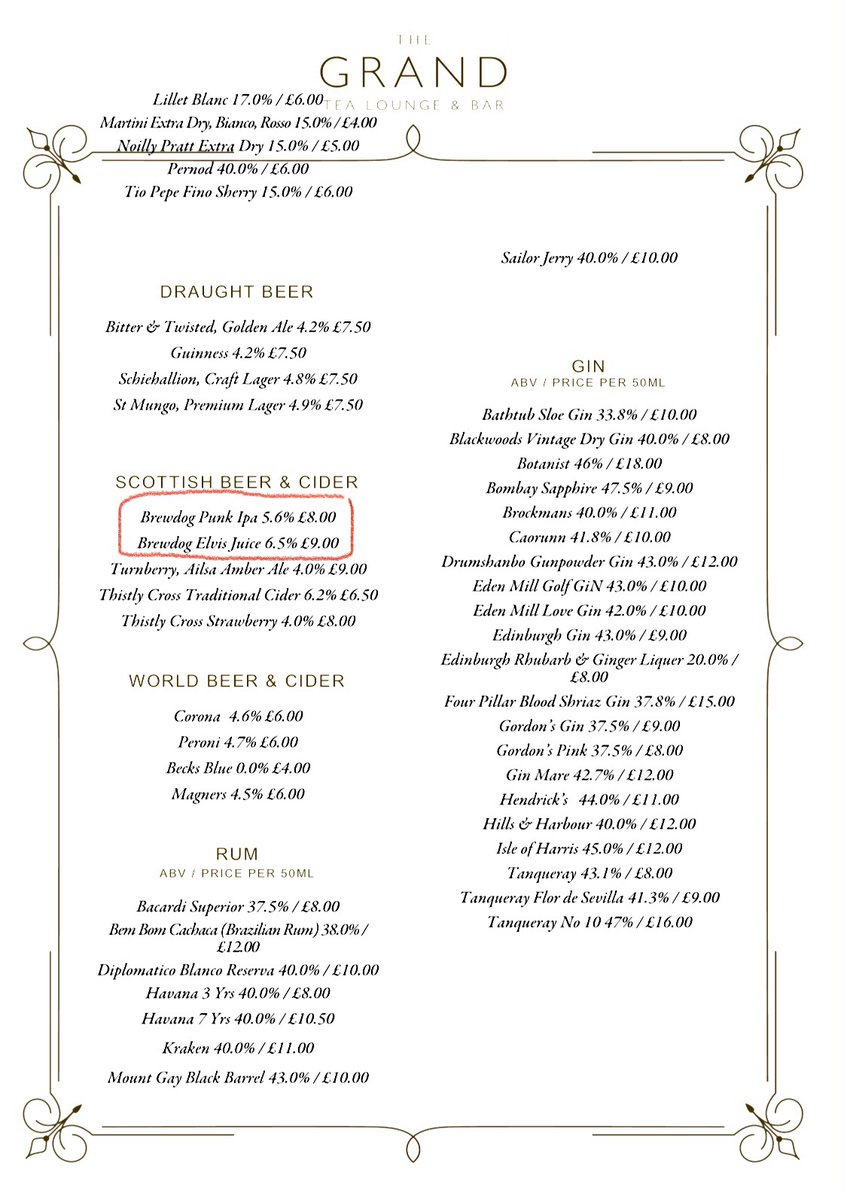
It’s an attitude that has spawned a thousand imitations. Most notably from BrewDog here in the UK, which, with beers like Punk IPA (now the largest selling craft beer in the country), fought its own version of a guerilla war in the beer aisles. The brewery, which now produces beer on three different continents, even held “craft beer amnesties” at its chain of bars, where you could trade “macro” beer for a pint of its own.

I think of it more this way: making vast sums off of brewing is no more novel or rebellious than Mr. Trump’s 2020 State of the Union address proved that things were more unified. Like the fib of small as noted by Evan, rebel is one of the great foundational fibs of craft. Brewing is always about money. The rest in large part fluff, PR and untruth still quietly bowing to mammon. Pick your heroes wisely.

Speaking of himself, very good news that Evan has been appointed an editor at that thing that must reference itself as GBH 27 times in most of the blog posts they run.  Hopefully, a more serious and less self-congratulatory approach may result.

In even more good news, there is a brewing collective in Minnesota, the Brewing Change Collaborative that aims to foster diversity a bit more actively:

Despite national statistics that not only show little diversity in the brewing arena but also a disproportionately white workforce, Louder, along with industry colleagues Elle Rhodes and Nasreen Sajady, began to devise a plan that would empower people of color to become more involved in the brewing industry. Using a platform of advocacy, education, and most of all, a safe space to talk about issues in the industry that impact people of color, the Brewing Change Collaborative was conceived.  “I am already tokenized and one of the few people of color that owns a brewery,” says Louder. “I would go to work every day and still be that lone person. I didn’t want to be the ‘only other’ in my ‘only other’ situation.”

Conversely, some very sad news that one of the heroes of micro is packing it in, facing not only, first, the beast released by craft but also, now, the taproom and even time itself:

The first female brewer since Prohibition has announced her retirement. Carol Stoudt, who kickstarted this region’s craft beer boom with Stoudts Brewing Company in the late ’80s, has announced via press release that she will retire and take the brewing company with her. “This was a difficult decision to make,” says Carol in the press release, “but we’re not moving enough volume to justify the expense of keeping the brewery open. However, we’re not closing the doors to any business opportunities that could help the Stoudts brand live on.”

Stoudts were a go-to delight for me in my early days of beer hunting in the wilds of central New York fifteen years ago. I guess I stopped doing that. I especially loved their Double IPA with the lovely elephants on the label. But as Ontario’s brewing scene grew, I transferred my allegiance in such matters to Nickelbrook Headstock. One problem Stoudt faced in miniature.

And speaking of old beer for old folk, it’s well-sponsored and perhaps overly-rouged #FlagshipFebruary time once again. Jordan wrote about 10W30, featured here in 2013, and how it’s a funny thing to find a hold out in Ontario – but the first feature was also about another elderly ale from Ontario.

If such tales from the crypt aren’t enough to keep you occupied, don’t forget to check in with Boak and Bailey’s most Saturdays, at the OCBG Podcast on Tuesdays (bonus Kingston references this week) and sometimes a mid-week post of notes from The Fizz as well. And sign up for Katie’s weekly newsletter, too. There’s the AfroBeerChick podcast now as well! Plus the venerable Full Pint podcast. And Fermentation Radio with Emma Inch.

*The sixth day of February is about sunny as the fourth of November. Unless it was cloudy. Or is now. Wherever you are.
**Who tweeted entertainingly on the sound of a sub-Boris.
***see, for example, 2009.
****Actually published in The Daily Standard.


The Last Thursday Beer News Update Before Santa Visits And Delivers All The Stuff

Yuletide.  Its been busy so far this month but after one last late evening meeting for work tonight I think I might be sliding into Yule proper.  As I mentioned a few weeks ago, the days of the Christmas Yuletide Hogmanay Kwanzaa and Hanukkah Beery photo contest may be well past us but the archives go on and on. To the left is 2014‘s co-winning entry from Thomas Cizauskas, one of the drinks world’s longest serving bloggers (care of Yours for Good Fermentables) and general gentleman of the trade. I remember being immediately taken by the way it reminds me of Vermeer, busily full of subtle detail.

Speaking of detail, the efforts of Boak and Bailey to single handedly keep beer blogging going never fail to impress and this week we have, in addition to their normal weekly roundup as well as a summary of their favourites among their own posts,* a wonderful summary of the best that they have read from the blogs of others:

We do this not only as a reminder that there’s lots of great stuff being produced by talented writers but also because writing online is transitory – you sweat over something, it has its moment of attention, then sinks away into the bottomless depths of the Eternal Feed. The pieces we’ve chosen below excited or interested us when they were published an, rereading them this weekend, retained their power. They tell us things we didn’t already know, challenge our thinking, find new angles on old stories, and do it with beautiful turns of phrase and delightful images.

Wonderful and particularly wonderful as they liked my August 2019 post on Lambeth Ale to include it. I don’t get the time as much to do research so I am pleased that one was pleasing.

Look! A wonderful pub in England. In a time of need, too. Elsewhere, holiday tragedy struck in Scotland this week when a truck full of Brussel sprouts went off the road.

The vehicle pulling the trailer full of the Christmas dinner vegetable overturned in Queensferry Road in Rosyth at about 10.45. Police Scotland said it had closed the road and was urging drivers to avoid the area. A spokesman tweeted: “There’s been a bit of a Brussel Sprouts accident at the roundabout at Admiralty Road.” The tweet added: “Please avoid the area if possible. Traffic and Christmas dinners may be affected. Apologies for any delays.”

Now, you may say what has this got to do with beer but there is nothing so good as a sprout covered in gravy washed about the gums by a faceful of Fullers Vintage Ale on the 25th of December and I will call out anyone who disagrees. By the way, if the city is Brussels why is the sprout singular? Ha ha! They are not. It’s Brussels sprouts. I grew them once about twenty years ago. Only pick them after a few frosts. Top tip, that.

Speaking of not beer, there is a wine glut in the world:

From a balance of supply and demand for bulk wine as recently as a couple of years ago, we are now in surplus worldwide thanks to some abundant recent vintages, and also possibly due to declining demand as consumers trade up while per capita consumption levels off or declines.

Speaking of holidays, excess and mindless abandon, I have learned that the good folk in Australia have come out with new drinking guidelines which are prefaced in a very Antipodean style:

“We’re not telling Australians how much to drink. We’re providing advice about the health risks from drinking alcohol so that we can all make informed decisions in our daily lives. This advice has been developed over the past three years using the best health evidence available,” says Professor Anne Kelso, CEO of the National Health and Medical Research Council.  “In 2017 there were more than 4,000 alcohol-related deaths in Australia, and across 2016/17 more than 70,000 hospital admissions. Alcohol is linked to more than 60 medical conditions, particularly numerous cancers. So, we all need to consider the risks when we decide how much to drink.”

Good way to send the message. And similarly from the “the sky ain’t falling department, the Pub Curmudgeon reports on the after effects of the lowering of the drunk driving limits in Scotland five years on, objecting to a study’s core findings:

This month sees the fifth anniversary of the reduction of the drink-driving limit in Scotland in December 2014. At the time, the immediate impact on the licensed trade was such that it caused a noticeable downward blip in Scotland’s national GDP figure. Now, five years later a study by academics at Stirling University has examined the longer-term effect on the trade and, perhaps predictably, concluded that it hasn’t really made a great deal of difference, saying that “Most participants reported no long‐term financial impact on their business.”

He argues that the rural pub is affected the most and therefore the study places its finger on the wrong outcome. Interesting…

Speaking of criticism, there is a wonderful piece on the site for NPR’s foodie show The Splendid Table on how the role of restaurant critic has evolved since the 1970s:

Today, the relationship between restaurant critics and restaurants themselves is kind of adversarial; it wasn’t then. To me, we the people who were cooking the food and the people who were writing about it were all on the same team. And as time went on, I started seeing my role changing a little bit in that I honestly believe that cities get the restaurants they demand. I started in the mid-1970s, and by the mid-1980s I was starting to think that it was really important that people be more demanding of restaurants, that the food in the city would be better if people didn’t settle for mediocrity.

Is good beer, therefore, almost four decades behind?** Or is the good beer writing about good beer now good?

Speaking of being behind, I am ashamed I never heard of this story of racial discrimination, one beer and the Supreme Court of Canada from eighty years ago:

…since Christie vs. York was handed down, 80 years ago this month, little else has been known about the man who took a Montreal tavern to court for refusing to serve him because he was black. Civil rights activists in Montreal, wanting to honour his legacy, have been trying to locate Christie’s relatives and gather more information about him.  It was believed he moved to Vermont in disgust after the Supreme Court decision. That’s where the trail ran cold.

I should unpack that case. The majority opinion reads like something from the 1800s. The single dissenting ruling sounds like modern law.

Someday, brewery features will features sources other than the brewery owner.  Until then, there is this. Tell me if you’ve heard it before.

That’s it. A bit of coal after many pressies. Next week’s edition will be out on Boxing Day. Make sure you are good and lubricated for the wonder that ye shall behold. And don’t forget that there’s more news at Boak and Bailey’s on Saturday, at the OCBG Podcast on Tuesdays and sometimes a mid-week post of notes from The Fizz as well. And sign up for Katie’s weekly newsletter, too. Merry Christmas to you all!!!

*…in which they include my favorite post of the year from anyone, their piece “The Swan With Two Necks and the gentrification issue” from November.
**That is so meta of me.