The Thursday Beery News Notes For That Lull Between Canada Day And The Fourth Of July

1780s Loyalist soldier reenactors at Bath Ontario Canada Day parade

Living on a border makes you aware of the similarities and differences. Even when the border gets more opaque than usual. As illustrated, we saw musketeers but in red and green not the more often seen blue. Most years, especially when the fourth of July falls on a Friday, I’d have gotten my butt down in a seat at the Syracuse Mets AAA stadium, eating a snappy griller white hot, watching the game then sticking around for the fireworks. Not this year. Due to… conditions. So maybe this Canada Day 2025 last Tuesday was a bit more noted and acted upon. We took in a parade even. One with reenactors with muskets. Then we made burgers.

Speaking of… conditions, I really like this bit of thought on meaning of the stubby and its effectiveness as an economic tool:

By 1962, the year after the stubby was introduced, Canada’s Big Three brewers controlled about 95 per cent of the Canadian beer market… When the stubby was made a packaging requirement for all beer sold at its stores in Ontario, Thompson argues, the Big Three effectively locked all foreign brewers out by creating an extra hurdle for entry into the market. “To bottle in the stubby, [American brewers] are going to have to make their own line at their plant to bottle specifically for Ontario,” she said, noting any cost savings for American brewers through the reusable stubby would be eaten up in transportation costs by first shipping the beer to Canada then shipping it back the U.S. for a refill. 

PS: a Caeser is better than a Bloody Mary. Fact.

image of text from Nov-Dec 1979 edition of the Beer Can Collectors New ReportGary shared a great record of the earliest days of US micro at the end of last week that he found in in the “Golden State Newsletter” column in the Nov-Dec 1979 edition of the Beer Can Collectors New Report found at the Internet Archive. That’s a snippet of the text to the right. I like the live action detail of the first encounter at New Albion:

Greg entered the barn and was surprisingly greeted by three bustling employees involved in 20th Century brewing efficiency: After labels were scraped off what appeared to be recycled Schlitz and Bud bottles, they were washed and singularly hand filled at one tap. The bottles were then hand capped and placed in cases. Boxes of Ale, Stout and Porter stood ready to be loaded onto a used Dodge pick-up truck and delivered world wide. Greg spoke to the Brewmaster (bottle filler). This informative fellow mumbled something about being retired from the Navy, liking to drink ale, and not having time to talk. Greg left.

Lovely vignette. And there’s an interesting note on the state of US drinking trends on the next page: “When color TV became a standard fixture in the home, beer drinking moved out of the bar and into the family room. Two-thirds of all beer is consumed at home—that’s 16 million six-packs a day.” This all speaks to the point made last week about the loss of reliable records – but also shows how there is still good stuff to be found.

What else is going on? Well, Laura published a great roundup from the June edition of The Session last weekend. Plenty of good reading there. David Jesudason is covering the editorial duties for July and Joey at Beer In The City is our host for August.

Line graph showing rise of wine consumption in China then a dramatic slumpYou think beer has it bad in terms of slumping sales? Look at this chart from the American Association of Wine Economists describing the rise and slump of wine consumption in China over the years 1994 to 2024. Consumption is now below 1995 levels. Mirrors the slump in new home sales there. Makes sense.  And that slump in beer has been described in a form worth sharing:

…the industry faces threats from ”sheep, parasites and wolves,” a reference to the way former Coca-Cola Co. Chief Executive Doug Ivester once described competition in the soft-drink industry in the early 1990s. “For the beer industry, spirits are wolves, winning share of throat and now pushing more directly into beer occasions with ready to drink,” the analysts said. “Energy drinks are parasites, successfully using beer distribution as a platform to sell to soft drink companies. Beer players are sheep, ceding customers and attention while beer consumption continues to decline.”

Note: lager larks. And another note about a visitor to a pub caught my eye this week, a visit in this case that took place in 1789* that still resonates today in a particular part of the world where my geneologicals place one quarter of my genomics:

When Scotland’s national bard stopped off for a drink in Sanquhar, there was only one place he found acceptable. Robert Burns liked the inn run by Edward Whigham so much that he immortalised it in verse, with At Whigham’s Inn, Sanquhar. The prominent property in the heart of the south of Scotland town has become much less welcoming in recent years and has fallen on hard times. However, the local community has now stepped in with the hope of bringing the building back into use – with a nod to the poet who found it such a pleasant hostelry.

I found this bit of social science interesting but not, to be honest, convincing. If, as we saw above, the new fangled colour TV was another nail on the coffin of the US neighbourhood bar circa 1979, are pub crawls in the UK really going to rescue of the industry today? Here’s a clip from the study’s abstract itself:

Pub crawls are a phenomenon which are part of the hospitality sector and contribute to consumer experiences within the Night Time Economy. We show the current state of knowledge in this immature field via a Systematic Literature Review methodology. Building on this we provide a novel theoretical typology of pub crawl classification based on levels of organisation, supervision/accompaniment and geography. Highlighting the processional nature of pub crawls, where consumers move through multiple individual contexts and as a spatially embedded hospitality experience, we delineate the experience into antecedents, processes and outcomes. Our analyses lay foundations for further fine-grained theorisation. 

So… more of an invitation for further investigations. Less compelling was the survey discussed in Decanter, another effort to explain away the younger set not being the boozers their parents were:

Gen Z is known for turning up its nose at alcohol, but more young adults in this group may now be enjoying a drink, according to an international survey by drinks industry research group IWSR. In March 2025, 73% of Gen Z adults said they had consumed alcohol in the previous six months, found the IWSR Bevtrac survey.  That’s up from 66% when the same question was posed two years ago. IWSR said its Bevtrac survey included legal-drinking-age adults in 15 markets and defined Gen Z as up to 27 years of age. In the 2025 survey, 70% of Gen Z respondents in the US said they had drunk alcohol in the past six months, up from 46% in 2023.

It would be very helpful if the methodology for these sorts of stats wasn’t (i) a self-declaration about (ii) something you did once maybe in the last half year. A generation that has a drink a few times a year is not going to be the savior for anything more than pub crawls could be. Aside from the “rootin’ for booze” bias, isn’t the real story still that this story isn’t really a story?

Speaking of non-story, Alistair is in a rut but he is going to work himself out of it:

…here is my crazy idea, I am just going to write whatever random boozy thoughts pop into my head each and every day for the rest of July, including when I am in Florida on vacation. Maybe I will find something new in the Austrian newspaper archive that I love to trawl, maybe it will be a few lines of total tosh that just needs someone to comment that I am completely wrong, or right, or that you’ve been feeling the same but unable to say it. Maybe I won’t stress myself out…

The story about Justin Hawke semi-formerly from Moor is odd and, I’m going to admit, made up of threads some of which are outside of my regular reading. But nothing was missed about the “intent” that was meant.  Apparently things were known for years but now ties have severed and attendees cancelled and it all reminds me, also oddly, of Rod Stewart… who also was at Glastonbury. UPDATE: see Boak and Bailey’s on the ground reporting.

And over at Pellicle, Katie has published a story on the wines of Tenerife, the largest of the Canary Islands:

I head across town to Vinoteca Con Pasión, which has the largest selection of Canarian wine in the region. Thankfully, most are available by the glass from the shop, or from the restaurant next door. It’s from here that I buy a bottle of Listán Blanco pét-nat, made by La Orotava winemaker Dolores Cabrera… Her wines named La Araucaria are her most expressive—bottles made exclusively with indigenous Listán Negro or Listán Blanco grapes, from vines between 50 and 100 years old. Her vines are also trained in the cordón trenzado method, trailing long, woven tails across the breadth of her personal sections of paradise.

This is interesting for anyone who has spent a part of their life poring over newpaper notices and other documents from the 1600s and 1700s looking for beer references as “Canary wine” is another product you see regularly referenced. The wines of those times could well have borne a strong resemblance to what Katie experienced today. Though there are clear suggestions of the old stuff being heavy and sweet and boozy.

The New York Times in its Wirecutter column presented a set reasonable arguments from reasonably well informed people for the Teku beer glass… with an interestingly blunt conclusion:

All that said—and as we found in our own tests — most people probably won’t be able to detect significantly more flavors and aromas when they drink a beer out of a Teku compared with other glassware. It takes years of experience and training to develop that much nuance in your senses of smell and taste. But you might notice some subtle improvements while appreciating the other benefits of the glass, such as its versatility and good looks.

So my Mason jar habit remains a solid option. Speaking not of which, was it in a biography of Vita Sackville West that I read the comment from some member of the English aristocracy that he didn’t understand the Great War given all the customers from Germany who were being killed. Are the Trump immigration orders causing an analogous effect?

“A lot of Hispanic consumers are apprehensive to leave their house or … deviate from their routine or go out,” Dave Williams of Bump Williams Consulting told Yahoo Finance. “That results in fewer opportunities and occasions where beer would slot into the mix.” “The abruptness of this slowdown … makes me feel like there’s a lot more of it tied to the cyclical aspect of these consumer behaviors due to the recent ICE raids or deportation scares, whether you’re legal or not … that’s on top of the other structural aspects that beer brands in general,” Williams added.

Well, there you go. We started at the northern end of the current… conditions and ended up at the south. These are the times. As you contemplate that… again… please check out Boak and Bailey every Saturday. Look out for Stan when he feels the urge now that he’s retired from Monday slot. Then listen to a few of the now rarely refreshed Lew’s podcasts and get your emailed issue of Episodes of my Pub Life by David Jesudason on the (sometimes even but never) odd Fridays. And maybe The British Food History Podcast. Maybe? And Phil Mellows is at the BritishBeerBreaks. Once a month, Will Hawkes issues his London Beer City newsletter and do sign up for Katie’s wonderful newsletterThe Gulp, too.  Ben’s Beer and Badword is out there with the all the sweary Mary! And check out the Atlantic Canada Beer Blog‘s weekly roundup. There is new reading at The Glass which is going back to being a blog. Any more? We have Ontario’s own A Quick Beer featuring visits to places like… MichiganAll About Beer has given space to some trade possy podcasts and there’s also The Perfect Pour. Plus follow the venerable Full Pint podcast with an episode just last month!. And there’s the Craft Beer Channel on Youtube. Check out the archives of the Beer Ladies Podcast. That’s quite good but, hmm, they’ve also gone quiet this year. The rest of these are largely dead. And the long standing Beervana podcast …except they have now stood down.  As has We Are Beer People. The Share looked to be back with a revival but now its gone quiet. And the Boys Are From Märzen podcast appears suspended as does BeerEdge, too. VinePair packed in Taplines as well. All dead and gone.  There is more from the DaftAboutCraft podcast, too. Nope – that ended a year ago.   The Moon Under Water is gone – which is not surprising as the ask was $10 a month. Pete Brown’s one cost a fifth of that – but only had the one post. Such is life. Such is beer podcasting and newlettering!

*That’s a nice bit of verse: Envy, if thy jaundiced eye / Through this window chance to spy / To thy sorrow thou shalt find / All that’s generous, all that’s kind / Friendship, virtue, every grace / Dwelling in this happy place.

E
The Beery News Notes For The False Promise Of An Early Thaw

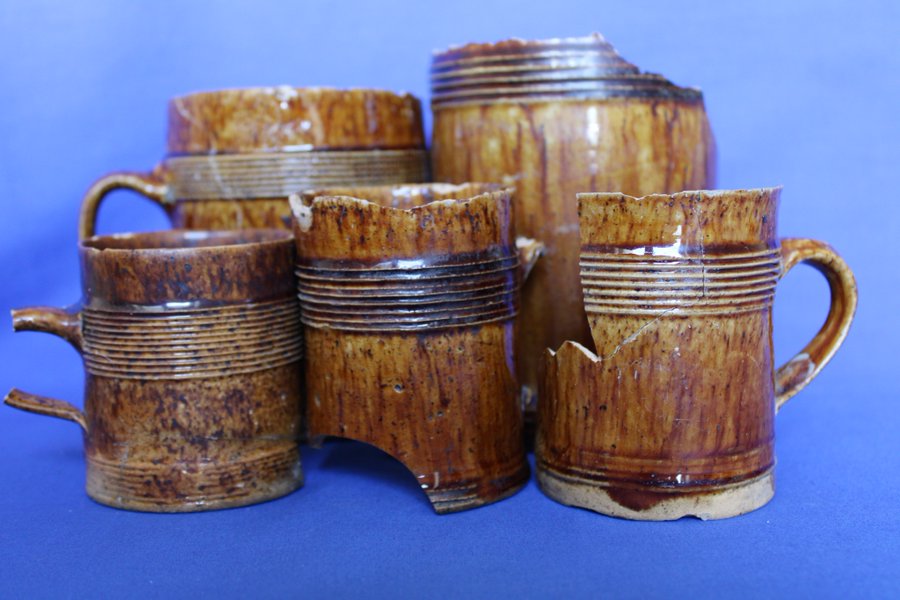
Thaws. They deceive in February. Being unwise, I have started seeds. Thaws also jack the walkway tiles and bricks outside, too. Spent lunch Wednesday discovering the front step tiles are stuck on with stuff that’s now the consistency of chocolate pudding. So things are getting loose, a bit cracked and sorta smashed. But not quite as badly as these late 1600s and early 1700s manganese mottled tankards from Ireland posted on the internets this week. From Newmarket in Dublin we are told. Others have showed up in the colonies, in Maryland and at Harvard Yard. Lovely things. But most won’t hold beer.

Mid-morning Update: Jordan decided to post an homage to Toronto’s Godspeed and its pitch-lined Sklepnik project – posted at 2 am Thursday morning I would add, well past the time this weekly normally goes to press. But it is not worth waiting around another seven days to bring it to your attention:

Every piece is as important as every other piece. Not everything that Godspeed has done has been a triumph, and the situation has been challenging. It was the potential that excited people, and the pitch-lined Sklepnik represents years of earnest effort, not just in the brewhouse, but interpersonally. A month spent learning from people who have spent their entire careers on a single style, and whose trust creates possibility. Functionally speaking, the odds against its existence are such that it is construable as a miracle, and that’s before the first sip. The only way you can get here is trial and error. There’s no ironic posture as a brewer. It’s not a hobby. The secret ingredient is your life.

Also lovely. Now, back to our normal broadcasting…

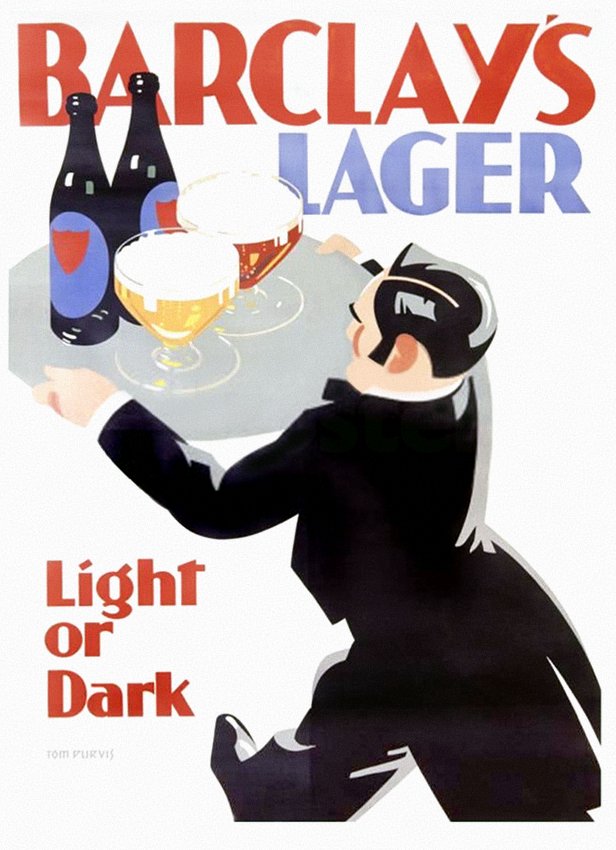
Unlike our man in The Netherlands (when he’s not in transit.) And, while we are speaking of lovely, Ron, who, yes, often holds a beer, has posted an image of a 1930s ad for Barclay Perkins lager along with his discussion of their 1941 brewing techniques:

Good news for me, as it gives me a chance to preview (use a recipe I’ve already written) a recipe from “Blitzkrieg!”. Though for any of the four options I could have found a recipe in the book. For a book about UK brewing in WW II, it has quite a lot of Lager recipes. 37 in all. Though there are well over 500 recipes in total. Not that huge a percentage, really. Lucky old Dark Lager has seen its gravity increase by 0.5º compared with the previous year.

Elsewhere and also with increasing gravity, the continuing concerns that Guinness has or has not slipped under the radar and ended up in first place somehow in the UK diet… continue. A call for anecdotal evidence was sent out by B to the B and a summary was posted earlier this week. There was a whole lotta comfort out there as far as I could tell. My thoughts?

Had one two weeks ago in an unfamiliar pub in Toronto. Old reliable friend, tasty with most pub food, creamy savoury with the tang and the roast – and not an alcohol bomb. Might have one or two a year.

It’s all good. Sure it’s made by a faceless international conglomerate. But so is vestigially produced Fat Tire – both the new phony and old – and at least Guinness doesn’t buddy up with Myanmar‘s murderous dictators! And at least it’s actually something not made on the same equipment as automotive window washer fluid. By the way… I don’t understand. Aren’t hard soda and boozy seltzers the same thing? I suppose it doen’t help that I don’t give a crap about this… crap. But I have no idea. Thankfully.

Note: not one craft buzzword bingo square was left undaubed in the making of this story.

Beth Demmon released another issue of Probitchin’, this month featuring the work and career path of Jacque Irizarry:

Her interest in art coalesced during college, after she realized how many years of (expensive) education it would take to become a lawyer. After switching her track from becoming an early childhood education art teacher to visual art, she dabbled in photography and painting before graduating with an art degree. With student loans looming, she worked in customer service before landing her current full-time position handling the graphics and design for a company involved in online education, where she’s been for eight years.

Beth’s newsletter is one of my favorites in the beer world. There is a lot to be said for good writing that avoids the unending wanderings and isn’t hip cool and 45 potty mouth serving as cover for cap in hand recycled PR. Mucho looking forward to Beth’s upcoming book on cider.

Speaking of newsletters… they are all the cool kids talk about these days… Kate Mather fabulously unleashed at The Gulp about unleashing at the pub!

Tom and Phil left for their teas, and we made a move too. On the way home I waved my arms like the two-pint revolutionary I am, telling my Tom how important it is to have common spaces for people to freely share ideas, to congregate—and the more that these places, like pubs, are restricted, taken away, closed down; the more the hospitality industry is left to wheeze on without support, the more suspicious I get.

That is what we like to see: two-pint revolutionaries waving their arms. And, speaking of revolutionary, the future continues to be defined in Japan:

… convenience stores can start selling alcohol and tobacco through self-check-out immediately, as long as they’re set up for compliance with the corresponding required regulations. Under Japanese law, a person must be at least 20 years old in order to purchase alcohol or tobacco. In order to confirm the buyer’s age, convenience stores that want to sell such products through self-check-out will have to equip their registers with a device that can scan either the purchaser’s driver’s license or My Number Card, a government-issued ID card that’s not yet mandatory and which the Japanese government is eager to accelerate the adoption of.

Ending a sentence with a preposition is also cooler in the future. And, doing a chronological 180, Nigel altered me to another good piece at the always excellent site A London Inheritance, this time about a street called XX Place:

To try and find some history on XX Place I carried out an online search on the Tower Hamlets Archives, and armed with a couple of reference numbers visited the archives on a Saturday morning… My first source at the archives was a small booklet published in 2001 by Ron Osborne titled XX Place. The booklet provided a description of XX Place. It was built in 1842 for locally employed workers. It was only a short street of 10 small terrace houses running along one side of the street. It was about 10 feet wide and the majority of those living in the street were employed at the nearby Charringtons Brewery.

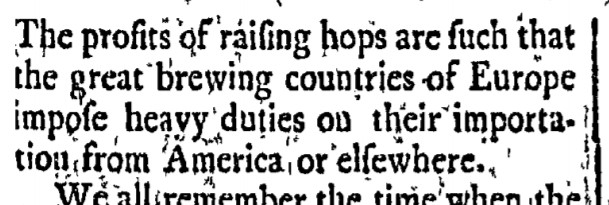
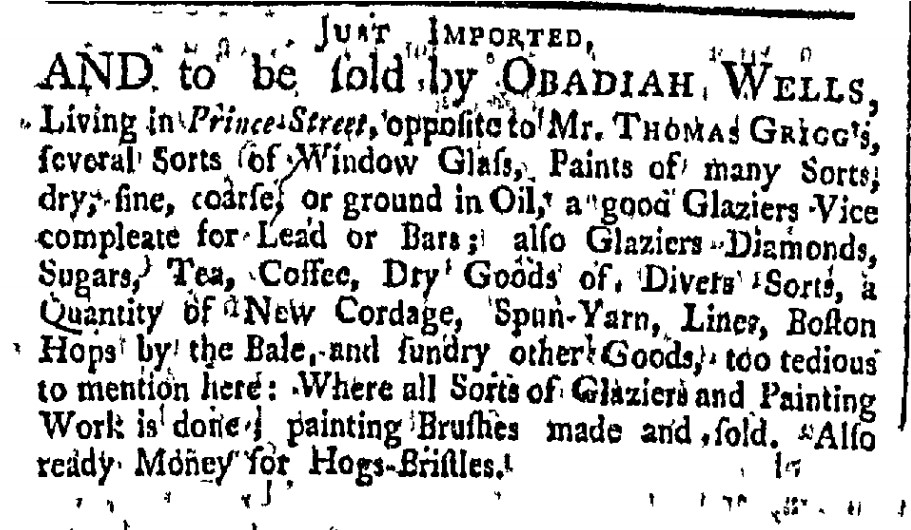
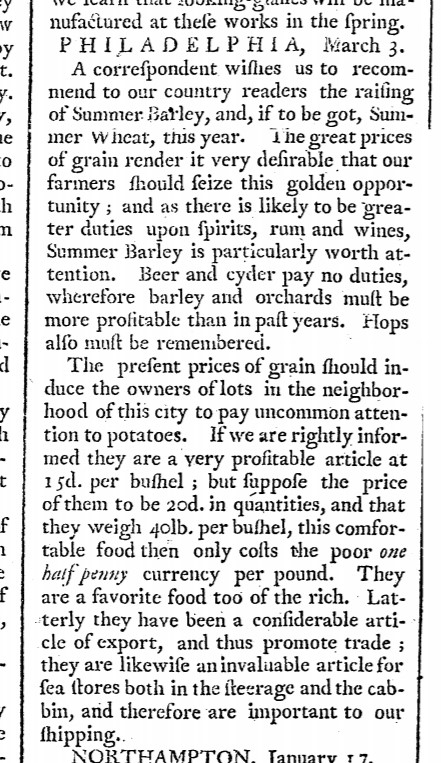
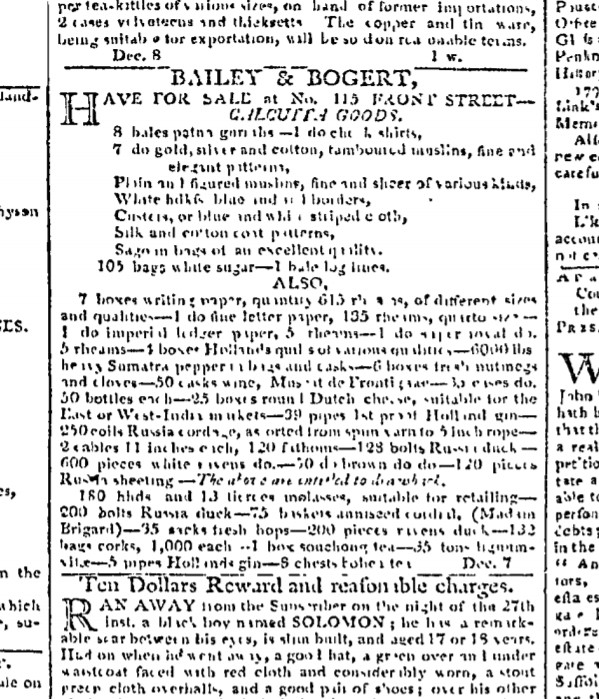
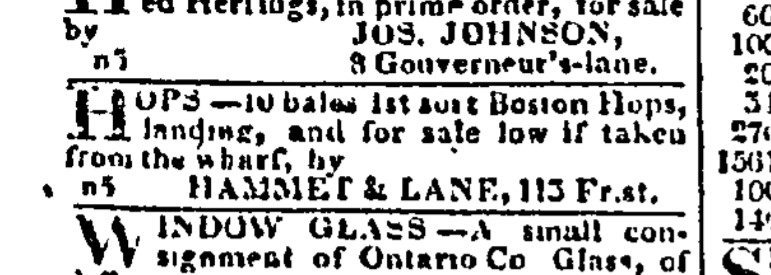
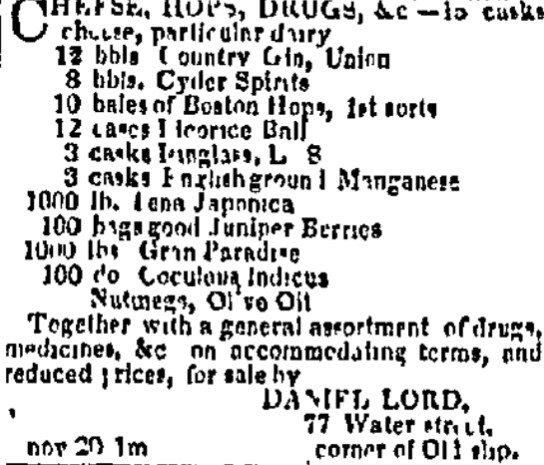
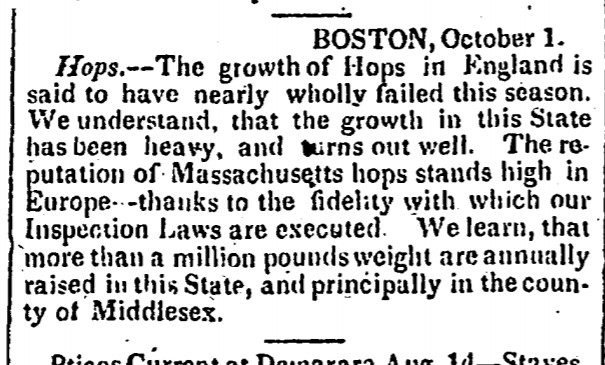
Interesting observations on the three grades of Oregon hops in 1910 – fancy choice and prime.  Seventy five years earlier there also seemed to be a three tier grading system in New York state’s hop trade but named with a bit less of the marketing spin. In 1835 there was just first sort, second sort and third sort hops. Which suggests sorting. And a certain order. Choice? Fancy? Who knew what they meant! Fancy sounds all a bit “My Little Pony” in a way. By the pricing I can only presume that in 1910 “prime” was not actually… prime. But I suppose thems that knew at the time were in the know back then.

I missed this excellent observation by Ren Navarro on the nature of plans to bolster human rights in brewery work places:

While heady political questions are essentially baked into mutual aid work, a more immediate focus of all such groups remains meeting the needs of people who’ve been left out by existing power structures. For Navarro, industry-sponsored programs designed to address inequities are too often structured from the top down, and create barriers for applicants who really need the help. Applications that require resumes and essays, for example, require time and computer access and reliable internet. 

And Pellicle has a good piece this week about cider makers Lydia Crimp and Tom Tibbits of Herefordshire’s Artistraw Cider. You know, I usually don’t go for producer bios with beer but somehow the more immediately agricultural nature of cider makes for a more interesting read:

Observing that some apples lend themselves better to certain seasons, they reckon the bright acidity of dessert fruit works well with the freshness of Spring in Beltane—which boasts the Yarlington Mill, Reinette D’Obray, Chisel Jersey, Browns, and Kingston Black cider apple varieties. Whereas Knotted Kernel (with a dash of Kingston Black, Lambrook Pippin and Foxwhelp) has “cherry brandy” notes conjuring up images of roaring fires for their wintry, Hallowe’en release, Samhain (pronounced SAH-win.) Lammas marks the end of Summer and boasts Dabinett, Browns, Yarlington Mill, and a little Strawberry Norman. Imbolc is all about renewal and promise, with Major, Bisquet, Brown Snout, Chisel Jersey, and Ellis Bitter.

Why, I had a bit of the old Kingston Black myself just the other month.

Aaaaannnd… the coal fired generators at Beervana are back on line now that Jeff is back from holidays and he’s shared a tale of fruit coating yeast of a most natural sort:

The riper [the fruit] is, you’re getting ferments that are starting right away. That’s what the yeast and bacteria like. That’s when the birds start to eat it, and that’s when the insects come out and all these things. Nature is showing us these fruits are in their optimum time right when they’re ripe. The more time the fruit spends on the bush or the tree as its ripening, the more organisms are going to be there.

Hmmm… and finally… nice to see that Carlsberg has got its geopolitical ethics so completely all in order:

Danish brewer Carlsberg… warned on Tuesday that a possible slowdown of beer consumption in Europe because of increased prices could dent profit growth this year. The world’s third-biggest brewer also said it is buying out its partner in India and is seeking an option with the buyer of its Russian business to re-enter that market at some point in future.

Dastards. As the Danish military helps arm the Ukraine, Carlsberg makes plans for appeasement.

That’s it! Now… what to do… with these lists… They are getting to be almost 600 words each week and I am not sure how useful they are. Still… they do slowly mark the shift in the discussion. Podcasts dying, newsletters in flux, Mastodon perhaps peaked… As we think on that… hmmm… and song this week? What would I play if this were a movie and these were the scrolling credits? Could it be this?* Yup. That’ll do…

Boak & Bailey | The B² experience
Katie Mather | Shiny Biscuit and Corto
David Jesudason | “Desi Pubs” (2023) author
Ron Pattinson | The RonAlongAThon Himself
Al Reece AKA Velky Al | Fuggled
Jennifer Jordan | US hops historian
Alan McLeod | A Good Beer Blog (… me…)
Andreas Krennmair | Vienna beer and lager historian
Beer Ladies Podcast | Lisa Grimm and colleagues
Jay Brooks | Brookston Beer Bulletin
Joe Stange | Belgian beer expert, beer magazine editor
Cider Bar | Barry makes Kertelreiter cider
Laura Hadland | CAMRA historian and beer writer
Brian Alberts | US beer historian
Jon Abernathy | The Beer Site
Maureen Ogle | US Beer Historian
Lars Garshol | Norwegian Beer Historian and Kveik Hunter
James Beeson | Beeson on Beer
Carla Jean | MAINER!!!
Thandi Guilherme | Beer Ladies Podcast Co-host
Lisa Grimm | Beer Ladies Podcast Co-host
Rob Talksbeer | Podcaster and Youtuber
Anthony Gladman | UK Drinks Writer
Jeff Alworth | Manna Of Beervana
Northwest Beer Guide | Fairly self explanatory… but not NW Latvia…
Evan Rail | Prague based GBH editor, freelance writer, NYT etc.
Todd Alström | 50% of the Alströms
Jacob Berg | Beer talking librarian

You need to check out Mastodon. It’s so nice. You need to take the time and have the patience as regular posting attracts the audience as per usual. While you are at it, check for more weekly recommendations from Boak and Bailey every Saturday and Stan spot on Mondays. And, yes, also gather ye all the podcasts and newsletters. Check to see the highly recommended Beer Ladies Podcast. We appreciate that the OCBG Podcast is on a very quiet schedule these days – but it’s been there now and again. See also sometimes, on a Friday, posts at The Fizz as well (Ed.: we are told ‘tis gone to 404 bloggy podcast heaven… gone to the 404 bloggy podcast farm to play with other puppies.) And the long standing Beervana podcast but it might be on a month off (Ed.: which I have missed from this list for some unknown reason.) There is the Boys Are From Märzen podcast too and check out the travel vids at Ontario’s own A Quick Beer. There is a monthly sort of round up at The Glass. (Ed.: that seems to be dead now… nope, there was a post on July 25th… in 2022 even.) There is more from DaftAboutCraft‘s podcast, too. And sign up for Katie’s (Ed.: now very much less) irregular newsletterThe Gulp, too. And check out the Atlantic Canada Beer Blog‘s weekly roundup. Still gearing  up, the recently revived All About Beer has introduced a podcast, too. (Ed.: still giving it a few more weeks to settle in and not be as agreeable…) Plus follow the venerable Full Pint podcast. And the Craft Beer Channel this week on Youtube. Plus Fermentation Radio with Emma Inch. The AfroBeerChick podcast as well! And also look at Brewsround and Cabin Fever. And Ben has had his own podcast, Beer and Badword (Ed.: …notice of revival of which has been given… still not on the radio dial…)  And remember BeerEdge, too, and The Moon Under Water. There was also the Beer O’clock Show but that’s now gone after a ten year run… no, it is back and here is the linkThe Fingers Podcast has fully packed it in citing, umm, lack of success… as might have been anticipated, honestly.

*The setting is real.

Your Mid-May Beery News Notes For The UK Pubs And Other Floodgates Opening

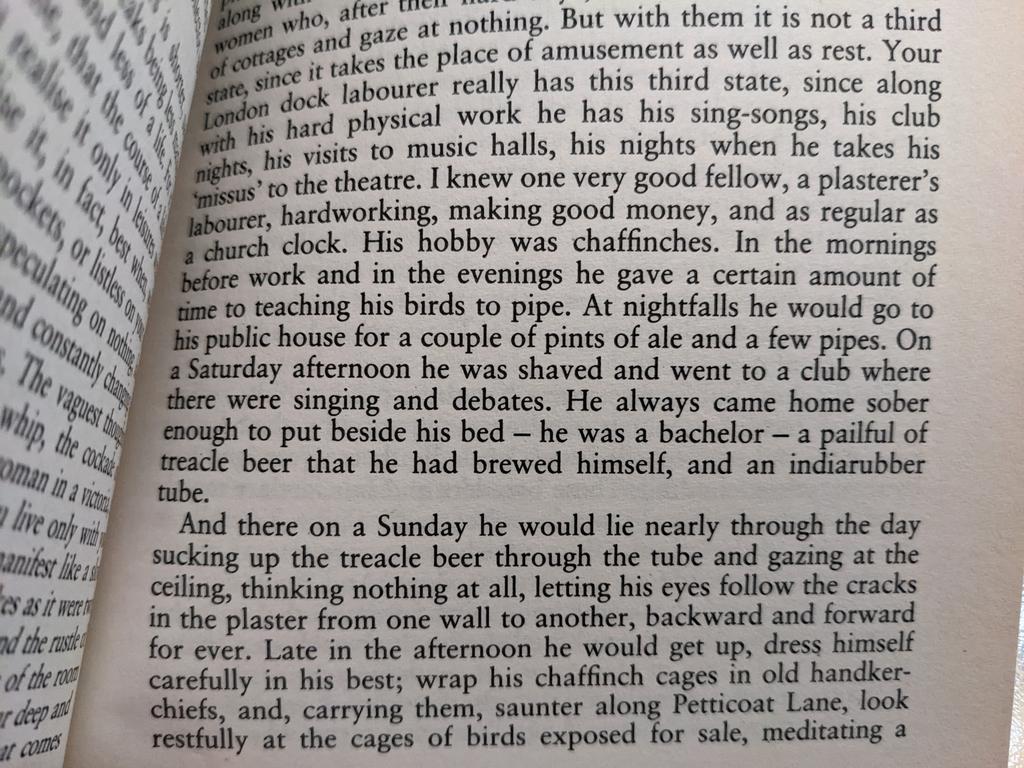
What a week. We hit 50% first vaccine coverage locally and folk over 18 are able to try to book appointments. Our two eldest must head to two town over in three weeks for their. But as for me, the provincial government has gotten very cold feet over the AZ jab just as I await word on my where and what and when my second jab will be. Oooo… sole mio. Oh, to be the happy man that Tim Holt found reference to in an unnamed book: “[h]is hobby was chaffinches… on a Sunday he would lie nearly through the day sucking up the treacle beer through the tube… thinking of nothing at all…” Magic.

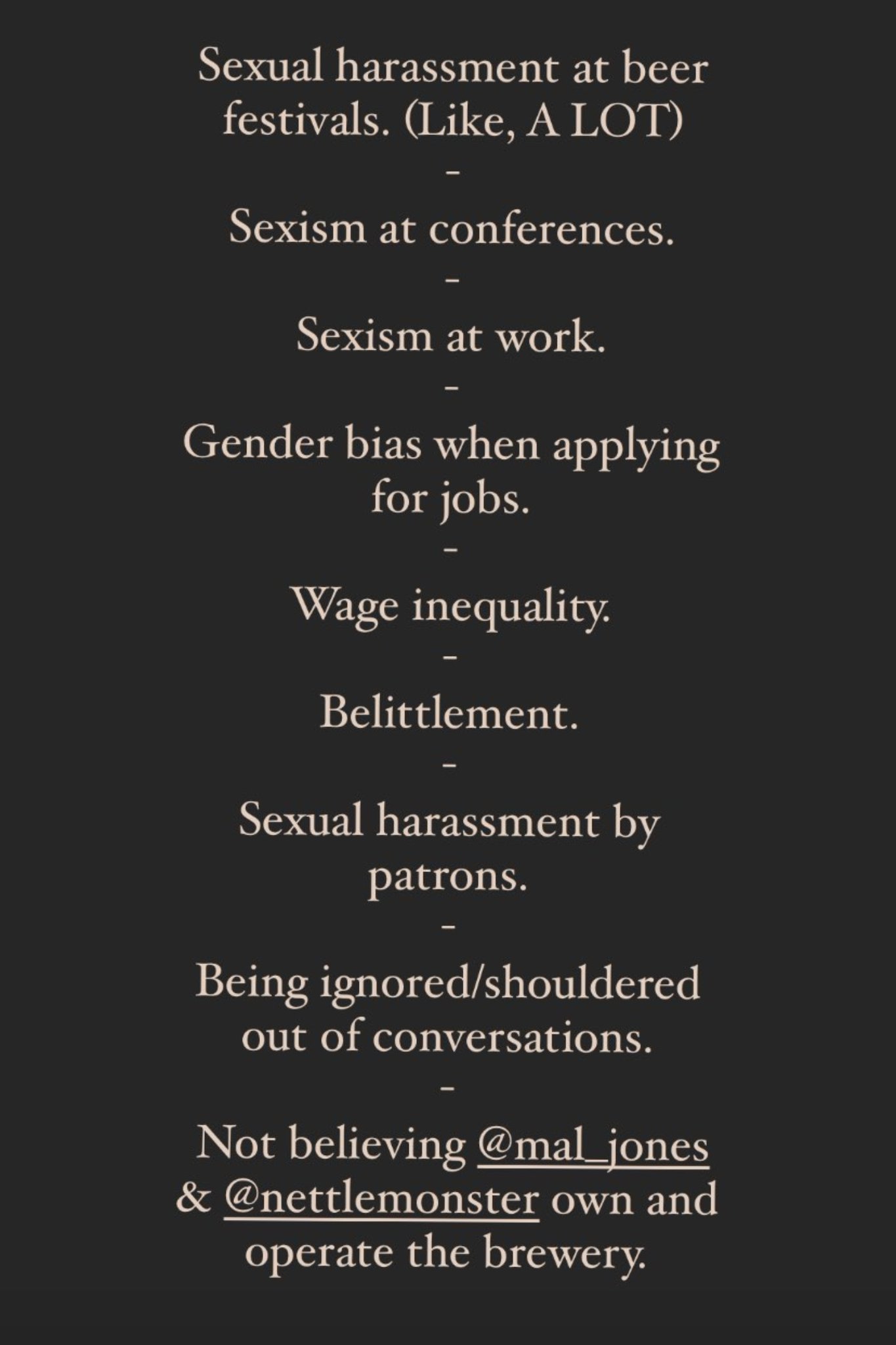
Of course I am not that man and, like all you all, must face the realities. This includes the biggest news in US craft beer circles is the news which isn’t really news at all.  Sexism is wide ranging within the culture and this week, led last weekend by Notch Brewing’s Brienne Allan, names were named.  Beth Demmons provided the best summary of the situation as of Monday afternoon through another well documented article at VinePair, setting out the background:

Allan, production manager at Notch Brewing in Salem, Mass. and a former leader of the Pink Boots Society’s Boston chapter, was on-site at Notch’s forthcoming Boston area brewery to help assemble the new brewhouse. After being in Covid-19 quarantine for a year, she says, she’d gotten used to not having to deal with sexism, but it didn’t take long for it to rear its head once — then twice — more.

In response, Allen went on line. She received over 800 response to her exasperated question “what sexist comments have you experienced?” The responses range from the crude to the horrific as Demmons writes. There have been initial consequences including a staff uprising at Tired Hands Brewing of Ardmore, Pennsylvania by Tuesday afternoon as reported upon by the Philadelphia Inquirer. And firings and resignations at this and other breweries and organizations followed and may continue to follow. Libby Crider of St. Louis’s 2nd Shift also shared experiences of what she has to put up with from pigs but also welcomed the wave of support. David Sun Lee shared the statement above from my local and beloved Matron Fine Beer. Also read Jessica Infante’s piece on the story from Tuesday as well. In addition to these grim allegations, one of the more interesting bits of information was this:

Let’s say hypothetically I run a for profit marketing business, that doubles as a publication, and am on record/screen shotted, warning clients to pull certain SM accounts before a hypothetical article dropped… am I contributing to the toxic male presence in beer while posting articles of the toxic male presence in beer? Asking for a “friend”.

Hardly independent publishing if that is the case.  Interestingly, GBH ran a story that consisted on interview notes with Brienne Allan along with commentary from two lawyers on the challenges whistleblowers may face in the form of defamation lawsuits. It was odd as it seemed to give both slightly false hope as well as a warning to whistleblowers. As a lawyer, I also found it a particularly odd approach what with the legal conclusions drawn like:

…users and providers of internet services are generally protected from defamation claims when they post or share content that was created by a third party…

Not to mention the categorization of brewery owners and employees as “public figures” which would require acceptance of the phony rock star narrative which is also part of the problem with depictions of craft beer culture. As always – as with pro/am beer writers offering medical advice – get actual professional advice if you are in any way involved with a situation like this.

My own two cents in all of this was to remind people – again – that the whole shift from “micro” to “craft” brewing was an intentional rebranding specifically in response to a sex scandal that led to criminal charges. You can read about the 2002 “Sex for Sam” promotion fiasco here and, if you doubt the primary sources I cited, you can read about it also in  Barrel-Aged Stout and Selling Out: Goose Island, Anheuser-Busch, and How Craft Beer Became Big Business by Josh Noel as reviewed here.

Katie questions the political economics behind the low ethical standards in what was supposed to be craft’s brave new world – what she calls “social justice paint jobs”:

I have worked in marketing for over a decade, and in that time I’ve developed a talent for sniffing out social justice paint jobs. This in turn has allowed cynicism to grow where it’s not welcome — I desperately want to see beer businesses working to bring good into the industry, and to banish what’s rotten, and to believe that this is being done for the benefit of everyone who interacts with the industry. It’s difficult to see how anything that operates within a capitalist society could survive without adopting capitalist goals…

Me, I am not one to think that “it’s the same everywhere” as I think craft has built for itself its own particular variant of the problem:

If you were wanting to create a cover story for anti-social behaviour why not create an alcohol laced drinkers’ loyalty culture controlled top down by the clique of brewery owners, cleverly labelled as a community driven by passion?

It’s that dream of a consequence-free experience under which it provides a particular cover for some pretty bad behaviour, the thing that still allows someone known to be a creep at work to claim it’s his personal matter.* Sorry. Nope.

Somewhat related, while these matters may raise many points of view, I am not sure this is exactly how one should put this, inclusion-wise. Seems itself to be pretty whitely-dudely:

…I want to balance my interview list a bit, so if you make or sell these beers and you’re not a white dude then I’d love to talk to you…

So… if this is all true, then are we facing a reality that unless you are a tiny family operation or a big brewery with all the controls a proper independent and empowered HR department that there is a risk the pigs are in charge? Maybe. Maybe not. As Jeff recommends, we can at least start by remembering that all humans deserve respect, kindness, and equity.

Speaking of tiny family operations, Joe Stange has written a profile of Virginia’s Wheatland Spring Farm and Brewery run by  Bonnie and John Branding. It is published in what is either Craft Beer & Brewing or Beer & Brewing depending on which web page upper left logo you are looking at. Warning: there may be pigs but they are the proper sort so it’s OK. The Brandings make land beer:

That experience in Germany also inspired the brewing of what the Brandings call “land beer.” To them, all Wheatland Spring beer is land beer. The Germans use the word landbier—it simply means “country beer,” and breweries use it to evoke images of local, traditional lagers. To the Brandings, it reflects the farm and its surroundings….  Land beer “has to do with culture and a mindset,” John says. “It’s this connection to agriculture and to artisans, and to this more tightly knit community of craft maltsters, small hop growers, and small family breweries.” In Germany, he says, those small village breweries aren’t trying to compete with the bigger ones. “They’re happy and content with their market, just as it is…. 

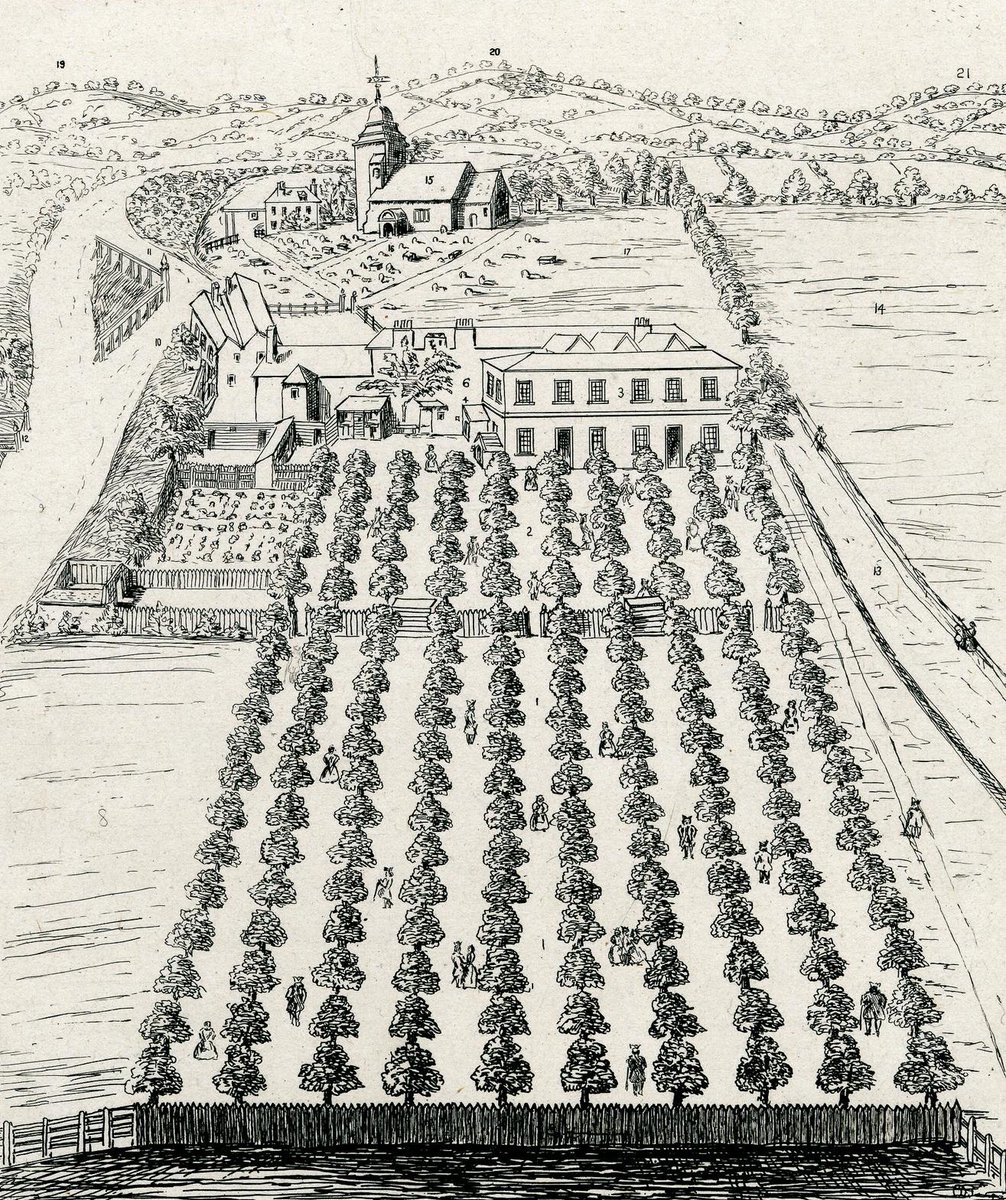
History lesson time. The T-feed presence known as “Intoxicating Spaces” posted this message and accompanying image to the right (my left):

A charming C18th view of St Pancras Wells, a spa and pleasure garden on the site of the present-day station. As well as healing waters, it offered ‘the best of tea, coffee, neat wines, curious punch, beers, other fine ales, and cyder’.

I have writing a bit about pleasure gardens, such as Vauxhall Gardens in the last third of the 1660s at Lambeth, England as well as, note bene, Vauxhall Gardens in NYC in around the 1760s. I would absolutely love access to a pleasure garden. Why have you not provided that to me, world?

Courtesy of TBN, I saw that Ron wrote about British military brewing in WWII including in the jungles of Burma:

In Burma they took the concept of mobile brewing one step further than a brewing ship. They stuck breweries on the back of lorries. Quite a clever way of getting beer production as close as possible to the front line. Given the conditions under which it was brewed, I doubt it tasted that great. The soldiers must have been glad to get any beer at all, out in the jungle. 

Look! A “curate” sighting care of the Mudge. So 2018. I thought we were done with that once it came to mean “stuff I own” but there you go.

Marverine Cole directed my eyes to this piece in The Guardian about troubles facing the only Belgian brewery that really really matters, Rochefort:

The monks have doggedly claimed that plans by Lhoist, an international company run by one of Belgium’s richest families, to deepen its chalk quarry and redirect the Tridaine spring risked altering the unique taste of their celebrated drink. Now, thanks to a deed dating back to 1833, it appears that makers and drinkers alike need no longer worry. A court of appeal in Liège has confirmed that while the quarry owner also owns the spring, it does not have the right to “remove or divert all or part of the water which supply the abbey”.

Holy subsurface riparian rights ruling, Batman! Excellent outcome.

Boak and Bailey educated us all on the history of pale’n’hoppy ale. As did Ed. They wrote in response to a post from Jeff on Thornbridge Jaipur. The point of pointing this out is not the appearance of corrections and disagreement. No, it was the appearance of a collective exploration that helped everyone and build understanding. Certainly helped me. Excellent. Good stuff indeed!

Finally, the pubs have opened in the UK for indoors pints and, just like that, the arseholes are back:

To the group of lads who ran up a £200+ drinks bill outside a #bristol pub yesterday, were abusive staff & fabricated complaints, only to then do a runner. You are the very worst of the worst sort of people, and we sincerely hope the police can track you down #unbelievable

In happier pub opening news, Jeff only had to move the sofa and TV to get the place fit for human company.

That’s a lot. Take the time to take it in. And please don’t forget to check out the weekly updates from Boak and Bailey mostly every Saturday, plus more with the weekly Beer Ladies Podcast, at the weekly OCBG Podcast on Tuesday  and sometimes on a Friday posts at The Fizz as well. There is a monthly sort of round up at The Glass. There is more from the DaftAboutCraft podcast, too. And the Beervana podcast. And sign up for Katie’s weekly newsletterThe Gulp, too. And check out the Atlantic Canada Beer Blog‘s weekly roundup. Plus follow the venerable Full Pint podcast. And Fermentation Radio with Emma Inch. There’s the AfroBeerChick podcast as well! And also look at Brewsround and Cabin Fever. And Ben has his own podcast, Beer and Badword – when he isn’t in hiatus as at the mo, more like timeout for rudeness. And remember BeerEdge, too. Plus a newcomer located by B+B: The Moon Under Water.

*Just had to note what a sad exercise this sort of statement is: “While this was all my PERSONAL life, I am so very sorry that these poor choices are now reflecting on the excellent people and products at Grains of Wrath. I emplore those who have any questions or concerns to ask me personally. I’m happy to talk to you and answer any questions you may have because open and honest dialogue is the only way to move forward.” No, bringing bad behaviours out into public with real consequences is how to move forward.


The First Thursday Beery News Notes For A Brand Spanking New 2021

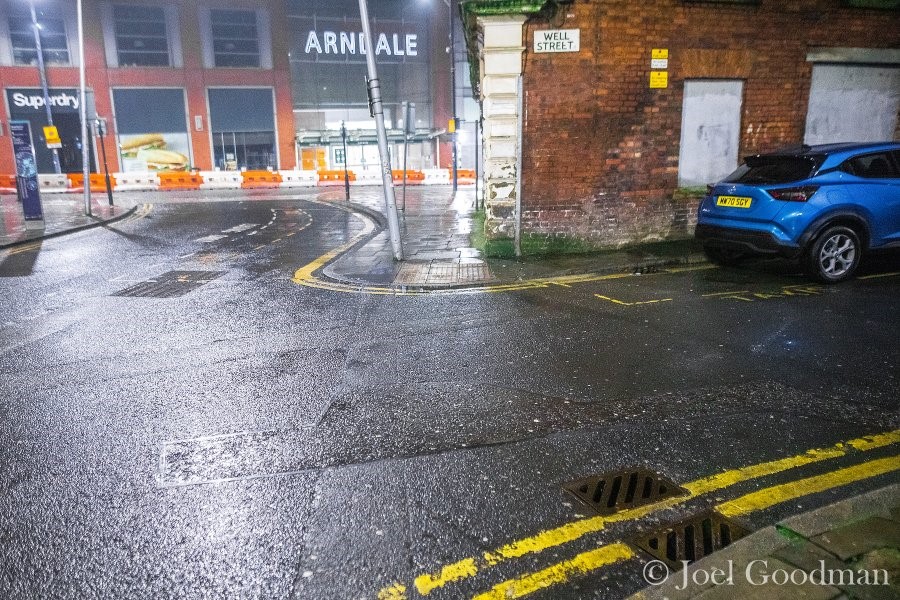
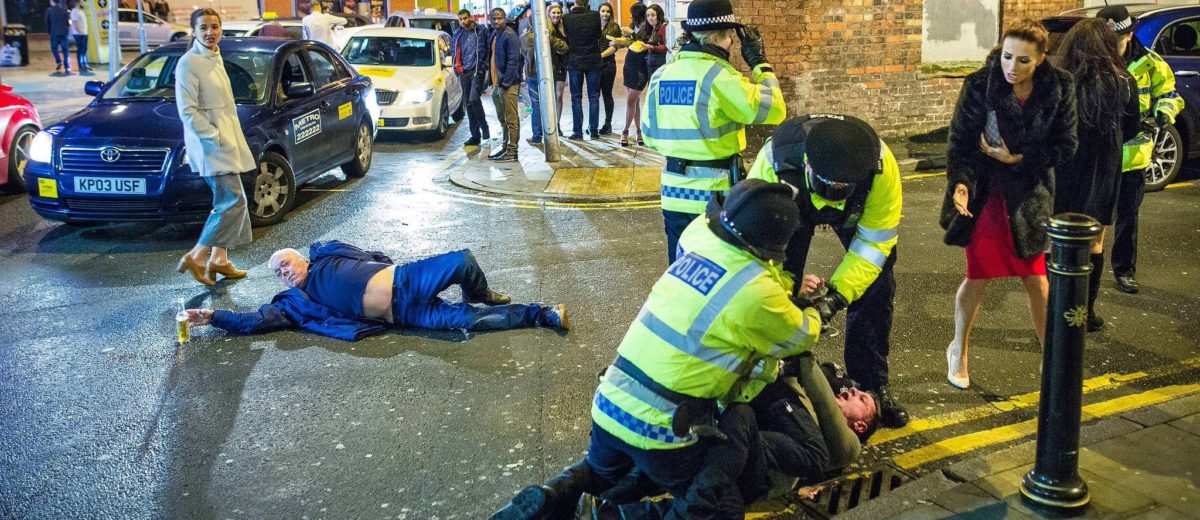
Well, here we go. One year gone and another year starts full of hope and promise… oh, and an insurrection in the US Capital. Nice. This is the year of the 18th anniversary of my beer blogging, too. That’s 31.56% of my life. What an utter waste. Not at all like the art of Joel Goodman, photographer of the image above as well as the partner photo of the same spot in Manchester one year before taken early on New Year’s Day 2020, a portion of which shows up here as a random header image. Lovely stuff and a great expression of where we are today.

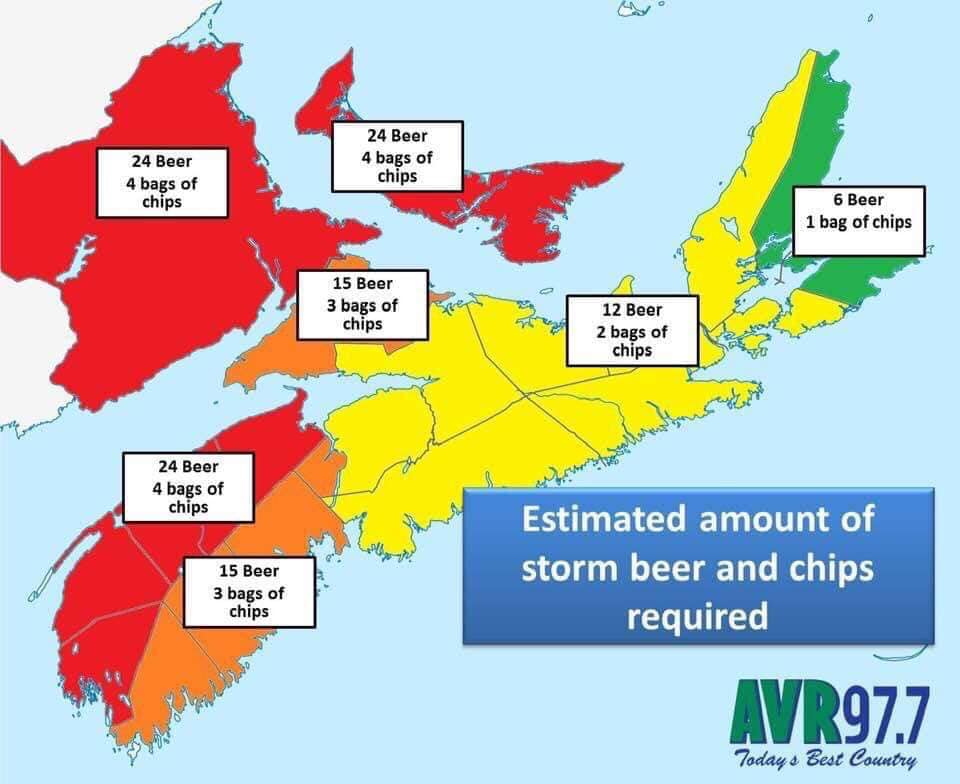
Speaking of reality today… do you know about storm chips and the associated beer weather severity standard? Note I wrote “beer” and not “beers” as in much of Canada the plural of beer is beer. “Beers” means a selection of brands of beer. Twelve Molson Golden are twelve beer. I have my doubts about the particular application as there is no way Kings Co., PEI is in the 24 beer zone but Truro, NS is only at 12 beer. I have a pal from the little islands to the lower left who talked of 1970-80s storm stayed parties held in houses with bordered up windows lasting two or three days until the blizzard had gone past. As posted on the FB page for Storm Level Brewing.

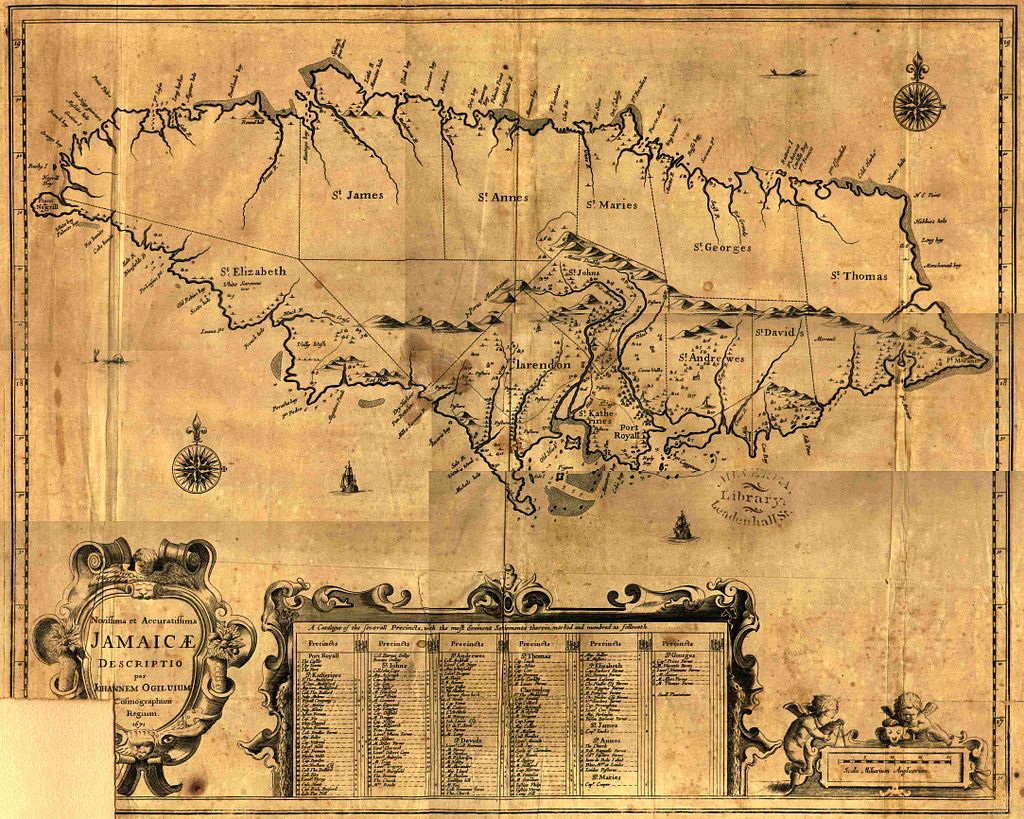
First… err… second, I failed you all before Christmas by not mentioning Martyn’s post on the roots of Jamaica’s love of strong sweet porter:

Draught porter was sold from draught porter shops, in existence in Kingston, Jamaica from at least the Edwardian era; from casks in refreshment parlors that also sold fried fish and bread; and also by travelling salesmen, who would call out “draaf porter!” as they travelled on foot around rural villages in the Jamaican interior, carrying a large tin container with a spout, and cans in quart, pint, half-pint and gill (quarter-pint, pronounced “jill”) sizes, for serving. Jamaica also had itinerant ice-cream salesmen, who would sell a blend of “frisco”—ice-cream and “snow ball”, shaved ice flavored with fruit syrup, mixed together—and “a measure of draught porter for the older folks.”

I wonder if Sam Adams authorized either this guy’s keg delivery technique or his filming rights? The opportunities for injury are a bit boggling. Speaking of which, this non-beer entrepreneurial advice thread had one nugget I quite likes, somewhat related to the Great White Male Hero problem with the good beer narrative:

The biographies of tech unicorn founders won’t help you. Survivorship bias is terrible. For every one that succeeded thousands more failed.

After asking on Twitter if he should, Mark Solomon joined the beer blogging world with his new site Headed Up North on which he is going to share an Indigenous perspective:

There is a tradition in many Indigenous communities, and I have since learned in many other cultures, on winter solstice.  Many communities light a fire at sunset and keep the light going all night.  While winter solstice is known as the shortest day of the year, the one with the least amount of daylight, there is a refrain that it only gets brighter from here. Those fires are not to strike back at the darkness but to honour it and sit within it. In the Anishinaabe creation story there are songs and teachings about the nothingness at the beginning then came darkness.  Darkness is not nothing.  We learn a lot about ourselves and others in the darkness.

In our regular pandemic trade news corner this week, cellar sellers are most note worthy. Makes sense. We’ve seen it from place to place including now at Falling Rock Tap House in Denver:

“We weren’t going to make it if we just kept on doing what we were doing,” Black said.  Luckily, for the past 23 years, Black and his team have been slowly amassing a nest egg. “We have just probably a couple thousand bottles of beer that are vintage,” Black said.  The collection contains very rare, highly sought-after beers from big-name breweries around Denver and the US.  The most prized item is a 750ml bottle of a collaboration blended sour beer made in 2008 by The Lost Abbey Brewing Company called “Isabelle Proximus.” When the Cellar Sale list was posted, the lone bottle sold in one second for $400. 

Retired Martin has started to chronical the take away pubs from his new location in Sheffield:

…we’ve had some wonderful beer, alternating porters and bitters and crafty keg with impunity. The only problem is, cask must by law be enjoyed within 3 hours, which means drinking 4 pints between us in an evening out of Bass glasses (NBSS 3.5/4). That’s not a habit you can keep up forever.

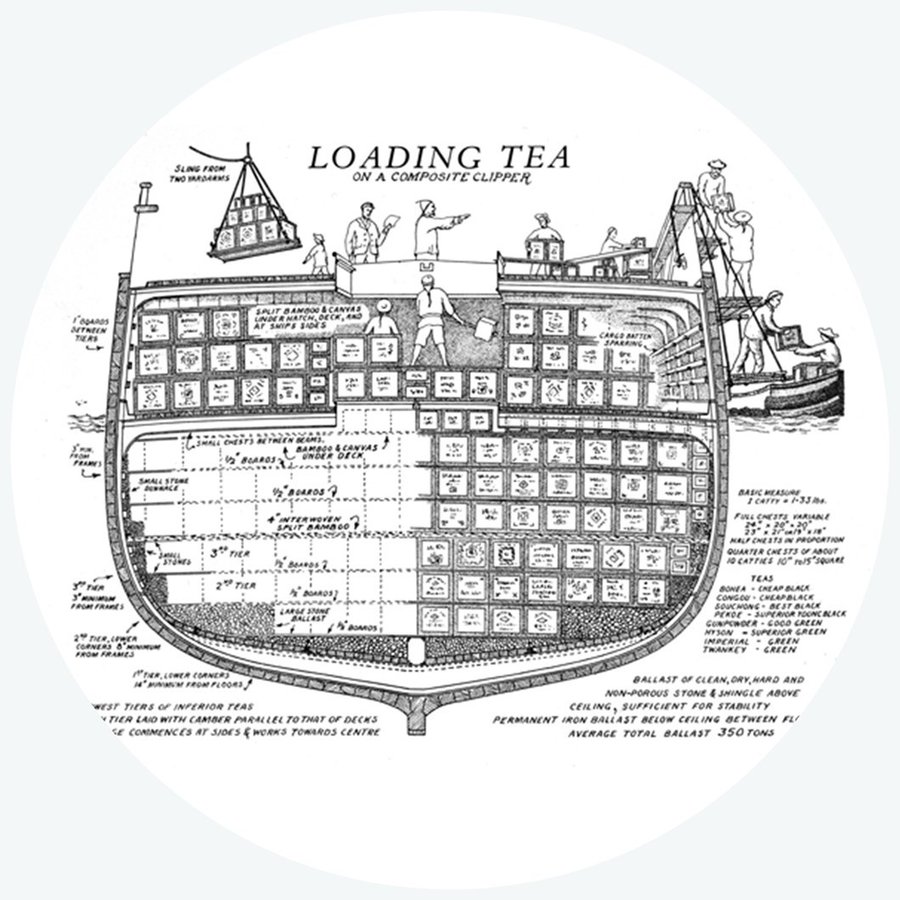
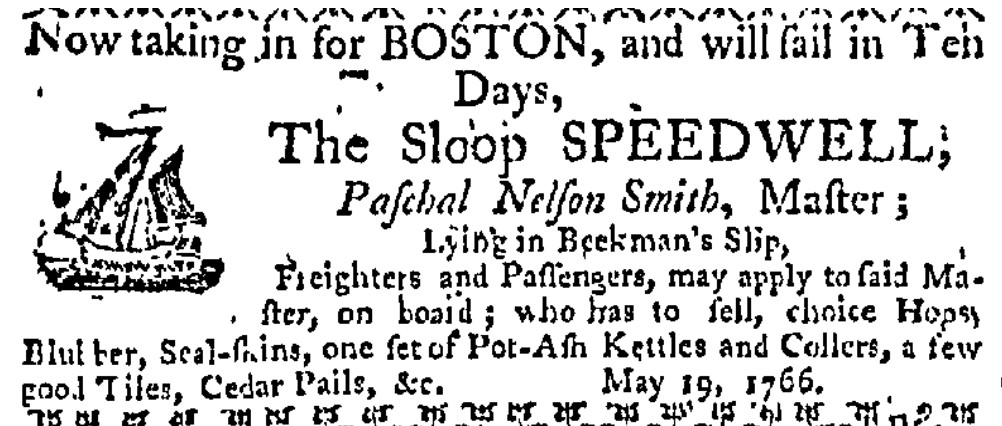
Here’s a big of a helpful hint for the history buffs. If you look at this image from the Twitter feed of a sailing cargo firm you will see in the lower right an explanation of the various grades of tea. These grades appear in many 1700s and 1800s newspaper notices and may assist in determining if accompanying cargo such as beer are considered fancy goods – or nor.

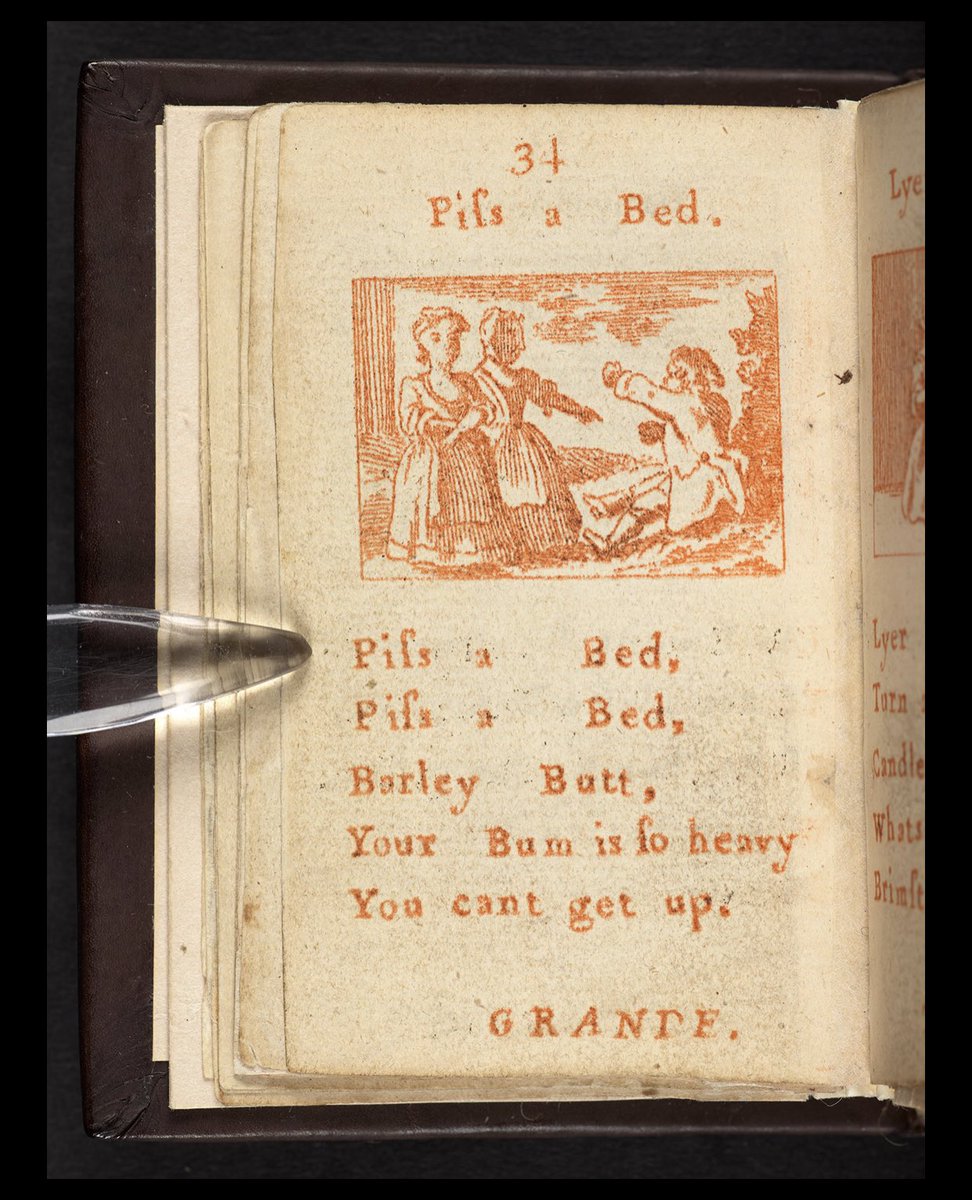
Best historical slag of the week: “your bum is so heavy you can’t get up“! In another history fan news, Dr. Christina Wade at her site Braciatrix wrote about a Viking burial in Ireland in the first part of the release of her Phd thesis. I am hoping for more beer content so this as yet is a placeholder – but a useful one as she canvasses questions on the quality of evidence. I note this especially in the context of the Vikings in Canada and the archaeological evidence they left behind as described in this handy post from Ottawa Rewind, especially this bit:

Wow! Barrel piece…was this for wine? Again, where did they get the oak for this?

Careful readers will recall my 2011 post on the early European settlements in Newfoundland, including Vikings. I have not had any luck finding Viking brewing in my research but it is clear that beer and malt could well have been here before 1577, the earliest date I have so far. Were the Vikings masterless men happily brewing beer hundreds of years before the masterless men? Was there malt in that oak barrel?

Jonny the Ham* wrote in Pellicle about how Pellicle came to be. I like how it is illustrated by images from a particular journey:

The first and most important reason is that Pellicle, the concept, was originally meant to be a short photography zine taken on this trip which I would self publish—something of a passion project I had dreamt of for years, based on my love of travel and film photography. Secondly, I’m incredibly self-conscious about folk reading my innermost thoughts, so at the very least you can enjoy some nice photos.

His partner in crime – or at least publishing – Matt has written a bit in Beer 52 about his upcoming book “hopefully be called Modern British Beer” and the concept of a returning greater regionality in beer. I prefer this muchly to nationalism as a defining characteristic, if only given the reality that beer predates many borders and can reflect the more important factor of trade routes rather than anything like state regulation or even national culture.  I had just one truly tiny quibble about this bit:

Historically in the UK, regionality was a strong differentiator in beer styles and helped develop so much in terms of how we know and enjoy beers today. Take Burtonisation—for example—a process developed by brewers to mimic the mineral content of the Burton-upon-Trent water supply. The hard water of Burton contains higher levels of gypsum, which when used as a brewing process aid in the form of brewers salts will lower your worts pH. This is preferred by some brewers when producing pale, hoppy beer styles, as it aids hop absorption rates, and thus how they are showcased in the resulting beer. It’s no coincidence the story of IPA began here, in the Midlands. 

Quibble? The brewing with and drinking of the sulfurous waters of Burton predated the inclusion of masses of hops. Hops were first added by one clever brewer in the late 1600s at the Brimstone Alehouse to deal with those who had to deal with the, err, vomitous qualities of his local product ripe with regional… umm… vernacular. Which actually makes Matt’s point even a bit better.

Elsewhere, Dave Infante is “joining”** VinePair‬⁩ to cover the beer industry. Send him tips if you think it is a good idea to send other beer writers your tips. And speaking of speaking about beer, I liked this back and forth between Monsieur Noix du Biere and Matt. Are local voices too likely to be embedded or are the embedded ones the best perspective? Note also the second alt use of the word “indigenous” in today’s roundup. I prefer “vernacular “for this particular meaning but I don’t think anyone’s toes are aching.

Finally, two good posts this week from Boak and Bailey on, first, a surprising forerunner of an improved pub from the 1880s and, second, a helpful piece on the rare duck these days that is ESB. Looks like they spent their recent break from beer blogging over the holidays writing beer blog posts. Alistair is taking another sort of break this January but found time to post about a day dream he is having about another venerable beer, Trukker ur-Pils.

There. That’s a good start to the year. And for more good reading check out the weekly updates from Boak and Bailey, back now mostly every Saturday, plus more at the OCBG Podcast on Tuesday and sometimes on a Friday posts at The Fizz as well.  We have a new entry from the DaftAboutCraft podcast. And sign up for Katie’s weekly newsletterThe Gulp, too. Plus the venerable Full Pint podcast. And Fermentation Radio with Emma Inch. There’s the AfroBeerChick  podcast as well! And also look at Brewsround and Cabin Fever. And Ben has his own podcast, Beer and Badword.  And remember BeerEdge, too.

*The Hammer? The Hamster?
**…which could mean anything from being a freelancer to CEO.

Beer And Brewing By Hudson Bay In The Late 1600s

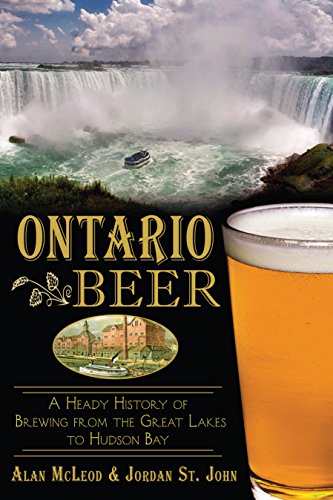
This post is a reworking and updating of a passage from that cult classic Ontario Beer: a Heady History…, the book Jordan and I published five years ago. I post this not only as a blatant reminder for Christmas giving, but as a look see to add to what we knew then about the role of beer in the years from 1660 to 1690.  This was one of my favourite bits to research as it combined a number of heroic tales on the edge of Europe’s known universe.

The conflict for control of what is now Ontario from the later 1600s was primarily between France and England. But the Dutch colony in what is now central New York on the Hudson River also sought its share through its alliance with the Mohawk nation until the 1660s. In the northeastern interior of the continent, events were part of what were known as the Beaver Wars.  The beaver was destined for hat makers in Europe and at this point

The fur trade depended on the labour of native people and on their centuries-old trading network… After being worn for a year, the pelts that made up the robes shed their long guard hairs, exposing the short hairs required for the felting process. Several hundred thousand used pelts, known as castor gras d’hiver would have been available annually…

Who knew European fancy hats depended on used Indigenous clothing?  The beaver pelt was certainly a commodity recorded in the Company’s minutes. Anyway, after taking New Netherlands to the south of the French, England continued to expand its North American trading empire on Hudson Bay and James Bay through the establishment of “factories” or commercial settlements in the 1660s and 1670s. Beer was consistently included in the ships stores for the voyages to the factories and, apparently unlike the French, so was the means to brew beer as soon as the ship made shore.

The English came well prepared with provisions, useful trade goods and even spoke the language – and as part of those preparations beer was clearly important to the early explorers.  Perhaps their version of an astronaut’s roast beef dinner in a squeezable tube of three centuries later.  The early ships’ crews exploring the eastern fringes of the Canadian Arctic in voyages in the 1570s and early 1600s considered their beer of great importance and even instrumental in survival.  Driving further west in search of trade routes, in 1668-69 the crew of the Nonsuch were forced to over-winter on the James Bay coast and reported upon their return:

…they were environed with ice about 6 monethes first halting theire ketch on shore, and building them a house. They carried provisions on shore and brewd Ale and beere and provided against the cold which was their work…

Here is a YouTube vid showing the recreation of the ship, giving a sense of scale. It’s tiny. Note the reference to the two separate forms of fermented drink. Ale was likely unhopped or lightly hopped and brewed for early drinking while beer would have been hopped likely for longer keeping. None would have been considered an IPA as the sulfurous vomitous mess that later became known as Burtonized water was only being first explored as a tonic in a small alehouse in 1686.

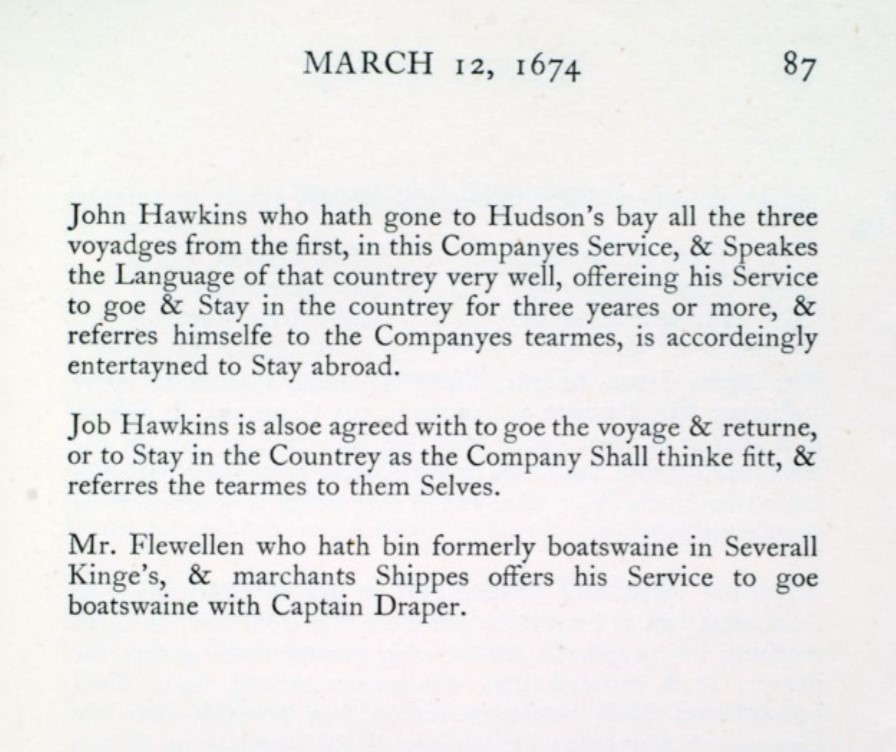
After the return of the Nonsuch, Charles II granted a charter to the Hudson Bay Company in 1670. According to the Minutes of the Hudson Bay Company from the early 1670s, an order placed by the Hudson Bay Company’s London management for three grades of beer as well as malt and hops was recorded in the minutes noted on 16 February 1674:

John Raymond: By Severall quantities of Ship Beere at 40s p. Tonn Strong beere at 12s, 9d a barrell & Harbor Beere at 6s 6d p. barrell with Malt & Hopps dd. Capt. Gillam, Morris and Cole, £ 79.

A few months later, on 6 July 1674, the committee of the Hudson Bay Company directed payment to the same John Raymond £ 30 on account of “Beer and Malt. dd. on board the Prince Rupert.” The three grades of beer supplied and the means for crews to brew their own beer once the ships made landfall illustrates the various functions beer played in the life of the company. Ship beer sold in bulk not the barrel was the cheapest and weakest would have served as daily drink for the crew while at sea. The strong beer was reserved for the officers, as was apparently the case on Hudson’s voyage. The drink identified as “harbor beer” was sold at half the price of strong and may have been a middle strength beer for when the ship was at anchor. It’s actually the only time I have seen that grade of beer listed.

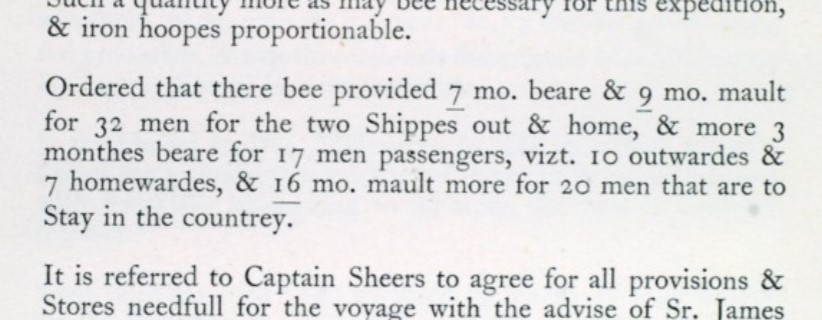
In 1674, the Hudson Bay Company planned 3 quarts of beer a day per man and shipped enough beer and malt to supply the trip there and back – and also to survive a winter. Twenty-seven tunns of beer and fifty-nine quarters of malt were purchased in 13 April 1674 for that season’s sailing of the 32 man expedition. Here are the instructions – and note that the plan included enough malt (or “mault”) for the 20 who were supposed to overwinter:

They were clearly planning to brew and that would require a total roughly 18,000 lbs of malt or enough malt to provide each man with a beer made from pound of malt a day. The details of all provisions can be found in the minutes from 14 April 1674.

Like the Nonsuch six years before, the crews of the Prince Rupert and Shaftsbury had to stay over in the winter of 1674-75 but were better prepared and provisioned for this possibility. It was too late too late in the season for the ships to return to England so arrangements were made for them to over winter in Rupert River and the crews were employed to cut timber to build houses for them as well as a brew-house and a bakery in the small fort. Their planning was not always successful. The beer and “winter-liquor” reportedly ran out by April 1674 at one Hudson’s Bay fort even if the stores of beer and malt shipped with the crews were significant.

The establishment of the northern English presence did not go unnoticed and clashes between the empires required feats of nearly unimaginable hardship and daring. When forces from New France struck at the forts on Hudson Bay in 1686, its soldiers walked north overland from the St. Lawrence Valley through hundreds of miles of forest before attacking and capturing Hudson Bay forts including Moose Factory at the mouth of the Moose River.  The conflict was fairly civilized, with negotiations taking place over flagons of port wine. The return trip of the French forces by foot took four months just to reach the northern community at Temiskaming in December. The French detachment survived on five or six pounds of pork each as well as sprouted barley which had been “originally intended for brewing beer.” They probably found more than enough malt when they opened the brewery’s store rooms.

The French, temporary victors in this phase of Europe’s war for the New World’s north, survived the march home through the primeval winter forest by eating the brewing malt of the defeated English. Seventy or so years later, their control of northeastern North America was about to be lost.  England and later Britain continued its trade via Hudson Bay but the greater focus of European efforts had long shifted away from the trade in woodland pelts.  To the south, colonial farming plantations and entrepreneurial coastal towns were expanding in the early 1700s – which was accompanied by the first boom of commercial brewing in the Western Hemisphere.

I Get It. It’s Lambeth Ale. But Why Is It “Lambeth” Ale?

For a while now I have been noodling around 1600s English brewing history and have a bunch of posts that you can generally find here with a few other topics from that century woven in. The important things to understand are: (i) there were distinct forms of beer easily recognizable by the consumer, (ii) they mainly were defined by their geographical source and (iii) they are often but not solely described according to that location. So, brewing elements like a local water table, the local produce including husbanded post-landrace barley malts and traditional local malt bill blends combined to create reliable and recognizable categories of beer called Northdown/Margate, Hull or Derby. John Locke’s letter of 1679 gives a good example of contemporary understanding. Poor Robin’s Almanac in 1696 sets a similar marketplace of diverse offerings under the definition of Cock-Ale:

But by your leave Mr. Poet, notwithstanding the large commendations you give of the juice of barley, yet if compar’d with Canary, they are no more than a mole-hill to a mountain; whether it be cock ale, China ale, rasbury ale, sage ale, scurvy-grass ale, horsereddish ale, Lambeth ale, Hull ale, Darby ale, North-down ale, double ale, or small ale; March beer, nor mum, though made at St. Catharines, put them all together, are not to be compared.

However, the penny has yet to drop in relation to one prominent beer in that system. Lambeth Ale.  Don’t get me wrong. It is pretty clear what it was:  a lower alcohol bottled pale ale that was highly carbonated. Consider this line from the 1712 play The Successful Pyrate at Act ii., scene 1:

Ha, ha, ha, faith she is pert and small like Lambeth ale.*

But why was it called “Lambeth” after a shoreline district along London’s southern bank?  One would think this is an easy question to answer but if we look at the facts on the ground at the time it is not one so simple to answer. For today’s purposes, let’s even call this part 1… or perhaps part 7… in my thought process.  A winnowing. A ruling out perhaps. See, what bothers me the most about it is how I can identify the who and why and what about 1600s Derby or Hull or Margate but there is a bit of an issue when it comes to mid-1600s Lambeth. There ain’t much there on the ground.

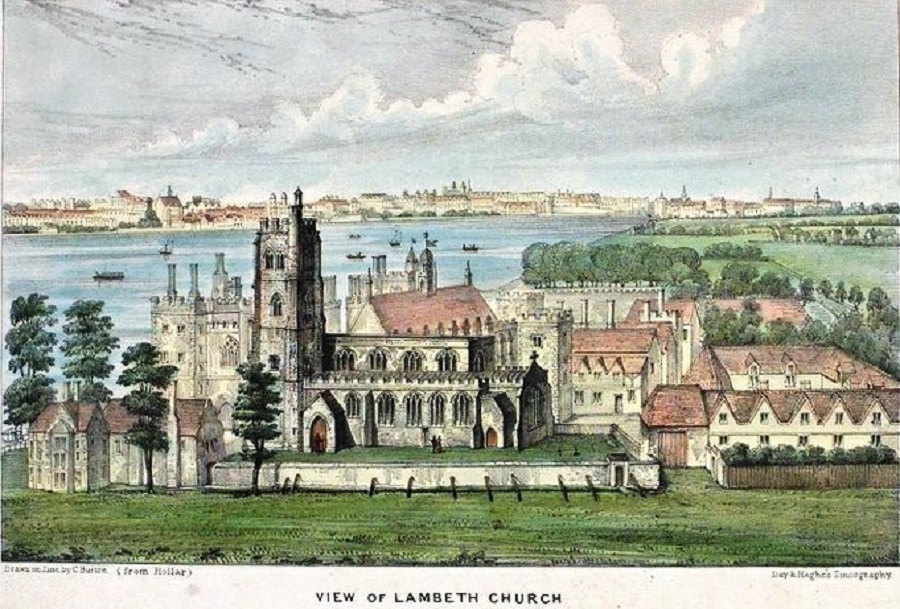
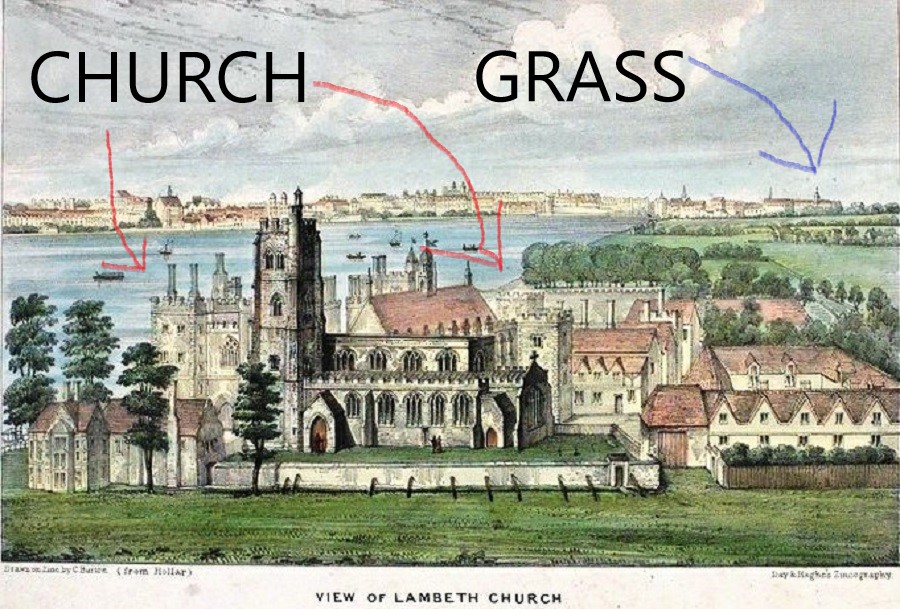
Let me illustrate my conundrum. If you look up at the image above, which I am informed is a 1670 illustration of the sights at Lambeth, you will note two things: a big church complex and a lot of grass. Here is a similar version dated 1685. I have further illustrated the concept here for clarity. Lambeth Palace is and was the London residence of the Archbishop of Canterbury, head of the Church of England.  It sits in what is known as – and what was at the time in question – Lambeth Marsh. Grass.

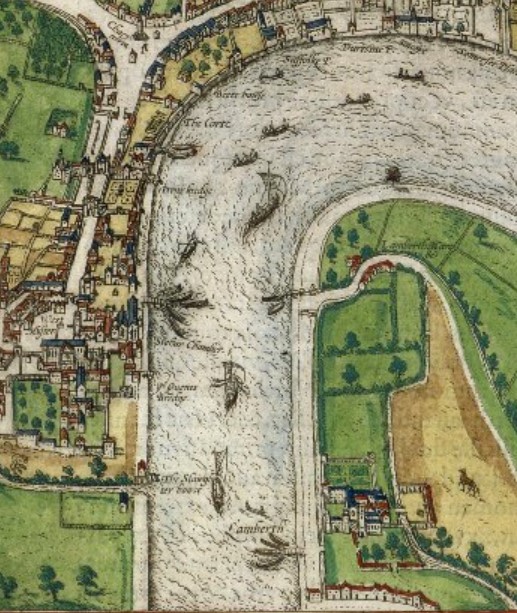
To the right is a bit of a map from 1574 which shows the scene. Lambeth faces Westminster across the Thames, combining to embody the authority of the church and state. But to the south there are a few buildings, you note. Yes. And it appears Lambeth as a zone was narrow and long with northern and southern districts. So Lambeth Ale could be from the south of the Palace and the Marsh. It is, after all, a parish. Could be. But the south seems to really only develop after the building of Westminster Bridge in the very middle of the mid-1700s.  And, as I noted a couple of years ago, when Samuel Pepys was downing lashes of Lambeth Ale, he was traveling over by boat when he was not finding it in town proper. Lambeth was a place, apparently, where one could do all sorts of things once the boat got you across. Here is Sammy P from his diary on the 23rd of July 1664:

…and away to Westminster Hall, and there sight of Mrs Lane, and plotted with her to go over to the old house in Lambeth Marsh, and there eat and drank, and had my pleasure with her twice, she being the strangest woman in talk of love to her husband sometimes, and sometimes again she do not care for him, and yet willing enough to allow me a liberty of doing what I would with her. So spending 5s or 6s upon her, I could do what I would, and after an hours stay and more, back again and set her ashore again.

Heavens. So, was it a pleasure ground with its own ale like the later Vauxhall? There is one problem I find with that. If we remember that Mr. Pepys is mentioning Lambeth Ale in the first half of the 1660s, we also find that there was a certain local someone who was not a big fan of brewing prior to that date. The Archbishop himself. Or rather an archbishop… as they come and they go. The one I am talking about is one who went in rather dramatic fashion: William Laud.

William Laud was Archbishop of Canterbury from 1633 to either 1640 when he was arrested in the English Civil War or 1645 when he had his head cut off.** In a 1958 article on 1630s English politics,*** there is a explanation of the word Laudian which indicates High Church Anglican and sits in opposition to Puritan reforming rabble. The illustration of the distinction is the Puritan distaste for churchales – local church fundraising fetes of a drunken happy sort. Laud took a political stance in support of this but mainly as a means to exercise his power early in his term of office, to fund his church repair project and to tick off the growing Puritan element within the church. He is not considered to have been all that pro-beer at the time.

He continues to not be a big booster of brewing. Writing to one Bishop Bridgeman, from Lambeth on 29th October, 1638, Laud enclosed a letter he had written to the Dean of the Cathedral of Chester “concerning your quadrangle or Abbey-court, & the Brewhouse, & Maulthouse there.” He stated that they had better do as he instructed or “I promise you they shall smart for it“! Here is some of the enclosed letter: 

After my hearty commend: &c. I am informed that in your Quadrangle, or Abbey-Court at Chester… the BP’s House takes up one side of the Quadrangle; and that another side hath in it the Dean’s house and some Buildings for singing men; that the third side hath in it one Prebend’s house only, and the rest is turned to a Malt house; and that ye fourth side (where yo Grammar School stood) is turned to a common Brewhouse, & was lett into lives by yo” unworthy Predecessors. This Malt house and Brew house, but the Brew house especially, must needs, by noise and smoke and filth, infinitely annoy both my Lo: ye BPs house and your owne… hitherto this concernes your Predecessors, and not your selves. That won followes will appeare to be your owne fault… Now I heare ye Brewer’s wife is dead, and you have given mee cause to feare that you will fill up yo Lease againe with another life. And then there will be noe end of this mischiefe…  And in all this I require your Obedience in his Ma’yes Name, as you will answer it at your p’ill. So I leave you &c.” 

In early 1640, Laud wrote another letter. This time to the Vice-Chancellor of Oxford:

I received a Letter this Week from Oxford, from an ordinary plain man, but a good Scholar, and very honest. And it troubles me: more than any Letter I have received many a day. “Tis true, I have heard of late from fome Men of Quality here above, that the Univerfity was Relapfing into a Drinking Humour, to its great Dishonour. But, I confess, I believed it not, because I had no Intimation of it from you. But this Letter comes from a Man that can have no Ends but Honesty, and the good of that Place. And because you shall fee what he writes, I fend you here a Copy of his Letter, and do earnestly beg of you, That you will forthwith set yourself to punish all haunting of Taverns and Ale-Houfes with all the strictness that may be, that the University, now advancing in Learning, may not sink in Manners, which will shame and destroy all.

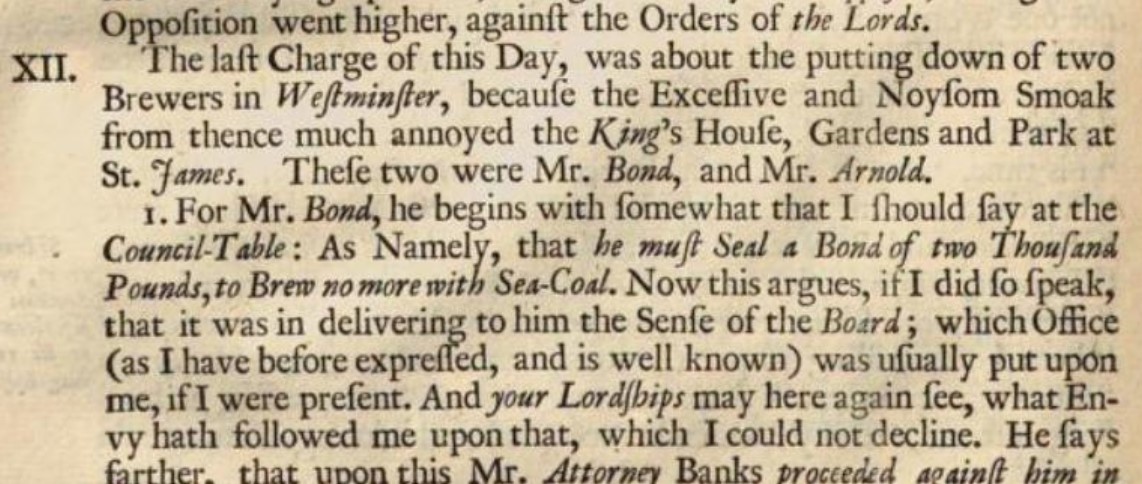
After his arrest in December 1640, Laud faced a number of charges including one that he caused the shutting and pulling down of a number of brew-houses across the river in Westminster because their smoke disturbed his enjoyment of life at Lambeth. Just there to the right under the thumbnail is the charge as published in a 1695 book, The History of the Troubles and Tryal of the Most Reverend Father in God and Blessed Martyr William Laud, Lord Archbishop of Canterbury. There are two witness supporting the charge, Mr. Bond and Mr. Arnold of the second of which the following is said by Laud in his response to the charge:

2. The other Witness is Mr. Arnold ; who told as long a Tale as this, to as little purpose. He speaks of three Brew-Houfes in Westminfter, all to be put down, or not brew with Sea-Coal; That Secretary Windebanck gave the Order. Thus far it concerns not me. He added, that I told him they burnt Sea-Coal : I faid indeed, I was informed they did; and that I hope was no Offence. He fays, that upon Sir John Banks his new Information, four Lords were appointed to view the Brew-Houfes, and what they burnt. But I was none of the four, nor did I make any Report, for or againft. He fays, Mr. Attorney Banks came one day over to him, and told him that his House annoyed Lambeth, and that I fent him over. The Truth is this; Mr. Attorney came one day over to Dine with me at Lambeth, and walking in the Garden before Dinner, we were very fufficiently annoyed from a Brew-House; the Wind bringing over fo much Smoak, as made us leave the place. Upon this Mr. Attorney asked me, why I would not fhew my felf more against those Brew-Houses, being more annoyed by them than any other ? I replyed, I would never be a means to undo any Man, or put him from his Trade, to free my felf from Smoak. And this Witness doth after confess, that I faid the fame words to himself. Mr. Attorney at our parting faid, he would call in at the Brew-House: I left him to do as he pleased, but fent him not : And I humbly defire Mr. Attorney may be Examined of the Truth of this.

So. What to make of all this. First, it is very unlikely that there was a brewery at Lambeth Palace that was putting the stuff out as an estate ale. Laud did not like brewing and malting on church property and his found the resulting smoke annoying and after Laud it was turned into a prison. Tauntingly to the contrary is one small reference I have found related to London’s Training College of Domestic Science:

The College was founded in 1893 by the National Society in the disused Brew House of the Archbishop of Canterbury at Lambeth Palace. Here, training was provided for teachers of Cookery and Laundry. Housewifery was added to the curriculum in the first decade of the twentieth century after the College had acquired additional premises in Charles Street, Southwark.

For now, I am putting that brew house down to the 230 years or so between the restoration of Charles II and the founding of the College.

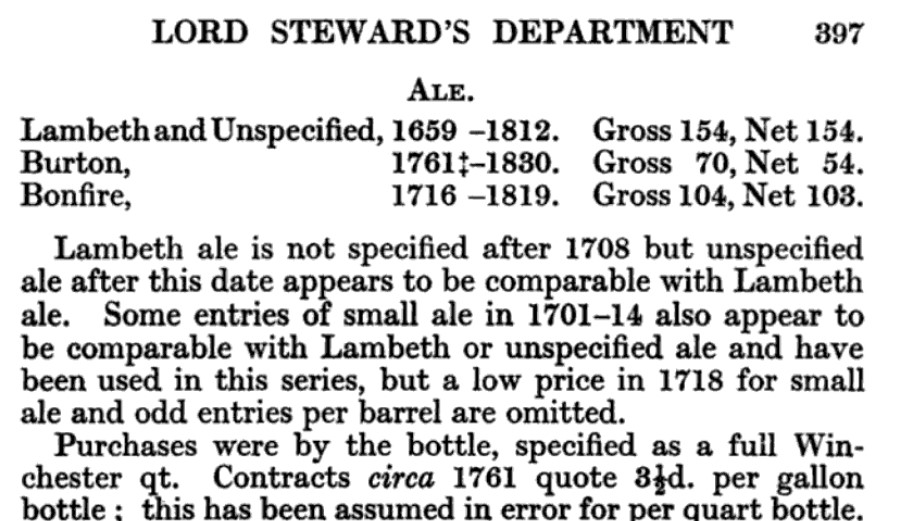
Second, Lambeth Ale really isn’t referenced at that exact time. It shows up very neatly a couple of decades later at the other end of the English Civil War. As early as 1660 Pepys, a fairly high government official, is drinking Lambeth Ale and apparently having time of his squalid life. The wonderfully named Lord Beverage in his Prices and Wages in England notes it as recorded by the Lord Steward from 1659 to 1708. Click on that thumbnail if you don’t believe me. I haven’t not found, in fact, any reference to it much before 1659 but I would welcome any who have.

Perhaps Lambeth meant more than just the place, just the Palace as a building. As I noted before, three years after Laud’s execution in 1648, Parliament placed a garrison and prison in Lambeth House which they also used as a prison. With the Restoration, came the rebuilding of Lambeth Palace as viewed by Pepys in 1665 but still he went there to gypsy fortune-tellers in 1668. And all this must be somehow laced into his contemporary understanding of the word Lambeth. Is it possible it started not as a geographical reference like Hull, Derby or Margate but as a bit of pre-Restoration political satire? Is the popping of the cork the popping off of the Archbishop’s head? The lightness and the fizz, a comment on his character?

I have no idea. But it does seem odd that the term appears in the middle of the great upheaval, comes out of a holy place turned into red light district and then continues on for decades, even respectably mentioned by John Locke in 1679 and the French Ambassador in the 1680s. It was so popular that it pretty much killed Christopher Monck, 2nd Duke of Albemarle, the Governor of Jamaica in 1688:****

Albemarle’s medical troubles began before leaving for Jamaica. In general the duke spent his nights, Sloane wrote, “being merry with his friends whence he eat very little … [and] drinking great draughts of Lambeth ale,” a practice that had secured him what Sloane termed a “habituall Jaundice if I may call it Soe.” Referring to the duke’s jaundice as “habitual” was no accident, for Sloane placed the responsibility for it squarely upon the duke’s lifestyle. Thirty-three years old in 1686, Albemarle practiced no regimen, “loves a Sedentary life & hates exercise, as well as physick,” his physician lamented. Prior to departing for Jamaica, the duke was attended by several physicians who prescribed “temperance & keeping good houres,” warning that “the voyage he intended for Jamaica it being a very hott place could not in probability agree with his body.”

Laud left a deep scar. He continued to be hated for his gross authoritarian excesses as we see from this 1730s letter from the non-conformist Samuel Chandler to theologian William Berriman:

Oh! how happy are the present times, and with what satisfaction may I congratulate my country, when titled divines, when reverend Doctors, when the dignitaries of the Church, hold up the blessed Laud as a perfect pattern for the imitation of the reverend Bench, and insert him into their calendar of Saints and Martyrs! How will discipline flourish under such spiritual Pastors! How effectually will the mouths of saucy laymen be stopped, and the liberty they take in censuring God’s anointed priests be suppressed J How secure will the Gentlemen of England be in their lives and properties and estates, when instead of the Courts of Westminster-Hall, they shall be again subjected to the Star Chamber, High commission and spiritual Courts! Oh what infinite blessings must spring up from a revival of the Laud, an principles and times!

I know this is a leap but it strikes me that the contemporary beer drinker could not but help make an indirect connection somehow between the role of Lambeth Palace and name Lambeth Ale. But, if so, what is the connotation? What is the connection? And despite that connection, it still appears to have been a singular beer – weaker, fizzy, bottled and worth rowing across a river for. And high status stuff. Worth shipping to France. Worth a Governor drinking  himself to death.

*See A Supplementary English Glossary, Thomas Lewis Owen Davies, at page 369 which defines Lambeth Ale based on that quote, concluding “seems from the extract to have been brisk and not heady.” Is that it? Is the idea that it is not “heady” the joke on the beheaded Laud?
**I really did not know that folk other than Charles I had his head cut off so this bit of research has already been instructive.
***“County Politics and a Puritan Cause Célèbre: Somerset Churchales, 1633: The Alexander Prize Essay,” by Thomas G. Barnes, Transactions of the Royal Historical Society Vol. 9 (1959), pp. 103-122 at footnote 1, page 103.
****at page 225.

In 1655 Good English Beer Made Its Way To The Caribbean

It’s already 38C according to the humidex outside at 11 am. I’m not gardening. I’m not even hanging around outside until the shade starts making its move in the backyard. With the sting of the Beer Nut’s pointed truth fresh in my mind, how about patching together a beery post about trans-oceanic beer transit.

And what a tale it is! Let’s not forget that the earliest date I have established for trans-Oceanic beer transportation is 1577. In that year, Martyn Frobisher brought a boatload of miners to gather iron ore in Canada’s Arctic. And he brought a boatload of beer to keep the miners lubricated. 80-and-one-half tunnes in all:

Biere for iij monthes contayneng 168 daies after the computation of one gallone aman per day 80 1/2 ton at 2li 5s per ton wth caske iron whoopes and chardges.

All seems to have gone well but it would, wouldn’t it. It’s the Arctic and the beer would have been able to keep relatively cool. What about further south and days of heat like today out there in the yard? We know that good old Taunton ale was shipped south in the 1700s. It’s in New York City in the 1750s and into the Caribbean with its delivery to Jamaica in the 1770s. But the British were in the equatorial zone of the Atlantic well before that. Did they bring beer? Yup:

In September 1655, Major Robert Sedgewick was pleased that the beer shipped along with the troops on the Western Design remained potable: “Amongst the rest of our Provisions our beere proved generally very good wch was a very great refreshment and is so to this day.” 

See footnote 53 at page 124 of Temperateness, Temperance, and the Tropics: Climate and Morality in the English Atlantic World, 1555-1705, a PhD dissertation from 2013. The author-candidate, M.R. Hill contextualized the footnoted information in this way:

In the hot climates of the Atlantic world, however, English travelers and colonists usually had to make do without their cherished beers. European grains did not grow well in the West Indies, leaving the English without ingredients for brewing in the island colonies. Beer often failed to survive long sea voyages, corrupted by bad casks, heat, or simply the passage of time. In the West Indies the English imported drinks or turned to local substitutes such as mobby (a mixture of potato juice and water, sometimes fermented), citrus drinks and rum-based drinks. Because they shipped well, however, distilled spirits often replaced beer among the English in hot climates.

Jamaica was invaded by the English in 1655 as part of Cromwell’s Western Design, ousting the resident Spaniards after flubbing an attack on what is now the Dominican Republic. They landed in Jamaica on the 9th of May. Sedgwick’s letter in which he praises the beer was dated 6 September, four months later. Notice that he wrote that it was a great refreshment and “is so to this day.” Notice that the beer was “shipped along with the troops on the Western Design…” It lasted through a Caribbean summer.

Wikipedia tells us that “Within a year the 7,000 English officers and troops that took part in the invasion were reduced to 2,500.” Robert Sedgwick was one of those who died.  Interesting fellow. Born in England in 1611, he spends his later twenties and thirties in colonial Massachusetts, joins the Military Company of the Massachusetts but goes back home to support Cromwell. He takes to the sea, attacks the French in what is now the Canadian Maritimes and into New England before attacking Spain further south. Sedgwick, Maine is named after him. Boston of the 1630s was a beer drinking town:

Boston was, in the early days of the Company, the principal seaport town in North America, untrammelled as yet by a custom-house, and the flags of the maritime nations waved at her wharves… she exported to the mother country dried codfish, tar, turpentine, lumber, spars, whale oil and bone, deerskins, furs, etc., receiving in return Holland gin, strong beer, and merchandise of every description.

Sedgwich himself seems to have operated a brewery in Boston in 1637. It says this in The Oxford Encyclopedia of Food and Drink in America:

… after being licensed by the General Court held in Newton, Massachusetts on 20 November 1637, Captain Robert Sedgwick opened the first of the New England breweries in Charleston, now part of greater Boston.

He also seems to have obtained a licence to brew from the local Boston government in 1635. He was something of an all-rounder:

Charlestown has cause to remember Genl. Sedgwick for the results of his active public spirit when residing in the town. He was an enterprising merchant, built wharves, carried on a brewing establishment, built the old Tide-mills, and had an interest in the Iron Works at Lynn. “He was representative in the style of his ideas and character of the liberal Puritans of those early days of Now England history, religion was in all his thoughts, and yet he openly opposed the prevailing intolerance. He was a very brave, zealous and pious man.”

So, it is entirely reasonable that Sedgwick would not only have written about the beer that arrived in Jamaica along with the English in 1655, he might have been involved with keeping in good condition. Keeping it in good condition from at the latest May to September at the earliest.

He dies in 1656, one year after the invasion of Jamaica and left children who died lived there and in England and in New England. Beer lad.

The Q2-May Slightly Shorter Version Of Thursday Beery Newsy Notes

Two evenings of work this weeks seriously imposed on my idle key tapping time. I know you share my pain. Anyway, it’s just as well as it’s been a quiet week from my point of view.

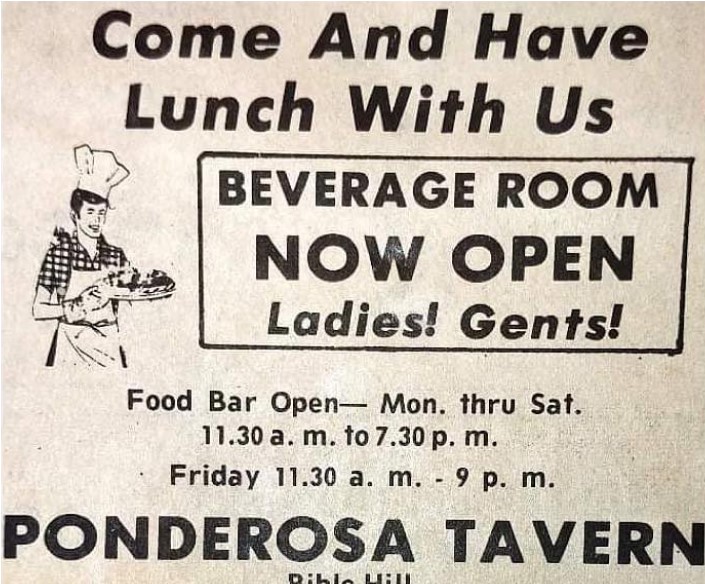
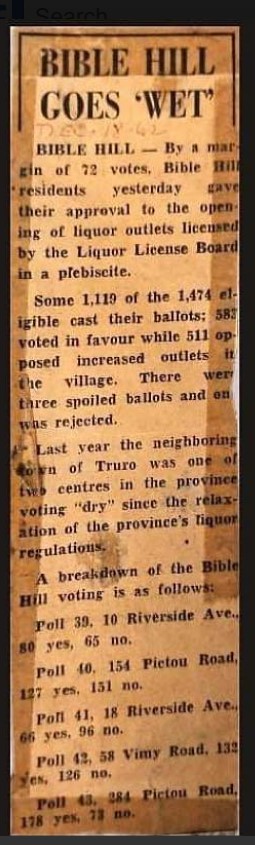
The Ponderosa Tavern is  shutting its doors in my old hometown of Bible Hill, Nova Scotia after a five and a half decade run. I never actually went to The Pond as it was a bit rough in my day but it is interesting to learn about how taverns, a beer-only form of establishment, were approved under the local law. There was a local vote in which, I note, the folks of Bible Hill near the proposed tavern said “NO!” while those who lived farther away said “YES!”

Another great photo essay from Martin.

Towards the end of last week, the Brewer’s Association issued their new guidelines for today’s temporary beer styles which might stay relevant until September. Making fun of these guidelines in sorta blog fodder circa 2009 so I will leave it there. It’s also far harder to make fun of something so evidently off the rail so I will just leave it there.  Also, if I use the new guideline for anything it might be as a road map of what to avoid so I think it is best if I just leave it there.

The man sometimes known as Stonch is reminding us all to get a life as again he takes a long walk in Italy. There may be beer.

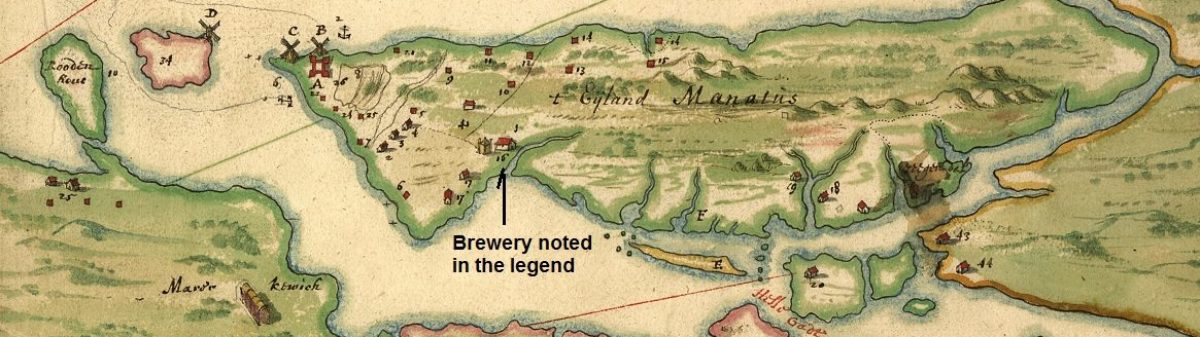
Here’s an interesting video on the expansion of New York, early bits of which I think might not be entirely correct given my research a few years ago into colonial New York breweries. See, folk used boats and weren’t waiting for roads to be built. So there were breweries up the shore.

Geoff Latham has found an excellent bit of information, a miraculous 1690s plan to create 1:10 malt extract syrup for navigators to address the bodily perils faced at sea:

…and they are no other than Corn and Water concentrated, or reduced into a more compact and narrow compass; the one for the extinguishing of Hunger, the other of Thirst…

You know you are going to be a bit disappointed by an article on the state of alcohol retailing in Ontario when the second line starts with the words: “[f]ollowing the repeal of alcohol prohibition in 1927…” We didn’t have prohibition. We had temperance. Different. Still, this ain’t a bad response to the chicken littles who fear the costs of privatization:

There are two important lessons to take from these exorbitant claims. The first is that the figures that opponents of the plan are claiming are entirely unsubstantiated. They are simply the figures they claim. In order for them to have any legal weight whatsoever, they would have to be proven in court, which would require The Beer Store to open its books. Given the grandiose figures being tossed around, it is entirely possible that The Beer Store is bluffing in an attempt to maintain its privileged treatment. The second important lesson here is the price of cronyism overall. The government over-regulating and picking winners and losers in the market hurts consumers twice over. First through inflated prices and poor customer service, and again as taxpayers via legal challenges.

How many journals can I keep? I have a cheese one, a gas station bathroom one, a favorite socks one… thanks be to God I have beer to fall back on as a pleasure, not a task. Speaking of odd habits, don’t find yourself collecting hundreds of collector beers. No one cares.

Jeff’s on a book tour. Speaking of books, Boak and Bailey have published a greatest hits. Which is good. I loved REO Speedwagon’s greatest hits… a lot. So I am looking forward to Balmy Nectar all the more.

It’s fun to pick on an article with so many errors but the underlying unspoken truth might be worth noting – folk are spending a lot on craft beer without any identification that it is good value:

People spend more on craft beer every month than they do on their monthly cell phone and utilities bills. Drinkers are shelling out an average of $59 per month on beer, a new survey from Chicago-based market insights agency C+R research, found. Millennials spend $5 more. More than half (56%) of millennials said they drank an ice cold craft brew at least once a week.

Millennials. Go figure. Likely members of the style set.

Another week in beer in the books. No great shockers but there is still the rest of Thursday and Friday. Want to know what happens then? Check out Boak and Bailey on Saturday and Stan on Monday.

“For Drink”: Searching For Something Requires Knowing Something About That Something

Just a bit of a note on how annoying it can be realizing that if you want to find out something you need to know something about the thing you need to find out more about. Not unlike my problems with records or, say, the adjectives of the past.

For example, from time to time I have a habit of hunting through the digital mess of Google Books looking for references to “malt” in lists of ships’ provisions for some sort of expedition or another to see what I can find. I have learned that I have to include a search for “mault” or other variations in the spelling. This is how as I found out about Frobisher’s provisions for his 1577 Arctic expedition by searching for “biere” rather than “beer.”  In that same way, I realized recently that I should also be hunting just for not multiple spellings but also phrases – as the phrase “for drink” in these examples show.

1557: in Tusser‘s domestic text set in verse, Five Hundred Points of Good Husbandry we read in the section on morning work,

Let some to peel hemp, or else rushes to twine
To spin or to card or to seething in brine.
Grind malt for drink,
See meat do not stink.

1585: in Volume 2 of Calendar of the Carew Manuscripts at document #591, we can read in the requirements for setting up English plantations in Munster, Ireland that a farmer requires six quarters of “oats for drink” while a copyholder needs four and a cottager just two.

1597: in the Calendar of the State Papers Relating to Ireland, perhaps due to the failure of the previous plan noted above, we see that the military need to receive better supplies instead of just beef, including:

…cheese and salted fish, and with some malt for drink for the soldiers, who I see daily to perish for want thereof, against the rule of Christian compassion…

1623: in the records of the Royal Commission on Historical Manuscripts, we can read a note by Sir John Coke, a listing of provisions which includes “malt of barley for drink” and “malt of oats for drink.”

1624: a book on Puritan settlers of America indicate in quotations that their preparations need to include “meal for bread, malt for drink” as they should not expect to “meet neither with taverns nor alehouses.”

1688: in a summary sort of document recording aspects of Communications of the Board of Agriculture, a summary sort of acreage chart entitled Quantity of land necessary to subsist 8,000,000 of people in England, according to the present mode of living:

Bread corn – –  – – – – – – –  – – 3,000,000
Barley, for drink – – – – – – – – -1,500,000
Potatoes –  – – – – – – – – — – – -500,000
Grass land, for butcher’s meat – 12,000,000
Grass land dairy – – – – – – – – -4,000,000
                                                    ————-
                                                              21,000,000

Nothing too profound about it all. Just worth noting that you… that I… have to be open to understanding that the short forms or cliches of others in the past are not the shorts forms of today. All very irritating. Except that you notice that over 7% of all English acreage in the late 1600s was used for beer making and then you think that, hey, that is sorta cool.

A Few More Thoughts On The Early American Hops Trade

Thoughts. Hmm. That is code for “Alan has not researched this enough” but let’s see what we can find out on a pleasant Saturday afternoon. This post is a follow up to one I posted on 10 June which asked the question of when the first hops were exported from the United States.  In this post, I am looking a bit more at where the hops were coming from, especially before the middle third of the 1800s by which time central New York had become the main source of hops. Up there is a snippet from an 1802 article in The Bee, a newspaper from Hudson New York in 1802 which may indicate why the domestic and international trade were not necessarily without connection. More about that later.

A good first step is at the beginning and that could be the diary of Thomas Minor, a gent living in Stonington at the eastern end of Connecticut who recorded the cycle of his farming life from 1653 to 1684. Stonington actually predates the establishment of Connecticut in 1662 so Minor must have been one of the first European settlers there. He was born in Somerset, England in 1608 and came to the the Massachusetts colony in 1630, moving about before settling in Stonington to farm and also serve as a local government official.

His diary is spare, recording a month in a brief paragraph like this passage from September 1661:

…the 8th we had made an end of hay making monday I gathered hops & the 14 day I Commed flax my sons was all about the Cart & wheels sabath day the 15th good-man Cheesbrough spake to me about moving mr Brigden from fathers deaken parke washeare & sabath day the .22. monday 23. we Caught the wild horse the 20th of this month mr picket & we parted the sheep…

As you would expect, Minor kept a diversified subsistence farm with cattle and horses as well as oats, wheat, turnips, peas, apples, chestnuts and Indian corn all being mentioned.  He was not picking wild hops in the woods. He weeded the hops in the third week of June 1663 and again on 22 April 1670. On 17 April 1673, he “diged up the hops” which indicates that he is propagating them in some manner. He also records gathering hops on 8 September 1661, 7 September 1668, 31 August 1669, 15 September 1670, 1 September 1671 and 2 September 1680 when he is 72 years old.

He also makes barrels of cider during many years, pressing from late in the summer and on into autumn. He doesn’t mention barley or beer making. He trades for goods with others. On 19 January 1679 he delivered 30 barrels of oats to be paid in “a barle of good malases and other barbades goods” so it is entirely reasonable that he traded away his hops and traded for ale.¹  Interesting to note that he is trading at that early date for good from the sibling English colony of Barbados. I noticed that the word “bread” is only recorded once so the brewing of ale might have been such a commonplace that it was no worth mentioning.

Inter-colonial trade was an important thing. In a rather condensed paragraph in “A Bitter Past: Hop Farming in Nineteenth-Century Vermont” by Adam Krakowski, the extent of the New England hops trade in the first half of the 1700s is described:

While seventeenth- and early-eighteenth-century accounts of hops in the colonies are rare, a law passed in the English Parliament in 1732 under the reign of King George II, titled “An Act for importing from His Majesty’s Plantations in America, directly into Ireland, Goods not enumerated in any Act of Parliament, so far as the said Act relates to the Importation of Foreign Hops into Ireland,” suggests just how widespread and successful the hops crops were in America at that time. Outlawing the importation of hops from America through Ireland and into England implied that the hops were abundant enough to fulfill domestic demand as well as supplying an export trade. The Massachusetts Bay Colony had already established itself as an important hops supplier, shipping hops to New York and Newfoundland as early as 1718. 

If that suggestion, entirely reasonable, about the 1732 British statute is correct, such a date for the first export from the colonies to Ireland would push back the use of American hops in UK brewing about 80 years from the earliest date Martyn has identified. It may actually go further back than that. In an 1847 letter from Earl Fitzwilliam to Rev. Sargeaunt discussing aspects of the Irish Question, the following is stated:

…the hop growers were to have their share in the monopoly, and, by the 9th Anne, c. 12, the import of foreign hops into Ireland was to be adjudged a common nuisance. Early in the reign of George 2nd, some doubts arose, whether, by an act then recently passed, the prohibition upon the import of foreign hops had not been incidentally—unintentionally—repealed. A return of the common nuisance was dreaded, the hop growers were on the alert, and the legislature of the ruling power immediately passed the 5th Geo. 2, c. 9, in which it is declared that the 9th Anne, c. 12, shall remain and continue in full force—consequently, that the import of foreign hops into Ireland was as great a nuisance in 1732 as in 1710.

The statute known as 9 Anne, c.12 from 1710 appears to have been a fairly comprehensive statute related to the imperial brewing industry. Section 24 prohibited the use of hop alternatives like broom and wormwood and also was the first imposition of a duty on hops. All of which makes sense as the primary subject of 9 Anne, c. 12 was taxation. If you are going to tax something you need to exclude similar things not being taxed. So no importation of hops and no use of hop replacements.*

Back to the newspapers. In the decades immediately before, and even during the Revolution, hops were coming into from siblings amongst the soon to be united colonies. To the right is an excellent notice which Craig has discussed from New York’s Morning Post of 6 March 1749 in which Obadiah Wells offered a wide range of good, most “too tedious to mention,” including bales of “Boston Hops.” in 1766, according to the 19 May edition of the New York Mercury, a ship on the Boston-NY  route gave notice that it was sailing in ten days but that it still had hops for anyone who came down to the wharf.**

Perhaps counter-intuitively, hops from across the ocean were also traded in New York City not long after the end of the war. To the right is an notice from the New York Morning Post of 17 March 1787, less than four years after Evacuation Day when the city which had remained loyal was turned over to the new United States. Notice how the garden seeds being English are highlighted.  Notice also the 1500 lbs of “new hops” for sale. Are they also English? It is not claimed.  Compare the volume as well as description to this notice from New York’s Independent Journal on 10 March 1784 in which a few bales of best English hops are on offer. The old country still has some draw.

Soon, however, things shift. On 22 March 1790, the Albany Gazette advocated for the production of beer, cider and hops as there were no duties to be paid upon them compared to the trade in spirits, rum and wines. Decisions related to the development of agriculture were being framed by geopolitical tensions and resulting tariffs.

In 1802, as noted above and seen to the right, The Bee from Hudson, New York published an article on increasing American domestic manufacturing as opposed to relying on foreign trade for necessities. It seems to echo British concerns from one hundred years before. This essay is attributed to Ben Franklin – even though he had been dead for about twelve years. Whoever wrote it, the essayist reflected the new Jeffersonian era in the new century which took American self-sufficiency and exceptionalism to a new level. And hops were part of that, highlighted as a key commodity well suited to increased production for domestic consumption. Makes sense. European tariffs impeded the hops trade otherwise.

Tariffs were imposed on imports in to the United States in return and for reasons which were argued positive political policy. On 26 January 1810, an article in the Albany Register, right, argued for raising the duty on foreign distilled spirits beyond 50% “…to encourage our own breweries, distilleries, molasses importers and growers of hops, grain, fruit and sugar cane…” In the context of an expanding national economy as well as jingoism, the domestic hop industry was worth protecting and expanding. So slap on a tariff.

This home grown hop strategy might well have been key to the development of the market. The Republican Watch Tower, also of New York, ran an ad on 9 December 1801 offering 35 sacks of “fresh hops” for sale. Hard to be fresh by that date if shipped across the ocean – but not impossible. To the right is an ad from Utica NY’s Columbian Gazette from 18 November 1809 showing 4,000 lbs of domestic “Boston hops” for sale. In Horatio Spafford’s Gazetteer of 1813, it states that Utica had a population of 1700 and Oneida County as a whole had four breweries.  According to the hopping rates in the NY State Senate report of 1835, that one supply of hops is enough for well over 1,000 barrels of ale. “Boston hops” were on still offer in the New York City market in 1818 according to this ad in the Gazette from 9 November and this one from the Evening Post from 20 November.   The Commercial Advertiser of New York praised the 1823 Massachusetts hop crop in an October 6th article.  The same newspaper on 30 December 1826 carried a notice for the sale of Vermont hops which had been brought down into the city, twelve hundred pounds worth.

What have we learned? American farmers have produced hops from the earliest days of settlement. As we saw with early Quebec, this aspect of self-sufficiency is as one might expect from the colonial expansion of a beer drinking culture. The trade in those hops as been subject to tariffs and other forms of regulation where local markets perceive that they are in need of protection from the trade in foreign goods competing with local products.*** But in a rapidly expanding marketplace such tariffs may serve to foster a stable complete internal economy. As a result, as Americans turned away from dependency on its eastern coast during the first decades of the 1800s to the opportunities inland, hops would go with them.

I have not laid my hand on a full copy of the original statute, just this later version 9 Anne c.12 with revoked sections. This summary from 1804 indicates to me that it was a comprehensive regulation of the hops market.
** The Krakowski article notes another similar “Shipping records for the schooner Bernard out of Boston destined for New York include 3,000 pounds of hops in February 1763.
*** Sound familiar?
¹ Update: the buying and selling of ale and brewing ingredients in a small 1808 New York community is recorded in this 2014 post on the first Vassar book.