The Beery News Notes For That Post Canadian Thanksgiving Emotional Letdown

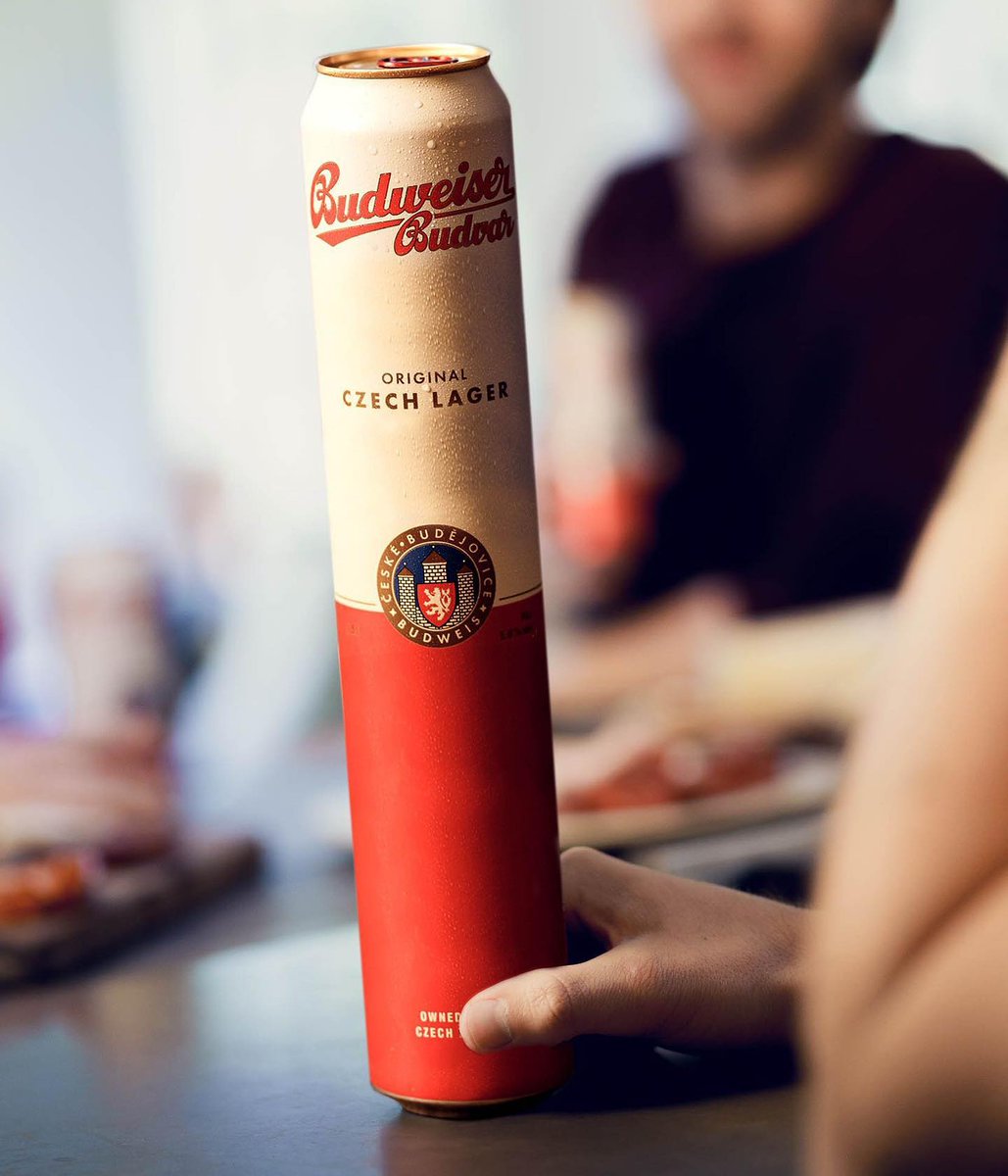
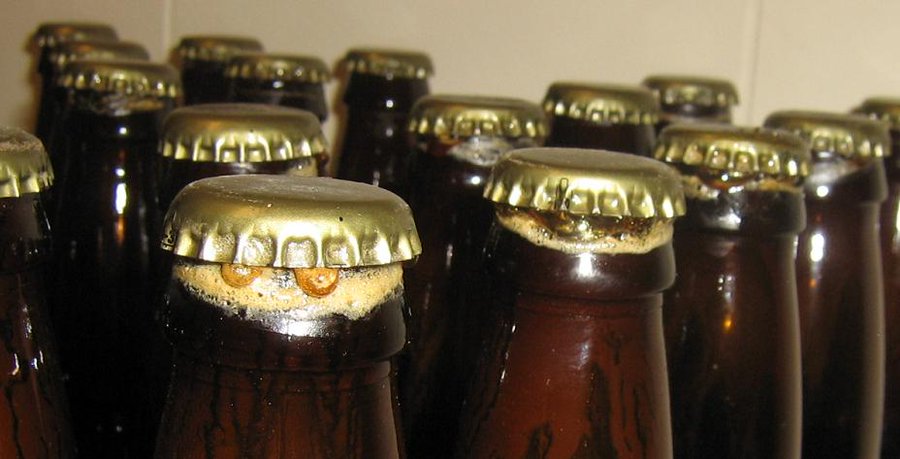
Actually, it’s been a good week this week. Forget that headline. While not at the level of “I’m a traffic cop in Spain under Franco and it’s Christmas so give me gifts of boozegood (as illustrated to the right) it’s been good.  Week off for yard work. And Monday’s Thanksgiving turkey came out of the oven in fine shape. We even had a last minute guest which meant we had to be on best behaviour and, get this, I couldn’t even each over the table for seconds of stuffing bare handed. Sheesh. And my vote for the Cardinal* even tied my preferred runner up the Crow** so that worked out well. Annnnd it was heartening to see the fans of the Blue Jays not repeat past bad behaviour when the Mariners took the first two games on the road care of, in part, a great Canadian.

Where to begin? The past! Last Thursday after that week’s edition went to… well, after I clicked on “post”, Liam shared an interesting piece on the joys of finding an excellent set of observations from the past:

While trawling through newspaper mentions for old pubs for yet another historical project, I came across a smattering of repeats in numerous papers in 1908 of a piece of pubcentric prose under the title, ‘The Delights of an Old Alehouse.’ It really gripped me as I read it and brought out some of the emotions mentioned above, but it wasn’t in any way familiar to me which seemed odd, as it was extremely well written and clearly done by someone with a lot of talent. Luckily, at the end of the piece the author – Charles Hugh Davies – was credited as well as the source of the original publication, which was The Pall Mall Magazine. Some sleuthing and searching finally led me to the piece, which is actually just a small part of an article titled ‘An Essaie in Prayse of Beer’ which is a much broader love letter to beer, and especially old ale, as was hinted at in the excerpt I had read. I can’t find it in any other source (apologies if it has been covered by others and I’ve just missed it.)

Good work. Sadly, the hunt for information on line has become harder as sources are removed from public access. It’ll only become harder as A.I. search narrows what you need to know. Which really was the underlying point about brewing history that Pope Leo was trying to make the other day.

And Gary has been digging into the old records this week, too, focusing most recently on Old Vienna beer – both Ontarian and Ohioan – and some almost eerie machinations on the part of my personal hero E.P Taylor:

Since Ohio was ground zero to market Red Cap Ale and Carling Black Label beer made in Clevelend, it makes sense that Canadian Breweries wanted to add Old Vienna to the American portfolio, at least initially as an export. If Canadian Breweries bought the rights to Koch’s Old Vienna from the receiver, a potential obsacle to such marking would be removed. Presumably O’Keefe Old Vienna did reach Ohio, as it did other states in the north. in the 1950s…

While E.P. clearly had a thing for Ohio, there are still questions questions questions and he’s on the hunt. Fortunately there are also answers at least etymologically speaking! On “steaming“…

The word ‘steaming’ for being drunk stems from when people in Scotland used to circumvent Sunday licensing laws by taking to the water. Public houses were closed, but steamships weren’t. To be ‘steaming drunk’ made its way into public parlance.

Also on another aspect of the question of “what is history,Chalonda White of Afro.Beer.Chick posted about the meaning of National Black Brewers Day and how it is still not properly appreciated:

National Black Brewers Day isn’t just about history. It’s about continuity. It’s about connecting ancient African fermentation to modern Black ownership. It’s about giving credit where it’s long overdue. When I pour a pint on this day, I’m not just thinking about the beer. I’m thinking about the people. I think about the enslaved brewers whose hands shaped the recipes. I think about Theodore Mack Sr., who bet on himself when no one else would. I think about Celeste Beatty of Harlem Brewing Company, who became the first Black woman to own a craft brewery in the U.S. and did it with unapologetic Harlem pride. She turned her love for the culture into liquid storytelling.

In another context of the search for authenticity, Ron shared his experience of attending the Norsk Kornølfestival in Ålesund, Norway over a series of posts including breakfast photos as well as observations on framhouse brewing:

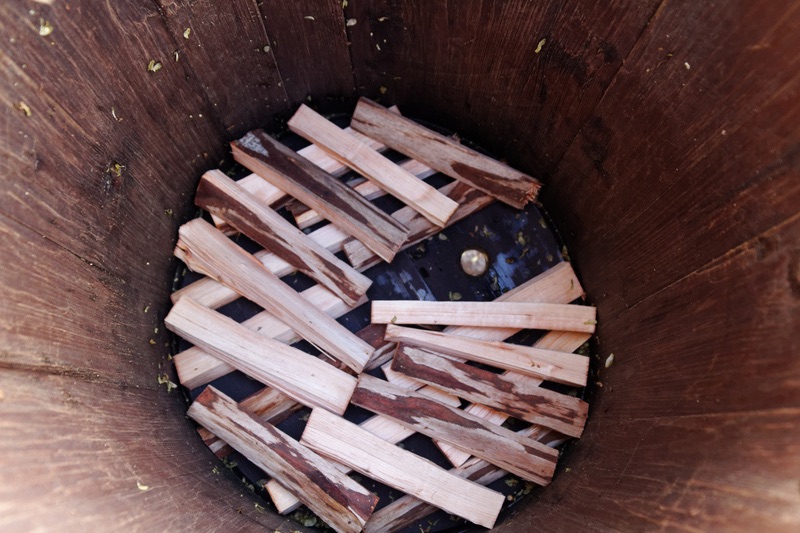
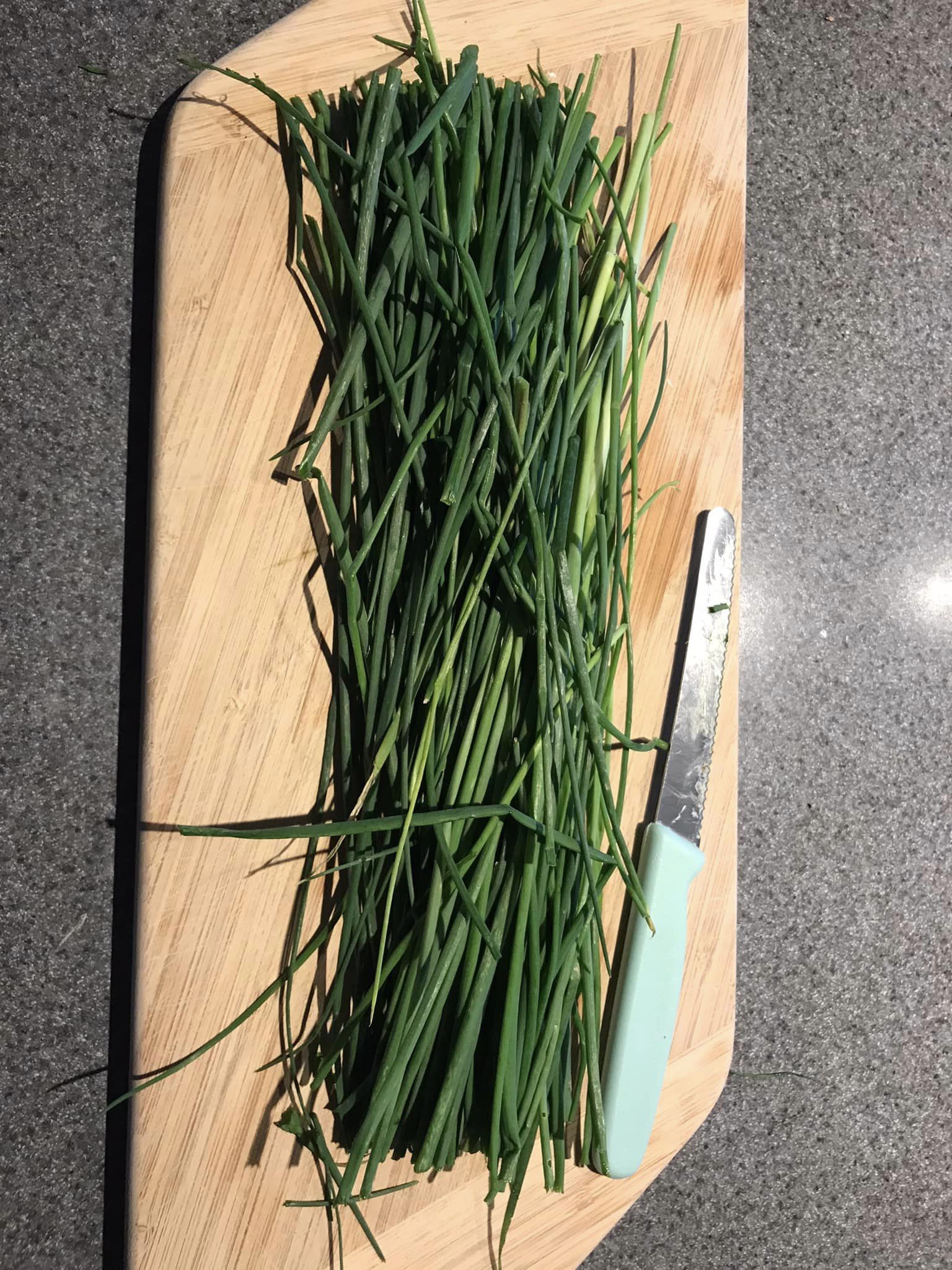
The house is a log cabin with one of those turfed roofs which are pretty common around here. Next to it is a roofed fire pit, where a cauldron of water and juniper twigs are bubbling away over a wood fire. They never brew with pure water. It’s always juniper infused. The farmer, his brother and a mate are doing the brewing. Occasionally, giving the water a stir with a long wooden stick. Mashing takes place in a stainless-steel tub. Though they have some wooden tubs to show us how they used to do things. Water is transferred in buckets to the mash tub. To which the malt is later added. No measurements, either of the temperature of the water or the weight of malt, are made. It’s all very casual. Done by eye and experience. While the mash is standing, we go off for lunch. Which is more potatoes and cold cuts. It fills a hole.

As a bonus, there was also some sensible maritial fest-going advice from Ron like when he made: “…some cheese and salami sandwiches to eat at the festival. I saw the price of the food they’re selling there. I’d never be able to look Dolores in the eye again if I paid that much for nosh.” As always, I am with Dolores in these matters. Less realistic is the news out of the GABF last week… if BMI is to be believed:

At Boston Beer’s annual GABF brunch Oct 10, it felt like a throwback to the heady days of early craft, an optimism that might’ve seemed defiant if it hadn’t had receipts from the night before. BA prexy Bart Watson opened the event by noting that despite the “gloom and doom” in craft, Thurs night’s crowd had produced a “lively festival” with “not a phone in sight.” Bart said “that’s the spirit we need to find – people connecting over great beer.” Boston Beer prexy Jim Koch echoed Bart, saying GABF’s opening “was an illustration of the creativity and vibrancy of the craft beer movement and our ability to evolve, change, add more layers to what we do.” 

You will remember Boston Beer, the firm that one is advised now makes 30% of its revenue from beer making. Clearly not part of the post-passion universe. More connected to the reality-based reality is Mike Seay who visited an old friend – a brew pub:

In this era of Craft Beer, with more places closing than opening, my area got a nice boost with the return of a local brewpub chain that is tied to the original microbrew wave in the 90s. That place is Sequoia Brewing in Fresno. It closed for a while, lost owners, and felt like it would not return. But it did return, with new owners. Thankfully. Brewpubs fill a gap for most of us beer geeks. The gap of having kids. Or a partner that isn’t into going to taprooms. With a brewpub, both can be happy. Food for the ones not really into beer, and craft-style beer for us beer geeks. Usually, brewpub beer rises up to a respectable level of beer, but not a “I want to buy this in a store” level. That there is the rub for us.

And (also) out and about but farther afield was Retired Martyn as well as Mrs RM who’ve (also) been looking for happiness care of a beer and a bite in Romania and found it at the Grand Café Van Gogh:

We’re in a modern apartment near the University, Romana a mix of youth and decay… Appropriately, the city is full of umbrellas, in Umbrella Street and the Grand Café Van Gogh which is one of Mrs RM’s ticks. Obviously those paintings aren’t all original Van Goghs, that would be silly, but they are high quality prints and this is the classiest place in Old Town by a distance. Big brewery beer, CAMRA would be appalled, but a black lager is matched expertly with…. Papanasi, your Romanian mix of doughnuts, cream and fruit.

I hope the service was up to scratch. I’ve done service – missed putting in the order, dropped the beer, invented “diming” to maximize the tips, took shit from the kitchen staff – but I never had to work it like a waitress. For Pellicle, Rachel Hendry discussed the role in pop culture and her own life:

What is it that you want from your waitress? Efficiency, charm, a smile, care, attention to detail, an attractive physique, a winning personality, a sense of humour, wisdom, empathy, experience—the list goes on! All of that flair! No wonder she’s so popular! But how much of a person are you really entitled to? The Waitress moves among her audience members, weaving her way past tables and into their lives. She works within her community—there’s that animation, there’s that exposure—performing for them as is the requirement of her work. How much should The Waitress give and how much should she restrain? How much are you paying for?

Excellent stuff. And from India, we learned there was much surprise on what people found out their drinks tab was paying for:

A liquor bill of a restaurant in Rajasthan has been going viral on social media. But why? Well, it levies cow cess among other taxes, including CGST and SGST. The tax, which was introduced in 2018 to support cows and cow shelters in Rajasthan, has triggered a debate online.  One user said, “As much as I want the welfare of cows (or all animals for the matter), I don’t understand the concept of cow cess.” Another said, “The irony is the Jaipur-Jodhpur highway, which is littered with cattle loitering on the road, making it extremely dangerous for commuters. Rajasthan govt is barely doing anything for the rehabilitation of cattle/cows.”

Sticking with news from India, there is a shortage of aluminum cans for the domestic brewing market that strict regulations are making worse, according to Jessica Mason:

Domestically, aluminium can suppliers such as Ball Beverage Packaging India and Can-Pack India, have revealed that they have already reached maximum capacity at their sites and will not be able to increase supplies for at least 6-12 months unless production lines are added or expanded in some way… At present, due to the QCO, the beer industry cannot import cans from foreign vendors as BIS certification can take many months to process. To avoid a shortage in beer supply, local reports have outlined that the BAI has lobbied the government for a “short-term regulatory relaxation” of its QCOs to ensure uninterrupted supplies from other countries.

Interesting then that Canada is courting India as a market for the supply of our metals. We make a lot of aluminum that could suppliment local production. If, you know, Mr. Trump lets us…

And then… there was much response to that nice light piece in the NYT by Mark Robichaux originally titled “Opinion – How to Save the Craft Beer Industry“*** on what US craft beer can do to save itself. Some sensible… (…maybe…) Others not so much**** or worse. Me, I wonder if  it can be saved as the taint of “your uncle’s drink” is now so well upon it. Not to mention the whole general slump of interest in booze thing.***** But what I liked most in the piece is how it makes an attempt too rarely seen with the general topic – an attempt to set out a reasonable argument. Four arguments in fact… of varing decrees of validity. The best one is the third of the four:

Craft beers also need smarter labels. The industry built its identity on personality, with quirky mascots, puns and inside jokes as logos. It was fun — until it became clutter and noise. My beer aisle now looks like a vertical Comic Con merch table. Today’s overwhelmed consumer doesn’t have time to decode a beer called Sour Me Unicorn Farts (a glittered sour from DuClaw), Purple Monkey Dishwasher (a chocolate peanut butter porter from Evil Genius), or Hopportunity Knocks (a perfumed, piney I.P.A. from Caldera Brewing Company). They want to know: What does it taste like? Will I like it? Design matters, yes, but clarity matters more. Make labels that tell drinkers what’s inside, not just what’s funny at 2 a.m. in the brew house.

Certainly a point we’ve heard, agreed with or disagreed with****** over the last few years. Consumers (not nerds, not trade staff, not beer writers) are not aided by in joke branding design. AKA the exploding bubble gum machine effect. But he misses the mark for me on issue #1 on the IPA problem, complaining that “…most taste like pine resin…” and not that anything that tastes like anything can be called an IPA now and that it loops into issue #3 above. Issue #2 is an observation on strong beer that is both true and also a bit dated by, you know, fifteen years. While it’s sorta true there’s plenty of beers being made which are not like that so, you know, buy those. Issue #4 is just a sensible observation that good beers should come in smaller cans… but plenty do.  One take away for me is this: if a reasonable writer and a reasonable publication like this is suffering from as serious a misunderstanding of the whole topic as a number of beer writers allege… have the last twenty years of public writing about good beer been an utter and too insular failure?

That’s it for now. Not as long as last week but that was nuts. While you beg for more more more, please also check out the below mentioned Boak and Bailey every Saturday and sign up for their entertaining footnotes, too. Look out for Stan when he feels the urge now that he’s retired from Monday slot… maybe … maybe not. Then listen to a few of that now newly refreshed Lew’s podcasts and get your emailed issue of Episodes of my Pub Life by David Jesudason on certain Fridays. And Phil Mellows is at the BritishBeerBreaks. Once a month, as noted, Will Hawkes issues his London Beer City newsletter and do sign up for Katie’s wonderful self-governing totes autonomous website featuring The Gulp, too.  Ben’s Beer and Badword has been on hiatus since April but the archives are out there with the all the sweary Mary! There is new reading at The Glass which is going back to being a blog. Any more? We have Ontario’s own A Quick Beer and All About Beer is still offering a range of podcasts – and there’s also Mike Seay’s The Perfect Pour. Plus follow the venerable Full Pint podcast! And there’s the Craft Beer Channel on Youtube. Check out the archives of the Beer Ladies Podcast. That’s quite good and after a break they may well be are back every month!

*The bird so nice they named it twice, cardinalis cardinalis!
**HARBINGER OF DEATH!!!!
***But then on Tuesday the title was altered to the less serious “Wacky Labels and Silly Names Are Killing Craft Beer” after an intense intimidation campaign by about 13 craft beer nerds that would have left even a Trump bootlicker impressed. Please don’t tell them about SNL’s non-non-alcoholic beer ad. Don’t make fun of poh widdle cwaft.
****Leaving out words like ““… as many have…” which undermine your point is not a strong move.
*****An interesting description of the loss of interest in booze can be found at UnHerd where “Is it last orders for German beer? Disaster is brewing in Bavaria” by Ian Birrell was published this week with this odd scene from Oktoberfest: “Not that everyone is into wellness. In one tent, I come across a lively group snorting what I presume was cocaine from the top of a bald man’s shiny head. One gives me a big grin as he sniffs deeply, then wipes his nose. Two tables down, another ebullient gang of pals pass around a mirror with chunky white lines laid out on it. Minutes later, I pass yet another high-spirited gaggle tapping small piles of powder onto their clenched fists.
******It’s good to have a good civil disagreement. Stan misses them.   I once recommended a client sign a document in addition to a contract called a “Letter of Disagreement” to clarify what was and wasn’t acceptable. They didn’t.


Some Brief Beery News Notes For A Thursday From The Road

As you know, in Canada we like a politician who drinks a beer. It’s practically mandatory of you are going to win an election to show that you know how to pour, how to drink and how to sit in a tavern as time trips along. So it was good this week to see recently elected Canadian PM Carney put less recently elected British PM Starmer to the test in an Ottawa tavern:

Keir Starmer has delivered a veiled swipe at Donald Trump by hailing ‘independent, sovereign’ Canada. The PM gave his strongest response yet to the president’s push to turn Canada into a US state as he met counterpart Mark Carney in Ottawa. Sir Keir and the former Bank of England governor enjoyed a beer in a bar and also talked up the prospect of reviving a stalled trade deal. 

Good to see. A little less rarified but, still, exceedingly pleasant by all account was the weekend enjoyed by Chris at Real Ale, Real Music who took us along on a trip to Manchester where he went to undergrad and later worked, a city that serves as the exotic elsewhere of his youth. It’s an extended piece of memory work with a gentle pace:

…my Grandad would take me there sometimes as a young lad in the 1960’s. He was the head of the local Co-op and sometimes he had to visit the head office in the city for important business, the details of which we were never to know, but it never took him long. We would catch the train from Sowerby Bridge station on a Wednesday afternoon which was early-closing day for the Co-op and most of the shops in town back when that was a part of the weekly routine. In those days, the station had the presence of somewhere important, a grand facade with a booking office within, waiting rooms, and the like, now long gone of course. When we arrived in this distant land at the other side of the Pennines, it was a short walk from Victoria Station, across Corporation Street with its huge and daunting buildings and we were there, then left abandoned for a short time in an imposing wood-panelled reception with a noisily ticking clock and a sharp-featured, unsmiling receptionist keeping a stern watch over me and my younger brother as Grandad disappeared into the mysterious world beyond the door.

As a person who walks through many doors into mysterious worlds, Martin on his never ending travels has shared his thoughts on what I would take to be a pretty noxious brew:

2 weeks ago, in Derby, I’d been dissuaded from the Caramel Custard Doughnut Milk Stout by a rascal from Worcester, and regretted my hesitancy ever since. I’d offered Stafford Paul a pint if he could correctly guess what I had in the Alex, but sadly (?) for him he got it wrong, so I’m having to drink the Pentrich Soul Doughnut myself. The Broadfield is a decent bet for your non-threatening craft picks, a Brunning and Price for the under-50s (though the soundtrack is relentlessly late ’70s AOR). The dregs of the Sunday lunch trade are yet to clear, sticky tables a bit of a downer though the Soul Doughnut itself is rather gorgeous, a cool and rich NBSS 3.5. Not as weird as feared, and scarily drinkable…

And ATJ shared an experience that is common in a pub – overhearing. Not prying. In fact, trying not to overhear even though what you hear is worth remembering… and sharing:

The couple’s voices were not foghorn-like in their loudness, but they still carried over to me whether I liked it or not. I switched off, but it was hard not to continue hearing their conversation. ‘I have been happy at times in my life,’ said the man, who I also learned lived locally but that the two of them would be moving back to Essex the following year. ‘The day of my marriage for instance,’ though given the lack of a remark from his companion, I guessed it wasn’t to her. ‘The births of my three kids, and I tell you that you can buy anything you want in the world — cars, houses, travel — but you cannot buy back the times you lost being with your kids when they were growing up.’

Boak and Bailey were also in the pub in their monthly newsletter opened up the question of what beer is the beer you see on offer that makes you want to stick around:

We recently turned up at The King’s Head in Bristol intending to have one last beer on the way home but the range of breweries on the bar made us say, “Ooh!” and stay a bit longer than planned. We have experiences like this from time to time – not as often as we’d like! – and it struck us as an interesting way of gauging the reputation of breweries. It’s not that they’re necessarily ‘the best’, whatever that means. Only that we’ve had enough good beer from them over the years, and especially in recent years, that we’re excited to drink whatever happens to be on offer.

They provided their ten suggestions. For me… here in Canada? Has to be St-Ambroise Oatmeal Stout from Montreal. Seeing as I am there… err, here… maybe I will find me some.

From the “things ain’t what they used to be” file, Henry Jeffreys at Drinking Culture wrote about the now frowned upon mid-1900s English taste in wines and how those tastes were achieved:

The Victorian wine expert Cyrus Redding wrote: “it has been thought necessary to give pure Bordeaux growths a resemblance to the wines of Portugal… Bordeaux wine in England and in Bordeaux scarcely resemble each other.” If you were lucky, your Château Palmer might contain a good dose of Hermitage from the Rhône and if not, brandy and elderberries. You can actually buy a wine today from Château Palmer called “Historical XIXth Century” which contains 10% Hermitage. It turns out that Australian cabernet-shiraz has a noble parentage. When we laugh at how Australians or Americans used to call their robust grenache and other Southern grape-dominated wines Burgundy, we are missing the point—this is the sort of Burgundy they were used to.

And The Beer Nut decided to find out more directly what things tasted like in the past… as long as you wait long enough he leared when he popped the cork of a bottle of HORAL Megablend 2015:

It’s old enough to still bear the name of 3 Fonteinen on the label’s list of nine producers who created it, a lambic house which left the HORAL group not long after. It finished up at 7% ABV and was a deep amber colour in the glass, suggesting that oxidation may have taken place. The aroma has a mineral sharpness mixed with a heavier, richer, cereal side. To taste, it’s not very sour but does have acres of gunpowder and Szechuan pepper spice, which I adore. Usually, you get your spice with a sterner sour acidity and sometimes a rub of waxy green bitterness (if you’re lucky), but here that seems to have mellowed away, leaving a smooth and friendly fellow. Oxidation? Yes, a touch, but it’s more pale sherry than wet cardboard, and confines itself to the finish, so that’s OK.

Speaking of hints from the past, Lars shared this saying this week:

One Norwegian way of saying “he’s a bit slow in the head” used to be “he comes after, like the oat malts.” Back then, everyone knew that oats take longer to germinate when malting than barley does, so at the time it was an apt expression.

Will Hawkes circulated this month’s edition of his newsletter London Beer City and I particularly like this passage about possible trend he may have spotted in pub naming:

The Craft Beer Co, one of the key drivers of London’s craft beer culture a decade back, had decided to rename its E14 pub the Clement Attlee, celebrating the Labour Prime Minister who was Limehouse MP between 1922 and 1950 (when the constituency was abolished)… If you, like me, detect a subtle shift towards a more traditional pub naming model, you might be right, although Hayes rejects the notion that his pubs are following a trend towards “geezer-core” (“I am not sure I buy into all that jazz”). The group’s last opening, The Bear in Paddington, was also more traditionally named – but Craft Beer Co pubs have always looked fairly traditional, with brewery mirrors, handpumps, and comfortable bench seating.

Note #1: not really.

Note #2: could have told you.

Once again, the news from Beer Marketer’s Insights is not great but at least they had the decency to blame the weather:

It’s still cool and rainy in the Northeast and many other parts of US. Natl beer sales reflect that and several other persistent challenges. Volume continued down 5.3% for 4 weeks thru 5/31 in NIQ data, including Memorial Day and the week just after (slightly worse than 4 week trend thru 5/24). So peak selling season began with a whimper. Premium lights (-10%) and beer-centric seltzers (-12.7%) down double digits for 4 weeks. Craft down 8.8%.

There should be a beer consumption forecast opportunity if it’s that tied to the climatic conditions! A great pal who’s long gone would call out on a sunny summer day “it’s a drinker!” And so it was. Things, however, have reached a higher level of weather induced concern, at least in one part of India:

Liquor warehouse owners in Kaushambi, Uttar Pradesh, are requesting police protection due to retailers causing disturbances. Retailers are aggressively demanding specific beer brands amidst rising summer consumption, exacerbating existing supply chain issues. Warehouse owners like Jagjeet Singh report licensees creating undue pressure and refusing to acknowledge distribution challenges, leading to potential shortages.

Far less argumentative is the piece in Pellicle this week, one that warms the heart of any solution oriented lawyer, as Gavin Cleaver tells the story of the Peticolas Brewing Company of Dallas Texas:

…I had to educate them about what it was that we were doing, what we were manufacturing. Took a bit of time ’cause they didn’t fully grasp it. In fact, they had initially said ‘Yeah, you need to do it in this zone’. Every area around town is zoned different, in a different manner. So I found a place in a light industrial zone. And then just before I signed a lease,” he continues, “I found a provision in the Dallas Property Code that made it clear to me I couldn’t manufacture alcohol in that kind of zone.” City Hall were unaware of any of these laws. Eventually, Michael’s work resulted in the statute book being updated—just for him—and a deluge of breweries sprung up in Dallas in his wake.

And finally, another sad loss for the beer world with the passing of Sir Geoff Palmer, Professor Emeritus and OBE. His career was sumarized in the Jamaican Gleaner:

Palmer was born in the parish of St Elizabeth, but raised in Kingston. At 14 years old, he moved to London with his mother. Scotland would become the stomping ground for the Jamaican during much of his adult life. He initially moved to Edinburgh in 1964, to complete a Doctor of Philosophy (PhD) in grain science and technology. By 1969 Palmer had developed the barley abrasion process, an innovation that enhanced the efficiency, sustainability, and cost-effectiveness of malting across the global industry. In 1989 the Jamaican became Scotland’s first black professor, as he began a teaching role at Heriot-Watt University, which continued until 2005. The academic returned to the institution as a professor emeritus and later as chancellor in 2021.

He was also a dedicated advocate who, as reported in The Scotsman:

…articulately, eloquently, and inspiringly reminded us over and over again that we must remember the lived experience of individuals whose courage and perseverance have greatly contributed to our society…

We chatted a little over the years but more about the legacy of slavery in Scotland than the brewing trade. His work on Dundas got me thinking about more local place names – like Picton. Yikes!

A shorter grouping this week. I am on the road …please check out Boak and Bailey every Saturday. Look out for Stan as he is posting more now that he’s retired from Monday slot. Then listen to a few of the now rarely refreshed Lew’s podcasts and get your emailed issue of Episodes of my Pub Life by David Jesudason on the (sometimes even but never) odd Fridays with the new addition of his Desi Food Guide now on Tuesdays. And maybe The British Food History Podcast. Maybe? And Phil Mellows is at the BritishBeerBreaks. Once a month, Will Hawkes issues his London Beer City newsletter and do sign up for Katie’s wonderful newsletter, The Gulp, too, now relocated to her own website, Katie Mather Writes.  Ben’s monthly Beer and Badword is on its summer break but there’s plenty to catch up on! And check out the Atlantic Canada Beer Blog‘s weekly roundup. There is new reading at The Glass which is going back to being a blog. Any more? We have Ontario’s own A Quick Beer featuring visits to places like… MichiganAll About Beer has given space to some trade possy podcasts and there’s also The Perfect Pour. Plus follow the venerable Full Pint podcast with an episode just last month!. And there’s the Craft Beer Channel on Youtube. Check out the archives of the Beer Ladies Podcast. That’s quite good but, hmm, they’ve also gone a bit quiet this year. The rest of these are largely dead. And the long standing Beervana podcast …except they have now stood down.  As has We Are Beer People. The Share looked to be back with a revival but now its gone quiet. And the Boys Are From Märzen podcast appears suspended as does BeerEdge, too. VinePair packed in Taplines as well. All dead and gone.  There is more from the DaftAboutCraft podcast, too. Nope – that ended a year ago.   The Moon Under Water is gone – which is not surprising as the ask was $10 a month. Pete Brown’s one cost a fifth of that – but only had the one post. Such is life. Such is beer podcasting and newlettering!

The “What’s Beer Got To Do With The Solar Eclipse” Edition Of The Beery News Notes

I couldn’t stop myself from reusing this image…***

A couple of weeks ago, I flagged the upcoming solar eclipse that is passing over our region, as illustrated again above. All other topics have stopped, it seems. We are calm and composed but at the other end of the lake, the Ontario version fo Niagara Falls has even declared an emergency due to, according to their Mayor, the million people estimated that might show up. So… what is beer to me when the sun is about to be eaten by the moon… or is the moon eaten by the sun? Bear with me if the perspective of these notes this week veers a bit towards the centre of the solar system… but not directly. No way. We and our pets do not look at the sun… except when we can… and only with proper filtering glasses except when they aren’t needed.  Easy.

First up, David Jesudason has continued his investigations of the story of Brewdog Waterloo and has noted a few very strange things. First, he has screen captured the story in the UK edition of Metro magazine which disappeared under mystereous circumstances. And he wrote a follow up piece in his newsletter Episodes of My Pub Life or rather from a duty manager from another BrewDog location did:

There are times when we stay open when I believe we 100% should not be open. We had no water on a Saturday night, it was rammed, we couldn’t wash glasses or dishes, couldn’t wash hands. The operation team was called, the situation was explained and they flippantly asked if people could use the loos in the bar next door. We just ignored them and closed. In my experience the operation managers can’t handle their workload. I feel there’s too many bars for them to manage and this leads to urgent emails regularly unanswered…

There is more but for me it is hilarious that there is a “OPERATIONS CONTROL ROOM HQ” that has to be called for permission to cope with local circumstances. Best fact: “There’s no training materials…” Speaking of power hungry beer chains, The Beer Nut himself has been investigating the phenomenon of the UK pub chain:

They sure love a chain restaurant in England. They have loads of them, and there’s something about a town like Bournemouth — lots of visitors looking for something familiar, perhaps — which seems to concentrate them. I did not go there with the intention of exploring exotic English chain restaurants. It just kind of turned out that way. There is, for example, a Brewhouse & Kitchen, a chain of brewpub-restaurants that felt to me like a modern successor to the Firkins of old, and memorably described by Boak & Bailey as “a bit like business class Wetherspoons.” Now there’s a demographic to aspire to. I wasn’t there to soak up the ambiance, however. I was there to try the beers, brewed on-site on the smart brewkit out front.

More to actual beery side of beer, Lars¹ has unleashed his powers of research and share two fact: (i) there is actually an east-west axis to Norway in addition to north-south and (ii) there is also a place called Atrå where their yeast is not kveik but berm. The story reads like the narration by John Walsh on America’s Most Wanted:

Then I stumbled across a guy on Facebook who had gotten hold of farmhouse yeast from a neighbour. In Atrå, as it turned out. He told me that several people locally had their own yeast. It was usually pitched at 30 degrees C, and everyone thought it was “old”, whatever they meant by that. Then came the surprise: nobody in the village brews in the traditional way any more. Those who brew use malt extract, but they still keep the yeast. This was very unexpected: a village with no brewing tradition, but they did have their own farmhouse yeast? Could this yeast really be genuine?

And looking back in time, Martyn has shared his clearly non-eclipse effected view of a very focused topic – the truth as to the identity of one pub in London, the Tipperary of Fleet Street:

…what of the claim that the Tipperary stands on the site of the Boar’s Head, and therefore has a history going back at least 580-plus years? Here I put myself in the hands of a man called Bren Calver, who aggregated many hours of research on the stretch of Fleet Street between Water Lane/Whitefriars Street and Bouverie Street, in particular studying contemporary illustrations, and who is convinced that the Tipperary occupies what was originally 67 Fleet Street, not the post-Great Fire 66 Fleet Street that was home to the Boar’s Head, which Calver believes was demolished around 180 years ago. This is about to get complicated, so hang on to your hat.

Laura Hadland shared some thoughts on the naming of those spaces where the brewery that brews the beer also sells you a glass of their beer:

Recently I visited the delightful Little Martha Brewing in Bristol, where I got embroiled in a fascinating discussion about the nature of pubs with co-founder and brewer Ed Morgan. Little Martha, for Ed, is assuredly a brewpub, not a taproom: “Rather than being a drinking space that is an add-on to a brewery, we’re a pub with a brewery at the back. When we started the business, the thing driving it was that we always wanted to have our own venue. We wanted to make it a cosy, warmer space certainly than some of the very large taprooms you see now. We wanted it to feel like a local pub, rather than trying to build a beer brand that would attract people here.”

For me, brewpub and taprooms that serve food are much the same thing. I was in Edinburgh’s Rose Street Brewery, drinking with the owner/brewer back in 1986. Pretty much the same set up as Middle Ages in Syracuse, NY back in 2006. When I was there, was I in a pub, a taproom, a microbrewery or a brewpub? All and none of the above… maybe.

BREAKING!!!… “Saskatchewan announces changes to homemade liquor rules”:

On Tuesday Saskatoon Churchill-Wildwood MLA Lisa Lambert announced that the province has amended liquor regulations to allow people who have applied for and received a special occasion liquor permit to serve those two types of homemade alcoholic beverages to their guests. “Previously, these products could only be served among family and friends in their own home,” she said. The new regulations officially came into effect on Tuesday. “This change is yet another example of our government’s ongoing efforts to reduce unnecessary regulation and red tape where possible,” Lambert said.****

Because… that is the one thing that is filling the jails of Saskatchewan… Uncle Fred’s homemade wine at the community Thanksgiving Supper down at the arena without a permit. Speaking of law, Beth Demmon is back with another edition of Prohibitchin’ and features Davon D. E. Hatchett, wine lawyer and The Bubbleista:

“While I was in law school, I took a class in intellectual property. I did not expect this to happen, but I LOVED the content in this class,” she says, adding that she ended up getting the highest grade in the class… But rather than set aside her passions, she decided to merge them, despite some skeptics…  “I actually went and talked to one of my professors at law school when I moved back, and he essentially told me you can’t have a viable practice in trademark law,” she recalls, disappointed. While she figured out what direction she wanted to go, she started working in corporate consulting and taking continuing legal education classes that Texas required. It was there that she first realized the potential for working in beverage and hospitality law.

Jealous. I mean I never knew what sort of law I would want to do but ended up being an owner’s side bridge building lawyer. Concrete. Rebar. Geotech studies. Fun stuff. But wine law sounds really good.

Note: Gary sums up his beers of France.

We flinch about a few things… pairing… IPA… branding… but there were some interesting thoughts from the exporter perspective in The Japan Times about a category of beer that is not necessarily well framed – Japanese beer:

For Japanese beer companies, there is work to do on more clearly defining their image. Mike Kallenberger, a senior adviser at brewing and beverage industry consultancy First Key, said aside from big mainstream imports such as Corona and Heineken, the majority of beers imported into the U.S. are typically associated with a specific occasion — in the case of Japanese beers, as a pairing to Japanese cuisine. “Japanese beers are typically seen as lighter and more refreshing, which makes them very good for pairing with food. Beyond that, the current image may not be very distinct,” Kallenberger said, but noted that given the focus of Japanese brewers on the U.S. market, that perception will likely evolve.

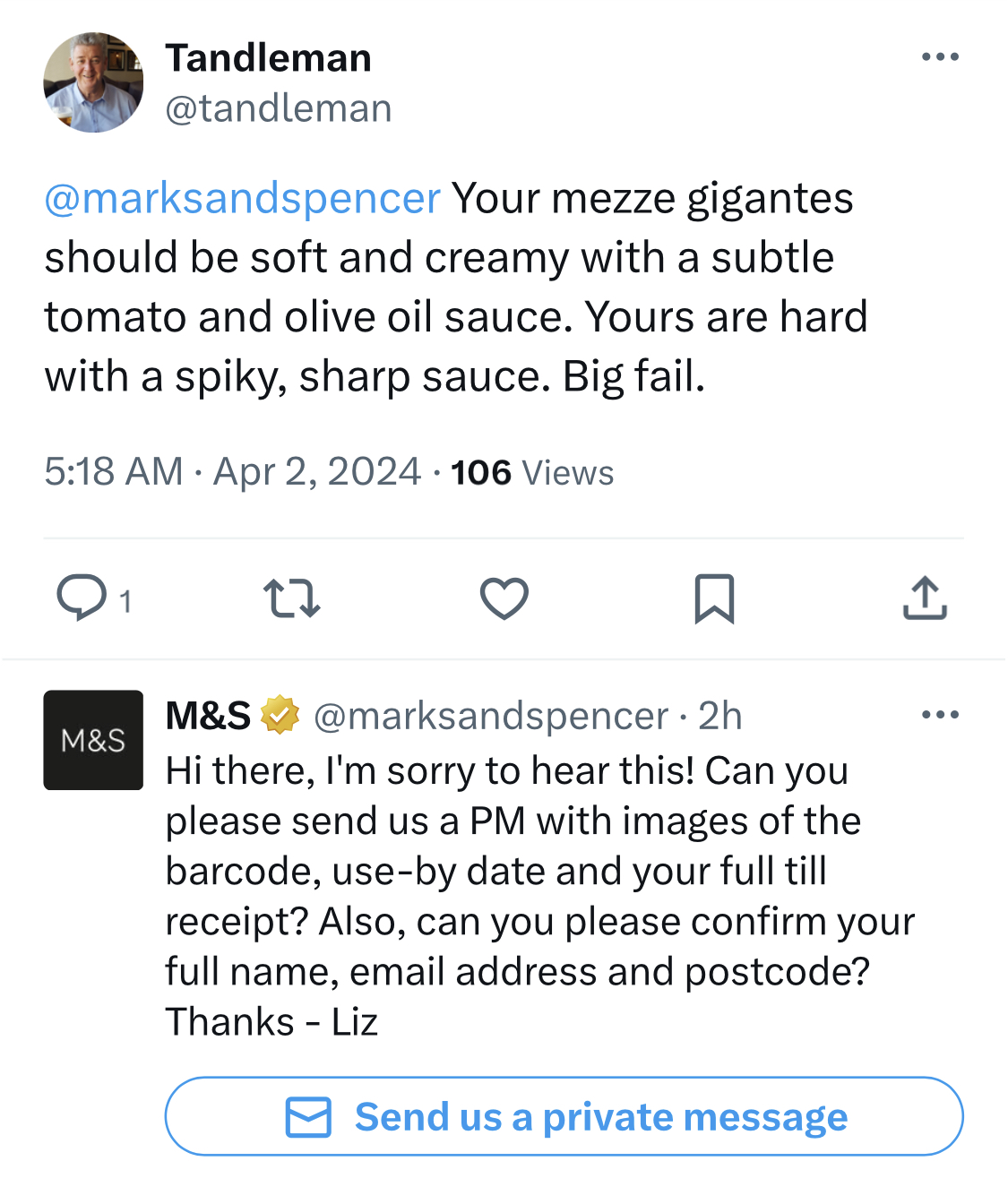
Never lacking in focus, The Tand displayed his full powers this week, as illutrated to the right where he took down Marks & Spencers and their farce of a mezza gigantes. this may have been deleted by some shadowy power or another. The powers behind mezza gigantes should not be underestimated in these matters. But, as we have learned from David Jesudason above, there’s more than one way to skin a cat whe we are dealing with the dark forces of the interwebs… or something like that…

Speaking of full powers, if you sign up for Boak and Bailey‘s Patreon account, you will learn the secret behind this statement:

It was the fastest Ray has drunk a single pint for a very long time and we both stayed on it for the rest of the session.

And still in Britain, The Daily Star has identfied a good marketing tool for these troubled times – one that even the Tand himself has not trotted out – ale is cheap!

With the cost of living crisis ongoing, many of us are dodging the pub in favour of boozing at home or cutting back on alcohol altogether. But for those of us who still enjoy an evening at the local watering hole, we can keep costs lower by opting for a drink other than lager – which, on average, set consumers back £4.24 in 2022… In contrast, ales – including stouts – cost just £3.60 in 2022, about 15% less than lager… Ales tend to be the more budget-friendly option in general…

Stan has declared “MayDay!!” for April and won’t be back for four whole weeks* but left us some good beery links including some considerations on the pretendy world of A.I. as it relates to beer:

I remain skeptical about AI beer recipes, but the information that Kevin Verstrepen’s laboratory at the University of Leuven shares could also be put to good use by humans. Consider this:

“Both approaches identified ethyl acetate as the most predictive parameter for beer appreciation. Ethyl acetate is the most abundant ester in beer with a typical ‘fruity’, ‘solvent’ and ‘alcoholic’ flavor, but is often considered less important than other esters like isoamyl acetate. The second most important parameter identified by SHAP is ethanol, the most abundant beer compound after water.”

Ah, yes. alcohol. So plenty to read in the Nature Communications article, and a lot of sexy charts.

Alcohol?!?!? Speaking of alcohol,** Pellicle published a piece by Alistair of Fuggled fame on Big Fish Cider of Monterey, Virginia:

Each autumn, Kirk’s father would harvest his trees—amongst them a Northern Spy, a Grimes Golden, and a Winesap—pressing the fruit to make sweet cider, which they stored in a barrel. It was here that Kirk’s lifelong obsession with apples and cider began. “I can still remember the scent hitting my nose, and the flavour just exploding in my mouth, and I still think fresh cider off the press is the best thing going,” says Kirk in his soft Virginian drawl. “I love the taste of apples, I love the smell of the bloom. My mom reminded me that I would come in and say if I could make a perfume with the smell of an apple bloom, I could be a millionaire. I never did make it mind.”

Finally, Pete Brown was in The Guardian this week giving advice to the beer drinking fitba fans has part of a bit of a paranoid series of stories about strong lagers in the lead up to Euro 2024 in Germany based on a bit of a confessional:

Years ago, at the start of my career as a drinks writer, I visited Oktoberfest for the first time. The beer at the festival is served in litre tankards… You swing them as much as you drink them, the beer disappears quickly as you sway along to the band and you have quite a few, but it’s OK because the beer is Helles, a light lager style at about 4% ABV. So when we visited a biergarten the following day and saw Oktoberfest Bier being sold by the Maẞ, I naturally assumed it was the same thing we had been drinking at Oktoberfest… It’s typically between 6% and 7% ABV. I didn’t know this. I had seven steins over the course of the afternoon, and then I tried to stand up. We’ll draw a veil over what happened next.

Me? Been there. Syracuse, NY. Blue Tusk circa 2007 or so. Being served a stout whch was actually my first 10% imperial stout. Then four more pints. Samesies.

Enough!! We roll our eyes at misspent yuff as, again, we roll the credits… well, the credits, the stats the recommends and the footnotes and the many ways to find good reading about beer and similar stuff via any number of social media and other forms of comms connections. This week’s update on my own emotional rankings? Facebook still in first (given especially as it is focused on my 300 closest friends and family) then we have BlueSky (126) rising up to maybe… probably… likely pass Mastodon (914) in value… then the seemingly doomed trashy Twex (4,468) hovering somewhere above or around my largely ignored Instagram (163), with sorta unexpectly crap Threads (43) and not at all unexpectedly bad Substack Notes (1) really dragging up the rear – and that deservedly dormant Patreon presence of mine just sitting there. Fear not!

Want to keep up with the news before next Thursday? Check out Boak and Bailey every Saturday and Stan the very next Monday he decides to show up at the office. Look at me – I forgot to link to Lew’s podcast. Fixed. Get your emailed issue of Episodes of my Pub Life by this year’s model citizen David Jesudason on the odd Fridays. And Phil Mellows is at the BritishBeerBreaks. Once a month, Will Hawkes issues his London Beer City newsletter and do sign up for Katie’s now revitalised and wonderful newsletterThe Gulp, too. Ben’s Beer and Badword is back with all the sweary Mary he can think of! And check out the Atlantic Canada Beer Blog‘s weekly roundup. There is new reading at The Glass which is going back to being a blog in this weeks best medium as message news. Any more? Yes! Check to see the highly recommended Beer Ladies Podcast. That’s quite good. And I listened to the BOAS podcast bro-ly interview of Justin from Matron. And the long standing Beervana podcast . Plus We Are Beer People. There is the Boys Are From Märzen podcast too and Ontario’s own A Quick Beer. There is more from DaftAboutCraft‘s podcast, too.  All About Beer has introduced a few podcasts… but some may be losing steam. And there’s also The Perfect Pour. Plus follow the venerable Full Pint podcast. And the Craft Beer Channel on Youtube and remember BeerEdge, too, and The Moon Under Water… if you have $10 a month for this sort of thing… I don’t. Pete Brown’s costs a fifth of that. There was also the Beer O’clock Show but that was gone after a ten year run but returned renewed and here is the link! Errr… nope, it is gone again.

*Yes, that is how months generally work.
**Which reminds me to note again how it was not good beer hunting again this week.
***Cry for help or what… hey, what do you mean it’s a crappy headline image… and what do you mean this footnote is out of chronological order? YOU’RE OUT OF ORDER!!!
****Note: the government claims to have reduced red tape by adding a new class of permit… think about that for a moment…
¹Beer history’s Tommy Hunter.

The Clocks Are Changing The Clocks Are Changing Edition Of The Beery News Notes

“…Poop Damn Crap Poop Poopy Crap…”

November. Frig. I never understood why April was the cruellest month when there’s November just a few pages further on in the calendar. What’s so wrong with stirring those “dull roots with spring rain” anyway? Beats the hell out of the prospect of week after week of avoiding frost bite and roadside dead car batteries. This week we went from sunny and +16C on Saturday aft to -4C on Tuesday morning. I filled a bird feeder. I have to fill it again. Those birds are already pissed off with the level of service. And Wednesday we woke to that layer of white shit shown above. Took the photo through the window screen. I would have taken it through the curtain and maybe my bed’s blankets if I could have. I just got that raised bed planted with garlic in time. Poop crap. I even coined a phrase for not drinking this month – Nofunber.

What’s going on with beer? First, Pellicle published an excellent piece on the Double Diamond phenomenon. In the mid-1980s, Double Diamond showed up on keg in my old hometown, the old navy town of Halifax, Nova Scotia around the same time as Guinness did. It was during the beers of the world fad which got going around the same time that the first Maritime micros like the Granite at Gingers and Hanshaus were starting up. Anyway, there are still pals who never really got all that much into beer who still fondly recall the easy sweet taste of Double Diamond at the old Thirsty Duck on Spring Garden Road and how it was tied to the old country:

The name Double Diamond is said to originate from the two interlocking diamond shaped symbols that would have been used to mark cask barrels at the time. And throughout the 1950s all the way through to the 1970s, Double Diamond was one of the best selling beers in the UK. “The rise and fall of [Double Diamond’s] popularity would track the fortunes of the company,” wrote Ian Webster in his book Ind Coope & Samuel Allsopp Breweries: The History of The Hand. “Double Diamond was the leading light, the headline act, the A-list star. It isn’t an overstatement to say that the history of Double Diamond was also the history of the company.” Quite the responsibility to lay on a single beer, is it not?

So… turns we got it pushed out to us after it slumped in the UK. Typical. Read the whole thing to find out why. Excellent writing.

Also excellent is the review by Boak and Bailey of the new and also apparently excellently honest ‘zine edited by the same Rachel Hendry… Service Please!:

There’s also a strand of depressive melancholia: accounts of derailed creative careers, repetitive shifts, and the pressure to perform cosy cheeriness on loop every single day. Even when we’re not being utter dicks, we customers are a wearying lot. In one cartoon, by Ceara Colman, a barista is slowly ground down by one customer after another calling them hun, babe, love…

Trooff, that. And I really liked Alistair‘s post at Fuggles that missed last week’s deadline by a hair. He came upon a brewery in Virginia that has taken the too often ignored concept of an honest beer at an honest price to a new level and explored what the implications of oddly unpopular proposition that value pricing posed:

I am pretty sure this move it going to stir the pot in craft brewing circles in Virginia, especially given the number of breweries where they are changing $7 and upwards for a pint at their taproom… I also love the fact that Tabol don’t shy away from the fact that beer is the everyman drink rather than a niche product for the upper middle classes…  [W]here a brewery’s taproom is exactly that, a place to drink a brewery’s beer, in situ, as fresh as fresh could possibly be, without the additional logistical steps that drive up the price, then cheaper than draft or packaged retail should be the norm. If this move drives down the cost of a beer, that is a good thing in my world. After all, isn’t that one of the supposed benefits of increased competition? 

Desperate or clever? Hmm… hopefully there will be more on this breaking story from Alistair. Somewhat but not really that connected, Martin visited a university student union that was also a ‘Spoons which is a bit confusing to an auslander like me. I thought the cheapest way to get beer into the hands of students was to have the students sell it themselvesto themselves  at their own bars. Is ‘Spoons more efficient than even that?

Speaking of value, there more this week on Russia’s nationalization grab of Carlsberg’s branch operation Baltika:

“There is no way around the fact that they have stolen our business in Russia, and we are not going to help them make that look legitimate,” said Jacob Aarup-Andersen, who took over as CEO in September. Carlsberg had eight breweries and about 8,400 employees in Russia, and took a 9.9 billion Danish crown ($1.41 billion) write-down on Baltika last year. Aarup-Andersen said that from the limited interactions with Baltika’s management and Russian authorities since July, Carlsberg had not been able to find any acceptable solution to the situation.

Err… solution? Maybe leave when the Ukraine was first invaded… in 2014… or when Georgia was invaded… in 2008? Hmm…

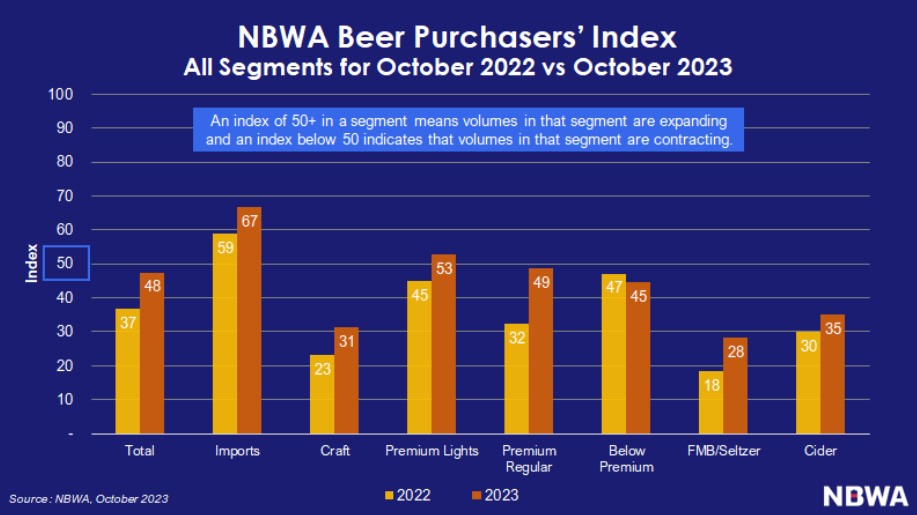
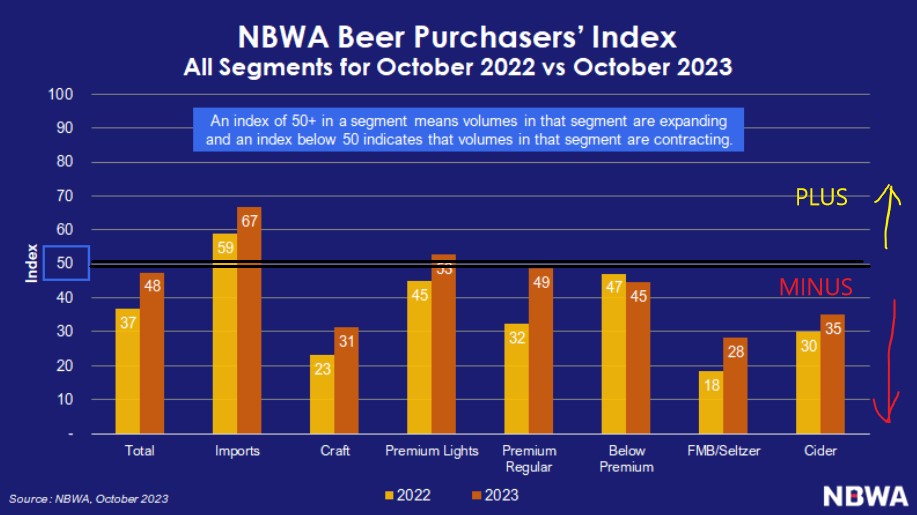
Things not being as they seem may also have been the theme at the National Beer Wholesalers Association if their graph shared at Craft Brewing Business is anthing to go by. I’ve edited it for you. Click here.  My update makes it much clearer that the “50” level mid-graph is actually indicating zero growth over in the specific US beer market segment. Meaning any sector scoring below the middle is shrinking. Only imports are showing anything like real growth as reported. Craft is taking a beating only saved from the basement by seltzers… which aren’t even beer. Neither are the other big losers ciders, come to think of it. In fact, the story of the graph appears to be that of all beer sectors, craft sales are ditching by far the most drastically.  Plenty more than just high level generational demographics making that happen. Especially in a strong US economy.

Speaking of questions, the BBC posed an interesting one this  week – “would you drink genetically modified beer?”:

In the UK, GM foods can be authorised by the Food Standards Agency, if they are judged “not to present a risk to health, not to mislead consumers, [and] not to have less nutritional value than their non-GM counterpart”… US brewers using gene-edited yeast in their products is “a secret everyone [in the industry] knows about”… beer makers will rarely promote the fact due to the negative headlines GM technology has received so far. Meanwhile, brewing yeast expert Richard Preiss says that “in the US, you can really do what you want”. He is lab director at Escarpment Labs in Ontario, Canada. It provides more than 300 breweries with yeast, but does not use GM. “You can take [in the States], for example, the genome from basil, and plug it into yeast, and get to market fast with a flavoured beer.”

To be honest, I assume I consume GMOs all the time in my beer. I may grow my own herbs and greens in an all organic yard that a mow with a manual push maching and create special hidey-holes for natitve bees… but my beer? Who knows what crap is in that stuff? Not me! Do you? The question of GMOs in good beer actually strikes me as one of those “journalism / not journalism” beer topics. Much like the silent response to, say, the closing down of the American Brewing History Initiative at the Smithsonian’s National Museum of American History. Or, you know, any meaningful discussion of value when it comes to good beer. Just a few of those things that exist in the culture… but no one mentions. Eh. Var.

Converely, Jeff wrote a good piece for VinePair setting out the whole narrative arc in the rise and fall of Hazy IPA – from rare whale to gas station bulk craft – that serves as a good lesson for us all:

The fact that hazy IPAs may have lost some of their cultural power is merely a shadow of the far more significant fact that they have remained so popular for so long. Rather, as they prepare to enter decade two of life, hazies appear to have found equilibrium. Their early success was inflated by oversupply at the small-brewery level, and undersupply nationally, a dynamic that is coming into balance. Their strength remains strong in some regions but less so in others. And they no longer generate the level of excitement that forces people to wait in long lines for the privilege of buying a new release.

It’s been so long since we have had any sort of innovation in craft beer that we forget things like Hazy IPA were once sorta exciting and not just an alt hard seltzer filling the fewer remaining bulk craft shelves at US convenience stores. But these are those times we live in. These be the times. Relatedly, Stan set me a challenge this week in his weekly post on Monday:

Back to “peak of craft.” What does that mean? Is that peak sales? Peak quality? Peak choice? Peak cultural sway? And if the peak has come and gone, how does post-peak beer compare to post-industrial, postmodern, and post-Fordist beer? Can’t wait until Thursday to see if McLeod has answers at A Good Beer Blog.

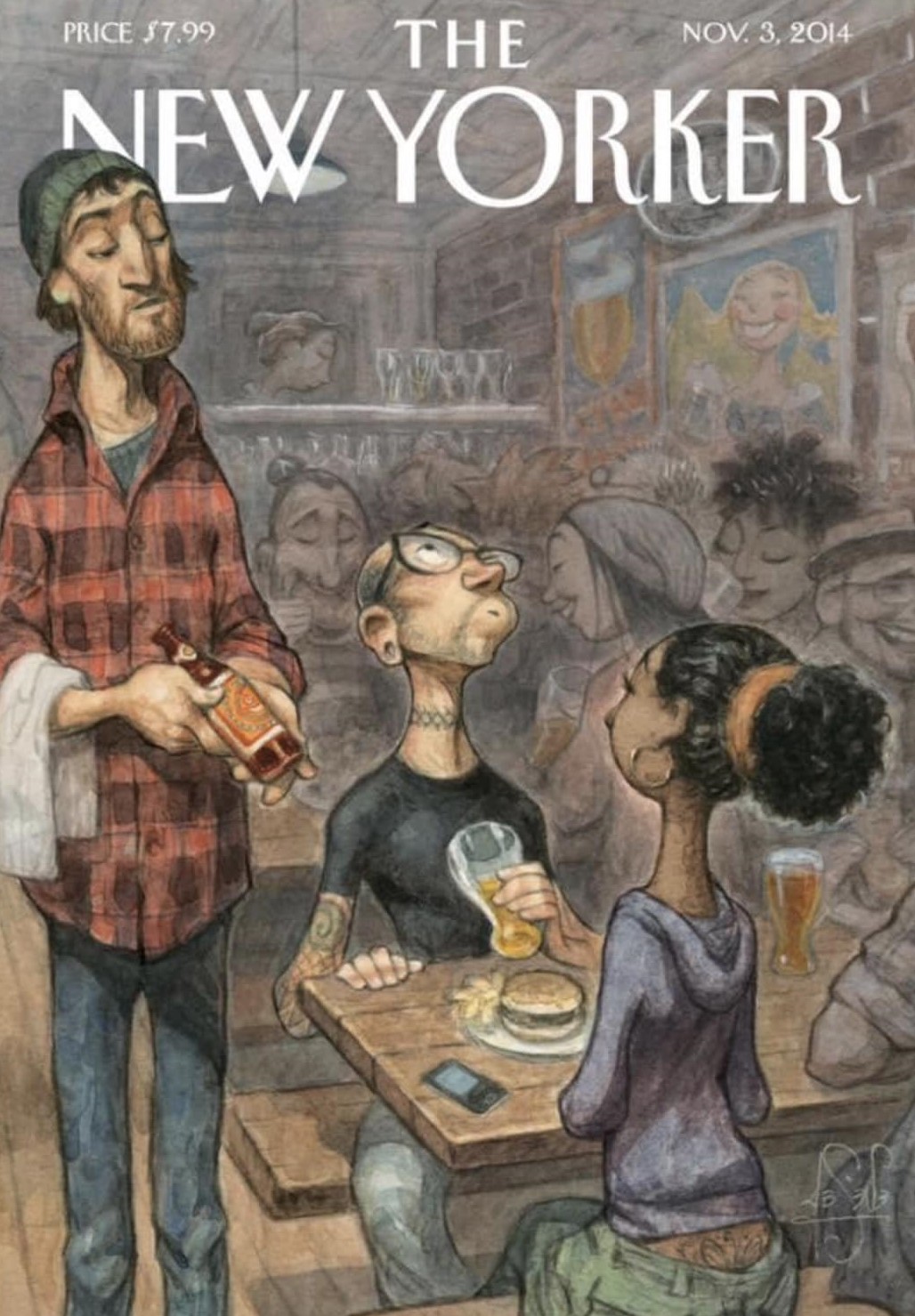
That call to fess up relates to the cover of the New Yorker from 2014 right there. I mentioned that it had popped up in my FB feed and reminded me of those better days at that time. My response to Stan was that the cover was just the peak point of the cool of craft, the actual brief golden era when there was general public interest and before the wheels had started to come off. Back in 2014, craft was cool. Probably as cool as it would ever be. Now it is in what sociologists call its Sombrero Phase. Still, this all sorta ties into a few other recent posts. Jordan doing a bit of soul searching given the greater picture:

…how am I supposed to write about Craft Beer? Hell, in a situation where everyone is strapped, can you ethically ask for samples for review? Am I going to write about trends? What trends? Someone’s going to put hops or puree in one of the remaining unhopped styles?

Exactly – what trends? The trend of “nothing new” has been the new so long it’s really just the known for the bulk of newbie entrants to the beer buying experience. Jeff was also reflecting and and considers the longer timeline:

Time’s lessons can bring us a certain equanimity about what is important and what merely seems important. On example that has been rising in my mind a lot lately is this one: I don’t need to get worked up about what other people like and, in fact, I can take real pleasure in people who don’t like the things I like. This seems like a banal enough observation—like, really, who cares what beer you drink or car you drive or brand of shoes you wear?

I get it. Both time and the times do wear down upon us. And yet… and yet we still can care even if we aren’t all that cool anymore. Witness Boak and Bailey going on a hobby interest renewal holiday to Berlin and posting some very insightful writing about the observed beer culture there, one about five Pilsners and another about wegbiersbeers bought in small shops for drinking on the way as you walk from one place to another:

… there’s nothing remotely pretentious about these shops. They also sell Monster energy drinks, chocolate bars, ice cream, vapes, and bog roll. That the beers are being sold to drink on the go is underlined by the presence on the counter of a bottle opener. Hand over your cash, knock off the cap, and you’re away. And that’s exactly what people do.

That’s sorta nerdy neato. And Lars had another sort of experience in an alternate reality, too:

My destination: the cheese world championship, where I am to comment on beer/cheese combinations. (I wonder if this might really be national only, though.) So, up there I’m supposed to comment on five cheeses and three beers and how they match. Never tasted any of them before. No idea how this will work out. I guess that worked pretty well. We all of us basically had to just wing it. So you taste the combination and just say whatever comes first to mind.

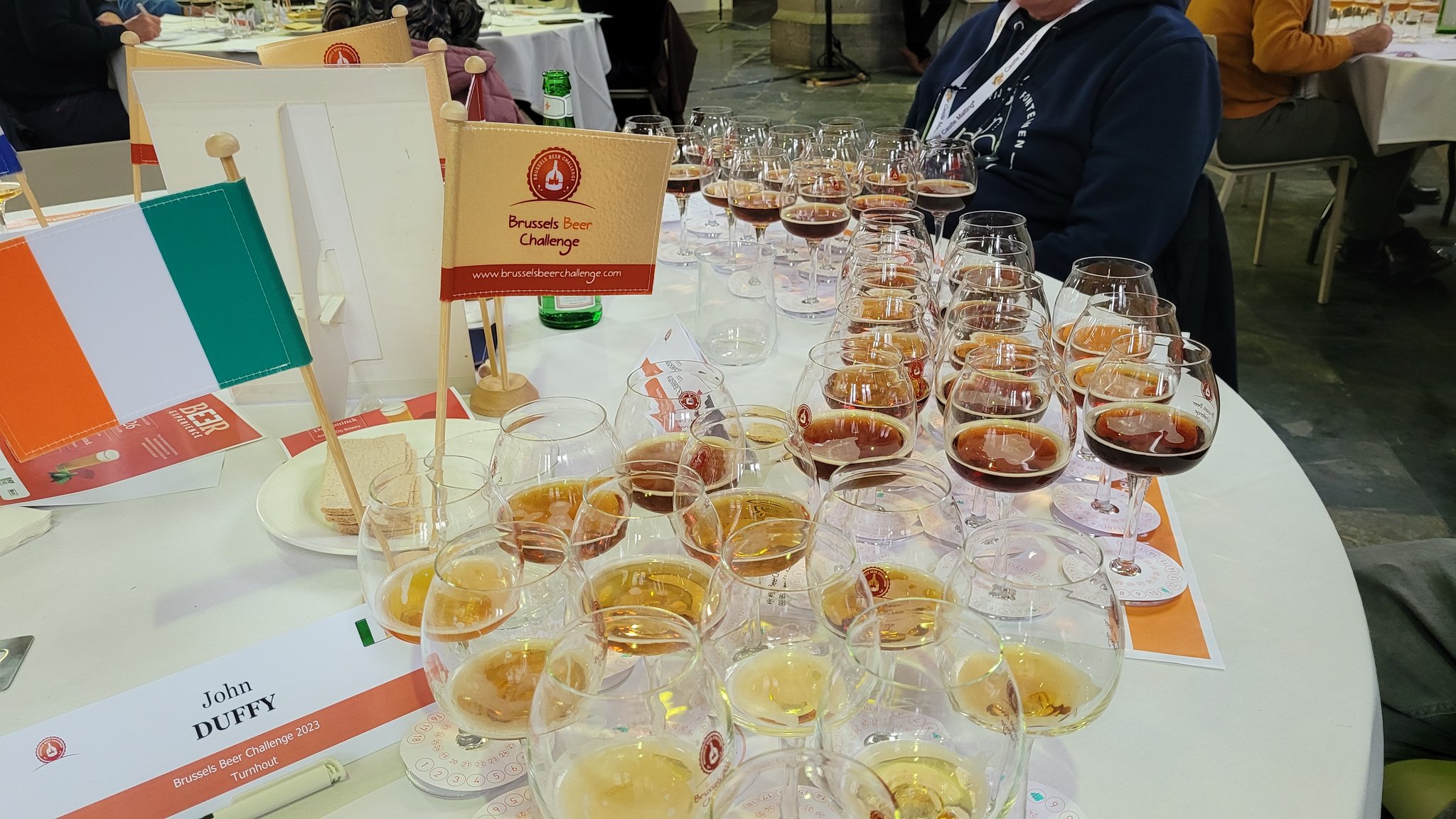
And The Beer Nut himself did a great job with the keen observational, even self-deprecating wit at the Belgian Beer Challenge, another stop on the Möbius strip of generic international beer awards circuit:

…Belgians, I imagine, are better at this than me…

But… we are told some Belgians were allowed to join in. Which is nice. All of which leads to the question – is there a common aspect to this weirdness? None of it is all that cool, for sure. It’s weird. But is that so wrong? NO – be weird! For now… for us… maybe it’s all just odd enough that good beer still may be a good lens to view this life’s rich pageant or at least good for a laugh – even if it is sometimes at its own expense.

There we are. Hope you’ve enjoyed yourselves once again. Goonight Bill. Goonight Lou. Goonight May. Goonight. Ta ta. Goonight. Goonight. As per always and forever, you can check out the many ways to find good reading about beer and similar stuff via any number of social media and other forms of comms connections. But beware! Mr. Protz lost his Twex account and his 27,000 followers this week. Update on my emotional rankings? Now, for me Facebook remains clearly first (given especially as it is focused on my 300 closest friends and family) then we have BlueSky (77) rising up to maybe pass Mastodon (900) then the seemingly doomed trashy Twex (4,434) hovering somewhere above or around Instagram (168), with unexpectly crap Threads (41) and not at all unexpectedly bad Substack Notes (1) really dragging – and that deservedly dormant Patreon presence of mine just sitting there. Seven apps plus this my blog! That makes sense. I may be multi and legion and all that but I do have priorities and seem to be keeping them in a proper row. All in all I still am rooting for the voices on the elephantine Mastodon. And even though (even with the Halloween night snows) it is #Gardening Mastodon that really wins over there, here are a few of the folk there discussing beer, :

Alan McLeod | A Good Beer Blog (… me…)
Stan Hieronymus | The Man!
Boak & Bailey | The B² experience
Curmudgeon Ale Works | Jonathon is Brewing
Katie Mather | Shiny Biscuit and Corto
David Jesudason | “Desi Pubs” (2023) author
BeoirFest | They say “Let’s Talk Beer”
Ron Pattinson | The RonAlongAThon Himself
Al Reece AKA Velky Al | Fuggled
Jennifer Jordan | US hops historian
Andreas Krennmair | Vienna beer and lager historian
Beer Ladies Podcast | Lisa Grimm and colleagues
The Bar Towel | Toronto’s chat zone for beer lovers
Chicago Beer Society | Folk in Chicago getting social over beer
Jay Brooks | Brookston Beer Bulletin
Joe Stange | Belgian beer expert, beer magazine editor
Cider Bar | Barry makes Kertelreiter cider
Laura Hadland | CAMRA historian and beer writer
Brian Alberts | US beer historian
Jon Abernathy | The Beer Site
Maureen Ogle | US Beer Historian
Lars Garshol | Norwegian Beer Historian and Kveik Hunter
James Beeson | Beeson on Beer
Carla Jean | MAINER!!!
Thandi Guilherme | Beer Ladies Podcast Co-host
Lisa Grimm | Beer Ladies Podcast Co-host
Roy of Quare Swally | Beery ramblings from Northern Ireland
Rob Talksbeer | Podcaster and Youtuber
Anthony Gladman | UK Drinks Writer
Jeff Alworth | Manna Of Beervana
Northwest Beer Guide | Fairly self explanatory… but not NW Latvia…
Evan Rail | Prague based GBH editor, freelance writer, NYT etc.
Todd Alström | 50% of the Alströms
Jacob Berg | Beer talking librarian

Anyone else? Anywhere else? Yes, you also gotta check the blogs, podcasts (barely!) and even newsletters to stay on top of things including the proud and public and certainly more weekly recommendations from Boak and Bailey every Saturday and Stan at his spot on those Mondays! Here’s a new newsletter recommendation: BeerCrunchers. And  get your emailed issue of Episodes of my Pub Life by David Jesudason on many Fridays. And Phil Mellows is at the BritishBeerBreaks. Once a month, Will Hawkes issues his London Beer City newsletter and do sign up for Katie’s now much more occassional but always wonderful newsletterThe Gulp, too. Ben’s Beer and Badword is back with all the sweary Mary he can think of! And check out the Atlantic Canada Beer Blog‘s weekly roundup. There is new reading at The Glass. Any more? Yes! Check to see the highly recommended Beer Ladies Podcast. That’s quite good. And the long standing Beervana podcast . There is the Boys Are From Märzen podcast too and Ontario’s own A Quick Beer. There is more from DaftAboutCraft‘s podcast, too.  All About Beer has introduced a podcast… but also seems to be losing steam. And there’s also The Perfect Pour. Plus follow the venerable Full Pint podcast. And the Craft Beer Channel on Youtube and remember BeerEdge, too, and The Moon Under Water… if you have $10 a month for this sort of thing… I don’t. Pete Brown’s costs a fifth of that. There was also the Beer O’clock Show but that was gone after a ten year run but returned renewed and here is the link!

The Jing-Jing-Jingliest Thursday Beery News Notes Of All!!

Here we are. Christmas Eve… Eve… Eve… because the 25th is Sunday and that screws everything up. The kid still goes to school tomorrow, which is insane. I am sorta off but not off as there isn’t much happening now a week after even the staff Christmas parties are over. And… there’s a HAMMER OF THOR snowstorm coming tomorrow.  All good.  I’m Christmassy and that is all that counts. Fam’s all here, pressies bought and the tree is lit! I thought I would pull back the curtain and give you a sense of the life at my house at the holidays. KIDDING!!! That’s not my house, that’s “The Chess Players” by Gustav Wintzel of Norway from 1886. Look at that beer! Gotta be a litre glass right there plus the colour is key to the entire painting, establishing the triangle with the contents of that shelf… probably a mantelpiece with the firebox hidden by those rugs. Lovely.

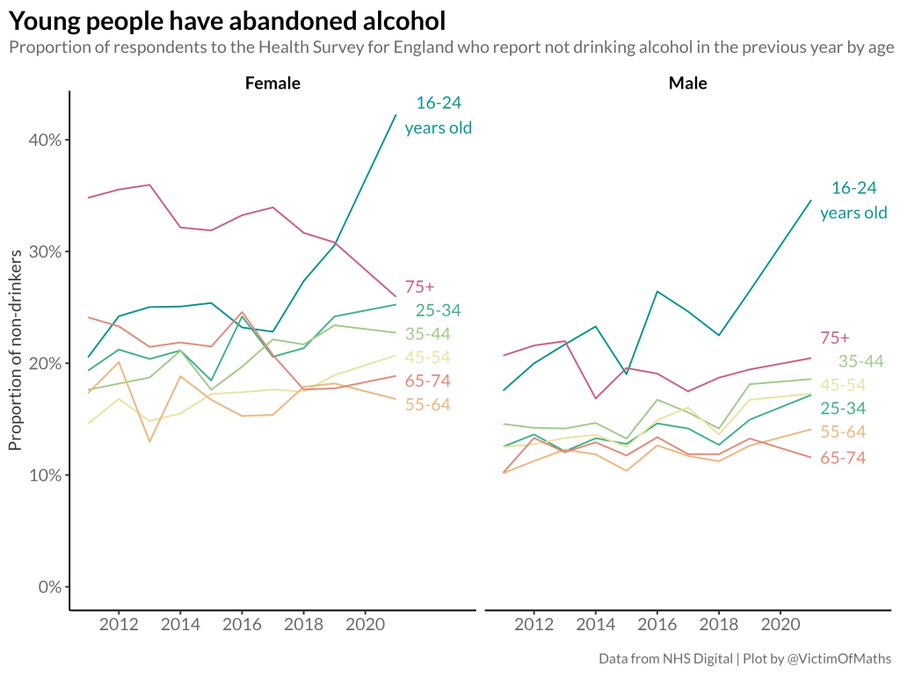
Right off the top, how is this for a graph from the Victim of Math? Click on it for more detail. It’s the Health Survey for England’s data showing how young people there are abandoning drinking – and have been on a steady trend of going clean at an amazing rate of change. It looks like in 2017 less than 25% of women 16 to 24 well over 40%.  The lads are less less inclined but seem to have gone from about 17% dry to 34% so over the last ten years. Don’t know what that bodes other than it bodes something.

Speaking of boding, Jordan wrote the third in his St. Johnian* Effort in the “boding not too welling in Ontario” series this week, the conclusion of which I will ruin knowing it is not the end… not even the beginning of the end… but more like the end of the beginning:

Let’s see if we can recap: Beer is a luxury good by default, and its cost has outpaced wage growth. As established earlier, we’re dealing with the smallest cohort of people turning 19 in living memory, a cohort smaller than any other group younger than 65. Per capita consumption is going down year over year, presumably due to multiple issues including health and lifestyle choices, but also because of decreased relevance due to affordability. Additionally, this is in the face of greater availability in terms of retail purchase locations in the province’s post-prohibition history. 

Add callow youth ditching drinking to that list… Perhaps related, an interesting article in The Times on James May and his pub and the lessons he has learned about the marketplace:

Pubs, for obvious reasons, proliferated in the Victorian era, especially in towns and cities, where they were effectively the communal part of working people’s homes. We know that Ebenezer Scrooge, in A Christmas Carol, “took his melancholy dinner in his usual melancholy tavern”. But pubs don’t need to fulfil this role any more. They are entirely places where we go of our own volition, rather than out of necessity, and they need to acknowledge this. Note how it’s dreary pubs that subscribe to the old thinking, with their mediocre food, crappy karzis and limited drinks lists, that close down. Good pubs, the ones that have readjusted, are doing fine, and we don’t need as many of them as we once did.

What’s that? “Cheer! Give us cheer!!!” you say, gentle readers. Quite so. the ever excellent Evan Rail shared some wonderful Yuletide info about mulled things and spiced things as well as the celebration of wassail:

While the orchard wassail is closely tied to Twelfth Night on Jan. 5 or 6, hardcore traditionalists will celebrate wassail according to Twelfth Night on the Julian calendar, which was used in England until 1752. By that measure, the proper date for an orchard wassail would be Jan. 16 or 17 on today’s calendar. For the sake of convenience, many wassail events are simply scheduled on January weekends. In the village of Hartley Wintney in Hampshire, England, the annual wassail is set to take place on Friday, Jan. 13, with a torchlight procession that starts at the village pub, the Waggon and Horses, where publican Kaesy Steele will be serving a traditional mulled cider.

Do we still care who owns the brewery? I mean, I was sorta making fun of this idea back in 2015… seven years ago tomorrow.  Pete Brown updated the dance card and quite rightly treated craft and not craft as all the same thing:

Many leading craft brands have now been acquired by the giants. That’s just how it is. Now – the ownership structure of the beer industry may be of no interest to you. If you’re already drinking mainstream lagers from global giants and you just occasionally fancy something hoppier, that’s up to you. I won’t judge. However, if one of your motivations for drinking craft beer – or just as importantly, cask/real ale – is that you want to support small, independent businesses, it’s not always obvious whether or not the brand in front of you is the real deal. 

Nice. Just remember that ownership is only half the story. Obligations in law like debt and shareholder agreements have as much or more influence over a business’s independence. Folk that promote their independence suddenly find, upon a downturn, that they are quite dependent. Consider the Case of Mr. Musk.

Now… in history making history, Ron pushed the early edge of brewing records and published in 1805 pale stout recipe.

Here’s proof that Stout didn’t always imply a dark beer. An example of the pale malt analogue of Brown Stout. It’s a type of beer which must have died out early in the 19th century as this is the only example I have. I’ve no idea why it disappeared but it may be connected with Porter brewers moving to brewing only dark beers. The grist couldn’t be simpler: 100% Hertfordshire pale malt. There’s really nothing more to say.

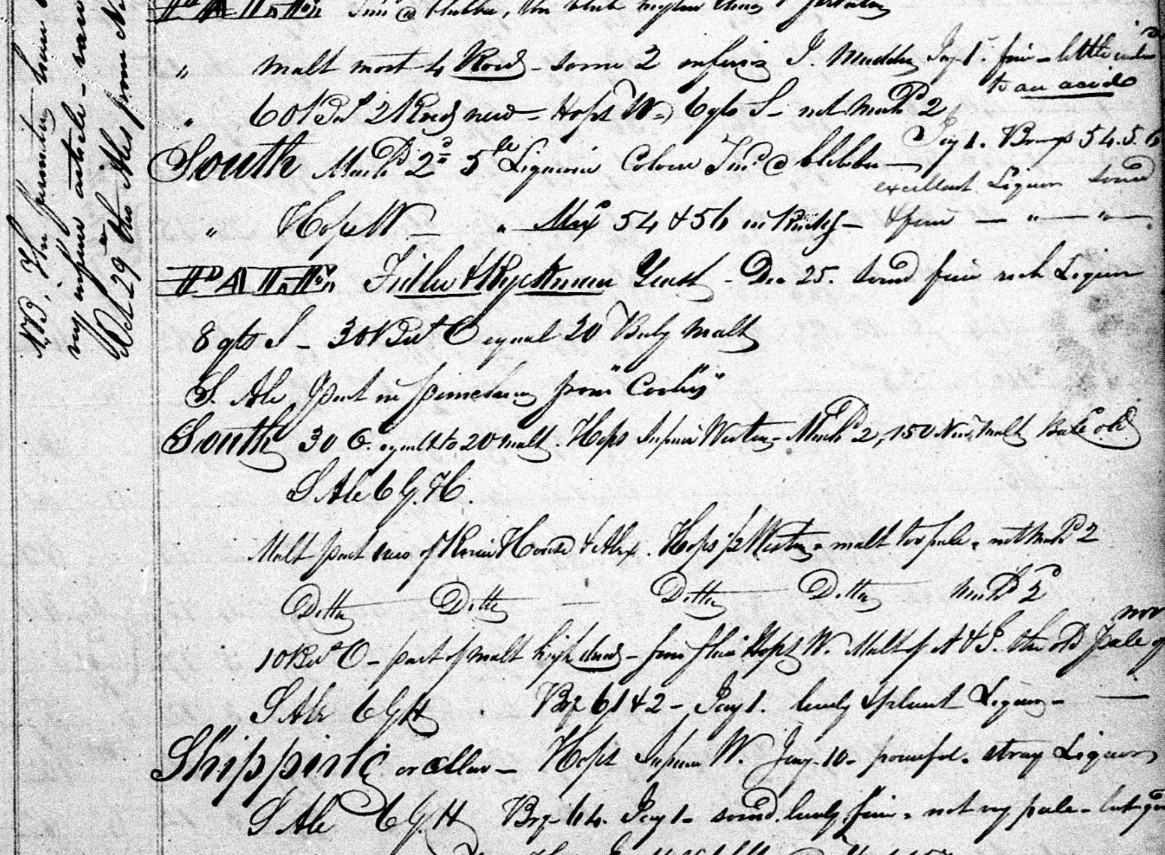
And Liam found a reference to India Pale Ale dated 1824 (proceeded by “West”) and set off a bit of speculation as to its meaning and implications. I would only add that Vassar in the 1830s referred to one of his ales as “South” as illustrated to the left – but I am quite sure he did not create something called Southern Ale.  Just as “style” is useless before it is defined and defined again by Jackson in the 1980s, the further you go back from that, the less meaning categories have. Ideas can’t flow backwards. I suspect that the predecessors to IPA, both eastern and western classes, were the English strong ales named after cities like Taunton and Dorchester and Derby, both evolving and branded according to given marketplace expectations.

It’s that time of the year. No, not just for Ron’s DrinkAlongAThon. The time for lists!! Best wines and Golden Pints. Here are the ten most read stories on Pellicle. Here’s Lisa’s. Alistair of Fuggles has been putting together his “best of” lists including best pales and best oranges to browns. I like the organizational decision he’s made, abandoning illusion for the actual. I suppose he could have gone with viscosity instead of colour. Perhaps in 2023! Jeff of Beervana has gone in another direction and provided us with his favourite photos for 2022. And the Beer Crunchers have jumped ahead with their US craft beer forecast for next year with some refreshing honesty:

Some brewery owners realized that the bigger they got, the more HR became part of the job, when they just wanted to focus on the beer itself. Other brewery owners turned out to be assholes and represented the HR-risk themself. Regardless of the reason, a significant number of breweries are for sale or have been sold in the past year. Some are of great value and truly worth every penny. Others are worth zero, or worse. Expect to see more interesting sales, depressing closures, and everything in between. You won’t be able to keep up and the action already underway.

Note: I had no idea this sort of thing was done:

In February 1961 Guinness paid the London brewer Watney Combe Reid £28,000 to discontinue Reid’s Stout. This was to secure the position of Guinness’s new nitro-keg product – it was clearly worried the Red Barrel keg beer brewer’s stout could be a rival to keg draught Guinness

Finally, Boak and Bailey added a new feature to their weekly which I am going to copy… literally cut and paste… then slowly build upon, too – a shared list of beer writing resources on Mastodon:

Al Reece AKA Velky Al | Fuggled
Alan McLeod | A Good Beer Blog (… me…)
Andreas Krennmair | Vienna beer and lager historian
Beer Ladies Podcast | Lisa Grimm and colleagues
Jay Brooks | Brookston Beer Bulletin
Joe Stange | Belgian beer expert, beer magazine editor
Laura Hadland | CAMRA historian and beer writer
Jon Abernathy | The Beer Site
Maureen Ogle | US Beer Historian
Lars Garshol | Norwegian Beer Historian and Kveik Hunter

Please let me know when you see more to add to the list. I’ll be back next week with my own “best of” post. Not sure if it will be on Thursday or Friday. There’s a long drive between now and then. And bird feeders to fill. Naps, too. May even need to check the lake temperature to see what’s what. You might not have a weekly update from Boak and Bailey as we usually see mostly every Saturday and also also perhaps not from Stan at his spot on Mondays. Still, check and see if there is the weekly and highly recommended Beer Ladies Podcast. The OCBG Podcast is on a very quiet schedule these days – but it was there last week!  See also sometimes, on a Friday, posts at The Fizz as well (Ed.: we are told ‘tis gone to 404 bloggy podcast heaven… gone to the 404 bloggy podcast farm to play with other puppies.) And the long standing Beervana podcast (Ed.: which I have missed from this list for some unknown reason.) There is the Boys Are From Märzen podcast too and check out the travel vids at Ontario’s own A Quick Beer. There is a monthly sort of round up at The Glass. (Ed.: that seems to be dead now… nope, there was a post on July 25th… in 2022 even.) There is more from DaftAboutCraft‘s podcast, too. And sign up for Katie’s (Ed.: now very) irregular newsletterThe Gulp, too. And check out the Atlantic Canada Beer Blog‘s weekly roundup. Still gearing  up, the recently revived All About Beer has introduced a podcast, too. (Ed.: give it a few weeks to settle in and not be as agreeable… not sure this went very far…) Plus follow the venerable Full Pint podcast. And the Craft Beer Channel this week on Youtube. Plus Fermentation Radio with Emma Inch. The AfroBeerChick podcast as well! And also look at Brewsround and Cabin Fever. And Ben has his own podcast, Beer and Badword (Ed.: …notice of revival of which has been given… still not on the radio dial…)  And remember BeerEdge, too, and The Moon Under Water. There was also the Beer O’clock Show but that’s now gone after a ten year run… no, it is back and here is the link!

*Funner if you pronounce it properly – “SinJinnyIn“!

These Are The Brief But Tersely To The Point Beery News Notes For This Week

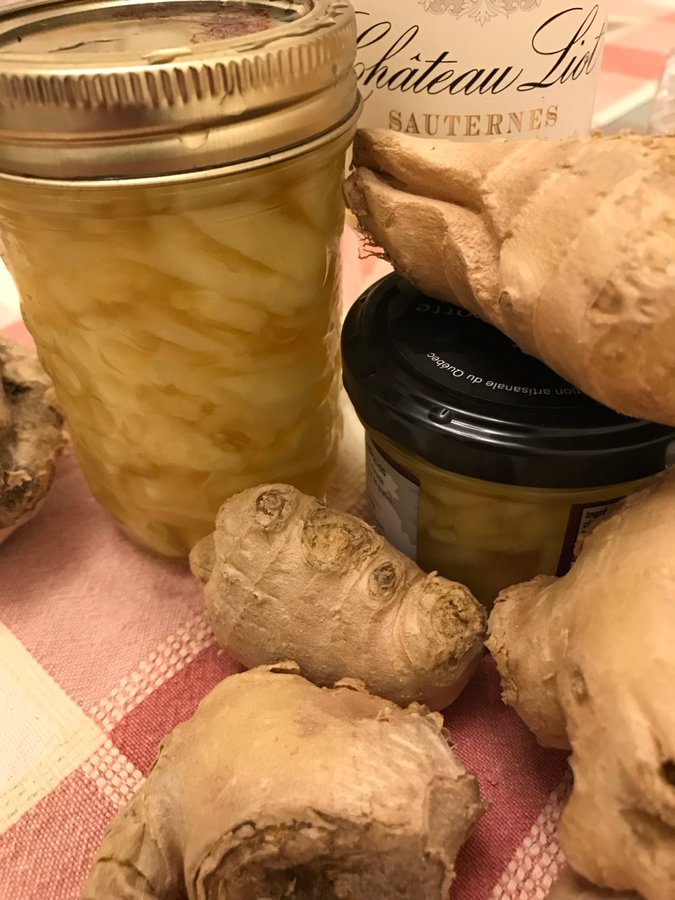
Mid-October. It is still pretty nice out there. Maples bursting with bright orange leaves around the neighbourhood. Still no frost in the forecast right up to the last days before November. It’s nutty. I have been more ant than grasshopper nonetheless and busily squirreling away preserved crops one way or another. Last night I was seen preserving ginger root in Sauternes. I have more to prepare and may do a batch soaked and submerged with bourbon. Not sure I would try this with beer… unless an imperial stout over 10% was nearby. That might be quite the tasty treat.

Back to the island, Boak and Bailey published a very impressionistic bit of writing about the experience of returning to hunting out beer in Germany after more than a decade. I say impressionistic primarily on the basis of the first word in the title of the bit is “impressions” so you can consider me a believer. And an exercise in an alternative approach it is very refreshing:*

A proper dodgy station, like all proper cities have, its plaza reeking of urine and scattered with beer bottles. Old hands rummaging in its bins, searching for treasure. Have fun in our city, the gateway says – have a drink or two, by all means – but don’t let it take you. Under the ring road, through the old city wall, and into a party on the move. Is it the last night of the year for a T-shirt, or the first for scarves and gloves? Wegbiers there and here. Döners here and there. Cream-coloured taxis nosing through crowds forced out into the street from hot bars with hot red lights.

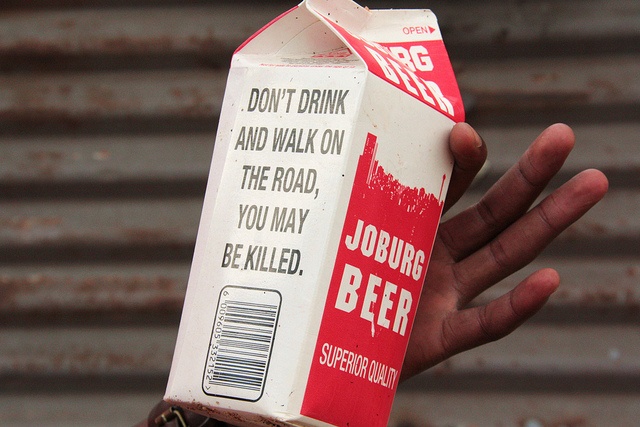
Elsewhere, Jenny P posted some interesting images this week of South African Chibuku, a sorghum beer made by SABMiller and its competitors which are sold in cartons – some of which have rather direct if not graphic health warnings. We used to get A+W root beer in those containers. When I were a lad…

Lars posted a response to the thoughts of Martyn on the use of beer as the alternative to toxic water in the medieval period. As it is impossible to prove a negative, I lean away from arguments which include statements such as “I suggest that is impossible” and so I find Lars has the slightly more compelling argument:

Sweden and Denmark are further to the south, and a completely different story. In both countries the norm was to brew new beer every time the barrel was empty. Beer literally was the everyday drink against thirst to the point that in Denmark the most common name for the weaker beer was “dagligøl” (daily beer), while in Sweden beer was just known as “dricka” (drink) or “svagdricka” (weak drink). It’s difficult for people today to accept this as fact, but nevertheless people really did drink beer all day every day (where they could). Here’s a quote from a Danish farmer describing his own upbringing: “People drank a lot of beer, and only beer. Nobody would think of drinking water or milk.”

I would point out a couple of things that also guide me. Martyn bases his argument on reliable stats related to English grain production from 1275 to 1324 and holds that:

…to supply every adult in the country with three and a half  pints of ale a day, the minimum to keep hydrated if you are not drinking water, would have required 83 per cent of the country’s entire grain production to be used for brewing.

This is a rational observation. But it fails to take into account that the less noticed lives of poor and country folk would have found their alcohol through fermentables which were (i) not those recorded for national stats and (ii) likely included or even relied on plants other than wheat, rye, barley and oats. We see, for example, plenty of past references to pea and bean malt. Consider this from the very Martyn himself in 2012. Consider also a brewer in my fair city just 207 years ago seeking a supply of peas.  If these are added to the national supply, that 83 percent may drop, maybe even by double digits… say to 66% hypothetically. Also, he argues that “if the average is only one pint a day, that accounts for only 19% of total grain production.” But what else is it supposed grain production would go to in them there days other than bread and ale? Add to that Lars’ argument that we should not forget the poor simply died young as they were destitute. Perhaps destitute of ale. And perhaps exactly because they were destitute of ale. All in all, the jury should still be out on this one.

Back to the present, Jeff concludes his thoughts on a trip to Norway, so praised by clever people like me last week, with more excellent observations but perhaps a few affirmations which may be a wee but perhaps understandable mistake. See if you can see it… hint:

When I started learning about beer more than four decades ago, I made a common American mistake. I assumed brewing traditions and beer styles were permanent and fixed. Finding a small farmhouse brewery in the verdant fields of Wallonia was akin to discovering a new species of otter. You understood it could evolve and probably did, over the decades and centuries, but like otters this process was so slow you couldn’t observe it happening in real time. (This is why the early style descriptions were so rigidly prescriptive.) But once you actually met the brewers making traditional styles, you were reminded that they were people, creative and smart. The idea that they didn’t have the skill and curiosity to experiment was laughable. The preservation of tradition came from a deeper, spookier place.

News from Smithville:

A downtown property owner is taking issue with the City of Smithville’s Beer Ordinance. Todd Cantrell, who owns a building at 119 West Market Street, said the ordinance, as it stands does not permit him to be granted a city beer permit because the location is within 400 feet of a church. The problem, according to Cantrell, is that the city has granted beer permits to others in the past which are in violation of the existing beer ordinance including as it relates to places of public gatherings. City Attorney Vester Parsley said he is unaware of any illegally issued permits under the existing beer ordinance, which has been on the books since 2004.

And Finns are drinking less beer:

…sales of beer containing alcohol fell by 3.6 million litres, or 4 percent, compared to the same quarter last year… Cider sales also fell during the summer months, by 0.4 million litres or 7.4 percent, while sales of long drinks rose by 0.3 million litres or 1.6 percent. Federation CEO described the drop in beer sales as “dramatic,” noting that sales during July to September fell by 70 million litres compared to 10 years ago.

Finns just want to be healthier. Is that so wrong?

Bad idea. Don’t care. Don’t like it. Like calling seagulls an important part of the french fry industry.

Good idea. Pete asked on Twitter what people want from beer writing… which is sort of the question I answer here for myself (and perhaps some of you) every week. A wider range of answers, some of which are exactly the opposite of what I look for. Which is good as there is no one answer. I like Boak and Bailey’s list but even that one is partial – in that it is all positive. Me, I’m just happy reading something that doesn’t strike me as geared primarily towards pleasing the one who wrote the cheque… or perhaps not deterring the one who will write the next cheque.**

Finally and on a very different scale, the other week I mentioned generally speaking how “discussion of any troubles in beer culture or the trade never turn to considering how alcohol soaked the whole thing is” and received an odd snippy response that people were about people writing about craft beer and individual alcoholism,  including at GBH. I clarified the difference between that and this, in case it needed clarifying. Interesting then that there is now a podcast at GBH confirming both in the text and in the interview audio that these posts are not to be taken as “a critique on the beer industry itself“… which is also really odd. Is connecting reasonably common alcoholism to the craft industry’s troubles – like sexism and other bigotries as well as questionable HR standards – something of an untouchable subject?***

There. Not to much heavy this week.  Smithville? City Attorney Vester Parsley?? Really??? As I get a grip, please check out the updates from Boak and Bailey hopefully now again mostly every Saturday and also from Stan more now on a Monday than almost ever! Check out the weekly Beer Ladies Podcast. The  OCBG Podcast is on a quieter schedule these days – and also sometimes, on a Friday, posts at The Fizz as well (Ed.: we are told ‘tis gone to 404 bloggy podcast heaven… gone to the 404 bloggy podcast farm to play with other puppies.) And the long standing Beervana podcast (Ed.: which I have missed from this list for some unknown reason.) Check out the travel vids at Ontario’s own A Quick Beer. There is a monthly sort of round up at The Glass. (Ed.: that seems to be dead now… nope, there was a post on July 25th… in 2022 even.) There is more from DaftAboutCraft‘s podcast, too. And sign up for Katie’s (Ed.: now very) irregular newsletterThe Gulp, too. And check out the Atlantic Canada Beer Blog‘s weekly roundup. Still gearing  up, the recently revived All About Beer has introduced a podcast, too. (Ed.: give it a few weeks to settle in and not be as agreeable… not sure this went very far…) Plus follow the venerable Full Pint podcast. And Fermentation Radio with Emma Inch. The AfroBeerChick podcast as well! And also look at Brewsround and Cabin Fever. And Ben has his own podcast, Beer and Badword (Ed.: …notice of revival of which has been given… still not on the radio dial…)  And remember BeerEdge, too, and The Moon Under Water. There was also the Beer O’clock Show but that’s now gone after a ten year run… no, it is back and here is the link!

*The subtext of an obvious sort being what when it is too regularly done it is tedious. We all can name names.
**See for example the very next paragraph!
***But it may have been “don’t worry, be happy and drink up!” week at GBH, so there is that. One must after all have an understanding of the bread and the butter and which side is which.

Your Frighteningly Well Researched Beery News Notes For Mid-October 2022

Wow. I even scared myself a little just putting this together this week. So much effort. So little point. And all the stuff on the cutting room floor. Whew. What’s that? Yes, summer has lingered, thanks for asking. The frosts have only brushed the yard as it turns out. The garden is still going on with plenty to still harvest. Still time for more cardoon mush. You know, you really aren’t a chef/gardener/drinks biz personality until you’ve made your own cardoon mush. And I’ve yet to even eat one of my first crop of salsify. Yet there is it, right by the front door.

Before we get going, an update on the comments I made last week about my hopes and dreams for a futuresque dreamscape of smooth brightly coloured plastics and chrome at BXLBeerFest in Brussels, The Beer Nut reporting. In his update he shared the scene, a bit of which is to your right, my left. Pallets. Wooden pallets held together with wire or tape or something. Really? Craft really needs to get into the modern world, that’s what I say. The world of plastics and chrome.
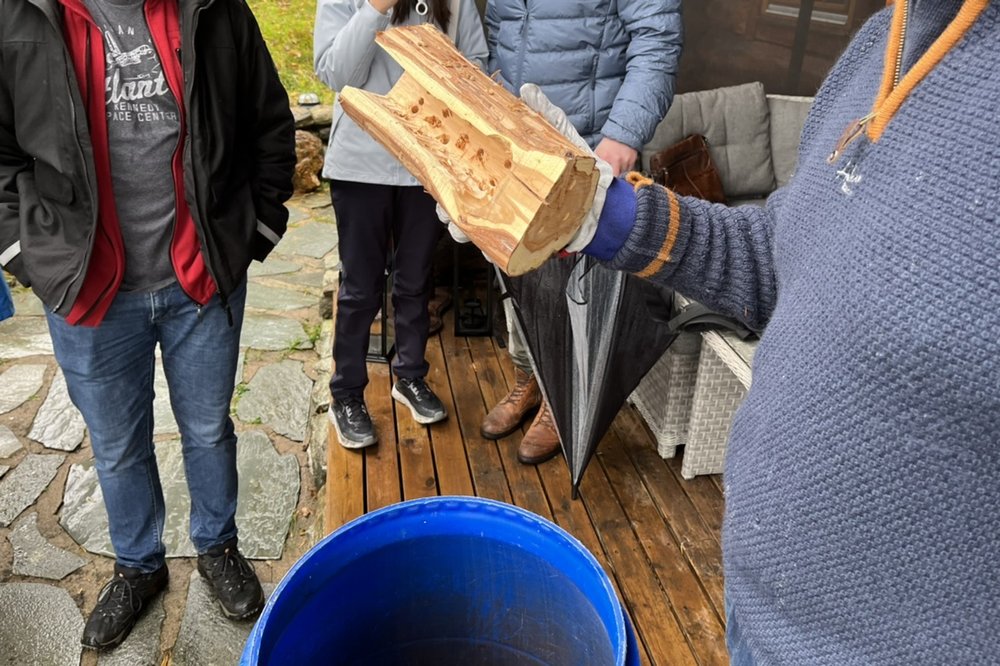
First up, Eoghan posted some serious thoughts about the point of all his beer writing efforts:

Do I want to continue writing about Brussels and beer? Is it still interesting for me? More importantly, is it still interesting for you? If I stop what I’ve been doing these past five years, what comes after? Do I stop altogether? Or do I try something different? But if I try something different and I fail, and fail utterly, then what? What happens then? Would I want to continue to write?  These might seem like mundane questions, a fixation on something – a blog – that ultimately has little intrinsic value. But that would be to do down the time and the energy I’ve put into my writing in the last five years, and I’ve done myself down enough in the past.

Lots have people have moved on so that is no shame in itself. Just see how many of the beery podcasts, newsletters and blogs listed below are dead or dying. But the idea that writing about a fixation has little intrinsic value needs serious quashing. It’s only in the writing that the fixation becomes of value. Exploring the weird thing that triggers the imagination is always worthwhile. This is the problem with the British Guild of Beer Writers and NAGBW shift from talking about “writing” to the thinly smug language of “reporting” and “journalism” over the last few years. Not only does it smack of needy niche (and also pretendy-ism… yes, I said it) it misses the fundamental point that most of this is obsession, not reportage. Write!

The UK’s Telegraph had a rather positive report on the best new low-beers and no-alc… which also led me to the concept of “Sober October” which seem to be a cheater pants copy of Dryuary:

I started Sober October four weeks early, for weight loss reasons after seeing my holiday snaps. I was doing quite well, but while watching TV I found that my right hand kept reaching over to the side-table where the beer should be. The ingrained habit of taking a swig of something cold and hoppy was proving impossible to break. So I let the hand have the beer it wanted – just without the alcohol. My hand couldn’t tell the difference and, surprisingly, my tastebuds couldn’t either.

I am still in the “I can’t be bothered paying that much for fancy soda pop” school but your mileage may differ.  Lots of solid recommendations for British readers.

Seems ‘Spoons may have weathered economic crisis just in time for the next economic crisis:

… the battered JD Wetherspoon share price already had so many dismal expectations priced in that the results themselves were a reminder of the business potential. After all, the company made an operating profit and generated free cash flow. After exceptional items, it also recorded a profit. I think the operating profit and free cash flow are a welcome sign that the business is rebuilding. It has faced and continues to experience considerable challenges, from energy inflation to staff availability. The fact it has turned an operating profit provides a foundation for improved results in future…

Speaking of the economic pressure on the pub, Pete Brown wrote a bit romantically for CNN’s American audience on the subject.

The folks behind the GABF might need that sort of explanation about British beer styles as apparently this year they balled a heck of a lot into one awards category, according to Alistair:

When GABF has a category called “English Mild or Bitter” it suddenly makes sense why Mild and Bitter don’t have a following in the US. Even the trade organization doesn’t give enough of a shit to understand that mild and bitter are wildly different beers… Also, with medals handed out for ESB as a separate category the grouping could easily have been “Bitter” and “Mild/Brown Ale”. There is little logic from a style perspective for lumping mild and non-extra special bitter together.

Seems rather muddied to me. Stan wrote about about seeing the awards from a seat at the ceremony and was more optimistic. As per usual and as is good. (Folk need to keep off my turf.*) Relatedly, here’s the winner of “The Most Craft Industry Style Observation Upon The Awarding of Craft Industry Awards” award… of all time… well, at least for this week:

Winning at GABF is a testament to the breweries who medal. It’s a huge honor and should be celebrated. At the same time, not winning at GABF is no way diminishes a brewery that entered. Ultimately it’s a crapshoot and a bunch of world class beers will be overlooked.

Emmie Harrison-West raises an interesting question about another far more serious aspect of fests in her very detailed article, one that’s really worthy of the space: “Have beer festivals become a hotbed for crimes against women?” 

For over 14 years, Harriet, who lives in Newcastle Upon Tyne, has been attending beer festivals. She says that this derogatory, sexist behaviour towards women and their bodies ‘has been “normal” culture’ for as long as she’s been attending them… reporting such instances of sexism and sexual harrassment at beer festivals was difficult, or that a process simply didn’t exist. That such behaviour and crimes against women had been ‘normalised’ to the extent that women simply accepted it, ignored it, and ‘didn’t make a big deal.’ 

It is good that this discussion is framed as a discussion of crime. Anything less is also a form of normalization.** The article also talks about concrete responses like London police’ Ask For Angela program and The Coven who advocate for women’s safety at events and attend as wellness officers launching the initiative at the Leeds International Beer Festival in September 2021.

Elsewhere, Ron has written about travel again with a focus my favorite character in beer pop culture… his wife Delores:

After bringing back her wine, I tell Dolores: “There’s one big advantage this place has: self-service drinks. None of that “singles only” for me here. It’s trebles all round.” “Don’t go crazy, Ronald.”*** “When have I ever?” “Hmmpfh” She makes that funny noise which somehow manages to convey contempt, pity, incredulity, scorn and a tiny hint of amusement.

And speaking of travel, Jeff gathered up his nickels and bought a ticket to Norway for KviekFest22!**** Now, I am not one of those who usually will comment upon a drive-by bit of beer writing by a stranger in a strange land but – I have to tell you Jeff did one of the most cleverest things I ever did see… he turned a beer porn photo op into a anthropological guide to making farmhouse ale – with photographs and “fig. 1” style descriptions and everything, like this:

As the water heats, the brewer prepares the mash tun. In the actual event, we used a more sophisticated steel tun with a metal strainer, but typically Stig would use a plastic tun (in the old days they were wooden) he’d prepare with a filter log and juniper boughs. (Even with the steel mash tun, he packed it with juniper.)

1. The log has a trough in the bottom and holes throughout.
2. Stig places the open end next to the faucet and then,
3 and 4., he packs juniper boughs around the log for finer filtration.

I love that the guys name was Stig.***** That photo up there? That’s the log. (More like a junk of wood to me. Logs big. But who am I to take away from the spotlight of this excellent piece of information sharing that means more to anyone and everyone than anything journalissimo submitted for crude pay?)

Speaking of being away, there was a lovely bit of exploration shared by Kieran Haslett-Moore about the times to be had in New Zealand:

I breakfast at a vibrant bakery that also does café service. A dome of scrambled eggs, sausage patty, confit mushrooms and glazed ham all spiked with Szechuan crispy chilli oil. A family dressed like it’s 1983 walk along Lower Stuart Street. They are animatedly discussing the city’s wifi service. They head into one of the city’s ‘Scottish shops’ .

Finally, a lovely piece of long writing at the BBC about Nathalie Quatrehomme and her family line of Parisian cheesemongers:

“We make lovely Maroilles washed in beer,” she said. “And we do lovely Langres in Champagne.” And aging isn’t the only way the siblings add a touch of personality to their cheeses. “In addition to being agers, we transform cheeses,” explained Nathalie, evoking a handful of offerings familiar to regulars of Parisian fromageries: Brie with truffle; Camembert dunked in Calvados and rolled in breadcrumbs. Others in the shop, however, are unique creations. Fourme d’Ambert is stuffed with a sweet fig and walnut paste to counterbalance the funk of the blue. A Camembert mendiant (beggar) is covered in jam, nuts, dried fruit and a touch of dark chocolate.

Yum. I must be hungry. Must go eat cheese. As I do, please check out the updates from Boak and Bailey mostly every Saturday and also from Stan more now on a Monday than almost ever! Check out the weekly Beer Ladies Podcast, and at the  OCBG Podcast which is on a quieter schedule these days – and also sometimes, on a Friday, posts at The Fizz as well (Ed.: we are told ‘tis gone to 404 bloggy podcast heaven… gone to the 404 bloggy podcast farm to play with other puppies.) And the long standing Beervana podcast (Ed.: which I have missed from this list for some unknown reason.) Check out the travel vids at Ontario’s own A Quick Beer. There is a monthly sort of round up at The Glass. (Ed.: that seems to be dead now… nope, there was a post on July 25th… in 2022 even.) There is more from DaftAboutCraft‘s podcast, too. And sign up for Katie’s (Ed.: now very) irregular newsletterThe Gulp, too. And check out the Atlantic Canada Beer Blog‘s weekly roundup. Still gearing  up, the recently revived All About Beer has introduced a podcast, too. (Ed.: give it a few weeks to settle in and not be as agreeable… not sure this went very far…) Plus follow the venerable Full Pint podcast. And Fermentation Radio with Emma Inch. The AfroBeerChick podcast as well! And also look at Brewsround and Cabin Fever. And Ben has his own podcast, Beer and Badword (Ed.: …notice of revival of which has been given… still not on the radio dial…)  And remember BeerEdge, too, and The Moon Under Water. There was also the Beer O’clock Show but that’s now gone after a ten year run.

*Funny joke. Ha ha. Not saying anything else.
**Seems to be a common saying in the household.
***Which is why I found the Mikkellerreconciliation” thing so weird, dissuading people with claims from the law.
****No, you’re right – but it SHOULD be the name!!
*****Presenter: Another man who had his head nailed to the floor was Stig O’ Tracy.

Your Mid-May 2022 Thursday Beery News Notes

Chores. Garden chores. The pruned willow is just about casting enough shade for its six month tour of duty, leaning over me as I sit and sweat and drink a beer. And, about thirty feet away, I built a nice small patch of salad-y things this week radishes, red and green lettuce. Stuff getting done. That’s something, quite a something. For a place that had three frosts under two weeks ago. Then I remembered I have rabbits. Not mine. The wild bunnies of the neighbourhood. So… now I need to box in the patches with walls and a cage top. Perhaps a hinge top will be introduced. Not having chicken wire dig into your neck once the top slips as you gather in the harvest? That’s innovative. Innovation born of not thinking something through fully in the first place. That’s my style.

Beer news? Beer news! It’s a big week this week. First up, the Craft Brewers Conference 2022 ended up having a couple of note worthy twists this week: a fine beer got runner up to the runner up where the runners up don’t actually exist aaaaannnnnnnnd… it was a Covid-19 super spreader event. There’s not much you can say as not one saw it coming… except Robin:

So uh…everyone at cbc just not wearing masks huh…

Not hard at all, doing the right thing. And if that wasn’t enough, plenty of folk wrote have thoughts about the #1 third place for an American classic. Andres wrote the thread o’the week on process. We also got juries of beer fans standing up to snarkily defend the indefensible verdict… the “not credible“*… because “they’re all world class experts of course“… which I take to be a dig but it might not be a dig. AJT added a useful note:

Reminds me of the story that John Keeling tells about when he was at Fullers and judging in the US – their ESB was knocked out of the ESB category for being out of style…

In longer form, we had omni-directional finger wags from Jerard Fagerberg and… my pal Lew who may want to recognize the third possibility:

But as I say to people who complain about the Electoral College, if you don’t like the way the rules are, work to change them. If you’re a brewer who thinks that every medal in every category should always be awarded, because we’ve reached the point as an industry where common levels of excellence are understood and achieved – or, hell, just because – then get organized, find other brewers who feel the same way, and get the rules changed. Or don’t. But if you don’t agree with it, and you don’t do anything about it, you’re just going to be pissed when it happens again. Savvy? Now get out there and brew, or drink, and stop worrying about this. There are a lot more important things, even in beer.

GET OFF HIS LAWN!!! Note: Electoral College references are akin to Godwin’s Law. And that third possibility? For me, be like most people and realize these events are just low level oddly structured fun that are focused on brand promotion. No one loses an eye. Competitions are just a nice side-hobby in the beer world.

On a point much further along the parabolic niceness scale, Lily had her essay on a possibly perfect pub published in Pellicle this week, the story of the Salutation Inn of Ham, Gloucestershire which comes with a few extras:

The pub is welcoming and homely, with low ceilings, pew-like wooden benches, and a fireplace lending welcome warmth to the pub’s two front rooms in winter. The bar is lined with taps and hand pulls pouring beer and cider from across the South West—including the pub’s own brewery adjoining at the rear—as well as the trusty and ubiquitous Guinness… The walled garden which houses the pigs is dotted with apple and pear trees, and the odd damson. The pigs, raucous and rambunctious as we step through the door in the elderly wall, are fed on a mix of apples, cheese curds, and occasionally pellets. Once the private garden of the Berkeley estate manager (the castle’s estate covers 6,000 acres across the local area), it is shown on early 19th Century maps surrounded by orchard after orchard—a cider history now long gone. 

Traveling much farther, Jeff made a flash visit to Norway which I worried was was going to be a bit of a drive-by so it was comforting to see the both Lars and Knut gave it the thumbs up. Still… it was a bit of an American abroad with the experience being too much or too little like the USA:

… you might mistake it for a pub in Ohio. Lots of hazies and other IPAs, some barrel-aged stouts, assorted pales. They even have Guinness … Those styles drive the same kind of drinkers in the US, but the difference is that in America they are dwarfed by the number of “regular” craft drinkers… We go through different developmental stages, and the first one is imitation. Norway has yet to find what they like on their own terms. I expected farmhouse brewing and especially kveik to be quite visible, yet it’s not. In fact, when people at the beer fest asked me about my plans for Norway and I mentioned Voss, 80% of them had never heard of the farmhouse tradition there… On the other hand, I’ve been impressed with the beer in general.

Ah, that old assumption that a land matches one’s expectations. Man is indeed the measure of all things. I’ll still probably just stick with Knut’s or Lars’ take on their own homeland. Local knowledge. As Stonch wrote of Prague this very week:

Over the years I have benefitted enormously from the writing of Evan and also Max @Pivnifilosof. Evan also once helped me and my mate Dave get tram tickets when we were too drunk to put the coins in the machine

Elsewhere, the problem of payment came up in a discussion at Boak and Bailey’s over the weekend and I clued into something that had not crystalized within my brain bucket before. I was led to a thought only after I wrote this:

…inventive creative writing sure has taken a hit in the good beer world. Payment has never amounted to quality in my mind, often the opposite. Yet it’s becoming more and more the case that it’s either paid for writing that’s pleasant enough or bits and bob that never seem to get enough time to be properly fleshed out. I can’t say I’m ever comfortable, for example, with histories published and paid for by the word – but who even has the time to put in a proper effort as the amateur’s act of obsession? Retirees, that’s who. They seem to be holding up their end of the bargain.

I then thought “why did I write that?” I did so for two reasons. First, I am always reluctant to be disagreeable especially (honestly… not tugging at a dangling thread) with B+B and, second, I wondered whether it was even true.  But it is if you look at it this way. Writing for pay puts a meter on the writing. You will get X amount per word or a flat rate but the reality is that you really are putting yourself on a clock. Based on what you are worth per hour rather than whether the writing is any good. Leading to conserving resources, measuring time as well as money. And deadlines.

Screw that. When I was young and fancy free before a few years back, I had all the time in the world to swan about researching obscure stuff about brewing. Not so much given an uptick in very interesting but very demanding work related matters.  Hence Martyn and Martin and Gary and Ron and the Tand and any number of others of the golden handshake who are able to research and scribble with a bit more leisure. Interestingly, the abovementioned Lars has written honestly this week about the other side of the coin, my path not taken a decade and a half ago:

I worked hard to set up talks back in September and October and had one month of good income with from that, before covid stopped it all. So now I need to try to restart that, but without spending so much time on it that I miss my book deadline. I got a deal writing articles for Craft Beer & Brewing magazine, which has also helped. The long and the short of it, however, is that less than a year into this I’ve had to start dipping into my savings, and it’s not a great feeling. So while I will keep doing all of the above to produce some money it looks like it won’t be enough.

Lars then shared an interest in readership support. Go read and contribute if you can. I have written it before but it repeats saying: I have every sympathy for someone who has decided to write about beer. For all the money in beer there is very little money in writing about beer, however interesting the topic.

Which leads to a few things. Like the issues of scope creep and expertise extrapolation. Sure, multiple skilled interests are possible – Dave Sun Lee is but one example – but the good folk who are committed to writing for cash have to go out further upon the waters with nets and lines. They give us stories not about beer but about other alcoholic beverages – about boozy seltzers and things claiming to be non-alcoholic beer even though both are so often laced with fruity gaks that defeat any commonality with brewed malt and hops. Where does it lead other than the inevitable high priced craft NA still unflavoured seltzers?!? Tottering towards international economic collapse, that’s where!!! Consider this behind the The Chicago Trib’s paywall, summarized by author Josh Noel this way:

Goose Island is taking Bourbon County into the world of pricey NFTs ($499 each!).

We really need to know no more. Could you imaging chucking away your pay that way? Pet Rocks taught me enough about that sort of thing in elementary school coming up on 50 years ago… though it did allow me the opportunity to post “Sucker juice layered upon the sucker juice!” There. Dots connected. Thanks for walking this path with me. BTW: Josh Noel is just wrong this time:

After digging in, I can see the future where NFTs play a role connecting brands and customers. Especially in beer, where the bond can be strong.

More sensibly, Gary indexed his recent posts on colonial English pubs in India. Excellent.

Finally, what to think about GBH apparently crossing a line and pulling an article about a legal process?***  While it is entirely healthy to be dubious of craft breweries and their ways, a few grabs on social media about the article prior to its removal may help explain why a reasonable cease and desist letter was sent. Consider this:

“[BrewDog CEO/cofounder James] Watt may have tried to uncover this alleged plot by paying a former romantic partner nearly £100,000 ($125,000 USD) in Bitcoin to gather information on ex-BrewDog staff and others who have been critical of him.”

… and this:

“Documents and interviews suggest Watt paid her to help him uncover information about his critics” and “The woman says she did not defraud or harass Watt, and that she does not believe former BrewDog employees are plotting against him. Her lawyers say she will “robustly” defend herself against these allegations” and “Three women who had contact with Ziem say they did not believe her to be part of a plot to take down Watt, and say they suspected Watt was using Ziem to gather information on them.

Contempt of court. It happens. It basically means you are contemptuous of the judicial process. Usually it is raised when someone won’t respect a warrant demanding their attendance but it can also mean that you are not letting the court do its job of fact finding, that you are interfering with the process. You can see how speculation and allegation become restated as fact. I see it now as I did when I saw the story’s brief appearance:

Speculative review of partially obtained evidence to be framed under the unique system of Scots uncodified civil law! Amazing pluck. Plus “… Watt may have tried to uncover this alleged plot by paying…” and “…people he sees as his enemies…” Impugning skullduggery? Heavens!

I was more thinking that there would be a form of libel suit under Scottish civil law due to the assertions of fact exemplified above but The Beer Nut guided me to the other process, the contempt under English proceedings pursuant to a UK statute.  Statutory contempt seems to require consideration of whether there is a lack of good faith, if we have “fair and accurate report of legal proceedings held in public” and whether “the risk of impediment or prejudice to particular legal proceedings is merely incidental”… all of which only a judge would determine. Only an actual judge. Lessons hopefully learned.

There. So serious this week. For more, check out the updates from Boak and Bailey mostly every Saturday and from Stan every Monday except last Monday and next Monday, plus more with the weekly Beer Ladies Podcast, and at the weekly OCBG Podcast on Tuesday and sometimes on a Friday posts at The Fizz as well. There is a monthly sort of round up at The Glass. (Ed.: that seems to be dead now.) There is more from DaftAboutCraft‘s podcast, too. And the Beervana podcast. And sign up for Katie’s irregular newsletterThe Gulp, too. And check out the Atlantic Canada Beer Blog‘s weekly roundup. Plus follow the venerable Full Pint podcast. And Fermentation Radio with Emma Inch. The AfroBeerChick podcast as well! And also look at Brewsround and Cabin Fever. And Ben has his own podcast, Beer and Badword (Ed.: …notice of revival of which has been given)  And remember BeerEdge, too, and The Moon Under Water.

*To quote my favourite source, me: “And how can you have a mythical standard second place beer? It not only represents something not present but superior while also being inferior to another not present beer. Both of which (not being present) are not contemporaneously experienced, just somehow recalled.”
**Question: While we are at it… why do we rightly (example) qualify one beer publication as “Ferment, the promo magazine of a beer subscription service” when GBH is rarely mentioned as the promo magazine of a beer consultancy service? Both publish very interesting pieces and both aren’t really “reader supported” but actually subsidized by the non-publication side of the business for, logic dictates, non-publication side of the business reasons?
***And not even related to this continuing weirdness.

The Thursday Beery News Notes For The First Of April

Here we are. Real spring. No more frozen nights on the forecast. Brussels sprout seeds are in some soil.  The cardoons are up. Cardoons? Yup, cardoons. Four foot tall edible thistles, a Victorian veg. Harry Dobson would be proud. Still rather insulated from the exterior world by my convalescent state but I am assured things are progressing as they should. It was April Fool’s Day last Friday. Best beery April Fools? This is my candidate. Silly but also somewhat restrained. What people might have actually asked about having once in a while, as a joke… as a… what… treat? A good brand making fun of itself. That’s a good thing, making fun. Like this! Fun!

Now, enough of that. Time to get serious. First up, care of Merryn, we learn that the BBC has reported on a Roman brewing site found in England, with speculation that it was actually only a malting with suggestions of a rather complex brewing industry:

Archaeologists have identified evidence of 2,000-year-old beer production at a site of a road improvement scheme. The remains of a Roman malting oven and charred spelt grains were found during digging in Bedfordshire, as part of the proposed work on the A428 between the Black Cat roundabout and Caxton Gibbet. Experts have analysed the grains and said they suggested people who lived there were involved in making beer…”As large quantities of grains are only allowed to germinate when the aim is to produce malt – the first step in the brewing process – this strongly suggests the people living at the settlement were involved in beer production,” a Mola spokesperson said.

Some serious neato going on there. Also neato? A map! This is an interesting info graphic. Who asks this question? I suppose health professionals. Utah makes sense but look at the dividing line between West Virginia and Pennsylvania. The Florida panhandle and Alabama. Why? I have not idea. I am Canadian.

Pellicle posted one of the best articles it has ever had its hands on this week, a tale of tall ales titled “I Want To See Mountains Again — The Banked Beers of Teesside, North East England” by Reece Hugill:

Half-full glasses are pulled from the bar-back fridge, topped up feverishly from the hand-pull. Placed in front of me are two ridiculous looking pints of ruby-red cask beer. Foam cartoonishly mounded a full four inches higher than the brim of the glass. Wobbling and bubbling, alpine peaks and whips of pure white…

…The pints of Bass at the Sun Inn are magic. It’s a beer I usually don’t even like, but when banked, the beer seems to change a tiny bit. The fluffy head brings out a little more bitterness, the body is mellowed into something less vaguely malty and brown, into something soft and clean, like, perhaps, an unusual dunkel lager…

Excellent. You could do this with an Olands Ex back in college but it was a matter of pouring the bottle yourself.

Lars posted a really good thread about Christmas “sugar beer” for children in Norway including this fabulous if fairly frightening fact:

This newspaper article is quite illustrative. Headline: “The favourite beer of the kids.” They use 3kg sugar for 20l + 1/2 cup of malt extract. If you ferment it out fully that’s 8% ABV. No wonder “the kids prefer this to any soft drink.” Prob not 100% fermented, but still.

Question: is this a new technique? Holding some of the dry malt in a dry aromatic barrel?

In the increasingly vibrant world of beer related litigation, we have (care of Mike Kanach, Esq.) learned on one Mr. Parshall “who does business as Sports Beer Brewing Co. that is operated through a website” – court said this about his business:

Parshall is required to transfer to the university all Internet domain names containing a portion or derivative of Penn State’s marks. He also is to transfer sportsbeerbrewing.com so it ceases operation. The injunction prevents Parshall from engaging in any conduct that would cause consumers to erroneously believe his goods and services are authorized, licensed or affiliated with Penn State.

That is just weird. Took a university’s IP and put it on a beer can. In 2017 he did the same thing with Purdue and another judge did pretty much the same thing. Self-represented. Weird.

Not as weird, Stone now seeks a permanent injunction despite the Keystone brand lords announcing a remake after five years. With any luck they’ll find a new way to jerk Stone around. And mid-weird, the little and large tale of BrewDog and the not quite hired consultant* continues and even made The Times of London. This passage neatly captures the two aspects which have confused me:

Allan Leighton, BrewDog’s chairman and the former boss of Asda, has accused Hand & Heart of “amplifying attacks” on its management team and has declined to take part in a proposed reconciliation programme. In a letter to Kate Bailey, Hand & Heart’s managing director, Leighton said he was concerned about a platform that had been set up for BrewDog workers, claiming it was “encouraging participants to submit malicious content . . . The unavoidable impression is that of H&H charging the company to extinguish a fire it is fuelling itself.”

On the other hand, BrewDog apparently continued to shoot itself in the foot without the assistance of others, rolling out a quote from the consultant that they did actually hire… only for that consultant to point out they never said any such thing. Weird.

This was a fabulous find as posted on Twitter by Mr. S. Smith, a mint 1960s form to fill out and pass over the counter at a Brewers Retail store in Ontario. A buck twenty eight for a dink pack.  Until 1969, you had to give your name and an address to get your beer. Presumably you filled out the last line by hand if you were buying quarts. Crain Business Systems must have made a killing on this contract seeing as this was the only way in Canada’s biggest province to buy beer outside of a sit down establishment.

Finally but fabulously, Beth published her latest edition of Prohibitchin’ (sign up here) and featuring (i) Ashley Johnson and Jasmine Mason bringing cider to Philadelphia along with first (i) this bit of local slang they had adopted in their business’s name – The Cider Jawns:

“Jawn” /jôn/: Philadelphia slang that’s used as an all-purpose substitute for literally anything—a singular or plural person, place, thing, or event that can’t be specifically described…

Jasmine and Ashley are having the time of their jawns. Or is it the jawn of their lives? …“We looked around and a lot of the attendees were women, but there weren’t a lot of women of color as vendors,” explains Jasmine. Ashley agrees, noting that while there wasn’t much diversity in vendors, there were plenty of Black women and other women of color enjoying themselves as attendees. The discrepancy spurred them to action. “We were inspired to take something we enjoyed and bring representation of women of color to the hard cider and brewing industries,” says Ashley. They launched their Cider Jawns Instagram shortly after to “share our cider journey and take our community along for the ride,” she says.

There. Blame all the errors on the meds. For more, checking out the updates from Boak and Bailey mostly every Saturday and from Stan every Monday, plus more with the weekly Beer Ladies Podcast, and at the weekly OCBG Podcast on Tuesday and sometimes on a Friday posts at The Fizz as well. There is a monthly sort of round up at The Glass. (Ed.: that seems to be dead now.) There is more from DaftAboutCraft‘s podcast, too. And the Beervana podcast. And sign up for Katie’s irregular newsletterThe Gulp, too. And check out the Atlantic Canada Beer Blog‘s weekly roundup. Plus follow the venerable Full Pint podcast. And Fermentation Radio with Emma Inch. The AfroBeerChick podcast as well! And also look at Brewsround and Cabin Fever. And Ben has his own podcast, Beer and Badword (Ed.: …notice of revival of which has been given)  And remember BeerEdge, too, and The Moon Under Water.

*Example: I don’t have a clue what this means. Or this.

Your Mid-February 2022 Edition Of The Beery News Notes And That Odd Problem With Rice

What a week! A trip to the dentist and the Federal imposition of the Emergency Measures Act!! It could drive one to drink. Except I haven’t. Had a couple of really good beers on Saturday, though. Stone City’s Ships In The Night. Oatmeal stout is rarely not a good call. But I have acquired my protest gear as illustrated, should any protests come my way. One must be prepared.

What else? Super Bowl. Stupor Bowl. Superb Owl. It also happened this week. Unlike much of the continent, me I had not one beer. I paid little attention to the game itself on TV which ended up as a bit of a yawner even with the close final score. But would it be better live? Well. it’s not exactly for the snack bracket me and my peeps, is it?

…a double measure of Don Julio, Ciroc or Tanqueray 10 would set punters back US$25. Meanwhile, the craft beer selections clocked in at $19, which would get drinkers a serve of Kona, Golden Road Mango Cart or Elysian Space Dust. The premium beer serve was Michelob Ultra, which was priced at $17. And it’s fair to say that fans were taken aback by the prices.

More breweries closed this week. As Jeff reported, Hair of the Dog and Modern Times -both of the US West Coast wound down in whole or in part. The latter announced it this way:

Today is the most difficult day we’ve ever had at Modern Times. Over the last two unimaginably challenging pandemic years, we’ve done everything we could to keep all of our newly-opened locations afloat in a landscape we never could have imagined when we began building them. As new leadership has stepped up and taken the helm over the last few weeks, it became clear that the financial state of the company that we are now tasked with directing is not just unsustainable, but in immediate and unavoidable peril

Hair of the Dog is/was one of the greats that never had dreams of delivery fleets and HR departments. Retirement is well earned. I put the last cardboard box from the fabulous HOTD misadventure of 2006 out with the recycling just last Sunday.

Elsewhere, building on the momentum to challenge the ethics within Ontario’s brewing industry led by Erin Broadfoot,  Mallory Jones the brewer and co-owner of my beloved Matron Fine Beer in nearby Prince Edward County on behalf of herself and fellow brewer and co-owner Jessica Nettleton, shared experiences of their lives in beer, starting with this remarkably concise statement:

Behind the ‘good times and camaraderie’ there is a dark underbelly, a booze-fuelled side, a sexist and skewed patriarchal side, a side that desperately needs to change.

Note in particular this statement: “…beer events often (read: all of them) result in over consumption which always equals disgusting behaviour from a wide variety of individuals on both sides of the bar…” It boggles the mind how it took so long for such obvious and open behaviours to be simply and plainly stated after years of the trade and trade writers telling us how it’s all one community and craft beer people are good people. I am very careful who I buy from now as well as whose word I take.

There was a great short video of a Polish railway standup tavern car on Twitter this week. One of my favourite memories of working in Northern Poland thirty years ago was the the Polish railway standup tavern car from Kołobrzeg to Gdansk. The good old PKP (“puh-ka-puh”). There is even “fruit syrup for beer” now.

Over in India, the government has taken a very sensible approach to the healthier regulation of the beer market that would be a great first step towards the listing of ingredients:

The Food Safety and Standards Authority of India (FSSAI) will soon come out with fresh regulations for two important everyday consumption items – bread and beer. Beer brands will have to disclose the calorie count per bottle or can while bread makers will be allowed to label products as ‘multigrain’, ‘whole wheat’, and ‘brown’ bread only if the items have specified amount of multigrain or whole wheat in them, FSSAI CEO Arun Singhal said.

There will be boo-hooing from the please-do-nothing crowd but calculation of beer calories is a reasonably straight forward matter. The only problem is how surprised the beer buying public might be.

Everyone one loves a story about a truck load of beer crashing across the roadway. I think only a load of fish thrown upon the hot asphalt is considered more remarkable but that’s because of the gross immediate squishy slippy driving conditions.

Martin wrote this week about the experience at a little investigate site of beer imbibations – a fitba corporate hospitality suite  – and found it… a bit sad:

£6.50 your pie and mash and peas from memory, and beer not much above Northern Quarter prices (double Kelham prices, of course). This is the cheaper end of the hospitality market, giving you a nice seat with your pre-match pie and pint, and seems to be a treat for the old fellas and the well-off bloke dragging his girlfriend to the match. And then you walk from the social club style bar to your padded seat and get distracted by Caitlin Jenner and goal flashes from Blackburn.

He then had a bit cheerier but also reflective experience with his Pa, down at the Plough & Fleece:

Across the road, we could see the nondescript cafe at Scotsdale Garden Centre busy as usual. The coffee and cake at the garden centre has long replace fish and chips and a pint at the pub, even though the pub is often cheaper and always the more homely option.

Lars as usual used social media to the fullest this week to discuss the role of alder wood as a filtering tool in Norwegian farmhouse brewing undertaking both hallmark mapping excellence and scientific journal review enroute:

I found a modern scientific paper which extracted substances from alder bark that they found to be antibacterial. Unfortunately, they were also antifungal and very effective against yeast, so clearly the concentration in beer isn’t enough to have an effect.

Q: has beer historian Amy Mittelman returned to beer blogging?

And just before the long last topic,  this week we received the sad news of the death of one of the leaders in the early years of the UK’s craft beer movement of 12-15 years ago. Dave Bailey was the owner of the Hardknott Brewery which was founded in 2006 and closed in 2018. He was sought out and sought out others who were thinking about beer, like we see in 2009. Alistair at Fuggled interviewed him in 2010. Dave’s brewery was as well known and certain as central to the scene as BrewDog in those years. He was only in his mid-50s when he passed. Dave was a great friend to those interested in discussing good beer and was a regular chatting in social media. My earliest Twitter chats go back to 2009. He kept an excellent beer blog that gave the straight story about life as a small scale brewer like when in 2017 he shared painful business realities connected to the question of how far to capitalize his venture. He had announced in 2020 that he was living with cancer. Very sad news of the loss of a pioneer. Thoughts are with his partner in life and business, Ann.

Finally, there was a bit of faff over the weekend about something claimed to be “Japanese Pilsner” which was neatly summed up by Jenny Pfäfflin this way:

Anyway, brewers using rice in their beer =\= a “Japanese Lager”—it’s a made-up style in that sense—but I don’t think you can write off the possibility there are distinct ingredients and processes that make Japanese-made rice lagers a style of its own…

I called it a fiction and some poor widdle cwafters went a bit boo-hoo. But were they right? It is always important to understand you may be 100% wrong 100% of the time. So let’s see.

First, the thing is even with that narrowing of focus that Ms. Pfäfflin recommends, we have to consider how late brewing beer came to Japan as well as how rice came to be in beer. Until around the time of the US Civil War in the mid-1860s, Japan was governed under a feudal system which had a strict cultural and economic isolationist policy that the western powers were actively seeking to break down. Breweries founded in the ensuing Meiji period were European and even American affairs. As I mentioned last November, the Spring Valley Brewery, founded in Yokohama in 1869 by Norwegian-American brewer, William Copeland. That brewery later becomes the Japan Beer Brewery Company and then Kirin. In line with the new general national policy of opening up to industrialization, what is now Sapporo was founded by what looks like a government agency, the Hokkaido Development Commission which hired Seibei Nakagawa, a Germany-trained brewer, as its first brewmaster in June 1876. Sapporo still brews Yebisu a Dortmunder/export lager, and Yebisu Black, a dark lager which were  first brewed in Tokyo in 1890 by the Japan Beer Brewery Company. These breweries were brewing German beers. As the CEO of Kirin Brewery, Kato Kazuyasu, in 2011 stated:

The Japan Brewery Company shared its primary objective of brewing authentic German beer. Veteran German brewmasters were recruited and the most advanced equipment and steaming systems of the time were acquired, all under the mantra of providing Japanese consumers with the most authentic quality and satisfying taste possible…

Now… consider Japan’s next few decades. Expansionist military imperial government leading through the Russo-Japanese War of 1904-05 through to the end of WWII. European influence continued in partnership with government industrialization policy as described in the 2014 article “Structural Advantage and the Origins of the Japanese Beer Industry, 1869-1918” by Jeffery W. Alexander*:

Like Kirin Beer, the firm that we know today as Sapporo Breweries Ltd. underwent a rather complex evolution – one that would take twice as long to unfold and would involve four unique phases through 1949. The first three of those phases are of interest to us here, for between its founding as a government-directed and development project in 1876, its reestablishment by private investors as a limited company in 1888, and its merger with two major rival brewers in 1906, the brewery received extensive technical assistance from a variety of foreign experts.

Through this merger, the Dai Nippon (Greater Japan) Beer Company, Inc. was created on 26 March 1906. It was only broken up in 1949 as the Allied Occupation forces sought to reverse the imperial policy of concentrated economic power. And, as Alexander states, beer in Japan “was brewed, advertised, and sold in Japan as a proudly German-styled commodity into the late 1930s.

After WW2, the United States occupied Japan from 1945 to 1952. There was an economic boom starting in 1950 due to the UN using Japan as it base for the Korean War. Starting at this time, breweries like the smaller Orion shifted from German style brewing to beers which more reflected American tastes. Not much of a vernacular brewing tradition to this point. For the next few decades that consolidated industrial approach continued as a handful of macro industrial brewing supplied the market (as Alexander states elsewhere**) “until Japan’s government decided in 1994 to again permit small-scale brewing.” Kirin held over 60% of the market during those years and competition was primarily related to draft innovations, packaging design and the dry beer market. Japan’s generic international-style macro adjunct lagers which required a minimum of 67% barley malt*** were joined by sub-standard happoshu starting in 1994 and in 2004 sub-sub-standard zero-malt dai-san biiru, a third-category beer all to feeding, one supposes, the salaryman market.

As Lisa Grimm explained in her 2018 Serious Eats article, early Japanese small breweries replicated the adjunct lagers:

The first craft brewery to open in Japan was Echigo Beer, and they struck something of a balance between the entrenched ‘dry’ beer trend and German- and American-influenced craft brewing techniques. In addition to pale ales and stouts, they also made (and continue to make) a rice-based lager that competes with the bigger players in the market—something of a gateway beer.

By twenty years ago, the Japanese branch of the globalist craft beer movement was moving at pace. Created in 1996 as the brewing division of an establish sake maker, Kiuchi, Hitachino Nest is one of Japan’s best known craft brewers. Its Red Rice Ale is first logged by a reviewer at the BeerAdvocate in 2002. So it’s done… even if only as a recent thing. But whatever is done, like German lager brewing in the later 1800s as well as US macro brewing in the mid-1900s, it is being done on the crest of another wave of globalist economic and technological innovation – craft.

So when you read about an American-made Japanese pilsnerbrewed with rice in the Japanese tradition” you have to understand this is really a sort of untruth. And a bit of cultural appropriation, I suppose. Rice in beer is an American innovation. American restructuring of the economy of Japan in the mid-1900s introduced rice into beer brewing because that is how Americans brewed. But that may make it actually a sort of truth as long as we set aside the fibs of craft and look at the situation with a more open mind. Let’s continue to look around a bit more.

When does rice get into beer? In Ambitious Brew, Maureen Ogle tells us in detail how Adophus Busch in the 1870s experimented with a form of what looks like a decoction brewing method which had eight pounds of rice to every five bushels of high quality barley.**** Light and bubbly beer. Tremblay and Tremblay explain how rice is used in the best US adjunct beers still to produce the effect they call “crisp” with again a fairly limited amount being all that is required. Budweiser, Coors and Miller Genuine Draft all having just under 5% rice in the mash which include +/-20% other adjuncts.***** They also explain how around 1950 US national advertising of beer hits its stride with Anheuser-Busch, Pabst and Schlitz being the premium brands.****** What America wanted. Home or away. It is so popular that the brewers of Canada in the mid-1920s******* during US Prohibition started brewing rice beer to serve the huge and very lucrative bootleg market. Including in Japan where they were the occupying government restructuring the economy including a oligarchical macro brewing industry that stayed in that form of few players, big players for the next 45 years. Which makes Japanese premium rice lager US premium rice lager.

Not only does rice make beer crisp, it makes production cheap. Barley malt is the best barley, the rest going to cattle feed and Scottish soups. Rice for brewing, however, is broken rice:

As brewing adjunct, rice has a very neutral flavor and aroma, and when properly converted in the brewhouse it yields to a light clean-tasting beer. Rice for brewing is a by-product of the edible rice milling industry, any kernels that may get fractured during the milling process (~30%) are considered undesirable are therefore sold to the brewing industry at a cheaper price. ********

The adoption of rice in brewing was part of a general move over decades to move away from heavier foods and drink, what Tremblay and Tremblay call “the growing mass appeal of lighter beer which drove most of the domestic brewers of dark beer out of business.“********* Short-grained or japonica rice is preferred in brewing.+ Japan’s brewer ride that wave, too, as part of the globalization of US macro industrial adjunct lagers that made Carling out of a Canadian beer, gave Kenya Tusker, gave Australia Fosters, etc. etc.

One more thing. How does rice get to the US to get later into the beer? In The Cooking Gene Michael W. Twitty explains how the Asian strain of rice came to colonial America in 1685  care of a very lost ship from Madagascar. Captured and enslaved people from Africa who knew how to grow rice were used forced agricultural labour and by 1770 150,000 acres of the US eastern shoreline were slave labour concentration camp rice plantations with 66 million pounds produced annually.+* After the US Civil War, about when Japanese isolationism policy weakens, rice production drops with emancipation but then shifts inland and become mechanized in Louisiana and Texas which, by the 1890s, are producing 75% of the US rice crop.+** Which creates a lot of broken rice for brewers, notably quite distinct from the top quality rice used in sake.+***

So if, starting in 1685, short grain japonica rice comes to the US, becomes a massively valuable cash crop with a very useful by-product of broken rice that is found to have a role in US macro brewing and then is taken to Japan as part of the post-war era of US Occupation… hasn’t that strain of rice circled the globe over about 260 years? And hasn’t the history of Japan been so affected by these global influences… even if they are arguably economic colonial or even technological hegemonistic influences… that their culture legitimately has a tradition of international rice adjunct premium lager that could be called “Japanese rice pilsner”? Hasn’t Japan’s brewing history been almost entirely based on international influence from the 1860s to now? But can you have a national tradition which is not… vernacular? I will leave that question with you as you next look at a bottle of craft beer labelled Japanese traditional rice pilsner which says “made in the USA” on the back. +****

Nice. There. Done. For more check out the updates from Boak and Bailey mostly every Saturday and from Stan every Monday, plus more with the weekly Beer Ladies Podcast, and at the weekly OCBG Podcast on Tuesday and sometimes on a Friday posts at The Fizz as well. There is a monthly sort of round up at The Glass. (Or is that dead now?) There is more from the DaftAboutCraft podcast, too. And the Beervana podcast. And sign up for Katie’s irregular newsletterThe Gulp, too (… back this week!) And check out the Atlantic Canada Beer Blog‘s weekly roundup. Plus follow the venerable Full Pint podcast. And Fermentation Radio with Emma Inch. The AfroBeerChick podcast as well! And also look at Brewsround and Cabin Fever. And Ben has his own podcast, Beer and Badword (which I hope is  revived soon…)  And remember BeerEdge, too, and The Moon Under Water.

*Brewery History (2014) 158, 19-37.
**Brewed in Japan – The Evolution of Japanese Beer Industry” (UBC, 2013) sample introduction at page 5.
***Not the main ingredient as some claim.
****Ambitious Brew (Harcourt, 2006) at pages 76-77.
*****The US Brewing Industry (MIT, 2005) at page 7.
******Ibid., page 52-53.
*******The King v. Carling Export Brewing & Malting Co. Ltd., 1930 CanLII 46 (SCC), [1930] SCR 361 at page 373.
********The Use of Rice in Brewing” in Advances in International Rice Research (InTech, 2017) by O. Marconi et al. at page 57 as well as this at page 51: “Usually, brewer’s rice is a byproduct of the edible rice milling industry. Hulls are removed from paddy rice, and this hulled rice is then dry milled to remove the bran, aleurone layers and germ. The objective of rice milling is to completely remove these fractions with a minimal amount of damage to the starchy endosperm, resulting in whole kernels for domestic consumption. The broken pieces are considered esthetically undesirable for domestic use and sold to brewers at a low price. Rice is preferred by some brewers as adjuncts because of its lower oil content compared to corn grits. It has a very neutral aroma and flavor, and when properly converted in the brewhouse it results in a light, dry, clean-tasting and drinkable beer.”
*********Tremblay and Tremblay, supra, at page 107.
+O. Marconi et al., supra, at page 50.
+*The Cooking Gene by Michael W. Twitty (Amistad HarperCollins, 2017) at page 243.
+**See Wikipedia article “Rice production in the United States” at section on 19th century.
+***See MTC Sake and Home Brew Sake websites.
+****Heck, name a brand “1685+1876+1945+1994=???” if you like.