
The Thursday Beery News Notes For The First Of April

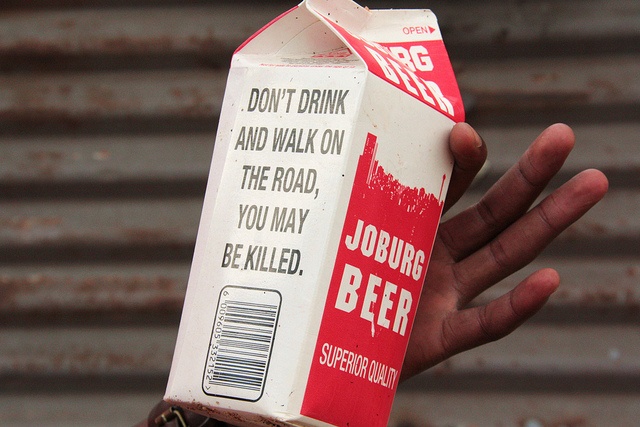
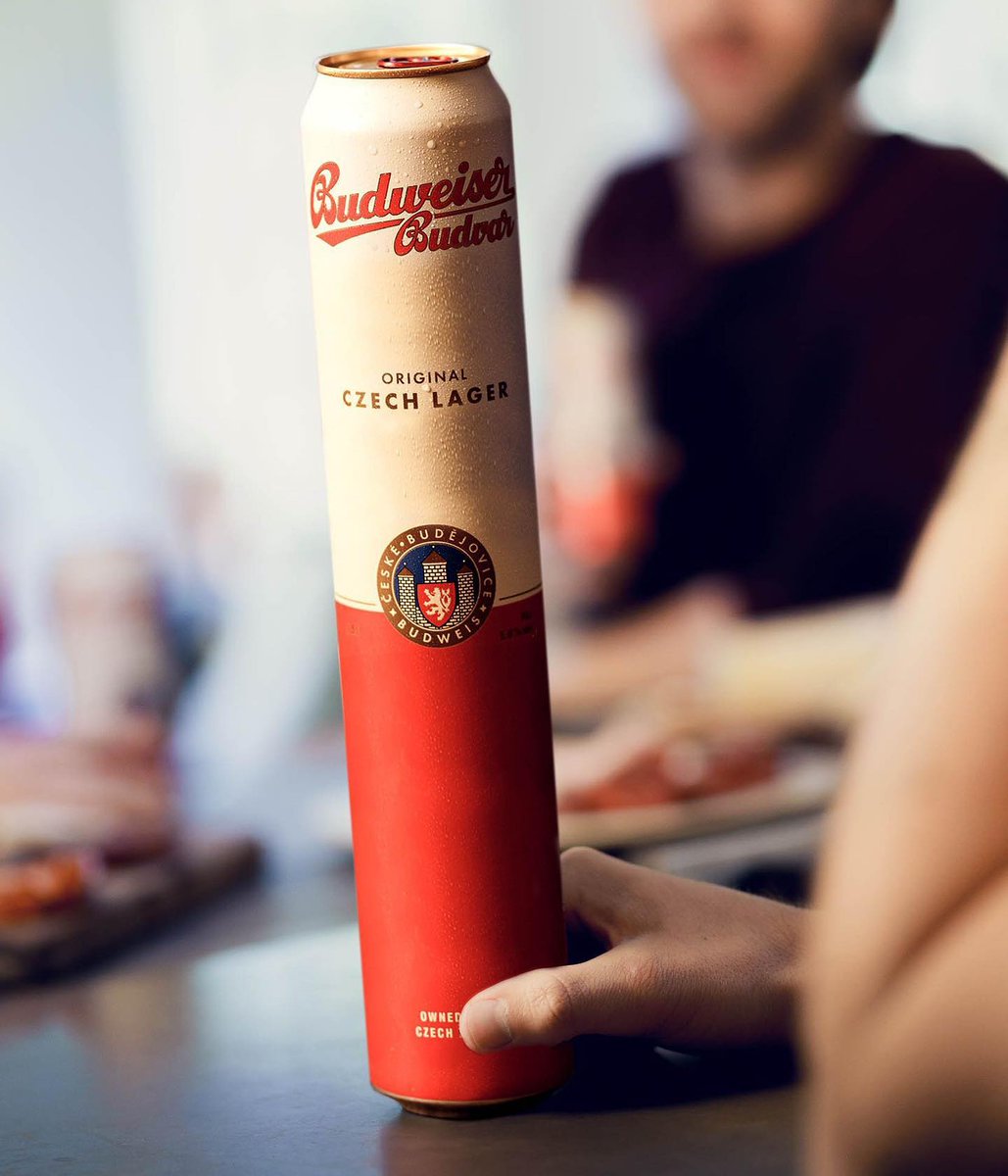
Here we are. Real spring. No more frozen nights on the forecast. Brussels sprout seeds are in some soil.  The cardoons are up. Cardoons? Yup, cardoons. Four foot tall edible thistles, a Victorian veg. Harry Dobson would be proud. Still rather insulated from the exterior world by my convalescent state but I am assured things are progressing as they should. It was April Fool’s Day last Friday. Best beery April Fools? This is my candidate. Silly but also somewhat restrained. What people might have actually asked about having once in a while, as a joke… as a… what… treat? A good brand making fun of itself. That’s a good thing, making fun. Like this! Fun!

Now, enough of that. Time to get serious. First up, care of Merryn, we learn that the BBC has reported on a Roman brewing site found in England, with speculation that it was actually only a malting with suggestions of a rather complex brewing industry:

Archaeologists have identified evidence of 2,000-year-old beer production at a site of a road improvement scheme. The remains of a Roman malting oven and charred spelt grains were found during digging in Bedfordshire, as part of the proposed work on the A428 between the Black Cat roundabout and Caxton Gibbet. Experts have analysed the grains and said they suggested people who lived there were involved in making beer…”As large quantities of grains are only allowed to germinate when the aim is to produce malt – the first step in the brewing process – this strongly suggests the people living at the settlement were involved in beer production,” a Mola spokesperson said.

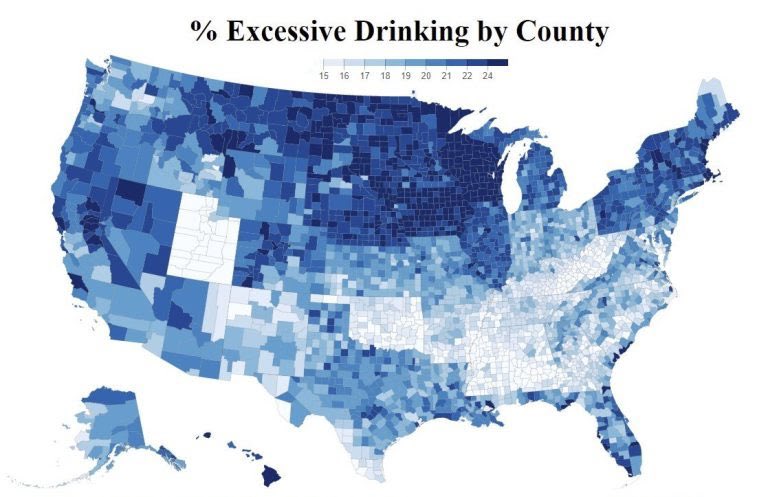
Some serious neato going on there. Also neato? A map! This is an interesting info graphic. Who asks this question? I suppose health professionals. Utah makes sense but look at the dividing line between West Virginia and Pennsylvania. The Florida panhandle and Alabama. Why? I have not idea. I am Canadian.

Pellicle posted one of the best articles it has ever had its hands on this week, a tale of tall ales titled “I Want To See Mountains Again — The Banked Beers of Teesside, North East England” by Reece Hugill:

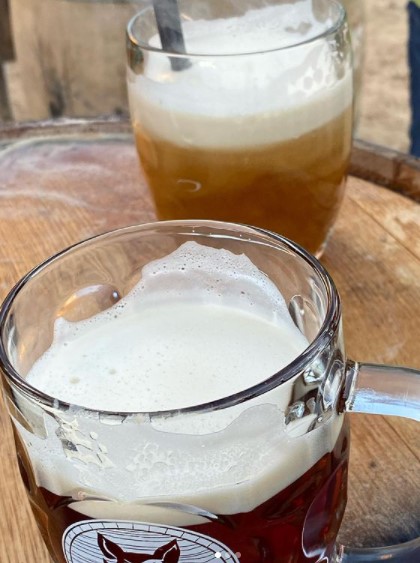
Half-full glasses are pulled from the bar-back fridge, topped up feverishly from the hand-pull. Placed in front of me are two ridiculous looking pints of ruby-red cask beer. Foam cartoonishly mounded a full four inches higher than the brim of the glass. Wobbling and bubbling, alpine peaks and whips of pure white…

…The pints of Bass at the Sun Inn are magic. It’s a beer I usually don’t even like, but when banked, the beer seems to change a tiny bit. The fluffy head brings out a little more bitterness, the body is mellowed into something less vaguely malty and brown, into something soft and clean, like, perhaps, an unusual dunkel lager…

Excellent. You could do this with an Olands Ex back in college but it was a matter of pouring the bottle yourself.

Lars posted a really good thread about Christmas “sugar beer” for children in Norway including this fabulous if fairly frightening fact:

This newspaper article is quite illustrative. Headline: “The favourite beer of the kids.” They use 3kg sugar for 20l + 1/2 cup of malt extract. If you ferment it out fully that’s 8% ABV. No wonder “the kids prefer this to any soft drink.” Prob not 100% fermented, but still.

Question: is this a new technique? Holding some of the dry malt in a dry aromatic barrel?

In the increasingly vibrant world of beer related litigation, we have (care of Mike Kanach, Esq.) learned on one Mr. Parshall “who does business as Sports Beer Brewing Co. that is operated through a website” – court said this about his business:

Parshall is required to transfer to the university all Internet domain names containing a portion or derivative of Penn State’s marks. He also is to transfer sportsbeerbrewing.com so it ceases operation. The injunction prevents Parshall from engaging in any conduct that would cause consumers to erroneously believe his goods and services are authorized, licensed or affiliated with Penn State.

That is just weird. Took a university’s IP and put it on a beer can. In 2017 he did the same thing with Purdue and another judge did pretty much the same thing. Self-represented. Weird.

Not as weird, Stone now seeks a permanent injunction despite the Keystone brand lords announcing a remake after five years. With any luck they’ll find a new way to jerk Stone around. And mid-weird, the little and large tale of BrewDog and the not quite hired consultant* continues and even made The Times of London. This passage neatly captures the two aspects which have confused me:

Allan Leighton, BrewDog’s chairman and the former boss of Asda, has accused Hand & Heart of “amplifying attacks” on its management team and has declined to take part in a proposed reconciliation programme. In a letter to Kate Bailey, Hand & Heart’s managing director, Leighton said he was concerned about a platform that had been set up for BrewDog workers, claiming it was “encouraging participants to submit malicious content . . . The unavoidable impression is that of H&H charging the company to extinguish a fire it is fuelling itself.”

On the other hand, BrewDog apparently continued to shoot itself in the foot without the assistance of others, rolling out a quote from the consultant that they did actually hire… only for that consultant to point out they never said any such thing. Weird.

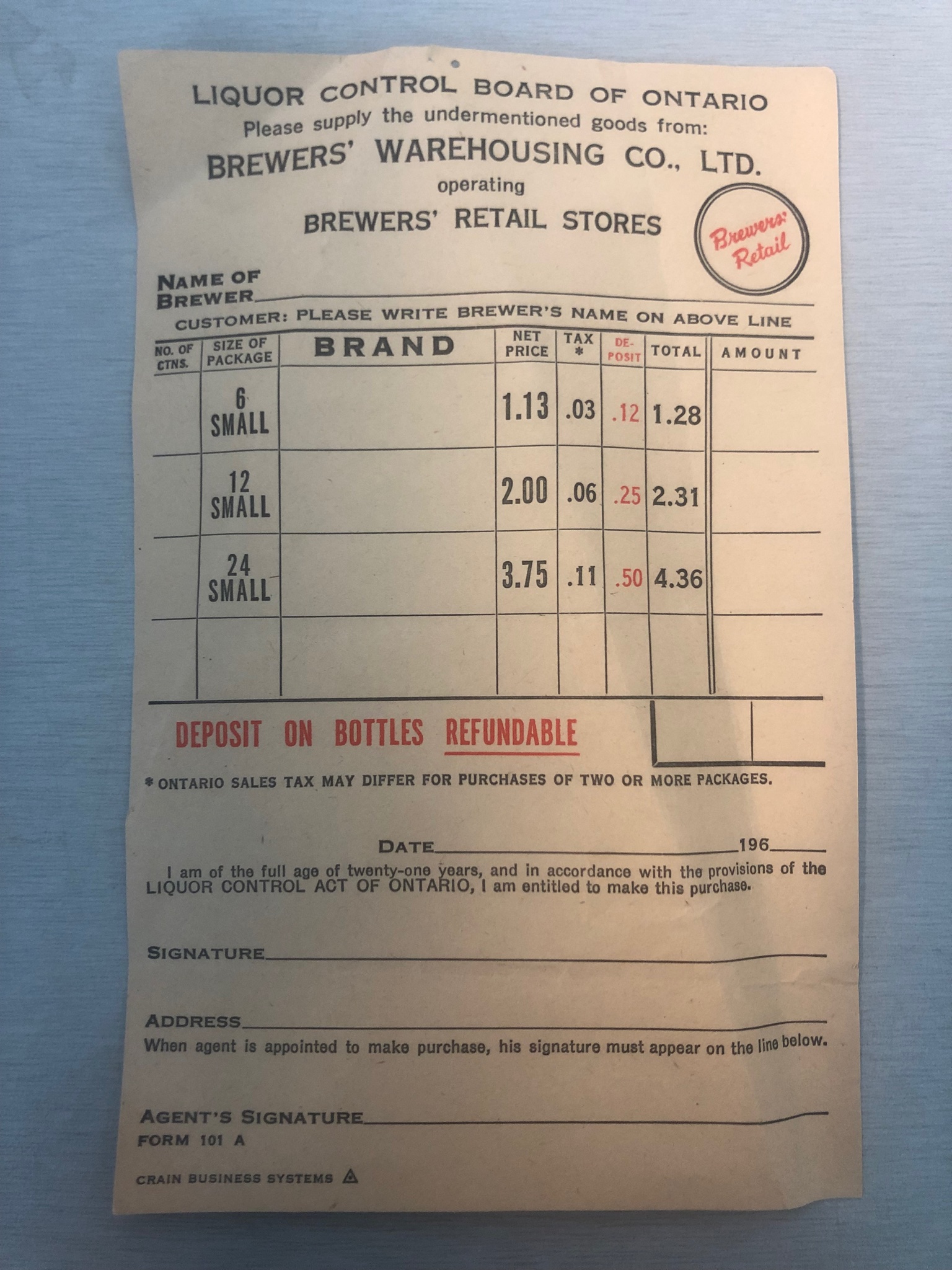
This was a fabulous find as posted on Twitter by Mr. S. Smith, a mint 1960s form to fill out and pass over the counter at a Brewers Retail store in Ontario. A buck twenty eight for a dink pack.  Until 1969, you had to give your name and an address to get your beer. Presumably you filled out the last line by hand if you were buying quarts. Crain Business Systems must have made a killing on this contract seeing as this was the only way in Canada’s biggest province to buy beer outside of a sit down establishment.

Finally but fabulously, Beth published her latest edition of Prohibitchin’ (sign up here) and featuring (i) Ashley Johnson and Jasmine Mason bringing cider to Philadelphia along with first (i) this bit of local slang they had adopted in their business’s name – The Cider Jawns:

“Jawn” /jôn/: Philadelphia slang that’s used as an all-purpose substitute for literally anything—a singular or plural person, place, thing, or event that can’t be specifically described…

Jasmine and Ashley are having the time of their jawns. Or is it the jawn of their lives? …“We looked around and a lot of the attendees were women, but there weren’t a lot of women of color as vendors,” explains Jasmine. Ashley agrees, noting that while there wasn’t much diversity in vendors, there were plenty of Black women and other women of color enjoying themselves as attendees. The discrepancy spurred them to action. “We were inspired to take something we enjoyed and bring representation of women of color to the hard cider and brewing industries,” says Ashley. They launched their Cider Jawns Instagram shortly after to “share our cider journey and take our community along for the ride,” she says.

There. Blame all the errors on the meds. For more, checking out the updates from Boak and Bailey mostly every Saturday and from Stan every Monday, plus more with the weekly Beer Ladies Podcast, and at the weekly OCBG Podcast on Tuesday and sometimes on a Friday posts at The Fizz as well. There is a monthly sort of round up at The Glass. (Ed.: that seems to be dead now.) There is more from DaftAboutCraft‘s podcast, too. And the Beervana podcast. And sign up for Katie’s irregular newsletterThe Gulp, too. And check out the Atlantic Canada Beer Blog‘s weekly roundup. Plus follow the venerable Full Pint podcast. And Fermentation Radio with Emma Inch. The AfroBeerChick podcast as well! And also look at Brewsround and Cabin Fever. And Ben has his own podcast, Beer and Badword (Ed.: …notice of revival of which has been given)  And remember BeerEdge, too, and The Moon Under Water.

*Example: I don’t have a clue what this means. Or this.

Your Mid-February 2022 Edition Of The Beery News Notes And That Odd Problem With Rice

What a week! A trip to the dentist and the Federal imposition of the Emergency Measures Act!! It could drive one to drink. Except I haven’t. Had a couple of really good beers on Saturday, though. Stone City’s Ships In The Night. Oatmeal stout is rarely not a good call. But I have acquired my protest gear as illustrated, should any protests come my way. One must be prepared.

What else? Super Bowl. Stupor Bowl. Superb Owl. It also happened this week. Unlike much of the continent, me I had not one beer. I paid little attention to the game itself on TV which ended up as a bit of a yawner even with the close final score. But would it be better live? Well. it’s not exactly for the snack bracket me and my peeps, is it?

…a double measure of Don Julio, Ciroc or Tanqueray 10 would set punters back US$25. Meanwhile, the craft beer selections clocked in at $19, which would get drinkers a serve of Kona, Golden Road Mango Cart or Elysian Space Dust. The premium beer serve was Michelob Ultra, which was priced at $17. And it’s fair to say that fans were taken aback by the prices.

More breweries closed this week. As Jeff reported, Hair of the Dog and Modern Times -both of the US West Coast wound down in whole or in part. The latter announced it this way:

Today is the most difficult day we’ve ever had at Modern Times. Over the last two unimaginably challenging pandemic years, we’ve done everything we could to keep all of our newly-opened locations afloat in a landscape we never could have imagined when we began building them. As new leadership has stepped up and taken the helm over the last few weeks, it became clear that the financial state of the company that we are now tasked with directing is not just unsustainable, but in immediate and unavoidable peril

Hair of the Dog is/was one of the greats that never had dreams of delivery fleets and HR departments. Retirement is well earned. I put the last cardboard box from the fabulous HOTD misadventure of 2006 out with the recycling just last Sunday.

Elsewhere, building on the momentum to challenge the ethics within Ontario’s brewing industry led by Erin Broadfoot,  Mallory Jones the brewer and co-owner of my beloved Matron Fine Beer in nearby Prince Edward County on behalf of herself and fellow brewer and co-owner Jessica Nettleton, shared experiences of their lives in beer, starting with this remarkably concise statement:

Behind the ‘good times and camaraderie’ there is a dark underbelly, a booze-fuelled side, a sexist and skewed patriarchal side, a side that desperately needs to change.

Note in particular this statement: “…beer events often (read: all of them) result in over consumption which always equals disgusting behaviour from a wide variety of individuals on both sides of the bar…” It boggles the mind how it took so long for such obvious and open behaviours to be simply and plainly stated after years of the trade and trade writers telling us how it’s all one community and craft beer people are good people. I am very careful who I buy from now as well as whose word I take.

There was a great short video of a Polish railway standup tavern car on Twitter this week. One of my favourite memories of working in Northern Poland thirty years ago was the the Polish railway standup tavern car from Kołobrzeg to Gdansk. The good old PKP (“puh-ka-puh”). There is even “fruit syrup for beer” now.

Over in India, the government has taken a very sensible approach to the healthier regulation of the beer market that would be a great first step towards the listing of ingredients:

The Food Safety and Standards Authority of India (FSSAI) will soon come out with fresh regulations for two important everyday consumption items – bread and beer. Beer brands will have to disclose the calorie count per bottle or can while bread makers will be allowed to label products as ‘multigrain’, ‘whole wheat’, and ‘brown’ bread only if the items have specified amount of multigrain or whole wheat in them, FSSAI CEO Arun Singhal said.

There will be boo-hooing from the please-do-nothing crowd but calculation of beer calories is a reasonably straight forward matter. The only problem is how surprised the beer buying public might be.

Everyone one loves a story about a truck load of beer crashing across the roadway. I think only a load of fish thrown upon the hot asphalt is considered more remarkable but that’s because of the gross immediate squishy slippy driving conditions.

Martin wrote this week about the experience at a little investigate site of beer imbibations – a fitba corporate hospitality suite  – and found it… a bit sad:

£6.50 your pie and mash and peas from memory, and beer not much above Northern Quarter prices (double Kelham prices, of course). This is the cheaper end of the hospitality market, giving you a nice seat with your pre-match pie and pint, and seems to be a treat for the old fellas and the well-off bloke dragging his girlfriend to the match. And then you walk from the social club style bar to your padded seat and get distracted by Caitlin Jenner and goal flashes from Blackburn.

He then had a bit cheerier but also reflective experience with his Pa, down at the Plough & Fleece:

Across the road, we could see the nondescript cafe at Scotsdale Garden Centre busy as usual. The coffee and cake at the garden centre has long replace fish and chips and a pint at the pub, even though the pub is often cheaper and always the more homely option.

Lars as usual used social media to the fullest this week to discuss the role of alder wood as a filtering tool in Norwegian farmhouse brewing undertaking both hallmark mapping excellence and scientific journal review enroute:

I found a modern scientific paper which extracted substances from alder bark that they found to be antibacterial. Unfortunately, they were also antifungal and very effective against yeast, so clearly the concentration in beer isn’t enough to have an effect.

Q: has beer historian Amy Mittelman returned to beer blogging?

And just before the long last topic,  this week we received the sad news of the death of one of the leaders in the early years of the UK’s craft beer movement of 12-15 years ago. Dave Bailey was the owner of the Hardknott Brewery which was founded in 2006 and closed in 2018. He was sought out and sought out others who were thinking about beer, like we see in 2009. Alistair at Fuggled interviewed him in 2010. Dave’s brewery was as well known and certain as central to the scene as BrewDog in those years. He was only in his mid-50s when he passed. Dave was a great friend to those interested in discussing good beer and was a regular chatting in social media. My earliest Twitter chats go back to 2009. He kept an excellent beer blog that gave the straight story about life as a small scale brewer like when in 2017 he shared painful business realities connected to the question of how far to capitalize his venture. He had announced in 2020 that he was living with cancer. Very sad news of the loss of a pioneer. Thoughts are with his partner in life and business, Ann.

Finally, there was a bit of faff over the weekend about something claimed to be “Japanese Pilsner” which was neatly summed up by Jenny Pfäfflin this way:

Anyway, brewers using rice in their beer =\= a “Japanese Lager”—it’s a made-up style in that sense—but I don’t think you can write off the possibility there are distinct ingredients and processes that make Japanese-made rice lagers a style of its own…

I called it a fiction and some poor widdle cwafters went a bit boo-hoo. But were they right? It is always important to understand you may be 100% wrong 100% of the time. So let’s see.

First, the thing is even with that narrowing of focus that Ms. Pfäfflin recommends, we have to consider how late brewing beer came to Japan as well as how rice came to be in beer. Until around the time of the US Civil War in the mid-1860s, Japan was governed under a feudal system which had a strict cultural and economic isolationist policy that the western powers were actively seeking to break down. Breweries founded in the ensuing Meiji period were European and even American affairs. As I mentioned last November, the Spring Valley Brewery, founded in Yokohama in 1869 by Norwegian-American brewer, William Copeland. That brewery later becomes the Japan Beer Brewery Company and then Kirin. In line with the new general national policy of opening up to industrialization, what is now Sapporo was founded by what looks like a government agency, the Hokkaido Development Commission which hired Seibei Nakagawa, a Germany-trained brewer, as its first brewmaster in June 1876. Sapporo still brews Yebisu a Dortmunder/export lager, and Yebisu Black, a dark lager which were  first brewed in Tokyo in 1890 by the Japan Beer Brewery Company. These breweries were brewing German beers. As the CEO of Kirin Brewery, Kato Kazuyasu, in 2011 stated:

The Japan Brewery Company shared its primary objective of brewing authentic German beer. Veteran German brewmasters were recruited and the most advanced equipment and steaming systems of the time were acquired, all under the mantra of providing Japanese consumers with the most authentic quality and satisfying taste possible…

Now… consider Japan’s next few decades. Expansionist military imperial government leading through the Russo-Japanese War of 1904-05 through to the end of WWII. European influence continued in partnership with government industrialization policy as described in the 2014 article “Structural Advantage and the Origins of the Japanese Beer Industry, 1869-1918” by Jeffery W. Alexander*:

Like Kirin Beer, the firm that we know today as Sapporo Breweries Ltd. underwent a rather complex evolution – one that would take twice as long to unfold and would involve four unique phases through 1949. The first three of those phases are of interest to us here, for between its founding as a government-directed and development project in 1876, its reestablishment by private investors as a limited company in 1888, and its merger with two major rival brewers in 1906, the brewery received extensive technical assistance from a variety of foreign experts.

Through this merger, the Dai Nippon (Greater Japan) Beer Company, Inc. was created on 26 March 1906. It was only broken up in 1949 as the Allied Occupation forces sought to reverse the imperial policy of concentrated economic power. And, as Alexander states, beer in Japan “was brewed, advertised, and sold in Japan as a proudly German-styled commodity into the late 1930s.

After WW2, the United States occupied Japan from 1945 to 1952. There was an economic boom starting in 1950 due to the UN using Japan as it base for the Korean War. Starting at this time, breweries like the smaller Orion shifted from German style brewing to beers which more reflected American tastes. Not much of a vernacular brewing tradition to this point. For the next few decades that consolidated industrial approach continued as a handful of macro industrial brewing supplied the market (as Alexander states elsewhere**) “until Japan’s government decided in 1994 to again permit small-scale brewing.” Kirin held over 60% of the market during those years and competition was primarily related to draft innovations, packaging design and the dry beer market. Japan’s generic international-style macro adjunct lagers which required a minimum of 67% barley malt*** were joined by sub-standard happoshu starting in 1994 and in 2004 sub-sub-standard zero-malt dai-san biiru, a third-category beer all to feeding, one supposes, the salaryman market.

As Lisa Grimm explained in her 2018 Serious Eats article, early Japanese small breweries replicated the adjunct lagers:

The first craft brewery to open in Japan was Echigo Beer, and they struck something of a balance between the entrenched ‘dry’ beer trend and German- and American-influenced craft brewing techniques. In addition to pale ales and stouts, they also made (and continue to make) a rice-based lager that competes with the bigger players in the market—something of a gateway beer.

By twenty years ago, the Japanese branch of the globalist craft beer movement was moving at pace. Created in 1996 as the brewing division of an establish sake maker, Kiuchi, Hitachino Nest is one of Japan’s best known craft brewers. Its Red Rice Ale is first logged by a reviewer at the BeerAdvocate in 2002. So it’s done… even if only as a recent thing. But whatever is done, like German lager brewing in the later 1800s as well as US macro brewing in the mid-1900s, it is being done on the crest of another wave of globalist economic and technological innovation – craft.

So when you read about an American-made Japanese pilsnerbrewed with rice in the Japanese tradition” you have to understand this is really a sort of untruth. And a bit of cultural appropriation, I suppose. Rice in beer is an American innovation. American restructuring of the economy of Japan in the mid-1900s introduced rice into beer brewing because that is how Americans brewed. But that may make it actually a sort of truth as long as we set aside the fibs of craft and look at the situation with a more open mind. Let’s continue to look around a bit more.

When does rice get into beer? In Ambitious Brew, Maureen Ogle tells us in detail how Adophus Busch in the 1870s experimented with a form of what looks like a decoction brewing method which had eight pounds of rice to every five bushels of high quality barley.**** Light and bubbly beer. Tremblay and Tremblay explain how rice is used in the best US adjunct beers still to produce the effect they call “crisp” with again a fairly limited amount being all that is required. Budweiser, Coors and Miller Genuine Draft all having just under 5% rice in the mash which include +/-20% other adjuncts.***** They also explain how around 1950 US national advertising of beer hits its stride with Anheuser-Busch, Pabst and Schlitz being the premium brands.****** What America wanted. Home or away. It is so popular that the brewers of Canada in the mid-1920s******* during US Prohibition started brewing rice beer to serve the huge and very lucrative bootleg market. Including in Japan where they were the occupying government restructuring the economy including a oligarchical macro brewing industry that stayed in that form of few players, big players for the next 45 years. Which makes Japanese premium rice lager US premium rice lager.

Not only does rice make beer crisp, it makes production cheap. Barley malt is the best barley, the rest going to cattle feed and Scottish soups. Rice for brewing, however, is broken rice:

As brewing adjunct, rice has a very neutral flavor and aroma, and when properly converted in the brewhouse it yields to a light clean-tasting beer. Rice for brewing is a by-product of the edible rice milling industry, any kernels that may get fractured during the milling process (~30%) are considered undesirable are therefore sold to the brewing industry at a cheaper price. ********

The adoption of rice in brewing was part of a general move over decades to move away from heavier foods and drink, what Tremblay and Tremblay call “the growing mass appeal of lighter beer which drove most of the domestic brewers of dark beer out of business.“********* Short-grained or japonica rice is preferred in brewing.+ Japan’s brewer ride that wave, too, as part of the globalization of US macro industrial adjunct lagers that made Carling out of a Canadian beer, gave Kenya Tusker, gave Australia Fosters, etc. etc.

One more thing. How does rice get to the US to get later into the beer? In The Cooking Gene Michael W. Twitty explains how the Asian strain of rice came to colonial America in 1685  care of a very lost ship from Madagascar. Captured and enslaved people from Africa who knew how to grow rice were used forced agricultural labour and by 1770 150,000 acres of the US eastern shoreline were slave labour concentration camp rice plantations with 66 million pounds produced annually.+* After the US Civil War, about when Japanese isolationism policy weakens, rice production drops with emancipation but then shifts inland and become mechanized in Louisiana and Texas which, by the 1890s, are producing 75% of the US rice crop.+** Which creates a lot of broken rice for brewers, notably quite distinct from the top quality rice used in sake.+***

So if, starting in 1685, short grain japonica rice comes to the US, becomes a massively valuable cash crop with a very useful by-product of broken rice that is found to have a role in US macro brewing and then is taken to Japan as part of the post-war era of US Occupation… hasn’t that strain of rice circled the globe over about 260 years? And hasn’t the history of Japan been so affected by these global influences… even if they are arguably economic colonial or even technological hegemonistic influences… that their culture legitimately has a tradition of international rice adjunct premium lager that could be called “Japanese rice pilsner”? Hasn’t Japan’s brewing history been almost entirely based on international influence from the 1860s to now? But can you have a national tradition which is not… vernacular? I will leave that question with you as you next look at a bottle of craft beer labelled Japanese traditional rice pilsner which says “made in the USA” on the back. +****

Nice. There. Done. For more check out the updates from Boak and Bailey mostly every Saturday and from Stan every Monday, plus more with the weekly Beer Ladies Podcast, and at the weekly OCBG Podcast on Tuesday and sometimes on a Friday posts at The Fizz as well. There is a monthly sort of round up at The Glass. (Or is that dead now?) There is more from the DaftAboutCraft podcast, too. And the Beervana podcast. And sign up for Katie’s irregular newsletterThe Gulp, too (… back this week!) And check out the Atlantic Canada Beer Blog‘s weekly roundup. Plus follow the venerable Full Pint podcast. And Fermentation Radio with Emma Inch. The AfroBeerChick podcast as well! And also look at Brewsround and Cabin Fever. And Ben has his own podcast, Beer and Badword (which I hope is  revived soon…)  And remember BeerEdge, too, and The Moon Under Water.

*Brewery History (2014) 158, 19-37.
**Brewed in Japan – The Evolution of Japanese Beer Industry” (UBC, 2013) sample introduction at page 5.
***Not the main ingredient as some claim.
****Ambitious Brew (Harcourt, 2006) at pages 76-77.
*****The US Brewing Industry (MIT, 2005) at page 7.
******Ibid., page 52-53.
*******The King v. Carling Export Brewing & Malting Co. Ltd., 1930 CanLII 46 (SCC), [1930] SCR 361 at page 373.
********The Use of Rice in Brewing” in Advances in International Rice Research (InTech, 2017) by O. Marconi et al. at page 57 as well as this at page 51: “Usually, brewer’s rice is a byproduct of the edible rice milling industry. Hulls are removed from paddy rice, and this hulled rice is then dry milled to remove the bran, aleurone layers and germ. The objective of rice milling is to completely remove these fractions with a minimal amount of damage to the starchy endosperm, resulting in whole kernels for domestic consumption. The broken pieces are considered esthetically undesirable for domestic use and sold to brewers at a low price. Rice is preferred by some brewers as adjuncts because of its lower oil content compared to corn grits. It has a very neutral aroma and flavor, and when properly converted in the brewhouse it results in a light, dry, clean-tasting and drinkable beer.”
*********Tremblay and Tremblay, supra, at page 107.
+O. Marconi et al., supra, at page 50.
+*The Cooking Gene by Michael W. Twitty (Amistad HarperCollins, 2017) at page 243.
+**See Wikipedia article “Rice production in the United States” at section on 19th century.
+***See MTC Sake and Home Brew Sake websites.
+****Heck, name a brand “1685+1876+1945+1994=???” if you like.

Your Very Merry Christmas Edition Of Beery News Notes

This is the week! Santa and everything. So exciting. Last minute shopping opportunities abound even while heads nestle all snug in their beds bothered by visions of some sort. We are as happy for anything around these parts over the vaccination drive through outdoor wintery clinics, as seen above, which are boosting 5,000 people or about 4% of the city’s population per day. After a very scary spike that led the nation just a week or so ago, this is very good news for the holidays. The goose or turkey or whatever is sorta taking second place this year.

It is Tibb’s Eve today, a Newfoundland early start that may go back to 1700s and into the rural outports. What’s that about, you say?

Tibb’s Eve was a “non-time”; if something was said to happen on Tibb’s Eve, it was unlikely it would ever happen. It appears circa 1785 in “A classical dictionary of the vulgar tongue” thusly: “Saint Tibb’s Evening, the evening of the last day, or day of Judgement; he will pay you on St. Tibb’s Eve, (Irish).”

Fabulous. What is going on in beer itself? Well, I was really exciting by (as excited as one might get by I suppose)… by Ron’s reworking of some data to discover some very basic information about Dutch beer culture in the mid-1900s:

The obvious post-war trends were moves from dark to pale, sweet to bitter and draught to bottled. I’m shocked that pre-war dark beers accounted for almost 50% of the Dutch market. I would never have guessed that. Nor that such a high percentage of beer was sold on draught. Even in the UK, where draught was the norm, a higher percentage of beer was sold in bottled form on the 1940s.

That’s a fourth approach in addition to function, nationalism and style. This illustrates the great thing about amassing and writing in quantity – interesting qualities will jump out that would otherwise be missed.

Trying to be upbeat this week but this story on the death of one UK craft buyout is really interesting – especially as it is written from the marketplace reality point of view as opposed to the usual PR hopes and wishes:

Timing was an issue too. When it bought London Fields, Carlsberg’s eponymous lager and Export brews had been seriously struggling for years. Moving distribution to DHL also didn’t help, according to a second industry source, who says the tie-up was “fraught with difficulties” leaving irate retailers “unwilling to entertain a broader range”. Then after Covid hit, the merger became top priority. Put simply “[brewers] are potentially heading into another difficult period and it is all about cost right now, rather than growing younger brands”.

I really enjoyed watching Lars M.G. discussing why beer and Christmas are deeply connected, and what Christmas was originally all about all on a live (and free) online talk Tuesday afternoon my time hosted by @ChiBrewseum. These presentations they are putting on are a great addition to the good beer scene. He mentioned a record from the 1270s when the Norwegian king required prayers over the beer bowl to Odin to be replaced with those to Jesus. I mentioned that is right about when and why my peeps left town. We are also all the Elliots, too.

I really liked the “best of” reading list from Boak and Bailey if for no other reason that it is the sort of list that is separate from the self nominations we see on awards lists. Which can lead to this sort of unhelpful thing. Every entry is well worth your time. If I would pick out any one as the best 0f their best of 2021, it would be the epic A History of Brussels Beer in 50 Objects by Eoghan Walsh of Brussels Beer City.  Catch up! There is another half year of this tremendous bit of writing to go.

Great insider thread on the state of the bar scene in the USA in these days of the fourth wave.

The new drink buzz this week was all about the hot poker being thrust into your malty winter ale on a cold tavern patio somewhere.  Kate B. posted a vid. Stan on Insta wrote:

Some like it hot. Next please. My beer (Hogshead ESB) waits for a poke in the mug with a very hot iron. Lots of foam. Toasted marshmallow. 

I liked this – it’s a return to an old practice for winter punchbowls, whether filled with wine or ale… or both. Try it yourself, out in the yard with a Lambswool a la Braciatrix.

Martyn posted about one grump, sort of an anti-communicator, complaining about the quality of his drink:

In October 1736, Jonathan Swift, dean of St Patrick’s Cathedral in Dublin, and the foremost satirist of his age, published an attack on English porter, which was made, he said, of “the worst Malt, which is sent from all parts of the Country for that Use, and consequently nothing but Gin exceeds it for Badness.” The smell of London porter, he said, was “sufficient for any Creature above a Swine”…

Yikes. More tastefully, good news for hopheads in Stan’s newest edition to Hop Queries:

Friday the United States Department of Agriculture reported record hop production of 116 million pounds in Idaho, Oregon and Washington. That’s 12 million pounds more than 2020, when weather and smoke damage drug down yield, and 4 million more than the previous record of 112 million pounds harvested in 2019.

Speaking of good taste, Jordan brushed off his fountain pen and wrote about the state of Glutenberg, the Quebecois gluten free brewery and, like the Lord looking down upon creation, was pleased:

Alternative fermentables are used all over the world and the millet and buckwheat, which tend to be from arid climates, are probably things we’re going to need to look into in the near future. One thing this has certainly highlighted for me is how much we’ve become dependent on wheat and oats in the last half decade as the influence of New England IPAs has crept into other styles. I wonder whether that makes the Glutenberg products more accessible than they would have been six or seven years ago since haze and cloudiness are not issues in the general market anymore.

Finally, its time to brush off the Xmas tale from Church-Key Brewing of Campbellford, Ontario has arrived. Gather the kiddies, get your popcorn and Kleenex:


Well, the holidays are definitely here now. Be happy and eat a chestnut or whatever it is you eat that’s a bit weird. While you are being happy please also check out the updates from Boak and Bailey mostly every Saturday and from Stan every Monday, plus more with the weekly Beer Ladies Podcast, and at the weekly OCBG Podcast on Tuesday and sometimes on a Friday posts at The Fizz as well. There is a monthly sort of round up at The Glass. (Or is that dead now?) There is more from the DaftAboutCraft podcast, too. And the Beervana podcast. And sign up for Katie’s weekly newsletterThe Gulp, too. (That’s a bit now and then now.) And check out the Atlantic Canada Beer Blog‘s weekly roundup. Plus follow the venerable Full Pint podcast. And Fermentation Radio with Emma Inch. The AfroBeerChick podcast as well! And also look at Brewsround and Cabin Fever. And Ben has his own podcast, Beer and Badword (which he may revive some day…)  And remember BeerEdge, too, and The Moon Under Water.


Here Be Yon Beery News Notes As Easter Weekend Approacheth

Another quiet day. Sitting at home. My butt is in a state of perpetual “sat too much” ache now. I better lay down for a bit to see if it goes away. On the upside, the over-wintered carrots have been crisp and sweet. Gotta eat them now before they start to convert and prepare for flowering. As shown above, I saw bees this week. Wild ones I think. Grabbing all there was to be gotten from the flower of a willow tree, the catkin turning in one last very slow fireworks display.

Beer… hmm… where to start… Jordan posted an interesting proposal to encourage the use of locally grown hop in Ontario.

This is Ontario. It is four times the size of Great Britain. A run from Windsor to Vankleek Hill would take eight hours if you adhered to the speed limit and there weren’t any delays on the 401. The idea that there is such a thing as an Ontario specific cultivar is nonsensical. We’ve already established that Hallertau grown in Germany and New Zealand is different. The Huron Coast isn’t Tillsonburg isn’t The Golden Horseshoe isn’t Prince Edward County isn’t The Ottawa River Valley.  There are microclimates and different substrates and soils and aquifers.

I was helpful in the comments, adding the 1948 soils mapping links as the land and its crops know nothing of county boundaries as well as questioning the insta-profession of sensory professional.  I like it but find a way to fill that not with self-identified volunteers and then add a mechanism for shared calibration and I might buy in completely. Sadly one response suffers from that old suffocating chestnut Jordan is working so hard to break, the closed circle: “… This is far to complex of an issue to describe in a fb box – so lets chat off-line. I’ll send you my contact info…” Open discussion is better discussion.

Next, Lars has two bits of big news. First, the gong bomb:

I got the tip-off from Jørund Geving, a farmhouse brewer in Stjørdal. He’d gotten into a random conversation with a farmer from Ål in Hallindal, who said there were people there who still brewed. That’s in eastern Norway, so that was remarkable news in itself: a new brewing region! But then he dropped the real bombshell: these guys had their own yeast, which they called gong.  This was really exciting, because so far, every brewer in western Norway who has his own yeast has turned out to have yeast that belongs to a single family, which we call kveik

This is interesting. In the post pandemic retracted world of post-craft, will gong become at thing? Then Lars wrote something on Wednesday that saddened me: “Writing ~7000 beer reviews on @ratebeer was basically my education. Here my rating notebooks, before they go in the trash.” They might deserve keeping. Nice floor, though. Norwegian wood.

Tom Morton, a well loved radio hand in Scotland, has written a useful piece about drinking in the new era of social media pubs:

Twitter is one of those horrible airport departure lounge bars on a (pre-virus) bank holiday Friday night or Saturday morning. You’ve got everything there from stag parties breakfasting on Special Brew to ginned-up delegates for a conference in Estonia on Signifiers of Loss and Alienation in The Later Works of S Club Seven. There are sherried tourists, single-malted fish farmers, absinthed sales executives. There are the brilliant and the fuckwitted, and they’re all shouting, all grabbing your arm, all breathing fumes into your face. Ninety-nine percent of them are talking shite.

A few more months and I might be with him. Meantime, the social experiment (for those who are not directly fighting as patient or caregiver, of course) is interesting.

Corona tricks during corona time.

Some more blogs are back up and running  – and what I like about them best is the immediate reflection on what is happening around us. Not recollections of the pub or desperate attempts to maintain the consultancy micro-payments as if nothing were happening. First, Matthew Lawrenson at Seeing the Lizards told the tale from the shelf stocking floor:

…that is why I had that Thursday off.  It was likely the last time I’d be able to go out for the forseeable future.  I packed my bottle of isopropanol (usually used for cleaning electronics, but hand sanitiser had long ago run out) and went to town.  And yes, dear reader, I got absolutely hammered.  Buckfast, Bud Light, evil keg filth, cask ale, spirits.  I had it all that night.  I even went to Spoons.  I’m glad I did, as on Friday afternoon, the Government announced that all pubs were to close from midnight. After that, back to work it was.  Prioritising lines, moving labels around to maximise fill, watching pasta and toilet rolls vanish in minutes.  All the usual panic buying fun and games. 

And Old Mudgie wrote a very interesting argument lamenting the loss of cash that is being caused by Covid-19 and the implications for the bankless in pubs and beyond:

It is estimated that there are 1.6 million unbanked workers in the UK, and there must be many other non-workers who have no access to banking facilities. While there may be technological solutions that can address this issue, their interests cannot simply be breezily dismissed. Added to this, there are many people, not by any means entirely elderly, who have a strong preference for using cash and are uneasy about card payments, even though they may theoretically be available to them. Is it reasonable to ride roughshod over their wishes in the name of progress?

In the past, I have been grumpy about the US Brewers Association (as it seems to want to fill the role that CAMRA plays in the UK, just without all those pesky consumers) but the Bart has been doing a great job running the numbers through this crisis:

The first analysis of our second COVID-19 impact survey is done, and the numbers aren’t pretty. 2.5% of breweries say they are going to close. 12.7% say they have a month or less based on current conditions.

Right off, I was wondering how far off the normal annual churn 2.5% closures might represent. And to stay that tide, the BA also announced that what they are calling #CBCOnline starts on this coming Easter Monday:

…a five-week virtual version of CBC including 40 of our educational seminars across all 14 CBC tracks.

I am most interested as all you all all will be to hear Dr. J speak on the topic of “Real Talk: Performing Cultural Climate Audits to Benchmark Organizational Inclusion, Equity, and Justice.” Audits. Excellent. Like having calibration for sensory experience. Doing something real.

Similarly, there are plenty of opportunities to improve one’s wine knowledge during these days of sheltering in the shed. And if you have something to share, there is also a Beeronomics call for papers.

And finally Pellicle published an excellent piece by Jonny Garrett on the Old Fountain pub on Old Street in London (just a bit to the east of my beloved Golden Lane) and the family that has kept it in operation:

They were never tied, but the Durrant’s still leased the pub from Whitbread, who in turn leased it from the local parish church, St Luke’s. It seems the church mistrusted Whitbread and had only been granting it three-year terms. The family had kept a close eye on the situation and, in the early 2000s, an opportunity presented itself. After decades of renewal without gaining a lease extension, Whitbread decided to give up the lease and offered Jim another pub.

Now, I want to know why and for how long the church owned that parcel of land on Old Street. Let the mapping begin!

There you are – but one last thing. A new news round up has sit the presses. Brewsround has started commenting on the beer writing of the week. That/they/her/him/thems/the bot joins the beer news broadcasts we follow each and every week with Boak and Bailey most Saturdays, plus more at the OCBG Podcast on Tuesdays and sometimes on a Friday posts at The Fizz as well. And sign up for Katie’s weekly newsletter, too. There’s the AfroBeerChick podcast as well! Plus the venerable Full Pint podcast. And Fermentation Radio with Emma Inch. Stay well.

The “Here’s Your Hat – What’s Your Hurry, January?” Edition Of Beery News Notes

There is nothing I like about January. It starts with the worst holiday in the year and ends with ice five inches thick covering every corner of your property. Usually. It’s actually been a warmish winter with only a couple of sharp snaps into the -20C region. But it’s still January so I hate it. This week sucked on a number of levels: coronavirus, Kobe and even a cat named Jinx.* Yet is will be March four weeks next Monday. So that is good. Did you need me to explain how the calendar works? Is that why you come here? Probably not. Not that you need me to explain anything else… and yet I do… week after week. Like this =>

I didn’t see much about beer in the news, frankly, but someone forgot they drove onto a ferry near here so it wasn’t all about zippo – but then I did see that photo up there from Lars’s trip to a museum in Oslo:

Saw this in Oslo Historical Museum today: the Tune stone, 4th century. Raised in memory of Wodurid, “the bread lord”, by his three daughters, who brewed the funeral ale.

There is more in Wikipedia Norske-style. I can’t read a word of it but it’s still really interesting. I did notice that Norwegian for “log in” is “logg inn” which is really, you know, a bit lazy on their part.

And there was that “the sky is falling!” article on the craft beer industry in what is called our national newspaper… except isn’t really. But I really liked one thing in it, this stat about the US craft beer market:

…major brewers have acquired the equivalent of 7 million to 8 million barrels of production as they purchased previously independent companies and added them to their rosters. That’s a significant shift in a roughly 25-million-barrel industry…

So one-third of craft is now macro.  And macro-craft and Sam Adams is more than half of craft. Which is weird. But exactly as I suspected…

And Beth just had to remind us that we are coming up to the second anniversary of glitter beer which come right before the second anniversary of the end of glitter beer. And she noted the diversity diversion trend applies to craft beer.**

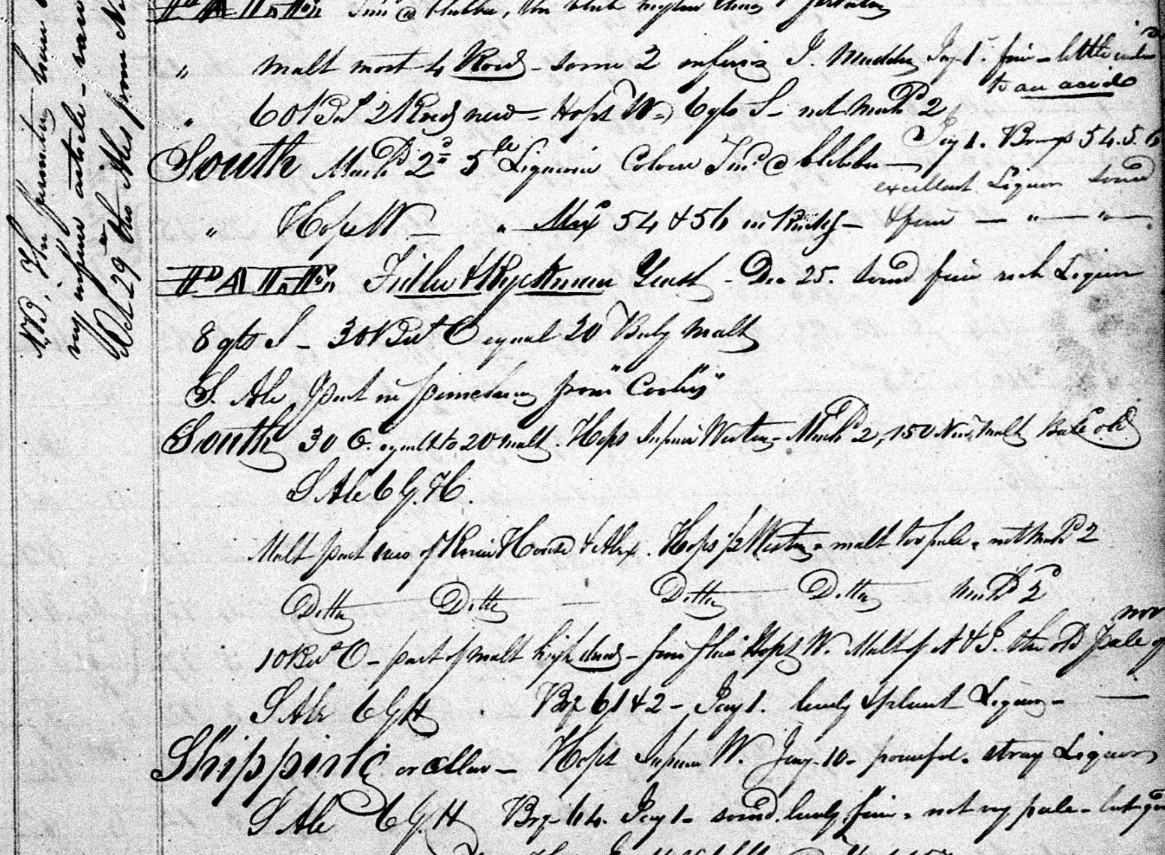
Plus Jordan got some regional state-run media attention this week with his recreation of an 1830s old ale from what was York, Upper Canada but is now Toronto, Ontario:

The recipe was put together from notes in a diary by William Helliwell — the brewer at Todmorden Mill in the 1820s and 30s. Todmorden Mill was located at the bottom of Pottery Road. “The great thing is that all of the brewing details, all the detail that makes the recipe for this beer is sprinkled throughout that diary,” St. John told CBC News. “He’s not recording it because he’s keeping track, he’s recording it because it’s just part of his day-to-day life. He’s really more interested in the girl next door.”

Wag.

And Mudge semi-fisked the stats about UK pubs losses/gains including this assertion of what really is the obvious:

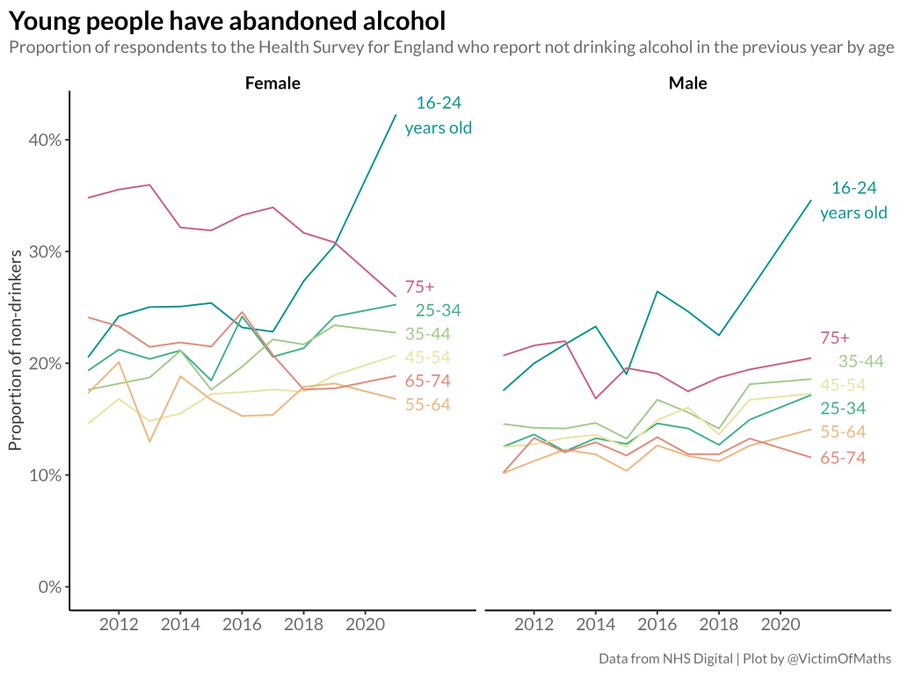
A few years ago, Pete wrote an angry blogpost in which he called racism over the suggestion that had made that, in some areas, the increasing Muslim population had been a major factor in the decline in pub numbers. However, it was pointed out in the comments that this wasn’t racism, but a simple question of fact. If the proportion of people in the population who don’t drink alcohol, especially in public, increases, then inevitably the demand for pubgoing will decline. He later deleted the post, and now accepts the point in his article.

Note #1: quaff

1510s (implied in quaffer), perhaps imitative, or perhaps from Low German quassen “to overindulge (in food and drink),” with -ss- misread as -ff-. Related: Quaffedquaffing. The noun is attested by 1570s, from the verb.

Note #2:  -able…

…there are 3 rules that control how the able/ible
suffix is used.
1. In original Latin words, the suffix was -bil- and the vowel was
the thematic vowel of the verb.
2. In new Latin words where the thematic vowel was no longer
apparent, the suffix was reanalyzed as -ible.
3. Words that are formed in English use -able. 

Result: Robin wins.

Yup:

The weird thing about the ‘return of bitter’ narrative is that at no point in the last decade has bitter been remotely difficult to find on sale.

Dr J noticed a person doing a good job:

The beertender at the new spot in Terminal E at CLT is personable AF and knows her tap list back and forth. Just watched her upsell 3 separate parties who asked Coronas/Bud Lights. Beer politics aside, she’s out here doing work and pouring lovely beers in clean glass. Props…

Day Bracey wrote about putting together a fest in Allentown but not that Allentown:

We’re talking Allentown, Pittsburgh, a predominantly black “redeveloping” neighborhood between Mount Washington and the South Side. By “redeveloping,” I mean “pre-gentrified.” They have a coffee shop and folks are actively looking to open a brewery there. Once that happens, the flood of white people will be inevitable and Pittsburgh will have a Lawrenceville 2.0, or rather an East LIBERTY 3.0. What better way to combat this than by filling the streets with 5,000 people who may be interested in gentrifying responsibly, with investments in both the people and the buildings? 

Neato. And finally, Katie watched a cooper bash a firkin and made a tiny movie.

So not all that much news this week. More anecdote, perhaps. Some tableau, even. Mainly maybe mise en scène. If you want more of that and some other stuff, too, don’t forget to check in with Boak and Bailey’s most Saturdays except for last week and weeks like last week, at the OCBG Podcast on Tuesdays and sometimes a mid-week post of notes from The Fizz as well. And sign up for Katie’s weekly newsletter, too. There’s the AfroBeerChick podcast now as well! Plus the venerable Full Pint podcast.

*Note: Googling “Polk” and “Jinx” delivers some weird results, not all of which relate to unfortunate U.S. Presidential luck in the 1840s.
**As we see in diverting misery-level funding.

The Last Thursday Beer News Notes Before The UK General Election

It’s not often that I get to headline the weekly update with something so.. so… unbeery – but is beer ever really that much removed from politics? Consider this photo to the right that circulated about a man to the left. I was as sad that it was Coors Light, the faceless multinationals of beer that he was pouring as much as I was saddened by the mleko* pour.  The Late Great Jack Layton held the red banner high here in Canada for years and he also knew how to pour a beer with a bit of style.

Given it is Yule, I will start with Ben Johnson and his list of ways to avoid the Christmas party hell you fear most, other drinking your good stuff:

Hosting at home guarantees my own access to good hooch but it also opens the door to the undesirable possibility that my guests might assume that they will be graced with the same luxury, which of course they are not. Indeed the one downside to hosting is that it means people might drink my beer. Thankfully, over the years, I’ve learned ways to keep my guests from dipping into my stash and I’m here to pass that wisdom on to you.

Speaking of Yule, Merryn in Orkney and Lars in Norway were discussing Christmas brewing obligations in Norway when Lars made this extraordinary statement:

This was not even the law for all of Norway: it only applied in western Norway (the Gulathing area). The other regional laws did not have this provision. (The Frostating law required brewing for midsummer.) Neither did the Swedish regional laws.

The Frostating law? Now I have to get my brain around the legal brewing requirements of other jurisdictions. It would be interesting to have a great big list when folk had to brew and why.

Katie of the shiny and the biscuit gave us a wonderful portrait of and an interview with two Mancunian fans leading the cause of cider from their demand side of the commercial transactional teeter totter, this week at Pellicle:

With Dick and Cath leading the march, Greater Manchester has become the centre of “real” cider in the North in the space of two years. Together, they created the Manchester Cider Club, and in doing so have brought cidermakers like Tom Oliver, Albert Johnson (Ross-on-Wye) and Susanna and James Forbes (Little Pomona) to the city. At regularly sold-out ticketed events and inclusive meet-ups, they are encouraged to answer questions and share their cider with a new, northern audience.

From further east, the tale of Vienna Lager was told at scale in the seven days at A Tempest in a Tankard:

Four hours east of Munich as the RailJet flies, the Viennese were marking a milestone anniversary of their own, albeit with much less fanfare: 175 years of Vienna Lager. Even if no museums commemorated the fact, and even if the media resonance was akin to the sound of one hand clapping, Vienna had good reason to celebrate its contribution to the culture of brewing. Bottom-fermented beer had been produced for centuries in Europe’s Alpine regions, but it wasn’t until Anton Dreher, owner of the Brauhaus zu Klein-Schwechat, brought together technological advances he learned in Britain and Bavaria that he was able to produce the first lager beer that could be brewed year-round. That happened in 1841. **

Big Beer Corporate News? Apparently darling of a decade ago Stone is maybe up for sale, a rumour of a story almost entirely confirmed by the denials of the brewery. In another sort of bad brewery news reporting… or rather reporting on bad news for a brewery… it appears that New Belgium may have new clients amongst the authoritarian military elite!

The New Belgium Brewery insists it is not like other companies. Its owners, who are also its employees, are devoted to fighting social inequity and climate change, proving business can “be a force for good,” its website says. Their CEO Kim Jordan was honoured among 30 “World-Changing Women in Conscious Business” last year. Employees even get free bicycles. But those ethical credentials have not stopped them planning to sell their firm, which has breweries in Colorado and North Carolina, to a beer giant accused of funding genocide against the Rohingya in Myanmar.

Wow. Too bad there was no way for the governing hands on the nNew Belgium transaction to be warned of the situation, like a hearing of the International Court of Justice or anything. Speaking of things end-timesy, beer in the U.S. of A. is dying again:

The trend doesn’t appear to be reversing itself. Sales of domestic beer slipped 4.6% between October 2018 and October 2019, according to Nielsen. Microbrew and craft beers are also in a minor slump, down 0.4%, despite Big Beer companies scooping them up left and right (AnheuserBusch just purchased Craft Brew Alliance, which makes Redhook Ale).

“Microbrew” can only be a word used by someone who knows very little about microbrewing, rights? Aside from that, the story is White Claw and, if we had any sense, no one would care as that is something other people buy like purple velvet trousers or quadrophonic stereo systems. So why do we care? I don’t care. Affects me in no way. Nada.

All of which leads to the news in Ontario that the national brewpub chain Les 3 Brasseurs has announced that four of its locations in Ontario are closing:

Ten years ago, we entered the strategic market of Ontario and, over that time, experienced some great victories, notably our Yonge and Oakville restaurants, but also some challenges,” said Laurens Defour, CEO of 3 Brewers Canada, in a statement. “This is a difficult decision, but we have concluded that we need to close some sites in order to support the evolution of our business.

Careful readers will recall that I happily attended on of the busier outlets in Oakville last year and was quite happy with the carrot pale ale I was served.

Barry in Germany posted an afternoon’s worth of photos of old apple and pear trees taken during a walk with his dog. Elsewhere in Germany, there is a pub branded with the likeness of Roger Prozt but denying it is a pub branded with the likeness of Roger Prozt. Protz commented thusly:

I’m not even allowed to be flattered. They deny any connection to me because they think – wrongly – I’m going to sue them. I recall the image that was produced for a beer event, same style for all participants.

Note: of the two being depicted, I’d suggest the dandy, the fop, jack the lad was more mocked than Peg. Interesting that the powdered wig was not a wig at all. And speaking of the Irish of yore, here is the tweet of the week:

“Ale has killed us”? Short memories of the Vikings apparently. But enough! I have a long day’s work ahead of me then need to settle in for the the election results. Don’t forget that there’s more news at Boak and Bailey’s on Saturday, at the OCBG Podcast on Tuesdays and sometimes a mid-week post of notes from The Fizz as well. And sign up for Katie’s weekly newsletter, too.

*A teacher in Poland I once was…
**I used a slightly different quotation than Boak and Bailey so I feel justified.

The First Thursday Beer News Of October 2019

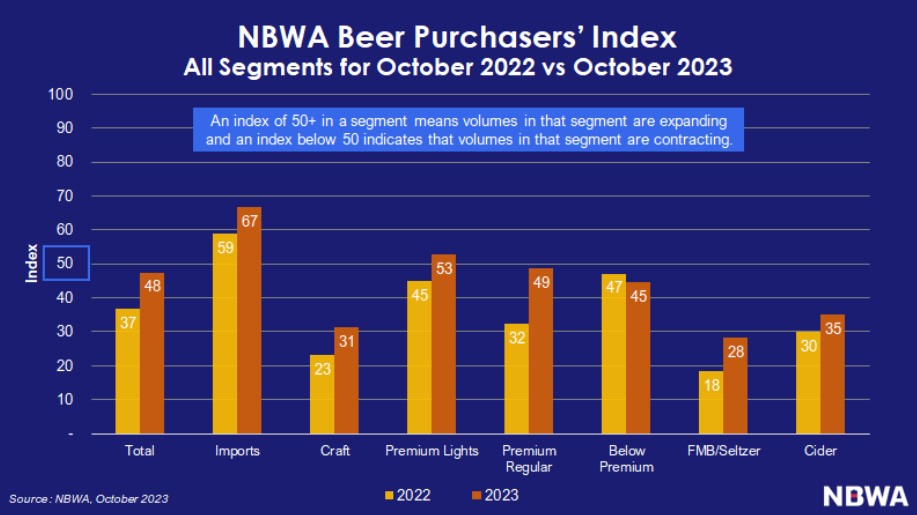
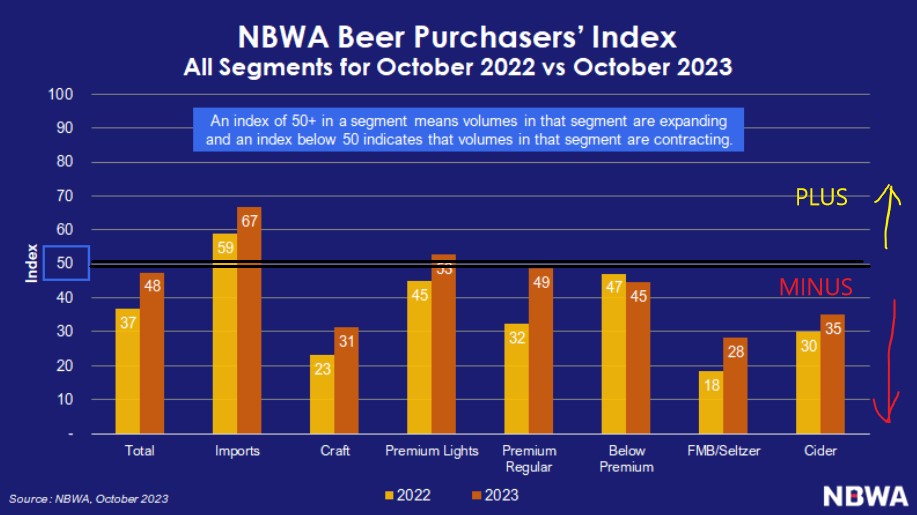
Beer: less popular year after year!

Ah, beer. You ever ask yourself on why you bother thinking about it? You know, if it’s not your last ditch effort to cobble together a career? BA Bart posted a thread on Twitter this week on the latest stats – which seem to be in line with the previous stats. All worth considering, for sure, but there is that underlying personal question that I suppose everyone who reads this blog has asked themselves since their first glass – why do I bother? Knitting bloggers have a way easier answer. Mittens. Knitting bloggers get all the breaks.

Speaking of big stats over time, relatedly and with a similar set of graphs, apparently Russia’s public policy program to reduce alcohol consumption has been… a fabulous success:

In 2018, Russian life expectancy reached its historic peak, standing at almost 68 years for men and 78 years for women. The experience gathered by the Russian Federation in reducing the burden of disease stemming from alcohol represents a powerful argument that effective alcohol policy is essential to improving the prospects of living long and healthy lives.

By contrast, Gary thumbs his nose at Mr. Putin and gives us a portrait of one of my old favourites,* La Choulette, and the under-respected biere du garde style:

It has a full, complex flavour, quite different from the standard conception at least in North America of a “Belgian ale”. The beer is somewhat earthy, dark fruit estery, with malty/caramel tones, and an interesting tonic or “camphor” edge, almost gin-like to my taste. It has no tart notes, and is quite different from a Flanders brown style, East or West.

Before going on junket with others of the cap in hand crowd,** young Mr. Curtis wrote a response to a typical Stone-based blurt a ripping set of tweets on the failure that has been Stone Brewing’s experience in the UK and Europe including this bit of honesty:

They’ve had to sell there entire U.K. brewing operation. Instead of trying to understand their export markets, they’ve attempted to subvert them. And it’s backfired time and time again.

Yowza! It’s all true, of course, but as we know with the stale older monied end of US craft beer – facts are not all they are cracked up to be.

Perhaps related, GBH shared Jeff Alworth’s sharing of the Instagram posting by Baltimore brewer Megan Stone of @isbeeracarb on sad reality of brew house work conditions.  Because I don’t want to know what my kids do on Friday night, I stay away from Instagram so this was helpful.

Beth Demmon has published a wonderfully in-depth piece at CraftBeer.com on brewing while raising a family:

As Oliver, 34, and her generation have children—albeit later and at a lower rate than generations past—more beer professionals are increasingly finding themselves in similar situations as Oliver. Child care costs, lack of parental benefits, and other obstacles mean employees working in the estimated 7,500 breweries across the United States face the potential of their children existing in alcohol-centric spaces.

Now perhaps building upon those last two stories, “scandal” and “Ontario” usually evoke as much shock as the combination of “curling” and “action” but this week the decision of Ontario Craft Brewers*** to attend and post on social media about a government PR announcement which included standing with a certain Member of Provincial Parliament (“MPP”) due to his past and presumably present day quite intolerant positions. Ben Johnson I believe was the first to point out the glaring problem:

For an organization that has made public overtures to women in their industry, the @OntCraftBrewers looks pretty hypocritical here posing for photo ops with a kid who said he wants to make a woman’s right to choose what to do with her body “unthinkable in our lifetime.”

Brewers issued social media statements: Muddy York, Bench, Sawdust City,**** People’s Pints, Manantler. There are others. It made the news. And there was some unhappiness that the associated larger event got tarnished.  Some didn’t comment. Jordan posted his thoughts on the naturally resulting trade backlash this way:

The OCB’s leadership is actively undermining its own credibility. They have lost two members this week in Block 3 and Manantler and may well yet lose Muddy York. Their largest members are backpedaling faster than I have ever seen them and while I would like to think that this would be a wake up call to them, I just don’t believe it. I think they believe this will go away because this is an emotional response. 

Disastrous decision. In other key conservative political news which might be related, have a gander at British Cabinet member Michael Gove recently pickled out of his skull – not only in public but in the UK’s Parliament.

In more positive news, co-creator of this stuff Max headed out from Prague tracing a line north to try out some actual (and not craft bastardized) kviek in Norway as part of a program to establish partnerships between Czech and Norwegian people who practice traditional trades and crafts:*****

After a hearty lunch prepared by his wife, Julie, Sigurd took us a couple of kilometres uphill to pick juniper and get some alder wood for the next day’s brew. We came back with a full trailer and we sat in the garden to have some home made beer while we waited for our accommodation to be ready. That’s when I had my first contact with a Kveik Ale, brewed with juniper but with a boiled wort. It was amazing! It had notes of green wood and spice that reminded me of Szechuan pepper without the burn, but they weren’t overpowering. It still tasted like beer thanks to its sufficiently muscular malt base.

Wow. And no one adding fruit syrups at all!  Finally, some other beer news in brief:

a. The craft beer hangover.
b. Zwanze Day fightin’ words!
c. Beer powered radio.
d. A trip to JJB’s (aka the formerly Stonch’s) pub.
e. The most blatant example of entitled craft ripping off someone’s intellectual property yet. Oof, indeed.
f. Barry in Germany is now selling his own clinky drinky produce!

Finito! I’m actually sick as I put this together. The autumn school bug. While I recover, I can look forward to expect the Boak and Bailey news update on Saturday and Stan should back on Monday. Check out the OCBG Podcast on Tuesdays, too. Heck, there is so much to follow – what do you need me for… sorry… it’s  just the cold medicine talking… zzzzzzz… zz… zlurp… zzzzzzzzzzzz…


*Ten summers ago…
**If I have done anything, my part in making “the junketeer’s admission” a norm has been my proudest achievement.
***Former sponsors of this blog.
****Oddly, even having to explain a former senior staffer wearing their t-shirt as if he was still representing.
*****Sounds actually legitimate!

The Mid-May Thursday Beer News Bulletin

A busy week. In a way, much meatier than usual I’d say. But I’d say that, wouldn’t I. I am only trying to suggest there is something here below that is worth the next six minutes of your life. And I have thousands of posts, don’t I? Some of you have read most if not all of them. My blog posts. Thousands of six minute packets of the little bit of life God gave you. Hundreds of hours. Think about that next time you look in the mirror. And now… the news.

Clever Barry in Germany spotted the most interesting aspect of the news that Sam Adams and Dogfish Head are corporately co-mingling here on out. Have a look at the bit of the press notice under that thumbnail: “craft and beyond“!  The whole thing is so disassociated to actual interesting small scale local brewing that I feel a bit odd addressing the matter at all. Some might be impressed with the dollars at play and some at the funny way its about “Sam and Sam” but its really a dull tale – if only because it’s been over a decade since I bought any of either brewery’s beers as far as I can recall. And it really wasn’t anything like a merger. While I don’t think that personality matters to beer culture at all, except as being suckers to branding, I do agree with Jeff otherwise that the deal is a bit of a head scratcher. My hot take?

Wow! New Kids on the Block have announced 2019 summer tour sharing equal billing with the Backstreet Boys.

Robin and Jordan* first announced a new Ontario Craft Beer Guide weekly podcast and then, despite all rumours, released the first of their new Ontario Craft Beer weekly podcasts. I don’t like podcasts as what takes six minutes to read becomes thirty minutes of listening and, well, just reread that first paragraph up there. Adds up. Yet I liked listening to this one given it is informative and bright light entertainment – but I am not sure I will go back over and over and spend 1/48th of a day a week, 1/336th of my week, 1/224th of my waking week listening on a regular basis. I have a lawn to mow, for heaven’s sake. Condo residents may, therefore, approach the matter differently.

This is one of the best beer culture video archive gems yet: the only pub in Scandinavia in 1965.

Speaking of Scandinavia, Martyn has absolutely taken one for the team by describing in inordinate detail his thoughts on a very dull new drink: Carlsberg Danish Pilsner. Reflecting on his past life with the thing within the green label, he wrote:

I don’t have anything against big-corporation beer in itself, but I do have a big problem with dull beer: I can’t drink it. I have a very low boredom threshold with food and drink (and most other experiences, actually) and I would literally rather drink nothing than drink more than a couple of pints of beer with no interest. And that Carlsberg: it wasn’t actually bad, or faulty, it was simply a cypher, a blank hole where beer should have been. There was no pain in drinking it, but it was a hedonistic vacuum that actively repelled me, that made me not wish to experience this beery nothing.

Fabulous.

The big news in beer law is that Guns N’ Roses are suing Oskar Blues Brewery, the brewery that labeled a beer as Guns ‘N’ Rosé without, you know, asking:

The complaint says Oskar Blues applied to trademark Guns ‘N’ Rosé last year and abandoned the effort after the band objected. The lawsuit says the brewery is still selling the beer and the merchandise. The band wants a court order blocking the brewery from misappropriating its name, destroying the products and turning over profits from Guns ‘N’ Rosé and other monetary awards.

Seems to make sense. I mean, the whole mash-up Boing Boing e-culture of 2003 died an ugly death a decade and a half ago, right?

The big other news in beer law are the allegations that BrewDog improperly appropriated the idea of an advertising agency named Manifest when it was creating its Punk AF brand. Apparently it is another beer I have no interest in buying as, like much bulk macro craft, it is over priced, over branded and in this case, pretty much no-alc. Could this story be more boring? Duller that Sam+Sam? Not sure. One response from multimillionaire top law school grad cottage industry owner Mr. Watts was a bit poorly stated and this just looked bad. But INCITE web-mag-thing thought otherwise and interviewed the CEO of Manifest:

As such, our creative platform was called ‘Punk AF’, playing with the fact AF can mean both alcohol-free and ‘as fuck’ but also unlocking their biggest brand asset – their flagship beer Punk IPA. This is the central ‘idea’ to our concept. It’s simple, yep, but it’s rich in thinking and precisely answered the brief. Or so we thought. When they said they wanted to pursue another direction, we understood and moved on. When I saw a preview of Punk AF on Twitter in January, I flagged to BrewDog that this was our concept – I received no reply.

My only comfort in all of this is that the word idea is in quotation marks up there. Setting aside the actual details of the commercial dispute, I think Mr. Oliver’s thoughts on an entirely different matter might still apply:

There are a lot of folks out there who need to understand: If you can get yourself into a state more frothy than “mildly annoyed” over beer…there is something seriously wrong with you. And, btw, you are not “important” to the beer world, okay? Me either. Get. A. Life.

I like this idea of putting the consumer more squarely in the middle of the :

A craft-beer bar with prices that fluctuate with supply and demand is planned for downtown Detroit… The owner of the Kalamazoo Beer Exchange, where beer costs move up and down like stock prices, “now plans to open a Detroit Beer Exchange” at 1258 Washington Blvd., in the Stevens Building… The Kalamazoo bar and restaurant opened in 2010, with 28 taps and prices that change up-to-the-minute as well as occasional “crashes” that for five minutes bring every beer to its lowest price — such as $2.50 for a Bell’s Oberon or $1.50 for a Miller High Life…

See, I would just happily ride the trough caused by the off set of the folk chasing the tale of trend. That could work out very nicely if one was prepared to sadly wallow in last year’s model.

I am stopping there. Don’t forget to check out Boak and Bailey on Saturday and Stan on Monday and if you are into podcasts, see if Robin and Jordan keep it going next Tuesday. The week is filling up.

*Also star of radio and TV! Well, he was on province-wide public radio and TV on Wednesday.

Some Beery News Links For The Sudden Coming Of Spring

It is obviously a tough time here in Ontario and in Canada. The mass murder on Yonge Street in Toronto on Monday has struck hard and will affect many for years to come. It has come so soon after the  Humboldt tragedy. And for our house, a neighbour – dearly liked, always been good to the kids – passed suddenly. It’s a rotten end to a hard winter. Ten days we were in a two day ice storm and now suddenly it’s warm. It’s a hard segue, like any sudden transition. Yet when I read Jon Abernathy’s thoughtful warm memorial to his own father who also passed away recently again with little warning, we are certainly reminded there are bigger things in life than beer yet – as Jon put it – it’s hard but we are doing OK. I hope.

So, this weeks links are offered to give some lighter thoughts. One delightful small thing I saw this last week is this tiny 12 inch by 12 inch true to scale diorama of the old Bar Volo on that same Yonge Street in Toronto. It was created by Stephen Gardiner of the most honestly named blog Musings on my Model Railroading Addition.  I wrote about Volo in 2006 and again in 2009. It lives on in Birreria Volo but the original was one of the bastions, a crucible for the good beer movement in North America. The post is largely a photo essay of wonderful images like the one I have place just above. Click on that for more detail and then go to the post for more loveliness.

In Britain, after last week’s AGM of CAMRA there has been much written about the near miss vote which upheld the organization’s priority focus on traditional cask ale. Compounding the unhappiness is the fact that 72% voted for change – but the change needed 75% support from the membership. Roger Protz took comfort in how high the vote in favour of change actually was. Pete Brown took the news hard, tweetingcask ale volume is in freefall.” He detailed his thoughts in an extended post.  And B+B survey the response and look to the upsides that slowly paced shifts offer. The Tandly thoughts were telling, too. While it is not my organization, I continued to be impressed by the democratic nature of CAMRA, the focus on the view of consumers rather than brewers as well as the respect for tradition. I am sure it will survive as much as I am sure that change will continue, even if perhaps at an increasing pace and likely in directions we cannot anticipate. Q1: why must there be only the one point of view “all good beer all together” in these things? Q2: in whose interest is it that there is only that one point of view?

While I appreciate I should not expect to link to something wonderfully cheering from Lars every week, I cannot help myself with his fabulously titled post, “Roaring the Beer.”  In it he undertakes a simple experiment with a pot and rediscovers a celebratory approach to sharing beer that is hundreds of years old. Try it out for yourself.

Strange news from Central Europe: “In 2017, the Czech on average drank 138 litres over the course of the year, the lowest consumption in 50 years.” No doubt the trade commentators will argue self-comfortingly “less but better!” while others will see “less but… no, just less.” Because of course there’s already no better when we’re talking about Czech lager, right?*

As a pew sitting Presbyterian and follower of the Greenock Morton, I found this post at Beer Compurgation very interesting, comparing the use of Christian images in beer branding (usually untheologically) to the current treatment of other cultural themes:

To try and best create an equivalence I have previously compared being a Christian in modern England to being a Scottish football fan in modern England… On learning your love for Scottish football people in general conversation would automatically make two assumptions: 

a) You believe domestic Scottish football to be as good as domestic English football; 

b) You believe Rangers and Celtic (The Old Firm) are capable of competing for the English Premier League title…

The accusations and derision came from assumptions of your beliefs and the discussions would continue this way even after explaining that their conjectures were false. Talking about Christianity here is similar. By existing I am allowed to be challenged directly about my thoughts on sexuality, creationism, mosaic period text, etc.. and people often assume they understand my attitudes beforehand.

Personally, I think the Jesus branding is tedious bu,t thankfully, all transgressors all go to hell to burn forever in the eternal fires… so it’s all working out!

Homage at Fuggled to the seven buck king.

Question: what am I talking about in this tweet?
Hmm. Oh yes! The news that Brewdog is claiming they have brought back Allsopp India Pale Ale. First, it appears that someone else has already brought it back. Weird. Second, as was noted by the good Dr. David Turner last year, this can only serve as a marketing swerve for the hipsters. AKA phony baloney. Apparently, the lads have been quietly cornering the market in some remarkable intellectual property including, fabulously, spontaneity! My point is this. You can’t recreate a 1700s ale until there is 1700s malt barley and a 1700s strain of hops. [Related.] Currently, I would say we can turn the clock back to about 1820 if we are lucky given the return of Chevallier and Farnham White Bine. There is no Battledore crop and I couldn’t tell you what the hops might be even though there was clearly a large scale commercial hop industry in the 1700s, not to mention in the 1600s the demands of Derby ale and the Sunday roadsfull of troops of workmen with their scythes and sickles,”. The past is a foreign land, unexplored. Perhaps Brewdog have found a wormhole in time that has now overcome that. Doubt it but good luck to them.

Well, that’s likely enough for this week. Remember to check in with Boak and Bailey on Saturday and then Stan on Monday for their favourite stories and news of the week that was.

*Note: see also the work of CAMRA and the protection of cask ale.

Your Monday’s Thoughts On The Latest Beer News

Ah, Monday. And a Monday after a quiet weekend on the beer blogging scene hovering just at the cusp of the holiday season. Dreams of Victorian veteran carvers are starting to dance in the head.* Nothing from 1600s or 1700s brewing history is nibbling at my brain at the moment. So, I turn to that other older thing I did on the blog and give a few news items less attention than they deserve. I think something picked up as Stan’s summer intern might be to blame. Enough! Too much self examination leads to bad things like supposing one might need an editor or running off chasing another hobby. No need of that. Here’s the news.

First, Martyn has posted his findings related to a trip to Norway in search of the meaning of kveik. I initially thought this a bit odd given the voluminous obsession with the subject that has been the last few year’s work of Lars Garshol including this post from just a few weeks ago entitled “‘Kveik’ – what does it mean?” But I quickly understood what what going on – a helpful summary and transposition of sorts: kveik for dummies… like me.  Once you read Martyn’s piece, I recommend you set aside a few evenings to go back through the research results posted by Lars. The idea that a third branch of brewing yeast has been quietly living on in rural settings to the north and east of the Baltic is fascinating.

On a far smaller scale, over the weekend I tweeted a tweet:

Thoughts on a can of GK Abbot Ale. Incongruous messages about cold black tea, caramel, whisky malt, potters clay in a body with oddly flat fishy stickiness. Still… relatively cheap.

That got me thinking about how consequential each beer one pours in a glass must be. The beer in question cost $2.30 which translates to £1.38 or $ 1.80 US. If I had not been paying intentional attention, it would have passed by my mind without much comment. That weird little nod to clay would not have raised itself to my consciousness. Yet just 50 cents more would have bought me a fine example of the low end of excellent regional craft. Can we still care at all for bulk imports?

Imagine – taking money to offer a favourable opinion on a beer.  Who saw that coming?

Next up, I have one itchy thought about the whole – let’s be honest – kerfuffle going on in Portland, Oregon between a brewery and the City over the use of a leaping stag logo which has appeared on a beloved landmark sign for decades. Jeff has described the issue from the perspective of one side of the debate, which is a very important one given the small brewery actually is the party that has held the trademark since 2012. But before the trademark, there was copyright. The classes of intellectual property are distinct. The craft brewery did not create the image. The sign permit was acquired in 1940 and, as authorship immediately creates copyright, someone created the image then. So, someone must own or owned the copyright in the design of the stag which is separate from and prior to the trademark. Can one trademark someone else’s design? Apparently so – but does that extinguish the copyright? These sorts of things can vary, but if (according to Wikipedia) the sign was built and owned by Ramsey Signs from the 1940s to 2009 when the City bought the sign from them, did the underlying copyright to the sign design not also pass to the City? Dunno. I once represented a man who argued he owned 25% of Times New Roman font as he owned one of the original sets of hand made typeface. Not everyone agreed but I recall he said he did receive royalty cheques. So, who first drew the leaping stag?

I think following Ypres Castle Inn means you are of a certain age.

Finally, I do tire of references to temperance as code for everything one does not like in beer regulation. It’s up there with anxieties over lack of wine world respect. Face it – public health is a key foundation of modern western civilization. Who would chose to go back to the pre-temperence society? Even when the do gooder sociologists in their laboratories get it wrong no one in their right mind wants them stopping doing their work. Give the church its gruitgeld!!!

PS: boring big craft pretending that it’s pretty much the same as taking outside investor money and the attached strings. Somehow related.