Towards A Tree Of Brewing Traditions

Lars and I are talking on twitter at the moment about a construct which would better define the diversity and generation of brewing traditions than style. The style construct is prone to too many weaknesses, such as:

a. artificiality: a style is what is accepted to be a style as opposed to when one asserts itself as one and operates best only in the last 40 years since its early first steps,
b. lack of relative scale: each style is presented as an equal,
c. independence: style lack the key expression of chronological dependency and contemporary cross-influence, and
d. over distinction: styles present themselves as being too separate, ignores the normal sort of overlap and blurred lines.

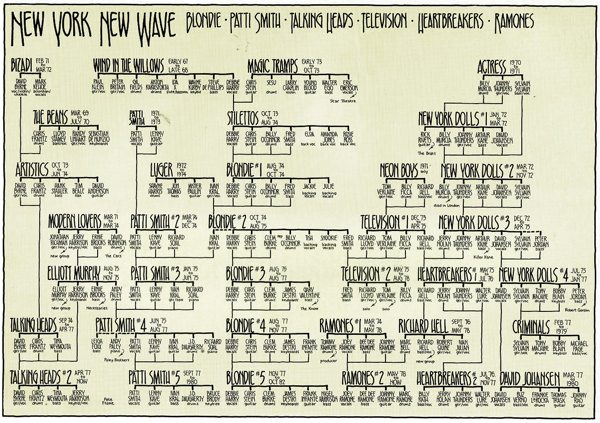
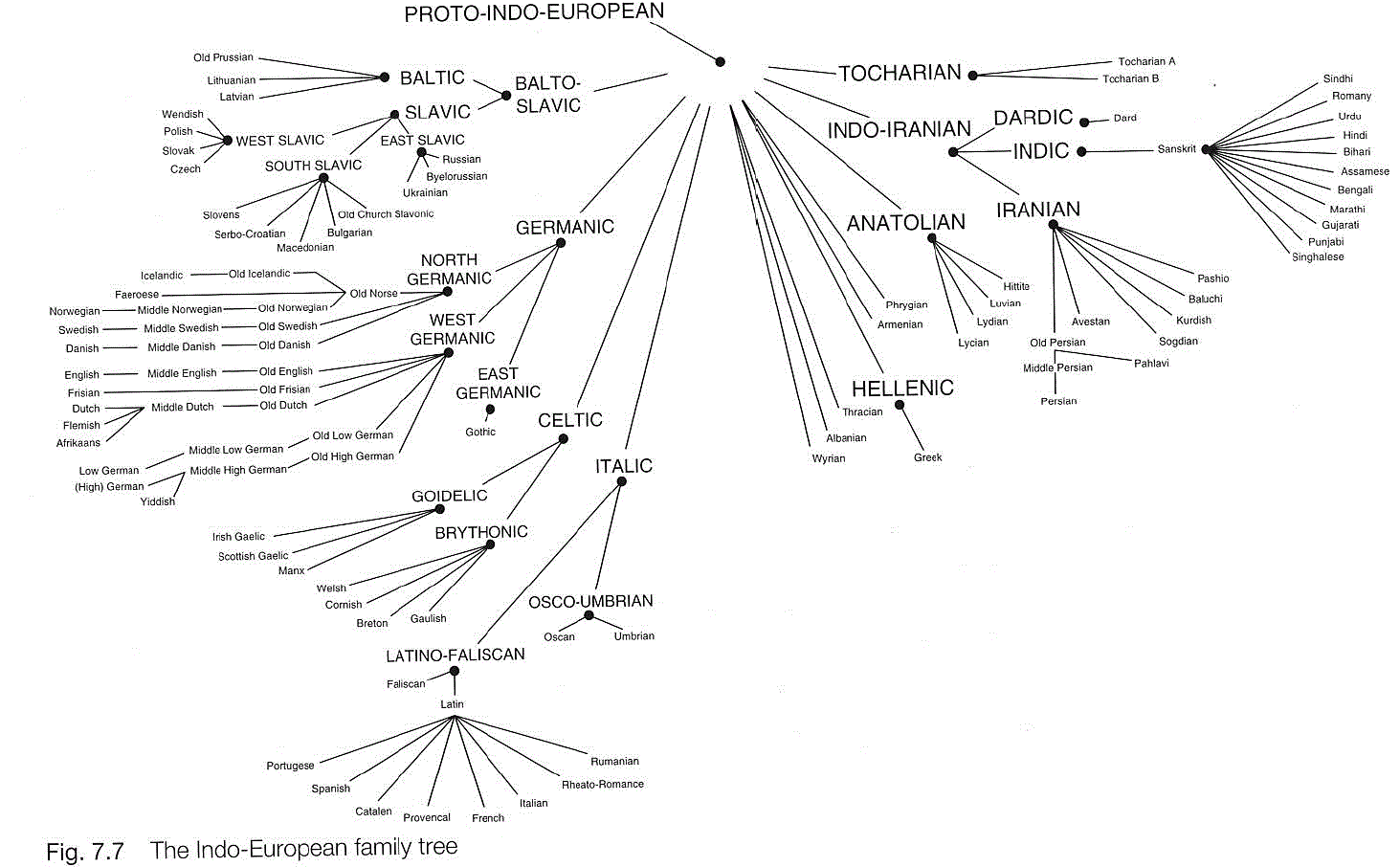
Could a tree diagram better express the organic aspects of brewing? Think of those rock family tree posters or a chart setting out a linguistic tree. Could such a construct better describe the dynamic nature of brewing history? I was playing with the idea of a poster based on a Gantt chart for the histories of breweries in a specific region, like perhaps this handy spiral version describing geological time but that doesn’t seem reasonable above a certain scale. The tree would express time on the X access, diversity on the Y. Ideally, like Google maps, one could drill down into it to find finer levels of relationship or draw back to higher levels of abstraction.

These need not replace style but could go some way to break its tyranny or at least give it context and competition.

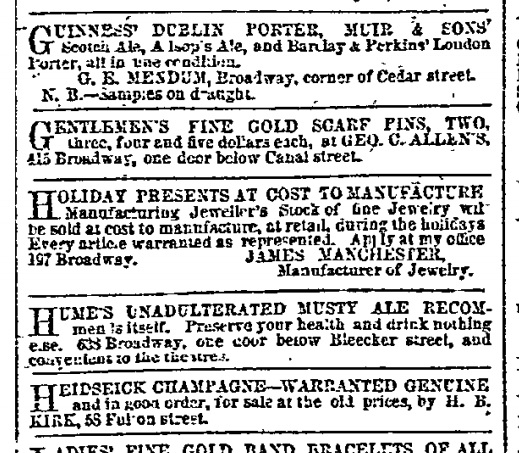
“Preserve Your Health and Drink Nothing Else…”

As Stan pointed out this morning in his weekly links… aka apparently for the next two weeks his weakly links…. Gary G has been posting what he has learned about about musty ale, musty ale, musty ale, and musty ale.

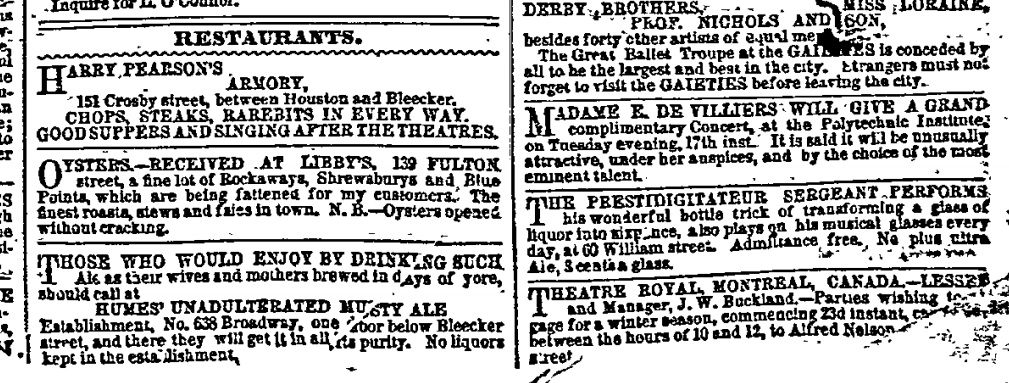
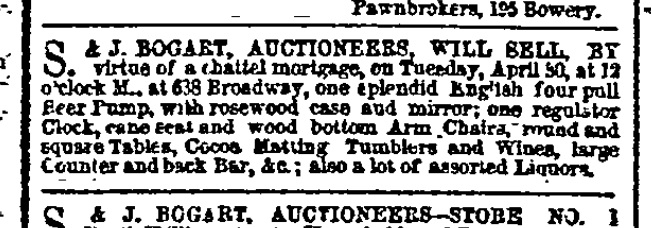
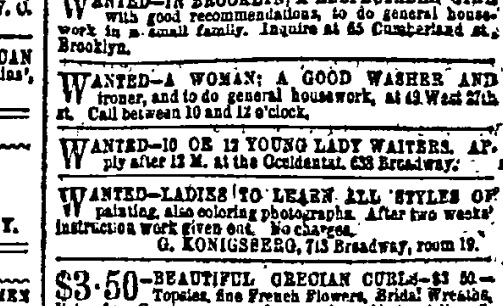
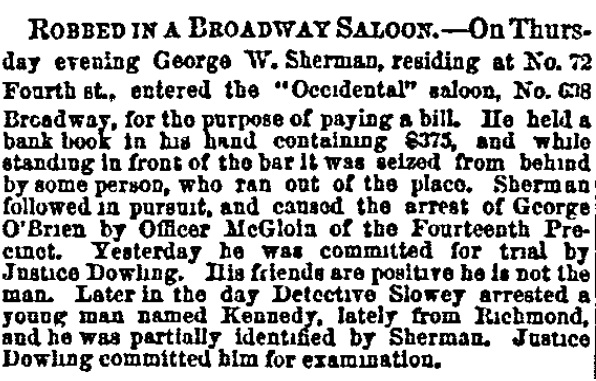
I have little to add. I get all confused once we get any distance past the first third of the nineteenth century. Lager history seems to give me the yips. But I will add this. That is an ad from the New York Herald of 22 December 1861 offering Hume’s Unadulterated Musty Ale. Hume’s ad locates the brewery at number 638 Broadway. Ten days earlier, the notice was a little different. The address is at the corner of Broadway and Bleeker Streets, an intersection in NYC that still exists – where the Swatch ship is now. Maybe it was just a bar, not a brewery. In April 1861, there was an auction at the location offer “one spendid English four pull Beer Pump.” A few years later, the Occidental is looking for 10 or 12 young lady waiter at the same address. There was a robbery there the next year. Bleeker Street, by the way, is named after Anthony Lispenard Bleeker, a cousin to the brewing Lispenards of pre-Revolutionary New York City, the fact of which just cost me 30 minutes of my life in tangential searches which will come to nothing.  Nothing.

I can’t find anything on Hume. Gary has a Hume, J.B.,  brewing musty ale in Cincinnati in 1859. Bet Gerry has a binder on Hume. Gerry, not Gary. Binders. On Humes. Me? Nuttin. Was Hume bringing in Cincinnati beer into NYC? Maybe. Seems odd. But that’s Hume for you. Maybe. Whoever he was, he was selling musty ale in NYC in 1861. Whatever it was. He had it. Right there.

Session 118: Guess Who’s Coming To Dinner?

sessionlogosmThis month’s edition of The Session sees host Stan Hieronymus of asking everyone to write about their doomed dream dinner plans:

If you could invite four people dead or alive to a beer dinner who would they be? What four beers would you serve?

Elephant in the room: I have been to one beer dinner and never ever plan to ever go to one again. I wouldn’t do that to any guest. So, let’s swap that out and think about four folk I would invite to a pub, to sit around and drink and snack with. No pairings. Not in my doomed dream dinner.

Other than that, this is a great topic for where I am in my life as a beer blogger. I have migrated 565 posts from the old platform to this new one and in doing so have revived some old friendships by revisiting some posts long forgotten. Based on that, my first guest to the pub is Pete Brown. Pete won the big prizes and a few others at last evening’s British Guild of Beer Writers Awards. Like may of the other beer writers I have met over the internets, Pete and I never have been in same the physical space even though he did participate in a ship to shore Morse code discussion with me back in 2007 as well as an interview with Knut and me back in 2006 upon the release of his second book. The beer I would serve Pete would be Double Double, the lost style that lasted from about 1520 to 1820. Its Elizabethan roots would, I hope, inspire him as a topic for his next book.

Next, I would build upon the Elizabethan theme by asking Martyn Frobisher to join us to explain what it was like to put in an order for 80.5 tons of beer as part of his preparations for his 1577 iron ore mining expedition to the high Arctic of what is now Canada. One of the more fascinating topics I have been able to research has been the unexpected presence of beer and brewing in Canada’s eastern Arctic well before the creation of the nation, during the great and grand first wave of northern exploration. I would serve him a gallon of whatever it was he requisitioned and let him explain it to the table. In the 1660s we have seen beer brewed in the Arctic and in the 1670s at least two sorts of beer being brought along  for the trip.

Two more? I would invite Sarah (alias Jenny) who was in the 1730s a runaway slave, the legal property of the brewer Hendrick Rutgers. And I would also invite the unnamed twenty year old woman from Barbados whose own brewing skills were included in the 1760 notice offering her for sale.  The notice said Sarah ran south with a white man while her Barbadian dinner mate was turned down at market, her advertisement running again a few month later. When I wrote about them I thought it was the saddest corner of the story of brewing I had ever encountered. I’d serve them whatever they wanted as they came to the table but I would be very interested in knowing what beer meant to them.

I am going to cheat… twice. I am adding another guest and one who was never ever dead or alive. I can’t think of anyone who might bridge the odd set of table mates than Piers the Ploughman, the hero/everyman of the 1370s morality epic. As we are told, Piers would get his halfpenny ale as he would think fit. He would hammer at Frobisher, himself a knight, on the order good government demanded. He would in turn comfort the enslaved and then round upon Brown, lecturing him on the rumours of everything from junketry to Putinesque vote rigging, saying with the wagging finger:

Then would Waster not work · but wandered about,
Nor no beggar eat bread · that had beans therein
But asked for the best · white, made of clean wheat;
Nor none halfpenny ale · in no wise would drink,
But of the best and the brownest · for sale in the borough.

Then, once the moral order was established, I would have them served the best and the brownest ale of the borough – especially for the ladies. They’ve earned it.
Reaching Back Into 1780s Hudson History

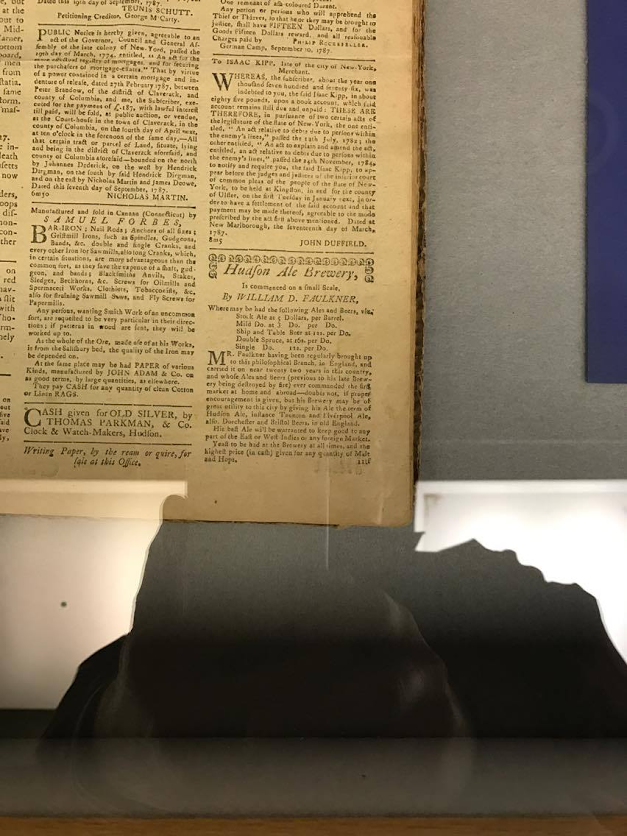
hudsonwg27sept1787aI buried the grape vines the other day. Gave the lawn one last mow. The Red Sox have been gone from my TV for about five weeks now. Winter is coming. Thank God that there is the hunt for beer and brewing history to fill the dark cold nights.  Craig forwarded me this one image a few months ago and it has sat in my inbox waiting for the right time. He spotted it at a display on the US Constitution – a newspaper ran the text of the Constitution and Faulkner’s ad on the front page.

It’s from the September 27, 1787 issue of the Hudson Weekly Gazette and it neatly fills a gap. We’ve traced the career of William D. Faulkner from Brooklyn in the late 1760s to Albany in the early 1790s. We had known that there was a lull in his career after the disruptions of the American Revolution so it’s exciting to see that by just four years after the peace he was settling into the mid-valley town of Hudson, NY. Just as the Hessian Fly was decimating grain crops. The ad states that his previous brewery was destroyed by fire. That would be one of the two Rutgers’ Maiden Lane breweries that he left Brooklyn for in 1770, the brewery of Anthony Rutgers. Or, was it the Cow-Hill brewery in Harlem Craig mentioned when he sent the image, referenced in our book. That would give Faulkner a five brewery colonial career. The man was on the go.

And he likes himself. He “ever commanded the first a market and home and abroad” confirming again he was an exporting brewer when they were supposed not to exist.  The inter-coastal and inter-colonial trade in beer is waiting to be explored as is the ranges of beer which were brewed. Look at the ad again. It includes a price list:

Stock Ale at 5 Dollars, per Barrel.
Mild Do. at 3 Do. per Do.
Ship and Table Beer at 12s. per Do.
Double Spruce at 16s. per Do.
Single Do. 11s. per Do.

Remember that “Do.” is ditto and that “s” is shilling.  Currency in the years after the end of the Revolution remained in flux: dollars and shillings in the same ad. Same in Upper Canada. And there is also the assertion that his best ale will be warranted to keep good to any part of the East or West Indies or any foreign Market while name dropping Taunton and Liverpool Ale along with Dorchester and Bristol Beer. A pretty confident and skilled brewer. Good to see “Stock Ale” on offer, just as we see it in the Vassar brewing logs from nearby Poughkeepsie of the mid-1830s.  Philadelphia’s Perot in the early 1820s uses the term “long keeping” instead.

Just like these other brewers, Faulkner was speaking to his market. You would not name this range of styles or the other famous English beers if your customer did not know what they were, didn’t have a need for Stock Ale. As time passes and the new Republic gets some decades under its belt, these lists of styles on offer become shorter. Perhaps to match the simpler nature of the struggling society moving away from the coastal economy, driving inland.

Session 114: I Know Nothing About Pilsner

sessionlogosmThis month’s edition of The Session sees Allistair Reece asking us about pilsners.

I know zippo about pilsners. I never went on one of those five-day long weekend holidays to Prague that made me a drive-by insta-expert. I never lived there spreading the cultural imperialism of English as a Second Language either. When I was teaching overseas after university standing before a group of sweaty ignorant teens in 1991-92, I went to northern Poland and drank Gdanski. So I can tell you all you might want to know about tripe soup and how to say bad words in another Slavic language. When I worked in Aalsmeer in the Netherlands in 1986 I drank a lot of the local big named stuff – Grolsch, Amstel and Heinekin – and even learned how to pronounce the first one “[hork]-rols-[hork]”… but I am not sure that is what Alistair is thinking about. It’s not like I pretended. When I needed Czech-based pilsner content, Evan wrote a post. Why pretend? It’s not that I haven’t experienced beers branded as pilsner. But I’ve never heard the mermaids sing about it. Is it maybe that pilsner gets lost in the shuffle of the more generic “lager” thing now and in the past? It has suffered indignities at the hands of craft even when others make honest efforts.

You know, in 2006 I made something of an admission when I wrote “I just can’t imagine when I am supposed to crave steely stoney dry grassiness.” Is that it? It’s just not my thing?

Session 99: A Little Mild And A Little Excitement


mild1

This month’s edition of The Session is hosted by Velky Al who asks us to consider American mild. Mild of the Americas? Pan-American mild? I am game. After all, the Western Hemisphere is the happeningist hemisphere if all.

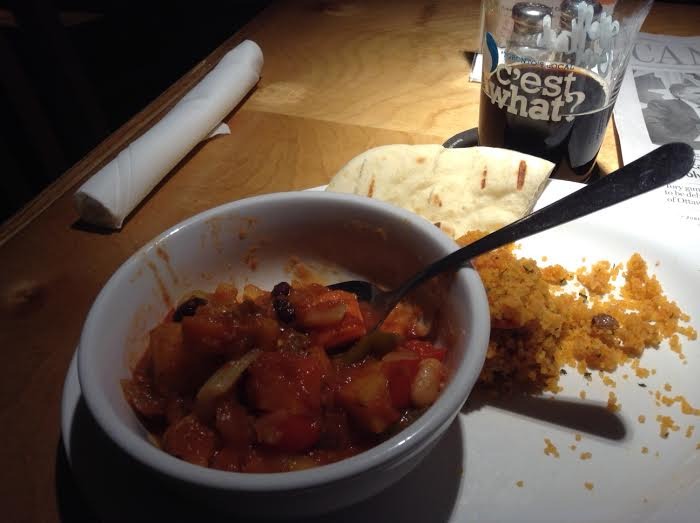
Mild. I actually have had two glasses of the stuff over the last few months. Here in the central section of the hemispheric upper quarter. That is an upgrade from most years here in Ontario where mild is rare as… as… a very rare thing. That glass above? I had it in Toronto in early December. After the day of sitting in a strange city studying the difference between a semi-colon here and a comma there, considering whether “shall” or “must” is better placed in that sentence. Seriously. Contract drafting skills are not particularly thrilling. So, a stop at C’est What, a bar I wrote about a decade ago, was needed. The venerable basement tavern has always struck me as Toronto’s rec room and the pint or two of mild fit right in and washed away the classroom, the grammar and the concrete landscape of 90 degree angles before I jumped on the train back home.

mild2Two months later I was in small town Ontario – Collingwood on Georgian Bay – and we stopped for a great dinner at Northwinds Brewhouse. Again, a reviving hit of malt and lush fluidity framed rather than cut but modest hopping. And under 4%, the drink didn’t hamper my ability to take on the last leg of the trip to the hotel another hour down the road. Brewmaster Bartle had three beers on under that level of strength – the mild, a grodziskie and a farmhouse ale – the details of which you can see on the chalkboard if you squint at that photo… yes, there… way in the back. Yup.
But that is it. Good news? Well, I’d like more but at least this all represents and improvement over Session #3 which was also about mild ale. Back in 2007 I really couldn’t find one. Had to post a picture of a book to find something to talk about. I was a bit naive, too. I wrote “you are never going to see a flavoured mild or an extreme mild.” AHHAAHHAHHAHAHAHHAHHAHAHA. Had I but known how stooooopid craft beer was going to get over the intervening years. What a fool I was.

Albany Ale: Straw In Wheat Beer Is Next Big Thing

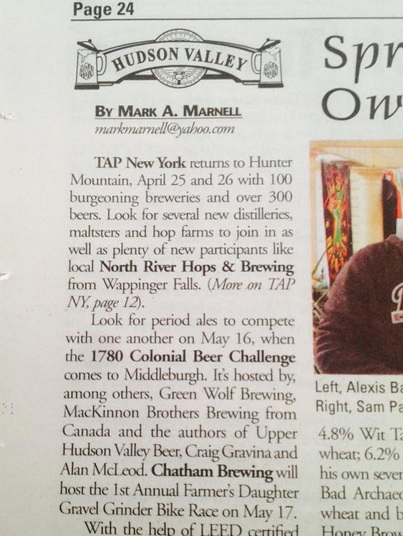
It’s not quite like ten years ago when one’s name could appear in The New York Times, but I got word from cousin Mike Malone of, amongst many other things, “Books and Beer” on 1460 AM radio WVOX that news of the May 16th event in Middleburgh, NY had hit the Ale Street NewsCraig has been working on a press release:

On May 16th, The Middleburgh Public Library, The Albany Ale Project, and Green Wolf Brewing Company are hosting a day long (1pm to 5pm), family-friendly event celebrating beer, brewing, and Middleburgh’s Revolutionary War history to benefit the Middleburgh Public Library. MacKinnon Brothers Brewing Company, of Bath Ontario, will also be participating. The event will be held on Baker Avenue around Green Wolf Brewing Company (315 Main Street, Middleburgh) and behind the Middleburgh Public Library (323 Main Street, Middleburgh.)

The day’s activities include a Revolutionary War encampment, colonial brewing and cooking demonstrations, 18th century toys and games for kids, talks on the history of beer and hops in upstate New York and the Schoharie Valley, a Schoharie Valley hops display at the Middleburgh Library, beer samples from Green Wolf and MacKinnon Brothers.There will be Green Wolf brewery tours, as well as food from Middleburgers BBQ and Under the Nose gift shop and bakery. Craig Gravina and Alan McLeod will be selling and signing copies of their book Upper Hudson Valley Beer, and the day culminates in “The 1780 Beer Challenge”, cask tapping and tasting.

This is really neat. Looking forward to learning more about one of the areas of New York where the people who found refuge in eastern Ontario came from 240 years ago. And really looking forward to seeing recreations of how straw was used to make strong wheat ale. The more I learn about straw the more I think it was critical to pre-industrial scale brewing even if we have all forgotten its usefulness. Go straw!

How I Feel Now That I Have Nickelbrook’s Wet Hop Ale

hfxriot1a

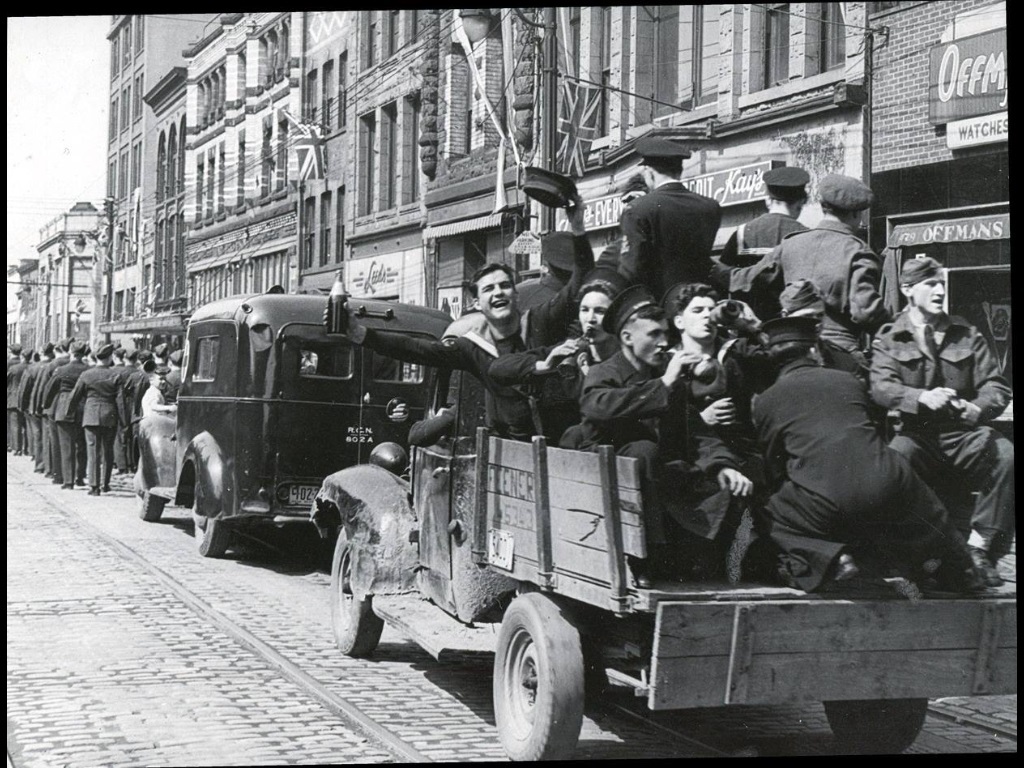
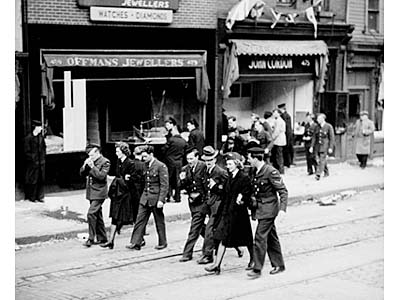
That’s a new photo for me. It is from Halifax’s Victory in Europe Day parade in 1945 apparently before it became the VE Day Riot. Click for more of the photo. I have mentioned the Halifax riot of 1945 somewhere around here but can’t find the link. [Later: here it is.] If you don’t believe things got bad, here is an image of the spot later in the day when the jeweler had been hit by looters.

Why do I mention this? Because above is about 10,000 times how I felt when I saw Nickebrook’s Ontario Wet Hop Ale finally on my local LCBO shelves this morning. I say 10,000 times in the best sense as the guy is clearly ecstatic from the destruction of fascism, the coming years of peace along with the successful defense of freedom. I just found a beer in a store. It is, however, a very good beer. It pours a light greenish-gold. On the nose, a very attractive mix of spicy, bitter and sweet greens. Romaine lettuce, arugula and honey. In the mouth, a light crisp body. More honey with a nip of hoppy heat. Bitterness both on the roof of the mouth and under the tongue. A little lighter finish. Reminds me of one of those confident light white wines in the sense that it makes its case calmly.

Local in the sense of 100% Ontario grown ingredients. Ontario is rather big, however, so you will have to judge what local might mean accordingly. $7.95 for 750ml of 5.3% ale. Unduly tepid praise from the BAers. RBers have a little more sense. PS: a post I wrote in 2006 about wet hop beers.

But The Problem Is My Own Unified Theory…

monkey4I wrote this quickly over at Stan’s this morning. Govern yourselves accordingly.

++++++++++
I have to say I find this a very unsatisfying approach. I want to preface this by saying I do not believe I am being contrarian or a prick. I am also not talking about any one person. At least I have no intention to be so. Yet this shall be firm… so, jumping in the deep end, while I appreciate the honesty of this argument (1) it smacks of a desire to prop up the concept of style, (2) there is a touch of the quest for the “new unified theory” brass ring, (3) it fails to take into account the continuity of beer in time and space, (4) it does not take into account some obvious themes that run opposite.

I am coming more and more to an understanding that there is nothing called style. If we line up concurrent beers, beers over time and beers across geography, there are few dividing line and as much complexity and evidence at the points of overlap between styles as there is in the core examples of style. I still come back to Jackson’s definition of style as just an homage to a classic beer and can go no farther.

This has been confirmed again recently. I am judging the NAGBW book entries right now and if I read another attempted statement of a unified theory I shall scream. Understanding all beer is impossible so we layer an abstract overlay that is with reasonable grasp and stand back to state (a) it explains everything and (b) I came up with it… so therefore I am clever and worth being paid as a beer writer. I understand the natural desire for achieving excellence in thought. I weep when I see the road to that excellence being based only on first constructing a unique proprietary analysis for that thought and staking a claim to authority. But I see it again and again. Thought needs building upon and yet surpassing what has gone before. Something seems to keep us spinning our wheels.

Further, that approach leads to grasping at the straws that can be assembled to prop up the new analysis and rejects alternate explanation early on. When I read about these local beers, I see “eureka” moments based on finding a reference to what happened in one place based on a scrap of evidence without the thought that the neighbouring town or county did not have its records survive. Why presume that there was not continuity with neighbours? When one reads Ungers books you see the path of jurisdictional autonomy that preserved the beer of Hoegaarden but you also see neighbouring towns and principalities being absorbed and modernized too. Wheat beers were common in the Low Countries, likely lots similar to that one. But because the evidence is not there, it’s like they never existed, conveniently now for the modern unified theorist of partitioned styles.

Finally, real themes appear to contradict niche style theory but seem to be rejected. How can beers like Kentucky Common be accepted while US beer thinking is blissfully walking around that tiny gap in history about ale brewing from, oh, 1600 to 1900. How can a part of a likely much larger whole be proclaimed as being autonomous without connections and continuities being defined. It’s not just that Albany ale still is not considered to be what it screamingly it, but it is only an example. Masses of unexplored town and city brewing and drinking experiences go unexplored I suspect because they do not fit neatly into the twin requirements of tight stylistic definition and proprietary unified theory.

Not a rant. Nor an accusation. An invitation either to prove me stupid (always a possibility) or at least see a concurrent bigger analysis that might undermine indigenousness and its kin fatally. Offered with greatest respect to the above.

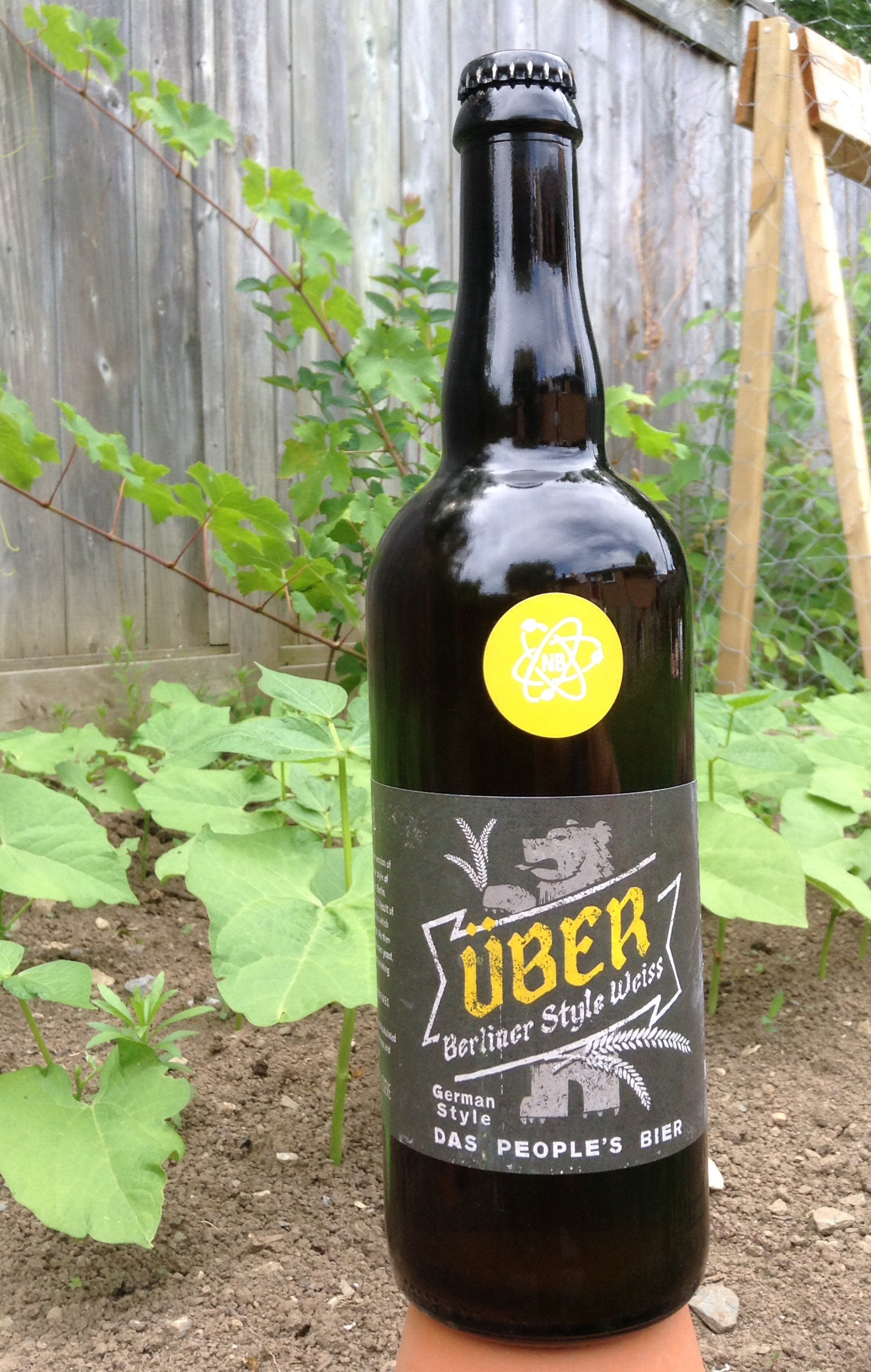
Ontario: Uber, Nickel Brook Brewing, Burlington

uberWhat a minefield this beer presents me. Not only do I know and like the brewer but his mother lives nearby and his auntie works where I do. How could I possible give an opinion unbouyed by positive thoughts? Then again, it’s not like I am all Jimjunkety or anything. No need to stop using the bathroom mirror. Then, besides that, there is the question of what others might think of me – which can be odd and disconcerting – not to mention likely wrong. How dare I try something not conservative? But more importantly, what does it mean about this style? What does this beer in this place and time mean?

You will recall the the best expression of what style is was Jackson’s first go at it, before he went bad Aristotelian creating the mess we live with today. Originally, a style of beer was stylized after an example, a great beer. I think it is fair to say that practically speaking that example is the Weihenstephen Berliner Weiss I wrote about for Session 19 – if for no other reason that for a long while this was the only example you were going to lay your hands on in North America. That is until micro went craft. So, is this homage or dommage to the style? Should I care?

The beer pours an effervescent clear light gold. No head at all. On the snort, you get apple cider and cow poo of the nicest kind. In the mouth, a light and lightly astringent texture holds flavours of apple, meadow grass, minerals like a good Mosel, fresh lemon juice, a little cream of wheat like a good gueuze and a little little something vegetative like fresh cabbage or cauliflower. A really lovely sipper and at 3.8% a beer you can sip for a good long time.

What a relief! No ethical qualms!! Priced at $7.95 for 750ml, this is about twice as much as the brewers hefty IPA Headstock, one of the best values in beer in Canada. The BAers give it lots of positivitay… which is good.