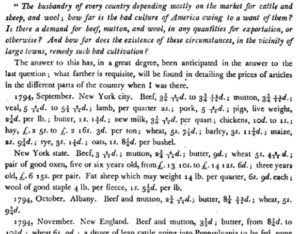
So What Was Northdown Ale In The Later 1600s?

Before the curse that is social media was thrust upon us, one key promise of beer blogging was collective research. With the most welcome news that Lew is back into the beer blog game, he reminds us of the point of doing this day after day:

A bit over two years ago, I stopped writing this blog. It wasn’t because blogs are dead — I refuse to believe that — and it wasn’t because I got bored, and it certainly wasn’t because I was running out of things to say. Blogs, good blogs, relevant blogs still are vital, and they don’t have to be on Tumblr, or run through a microplane grater and splattered onto Twitter, or covered in kitties and posted on Facebook. Blogs are the place to do long-form writing, and I like to think I was able to balance somewhere between a tweet and tl;dr.

Even though I shared in the publication of two histories the year before, 2015 was the year I think I took my interest in brewing history most seriously. That few care about the state of brewing and porter selling in New York City in the decades around the Revolution is no concern of mine. It’s important just to write about it. Same with the centuries of brewing on Golden Lane and life in London, England’s district St. Giles’s Cripplegate. These things are interesting because they are true.

We are children of the Enlightenment. Three things we depend on for understanding were all invented and popularized in the 1700s: the application of science in practical matters, mass communications and commercial branding of products. Each is a means to create a lasting record, each a self-archiving activity. People are led to believe, as a result, that things prior to the advent of these phenomena were unlike today. No scientific brewing? No pale ale. No newspaper? No news. Folk actually believe these things. They believe folk didn’t know how to make fine things with available resources. We are slaves to records. We need to distrust them more even as we dive more deeply into them. Which leads us today’s new topic: Northdown ale. Never noticed the stuff until Jay tweeted this quotation from Pepys yesterday. Which got me looking for more information and found an excellent blog post from November 2014 posted on the excellently titled blog Things turned up by Sally Jeffery while looking for something else as well as this passage from a travel guide called All About Margate and Herne Bay reviewed an 1865 magazine named The Athenaeum:

Quoting largely from the Rev. John Lewis’s account of Margate, written in 1723, he notices the once famous beverage, known to Charles the Second’s thirsty subjects by the names of “Northdown Ale” and “Margate Ale” of which drink Lewis says, “About forty years ago, one Prince of this place drove a great trade here in brewing a particular sort of ale, which, from its being brewed at a place called Northdown in this parish, went by the name of Northdown Ale, and afterwards was called Margate Ale. But whether it’s owing to the art of brewing this liquor dying with the inventor of it, or the humour of the people altering to the liking the pale north-country ale better, the present brewers send little or none of what they call by the name of Margate ale, which is a great disadvantage to their trade.” This was the beer which Evelyn calls “a certain heady ale ” ; and it is probable that its popularity with London beer-drinkers influenced the generation of brewers who fixed the immutable properties of “stout.”

So, an 1865 citation of an account from 1723 recalling a drinking experience from forty years before that. Northdown Ale. In her blog post, Ms. Jeffery surveys the evidence and seeks to determine if she can “get a better idea of what the ale was like by looking at how it was made.” Let’s now see if we can add anything. First, I like the reference to Herrick. In one edition of his book, there is a footnote to another poet’s* line of verse anthologized in 1661: “For mornings draught your north-down ale / Will make you oylely as a Whale.” Pepys was drinking Northdown ale the year before. I am not sure why one might want to be so oily. Franklin referenced “he’s oil’d” in his 1730’s Drinker’s Dictionary. I am going to assume it means the beer is staggeringly strong for the moment. In The Curiosities of Ale & Beer: An Entertaining History from 1889, Herrick’s own lines on Northdown Ale from “A Hymne to the Lares”¹ are quoted:

The neighbouring county of Hereford, now a great cider-drinking locality, had in former times at least one town with a reputation for good ale. “Lemster bread and Weobley ale” had passed into a proverb before the seventeenth century. The saying seems, however, to have been affected chiefly by the inhabitants of the county, who, perhaps, were not quite impartial. Ray, writing in 1737, ventures to question the pre-eminence ascribed to the places mentioned. For wheat he gives Hesten, in Middlesex, “and for ale Derby town, and Northdown in the Isle of Thanet, Hull in Yorkshire, and Sandbich² in Cheshire, will scarcely give place to Weobley.” Herrick mentions this celebrated Northdown ale in the lines:—

That while the wassaile bowle here
With North-down ale doth troule² here,
No sillable doth fall here,
To marre the mirth at all here.

Did you see that? Wheat. Is this strong wheat ale? Or is that just a juxtaposition of two products of the region? Not sure. Likely the latter, given Jeffery’s references to an excellent but short lived barley malting trade concurrent with the height of Northdown ale’s prominence. Also, the diarist, botanist and courtier to Charles II John Evelyn describes being in Margate, one mile west of Northdown, on 19 May 1672 and states:

Went to Margate; and, the following day. was carried to see a gallant widow, brought up a farmeress, and I think of gigantic race, rich, comely, and exceedingly industrious. She put me in mind of Deborah and Abigail, her house was so plentifully stored with all manner of country provisions, all of her own growth, and all her conveniences so substantial, neat, and well understood; she herself so jolly and hospitable; and her land so trim and rarely husbanded, that it struck me with admiration at her economy. This town much consists of brewers of a certain heady ale, and they deal much in malt, etc. For the rest, it is raggedly built, and has an ill haven, with a small fort of little concernment, nor is the island well disciplined ; but as to the husbandry and rural part, far exceeding any part of England for the accurate culture of their ground, in which they exceed, even to curiosity and emulation.

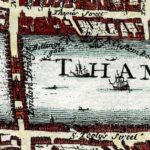
Which tells us there were many brewers and much malting in a rich farming district. And notice another thing from the quoted text further up. Thanet. Which reminds us to ask the particular question – where exactly is Northdown? That image above is from this map from 1711. If you click here you will see a supremely confusing cross-referencing of the 1711 map with a 1623 image on Jeffery’s post. See, before branding, newspapers and scientific brewing you needed to know where a beer or ale was from to figure out what to expect. Northdown is located in southeast England in the county of Kent – as in land of the noted hops. But the land of hops most noted about 200 years after Herrick wrote his lines. It was, also, the site of the October 2015 drinking session of the year as recorded by Team Stonch. So in the 1600s, the 1800s and the twenty-first century, a place of good beer but in each era quite distinct good beers.

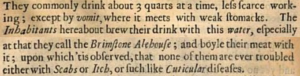
northd1Click on that image to the right. It’s a paragraph from a 1681 treatise entitled Ursa major & minor: or, A sober and impartial enquiry into those pretended fears and jealousies of popery and arbitrary power, in a letter. Clearly an unhappy guy. But what he’s unhappy about is how, in tough economic times, brewers are making undue profits by not only jacking up prices but doing so by having “devised several name” for drinks including China ale, Hull ale – and Northdown ale. Sound familiar? Double the price for poorer beer? And you thought craft beer invented that trick. It appears to have been quite popular with the well placed in addition to the poets. John Donne – the Younger³ – recounts being sent a poem along with “a dosen bottles of Northdown ale and sack” which means it was good enough to bottle and, seeing as it was sent by Lord Lumley, good enough for the Peerage. Which might explain the jacked up price. A premium ale for those that can afford it.

Notice one more thing. Sally Jeffery suggests there was indication that the ale was dark but also sees that “[t]he wheat stubble that is left is either mown for the use of the Malt-men to dry their Malt…” which, as we know, would make the sweetest, palest malt during that era. Enough to confirm anything? Nope. All we see from this set of records is clearly (i) a premium product, (ii) defined quite clearly to a time and place which was (iii) notably strong and (iv) bottled. The best ale during the Restoration? Maybe.

*Likely this John Phillips, royalist lad and nephew of Milton.

¹Here is the whole text of the poem:

It was, and still my care is,
To worship ye, the Lares,
With crowns of greenest parsley.
And garlick chives not scarcely:
For favours here to warme me,
And not by fire to harme me;
For gladding so my hearth here,
With inoffensive mirth here;
That while the wassaile bowle here
With North-down ale doth troule here,
No sillable doth fall here,
To marre the mirth at all here.
For which, o chimney-keepers!
(I dare not call ye sweepers)
So long as I am able
To keep a countrey-table,
Great be my fare, or small cheere,
I’le eat and drink up all here.

²I understand Sandbich to be “Sandbach” and troule means to “pass about.”

³“…an atheistical buffoon, a banterer, and a person of over free thoughts…”

Platinum Pints 2010-15: Best Beer Book Writer

platwe are half a decade into… the decade. The twenty-tens. Time to reflect and to reflect on a longer time span than the annual keek. Have their been arcs to trace? Have past achievements been already lost? That’s what the Platinum Pint awards are for. To think about what we have received to this point and where we stand as a result.

As I might have foreshadowed, the winner of the award for the best writer of books 2010-15 is Pete Brown. During that span, his three books Hops and Glory, Shakespeare’s Local and World’s Best Ciders: Taste, Tradition, and Terroir have stood as the standard for inventive, daring, interesting and well-written drinks related texts. They also represent an era which may well be over. This past year was dry. We have to be honest. It was such a dip in beer book diversity that when I mentioned this, Stan tweeted about a book about making home brew very quickly. I love Stan’s sense of humour.

hag1

slpb1

image33


Pete entered the decade riding a high. His third book Hops and Glory had been out for half a year. In December 2009, he won the British Guild of Beer Writers’ Award for Best Writer 2009. I had my eye on Pete. I reviewed his first book Man walks into a Pub in 2003 when most beer communicators were still in elementary school. I interviewed him in 2006 when his followup Three Sheets to the Wind came out. They were good but gave a sense that there was more to come that was better. One thing they did establish was that an insider could write as an insider and also that one could travel the world exploring beer without being a junket parrot. Better still, his books were being published by a proper generalist publisher, Macmillan.

When Hops and Glory came out, I was blown away. I reviewed it over a number of posts. What immediately struck me was the daring. The guy was actually doing something, exploring. And he was doing it in a pretty weird way. His plan was to take a cask of IPA from Britain to India by ship to retrace the origins of the beer. Fabulous. And he failed. Or at least the cask did (spoilers… literally… and I suppose too late for me to mention… oh, well…) But by not actually achieving the physical outcome he imagined he rightly claimed a greater good. He describes the British Empire, shipping routes and shipping methods as well as Georgian culture. He took beer, lifted above itself as subject matter, then drew us a picture of how the beer fits into its own broader history while illustrating the foibles of human existence – and did so effectively as I described:

Anyway, the point is that for 237 to 306, Brown takes us into his internal experience – into the doldrums of the sailing ship and then into the small heart of darkness that is the international shipping trade today – by seemingly forgetting to slip back into the history. It’s a good technique. It weighs a bit, wears a bit. But it still takes us along as if to say “it’s alright, Al, no need for you to ever go on a container ship from Brazil to India all alone for five weeks… I’ve done it… don’t bother.” Thanks Pete. I won’t. It’s off my to do list.

The book set the standard for those that followed. Beer books now needed to be filled with humour, invention and place the theme in context. His next book Shakespeare’s Local ran with all that while staying in one spot – the George Inn of Southwark. With a history going back hundreds of years farther back than India Pale Ale, the opportunity was ripe. He dove deeper again into his topic. I pointed out that the history was detailed, that it would be useful to know who Simon de Montfort was and maybe why Englishmen became more mobile in the 1400s bolstering inns like the George. The fact was we were being presented with beer as a subject worth something other than an introductory nod. I found this inspiring. I had dreams of much the same for the research Craig and I were undertaking with the Albany Ale Project even if not necessarily is the same medium. Pete’s books inspired the idea that there was more to know and more to discuss. I was left with the desire for more at the end of Shakespeare’s Local. More illustrations, a greater library of such histories. In response, I’ve published two histories chasing his example and, since then, have undertaken much more research that I intend to continue in the years to come. The past is, after all, good beer’s future.

The very next year, Pete came out with a new book and took a 90 degree turn with World’s Best Cider. Well, not really a turn as he announced in 2010 that cider and perry were officially on his radar. But when he published this book, he did a very interesting thing – he killed off all hope that anyone would write another as well. It is such a complete text for the first comprehensive global guide that none would be needed until the industry grew to a next level. And that opportunity appears to be off the cards given that the mass market for cider has, to put it kindly, leveled off. Again, I found the effect was somewhat shocking:

The next thing I thought was “oh, my… cider porn.” Never encountered cider porn before but, then again, never met an atlas of cider before either. Which is what this is. Think of all those beer books with the same “what beer is section,” the longer “all sorts of beer section categorized one way or another section” and the “food and beer” section. Then take away the beer, cut the food section and add fermented apple juice. That is what this is. Except… there isn’t another. Is there?

There isn’t. As Jeff uniquely and entirely graciously acknowledged yesterday. And there hasn’t been a set of three books by one author in good beer that have touched these three not only in the decade but, as far as I am concerned, in my experience. Not that they are comprehensive. That is the point. Each in their own way take a small part of the whole and drill down excellently. As a set, they illustrate how wonderfully drinks writing sits in the broader cultural context. These books gave us the impression that like good beer was on a roll.

It was not to be. The downside of the example these books of Pete Brown set is that, sadly, publishers have decided there is no market for such books and, if we are honest, sales likely drive that opinion. So we are left with the lower orders of the publishable and sales worthy, the style guides and pairing companions. Good for the authors, one supposes. But hardly something to look forward to repeating in the years to come. And Pete is self-publishing his next, his seventh book, What Are You Drinking? That is where we are mid-decade.

There you have it. The first Platinum Pints 2010-15 announced goes to Pete Brown as Best Beer Book Writer of the half decade. Next? Who knows. Maybe best experience. Whatever that means.

Your 2015-16 US Craft Brewery Dance Card

These are troubled times. One does not know what and who to hate or cheer on. Craft is either dying or transforming into something new and glorious. So you need some help. Click on the image for a bigger version. This is your cheat sheet. A notepad to carry with you at all times to make sure you know what you are supposed to think. You need to know what you need to reject.

* – no one really believes they are actually craft.
** – Actually Canadian, Belgian or something else but not ultimately US owned.
$ – sold out to big evil hateful brewing or money interests.
$$ – absolutely took big evil hateful brewing interests to the cleaner but still sold out.
+ – branch plant owner therefore just a small version of big multi-national brewing.
++ – just so big that it makes no sense to think of them as craft in any real way.
? – only allowed in craft so others could be retained in craft.
?$?$ – looking and hoping.

That’s just a start on my list. I probably missed a bunch. Let me know. If you click here you can get your own dance card to review, consider and annotate. Just make sure you use the dry-wipe ink feature on your browser so you can update this on a regular basis.

Ben Jonson And The Devil Tavern Rules, 1624

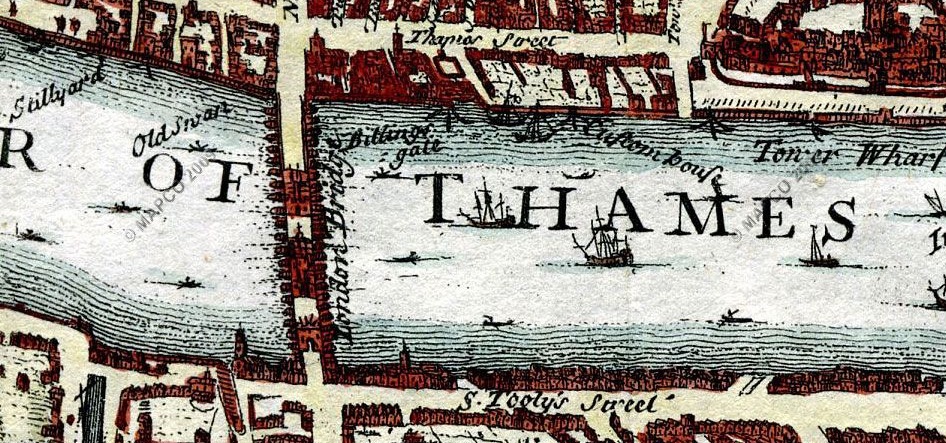
In 1939, Percy Simpson published his article “Ben Jonson and the Devil Tavern” in The Modern Language Review, Vol. 34, No. 3. Jonson lived from 1572 to 1637, a poet and playwright whose early career overlapped with Shakespeare. The Apollo was the room at the Devil and Saint Dunstan tavern near the north end of Middle Temple Lane in London, on Fleet Street near Temple Bar – the City gate of the Knights Templar. You can see the location on this map from Jonson’s time.

The Devil was where Jonson and his literary contemporaries Herrick, Carew and others met, subject to this code that Jonson wrote. They are described as Leges Convivales by Simpson – the laws of conviviality.The name of the room itself is an allusion from Plutarch, a reference to an excellent room of hospitality. Excellent. The more saintly congregation of St. Dunstans still gather, though a bit back from the road since the 1830s.

bj1bj2bj3

The Spectator: A Peek At London Society 1711-1715

spect1

Martyn made a very important observation the other day in the comments:

…coming-of-age ales were certainly being brewed then, and such brewings look to have increased over the next 40 or more years, though that may just be an artifact of the increasing number of newspapers being published.

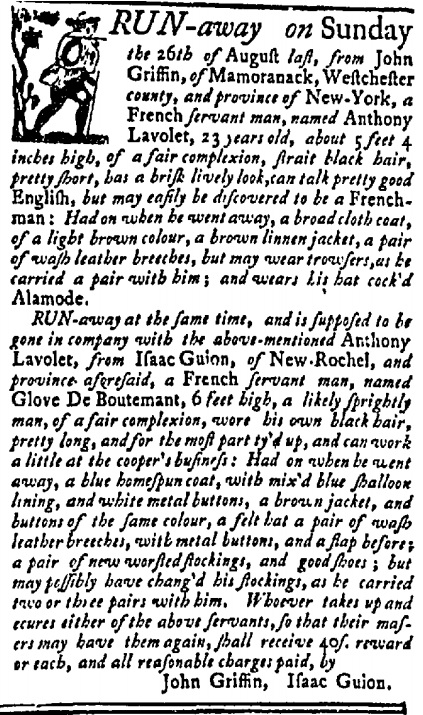
We are slaves to records. As I have noted before, I am very irritated by records. It is not just that I am subject to the decisions of what gets scanned from the pool of records. I am dependent on what was recorded in the first place. It is important to appreciate that it is astoundingly good to be able to find newspaper ads from New York in the 1750s not just because the newspapers are that old but because, in as real a sense, they are that new.

Newspapers only come into being in the sense we know them today in the first half of the 1700s and, really, at the latter end of that era. One of the best of the early English periodicals considered a daily newspaper was, as any one who studied English Lit should know, The Spectator published by Steele and Addison in the first half of the 1710s, the point where last of the Stuarts under Queen Anne meets the first of the Georgians. Through The Spectatorthey explored Enlightenment values as well as meaning of their toy, the possibilities of the medium. Fortunately, we can explore their explorations as the entire thing has been put on line at Project Gutenberg with an extremely handy key work topical index. As with resources like the scans of New York newspapers I have been digging through in the last two months or the searchable databases of the law cases found in the English Reports or the proceedings of the Old Bailey online, we are both grateful for and limited by the work of the good people who select which records to scan for public use.

Unlike those other databases, however, The Spectator was not particularly geared to the tastes or describing the habits of the beer-drinking end of contemporary society. The dedication to the first issue of the journal to The Right Honourable John Lord Sommers, Baron Of Evesham states that it “endeavours to Cultivate and Polish Human Life, by promoting Virtue and Knowledge, and by recommending whatsoever may be either Useful or Ornamental to Society.” Still – and as something of a great-grandparent to Tom and Bob a century later – there was an interest in describing the world of London which lay before them even as they evoked classical poetry in the search for a higher ethical lens through which to view it. In doing so, they did make some observations of the beery life. In issue no. 436 from Monday, July 21, 1712 we read about a visit to…

… a Place of no small Renown for the Gallantry of the lower Order of Britons, namely, to the Bear-Garden at Hockley in the Hole1; where (as a whitish brown Paper, put into my Hands in the Street, informed me) there was to be a Tryal of Skill to be exhibited between two Masters of the Noble Science of Defence, at two of the Clock precisely.

It is not a boxing match. It is a duel, a sword fight, the challenger stating in accepting the opportunity that he was only “desiring a clear Stage and no Favour.” The space has a pit and galleries. It is packed with humanity, gawking and flinching with every slash and wound. There are no references to drinking but a footnote leads to a description of the venue:

Hockley-in-the-Hole, memorable for its Bear Garden, was on the outskirt of the town, by Clerkenwell Green; with Mutton Lane on the East and the fields on the West. By Town’s End Lane (called Coppice Row since the levelling of the coppice-crowned knoll over which it ran) through Pickled-Egg Walk (now Crawford’s Passage) one came to Hockley-in-the-Hole or Hockley Hole, now Ray Street. The leveller has been at work upon the eminences that surrounded it. In Hockley Hole, dealers in rags and old iron congregated. This gave it the name of Rag Street, euphonized into Ray Street since 1774. In the Spectator’s time its Bear Garden, upon the site of which there are now metal works, was a famous resort of the lowest classes. ‘You must go to Hockley-in-the-Hole, child, to learn valour,’ says Mr. Peachum to Filch in the Beggar’s Opera.

Ray Street still exists. Sounds very much like the area around London’s Golden Lane from about the same time. At the other end of the social scale and more often frequented by the regular readership of The Spectator was the club. In the recent post on Georgian mass drinking, I referenced the coming of age celebrations for the twenty-first birthday of Charles Watson-Wentworth, 2nd Marquess of Rockingham. Another thing he did on reaching that milestone, other than unleashing 10,000 hangovers, was to join clubs and in particular White’s, the Jockey Club and the Royal Society. In issue No. 508 from Monday, October 13, 1712, The Spectator – which are described in general in issue no. 9 – dealt with a certain problem one found at these gatherings often held in otherwise public spaces, the Tavern Tyrant:

‘Upon all Meetings at Taverns, ’tis necessary some one of the Company should take it upon him to get all things in such order and readiness, as may contribute as much as possible to the Felicity of the Convention; such as hastening the Fire, getting a sufficient number of Candles, tasting the Wine with a judicious Smack, fixing the Supper, and being brisk for the Dispatch of it. Know then, that Dionysius went thro’ these Offices with an Air that seem’d to express a Satisfaction rather in serving the Publick, than in gratifying any particular Inclination of his own. We thought him a Person of an exquisite Palate, and therefore by consent beseeched him to be always our Proveditor; which Post, after he had handsomely denied, he could do no otherwise than accept. At first he made no other use of his Power, than in recommending such and such things to the Company, ever allowing these Points to be disputable; insomuch that I have often carried the Debate for Partridge, when his Majesty has given Intimation of the high Relish of Duck, but at the same time has chearfully submitted, and devour’d his Partridge with most gracious Resignation. This Submission on his side naturally produc’d the like on ours; of which he in a little time made such barbarous Advantage, as in all those Matters, which before seem’d indifferent to him, to issue out certain Edicts as uncontroulable and unalterable as the Laws of the Medes and Persians. He is by turns outragious, peevish, froward and jovial. He thinks it our Duty for the little Offices, as Proveditor, that in Return all Conversation is to be interrupted or promoted by his Inclination for or against the present Humour of the Company.

Dear God in Heaven, a prig of the highest order. A curator. A beer communicator. Who knew such things were suffered across the centuries? The publishers were clearly against such things and in issue no. 201 from Saturday, October 20, 1711 wrote about temperance at a point in history closer to the Puritans than the Victorians, setting the scene in this way:

It is of the last Importance to season the Passions of a Child with Devotion, which seldom dies in a Mind that has received an early Tincture of it… A State of Temperance, Sobriety, and Justice, without Devotion, is a cold, lifeless, insipid Condition of Virtue; and is rather to be styled Philosophy than Religion. Devotion opens the Mind to great Conceptions, and fills it with more sublime Ideas than any that are to be met with in the most exalted Science; and at the same time warms and agitates the Soul more than sensual Pleasure…

Interesting stuff, such putting of passion in its place – the emotions of a child. Thoughts on temperance as we understand it and which get fairly specific about drinking were further developed in issue no 195 from just a few days before on Saturday, October 13, 1711:

It is impossible to lay down any determinate Rule for Temperance, because what is Luxury in one may be Temperance in another; but there are few that have lived any time in the World, who are not Judges of their own Constitutions, so far as to know what Kinds and what Proportions of Food do best agree with them. Were I to consider my Readers as my Patients, and to prescribe such a Kind of Temperance as is accommodated to all Persons, and such as is particularly suitable to our Climate and Way of Living, I would copy the following Rules of a very eminent Physician. Make your whole Repast out of one Dish. If you indulge in a second, avoid drinking any thing Strong, till you have finished your Meal; at the same time abstain from all Sauces, or at least such as are not the most plain and simple. A Man could not be well guilty of Gluttony, if he stuck to these few obvious and easy Rules. In the first Case there would be no Variety of Tastes to sollicit his Palate, and occasion Excess; nor in the second any artificial Provocatives to relieve Satiety, and create a false Appetite. Were I to prescribe a Rule for Drinking, it should be form’d upon a Saying quoted by Sir William Temple; The first Glass for my self, the second for my Friends, the third for good Humour, and the fourth for mine Enemies. But because it is impossible for one who lives in the World to diet himself always in so Philosophical a manner, I think every Man should have his Days of Abstinence, according as his Constitution will permit.

Sensible advice. And, as you will note, one that is pretty much in line with the best sort of recommendations today. I will trawl through the many issues and see if I can come up with any more timely references. In the meantime, remember: the fourth for mine Enemies. Excellent advice.

Who Else Misses Georgian Mass Drinking Events?


A year ago
, we read about certain Georgian era drinking habits of the early decades of the colony of Upper Canada – what is now Ontario. It includes my favorite observations included in Ontario Beer – in fact, one of my favorites in the entire history of drinking in Canada. It is from the events of 12 and, I suppose, 13 August 1827 at Guelph on the celebration of the King’s birthday:

…all sat down and enjoyed a hearty meal. “After the cloth was removed,” toasts were drunk to everybody and every conceivable thing, the liquors, of all imaginable descriptions, being passed round in buckets, from which each man helped himself by means of tin cups, about two hundred of which had been supplied for the occasion… those who remained continued to celebrate the day in an exceedingly hilarious manner, most of them, who had not succumbed to an overpowering somnolency, celebrating the night too, many of them being found next morning reposing on the ground in the market place, in loving proximity to the liquor pails, in which conveniently floated the tin cups…

A particular achievement in Pete Brown’s book on the history of the origins of IPA, the excellent Hops and Glory is how in contextualizing the history of the beer in the history of, you know, history – a rare enough thing in itself – he describes how the Georgians were quite unlike their grand-children, the Victorians. While they were cultural imperialists, they were not exactly racists. Leadership of the East India Company would intermarry into the royal classes of India just as how in mid-1700s upstate New York a man of the status of William Johnsonwould partner with a woman of the status of Molly Brant. We are in a sense as much or more the inheritors of Georgian free-spirited materialism as Victorian clenched paternalism. Maybe. One thing, however, we now definitely miss out on is the Georgian officially sanctioned staggeringly plastered public celebration.

Consider the celebration described in the newspaper report from 26 May 1766 as set out in the New York Gazette. If you click on the image you will see a bigger image of the first paragraph. A pdf of the whole article is here. A great dinner is described celebrating the repeal of the Stamp Act, that most sensible piece of imperial legislation aimed at helping the American colonies pay the cost of their own protection. Ingrates. Anyway, after the dinner twenty-one 
separate toasts were given. No wonder the article begins with the statement that the evening didn’t devolve into the riot and the mob “as is common on such Occasions“! My favorite toast is the fourth one: “may the illustrious house of Hanover preside over the United British Empire to the End of Time.” Not a long time. To the end of time. Such ingrates. The list is important in itself as it arises just before the interests leading to the Revolution are fully severed but what is also interesting is the last bit of the paragraph just below the toasts.

The Cannon belonging to the Province, being placed in the State-House Yard, the Royal Salute was fired on drinking the King, and Seven Guns after every succeeding Toast. The whole concluded in the Evening with Bonfires, Ringing of Bells, and Strong Beer to the Populace, and gave general Satisfaction to every Person concerned…

How was riot avoided? Free smashings of strong beer to the populace? What a time! What a splendid form of government!! And it was not just at state events or events of general public importance. Click on that thumbnail to the left. It’s from the New York Gazette of 12 August 1751 but it describes a celebration of another sort of birthday in England, a twenty-first birthday party held on 25 May that year for the Marquis of Rockingham at Wentworth House in Yorkshire. I grew up in Nova Scotia – first made a British colony just two years before this celebration – where both Rockingham and Wentworth are place names. Look what happens at the party:

Liquors drank that Day were three Hogsheads of Small Beer, 13 Hogsheads of Ale, 20 Hogsheads of Strong Beer, 8 Hogsheads of Punch, and 4 Hogsheads of Port Wine; besides 8 Hogsheads of strong Beer drank the Day following. There were 10,000 Guests in the whole; 3000 of which, or upwards, were entertained in the House; and after they had dined, the Victuals were carried out into the Booths to the Populace who had strong Beer and Ale much as they pleased… The strong Beer was most of it brewed in the Year 1730…

A few years ago, Martyn wrote about these coming of age, twenty-first birthday celebrations and their massive 21 year old beers brewed in the year of a child’s birth to celebrate their future adulthood. In fact when I came across this story I was just going to send it to him… until I read him “there is little or no evidence of 21-year-old ales before the 1770s or 1780s.”* It seems the news of these celebrations at Wentworth House for Charles Watson-Wentworth, 2nd Marquess of Rockingham** might represent a wee advance in brewing history. Maybe. Martyn might already know this. Probably does.

So there you are. Three mass gatherings of Georgians well prepared for and well able to meet the demands of massive public intoxications celebrating joy. I don’t think I could survive even a few hours of it. Damn Victorians.

*Being a wee bugger, I kept it for myself. Well, really, I kept it for this story. I would otherwise have sent it to Martyn, the very best sort of colleague in this beer writing game.
**A man who, if listened to, may have altered history to a greater degree.

The Best Advice A Brewer Was Ever Given

The winner hands down is Joseph Coppinger, from his book The American Practical Brewer and Tanner from 1815:

The common mode of keeping malt is in bins situated on upper lofts, often injured by leaks from the roof, and at all times liable to the depredations of rats, which in the other way can be effectually guarded against, and is a highly important object of precaution to be taken by the brewer. Should weevils at any time get into, or generate in your malt, which is common when held over beyond twelve or eighteen months, the simplest and easiest way of getting rid of them, is to place four or five lobsters on your heap of malt, the smell of which will soon compel the weevils to quit the malt, and take refuge on the walls, from which they can be swept with a broom into a sheet or table cloth laid on the malt, and so taken off.

Not three. Not six. Only four or five will do. Best advice. Ever.

The Sale Of Porter In New York City, 1750 to 1783


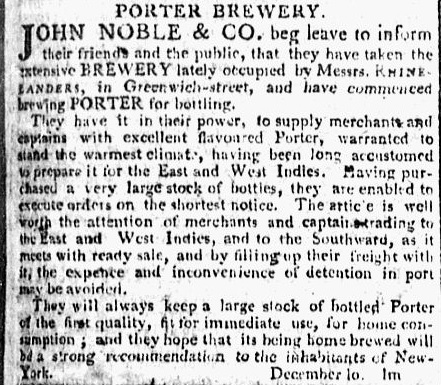
nymp02dec1783porter
On 2 December 1783, James Hearn had a noticed placed in the New York Morning Post for his new business, opening the next day in Maiden Lane. Hearn’s Porter-House would offer wines, spirits and porter as well as a variety of dishes hot and in any quantity the single gentleman might desire. He even offered take away meals to anyone “sending their servants for the same.” A particular point is made about his soup. And then you notice the hours of operation. The soup is available from 11 am to 1 pm. The meals will be served from 12:30 noon to 3:30 pm. There’s a certain level of constraint at play.

One of the great things about researching through newspaper archives is how everything is contextualized for you. It is easy to think, read and write about beer in a bubble if all you look at is information about beer. The notice for Mr. Hearn’s new business is placed in the newspaper one week after New York’s Evacuation Day, the day when the last of the British troops left the City after months of evacuations of the Loyalists who became one of the foundations of the nation to the north, Canada. Just two weeks before the proposed opening of the Porter-House, the Governor of New York placed a Proclamation in the Royal Gazette on 19 November 1783, the last edition, confirming how the withdrawal of British troops would occur. Notice that the Governor placing the ad was George Clinton and not Royal commander Sir Guy Carleton. The notice was published on page three.

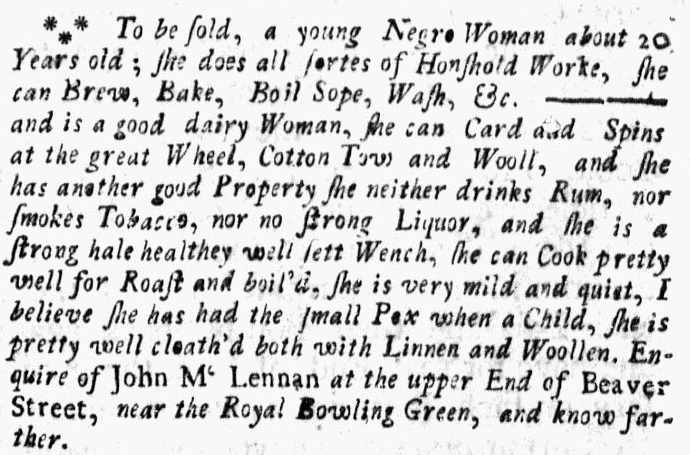
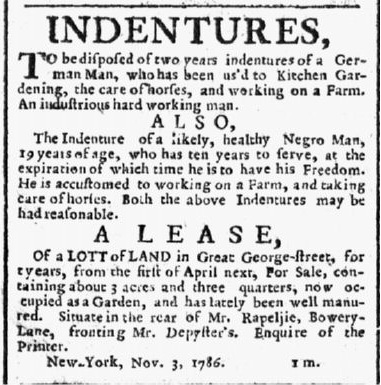
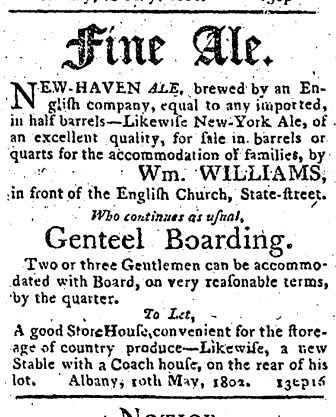
So, why was it a porter-house? Porter was certainly prized in the years after the end of the American Revolution. As we saw a few weeks ago, in 1798 Caleb Haviland’s porter vault in what is now Lower Manhattan stocked both London porter and American porter. It was “in the best possible order” – ripe and brisk. But the relationship with the drink started at least half a century before that. In the New York Gazette of 5 February 1750, an extract of a letter was published from a new colony at Nova Scotia, written the previous August, praising the provisions… except the lack of “a Pot of good London Porter and Purl.” The earliest advertisement that I have seen for porter in New York City was published in the same paper on 23 December 1751 in a mixed cargo from Scotland* containing cloths and linens, steel and writing paper… plus usquabaug – aka whisky. It appears late in quite a long list of goods. One year later on 18 December 1752, an ad is placed again in the Gazette which places the porter right to the forefront in a range of sizes from butts to five gallon barrels:

nygaz18dec1752porter
One year on, in December 1753 the same William Wright** has a store open. It’s at the city’s docks near the Royal Exchange a store called the London Porter-House. These initial offerings are a few years before the boom in ads about Taunton ale that appear to be concurrent with the 1754 start of the French and Indian War, the North American campaign within the global Seven Years War, and particularly the boosting of the troops in 1757-58. By that point, others are selling the beer not only in New York but also up in Albany nearer the battle front against New France. By the end of the 1750s, the cross-ocean trade in porter and a variety of English ales is well established with literally hundreds of notices for porter appearing in New York newspapers over the following years.

nyroygaz20nov1779porterJumping ahead, we find this ad from 1779 – the middle part of the war – which sets out some very interesting things. If you read it carefully, you will see it is not an ad for porter but an ad for a beer that is claimed to be as good as London’s porter. Imported porter is the standard to be met in the marketplace. The brewery is the one in Maiden Lane which has been taken over from the Revolutionary Rutgers clan of brewers. It’s brewed with English grain, which would be reasonable given how the city was surrounded by fields better known as “no man’s land.” War is bad for beer. But maybe not so bad for beer importation. Even in the middle of 1781, porter was being imported and made available along with other pleasures such as double spruce ale and coffee. By the summer of 1783, well after the impending surrender is inevitable, things are not as pretty. The Royal American Gazette of 7 August 1783 shows that everything is for sale: the billiards table in a house being advertised for leave, plenty of mess beef and pork in barrels, passage for your family to Canada and – yes – still those bottles of porter. All offered in return for cash or, as one notice states, “light and foreign gold taken in payment.” A few weeks later, the British are gone and Mr. Hearn has opened his Porter-House.

Why a porter-house? It was a last luxury of the previous regime. It is stored in cellars and is best when left to age down there. It needs to ripen if it’s going to be brisk. So, in the weeks and months after the peace breaks out and folk like the hatters Bickers* and Son  are returning from the war triumphant, the goods in storage needed to be put to use. The porter still needed to be drunk. Mr. MacPherson had the same idea and opened his porter house a few weeks before the British left. Folk were making do as the new nation had just begun to make its way.

*I did not know until today that a “snow” was a sailing ship somewhat similar but distinct from a “brig.”
** presumably.
*** a rather capable man for a hatter, Colonel Bickers.

Are We Approaching Peak Hard Cider?

The All About Beer column by John Holl posted today begins “[h]ard cider continues to climb in popularity and now the largest producer in the country, Angry Orchard, has its own place to welcome customers….” This is odd because of the following news as reported by The Motley Fool a few weeks ago:

Similar to last quarter, Boston Beer’s founding chairman, Jim Koch, opted to be the bearer of bad news: “Our total company depletion trends of 6% in the third quarter of 2015 matched our year to date trends, but represent a slowing from our expectations, primarily as a result of weakness in our Samuel Adams brand due to increased competition and a slowing in the cider category”… Boston Beer CEO Martin Roper elaborated: “During the third quarter, we […] saw a slowing of the cider category, but believe Angry Orchard maintained its share even as competitors continue to enter or increase investment. We remain positive about the long term cider category potential, but short term growth is less certain. We are planning continued investments in advertising, promotional and selling expenses, as well as in innovation, commensurate with the opportunities and the increased competition that we see.”

I’ve heard a bit about cider in the lead up to American Thanksgiving like this piece on NPR’s Science Friday that focuses on Albany’s Nine Pin Cider. Like the All About Beer column, however, there was nothing indicating that the market for hard cider is softening in the way that Boston Beer has admitted. While most stories last year were all about the boom in cider, The Motley Fool saw clouds on the horizon as early as in May of 2014. That concern continues:

Total U.S. cider sales were down 3.4 percent in the 13 weeks ended Nov. 7, and the rate of decline accelerated to about 7 percent over the past four weeks, according to Nielsen. Four and five years ago, the rate of growth was in the heady triple-digits. Even a year back, the pace of growth was nearly 50 percent. “It’s been getting a lot of attention, because of all the huge growth rates in the past three to five years,” said Danelle Kosmal, vice president of the beverage alcohol practice at Nielsen. “It’s obviously difficult to sustain those triple-digit growth rates.”

So is it a case as I tweeted earlier today just that, “basically, Sam Adams bought a pretendy farm to suggest their cider-like product isn’t industrial” or is it worse? Is the farm one form of “the new packaging and advertising expenses taken on in the second half of 2015” in an effort to retain sales in a shrinking cider market? We get no guidance from the All About Beer column other than the oblique observation that the “vast majority of the company’s main brands will be produced at the Boston Beer facility in Ohio, with the focus of the new location being experimentation and small-batch only recipes.” As Jeff found in June 2014, getting a straight answer about Angry Orchard can be difficult. But at least he asked the questions. If the market for cider continues to shrink, it’ll be interesting to see how long it takes for the farm to be re-purposed or even sold off.

A Few More Thoughts On Craft Brewery Buyouts

I quickly wrote this over at the beer blog’s Facebook page* and thought it was clever enough to repeat:

With respect, the main point is being missed. The disassembling of the US craft beer market is itself the bursting of the bubble. The “big macro v. tiny craft” paradigm failed a long time as the BA’s failed “crafty” campaign illustrated. Continuing to suggest that the path of craft is being validated ignores the greater underlying realities. Big craft bought into scale a long time ago. Craft as brand regardless of what’s in the bottle is market reality. The brewery isn’t being bought. A battle with craft is not being waged. Macro is buying brands and markets to use for other purposes. The rump BA will appear to be quaint soon. Then pointless.

Some interesting comments ensued. I suppose it is related to the posts about how craft will kill itself from a few years back but this is really another thing. Craft being killed off by macro simply eating it after paying billions for the opportunity. We are likely not at mid-meal yet but that’s what’s going on. What we haven’t heard about yet, when you think of it, is how those brewers wanting to be bought but not getting offers are doing. You know, just because they are not worth buying doesn’t make them any less the traitors to the cause… if you are into that whole “cause” thing. What I expect we do know, however, is the guys at Goose Island must be really pissed off unless they took a deferred part of their $39 million chump change payment in the form of percentage share of future brand growth as part of their deal. That stuff is brewed everywhere and sold everywhere now and someone is making buckets of cash.

*…which reminds me of a pet cat having a pet hampster.