That Time In 1986 When Mr. Jackson Came To Albany

This is an interesting notice in the October 31, 1986 edition of the Times Union from Albany, New York under the heading “Newman’s Brews Beer Tasting”:

English beer authority Michael Jackson will visit Albany Nov. 4 to conduct “The Quintessential Beer Tasting,” at 8 p.m. at the Century House in Latham. The international beer tasting, sponsored by Albany’s Newman Brewing Company, will be open to the public. Jackson, known as “The Bard of Beer” and author of “The World Guide to Beer,” has been called the world’s best authority on beer. He has led beer tastings at Harrods in London and the Pierre Hotel in New York City. For the Albany show, he will lead a guided tour through a selection of 13 international beers. Tickets at $6 per person are available through Newman’s Brewery at 465- 8501 and at the door.

What is really fun about the item is that a few days later, on 5 November 1986, a report on the event written by Fred LeBrun was published in the same paper under the headline “Beer Guru Salutes Newman’s” which I need to reproduce in full to properly undertake a review of the implications:

The real Michael Jackson came to Albany yesterday. Downtown was snoring because it was Election Day, so he did what he frequently does when he’s on the road anyway. He had a well-thought-out Newman’s Albany Amber Ale at Ogden’s. Now Ogden’s, a reasonably serious restaurant, is not a bistro that would first come to mind for a casual beer. But then the real Michael Jackson is not a casual beer drinker.

It should be noted about here that this real Michael Jackson rarely sleeps in an oxygen tent, at least by choice, nor is he likely to be caught fondling a Pepsi. He did wear a sequined glove for a while as a goof, but grew tired of it in a couple of hours. This real Michael Jackson is 44, bearded, a touch pudgy, tweedy and scholarly, wears glasses and speaks with a pleasant, all-purpose British accent. He is also the world’s most respected authority on beer. His “The World Guide to Beer” of a decade ago is still the definitive text on the subject, and his newly published “Simon and Schuster Pocket Guide to Beer” will do still more to educate a world awakening to the great variety and styles of beers and ales available, using much the same critical language in the past reserved for fine wines. From Adelaide to Nairobi to Anchor Steam country out in San Francisco, wherever beer and ale is brewed, this Michael Jackson is The Word.

He was in Albany on a pilgrimage of sorts, paying respects to one of his favorite American alemakers, William Newman, and sampling a fresh batch of Newman’s Winter Ale, due out for the general public in a couple of weeks. A few months ago, when Jackson was interviewed by the Chicago Sun-Times, he listed Newman’s Winter Ale as one of his five favorite American beers. Anchor Steam, for the record, remains his favorite.

For Albany, in its Tricentenniel year, Jackson’s visit offers a double dose of irony. Albany, and the Capital District in general, was once a brewing center of the United States, according to Jackson, along with Philadelphia. At one time, there were breweries in practically every Albany neighborhood, brewing a variety of styles – 18 at one point. But when the Newmans, William and Marie, opened their microbrewery five years ago exactly, there wasn’t a single brewery left in town. Schaefer, the last major brewery, was newly gone, and shortly before that Hedrick’s, owned by Albany County Democratic Chairman Dan O’Connell, and Fitzgerald across the river.

Yet in the five years since, the Newmans has struggled mightily to carve out a steady little market for itself with deep, full-flavored, hoppy ales sold in kegs and jury-rigged take- home containers. They have fought against the biggies, which in this market is Genesee, and Miller, and the ever-present Budweiser, and recently a hot run by Stroh’s. They have eked out standing in this crowd. Now Albany Amber Beer is available in bottles, created to Bill Newman’s fussy specs by the Schmidt’s Brewery in Philadelphia. Meanwhile, the active center of new breweries in America has moved to the West Coast, notably Oregon and Washington State.

Out there, the Newmans are positively venerated, idolized, for what they’ve done. They were the first on the East Coast to create a new-style baby brewery offering traditional beers and ales of great character. Now there’s Samuel Adams in Boston, and New Amsterdam and Royal Amber in New York and dozens more. “Newman’s has never had the credit it deserves,” writes Jackson in his newest guide. “Its misfortune is to be in Albany, which may be the state capital but is an unimaginable distance – about 140 miles – from downtown Manhattan.” Prophets in their own land.

Jackson strongly recommended making the trek up the Hudson to sample draft Newman’s, much better than the bottled stuff. Good news for Jackson’s next book, as far as the Newmans are concerned, was his delight with the soon- to-be-released Winter Ale, an ale Bill Newman varies each time it comes out. “It has a very rich aroma, with a lot of fruitiness to the palate,” Jackson said Tuesday, referring to a little notebook he always keeps with him. The Word has spoken.
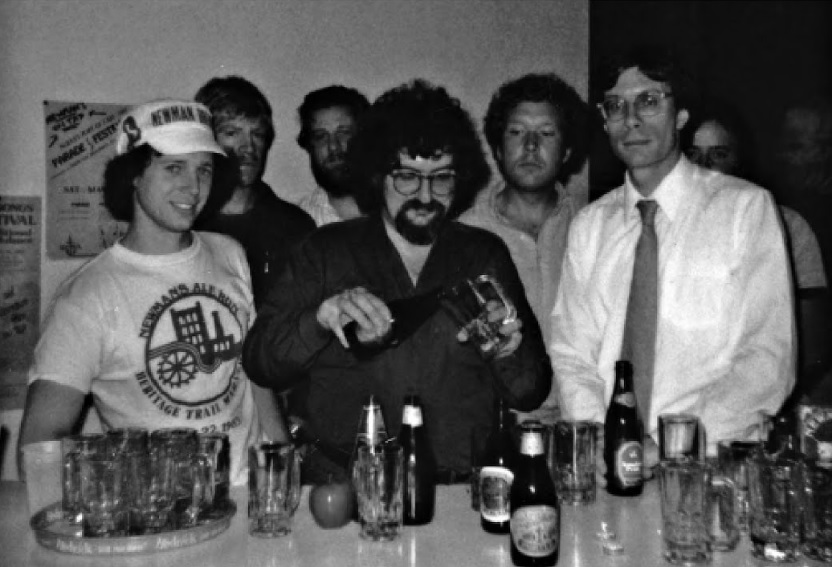
Craig mentioned a Jackson visit in our 2014 book, Upper Hudson Valley Beer. A photo caption states that Michael Jackson, in the middle sporting his Jeff Lynne lid, said on a 1985 visit: [i]f Newman succeeds in his heroic venture, he will undoubtedly inspire many others.” Newman is the guy in the necktie. As we told the tale, Newman spent three months in 1979 under the tutelage of the father of the British independent brewery movement, Peter Austin, at his Ringwood Brewery in Hampshire England. With Austin, Newman received a crash-course in all things brewing, and toured many of the countries breweries—both big and small. He returned to Albany with plans for his own version of Austin’s 10-barrel, open fermenting brewing system and, within a year, was brewing Newman’s Albany Amber as the 1980s were hitting their stride. 

Look what the LeBrun article notes. Jackson knew in the mid-80s that Albany had been one of the great brewing centres. As Craig has learned, that was forgotten history locally.  And Newman’s wasn’t just early, it was good if Jackson’s word the Winter Ale was worth anything. There is an implication that the west coast had passed an earlier east coast prominence in micro brewing – not part of the triumphalism of today but, as we know, history gets forgotten. And Newman was considered their forebearer.

In December 2015, Gary wrote about his own trips in the 1980s from Montreal south to visit Newman’s. It makes for a great companion piece. It was all over soon. On 15 August 1987, it was reported in the Knickerbocker News that Newman’s had filed for bankruptcy and, while it would live on as a contract brewed beer for a few more years, the brewing era was over.
Imperial, Yes, But Cream Ale Was Also Light As Well As…

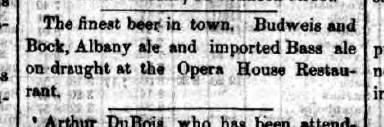
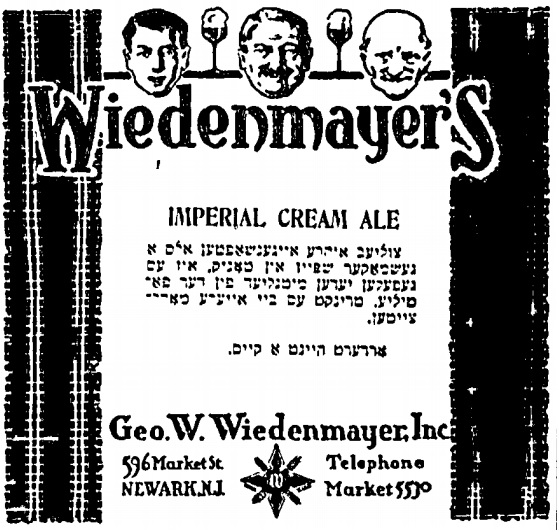
The more I get into the records referencing cream in 1800s New York brewing, the more obvious it is that the term was pervasive. It illustrates excellently, as a result, how branding existed independent of those claims to copyright we suffer from today. In law, there is an excellent and better word for such stuff that applies as much now as then – puffery. Claims made as to quality that are never ever really expected to be challenged. Look at that ad from the Jewish Daily News of 30 November 1916 again. Imperial Cream Ale. Is that the same as the Imperial Cream Ale of the Taylors of Albany from the early 1830s to the late 1860s? Or is the cream just a puff?

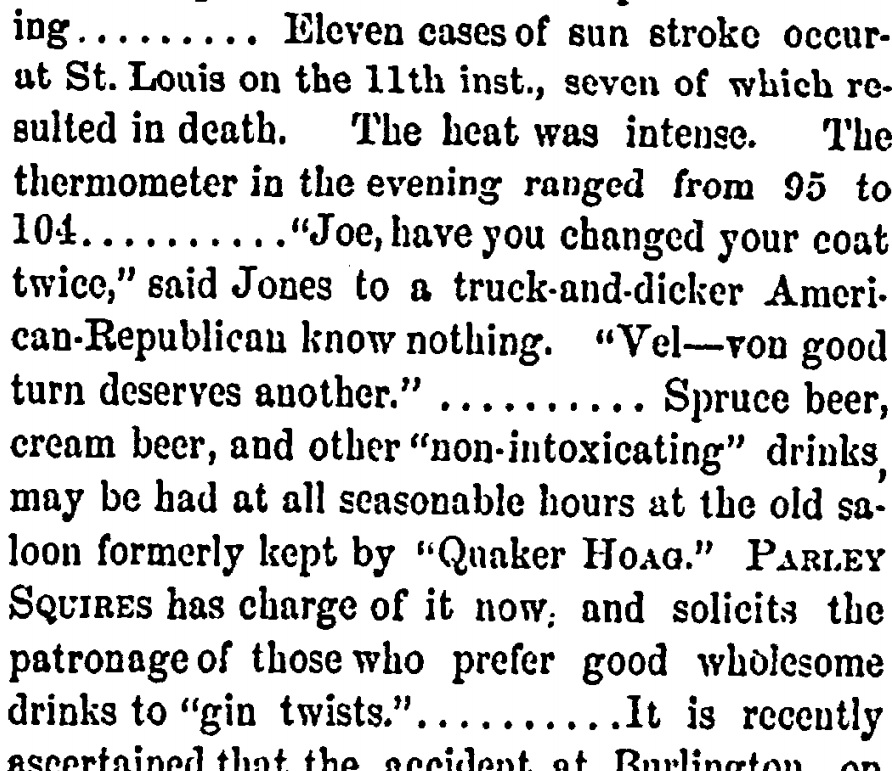
That image to the upper right? It’s a part of a column in the Plattsburg Republican from 21 August 1858 entitled “Items: or Crumbs for all kinds of
Chickens.” Is that puffery? Seems a bit more than that. Cream beer is being lumped into a class: non-intoxicating drinks. Sounds like a bit of a vague concept but at the same time the courts in New York State were struggling with the same term as it related to lager and the wider issues related to acceptance of the German immigrant wave in the middle third of the 1800s.

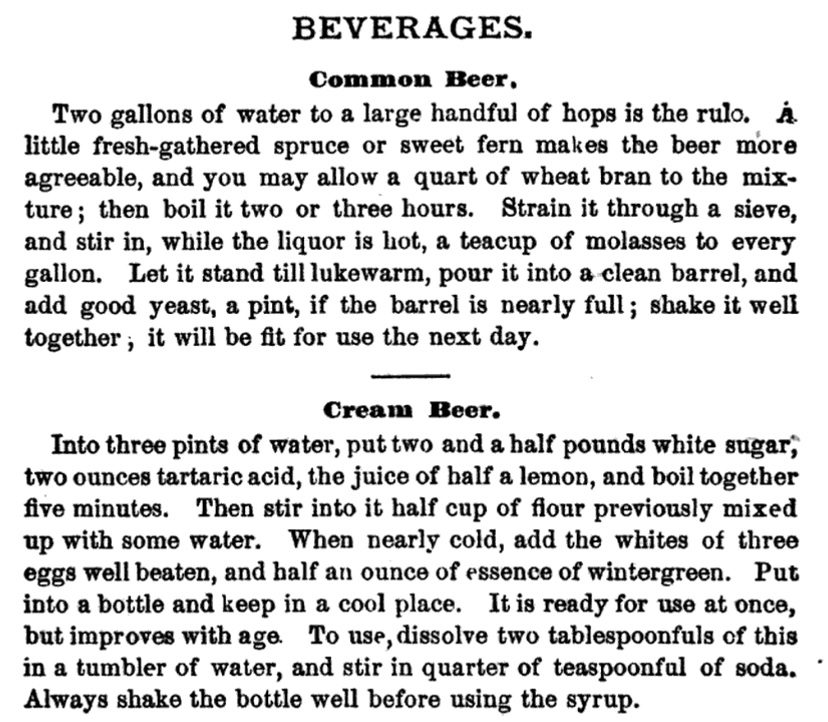
The book De Witt’s Connecticut Cook Book, and Housekeeper’s Assistant from 1871 includes these two recipes, one after the other, on page 100. The first for “common beer” has yeast added, the second, for “cream beer” doesn’t. Is “cream” then code for no alcohol? When I was a kid out east in Nova Scotia, one of my favourite things was cream soda. There were two types as I recall. Pink or clear. Pink was like drinking candy floss. Clear was like drinking candy floss… but was not pink. I hated pink cream soda. I was a clear cream soda man. Crush, if you have it… but only in Canada. Pop… soda… soda pop… was a class of soft drink that morphed out of beer. In the 1850s you could speak of California Pop Beer. In the 1830s you could speak of the Lemon Beer of Schenectady. In the excellent short book Soft Drinks – Their Origins and History by Colin Emmins, small beer is described as a progenitor of British soft drinks along with spa waters, syrupy uncarbonated cordials and that favourite of George III, plain barley water. [Continuum. Perhaps continua.] Consider the simple lemon…
The earliest English reference to lemonade dates from the publication in 1663 of The Parson’s Wedding, described by a friend of Samuel Pepys as ‘an obscene, loose play’, which had been first performed some years earlier. The drink seems to have come to England from Italy via France. Such lemonade was made from freshly squeezed lemons, sweetened with sugar or honey and diluted with water to make a still soft drink. 

It appears that 1660s lemonade plus small beer could be a cause of that fancy 1830s upstate NY lemon beer. Could be. There would be other intermediaries and antecedents. Think of how the sulfurous spas of Staffordshire in the late 1600s, saw the invention a drink introduced the local hard to swallow spa water into their beer brewing. Is this how it works? Isn’t that how life works?

When you consider all that, I am brought back to how looking at beer through the lens of “style” ties language to technique a bit too tightly for my comfort. The stylist might suggest that in 1860, this brewery brewed an XX ale and in 1875 that brewery brewed an XX ale so they must be some way some how the same thing. I would quibble in two ways. Fifteen years is a long time in the conceptual instability of beer and, even if the two beers were contemporaries, a key point for each brewery was differentiation. The beers would not be the same even if they were similar.

Layered upon this is the fact that “style” is an idea really fixed somewhere in the 1980s after Jackson’s original expression which was altered in the years that followed. The resulting implications are important given how one must obey chronology. This means if (i) Jackson’s 1970s “classics and cloning” idea didn’t last more than ten years until (ii) the more familiar “corner to corner classification” concept comes into being then the application of “style” to brewing prior to the 1970s (if not 1990) is also a challenging if not wonky practice. Brewers brew to contemporary conventions even though they are but points in a fluid continuum. You can’t conform to an idea that doesn’t yet exist.

All About Beer published the article “How Cream Ale Rose: The Birth of Genesee’s Signature” by Tom Acitelli on 17 August 2015 which, as we can see above, contains an origins narrative for cream ale which (though very condensed so somewhat unfair to parse) is now really not all that sustainable:

Cream ale is one of the very few beer styles born and raised in the United States. Predating Prohibition, the style grew up as a response to the pilsners flooding the market via immigrant brewers from Central Europe. Cream ales were generally made with adjuncts such as corn and rice to lighten the body of what would otherwise end up as a thicker ale; brewers also fermented and aged them at temperatures cooler than normal for ales.

I think I am good until to the word “the” in the second sentence after the comma. If style can be applied to the concept at all, cream ales at best probably represented styles. They were not a response to pilsners as they predate Gillig and were in mass production happily in their own right though the mid- and latter 1800s. They became made with “adjuncts such as corn and rice to lighten the body” but so did ales as our recreation of Amdell’s 1901 Albany XX Ale illustrated. The last sentence may well be fine.

BUT! – now notice the gem of a wee factual trail actually setting out as the specific origin of Genesee Cream Ale as related to Acitelli:

His father and grandfather, a German immigrant, had been brewers in Belleville, Illinois, about 15 miles southeast of St. Louis. Bootleggers had approached his father, in fact, about brewing during Prohibition, but he demurred. Clarence Geminn himself was completely dedicated to the craft, according to his son, a fourth-generation brewer. “Saturday and Sunday he would go into check on things,” Gary Geminn told AAB from his home in Naples, New York. “Summer picnics had to wait until the afternoon; any outing had to wait.” As for the exact formula behind his father’s most enduring beer, no one’s talking—obviously not the brewery itself, nor did the beer’s progenitor.

Mid-west Germans? Now that starts sounding more like the parallel universe of cream beer than cream ale. Does its DNA include Germans moving to Pennsylvania in the 1700s, then on inland into Kentucky in the early 1800s then into the Mid-West later that century only to back track to upstate NY by the mid-1900s? Can we draw that line? Either to connect or perhaps delineate? Maybe we need to be prepared to do both if we are seeking to understand events prior to the point of conceptual homogeneity that is achieved with the crystallization of style when MJ meets what becomes the BA.

As for cream? It’s a lovely word. So many meanings. So many useful applications. So many more leads to follow.

Cream Ale, Cream Beer And Creamy Goodness

This ad in the Jewish Daily News of 30 November 1916 published out of New York has my wee brain spinning – and not only due to the works I can read and those I cannot read. I am starting to think “creamis a nugget of a folk tale, an indigenous memory that keeps appearing generation after generation from, as Gary proposed, the later 1700s to today in the northeastern US for no other reason than its useful pleasantness.

Gotta think about this.

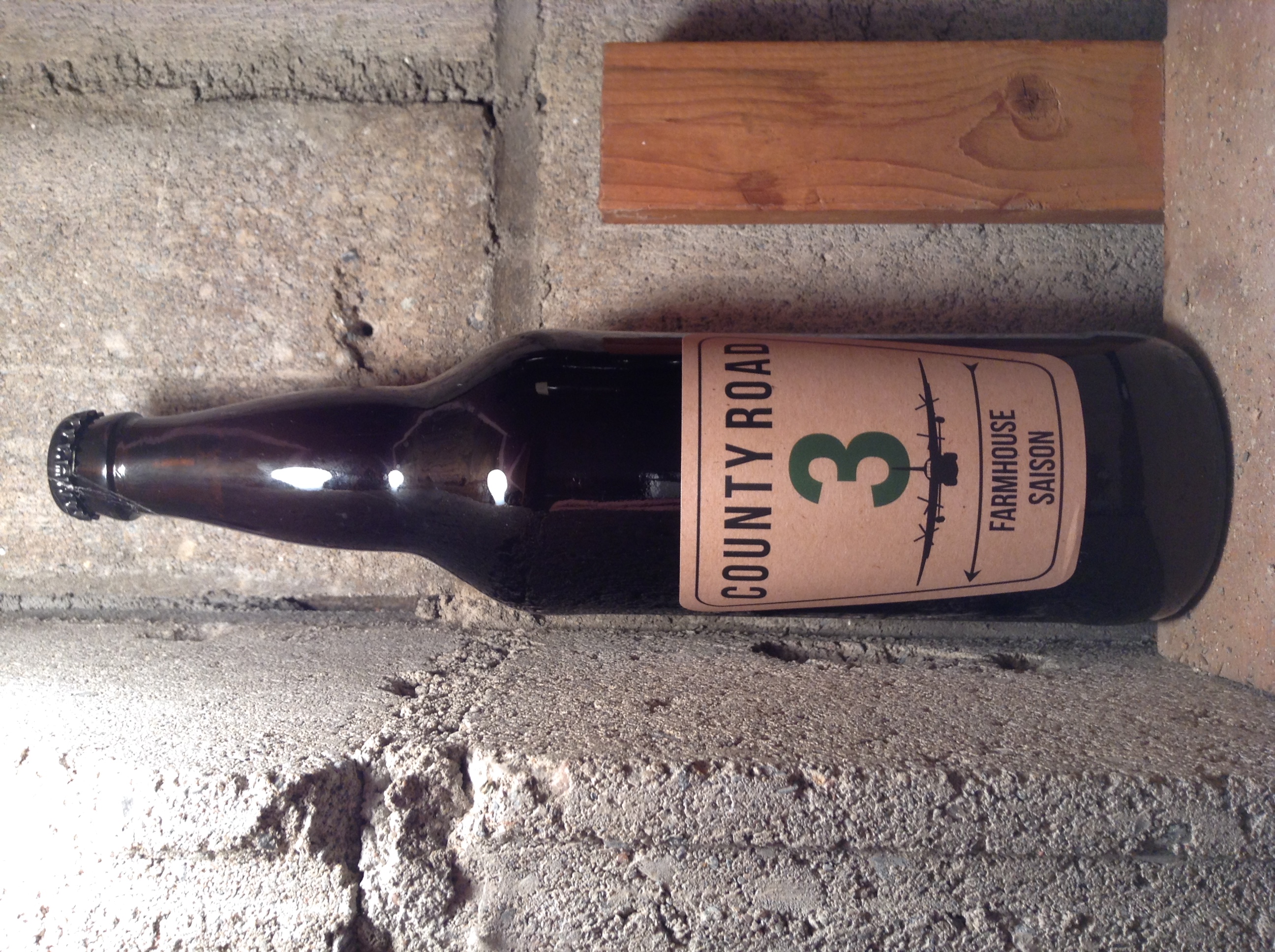
Saison: 3 Farmhouse Saison, County Road Beer Co., PEC

I am not exactly sure of this beer’s name. In its fullest, it is County Road 3 Farmhouse Saison. And it is a saison made out in a farming district. But as it is made by County Road Beer Co. of my wonderful nearby neighbouring wine region, Prince Edward County, I will just call it “3” entirely out of endearment. Careful readers will recall how I visited the site of its brewing almost two years ago just as the concrete for the brew house floor was being poured. For some months now, their saison has appeared in the government store.

You know, it must be horrible to be a saison. Of all the classes of beer, saison is the one which still illustrates the original meaning given to the concept of “style” by Michael Jackson.

There are certain classical examples within each group, and some of these have given rise to generally-accepted styles, whether regional or international. If a brewer specifically has the intention of reproducing a classical beer, then he is working within a style. If his beer merely bears a general similarity to others, then it may be regarded as being of their type…

Saison sits weighed under by the classic example, Saison DuPont. Cursed by it. Blessed by it. Luckily I have my New Years Eve 2005 notes to remind me of the particular tyrannical slavery I must subsume myself, my experience under each and every time I encounter any other beer claiming affiliation to the style:

Saison Dupont: 8 pm. New Years In Scotland has come. Very nice. Rich and round with masses of dry palt malt. Lively antique gold ale under replenishing white foam. Fruitier on the nose than in the mouth. There is a pronounced graininess to the malt with only the slightest nod to pear fruit perhaps. The yeast is slightly soured milky. There is hop which is dry, twiggy or maybe even straw-like because it is not like twigginess of Fuggles, devoid of English green or German steel.

Most importantly, the note is date stamped. This couldn’t have been the 42 year old me’s first Hogmanay drink. Likely already wobbly. Still, it’s interesting that I describe what I wasn’t tasting. Spare, dry stuff saison. Yum.

Saison can be horribly mistreated. Somewhere in the archives I have yet to bring over to this new system, I note that I had a saison which was sweet and fruity. In 2010, I wroteI feel bad about pouring that Three Floyds saison down the drain but it really was poorly thought out…” For me, that is usually the case when saisons go wrong – when many beers go bad, in fact. Blame the original designer. But if saison is hamstrung by the ghost of brewing past, shackled by its own classic example, is it possible that saison designers have less wiggle room? Does this cause the accusations to fly more often? P’raps.

How does this one stand up? It pours an attractive golden pinewood with orange hues. Clouded and effervescent. All under a growing stiff egg white head. It gives off aromas of bubblegum, white grapefruit pith and a bit of dry twiggy herb. Around the gums, the pith and twig come forward with French bread crumb laced with white pepper and a little parsley – then a little tweek of orange, a heart of cream of wheat, a nod to honey and dry lavender in the finish.

What is not to like? Only two BAers, one unhappy. Sadly style foolish as so many are.

Why Does Craft Beer Hate St. Paddy’s Day?

Eight years on and still we read about the abomination of green beer, the correct spelling of the drunken holiday and holiers than holy insisting Guinness is not what it was. Lecturing. Nothing like keeping it dull, craft. Way to go.

Let’s be honest. It’s a “spring is coming” fest. It’s a “I don’t have to study for final exams quite yet” fest. On the drive in this morning, a lovely sunny morning recovering from the last few days of deep cold and whipping winter storm, I saw two of the local university gits standing at the shoreline,
gazing out upon the head of the St. Lawrence backs to the road wearing matching baseball jerseys, white with green pin stripes. Their jerseys were both numbered “17” and the name above the number was “WASTED” on both. I expect they already were. By noon, they have gathered in herds. Tomorrow I shall rise early, just about when I trust they will be hitting the hay… or the floor… or wherever.

Every seven or sometimes thirteen years, the 17th of March lands on a Friday. You might see ten in a reasonably long life time, fewer in your adult years. One – or two, if you are lucky, at most – during the time of your greatest stupidity as a bar crawler. Short of death or injury, breach of liquor law or crime – is it so bad, craft beer cognoscenti, that the young have their good time? Is it so bad that the beer is green and cheap or that the beards lack moustaches?*

*Well, I never got that facial hair bit but you get my point.

A User’s Guide To Dealing With 2017

It is impossible to say just what I mean!
But as if a magic lantern threw the nerves in patterns on a screen:
Would it have been worth while
If one, settling a pillow or throwing off a shawl,
And turning toward the window, should say:
               “That is not it at all,
               That is not what I meant, at all.”


It’s tough writing in 2017 about a pleasure hobby like good beer. Remember 2016 when all the celebrities were taking their final exit from this mortal coil? When norms in US politics collapsed? 2016 made sense compared to 2017. Bryan Roth captured that sense of doubt when he struggled this week with what appears to be the word of the moment, authenticity. His coda was excellent: “I have no idea what just happened here.”  

Stan responded in his flickering light bulb of a blog’s Monday links commenting “[b]ut that’s not the rabbit hole. Authenticity is the rabbit hole.” He went so far as to shout out in dispair, even in paranthetically “[i]t might be time to bring back the Good Beer Blog chimp.” Good thing Stonch is off social media for Lent. He haaaates Mr Chimp Head. The inclusion to the right is completely gratuitous.
My take is this. Like J. Alfred above, we search for both a meaning in and a validation of our experience. We humans do that inherently even when we stand in the face of apparent meaninglessness. We seek solace. For some, solace is found in the spectrum that runs from nostalgia to anti-novelty as B+B discussed earlier this week. We hope we can convince ourselves that milds, bitters and stouts without all the phony pricey additives are better. Such things are more grounded, more rooted into… something. Authentic. But, as those of you who like me have participated in construction contracts with grounding issues know, things need to be grounded into something. Not all stone has acceptable conductivity. Authenticity is like that. Authenticity is not a characteristic but a quality of a characteristic.* It needs its own grounding.

Even having made myself a student of brewing history – largely out of sheer dismay at the state of what I saw as good beer culture – I am not sure what that grounding, however, might be. In the face of this year’s confusion, there is such a rush on opportunistic self-congratulation, guru-label affixing and tantrums over what the young and happy are up to. Authority wants its place at the head table despite the sense that the centre cannot hold.** Hasn’t held. Private correspondents still complain that what is considered good writing to the dull editor, under the guise of keeping it light, often seems to seek compensation conformity with an extra expectation of a nod to deemed authority or even a scratched familiar back. Oh dear.

Yet, out there in the actual marketplace what was expected a few years ago is simply no longer a viable expectation.*** Things are far less dull on the ground. The other day, I had a beer so thick and murky I immediately thought that it would be perfect for my kid who likes wheatgrass and kiwi smoothies. Which, when I thought about it, is exactly the point – and its immediate market.

The craft schism has occurred. It is done even if not complete. Not only is it impossible now to be a beer expert it may be impossible to be an expert even in one of the growing number of sub-classes. With all due respect to the honest and excellent exertions of even Mr. B, the beer atlas approach is now too old, too slow. Too big. The global style guide no longer provides hope to those wanting to understand their immediate surroundings. That tower of Lego lays shattered and scattered around the crying child.

This is, however, a situation laced with hope. Two months ago Stan wrote an incredibly (well, if it wasn’t so credible) well put observation in one comment thread that I was busily filling, as I am known to do:

To return to the notion that you “don’t seem to be learning from all this plump and very nicely packaged writing,” doesn’t the reality that you’ve been reading and commenting in this space for so long factor in? I certainly feel that way. There are a lot of things I feel like I’ve been many times over that are “gee, look at that, it’s new” to many others.

 
New! New marketplaces. New techniques. New fans. New interests. What care they for the pioneers and their lessons framed in their acquired comforts?  They might as well be those who invented coke, who first plucked a hop blossom. Who cares? Fortunately, good beer is so forgiving and so varied, the real excitement’s in what’s to be had today and tomorrow. And near. Why buy a plane ticket when a bus ticket will do?

Authenticity? It’s in the context. And more and more that context is local and varied. If you read someone still writing about the beer community or industry in the singular you know they’ve slept through the shattering schism, dreaming their dreams of global conformity. Or wasted time at the moveable buffet meeting the same entourage encountered at the last fest or city. Forget that. Be brave. Explore your own corner of the world instead. Find that dimpled pint of mild or stemmed thimble of fruited gose. See how the new beer fits in your world before wishing away the hours over the pretty story told by someone else about some place else. Dare.

Session 121: Bock – Unloved And Sorta Local

Jon Abernathy of The Brew Site (the great-grandfather of beer blogging to my great-uncle of beer blogging role) is hosting this month’s version of The Session and he askes about bock. As M. Noix Biereois d’Irelande pointed out excellently today, bock-style beers aren’t as common on the shelves as they were seven or eight years ago. As true in northeastern North America as it is in Ireland. Bock does not demand respect and it no longer attracts many of the inquisitive. Yet, I asked in 2009 whether Mahr’s Weisse Bock was the greatest smelling beer of all time. I must have once had an interest. A year later I tweeted my admiration for Koningshoeven Bock. Indeed, as recently as just three years ago, I posted about two Canadian craft takes on bock that I had received as samples.

Yet I do not hunt them out. Well, I hunt out fewer and fewer beers as enough good beer to satisfy anyone short of a case of dipsomania comes to me care of (i) the new wave of local small scale brewers and (ii) the slump of the Canadian dollar to US dollar exchange rate. Who in their right mind would? It’s fun actually, given that reality, to watch the last gasps of globalism inspiring the junketeers to still – just in this one week – witness them trundling up to the groaning buffet spreads of Asheville, New Zealand and even Peru! Oh, how I do need that report on the craft replicants of Peru. Please hurry.

Bock, however, is not that at all. Not a flog is being offered for bock. It is fusty. Maybe even owly. Bock, however, has a venerable North American heritage. It is a traditional local beer if we are talking about the Great Lakes watershed and environs. As Craig posted on Facebook, it stood amongst the greats – if the Free Press of Waverly, New York from 1886 is to be believed. In the New York Herald of 30 April 1860 there is something of a primer on the nature of bock in a column from “Our Berlin Correspondent” which might indicate that bock came here to our shores after that date, much later than lager in the 1840s or that earlier shadowy thing, cream beer. Bock is described by OBC in slightly harrowing terms:

The stronger more heady sort is termed bock beer, from the German word bock, which means a billy goat, the person who drinks it being excited to such a pitch of exhilaration that he capers like a goat… the above mentioned bock as hitherto kept up its reputation. Recently, however, a company has been formed on shares with a handsome capital, for the avowed purpose of opposing it…. They have built a large brewery, with extensive cellars, saloons and other accommodations, on the same hill, and propose to brew a lighter and milder beer than bock., selling it at a lower price, and the mania for imbibing vast quantities of the cerevisian fluid being still on the increase, they are very likely to succeed… 

Terrifying stuff. If I can find me some on the way home I might buy a bottle if I can find one in these times of IPA driven hegemony and homogeneity. So I can, you know, imbibe a vast quantity… and caper like a goat.

“It’s a Shopping Mall for Alcoholics Out There”

When I was a kid thirty years ago, maybe 22 or 23, I got in an elevator to find myself moving upward with the folk singer Ed McCurdy. I was likely a bit worse for wear. He looked at me and proclaimed just that – it’s a shopping mall for alcoholics out there. Meaning downtown Halifax. My old hometown. Haven’t been here for 15 years, since playing in an alumni soccer game in 2002. He was right, too. It can be a blur out there.

I drove across a third of North America to get here. 1600 km of highway up along the St. Lawrence and then, once past Maine, south through the forests to the sea. All to be at the funeral for a friend, one of the best loved pals in my broad gang of undergrad pals. Gone far too young.  Kept in touch on the phone when I had a business question he could help with. We played on the law school team, too. Once made a sweet long looping pass from my spot in the rear at sweeper that he took off on, scoring on the breakaway. Told me with a grin as he ran back “hey, you don’t suck as much as I thought you did.”

We may well gather after the service to share stories. Friends flying in from across the country. Friends I haven’t seen for maybe 30 years. Halifax will still be ready. Ready aye ready. I was out with my brothers for a bit of dinner last night and then had a beer later with a newer pal who moved here a year ago from where I’ve lived in Ontario for that decade and a half. We walked around, me telling him what used to be in the empty store front or the bustling bar, him being somewhere between patient or interested.

Actually looks much the same. The pubs are still full. And are actual pubs. Lights higher, music lower. Big tables of people talking, shouting, laughing. I had New Ross cider at one place, Hell Bay oatmeal pale ale at another. Ate a good bit of haddock at the Henry House. Ate a big plate of Brussels sprouts and bacon later at a place on Argyle near where The Graduate used to sit. Cheery chatting waiters working at a busy clip.

Fog is starting to lift. Might go find some breakfast. Schooner Books is still there. So is Taz Records. Good old town.


Beer and Art: The Harvesters, Pieter Bruegel the Elder, 1565

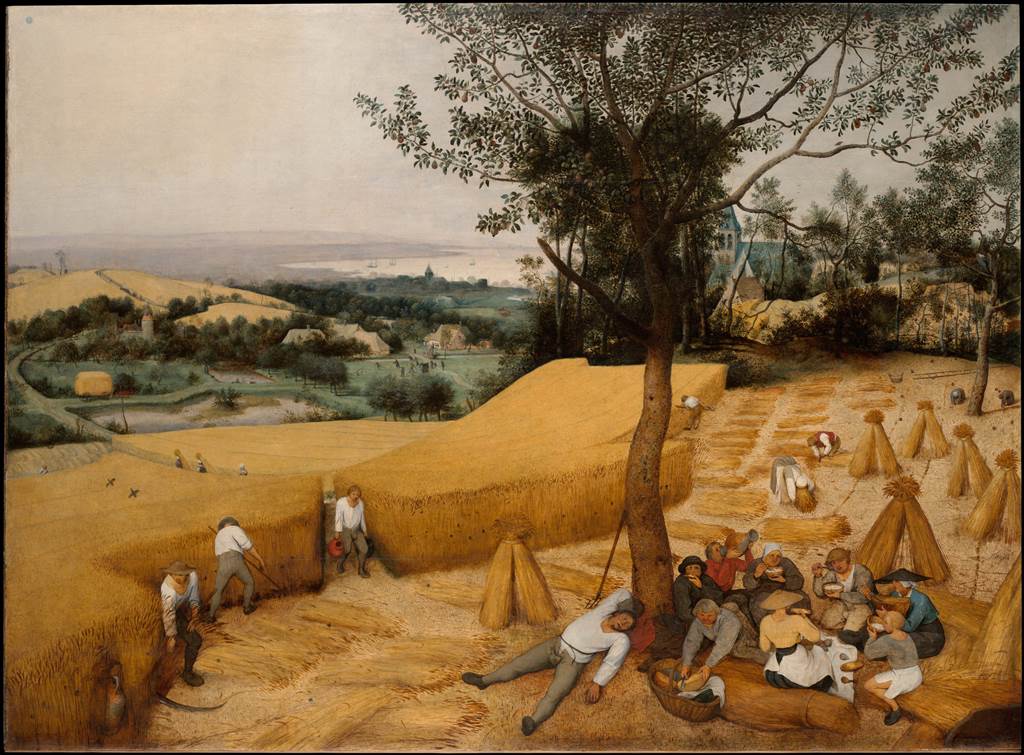
Nosing around the Met‘s digitized collection a bit more, I came across “The Harvesters” by Pieter Bruegel the Elder from 1565. Not hard as it was on the front page. I have posted a few times about paintings by his son, the imaginatively named Pieter Bruegel the Younger, over the years but this one struck me as perhaps illustrating a few things worth thinking about.

Look at the scale of the people compared to the height of the grain. One of the characteristics of Battledore barley two hundred years later in Britain was that it had a short stalk. It could survive hail or wind better than other varieties but didn’t provide all that useful straw that we learned about in relation to beer in New York before the switch to barley from wheat. The stalk was in itself important to the community as a multi-purpose material for mattress stuffing to looser wheat mash spargings. In “The Harvesters” the stalks are tall and entire stooks* are taken from the field with care. The stooks are strong enough to serve as a bench for the workers having their meal.

Harvest time is big stuff. The image is a narrative of agricultural economy in the Renaissance. If you click on the image at the met site, you can zoom in quite closely. Look at how the topography is used to illustrate the economic activity. The field being harvested is on the top of a hill. Scythed and stooked, it is carried one by one to the bottom of the hill where it is loaded on a cart and carried away. There are three communities in the painting. The hilltop has a church to the upper left seen through the trees. Down below there is a manor of some sort where some are swimming while others are killing a tied up goose as a blood sport. In the far distance, there is a coastal town with ships in the harbour. Is one point of the painting’s structure that the grain gets exported?  Or is beer made from the grain getting shipped out?  I should cross reference the painting with Unger.

Where is this place? The blurb attached to the image by the Met says:

Bruegel’s series is a watershed in the history of western art. The religious pretext for landscape painting has been suppressed in favor of a new humanism, and the unidealized description of the local scene is based on natural observations.

But is this really a local scene or an imaginary one? Where is it? Bruegel lived in coastal Antwerp, Belgium a city of about 100,000 at the time and the richest in Europe. He was born in the river town of Breda, another community now in the Netherlands but then also in the Duchy of Brabant. Perhaps one of those two centres is in the background.  Could you find the field and stand where the artist stood?

But what about the beer? As one commentator notes, the scene is about producing and consuming. Or – if you are the goose – producing, torturing then consuming. The workers are eating bread and cheese as well as pears that one guy is shaking from the tree to the upper right. And they are drinking. A central character is a man carrying two large jugs up the path. Another man in the circle having a meal drinks directly from a jug. A fourth jug with what looks like a loaf of bread on top sits in the uncut wheat to the lower left.

We are told by Markowski that saison and biere de garde were brewed for centuries in the Low Countries and northern France to attract and retain workers. Farmhouse beers. The scene in “The Harvesters” is smack-dab in the middle of that culture, in the saison zone that included Brabant. Unger explains that particularly in the sixteenth century, tax records indicate a wide number of names for various grades of beer: “… dun and scheynbier and volksbier and scharbier and scherbier all turn up. No matter the name, it was always cheap.”** Was that what was in the jugs? We can’t reach back to ask those in the picture what they called their drink or even if it was in fact beer. But it could be and, frankly, likely was so… it is what it was. Day drinking 1565.

*I use the SW Ontario usage, spelling and pronunciation of the in-laws.
**at page 129.

Babylonian Cuneiform And Brewing Patterns

The other day, I read that The Metropolitan Museum of Art in New York had freed thousands of images from their intellectual property right shackles for free and unrestricted public use. This is good. And being a dutiful beer blogger, I immediately put in the word “beer” in the search engine to see what would pop up. And this is what popped up. A chunk of dried mud with scratchings. I love stuff like this. Three years ago, I stared at Mesopotamian brewing things at the Royal Ontario Museum, aka the ROM.  Somewhere I have photos I took thirty years ago of myself, when a selfie took a tripod, at the British Museum staring at Mesopotamian brewing things made of mud. Scratchings made a person over 150 generations ago. On just a piece of mud.
It’s actually more than that. It’s Urra=hubullu, tablet 23 from Mesopotamia in the late 1st millennium B.C.  “Twenty-three, eh?” thought I. Being a clever man I realized there must be twenty-two others. So off I went. Or, rather, I put a few words in Google… and found what I am sure you all expected I would findCuneiform Texts in the Metropolitan Museum of Art: Literary and scholastic texts of the first millennium B.C. by Ira Spar, Wilfred G. Lambert published by the Metropolitan Museum of Art, 2005 where I learned about what had been scratched into the dried mud thingie over three thousand years ago. Tablet 23 is a vocabulary of food and drink terms. The passage on this piece of cuneiform cites, at page 234, a 1950 article “On Beer and Brewing Techniques in Ancient Mesopotamia According to the XXIIIrd tablet of the series HAR.ra=hubullu” by Oppenhiem and Hartman which describes the content of tablet 23 in the context of brewing.

Fabulous. So fabulous as it is all seemingly quite authoritative. The Spar and Lambert text goes on to state what exactly was written down on three thousand odd years ago in that clay. There is great beer, dark beer, white beer, cloudy beer and beer for the tigi-songs whatever they were. My favourite might be the symbol for “clear/clean beer” indicating, of course, that folk were both skillful and appreciative of skill. That information is all in column 2. In column 3, the words are about process. Yeast is pulverized, barley bread is crushed and spread just right. It is soaked and dried then soaked and mashed. It is rinsed, pressed, crushed, broken and mixed. Malt is dried, watered, opened, spread and warmed. To my mind, this is more than a vocabulary. This is a guide not so very much different from Samuel Child’s 1768 guide discussed the other day.

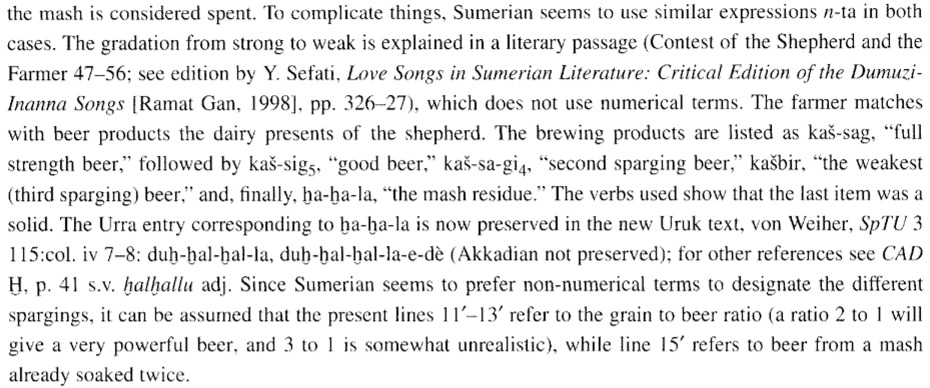
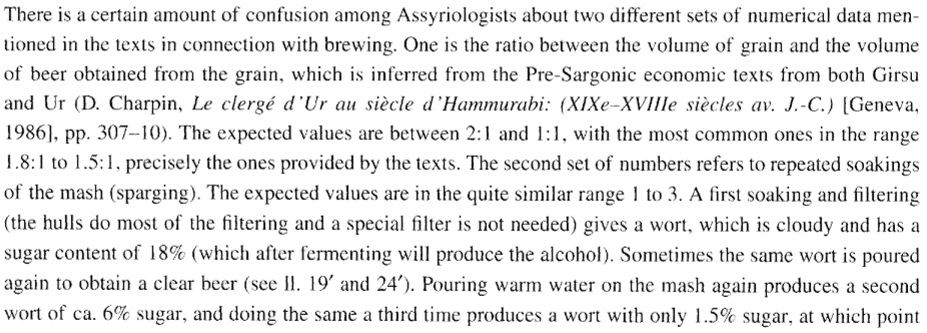
This is interesting. How is it that I can read a Mesopotamian clay tablet and pretty much immediately understand what is going on? If it was about religion, governance or astronomy I wouldn’t have a clue. But beer and brewing are not strange. They are, in a very meaningful way, constant. You can see that if we go back to column 2 where you see words for 1:1 beer, 2:1 beer, 3:1 beer and even triple beer. The ratio is the relationship of grain input to beer output. If you scroll down to page 238 of the 2005 Spar and Lambert text you see there are footnotes and in the footnotes an explanation of Mesopotamian methodology. I am just going to cut and paste the footnote in relation to column 2, line 11 and what follows as I think it is one of the more extraordinary things I have ever read about beer in a couple of ways:


First, it is extraordinary as it basically sets out the scheme of brewing over 3,000 years ago in a manner which is readily understandable to anyone who has home brewed from an all-grain mash. Second, not only is it understandable… it is very familiar. It looks a lot like the parti-gyle process which makes a lot of sense as no one in their right mind wastes resources. So, the first sparging of the mash gives a 18% sugar solution wort, the second a 6% wort and the third a 1.5% wort. Roughly declining to a third each time. And sometimes the wort is recirculated to strengthen it even more to make what the footnote’s author describes as “very powerful” beer.

What is extraordinary to me is that this ratio looks a heck of a lot like the proper way to brew that I have read about from Piers the Ploughman in England’s 1370s to Matthew Vassar in New York’s 1830s. It reads like the 1825 advert for Thomas Molson’s brewery here in my hometown. Strong ale, single ale and small or ship’s beer with what looks like double double thrown in for good measure, that hazard from Shakespeare to Schenectady.

Which leads to another thought. Is that pattern a constant? Four grades of beer naturally created solely by the relationship between the sparge fluid and mash?  Following these rules you will have a 11%-ish beer, a 4%-ish one and a 1.25%-ish one. As well as whatever the heck double double was to create all that toil and trouble. A constant pattern. Could be. Could be.