The Blink And May Is Gone Edition Of Your Beery News Links


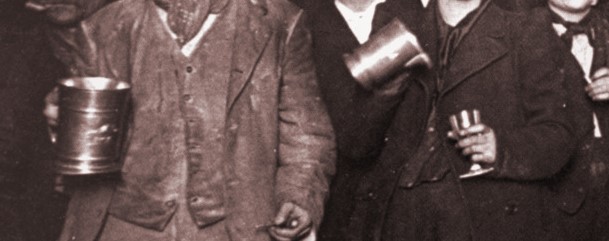
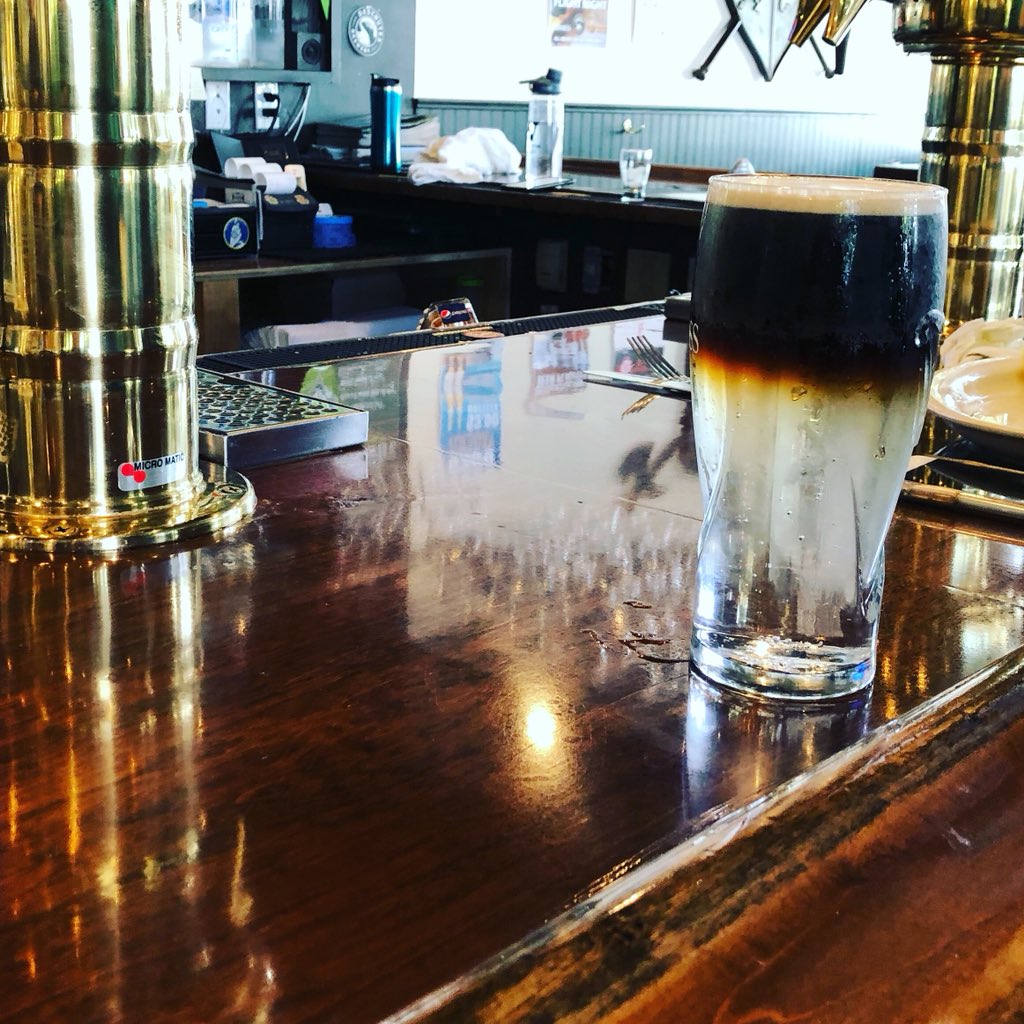
To start, I have done what every good beer writer does – I have stolen something. The image above is the lower slice of the cover image used by Boak and Bailey for last Saturday’s edition of “News, Nuggets & Longreads” and it snapped my head immediately to attention. Wow! See what is going on there is in the anonymous 1890s pub? Careful readers will recall my 2012 search for better drinking vessels and in particular my love for my pewter quart pot* which is happily put into periodic use. When conducting that search care of Messers E & Bay**, you see these quart pots with spouts that I figured were altered and re-purposed for household reuse after the era of quart in the pub normality left this Earth.  But NO! They are for pub use, the buyer purchasing a quart measure but serving himself with it but drinking from the smaller glass instead of the pot. No wonder the spouts are all at 9 o’clock to the handle’s 6 o’clock. So the right hand can pour to the left. A jug built for serving someone else is always spout at 12 o’clock to the handle’s 6 o’clock. Perhaps this was a quart of strong ale compared to to a quart of a lighter weight beer? Now I want one of those, too.  And so should you all.

James Beeson on a year writing about beer from the rare perspective of journalism. Also see Jeff on the same. J + J are both correct.  Certain brewers and many PR folk have an issue they have to deal with. We might call it “greater society.”

One week until the vote is in for Ontario’s election and NDP leader Andrea Horwath has given us another “candidate with a beer” photo. The scene is Brothers Brewing in Guelph. I prefer the Canadian standard “politician beer pour” pics personally but seeing as this was actually tweeted on the official party feed, I’m more than pleased. Unlike the last national election in 2015, beer is an inordinately active topic in the election so far – and is being picked up by the news organs covering the race. In fact, they are being even so clever as to seek out knowledge such as in this article where Macleans magazine quotes from and even includes a hyperlink to the blog of Jordan St. John! In one of the oddest Ontario election promises ever, conservative leader Doug Ford has promised the return of buck-a-beer cheap lager. That was a thing until 2010. Jordan unpacks the many many ways that this is never going to happen. My tweet:

Ontario’s “buck a beer” went away when a big corporation bought a smaller corporation, shut it down and sold off the equipment. Not a policy matter. And government can’t force brewers to make cheaper beer.

Mr Ford may well be our next premier but no one has accused him of being all that bright. Five years ago, The Globe and Mail*** accused him of  selling hashish for several years in the 1980s but no one has accused him of being all that bright. Dumb.

Hail in Bordeaux on May 26th. One-third of Blaye heavily hit. Drag.

Martyn Cornell posted about running ads on his blog. I used to do that a decade ago. Good money. Folk are always seeing us there is a way to recoup the cost of all this. And they should. Hilarious observation in the comments from a reader remarking on folk jabbing about the ad selection:

Other posters — the ads you see *might* be determined by cookies on your machine indicating what you’ve previously been viewing so maybe be a *bit* careful before announcing what’s showing up for you…

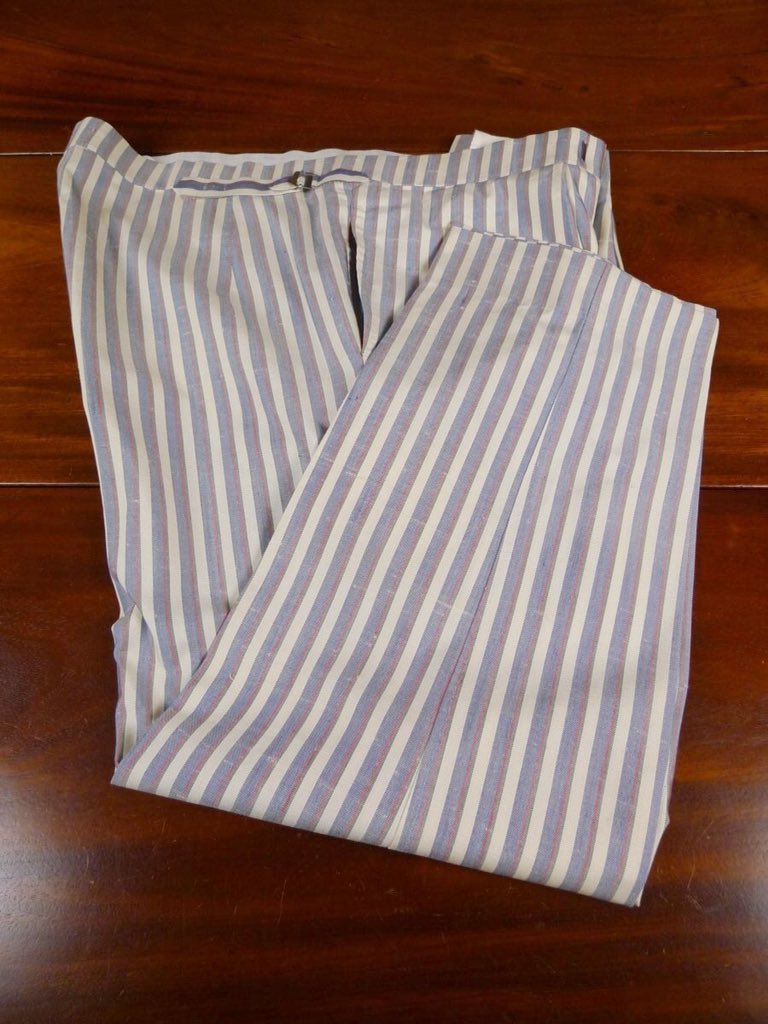
Me, I don’t really care about the financing of this here publication any more as digital historic research is less expensive than my other hobby, sewing suspender buttons on trousers for work.****  Seeing as, me, I don’t travel and don’t hang out in pubs I really don’t have a love-hate relationship with my problem writing anymore. I have a backyard. I have a rec room with an old Lay-Z-Boy. It’s all working out.

Note: any brewery drawing water from the Great Lakes south of Sarnia is pretty much making a dilute processed sewage water beer as well. Not to mention it all being DINOSAUR PEE!!!!

Folk are still waiting for the apology that will never likely come. See, Beavertown has been talking to Heineken after all. As noted in your May 17, 2018 edition of the Thursday news, those who saw this coming were “rumour mongering” and spreaders of “falsehood” – which have to be two of the most infantile over-reactions in hard scrabble beer consulto history. Way to go. The fun continues as Beavertown lands a deal with Tottenham football club serviced no doubt with approval of Heineken, the club’s official beer sponsor – but wait! One tiny voice shouts “HOLD THE PRESSES!!!”:

Nothing has been confirmed. Could be completely unrelated – collaboration could be within the stadium only – but there are no sources saying either of these things are true.

And monkeys might be circulating in trousers. What a mess. Having negotiated sports stadium bevvy deals, it is pretty obvious that there is a connection… as it would be to most. Does anyone think that Beavertown or Heineken have two law firms isolating these sorts of deals with the same parties from each other? Yeah, that make sense. Plenty of sense. But no: the last few weeks’ simmering sneer of discredit suddenly has an implicit claim of special access “the sources“! And, suddenly, now rumour mongering is in!! The core self-branding strategy prime directive is pretty obvious… still, I like to read along these sorts of aggrandizement cub reporting mongers with the sound of a teletype or stock ticker clacking along in my mind. It helps.

By contrast, the ever excellent Ben Johnson has written about a wonderful new addition to the Ontario beer scene – the Toronto East End brewers collective. One of the dumber things about the “independent” aspect of the craft beer movement is how it depends on followers aligning into lock step with messaging coming from the tenured staff of centralized national scale trade associations located far far away. The Orwellian scenes at the keynote speeches of the annual Craft Beer Conference look like something out of a mass reeducation session. I hear they chanted “Gose is Good! Gose is Good!” at the end of one of these back in 2016. Newsflash: it often isn’t. Far better it is, then, to read how some are fighting back against mindless homogeneity even in a local scene:

“Most of the breweries in Toronto who have been the beneficiaries of media hype (deserved though it may be) are all clustered in the west end,” he says. “There’s already this ridiculous ‘cultural divide’ that makes people in the west end feel like traveling east of the Don Valley requires a full day of logistics planning and we’re hoping to dispel much of that nonsense.”

Fight the power. Fight the good fight. Fight! We need more of this. Dump those who aspire to “big and controlling” whether in association or in distribution or beer writing or whatever. This nano-political statement is the next logical step for “local” and it is welcome if not long overdue.

And with that, I leave you. Once again the goodness in craft is defined by the local, ungrasping, interesting and kind. Alcohol and money have their powers for sure – but peril lies that way. Both for those who speak in that fashion and those who bother to listen. Much more fun is the real. Next Thursday is election day! I even have an orange sign on the lawn.

*You do all know that a tankard has a lib but a pot does not, right?
**Stolen this time from Norton of Morton.
***Toronto’s national newspaper.
****Good set of buttons costs about $3.50. Tops. Lots of colours and sizes, too. Don’t get me  started on vintage buttons made of deer antler…

The Post Victoria Day Blues Edition Of Your Beery News Notes

Erg. I have post Victoria Day general body disorder. When one is a young adult in Canada, the May 2-4 weekend can lead to the three day hangover version of VDGBD but in my case it is merely a case of too much gardening. Joining the overwintered leek, kale, parsley, parsnip, garlic and green onion are new seedlings of red lettuce, beets, basil, romaine and radish. Hoeing and mulching and mowing and digging sessions along with timid pruning of the Pinot Noir filled the weekend after which a few well placed Sam Roberts Band ales from my local Spearhead brewery store hit the spot. I have no comment on the concept of the collaboration as that only affects what is outside the can as opposed to inside but as a nice brown ale at 4.5% it did the trick.

Gardening was on my mind in another way this week. If you don’t read the wine writer Jancis Robinson you are missing something. I say wine writer but for my money she is the best drinks writer working today. Consider this column she wrote on “premox” or premature oxidation as currently found in premium white Burgundies. There is a massive raft of information embedded in the writing  including very firm opinion – “One wine, a Boyer-Martinot Meursault Charmes, was as dead as a dodo…” to details on how global warming might affect the value proposition as to grape growing acreage in the Burgundian geography. Fabulous. When I tell Stan that wine making, for me, is at least as complex as brewing, this (along with working my own current second vinyard-ette) is what I mean.

Book news. Jeff says Barrel Aged Stout and Selling Out, the new history of Goose Island by Josh Noel, is a something of revelation, framing important things for we who are sitting as we are now here in this one year seemingly just minutes after the era of the great craft buy-outs:

Throughout the book, people on both sides think there’s a way to square this circle, to bring the best of craft and big beer together. The second half of BASSO lays bare why that was never possible. The good and bad of each approach are actually just the positive and negative qualities of the same thing. It’s just not possible to be both revolutionary and cautious. As the story plays out, these cultures clash, and one comes out triumphant.

Sounds pretty fabulous. Go buy the book.

Blogs are back! As with Jordan two weeks ago, ATJ renews his pledge to his blog and post a tale.  Blogging is totally back, baby. Jordan has even doubled his output with this tale of salty nuts. Totally. Back.

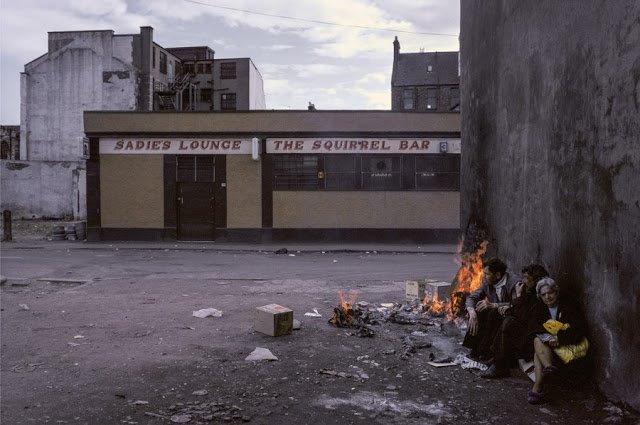
From the twitter feed “Picture this Scotland” comes this view of Glasgow in 1980:

Better than a Bill Forsyth film, that up there. Memories flood in. I remember my father when I was seven giving us a tour of the areas of Glasgow which were still bombed out from the war. Up there with the time when I was fourteen he took us to the square in his hometown of Greenock at noon on a Tuesday to watch the drunk men eat mittfuls of chips while simultaneously falling down. Did I mention Dad was a minister of the cloth? Note: The Squirrel has some history and seems to still be… active.

Well… except for there being no beer in California in 1927 and there being plenty of US dark lager both before and after prohibition…

The Chicago Tribune published an excellent article in the form of real beer business journalism on the fall and possible rise of Constellation’s billion dollar bauble, Ballast Point, a beer brand for me which always screamed “price too high!” for the quality one received. Apparently others agreed:

Michigan-based Founders Brewing Co., best known for its lower-priced, lower-alcohol All Day IPA, was roughly the same size as Ballast Point in 2015, but could end up shipping twice as much beer to wholesalers this year. Founders CEO Mike Stevens called the Ballast Point decline a “perfect storm” of high price point — a six-pack of Sculpin regularly sold for $15 — and what he believes to be a fading trend in fruit-flavored IPAs. “They were obviously just screaming to the top of the peak, riding that price point, riding their fruit IPAs. … Right when that (deal) went down, we kind of all knew that they were going to have to fix the price points because the consumers were going to lose interest,” Stevens said.

Mmm… fruit beer. Expensive fruit beer… Not sure I need a resurrection of that anytime soon. What’s next? Andy is lobbying for a gimmick free summer. That would be nice.

Conversely, news out of central New York… err… the Capital Region… finds the clock actually being turned backwards as a bricks and mortar brewery, Shmaltz reverts* to being a contract brewer – just as they had been prior to 2013. I was a regular buyer of their beer a decade or more ago so it’s certainly a brewer whose brands never suffered from someone else owning the steel. Happy story likely in the making. Maybe?

Ales Through the Ages II looks fabulous. Might I get there?

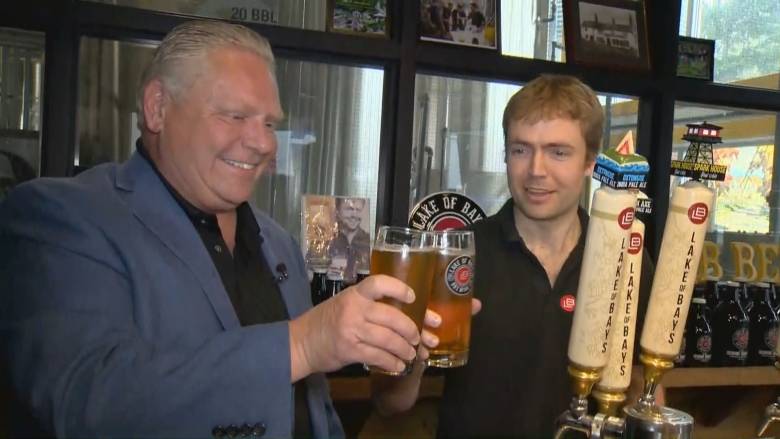
Ontario election time beer update! Suddenly serious contenders to lead the next government, the New Democratic Party, might review the rather slim introduction of beer, cider and wine into a handful of grocery stores across the province. Current Premier and solidly slipping third-place candidate Kathleen Wynne says expanding beer to more privates stores is just… just… well, “it’s not sensible”! And Doug “Did I Just Peak Early?” Ford says – beer sales everywhere! That ain’t happening but at least, as shown above, he wins the prize for the first beer pour at an election stop, part of Canada’s great “politician pouring beer” heritage. Note: someone’s angry. Note2: Ben says none of this matters. Two weeks to election day. Stay tuned.

Well, look at that. That was largely a fairly positive week, wasn’t it! No inter-consulto insult fests. No big craft hyperbolic pontifications. Am I growing up or something? That would be weird. Don’t forget that the beer news never sleeps and check out Boak and Bailey on Saturday. Stan is on holiday somewhere south of the equator… again. “Good Old South of the Equator” Stan. That’s what they call him. He’s posting from there. But not on Mondays in June. No, sirree. Not “Good Old South of the Equator” Stan.

*As reported by Deanna Fox, someone I have actually met.

Finally – A Quiet Week In Beer Thursday Links

Quiet. So quiet Stan is taking a month off. You know what he does in these little gaps of his? Not judging. No. Not me.  It’s election time in Ontario all of a sudden but, again like in 2014, I expect a quiet sleepy time for beer as debating point on public policy. That is our current Premier Kathleen Wynne performing the obligatory pouring of the beer back in the last 2014 campaign. Oddly, she chose an iconic brand from another province far far away. I shall make no such error. I am announcing my committment to offering you the best politicians pouring beer photos throughout the next month of campaigning.

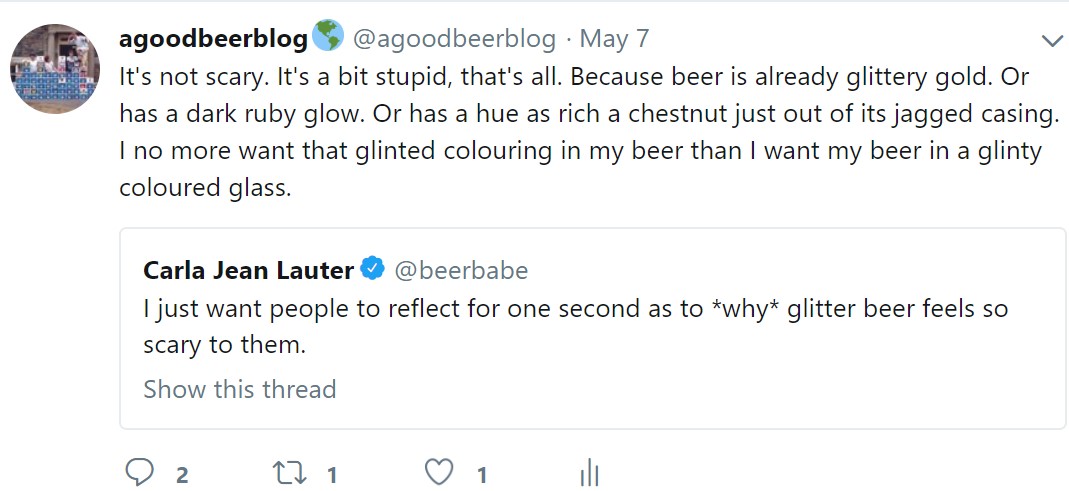
Was it really quiet this week? OK, there were some spats. Folk not liking folk calling folk out. I don’t get into these personality things much so I can’t speak to the dynamics. These are all strangers to me. And then there was that whole “Monday of the Glitter Beer” argie-bargie. While there are good intentions involved, my position remains clear:

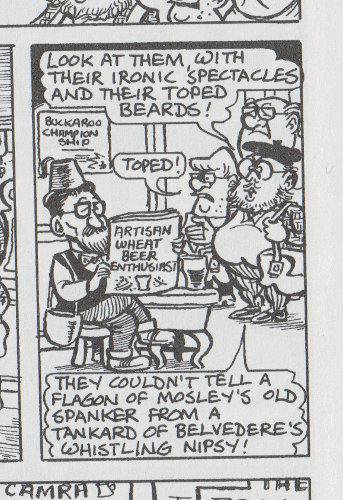
I really should have written “silly” and not “stupid”* for niceness’s sake… but my point would have really been the same. You dull a beer with murk and then add adulterating if likely benign elements to make up for the loss of beer’s natural jewel like gleam? But isn’t the real thing folk should understand is that it just doesn’t matter at all? I was a bit surprised by the glitter as a thing women use association argument as I think of glitter as a thing children use. Stuff on the craft shelf like the Elmer’s glue and construction paper. Hmm. Maybe it helps to be Canadian with pals in upstate New York. Let me explain. In upstate New York, adults eat hot dogs. I get it. I even do it when I am there. There is a rich history of ultra-local hot dog loyalties. But in Canada hot dogs are the food of a child. Like racing all a giggle towards a teeter-totter in the park. Or excitedly wearing a new ball cap with Thomas the Tank Engine.** That’s what hot dogs are. And glitter. Doesn’t mean its not worth taking pleasure in. Fill your boots! [I understand folk like to play “name the hops in the beer” too.] Frankly, any reason for a good schism is reason enough for me.

Jordan has been quiet. Now he says he will no longer be as quiet.

Hmm. Even though I have unjustly received the sting of the Protz, this situation is a bit odd.  A newspaper… well, a newspaper-like-thing sneakily reconstructing an apparently new interview and story from an old interview and story. How odd.

What else is going on? Kara Loo and Kelissa Hieber posted a good summary of events at this year’s US Craft Brewers Conference from the positive party line point of view. I say US even though the BA seems to be silently absorbing the Ontario craft movement and maybe other Canadian craft brewing regional discussions. Is that happening elsewhere, too? Me, I find the “Stronger Together” stuff a bit weird. One ring to rule them all. Who would have thought independent and small mean homogenization and centralized authority? Jeff likes “independent” but I just don’t get it at all. Hard to think of a vaguer word to frame a potentially stalling trade’s rebranding campaign around.

There is a good reason no one goes to watch three-legged races. The rope tying up the participants. I think of that often when I read folk trying to describe the economics of craft brewing while carefully avoiding any discussion of the owners’ take from these businesses. It’s all very well to tell sad tales of the actual hardships families of brewing staff face but why is that not partnered with the story of the lifestyles, cottages and fishing boats of the established and emerging craft brewery owners?

Speaking of quiet, will what might have been called in the 1950s or 60s eastern mystical mindfullness and beer be a thing? Well, it is a thing already – one that’s called “laying off the hootch” but you see my point, right? Andrew Jefford poses the question as it relates to wine in this way:

I would simply point out that there are, in fact, many points of similarity between the general practice of mindfulness and that of wine tasting.  You can indeed be a mindful wine taster; wine tasting at its most subtle and rewarding is a ‘mindful’ activity par excellence.

I get it. It’s about the immediacy of now. But I just end up having a good nap when I am achieve this sort of state of mind. Or staring at an ant crawling through the lawn. Up and down the blades of grass. Or reading a few travel posts by Ron. Why add alcohol? Isn’t the cool spring air sweet enough?

The Low House in Laxfield, England has been bought by the community just eleven years after it was the subject of a post on this here blog. Just eleven years. Coincidence?

Another month, another stage in the  case of Stone v. Keystone… and this is the point in the litigation that the non-lawyers eye will start to glaze over. See, Stone has moved to dismiss the counterclaim rather than answer it with a statement of defense to the counterclaims. Got it? Bored yet? You know, I took Civil Procedure from Tom Cromwell, a wonderful professor who later became a judge of the Supreme Court of Canada… and even I am getting a bit bored. Mind you, I think it was a Friday 8:30 am class so I likely only went maybe once every five weeks. As always, legal brain*** Brendan in Syracuse unpacks the situation.

Not beer: Living Colour.

Oh – and I did have a few beer.**** I especially am enjoying a small stash of Brouhaha, a nut brown ale from Refined Fool out of Sarnia over by Michigan. Lovely. He who is tired of nut brown ale is tired of life.

That’s it. Laters.

*I did poll the drinking age women in our house and they did go with “stupid” so…
**Not to mention, giving equal time,  1 Corinthians 13:11.
***He is such a brain.
****Remember – in Canada, the plural of “beer” is “beer” – like moose. OK?

Your Thursday Beer News For That Day Just Five Weeks Before March

It gets like that in January. Counting the days to the warmer ones like prayers upon beads passed through the fingers. It’s time. Please be March soon. Please. Warmth. Now! Come on!! Time, like grace, arrives in its own pace I suppose.  Even calling this a Thursday post is jumping the gun a bit. These things get plunked together mostly on Wednesday. These things matter. Anyway, what’s been going on in the news?

I lived in PEI from 1997 to 2003 and am pretty sure John Bil shucked my first raw oyster. Love struck I wasCarr’s was an eight minute drive from my house and I often bought a dozen or two there to take out to the back yard and suck back on a Saturday afternoon. RIP.

Our pal Ethan and Community Beer Works are working with the owners of Buffalo’s Iroquois brand to revive a version of the venerable brew. An interesting form of partnership where craft leans of community pride in legacy lager.

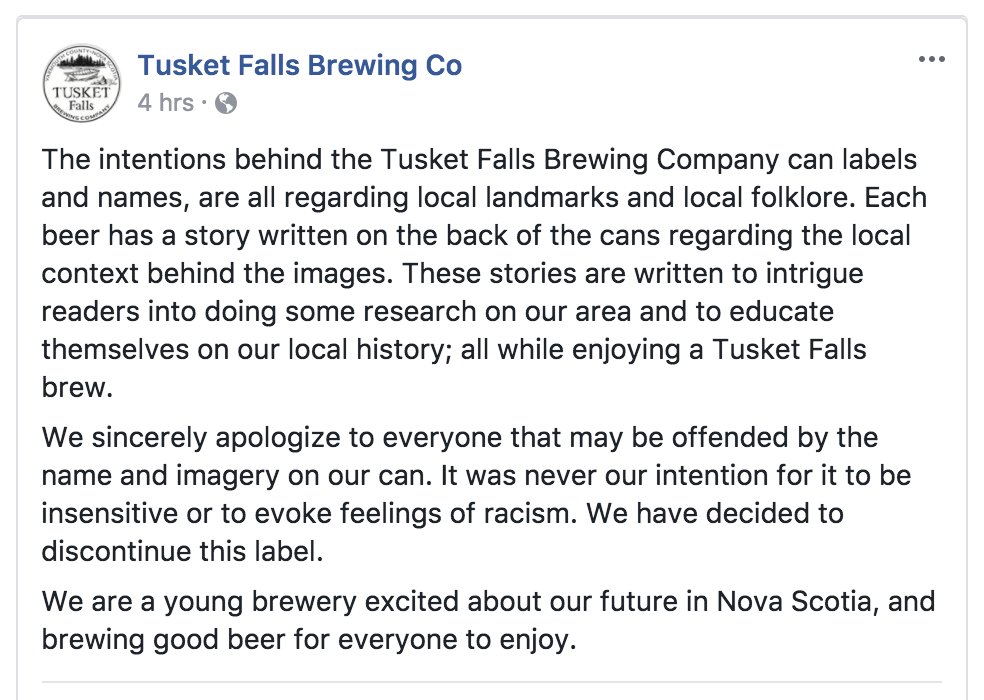
Carla Jean Lauter tweeted the news Wednesday afternoon that Nova Scotia’s newbie Tusket Falls Brewing had decided to withdraw its Hanging Tree branding for one of its beers. Rightly so and quickly done as far as I can tell. That’s the Facebook announcement to the right. This was a good decision on their part but not one that goes without consideration. I grew up in Nova Scotia and, among other lessons learned in that complex culture, had the good fortune to be assigned as law school tutor in my last year to one of the leaders of the Province’s version of the Black Panther movement when he was in first year, the sadly departed, wonderful Burnley “Rocky” Jones. He did all the teaching in that friendship. I would have loved to have heard his views on the matter. See, Loyalist Canada was settled in the 1780s by the British Crown as a refuge for the outcasts, including African American freed former enslaved Loyalists, seeking shelter after the dislocation of the American Revolution. Court justice there as it was here in Kingston included hanging as part of that. Hell, in the War of 1812 at Niagara there was still drawing and quartering. As I tweeted to Ms Pate, another Bluenoser, the hanging tree could well symbolize peace, order and justice in Tusket as much as bigoted injustice elsewhere. Or it could represent both… right there. Were there lynchings in southwestern Nova Scotia? Some stories are more openly spoken of than others. Slavery lingered on a surprisingly long time here in Ontario the good. We talk little about that. And Rocky and others do not fight that good fight without good reason. We might wish it should and could depend on what happened in that place. But somethings are no longer about the story of a particular place. Somethings about beer are no longer local. And its not “just beer” in many cases. Yet, we happily talk of war. Q: could a Halifax brewery brand a beer based on the story of Deadman’s Island?

My co-author Jordan has made the big time, being cited as “Toronto beer writer and expert” by our state news broadcaster.* With good reason, too, as he has cleverly taken apart the fear mongering generated around the reasonable taxation of beer.

This is really what it is all about, isn’t it? Well done, Jeff. The setting, style and remodeling of his third pub, the
The Ypres Castle Inn all look fabulous. Good wee dug, tae.

I don’t often link to a comment at a blog but this one from the mysterious “qq” on the state of research into yeast is simply fantastic: “[t]o be honest anything is out of date that was written about the biology of the organisms making lager more than three years ago…” Wow! I mean I get it and I comments on the same about much of beer history, too, but that is quite a statement about the speed of increase in understanding beer basics. Read the whole thing as well as Boak and Bailey’s highly useful recommended lager reading.

Max finally gets a real job.

Gary Gillman has been very busy with posts and has written one about a very unstylish form of Canadian wine, native grape Canadian fortified wine, often labeled as sherry. Grim stuff but excellently explained. As I tweeted:

Well put. These were the bottles found, when I was a kid, empty up an alley or by forest swimming holes. I thought we had a few examples of better fortified wine ten or so years ago. But, likely as the PEC and Nia good stuff sells so well, no attraction to a maker.

Gary gets double billing this week as he also found and discussed the contents of a copy of the program from the first Great American Beer Festival from 1982. I have actually been pestering Stan for one of these off and on for years only to be told (repeatedly) that archiving was not part of the micro era. Tell me about it, says the amateur boy historian. The 1982 awards are still not even listed on the website but that seems to be the last year of the home brew focus.  Anyway, Gary speaks about the hops mainly in his post. I am more interested in the contemporary culture: which presenter got what level of billing, what the breweries said of their beers. Plenty to discuss.

More on closings. Crisis what crisis?  In the room the women come and go / Talking of Michelangelo. What’s it all about, Alfie?

That’s enough for this week. Plenty to chew on. See you in February!

*All I ever got was “an Ontario lawyer who reviews beers on his blog…” like I am some sort of loser…

Imperial, Yes, But Cream Ale Was Also Light As Well As…

The more I get into the records referencing cream in 1800s New York brewing, the more obvious it is that the term was pervasive. It illustrates excellently, as a result, how branding existed independent of those claims to copyright we suffer from today. In law, there is an excellent and better word for such stuff that applies as much now as then – puffery. Claims made as to quality that are never ever really expected to be challenged. Look at that ad from the Jewish Daily News of 30 November 1916 again. Imperial Cream Ale. Is that the same as the Imperial Cream Ale of the Taylors of Albany from the early 1830s to the late 1860s? Or is the cream just a puff?

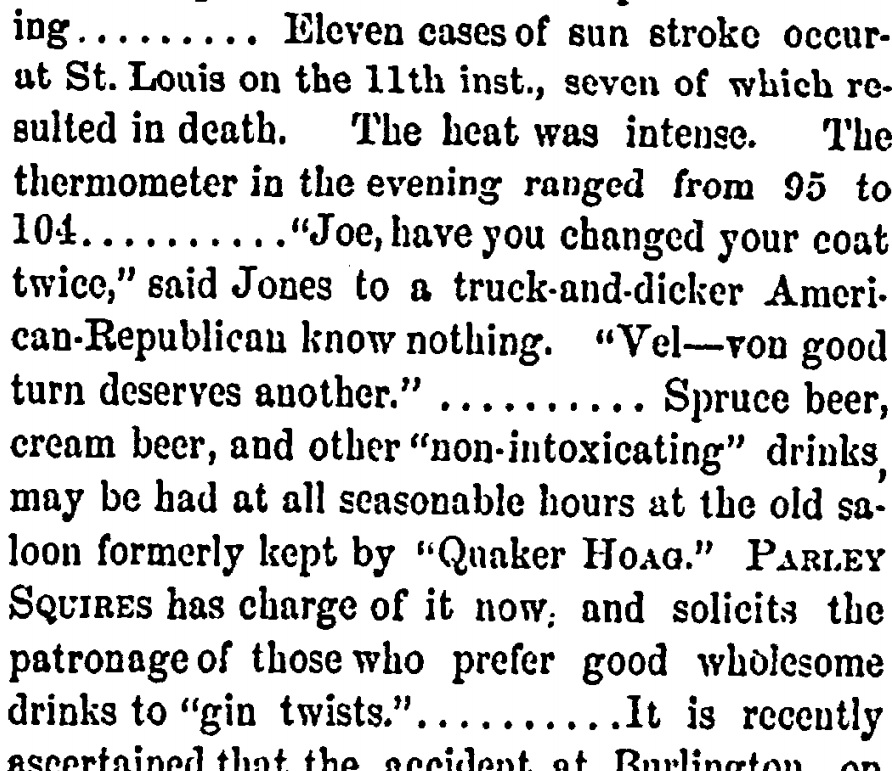
That image to the upper right? It’s a part of a column in the Plattsburg Republican from 21 August 1858 entitled “Items: or Crumbs for all kinds of
Chickens.” Is that puffery? Seems a bit more than that. Cream beer is being lumped into a class: non-intoxicating drinks. Sounds like a bit of a vague concept but at the same time the courts in New York State were struggling with the same term as it related to lager and the wider issues related to acceptance of the German immigrant wave in the middle third of the 1800s.

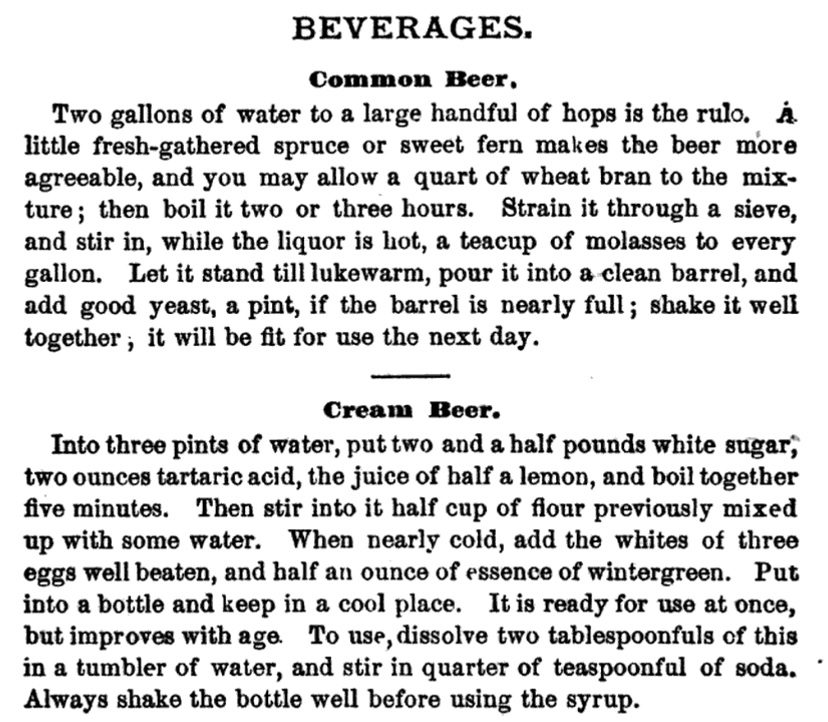
The book De Witt’s Connecticut Cook Book, and Housekeeper’s Assistant from 1871 includes these two recipes, one after the other, on page 100. The first for “common beer” has yeast added, the second, for “cream beer” doesn’t. Is “cream” then code for no alcohol? When I was a kid out east in Nova Scotia, one of my favourite things was cream soda. There were two types as I recall. Pink or clear. Pink was like drinking candy floss. Clear was like drinking candy floss… but was not pink. I hated pink cream soda. I was a clear cream soda man. Crush, if you have it… but only in Canada. Pop… soda… soda pop… was a class of soft drink that morphed out of beer. In the 1850s you could speak of California Pop Beer. In the 1830s you could speak of the Lemon Beer of Schenectady. In the excellent short book Soft Drinks – Their Origins and History by Colin Emmins, small beer is described as a progenitor of British soft drinks along with spa waters, syrupy uncarbonated cordials and that favourite of George III, plain barley water. [Continuum. Perhaps continua.] Consider the simple lemon…

The earliest English reference to lemonade dates from the publication in 1663 of The Parson’s Wedding, described by a friend of Samuel Pepys as ‘an obscene, loose play’, which had been first performed some years earlier. The drink seems to have come to England from Italy via France. Such lemonade was made from freshly squeezed lemons, sweetened with sugar or honey and diluted with water to make a still soft drink. 

It appears that 1660s lemonade plus small beer could be a cause of that fancy 1830s upstate NY lemon beer. Could be. There would be other intermediaries and antecedents. Think of how the sulfurous spas of Staffordshire in the late 1600s, saw the invention a drink introduced the local hard to swallow spa water into their beer brewing. Is this how it works? Isn’t that how life works?

When you consider all that, I am brought back to how looking at beer through the lens of “style” ties language to technique a bit too tightly for my comfort. The stylist might suggest that in 1860, this brewery brewed an XX ale and in 1875 that brewery brewed an XX ale so they must be some way some how the same thing. I would quibble in two ways. Fifteen years is a long time in the conceptual instability of beer and, even if the two beers were contemporaries, a key point for each brewery was differentiation. The beers would not be the same even if they were similar.

Layered upon this is the fact that “style” is an idea really fixed somewhere in the 1980s after Jackson’s original expression which was altered in the years that followed. The resulting implications are important given how one must obey chronology. This means if (i) Jackson’s 1970s “classics and cloning” idea didn’t last more than ten years until (ii) the more familiar “corner to corner classification” concept comes into being then the application of “style” to brewing prior to the 1970s (if not 1990) is also a challenging if not wonky practice. Brewers brew to contemporary conventions even though they are but points in a fluid continuum. You can’t conform to an idea that doesn’t yet exist.

All About Beer published the article “How Cream Ale Rose: The Birth of Genesee’s Signature” by Tom Acitelli on 17 August 2015 which, as we can see above, contains an origins narrative for cream ale which (though very condensed so somewhat unfair to parse) is now really not all that sustainable:

Cream ale is one of the very few beer styles born and raised in the United States. Predating Prohibition, the style grew up as a response to the pilsners flooding the market via immigrant brewers from Central Europe. Cream ales were generally made with adjuncts such as corn and rice to lighten the body of what would otherwise end up as a thicker ale; brewers also fermented and aged them at temperatures cooler than normal for ales.

I think I am good until to the word “the” in the second sentence after the comma. If style can be applied to the concept at all, cream ales at best probably represented styles. They were not a response to pilsners as they predate Gillig and were in mass production happily in their own right though the mid- and latter 1800s. They became made with “adjuncts such as corn and rice to lighten the body” but so did ales as our recreation of Amdell’s 1901 Albany XX Ale illustrated. The last sentence may well be fine.

BUT! – now notice the gem of a wee factual trail actually setting out as the specific origin of Genesee Cream Ale as related to Acitelli:

His father and grandfather, a German immigrant, had been brewers in Belleville, Illinois, about 15 miles southeast of St. Louis. Bootleggers had approached his father, in fact, about brewing during Prohibition, but he demurred. Clarence Geminn himself was completely dedicated to the craft, according to his son, a fourth-generation brewer. “Saturday and Sunday he would go into check on things,” Gary Geminn told AAB from his home in Naples, New York. “Summer picnics had to wait until the afternoon; any outing had to wait.” As for the exact formula behind his father’s most enduring beer, no one’s talking—obviously not the brewery itself, nor did the beer’s progenitor.

Mid-west Germans? Now that starts sounding more like the parallel universe of cream beer than cream ale. Does its DNA include Germans moving to Pennsylvania in the 1700s, then on inland into Kentucky in the early 1800s then into the Mid-West later that century only to back track to upstate NY by the mid-1900s? Can we draw that line? Either to connect or perhaps delineate? Maybe we need to be prepared to do both if we are seeking to understand events prior to the point of conceptual homogeneity that is achieved with the crystallization of style when MJ meets what becomes the BA.

As for cream? It’s a lovely word. So many meanings. So many useful applications. So many more leads to follow.

Now That It’s Summer Do I Want Gin Or Beer… Or?

yard2016This is the sort of problem I have in summer. Which is another way of saying I have no problems. Summer in the yard. Digging slightly pointlessly until drenched with sweat. Watching the teens push the mower from the prospect of that chair and that shade. What to drink?

I am happy to say I have two local gins in the cabinet – or as local as you get in Canada. One speaks of Quebec’s Arctic with herbs north of the tree line. The other reeks of Ontario’s middle, the bush of the Shield. I don’t expect them to disappear soon as I rarely have a second. It’s not that I suffer but I do find satisfaction fairly rapidly returned from a well placed G+T. I also make sure I have a reasonable utility gin in the cupboard, something with sufficient colonial branding, to ensure the good stuff isn’t wasted on me by me. Gins. Or rather a gin.

Other than one gin what plays upon the mind as the bus trundles homeward? Riesling and Vinho Verde. Two wines that make every other white feel bloated and weighty. Each are madly underpriced, too. Each balances brightness and fruit. And each comes in at the lower end of the alcohol scale. 8.95$ x 8.95% is an attractive Portuguese proposition. Conversely, good Riesling is a very local proposition for me. This 2014 by nearby Sugarbush is a bigger take at 12.5%. From Hillier in Prince Edward Co., it’s full of the rich cream the loam provides. Lightly lemoned sweetened cream. Farmsworth? Limestone shards like those in fields I walked out into last year. Wine from a field and a year.

What of beer? Tenacity pale ale by Ottawa’s Tooth and Nail is as herbal as gin but with none of the levity. It’s a lovely ale. Plenty of graininess standing up against the comforting weedy bitterness. Deep oranged gold, maybe it simply speaks of twelve weeks from now. The season of mellow fruitfulness. Does any beer match the audacity of an unadorned early leaf of lettuce? None. Wine wins every time. But maybe it’s a campfire beer, an Algonquin beer? Perhaps I am too urban… or, rather, suburban. Last night I wasn’t. I was out there, where highway 38 meets 7. Surrounded by mosquitos and haunted by distant calling loons watching the eldest play softball against the league’s Near North team. It would have fit in there well, near where seed aspires to sausage. Really.

Lemon Beer In Schenectady In The 1830s

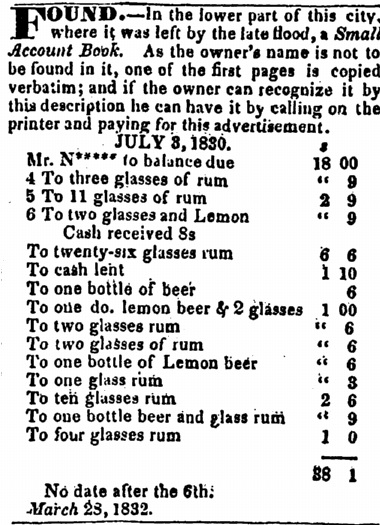
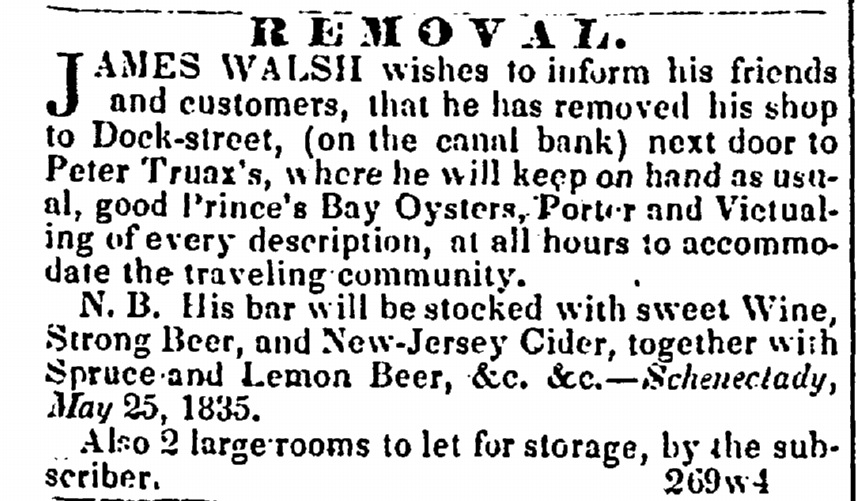
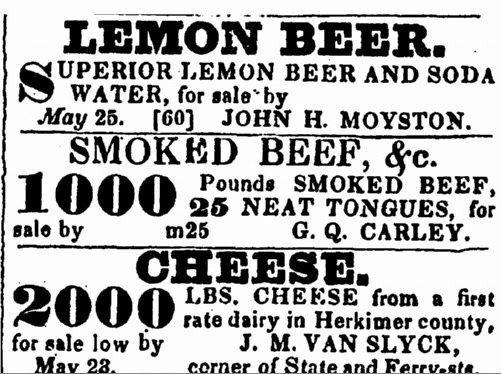
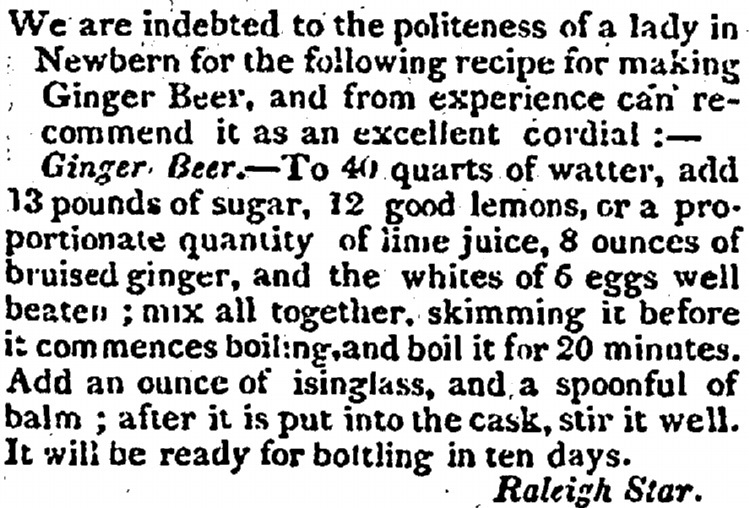
schencabinet28march1832lemonbeerI was looking up spruce beer to see how late it was being advertised and came across a small batch of notices from one newspaper in Schenectady New York in the 1830s. By the second half of the 1800s, there are plenty of recipe books that offer homemakers the ability to make a 1.5% alcohol soft(ish) drink for the family based on sugar and essence of lemon. Unlike those household guides, the 1830s lemon beer appears to take its place with other alcoholic beers and not in the temperance drinks cabinet.

The notice of the lost notebook to the right is particularly interesting. from the 28 March 1832 edition of the Schenectady Cabinet, it explains its own purpose – but whoever was keeping track of the debts of this drinker was serving lemon beer along with rum and beer. Or porter, sweet wine, strong beer and New Jersey cider. Premium drinks. Yet, the recipe for ginger beer to the lower right is from 2 May 1818 of Albany Gazette and that looks a heck of a lot like the later 1.5% temperance drinks. Maybe the stuff was both premium and light, a small nod to sensible drinking in the fairly debauched days of James Monroe.

schencabinet27may1835lemonbeerschencabinet25may1831lemonbeeralbgaz02may1818gingerbeer

Still Off, Five Wineries, A Flag And A New Brewery

pec1See that there? That’s a bit of a winery with a brewery popping up rapidly behind it. I raced through the east end of nearby Prince Edward County again today as I was getting itchy feet on day four of this week off. Itchy feet from reading all of Stonch’s posts about a Londoner’s country hiking lifestyle, wandering from pub to pub and glass to glass. Well, that sort of thing doesn’t happen much around here but, as he was giving me the gears over this and that on the chat app yesterday, I decided to do the next best thing and head to our nearest neighbouring grape growing region. And I found a new brewery in the works or at least a roof four walls and a newly poured concrete floor for County Road Beer Co., an offshoot of the makers of pretty grand sparkling wines, Hinterland. More in a bit about that but first a little history.

pec13

pec14

pec15


pec16

pec5


As I mentioned the other day and Craig set out in more detail in a press release today, in one month’s time there is a recreation of the sorts of beer that may have been familiar to combatants on both sides of the American Revolution on the central New York Frontier. And I have one job – get a flag. As you can see from the historic plaques, they take this flag thing serious in Loyalist-settled country. Just as the other side did after the war and the re-settlements, they had to recreate their lives anew. Farms were cut out of forests. Mills were built to service villages with names of the towns, like Cherry Valley, from which their ancestors fled in the 1770s and ’80s. I took that photo of the sign standing by the side of Schoharie Road. These days the flag is everywhere. A bit surprising that it is. When I went into a hardware store and asked if they had the old version of the Union Flag, they said no. Then the old guy at the counter added “we do have the Loyalist flag” which, when they checked, was the old version of the Union Flag. Within seven seconds of my explanation – about when I mentioned 1606 – eyes were glazed and mouths even smirked. I shut up and took the flag to the check out. “That will be $75.” Not a chance. I put it back and walked away.

pec7

pec8

pec9


pec10

pec6


I was actually more interested in the fruit of the lands than the damn flag anyway. As Jordan described in one of his bits in Ontario Beer, Prince Edward County was a hot bed of barley sales to nearby northern New York from the US Civil War until a tariff was slapped on the trade in the 1890s. Be sure not to say good things about President McKinley next time you visit. Anyway, the fields are all there now diversified into hay, corn, soybean as well as more and more grape vines. I got out of the car and onto the land and you could see why. Amongst the old cedar rail fences, the soil in the fields was rocky as anything. Chunks and sherds of limestone everywhere, just the sort of thing grapes love.

pec17

pec2


pec12

pec11


After first doing a gravel doughnut in the parking lot of Barley Days to read a sign that said the retail shop was shut, I aimed the old van at the Greer Road all the way over at the west side of the County. I picked up a rose, Riesling and Bordeaux red blend at Rosehall Run as well as some Black River cheese curd, one of the greatest things ever to come out of a cow. Across the road and about 500 yards to the east, I stopped at Norman Hardie for another Riesling and a Pinot Noir. I talked with Johannes Braun, the winery’s operations manager, for 20 minutes about the season, his love of beer and how he makes 100 loaves of bread most Saturdays on top of everything else it does. Hit wineries in April on a Thursday and you get to chat. And he mentioned that Hinterland was setting up a brewery, told me to stop in.

pec20

pec19

pec18


pec3

pec4


Next, I headed to Karlo Estates where I was again the only customer in view. Bought another Riesling as well as another Bordeaux red blend. The very helpful staff person in the re-purposed barn mentioned that Hinterland was setting up a brewery, told me to stop in. So, I thought, I better go to Hinterland which I now understood was setting up a brewery. When I go there it was a crowd of one at the tasting room and I had a couple of short sips of their bubble before buying a couple of versions. As I was about to go, a guy walks in and I mention something about plans for a brewery. Mark Andrewsky stuck out his hand and we talked for half an hour about what was going to be brewed as a guy worked on the concrete floor of the new building next to the re-purposed old barn. Local, local, local. The family behind the winery had connections to grain farmers, there was a hop farm down the road – Fronterra Farm – and a new maltster coming on line an hour’s drive north. Stan would be pleased. Like with MacKinnon Brothers of the Loyalists of Bath and Church-Key farther north, one county over to the east, this is arguably looking a bit like beer with terrior. Mark mentioned maybe a 4% saison and how he had an excellent chance of laying his hands on a barrel or two for some aging experiments. Before heading away, I stopped at Closson Chase for a couple more Pinot Noirs. It’s also just around the corner.

The curd was gone by then. Time to head back to the ferry and then on home. An hour each way. Unless you get to the ferry just as its pulling out like I did. Twice. I try to make it at least once a year but with the promise of beer and now 45 wineries it’ll likely be sooner. And if they figure out how to build a hotel or even a decent motel or two around there it might even not be a day trip. The flag? I am checking the internet.

Did Hipsters In The 1850s Like Adulterated Beer, Too?

uhvb1aThis is a pretty interesting bit of news in the New York Post:

The scientists discovered the glass “California Pop Beer” bottle on Bowery Street near Canal Street, where a popular beer hall, Atlantic Garden, bustled in the 1850s, scientists said. “It’s a light summer drink, slightly minty and refreshing” said Alyssa Loorya, 44, president of Chrysalis Archaeology, which headed the project. The beer is infused with ginger root, sarsaparilla and wintergreen oil, and other herbs, giving it a one-of-a-kind kick, Loorya said.

If the beer bottle collector nerds are to be trusted, California Pop Beer was produced as Haley & Co. Celebrated California Pop Beer out of Newark, New Jersey… but apparently sometimes in New York as well. The archaeologists reproduced the beer based on research that led to finding a patent for the stuff. I suspect that. I suspect something about it all. I am suspicious. Seems a bit weird that you would get a patent for a beer when every other brewery in the world relies on and has relied on trade secrecy as opposed to a patent telling the whole world about what goes into the bottle. Fortunately, someone in the Google Borg decided we should all have access to patents so we can have a look at what went into this stuff at least in 1872. Hmm…. not really beer. A yeast and an extract of wintergreen, sassafras and spruce are prepared and then, if I read correctly, they are combined with “ten gallons of water one hour, after which seventy pounds of granulated sugar”. Or maybe 105 gallons. Yum? Does it matter?

What is most interesting to me is that this is an example of a second half of the 1800s popular beverage. It relies upon the word “beer” but really is more like a an alcopop or cooler. It comes from a time when, like today, purity is less important than flavour. It also plays upon California in the branding right about when Quinn & and Nolan in Albany, New York were advertising their California Pale XX and XXX Ales. Maybe California was just neato right about then. I like the idea that spruce is part of the taste profile. An old regional favorite flavor that you can learn more about if you BUY THIS BOOK. Oh. That was a bit gratuitous, wasn’t it.

Never mind that. The point remains. The past is a foreign land and so were their drinks.

Not Beer: Dr. Konstantin Frank, Pinot Noir 2010

flwine1I don’t always drink wine but when I do I like the good local stuff… or maybe something from the Mosel. Or maybe a nice grenache. I was thinking yesterday when I was looking at the fantastic selection of Finger Lakes wines at Triphammer Wines at the north end of Ithaca, NY that if you are going to say stuff like beer is more versatile, complex or varied than wine, well, you had better have downed a good lot of both to justify your argument. I don’t believe any of it myself. Both are wonderful and awful and everything in between.

Dr. Frank is the old hand, a pioneer in growing European grapes in northeastern North America. The Finger Lakes wines are comparable to those of Ontario’s Prince Edward County near where I live. They are a couple hundred km due south but the local climate is not so affected by their smaller lakes. On price point, this Pinot is just over half the retail of a Norman Hardie from PEC. It would be good to do a side by side. No need for a tasting note for this wine other than to mention balance, age worth tannin and a strong berry core.

Like the hotel decor? I am showing you the nicest bit. Unlike the wine, low cost and grinder charm is the best you might suggest. The Utica Club of places to stay.