
The Thursday Beery News Notes For The Week We Are All Cape Verdean

We need a new anthem:

Let’s root root root for Cape Verde
If they don’t win it’s a shame…

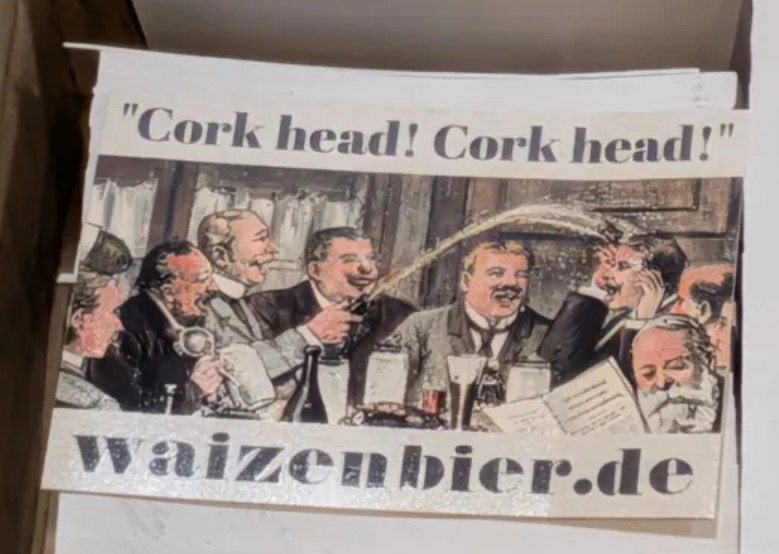
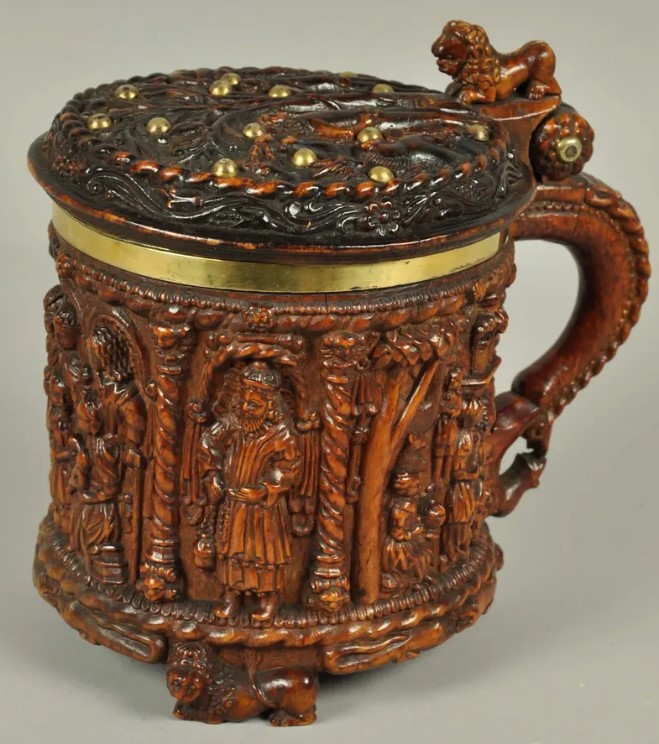
Actually, that tie will do just fine. Just fine. Still, Uruguay has have the best strip. We remember the Graf Spee after all. Isn’t it fun how many old simmering bigotries and grudges come out during international sporting events! Speaking of fabulous cups, Lars shared that image this week: “… carved by a Norwegian farmer… The king bought this mug in 1798 for 60 riksdaler, an absolutely wild amount, equivalent to roughly 10 cows.” The Scandenavian bovine value (SBV) scale to the rescue… again.

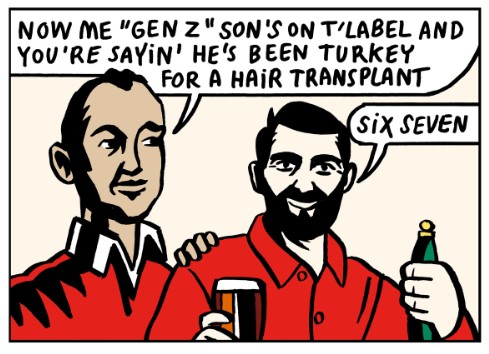
How many cows is the World Cup worth? [Ed.: “…crickets...”] Studies have shown that a beer at the stadium might cost you about one-third of a cow. On the other hand, it is pretty clear what inviting the Tartan Army to your town is worth to breweries:

The Tartan Army chartered dozens of school buses from Boston and Providence to get to the game. On the ride with the Scots were many father-son pairs, kilts and even more beer. Organizers brought 10,000 cans of Narragansett Lager for the Foxborough-bound buses from Providence alone. None were left by the end of the night.

Wow. The call has gone out for an extra 100,000 more! My own wee cousin** is out there representing the fam. Seems like the Army is working hard to beat the English in Spain in terms of fluid input, according to one French news source. And Ruvani has also been on the World Cup beat and shared the thoughts of opinions of commentator Roger Bennett what makes for a great fitba focused bars in the US including this good point:

Bennett is keen to emphasize that there are aspects of great American soccer bars that are both unique and essential to the U.S. In other countries, “you commune with fans of your team and everyone else is the enemy, but in the U.S. most fans are young and have come in since the Premier League started being broadcast by NBC in 2013,” he said. “Their discovery and passion have created a unique culture that’s not divided into us-against-you.” This difference means that bars must be ready for and welcoming to multiple fan groups, fostering an inclusive spirit. 

Speaking of welcoming, Ontario’s fading but venerable former retail monopoly The Beer Store is doing something very unusual the days – opening two stores as it closes many more. But its doing so seemingly primarily to receive back more empties as much as to sell beer:

The Beer Store has closed dozens of retail locations across the province over the past two years, citing changing market conditions and the expansion of beer sales to convenience stores, more grocery stores and gas stations. Many of these retailers do not accept empty container returns… As Ontario’s largest beer retailer, The Beer Store recently unveiled a new “Take back what’s yours” campaign aimed to boost awareness of the province’s deposit return system. A recent analysis by the Toronto Star suggested Ontario consumers lost more than $60 million in unredeemed deposit refunds last year by placing empty alcohol containers in their blue box or the trash instead of returning them to The Beer Store.

And Stan has issued his latest Hop Queries and you are all well advised to govern yourselves accordingly. And he’s used a concept that’s been unfamiliar in the brewing world in recent years – stabilized:

After reducing acreage from 60,872 acres in 2021 to 41,654 in 2025 (that’s 19,218 acres), American farmers indicate that total acreage will remain basically the same in 2026 (at 41,642; 12 fewer acres than in 2025, less than three-tenths of one percent lost). The German Hop Growers Association reports that farmers will harvest 5.8% fewer acres in 2026 after slicing 6.5% in 2025 — leaving 44,117 in 2026, compared to 50,136 in 2024…. It should not be a surprise that a press release from the German hop growers about acreage states, “The mood in the hop market is currently poor” and “the oversupply of aroma hops had made production cuts necessary for several years.” 

In amongst some cheeky chat about NA beer, Andreas Krennmair stood up and sensibly explained with semi-cited research why it is that German NA beers are better than elsewhere in the world:

I’m sure the technology will eventually cross the ocean. From what I’ve been told, all the Bavarian breweries launching new and better NA beers basically comes from one guy’s PhD thesis at the Technical University of Munich at Weihenstephan. I’m not sure the thesis has been published yet, but… here’s one paper from the same guy about the impact of different NA production methods on aroma compounds. 

Here’s Dr. Guy’s paper. I like the acronym they use too, NAB. Suits my feels as a consumer some times. Andreas also shared the best beery gross out of the tournament so far, the drink to accompany an early match:

If you’re looking for the perfect drink for today’s Germany-Curaçao match, here’s a 1970’s beer cocktail for you: Isarwasser. In a 1 litre Maßkrug, combine a bottle of Bavarian wheat beer, half a litre of orange juice or orange soda (e.g. Fanta), and a shot of Blue Curaçao liqueur. Enjoy!

I’m all for fighting the hegemony of homigeneity but… I was sure he was joking. Here, however, is independent evidence of this crime against the clinky and the drinky.

Matty C had a good go at the numbers behind the lack of a GBBF this year, the reasons for which have become clearer with time:

… attendance was way down, with 13,000 people attending over five days – far short of the event’s apparent 23,000 target…  both the main GBBF and its winter equivalent have been cancelled. According to one discussion on its members internal forum, the festival made a staggering £320,000 loss. This feels significant, because you don’t plan the largest beer festival of the year and then move on after losing more than a quarter of a million pounds. A loss of this magnitude isn’t made simply by mismanagement – it’s gross negligence.

Wow. Wowsie-wow-wow even. Knut‘s written about another sort of challenge facing those in the trade – finding yourself brwing quality niche brewing in an isolated location. He noted a few interesting strategies to deal with that reality:

Carl brews beers inspired by Belgian classic styles, usually with malt from the Trøndelag region and with Belgian organic hops. I am lucky to have a designated driver, as we sit down to sample a few of his saisons. It’s a tough market these days, there are some beer bars in Oslo and Trondheim who sell his beers, but not many. He has teamed up with a local company that sells high end salmon fishing in the nearby Gaula river, probably a wise choice with guests paying good money for a quality product. The lower alcohol beers are available directly from the brewery, get in touch with him if you are passing by.

As you consider your route to the Gaula River, here some notes:

Note #1: this vid on UK pub habits also is about Canadianness.**
Note #2: “…BUD stock up 29% yr-to-date…
Note #3: Ron on Scottish Sweet Stout.
Note #4: “…stuck in 2016 for a moment… Just like DogHouse Edinburgh.

Question. Horse brasses – history or heritage?*** Boak and Bailey were on the case this week:

Newly built pubs on housing estates and new towns across Britain, desperately in need of instant personality, also often came with horse brasses fitted as standard. For example, when Scottish & Newcastle built The Moorcock at Peterlee, County Durham, in 1973, to provide a “tinge of country atmosphere… in a tasteful blend of ancient and modern” they fitted it out with “beams and timbers and rustic brickwork and horse brasses, sporting prints, and game birds”. (Hartlepool Northern Daily Mail, 15 November 1973.)

So a bit of each. And Alistair has been back home in the UK and has started sharing his thoughts on what he’s missed, starting with a day in Windsor waiting for his flight on to Inverness:

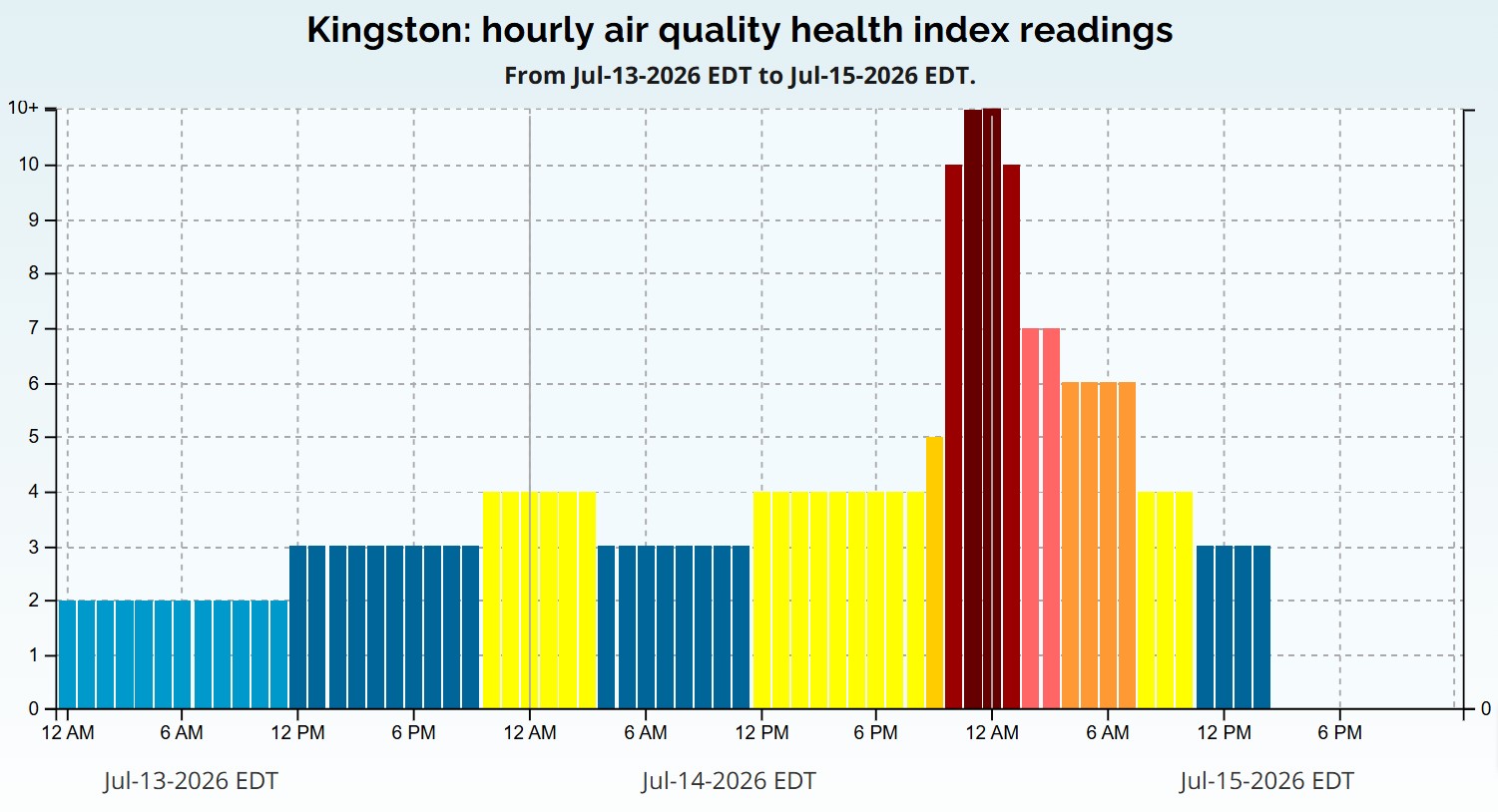
I had been to Windsor all of once previously, but I may have been about 12 years shy of being able to drink legally, and as such I don’t remember much about that visit. There is though a family legend/inside joke that at some point whilst wandering near the castle, I asked my parents why it wasn’t finished yet given the scaffolding that surrounded many of the buildings. I was then somewhat keen to walk by the castle to check up on progress in the intervening 40 odd years – there was still scaffolding to be seen, still not finished then I guess. It was getting pretty bloody warm by this point of the day, even though it was only 9.30 by now, so I took myself off along the river to get to my first planned stop of my tour of the town’s hostelries.

Alistair, being the good saintly lad he is, was well advised to leave out the visit to the city if the latest edition of London Beer City where Will Hawkes explains something I, also being a good saintly lad****, was not aware of… the class of establishment known as the strip pub:

Now – a bit like the Ploughman’s Lunch – strip pubs have almost entirely disappeared. This week the owners of The Nag’s Head in Aldgate submitted plans to Tower Hamlets council which would see this long-established strip pub turned into a “traditional pub” and 24-room hotel…. For younger Londoners – who make up the bulk of my readers, naturally – it must seem incredible that so many pubs once featured women taking off their clothes, but the past was a different country. What was most remarkable, actually, wasn’t the stripping – that still exists, albeit largely in glitzier surroundings – but the low-key, unglamorous, seedy-in-a-specifically-British-way nature of it. No stage, no pole, pounds-in-a-pint-pot for payment… Crucially, these strippers moved whilst naked…

Heavens. Naked people just wandering around the pub among the drinkers? Yik. These places probably reeked of Isarwasser. Speaking of another form of the unfortunately unsavoury, Lesley Chesterman wrote about criticism this week:

When reviewing dishes like that, you can’t lie and say everything was great just to keep things positive. I saw this in my time as a critic as well, this idea of being “mean” when criticizing professionals cooking. People obviously focus on the negative side of criticism, but the truth is, it can be beneficial too. How will any chef improve if you don’t give it to them straight? And how will we uphold a high level of gastronomy here in Quebec if we’re all afraid to call out mediocrity? It is constructive criticism after all, and the goal in cooking should always be excellence. Undercooked frog’s legs and rice are not excellence. 

Agreed. In one of the sillier examples of forecasting yet, the International Wine and Spirits Record (now IWSR) has predicted what the world will be like in 2035… without any reference to the coming global resource wars:

According to the findings, the stabilisation in global volume from 2031 will be driven by two main factors: a “substantial rebalancing” of the global market, and continued growth in the worldwide drinking age population. Over the next decade, the global beverage alcohol market is, according to the analysis, anticipated to be “shifting away from China, North America and Europe to India, South America and Africa”. From a global perspective, this is said to be “most clearly illustrated by looking at consumption by servings” with the research highlighting that “the different serving size volumes of different categories” is a factor to consider.

Serving size? I might have thought fire spewing drones sweeping the landscape into a hell zone might have been a more important factor in the future to come… but I’m like that.

On a similar sort of standard, some attention was drawn to a PR infographic calling itself a summary but being held out as a research study about the NAB drinking habits of the British. Example: “New research from non-alcoholic brewery Athletic Brewing Company and KAM Insight shows that 94% of alcohol-free beer drinkers also consume alcohol.” There seems to be no statement of the research’s definitions, the methodology or the manner in which data was collected. Noce. I’d move to know the criteria for establishing whether one is or is not a “highly active, performance led consumer“! The 94% to 6% split on “alcohol-free drinker” habits is a head scratcher. Is anyone who ever had a NAB included in the 94%? One wag commented that it was akin to this sort of statement:

The Benson & Hedges Wellness Institute reports filtered cigarettes offer a smoother more pleasurable smoking experience.

Oh. That was me! Still, this sort of effort seems to discredit itself from the start. By the way, I’ve been “Zebra Striping” regularly for about four decades. It’s called water.

There you go. That’s enough for now. Another jam packed week in beer and brewing… and the World Cup. As we wade through more and more matches, please take time to check out Boak and Bailey posting on Saturday and adding to their fabulously entertaining footnotes week after week at Patreon. And do look out for more of Stan’s new “One Link, One Paragraph” format including this week’s wisdom: “People need to get out from behind their phones, go to a bar and talk to each other.” Then hunt out something in someone’s archives! Leave oblique comments on someone’s post from 2009!! Listen to a few of Lew’s podcasts and get your emailed issue of Episodes of my Pub Life by David Jesudason on certain Fridays. And Phil Mellows is at the BritishBeerBreaks. Once a month, Will Hawkes issues his London Beer City newsletter (but always never with this week’s NSFW warning) and do sign up for Katie’s wonderful self-governing totes autonomous website featuring The Gulp, too.  Ben’s Beer and Badword remains on pause but there is reading at The Glass which is going back to being a blog. Any more? We have Ontario’s own A Quick Beer and All About Beer is still offering a range of podcasts – and there’s also Mike Seay’s The Perfect Pour. Plus follow the venerable Full Pint podcast! And there’s the Craft Beer Channel on Youtube as well as the archives of the Beer Ladies Podcast.

*The young lad possibly as illustrated on a FB page name of The Boston Calendar. I tihnk that the the City Hall plaza if I remember correctly.
**H/T Gladman. Note the dropping of the terminal consonant at the ends of syllabels.
***Heritage being that approved part of history promoted for present purposes.
****Apparently, according to a key word search, I’ve never told you how at the dinner table one evening when I was about 15 my mother out of the blue advised me “oh, and if you ever think of going to one of those stropper places think of me up there!” She may have pointed her fork at me as she said that. I never have cross the doorstep.

The Charming Disarming And Slightly Alarming Beery News Notes For A Thursday In June

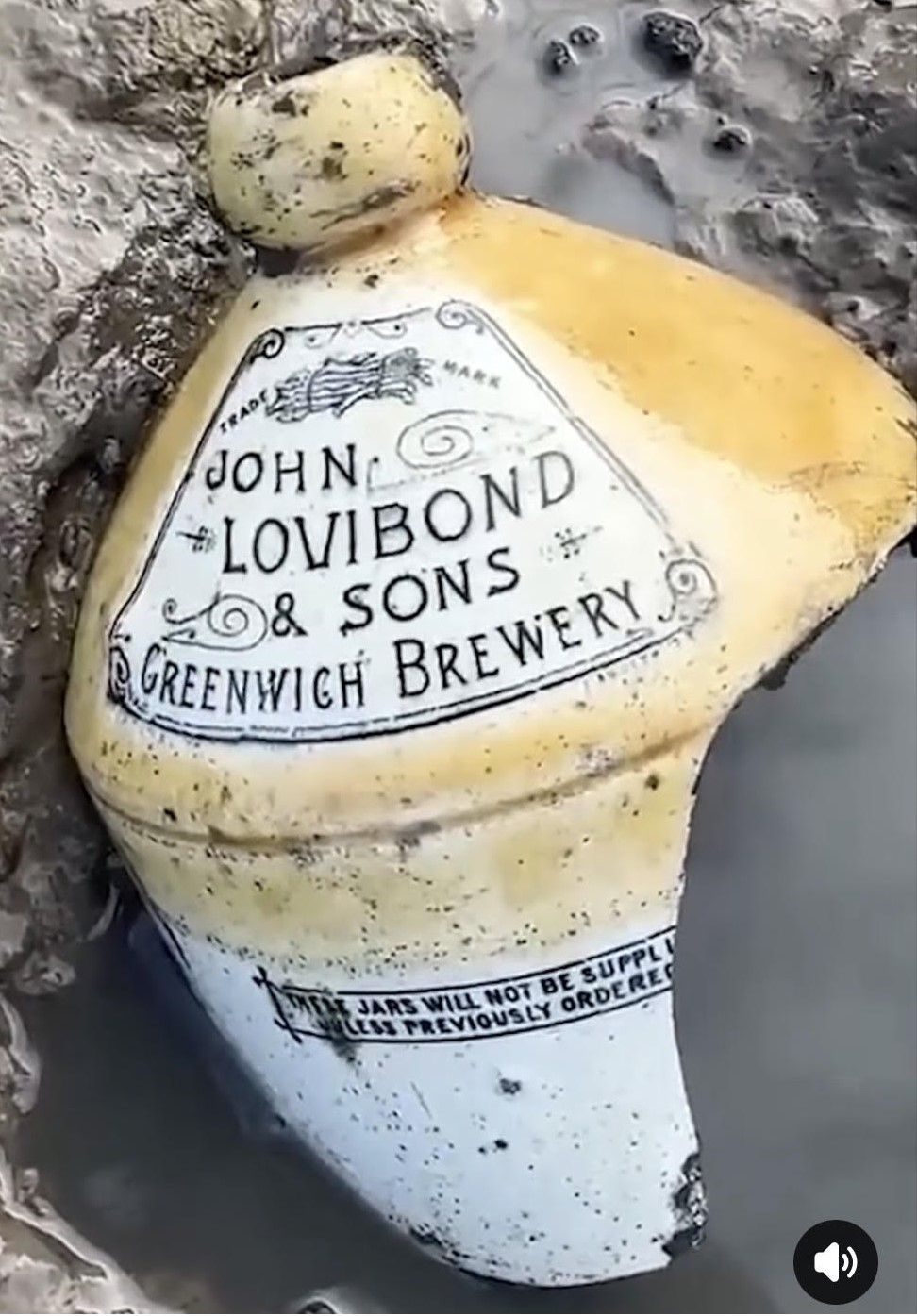
The nice thing about the youngest kid having a job with shifts that end at 11 pm is a fella like me can stay up late for the NBA Finals, listening to 660 AM every second evening when I am waiting out in the parking lot for the kid’s shift to end.*  I am not saying I am some sort of “Mr. Knicks” but this run has been fun. But that’s ending soon and it’s all going to be World Cup naptime late afternoons for the next few weeks. It’s exciting be this idle. And when I am not fixated on bandwagoning basketball or ignoring what FIFA actually stands for, I fill the empty hours with social media where this week I saw that shard up there, a bit of a jug pulled from the mud of the Thames by the ever excellent Nicola White on FB. Obvs I noticed what you notice. Mr Lovibond? Turns out John L. was (maybe*) the father of Joseph L. who was the inventor of the Lovibond scale used to describe the colour of beer. Neato. That jug is no more 150 years old given the trademark registration of 1876. I am but a pup.

What’s else up? Well, for starters, we are coming up is the 150th edition of The Session as Boak and Bailey explained:

On Sunday 28 June 2026 we’re going to post something inspired by the late Martyn Cornell’s final epic work of beer history Porter and Stout. We’d love you to join us. The first problem is that the book is quite expensive. The second is that it is large and intimidating. To make this easy for ourselves – and for everyone else – we’re suggesting that you can join in the Session even if you haven’t read the book. Your post just needs to be in some way a response to it, or to Martyn’s previous work on the subject of porter and stout. If you can read some of the book, though, even if it’s just a few pages or a chapter on some aspect of the history of porter and stout that particularly interests you, that would be great.

Excellent. Perhaps as an aid in your considerations, reflect on what Dr Christina Wade posted an excellent post this week on the need to be aware that choices are made when topics are chosen:

I love beer, in particular, and most especially, I love craft beer. And to add an additional layer to that, I love history. Adore it… So, to be able to combine those interests together into a research topic is a personal favourite of mine. I love both of these elements so much. History and beer. And I have decided, because I love them, that everyone else should as well and I am going to write about them in a way designed to convince you of that. This doesn’t sound particularly sinister, but it can be. Think of all the ways people write to try to convince you of a certain standpoint, or view, or historical ‘fact’. So when you are reading, and indeed, when you are writing yourself, keep this in mind. But even choosing the topic can be this way.

And, perhaps reflecting that, Jeff did just that when he applied a little mathematics to do a fact finding exploration of the obvious this week with his description of the state of big craft breweries since 2021:

Behold this table… The list excludes companies like Tilray, with many brands and breweries. The “Change” column on the right-hand side measures the breweries’ five-year performance. An asterisk indicates a brewery the BA does not designate as “craft.” As you can see, one-third of these larger breweries grew, while two thirds shrank. If you remove Athletic, which actually produces a different product, the overall performance of these big breweries worsens considerably. It’s a collective loss of around 2.2 million barrels, an overall decline of 16%.

You can follow that link to Beervana to check out that table but while Jeff says he didn’t provide any analysis in his post the fact is he didn’t need to. The math is the math. You know, it’s not fun to keep pointing it out but it is necessary given how many trade officials and some trade writers aren’t addressing, aren’t really admitting.  But “chef’s kiss” to that comment about the Athletic… that’s funny… and correct.

And over at the Cleveland Prost, Will Cleveland has provided us an extended explanation of the origin of Genessee Cream Ale, the best old school beer brewed on the south side of my very own lake:

In the late 1950s, Geminn was working with two offerings that each had a ceiling: Dickens Dry Ale, available between 1956 and 1958, which consumers found too spare, and 12 Horse Ale, popular but heavy in a way that limited how much you wanted to drink of it. He needed a middle ground. The influences pulling at him were multiple. Genesee had deep German roots, but brewery owner Louis Wehle had long been drawn to English ales and Burton-style brewing systems. “Clarence was looking for a lighter-drinking traditional ale,” says Tyler Muhs, Genesee’s brewing manager. “We had that German heritage, but Wehle was infatuated with those English ales, Burton systems. So I think that’s what they were looking for when they came up with it.”

And remembrances have been shared for Rob Jones of Dark Star Brewing, that started out at the Pitfield location that I visited back in 1986, hauling back polypins and two of Dave Line’s books on brewing across the ocean in my backpack. Phil Mellows shared his thoughts in the Morning Advertiser:

Rob Jones, the founder of Dark Star Brewery and landlord of the Duke of Wellington pub in Shoreham by Sea, Sussex, has died following illness. A quiet genius of modern brewing, Jones shot to fame when he became the first independent microbrewer to win the Supreme Champion title at Camra’s Champion Beer of Britain contest in 1987 with a hard-to-classify strong ale called Dark Star, created at his Pitfield Brewery in Hoxton, east London.\nHe had started that brewery in 1981 with his schoolfriend and fellow home brew enthusiast Martin Kemp.

Speaking of a classic brewery, Ed visited Sarah Hughes and shared his findings this week:

Having been a fan of Sarah Hughes Dark Ruby Mild since I was a teenager I was determined to visit the brewery when I heard that the Brewery History Society AGM was being hosted by Bathams. Sarah Hughes and Bathams are only six miles apart so it seemed like an ideal opportunity. It took a bit of organising, and I was so looking forward to it I was nervous something would go wrong. But the people at the brewery were very helpful and it all went fine on the day.  Is it’s a small brewery we were taken down in several groups and I wasn’t in the first group. This did make me a bit twitchy as I waited for my turn. But it wasn’t for long. 

Twitchy. Ed has been on a roll recently. I have often wonder what causes a revival of bloggy scribbly but brewing equipment that’s made of wood and copper is one good reason. That and the twitch.

Care of Laura H, we read that the fine municipal curatorial authorities in Wolverhampton have made an excellent decision:

The history of one of the West Midlands most important businesses is being preserved for future generations by Wolverhampton City Archives…  Beer was first brewed in Newbridge in 1874, before the Park Brewery was established in Wolverhampton the following year….  When Park Brewery closed last year, the importance of preserving its history was recognised, and a large and varied archive relating to the brewery and its associated companies has now been donated to Wolverhampton City Archives. The collection spans from the late 19th century through to the early 21st century and… includes a wide range of records, such as brewing and stock books, ledgers, minute books, maps and deeds, annual reports, photographs, packaging and publicity material. There are also employee records including wage books, pension scheme information, and a First World War roll of honour.

Good job. Back to the scene today, Coors Light has rarely been on my radar as a particularly clever culturally sensitive brand but this new use of Québecoise slang in their regional ads is just that:

The campaign, ‘T’en veux une frette?’ (Want a frette one?) leverages a local slang term for ‘colder than cold’ – frette – to remind Québeccers that they don’t just want a cold beer, they want a frette beer, through a series of humorous vignettes showcasing Québeccers’ strong preference of frette. The situations pay off with a twist to the brand’s current tagline, ‘Want a cold one?’ with ‘T’en veux une frette?’

See, me? I would order une frette but never a Coors Light. Sticking with me, once upon a time, I got to negotiate part of a verticle interior leafy greens farming deal. Faces challenges bit it can make a lot of sense in northern Canada where something like a railway container can pump out the stuff of salads when it’s below freezing outside. Interesting, then, to see the idea adapted to hops:

Ekonoke started life as a leafy greens operation, but shifted gears long before that part of indoor agriculture started its brutal and ongoing correction… As with outdoor production, hops inside Ekonoke’s farm grow vertically, wrapping around trellis-like structures that climb eight to 10 meters high. The process is significantly more complex than growing leafy greens indoors, says Sagrario. In addition to longer crop cycles, the process requires constant updates to the nutrient formula pumped to the plants, based on the stage of the crop. Humidification control is also a constant challenge…

All of which is to say that there will be fresh hop beer on Mars in 2063. Again with the me, Knut has written about a Norwegian brewery using Norwegian ingredients and somehow I show up:

There is a side story here. Back in 2007, we were a handful of beer bloggers scattered across the globe. I had the pleasure of having frequent contact with Alan McLeod, who continues his beer writing to this day. I’m thought his blog posts from that golden age were long gone – but look what I found.. He had a bit of advertising on his blog, and decided to spend some of the money to buy a few bottles of Westvleteren 12 from a Dutch web shop to send to a few of his contributors. I was one of them. 

Aaaahh for the days of paying ads on a beer blog. And for customs documents with Belgian ale, shipped from the Netherlands to Norway to pay for the price of an ad on a Canadian beer blog. As you wrap your mind about the way we were, here’s some notes:

Note #1: “Thanks. I hate it.
Note #2: Australian wine prices have collapsed in China.
Note #3: Is beer losing out to wine and spirits?
Note #4: Pellicle’s portrait of Purple Moose Brewery in Porthmadog.

Sausage meat!?!? Mr. Gladman says it is a you thing, not a gin thing:

Sweet summer child, do you know how many shit whiskies there are? Nor is it necessarily any less industrial than buying in and redistilling neutral spirit may sound. I mean good God, some Scotch giants pump the stuff out like so much sausage meat. So no, gin isn’t “just” flavoured vodka. Gin is gin. Like it or don’t like it, that’s up to you, but please don’t kid yourself it’s an inferior category just because it’s not for you. Maybe you just don’t have the palate for juniper.

What’s that? Where’s the World Cup beer news? I can’t find the link to the story that some educator posted “Ten Pastry Stouts to Pair With Haiti v Scotland!” but, yes, Voodoo Rangers is likely the proper order to make on Saturday. “No Scotland No Party” is the song that I have just learned my traveling first cousin (once removed) will be (drunkenly) singing:

 … they live by the motto: No Scotland, No Party. “In Munich (during those Euros two years ago), you saw the impact the fans had. People just seem to love Scotland,” says Duke… People seem to feel at home with us because we don’t take ourselves too seriously”… They thought the estimate of 100,000 travelling Scots was a joke until Munich, the beer capital of the world, was drunk dry before a ball had even been kicked. It was a similar story in Czech capital Prague for a European Championship qualifier in 1999. The Scotland fans had congregated in the old town square, so when the area’s bars ran out of alcohol, the riot police arrived expecting trouble. Instead, when the lorries arrived with more beer, the Scots hopped aboard and helped unload the kegs themselves.

For some of the Home Guard who can’t travel, Imran has shared the best pubs to watch in Edinburgh. Elsewhere, England’s Gus bought beer from every nation. Here in Ontario beer stores’ opening hours have been extended just as have restaurant hours in Boston. Expectations are high for mass consumption:

To reach its 1bn pint estimate, analysts from Jefferies extrapolated beer consumption data from previous World Cups. The extra sales equated to a 3 per cent uplift during the 39-day tournament, which Jefferies annualised to 0.3 per cent, equating to 5.9mn hectolitres, or an extra 1bn pints. Analysts expect the World Cup — which is being hosted across three major beer markets: the US, Canada and Mexico — to boost sales volumes by between 0.2 and 0.3 per cent for 2026. Jefferies analyst Ed Mundy said “match timing is the unsung hero of World Cup beer consumption”, pointing out that games featuring countries in Europe and the Americas had largely been scheduled to coincide with peak local drinking hours of between 5pm and 11pm.

Sadly, as CNN reports, Michelob Ultra will adorn an MVP trophy given to a player after every match. Hopefully that side of the trophy can be turned to the wall. Now, where is my tartan scarf and my copy of that 1978 Scotland World Cup LP?

That is it. A jam packed week of news and cogitations. As you soak it all in, don’t forget to check out Boak and Bailey posting on Saturday and adding to their fabulously entertaining footnotes week after week at Patreon. And do look out for more of Stan’s new “One Link, One Paragraph” format. Then hunt out something in someone’s archives! Leave oblique comments on someone’s post from 2009!! Listen to a few of Lew’s podcasts and get your emailed issue of Episodes of my Pub Life by David Jesudason on certain Fridays. And Phil Mellows is at the BritishBeerBreaks. Once a month, Will Hawkes issues his London Beer City newsletter and do sign up for Katie’s wonderful self-governing totes autonomous website featuring The Gulp, too.  Ben’s Beer and Badword remains on pause but there is reading at The Glass which is going back to being a blog. Any more? We have Ontario’s own A Quick Beer and All About Beer is still offering a range of podcasts – and there’s also Mike Seay’s The Perfect Pour. Plus follow the venerable Full Pint podcast! And there’s the Craft Beer Channel on Youtube as well as the archives of the Beer Ladies Podcast.

*Now, I hear what you are saying: “WTF? New York isn’t part of Canada, Al?!?” But for 23 years I could see the northern edge of the state out my office window. And I’ve listen to WFAN sports radio for decades and, yes, the game is on 880 AM but the freaking fan DJs are on 660 AM. Plus OG Anunoby was my favourite Raptor who went to the Knicks so…
**what about Henry?

It’s A Thursday In May And Here’s Your Greener Than Green Cheery Beery News Notes

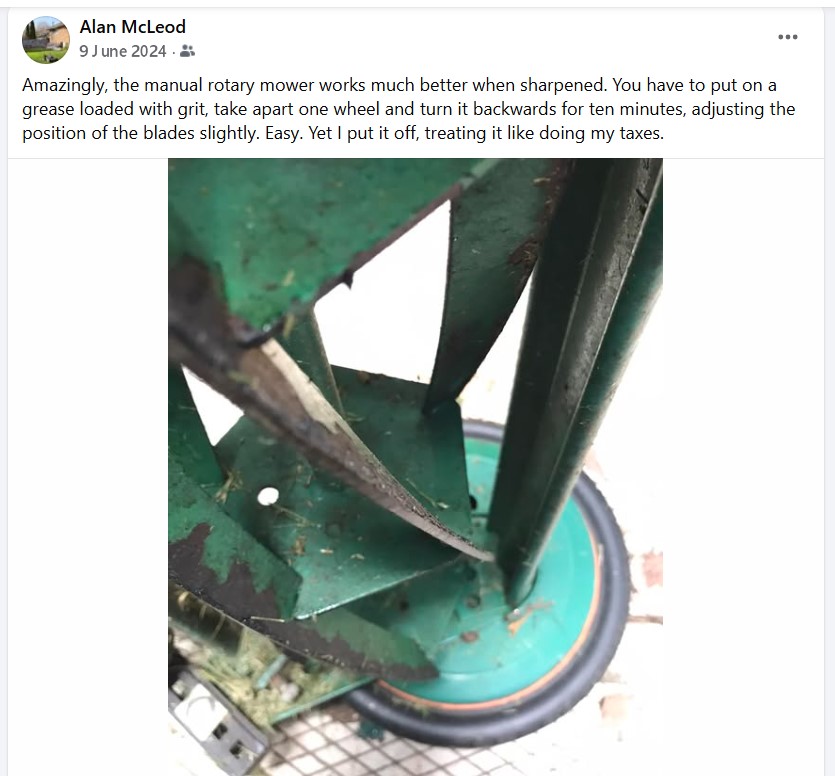
The tide has turned. The seasons have shifted. The dandelions have popped. The penny has dropped. It  is time. So the Beast has been released. I say Beast but it’s really Beast II, Son of the Beast. The Beast is still back there, there at the back of the shed. An over a decade old rotary mower that took five times longer to do the job, was a pain to sharpen and was retired last spring. It’s a terrible thing being cheap and lazy for so many years. Now, my lawn is mowed care of a combination of hydroelecric and nuclear power. Science.

What is going on? Well first up, Alistair is about to travel from Virginia back to the UK and shares a complaint that’s been complained since time itself began – how to narrow down where to go for a pint when the information online is just not there:

My biggest challenge though, and I am sure there are reasons for this, but with so many tied houses in the English part of my trip, it does get really frustrating when there is a shared platform with generic information, and almost universally no list of what is on cask in a given pub – this goes for chains like Wetherspoons as well. Yes, the many Fullers pubs in the city have elegant, beautifully designed websites, but again I can’t find out which beers of the Fullers Brewery range are available, making it pot luck to stumble across less regularly seen beers (at least from what I have been told) such as London Porter. I don’t want to single out Fullers, as I have seen the same with Shepherd Neame, Greene King, and Nicholsons, though several Young’s pubs tend to have at least a list, and occasionally pricing as well.

Is it a realistic expectation after decades of this sort of thing to expect every pub to logging what’s on tap?  I dunno. The failure seems to be the proof. Elsewhere, Pivní Filosof® is back after a few years of quietude. And Max is again on the move with his second post of spring 2026 looking for good beer by tram, with all sorts of obstacles placed in the way… like bad beer scenes:

Here comes the first tram, #5 heading to Vozovna Zižkov. I get on and start counting the stops. Fuck! Hlavní nádraží. All I can remember around there are the two overpriced spots in the station itself, and U Staré Pošty in Opletalova, a hospoda I’ve never liked for some reason. I get off, already resigned to the idea of having a Pilnser Urquell U Staré Pošty, when I tell myself ‘fuck it! I will cheat’, and change direction, towards the the tunnel that now connects the train station with Žižkov and the new building complex that has sprouted there in the last decade or so. Yeah, I’m cheating, in my own challenge, which I play alone – if you disapprove, good luck finding a better beer blog…

[Ed.: I thought he was talking about me. He wasn’t!] Offering a definite upgrade in locales, David Jesudason has the feature in Pellicle this week, a portrait of The Golden Smog of Stockton-on-Tees, County Durham, a pub which started life under the current owners with its own set of more serious challenges:

Their eyes even passed over the anti-fascist football sticker saying “our club, our rules.” When they spoke of how local shops were closing, they didn’t blame globalisation, politicians, or even the internet—the fault was with “immigration”. It was 2014, and owner John Christie sighed after overhearing their chat, wondering if this was the life he had now forged for himself. He had trained as a mechanic and joined the army; after leaving, he opened the pub in a former headstone shop. His goal was building a welcoming, inclusive space founded on his socialist ideals. Was he about to be dragged into their world First, he considered kicking them out. Then he paused. It dawned on him that if they went to another pub, their views would likely be re-enforced, or amplified in an echo chamber. It was at this moment that the unwritten manifesto of the Smog started to take shape in his mind.

On a larger and indoubtably less successful scale of internationalissimmo, we are all now just a few weeks away from World Cup madness. Perhaps not surprisingly, hotel reservations are below expectations. Here in Canada, we have a few of the games – and there’ll no doubt be any number of beer related stories in the coming weeks as there usually are when this rolls around – but this one  about Ermedin Demirovic is one of the best so far:

Back to Demirovic. As everyone will remember, before his country’s World Cup qualification play-off final against Italy at the end of March, Stuttgart’s Bosnia and Herzegovina international forward promised to buy everyone in the city a beer if he and his team-mates made it through. They did, beating the Italians on penalties following a 1-1 draw, and last Monday, Demirovic kept his promise. The event was staged near the Neckarstadion in collaboration with a local brewery, and more than 2,500 people turned up. “I didn’t expect so many of you to come,” Demirovic told the fans who took part. 

Sticking with the people of the grassy pitch, Boak and Bailey unpacked their findings on the disappearance of the retired fitba player as publican:

Historically, you could expect to retire from football before you were, say, 35 years old, with a lot of life left to live. And unlike today, even top flight footballers probably wouldn’t retire rich, even if they did have a little money put away. So, you’d need to find some kind of work. We can well imagine that running a pub was appealing because it’s a job that seems fun adjacent. Back to those headlines above: there’s also a sense that you could parlay your fame as a footballer into publicity for your new venture. Who wouldn’t want to be served pints by a local hero? (And perhaps tut at their fall from grace, and marvel at how fat they were getting, how red faced…)

I guess a key difference between then and now are the far higher wages paid to players in recent decades during their career. As a late teen, my father started out his working life at the firm of Hasties, a marine engineering firm in Greenock. In the lunch room he sat at the same table as local hero and Scottish national team star Billy Campbell whose career was cut short by illness and was given a job. A kindness from the owner, a local supporter.

Something else that is also retired but more often noted is a well priced pint in an London pub. Perhaps a well-trod topic but there was an interestingly specific grip in Tuesday’s daily (free) newsletter from The Telegraph:

We all knew the moment would come, but it was still a shock to read that we had entered the era of the £10 pint. Long gone are the days of venturing out with a tenner, sure of enjoying a few pints of bitter, and perhaps even having enough cash left over for a scallop from the chippy. No, bars in London today are charging as much as £11 for a pint of Moretti and £8 for a half of Heineken. There’s probably no going back – the rising cost of pints is an irreversible trend, like SUVs or smashed avocado – but mercifully you can find relics of the old, pre-£10 world, mostly outside London. Indeed, soon after the news broke, I raised a £3.50 glass of Gunpowder Mild in honour of reasonably priced pints in a pub in Clitheroe, Lancashire.

Hmm… how long ago a scallop and chips was going for the price of the leftovers from a few pints? I also wonder what the price travel to Clitheroe from London is, you know, to save that £6.50. Here are a few notes:

Note #1: Beer skates and sabres.
Note #2: Sue them, Yoko. Sue.
Note #3: Data-less trends are the best trends.

And Ray of B+B has done some solid hypothesizing over at Patreon in a piece entitled “Beer from the Witchwood” about the meaning of Jethro Tull’s album Songs from the Wood:

It’s from an article by Nick Freeman about music inspired by the mythic power of English woods and forests and it feels like a missing link between the Society for the Preservation of Beers from the Wood and Ray’s suggestion from a couple of years ago that real ale and folk horror feel somehow connected: “I don’t think it’s any coincidence that the Campaign for Real Ale, The Wicker Man and the English Morris dancing revival all landed at about the same time.” We think Freeman is right: the title of the album is a definite reference to the concept of ‘beers from the wood’. And on the cover, Ian Anderson looks like an extra from The Blood on Satan’s Claw or Witchfinder General.

Now don’t get me wrong. I think he’s on the right track. But… I am not sure. Not sure of the directness of the relationship* even if an indirect** one could be perfectly admissible. With something of a similar theme, ATJ has been making things up, including his recollections of a perfect beer fest:

I will admit that this summer beer festival is a composite of several I have attended. Some had great lagered beers and well-conditioned cask and an encouragement of children to play and provide a lightness of being, some had excellent food and at one even the Morris made sense to me. Then there was the one which included a beer garden, plus shaded woodland and a cooling river running alongside, plenty of sunshine, a genial intoxication and the amity of friends as well as meeting new people, children and dogs. So if you do know of a beer festival in the summer that has all of this please let me know.

And there is some odd financial news out of Belgian based macro gak producer ABInBev which has been finding sofa nickles and dimes in unexpected places:

Shares in AB InBev gained as much as 6.8% in early trading, adding to a more than 14% rise over the past 12 months. Strong beer demand in Mexico, Colombia and Peru drove volumes in the region up 4.8% in the period, offsetting a 3.1% decline in North America and a 0.4% drop in the region that includes China, amid a broad-based reduction in drinking. Revenue also rose in no-alcohol beer and in the non-beer segment.

Speaking of what is or is not, legal steps are being taken in Montreal to fight against a scourge… or perhaps a few scourges:

A Montreal microbrewery owner says he is being unfairly targeted by Quebec’s Alcohol, Racing, and Gaming Commission (RACJ). Le Saint-Bock, on St-Denis Street, brews specialty beers infused with candy flavours. The commission is accusing him of marketing to minors. “People like this kind of beer,” said Martin Guimond, owner of Le Saint-Bock. “It’s different, but there’s a market for people who don’t like beer and want to have a beer that tastes like candy.” Candy flavoured alcoholic drinks is a trend that other major breweries are hopping on as well. Coors has released a line of slushie flavoured seltzers, and the SAQ now sells a Popsicle vodka soda. “They have never been sued. But me, yes,” Guimond said.

Candy beer. Really? It’s this sort of thing that does make one wonder if there is anything left that can reliabily be called craft. And, speaking of which, Jeff posted about the latest move by the BA to buff up the image of US craft’s prospects, reporting (under a somewhat sheepish portrait of Bart Wilson) on a presentation by his leadership himself:

Two comments struck me. In his opening statement, Bart tried to strike a positive note, saying “This year the vibe is positive. It feels like we’re coming out the other side.” Then, near the end of the breakfast, he encouraged us to consider writing more “happy stories.” For the most part, the session yielded little new information. And, despite these comments, I wasn’t picking up a lot of positive news. Bart is no longer the just-the-facts BA economist who reports the numbers. Now he’s the head of a trade organization in a wobbling industry.

Wobbling indeed. I expect there are still some experts who will be moved by such puff even as production is down 17% over a five year trend to the end of last year.*** But the vibes? They are good. We read “… going to see growth this year – very, very strong growth…” Oh, that was 2021.  And in 2024 it was all about “mood management” and the niche.  Heavens. Stan connects more dots. And Brew York shares another observation:

One of the most positive numbers in the report — that independent breweries’ market share increased by 0.1 percentage points over last year — should be taken with a grain of salt. The Brewers Association’s classification of craft beer means that three breweries owned by MillerCoors for most of 2024 are now considered craft in 2025 after being acquired by the large but independent brewery holding company Tilray. Niche brands that are more likely to market themselves like big beer, like Garage Beer and Outlaw Light, are also defined as craft.

That reference to Tilray is interesting. Fourth biggest US craft brewer in 2025. But we must remember that according to the current version of the shifting sands that are the BA’s definition of “craft brewer” the requirements of actually being, you know, a “brewer” includes the principle that a firm must have “have as its primary business purpose the resale of the brand or brands it controls.” Primary. According to Tilray’s most recent financial statement, its craft beer holdings represent 27% of its activities after its cannabis (31%) and pharmaceutical operations (40%). So… not really that primary. Probably fits squarely in the definition, however, in special BA-nglish. But, you know, happy stories!

That is it for now. Let’s keep an eye out for happy realities instead. With any luck, the tomatoes will start finding their place in the garden and please check out Boak and Bailey who are posting every Saturday and adding to their fabulously entertaining footnotes week after week at Patreon. And look out for more of Stan’s new “One Link, One Paragraph” format. Then hunt out something in someone’s archives! Leave oblique comments on someone’s post from 2009!! Listen to a few of Lew’s podcasts and get your emailed issue of Episodes of my Pub Life by David Jesudason on certain Fridays. And Phil Mellows is at the BritishBeerBreaks. Once a month, as noted, Will Hawkes issues his London Beer City newsletter and do sign up for Katie’s wonderful self-governing totes autonomous website featuring The Gulp, too.  Ben’s Beer and Badword seems to be on pause since November but there is reading at The Glass which is going back to being a blog. Any more? We have Ontario’s own A Quick Beer and All About Beer is still offering a range of podcasts – and there’s also Mike Seay’s The Perfect Pour. Plus follow the venerable Full Pint podcast! And there’s the Craft Beer Channel on Youtube. Check out the archives of the Beer Ladies Podcast.

*Ian Anderson, creative lead of Jethro Tull had a busy 1976. In addition to making (and producing) Songs from the Wood, he got married a rather rich lady and moved into lodgings at Pophleys Estate which sat on 500 acres. The main house was up for sale in 2009 on a lot of 13 acres and was described as being supprounded by “a large belt of woodland” so it could be in addition to the era’s folk-rock theme these songs of his might also be from his wood.
**According to Richard Boston in “Beer and Skittles” at page 95 the Society for the Preservation of Beer from the Wood was founded in 1963. Songs from the Wood came out in 1977. So a bit past the folk-rock revival and four years after The Wicker Man hit the cinemas. During this time – and here is the thing – we move from the era of the First Doctor to Fourth. From Gerry and the Pacemakers to the Sex Pistols. My birth to my teens. Yet if detective shows set in England have taught us anything, it’s always the green man behind the scenes and everyone is down the pub sonner or later.
***And… the numbers are already again down another 2% in 2026, just one third into the year.

Your Sunny Yet Still Cold But Not Standoffish Beery News Notes For Early February

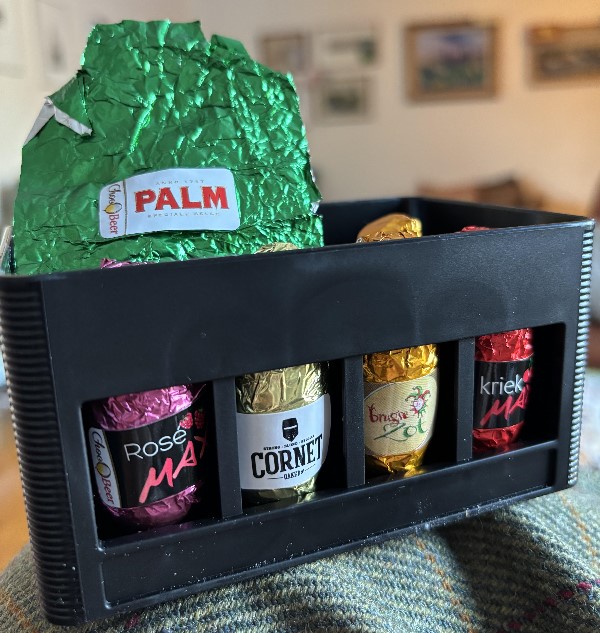
February flies by. That’s just the way it is. Good time to take stock. Good time to eat the little chocolates filled with beer brought by a visitor from Belgium. Early review: the “…chocolate is dry and dark so a lack of sweetness in the kriek left it a bit stark but the Palm was that bit richer.” Not sure I am chowing down on these outside of a winter like this but all quite a bit better than expected. Paid endorsements welcome. Winter was also on the mind and under the feet of Jordan as he wrote about the weather at the end of last month or perhaps just his efforts to get about in it:

Monday, Jan 26th: The deep freeze is well and truly upon us, and looking at the forecast for the next couple of weeks, it looks like we’re in four-layer territory. If your primary mode of transport and exercise is walking, then -25 with the wind chill does you no favours. Besides, the sidewalks are not shovelled in any meaningful way. Dry and cold is a great combination to ensure you’re reminded of the various injuries you’ve had over the years. Sometimes I get the unprompted sense memory of an ankle ligament rolling.

Also looking at the world as it exists below the knee, Stan shared some research he has done on the word Hopfenstopfen and its relation to a certain pair of boots:

The shoes were worn by a worker processing hops. When a bag was filled, a worked would jump into it, stomping down the hops to make sure the bag was full. When I dug this out, I wondered if these could have been called Hopfenstopgen boots. That’s because in Hop Queries Vol. 4, No. 6, I wrote about dry hopping in Germany in the 19th century. That was called Hopfenstopfen, which can be translated at hop plug. Simon Moosleitner, a subscriber in Germany, suggested there is more to think about…

I won’t spoil the fun but speaking of getting the boot in, late last week in VinePair, Dave Infante wrote about the effect of the homicidal ICE intrusion into Minneapolis on the beer trade in the city including this from Drew Hurst of Bauhaus Brew Labs:

You can see it in the firm’s sales figures. Taproom sales are down 40 percent compared to January 2025. “It’s a wildly unsustainable thing,” says Hurst. “None of us signed up to have to live through a federal occupation and figure out how to run a business at the same time.” Not that it was easy before the onslaught: Bauhaus wrapped this month last year down around 30 percent from January 2024. Craft brewers have been struggling to find their way for years in the face of shifting demand, new competition, and rising costs. In Minneapolis and Saint Paul, they’re doing all that with the MAGA jackboot on their necks.

At first I thought it was an odd angle but then realized it illustrates the principle that beer prefers peace as well as how quickly that peace can be lost. Dave also shared in his email updates that he was told to “stick to beer” and that some paying subscribers to his newsletter Fingers canceled their subscriptions. Perhaps if those folk didn’t “stick to” amateur neo-fascism it might be better. Funny how the “stay in your lane” crowd don’t show up for this sort of politicization within the pub:

A beer tap labelled “Rachel Thieves” has appeared on the bar of a Hertfordshire pub protesting Chancellor of the Exchequer Rachel Reeves introducing crippling tax hikes. Anyone ordering the beer will receive only water. The Green Dragon in Flaunden, which is run by publican Chris Ghazarian, has added the spoof cask ale pump badge as a protest – telling customers that pints of this particular beer are “very bitter” and cost more than anything else on the bar and anyone ordering it will receive only water. Speaking to the British national press, Ghazarian said: “They find it hilarious. I obviously don’t make them pay for it.” 

On the other side of the planet, a very difference approach has been taken in Australia:

The Albanese government is seeking to put a hold on increases to the beer excise for the first time in 40 years. The Customs Tariff Amendment (Draught Beer) Bill 2025 seeks to pause the indexation of customs duty rates for draught beer for two years from August 1, 2025. Currently, the beer excise is indexed twice yearly to stay in line with the consumer price index, with Australian beer, wine, and spirit importers and producers saddled with some of the highest rates in the world…  Addressing the House of Representatives, Anthony Albanese said he was “proud” to introduce the Bill, “one of the most popular commitments that we took to the election”.

Boak and Bailey also wrote about another sort of pressure to conform but the context was less confrontational – just writing about their thoughts on a craft brewery:

Maybe that post was a bit too snarky, with hindsight, but it certainly didn’t warrant trolling impersonation accounts on Twitter, general abuse that last for months, or a stalking campaign. That was, as you might imagine, quite traumatising, and probably did make us nervous about being critical of breweries in the supposedly cuddly craft brewing sector. It didn’t stop us, but it had a ‘chilling effect’ on how freely and frequently we felt able to express ourselves. It’s easy to say “Don’t mince your words” but minced words are less likely to lead to sleepless nights. We can totally see why some people might decide it’s not worth the trouble, and certainly wouldn’t judge them.

On reflection, I have probably benefitted from folk starting with the assumption that I am a bit of an arsehole. I lose my sleep over other things.

Note #1: Take a news event and ram it like a square peg in a round hole.
Note #2: Martin at another fabulous pub, this time inordinately bright.

Ron TV continues to impress. This week he’s been presenting an extended interview with Mitch Steele and, like the comment maker Oscar, I am drawn to the brief introductory electro-thrash almost as much as the subjects of these interviews. Part 1 of the interview is over thirty-seven minutes long with Part 2 clocking in at thirty-three. Set aside an hour or so of your time. More if, like me, you keep replaying the first six seconds and that mesmerizing theme music over and over and over.  Good multi-media breakout for Ron – even if it likely doesn’t pay the bills. One a similar note, Ray of B+B on the prospects of a career in writing:

This is excellent. Depressing, but excellent. My response has been to give up, basically, and accept that writing is a thing I do on the side, while something else pays the bills. I also like that thing, so it’s fine, but I get sad thinking what I could have achieved if writing was my full-time job.

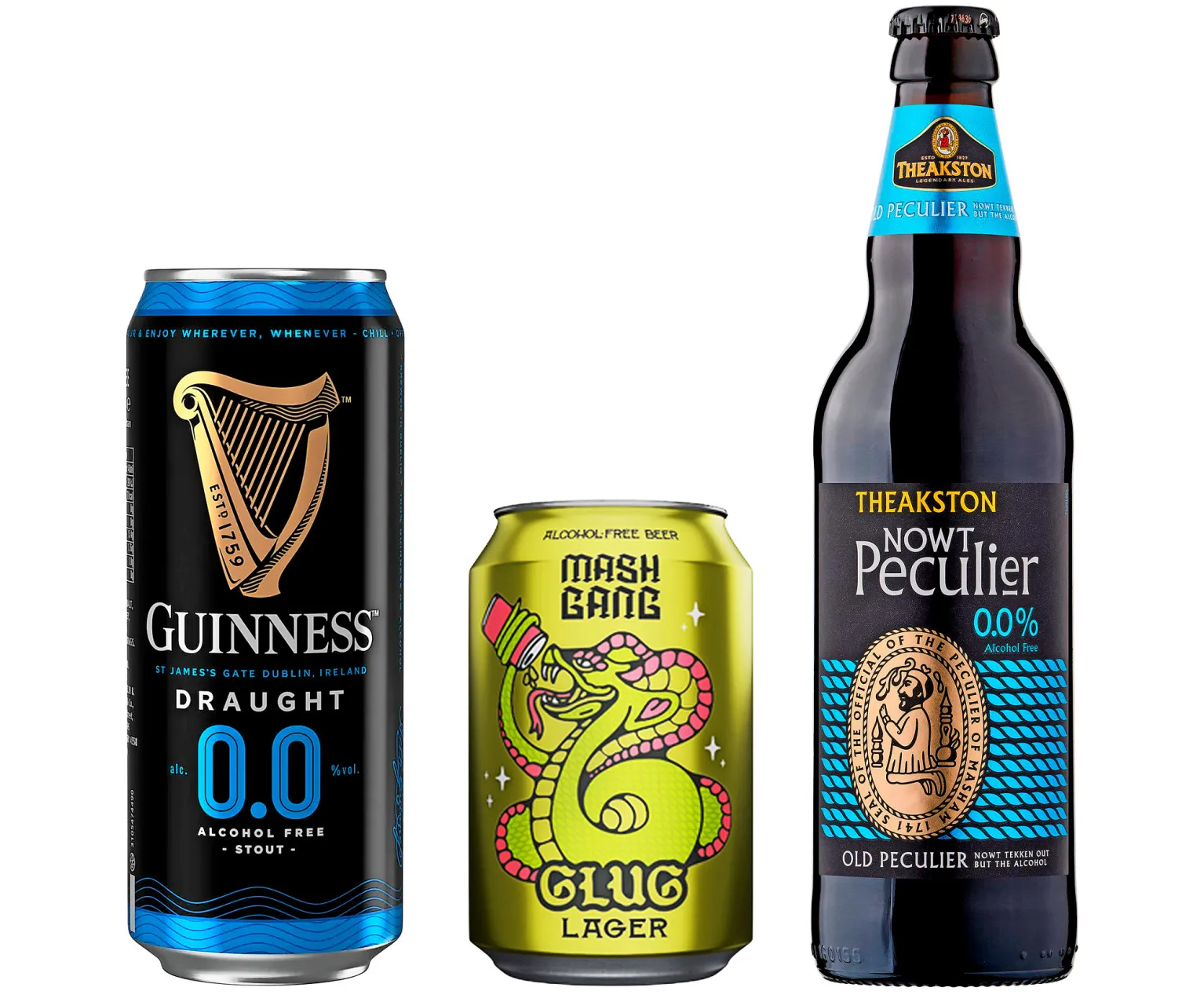
Perhaps also on the theme of less is more, Guinness 0 also continues to impress me and Pete‘s brief review does not surprise:

There are many great 0.5 per cent stouts from small indie brewers, but Guinness 0.0, which took years to develop, is indistinguishable from the real thing.

I noticed one thing when writing this. It is branded as “Guinness 0” in Canada but “Guinness 0.0” in the UK. Why? Is it a different formulation here and there? Whatever it is, I am finally seeing a point to NA beers. But things will be going in a slightly different direction in UK neighbourhood if one permit applicant has their way:

The shop also sought an amendment to the condition currently imposed on the licence… to “No super-strength beer, lagers or ciders of 6.5% ABV (alcohol by volume) or above shall be sold at the premises with the exception of Dragon Stout and Guinness Export beers.” The applicant’s agent, Frank Fender, told Bedford Borough Council’s licensing sub-committee (Thursday, January 29), that these “super strength” beers are not usually the “street drinkers’ choice of drink”. “They are they are widely consumed by members of the Afro-Caribbean community, and obviously this shop wants to be inclusive,” he said. This claim was backed up by Chris Hawks, the council’s licensing compliance and enforcement officer. He said: “What Frank says about Dragon Stout and Guinness Export is spot on.

For years, the word authentic was bounced around in the face of glitter and haze. That plan in Bedford sounds like authenticity to me. Similarly perhaps, crossing the Atlantic, Matty C has written some notes on the US beer scene for the supplier Get ‘Er Brewed‘s webpage and found something of a revivial going on:

Nostalgia is one play many breweries seem to be using. During my time in both Portland and in Colorado, (the latter of which I visit regularly to see family,) I noticed that many drinkers seem to be choosing the classics made by more established breweries. Allagash White, the Belgian style witbier from the brewery of the same name wasn’t just on tap everywhere in Portland, but it felt like everyone was drinking it too. The beer carries the kind of hushed reverence that money can’t buy, and demonstrated to me why establishing a core beer as part of your brewery’s identity is essential for longevity.

This is quite a reversal as, you will recall, in 2019 flagships were considered a dead concept: the “concept of a flagship in almost all ways maps to an earlier and obsolete way of thinking.” Futurisms rarely stand up to audit but it’s good to know, in an era too concerned with branding and other misinformations, that identity in the form of what is in the glass has made a come back. One never knows what is really going on otherwise. As with the news about the bills left unpaid and the suppliers left in the lurch by Rogue, James Beeson in The Grocer shared that the level of insolvency at failed Keystone Brewing had hit almost £15 million. Heavens! Remember when we all spoke of community?

Sticking with things in the USA, the feature in Pellicle is a portrait of Eckhart Beer Co. in NYC by Ariana DiValentino with its focus on central Euro lagers and foods that share the same theme:

The menu focuses primarily on Central European dishes that match the beers’ origins. There is a brat plate, and spaetzle gratin, and kartoffelpuffer (German-style potato pancakes), which you can order fried in oil or beef tallow. But there’s also a falafel dog, an Italian cold cuts sandwich, and a Moroccan-spiced ratatouille with vegan lemon yogurt. The variety of cultural influences feels very reflective of the brewery’s New York City context. “I wanted to offer food that supports the beer. It didn’t have to be Central European per se, but that felt like a natural foundation,”

Sounds like a great place for all. Not so in Japan where one establishment has embraced ageism:

The concept of age restrictions and minimum requirements is commonplace around the world. But have you ever heard of an establishment imposing a maximum age limit? Now, a Tokyo chain pub has set a ban on older customers – in order to try to maintain the raucous, fun atmosphere for which it is known. Tori Yaro Dogenzaka is an izakaya (an affordable Japanese pub) situated in Japan’s capital city. This year, the establishment propped up a sign outside the entrance, informing customers of the new rules. The sign said: ‘Entrance limited to customers between the ages of 29 and 39. This is an izakaya for younger generations. Pub for under 40s only.’

I wasn’t wanting to go there anyway. Screw them. That’s it. As as I sulk in a mode Japonais, please check out Boak and Bailey who continue to post every Saturday. adding to their fabulously entertaining footnotes week after week at Patreon. And look out for more of Stan’s new “One Link, One Paragraph” format. Then hunt out something in someone’s archives! Leave oblique comments on someone’s post from 2009!! Listen to a few of Lew’s podcasts and get your emailed issue of Episodes of my Pub Life by David Jesudason on certain Fridays. And Phil Mellows is at the BritishBeerBreaks. Once a month, as noted, Will Hawkes issues his London Beer City newsletter and do sign up for Katie’s wonderful self-governing totes autonomous website featuring The Gulp, too.  Ben’s Beer and Badword seems to be on pause since November but there is reading at The Glass which is going back to being a blog. Any more? We have Ontario’s own A Quick Beer and All About Beer is still offering a range of podcasts – and there’s also Mike Seay’s The Perfect Pour. Plus follow the venerable Full Pint podcast! And there’s the Craft Beer Channel on Youtube. Check out the archives of the Beer Ladies Podcast.

Your Festive Beery News Notes For A Blursday In This Jolly Hollifest

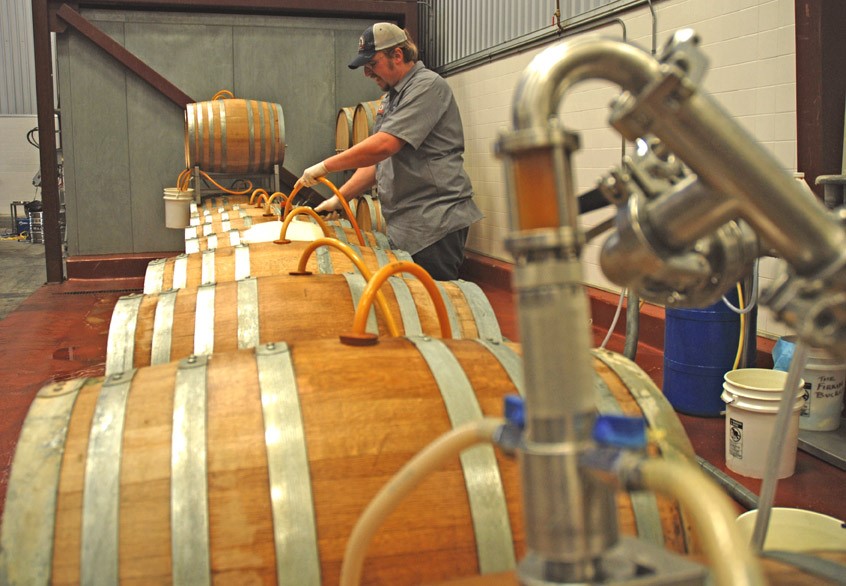
What day is it? I think I can still recall. It’s definitely somewhere between the last parcel being mailed and 2026. I know that much. I also know that in 2009 one Stan Hieronymus, possibly barely out of his teens at the time, submitted this photo above as one of his entries in the Christmas photo context. I will say one thing about a beer photo contest – if you don’t like your range of browns you might as well admit that you should never run one. Like the other contest submissions I have been posting out of the archives the last few weeks, I am pretty sure this one didn’t win a prize – but have you ever seen a better placement of a five gallon white food service bucket? No. Come to think of it, do you ever give a second thought for the glorious role of the five gallon food service bucket in all of brewing? Stan did. For one beautiful moment, he sure did.

Let’s get to the beer news. First up, another controversy related to booze and the ticker:

…the American Heart Association has revived the idea in a scientific review that is drawing intense criticism, setting off a new round of debate about alcohol consumption. The paper, which sought to summarize the latest research and was aimed at practicing cardiologists, concluded that light drinking — one to two drinks a day — posed no risk for coronary disease, stroke, sudden death and possibly heart failure, and may even reduce the risk of developing these conditions.

Before you go off to the Christmas office party with the thought that it’s really not all that far off a visit to a health spa, remember the critics’ warnings about the quality of all these sorts of studies: “Some are clearly horrible, some are good, but a lot are in the gray zone, and people may just cherry-pick and select those that agree more with their narrative.” Hah! So there…

Speaking of the office party at this time of year, the very same authoritative organ shared a bit of advice about conduct at office parties for the supervisory set:

It’s a good idea to stop after two drinks. Sure, you could have three drinks — or six! — and enjoy the social leveling and bonhomie that accompanies lowered inhibition and decreased cognitive capacity. But it’s hard to command respect in the office when people have seen you red-faced and trying to light a cigarette from the filter. 

Is it unfair to compare today to forty or so years ago? The (other) Times did this week when they republished a guide called “How to Survive Christmas” from 1986:

Commuting in the run-up to Christmas is absolute murder. On the way home from a hard day’s work you are liable to find everyone either festively drunk or helping someone else to be sick. Then there’s the office party. People will drink far too much, lunge at one another, tell the managing director he’s a twerp and pour the office vegan’s sprout wine down the word processor to cackles of mirth. How do susceptible males stay out of trouble at the office party? One friend suggests that offices should introduce Tube straps hanging from the ceiling. Thus you could remain vertical however much you knocked back, but with one hand in the strap and the other clutching your glass, both would be kept out of mischief.

Good idea. While it appears that thirty-nine years have passed since that was published, it’s clear ther are still bad behaviours that need to be stamped out at this Holly Jolly time of year, as Pete reports from the pub:

Black Friday has a different meaning in the hospitality industry. It’s not the consumer frenzy of late November, it’s the last Friday before Christmas. This is the night when post-work drinks climax in a frenzy of ill-advised shots and poorly judged flirting. For pubs, it’s one of the busiest nights of the year.

And then he gives ten rules, many of which would be enough to deter me from going to the pub. No line? Never have liked that when visting the fam. How un-Canadian! Give me a good line any day. But “no ordering a round of cocktails“? Perfect sense. No playing your crap music off your phone? Automatic ejection, I say.

Speaking of bad behaviour, I missed this tale of sticky fingers a few weeks ago but I will share it now as this could end up being quite the thing… perhaps quite the thing indeed:

Molson Canada has accused former managers of embezzling millions of dollars in an intricate fraud scheme allegedly involving fake vendors, shell companies, the president of a major pub chain and a pair of married couples. In documents filed Wednesday in Ontario Superior Court, the brewing giant claimed that former Molson Canada sales director Frank Ivankovic oversaw “a complex scheme to defraud the company of many millions of dollars” that later involved two subordinates.

Holy crap! Gotta watch that story. You may scoff at the very thought but I will share a fact that is actually true – I had a personal banking representative many years ago who made a very tidy sums on false mortgage accounts until the scam was uncovered. As this situation at Molson is reportedly both complex and intricate, I am spellbound and await further disclosures from any and all court processes.

Speaking of people who can’t tell their left pocket from their right one, in the land of Vinho Verde the police have had to get involved:

Those arrested from the trade body, which is responsible for quality control and official certification of Vinho Verde wines, belong to its Inspection and Control Division, with the individuals arrested for allegedly warning wineries of upcoming inspections and accepting bribes of meals, wine and event tickets. According to Portuguese newspaper Jornal de Notícias, the officials also allegedly turned a blind eye to wine producers failing to meet the requirements to obtain designation of origin (DO) or geographical indication (IG) certification to be able to label their bottles as Vinho Verde…  Meanwhile, a further four “business owners involved in the distribution and production of Vinho Verde” – have also been arrested, charged with “active and passive corruption, falsification of documents and abuse of power”.

Doce mãe de deus!!!  Fiddling with the Vinho Verde!?! That has been a mainstay in my life for around forty-five years, starting with my mother’s micro-obsession with the plonky version. Not unrelatedly as it turns out, Lars found some dirt about law scoff doing a little farmhouse brewing in Japan, news that he shared on BlueSky:

The Japanese are less law-abiding than I thought: farmhouse sake brewing continued despite the legal ban. In 1941 folklorists surveyed 85 localities, finding home brewing in 44 of them…  In 1895 there were 1 million home brewing licenses in total. So Japan definitely had farmhouse brewing of sake. Then in 1886 the gov’t banned home brewing entirely. Probably killed the farmhouse brewing. Home brewing is still illegal in Japan (gov’t wants its alcohol taxes), but in 2003 one exception was made: farms using their own rice are allowed to brew. This kind of sake is called “doburoku”. There are now 100 designated doburoku districts where this style exists.

That could make for something very interesting, a doburoku tour… doburoku tour… doburoku… WAKE UP!!! Sorry. Now… some notes:

Note #1: “only 37 percent of craft breweries in Canada are profitable”? Really? That’s a lot of subsidization.
Note #2: Who the hell pours Bailey’s down the sink?
Note#3: A.I. designed beer? Nope, couldn’t care less…

Aaaaannnnnd… the BA issued a somewhat delicately drafted “year in review” type press release suited to both address and deflect the industry’s annus horribilis and, I gotta tell ya, I sorta choked on what is stated to be the top trend:

This year, there was a continued democratization and expansion of what it means to be a “brewer.” With acquisitions, mergers, and collaborations, the stainless tanks in the background may not be as important as the brand story.

As one who has never given a shit about the story someone is telling about a brewery, I think if I were an actual brewer I might consider this statement slightly, you know, treachery if not treasonous. But it is nice to know that, finally, years after the BA’s abandoning the need to be small or traditional or independent it’s now not even necessary to be an actual brewer.

Much more reliable was the annual release of the Golden Pints 2025 awards from Boak and Bailey which starts with this introduction to the concept.

What can we say? Hardly anybody else bothers doing this anymore but we’re creatures of habit. We first took part in the Golden Pints back in 2011 and find it a pleasingly reassuring ritual. It’s also good to have in mind throughout the year as we roam from town to town, and from pub to pub. It makes us look at the beer we’re drinking and ask: “Could this be a contender?” Before we get down to business, a bit of encouragement: nobody owns the Golden Pints thing; anyone can join in; you don’t even need a blog to take part. Post your own list on social media as a thread, or even in the comments on this post if you like.

I won’t ruin the announcement of their winners – but what I like about the whole Golden Pints idea is that it celebrates their winners. Was it started by the late great Simon Johnson? He posted his thoughts in 2010, 2011 and 2012 but perhaps it goes back further. Yes, Mark Dredge awarded them in 2009 and even cited his own pre-GP “best of” post of 2008. Who was his best beer Twitterer of 2009? Simon Johnson! Who else? Anyway, you can check out the examples new and old and figure out your own summary of the year according to your own standards.

In another annual year end tradition, Alistair has begun to announce his beers of the year, style by style. His first post celebrates the pale based on three footprints – state, national and imports:

It’s that time of the year, the Winter Solstice is upon us, and what better to do than to review a year’s worth of drinking? As has become my own tradition, I will break this down into multiple posts, one for pale beer, one for BOAB (“between orange and brown”, and dark, and then an overall beer of the year, as well as one for Virginia cider of the year. As I have done for several years now, I will highlight beers from Virginia, the rest of the US, and the rest of the world before crowning each category winner, so on with the show…

I liked this comment: “Spoolboy, the most perfect desítka imaginable, and one that I wish I could sit and drink with Evan, Max, and co back in Prague.” That would be a good table to join.

Over at Pellicle, Robyn Gilmour shared the story of an innovation in Dublin’s beer scene:

…the beer that’s consumed in the majority of Irish pubs isn’t even Irish, with the exception, perhaps, of Guinness, Murphy’s, Beamish, and a handful of other outliers that are brewed locally but owned by foreign multinationals. While treasured in Ireland, these brands do not represent the full spectrum of the country’s beer, which is far more nuanced and varied than most pub offerings would suggest. Speak to anyone working in the independent Irish brewing sector and they’ll soon tell you about the savage competition for taps in Ireland—primarily between Diageo, Heineken, and Molson Coors. As someone who’s worked with many of these smaller breweries, I’ll admit I never had prior reason to question where publicans fitted into this dynamic. That was until 2024, when 16 of Dublin’s most cherished pubs banded together to form a brewery of their own—the aptly named Changing Times.

Finally, David shared his thoughts on language and alcohol promotion, thoughts based on serious personal experience:

…this kind of communication is terrible in the run up to Christmas when more people are tempted into drink driving despite the messaging. Recalling the trauma caused by my dad drink driving was bad enough but only days later I was forced into recollecting my flatmate’s attempted suicide when BrewDog ran an advertising campaign with the slogan “tastes like commercial suicide”. 

As I mentioned a few weeks ago, much of my experience with drunk driving was from an earlier stage in my professional career as a duty criminal defence counsel processing those passing before the court for judgement. But I also lost a client of our office every year to a drunk driver in those years, too. And I probably have to admit that up to a certain point growing up in Nova Scotia in the 1970s and 80s, drunk driving was so common there was an inevitable even blasé attititude to the tragic harms done. There were so many Mondays that someone was not at their locker. So I don’t buy arguments that there is a risk reward sweet spot in these matters. The vast sums that the booze trade offers do not offset the loss.

And that may sound like a bummer of a way to end the news notes for the lead up to Christmas but this is a high danger zone within the calendar for drunk driving and other forms of harmful behaviours. So be thoughtful and be safe as you do about the holiday partying in these next few weeks. Maybe think of what else can be done that is as helpful as a London Underground strap hanging from the ceiling to make sure the season actually remains jolly.

As you contemplate that, please also check out, Boak and Bailey on this and every Saturday and then sign up for their entertaining footnotes, too. Look out for Stan when he feels the urge (now that he’s “retired” from beery news posts) from Budapest or wherever – as he is getting active again. Then listen to a few of Lew’s podcasts and get your emailed issue of Episodes of my Pub Life by David Jesudason on certain Fridays. And Phil Mellows is at the BritishBeerBreaks. Once a month, as noted, Will Hawkes issues his London Beer City newsletter and do sign up for Katie’s wonderful self-governing totes autonomous website featuring The Gulp, too.  Ben’s Beer and Badword has returned from his break since April so you can embrace the sweary Mary! There is reading at The Glass which is going back to being a blog. Any more? We have Ontario’s own A Quick Beer and All About Beer is still offering a range of podcasts – and there’s also Mike Seay’s The Perfect Pour. Plus follow the venerable Full Pint podcast! And there’s the Craft Beer Channel on Youtube. Check out the archives of the Beer Ladies Podcast.


Your Beery News Notes That Entirely Capitivate… Yet Offer No Real Clues To Get Outta Here… Not Even A Key Or Nuttin’

August planting is underway. With any luck there will be peas in late September and October. And maybe baby carrots. You always think that the plantin’ is done once you are in full pickin’ mode… but no. No way. Still ten weeks to a frost that kills. Or more. Plenty of time for peas. By the way, I learned something through the month and a half of drought, humidity and heat that now seem to have finally broken. Tomatoes do not turn colour until it cools a bit. So while the peas are doing there bit it’s now also time to hit the sauce… no, not that sort of sauce. Sauce sauce!

OK – fine. What else is going on around here. Oh, yes – one of the main differentiations between beer drinking cultures found in nation to nation is the local tipping habit. Here in Canada we tip but we are left to our own decision as to how much. But, more generally, it’s not just the tip but the markups added on. I could be a tax or two, a mandatory service tip but… an administrative fee? That’s what seems to have started in the UK where, as reported in The Times, one pub is adding 4% to the price of a beer for the premium service of giving the beer to you:

The Well & Boot is banking on customers not noticing the difference between £7.65 for a pint of beer and £7.96 for a pint of beer, and it’s a safe bet. Once you’ve paid £7.65 for a pint your subconscious is already doing everything it can to suppress the pain, just to allow you to enjoy it…  Is it a rip-off? I don’t know. Pint number two — all in the name of research, obviously, was a Guinness — and that one was brought to the table, at which point a 4 per cent charge for table service is quite good value. All the other customers were having a lunchtime meal, ordered and brought to the table, so 4 per cent for that sort of service is extremely cheap.

The pub is in London as I understand in a transit hub Waterloo Station. So you are already dealing with captive audience pricing of a sort. But that base price is nuts.* You know, if I were you… I would walk a few steps to Mamuska! which, yes I disclose, is run by a college pal but also the beer is a little cheaper – but you can order a Placki Ziemniaczane to go with it!  Ask for Ian, say you know Big Al and you may get a slap on the back, too. There. You’re set.

What else… well, some bad news for those of you rootin’ for booze. The NYT reports that US drinking has hit an all time low – and its not just the kiddies this time:

The Gallup poll found an especially pronounced drop in drinking among middle-aged respondents: Just 56 percent of respondents 35 to 54 said they drank alcohol, falling from 70 percent in 2024. That “suggests the message is sinking in across the board, not just with young people,” said Johannes Thrul, an associate professor at the Johns Hopkins Bloomberg School of Public Health. The share of adults 55 and older who said they consumed alcohol increased slightly from 2024 to 2025, but is still lower than in 2023. Only 50 percent of those aged 18 to 34 said they drank alcohol, the same as in 2024 and down from 59 percent in 2023.

Jeff has his own thoughts but clearly people are not doing their part. Perhaps relatedly, Mr. Mudge wrote about the planned drop in acceptable blood alcohol limit from .08 to .05 in England and he argues against it:

Whatever the safety implications, such a policy would inevitably have a significant effect on the pub trade. While those who inhabit an urban bubble may be reluctant to acknowledge it, nationwide there are a very large number of pubs to which a majority of customers travel by car. There will be several thousand where that accounts for over 90% of their trade. Every week, hundreds of thousands of people drive to pubs and consume alcohol within the legal limit. Yes. a few customers do break the law, as people still will with a lower limit. But, given the severe potential consequences, the vast majority of drivers abide by it, and indeed generally leave a wide margin below it. 

Sadly, having practiced criminal law including as duty counsel, I can report that deaths from drunk drivers aren’t statistical matters. Neither is crime. We can as easily say “every week, hundreds of thousands of people go about and and all aspects of their lives within legal limits.” In all cases, crime is perpetrated by the few and upon the not quite so few but in each case the act and loss is a singular event. As a result, deterrence is one of the greatest benefits of criminal law. So making driving under the influence itself a crime deters many – indeed by a wide margin – from taking the step that, yes, only sometimes leads to tragedy just because some asshole decided to take the chance.

And, as reported in the Morning Advertiser, BrewDog has pushed back on the story that is has lost access to customers at about 2,000 pubs with industry voices speaking out from both sides of the fence:

“Wetherspoon trades with Brewdog on the basis of a long-term contract, which is the normal case for our regular suppliers. “BrewDog has always been a reliable trading partner and draught Punk IPA, available in almost all of our pubs, continues to be a popular craft beer, as do their bottled products; Hazy Jane, Elvis Juice and Punk AF.” All pubs within the Tim Martin-chaired business serve one BrewDog product on draught and a number of BrewDog bottled drinks too. Meanwhile, a spokesperson for Star Pubs said: “We have not supplied BrewDog products to our pubs since the end of 2023.”

PR v PR. On this side of the Atlantic but not dissimilarly, there were two interesting stories last week from Beer Marketers’ Insights, the first one being about an outreach from a group of AM distributors saying without at all be coaxed that AB is great. Then, in summary from the weekly newsletters, the response from other AB distributors:

None echoed the endorsements so pervasive on the call. Most saw this as an AB-directed initiative. “This has AB written all over it,” said one AB distrib. Another remarked: “This reminds me of the current state of politics. Everyone is scared to say something negative, knowing they will be attacked by a party at some point. If you praise your allegiance to the party, then you will be rewarded.” Some responses were angry and disbelieving that so many distribs espoused a party line. “I can’t believe what’s occurring,” said one long-term observer. “I was just appalled.”  

A free press is a wonderful thing. Speaking of appalled, have you seen the prices of things?  Sam Tierney wrote this very week thusly:

Mexican 2-row seemed mildly interesting until I saw that it was 30% more expensive than domestic or Canadian. In this economy!?! I can get German pils for that price.

And aluminum is, again, a topic at the check out this week. The Brewers Association issued a notice on the addition of beer can tops to the list of things subject to US tariffs this week noting “The Brewers Association continues to monitor developments around aluminum trade policy…” Hurrah! My two cents were these:

Consider us. Canada exports 88% of bulk aluminum the US uses. It’s sent south, gets hit with a 50% US tariff, turned into packaging, cans come back north and get another 25% tariff from Canada. So the 75% tariff will see us redevelop our can factories. Not sure the US can replace our bulk aluminum.

So, US consumers should not expect any relief soon unless someone gets into the bauxite smelting game and can replicate Quebec’s cheap hydro power to fuel the industrial process at scale. Up here, we just need to retool the manufacturing line.**

Speaking about shopping, Lew Bryson has announced that this week’s offering at Seen Through a Glass is going to be about…

Next episode will be about the great local grocery stores in central PA, everything from four aisle markets to ten-store chains with full-service butcher shops and fresh seafood. They aren’t Whole Foods or Wegmans, but they’re not 7-11s either, and they’re out here where central PA actually lives. Let’s go shopping!

Excitement reigns! Back when people published (and bought) books about beer, Lew’s guides were great support of family trips when the kids were little. Not because I would drink my face off but he included shopping and side trip hints that kept everyone happy. How else would I have learned about the garbage plate?

Note: traditional German naked ass wine. Not sure I want naked ass wine but now I know I could if I would even if I won’t.

Luxembourg! How many of you have clamoured in the comments and emails for more Luxembourgian news. Well, Jessica M found a way this week to fill that need:

Brasserie Nationale de Luxembourg, the country’s largest brewing company, has told bar operators that they will soon be able to stock beers from craft brewers without violating their contracts. While leading breweries Brasserie Nationale de Luxembourg and the AB InBev-owned Diekirch currently own many of the venues and the attached alcohol licences, it gives them exclusivity rights for stock, but things may change in the coming months. According to Finance Ministry, the country’s two largest breweries hold about a third of the nearly 3,300 bar licences and 40% of the alcohol licenses in use.

Freedom!!! Sorta. For the double, Jeff raised an eyebrow to the first list of entrants into the Craft Beer Hall of Fame:

I dunno. A “landmark” anything is always going to be a semantic/definitional category. If I were to consider American brewing in the past half century, I’d be looking at where we are and how we got here. Only one of the beers on this list played a role in that. Steam beer is a basically defunct 19th century style. Witbier is a commercial success, no thanks to Celis (Blue Moon and Allagash get the credit there.) Boston Lager was another commercial success, but the beer was also just an all-malt European-style lager (as the brewery has always proudly proclaimed).

I would add backdating to any lucid notion of “craft”, a term only widely adopted a bit over 20 years ago. If it is anything, Boston Lager is a micro… even if it’s now a macro micro.  It reflects the 1980s intention to mimic imports, not to take on big beer. But, also, where is Pete’s Wicked Ale, a top seller until it wasn’t? Does “fame” in this case really speak more to the identifiability of the brewery owners who survived?  If so, that’s craft for you.

Finally, in the weekly feature, Rachel Hendry brings it all back to where it matters, the individual experience. And she frames it with one of the most humble aspects of the beer fan’s joys – the beer mat:

A small pile sits on my desk whilst I write: vintage Double Diamond and Babycham given to me as gifts by friends—‘I saw these and thought of you’—a Beamish emblem from a trip to see family in Ireland; another of a brewery I associate with a recent romantic encounter. When I am nervous I trace their cardboard circumferences with my finger. They punctuate the bar I work in, propping up tables, ripped into shreds by skittish or destructive hands, knocked to the floor, stolen as mementos. They see so much, these beer mats. They suffer for it. It wasn’t always like this.

What a lovely bit of writing. For more of that, please also check out Boak and Bailey every Saturday and sign up for their entertaining footnotes, too. Look out for Stan when he feels the urge now that he’s retired from Monday slot… maybe … maybe not. Then listen to a few of that now newly refreshed Lew’s podcasts and get your emailed issue of Episodes of my Pub Life by David Jesudason on certain Fridays. And Phil Mellows is at the BritishBeerBreaks. Once a month, Will Hawkes issues his London Beer City newsletter and do sign up for Katie’s wonderful self-governing totes autonomous website featuring The Gulp, too.  Ben’s Beer and Badword is out there with the all the sweary Mary! And check out the Atlantic Canada Beer Blog‘s weekly roundup. There is new reading at The Glass which is going back to being a blog. Any more? We have Ontario’s own A Quick Beer featuring visits to places like… MichiganAll About Beer offers a range of podcasts and there’s also The Perfect Pour. Plus follow the venerable Full Pint podcast! And there’s the Craft Beer Channel on Youtube. Check out the archives of the Beer Ladies Podcast. That’s quite good and after a break they may well be are back every month! Such is life. Such is beer podcasting and newslettering… which, as Ray says, are blogs! And he’s right.

*Yet, I wouldn’t notice at all if the pint was served at this gem Martin visited in Edinburgh.
**Did you know that 25% of the world’s bauxite comes from Guinea? Me neither. Trump has, it is worth noting, not tariffed Guinea. 15% for New Guinea. 15% for Equitorial Guinea. None for Guinea. Perhaps he thinks he did.

Your Beery News Notes For A Thursday When The Deep Dark Recesses Get Examined

What does that headline mean? More BrewDog financial disclosures? Another exposé of some distasteful behavious be a well known brewer. Nope. Not this week. No, the real news is it’s my regular quinquennial colonoscopy day! Today!! When I got the call I laughed “YES!” into the phone much to the clinics receptionist’s surprise. This’ll be my fifth. Or maybe sixth. Lost count. It’s good to have your innards examined, folks. And trimmed by the little clippers that show up on screen once in a while. Like a good dental cleaning… just at the other end. I wish you all your own happy colonoscopy days.

Note: up there in other health news, in 1936, tonic wines work for smokers too! I’ll take the c-scope, thanks.

Not at all related, Barry filed an article for Cider Review with himself on the Kemker Kultuur ciders of Münsterland:

Rather than emulating mass-produced, filtered and sweetened ciders that would probably sell more easily in northern Germany, the Kemkers draw inspiration from the rustic ciders of northern and central Europe: dry, unfiltered, with a sense of place in every bottle. Each batch is a reflection of that year’s harvest, the varieties of apples available, and the unpredictable beauty of wild yeast. And it is this that is perhaps the most defining aspect of Brauerei Kemker’s cider, their commitment to spontaneous fermentation. This wild process takes time, and the results are never entirely predictable, which is exactly as intended. Wild fermentation can yield ciders that are complex, dry, sometimes funky, with layers of flavour that reveal themselves gradually, though it is not without risk.

This is no puff piece. Barry’s ensuing notes include “…luscious yet arrestingly bitter…” and “…Like engine oil, so, so dark, like undiluted Ribena…” and “…an astringent, tannic grip hits the throat on the swallow, and does not release easily…” not to mention “…ciders that are reminders of what is possible when nature is allowed to lead…” And ATJ also shared a nice bit of honest observation this week:

On another table I spotted a man in a suit who still had his bicycle clips on. He was humming and then stopped to talk to a woman sitting on a stool at the bar. A man at the fruit machine next to the bar joined in. By the time I left, the man at the fruit machine was standing at the bar next to the woman on the stool and had swapped his half-pint for a pint. Walking back up the hill I wonder how their evening progressed. I never saw them again. A pub is nothing without people

In other international news, Auntie Beeb has reported on the collapse of the bourbon market which warmed my heart – almost as neatly as a glass of Makers Mark:

…most provinces in Canada have stopped importing American alcoholic beverages in retaliation. The country accounts for about 10% of Kentucky’s $9bn (£6.7bn) whiskey and bourbon business. “That’s worse than a tariff, because it’s literally taking your sales away, completely removing our products from the shelves … that’s a very disproportionate response,” Lawson Whiting, the CEO of Brown-Forman… said back in March when Canadian provinces announced their plan to stop buying US booze… In Canada, where bourbon imports have slowed to a trickle, local distilleries have started experimenting with bourbon-making methods to give Canadian whiskey a similar taste. “The tariff war has really done a positive for the Canadian spirits business…”

And, perhaps relatedly, from the ever reliable Beer Marketer’s Insight weekly newsletter, there was this interesting info during the time of tariffs:

Leading aluminum packaging supplier Ball Corp posted one of its strongest qtrs in yrs with high rev growth and solid volume growth vs yr ago across all regions in Q2 2025. Global net revs jumped nearly 13% to $3.3 bil for the qtr off of 4.1% volume increase in aluminum packaging shipments, benefitting from a sizable price increase. North & Central America region revs rose 9.5% to $1.61 bil in Q2 and volume up “mid-single digit percent” vs yr ago. Tho oper margin in the region slipped 140 bps as oper profit dipped to $208 mil vs $210 mil yr ago, “primarily” due to price/mix and higher costs.

One thing we have learned in 2025 is that Canada supplies most of North America’s aluminum much of which is shipped south to be turned in to cans to be sent back to Canada to be filled with beer. Which makes me wonder if the unexpected bump in revenue described above which was twinned with a drop in operating margin is a sign of the two sides of an increased tariff regime. We are now buiding the tin can factories of liberty.

Speaking of freedom, over at Pellicle, Eoghan Walsh has given us a bit of treat just as the European fitba seasons take off with a story of good local beer at good local matches in Ireland:

Dublin’s breweries and its football clubs would have been successful without their respective collaborations, but that they’ve experienced their twin revivals in parallel but interconnected journeys like a double helix speaks to a more fundamental change in Irish attitudes, a renewed self-confidence and a reaction to the flattening impulses of globalisation, that encompassed not just sport but also the creative arts and the wider culture.  “I wouldn’t call it a cultural reawakening,” says Barry Crossan, friend of Donnchadh, fellow ‘Riversider,’ and editor of club fanzine Red Inc. “But there is a bit of a feeling of, ‘These are our bands, these are our clubs.’ It’s phenomenal.”

Sports can define identity. Which sorta reminds me of Big Pappy.  And along the lines of language usage, Mikey Seay asks us all the question “Are you a Private Brewer?” and in doing so coins a handy phrase:

Home Brewer sounds too much like just a hobby – a goof in a garage. PRIVATE Brewer sounds more legit. It puts you, the home brewer, and the person who drinks beer from home brewers, in a more sophisticated space. Same as Private Chefs. Home Chef doesn’t sound all that cool. But PRIVATE Chef does. I want to commission a Private Brewer. A Home Brewer? Not so much. Do Home Brewers sell their beer under the table? I am sure they must, I have just never heard of it. Home Brewers are always too eager to have you try their beer and end up giving it to you.

And, speaking of laying down the law, Phil Mellows brought a recent ruling by the shadowy Portman Group on, of all things, Radler can branding:

The Panel assessed the front label of the drink which included the word ‘Radler’ in a prominent large font. The Panel discussed that while the term ‘Radler’ may be recognised by some consumers as a citrus-based beer, this was not a universally recognised term to denote alcohol in the UK.  The Panel acknowledged that the term was better known with a younger drinking demographic but noted that it had not been understood by the underage person who had accidentally consumed the drink. Therefore, the Panel considered that ‘Radler’ on its own did not sufficiently communicate the product’s alcoholic nature.

As usual, the ruling is weird. The complainant is identified as “underaged” but no actual age is provided. It is a very diferent thing if the person was nine years old and drank a radler as opposed to someone who is seventeen. The label clearly indicated the alcoholic strenth of 3.4% and also had the words “beer” as well as “brewing” – but the shadowy panel found the label “was predominantly focused on fruit-flavours and bore resemblance to a soft drink.” Most oddly, the panel did not consider the absence of indicia that the drink was a soft drink as they claimed. The ruling lacks obvious evidentiary foundations. The British Soft Drinks Association, for example, has a code related to labeling of their products. Food Standards Scotland also offers guidance. The SPG’s failure to consider these obvious sorts of rules for what they consider the packaging looked like leaves one scratching the old hockey helmet holder. But, you know, I’m just a lawyer so…

And, finally, there was a lot of response to a greasy pervy tone found at the Great British Beer Festival this year, including from Kimberley in her piece “It’s a nice day for a beer festival (if you’re a man)“:

As soon as I got my festival glass I made a beeline for a bar that didn’t look crowded, so I could get my back against a nearby table/bar so I didn’t feel so vulnerable. The vast open space and the weird “welcome” got me off to a ropey start. I didn’t even feel comfortable making the long walk to the bathroom in that wide open space.  I knew I needed a gameplan to get through the trade session and because I was late, I wanted to stay a few more hours after because there were breweries I wanted to connect with and support. I’ll provide more context on why I was late to GBBF later – it’s relevant to give a whole picture of the day.  In the first hour of being there I had several interactions that made me feel uncomfortable. I nearly left after just one hour – a friend reassured me I’d be ok staying.

Fests. David J. also says he avoids them for similar reasons. I do not go to beer fests. I’ve hit a few where the transportation failed the amount of drinking by shitfaced strangers. Rachel H. is really ticked that there was no outreach to people who actually know how to plan for bad behaviours and role out anti-sexist strategies. Hopefully more useful than the admittedly successful “designated boyfriend” role I sometimes happily played in bars in the 1980s. Boak and Bailey asked “what can be done?” given “the easy fixes have been tried.” Lillput at What’ll You Have might be on to something as explained in her piece “Don’t Be A Dick” at :

I work with young people – mostly young men, most of whom are socially somewhat awkward and at risk of missing social cues.  We have an extensive “Code of Conduct” which everyone has to read and understand.  “So what you’re saying is – don’t be a dick – in essence”?  Said one lad.  Yeah, that’s it – and everyone knows really what it means – they don’t really need a list.  I don’t believe any poor behaviour is because they don’t understand the rules.  They understand, but they choose – for whatever reason – to ignore or flout them.

Lordy. Which is one reason why I avoid fests. The arseholes.

Well, I am going to leave it there this week. Alpha-ed and Omega-ed, I did. Being Wednesday as this is writ, I now need a drink. No, not that sort of drink, this sort of drink.  Friday? Friday I may drink. As you ponder these inevitables, please also check out Boak and Bailey every Saturday and sign up for their entertaining footnotes, too. Look out for Stan when he feels the urge now that he’s retired from Monday slot… maybe … maybe not. Then listen to a few of the now rarely refreshed Lew’s podcasts and get your emailed issue of Episodes of my Pub Life by David Jesudason on the (sometimes even but never) odd Fridays. And Phil Mellows is at the BritishBeerBreaks. Once a month, Will Hawkes issues his London Beer City newsletter and do sign up for Katie’s wonderful self-governing totes autonomous website featuring The Gulp, too.  Ben’s Beer and Badword is out there with the all the sweary Mary! And check out the Atlantic Canada Beer Blog‘s weekly roundup. There is new reading at The Glass which is going back to being a blog. Any more? We have Ontario’s own A Quick Beer featuring visits to places like… MichiganAll About Beer has given space to some trade possy podcasts and there’s also The Perfect Pour. Plus follow the venerable Full Pint podcast with an episode three weeks ago!. And there’s the Craft Beer Channel on Youtube. Check out the archives of the Beer Ladies Podcast. That’s quite good and after a break they are back every month! Such is life. Such is beer podcasting and newlettering… which, as Ray says, are blogs! And he’s right.

The Thursday Beery News Notes For That Lull Between Canada Day And The Fourth Of July

1780s Loyalist soldier reenactors at Bath Ontario Canada Day parade

Living on a border makes you aware of the similarities and differences. Even when the border gets more opaque than usual. As illustrated, we saw musketeers but in red and green not the more often seen blue. Most years, especially when the fourth of July falls on a Friday, I’d have gotten my butt down in a seat at the Syracuse Mets AAA stadium, eating a snappy griller white hot, watching the game then sticking around for the fireworks. Not this year. Due to… conditions. So maybe this Canada Day 2025 last Tuesday was a bit more noted and acted upon. We took in a parade even. One with reenactors with muskets. Then we made burgers.

Speaking of… conditions, I really like this bit of thought on meaning of the stubby and its effectiveness as an economic tool:

By 1962, the year after the stubby was introduced, Canada’s Big Three brewers controlled about 95 per cent of the Canadian beer market… When the stubby was made a packaging requirement for all beer sold at its stores in Ontario, Thompson argues, the Big Three effectively locked all foreign brewers out by creating an extra hurdle for entry into the market. “To bottle in the stubby, [American brewers] are going to have to make their own line at their plant to bottle specifically for Ontario,” she said, noting any cost savings for American brewers through the reusable stubby would be eaten up in transportation costs by first shipping the beer to Canada then shipping it back the U.S. for a refill. 

PS: a Caeser is better than a Bloody Mary. Fact.

image of text from Nov-Dec 1979 edition of the Beer Can Collectors New ReportGary shared a great record of the earliest days of US micro at the end of last week that he found in in the “Golden State Newsletter” column in the Nov-Dec 1979 edition of the Beer Can Collectors New Report found at the Internet Archive. That’s a snippet of the text to the right. I like the live action detail of the first encounter at New Albion:

Greg entered the barn and was surprisingly greeted by three bustling employees involved in 20th Century brewing efficiency: After labels were scraped off what appeared to be recycled Schlitz and Bud bottles, they were washed and singularly hand filled at one tap. The bottles were then hand capped and placed in cases. Boxes of Ale, Stout and Porter stood ready to be loaded onto a used Dodge pick-up truck and delivered world wide. Greg spoke to the Brewmaster (bottle filler). This informative fellow mumbled something about being retired from the Navy, liking to drink ale, and not having time to talk. Greg left.

Lovely vignette. And there’s an interesting note on the state of US drinking trends on the next page: “When color TV became a standard fixture in the home, beer drinking moved out of the bar and into the family room. Two-thirds of all beer is consumed at home—that’s 16 million six-packs a day.” This all speaks to the point made last week about the loss of reliable records – but also shows how there is still good stuff to be found.

What else is going on? Well, Laura published a great roundup from the June edition of The Session last weekend. Plenty of good reading there. David Jesudason is covering the editorial duties for July and Joey at Beer In The City is our host for August.

Line graph showing rise of wine consumption in China then a dramatic slumpYou think beer has it bad in terms of slumping sales? Look at this chart from the American Association of Wine Economists describing the rise and slump of wine consumption in China over the years 1994 to 2024. Consumption is now below 1995 levels. Mirrors the slump in new home sales there. Makes sense.  And that slump in beer has been described in a form worth sharing:

…the industry faces threats from ”sheep, parasites and wolves,” a reference to the way former Coca-Cola Co. Chief Executive Doug Ivester once described competition in the soft-drink industry in the early 1990s. “For the beer industry, spirits are wolves, winning share of throat and now pushing more directly into beer occasions with ready to drink,” the analysts said. “Energy drinks are parasites, successfully using beer distribution as a platform to sell to soft drink companies. Beer players are sheep, ceding customers and attention while beer consumption continues to decline.”

Note: lager larks. And another note about a visitor to a pub caught my eye this week, a visit in this case that took place in 1789* that still resonates today in a particular part of the world where my geneologicals place one quarter of my genomics:

When Scotland’s national bard stopped off for a drink in Sanquhar, there was only one place he found acceptable. Robert Burns liked the inn run by Edward Whigham so much that he immortalised it in verse, with At Whigham’s Inn, Sanquhar. The prominent property in the heart of the south of Scotland town has become much less welcoming in recent years and has fallen on hard times. However, the local community has now stepped in with the hope of bringing the building back into use – with a nod to the poet who found it such a pleasant hostelry.

I found this bit of social science interesting but not, to be honest, convincing. If, as we saw above, the new fangled colour TV was another nail on the coffin of the US neighbourhood bar circa 1979, are pub crawls in the UK really going to rescue of the industry today? Here’s a clip from the study’s abstract itself:

Pub crawls are a phenomenon which are part of the hospitality sector and contribute to consumer experiences within the Night Time Economy. We show the current state of knowledge in this immature field via a Systematic Literature Review methodology. Building on this we provide a novel theoretical typology of pub crawl classification based on levels of organisation, supervision/accompaniment and geography. Highlighting the processional nature of pub crawls, where consumers move through multiple individual contexts and as a spatially embedded hospitality experience, we delineate the experience into antecedents, processes and outcomes. Our analyses lay foundations for further fine-grained theorisation. 

So… more of an invitation for further investigations. Less compelling was the survey discussed in Decanter, another effort to explain away the younger set not being the boozers their parents were:

Gen Z is known for turning up its nose at alcohol, but more young adults in this group may now be enjoying a drink, according to an international survey by drinks industry research group IWSR. In March 2025, 73% of Gen Z adults said they had consumed alcohol in the previous six months, found the IWSR Bevtrac survey.  That’s up from 66% when the same question was posed two years ago. IWSR said its Bevtrac survey included legal-drinking-age adults in 15 markets and defined Gen Z as up to 27 years of age. In the 2025 survey, 70% of Gen Z respondents in the US said they had drunk alcohol in the past six months, up from 46% in 2023.

It would be very helpful if the methodology for these sorts of stats wasn’t (i) a self-declaration about (ii) something you did once maybe in the last half year. A generation that has a drink a few times a year is not going to be the savior for anything more than pub crawls could be. Aside from the “rootin’ for booze” bias, isn’t the real story still that this story isn’t really a story?

Speaking of non-story, Alistair is in a rut but he is going to work himself out of it:

…here is my crazy idea, I am just going to write whatever random boozy thoughts pop into my head each and every day for the rest of July, including when I am in Florida on vacation. Maybe I will find something new in the Austrian newspaper archive that I love to trawl, maybe it will be a few lines of total tosh that just needs someone to comment that I am completely wrong, or right, or that you’ve been feeling the same but unable to say it. Maybe I won’t stress myself out…

The story about Justin Hawke semi-formerly from Moor is odd and, I’m going to admit, made up of threads some of which are outside of my regular reading. But nothing was missed about the “intent” that was meant.  Apparently things were known for years but now ties have severed and attendees cancelled and it all reminds me, also oddly, of Rod Stewart… who also was at Glastonbury. UPDATE: see Boak and Bailey’s on the ground reporting.

And over at Pellicle, Katie has published a story on the wines of Tenerife, the largest of the Canary Islands:

I head across town to Vinoteca Con Pasión, which has the largest selection of Canarian wine in the region. Thankfully, most are available by the glass from the shop, or from the restaurant next door. It’s from here that I buy a bottle of Listán Blanco pét-nat, made by La Orotava winemaker Dolores Cabrera… Her wines named La Araucaria are her most expressive—bottles made exclusively with indigenous Listán Negro or Listán Blanco grapes, from vines between 50 and 100 years old. Her vines are also trained in the cordón trenzado method, trailing long, woven tails across the breadth of her personal sections of paradise.

This is interesting for anyone who has spent a part of their life poring over newpaper notices and other documents from the 1600s and 1700s looking for beer references as “Canary wine” is another product you see regularly referenced. The wines of those times could well have borne a strong resemblance to what Katie experienced today. Though there are clear suggestions of the old stuff being heavy and sweet and boozy.

The New York Times in its Wirecutter column presented a set reasonable arguments from reasonably well informed people for the Teku beer glass… with an interestingly blunt conclusion:

All that said—and as we found in our own tests — most people probably won’t be able to detect significantly more flavors and aromas when they drink a beer out of a Teku compared with other glassware. It takes years of experience and training to develop that much nuance in your senses of smell and taste. But you might notice some subtle improvements while appreciating the other benefits of the glass, such as its versatility and good looks.

So my Mason jar habit remains a solid option. Speaking not of which, was it in a biography of Vita Sackville West that I read the comment from some member of the English aristocracy that he didn’t understand the Great War given all the customers from Germany who were being killed. Are the Trump immigration orders causing an analogous effect?

“A lot of Hispanic consumers are apprehensive to leave their house or … deviate from their routine or go out,” Dave Williams of Bump Williams Consulting told Yahoo Finance. “That results in fewer opportunities and occasions where beer would slot into the mix.” “The abruptness of this slowdown … makes me feel like there’s a lot more of it tied to the cyclical aspect of these consumer behaviors due to the recent ICE raids or deportation scares, whether you’re legal or not … that’s on top of the other structural aspects that beer brands in general,” Williams added.

Well, there you go. We started at the northern end of the current… conditions and ended up at the south. These are the times. As you contemplate that… again… please check out Boak and Bailey every Saturday. Look out for Stan when he feels the urge now that he’s retired from Monday slot. Then listen to a few of the now rarely refreshed Lew’s podcasts and get your emailed issue of Episodes of my Pub Life by David Jesudason on the (sometimes even but never) odd Fridays. And maybe The British Food History Podcast. Maybe? And Phil Mellows is at the BritishBeerBreaks. Once a month, Will Hawkes issues his London Beer City newsletter and do sign up for Katie’s wonderful newsletterThe Gulp, too.  Ben’s Beer and Badword is out there with the all the sweary Mary! And check out the Atlantic Canada Beer Blog‘s weekly roundup. There is new reading at The Glass which is going back to being a blog. Any more? We have Ontario’s own A Quick Beer featuring visits to places like… MichiganAll About Beer has given space to some trade possy podcasts and there’s also The Perfect Pour. Plus follow the venerable Full Pint podcast with an episode just last month!. And there’s the Craft Beer Channel on Youtube. Check out the archives of the Beer Ladies Podcast. That’s quite good but, hmm, they’ve also gone quiet this year. The rest of these are largely dead. And the long standing Beervana podcast …except they have now stood down.  As has We Are Beer People. The Share looked to be back with a revival but now its gone quiet. And the Boys Are From Märzen podcast appears suspended as does BeerEdge, too. VinePair packed in Taplines as well. All dead and gone.  There is more from the DaftAboutCraft podcast, too. Nope – that ended a year ago.   The Moon Under Water is gone – which is not surprising as the ask was $10 a month. Pete Brown’s one cost a fifth of that – but only had the one post. Such is life. Such is beer podcasting and newlettering!

*That’s a nice bit of verse: Envy, if thy jaundiced eye / Through this window chance to spy / To thy sorrow thou shalt find / All that’s generous, all that’s kind / Friendship, virtue, every grace / Dwelling in this happy place.

E

The Goodbye May And Hello Temperatures Over 68F Edition Of The Beery News Notes

It’s always good to find a new extension to a hobby. I have kept a birding life list for decades but, you know, I’m am pretty lazy about adding to it in any organized way. Because you have to go out there and look. Out into the world. Into the woods and fields. Just look that that chaos! What a pain in the ass. So happy was I that I was advised by eldest to add the free Merlin app from Cornell University to my phone. Not only does it identify the birds you can hear around you but it records and archives the sounds with a handy graph that looks like a seismic chart. Did you know I had a Swainson’s Thrush in the tree by my house or Magnolia Warblers down the street? I didn’t. But now I do. All very exciting – especially as all that is required of me is to find a spot and stand still. The Kingbirds come to you. I can even doze off as the device gathers the data. Excellent. I bet it pairs well with the backyard and a beer.

Speaking of the high sciences, I always like to report on the Beeronomics Society news when I get an email update on their doings. Rather than the usual sort of beer experts, they are a group of global academics with (get this) credentials from peer reviewed institutions!  They don’t get together all that often but they have announced a meeting in Bordeaux, France tentatively set for June 24 to 27, 2026. Please support my funding drive to send me to that event – with, yes, a two week lead up climatization prep there ahead of time and, yes a two week cool down afterwards… also there. Ahhhh… Bordeaux. Their website may be tremendously out of date in terms of form and content, but their newsletter I got by email this week did mention a new book to find out there on your travels, The Brew Deal: How Beer Helped Battle the Great Depression by Jason Taylor of Cntreal Michgan University who discussed it on YouTube:

During the final stages of Prohibition, the US government allowed the consumption and sale of “non-intoxicating” beer, which was at or below 3.2% alcohol-by-weight. Beer’s return—permitted with an eye toward job creation during the Great Depression—was one of President Franklin D. Roosevelt’s earliest New Deal policies. In this book, economic historian Jason E. Taylor takes readers through the rapid resurgence of American breweries and shows how beer helped spark a sharp recovery in the spring of 1933.

And continuing with their sociological studies, Boak and Bailey wrote this week about finding themselves in a culture over twenty years behind in terms of the interior public smoking scene:

We’d assumed that smoking bans had come into place in most countries in the orbit of the EU, or that are tentatively working their way towards membership. In Serbia, though, it turns out that the smoking ban introduced in 2010 exempted bars, cafes and restaurants. Small establishments can choose to ban smoking if they want to. But based on our observations in the past week, very few opt for anything but ashtrays on every table… If you’re someone who spends a bit too much time hanging around outside taprooms and craft beer bars, puffing away in the cold and the drizzle, you might want to consider Belgrade for your next holiday.

I grew up with smoking in bars until my early 40s but have absolutely no interest in going back. Elsewhere, Katie has been in Spain and I am, you know, really frikkin’ jealous:

I love Spain. Every region is so different but so familiar, the same searing hot sun shining down in golden waves, touching everything with a little magic. I particularly love Spanish ham, and last night at a bar in a tiny alleyway I was served some of the most delicious acorn-fed lomo I’ve ever had in my life. Salty, melting, rich, served on paper.

Ahhh… Spain. Very very jealous. OK, back to the eggheads in lab coats, in this week’s “Hey That Sucks” news in the medical sciences, the New York Post has reported on a study published in “Environmental Science & Technology” found that 95% of 23 tested beers across the US contain cancer causing forever chemicals – and there are more in someplaces than others:

The study found a strong correlation between PFAS concentrations in municipal drinking water and levels in locally brewed beer — a phenomenon that has not previously been researched. While the study did not disclose specific beer brands, it identified that beers brewed near the Cape Fear River Basin in North Carolina exhibited the highest levels and most diverse mix of PFAS. Beers from St. Louis County, Missouri, also showed significant PFAS presence. The findings suggest that standard water filtration systems used in breweries may not effectively remove forever chemicals, highlighting the need for improved water treatment strategies at both brewing facilities and municipal treatment plants.

And it was the week for Stan’s monthly Hop Queries report and of note this time was the agri-science horticultural news of great crops from Australia and New Zealand. He also shared a secret about the frankly anti-terrioristic efforts behind one old pal of mine, Bell’s Two Hearted Ale:

…for Bell’s, the quality of the Centennial is quite important. But a few years ago, I learned that when you drink a Two Hearted you can’t say, “Yes, that’s Centennial from Crosby Hops.” Or from Segal Ranch, or CLS Farms. Or other farms that supply Centennial to Bell’s. The team at Creature Comforts Brewing in Georgia was excited in 2022 when they were brewing a collaboration beer with Bell’s, because that beer was to include “Centennial from Bell’s selected hops” along with five other varieties. Bell’s vice president in charge of operations John Mallett, since retired, explained what that means. After carefully selecting 500,000 pounds of Centennial each year from multiple farms, Bell’s creates a master blend that does not smell or taste of a single farm.

There. Now… let’s take a pause here so we don’t forget to consider the arts, too. And don’t forget that at the end of the month for now and forever, we have The Session. Phil Cook is hosting this week who explains the topic:

I’d like to take us out of the ‘real world’ for a moment to share the beers and pubs in art and fiction that have grabbed our attention, whether they were sublime, surprising, moving, amusing, somehow significant, or symbolic of something — or awkward and out of place, if you like. Gather your thoughts, or keep an eye out over the next few weeks, and let’s enjoy them together at the end of the month.

Fine. Art. Got it? Done with that? Now… back to the grim reality of today. Remember those tariffs? We’ve heard about their effect on aluminum cans and glass bottles, but Utah’s KUER radio reported on the effect of tariffs on brewers who rely on rare ingredients like Kiitos Brewing which relies on fonio*:

“It’s the most expensive grain we’ve ever purchased, because it is coming from West Africa,” Dasenbrock said. “They’ve already kind of signaled that the price that we had been quoted will not likely be the price when it arrives.” That price swing is because of the Trump administration’s tariffs. In April, the president slapped tariffs on about 90 countries. Since then, some products have been exempted while other tariffs have been postponed…  For Dasenbrock, the rapidly changing landscape makes it difficult to pinpoint what his expenses will be. “Day by day, it’s 10%, it’s 50%, it’s 1,000%. Oh, no, wait, just kidding, it’s 10%,” he said. “It’s virtually impossible to predict what your costs are going to be in an environment like that.”

Ahhh… Utah. [Nope. That just doesn’t work in the same way.] And where the tariffs aren’t hitting hard, breweries continue to close and, in Germany, brewers are even – sounds a bit exotic in these times – going on strike as Jessica Mason reports:

…the growing concern among beer fans is that, without resolution, beer production at Krombacher could also be cut during the summer months… Isabell Mura, deputy NRW regional chair of the NGG and managing director of the NGG South Westphalia explained that the strike falls just before the beer-hungry holidays of Ascension Day and Pentecost and warned that summer thirst could also suffer since reduced beer production would then also make barbecues and summer festivals drier.

And speaking of both the moo as well as the lah, Jeff wrote about how one economic development agency – a concept rife with chin rubbing questions – in his home state of Oregon helps and perhaps fails to help industries, like brewing, there:

It’s possible Travel Oregon is killing it with other industries; the state is also famous for its wine, coffee, cuisine, and agricultural and natural resource plenty, not to mention its non-industrial and amazing outdoor activities. Neff quoted folks who said it was great, and I have no reason to argue with them. In terms of making the case that Oregon is a unique and special place for beer in the US, with a deeper culture and history than you’ll find anywhere else, not so much. Travel Oregon’s brewery information is out of date and sparse, and the map is even more out of date and inaccurate. Those deficits are a big part of the reason I wanted to create Celebrate Oregon Beer. Since I was really the main critic, I just wanted to heavily caveat my comments to say they only applied to beer.

And David J himself has a new project on the go, the Desi Food Guide that builds upon his work to date inclusing hs book Desi Pubs and his newsletter Episodes of My Pub Life:

Although the question of where serves the best mixed grill is very important, explaining the reasons why desi pubs were set up in the face of racism, segregation and hostility seemed far more pressing. The book resonated with readers because it wasn’t a shallow interaction with desi culture but a deep dive into modern British-Asian history. Desi Food Guide will continue where the book left off and delve into the stories behind dishes made by those often overlooked or superficially covered by online influencers. I will use my many decades as a journalist to tell their stories and interview those who may be shy but have a special tale to tell. I will visit restaurants, cafes, food trucks and, of course, pubs to detail one dish a week that you have to experience.

That sounds very interesting. You can sign up here. Finally, Pellicle took us to Pigalle Beer Bar in Tokyo where the selection is the owners’ personal collection more than the result of curation. The work this week is provided care of author Reece Hugill, where he found an old friend on offer :

I, too, was a bit taken aback by this. Memories of warm bottles drunk in my youth, often a misguided Christmas present, are not positive. Forced-down, tepid pints in suburban chain pubs with dirty lines are even worse. It took me two visits to Pigalle before I overcame this, and plucked up the courage to join the locals in their favourite beverage… the Old Speckled Hen is their “toriaezu biru” which means that it’s the initial beer you order to start yourself off, without thinking, or looking at the menu, before diving into whatever you fancy next. Something to shrug off the world with. 

What a great idea. Baselining as opposed to mainlining. Well, that is it for now. A bit of a quiet week. The King visited. I didn’t drive to Ottawa to see him. Next time maybe. And until you and I meet again, please check out Boak and Bailey every Saturday (…as long as all their holiday fun doesn’t get in the way…) and Stan (….back again this  Monday and very nice of him to notice what I wrote). Then listen to a few of the now rarely refreshed Lew’s podcasts and get your emailed issue of Episodes of my Pub Life by David Jesudason on the (sometimes even but never) odd Fridays. And maybe The British Food History Podcast. Maybe? And Phil Mellows is at the BritishBeerBreaks. Once a month, Will Hawkes issues his London Beer City newsletter and do sign up for Katie’s wonderful newsletterThe Gulp, too.  Ben’s Beer and Badword is out there with the all the sweary Mary! And check out the Atlantic Canada Beer Blog‘s weekly roundup. There is new reading at The Glass which is going back to being a blog. Any more? We have Ontario’s own A Quick Beer featuring visits to places like… MichiganAll About Beer has given space to some trade possy podcasts and there’s also The Perfect Pour. Plus follow the venerable Full Pint podcast with an episode just last month!. And there’s the Craft Beer Channel on Youtube. Check out the archives of the Beer Ladies Podcast. That’s quite good but, hmm, they’ve also gone quiet this year. The rest of these are largely dead. And the long standing Beervana podcast …except they have now stood down.  As has We Are Beer People. The Share looked to be back with a revival but now its gone quiet. And the Boys Are From Märzen podcast appears suspended as does BeerEdge, too. VinePair packed in Taplines as well. All dead and gone.  There is more from the DaftAboutCraft podcast, too. Nope – that ended a year ago.   The Moon Under Water is gone – which is not surprising as the ask was $10 a month. Pete Brown’s one cost a fifth of that – but only had the one post. Such is life. Such is beer podcasting and newlettering!

*Fonio.

The Beery News Notes You Need To Get You Through Victoria Day Weekend

If we are honest, we should celebrate the Georges as much as Queen Victoria.* Sure she invented the fifth version of Canada but it was the Georgians who made us, they being the people (and, yes, their red clad dutiful doers) who kept us from being just another slice of Americana. Timely thoughts, you will agree. Some call this coming long weekend not Victoria Day but May Two Four – my greatest gift to Linguista Canadiana being the alt, May Too Far. When the Georgians were running the place, the birthday of the monarch was one of the greatest spectacles in the year as the account of 12 and, I suppose, 13 August 1827 at Guelph, Ontario on the celebration of the King’s birthday bears witness:

…all sat down and enjoyed a hearty meal. “After the cloth was removed,” toasts were drunk to everybody and every conceivable thing, the liquors, of all imaginable descriptions, being passed round in buckets, from which each man helped himself by means of tin cups, about two hundred of which had been supplied for the occasion… those who remained continued to celebrate the day in an exceedingly hilarious manner, most of them, who had not succumbed to an overpowering somnolency, celebrating the night too, many of them being found next morning reposing on the ground in the market place, in loving proximity to the liquor pails, in which conveniently floated the tin cups…

Always solid advice. By the way, the 200th anniversary of that event on the Guelph frontier is just two years and three months away. We need to recognize that boozy bicentennial! Time to apply for those government grant to celebreate our great heritage for celebration. I just hope the application form has a space for indicating the number of tiny tin cups required for the event. By the way, just seven years later, as explained up there in the Kingston Whig newpaper of 12 August 1834, not so much fun. None at all. But the advice still stands today: lay off the opium, buster.

Enough of then! What of the now? First up, Rebecca Crowe shared some of her love for her local, the The Little Taproom on Aigburth Road in Liverpool in Pellicle this week, a place of cheery activity and welcoming hosts, Si and Aggie:

If you’re in the Tap on a Wednesday night, you’ll be greeted by groups of people staring at their phones. However, this isn’t an unsociable act—it’s the Big Quiz in the Little Taproom. When you look around the regular teams, you see couples, groups, solo players, university-aged friends, alongside seasoned quiz addicts, and people just looking for some time out of the house. Si mentions how quickly the quiz has grown as a regular pub fixture. “At first, it was just a regular event to increase revenue on an otherwise relatively quiet Wednesday night,” he says, with his trademark full-hearted honesty.

Next, and perhaps quite conversely,  a bit of disappointing news for the efforts being undertaken to have cask ale and pubs recognized as Intangible Cultural Heritage by UNESCO as explained in Pellicle by lobbying leader Jonny Garrett:

During brief discussions with the civil servant in charge of the project, I was told there would be a “relatively low bar of entry” to the national list, but that there was no intention to put any submissions to UNESCO for the first few years. The reasoning was that the government was not certain how to select which cultures should be submitted, but it also feels like they are reluctant to do so until they fully comprehend the implications for governance of any that make the grade.

Seems that as the UK is late to ratifying the underlying treaty, the government has to determine how to prioritize the many claims to being awarded the designation. So cask beer is up against things like all of Scotch Whisky (a good bet to beat out cask), Welsh mens’ choirs (obvs ahead of cask) and all those charming English fetes on the village green on lovely summer Saturdays that we see on TV, the ones  where half the upper middle class villagers who live there are murdered – and it was the church choir master, jilted by school teacher all those years ago, who was to blame after all!!

If, however, any evidence of the vibrant Life on Cask is required for  governmental purposes, the entirity of reportage from Martin is right there for the taking. Just this week he visited wrote about his recent trip to The Castle Hotel of Manchester providing us with a lovely photo essay – including this image of the entry way like something from one of those episodes of Time Team where they uncover a Roman mosaic in a farmer’s field. Heritage.

More bad news for the US booze and craft trade. BeerBoard reported that “total alcohol sales declined -7.3% year-over-year across same-store locations during the May 2–5 weekend” as Beer Marketer’s Insights shared:

Craft beer sales continue to soften in tracked retail channels thru first few wks of April. As total beer sales “improved” a bit to $$ down 2.2%, craft beer softened to $$ down 6.3% for latest 4 wks thru Apr 20 in Circana multi-outlet + convenience channels. Keep in mind, that’s excluding non-alc craft brands tracked in separate NA segment by Circana.

It’s interesting how heavily those still wishing on that star rely on non-alcohol beer stats to prop up the decline while also squeezing that Bourcard report** dismissing the demographics hard. If all the energy to ignore the trend was employed in addressing the trend… would the outcome change? Speaking of tinier trends, has anyone actually noticed the rise of Thai beer in America?

According to reports via The Manual, Group B USA has claimed to be the first and only Thai craft beer distributor in America and now it has also started brewing stateside too. Beer lovers and Thai cuisine connoisseurs have previously only been familiar with Singha and Chang beer brands, but in a deep dive interview with Group B CEO Bamee Prapavee Hematat there is now a growing Thai craft beer movement featuring IPAs and beers flavoured with dried bananas.

Despite all those Thai beers coming it, less is still more for the rest of the US beer trade, as Evan Rail reported in VinePair this week:

“That was the height of craft beer—it was easy to keep 28 handles on tap,” says Zak Rotello, the bar’s third-generation owner. “Now, fast-forward 10 years and I have less beer on tap than ever: 21 beers out of a total of 30 handles. The others are wine and spirits.” It’s not just Rockford. Across the country, a number of bar owners are moving away from the massive tap lists of the craft era. Back in the days of what Rotello calls “rotation nation,” enthusiastic beer drinkers were always hoping to find something new on tap—and bars were happy to oblige. Instead, many bars today are offering fewer draft beers, often using those same lines for pre-mixed cocktails, bulk-packaged wine or other beverages.

And Alistair shared some related thoughts over at Fuggled, too, as he bimbled in his dotage:

Maybe I am just entering my curmudgeonly dotage as I creep ever closer to my 50th birthday later this year, but I have found little joy of late browsing the aisles and shelves of the beer retailing world, whether supermarket or specialist. Of course there are beers, usually seasonally available lagers such as Tröeg’s Little Nator, that I happily stock up on when they are available, but usually my little bimbles are more a ritual performed through a misplaced sense of duty, with a hint maybe of self-flagellating hope of something other than yet another “innovation” in the form of an IPA.

Getting a bit legal for a moment, I came across some excellent discussion of  an important topic in the hospitality trade from a team of Australian academics, thoughts about the alleged “perks” in the tavern and grub trade and how they undermine hospitality workers’ rights:

As one chef put it: “Free steak dinners don’t pay my rent or stop my boss docking pay for smoke breaks.” Our data also show that workers with formal agreements were significantly more likely to receive their legal entitlements, including proper rest breaks and overtime pay, compared to those without. Why does this matter? Because protecting rights is not just about fairness. It is about safeguarding the sustainability of an industry we all rely on. Research shows when businesses rely on unpaid labour or ignore basic entitlements, they undercut fair competition, contribute to worker burnout and drive talent out of the sector.

Remember when craft brewing workers were expected to be more interested in passion than pay? What? Still?!?! Boak and Bailey (much to the contrary being unfailingly fair competators in the weekly beer new update scene***) have taken time out from their eastern European sojourns to discuss the source of skull iconography in the craft beer scenic landscape:

David Ensmiger, quoted above, suggests that in the context of punk music and skateboarding, skulls and skeletons represent a certain ‘apartness’ from mainstream culture. To paraphrase his argument, skaters, punks and bikers are monsters created by society, who delight in horrifying and repulsing ‘normies’. There’s also a more obvious sense in which skull imagery is about confronting death, and embracing life. People who fly skull flags see themselves as fearless risk takers, in both physical terms (skateboarding accidents hurt) and in terms of their cultural status. Again, this is exactly the kind of attitude craft beer producers either wanted to tap into (appropriate) or which actually reflected their lifestyles.

Fabulous stuff from they themselves, as is so often the case. I added my two cents that there was an association of the imagery with the Motörhead influenced X-treme beer era which picked up 1980s Mad Max post apocalyptic cool. Rock. On.

Speaking of the 1980s, I had no idea that stubbies were a thing outside of Canada before 40 years ago but here were are… or rather there we are according to Anthony Gladman:

The area around Fressin, known as Les Sept Vallées, is nice enough in a damp kind of way, but it’s not exactly what you picture when you hear ‘holiday house in France’. It soon became clear Dad had chosen it just to be close to the Wine Society’s outpost in nearby Hesdin. Still, when I think back to my visits there — which took me from callow teen to knackered young dad myself — what I remember drinking with Dad was beer. Or stubbies, to be precise: little 250 ml bottles of Kronenbourg, bought dirt cheap by the slab from the local hypermarché.

Are you a curious person? I know I sure am and I also know you probably are because you are here reading this very sentence. This one too. Well, in order to compensate for your undoubtedly regular sense of disappointment founded here week after week, Eoghan Walsh has a plan designed just for you – and for you and especially just for you:

Before the big announcement, a slightly smaller one – Brussels Notes turns 100 next week! That’s 100 newsletters from me to you since I first started sending them out over four years ago, and since I revived the format at the beginning of last year. A huge thank you to every one of you who’ve signed up to get them in your inbox, and to everyone who’s reading this or has read an article in the past. To mark the occasion, I thought I’d do an Ask Me Anything edition for newsletter #100. What’s my favourite bar? My favourite building? Best beer? Worst beer? The worst thing about Brussels? The best thing? Weirdest thing that’s ever happened to me in the city? Oddest thing I’ve ever seen. Best sandwich? How I actually pronounce my name?

My bet it’s pronounced “Ewan”, right? Jason Wilson is actually also possibly pronounced “Ewan” but that is entirely not the point. The point is he made a very interesting observation on US wine buying habits these days as it relates to place:

These days, in the middle of a worldwide wine crisis, it’s never been tougher to sell wine based on place. In fact, over the past couple of years, I’ve observed that a certain type of wine influencer/educator has begun to steer completely clear of talk about terroir. At the low end, the focus is on a certain populism focused on, say, wine in cans or alternative packaging. But much of the higher-end natural wine chatter also avoids a deep discussion of place. While the best natural-wine producers are committed terroirists, a lot of the derivative, middling natty wine talk is way more about winemaking technique and philosophy…

The comments are in the context of the risks inherent in the German legal wine standards adding concepts equivalent premier cru and grand cru to the labels of their bottles. The risks being that the promise better be fulfilled. Does this relate to good beer? “Local” in terms of a beer made of things from this or that “here” (or even a “there” for that matter) has never really taken off even when the best examples ring true. In a trade where popular populisit “IPA” branding has devolved to a euphemism for “maybe better” how could that little old charmer “local” have ever hoped to rise to the top?

Question: is there value in Vittles?

Finally, as you can see to the right, Mr. DJ made all my dreams come true with this post on BlueSky.  And that is it! Until we meet again, please check out Boak and Bailey every Saturday (…as long as all their holiday fun doesn’t get in the way…) and Stan (….not quite…) each and every Monday. Then listen to a few of the now rarely refreshed Lew’s podcasts and get your emailed issue of Episodes of my Pub Life by David Jesudason on the (sometimes even but never) odd Fridays. And maybe The British Food History Podcast. Maybe? And Phil Mellows is at the BritishBeerBreaks. Once a month, Will Hawkes issues his London Beer City newsletter and do sign up for Katie’s wonderful newsletterThe Gulp, too.  Ben’s Beer and Badword is out there with the all the sweary Mary! And check out the Atlantic Canada Beer Blog‘s weekly roundup. There is new reading at The Glass which is going back to being a blog. Any more? We have Ontario’s own A Quick Beer featuring visits to places like… MichiganAll About Beer has given space to some trade possy podcasts and there’s also The Perfect Pour. Plus follow the venerable Full Pint podcast with an episode just last month!. And there’s the Craft Beer Channel on Youtube. Check out the archives of the Beer Ladies Podcast. That’s quite good but, hmm, they’ve also gone quiet this year. The rest of these are largely dead. And the long standing Beervana podcast …except they have now stood down.  As has We Are Beer People. The Share looked to be back with a revival but now its gone quiet. And the Boys Are From Märzen podcast appears suspended as does BeerEdge, too. VinePair packed in Taplines as well. All dead and gone.  There is more from the DaftAboutCraft podcast, too. Nope – that ended a year ago.   The Moon Under Water is gone – which is not surprising as the ask was $10 a month. Pete Brown’s one cost a fifth of that – but only had the one post. Such is life. Such is beer podcasting and newlettering!

*See also 2024, 2019 and 2008 for more Vicky Vicky fun fun fun.
**It’s terrible sweet how, in part, Bourcard relies on a theory that it’s cell phone photos and tracking by parents that has deterred youth drinking – but that they will snap back to act and drink like good boomers as soon as they get their own iPhone accounts.
***According to an unsolicited report authored by something called BB Consulting Associates International that I received by email spam filter in, umm, June 2024.