The Most Moon In June-y June June-ster Set Of Beer New Notes Of The Year So Far

It’s been a fabulous week hereabouts. Hard to suggest otherwise. A whole twelve days since the last close call with frost means I have about 45 tomato plants now out in bigger pots and into plots, one seen above. Last year’s dried garlic stems are one trick to keep the bugs away. You… are welcome. These are the sorts of things that occupy the newly retired mind. Mulch options. It’s a lot like that last summer before I had a job, the one after grade eight. Not quite mindfulness. More like mindlessness. But I suppose that’s the point after 46 years at the coal face. Or I suppose the keyboard. I am betting 50-50 that I will be driven nuts by this idle stuff come September. Maybe.

10 am EST: HOLD THE PRESSES!!!

There’s been a couple of updates arrived in the inbox after the deadline for this here Thursday beery news notes to be released to the unsuspecting.

First, Ron P. has posted a video that debunks a number of Scottish brewing myths. This is an excellent public service which I expect you will fully embrace… but… I have to note… he has chosen the oddest intro theme. Now, to be very clear Ron is a man who has not only excellent taste in music but has been to more concerts of every band I loved as a kid than anyone I have ever met. So… I am not sure why he chose a short tune that sounds like teenage whales practicing new ways of vocalizing while one fin has been clamped into a medium sized vice.

[UPDATE UPDATE: see the comments… Ron is the artist. I am reevaluating my appreciation…]

Then, more seriously, David J. has published a newsletter with his thoughts on the relationship between gambling addiction and drinking:

“Gambling was causing me pain and drink became the thing to numb the pain,” Harj tells me. Harj isn’t a one-off. There’s thousands like him who have been exploited by betting companies and have lost everything. Some have committed suicide because of their addictions, while many have hurt their loved ones by their actions; Harj tried to kill himself in August, 2020 by driving his car into a road’s central reserve. I say thousands of addicts but it’s probably much more than we realise becauseguess whatbetting companies won’t provide data that could lead to us being shocked into calling for radical reform. They won’t even release information on how much revenue they gain from the highest volume gamblers.

There are two things I am eternally grateful that I have not taken up: gambling and smoking. David’s subject Haji is now a spokesperson against gambling addictions and notes that there are few controls around betting machines in pubs where the connection between booze and betting is most direct. Have a read.

[Ed.: Update over. As you were…]

What is going on? First up and in anticipation of the World Cup that starts next week, Eoghan is visiting and establishment of some sort representing each team in the competition – all of which are located in his home of Brussels. The first stop on the tour was an ersatz US diner or milk bar which reminded him that “American cultural hegemony is ebbing” which is fair. But next up was a trip to the “Canadian” site, the qualifications for which is always interesting to a Canadian:

It’s important from the outset to say that La Luck is not a Canadian restaurant, nor does it have I think any pretensions to being Canadian. If it is known for anything, it’s as a board game bar, with the upper floor reserved for game players. There are no Canadian nods in the place’s décor – no maple leafs, no elongated hockey sticks, and certainly no well-loved photos of Wayne Gretzky or Alanis Morrissette. Instead, La Luck’s owners have gone for the vintage market bric-a-brac look, with it stuffed with old mirrors and picture frames and sundry recycled wall decorations. In the hour and half I was there, I failed to hear any Chad Kroeger or Avril Lavigne on the bar’s soundsystem. And the service, of which I will speak of more later, does not appear to reach the level of North American efficiency, or overt Canadian friendliness.

I like it. That is an entirely Canadian approach to Canadian-ness. Wouldn’t want to make a show of oneself. Not to mention they lost his order of poutine for over an hour. Does that speak to my nation? I dunno. Still, my own country is in fact hosting World Cup games and the Old Country has finally made it for the first time in decades… and, even with that, I think the argument made in The New York Times this week is all booze industry wishery:

…for beer manufacturers, the World Cup is a giant, multiweek, Olympics-meets-Super-Bowl sporting event that FIFA, soccer’s international governing body, projects will draw a global audience of six billion. There are early signs that beer orders will rise during the World Cup. In April, a forward-looking indicator of beer purchases expanded for the first time in 21 months, said Lester Jones, the chief economist for the National Beer Wholesalers Association, in an email. “Host cities for World Cup events will certainly experience an increase in both on- and off-premises beer sales as consumers enjoy the games,” he said. Beer industry analysts say Americans’ attention to the tournament will depend, in large part, on how far the U.S. team advances.

I am aware that forecasting and futurism sits somewhere between fantasy and fraud so we will have to see how this all plays out… but… BMI does have some stats that put the anticipation of a bump in context:

Beer industry volume down 6.1% for 4 weeks thru May 16 in NIQ data. That’s far worse than 3.3% drop yr-to-date. So this is yet another data point strongly suggesting industry got much softer in Q2, as consumers undoubtedly feeling the pinch from higher gas prices, among other factors.

Focusing on the smaller scale, Franz D. Hofer welcomed the new month with a post on the smaller beer gardens of Munich including one with bees:

A few beers later I headed west into the woods toward Aubing in search of a fabled beer garden surrounded by beehives. Passing a pond here and a few ducks there, I eventually found this little gem in the forest — Waldwirtschaft Bienenheim, the place where the bees live… About a hundred and fifty years ago, King Ludwig granted this plot of land once used for brickmaking to the Obst und Imker Verein (Fruit Growers’ and Beekeepers’ Association) of Aubing. And the Wirtshaus with its beer garden? It’s the former clubhouse of the beekeepers’ association. To this day the beekeepers of Aubing still hold their club meetings at the Wirtshaus.

And, somewhat similarly but with less charming results, Lisa shared thoughts on Token, a re-opened Dublin bar that left her searching to put a finger on a categorization that fitted the place. Previously at the old spot…

…it felt like a neighbourhood bar that offered something of an alternative to simply ‘sitting at the bar,’ though you could do that as well, if you preferred. This Token, however, feels very much more transactional, and much more, well, bro-y. And it may be that this vibe is a direct result of this new space: surrounded by bland offices and corporate apartments, it now feels like an after work ‘enforced fun’ spot for company meetings. The prices certainly fall into the ‘someone else is paying’ category with an ambitiously-priced pint of Scraggy Bay on offer for €8.20 (and a service charge added to food orders, despite it being relatively difficult to find someone to take your payment when you want to leave, even at the bar).

A “someone else is paying” bar is an excellent label. Hotel bars near industrial parks perhaps? Staying in Dublin, Cian Duffy has described another class of drinking hole, the neo-thatch:

Dublin has a reasonable number of thatched pubs, for a fairly urban environment. There aren’t any in the city centre, but there are plenty in suburbia. However, they are almost all pastiche in style. The thatch is real – very real, very expensive and requiring very skilled trades to install and maintain it; but the pubs were not thatched originally, and some are or were new buildings. As far as I can tell, the trend for this was started by the only thatched Dublin pub to have since been demolished (yet!), the S0440 Stillorgan Orchard, which was thatched in late 1988. A number of other pubs were thatched over the next few years, as this trend proliferated. S0232 Glenside was thatched during a renovation in the 90s, with N0300 Lord Mayors in Swords being thatched during its extension renovation in 1992…

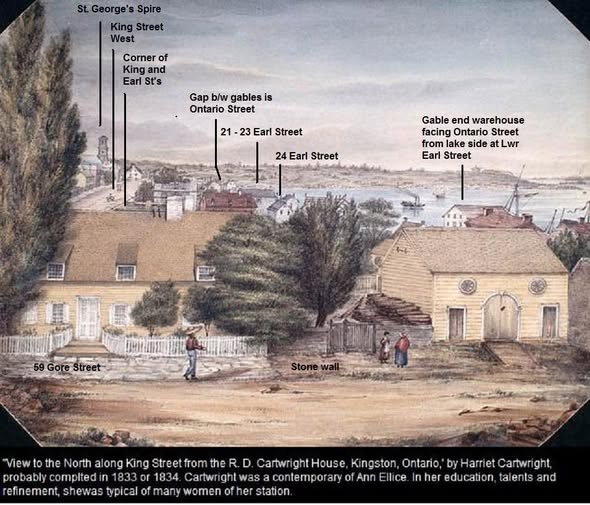
How many times have any of us exclaimed “the thatch is real!”?  It’s not done around these parts, though I have an image that might show a thatched roof or two hereabout in 1833. As you consider that, here some notes:

Note #1: who “placed trust” in the self-reported data the BA uses?
Note #2: Knut on the cost breweries pay to attend beer fests.
Note #3: I’d be checking the corks for tampering before sipping Stalin’s wine.

As you know and as I know you know and as you know I know you know, “A Glass of Handmade” by William Least Heat Moon was published in The Atlantic in 1987. It’s a consideration of the state of microbrewing at the time and contains one of my favourite lines, a statement by Bill Owens of pioneer brewpub Buffalo Bill’s: “…I don’t make ale. I can’t waste time educating Americans about ale…” Owens brewed a light lager that cost him seven cents a glass to make and sold for $1.50. The brewpub is still thereJeff told the tale this week of similar project almost forty years later in Portland, Oregon:

“If we were going to do a light lager, we wanted to do it right.” Sam said. “Let’s not copy another beer, let’s just make the best light lager available”… The brewery can still make a profit on a $3 pint, but it then becomes a volume proposition. But because it’s so cheap, the volumes have really gone up—a virtuous cycle. And just having the beer on the menu has created a halo effect. The typical customer doesn’t come in solely for cheap Clubhauses. Instead, they vary their session with a Clubhaus and other beers, saving them money they then use to spend on more beer or food. That’s why people end up spending more.

Here’s to that beer lasting until about 2064. That would be excellent. Speaing of which last Friday ATJ experienced the excellent if not even the sublime* and shared the moment:

I have finished my beer but such is the mood of completeness, that serenity I mentioned earlier, the tranquility that bathes my soul, I decide on another pint of the same beer. Once again there is a dance to the music of time on my tongue as I take deep sips that are almost transformed into swigs from my glass. There is a sense of mindfulness as I sit on this wooden bench that acts as a living memory of someone called Dave, moments of calmness and reflection as I look out over the river and the landscape stretching away, aware of the high canopy of blue stretched with fluffy white above me. Everything is in order, the beer, the views, the slow susurration of voices behind me, and even though this outdoor space at the Bridge is bordered behind me by a road I don’t even notice the passing traffic.

Two tales of the Isle of Man this week. First up, check out Katie‘s excellent piece in Pellicle on the good beer scene there. Then, add the notes shared by Ed from his time at the biggest and apparently little loved brewery in the dependency, Okells, his former Manx employer:

I briefly worked at Okell’s a few years back. The job was one of the worst I’ve had, a cesspit of office politics. But the beers were the best on the island… I got first hand experience of the distain some Manxie beer geeks hold Okell’s in when I attended an event at the Hooded Ram brewery. It was a microbrewery run by a lovely guy called Rob Storey. He’d invited Okell’s staff over to the event so I  went with one of the lads from work. I had an inkling of the view some held about Okell’s, but I thought it better to be up front about where I was working so wore a branded work t-shirt. I was still a bit put out that someone booed when I arrived though! 

(Neither of them mentioned Kelly.) On the topic of an entirely different sort of search, I don’t know if I am wanting to find the cheapest beer in the world but, yes, it is likely that it might be found in an unrecognized state where Russian troops are both posted and somewhat cut off… perhaps much to their relief these days:

Official Foreign Office guidance advises British tourists against traveling to Transnistria but, in the interest of scientific research, Robbie decided to take the risk. It proved to be worthwhile. Exchanging his remaining Euros for some of the curious Transnistrian currency – which uses plastic coins more like something from a board game than from a bank – Robbie finally managed to find a beer that could compete with Yorkshire prices. He explained: “I’m delighted I managed to beat the 99p pint with this 77p one. It’s a surprising we had to go to such lengths to get a hold of it though.”

More than likely a notch or two higher up the old snack bracket, Ruvani de Silva shared the history and current scene for bitters for The Alchol Professor with a focus on the finer kind which may assist me with my Crown Royal studies:

Contemporary mixologists have an almost unlimited palette of bitters flavors at their disposal, from yuzu, bergamot, and cardamom to Japanese chili and saffron. By incorporating more international ingredients into their bitters, craft bitters brands are helping mixologists introduce more global flavors, which in turn can bring craft cocktails to a wider audience. “When an industry is shaped by a wider range of backgrounds, cultures, and experiences, it naturally leads to new flavor profiles, new use cases, and new ways of thinking about cocktails and hospitality….”

Bitters and soda on a stinking hot day? Anytime. Time may have run out elsewhere. In Will HawkesLondon Beer City this month, he shared the history of the Grove Tavern, a shuttered 1920s pub awaiting the demo ball which sits on the site of earlier establishments before the city moved in:

In the 18th century, the Green Man’s appeal derived from its rural qualities. Dulwich Wells sat beside the pub, noted for its mineral-rich water, the Matcha Latte of its day. The landlord in the 1740s, Francis Cox, also created Cox’s Walk, a tree-lined pathway that runs southwards and still exists today, to connect his pub with Sydenham Wells.  Rural delights remained the pub’s calling card for decades: as late as 1864 – by which time the Grove had been rebuilt by Courage – the pub was advertised on its rural qualities. “If you want to enjoy the country air, go to the Grove Tavern, Dulwich!” readers of the London Daily Chronicle were told. “If you want to ramble amidst rural scenery, go to the Grove Tavern, Dulwich! If you like swings, quoits, bowls or cricket, go to the Grove Tavern Dulwich!”

And from the police blotter this week we have a story of crime out of Hollister California – a crime weaponized with beer:

During the first incident, police said surveillance footage showed a man riding a bicycle who stopped and approached the robot, before knocking the robot to its side before leaving the area. A second incident involved another suspect approaching a robot near 4th and Line streets. The suspect appeared to strike the robot before approaching a second robot that recorded the interaction. Police said the suspect struck the second robot and poured a liquid, believed to be beer, before leaving the area… police chief Carlos Reynoso confirmed two people were arrested following unrelated incidents.

Is pouring a beer on a robot a crime? We will find out. And with that, we are done for another week. While you wait around, drumming your fingers at the dining room table as loved ones ask “what’s wrong?” dont forget to check out Boak and Bailey posting on Saturday and adding to their fabulously entertaining footnotes week after week at Patreon. And do look out for more of Stan’s new “One Link, One Paragraph” format. Then hunt out something in someone’s archives! Leave oblique comments on someone’s post from 2009!! Listen to a few of Lew’s podcasts and get your emailed issue of Episodes of my Pub Life by David Jesudason on certain Fridays. And Phil Mellows is at the BritishBeerBreaks. Once a month, Will Hawkes issues his London Beer City newsletter and do sign up for Katie’s wonderful self-governing totes autonomous website featuring The Gulp, too.  Ben’s Beer and Badword remains on pause but there is reading at The Glass which is going back to being a blog. Any more? We have Ontario’s own A Quick Beer and All About Beer is still offering a range of podcasts – and there’s also Mike Seay’s The Perfect Pour. Plus follow the venerable Full Pint podcast! And there’s the Craft Beer Channel on Youtube as well as the archives of the Beer Ladies Podcast.

*Finally, that 1983-84 honours undergrad English course in Romanticism pays off.

A Brief Yet Utterly Fascinating First Beery News Notes For May 2025

Brief? I am on the road as you read this. At a Holiday Inn out by the airport if you have to know. Just a brief trip but that is going to mean a brief update. Why? Why??? Stop screaming that word into your pillow. It will be OK. Why do we know it will be OK? Because… as The Beer Nut has proven by hitting another milestone as he enters his third decade of beer blogging. Meaning we can never stop. Never. Ever. Another thing that never stops is the cycle of life that marks the work from planting seed to harvest time and, again, to planting again. Just to make you beer. As my near neighbours, the farmers and brewers at MacKinnon Brothers, showed when they shared this photo and these thoughts below on FB:

First planting of the year—no-till malting barley into soybean stubble. We’re testing new aftermarket firming and closing wheels on 6 of the 32 rows to see if they improve seed placement over the factory setup.

Martin, sitting in a pub enjoying a pint of Bass, has no doubt thought of that sort of thing from time to time but this week he raised another excellent question on the tension between the campaign to get UNESCO recognition for cask and the campaign to get CAMRA members to stick to “indie” beer:

I watched as a succession of unapologetic young folk arrived at the bar, went “ooh” and pointed at the red triangle. Yes, a national is finally putting a bit of money behind Bass, though frankly only pints this good will keep the pumps flowing and make sure it stays on the bar. Not everyone is delighted by this enthusiasm for Bass, whether because of ideology… CAMRA’s Conference instructed the NE to “ensure that all relevant CAMRA publications and communications pledge preferential support to beer producers and suppliers that are independent of the influence of the multinational brewers, and to make the case persistently for this stance.”

So, is the UNESCO campaign “Bass Inclusive” (BI) but the CAMRA one is Bass exclusionary” (BE) ?  A report in The Guardian, while setting out what I had thought would be pretty well known information, adds a twist:

In its annual independent beer report, parts of which have been shared with the Guardian, the trade body for British indie brewers said tough conditions were exacerbated by difficulty selling to local pubs… Siba members told a survey that 60% of the pubs within 40 miles were inaccessible to them, choking off potential sources of revenue and reducing choice for consumers thirsty for more interesting options at the bar. They blamed conditions imposed by large breweries and some pub chains, including financial agreements that impose conditions on what beers pubs can sell.

So if Bass is brewed by a large multinational and it is engaging in practices which are detrimental to small brewers who, among other things, brew fine cask ales… is the UNESCO designation application going to be BI or BE? WIll it carve out those fine cask ales which are made by the faceless nasties of international capitalism? Asking for a friend.

Speaking of machines, Boak and Bailey continue on their travels and have considered the role of well choreographed hospitality:

In the past week, we found ourselves in two such machines in Bucharest, the capital of Romania. Both drew us in with beautiful, historic buildings and the promise of decent mainstream beer… We really wanted to see inside the building, though, and also really wanted to drink a decent lager in vaguely trad surroundings, so we made our booking and braced ourselves. On arrival, we were intercepted by a member of staff whose only job was to assign people to free tables and escort them to their seats. She wasn’t exactly cheerful, but she was certainly efficient. She handed us off to a waitress controlling a section of about 10 or 15 tables who was just as friendly as she needed to be to avoid making us feel totally unwelcome. When we took a little too long to decide what to drink she got, perhaps, a touch impatient. But, like in the beer halls of Cologne, or The Dog & Bell in Deptford, once you accept that you’re not there to make friends with the staff, this brusqueness becomes part of the offer.

You know, I have played such a role in this life from time to time. As an usher, a waiter and to be honest a lawyer. I’ve said “right this way” as I led then to their seat, a table or… umm… the dock. Yes, standardized impersonal presentation in hospitality are efficient and reliable yet also impersonal and distant. You are being served but, in turn, so is the operation in a reciprocal sense. And sometimes even mentioning your past experience can open up a bit of conversation – but in other situations, you know, it can be taken as an insult. Govern yourselves accordingly. They don’t really care about the time you too failed to put in that order.

Speaking of touchy situations… would you drink out of a skull… have you?

Of course nobody wants to end up as a wine cup, but it must be a consolation to know that some very distinguished historical figures lived on in the drinks cabinet. One outstanding example was the Byzantine emperor Nicephorus I, who ruled in Constantinople from 802 to 811. After the emperor was ambushed by the Bulgars in a mountain pass and slaughtered alongside his army, his head was delivered to the splendidly named Bulgar khan, Krum the Fearsome. According to a Byzantine chronicler, Krum “hung it on a pole so as to exhibit it to the tribes that came before him and to dishonour us. After that, he laid bare the skull, riveted it on the outside with silver and, in his pride, made the chieftains of the Slavs drink from it.”

The article in question being from The Times and the facts that led to the question being newsworthy cause Dr. Alice Roberts to comment “I can’t believe this isn’t a spoof article. It seems to be supporting a very questionable approach to human remains.” The facts in questions being some Oxford dons doing it based on an ancient tradition going back to … err… 1946.

Glut news:

The Scotch Whisky Association (SWA) shares export figures annually. For several years, Michael Kravitz of the Diving for Pearls blog published an excellent analysis of this data, predicting in 2017: “If volume sales don’t increase [significantly], then we’re going to start seeing A TON of well-aged malt whisky within 5 years. If this continues further, there is going to be an embarrassment of oversupply in 10 years. Even if industry-wide production is cut in half in 2017, it would be too late to stop The Loch.”

Similarly perhaps, good play-by-play from CBC by Dave Infante, highlighting the potentially irrational exuberence in the pep rally:

Matt Gacioch of the Brewers Association notes that U.S. craft brewing’s -4% volume drop in 2024 was the largest since the trade org started tracking that metric. “Consumers feel much worse than they’re acting.” Even as sentiment tanks, people are still spending on-trend for now. Doesn’t explain why they’re spending less on craft beer, but hey, listen, silver linings!

There was a similar theme in the Beer Insider Insights newsletter this week:

… in 2012-2013, households led by folks under 30 spent more like 1.1% of their disposable income on alcohol. That dropped to 0.74% a decade later, about 1/3 less. Households run by younger folks will generally have less income, disposable or otherwise, Bourcard reminds. But the fact that Gen Z is already spending less on alcohol could stick around. Then too, the most cited reasons of “health and vanity” are “greatly overblown,” in his view.

I love how “greatly overblown” gets something of the rimshot treatment after those sorts of stats. Silver linings! More serious in terms of the inquiry, David Jesudason wrote this week about a puzzle:

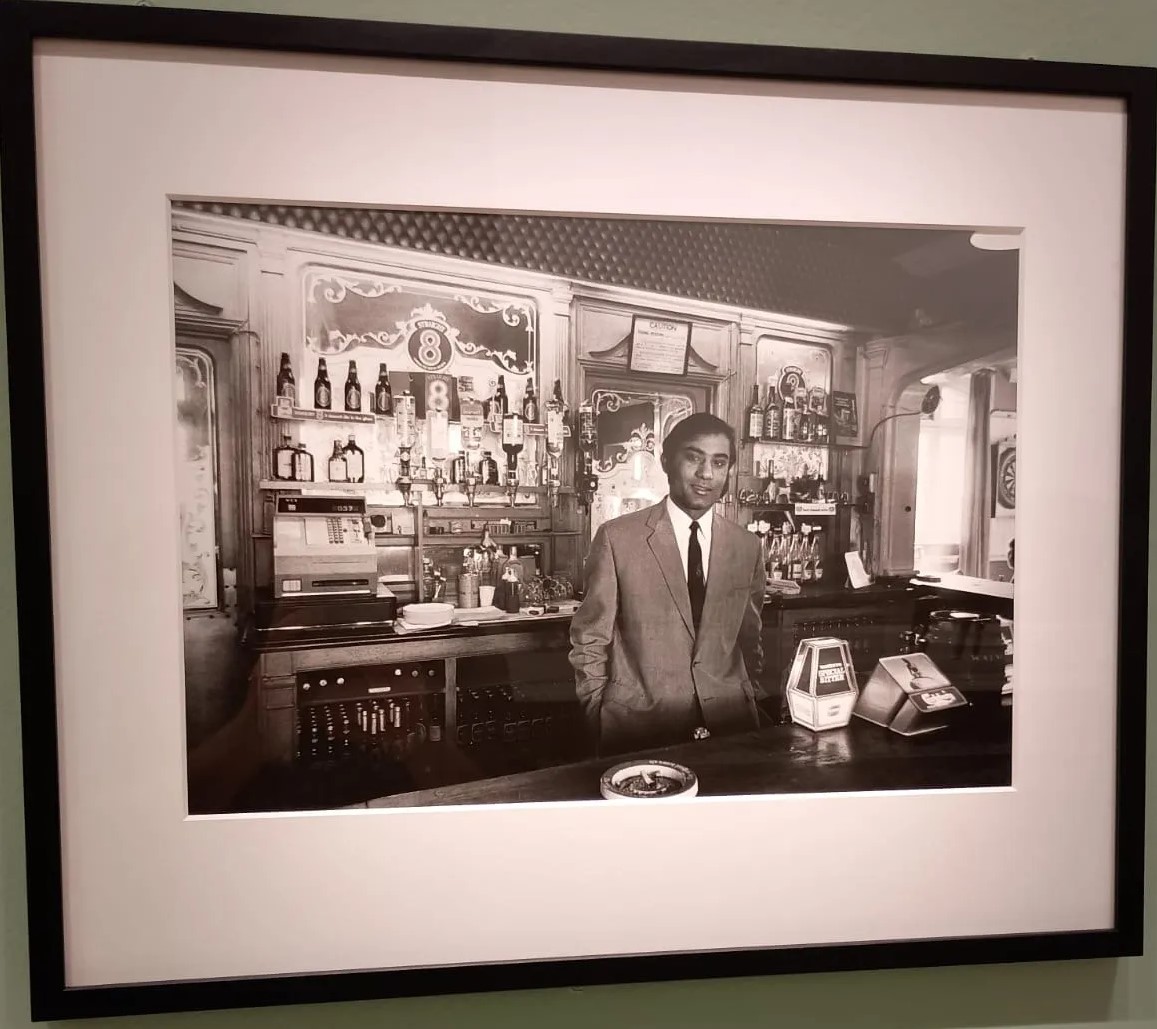
Dennis Morris took a series of photos of life in Southall in the 1970s after apparently driving past the West London suburb on the way to a Bob Marley gig. This one was sent to me by a friend visiting an exhibition of his in Paris. I’ve asked people if this is the legendary Glassy Junction… but none can confirm. All I know is this is a Sikh pub landlord photographed in Southall in 1976. So if anyone has any idea what pub this is or the name of the man pictured, please get in touch!

I don’t know anything about that. Do you? No? Well, did you know, if you are not sufficiently disappointed in the beer in front of you, that there’s an app for that?

…a new experimental measurement tool, created by scientists assessing the concentration of DMS in beer through “smartphone-based colorimetry” uses a “paper-based analytical device (PAD)” which was made using an “immobilising a chromogenic reagent phase consisting of alkaline nitroprusside in a gelatin hydrogel”. Breweries and beer judges analyse the DMS content of products to ensure consistent flavour quality and consumer satisfaction.

Lordy. I am loving this “off-flavour” studies revival. Remember last week? That was excellent. Feels all 2012. Is that unkind? You know what’ll perk this conversation up? Rice malt, that’s what:

The rice malt can also reduce crop-growing acreage needs by half or more, because the research shows it produces more grain per acre than barley, while having an equivalent or greater sugar extract potential… The study, which is derived from the University of Arkansas, also identified how malting has the potential to decrease time and energy costs and make using rice more feasible for more small-scale craft brewers — especially when creating gluten-free beers. Since rice is cultivated globally, the analysis highlighted how it also has the benefit of serving as a viable malting grain for tropical and subtropical countries that would otherwise need to rely on barley imports for brewing.

You know… I wonder about the arsenic. Any mention of the arsenic? Not sure. Hmm… and that’s it. Not much this week. It’ll get bettter. Next week for sure. Let me check my calendar. No, away briefly again. Until then, please check out Boak and Bailey every Saturday (…as long as all their holiday fun doesn’t get in the way…) and Stan (….who is also going on his own holiday break so may not be there…) each and every Monday. Then listen to a few of the now rarely refreshed Lew’s podcasts and get your emailed issue of Episodes of my Pub Life by David Jesudason on the (sometimes even but never) odd Fridays. And maybe The British Food History Podcast. Maybe? And Phil Mellows is at the BritishBeerBreaks. Once a month, Will Hawkes issues his London Beer City newsletter and do sign up for Katie’s wonderful newsletterThe Gulp, too.  Ben’s Beer and Badword is out there with the all the sweary Mary! And check out the Atlantic Canada Beer Blog‘s weekly roundup. There is new reading at The Glass which is going back to being a blog. Any more? We have Ontario’s own A Quick Beer featuring visits to places like… MichiganAll About Beer has given space to some trade possy podcasts and there’s also The Perfect Pour. Plus follow the venerable Full Pint podcast with an episode just last month!. And there’s the Craft Beer Channel on Youtube. Check out the archives of the Beer Ladies Podcast. That’s quite good but, hmm, they’ve also gone quiet this year. The rest of these are largely dead. And the long standing Beervana podcast …except they have now stood down.  As has We Are Beer People. The Share looked to be back with a revival but now its gone quiet. And the Boys Are From Märzen podcast appears suspended as does BeerEdge, too. VinePair packed in Taplines as well. All dead and gone.  There is more from the DaftAboutCraft podcast, too. Nope – that ended a year ago.   The Moon Under Water is gone – which is not surprising as the ask was $10 a month. Pete Brown’s one cost a fifth of that – but only had the one post. Such is life. Such is beer podcasting and newlettering!

These Be Your Mid-April Mid-Life And Perhaps Even Fairly Mid Beery News Notes

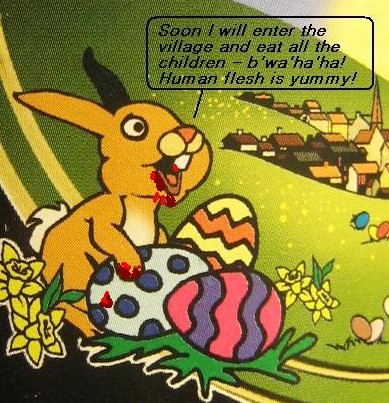
Easter week! You’d be right in thinking it was a month ago with all the talk this week of of green beer here and green beer there. But no, it is the time of the bunny who lays eggs which happen to be made of chocolate. Christ! And each Easter is also reason to revisit this 2008 post of mine on the lack of Easter beers – which included, as illustrated, perhaps the oddest thing I have ever published on this here blog of mine. But, of course, the main event of the long weekend is the old man’s birthday, me being the old man in question. Thank you for all the cards! Sixty-two. Whaaaaa Hoooooo! Said no one never. This very evening I am celebrating by going to a ukelele orchestra concert. I have authorized myself to slip out early just in case. Still, I do hope it is silly enough to justify the price of admission.

Enough about me! First off this week, have I mentioned the global economic mood?  The CEO of Mexico’s Constellation Brands Bill Newlands has:

About half of Constellation’s beer sales are from Hispanic consumers… with the demographic accounting for 78% of its total revenue last quarter. The Wall Street Journal report noted that many immigrants in Southern California and Texas have begun avoiding liquor stores, where they are often forced to show identification. Many people have stopped shopping at supermarkets after 6 p.m., hoping to avoid immigration raids… While Modelo, Corona and Pacifico are exempt from the Trump administration’s 25% tariff on Mexican imports, the company is not able to dodge the 25% tariff on aluminum when it comes to their canned beer imports.

Being from somewhere matters apparently. And speaking of tariffs,* James Beeson posed an interesting question in The Grocer: is local a liability in these trade war times? And then he helpfully explored the implications:

These liquids command a hefty price premium thanks to protected geographical indicators (PGIs) which guard the product’s name from misuse or imitation… PGI status offers “clear authenticity and product differentiation in consumers’ eyes”, and plays “a crucial role in premiumisation”… Tariffs certainly look like bad news for Rémy, which generated 38% of its sales in FY24 from the Americas. Thanks to its overexposure to cognac, it also sells 62% of its PGI spirits outside the market in which they enjoy this status.

So being from somewhere can be quite damaging. Plus… never thought over exposure to cognac could be a good thing but there you are.  But then in TDB, David Jesudason was arguing that things should be more clearly from somewhere:

It’s especially concerning because most drinkers cringe at the thought of Madri – the supposed soul of Madrid – being brewed in the UK by Coors – while this unnamed beer is actually being brewed at a renowned British craft brewery. The type of brewery that brews a lot of award-winning tipples that define modern British beer for discerning drinkers prepared to pay premium prices. And this beer is no exception. Which shows there’s no need to lie. But here’s the payoff: by claiming a beer is brewed in Germany not Great Britain what exactly is a British beer company saying? Bavaria has better water than Burton? Hamburg has better brewing techniques than London? Perhaps all British brands will proudly say where their beer is brewed if cask were to become UNESCO recognised and we took our heritage seriously.

THEN… Will Hawkes considered in his latest London Beer City monthly how beer from somewhere might not really be about that somewhere at all and this might not be very good in these times:

American influence – and, more specifically, American hop flavour – has fuelled London’s brewing renaissance over the past few decades. From Neck Oil to Pale Fire, London brewers have paraded their passion for (and understanding of) Obama-era American craft brewing. American Pale Ales on London bars have become legion. Wham bam thank you Uncle Sam. The world, though, has changed. To paraphrase Oscar Wilde, to elect Donald Trump once might be regarded as misfortune; to do it twice is just fucking stupid. Trump’s introduction of tariffs, the bovine threats to Canada and Denmark, the increasingly aggressive way in which visitors to the USA are being treated: this points in one direction and one direction only. America acknowledges and wants no allies, and that includes Britain. MAGA is unleashed and obnoxious.

Interesting. Will the world reject US craft just as it’s rejecting the Tesla? It is also interesting that making booze under licence was one of the solutions mentioned by Mr. Beeson while is the problem for Mr. Jesudason. Hmm… Speaking of critical thinking, Katie M. took immediate and visceral objection to this article in The Guardian:

Is the editorial team all on holiday leave or something? There are SO many talented writers out there looking for an opportunity like this, and so many editors who do their jobs with skill. How can a national paper be so careless as to publish something so unpolished. The writer isn’t even to blame here, the whole process is, from commission to upload.

There was a lot of unhappiness in the susequent BluesGuy comments all of which confused me a bit until I got to this one that shared a correction to the online edition: “This article was amended on 13 April 2025 to replace some words that were omitted during the editing process.” Yikes!  The post repair job was still a bit much. As ripe with superlatives as the worst of beer writing. Very much overly rouged, as the kids might say. So much unhappiness. Good thing, then, that Gary shared the good news – the Clark’sroast beef sandwich is back in Syracuse NY!

For longtime locals, the main event is the return of a Syracuse bar legend: the Clark’s Ale House roast beef sandwich. Clark’s Ale House, which operated in two locations from 1992 to 2016, was famous for its roast beef sandwich. It was simple — just medium-rare top round, thinly-sliced red onions, cold cheddar cheese between an onion roll from Di Lauro’s Bakery — but it was legendary. And when Clark’s closed for good, its devoted fans were left craving. “We’ve missed this sandwich so much,” Beach said, standing in the Crooked Cattle’s kitchen earlier this week. ”But now it’s back.”

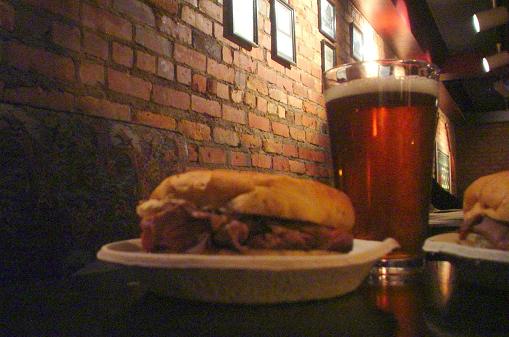
That artisic rendering up there is the sandwich I ate at Clark’s over twenty years ago. Now… if they can just bring back the house ale and the pub’s layout.

Note #1: Katie Mather has returned to owner operated blogging.

Note #2: do you like salt in beer. People have. Since at least 1835.

Stan also spoke of an ingredient this week – specifically the hop – in his Hop Queries edition 8.12 and shared this about the return to work of two US government employees:

Two USDA-ARS employees involved with public hop research were among thousands of probationary employees who went back at work after the Merit Systems Protection Board (MSPB) issued a 45-day stay on their termination (see Hop Queries Vol. 8, No. 10). Francisco Gonzalez, a hop horticulturist, is one of four scientists central to the public hop research program. Brandon Sandoval is a technician assisting Gonzalez… That’s not to say that things are “back to normal” at research facilities in Oregon and Washington. Not all support staff has returned to work and what happens after a hiring freeze lifted is not clear. Also, the USDA has warned employees that a significant reduction in force is likely.

Some chat this week about what was micro then craft now independent. As exhibit A we have Pete of The Times* who gave a quite reasonable explanation how craft was lost to bigger interests… just as, I suppose, micro fell to the avarice of big craft:

To my palate, Beavertown’s Neck Oil and Gamma Ray, and Camden Hells — now owned by corporations that brew as cost-effectively as they can — don’t taste as good as they did. Quality hops are costly. And proper lagering means storing beers in chilled vats for weeks. So what are drinkers to do if they want beer that’s well made by small players? Trade bodies such as Siba, which once promoted craft beer, now champion “indie” beer instead. Siba defines an indie brewer as one that’s UK-based, has less than 1 per cent of the UK beer market and is not connected with any other business bigger than that size. It issued a logo for breweries such as Fyne Ales, Vocation and Five Points to use on packaging and pump clips.

Then, as exhibit B, consider Phil Cook who gave what can only be described as commentary from a view from (Ed.: *…checks map…*) well below my feet:

‘Independent’ remains the adjective of choice in promoting and organising the many Australian breweries that might otherwise be grouped under ‘craft’ or (in earlier times) ‘micro’. But companies who persist in waving it around as they take part in the recent string of mergers, consolidations, and various other entanglements are straining the word to breaking point. It’s too much like someone insisting “being single is really important to me, that’s why I married another bachelor!”

Does it matter? Well, “it” isn’t any one thing. First, locally the word “independent” never really took off in Canada. Even well past “craft” we are… still craft. And if we look at the UK standard of 1% of the market that has little use for the US trade where the small guys got co-opted long ago to falling into line helpfully to support the aspirations of the large ones. These things, too, will not save craft beer. And does any of this matter so much as we continue on the human race’s continued shift away from the bottle? Consider this startling news from The Guardian on the state of the global wine trade:

The OIV said the consumer was now paying about 30% more for a bottle now than in 2019-20 and overall consumption had fallen by 12% since then. In the United States, the world’s top wine market, consumption fell 5.8% to 33.3m hectolitres. Delgrosso said tariffs ordered by the US president, Donald Trump could become “another bomb” for the wine industry. Sales in China remain below pre-Covid levels. In Europe, which accounts for nearly half of worldwide sales, consumption fell 2.8% last year. In France, one of the key global producers, 3.6% less wine was consumed last year. Spain and Portugal were among the rare markets where consumption increased.

Still on the holiday in Romania and pushing back against that trend by all accounts, Boak and Bailey took time to send out their monthly newsletter in which they shared thoughts on one way the pub trade can respond – reduce the congnitive load:

In the context of a holiday, a slight increase in cognitive load can be pleasurable, and part of the fun. It’s about the line between stress and stimulus… How can pubs and breweries reduce cognitive load? The experience of a Wetherspoon will rarely be thrilling but at least (kliche Klaxon) “You know where you are with a ‘Spoons”. All sorts of venues could, and can do, do some of the same things… the single greatest way to reduce the cognitive load of any experience is to keep doing it. However weird and complicated your local pub might be, by the time it is your local, you’ll know how it works and won’t find it weird at all.***

Does a gay bar at a zoo convey significant cognitive load? David Jesudason explains how you might have found that out if you visited the Hotham Park Zoo in Bognor Regis, West Sussex in the 1980s:

…this magical and enchanting period spawned the Safari Bar, a gay bar playing high NRG music, hosting drag queens and causing merriment that could be heard from considerable distances. The night was the idea of DJs Barrie Appleyard and Ian Harding, who had met at a club in Littlehampton. Ian knew the manager of the zoo and Ian phoned Barrie saying “shall we try something with the zoo, you know, gay nights or something?” They found a cafeteria (originally built as a small mammal house) that was tucked away in the back of the zoo and transformed this functional space into a jungle-themed gay bar on Wednesday, Friday and Saturday nights.

What went on each Thursday? Hmm. Speaking more or less on whether less is maybe more or maybe not, at the beginning of the month Retired Martin shared his thoughts on coming changes to the Good Beer Guide based on this motion that was before the gathering last weekend:

“MOTION 7 : This Conference instructs the National Executive to reduce the number of pubs in the Good Beer Guide from the 2027 edition onwards, to ensure only quality pubs are featured.“

Have the results been published beyond the shadowy membership cabal? I don’t see any reference on the so-me’s.  What the heck could “quality” mean in such a context? By total contrast, I give you the best line written about beer of the week – if not to this point in the month – must be this one:

The best location for a beer, by far, was at the sausage stand near the city incinerator plant.

And, perhaps relatedly, Tom Morton, who I met through his former BBC Scotland radio show, shared a story of a dubious newpaper restaurant reviews which is… detailed:

The worst meal I’ve ever had was at a café I’ll call Les Vomiteurs in the then seriously untrendy, ungentrified, occasionally unsafe area of Glasgow called Finnieston. This was 1979 and the late Jack House was still writing restaurant reviews in the Evening Times. He’d recommended the tripe at Les Vom and as I’d never tried this intestinal delight, and fancied myself an adventurous junior gourmand, I thought I’d have a go… The formica tables of Les Vomiteurs matched the unwelcoming hardness off the proprietor, who served me up a bowl of white gunge. Boiled tatties and slimy tendrils of cow gut in milk. It was unchewable, the bits of stomach slipping about my mouth like frisky tapeworms. I swallowed, inhaled the potatoes and just made it out of the door in time to throw up the entirety of my lunch in the Argyle Street gutter. So much for acting on restaurant reviews.

I don’t know what to say about that… other than my folks grew up on the Clyde and that is the sort of keen tales of humanity that I grew up with.  And speaking of the unexpected, Jeff wrote an intersting exposé of a bootleg beer he injested in Oregon named Corona Mega – and also provided some details on a resulting lawsuit:

The mystery deepened the more I dug into it. Whatever I bought that night was definitely not regular Corona. For one thing, it was a vastly superior beer. It was a tenth of a point weaker in strength at 4.5%…  The label listed Oz Trading Group of Hidalgo, Texas as the importer, which was an oddly bold move for, to quote the economist Stringer Bell, “a criminal [expletive] enterprise.” (As a spicy aside, the apparent owner of Oz Trading is Oziel Treviño, a Hidalgo city councilperson who was found to have committed voter fraud in 2016.) Curiouser and curiouser, in other words.

And, finally, Pellicle published a piece by David Nilsen on depression and loss,  a tough read that carries the disclaimer that “this article makes frequent and detailed references to suicide and severe depression, therefore reader discretion is advised.” The essay is primarily about the life and the passing of a brewer, Brad Etheridge, at age 43 based on conversations with his wife, Julie Etheridge but it also speaks to the broader context. It also contains this passage:

Cindy Parsons is a psychiatric nurse practitioner and an associate professor of nursing at the University of Tampa in Florida. In 2019, she and colleague Jacqueline Warner Garman (who co-owns Hidden Springs Ale Works in Tampa and is a psychotherapist) gave a presentation at the Craft Brewers Conference, held that year in Denver, on addressing mental health issues in the craft beer industry. She thinks the image of craft beer can make its workers and supporters reluctant to acknowledge the complications of mixing mental health issues and alcohol. “We’re supposed to be the happy people,” she tells me. “Do we really want to address this in our industry?”

My profession, lawyering, also has a significant mix of mental health issues and alcohol and much of what’s written by David rings true. Only by way of one example among many I’ve met, the family friend who was my first articling principal now thirty-three years ago quickly upon my arrival revealed themselves to be drinking a quart of rum to get them through each day. Drank to the death. Grim.

There you have it. A huge range of reading this week. Take your time and until next time when I will be, I promise, older and wise… please check out Boak and Bailey every Saturday (…as long as all their holiday fun doesn’t get in the way…) and Stan going strong again each and every Monday. Then listen to a few of the now rarely refreshed Lew’s podcasts and get your emailed issue of Episodes of my Pub Life by David Jesudason on the (sometimes even but never) odd Fridays. And maybe The British Food History Podcast. Maybe? And Phil Mellows is at the BritishBeerBreaks. Once a month, Will Hawkes issues his London Beer City newsletter and do sign up for Katie’s wonderful newsletterThe Gulp, too.  Ben’s Beer and Badword is out there with the all the sweary Mary! And check out the Atlantic Canada Beer Blog‘s weekly roundup. There is new reading at The Glass which is going back to being a blog. Any more? We have Ontario’s own A Quick Beer featuring visits to places like… MichiganAll About Beer has given space to some trade possy podcasts and there’s also The Perfect Pour. Plus follow the venerable Full Pint podcast with an episode just last month!. And there’s the Craft Beer Channel on Youtube. Check out the archives of the Beer Ladies Podcast. That’s quite good but hmm they’ve also gone quiet this year. The rest of these are largely dead. And the long standing Beervana podcast …except they have now stood down.  As has We Are Beer People. The Share looked to be back with a revival but now its gone quiet. And the Boys Are From Märzen podcast appears suspended as does BeerEdge, too. VinePair packed in Taplines as well. All dead and gone.  There is more from the DaftAboutCraft podcast, too. Nope – that ended a year ago.   The Moon Under Water is gone – which is not surprising as the ask was $10 a month. Pete Brown’s one cost a fifth of that – but only had the one post. Such is life. Such is beer podcasting and newlettering!
*Did I? Was I?
**I forgot this: I knew him and apparently drew him way back when.
***Pardon all the ellipsises… ellipsi… but the point was worth making.

The Last Thursday Beery News Notes For The Suckiest Part Of The Year

We have entered a short and ugly season. False spring. Dwindly wintery. The time of dirty snow. After last week’s -20C temps, high winds and back to back blizzards we got the first sense of spring. Not the reek of dog shit thawing out of snowbanks spring. But at least +5C and even a bit of drizzle. Under five weeks to the first of April. My own pea and carrot seeds will be planted in the cold dark soil by then. Not that bit of basil. No way. I am eating that plant. Soon.
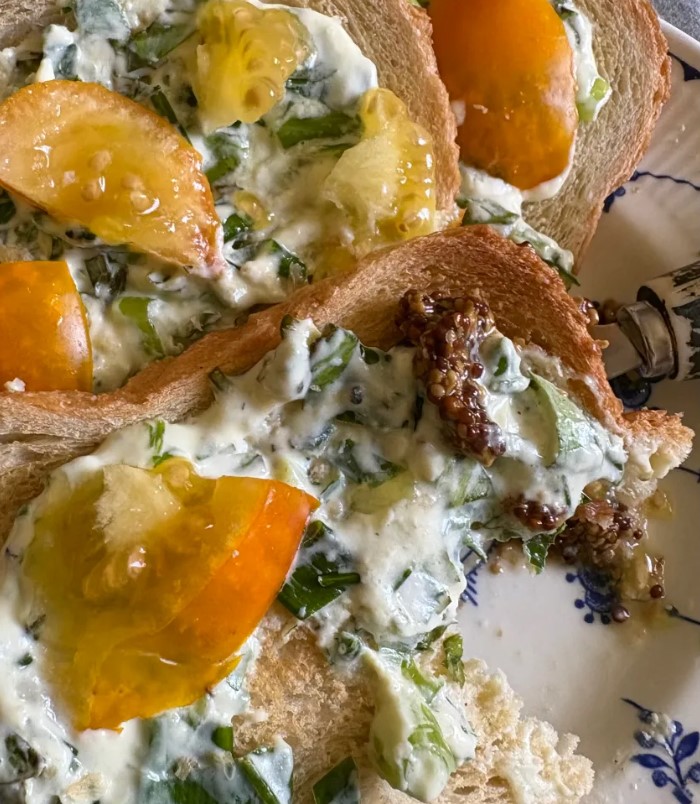
First up? First up and speaking of eating, I have been looking for an angle on long time servant of good beer Jonathan Surratt‘s blog by email about sandwiches, Bound by Buns, and this week he provided in this week’s post:

I recently had the idea to see if I could incorporate beer into each of the main components of a sandwich… I met with Jenny Pfafflin from Dovetail Brewery (we call her JP) and she and I put our heads together to discuss the beer options for this sandwich. I had a rough concept for a beer braised short rib sandwich using a beer cheese spread and we talked through the other options. JP, a brewer who is also an Advanced Cicerone, was very helpful in being a second opinion and a knowledge expert on Dovetail’s line of beers and beer flavors in general.

Now, that is just the introduction to the intro. Take some time. His weekly posts often drill down deep into the details and then wallow with you in the goodness of sammy Pr0n.

Next… what a headline: “Heineken to make beer weaker“!!! Jessica Mason reports:

From 25 February, Heineken will reduce the alcohol of its Sol beer brand to just 3.4% ABV down from from 4.2% ABV. The beer, which was originally brewed in Mexico before it was acquired by Heineken from Fomento Economico Mexicana SAB (FEMSA) in 2010 in a deal worth £4.8 billion, is now produced in Zoeerwoude in the Netherlands. According to reports via The Sun, increased cost pressures facing the sector have also pushed the decision for beer companies to make the move to bring the strength down on some beers.

That’s 23.5% weaker according to my math. Yikes. At what point is that a near beer? Speaking of weak, we have this in from Beer Insights on the serious loss of interest in the darling of a decade ago, Stone, now owned by Sapporo:

…results were driven by strong growth of Sapporo brands offsetting softer Stone trends. Indeed, early in the yr, the co recorded a $90+-mil impairment charge on its Stone biz, it acknowledged while responding to critiques about its overseas investments from a Singapore-based investor with more than 19% stake in the co. Recall, Sapporo acquired Stone for a little less than $170 mil in 2022, then invested tens of mils of $$ in US production facilities.

A $90,000,000 loss on a two year old $170,000,000 investment is quite impressive. Somebody sure ain’t worthy. Conversely, Matty C got out his pen and his writing table and wrote about the end of things for CAMRA’s What’s Brewing:

Everything is finite, and all good things must come to an end. Most people understand this, even if only subconsciously, and it’s why I think we cling to nostalgia so tightly – it helps stop us worrying about that which we ultimately cannot control: change. Nostalgia plays a huge part in what we drink and enjoy. It’s largely why Guinness is so frustratingly popular at the moment (and I say frustratingly from the perspective of someone who feels like this is a missed opportunity to get more people drinking cask beer). But this phenomenon also extends to brands like Theakston’s Old Peculier and Timothy Taylor’s Landlord, even Bass remains popular among some enthusiasts.

Speaking  of institutions… what is a hall of fame for? The already famed? Consider Jeff‘s conclusion:

Elevating the less-heralded figures who shaped American brewing is certainly a worthy effort. Using the Hall to reshape the way we think about brewing (as well as craft brewing) would be a worthy effort. But at least after an initial round of inductees, it seems like the Hall has chosen to celebrate they already celebrated. Maybe this project isn’t for me, or the public generally, and that’s fine. Industries get to define whom they celebrate. But again, looking from the outside, it seems like a missed opportunity.

There isn’t a hall. Just a website. But… if there is no actual hall, does there even have to be actual fame? Or is it for sometinhg else? Consider Stan‘s thoughts:

For the record, I provided nominations and I voted in the election. I nominated Joe Owades (cited within the post), not because of the role he played in developing light beer, but because he was a key advisor to the early giants of microbrewing (even if the beer was not made a small breweries; goodness those were confusing times) such as Boston Beer and Pete’s Wicked Ale. As you will see when you read the entire post, people like to talk about this. 

Soooo… there is the talk. But does the talk get beyond the bubble? Still, it’s a bubbly bubble for sure. Frothy even. As you consider that, we move on a bit deeper into the recent past. Boak and Bailey linked to this one on Saturday but it is too good not to record for archival posterity – a 1977 BBC documentary on the state of the UK beer industry. As Nigel Sadler wrote “a nice old film“! But it was a broadcast to a nation wide public. Not a bubble Could beer still sustain that sort of viewership now?

Well someone* is trying as Pete Brown has been granted space in the Sunday Times in England to write about beer on a regular basis. It will be interesting to see if there will be any of the analysis you would see in wine or restaurant reviews. It would be even more interesting if a writer like A.A. Gill, Brown’s predecessor in those pages, could arise in good beer. Drink was something Gill left behind with good reason.  Similarly, could good beer generate this sort of academic standard we  see with the four newly announced Masters of Wine?  Consider these qualifications:

Jit Hang Jackie Ang MW holds a DPhil in Medical Sciences from the University of Oxford and a MA in Pharmacology from the University of Cambridge, said the IMW. He is director of Cherwell Wine and Spirits in Singapore, where he also heads the High Throughput Screening group at the Experimental Drug Development Centre. His research paper was: ‘Are Universal Glasses Truly Universal? — An investigation on whether glassware shape affects perceptions of red and white table wines made from international varieties.’

A brainiac! But there are many sorts of pursuits and pleasures, aren’t there. For example, B+B shared a tiny cheery… dare I say charming… travelogue on a recent weekend trip to Germany with Ray’s mother over at their Patreon page:

In Cologne, almost 24 hours later, we fell upon glasses of Päffgen Kölsch while surrounded by people in carnival costumes – minions, pirates, sequined suits, and so on. Our hypothesis was that Ray’s mum would love Kölsch and Kölsch culture. She’s a lager drinker by default, when she drinks beer rather than whisky, and is no longer keen on pints. Sure enough, she did like this crisp, bitter, incredibly fresh beer. Well, who wouldn’t? Truthfully, it was probably being surrounded by family, and having a fuss made of her, that made the beer taste particularly good.

Sounds ideal. No? Does for me. But maybe this is your ideal pub? Not mine but I am not an elderly emo. Really. I’m not. Others have other ideals… idles… iddles…

After the King pulled a pint called Gone For A Burton, a traditional mid-strength beer brewed by Tower, brewery owner John Mills cheekily asked him: “Going to have a slurp of that, sir?” The King replied that if he was not, he was in the “wrong place”.

Less regally, Doug Veliky has been asking some questions of brewers in these troubled times and Ottawa’s own Dominion City Brewing shared a high level of detail that they had actually shared with their customers along with a few notes:
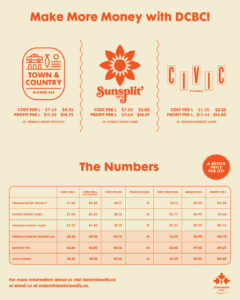
…we’ve been refining our unique value proposition and have landed on the fact that we offer a high rate of sale and greater profit per pour than our peers. We’ve made up the attachment below [Ed.: err… above…] in a bid to educate our customers about the pricing elasticity they get with our brand (and about the true cost of their macro options once all the freebies and kickbacks are counted.) It’s made the difference in keeping our business with several accounts to date and we hope to use it as part of our pitch to accounts that might not look craft-accessible. So both a shield and sword strategy.

I like it. And I like their Town & Country, too. They are also fighting the tariff threat along with other Canadian brewers. More on the Glorious and Free initiative here. Speaking of Ontario, just days before today’s election, the liquor control agency controlled by current government of “Buck A Beer” Doug Ford slapped a new tax** on beer sales in the province:

The LCBO posted information about the fee increase on its website Monday within hours of Ontario PC Leader Doug Ford unveiling a new campaign promise to scrap the province’s mandatory minimum prices for alcohol.  The increase is set to take effect on April 1. It amounts to a 4.4 per cent jump in what the LCBO calls “cost of service,” a levy that applies to all beer products — whether imported or domestic — sold at retail outlets such as The Beer Store, supermarkets, convenience stores and brewery retail outlets, as well as on beer distributed to bars and restaurants. 

And finally Pellicle picked a spot for this week’s focus where I’ve actually been – but may not no longer – as author Gene Buonaccorsi got to crawl over and under the Cambridge Brewing Company, down the road from MIT and across the river from Fenway***:

With Phil off attending to customers, I asked Will to show me the notorious barrel cellar. For years, I’d heard of this nature-defying space—a small corner of a basement where some of the industry’s most mind-bending beers fermented and matured. We exit the dining room through a door towards the back and enter an industrial white-walled staircase with faded metal handrails. He leads me down to the lowest level, where we emerge into a low ceilinged room with fluorescent lights that (at first glance) illuminate a set of dry goods storage racks and the unmistakable shining silver door of a refrigerated keg room. “It’s a bit tricky from here,” he tells me. “You have to step up but also duck so you don’t hit your head.”

Duck or grouse. That’s the choice. Well, it’s a B.O.B., isn’t it.  That’s it for another week. Until we meet again in March, please check out Boak and Bailey every Saturday and Stan going strong again each and every Monday. Then listen to Lew’s podcast and get your emailed issue of Episodes of my Pub Life by David Jesudason on the (sometimes even but never) odd Fridays. And maybe The British Food History Podcast. And Phil Mellows is at the BritishBeerBreaks. Once a month, Will Hawkes issues his London Beer City newsletter and do sign up for Katie’s wonderful newsletterThe Gulp, too. The Share looks to be back with a revival. Ben’s Beer and Badword is out there with the all the sweary Mary! And check out the Atlantic Canada Beer Blog‘s weekly roundup. There is new reading at The Glass which is going back to being a blog. Any more? Check out the Beer Ladies Podcast. That’s quite good and they are revving up for a new year. And the BOAS podcast for the bro-ly. And the long standing Beervana podcast …except they have now stood down.  Plus We Are Beer People. The Boys Are From Märzen podcast appears suspended as does BeerEdge, too. VinePair packed in Taplines as well. All gone. But not Ontario’s own A Quick Beer featuring… Michigan! There is more from the DaftAboutCraft podcast, too.  All About Beer has sponsored trade possy podcasts and there’s also The Perfect Pour. Plus follow the venerable Full Pint podcast. And the Craft Beer Channel on Youtube.  The Moon Under Water is gone which is not surprising as the ask was $10 a month. Pete Brown’s one cost a fifth of that – but only had the one post. Such is life.

*Others too. For example, I had no idea there was a beer focused radio station broadcasting out of Sheffield: “Ale & Radio will celebrate its milestone on April 13, following a highly successful first year broadcasting beer-focused content alongside a diverse mix of music spanning multiple genres and generations. With a global audience, the station’s mission has always been to support independent breweries, bars, pubs, and beer retailers, while uniting beer enthusiasts through a variety of engaging content. Listeners can tune in for regular beer news, travel features, festival coverage, brewery interviews, and user-submitted audio beer reviews.” Here’s their webpage with a link to the audion stream. But is Pete’s as he postedthe ONLY regular beer column to run in a UK broadsheet newspaper or magazine, first one for over 20 years” or as he blogged “I’ve joined Adrian Tierney-Jones (Daily Star) in the exclusive ranks of people who have a regular beer column in a mainstream British media outlet.“? 
**fine… yes, it’s a fee increase and not a tax…  
***…and, once upon a time, deep down within an entertaining early pandemic freakout

The Thursday Beery News Notes Perfectly Fit For Any Aspiring Oligarch

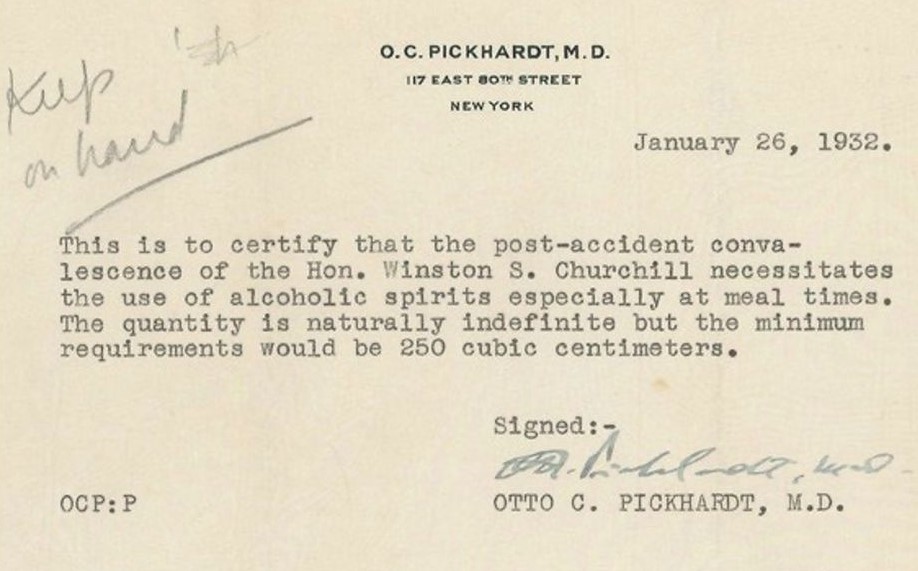
I would have thought Mr. Putin’s habit of defenestration would have made the prospect of being an oligarch less than attractive. I would think the real position to aspire to is the one where you don’t need the job, no one thinks you can do the job, you don’t even necessarily fit the job – but sooner or later the job comes to you. Consider Mr. Churchill above in 1932, as above, during his wilderness years. Yet immune to Prohibition when visiting friends overseas.

Is good beer entering a wilderness as we move into in this new political cycle? You know, the one dubbed by the Finns as the start of WWIII? Is that fair? I do fear that people are grasping for the return of something loved but lost as opposed to bracing for the shock of the new, like with this bit of advice:

Most of the category’s biggest threats have greater scale, but aren’t local, and that advantage must be exploited more. By directly engaging with neighbors through the hosting of events, sponsorships, and collaborating with other local businesses, breweries can build a sense of community that money can’t buy. Customers are more likely to support businesses they feel a connection to, so the more organizations that can be included, the more loyalty will compound.

What’s that? 2017 is calling? Fine. This sort of rehash strikes me as unhelpful, a sort of dreamy tariff-free wish for another time. Is that helpful?  I was thinking about that when I read this on Blues Guy from wine writer Jamie Goode:

If you are a wine writer it’s really good to talk about the wines and how good they are (assuming they are) rather than concentrating on the business difficulties, the challenging market etc.! Your audience doesn’t need to know this, and it might end up putting a dampener on sales

It strikes me as a similar sort of thing. Hedging. Hedgy even. Whatever is coming is not going to benefit from tales half told or Obama-era building communities of buyers, you know, just as the money tighten. Compare that from this sort of starker statement from Beer Board about the state of diversity in US draft beer sales in 2024:

Not all brands contribute equally to volume or revenue: the top four draft brands drive about 2.5 times more sales than the next eleven brands, and 15 times more than the long tail.

Compare… hop water?  As if. Yup, better to be blunter, bolder and perhaps even less pleasant. Like these top beer review panel notes of the week: “Ray quite liked but Jess almost spat out in disgust.” And as we consider Rachel Hendry‘s recent thoughts on her own writing:

Not so sexy, is it, to say things like I spent a lot of time on a project that didn’t go anywhere which now feels kinda embarrassing or I had some ideas that I thought were good but actually maybe they kinda sucked.  The sadness and the strops were short lived because a) in the grand scheme of everything writing about wine really isn’t that important and b) I am a firm believer that failure is a good thing. Experiencing rejection means you were brave enough to put yourself out there in the first place, and that’s a win in itself. I like my weird and uncategorisable approaches to wine, I’ve worked hard on developing my style and ways of thinking and I’m not willing to compromise that, to conform my voice into something more mainstream.  

A big fat double “Viva Viva!!” to that, Rachel. Be you. And congratulations on what every good drinks writer really needs – a job!

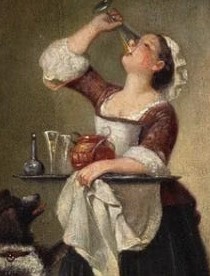
Consider, too, Katie who considered her relationship with the champers and thought of her favourite pal shown in thumbnail to the rights:

The lovely woman in The Gulp’s header image is taken from a 19th century German oil painting called “Maid Secretly Drinking Champers” (possibly not its original name). She has cleared away the glasses from her Lady’s table, and in the hallway, hidden from view, she downs the last remaining dregs of the bubbles. Her head is tipped right back to catch every drop, her cheeks flush with excitement, knowing she is tasting something out of her reach — and yet is literally in her grasp regularly. I couldn’t think of a more appropriate image for this newsletter.

(Good news, Katie. Champagne sales are down and prices may follow.) Katie’s piece reminded me that I have an acquaintance who was a sommelier 40 years ago and told of us how he sometimes stopped midway on the back service stairway, sipping the last dribs from a 1948 or 1963 that he had served someone then famous now forgotten at some swanky London restaurant also then famous now forgotten. What he knew is what I think Katie’s hero knew. Look at the tray. There’s more in the other two glasses on the tray. There’s more.

Speaking of good news, Jessica Mason is on the mend and too the time to tell the very odd tale of a burglery in India:

The store, based in Tiruttani in India’s Tamil Nadu’s Tiruvallur district, had been locked by supervisors on Saturday night, but when staff returned on Sunday they found evidence of people having drilled through the wall to enter the premises. According to local reports, the money that was being kept in the shop and housed in stacked iron boxes had been completely left untouched with the thieves choosing to consume the alcohol available instead. Much to the shop owner’s surprise, the money in iron boxes inside the shop had been ignored with the miscreants favouring the beer instead and leaving just a collection of empty bottles behind from their night time escapade.

How civil!  Similarly note: “…this is already the best stop on the A1…”

There are other glimmers of good. Boak and Bailey considered the demise of pub food this week when they were asked to recommend a spot for that purpose. I have to say, if I am in a pub these days it is more likely as not that I am eating a meal. And sometimes, yes, I am disappointed. As they have been – until they gave a heads up:

It’s interesting how often we find ourselves in pubs that no longer serve food and hear people ask at the bar: “Is the kitchen open?” They haven’t updated their mental model from before the pandemic. Trying to answer the question we’d been asked, we debated The Barley Mow a bit – it does have food, but when is it served? We couldn’t find this out online and nobody wanted to phone to ask. In the end, we suggested a 10-minute walk into town where The Old Fish Market, a rather corporate Fuller’s pub, is still selling the 1990s gastropub dream. Our correspondent was very happy with apparently excellent crispy pork belly and roasted vegetables.

Is this reflective of a turnaround for at least the corporate chain pubs of Britain? Spoons has been booming a bit:

The pub chain also posted a 4.6% increase in like-for-like sales for the second quarter, bolstered by a 6.1% rise during the critical three-week Christmas period. But as the tills rang merrily, the company’s future increasingly appears “at the mercy of politicians,” with cost pressures mounting. Chairman Tim Martin, addressing the results, said that sales during the Christmas period were particularly strong, showing customer loyalty to Wetherspoons’ value-oriented proposition. Martin said: “Sales during the Christmas period were robust, highlighting the resilience of our approach in challenging times.”

And even further away, The Beer Nut decided to channel his inner Ron and headed to Brazil, living to tell the tale:

It’s hard to beat a bit of sunshine and warmth in the midst of the winter gloom. Last month’s New Year jaunt certainly provided that, with a week or so in sunny, and rainy, but most of all warm, São Paulo, Brazil’s largest city. It’s a city that sprawls like few others, so I’m definitely not in a position to provide you with a guide to the best beer places. This week’s posts are just about what I drank, and most of that came from the supermarkets. I did get to a handful of bars, however. Just around the corner from where I was staying, and a stone’s throw from Paulista, the city’s grand main boulevard, was a small and bustling open-fronted restaurant and bar called Asterix, specialising in beers from local outfits.

A similar story seems to be taking place in Korea where small local beers are selling well in small local stores thanks to some regulatory reforms:

The market shares of local craft beers were particularly notable in convenience stores and major retail stores. In convenience stores, craft beer cans accounted for 0.18 percent of the market share in 2019. The figure jumped to 5.3 percent in 2022. The number of domestic craft beer brands also increased. At convenience stores, the number of brands increased from 26 in 2019 to 154 in 2023. Their prices also dropped from as high as over 3,700 won ($2.57) per can to 2,765 won.

So things are moving. The now gainfully employed Rachel Hendry provided us with the Pellicle feature this week, the story of “celebrity” wine branding (with pithy* observations that are equally applicable to beer) helpfully using the case** study of Dolly Parton wine so I know what to avoid:

I’d expected her wines to shimmer and sparkle like she does, for the rosé to taste like sugared rose petals and juicy segments of watermelon, the Prosecco to be effervescent with freshly zested limes and the soft perfume of wildflowers catching in the breeze. I was let down. But how do other celebrity wines compare? There’s nothing celebrities love more than making a rosé, so I try a few out of interest. Gary Barlow has one that is proudly “organic,” whatever the fuck that means these days. The wine is made from Tempranillo grapes grown in Spain’s Castile region and tastes astringent and acidic, the fruit is too intense, like softly rotting strawberries and the stringy white pith of a grapefruit.

Not at all like softly rotting strawberries, we see that Hop Queries is out for this month, Stan’s newsletter on the bitter and smelly aspects of brewing. He linked to an IG post from Crosby Hops that shared some stats on the demise of these hops varieties:

Cashmere: Down 60% in 2 years; Comet: Down 64% since 2022; Mt. Hood: 142 acres remain in Oregon; Mt. Rainier: No longer reported in Washington; Sabro®: Down 69% since 2022; Talus®: Down 78% since 2022; Triumph, Zappa™, Ahtanum® No reported acreage for 2 years…

The first is just an unfortunate name choice for any Canadian… but Mt Hood? That was always my hop to hate 20 years ago. Rough gak. Who owns those last 142 acres anyway?

And who doesn’t love a good schism? I know I do. That’s why I was so very pleased to see that the homebrewers of America are walking out on the craft brewers of America when both are facing something of a slump:

Today, the American Homebrewers Association® (AHA) filed for incorporation in Colorado and seated a founding board of directors in steps to become an independent 501(c). Founded in 1978, the AHA has operated as a division under the umbrella of the Brewers Association—the not-for-profit trade association dedicated to small and independent American craft brewers—since 1983. With these actions, the AHA will operate as a nonprofit organization autonomous from the Brewers Association, its parent organization, by the end of 2025.

Why? If we think of divorces, the roots of these sorts of things often go back to alcohol or debt. Well, we can rule out the first given, in this case, the solvent actually is – or at least was – the bond. Hmm… “very much needed“? So… what happened? Were doors slammed? Pointy fingers pointed??? Gossip is greatly apperciated. Comments are open.

Speaking of the end times, some but perhaps not that many noticed the release of this year’s Ontario Brewing Awards – but Jordan did and he made a game of it:

Since the Ontario Brewing Awards were this week, I thought I’d go back and figure out who has actually won the most OBAs over time. I awarded 5 points for Best in Show, 3 for Gold, 2 for Silver, 1 for Bronze or People’s Choice, and 0.5 for honorable mention.

Finally, a reminder. Yes, there are health warnings. But more to the point, there are habits. If you are listening to those who talk of “neo-temperance” you may be missing a mood change that has nothing to do with lobbyists or public health officials.  That handy dandy thumbnail is from a YouGov survey of drinking habits in the USA over the last 12 months.  I am not really the audience as I would appear to be a purple or two and the rest all greys.  But if more people are purples than reds as appears to be the case, then habits are continuing on the decline. Rooting for booze is not a strong strategy. Blame whatever you want recreationally but hedge your business bets accordingly regardless.
There. As the courtier oligarch start to sweat and borders get fuzzier, please check out Boak and Bailey every Saturday and Stan going strong again each and every Monday. Then listen to Lew’s podcast and get your emailed issue of Episodes of my Pub Life by David Jesudason on the (sometimes even but never) odd Fridays. And Phil Mellows is at the BritishBeerBreaks. Once a month, Will Hawkes issues his London Beer City newsletter and do sign up for Katie’s wonderful newsletterThe Gulp, too. The Share looks to be back with a revival. Ben’s Beer and Badword is out there with the all the sweary Mary! And check out the Atlantic Canada Beer Blog‘s weekly roundup. There is new reading at The Glass which is going back to being a blog. Any more? Check out the Beer Ladies Podcast. That’s quite good and they are revving up for a new year. And the BOAS podcast for the bro-ly. And the long standing Beervana podcast …except they have now stood down.  Plus We Are Beer People. The Boys Are From Märzen podcast appears suspended as does BeerEdge, too. VinePair packed in Taplines as well. All gone. But not Ontario’s own A Quick Beer. There is more from the DaftAboutCraft podcast, too.  All About Beer has sponsored trade possy podcasts and there’s also The Perfect Pour. Plus follow the venerable Full Pint podcast. And the Craft Beer Channel on Youtube.  The Moon Under Water is gone which is not surprising as the ask was $10 a month. Pete Brown’s one cost a fifth of that but only had the one post. Such is life.

*Pun!
**Another pun!!

The Exciting Entrancing And Almost Festive Beery News Notes For A Merry Month From Yuletide 2024

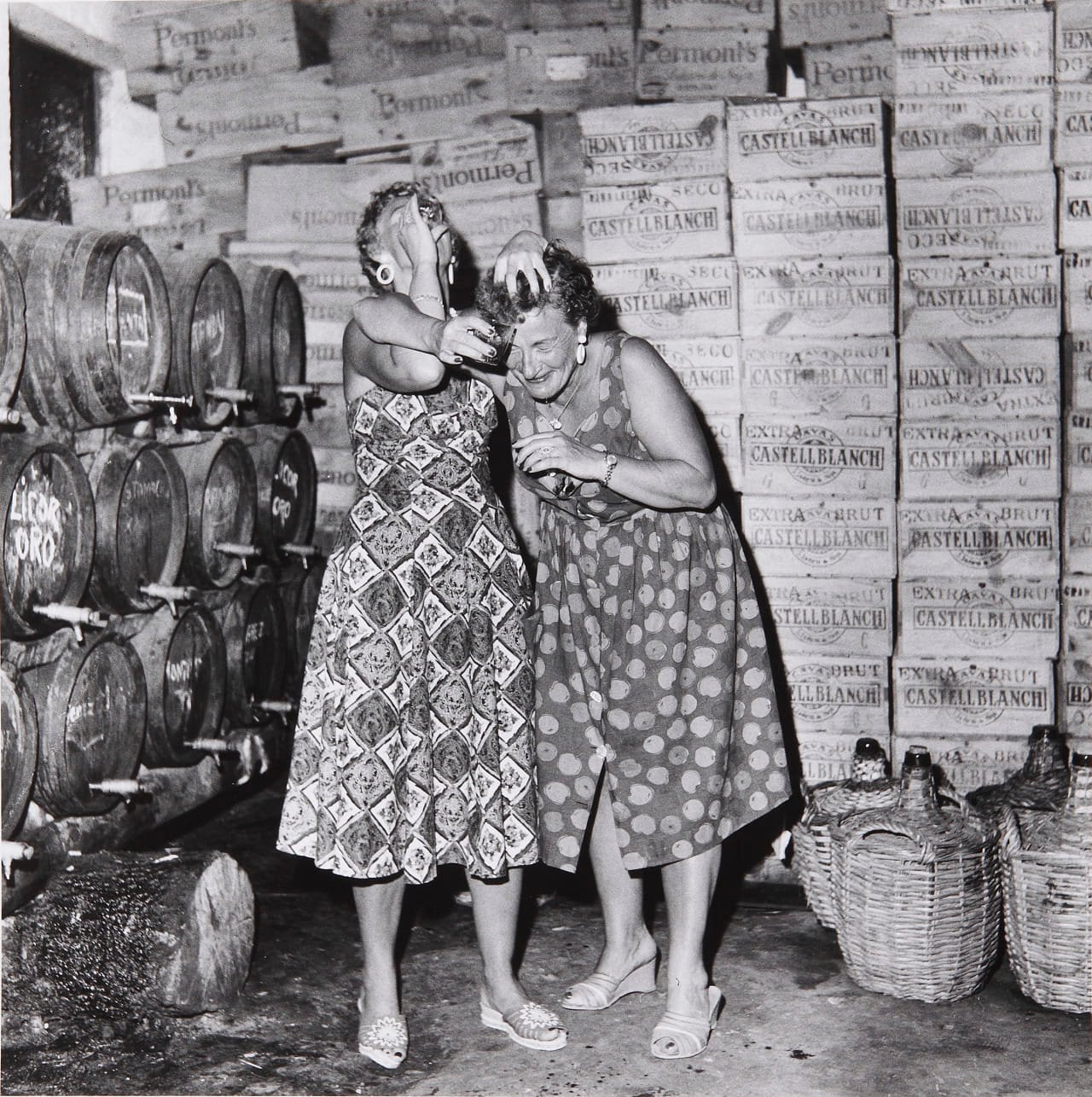
Fine. Almost festive. Almost. But this is when the slide starts to feel greased. Five weeks to Boxing Day. Whoooo! The Boxing Day carols shall ring out loud around the Boxing Day leftover casserole once again!! The most wonderful time of the year? You bet. Who knows where we’ll all be this time next year so best to Yule it up right this time like these ladies on a tasting tour of Spain, back in 1959.* Which reminds me… I often wonder what beer writers do, you know, to get the happies when they are not up to that sort of no good on junkets, out and about pub crawling or at the front door in their slippers signing off on couriered packages of samples. David J shared a bit of his reality when he posted about a trip to Fowey, Cornwall and a pub called The Lugger:

I feel this same urge to relocate to Fowey whenever I visit and it’s because of the sea. And the Lugger. But first, the sea, the sea. Well, it’s not quite the sea but the mouth of the River Fowey and it’s sheltered, calm and very swimmable.  I braved the tide and swam on Saturday. 15C water; 14C air, according to my swimming diary – I swim at least once a week in an unheated lido… It was choppy enough for me to get the fear, though, which is half the ‘fun’, especially if one of your vices is adrenaline. The river eventually was predictable and a back and forth from beach to buoy was followed by a pint at the Lugger, served by Christian Hanks, custodian of this Cornish pub. Often people think winter swimming is odd, but Christian is different and he takes his eight-year-old son.

Be odd. That’s what I say. With a h/t to Katie, if you think the political news is grim where you are, think of the life of an academic in China turning to pubs as last venues for free expression and folk trying to work on their own odd:

“I was completely stunned when he mentioned violence so bluntly,” said the 32-year-old, who was born and raised in China. “In China, you just can’t talk about the nature of a country so openly.” In recent months, “academic pubs” hosting free lectures by Chinese scholars from universities worldwide have sprung up in China’s major cities – such as Shanghai, Beijing and Guangzhou – offering a rare open space for free-flowing intellectual conversation in a country where the public sphere is shrinking as censorship tightens. These alcohol-with-academics sessions delve into a range of topics in the humanities and social sciences. They include issues deemed politically sensitive and often censored online, such as feminism, but also more innocuous subjects like social anxiety and cats in ancient Chinese paintings.

Excellent. Except for the cats bit. I have issues with cats. Well, one cat. Yah, you! I am having other issues, too. Remember when craft beer culture was fun and was worth making fun of? Having a bit of an issue with that. How to mock something that people are ditching faster than their Twex accounts? Jeff noted this in the context of big beer business cutting their craft losses:

I noticed a startling stat in a recent Beer Business Daily story describing how in one market the craft segment accounts for 41% of SKUs, but just 5% of gross profits. That’s unsustainable for retailers and large breweries. It’s different for small breweries, who make and sell beer in a specialty marketplace of local vendors. But it’s just too complex and expensive for big breweries to compete in such a market unless it represents substantial volume. Craft hasn’t grown as a share of the market in a decade, though, and big breweries now conclude it’s just not with the effort. And reasonably so.

See what’s said in there? While it hit peak almost a decade ago, at least in this unnamed US market craft has not grown as a share in a decade and accounts for 5% of the gross.** So much for 20% by 2020. That was never going to be any reality but is Plan B really stagnation at 5%? Really? Hmm… I suppose getting ditched is better than being a zombie brand like Stone:

The brewery’s stated focus is now on its successful launch of Delicious IPA multipacks and its Mexican salt and lime lager Buenaveza, a long way from the days of Arrogant Bastard IPA, which helped Stone make its mark in the burgeoning craft market in 1997.

Brrr… that’s cold. But, still, there’s a certain justice in that one. And note the interesting note at the end of this story about management at Constellation taking a slice while there’s still a slice to be taken:

The company has also trimmed its annual enterprise net sales growth forecast to between 4% and 6%, compared with 6% to 7% previously estimated, as retailers reduce stocking wine and spirits and consumers pare back spending on pricier alcoholic beverages. A large cloud looming over the company is the threat of import tariffs when Donald Trump becomes US President after 20 January.

Are you finding yourself jockeying for position in the coming tariff-based international reality, too? Not The Beer Nut who posted thoughts international at the end of last week and came up with a description of Allagash White that nails it:

What I liked most was the smoothness: it really slips back silkily in a way that encourages serial quaffing. There are no sharp edges; none of the spikes of coriander spice or citric zest that add character to its Belgian counterparts. There’s a pleasant element of candied lemon in the flavour but I got little complexity beyond that. It’s not a beer for complexity, though, being more about the feels than the taste. I understand the attraction of something which places few demands on your attention and offers no challenges to your palate. Creating that without turning out something bland is an impressive feat.

Boom. The best writing indicates the general through the examination of the particular. Boak and Bailey did just that exactly one moment after last week’s deadline*** with an examination of the life and death of one estate pub in Bristol, The Mayors Arms:

In its most recent guise as Sousta, a “Mediterranean restaurant and bar”, it intrigued us because it never seemed to have any customers. Ever. Its location, at the bottom end of a large council estate, on the river embankment, offers little passing trade. There are no other shops or hospitality outlets nearby. In fact, the only business that could really work here is a neighbourhood pub in a working class area where people drink plenty of beer.

Related news from India on the many many reasons for the failure of BrewDog to take hold there:

The BrewDog bar in Bandra West, a suburb that is home to many Bollywood stars and is known for its liberal nightlife, as well as its bar in the office district of Lower Parel, have been closed since the summer. The company’s logos have also been taken down from the locked-up properties, according to checks by the Financial Times. BrewDog now has only two bars open in India, having first set up there in 2021… The closures are also a setback to BrewDog’s plans for overseas expansion. Only last year, it announced plans to open 100 bars in India over the next decade. Chturvedi said the Mumbai closures were only a blip in BrewDog’s India plans.

Yet, they are opening their first Northern Irish pub. In a train station. To serve the travelling pubilc. Somewhat related are the thoughts in this VinePair emailed quote-fest on what makes a craft brewery’s taproom a crappy experience. This one, however, made me wonder if they’d ever been to Gritty’s:

“If a brewpub is in a touristy spot, chances are that the management knows there are different customers every day. There’s less motivation to make delicious beer if you’re not caring about enticing regular customers.”

I thought the point was attracting a regular clientel, like folk who visit often even if not everyday. Being hospitable and all. Speaking of which, how do you feel about price surges in pubs?

A pub chain has sparked fury over its decision to charge punters 1.80 extra for beers on match days. Greene King has been attacked for the “unacceptable” move with punters shelving out a staggering £8 rather than the usual £6.20 per pint at some of its outlets. The Torch pub in Wembley, London, was hit with the 29% increase after supporters paid big prices for their favourite pint to watch England’s match against Ireland.

How do I feel? How’d they like the idea of me packing a wee flask in me pocket? Why not just charge a modest entry fee for events, like when a “good” band is playing?

Note: I will miss the little red biplane.

And in Pellicle, Pete Brown provides us with a primer on malt barley along with his thoughts on the weather… that is, when he isn’t off wandering:

I love old factories like this. As I left the train just a few yards away, the complex reminded me, as maltings always do, of some fantastical half-imagined vision from a Ridley Scott film. There’s a red-brick monolith several storeys high with no windows in its main wall. White towers dwarf what, in their own right, are tall and sometimes fat corrugated iron cylinders, with gantries running up and down and round their perimeters. Something that looks like a watchtower from a World War II Prisoner of War camp. I imagine that if the day ever comes when it’s no longer needed as a maltings, the complex could be used as the location for a climactic gun battle before exploding in a fireball as the hero makes it out just in time.  

What was that about? Anyway, in health news, some sucks to suck news from the eggheads recently:

According to new research presented at The Liver Meeting, held by the American Association for the Study of Liver Diseases, beer drinkers tend to have lower-quality diets, engage in less physical activity, and are more likely to smoke cigarettes compared to those who consume wine, liquor, or a combination of alcoholic beverages… Beer-only drinkers, who were more likely to be male, younger, smokers, and low income, also reported the highest total daily caloric intake, adjusting for body weight, and the lowest level of physical activity. Previous studies have found that dietary quality declines with increasing alcohol consumption of any type, but little has been reported on the influence of specific alcoholic beverage type.

Feel like taking up baseless objections? Fill your boots. Just don’t blame me. I’m just the guy doing the cutting and pasting. Here’s the study. Read it yourself.

Performing one last 180 degree switcheroo while still speaking of the healthy stuff… do you ever wonder why your olive oil has exploded in price? The Times had a good explanation this week:

The main reason for the price hike, simply, is the weather… Europe produces 67 per cent of the world’s olive oil; the majority comes from Spain, followed by Italy, then Greece. Olive trees thrive under a hot Mediterranean sun, but if the heatwaves come too early, in spring, when the trees are still flowering, crops can be damaged. This, coupled with severe droughts for two years running in Spain, has had a dire effect. Global production of olive oil tanked in 2023, dropping from 3.39 million tonnes in 2021-22 to 2.28 million tonnes in 2023-24… An opposite problem, flooding, also affects harvests, as olive trees don’t like wet feet, and too much water promotes disease…

I don’t like wet feet either. Just sharing. Thought you’d like to know. And one final note as we are rooting for a speedy recovery for Jessica after she posted some tough news about a recent routine procedure.

There. That’s enough for this week. But if you need more, check out Boak and Bailey every Saturday and Stan going strong again each and every Monday. Then listen to Lew’s podcast (he’s queuing one up right now) and get your emailed issue of Episodes of my Pub Life by David Jesudason on the (now hardly at all) odd Fridays. And Phil Mellows is at the BritishBeerBreaks. Once a month, Will Hawkes issues his London Beer City newsletter and do sign up for Katie’s wonderful newsletterThe Gulp, too.  Ben’s Beer and Badword is out there with the all the sweary Mary! And check out the Atlantic Canada Beer Blog‘s weekly roundup. There is new reading at The Glass which is going back to being a blog. Any more? Check out the Beer Ladies Podcast. That’s quite good and they are revving up for a new year. And the BOAS podcast for the bro-ly. And the long standing Beervana podcast …except they have now stood down.  Plus We Are Beer People. The Boys Are From Märzen podcast appears suspended as does BeerEdge, too. But not Ontario’s own A Quick Beer. There is more from DaftAboutCraft‘s podcast, too.  All About Beer has podcasts and there’s also The Perfect Pour. Plus follow the venerable Full Pint podcast. And the Craft Beer Channel on Youtube.  The Moon Under Water is gone which is not surprising as the ask was $10 a month. Pete Brown’s one cost a fifth of that but only had the one post.

*From the excellent Bluesky postings of the American Association of Wine Economists (AAWE): “British tourists tasting Cava on the Costa Brava, Spain, 1959. Photo by Oriol Maspons (Spain 1928—2013).
**Jeff says “gross profits” but as profit is a net concept I understand this to mean gross revenue.
***In their monthly newsletter, for the double, they also shared this wonderful pub scene from a Friday night in Bristol: “The Green Man, a corner pub on a quiet residential street, was a particular highlight this time. There was a raffle underway and just about enough space to get a drink and find a seat. Someone won a jar of pickled onions. The booby prize was a ‘mystery shot’. There was a baby at the bar eating raffle tickets and Nacho Libre was playing silently on the TV.”

Your Weekly Beery News Updates For This Mid-November Of 2024

What a boring heading. “Couldn’t you come up with anything clever?” I hear you. Nope. All my wit, such as it is, has drained away with the recent tide of events* and I am still waiting for a top up. Retired Martin, as he often does, gave us some relief this week with a lovely photo essay of countryside walk to a village pub:

In truth, I’d no idea where Great Cransley was, only 45 minutes walk from Kettering station and Wickstead Park, a walk that rewards you with the golden stone of east Northants. A smart looking village of 305 souls whose nearest What Pub entry while the Three Cranes was closed was the (keg) Broughton WMC… and you get 4pm opening here, though as is always the way the door was actually open while I stood patiently waiting for the clock to tick.

Good news, too, for the beer book buyer as Dr Christina Wade has announced the publication of her latest:

I’m delighted to announce after seven years of research and writing FILTHY QUEENS: A HISTORY OF BEER IN IRELAND is here! Published with Nine Bean Rows, it is available for preorder now… we look at the history of beer alongside some of the biggest events in the story of Ireland. You’ll find an 18th-century courtesan who had a wicked streak of beer snobbery and early medieval monks who wrote beer reviews so terrible, any Untappd fan would feel right at home.

Yikes! A bit of harshing on the craft nerdiratti. Get your copy here. And Jeff posted an interesting essay on the effect of history’s tide on the distinction between Bavarian and Czech lager:

In a remarkable article in the New York Times immediately following the fall of Communism, reporter Steven Greenhouse identified 2,000 workers at Pilsner Urquell, a brewery roughly the size that Sierra Nevada is today. Among this giant workforce, “the advent of capitalism” will, he wrote, “probably mean tougher management, less slacking off and perhaps some layoffs, especially among the 400 administrative workers who spend much of their time doing paperwork for Prague’s central planners.” It’s hard to fathom what four hundred administrative workers would spend their days doing, though “slacking off” would seem to have been a central activity if for no other reason than there was no work to do.

I worked in Poland as an ESL teacher not long after the fall of Communism there and the drunk principal in the nearby elementary school was certainly proof enough to convince me of Jeff’s main argument – that there was little initiative or innovation under the Soviet system. Yet… I wonder if that is the whole story. Are there cultural differences beyond that between the German and Czech experience?  Does the Austrio-Hungarian empire have any lingering effects?** And if there had been no Soviet era locking time in amber… would there still be any Pilsner Urquell as we know it?

Stan shared the news of the closure of the Chippewa Falls brewing facilities of Jacob Leinenkugel Brewing Co., one of America’s oldest breweries founded in 1867, and the consolidation of operations at another nearby plant owned by parent company Molson Coors with some hard news for those employed there:

The closings will result in the loss of a total of 90 jobs – 34 in Milwaukee atnd 56 in Chippewa Falls – according to notices filed by Molson Coors on Thursday with the Wisconsin Department of Workforce Development. The layoffs at both facilities are expected to begin on Jan. 17. The Milwaukee brewery layoffs include 33 hourly employees and one salaried employee. The Chippewa Falls plant layoffs include 54 hourly employees and two salaried employees. Hourly workers at both plants are represented by local Teamsters chapters.

So… which brewery at this point is more authentic to its own roots? Pilsner Urquell or Leinenkugel? And, to ask Marx’s question, which system alienated the workers from its product, capitalism or collectivity?

Speaking of capitalism, in his most recent edition of London Beer City, Will Hawkes shared a conversation with Sam McMeekin of craft brewers Gipsy Hill on their decision to be acquired:

With the London brewing scene getting progressively smaller, it makes sense to be as big as possible, even for a company that, as Sam puts it, is “essentially debt-free.” “In theory, we could have refinanced all of our equipment, taken on a load of debt and struggled on,” he adds. “But I don’t have [enough] faith in the market [that that would be] a success.” Hence the deal with Sunrise Alliance Beverages, a group which grew out of St Peter’s Brewery in Suffolk and which now takes in Wild Beer, Curious Brewing and Portobello, the latter of which was added last month. It’s more complex than a simple takeover, Sam says: he describes it as a “partial MBO” (Management Buyout), in which Sunrise has bought all the shares but Sam still retains his chunk, “rolled into” the new company.

There is a lot of heavy lifting (parenthetically or not) in that sentence “I don’t have [enough] faith in the market [that that would be] a success.” Picking up that story and hot on the heels of recent reports of SIBA moving to adopt “independent” and ditch “craft” in the ongoing saga of the key adjective tussle (KAT), Glynn Davis applies the new approved verbage to report… things are not going well:

My own involvement with Bohem Brewery has shown that independent breweries without a decent pub estate to sell their beer through will face ongoing pressures, and sadly, there will be more failures. It’s why I sold out at a painful 80% loss. Along with many other craft breweries, Bohem has produced some excellent beer, but as an investment, these businesses can leave a sour taste in the mouth.

And building a pub estate may well require that “faith in the market” that might not necessarily be reasonable. Hmm. Not unrelatedly, Liam guided me to a news item on another approach being taken in Ireland where a number of pub owners showed some faith combined with another now familiar zing:

It is thought to be the first time that a group of Irish publicans have come together to launch their own brewing operation… The new brewery launches into a challenging market, dominated by a small number of large established brewers and brands. It also does so at a time when the cost of living remains a difficulty for many potential customers and when more drinkers are moving away from alcohol to zero-alcohol products. “I think it is a very good idea. It is probably very timely because the craft beer phase has kind of come and gone and the bottle beer and so on,” said Damian O’Reilly, lecturer in retail and services management in TU Dublin.

Phase. You were just going through a phase. You know that, right? Speaking of phase, you don’t have to get past the first paragraph to see something that takes little analysis:

An ongoing point of frustration within the contemporary American brewing industry is the vast chasm between what drinkers say they want, and what they actually buy. For example: sessionable alcohol-by-volume beers. Even though stroller dads get their Vuoris in a bunch lamenting the lack of broad availability of full-flavored, mid-ABV craft beers, the sales data suggest that they simply don’t buy those beers in meaningful volumes.

What frustration? It seems pretty obvious that if you want low alc beer you are also going to be buying less beer*** but, hey… similarly, Katie Mather may have identified the reason for all this change, may have sussed out what is really going on:

In my banking app, it tells me what I could afford to spend less on in future, and this is always a list of pubs I’ve bought pints in. It’s never told me to cut down my spending on bills, by far my largest outgoings. Quite frankly this is bullshit… pubs are still shutting down because people can’t afford to leave their homes to enjoy a little bit of leisure and all-important social time, and the official reaction is, “oh well.” 

Oh well” was also my response to the fair bit of anti- neo- prohibioscience– mumbo- jumbolian back and forth this week, both sides not making any new convincing arguments… until I read this in that august medical journal SurreyLive:

…alcohol indiscriminately impairs brain function as it is a “very weak neurotoxin” that disrupts neuron communication. Restak emphasises the importance of abstaining from alcohol past the age of 65, a time when the body naturally loses neurons more rapidly, potentially exacerbating mental decline: “It is essential to abstain from alcohol at a stage in life where preserving neurons is crucial.”

Drag. But as a bit of relief to all that… we have a wonderful and particularly deftly written**** portrait of Timothy Taylor’s Landlord by Rachel Hendry in Pellicle. Structured in parts that focus on different elements of the brewing and experience, it is both a bit impressionistic as well as, well, expository:

Once I am sat, I slowly rotate the glass clockwise, and then anticlockwise. The colours change with the movement—chestnut glints into amber, glints into cinnamon. I take a sip and I am greeted with thick slices of toast generously spread with a whisky marmalade, the sweet squidge of malt loaf, the reassurance of blood oranges in the depths of winter. The tension in my shoulders begins to dissolve. I can see why so many view this pint as a friend. I have taken it in my hand and it has placed an arm around me in return.

Lovely. I particularly like the concise treatments of various sorts of men. And another warming photo essay, too. This should fall in the beer flavoured beer filing cabinet folder neatly so you can bring it out and point at it when someone says beer flavoured beer is a meaningless concept.

And finally, before the links, we note the passing of Beth Demmons’ Prohibitchin’ which regularly was referenced around these parts. She explained why:

I feel like it worked, for a while. But over time, things have changed. DEI initiatives are getting slashed across the country, from academia to private business. Promises of change are quietly fading into distant memory. People—mostly women and non-binary folks, some even featured on these pages—have faced burnout, changed careers, or just moved on to different things. People kept reading Prohibitchin’, but over the past four years, fewer people have engaged, or even really seemed to care. I’ve felt like I was shouting into the void, or perhaps just preaching to the choir.

Sad stuff, especially coming so soon after the suspension of The Share as noted last week.

For more beery news check out Boak and Bailey every Saturday and Stan going strong again each and every Monday. Then listen to Lew’s podcast (maybe he’ll do one again) and get your emailed issue of Episodes of my Pub Life by David Jesudason on the (now hardly at all) odd Fridays. And Phil Mellows is at the BritishBeerBreaks. Once a month, Will Hawkes issues his London Beer City newsletter and do sign up for Katie’s wonderful newsletterThe Gulp, too.  Ben’s Beer and Badword is out there with the sweary Mary! And check out the Atlantic Canada Beer Blog‘s weekly roundup. There is new reading at The Glass which is going back to being a blog. Any more? Check out the Beer Ladies Podcast. That’s quite good and they are revving up for a new year. And the BOAS podcast for the bro-ly. And the long standing Beervana podcast …except they have now stood down.  Plus We Are Beer People. The Boys Are From Märzen podcast appears suspended as does BeerEdge, too. But not Ontario’s own A Quick Beer. There is more from DaftAboutCraft‘s podcast, too.  All About Beer has podcasts and there’s also The Perfect Pour. Plus follow the venerable Full Pint podcast. And the Craft Beer Channel on Youtube.  The Moon Under Water is gone which is not surprising as the ask was $10 a month. Pete Brown’s one cost a fifth of that but only had the one post.

*As per usual, B+B have something welcome and wise to say about where we are at, from last Saturday’s footnotes on Patreon: “The elephant in the room is the US election which is definitely big news. Our general approach to unsettling events (the pandemic, war in Ukraine, and so on) has been to keep on posting through them more or less as usual. As a wise person once observed: “You don’t need to publicly condemn or condone every event, every announcement, every story. You’re not an embassy.” Don’t think we’re not following the news, though, or that we not concerned about what’s going on. It’s just that a beer blog, and our various silly social media accounts, don’t seem like particularly useful tools for addressing any of it. The best thing we can do is provide an opportunity to think about something else for a few minutes every now and then.
**A question I ask myself at least once a day in relation to something or other.
***‘Cause who doesn’t love to drain a 12 pack of thick soda pop? See also the shocking concept that high alc low price sells. “Breaking!
****And a particularly good example of how this publication has succeeded while GBH and others have packed it in.

Your Bootastic Hell’s Gates Open Up Today Halloweeny Edition Of The Beery News Notes

Today is the second scariest day in the next week or so. Number two. Today, the undead walk the earth! But by next Wednesday, Americans may have elected the Nazis. I sure hope some of that polling data is wrong. Anyway, there is a time and place for everything and this day and this week’s focus is all about the lesser of those two evils – the celebration of Lords Satan’s reach into your verrrry soul and the tenuous grasp of all existence, of all of reality itself. Let next week take care of next week.

Still, good to see one of the candidates has some normal habits, some of which like drinkin’ and swearin’ were on display over beers at a stop with the Governor of Michigan at a bar on the campaign trail:

‘We need to move ground among men,’ she can be heard saying in a low voice to Whitmer, clearly not thinking that anyone was privy to their conversation.  She then looked up abruptly and cut off the private chat. ‘Oh, we have microphones and listening to everything,’ a surprised Harris says. ‘I didn’t realize that.’ ‘Okay… you’ll bleep my F words hopefully,’ Whitmer joked. ‘We just told all the family secrets, s***,’ Harris replies before her busting out into a loud laugh.

Giving equal time, did you hear about the Respublican running for office in Wisconsin?  Traveling GOP U.S. Senate candidate Eric Hovde (AKA the “California banker”) wants to ban beer sales and it has been picked up in his opponent’s political ads. Rolling Stone covered the story a few months ago:

…if we just decriminalize [marijuana]? Fine. Nobody’s going to go to jail. No one’s going to get arrested for it. That’s your self-determination, but you’re not going to turn it into an enterprise. Frankly, it should have happened with alcohol,” Hovde says in the audio. “I mean look at — alcohol has a lot of negative byproducts. If somebody wanted to distill it, drink it. Fine, go ahead…

He also apparently bought a tavern to tear it down. Booo…. Now… getting serious, Jessica Mason has reported on concerns that the language related to the pricing of beer is posing challenges:

One of the issues this kind of research presents is that if the nation is constantly sold beer on “lowest prices” translating as “best” then it will not consider beers as different or with some deserving of higher price points than others. Describing how crucial pricing is, Sussex-based Burning Sky founder and head brewer Mark Tranter told db: “All overheads continue to rise but it’s impossible to put our prices up in line with these, without running the risk of pricing ourselves out of the market and or alienating people.” 

That sounds a bit like being clear about value is a bit of a problem – unless there was a way to factually explain the value to be found in an more expensive drink. Well explained value is always good. Consider how Tennent’s is holding its own in its home market due to its accepted inherent value:

Changes in UK alcohol duties have led to some lager brands, including Carlsberg and Grolsch, being reformulated to a lower 3.4 per cent ABV, but Findlay said that would not be happening with the core Tennent’s product, which has an ABV of 4 per cent and accounts for more than half of the lager segment in Scotland. “Tennent’s is such a strong brand that to reformulate it or reduce the ABV would be a no,” he stressed. “We have lower ABV variants of Tennent’s available, so there are no plans and no need to change what is an astonishingly successful brand.”

Hmm… somewhat relatedly Matty C. shared on the absense of critical writing in beer, something that that is has been one of my interests for, well, decades now given it is only through critical thought that value is established:

This week I’ve been thinking about the lack of criticism in beer writing. It’s something I’ve thought about a lot over the years, because beer and pub reviewing doesn’t really exist in any meaningful way compared to how it does in wine or food writing. I consider that there are many reasons why this is the case, the main one being a general lack of consideration from mainstream (or, indeed, niche) media outlets for beer and pubs. But also it’s because beer drinkers are a different beast to most wine drinkers. There’s a certain level of—dare I say—zealotism, that means if anyone decides to log on and pan a beer, they can almost certainly expect some flack.

This is great. He has pushed this out into a great open conversation and I have to say that it has caused me a lot of thinking – something I like to avoid most weeks. I’ve actually written this week’s notes twice to cope with my inner termoil. Why?  In part, that word – zealotism. Zeal seems to sit one step down the stairs from enthusiasm and you know what we think of the enthused. Why?  Because zeal places countervaling pressure on value. It distracts one from reality. So how to respond?

First, I will try to be brief but I see three distinct factors as the prime drivers of this gaping chasm between reality and zeal in beer writing: (i) objectivity denial; (i) unreliable claims to expertise; and (iii) real marketplace consequences. Starting with objectivity denial, have a look at this passage in one of Boak and Bailey’s recent (and always fabulous) Patreon footnotes to their Saturday roundups:

…the two Grodziskies we drank this week were more interesting than enjoyable. Both were also adulterated with things like fruit and tea, making it hard to get a sense of the base flavour…  We’ve tended to avoid the phrase ‘beer-flavoured beer’ and similar for the reasons Jeff sets out: the idea of what ‘beer flavoured’ is totally subjective.

It appears they and I are struggling with similar thoughts* as after I started sketching this out on Monday, I realized they themselves had posted their own cogitations on this whole thing – though I cannot agree with their interim assessment that it is just a pint and “we do not need that intel” – especially given the annual investment a beer fan may make. It’s not about the pint but all the pints one buys. In a year. In a life. As a result, I believe it is not correct to say that good beer can be, should be lost in an ocean of subjectivity. One cannot determine value if everything is subjective. No, there are and should be measuring sticks which can be relied upon. There must be the intel.

That being said, who would set these standards. Who measures the sticks? Beer experts? Problem: there are no beer experts in that blanket general sense. Sure, there are real experts in specific areas of beer and brewing with the greater expertise existing in narrower areas. Like any study. And a number people certainly know much more than many others. No question. But claims of expertise in that general sense that we see eminating from some of the merely eager is a common problem with beer writing.  Can we place our trust with zealots? One shouldn’t. The resulting status scrambling** to be identified as that authoritative person may be vigourous, vicious and even entertaining but all in all it’s hardly an academic process. And it creates a fog around the question of value.

Perhaps the saddest reality is that the rejection of standards and the weakening claims of expertise have left an imbalance of power. Perhaps ironically, beer writers lack sufficient security to stand up against pressures from the trade.  In the very comments under MC’s post, Gary raised this very point:

The difficulty is few want to risk offending people in the industry, as future access to the brewery may be limited and awkwardness can arise when you meet them at events.

And in addition to event attendence, in order to get ahead some beer writers are also expected to show up time after time as supportive boosters – as compliant judges or even consultants. We even sometimes see the trade described as a “we”*** – which can leave one left with the impression that one gets the inside view of the trade by being effectively a branch of the trade. None of which is wrong if, well, you don’t want to be warned off the bad beer, don’t want to learn about relative value but are only looking for something to read as light entertainment. Which it often all that you get. Which is fine. Consequence free and affirming pleasure writing for a happy sometimes tipsy crowd. All fine.

But we have to be honest – that is the opposite of a critical discourse. It can deter journalistic inquiry and even triggers  stronger response: “…you can’t write that, those are real people with real jobs!” or “you shouldn’t be writing about beer” or that stumblefuck of a non-thought “you are just a old curmugeon!” It even justifies the recently received assessment I’ve heard from one writer about being told in a formal setting that DEI isn’t a business imperative for breweries, just part of culture wars. And of course this is all in addition to that old chestnut of total alcohol harm denialism from the anti-science set.**** As a direct result of those factors, not only has the opportunity to argue in favour of value been lost, I would also argue that it is one key reason there is no reliable concept of “fine beer” – like we have in wine or spirits. A critical discourse is fundamental to anything deemed fine. But this trade? Won’t have it. Would you want it? I do.

Thankfully, there is a actual critical discourse out there even if the jockeying beer writers of a certain scrabbling sort don’t engage with it. Think of The Beer Nut reviewing can after can, glass after glass excellently so you don’t have to… unless you want to. He has no problem being honest about value:

My recent complaint that the Teeling Distillery giftshop was overcharging for the small cans of DOT collaboration beers at €5.50 has been heeded. The latest addition to the series was €6: For Wheats Sake! 

Think also of Retired Martin, Ron and others travelling to pub after pub taking photos and making observations with his exceptionally keen eye so you don’t have to.  This week Boak and Bailey wrote in generous terms on the wonders of this sort of blogging… over, you know, on their Substack:

One thing blogging is better at than social media is linking. Old skool blogging thrived on the practice of generous linking. Sometimes, it was about search engine optimisation (SEO) – which is no bad thing when it helps good stuff rise to the top of search results. But mostly it gave readers a chain to follow. We used to spend ages following links from one blog post to another when we were first learning about beer. A sort of Choose Your Own Adventure approach to study. Blogs are also more stable and more independent. They’re less likely to suffer from an egotistical investor buying up, damaging, or shutting down a platform. With a blog, you have your own space to do your own thing.

Viva blogs! Viva Viva!!!  And there are a few dogged shapers of public opinion working their way into the general media who rise above as well as other sorts of independent voices with critical views are out there. Consider the David Bailey cartoons in Pellicle which have a cheery habit of undermining supposed established principles.***** Similarly, in beer history writing, we also find people digging and digging into the past pulling out the correcting facts and illuminating stories which both add depth and redirection to good beer culture. This week Liam wrote a post about the 1913 theft of pewter tankards from Dublin’s pubs for melting down and sale:

… this was a relatively common practice but it is interesting to see the ‘modus operandi’ here in print. So, it appears that the theft of drinkware from pubs isn’t a new phenomena – not that we really thought it was – although the reasons for said theft appears to have changed through the years to one of collecting.  Although there is no mention of where the ladies mentioned in the report hid their soon-to-be-swapped tumblers and stolen tankards, it is possible they were tucked neatly into the folds of a dress but it is probably more likely a bag of some description was used.

See also Gary’s extensive posts on tavern culture in Quebec or Canadian brewing during the Second World War. No one will pay for that sort or writing. But no editor will also smooth or dilute it either.

These things lead to other helpful insertions and inveiglings .Last week we saw Katie Mather have a deftly written argument published in The Guardian. She wrote in support of the decision by the UK’s small brewers’ organization SIBA to ditch “craft” in favour of “independent” to help buyer understand what is in their glass:

Beer fans are starting to realise that their favourite breweries might not be the paragons of independence and system-subversion they once thought they were, and it’s leaving an unpleasant taste. Now that many of these breweries have become part of large corporate entities, the idea of standing against the man, colourful can in hand, is a ridiculous one. It’s sowing seeds of doubt across the whole industry, too – the word “craft” never meant anything specific, and so it can be used to market beers that aren’t “craft” in any understanding of the term.

And she expanded on this in The Gulp, her newsletter: “We all got bored of defining craft a decade ago. But just because something is boring, doesn’t mean it isn’t important.” I don’t really agree with any of that – but really I do like to have the well-argued ideas bouncing around in my brain. And speaking of a knowledgable grasp of specifics versus what is in my brain, Stan’s Hop Queries hit the inbox just after last week’s press deadline and it is full of detailed goodness around the king of all adjuncts, including this about how Kiren invested “dip hopping”:

Basically, they made a slurry by steeping hops for about an hour at temperatures (150-170° F) lower than found in conventional whirlpooling, then added the slurry into wort before pitching yeast. Kirin learned that the resulting beers contained as much linalool as dry hopped beers but less myrcene (which itself may mask fruity aromas associated with linalool and other oxygenated compounds). This also reduced production of 2M3MB (an onion-like off flavor)… For brewers, the appeal is pretty simply: less isomerization than with whirlpooling and greater retention of some essential oil for biotransformation. In addition, drinkers have said they perceive a difference, a positive difference, in dip-hopped beer aroma and flavor. 

Me? No, not really. But sorta. You know… but how else are you going to learn? Exactly. And expertise is not just about having a deep understanding one one topic but also a view on the intersections of a number of areas. For example, The Sunday Times had an interesting story on the disappearance of Britain’s pubs called “The Black Bull” based on some excellent investigative reporting of the role of Big App:

Another Black Bull is the historic community-owned pub in Gartmore in the Stirlingshire Trossachs. Its name makes sense: this is an old drovers’ inn. There has been a pub on the site since at least 1740. It too has lost its Facebook, and the thousands of connections the social media giant brings. Wilson believes Facebook removed the page because of a row involving a New Zealand company called Black Bull Group Limited. And this, The Sunday Times can reveal, is certainly the reason why at least one Black Bull pub in England was told its Facebook page was being shut down. This New Zealand company two years ago won a trademark case against another business which launched a website called Blackbull Markets similar to its own. The firm’s complaint, heard by the World Intellectual Property Organisation, did not feature British pubs.

Look at that density of ideas. Global law versus the wee pub, private international social media control versus local community heritage – all coming into conflict. Fabulous.  And speaking of fabulous, here’s one last story this week. It’s from Chris Drosner in Milwaukee Magazine, his love letter to dive bars:

I love settling onto the stool, hanging my jacket on the hook under the bar. The sound of pool balls dropping after the quarters go in. The shake of the day. The neon glow. Overhearing bad takes about the packers. Seeing ice in a beer down the bar – not my thing, but you do you. Someone hitting a pull tab big enough to pocket the cash. Being the tiebreaker in strangers’ friendly argument. 

I particularly liked his list of the key signs you’re in a dive bar including: (i) “someone lives upstairs”; (ii) “unclear if it’s open, or how to get in” and (iii) “sink outside the bathroom.” Beautiful.

All of which is to say there is actual critical writing out there but it is not often found in that certain circle of trade friendly and, dare I say, commodity writing that has gotten a lot of attention. Thankfully, it role may be fading as part of the bubble burst of zealot culture. At least in beer even if not in rest of the world, like the geo-political world. Maybe. Well, let’s see how that pans out next Tuesday evening.

That’s it. That’s a lot. And there’s a lot of footnotery still to come down there below. Neatened and nicened any number of times over the more than 45 edits of this week’s post. For more beery news check out Boak and Bailey every Saturday and Stan going strong again each and every Monday. Then listen to Lew’s podcast (if he ever does one) and get your emailed issue of Episodes of my Pub Life by David Jesudason on the (now very) odd Fridays. And Phil Mellows is at the BritishBeerBreaks. Once a month, Will Hawkes issues his London Beer City newsletter and do sign up for Katie’s wonderful newsletterThe Gulp, too. Ben’s Beer and Badword is out there with the sweary Mary! And check out the Atlantic Canada Beer Blog‘s weekly roundup. There is new reading at The Glass which is going back to being a blog. Any more? Check out the Beer Ladies Podcast. That’s quite good and they are revving up for a new year. And the BOAS podcast for the bro-ly. And the long standing Beervana podcast …except they have now stood down.  Plus We Are Beer People. The Boys Are From Märzen podcast appears suspended as does BeerEdge, too. But not Ontario’s own A Quick Beer. There is more from DaftAboutCraft‘s podcast, too.  All About Beer has podcasts and there’s also The Perfect Pour. Plus follow the venerable Full Pint podcast. And the Craft Beer Channel on Youtube.  The Moon Under Water is gone which is not surprising as the ask was $10 a month. Pete Brown’s one cost a fifth of that but only had the one post.

*And that to me is a contradictory set of statements even if understandably so. In the first, there is a desire for the standard base beer to then, one assumes, compare with the ideal standard of an unadulterated Grodziskie, a presumably identifiable fact. In the second, the existence of standards is rejected. There can’t be a dependable body of knowledge that spawns experts at the same time as you have a totally subjective subject matter. Thankfully, I am reading a bit of Smil these days which may explain where we are. He describes how the quality of information received though individual perception is not in the control of those doing the perceiving but also that it does follow reliable patterns. Understanding those patterns can draw us back to a greater sense of objectivity by removing our natural tendencies to clarify the equation.  As a result, as I understand it, reasonably objective assessment of beer is possible even if it is surpressed. But just a minute.  Isn’t that itself a smarty pants faux expertise claim? Am I the zealot? Well, I have always enjoyed the sort of long long essays that argue that personal persception is deeply flawed ever since I took courses from Canada’s conservative Anglican philosopher George Grant (a chummy sports sideline watcher, Ten Penny drinking, ebullient ciggie smoking presence of my college days.) Around the same time I was reading liberal Catholic Ivan Ilych as well as atheist mathematician Bertrand Russell before I moved through my work then family into eastern North American Indigenous writings as well as other perspectives. They all teach that personal subjectivity and even institutuional authority are deeply unreliable. They also proposed various competing objective constructs that we can rely upon as footholds in any subject matter. Testing and contesting the application of those constructs is what critical analysis is all about. 
**How did we get here? How did the blandification of beery expertise arise? In the beginning, you had the established authoritative few who wandered in a primordial shallow end unaware. Then, new voices arouse who started asking questions, on blogs in zines, much to the irritation of those who will never be bettered. And, about a decade ago, the dead end was entered as good bloggy writing was pushed a bit aside in favour of the hunt for paid writing. (We were all going to be published authors!!) And then, rather than fostering a peer reviewed discussion of relative merits of contrasting views, we have the unending awards circuit populated by oddly familiar judges handing out statuettes for BOBs like Halloween candy to bolster CVs and bios. (We’re all going to be award winning published authors!!) Circles of backpatting by the accepted then boost each other to take up all the available chairs and even oxygen in the room. (We merry few are all going to be well paid award winning published authors!!) But now… now with the retracting good beer marketplace those less endowed chairs have become more musical as the opportunities and the payouts shrink. Breaking: closed access newsletter subsciptions did not save the day. This is good and healthy. Be loud and proud.
***Like this comment on BlueSky in response to MC’s post: “Perhaps there is something like: all attention for beer in writing should be mostly positive, or we will lose even more fans. With the beer market on a general recline, we want to make more people enthusiastic, rather than pinpointing flaws.” Who is this “we”? And, really, who wants to be involved with any interest that is just a glob of semi-smug uninformed fans? Apparently not the new satistied than you very much lager lovers. Yet… “We Are Beer“? Really ?!? FFS.
****In addition to all the flawed, gratuitous and possibly even actionably negligent opinions on alcohol and health we are subject to from the unknowing on a regular basis, I always come back to the emailed dingbattery shared via email by one prominent beer writer about 15 years ago on the topic of drunk driving: “As much as I am against careless driving caused by drinking, smoking, the application of eye make-up, over-tiredness, cell phone conversations or the accidental spilling of tomato sauce off the veal parmigiana sandwich being scarfered whilst at the wheel, I have no wish to be associated with anything ending in “…ADD,” Alan. Bad enough that the loonies at MADD have co-opted the anti-drunk driving position to the degree that they are a force behind such things as the lowering of the legal limit — you can now have your car taken from you at .05…. which I think is quite extreme — and interlocks for all, worse still to be associated with them in any way, shape or form.” 
*****Thanksfully without hallucinogenic recourse to cats.

The Beery News Notes For – What – Another “Red Sox Suck” Season?

It’s hard being a fan. One of the reasons I am not a big booster for this or that drinks category is I have already invested heavily in terms of emotes in other areas of life. The Pellicle-run Fantasy Premier League surprised me with its grip last season. Plus, as you know, there’s all that gardening stuff that I tend to tend to. But those Red Sox. My team. Mine. They have won 4 World Series in the first quarter of this century but now are mid-pack grinders this decade. There’s little chance they get to the playoffs but they are irritatingly near the chance to… maybe to… couple possibly…  Oh well. But even before all of those obsessions, all those fanboy obsessions… there is good food. Making. Eating. So happy was I to read Liam‘s tweet about the sauce above:

An ale and anchovy sauce recipe for steak written by Thomas Gray in a copy of William Verrall’s Complete System of Cookery – via Penguin’s Recipes from the White Hart Inn.

That’s a book from 1759 as I understand it. Imagine living in a time when membership in a fan base of mid-pack grinders was not even possible. Except, you know maybe if you lived in one of the smaller player in the Seven Years War. Perhaps under the rule of Augustus III of Poland. Anyway, anchovies and ale… anchovies and ale.

Back to a semblance of a plot, there was a good story in Blog TO checking out the prices in Ontario’s newly licensed corner stores. It is a little spoken of aspect of the retail booze trade in Ontario that not only are prices stable because of the massive monolithic twins, the LCBO and TBS – but those prices are standard in every store province-wide,  no matter how distant and expensive the shipping costs. Not so in the 7 am to 11 pm new world order. Not that I would buy one – but a 12 pack of White Claw is 30% higher in corner stores compared to TBS retail. Sounds like that one mistake can easily turn into two for the unwary.

Speaking of prices and price inputs, Gary has a great series going on the Canadian brewing trade in WW2 and this week posted this great bit of tabular information detailing all materials used in brewing production in 1944 and 1945. By reverse engineering his Google image search, I found the same record at a Government of Canada site and saved it for perusal. Just look at page 13!

“Grandpa? What was the ratio of steam, diesel and electric power used in Canada’s wartime brewing as part of the war effort against the Nazis?” “Well, little Jimmy, let’s see…”

Excellent stuff. Speaking of which, Katie Mather has been out and about – especially on the Isle of Man – and has sent out a portrait of a favourite pub there, the The Woodbourne Hotel:

This snug in the centre of the building feels like an Edwardian train carriage, everyone packed in together amicably, its little booth seats overlooked by cartoons and paintings that know the secrets of this town, and well-used hand pulls that serve Woodbourne Street’s locals the beer they need to do some much-needed gossiping. We weren’t staying in the Gent’s Room though. It’s too small, and we were too noisy. I was led further down the corridor to the back bar, where somehow we’d multiplied into a rowdy bunch of 12. Basic white walls and a well-stocked bar on first glance became signed photographs of TT racers and etched glass windows. It took my eyes a little time to adjust from the burnished glory of the Gent’s Room, but once I could see it for the perfect little boozer that it was, I was at home.

By the way, Katie is offering self-editing lessons.  Yes, yes. I know. I know. I KNOW!!!

In a year where much of the beer trade news is not necessarily positive, we have also heard that a lot of men spend a lot of time thinking about the Roman Empire. Curiosity is good. Not my thing given all those other things – except, you know, all that Christ on the cross stuff – but Ray of B+B has admitted he has joined the legions and asked some questions this week:

After visiting Roman ruins in Colchester and the City of London in early August I found myself frustrated at my lack of solid knowledge about Rome. So, I decided to do my homework. Fortunately, Mary Beard’s 2015 book SPQR offers a relatively concise, extremely clearly-expressed history of Ancient Rome that even I could follow. The Kingdom, the Republic and the Empire made sense, and I understood for the first time which emperor followed which. With my beer blogging hat on, though, the section that really grabbed me was about the decor of a bar in the port of Ostia in the 2nd century CE (formerly AD)…

Back to the now, Eoghan shared some shocking news on the state of Belgian beer this week:

“…outside Europe the export [of Belgian beer] declined by as much as 22.2%” IN ONE YEAR A stat (from the Belgian Brewers Federation) to really set the alarm bells going about the future of Belgian beer. A fairly telling quote, in the same report: “In the past, Belgian brewers were able to compensate this decline largely through export, but last year, for the first time in history, export declined by nearly 7.5%.” Belgian beer’s safety net has some pretty large holes in it…”

Long suffering readers would recall that 15 to 20 years ago, driving distances to find Belgian beers in the northeastern part of the United States was a bit part of one’s stash maintenance. Seems like a third of a lifetime ago… oh… it was. To quote the lads back in Rome sic transit gloria cervisiārum… as Jeff discussed last week:

“Craft beer” is a conceptual cul de sac. We started using it with good intentions, but with a naïveté about how brewing works and how markets function. It now causes more trouble than it’s worth.

In VinePair, David Infante took it a step further and argued that just as craft it no longer relevant as a concept, it isn’t really relevant as a substance:

With the segment struggling to shore up slipping sales figures in the face of increased competition from other categories and shifting preferences from American drinkers, craft breweries have been uncoupling brands from the brewhouses with which they were once synonymous, shedding overhead costs and further muddying what makes a craft beer craft.

Jon Chesto of The Boston Globe wrote a fresh take on the craft shake out that is a bit more visceral in tone, sharing the excellent term “slusheteria” for the craft brewers who chase the tail of other targets. The quitters one might say reading between the lines. Or are they just practical realists racing away from the crushing alternative?  The Chesto story’s punchline, however, is saved for Sam Hendler of Jack’s Abby in Framingham who takes an optimistic approach to the reality of short term shakeouts:

Hendler said many brewers built larger operations than they needed with the anticipation that double-digit sales growth would continue well into the future. Now the industry has far more production capacity than it needs. “We are investing very heavily in craft beer and believe in its long-term future. This isn’t a ‘sky falling’ scenario,” Hendler said. “There might be a challenging period that we’re going to have to navigate through but we see a really bright future for those who figure out how to navigate that successfully.”

Stan also had his own thoughts about the idea that the small and local brewer is going to way of the dodo. But he was heading out the door and just said he’s “…not prepared to abandon the thought embracing efficiency means abandoning inefficiency altogether.” Just strikes me that this sort of trend is an economic reality – but one borne of the pretense that there was something once upon a time called craft that stood there separate and distinct, between microbrewing and today. I dunno. It’s been slipping away for a long long time for this to be news. The glitter. The kettle sours. The identi-haze. But does that necessarily lead inevitably to the horrors of the slusheteria? I am encouraged by Hendler that it does not.

Speaking of slipping further into the sub-standard, MolsonCoors is ditching inclusion in preference for old school capitalist exclusion according to TDB:

…the business would be ending its DEI-based training for its staff members, claiming that it has been “completed”. According to reports, future training initiatives at Molson Coors will now undergo an audit to ensure that they are all focused on the company’s “key business objectives.” In addition to this, Molson Coors is renaming its “employee resource groups” to call them “business resource groups” in a bid to illustrate how the company is focused on “business objectives, consumer dynamics and career development”. Molson Coors also highlighted how its future charitable endeavours will now solely support “hometown communities” aligning to its “core business goals”.

Interesting, too, is how a story can be written about celebrity sports guys building a beer brand by leveraging the excess capacity of Founders Brewing without mentioning the whole bigotty discriminatory scandals thing:

Garage Beer is a fun example of small brand, going big, and making moves quickly. Their connections to two of the NFL’s biggest personalities and even an indirect connection to Taylor Swift make it an extra fascinating story to follow. But beer isn’t sold on podcasts or YouTube, it’s sold in stores and needs to flow through the complex three tier system to reach a national audience. Aligning with Founders Brewing for production and potentially distribution alignment has the ability to execute the hurry-up offense that Garage Beer will need to march across the country.

What’s that? Is it white-white-washing? Dunno but apparently, the inclusion blip has blopped and some want to go back to the old ways. Remember the old ways? Last Friday, David Jesudason published another story of racism in the UK pub trade, this  that 1980s club entertainer Alex Samos faced and pushed back against:

…the club wanted Alex to leave the premises when he arrived and his agent George Fisher was told Alex needed to be replaced because of his colour. This time the club “won” and Alex was barred for not being white. He took legal action against the club and, in a case backed by the Commission for Racial Equality and Equity, won £500 (£1,500 in 2024) compensation for injured feelings and loss of earnings in August 1985.  I hope this would stamp out discrimination by clubs against coloured performers,” Alex told the press at the time. “I thought it was an affront to my dignity. I was outraged.” Club secretary Michael Riordan confirmed none of the 500 members were non-white but feebly retorted that “no coloured people had applied to join”.

Finally and to end on a happier note, Pellicle‘s feature this week was by Martin Flynn on the  Donzoko Brewing Company, a name which I think Augustus III himself might approve if only for having had also to deal with the Austrians but in a slightly different context:

Following calls in pidgin German and some online bids, not long after the search began Reece found himself in Vienna, where gleaming copper brewing vessels and 13 fermentation tanks awaited him. As things transpired, the whole ensemble would spend two days outside on a city centre street, but, somehow, it miraculously remained unharmed and still in one piece. Unfortunately, Reece’s finances were similarly static. A hurried call from the auction house revealed that, for reasons unknown, his funds had been blocked by the UK’s Financial Crimes Authority. “I put the phone down and had a panic attack,” he says. “The head of the auction house was literally walking after me in Vienna, shouting at me.

Heavens! Steer clear of Vienna, that’s what I say. Every. Time. (Did I mention I know a man in Vienna?) Well, we will leave it at that for now. Busy week. Had to retrieve a cat from Springfield… as one does. Until next week for more beery news, check out Boak and Bailey every Saturday and see if Stan cheats on his declared autumnal break on Mondays. Then listen to Lew’s podcast and get your emailed issue of Episodes of my Pub Life by David Jesudason on the odd Fridays. And Phil Mellows is at the BritishBeerBreaks. Once a month, Will Hawkes issues his London Beer City newsletter and do sign up for Katie’s wonderful newsletterThe Gulp, too. Ben’s Beer and Badword is thereback with the sweary Mary! And check out the Atlantic Canada Beer Blog‘s weekly roundup. There is new reading at The Glass which is going back to being a blog. Any more? Check out the Beer Ladies Podcast. That’s quite good. And the BOAS podcast for the bro-ly. And the long standing Beervana podcast …except they have now stood down.  Plus We Are Beer People. The Boys Are From Märzen podcast appears suspended as does BeerEdge, too. But not Ontario’s own A Quick Beer. There is more from DaftAboutCraft‘s podcast, too.  All About Beer has podcasts and there’s also The Perfect Pour. Plus follow the venerable Full Pint podcast. And the Craft Beer Channel on Youtube.  The Moon Under Water is gone which is not surprising as the ask was $10 a month. Pete Brown’s costs a fifth of that but is writing for 47 readers over there.

*Me, I’m all about the social medias. Facebook still in first (given especially as it is focused on my 300 closest friends and family) then we have BlueSky (174) rising up to maybe… probably… likely pass Mastodon (933) in value… then the seemingly doomed trashy Twex (4,460) hovering somewhere well above my largely ignored Instagram (160), crap Threads (52) with Substack Notes (1) really dragging up the rear.

The Mid-August 2024 “No, You’re The One Dreaming Of Sweater Weather” Beery News Notes

Great. Stan took this week off. And probably next week too. He may hover in my mind like the absentee desk editor like I mentioned a few weeks ago. But he also has a nickname, too: cheat sheet. Stan “The Cheat Sheet” Hieronymus. Yup. See, come Monday when I can’t think of anything to go look for in the world of beer to think about, I can go see what Stan has been thinking about first. He’s a bit like that nice smart left handed kid in grade 11 math class with really good posture that I sat one row back of and one seat over to the right. Gave me a good view. Made tests just a bit easier.

By the way, there is little beer related in that photo up there. Took the image Monday evening looking due south, down over central New York State. A pinhole sunset catching the anvil cloud from below. Right about in the middle of that horizon is Oswego, NY.  On still days in winter, you can see the plume rising from Nine Mile Point Nuclear. Also, home of Rudy’s. Where you can skip stones and drink Genny Cream Ale.

Did someone mention beer?  Starting hereabout, as we face almost 4,000 new beer retailers in these parts in a few weeks, Ontario’s public broadcaster TVO published a great piece by Matt Gurney about the shock of the new he has experienced in the last few years of deregulation of the provincial booze market, with a particular focus on that one odd rule that allows 7-Eleven to qualify as a restaurant:

Seeing someone drinking in a 7-Eleven or walking out of my local variety store with a bottle of wine will probably feel exactly the way seeing people openly smoking cannabis felt like for the first few years after legalization. I have a specific memory of standing at an intersection, waiting for a light so I could cross, and noticing two young men standing on the corner passing a joint back and forth. I thought to myself, huh, that’s unusually brazen. And then, seconds later, my brain caught up with reality: it would have been brazen a few years earlier, but that day, it was simply two law-abiding citizens engaging in a legal activity in public. 

On undoubtedly similar sorts of offerings, Doug Velky of Revolution Brewing in his newsletter Beer Crunchers, unpacks how craft has turned full circle with craft’s adoption of “cold” in the race to make light generic lagers:

…we also recognized that Cold Time, whose model focuses more on volume than margins, would require broader adoption than just our loyal Revolution customers to ever be considered a success. To achieve this greater scale, early investments would be crucial to get Cold Time into new places to find audiences who don’t currently think of themselves as craft beer fans, but are very open to a great, locally made lager.

Volume. Hmm. Disclosure. I’ve been buying Ice Cold Beer from Toronto’s Left Field Brewing for at least three years so there is no news here. But that branding had at least a level of self-parody in the mix along with the tasty within. Is that self-effacing sort of joke now all so… what… 2021? They may not be dipping as low as the macro-lags but aren’t they fighting for the Centro-Euro buyer‘s attention? Given how well “beer from anywhere you like” can sell, can we blame them?

Interesting bit of history over from Katy Prickett at Auntie Beeb this week on industrialization of England during the Roman Era, including brewing at scale:

“At Berryfields, we found evidence of malting and brewing and the tanks used to steep the grain before processing,” he said. “We tend to think of the Roman world as being very much a wine-loving place. “But actually a lot of the population in Roman Britain were drinking beer and we see that in the pottery they were using, large beakers in the same sort of sizes as modern pint glasses.”

Being someone who never gives a second thought for the Roman Empire, this was all news to me. I am told that Barryfield was located “at an intersection along a major routeway” and was “the location of multiple roadside industries, such as brewing, woodworking, and metalworking, aimed at supplying the travellers passing through.” Here, too, is an archaeological report on a neighbouring site complete with maltings and even malted spelt deposits along with some barley and even some apples and beets.*

In an exploration of more recent history and in light of far more recent racist events in the UK, David Jesudason published the story of a hopeful scene in late 1940s Wales as recoujnted by historian Kieran Connell, the story of an event that showed how working class people rejecting racist hostility are always as he says the vanguard of multiculturalism:

In 1948, the CIAC organised a black-tie event to celebrate Douglas’s success after he made 39 first-team appearances for the team, with the CIAC inviting white members of Cardiff Rugby Club. Announcements were placed in Tiger Bay shop windows and St Clair attended the night which was held ‘not at a dingy clubhouse’ but in the convention room of a city-centre hotel rented for the occasion. “He [St Clair] entered the hotel,” writes Kieran, “without any of the stares or comments that might ordinarily greet someone from an ethnic minority in central Cardiff. In the hotel lobby, he spotted five white girls and two black girls chatting with a group of four white boys. Further on, four or five boys of mixed ethnicity were trying to set up a large keg of beer.”

Table tennis? Bun fight? A bit of both? That’s the theme in an article by Ted Simmons in The Spirits Business about the dispute between the  American Craft Spirits Association (ACSA) on the one hand and, on the other, the Wine and Spirits Wholesalers of America (WSWA) over what is causing the great retraction. We join the debate half way in progress:

WSWA released a second statement [:]… “Blaming wholesalers for the industry’s challenges is shortsighted. The focus should instead be on how the entire supply chain, including wholesalers, can adapt to changing market conditions and support each other in navigating economic pressures,” it read…  ACSA cites a study that found that 87% of craft spirits drinkers want to legally purchase via DTC, and 82% of craft spirits drinkers support laws changing in order to expand DTC… The WSWA calls for an end to any finger pointing… 

Speaking of handbaggery, Ed had a posted about the redistribution of CAMRA branches which so far has not yet popped up into the general finger pointery zone but might be heading that way:

CAMRA currently has a plan to change its branch structure so no branch straddles CAMRA region or county boundaries. From what I can gather it’s a top down proposal from the National Executive… I’m a bottom up man so am dubious about the proposal. Though a devout member of our Mother Church I’m not very active in the branch, but it is the branch I’ve been in since I was a teenager so I would be sad to see it end. Our branch chairman has written a long reply detailing how the branch came to be and why its current structure works.

BREAKING: Ron + Uruguay: one, two, three, four plus one alarming admission: “I want a rest from being Mr. Beer“!!! Heavens. Jings even.

And Jessica Mason shared details on the losses left in the wake of the failure of one brewery, the unfortunately** named Anarchy Brew Co of Newcastle:

Following the pandemic, the business also reportedly fell into financial difficulties after being unable to pay back loans and financial obligations on top of rising supplier costs. Reports have outlined that the trouble began when directors of the company took out Covid support loans and used tax deferrals to manage finances. FRP Advisory has since put together estimates with a breakdown, showing the shortfall owed to creditors stands at approximately £492,413 and an additional £158,016 still being owed to HMRC. Many in the sector with debts currently unpaid by Anarchy are set to lose out with 22 businesses in the industry, including malt and hop suppliers, still being owed thousands of pounds. 

In the referenced reports, it is stated that unsecured creditors such as trade creditors, the landlord and loans and finance agreements are owed £261,468. Assets came in at about one-third of that fugure. What to take away from all that? Certainly the interconnectedness what with so many others dependent on the success of the brewery. Plus… would it have been a kindness had the pulg been pulled earlier?

Perhaps speaking of which but definitely for the double, makring the Molson Coors cutting of losses Doug Velky posted a neat and tidy summation of the recent string of ditchings of unwanted craft brands which has seen one firm… consortium (… collector… aggregator…) named Tilray picking up the pieces to perhaps slide up to fourth place in the contracting US craft brewer market:

For Molson Coors’ there’s no growth potential looking forward for these brands as each posted negative trends in 2023. The brands aren’t dead as nearly 200,000 BBLs across four regional breweries is nothing to sneeze at, but in order to reverse these trends it would take focus, vision, energy, and dollars. As a public company focused on growing shareholder value, cutting these brands and focusing on positive trending formulas is where they’ll head instead. We saw the same of Anheuser Busch who dumped more than half of their crafty brands to Tilray in 2023 and Constellation Brands who quickest to take their “L” in craft and move on when they cleaned house and sold off Ballast Point, Funky Buddah, and Four Corners.

Jeff asks some good questions and triggers good thoughts – but there seems to be an assumption that “local” and “regional” are similar constructs. I don’t think they are. By the way… does one now cheer in 2024 as much as one booed in 2016? Such a long time ago, isn’t it? Wasn’t it? My thought it that it all such a case of corporate deck chair shifting that it really no longer matters. Macro abandoning craft at the same time craft is seeking to mimic macro. Whoda thunk it? What an odd scene this is for so late in the play.

Headline for these times: “World Of Beer Has Filed For Bankruptcy, Here Are The Details.

Interestingly and conversely, the government of Western Australia has created a ten-year economic development plan to boost the state’s craft beer industry:

The plan was put together by the state’s Department of Primary Industries and Regional Development, the Independent Brewers Association (IBA), West Australia Brewers Association (WABA) and South West Brewers Association (SWBA). As part of the strategy, the four parties’ two main goals are increasing the volume and value of locally produced beer threefold by 2034 from a 2023 baseline and creating “greater vertical integration of the craft beer value chain” in the region. Over 120 craft breweries exist in Western Australia, representing 20% of total craft beer production in the country.

A ray of hope? A futile effort given the bigger picture? Who knows. Finally – and as a welcome night cap if you get my analogy – ever the optimist or at least open to the possibility, The Beer Nut gave credit where credit was due in his piece this week on a brewery that has turned its luck around:

There’s hope for us all, I like to think. Today’s beers aren’t the first to come from a brewery premises whose earliest wares I didn’t care for and thought poorly made, but under new management seem to have been turned around. Investment in better equipment? Less corner-cutting? Or just a more highly skilled brewer? I don’t know. I do know that the beers from the Hillstown brewery in Co. Antrim were usually a raft of off-flavours, of the homebrew rookie sort. It seems that there’s a new broom about the place now, going by the friendly and approachable name of Modest Beer.

PS: I like shameless. I can work with shameless.

Here are the credits, the stats the recommends and the footnotes and the many ways to find good reading about beer and similar stuff via any number of social media and other forms of comms connections.*** Want to keep up with the news before next Thursday? Check out Boak and Bailey every Saturday and Stan back each Monday… with a top drawer effort this week. Elsewhere go look at then listen to Lew’s podcast. And get your emailed issue of Episodes of my Pub Life by this year’s model citizen David Jesudason on the odd Fridays. And Phil Mellows is at the BritishBeerBreaks. Once a month, Will Hawkes issues his London Beer City newsletter and do sign up for Katie’s now revitalised and wonderful newsletterThe Gulp, too. Ben’s Beer and Badword is back with all the sweary Mary he can think of! And check out the Atlantic Canada Beer Blog‘s weekly roundup. There is new reading at The Glass which is going back to being a blog in this weeks best medium as message news. Any more? Yes! Check to see the highly recommended Beer Ladies Podcast. That’s quite good. And the BOAS podcast for the bro-ly. And the long standing Beervana podcast …except they have now stood down.  Plus We Are Beer People. The Boys Are From Märzen podcast appears suspended as does BeerEdge, too. But not Ontario’s own A Quick Beer. There is more from DaftAboutCraft‘s podcast, too.  All About Beer has introduced a few podcasts… but some may be losing steam… until… Lew’s interview! And there’s also The Perfect Pour. Plus follow the venerable Full Pint podcast. And the Craft Beer Channel on Youtube.  The Moon Under Water… is gone which is not surprising as the ask was $10 a month. Pete Brown’s costs a fifth of that but is writing for 47 readers over there. There was also the Beer O’clock Show but that was gone after a ten year run but returned renewed and here is the link! Errr… nope, it is gone again.

*How do you say “ooh, look, my pee’s gone all pink” in Latin?
**Although perhaps not as unfortunate as Jolly this week.
***This week’s update on my own emotional rankings? Facebook still in first (given especially as it is focused on my 300 closest friends and family) then we have BlueSky (+1=133) rising up to maybe… probably… likely pass Mastodon (-1=929) in value… then the seemingly doomed trashy Twex (plummeting a bunch to 4,466) hovering somewhere well above my largely ignored Instagram (160), crap Threads (52) with Substack Notes (1) really dragging up the rear.