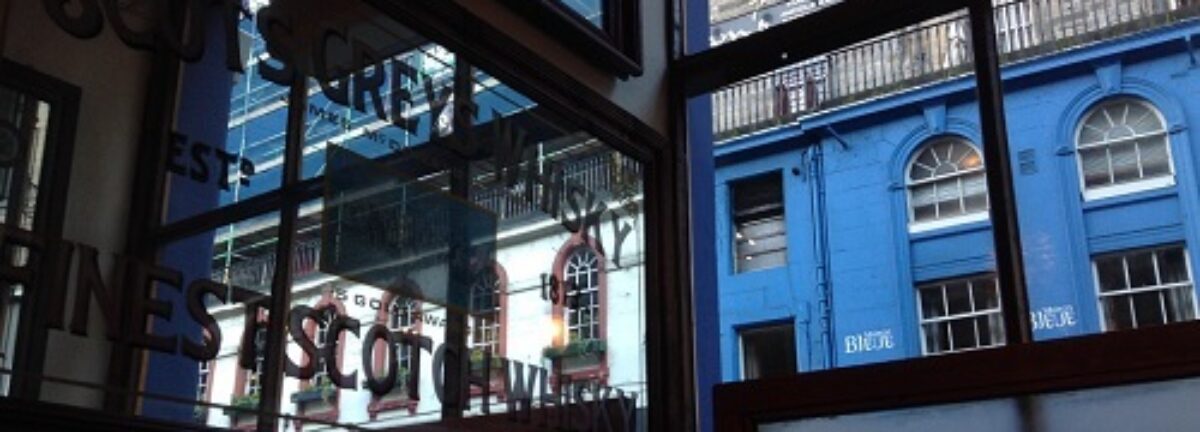
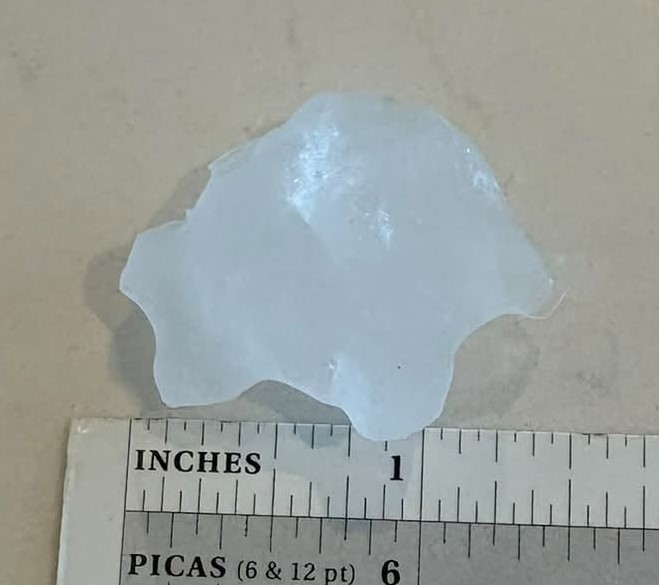
 Purple rain. Or at least clouds. Leading up to the stormy night last night that brought hail over an inch wide to my pal at the far western end of Lake Ontario. Stormy also was the mood as this here website went offline for 24 hours (I know, I know…) But the friendly folk at HostGator (or a very capable A.I. bot) got it all fixed and repropagated for free. So here we are. September. The month of great songs. Do you remember? Sure, the days have trickled down. But I see you. And now you can see me again.
What has been going on? Well, the Minnesota State Fair has led to some fine journalistic reportage in the Star-Tribune on the adult beverages on sale in and or near the midway – including these beers listed under the heading “Ones To Avoid”:
– Lemon Agua Fresca Lager (Castle Danger): It’s never a good thing when a drink reminds you of when your mom made you wipe down the whole house with lemon Pledge cleaner. At the Ball Park Cafe.
– Midway Mango Rush Hazy IPA (Dual Citizen): A questionable combo of flavors without a fresh fruity pop. “It doesn’t even taste like mango,” Enriquez said. At LuLu’s.
– Peach Perfect (Boulevard Brewing): One of those fruity beers that tastes too much like bad fruit puree, not enough like a good wheat beer. And we’re not just saying that because it’s from a Kansas City brewery (but also: why?!). At the Hangar.
– Pink Lemonade Lager (Indeed): Looks pretty. Tastes vacant. At Dino’s Gyros.
Fruity gak! Apparently, fruit lagers are sitting somewhere between a blip and a thing in the UK, too, as Jeff has learned. But at another fair in another land, Jordan has the word from the booth – the token booth – where he has sets scene:
Last year, the booth I occupied in order to sell tokens had some issues. The roof was probably structurally unsound and when it rained, we employed buckets to catch the water that was dripping from the fluorescent light fixture. This year, as a small mercy, the roof is solid and the threat of electrocution is smaller… I’m leery of digital systems at beer festivals. One of the festivals that makes the circuit tried RFID wristbands and while this putatively allows you to check the balance, you need specialized equipment to do it. A stand with a reader or a trip to the booth or vendors trained enough to look that up with their equipment without charging you the balance. I think it permits too much variability, and variability becomes a quagmire of unforeseen problems.
You know I learned today that there is a wide range of options one can select from when one puts the phrase “a man has time to think…” in Google Search looking for a pithy quip.**
Time for law. File this one under the heading “how the mighty do fall” as bidding has been taking place for the intellectual property rights related to the former craft beer darling Rogue Ale. The bids received on this opportynity offer are pretty modest as noted in BMI:
Six competing bids for Rogue IP came in higher than the UK-based media agency Silver Scope Media’s initial $400K offer on Friday, Aug 21, ct filings show. A Calif-based entity called Electrend, Inc led the pack at $500K followed by RosieBertFranco LLC (PA entity) and Sickard CP LLC (Nevada) at $450K, and Coulter Ventures LLC (OH entity), Thomas Investment Group LLC (Oregon entity) and STG Bev Holdings (CA entity) at $440K each.
There is apparently a claim on the table that was described earlier in the month by Stephen Bradley in VinePair:
Oregon-based Valley View Winery filed an objection to the parent company’s intent to sell the IP, as it claims it maintains a “perpetual license” for the rights to Rogue’s wine and wine-based beverages. The winery’s filing states that it trademarked Rogue in 1983, though they reached a settlement agreement with Oregon Brewing in 1997 that gave it rights to the brand’s beer products.
So any value may be affected by the shadow on title due to the earlier trademarking of “rogue” in the booze trade. Still, if that only applies to wine the remaining value of the beer as set by the bid values seems pretty measly.
In other legal matters, you may have heard of this theft of beer… which also raises questions:
“What we discovered was it was just a bad actor essentially who came in and pretended to be the person who was supposed to pick up the beer,” a spokesperson told CBS News, the BBC’s US partner. “It wasn’t the person who was supposed to pick up the beer and then they drove off with it.” Pabst also had a message for the thief: “Pabst is officially starting the clock now – you have exactly 18 days and 44 minutes to return our truckload of beer, no questions asked.” The number is a nod to the company’s year of founding: 1844. The company is also offering an unspecified reward for the return of the shipment.
Questions? Why would they want it back? Probably just to destroy it as there is no chain of command that could justify selling of it. Who would bring the beer back? The truck and trailer will be worth many times the cargo. Return it? To get arrested?? Why would the criminal turn themselves in by driving the truck? It’s all gone. It was all gone in the first 24 hours.
Stan’s latest edition of Hop Queries came out end of last week and provided this bit of accurate and honest commentary:
When new varieties or new hop and hop-related concentrated products are introduced the best brewers will use them to translate what they can imagine into something new and delicious. Some brewers will get excited, treat them as toys and overuse them, release beers that are one dimensional, and—we hope—do better next time. Some brewers will make mediocre beers and some lousy beers. They might be one-hit wonders, but they’ll still be lousy beers.
For the double, Stan also posted about the poor hop harvest in Europe: “For the second time in five years, hop production across Europe has tumbled as a result of an intense heat wave and below average rainfall.” Check that out for a country by country breakdown.
History corner. Ron this week on the question of the “K” displaying some pretty amazing skills:
In 1890, Whitbread brewed just 6,000 barrels of KKK out of a total of 381,000 barrels. Of which 210,000 barrels was X Ale. Which is what most Londoners were drinking. These beers are pretty much beefed-up versions of KK. Sometimes, like at Whitbread, being parti-gyled with KK. When brewed single-gyle, the hopping was often heavier in KKK. Like KK and X Ale, KKK began down the path of darkness in the final decades of the 19th century. Who really knows why they became darker?
I know Ron is correct in these statements and I do reach back in the archives* for clarifications where needed but… how does he keep it straight?
Who is saying what online… and why? David J. guided me to this article, “an exhaustive investigation by Stephen Buranyi into the economics of restaurant influencing” that raises some serious questions:
The most striking thing I learned was that very few influencers have been able to translate their views into steady paydays. They battle to be invited to exclusive launches, while also trying to hawk their imprimatur to brands for potentially lucrative partnership deals. It is clear that there is a secretive trade involving some influencers taking under-the-table payments from restaurants in return for positive coverage, blurring the line between entertainment and advertising, and certainly violating the UK’s advertising standards rules.
Secret trade? Under-the-table payments?!? My #1 serious question is what the hell is wrong with breweries that they are not in on this scam? There was a little blurp of influencers in the beer world a few years ago and then, *burp*, nuttin’. At least nuttin’ with any influence. Or interest. Or readership. Sad.
Speaking of which… more law. You need to watch what you say online these days… at least in Canada. Turns out a new form of negligence is being recognized for extreme behaviour on line as we see in the ruling in Miller et al v. Ahn et al, 2026 ONSC 4805 (CanLII) released on August 21st about a very ugly pile on flame war:
…the court in Caplan reserved the tort for the most extreme conduct, requiring communications so outrageous in character, duration, and degree as to exceed all bounds of decency. In this case, the court adapted the tort into a mechanism for holding influencers responsible when they target an individual. Mobilizing the audience, approving their conduct, and refusing calls to stop the attacks were all treated as part of the defendant’s communications conduct. The ruling is just an interim determination based on a largely uncontested record, but the court concluded that the harassment claim was very likely to succeed at trial.
The clarity of the ruling was no duobt helped by the object of the online harassment being herself a lawyer. Would the same be true if the target was a big brewery brought on by a herd of influencers?
And the ever fabulous Anaïs Lecoq is back with the lead article this week at Pellicle on the phenomenon of premium French butter:
…Maison Bordier makes one of the country’s most sought-after butters—even though it only accounts for 0.01% of France’s annual butter production of 400,000 tonnes—by both fine-dining establishments and hungry tourists. On social media, hundreds of people share their discovery and tasting of Beurre Bordier each month, along with Beurre d’Isigny from Normandy or Beurre Dupont from Northern France. In Paris, a famous gourmet food shop called La Grande Épicerie sells 200 different brands of butter; in two years, sales have increased by 300%. In July of this year, The Butter Shop opened in the 15th arrondissement, its owner deliberately choosing an English name to appeal to tourists. Both stores have capitalised on the trend by offering to vacuum-seal the butter so it can better withstand the flight home.
Coincidentally, one time science columist on TV Joe Schwarcz posted a reel on FB with a side by side of Canadian v. French butter in a blind taste test. Here are the results.
Finally and at the other end of the economic scale, thanks to Drew I learned of a new bar in Washington DC that is offering less as a business strategy:
To try to make the economics work, Rube says they buy bottles that retail under $10. Their rail liquors—a brand called Recipe 21—cost them around $7-$8 per bottle. Then they often get deals with distributors and find random bottles with deep discounts, like Fireball Blazin’ Apple or a pre-batched Porn Star martini that was 70 percent off. Most of it is available as shots, although the bar has also been using mixers like Harris Teeter colas (because they were on sale), and Sunny-D, because it’s way cheaper than actual orange juice. “People ask for limes and lemons. It’s like, this is not a salad bar. This is literally a $5 bar,” says Rube.
I like it. That is it for now. I trust your nerves have calmed down given this was not a blog fatality, just a hiccup. Is that how you spell hiccup? Others will be in the know. Always alive with info, look to Boak and Bailey’s postings on each and every Saturday along with the coincidenal and fabulously entertaining footnotes week after week at Patreon. And do look out for more of Stan’s “One Link, One Paragraph” format – this week there was talk of crumpled beer tanks! Then hunt out something in someone’s archives! Leave oblique comments on someone’s post from 2009!! Listen to a few of Lew’s podcasts and get your emailed issue of Episodes of my Pub Life by David Jesudason on certain Fridays. And Phil Mellows is at the BritishBeerBreaks. Once a month, Will Hawkes issues his London Beer City newsletter. Do sign up for Katie’s wonderful self-governing totes autonomous website featuring The Gulp, too. Ben’s Beer and Badword remains on pause but there is reading at The Glass which is going back to being a blog. Any more? We have Ontario’s own A Quick Beer and All About Beer is still offering a range of podcasts – and there’s also Mike Seay’s The Perfect Pour. Plus follow the venerable Full Pint podcast! And there’s the Craft Beer Channel on Youtube as well as the archives of the Beer Ladies Podcast.
*See for example from 2013: “I wish I had separate output figures for the K and X Ales. But unfortunately Whitbread just lumped together XX and KXX, XXX and KXXX and XXXX and KXXXX. XXXX and KXXXX were discontinued in 1844. Not surprising, seeing as they only brewed 101 barrels in 1843 and 52 barrels in 1844. The output of XX/KXX and XXX/KXXX both increased as the decade progressed, but still lagged way behind the popular X Ale. A beer with no Stock Ale equivalent.” Lordy!
**I quite like this one from The New York Times of 27 September 1939, section E, page 41: “Make no mistake; the ball players knew the money was on the line. In the excitement of going after a grounder, tearing toward the fence for a liner or sliding into a base, it’s different. At such times the player is going for the ball or the base and nothing else in the world matters at the moment. But there are lulls in the action when a man has time to think, and here was a lull in which all the Cardinal and Red players in uniform were thinking of the same thing, the big money at stake.“