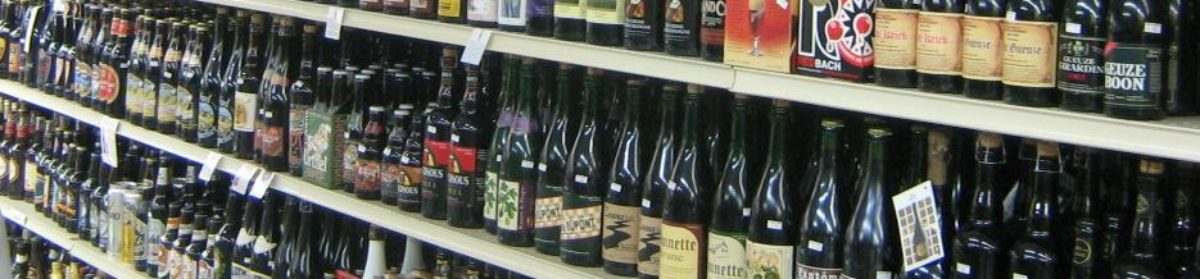
These Are The Melancholy But At Least Not Mundane Last Beery News Notes Of The Summer

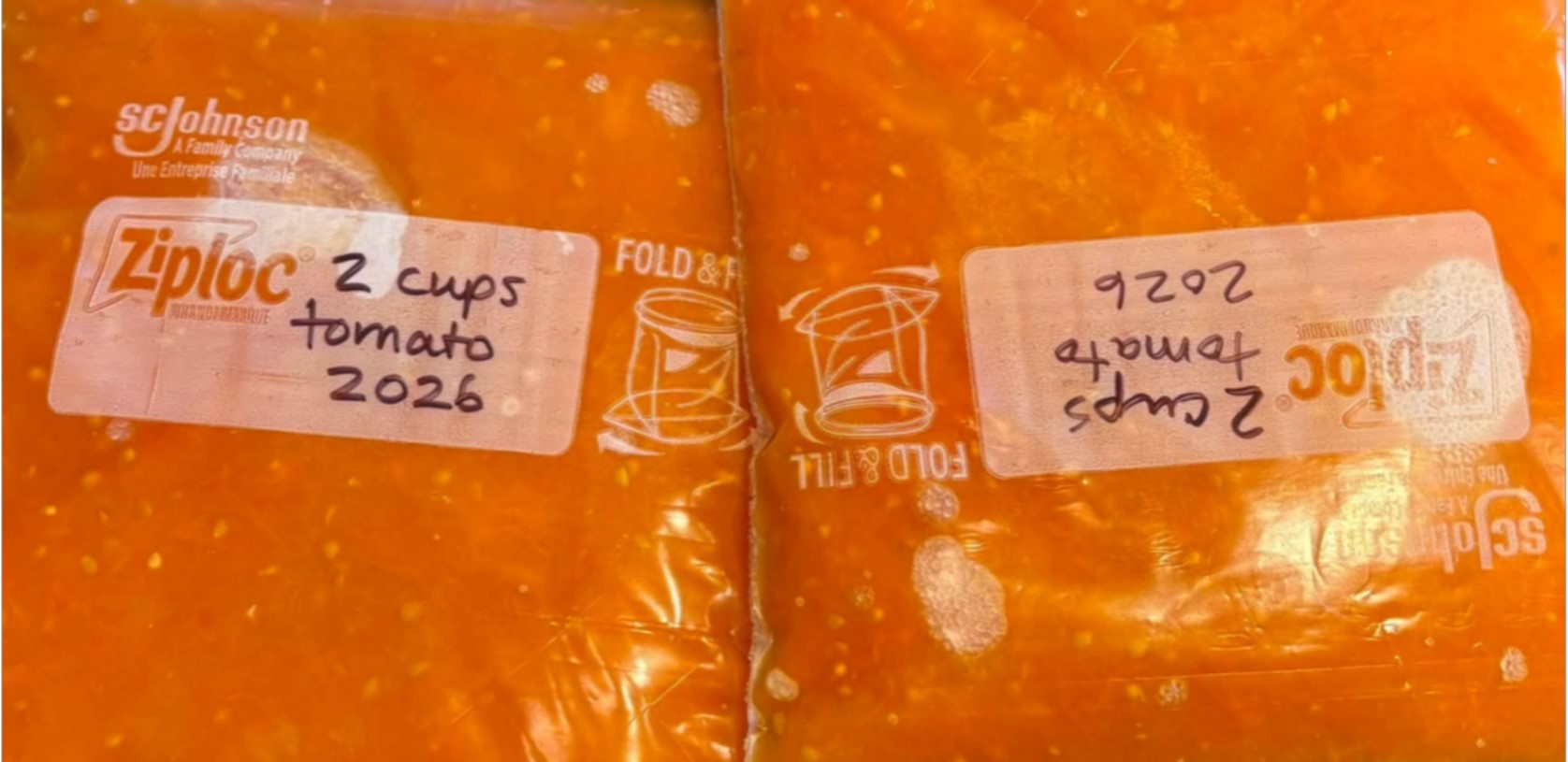
The end of summer. The last stragglers back from holidays. Yellowjackets everywhere. Tired sweetpeas starting to show their age. Tomatoes ripening faster on the vine, some going soft before I get to them in the sauce pot, then into ziplock bags destined for a spot deep into the freezer. I’m even starting to think about getting the garlic ready to plant before the first frost. It all starts to move pretty fast right around now.

Speaking of fast, as Canada is suddenly accused of nuzzling up to the EU, asking if we can spend the weekend – or is it the other way around –  it’s funny to see a politician in France castigated for doing the one thing even a t-total conservative candidate here must always do if they hope to have a hope:

A French presidential hopeful has been accused by leftwingers of encouraging alcoholism after he released a campaign video showing him with a beer. In the video, Gabriel Attal, 37, who was President Macron’s prime minister in 2024, announced plans to hold debates with voters in bistrots across the country. He said he wanted to revive tradition: Enlightenment philosophy had emerged in France’s small dining establishments in the 18th century, he said, as had the call to storm the Bastille in 1789…. The launch of Attal’s “1,000 Bistrots” initiative, as he is calling it, seems unlikely to boost his standing among voters, according to commentators. They noted that it had been widely mocked on social media, with one user saying that the candidate looked more like a spritz than a beer drinker.

Not to worry. He’s way behind in the polls. Speaking of not doing so well, let’s get these interesting numbers from BMI out of the way early this week:

Close to $120 mil in craft $$ tracked by NielsenIQ thru Aug 8 came from 138 craft brands with at least $150K in sales this yr and no sales this time last yr. But it’s top heavy, natch. The top 25 new craft brands generated about 2/3 of that total, each racking up around $1 mil in retail sales. With total craft $$, including craft non-alc, down 4.2% yr to date, existing brands are off over 6% as a group. 

Yikes. So has US craft beer – which told us it came into being to defeat the monoglot of macro – become what it abhored? Fewer and fewer brands, limited in difference hogging more and more of the shelf space? Apparently, not only have fruit flavoured beers chased the tail of coolers but apparently New Belgium’s 11% ABV Voodoo Ranger is the top new beer. Taking on the “electric soup” RTD competition. As Knut notes:

Most Norwegians buy their beer at a supermarket, but the range available has dwindled over the years, with fake cider, hard seltzer and ready mixed drinks taking over much of the shelves.

Tomorrow belong to the gak. Not everyone has noticed. Ontario’s Peterborough Examiner published an opinion piece by apparently self-published author Bruce Gravel that reads like it was defrosted from a glacier that formed around the good beer conversation around 2006 to 2012:

He finally took a sip. He didn’t swallow. Instead, he held the beer in his mouth, churning it around his gums like mouthwash. He made a loud, wet aerating sound — slurrrrp — that caused people at the next table to look over in disgust. He swallowed, closed his eyes, and performed a full 60 seconds of silent contemplation to measure the “finish.” The ultimate annoyance of the beer snob is their complete inability to let anyone else enjoy their drink. When our friend Sarah arrived and ordered a cider, Sebastian spent 10 minutes explaining why her choice was a sugary insult to fermented beverages.

You know, that New Yorker cover is now twelve years old. I thought news editors by definition were up to date on the booze scene, you know, from personal experience.  Speaking of which, here’s some notes with the first one on the better approach in such matters.

Note #1: Advice to journalists.
Note #2: Don’t most people at cricket matches drink beer?
Note #3: Belgium… “if it isn’t poison, it goes into the beer.
Note #4: All you need to know… twenty something words…

Speaking of simplification, here’s a central European leaning timeline of brewing history. It’s a pretty good effort but, again, pale malt was not first made upon the adoption of coke. Straw fired pale malt drying was common well before coke. Conversely, Katie Mather won a writing prize. And she wrote about winning a prize. And thanked her editor:

Last year, Claire Bullen edited a story I wrote for Pellicle about wine in Tenerife and the Orotava region. It started as an off-the-cuff idea borne from sheer enthusiasm—I had just visited the island and fallen in love with Mount Teide. I have a thing for tall, brooding guys. Most of my best stories come from a small, sharp inkling that I’ve seen or tasted something life changing, and that little feeling gets worked into every thought. Working out the story is part of the fun. Why do I want to tell this tale? How would I even begin? Editors get the hardest job and the least credit. I worked away on my story, did the research, painstakingly rewrote the drafts, but were it not for the editorial process, it wouldn’t be half as good as I think it is now. And I happen to think it’s the best thing I’ve ever written, still, over a year later.

You know what’s not the best thing? The price of beer at Oktoberfest according to German broadcaster Deutsche Welle:

A Mass, the traditional 1-liter (2.1-pint) serving at Oktoberfest, will cost an average of €15.61 ($18.50) this year. In 1985, it cost about 6.25 Deutschmarks, equivalent to €3.20 after conversion at the fixed euro exchange rate. The figures were analyzed by UniCredit economist Andreas Rees ahead of the opening of the world’s largest beer festival on Saturday. Beer prices at Oktoberfest have increased by around 400% since 1985, according to Rees, using data from Munich’s statistical office. Consumer prices across Germany, by comparison, have risen by around 120% over the same period.

Next, we were off to New Zealand this week with Pellicle‘s feature by Martin Bridges on the Garage Project:

…the plain white box—adorned with nothing but the word “BEER” in a bold, black font—stands out. This classic pale lager, which has been a mainstay of Garage Project’s core range since 2014, is an ode to the power of subtlety and simplicity. Pilsner malt, Saaz hops, Czech yeast. No more, no less. Does exactly what it says on the tin… “It was a bit of a ‘screw you!’ to the big breweries to show that yes, we can do a lot of progressive beers with a lot of adjuncts and flavours and spice and unusual techniques—like hot rocks and making our own cryo hops from liquid nitrogen—but we can also do a fantastic, straight, Czech-inspired lager,” he says.

And, once we’ve had all that, there are the consequnces to be endured. Joan Fitzpatrick at The Conversation wrote aabout the ancient, medieval and early modern ethics and cures for over drinking:

Classical authorities were regularly cited as recommending the consumption of certain foods before a drinking session, with almonds, cabbage, baked quinces, wormwood (absinthe) and even the lungs of a goat being thought beneficial.  They had tips on how to feel better after a surfeit of food and drink. Dietary authors recommended the benefits of moderate exercise, specifically walking, and sleep, with purging by vomit as a last resort. The medieval dietary authors had praised cloves as restorative and good for stomach trouble. But perhaps any notion of a “cure” for a hangover is based upon the questionable premise that one can undo the self-induced damage to body and mind caused by a bout of heavy drinking.

Perhaps some Korean hangover soup would suit you better. David Jesudason shared another sort of tough story in The Greenwich Wire this week, one about Stacey Ayeh of the Bouldr Bar taproom in southeast London and the struggle to get the doors open… and keep them open:

Bouldr Bar’s launch faced delays with wrangling over planning issues, such as increasing the number of toilets. The biggest headache was finding a way for a bar, planned brewery and food offering to meet Bexley Council’s requirements, because it is housed at ground level under new-build flats… The unit next door to Bouldr Bar remains empty. Stacey believes this was going to be occupied by Starbucks. Stacey believes that to create more food options, Peabody needs to build a tower vent system to keep the council happy. Bouldr Bar is in a state of flux until it can be installed – a new wall has been built but not painted. 

At the other end of the economic scale, Heineken is making a claim to an “A.I.” powered beer tap… which might be the fibberfibberony of the year so far:

According to a statement from the brewer, the technology uses “a combination of tastes, moods, and occasions to create more than 100 tailored beers”. Most intriguingly, the new technology means that, from a single tap, drinkers can now choose from 135 different Heineken expressions, each shaped by a combination of traditional brewing characteristics, such as strength, intensity, with options ranging from 0.0% to 5% ABV.  Consumers simply need to scan a QR code, customise your taste preferences on their phones, and then the kit blends their perfect brew using its “integrated barrels”.

Who buys into this sorta guff? Drunk computer sci frosh? The falsification of beer continues with the rise of “protein beer” as reviewed by Adam Campbell-Schmitt at The Food Network:

The protein drink is actually a nonalcoholic beer boasting 10 grams of plant protein (sourced from pea and rice) per 16-ounce can. That’s about five to ten times as much protein as a regular, alcoholic brew. (If you’re counting carbs and calories, each can of ChampionSips contains 90 calories and 11 grams of carbohydrates.) However, like many NA beers, it should be noted that ChampionSips “contains less than 0.5% ABV.”… As someone who has tried a lot of protein products, I could detect a bit of the pea protein. But largely what I tasted was a very malty pilsner, heavy on the caramel and toasted notes. While it may not pass as your favorite beer, it does its job of swapping some pretty palatable protein into a pleasant beer drinking experience.

Grim. What would the Senators of New York State circa 1835 who gathered in committee to respond to public alarm about the adulteration of beer think about such things. Me, I find that a rib steak or a smash burger injects some pretty palatable protein into my beer drinking experience.

Finally and speaking of falsification, Boak and Bailey took a comment on A.I. writing that I made last week and then, at their Patreon newsletter, made more of it:

… we think we can see the tell-tale signs. For example, a sudden change in writing style, with entire paragraphs adopting a strangely flowery, elaborate tone of voice while, at the same time, being devoid of any real substance. While both of us broadly subscribe to the idea that “if you can’t be bothered to write it, I can’t be bothered to read it” we’re not going to take a totally hard line. It’s also difficult for us to know for sure whether someone has used AI to write some or all of a blog post, even if we suspect it. We don’t want to write people off because we get a vibe. (This unfortunate ambiguity is, of course, how AI ends up worming its way into our lives.) It’s especially tricky with writers who are new to us and whom we haven’t been following for years. We don’t know how they usually write and so can’t spot when their style changes.
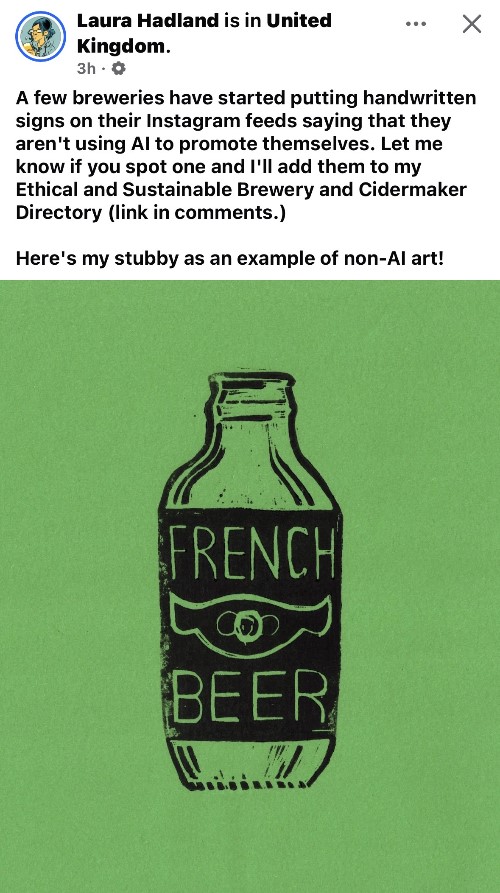
I commented* but… but… what I didn’t mention is related to what they wrote: “if you can’t be bothered to write…” I know someone who has found a niche that may make him a bit of side cash that relies almost entirely on innoquous A.I. use. It’s a form of design creativity that results in absolutely throw away content. So who cares? It’s just about the extra cash for him. But look at what Laura wrote over on FB. Because it’s good to care. So if you really do care, if you want to put your name on something? Well, you are drinking out of the dog’s water dish if what you put out relies on crap A.I. tech. “Relies” carries a lot of work in that sentence for sure… but if that’s what you’ve done your name bears the shame.

That’s it for now. I gotta get back out to the garden. While I do, please look to Boak and Bailey’s postings on each and every Saturday along with the coincidenal and fabulously entertaining footnotes week after week at Patreon. They do put in the effort. And do look out for more of Stan’s “One Link, One Paragraph” format. Then it’s your turn. Read and recommend, please. Scour the world for news tips – then let me know. Then hunt out something in someone’s archives! Leave oblique comments on someone’s post from 2009!! Listen to a few of Lew’s podcasts and get your emailed issue of Episodes of my Pub Life by David Jesudason on certain Fridays. And Phil Mellows is at the BritishBeerBreaks. Once a month, Will Hawkes issues his London Beer City newsletter. Do sign up for Katie’s wonderful self-governing totes autonomous website featuring The Gulp, too.  Ben’s Beer and Badword remains on pause but there is reading at The Glass which is going back to being a blog. Any more? We have Ontario’s own A Quick Beer and All About Beer is still offering a range of podcasts – and there’s also Mike Seay’s The Perfect Pour. Plus follow the venerable Full Pint podcast! And there’s the Craft Beer Channel on Youtube as well as the archives of the Beer Ladies Podcast. What else?

*Fine, this was my comment: “I am afraid that A.I. is a bit like men’s cologne. You think you will just use a little, no one will really notice but it makes someone feel better about oneself. To the contrary, it’s like wearing some bit of orange clothing. It does stand out, it never really works and it usually ruins whatever effect you were going for. It’s also lazy because it’s unnecessary. If you are going to pretend you are a writer then do the frigging writing. Put in the time. Like any effort, you improve by error and succeed through the individual quirk of personal expression. A.I. editing is like claiming you cooked the meal when you got take away.” 

Your Cooler Yet Still Cozy Beery News Notes For The First Hints Of The Coming Autumn

view of man laying asleep on a sofa

The author in his natural state…

Here we are again. Me, I am semi-bachelor boy this week as the last two kids moved into their own places across town over the summer and the Euro-eldest is hosting herself and an aunt. So… here I am and, obviously, I have, you know… chores. Winter, after all, is coming. Which more obviously means I am pulling out and inspecting the state of my sweater vests and cardigans, rearranging the coffee mug shelf, writing about 1820s taverns, preparing a powerpoint for a late October presentation on beer related newspaper notices 1790s to 1840 from my fair City – and doing anything or nothing else I can think of to avoid being useful like putting my hand on a caulking gun or emptying out the eavestroughs. All as I scratch at the mosquito bites from just crawling through the tomato patch out in the yard earlier this week. Best to stay inside. Winter is, after all, coming.

Before moving on the news, a note from the editorial staff. I was reading in The New Yorker by Jill Lepore oddly titled “Bot or Not” in the physical magazine but “Are You A Human?” online. Two things stuck out bluntly in the article. First, the function of reCAPTCHA gatekeeping online isn’t about you clicking the botton to tell them you are a human but to watch you as you click to determine how your cursor movement proves you are. Plus the moment taken to do so allows the bot to scour your activity to back up your claim to humanity.* The other thing noted is this:

…at this point there are more bots online than people. To deal with this problem, businesses retain bot-detection and bot-management firms, a specialty within the field of cybersecurity. Their task used to be to block bots, but, with the rise of agentic A.I., that has changed. Now the problem is how to let in the good bots (like the avatar you send to the Gap to buy you a new pair of pants) and keep out the bad bots (like the thief trying to scrape the data of every Gap customer). **

All of which is to say that it is becoming a bit harder to find actual real stories online to read and share with you. Thankfully, a number of you message me one way or another with tips. In the comments, via BlueSky, by email and via DMs, too. Tips are fabulous. Always appreciated. Unless you are a bot. Unless you are that Vietnamese A.I. slop farm that’s just layering digital shit upon shit. You suck.

plaque on pink stone wall indicating exact international boundary between Canada and the USA located at Thousand Islands BridgeNow with the beery news. Let’s start with the bigger picture, the Canadian-US tariff battles continue and have already had a serious effect on Ontario’s brewing industry:

Japanese brewer Sapporo says it will move some beer production from Canada to the US after new tariffs on Canadian beer took effect on Tuesday. The move follows the introduction of a 50% tariff on beer imported from Canada. For companies shipping beer across the border, that means significantly higher costs. Chief strategy officer Rieko Shofu described tariffs as “something out of our control,” telling Bloomberg that the beer giant would “move ahead with local production.” Sapporo did not immediately respond to the BBC’s request for comment. The company plans to shift production of its non-alcoholic beer, currently made in Canada for US customers, to the US by the first half of 2027.

Sapporo’s Unibroue operations in Quebec remain unaffected for now. Late in the evening on Tuesday, the Wizened Orange Fuzz announced that not only are there going to be tariffs but complete import bans:

The White House posted five new executive orders Tuesday evening that exclude certain Canadian products from being imported into the U.S., alcohol among them. The administration is also adding more Canadian goods to the list of those that are subject to 50 per cent tariffs. A sweeping ban on Canadian booze is set to take effect on Sept. 29. “The following products of Canada are excluded from importation into the United States,” says Trump’s ban on Canadian alcohol, going on to list beer, wine, cider, whiskies, vodka and other spirits.

Interestingly, however, they also announced the lifting of tariffs on other Canadian goods of equal value. Things we sell that Americans actually need like toilet paper and concrete. I live by the border as you know and that last item is a relief locally as limestone is made into cement around here from quarried stone that is burned in a massive kiln. The resulting powder is then sailed by cargo ship the few miles south to Oswego NY across the lake where the cement is used to make city sidewalks and skyscrapers. Another thing we will think about tomorrow as we remember the twenty-fifth.

Elsewhere and more happily, Knut has written about three breweries who were showing their wares when he visited the Trondheim Brewery Festival including the northernmost brewery in the world:

Svalbard Bryggeri, the northernmost in the world, was present for the first time. The founder of the brewery, Robert, has had an uphill battle to get it all started. The first obstacle was the legislation – the production of alcohol was banned in Svalbard. The bureaucracy was bewildered and not particularly eager to do something about it, but years of lobbying finally gave fruit. The first brew was made in 2015. There are more challenges in running a brewery under arctic conditions – water supply is one of them. But the water treatment for the brewery has a side effect – they also supply clean drinking water to the local community. They have their own brewery tap in Longyearbyen, Vinmonopolet and pubs and bars on the Norwegian mainland also offer their beers. Norwegian airlines have Svalbard beer on some of their routes…

Coming up on twenty years ago (!) when this was a multi-author beer blog, Knut wrote about traveling to find Kroa, what was then the most northerly bar in the world, back when Svalbard was known as Spitzbergen. Svalbard Bryggeri appears to be about a kilometre north of Kroa.

To the south, Boak and Bailey have begun their reports on their vacation to the Czech Republic including thoughts from… err… sorry… impressions of Prague as well as from Brno. Other than them needing to take tips from Ron on insightful breakfast buffet reportage, these are fabuous descriptions with this caveat from their BlueSky account:

We landed on this ‘impressions of’ format a few years ago because we dread anyone thinking that we’re daring to offer a ‘definitive guide’ to somewhere we’ve only visited on holiday. Our very first blog post back in 2007 was carefully titled ‘Nice places to drink in…’ for the same reason.

Bravissimo! And always a great reminder that it is wise to first listen to the person’s views from there… wherever “there” is. Then… go wander around there (or anywhere) yourself and report back on that, too.

Reporting back himself is Will Hawkes. His monthly London Beer City newsletter features the history of The Pembroke of Earl’s Court – previously The Coleherne – probably London’s most famous gay pub:

It appeared in Armistead Maupin’s Babycakes (“He walked several blocks past high-windowed brick buildings to a gay pub called the Coleherne … He ordered a gin and tonic and stood at the bulletin board reading announcements about Gay Tory meetings and ‘jumble sales’ to benefit deaf lesbians.”) and the Stranglers’ 1977 tune Hanging Around (‘I’m moving in the Coleherne/ With the leather all around me /And the sweat is getting steamy /But their eyes are on the ground /They’re just hanging around’). Freddie Mercury and Kenny Everett were regulars…  The Coleherne was well-established by the 1970s; it had first attracted gay customers in the 1950s, at a time when it was becoming a centre for jazz, too. Trinidadian pianist Russell Henderson first played here in 1962, launching its golden era. Sunday lunchtimes in the 60s and 70s brought together a diverse range of musicians, from British R&B pioneer Graham Bond to “Philly Joe” Jones, who played with Miles Davies. The likes of Mick Jagger and Georgie Fame came to enjoy the music.

Somewhat related but perhaps for another snack bracket is The Telegraph‘s weekly question on cultural matters asked what is the perfect quantity of beer? The responses were largely identical:

Jim Henny wrote: “As a nearly 50-year-old male, I can’t think of any scenario where I might order a half. Might as well not bother.” I also enjoyed this, from Ron Giddnes: “My wife’s plain-speaking Geordie uncle, when asked whether he wanted a pint or a half, replied that he had tried a half once but didn’t like it.” Malcolm Monaghan, meanwhile, identified a genuine hazard of smaller measures: “A friend went through a short phase of switching to halves, in an attempt to reduce his alcohol consumption. It was a disaster. He’d scoop the wee measures, and ended up drinking about 50 per cent more than the rest of us who were on the pints.”

Halfs are for boozers! Who knew? Who can afford such self-subterfuge? As we consider that in these tightening times, here are some notes:

Note #1: product placement tie-in alert!
Note #2: BREAKING!! “….you’ll be rewarded with a mild ranch dressing flavor…”
Note #3: London’s Mayor loves the nightlife.

I haven’t visited the fam in Scotland to hit the pubs for some years now as Euro-daughter has been playing that role BUT I have some sympathy to this opinion from Alcohol Focus Scotland as set out in The Times:

Carolyn Lochhead, chief executive of the charity Alcohol Focus Scotland, took a dim view of the Tartan Army chanting “no Scotland, no party” while boozing in Boston’s bars. Lochhead, in a new blog, expressed concern that alcohol consumption is what makes Scots fun and that it had been woven into the public consciousness… Hamish Husband, from the Association of Tartan Army Clubs, said Lochhead was not wrong to suggest football fans took great delight in drinking exploits. However, he noted that the fans had given $10,000 to Hasbro Children’s hospital cancer unit and about $5,000 to the Rhode Island Pipers, and other good causes had also benefited.

The article also notes that Scottish overall consumption as measured in pure alcohol is down about 20% since just 2017. Which is good. (By comparison, however, the percentage reduction for party without Scotland remains at 100%.) Not so good, however, for the clinky PR folk seemingly writing for influencers and, you know, bots who seem to have landed, for now, on lumping together the concept that the young have “increased spending on travel, hospitality and alcohol in the past year” to fudge the drop in spending on drink. I hear young people today are spending more on [rent+drinking] as well.

Conversely and speaking from a more reality based reality, BMI continues to trace the drop in US craft beer sales with a fabulously named expert in the field, Bump Williams:

Retailers “already making some early ‘calls’ on shelf space for 2027 and unfortunately, craft once again seems to be on the block for losing more space,” Bump wrote. But Bump also took “closer look” at total craft to “hopefully persuade some retailers NOT to toss ALL craft into the beer-grinder of lost causes because roughly 1/3 of all craft brand families are enjoying some growth.” In aggregate, craft declining at steeper pace than total beer. Segment $$ sales down 4.6% while total biz down 3.6% in NIQ yr-to-date thru Aug 15. Tho that’s less of a gap than last yr when total beer $$ were down 3.2%, craft -5.2%.

Another sort of shift has been discussed by Eric Asimov, who regrets the move away from cabernet sauvignon – as it’s been tagged as something of your aged parents’ wine:

A lot of bad, unbalanced, over-the-top cabernet wines have shaped these attitudes. In the heyday of American cabernet sauvignon and Bordeaux, say, from 1985 to 2010, which coincides with the most influential period of those wine publications, the prevailing style of Napa cabernet increasingly became the high alcohol, sweetly fruity oak bomb. Many Bordeaux were so highly polished that any distinguishing features had been eliminated. These wines have rightly receded in popularity, though they still have their fans. Yet I fear their legacy has been to turn people off from the grape rather than the style. This is a shame, but it is not unusual.

As we see in craft beer, we might have been oversold the idea of the obscure or even the obscured as the new and improved. And Jeff may be describing a similar shift of sorts when it comes to the fresh hop beers of Oregon this year:

I noticed this trend last year, and it seems even more prominent this year: breweries using fresh hops as an accent in beers with high loads of conventional hops. The effect is a diminished or absent fresh hop note (in what may otherwise be great beers). During fresh hop season, I don’t merely want great beer, though; I want beers that glow green. As breweries begin to downplay the fresh hops, this worries me… brewers, use MAOR fresh hops! Make them glow green! 

Green! Speaking of which and finally, did you know that Nottingham was originally called Snotengaham?***  This is not a fact I picked up from this week’s feature in Pellicle by Pete Blackburn which, otherwise, provides a very interesting view into the revivial of Nottingham’s beer scene:

The famous Shipstones “Star,” and the Robin Hood silhouette of Home Brewery, proudly adorned those buildings. Streets hummed with the pungent scents of malt and hops, and hundreds of pubs carried their names. These breweries sponsored Nottingham’s two football clubs. You chose your team: Nottingham Forest or Notts County. And then, you pledged loyalty to “Shippo’s” or Home Ales. Those legendary local breweries are now long gone, joined in their demise by the much-loved Mansfield and Hardy & Hansons breweries. But while their landmark buildings, still standing, now serve other purposes, a new cast of beer and brewing advocates are putting Nottingham firmly back on the map.

Fabulous. And that is it for now. A goodly selection this week. Until we meet again, please look to Boak and Bailey’s postings on each and every Saturday along with the coincidenal and fabulously entertaining footnotes week after week at Patreon. They do put in the effort. And do look out for more of Stan’s “One Link, One Paragraph” format. Scour the world for tips then let me know. Then hunt out something in someone’s archives! Leave oblique comments on someone’s post from 2009!! Listen to a few of Lew’s podcasts and get your emailed issue of Episodes of my Pub Life by David Jesudason on certain Fridays. And Phil Mellows is at the BritishBeerBreaks. Once a month, Will Hawkes issues his London Beer City newsletter. Do sign up for Katie’s wonderful self-governing totes autonomous website featuring The Gulp, too.  Ben’s Beer and Badword remains on pause but there is reading at The Glass which is going back to being a blog. Any more? We have Ontario’s own A Quick Beer and All About Beer is still offering a range of podcasts – and there’s also Mike Seay’s The Perfect Pour. Plus follow the venerable Full Pint podcast! And there’s the Craft Beer Channel on Youtube as well as the archives of the Beer Ladies Podcast.

*The article also explains that the “which images have a bicycle?” test is really used to train the borg behind the internets to read images like a human. And the “what letters and numbers are these?” test actual is used to correct errors in scans of books. The borg doesn’t give a shit about you and your identity confirmations. You are already on lists.
**The New Yorker, Aug 17 edition, page 20.
***Snottingham!! How mah-chur of me. What’s that? Well, sure, I don’t disagree. It could well be beneath you to be reading this sort of stuff.

The Calamitous Yet Humorous Dangers Of The Tavern In 1820s Nova Scotia

A few years ago – fourteen if you are counting – I posted a short post on about the “houses of entertainment” as described in Western and Eastern Rambles: Travel Sketches of Nova Scotia.* These sketches were originally published in The Nova Scotian in 1828-31 by newspaper owner Joseph Howe (and edited by my undergrad CanLit prof.) I was reminded of that 2012 post of mine when I was researching and decided to add something clever (and original) to this post I was writing about the description of Nova Scotia’s “houses of entertainment” of Pictou County’s as described in 1821‘s Letters of Mephibosheth Stepsure to the Editors of the Acadian Recorder by Thomas McCulloch.** (That’s an old and largely gratuitous photo of Lorrain’s Hotel of Pictou built in the 1820s for dubious context.) But when I went to search for online discussions of the book by Howe I was presented with that old forgotten post of mine via Lord Goog. Shortcut achieved, thanks very much to Mr. 49 Year Old Me.

So…there are a few things to mention about the two texts. They are both columns in colonial newspapers. They are also by date pre-Victorian and in tone pre-temperance, practically speaking. By this I mean that they are Georgian and as such frame personal failure due to alcohol misuse as a matter of individual character flaw as opposed to larger societal ill. By way of example certainly at the frontier, we can witness the events of 12 and, I suppose, 13 August 1827 at Guelph on the celebration by the local great and good of the King’s birthday:

…all sat down and enjoyed a hearty meal. “After the cloth was removed,” toasts were drunk to everybody and every conceivable thing, the liquors, of all imaginable descriptions, being passed round in buckets, from which each man helped himself by means of tin cups, about two hundred of which had been supplied for the occasion… those who remained continued to celebrate the day in an exceedingly hilarious manner, most of them, who had not succumbed to an overpowering somnolency, celebrating the night too, many of them being found next morning reposing on the ground in the market place, in loving proximity to the liquor pails, in which conveniently floated the tin cups…

Dead drunk they were – but all for a good cause on a special occassion. Howe, just a couple of years later, avoided that sort of liquor soaking when he saw the madcap night life offered to the stage coach traveller who arrived in what was and is now still Kentville, NS:

…hardly do you get into the village before some long-legged Merchant pops you into a gig and gallops you away to church – or some other sinner of the same stamp gets you into his house, from which it is no easy matter to escape. You may run about, like Blair‘s soul, knocking at every outlet but in vain – Port stands sentry in one place – Madeira in another, while Claret, at the head of Bacchus’s light infantry, fairly cuts you off from every retreat…***

Kentville then was apparently as awash as Guelph had been – but was so on any given day. “Not for me!” says Howe. Still, McCulloch in his Stepsure Letters takes the question of boozing to another level of piety or at least ridicule.  His fictional essays are a satire on the rise and fall of various sorts of leading men in rural Pictou County, leaning apparently on the message in Proverbs 12:11:

He who works his land will have abundant food, but he who chases fantasies lacks judgment.

For McCulloch, it is not booze that ruins a life so much as an avaricious ambition that takes someone off the farm. That leads inevitably to ruinous financial decisions and, then, recourse to the bottle. Take for example the formerly sober and prosperous farmer Caleb Castup who, through his taking on new political ambitions, became the local commissioner of roads leading work crews to open up the forest…

… he was a man of some consequence… [and] … his respectability required himself to lodge in Mr. Soakem’s tavern. Here… he would spend his evenings with Mr. Soakem, and those who frequented his house. To make a long tale short, from being a sober, industrious man, he became a mere sot, and his boys are getting on after him as fast as they can. The farm, from neglect, became of no use to his family. The sudden decrease of our revenue, also, made his profit by the roads a mere song, when one day, as he was passing the sheriffs, that gentleman invited him to walk in…****

The joke about the sheriff inviting him “to walk in” is the same joke in many of the letters. Castup is incarcerated for his debts. But not after bringing ruin upon his family:

…home had no charms. At first, when he would come home to Mrs. Castup, intoxicated, she considered it merely as a state in which all are occasionally are, and it gave her no uneasiness, “But frequent repetitions. produced weeping and entreaties, and at last reproaches, And it was even said, though I cannot affirm it, that they proceeded as far as a battle. Certain it is, that, between poverty and quarrelling, home was a torment to them both. His family, also, and a fine family they were, are fit for nothing else but strolling about and drinking; and poor Mrs. Castup curses the day which made her husband a commissioner of roads…*****

Hardy har har. Note: she cursed not the day he took up drink but the day he obtained the position of a government official. Occasional intoxication gave no uneasiness. Note also: one of the fellow jailed inmates of Mr. Castup was Mr. Soakem the tavernkeeper himself. His story began similarly:

Like the rest of us, he began the world by settling upon a farm. At first, he was a hard working man, and soon made himself comfortable. But he was very eager to be rich, and he would frequently compare his hard labor with his little gains, as he called them.******

Greed, you see, is the curse of the farmer and as a result the cause of disaster for the farmer’s family. Ambition also makes you uppity:

…when Mr. Soakem was abroad, in order to maintain his reputation, he would stop at every tavern on the road, and show how a gentleman ought to behave. In the mean time, the young people were left to manage both the farm and the house of entertainment. This was more than they could well do; and, besides, not very consistent with sober and industrious habits…  travellers, understanding how things stood, passed on to the New Inn about half a mile distant. In short Mr. Soakem’s gradually became like the habitation of the wicked, he was rarely in it himself; his children were always strolling about ; and no traveller came near it; when, at last, one day the sheriff calling and finding him at home, remarked, that he must now be very lonely, and insisted upon introducing him to the company…*******

There are others in that company held at the Sheriff Holdfast’s house. The farmer turned logger. The farmer who becomes a merchant. The farmer turned gypsum exporter. All go broke and end up jailed for debt. Much to the chuckles of the agricultural readers of the Acadian Recorder who knew their place is at home on the land – and who knew how to mind their manners. And who didn’t stroll about! Another thing about that company of those jailed by the sheriff indicates to me that the key vice in all this isn’t the drinking. Consider this:

when I arrived at the sheriffs, I found Mr. Soakem, with eyes like collops, poring upon the cards, and the grog before him.********

…and also this passage when the author of these letters responds to the newspaper’s readers who are upset with him:

I am reviled at home as well as discredited abroad. Sheriffs lodgers, in particular, are very angry at what I have written about their grog drinking and Mr. Holdfast’s kindly treatment. So far from being sensible of this gentleman’s good offices, Mr. Pat O’Rafferty declares that he is a perfect Polyphemus; only he does not eat them, when ho has got them into his den.*********

The sheriff serves grog to the inmates! And lets them read the newspaper. And then write letters to the editor. How civil. One last thing. Both the Howe and McCulloch texts use the phrase “house of entertainment” in parallel with “tavern”, the latter being the descriptor last mentioned in my post on The Ports. It appears both are the accepted and even legal language of the time as this passage about the application process and an objection at the hearing from the local parson Mr Drone suggests:

…he applied to the magistrates. He told them that taverns are at best but necessary nuisances, and ought not to be multiplied. He bid them look round the township, and see how many had been ruined by living in their neighbourhood. And as he got on, becoming gradually more earnest, he said they had received his Majesty’s commission for better purposes, than to grant a license to every fool who chose to ruin himself and his family; that they were the guardians of good order; and, that, if they placed temptations in the way of the unwary, they were the partakers of other men’s sins; and might assure themselves that the gall and wormwood would be shared between them. Our magistrates have always been in the practice of giving licenses to all who request them. The town, they say, needs the license money; and, if the taverns increase too much, those who keep them will get tired of the business, They were, therefore, not well pleased that Parson Drone should interfere, and pretend to instruct them in their official duties, They never meddled with his preaching, and he had no right to interfere with them. Hence, partly at the solicitation of Mr. Soakem, and partly from opposition to the parson, the license was granted.**********

Hah! So the magistrates are mocked. The parson is mocked and certainly the greedy are mocked. That is the humour of the colonial Georgians of the 1820s. Thus endeth the sermon. Both for Parson Drone and, for today, myself.

*My physical copy is Howe, J, Ed.:Parks M.G.(1973) Western and Eastern Rambles: Travel Sketches of Nova Scotia, (U of Toronto Press, Toronto). I took Canadian Literature from Professor Parks of Dalhousie University in 1982-83.
**My physical copy is McCulloch, T. (1960) The Stepsure Letters, (McClelland and Stewart, Toronto). McCulloch founded Pictou Academy in 1816. It’s still the town’s high school and in the fall of 1979, my Truro soccer team of C.E.C. played them only for the game to be called when our striker, sick and tired of being hacked by one of the brave Pictonians, applied his black belt in judo to flip and hammer the thug. I played centre back and had a fabulous view of the incident. Mayhem ensued. Don’t asked me about the later Truro Town v. Pictou Town men’s league game from around the summer of 1984. Don’t!!
***Howe, p.78.
****McCulloch, p.36.
*****Ibid., pp.36-37.
******Ibid., p.29.
*******IbiddityIb, p.31.
********Idib, p.32.
*********IbbyDibbyDooo, pp.40-41.
**********(!!!)IbbyDibbyDone, pp.29-30. Drone had previously dealt directly with Soakem only to be told “Mr. Soakem em. was not convinced. Houses of entertainment were necessary, and might be very decently kept by religious people.” Please refer to Lamentations 3:19 on the whole “gall and wormwood” thing.

Your Back From The Dark And Dragging Your Butt Back To School Week Traumatic Yet Fantastic Thursday Beery News Notes

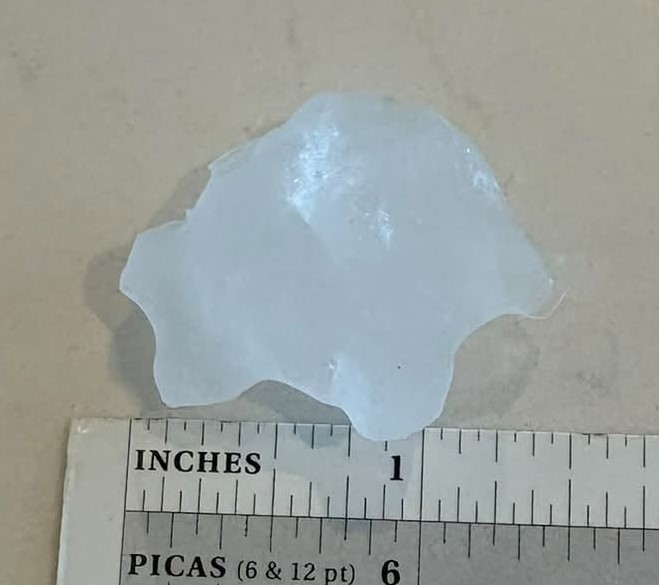
Purple rain. Or at least clouds. Leading up to the stormy night last night that brought hail over an inch wide to my pal at the far western end of Lake Ontario. Stormy also was the mood as this here website went offline for 24 hours (I know, I know…) But the friendly folk at HostGator (or a very capable A.I. bot) got it all fixed and repropagated for free. So here we are. September. The month of great songs. Do you remember? Sure, the days have trickled down. But I see you. And now you can see me again.

What has been going on? Well, the Minnesota State Fair has led to some fine journalistic reportage in the Star-Tribune on the adult beverages on sale in and or near the midway – including these beers listed under the heading “Ones To Avoid”:

– Lemon Agua Fresca Lager (Castle Danger): It’s never a good thing when a drink reminds you of when your mom made you wipe down the whole house with lemon Pledge cleaner. At the Ball Park Cafe.
– Midway Mango Rush Hazy IPA (Dual Citizen): A questionable combo of flavors without a fresh fruity pop. “It doesn’t even taste like mango,” Enriquez said. At LuLu’s.
– Peach Perfect (Boulevard Brewing): One of those fruity beers that tastes too much like bad fruit puree, not enough like a good wheat beer. And we’re not just saying that because it’s from a Kansas City brewery (but also: why?!). At the Hangar.
– Pink Lemonade Lager (Indeed): Looks pretty. Tastes vacant. At Dino’s Gyros.

Fruity gak! Apparently, fruit lagers are sitting somewhere between a blip and a thing in the UK, too, as Jeff has learned. But at another fair in another land, Jordan has the word from the booth – the token booth – where he has sets scene:

Last year, the booth I occupied in order to sell tokens had some issues. The roof was probably structurally unsound and when it rained, we employed buckets to catch the water that was dripping from the fluorescent light fixture. This year, as a small mercy, the roof is solid and the threat of electrocution is smaller… I’m leery of digital systems at beer festivals. One of the festivals that makes the circuit tried RFID wristbands and while this putatively allows you to check the balance, you need specialized equipment to do it. A stand with a reader or a trip to the booth or vendors trained enough to look that up with their equipment without charging you the balance. I think it permits too much variability, and variability becomes a quagmire of unforeseen problems. 

You know I learned today that there is a wide range of options one can select from when one puts the phrase “a man has time to think…” in Google Search looking for a pithy quip.**

Time for law. File this one under the heading “how the mighty do fall” as bidding has been taking place for the intellectual property rights related to the former craft beer darling Rogue Ale. The bids received on this opportynity offer are pretty modest as noted in BMI:

Six competing bids for Rogue IP came in higher than the UK-based media agency Silver Scope Media’s initial $400K offer on Friday, Aug 21, ct filings show. A Calif-based entity called Electrend, Inc led the pack at $500K followed by RosieBertFranco LLC (PA entity) and Sickard CP LLC (Nevada) at $450K, and Coulter Ventures LLC (OH entity), Thomas Investment Group LLC (Oregon entity) and STG Bev Holdings (CA entity) at $440K each. 

There is apparently a claim on the table that was described earlier in the month by Stephen Bradley in VinePair:

Oregon-based Valley View Winery filed an objection to the parent company’s intent to sell the IP, as it claims it maintains a “perpetual license” for the rights to Rogue’s wine and wine-based beverages. The winery’s filing states that it trademarked Rogue in 1983, though they reached a settlement agreement with Oregon Brewing in 1997 that gave it rights to the brand’s beer products.

So any value may be affected by the shadow on title due to the earlier trademarking of “rogue” in the booze trade. Still, if that only applies to wine the remaining value of the beer as set by the bid values seems pretty measly.

In other legal matters, you may have heard of this theft of beer… which also raises questions:

“What we discovered was it was just a bad actor essentially who came in and pretended to be the person who was supposed to pick up the beer,” a spokesperson told CBS News, the BBC’s US partner. “It wasn’t the person who was supposed to pick up the beer and then they drove off with it.” Pabst also had a message for the thief: “Pabst is officially starting the clock now – you have exactly 18 days and 44 minutes to return our truckload of beer, no questions asked.” The number is a nod to the company’s year of founding: 1844. The company is also offering an unspecified reward for the return of the shipment.

Questions? Why would they want it back? Probably just to destroy it as there is no chain of command that could justify selling of it. Who would bring the beer back? The truck and trailer will be worth many times the cargo. Return it? To get arrested?? Why would the criminal turn themselves in by driving the truck? It’s all gone. It was all gone in the first 24 hours.

Stan’s latest edition of Hop Queries came out end of last week and provided this bit of accurate and honest commentary:

When new varieties or new hop and hop-related concentrated products are introduced the best brewers will use them to translate what they can imagine into something new and delicious. Some brewers will get excited, treat them as toys and overuse them, release beers that are one dimensional, and—we hope—do better next time. Some brewers will make mediocre beers and some lousy beers. They might be one-hit wonders, but they’ll still be lousy beers.

For the double, Stan also posted about the poor hop harvest in Europe: “For the second time in five years, hop production across Europe has tumbled as a result of an intense heat wave and below average rainfall.” Check that out for a country by country breakdown.

History corner. Ron this week on the question of the “K” displaying some pretty amazing skills:

In 1890, Whitbread brewed just 6,000 barrels of KKK out of a total of 381,000 barrels. Of which 210,000 barrels was X Ale.  Which is what most Londoners were drinking. These beers are pretty much beefed-up versions of KK. Sometimes, like at Whitbread, being parti-gyled with KK. When brewed single-gyle, the hopping was often heavier in KKK. Like KK and X Ale, KKK began down the path of darkness in the final decades of the 19th century. Who really knows why they became darker?

I know Ron is correct in these statements and I do reach back in the archives* for clarifications where needed but… how does he keep it straight?

Who is saying what online… and why? David J. guided me to this article, “an exhaustive investigation by Stephen Buranyi into the economics of restaurant influencing” that raises some serious questions:

The most striking thing I learned was that very few influencers have been able to translate their views into steady paydays. They battle to be invited to exclusive launches, while also trying to hawk their imprimatur to brands for potentially lucrative partnership deals. It is clear that there is a secretive trade involving some influencers taking under-the-table payments from restaurants in return for positive coverage, blurring the line between entertainment and advertising, and certainly violating the UK’s advertising standards rules. 

Secret trade? Under-the-table payments?!? My #1 serious question is what the hell is wrong with breweries that they are not in on this scam? There was a little blurp of influencers in the beer world a few years ago and then, *burp*, nuttin’. At least nuttin’ with any influence.  Or interest. Or readership. Sad.

Speaking of which… more law. You need to watch what you say online these days… at least in Canada. Turns out a new form of negligence is being recognized for extreme behaviour on line as we see in the ruling in Miller et al v. Ahn et al, 2026 ONSC 4805 (CanLII) released on August 21st about a very ugly pile on flame war:

…the court in Caplan reserved the tort for the most extreme conduct, requiring communications so outrageous in character, duration, and degree as to exceed all bounds of decency. In this case, the court adapted the tort into a mechanism for holding influencers responsible when they target an individual. Mobilizing the audience, approving their conduct, and refusing calls to stop the attacks were all treated as part of the defendant’s communications conduct. The ruling is just an interim determination based on a largely uncontested record, but the court concluded that the harassment claim was very likely to succeed at trial.

The clarity of the ruling was no duobt helped by the object of the online harassment being herself a lawyer. Would the same be true if the target was a big brewery brought on by a herd of influencers?

And the ever fabulous Anaïs Lecoq is back with the lead article this week at Pellicle on the phenomenon of premium French butter:

…Maison Bordier makes one of the country’s most sought-after butters—even though it only accounts for 0.01% of France’s annual butter production of 400,000 tonnes—by both fine-dining establishments and hungry tourists. On social media, hundreds of people share their discovery and tasting of Beurre Bordier each month, along with Beurre d’Isigny from Normandy or Beurre Dupont from Northern France.  In Paris, a famous gourmet food shop called La Grande Épicerie sells 200 different brands of butter; in two years, sales have increased by 300%. In July of this year, The Butter Shop opened in the 15th arrondissement, its owner deliberately choosing an English name to appeal to tourists. Both stores have capitalised on the trend by offering to vacuum-seal the butter so it can better withstand the flight home.

Coincidentally, one time science columist on TV Joe Schwarcz posted a reel on FB with a side by side of Canadian v. French butter in a blind taste test. Here are the results.

Finally and at the other end of the economic scale, thanks to Drew I learned of a new bar in Washington DC that is offering less as a business strategy:

To try to make the economics work, Rube says they buy bottles that retail under $10. Their rail liquors—a brand called Recipe 21—cost them around $7-$8 per bottle. Then they often get deals with distributors and find random bottles with deep discounts, like Fireball Blazin’ Apple or a pre-batched Porn Star martini that was 70 percent off. Most of it is available as shots, although the bar has also been using mixers like Harris Teeter colas (because they were on sale), and Sunny-D, because it’s way cheaper than actual orange juice. “People ask for limes and lemons. It’s like, this is not a salad bar. This is literally a $5 bar,” says Rube.

I like it. That is it for now. I trust your nerves have calmed down given this was not a blog fatality, just a hiccup. Is that how you spell hiccup? Others will be in the know. Always alive with info, look to Boak and Bailey’s postings on each and every Saturday along with the coincidenal and fabulously entertaining footnotes week after week at Patreon. And do look out for more of Stan’s “One Link, One Paragraph” format – this week there was talk of crumpled beer tanks!  Then hunt out something in someone’s archives! Leave oblique comments on someone’s post from 2009!! Listen to a few of Lew’s podcasts and get your emailed issue of Episodes of my Pub Life by David Jesudason on certain Fridays. And Phil Mellows is at the BritishBeerBreaks. Once a month, Will Hawkes issues his London Beer City newsletter. Do sign up for Katie’s wonderful self-governing totes autonomous website featuring The Gulp, too.  Ben’s Beer and Badword remains on pause but there is reading at The Glass which is going back to being a blog. Any more? We have Ontario’s own A Quick Beer and All About Beer is still offering a range of podcasts – and there’s also Mike Seay’s The Perfect Pour. Plus follow the venerable Full Pint podcast! And there’s the Craft Beer Channel on Youtube as well as the archives of the Beer Ladies Podcast.

*See for example from 2013: “I wish I had separate output figures for the K and X Ales. But unfortunately Whitbread just lumped together XX and KXX, XXX and KXXX and XXXX and KXXXX. XXXX and KXXXX were discontinued in 1844. Not surprising, seeing as they only brewed 101 barrels in 1843 and 52 barrels in 1844. The output of XX/KXX and XXX/KXXX both increased as the decade progressed, but still lagged way behind the popular X Ale. A beer with no Stock Ale equivalent.” Lordy!
**I quite like this one from The New York Times of 27 September 1939, section E, page 41: “Make no mistake; the ball players knew the money was on the line. In the excitement of going after a grounder, tearing toward the fence for a liner or sliding into a base, it’s different. At such times the player is going for the ball or the base and nothing else in the world matters at the moment. But there are lulls in the action when a man has time to think, and here was a lull in which all the Cardinal and Red players in uniform were thinking of the same thing, the big money at stake.