The Thursday Beery News Notes For The Week We Are All Cape Verdean

We need a new anthem:

Let’s root root root for Cape Verde
If they don’t win it’s a shame…

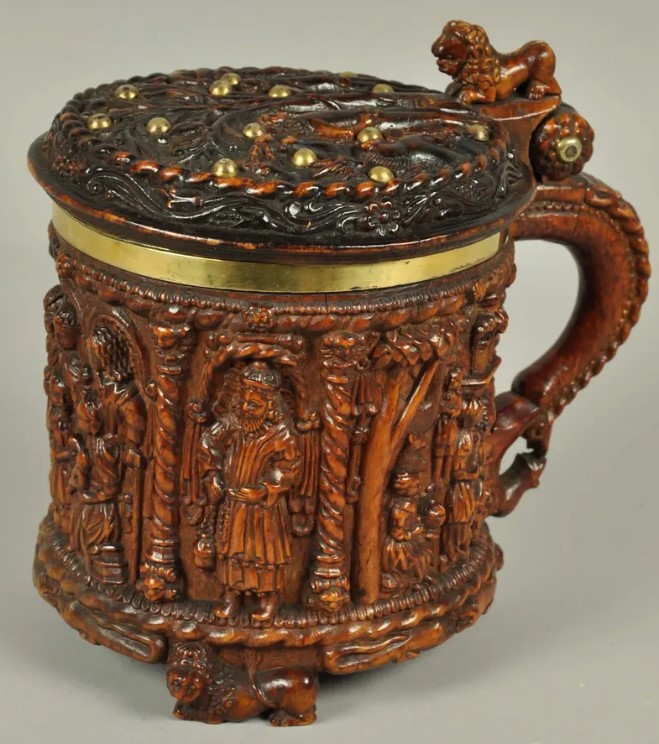
Actually, that tie will do just fine. Just fine. Still, Uruguay has have the best strip. We remember the Graf Spee after all. Isn’t it fun how many old simmering bigotries and grudges come out during international sporting events! Speaking of fabulous cups, Lars shared that image this week: “… carved by a Norwegian farmer… The king bought this mug in 1798 for 60 riksdaler, an absolutely wild amount, equivalent to roughly 10 cows.” The Scandenavian bovine value (SBV) scale to the rescue… again.

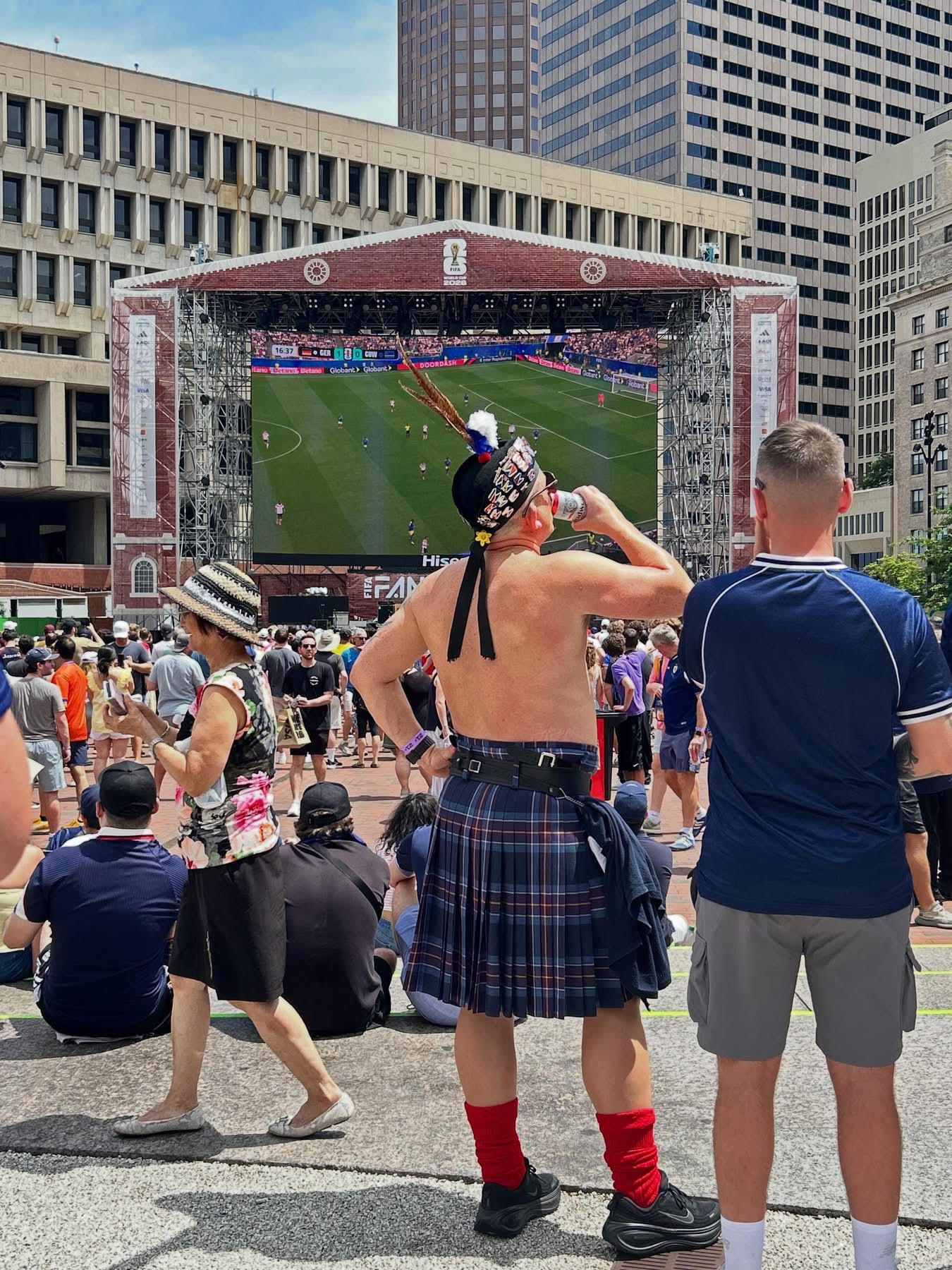
How many cows is the World Cup worth? [Ed.: “…crickets...”] Studies have shown that a beer at the stadium might cost you about one-third of a cow. On the other hand, it is pretty clear what inviting the Tartan Army to your town is worth to breweries:

The Tartan Army chartered dozens of school buses from Boston and Providence to get to the game. On the ride with the Scots were many father-son pairs, kilts and even more beer. Organizers brought 10,000 cans of Narragansett Lager for the Foxborough-bound buses from Providence alone. None were left by the end of the night.

Wow. The call has gone out for an extra 100,000 more! My own wee cousin** is out there representing the fam. Seems like the Army is working hard to beat the English in Spain in terms of fluid input, according to one French news source. And Ruvani has also been on the World Cup beat and shared the thoughts of opinions of commentator Roger Bennett what makes for a great fitba focused bars in the US including this good point:

Bennett is keen to emphasize that there are aspects of great American soccer bars that are both unique and essential to the U.S. In other countries, “you commune with fans of your team and everyone else is the enemy, but in the U.S. most fans are young and have come in since the Premier League started being broadcast by NBC in 2013,” he said. “Their discovery and passion have created a unique culture that’s not divided into us-against-you.” This difference means that bars must be ready for and welcoming to multiple fan groups, fostering an inclusive spirit. 

Speaking of welcoming, Ontario’s fading but venerable former retail monopoly The Beer Store is doing something very unusual the days – opening two stores as it closes many more. But its doing so seemingly primarily to receive back more empties as much as to sell beer:

The Beer Store has closed dozens of retail locations across the province over the past two years, citing changing market conditions and the expansion of beer sales to convenience stores, more grocery stores and gas stations. Many of these retailers do not accept empty container returns… As Ontario’s largest beer retailer, The Beer Store recently unveiled a new “Take back what’s yours” campaign aimed to boost awareness of the province’s deposit return system. A recent analysis by the Toronto Star suggested Ontario consumers lost more than $60 million in unredeemed deposit refunds last year by placing empty alcohol containers in their blue box or the trash instead of returning them to The Beer Store.

And Stan has issued his latest Hop Queries and you are all well advised to govern yourselves accordingly. And he’s used a concept that’s been unfamiliar in the brewing world in recent years – stabilized:

After reducing acreage from 60,872 acres in 2021 to 41,654 in 2025 (that’s 19,218 acres), American farmers indicate that total acreage will remain basically the same in 2026 (at 41,642; 12 fewer acres than in 2025, less than three-tenths of one percent lost). The German Hop Growers Association reports that farmers will harvest 5.8% fewer acres in 2026 after slicing 6.5% in 2025 — leaving 44,117 in 2026, compared to 50,136 in 2024…. It should not be a surprise that a press release from the German hop growers about acreage states, “The mood in the hop market is currently poor” and “the oversupply of aroma hops had made production cuts necessary for several years.” 

In amongst some cheeky chat about NA beer, Andreas Krennmair stood up and sensibly explained with semi-cited research why it is that German NA beers are better than elsewhere in the world:

I’m sure the technology will eventually cross the ocean. From what I’ve been told, all the Bavarian breweries launching new and better NA beers basically comes from one guy’s PhD thesis at the Technical University of Munich at Weihenstephan. I’m not sure the thesis has been published yet, but… here’s one paper from the same guy about the impact of different NA production methods on aroma compounds. 

Here’s Dr. Guy’s paper. I like the acronym they use too, NAB. Suits my feels as a consumer some times. Andreas also shared the best beery gross out of the tournament so far, the drink to accompany an early match:

If you’re looking for the perfect drink for today’s Germany-Curaçao match, here’s a 1970’s beer cocktail for you: Isarwasser. In a 1 litre Maßkrug, combine a bottle of Bavarian wheat beer, half a litre of orange juice or orange soda (e.g. Fanta), and a shot of Blue Curaçao liqueur. Enjoy!

I’m all for fighting the hegemony of homigeneity but… I was sure he was joking. Here, however, is independent evidence of this crime against the clinky and the drinky.

Matty C had a good go at the numbers behind the lack of a GBBF this year, the reasons for which have become clearer with time:

… attendance was way down, with 13,000 people attending over five days – far short of the event’s apparent 23,000 target…  both the main GBBF and its winter equivalent have been cancelled. According to one discussion on its members internal forum, the festival made a staggering £320,000 loss. This feels significant, because you don’t plan the largest beer festival of the year and then move on after losing more than a quarter of a million pounds. A loss of this magnitude isn’t made simply by mismanagement – it’s gross negligence.

Wow. Wowsie-wow-wow even. Knut‘s written about another sort of challenge facing those in the trade – finding yourself brwing quality niche brewing in an isolated location. He noted a few interesting strategies to deal with that reality:

Carl brews beers inspired by Belgian classic styles, usually with malt from the Trøndelag region and with Belgian organic hops. I am lucky to have a designated driver, as we sit down to sample a few of his saisons. It’s a tough market these days, there are some beer bars in Oslo and Trondheim who sell his beers, but not many. He has teamed up with a local company that sells high end salmon fishing in the nearby Gaula river, probably a wise choice with guests paying good money for a quality product. The lower alcohol beers are available directly from the brewery, get in touch with him if you are passing by.

As you consider your route to the Gaula River, here some notes:

Note #1: this vid on UK pub habits also is about Canadianness.**
Note #2: “…BUD stock up 29% yr-to-date…
Note #3: Ron on Scottish Sweet Stout.
Note #4: “…stuck in 2016 for a moment… Just like DogHouse Edinburgh.

Question. Horse brasses – history or heritage?*** Boak and Bailey were on the case this week:

Newly built pubs on housing estates and new towns across Britain, desperately in need of instant personality, also often came with horse brasses fitted as standard. For example, when Scottish & Newcastle built The Moorcock at Peterlee, County Durham, in 1973, to provide a “tinge of country atmosphere… in a tasteful blend of ancient and modern” they fitted it out with “beams and timbers and rustic brickwork and horse brasses, sporting prints, and game birds”. (Hartlepool Northern Daily Mail, 15 November 1973.)

So a bit of each. And Alistair has been back home in the UK and has started sharing his thoughts on what he’s missed, starting with a day in Windsor waiting for his flight on to Inverness:

I had been to Windsor all of once previously, but I may have been about 12 years shy of being able to drink legally, and as such I don’t remember much about that visit. There is though a family legend/inside joke that at some point whilst wandering near the castle, I asked my parents why it wasn’t finished yet given the scaffolding that surrounded many of the buildings. I was then somewhat keen to walk by the castle to check up on progress in the intervening 40 odd years – there was still scaffolding to be seen, still not finished then I guess. It was getting pretty bloody warm by this point of the day, even though it was only 9.30 by now, so I took myself off along the river to get to my first planned stop of my tour of the town’s hostelries.

Alistair, being the good saintly lad he is, was well advised to leave out the visit to the city if the latest edition of London Beer City where Will Hawkes explains something I, also being a good saintly lad****, was not aware of… the class of establishment known as the strip pub:

Now – a bit like the Ploughman’s Lunch – strip pubs have almost entirely disappeared. This week the owners of The Nag’s Head in Aldgate submitted plans to Tower Hamlets council which would see this long-established strip pub turned into a “traditional pub” and 24-room hotel…. For younger Londoners – who make up the bulk of my readers, naturally – it must seem incredible that so many pubs once featured women taking off their clothes, but the past was a different country. What was most remarkable, actually, wasn’t the stripping – that still exists, albeit largely in glitzier surroundings – but the low-key, unglamorous, seedy-in-a-specifically-British-way nature of it. No stage, no pole, pounds-in-a-pint-pot for payment… Crucially, these strippers moved whilst naked…

Heavens. Naked people just wandering around the pub among the drinkers? Yik. These places probably reeked of Isarwasser. Speaking of another form of the unfortunately unsavoury, Lesley Chesterman wrote about criticism this week:

When reviewing dishes like that, you can’t lie and say everything was great just to keep things positive. I saw this in my time as a critic as well, this idea of being “mean” when criticizing professionals cooking. People obviously focus on the negative side of criticism, but the truth is, it can be beneficial too. How will any chef improve if you don’t give it to them straight? And how will we uphold a high level of gastronomy here in Quebec if we’re all afraid to call out mediocrity? It is constructive criticism after all, and the goal in cooking should always be excellence. Undercooked frog’s legs and rice are not excellence. 

Agreed. In one of the sillier examples of forecasting yet, the International Wine and Spirits Record (now IWSR) has predicted what the world will be like in 2035… without any reference to the coming global resource wars:

According to the findings, the stabilisation in global volume from 2031 will be driven by two main factors: a “substantial rebalancing” of the global market, and continued growth in the worldwide drinking age population. Over the next decade, the global beverage alcohol market is, according to the analysis, anticipated to be “shifting away from China, North America and Europe to India, South America and Africa”. From a global perspective, this is said to be “most clearly illustrated by looking at consumption by servings” with the research highlighting that “the different serving size volumes of different categories” is a factor to consider.

Serving size? I might have thought fire spewing drones sweeping the landscape into a hell zone might have been a more important factor in the future to come… but I’m like that.

On a similar sort of standard, some attention was drawn to a PR infographic calling itself a summary but being held out as a research study about the NAB drinking habits of the British. Example: “New research from non-alcoholic brewery Athletic Brewing Company and KAM Insight shows that 94% of alcohol-free beer drinkers also consume alcohol.” There seems to be no statement of the research’s definitions, the methodology or the manner in which data was collected. Noce. I’d move to know the criteria for establishing whether one is or is not a “highly active, performance led consumer“! The 94% to 6% split on “alcohol-free drinker” habits is a head scratcher. Is anyone who ever had a NAB included in the 94%? One wag commented that it was akin to this sort of statement:

The Benson & Hedges Wellness Institute reports filtered cigarettes offer a smoother more pleasurable smoking experience.

Oh. That was me! Still, this sort of effort seems to discredit itself from the start. By the way, I’ve been “Zebra Striping” regularly for about four decades. It’s called water.

There you go. That’s enough for now. Another jam packed week in beer and brewing… and the World Cup. As we wade through more and more matches, please take time to check out Boak and Bailey posting on Saturday and adding to their fabulously entertaining footnotes week after week at Patreon. And do look out for more of Stan’s new “One Link, One Paragraph” format including this week’s wisdom: “People need to get out from behind their phones, go to a bar and talk to each other.” Then hunt out something in someone’s archives! Leave oblique comments on someone’s post from 2009!! Listen to a few of Lew’s podcasts and get your emailed issue of Episodes of my Pub Life by David Jesudason on certain Fridays. And Phil Mellows is at the BritishBeerBreaks. Once a month, Will Hawkes issues his London Beer City newsletter (but always never with this week’s NSFW warning) and do sign up for Katie’s wonderful self-governing totes autonomous website featuring The Gulp, too.  Ben’s Beer and Badword remains on pause but there is reading at The Glass which is going back to being a blog. Any more? We have Ontario’s own A Quick Beer and All About Beer is still offering a range of podcasts – and there’s also Mike Seay’s The Perfect Pour. Plus follow the venerable Full Pint podcast! And there’s the Craft Beer Channel on Youtube as well as the archives of the Beer Ladies Podcast.

*The young lad possibly as illustrated on a FB page name of The Boston Calendar. I tihnk that the the City Hall plaza if I remember correctly.
**H/T Gladman. Note the dropping of the terminal consonant at the ends of syllabels.
***Heritage being that approved part of history promoted for present purposes.
****Apparently, according to a key word search, I’ve never told you how at the dinner table one evening when I was about 15 my mother out of the blue advised me “oh, and if you ever think of going to one of those stropper places think of me up there!” She may have pointed her fork at me as she said that. I never have cross the doorstep.

The Charming Disarming And Slightly Alarming Beery News Notes For A Thursday In June

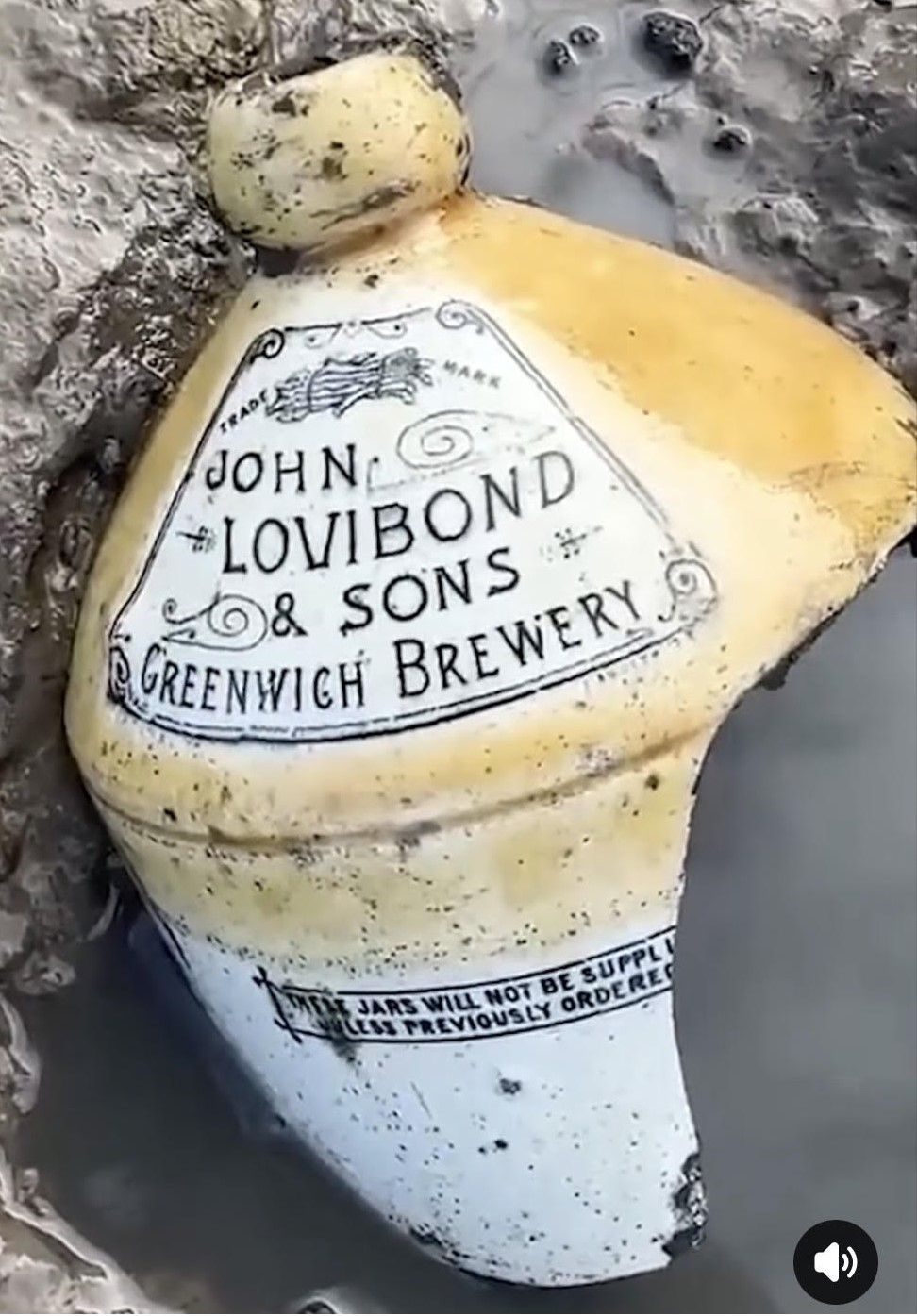
The nice thing about the youngest kid having a job with shifts that end at 11 pm is a fella like me can stay up late for the NBA Finals, listening to 660 AM every second evening when I am waiting out in the parking lot for the kid’s shift to end.*  I am not saying I am some sort of “Mr. Knicks” but this run has been fun. But that’s ending soon and it’s all going to be World Cup naptime late afternoons for the next few weeks. It’s exciting be this idle. And when I am not fixated on bandwagoning basketball or ignoring what FIFA actually stands for, I fill the empty hours with social media where this week I saw that shard up there, a bit of a jug pulled from the mud of the Thames by the ever excellent Nicola White on FB. Obvs I noticed what you notice. Mr Lovibond? Turns out John L. was (maybe*) the father of Joseph L. who was the inventor of the Lovibond scale used to describe the colour of beer. Neato. That jug is no more 150 years old given the trademark registration of 1876. I am but a pup.

What’s else up? Well, for starters, we are coming up is the 150th edition of The Session as Boak and Bailey explained:

On Sunday 28 June 2026 we’re going to post something inspired by the late Martyn Cornell’s final epic work of beer history Porter and Stout. We’d love you to join us. The first problem is that the book is quite expensive. The second is that it is large and intimidating. To make this easy for ourselves – and for everyone else – we’re suggesting that you can join in the Session even if you haven’t read the book. Your post just needs to be in some way a response to it, or to Martyn’s previous work on the subject of porter and stout. If you can read some of the book, though, even if it’s just a few pages or a chapter on some aspect of the history of porter and stout that particularly interests you, that would be great.

Excellent. Perhaps as an aid in your considerations, reflect on what Dr Christina Wade posted an excellent post this week on the need to be aware that choices are made when topics are chosen:

I love beer, in particular, and most especially, I love craft beer. And to add an additional layer to that, I love history. Adore it… So, to be able to combine those interests together into a research topic is a personal favourite of mine. I love both of these elements so much. History and beer. And I have decided, because I love them, that everyone else should as well and I am going to write about them in a way designed to convince you of that. This doesn’t sound particularly sinister, but it can be. Think of all the ways people write to try to convince you of a certain standpoint, or view, or historical ‘fact’. So when you are reading, and indeed, when you are writing yourself, keep this in mind. But even choosing the topic can be this way.

And, perhaps reflecting that, Jeff did just that when he applied a little mathematics to do a fact finding exploration of the obvious this week with his description of the state of big craft breweries since 2021:

Behold this table… The list excludes companies like Tilray, with many brands and breweries. The “Change” column on the right-hand side measures the breweries’ five-year performance. An asterisk indicates a brewery the BA does not designate as “craft.” As you can see, one-third of these larger breweries grew, while two thirds shrank. If you remove Athletic, which actually produces a different product, the overall performance of these big breweries worsens considerably. It’s a collective loss of around 2.2 million barrels, an overall decline of 16%.

You can follow that link to Beervana to check out that table but while Jeff says he didn’t provide any analysis in his post the fact is he didn’t need to. The math is the math. You know, it’s not fun to keep pointing it out but it is necessary given how many trade officials and some trade writers aren’t addressing, aren’t really admitting.  But “chef’s kiss” to that comment about the Athletic… that’s funny… and correct.

And over at the Cleveland Prost, Will Cleveland has provided us an extended explanation of the origin of Genessee Cream Ale, the best old school beer brewed on the south side of my very own lake:

In the late 1950s, Geminn was working with two offerings that each had a ceiling: Dickens Dry Ale, available between 1956 and 1958, which consumers found too spare, and 12 Horse Ale, popular but heavy in a way that limited how much you wanted to drink of it. He needed a middle ground. The influences pulling at him were multiple. Genesee had deep German roots, but brewery owner Louis Wehle had long been drawn to English ales and Burton-style brewing systems. “Clarence was looking for a lighter-drinking traditional ale,” says Tyler Muhs, Genesee’s brewing manager. “We had that German heritage, but Wehle was infatuated with those English ales, Burton systems. So I think that’s what they were looking for when they came up with it.”

And remembrances have been shared for Rob Jones of Dark Star Brewing, that started out at the Pitfield location that I visited back in 1986, hauling back polypins and two of Dave Line’s books on brewing across the ocean in my backpack. Phil Mellows shared his thoughts in the Morning Advertiser:

Rob Jones, the founder of Dark Star Brewery and landlord of the Duke of Wellington pub in Shoreham by Sea, Sussex, has died following illness. A quiet genius of modern brewing, Jones shot to fame when he became the first independent microbrewer to win the Supreme Champion title at Camra’s Champion Beer of Britain contest in 1987 with a hard-to-classify strong ale called Dark Star, created at his Pitfield Brewery in Hoxton, east London.\nHe had started that brewery in 1981 with his schoolfriend and fellow home brew enthusiast Martin Kemp.

Speaking of a classic brewery, Ed visited Sarah Hughes and shared his findings this week:

Having been a fan of Sarah Hughes Dark Ruby Mild since I was a teenager I was determined to visit the brewery when I heard that the Brewery History Society AGM was being hosted by Bathams. Sarah Hughes and Bathams are only six miles apart so it seemed like an ideal opportunity. It took a bit of organising, and I was so looking forward to it I was nervous something would go wrong. But the people at the brewery were very helpful and it all went fine on the day.  Is it’s a small brewery we were taken down in several groups and I wasn’t in the first group. This did make me a bit twitchy as I waited for my turn. But it wasn’t for long. 

Twitchy. Ed has been on a roll recently. I have often wonder what causes a revival of bloggy scribbly but brewing equipment that’s made of wood and copper is one good reason. That and the twitch.

Care of Laura H, we read that the fine municipal curatorial authorities in Wolverhampton have made an excellent decision:

The history of one of the West Midlands most important businesses is being preserved for future generations by Wolverhampton City Archives…  Beer was first brewed in Newbridge in 1874, before the Park Brewery was established in Wolverhampton the following year….  When Park Brewery closed last year, the importance of preserving its history was recognised, and a large and varied archive relating to the brewery and its associated companies has now been donated to Wolverhampton City Archives. The collection spans from the late 19th century through to the early 21st century and… includes a wide range of records, such as brewing and stock books, ledgers, minute books, maps and deeds, annual reports, photographs, packaging and publicity material. There are also employee records including wage books, pension scheme information, and a First World War roll of honour.

Good job. Back to the scene today, Coors Light has rarely been on my radar as a particularly clever culturally sensitive brand but this new use of Québecoise slang in their regional ads is just that:

The campaign, ‘T’en veux une frette?’ (Want a frette one?) leverages a local slang term for ‘colder than cold’ – frette – to remind Québeccers that they don’t just want a cold beer, they want a frette beer, through a series of humorous vignettes showcasing Québeccers’ strong preference of frette. The situations pay off with a twist to the brand’s current tagline, ‘Want a cold one?’ with ‘T’en veux une frette?’

See, me? I would order une frette but never a Coors Light. Sticking with me, once upon a time, I got to negotiate part of a verticle interior leafy greens farming deal. Faces challenges bit it can make a lot of sense in northern Canada where something like a railway container can pump out the stuff of salads when it’s below freezing outside. Interesting, then, to see the idea adapted to hops:

Ekonoke started life as a leafy greens operation, but shifted gears long before that part of indoor agriculture started its brutal and ongoing correction… As with outdoor production, hops inside Ekonoke’s farm grow vertically, wrapping around trellis-like structures that climb eight to 10 meters high. The process is significantly more complex than growing leafy greens indoors, says Sagrario. In addition to longer crop cycles, the process requires constant updates to the nutrient formula pumped to the plants, based on the stage of the crop. Humidification control is also a constant challenge…

All of which is to say that there will be fresh hop beer on Mars in 2063. Again with the me, Knut has written about a Norwegian brewery using Norwegian ingredients and somehow I show up:

There is a side story here. Back in 2007, we were a handful of beer bloggers scattered across the globe. I had the pleasure of having frequent contact with Alan McLeod, who continues his beer writing to this day. I’m thought his blog posts from that golden age were long gone – but look what I found.. He had a bit of advertising on his blog, and decided to spend some of the money to buy a few bottles of Westvleteren 12 from a Dutch web shop to send to a few of his contributors. I was one of them. 

Aaaahh for the days of paying ads on a beer blog. And for customs documents with Belgian ale, shipped from the Netherlands to Norway to pay for the price of an ad on a Canadian beer blog. As you wrap your mind about the way we were, here’s some notes:

Note #1: “Thanks. I hate it.
Note #2: Australian wine prices have collapsed in China.
Note #3: Is beer losing out to wine and spirits?
Note #4: Pellicle’s portrait of Purple Moose Brewery in Porthmadog.

Sausage meat!?!? Mr. Gladman says it is a you thing, not a gin thing:

Sweet summer child, do you know how many shit whiskies there are? Nor is it necessarily any less industrial than buying in and redistilling neutral spirit may sound. I mean good God, some Scotch giants pump the stuff out like so much sausage meat. So no, gin isn’t “just” flavoured vodka. Gin is gin. Like it or don’t like it, that’s up to you, but please don’t kid yourself it’s an inferior category just because it’s not for you. Maybe you just don’t have the palate for juniper.

What’s that? Where’s the World Cup beer news? I can’t find the link to the story that some educator posted “Ten Pastry Stouts to Pair With Haiti v Scotland!” but, yes, Voodoo Rangers is likely the proper order to make on Saturday. “No Scotland No Party” is the song that I have just learned my traveling first cousin (once removed) will be (drunkenly) singing:

 … they live by the motto: No Scotland, No Party. “In Munich (during those Euros two years ago), you saw the impact the fans had. People just seem to love Scotland,” says Duke… People seem to feel at home with us because we don’t take ourselves too seriously”… They thought the estimate of 100,000 travelling Scots was a joke until Munich, the beer capital of the world, was drunk dry before a ball had even been kicked. It was a similar story in Czech capital Prague for a European Championship qualifier in 1999. The Scotland fans had congregated in the old town square, so when the area’s bars ran out of alcohol, the riot police arrived expecting trouble. Instead, when the lorries arrived with more beer, the Scots hopped aboard and helped unload the kegs themselves.

For some of the Home Guard who can’t travel, Imran has shared the best pubs to watch in Edinburgh. Elsewhere, England’s Gus bought beer from every nation. Here in Ontario beer stores’ opening hours have been extended just as have restaurant hours in Boston. Expectations are high for mass consumption:

To reach its 1bn pint estimate, analysts from Jefferies extrapolated beer consumption data from previous World Cups. The extra sales equated to a 3 per cent uplift during the 39-day tournament, which Jefferies annualised to 0.3 per cent, equating to 5.9mn hectolitres, or an extra 1bn pints. Analysts expect the World Cup — which is being hosted across three major beer markets: the US, Canada and Mexico — to boost sales volumes by between 0.2 and 0.3 per cent for 2026. Jefferies analyst Ed Mundy said “match timing is the unsung hero of World Cup beer consumption”, pointing out that games featuring countries in Europe and the Americas had largely been scheduled to coincide with peak local drinking hours of between 5pm and 11pm.

Sadly, as CNN reports, Michelob Ultra will adorn an MVP trophy given to a player after every match. Hopefully that side of the trophy can be turned to the wall. Now, where is my tartan scarf and my copy of that 1978 Scotland World Cup LP?

That is it. A jam packed week of news and cogitations. As you soak it all in, don’t forget to check out Boak and Bailey posting on Saturday and adding to their fabulously entertaining footnotes week after week at Patreon. And do look out for more of Stan’s new “One Link, One Paragraph” format. Then hunt out something in someone’s archives! Leave oblique comments on someone’s post from 2009!! Listen to a few of Lew’s podcasts and get your emailed issue of Episodes of my Pub Life by David Jesudason on certain Fridays. And Phil Mellows is at the BritishBeerBreaks. Once a month, Will Hawkes issues his London Beer City newsletter and do sign up for Katie’s wonderful self-governing totes autonomous website featuring The Gulp, too.  Ben’s Beer and Badword remains on pause but there is reading at The Glass which is going back to being a blog. Any more? We have Ontario’s own A Quick Beer and All About Beer is still offering a range of podcasts – and there’s also Mike Seay’s The Perfect Pour. Plus follow the venerable Full Pint podcast! And there’s the Craft Beer Channel on Youtube as well as the archives of the Beer Ladies Podcast.

*Now, I hear what you are saying: “WTF? New York isn’t part of Canada, Al?!?” But for 23 years I could see the northern edge of the state out my office window. And I’ve listen to WFAN sports radio for decades and, yes, the game is on 880 AM but the freaking fan DJs are on 660 AM. Plus OG Anunoby was my favourite Raptor who went to the Knicks so…
**what about Henry?

The Most Moon In June-y June June-ster Set Of Beer New Notes Of The Year So Far

It’s been a fabulous week hereabouts. Hard to suggest otherwise. A whole twelve days since the last close call with frost means I have about 45 tomato plants now out in bigger pots and into plots, one seen above. Last year’s dried garlic stems are one trick to keep the bugs away. You… are welcome. These are the sorts of things that occupy the newly retired mind. Mulch options. It’s a lot like that last summer before I had a job, the one after grade eight. Not quite mindfulness. More like mindlessness. But I suppose that’s the point after 46 years at the coal face. Or I suppose the keyboard. I am betting 50-50 that I will be driven nuts by this idle stuff come September. Maybe.

10 am EST: HOLD THE PRESSES!!!

There’s been a couple of updates arrived in the inbox after the deadline for this here Thursday beery news notes to be released to the unsuspecting.

First, Ron P. has posted a video that debunks a number of Scottish brewing myths. This is an excellent public service which I expect you will fully embrace… but… I have to note… he has chosen the oddest intro theme. Now, to be very clear Ron is a man who has not only excellent taste in music but has been to more concerts of every band I loved as a kid than anyone I have ever met. So… I am not sure why he chose a short tune that sounds like teenage whales practicing new ways of vocalizing while one fin has been clamped into a medium sized vice.

[UPDATE UPDATE: see the comments… Ron is the artist. I am reevaluating my appreciation…]

Then, more seriously, David J. has published a newsletter with his thoughts on the relationship between gambling addiction and drinking:

“Gambling was causing me pain and drink became the thing to numb the pain,” Harj tells me. Harj isn’t a one-off. There’s thousands like him who have been exploited by betting companies and have lost everything. Some have committed suicide because of their addictions, while many have hurt their loved ones by their actions; Harj tried to kill himself in August, 2020 by driving his car into a road’s central reserve. I say thousands of addicts but it’s probably much more than we realise becauseguess whatbetting companies won’t provide data that could lead to us being shocked into calling for radical reform. They won’t even release information on how much revenue they gain from the highest volume gamblers.

There are two things I am eternally grateful that I have not taken up: gambling and smoking. David’s subject Haji is now a spokesperson against gambling addictions and notes that there are few controls around betting machines in pubs where the connection between booze and betting is most direct. Have a read.

[Ed.: Update over. As you were…]

What is going on? First up and in anticipation of the World Cup that starts next week, Eoghan is visiting and establishment of some sort representing each team in the competition – all of which are located in his home of Brussels. The first stop on the tour was an ersatz US diner or milk bar which reminded him that “American cultural hegemony is ebbing” which is fair. But next up was a trip to the “Canadian” site, the qualifications for which is always interesting to a Canadian:

It’s important from the outset to say that La Luck is not a Canadian restaurant, nor does it have I think any pretensions to being Canadian. If it is known for anything, it’s as a board game bar, with the upper floor reserved for game players. There are no Canadian nods in the place’s décor – no maple leafs, no elongated hockey sticks, and certainly no well-loved photos of Wayne Gretzky or Alanis Morrissette. Instead, La Luck’s owners have gone for the vintage market bric-a-brac look, with it stuffed with old mirrors and picture frames and sundry recycled wall decorations. In the hour and half I was there, I failed to hear any Chad Kroeger or Avril Lavigne on the bar’s soundsystem. And the service, of which I will speak of more later, does not appear to reach the level of North American efficiency, or overt Canadian friendliness.

I like it. That is an entirely Canadian approach to Canadian-ness. Wouldn’t want to make a show of oneself. Not to mention they lost his order of poutine for over an hour. Does that speak to my nation? I dunno. Still, my own country is in fact hosting World Cup games and the Old Country has finally made it for the first time in decades… and, even with that, I think the argument made in The New York Times this week is all booze industry wishery:

…for beer manufacturers, the World Cup is a giant, multiweek, Olympics-meets-Super-Bowl sporting event that FIFA, soccer’s international governing body, projects will draw a global audience of six billion. There are early signs that beer orders will rise during the World Cup. In April, a forward-looking indicator of beer purchases expanded for the first time in 21 months, said Lester Jones, the chief economist for the National Beer Wholesalers Association, in an email. “Host cities for World Cup events will certainly experience an increase in both on- and off-premises beer sales as consumers enjoy the games,” he said. Beer industry analysts say Americans’ attention to the tournament will depend, in large part, on how far the U.S. team advances.

I am aware that forecasting and futurism sits somewhere between fantasy and fraud so we will have to see how this all plays out… but… BMI does have some stats that put the anticipation of a bump in context:

Beer industry volume down 6.1% for 4 weeks thru May 16 in NIQ data. That’s far worse than 3.3% drop yr-to-date. So this is yet another data point strongly suggesting industry got much softer in Q2, as consumers undoubtedly feeling the pinch from higher gas prices, among other factors.

Focusing on the smaller scale, Franz D. Hofer welcomed the new month with a post on the smaller beer gardens of Munich including one with bees:

A few beers later I headed west into the woods toward Aubing in search of a fabled beer garden surrounded by beehives. Passing a pond here and a few ducks there, I eventually found this little gem in the forest — Waldwirtschaft Bienenheim, the place where the bees live… About a hundred and fifty years ago, King Ludwig granted this plot of land once used for brickmaking to the Obst und Imker Verein (Fruit Growers’ and Beekeepers’ Association) of Aubing. And the Wirtshaus with its beer garden? It’s the former clubhouse of the beekeepers’ association. To this day the beekeepers of Aubing still hold their club meetings at the Wirtshaus.

And, somewhat similarly but with less charming results, Lisa shared thoughts on Token, a re-opened Dublin bar that left her searching to put a finger on a categorization that fitted the place. Previously at the old spot…

…it felt like a neighbourhood bar that offered something of an alternative to simply ‘sitting at the bar,’ though you could do that as well, if you preferred. This Token, however, feels very much more transactional, and much more, well, bro-y. And it may be that this vibe is a direct result of this new space: surrounded by bland offices and corporate apartments, it now feels like an after work ‘enforced fun’ spot for company meetings. The prices certainly fall into the ‘someone else is paying’ category with an ambitiously-priced pint of Scraggy Bay on offer for €8.20 (and a service charge added to food orders, despite it being relatively difficult to find someone to take your payment when you want to leave, even at the bar).

A “someone else is paying” bar is an excellent label. Hotel bars near industrial parks perhaps? Staying in Dublin, Cian Duffy has described another class of drinking hole, the neo-thatch:

Dublin has a reasonable number of thatched pubs, for a fairly urban environment. There aren’t any in the city centre, but there are plenty in suburbia. However, they are almost all pastiche in style. The thatch is real – very real, very expensive and requiring very skilled trades to install and maintain it; but the pubs were not thatched originally, and some are or were new buildings. As far as I can tell, the trend for this was started by the only thatched Dublin pub to have since been demolished (yet!), the S0440 Stillorgan Orchard, which was thatched in late 1988. A number of other pubs were thatched over the next few years, as this trend proliferated. S0232 Glenside was thatched during a renovation in the 90s, with N0300 Lord Mayors in Swords being thatched during its extension renovation in 1992…

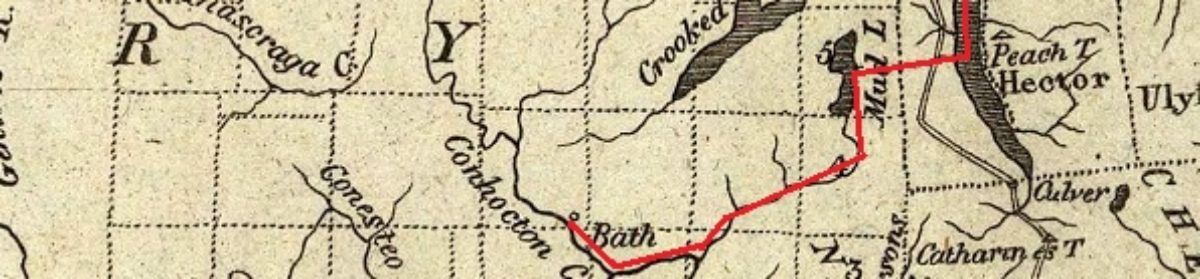
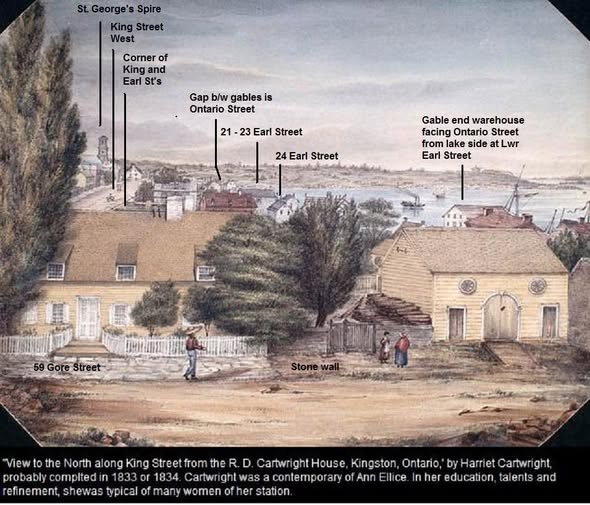
How many times have any of us exclaimed “the thatch is real!”?  It’s not done around these parts, though I have an image that might show a thatched roof or two hereabout in 1833. As you consider that, here some notes:

Note #1: who “placed trust” in the self-reported data the BA uses?
Note #2: Knut on the cost breweries pay to attend beer fests.
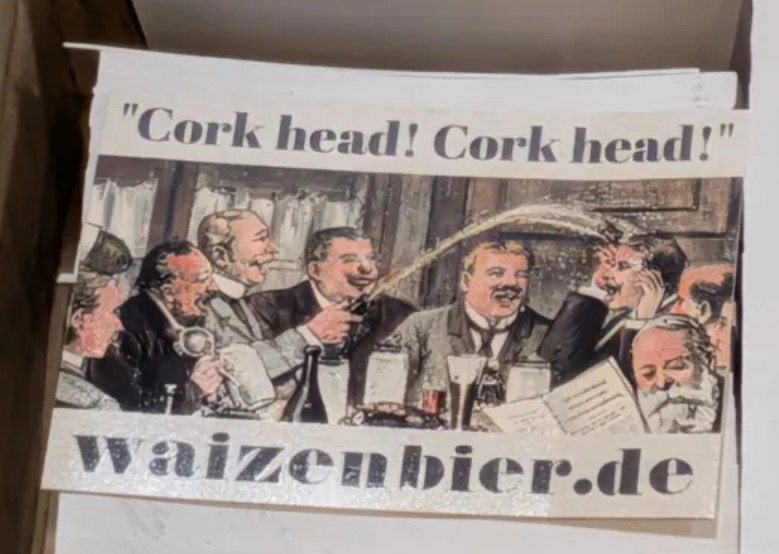
Note #3: I’d be checking the corks for tampering before sipping Stalin’s wine.

As you know and as I know you know and as you know I know you know, “A Glass of Handmade” by William Least Heat Moon was published in The Atlantic in 1987. It’s a consideration of the state of microbrewing at the time and contains one of my favourite lines, a statement by Bill Owens of pioneer brewpub Buffalo Bill’s: “…I don’t make ale. I can’t waste time educating Americans about ale…” Owens brewed a light lager that cost him seven cents a glass to make and sold for $1.50. The brewpub is still thereJeff told the tale this week of similar project almost forty years later in Portland, Oregon:

“If we were going to do a light lager, we wanted to do it right.” Sam said. “Let’s not copy another beer, let’s just make the best light lager available”… The brewery can still make a profit on a $3 pint, but it then becomes a volume proposition. But because it’s so cheap, the volumes have really gone up—a virtuous cycle. And just having the beer on the menu has created a halo effect. The typical customer doesn’t come in solely for cheap Clubhauses. Instead, they vary their session with a Clubhaus and other beers, saving them money they then use to spend on more beer or food. That’s why people end up spending more.

Here’s to that beer lasting until about 2064. That would be excellent. Speaing of which last Friday ATJ experienced the excellent if not even the sublime* and shared the moment:

I have finished my beer but such is the mood of completeness, that serenity I mentioned earlier, the tranquility that bathes my soul, I decide on another pint of the same beer. Once again there is a dance to the music of time on my tongue as I take deep sips that are almost transformed into swigs from my glass. There is a sense of mindfulness as I sit on this wooden bench that acts as a living memory of someone called Dave, moments of calmness and reflection as I look out over the river and the landscape stretching away, aware of the high canopy of blue stretched with fluffy white above me. Everything is in order, the beer, the views, the slow susurration of voices behind me, and even though this outdoor space at the Bridge is bordered behind me by a road I don’t even notice the passing traffic.

Two tales of the Isle of Man this week. First up, check out Katie‘s excellent piece in Pellicle on the good beer scene there. Then, add the notes shared by Ed from his time at the biggest and apparently little loved brewery in the dependency, Okells, his former Manx employer:

I briefly worked at Okell’s a few years back. The job was one of the worst I’ve had, a cesspit of office politics. But the beers were the best on the island… I got first hand experience of the distain some Manxie beer geeks hold Okell’s in when I attended an event at the Hooded Ram brewery. It was a microbrewery run by a lovely guy called Rob Storey. He’d invited Okell’s staff over to the event so I  went with one of the lads from work. I had an inkling of the view some held about Okell’s, but I thought it better to be up front about where I was working so wore a branded work t-shirt. I was still a bit put out that someone booed when I arrived though! 

(Neither of them mentioned Kelly.) On the topic of an entirely different sort of search, I don’t know if I am wanting to find the cheapest beer in the world but, yes, it is likely that it might be found in an unrecognized state where Russian troops are both posted and somewhat cut off… perhaps much to their relief these days:

Official Foreign Office guidance advises British tourists against traveling to Transnistria but, in the interest of scientific research, Robbie decided to take the risk. It proved to be worthwhile. Exchanging his remaining Euros for some of the curious Transnistrian currency – which uses plastic coins more like something from a board game than from a bank – Robbie finally managed to find a beer that could compete with Yorkshire prices. He explained: “I’m delighted I managed to beat the 99p pint with this 77p one. It’s a surprising we had to go to such lengths to get a hold of it though.”

More than likely a notch or two higher up the old snack bracket, Ruvani de Silva shared the history and current scene for bitters for The Alchol Professor with a focus on the finer kind which may assist me with my Crown Royal studies:

Contemporary mixologists have an almost unlimited palette of bitters flavors at their disposal, from yuzu, bergamot, and cardamom to Japanese chili and saffron. By incorporating more international ingredients into their bitters, craft bitters brands are helping mixologists introduce more global flavors, which in turn can bring craft cocktails to a wider audience. “When an industry is shaped by a wider range of backgrounds, cultures, and experiences, it naturally leads to new flavor profiles, new use cases, and new ways of thinking about cocktails and hospitality….”

Bitters and soda on a stinking hot day? Anytime. Time may have run out elsewhere. In Will HawkesLondon Beer City this month, he shared the history of the Grove Tavern, a shuttered 1920s pub awaiting the demo ball which sits on the site of earlier establishments before the city moved in:

In the 18th century, the Green Man’s appeal derived from its rural qualities. Dulwich Wells sat beside the pub, noted for its mineral-rich water, the Matcha Latte of its day. The landlord in the 1740s, Francis Cox, also created Cox’s Walk, a tree-lined pathway that runs southwards and still exists today, to connect his pub with Sydenham Wells.  Rural delights remained the pub’s calling card for decades: as late as 1864 – by which time the Grove had been rebuilt by Courage – the pub was advertised on its rural qualities. “If you want to enjoy the country air, go to the Grove Tavern, Dulwich!” readers of the London Daily Chronicle were told. “If you want to ramble amidst rural scenery, go to the Grove Tavern, Dulwich! If you like swings, quoits, bowls or cricket, go to the Grove Tavern Dulwich!”

And from the police blotter this week we have a story of crime out of Hollister California – a crime weaponized with beer:

During the first incident, police said surveillance footage showed a man riding a bicycle who stopped and approached the robot, before knocking the robot to its side before leaving the area. A second incident involved another suspect approaching a robot near 4th and Line streets. The suspect appeared to strike the robot before approaching a second robot that recorded the interaction. Police said the suspect struck the second robot and poured a liquid, believed to be beer, before leaving the area… police chief Carlos Reynoso confirmed two people were arrested following unrelated incidents.

Is pouring a beer on a robot a crime? We will find out. And with that, we are done for another week. While you wait around, drumming your fingers at the dining room table as loved ones ask “what’s wrong?” dont forget to check out Boak and Bailey posting on Saturday and adding to their fabulously entertaining footnotes week after week at Patreon. And do look out for more of Stan’s new “One Link, One Paragraph” format. Then hunt out something in someone’s archives! Leave oblique comments on someone’s post from 2009!! Listen to a few of Lew’s podcasts and get your emailed issue of Episodes of my Pub Life by David Jesudason on certain Fridays. And Phil Mellows is at the BritishBeerBreaks. Once a month, Will Hawkes issues his London Beer City newsletter and do sign up for Katie’s wonderful self-governing totes autonomous website featuring The Gulp, too.  Ben’s Beer and Badword remains on pause but there is reading at The Glass which is going back to being a blog. Any more? We have Ontario’s own A Quick Beer and All About Beer is still offering a range of podcasts – and there’s also Mike Seay’s The Perfect Pour. Plus follow the venerable Full Pint podcast! And there’s the Craft Beer Channel on Youtube as well as the archives of the Beer Ladies Podcast.

*Finally, that 1983-84 honours undergrad English course in Romanticism pays off.