The Beery News Notes For The Threat Of Frost And The Yanks And Jays In What Might Just Be A Post-Passion World

Well, since we last met… yes, fine… the Red Sox lost last Thursday. But then the Yankees (who beat the Sox… my Sox) got their own butts kicked in the first two games of the next series by the Jays who took it all in game four last night which… sorta made me feel… schadenfreudig? Is that the word? I dunno. Or is it dünno? Anyway, the other word on my mind is frost. I will only know at sunrise this Thursday morning if the sheets and covers that I threw over the tomatoes and basil and beans did the job. (Update: -0.3C at 6 am!) But it is autumn. And it doesn’t matter if there is no frost for the two weeks after today if the frost came today. Most years, with luck, I can coax something or another to keep on growing right up to November. With luck.

Speaking of words, on Tuesday Jeff wrote about the doom and gloom in the beer trade, reviving some thoughts from 2013 as he did – a discussion in one way about perceptions that the choice of words convey as much as the context. The context being if one is on the way up or the way down. This week’s news notes seem to carry a bit of the weight of those sorts of perceptions so I feel like this sort of preamble is needed to remind ourselves that it’s just the point in time we find ourselves in. We need to reflect. To consider our lot. Sorta how I feel when I look at the black leaves of a tomato patch after a killing frost. When I reflect. And swear a little. So I will perhaps a bit intentionally mix the bad news with some things that are lighter and see what happens. Good thing there’s plenty to read.

First, about that cyberattack* in Japan on Asahi that I mentioned last week. It seems that it has been resolved but I hadn’t appreciated how it create quite serious issues for the broader Japanese bevvy and snacking market:

Most of the Asahi Group’s factories in Japan were brought to a standstill after the attack hit its ordering and delivering systems on Monday. Major Japanese retailers, including 7-Eleven and FamilyMart, have now warned customers to expect shortages of Asahi products… Asahi is the biggest brewer in Japan, but it also makes soft drinks and food products, as well as supplying own-brand goods to other retailers… In its latest statement, Asahi said that as a result of containment measures following the attack, ordering and shipment systems in Japan had been affected and it was also unable to receive emails from external sources.

Speaking of containment, consider Mr. Gladman on two types of entryways to basement bars and how their architecture guides the experience:

The street-steps-door type of basement bar usually has windows somewhere on its street-facing wall and so maintains a connection to the city outside (Type A Basement Bar in the Gladman Taxonomy of Bars…)  Bars like this can be hard to find even if you know about them… It’s a tiny adventure that ends with a delicious reward. These bars are often unpretentious and cosy — everyone is hunkered down together, hidden away in a prime spot, unnoticed by the schmoes passing by just a few feet above. The other, street-door-steps type of basement bar (Type B) is even more concealed at street level, often offering just a small sign above a door. Within this lurks a clipboard-wielding, radio-headset-wearing guardian, like Cerberus at the gates to a boozy underworld. Once you’re in, it’s often entirely devoid of natural light. It is its own world, womb-like and all encompassing.

Not so many people walking down these sorts of steps in Brazil – both Type A and B – which is reasonable given the news:

…the market has a new worry: the crisis caused by contamination of distilled beverages with methanol. For now, it’s not possible to determine the impact of this on the beer industry going forward. On the one hand, bars are emptier and parties have been canceled due to the negative repercussions of the contamination. On the other hand, greater consumer concern about cocktails has led to a strong shift toward beer, seen as safer.

My dive bar tourist trip to Rio is now officially cancelled. But more weclome might be a stop at The Dog and Bell in Deptford, London which is the subject of this week’s feature in Pellicle penned… or perhaps rather keyboard clicked by Will Hawkes:

This backstreet boozer in a historically unglamorous part of town has not only survived the pub cull of the past few decades, it has thrived. Indeed, few London pubs are currently more fashionable. How? Well, for all the Dog and Bell’s singularity, its story tracks the evolution of pubs in modern London from the 1970s, when they were ubiquitous, to now, our frantic, distracting era of Instagram Guinness and event culture, when a simple pint in the pub is no longer good enough reason to get off the sofa. It’s been a long journey, but at every key junction over the past 50 years this charismatic pub has taken the right turn. 

A loving portrait of a welcome local and perhaps unexpected gem. Conversely, I don’t expect to be following in the footsteps of  Jason Wilson who brought an extreme level of exactitude to the consideration of an extremely expensive beverage – coffee that costs $30,000 a kilo:

Each sip I tried—and we were served small sips because of the limited amount of this coffee—had its own personality. Each producer and variety had a different flavor profile, mouthfeel, aroma, even color. While some may regard coffee tastings like this one as snobby or ridiculous, I appreciate the intense mindfulness and attention to detail coffee fanatics have. In one sip of coffee, there are flowers, fruits, foods, and even songs. I tried each of them for myself, then read the judge descriptions from the Best of Panama auction to compare thoughts. Some may disagree, but I try to treat it as if there is no right and wrong, just opinions.

And, speaking of opinions, Boak and Bailey posted a bit of a questionaire on the status of Belgian beer culture, asking folk for their thoughts about whether the beers and pubs they encountered on a recent trip were (my words) out of date duds or treasures at risk:

There’s also something about how the beers we tried on this recent trip didn’t seem to have evolved from Belgian brewing tradition so much as they were inspired directly by American-led homebrewing culture. It’s really weird to drink a Belgian-brewed saison and think, huh, this tastes like one of those ‘farmhouse IPAs’ people were making back home in about 2012. When we think of newer Belgian breweries we do like, it’s because they’ve found a way to push the parameters while still producing beer that tastes and feels Belgian.

This generous sort of the asking of the questions is a very useful tool of one is wanting to advance one’s education. Seek the views of others to check your own assumptions. Among the responses, the particularly well-placed Eoghan provided a lot of insight from the local point of view:

I don’t disagree that Belgium has one of the richest and most diverse beer cultures in Europe, and it is a small miracle that so many idiosyncratic beer traditions managed to survive the tumultuous 20th century – more tumultuous here in Belgium than they maybe allow for. But it was their proposition that Belgian beer culture is defined by evolution not revolution that prompted my little piece of anachronistic time travel above. It is true that Belgian brewers – to borrow an idea I first stole from fellow Belgophile Joe Stange – are past masters at co-opting and finetuning wider brewing trends to make them palatable in Belgium. My contention is, however, that the history of Belgian beer is more of a Hegelian dialectic, a process of thesis-antithesis-synthesis evidenced less by evolution that by periods of stability punctuated by significant, discombobulating ruptures.

See, that is great. Fascinating – and I don’t even know what half of that up there means! Another thing I don’t know is whether a Spanish beer brewed in Britian in a British brewery owned by a Spanish brewing firm is Spanish or not:

This week Damm will make its first meaningful manufacturing foray outside Iberia when it opens a brewery in Bedford. The move represents an investment of almost €100 million (£87 million) and will create scores of jobs. The company is going to great lengths to ensure its UK-brewed beers taste the same as those made in Barcelona by sticking to the original recipe and investing in the equipment to ensure the product is identical.

Hmm… I still don’t know. But if we are sticking with the examination of not only how things became what that are but also what are these things in themselves, there is no better assessor than The Beer Nut who wrote about the recent final edition of the annual Borefts beerfest:

Two brewery stands at the 2025 Borefts Beer Festival seemed to have almost continuous queues. One of them I could understand: the New England legend Hill Farmstead. Early on day one I tried the barrel-aged coffee porter they brought, The Birth of Tragedy… This isn’t the sort of beer I associate with Hill Farmstead but it has been created with the same level of expertise. Canadian brewery Badlands was next to them and was, if anything, even more popular with the crowds. I had never heard of them so had no idea what the fuss was about. After they sold out and closed up early on the first day, I made sure to be there early on the second… [After trying two of their beers…] I was none the wiser regarding the Badlands fuss. They didn’t seem to be doing things particularly different to a thousand other microbreweries..

So, there you have both broader analysis of the cultures of beer as well as specific examination of each beer, drip by drip in the common context of the fest. All cheery and interesting exercises in digging around and thinking about beer. David Jesudason dug into another chestnut for the Wine & Spirit Education Trust, unpacking what’s called IPA but what he calls “IPA”:

The first ‘IPAs’ – note quotation marks – were sent out on East India Company boats in the 1760s and were strong, highly hopped ales due to India’s warm climate: the hops’ antimicrobial properties combined with the high alcohol level aimed to prevent spoilage. These were a cross between a bitter and a barleywine and by the time they arrived in India the hop character had vanished into the Bay of Bengal. They were said to taste more like champagne than beer. In reality, they were a world away from a modern IPA. Samuel Allsopp was the first to market them as Indian Pale Ales – and tie them to colonial decadence – after he copied Londoner George Hodgson’s recipe but crucially brewed them in Burton, where the minerals in the water further emphasized the beer’s hop character. These were bitter British ales or similar to heavily hopped autumn stock beers.

And Laura Hadland took on a task that I wish more writers who focus on beer attempt – discussing wine:

The lights were low for a chic soiree organised by Wines of Hungary at Vagabond Wines in Birmingham yesterday. Twenty five producers were showcasing their wines to an enthused audience of trade, media and more. I had an hour to work my way round the hit list that I had prepared in advance – nowhere near enough time. Especially since the winemakers and their sales teams were so enthusiastic about their wares that they all insisted on having us try every single one.

My experience of Hungarian wine started with some pretty hefty even harsh Bulls Blood out by the town’s water resevoir in high school but I now hoard sweet Tokaji which I never seem to get around to opening as fast as I find them. Of course, that means my wake might be worth the trip as my fam gives them away along with my record collection.

ATJ shared more serious thoughts on mortality in his piece “Funeral Pints” where the swirling thoughts at a time of loss were steadied with gratitude by a bracing pint among others in a pub:

The clunk of loose change as it goes into a pitcher, ‘thank you very much William’, ‘not a problem’, a stooped man with a face that reminds me of a thinner version of WC Fields.’ ‘Here he is.’ ‘He ain’t got a jacket.’ ‘What’s it to you,’ comes the reply. ‘He was dressed up as a boy scout yesterday,’ says another voice. The man with the long face who photographed his breakfast is having a talk with himself, while elsewhere pints are piling up on tables. Tattoos, chewing, chomping, swallowing, gulping, laughing, ‘listen mate’, finger pointed without malice. We’d better get to the funeral.

The drink finds a place in so many moments. And does the job. Even now at a time which we are subject to so much that feels like wave upon wave of a grim big picture, like this data* from Beer Marketers’ Insights:

Craft beer trends (ex non-alc) steepened over the summer to volume -8.4% and $$ -6.4%; several pts below total beer volume -5.6% and $$ down 5.1% for 18 wks thru Sep 20 vs yr ago. And when comparing craft’s yr-to-date sales thru Sep 20 vs the same period in 2023, the # of craft vendors (-10%), sub-brands (-13%) and SKUs (-12.5%) are all down double digits.**

From that view of the general, for the double, Jeff also wrote on a specific application in his obit* of Upright, a favourite brewery facing its end:

Craft brewing has spent a huge amount of time navel-gazing over what it means to have a clear vision. This often bled into marketing bromides, as breweries repackaged derivative products as original and creative. That development led to some of the cynicism that marks the mood today. Upright did have a clear vision, however—and Alex seemed almost immune to commercial considerations. Upright always felt more like a sixth-generation Belgian or Franconian brewery than an American craft brewery to me.

A wonderful remembrance of the soon to be no more. Summing up based on all the above, can we draw conclusions? Well we could ask ourselves (yet again*) whether the function of good beer writing to support the industry or to more broadly understand the trade and culture. By way of illustration, consider this:

“…The Guild’s board members are all driven by our shared passion for the beer industry and those who work within it. We’re proud to represent the very best of beer and cider communicators, who are such an important asset to the wider industry…”

A familiar line that’s become cliché and so nothing against the particular speaker. A prominant popular theme voiced for the best part of two decades, perhaps until somewhat recently. I mention that in the context of this article in The New York Times which is, yes, yet another obit* for US craft beer but, perhaps unusually, one that contains some interesting admissions:

This summer, 21st Amendment believed it had found a way to keep at least some of its operations going. It planned to bring in a new partner and start buying smaller craft beer brands that it would brew in San Leandro. But in late August, the lender pulled the plug on that idea. In late September, 21st Amendment closed its flagship brewpub in San Francisco. The San Leandro location is expected to shutter by the end of this month. “We were driven by our passion for craft brewing, and we got so caught up in it that we had blinders around what the reality is for craft brewing right now,” said Shaun O’Sullivan, a co-founder of 21st Amendment. “We’re a cautionary tale right now to anybody who wants to grind down and open up their own place. It’s just not a good time.”

So is / was “passion” an “important asset” or a form of those “blinders“? Whether in business or in writing. Maybe both. What ever happened to well-earned hard-bitten steely-eyed objectivity? Why did we not foresee, just as the rise casinos and later lotto tickets stripped gambling of its vice, how craft beer was infantalizing booze with kiddie friendly fruit flavours in brightly coloured cans – and even converting every tavern into potential seminar spaces.*** I blame the “don’t judge the tastes of others” line. Who writes without hoping to offer incisive opinion? You know, if the beer writers, by error or omission, participated in priming the passion pump with boosterisms during the era of irrational exhuberence… is it not reasonable to consider that the oeuvre itself aided in the downturn to some degree?****  That’s sorta summed up by that old nugget, the one about the rising tide raising all boats that we heard so much about. We also know that the tide falls. Twice a day. Every day. But most folk forgot* to mention that.*****

Doesn’t mean, however, that we can’t learn lessons from the downturn. We might even consider ourselves now “post-passion” in our relation to beer and beer writing. That would be good. Without, you know, sponsored articles or A.I. articles****** or even A.I. sponsored A.I. articles.* That would be better. Based on the above we can see people can and will doubledown and keep digging around, questioning conventions and asking the right questions about what is and what isn’t the good stuff in all this beery culture.******* I’m sure we can. Well, you all can. I just read this stuff.

That’s a lot. And there’s still the footnotes below. While you are chewing on all this, please also check out Boak and Bailey every Saturday and sign up for their entertaining footnotes, too. Look out for Stan when he feels the urge now that he’s retired from Monday slot… maybe … maybe not. Then listen to a few of that now newly refreshed Lew’s podcasts and get your emailed issue of Episodes of my Pub Life by David Jesudason on certain Fridays. And Phil Mellows is at the BritishBeerBreaks. Once a month, as noted, Will Hawkes issues his London Beer City newsletter and do sign up for Katie’s wonderful self-governing totes autonomous website featuring The Gulp, too.  Ben’s Beer and Badword has been on hiatus since April but the archives are out there with the all the sweary Mary! There is new reading at The Glass which is going back to being a blog. Any more? We have Ontario’s own A Quick Beer and All About Beer is still offering a range of podcasts – and there’s also Mike Seay’s The Perfect Pour. Plus follow the venerable Full Pint podcast! And there’s the Craft Beer Channel on Youtube. Check out the archives of the Beer Ladies Podcast. That’s quite good and after a break they may well be are back every month! Such is life. Such is beer podcasting and newslettering… which, as Ray says, are blogs! And he’s right.

*YIKES!!!
**At least it’s not as bad as in Russia: “In the first half of 2025, retail beer sales in Russia fell by 16.3 percent year-on-year… Due to the increase in excise taxes (they increased by 15.4 percent at the beginning of the year), the cost increased accordingly. In 2023, the average price per liter of beer was 120 rubles, in 2024 — 129 rubles, and at the end of July 2025 it reached 151 rubles per liter — prices have increased by more than a quarter (26 percent) since 2023, Nielsen added.“
***The signs outside the craft beer bars said “Off-flavour Seminars Every Tuesday!” I thought of that when reading this passage from “The Engines and Empires of New York City Gambling”by Adam Gopnik, The New Yorker, August 4,  2025: “Gambling, too, now divides the world between those who know enough to make it boring and those who—bored—prefer not to know. They play and lose anyway. Thrilling games, like thrilling cities, thrive on enigmatic imperfections: the small market anomalies that quants scour for an edge, the tells and giveaways that reward the observant and elude the rest. Once all is understood, all is dull. Gambling may once have belonged to the Devil, but I assure you it does no longer. The arrival of organized gambling in its casino form has stripped away even the faded glamour of old miscreants like Rothstein and St. Clair. When, at last, detailed renderings of the proposed Caesars Palace emerged, they were hilariously decorous, showing not crowds of modern Harry the Horses and Nathan Detroits but elegantly dressed men and women in dignified black, playing in poker rooms that looked ready to host a seminar.“
****And to be sure we can also lay much at the door of the evangelizing homogenizing craft industry conference seminars which took a page from time share symposiums. Imperial Pilsner anyone? Everyone?
*****Did I ever mention I spent school years right into undergrad next to the Bay of Fundy? Nevermind. Perhaps now’s the time for the trade’s comms people to adopt of the “Big Yellow Taxi” message – “drink craft: you don’t know what you’ve got ’til it’s gone.” It could work. Something might.
******Can’t wait for that market sector‘s crash! It’s all relative.
*******BTW there was some great beer writing advice set out in last Saturday’s footnotes from B+B: “Prop Up The Bar is a new blog to us. It’s a proper old-fashioned blog, full of massive photos that haven’t been edited and typos. It’s made us think again that the professionalisation of blogging arguably didn’t do it any favours and has perhaps discouraged people from just having a go, like Nick C, using their blog as a diary. In that context, props are due to Martin Taylor whose blog is well written and well researched, but never feels as if it’s taking itself massively seriously. (Yes, we know, we should watch and learn.) It signals that, actually, you can just have adventures and quickly write them up.“

The Delightful Yet Pensively Penultimate Beery News Notes On A Summer’s Thursday For 2025

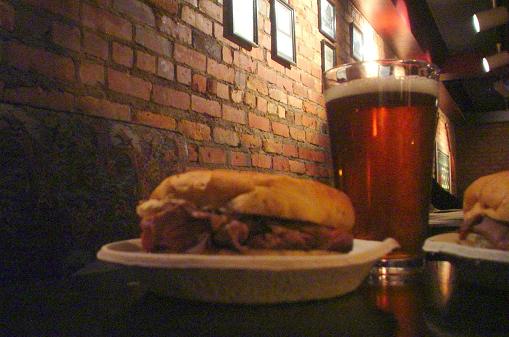
It’s been a busy week but not really in the beery sense. Guests and heirs have come and gone – and even bought a $14.99 beer on the way out via an airport bar at Montreal, as illustrated sub-wonderfully perhaps. A last bit of summer visting and the shedding of the last loonies and twoonies. Which means the home is quieter here at this end of the week compated to the other. Which is good. But quieter. At least I have my tomatoes. Did I mention my tomatoes? Definitely illustrated sub-wonderfully, that yellow one in the upper left weighed in a 1.7 pounds. And I did nothing to make it happen. Which is my favourite and most common form of success. Six varieties left to right ish clockwise: Chiltern’s Blue Bayou, Baker Creek’s True Black Brandywine, Chiltern’s Golden Sunshine, Baker Creek’s Kentucky Beefsteak, Chiltern’s Beefsteak and Baker Creek’s Orange Icicle. Picked from the catelog based on the “pin tail on donkey” method. All started from seed last winter and soon getting turned into sauce. That True Black Barleywine is the best tasting tomato ever – like it has built in balsamic vinegar. Thanks for tuning in to Tomato News Today!

First up in the world of beer, the Tand himself has also been out and about on travels and has reported back on the scene in Munich – and found out that certain things were not to be found:

Sadly, you can’t find Pils on draught anywhere, and for reasons best known only to themselves, Spaten insist on offering the dreadful Beck’s as their bottled pils in their most prestigious outlets. It appears Spaten Pils, which I recall was a lovely beer, is no longer brewed. A real shame.  In fact, Spaten it seems, only brew Helles in both normal and alcohol-free forms and, of course, an Oktoberfest. It gets worse. The whole shooting match of Spaten-Franziskaner-Löwenbräu-Gruppe is owned by AB InBev, who presumably have streamlined the brands available, though under the Franziskaner brand you’ll also find weissbier and a kellerbier.  Like Spaten, the rather delightful Löwenbräu  Pils has been dropped. It is a pretty grim picture as the odd hoppy pils provided an alternative to Helles, which in its Munich iteration, can be a little sweet, and dare I say, bland? (The locals call it “süffig”, meaning “easy to drink”. And, in fairness, it is.

And over at Pellicle, Matthew assumed the role of player / manager and reported on his travels to the French & Jupps Maltings in Hertfordshire where he found a hidden truth:

Its long history stretches back to 1689, and for more than a century the maltster has been based in the twin Hertfordshire towns of Stanstead St. Margarets and Stanstead Abbots, bisected by the aforementioned Lea, some 30 miles north of London as the crow flies. There are a few reasons for its relative anonymity—I myself hadn’t heard of them until I was invited for a visit in February 2024. One is due to the fact its malt was (and often still is) bought in bulk and rebagged by various distributors before being shipped out to breweries. And so, it might bear the name of a competitor—although in this context it’s perhaps more accurate to refer to them as partners—in the US, for example, the malt is typically sold under the William Crisp banner.

Sneaky sneaksters! Did you know? (Did I? Never mind that… let’s make this about you.) Did you??? Speaking of hidden truths, Pete Brown had a has retrospective on BrewDog, now well in to the post-Watt era and even into the post-Dickie, published in The Morning Advertiser that he unpacked into something of an obit:

To me, they always felt more like a band than a brand – not least because they wanted to be seen as punks. Bands are different. When none of the original members remain, many former fans insist that it’s simply not the same band any more, and that the newcomers who have taken over, singing songs they never wrote or had hits with, are no better than a covers band. The departure of Martin Dickie feels like the last member of the original line-up has left the building. The entity that remains may own the rights and assets of BrewDog, but it has lost the spirit and soul that once defined it… Dickie remained silent throughout. The initial allegations referred to a “cult of personality” built around both men, but specific personal allegations were focused on Watt’s behaviour. After Dickie’s departure, some former employees took to social media to say that he was “part of the problem.” 

Wonderful. I have never understood how Dickie, co-exec past and board member still, has had the teflon wrapper that he has enjoyed through downturn after downturn on what must be one of the most note worthy financial flops in recent brewing history. But perhaps it’s been a case of not noticing that scratch on your hand due to the nail in your foot.

Speaking of endings, Ed the Beer Father has shared his thoughts on the closing of Banks of Wolverhampton, mapping a fairly complex set of international bobs and weave that led to the end:

Eleven years ago the two companies with rights to San Miguel beer, San Miguel Brewery (Philippines) and Mahou San Miguel (Spain) signed a cooperation agreement to promote their international businesses and position San Miguel as a global brand. To further its growth they had already partnered with Carlsberg to contract brew it in Britain, and it was a large part of the output of the Northampton brewery. But for a brand with global ambitions partnering with the world’s biggest brewery seems like an obvious match… So, as what I believe is part of a global realignment, last year San Miguel moved its contract brewing in the UK from Carlsberg to ABInBev. Losing the San Miguel contract left Carlsberg in the UK, which owned one giant factory and two large regional breweries, with a lot of surplus capacity. The giant factory wasn’t going to go and Marston’s has the small pack facilities, which left Banks’s. So a contract change for a Spain and Philippines based international lager brand closed a 150 year old brewery in Wolverhampton that didn’t even brew it. 

Lordy. Speaking of things making one’s head spin, I totally missed Stan‘s post before the Labour Day weekend on the nature of beer bubbles so I will correct that error now:

There is more to monitoring beer foam than counting bubbles, although they are the foundation. They result from nucleation, and as those bubbles climb to first form or then replenish the foam head, proteins and bitter substances are carried into the bubble wall, forming a matrix that holds the skeleton together. In his doctoral thesis, “Beer Foam Physics,” A. D. Ronteltap calculated that a foam 3 centimeters high (a bit less than 2 fingers) in a glass 6 centimeters wide (a bit less than a Willi Becher) made up of bubbles with an initial radius of .2 mm (twice the width of a human hair) would contain 1.5 million bubbles distributed over about 100 layers.

Over a million bubbles! Not quite millions and millions but more than one million. And, while the numbers aren’t quite confimed yet, Jessica Mason pulled out the stats as she reported on the question “Can Gen Z save cask ale from extinction?” for Drinks Business:

Statistics from YouGov for the Society of Independent Brewers and Associates (SIBA) have shown 25% of 18 – 24-year-old beer drinkers regularly order cask ale. The figures mark an increase of more than 50% on the previous year… Digging deeper into the SIBA figures, there are also statistics that support the opportunity that women present in the future of cask ale’s revival. For instance, the data revealed how 22% of female beer drinkers regularly order cask ale, compared to 43% of men. But, as Corbett-Collins noted: “It would be great to see even higher numbers, but the glass half full fact is that men and women of all ages are enjoying cask beer.

Out and About Update: Max mapped a 29 km(!) pub crawl he took through the Czech countryside to plant himself in front of a beer at Únětický pivovar, Zdibský pivovar and Polepšovna ducha as well as a few other spots. I marched about a tenth of that the other weekend and my left knee let me know about it for more than one day. Good thing Max kept up a good pace because apparently, according to the white coated eggheads in the Netherlands, beer drinkers are a prime target for mosquitos:

To find out why the blood-sucking critters prefer some people over others, a research team led by Felix Hol of Radboud University Nijmegen took thousands of female Anopheles mosquitoes to Lowlands, an annual music festival held in the Netherlands… Participants who drank beer were 1.35 times more attractive to mosquitoes than those who didn’t. The tiny vampires were also more likely to target people who had slept with someone the previous night. The study also revealed that recent showering and sunscreen make people less attractive to the buzzing menace. “We found that mosquitoes are drawn to those who avoid sunscreen, drink beer, and share their bed…”

Speaking of getting bled, I received the alert from Will Hawkes: “Sorry to be right about this. No GBBF next year as it made ‘a substantial loss’, according to CAMRA.” As per usual and FOR THE DOUBLE!!!… Jessica Mason has more detail:

CAMRA chairman Ash Corbett-Collins explained how “at Members’ Weekend earlier this year, the national executive presented finances that painted a stark picture. As your chairman I was open with you; we were facing significant challenges… Corbett-Collins lamented: “Sadly, this means I must tell you that: The Great British Beer Festival and its Winter counterpart did not attract enough visitors to cover the cost of holding them, resulting in a substantial loss.” Added to this, he revealed that CAMRA’s membership figures “are simply not growing” and confessed that “the hard truth is we are unlikely to return to pre-2020 levels”… and noted how “the cost of running a membership organisation and business is also increasing”.

This is a pretty serious situation as it really looks like a broader issue than just the fests. The organization itself seems to be at risk. I expect more information to be flowing in the coming days.

In the “WAR ON SCIENCE” folder, we read the news out of The New York Times that everyone’s favourite slowly exploding head in charge of the Department of Health and Human Services has pulled the US government’s pending report on alcohol as part of a healthy diet:

Mike Marshall, chief executive of the U.S. Alcohol Policy Alliance, a nonprofit that aims to reduce the harms of alcohol, said H.H.S. was “doing the work of the alcohol industry.” “They’re burying the report so the information about the health consequences is not widely known,” Mr. Marshall said. Health Secretary Robert F. Kennedy Jr. has decried a “chronic disease epidemic” sweeping the country. But he has said little about alcohol’s impact on American health since taking office. Consumption of both alcohol and tobacco was absent from the first Make America Healthy Again report released in May. Mr. Kennedy (like his boss, President Trump) has said he does not drink.

It’s important to note that Mr. Kennedy, unlike his boss,  does not wear makeup preferring to gain his particular rusty orange hue through a natural process.

Finally, just before this organ went to press, the dynamic duo B+B posted a piece under the fabulous title “Customers Have Always Been a Problem for Pubs” which illustrates the truth based on a sppech given in 1933 by one Lieutenant Colonel E.N. Buxton, director of the East London brewery Truman, Hanbury & Buxton:

The talk finishes with a few more rebukes for the drinkers. First, the reason pubs often look so ugly, and are so sturdily built, is because “you do not treat them so kindly”. “Walls and furniture are roughly treated”, he says. “As for the outside of public-houses, I agree that some of the houses in London look perfectly ghastly. Hard wear, however, had to be the first consideration.” This was addressed, remember, to a room full of people from Bethnal Green. We’re picturing the crowd when Bertie Wooster sings ‘Sonny Boy’.

Fabulous. There. That’s a lot for a busy week but probably less than all the stuff our there to read so please also check out the afore mentioned Boak and Bailey every Saturday and sign up for their entertaining footnotes, too. Look out for Stan when he feels the urge now that he’s retired from Monday slot… maybe … maybe not. Then listen to a few of that now newly refreshed Lew’s podcasts and get your emailed issue of Episodes of my Pub Life by David Jesudason on certain Fridays. And Phil Mellows is at the BritishBeerBreaks. Once a month, Will Hawkes issues his London Beer City newsletter and do sign up for Katie’s wonderful self-governing totes autonomous website featuring The Gulp, too.  Ben’s Beer and Badword is out there with the all the sweary Mary! And check out the Atlantic Canada Beer Blog‘s weekly roundup. There is new reading at The Glass which is going back to being a blog. Any more? We have Ontario’s own A Quick Beer featuring visits to places like… Michigan! All About Beer offers a range of podcasts and there’s also The Perfect Pour. Plus follow the venerable Full Pint podcast! And there’s the Craft Beer Channel on Youtube. Check out the archives of the Beer Ladies Podcast. That’s quite good and after a break they may well be are back every month! Such is life. Such is beer podcasting and newslettering… which, as Ray says, are blogs! And he’s right.

The “But… He’s Just Mailing It In From Vacation!!!” Edition Of The Thursday Beery News Notes

Yup. Big news this week? I am trying to nap in as many spots in the house or out in the yard as I can. I’ve yet to try that awkward chair in the back rec room but I still have my eye on it. It’s all so pleasant. The evening air is now cool enough that you can hear the crickets across the backyard fences over because no one is running an air conditioner anymore. Fact is I haven’t had a week off with nothing to do for quite a while and, I gotta say, I am liking it. Regular readers may tell you that I am good at doing nothing but I just don’t get to do it… or, rather, not do it… enough. So far I’ve dozed to baseball on half the waking hours, “worked” on cleaning up the garden and exhausting myself planting a few more seeds in a few more pots with something to eat before the frosts close in, gawked at a double rainbow – and even put on a belt to hit a BBQ place on a Monday night where I found a shot of Makers Mark to sit next to my pint.

Speaking of bourbon in Canada, Jeff did some solid inquiring into the effects of the chill in Canadian-US relations as it applies to booze. As I have mentioned a few times, up here our provincially run booze systems (other than the Randians in charge of Failberta and Assbackchawan) have taken all US booze off the shelves. Jeff shared what that looks likes from the south:

California Cabernets, Oregon IPAs, and Kentucky bourbons are all world-class beverages, but they’re not irreplaceable. Companies spend years or decades building the reputation for these categories and promoting their own brands. Trump’s tariffs have interrupted the work of these industries, and now Canadians are playing the field and experimenting with other products—ones they may enjoy as much or more than the American ones they’re replacing. That’s the first dynamic at play. The second is that now that those shelves are being filled by products elsewhere (whether domestic or imported), the U.S. companies will be forced to win them back should Canadians allow that, which as of this week they have agreed to do.

I am not sure that last comment is correct. This week our Prime Minister agreed to drop reciprocal tariffs on most goods covered by the existing pre-Orange free trade deal. But it’s the provincial premiers (other than those in Alber’duh and Sassblotchawhere) like Uncle Dougie who have taken all US booze off the shelves. And it matters. Ontario’s LCBO alone is the biggest booze buyer in the world. It’s also important to note that bourbon drinking up here is far behind our local rye – while much of the US wine (down 97.5% year over year) is bulk gak that’s been easily replaced by our own damn bulk gak sub-sector thanks very much. But the big point, as Jeff puts more nicely, is the Canadian “fuck ’em” factor. We don’t care to buy their booze (… or fresh veg… or BBQ sauce… or… anything) if we can find better friendlier sources. My Manhattan had Crown Royal in it. But, yes, I did have a Makers Mark on Monday after the staff checked that there still was some to be had. So there is that.

Next up… hey – did Stan just lay down another rule?

In my mind, more pounds of hops trumps more acres.

Because I am watching baseball all week, I am immersed in the stats and have to agree that units of production always is superior to quantity of resources. The Mets, for example, are up nere the top in terms of payroll in MLB but are fighting the Phillies this week just to make the playoffs. By contrast the Brewers – every one of youse’s favourite team, natch – have the most wins (as of last Sunday) but are #23 in the spending. This is why the stats over the last 20 years about brewery openings or other measurements* have never made much sense given they equate tiny taproom spots with production facilities. Not to mention how they were fueled by a certain level of fantasy.** Is more beer by volume being brewed and consumed? That’s the stat that matters.

And, putting together the right data as well, Merryn is “putting together papers for a bibliography on evidence for malt and ale” from early civilization – which is a great idea. But apparently an uphill battle:

I suppose, once you accept that spent grain aka draff aka brewer’s grains could have been fed to animals (eg cattle and pigs) in the Neolithic then it follows that you must accept that they were making malt and ale. And that is something that quite a few archaeologists do not want to accept

Merryn also gets the h/t to a story in The Scotsman about archaeological finds at a housing development in Fife which has revealed how far back housing developed at the site and perhaps what they were up to:

Co-author Thomas Muir added: “The archaeological evidence gathered at Guardbridge demonstrates that the site was occupied for almost all of the Bronze Age period, between 2200 and 800 BC. ‘The occupants crafted intricate metalwork and processed wool into yarn. From the porch of one of the roundhouses was found evidence that one of its occupants had once sat there knapping flint for tools.’ Earlier, Neolithic farmers of Fife left many pits across this site which contained burnt cereal grains, saddle querns and pottery sherds. No traces of their homes were found.

Burnt cereal grains in pits?!?! Par-tay over here… well, way back then. Also into the sciences, Ray performed an experiment on Jess and they published the results over at B+B, measuring the almost subjective “Punk IPA: piss not piss” consideration, utilising a methodology approximating objectivity based upon the excitement scale*** as applied upon locally available examples. Their thesis entering into their study was this:

“I never liked the beer anyway” or “It tastes like piss” are standard responses to stories about BrewDog, as if the company’s ethics or culture can be tasted in the product. We suppose that is a logical extension of the idea that the products of virtuous breweries – those that are small, independent, craft, or whatever words you choose to use – taste better. We’re not sure it’s very helpful to dismiss specific beers because of politics, though, even if you might decide for other reasons not to buy or drink them. The idea of objectivity in beer tasting is pretty much a myth unless you go to extreme lengths but we should at least try to be honest and get close to the truth.

Punk IPA showed up in my Ontario marketplace back in 2009 at a moderately modest $2.60 – but they were advertisers back then so I really can’t say how I felt about it then, looking back from so many years later.*****  I am pretty sure that I liked the early strong stouts that they sent, back when their location still had “unit” in the address. But one thing I know I can depend on is Jess’s scientific findings. Punk IPA does not taste like piss.

Note: Katie has found a way to consolidate her archives.

Climate change driven news from Bordeaux as reported by Decanter:

The seismic decision, communicated in a letter from the Guinaudeau family on 24 August, was described as a necessary response to accelerating climate change and the increasing restrictions posed by the appellation system. ‘The vintages 2015, 2019, and above all 2022, were all strong evidence of [climate change]. 2025 goes a step further. We must think, readapt, act,’ the family wrote… Lafleur is the first of Bordeaux’s top tier, with six highly sought-after wines, to break with the AOC system – a move that underscores both the estate’s singular vision and the mounting pressures of climate change on traditional models.

My notes tell me I had a bottle of their accessible Chateau Grand Village 2020 in November 2022 and am pretty sure I was pretty pleased. As with “style” in beer these things ultimately get you only so far.

Not speaking German very much at all and not being an amateur statistician methodology protester with aspirations of being the voice of the brewing… err… hard drinks… err… fluid beverage marketplace,***** I was struck by this bit of Cento-Euro news as reported in The Times worthy of an extended quotation :

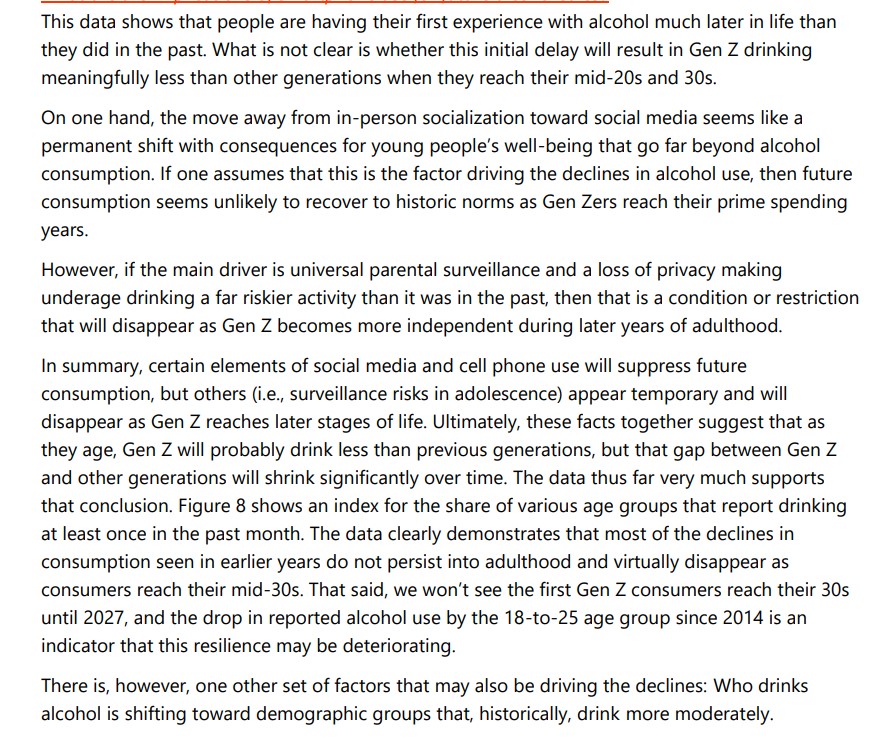
…a generation of unprecedentedly abstemious young Germans is causing serious trouble for the nation’s breweries. The market has been shrinking for some time at a relatively sedate pace of between 2 and 3 per cent a year, dragging even venerable brands such as Erdinger and Paulaner into a cut-throat price war that has brought retail prices as low as €0.80 for a half-litre. This year, however, the decline has accelerated. In the first six months, the German beer industry’s sales slumped by 6.3 per cent compared with the same period last year, excluding non-alcoholic products. It was the first time brewers had sold less than four billion litres in any six-month period since 1993… Today only 38 per cent of men under the age of 25 drink at least once a week, compared with 55 per cent a generation earlier and 85 per cent of young men in the mid-1970s. 

That last bit is a bit of a stunner. 62% of German young men not having a drink at least once a week. I poured myself another double Manhattan to take in these and other broader implications.* Will the great-grandkids hear stories about how Grandpa drank stuff with this weird chemical solvent in it and then wrote about it publicly? As if it made me happy? Will it be like when our kids heard about how my father as a 1930s kid was sent to the pharmacist to fill the glass box with acid to bring home to make the radio run? Could be. Maybe. You know, it could be a bit comforting to be an evolutionary dead ender clinky-clink-wise.

Speaking of end times, the nueuws in gueuze is not going to ameuese:

AB InBev has announced that it will no longer brew Belle-Vue Gueuze because demand for the beer has dwindled. A company spokesperson confirmed the news on Monday following a report by De Tijd, adding that production of Belle-Vue Kriek at the Sint-Pieters-Leeuw brewery will continue. Belle-Vue Gueuze was originally created by Constant Vanden Stock, a brewer who later became chairman of football club RSC Anderlecht. After taking over his family’s brewery post-World War II, he introduced a sweeter gueuze to the market. Traditionally, gueuze beer was known for its sour taste and often served with sugar cubes. 

Me, I checked the archives and I don’t think I ever wrote about this beer – but the obit is not really the points. It’s that line “…often served with sugar cubes…” Does anyone ever do that? I mean in the drive for authenticity that has, you know, ushered good beer to an early retirement, has / does anyone drink traditional dry gueuzes and lambics like they were consumed… traditionally?

And, finally, the Pellicle feature comes from the Auld Country and is all about what was so well stated by author and fellow Strathclyde alumni Rob MacKay***** “…one of several national drinks…” Tennent’s:

“There’s an omnipresence to Tennent’s,” says David Freer, managing director of O Street, a Glasgow-based design agency. “People like it because it’s an institution; Tennent’s is always there,” David tells me. “I remember—and we’ve all done this in Scotland—driving into a weird town or village you’ve not been before, not knowing where to go, and seeing the glowing red T.” These illuminated signs can be found from the farthest reaches of the Highlands and Islands, all the way down to the borders, poking out above the door of hundreds of pubs along the way. They provide a comforting reassurance that even in an unfamiliar drinking spot, you’re going to know at least one thing on the menu.

You can get that at the LCBO, you know. Might have to find me some. And… that’s it for now. I am, after all, on vacation this last week of August. While you practice your Labour Day carols, please also check out Boak and Bailey every Saturday and sign up for their entertaining footnotes, too. Look out for Stan when he feels the urge now that he’s retired from Monday slot… maybe … maybe not. Then listen to a few of that now newly refreshed Lew’s podcasts and get your emailed issue of Episodes of my Pub Life by David Jesudason on certain Fridays. And Phil Mellows is at the BritishBeerBreaks. Once a month, Will Hawkes issues his London Beer City newsletter and do sign up for Katie’s wonderful self-governing totes autonomous website featuring The Gulp, too.  Ben’s Beer and Badword is out there with the all the sweary Mary! And check out the Atlantic Canada Beer Blog‘s weekly roundup. There is new reading at The Glass which is going back to being a blog. Any more? We have Ontario’s own A Quick Beer featuring visits to places like… Michigan! All About Beer offers a range of podcasts and there’s also The Perfect Pour. Plus follow the venerable Full Pint podcast! And there’s the Craft Beer Channel on Youtube. Check out the archives of the Beer Ladies Podcast. That’s quite good and after a break they may well be are back every month! Such is life. Such is beer podcasting and newslettering… which, as Ray says, are blogs! And he’s right.

*See BMI this week, for example: “…Craft $$ (excluding non-alc) declined 3.4% with volume down 5.8% for 4 wks compared to total beer $$ down just 1.6%, volume down 3.3%. So craft shed 0.17 share of beer $$ and 0.13 share of volume. But both FMBs and hard seltzer $$ sales were down at a steeper rate following FMB’s more recent twist of fate. FMB $$ dipped 3.6%, -0.21 share, while hard seltzer was down 3.7%, -0.15 pts. Craft continues to lose far less share at retail than (combined) FMB/seltzer category lately. Especially when factoring in craft NAs. Premium segment still lost biggest chunk of beer share, -0.8 pts, as $$ sales slipped 5% for 4 wks…” Share… jeesh. 
**Looking for reference to the late Dr Patrick McGovern, whose work I found a bit sus but classic for the times, I came across this glorius bit of 2012 era bullshit about not towing the line from a now long sold out brewery owner: “…The more often the Beer Advocate community becomes a soap box for outing breweries for daring to grow beyond its insider ranks the more it will be marginalized in the movement to support, promote, and protect independent American craft breweries…“
***Utilizing an excite-o-meter… or is it an excitometer… the result was “quite pleasant without being earth-shattering” or a 63 out of 87 or, for those of you working with the old scale, a 1.43. 
****I also really can’t figure out, after all this time, why the heck people paid me to run ads on this blog!
*****Too many to mention – but extra points for shoehorning in phrases like “among other shortcomings” and “preposterous”. See also the “BREAKING!” news that the MAGA right includes a significant segment of tea totaler social engineers, not to mention is led by one. I recall a decade and a half ago suggesting to the nearby NPR station that I am involved with that we might sponsor a craft beer and bluegrass event. Blank stares and shaking heads were followed by “you really are from Canada, aren’t you!”
******Question: does that rhyme with “ye bastard, yev gone a pit yer thumb in ma eye!“?

Your Beery News Notes That Entirely Capitivate… Yet Offer No Real Clues To Get Outta Here… Not Even A Key Or Nuttin’

August planting is underway. With any luck there will be peas in late September and October. And maybe baby carrots. You always think that the plantin’ is done once you are in full pickin’ mode… but no. No way. Still ten weeks to a frost that kills. Or more. Plenty of time for peas. By the way, I learned something through the month and a half of drought, humidity and heat that now seem to have finally broken. Tomatoes do not turn colour until it cools a bit. So while the peas are doing there bit it’s now also time to hit the sauce… no, not that sort of sauce. Sauce sauce!

OK – fine. What else is going on around here. Oh, yes – one of the main differentiations between beer drinking cultures found in nation to nation is the local tipping habit. Here in Canada we tip but we are left to our own decision as to how much. But, more generally, it’s not just the tip but the markups added on. I could be a tax or two, a mandatory service tip but… an administrative fee? That’s what seems to have started in the UK where, as reported in The Times, one pub is adding 4% to the price of a beer for the premium service of giving the beer to you:

The Well & Boot is banking on customers not noticing the difference between £7.65 for a pint of beer and £7.96 for a pint of beer, and it’s a safe bet. Once you’ve paid £7.65 for a pint your subconscious is already doing everything it can to suppress the pain, just to allow you to enjoy it…  Is it a rip-off? I don’t know. Pint number two — all in the name of research, obviously, was a Guinness — and that one was brought to the table, at which point a 4 per cent charge for table service is quite good value. All the other customers were having a lunchtime meal, ordered and brought to the table, so 4 per cent for that sort of service is extremely cheap.

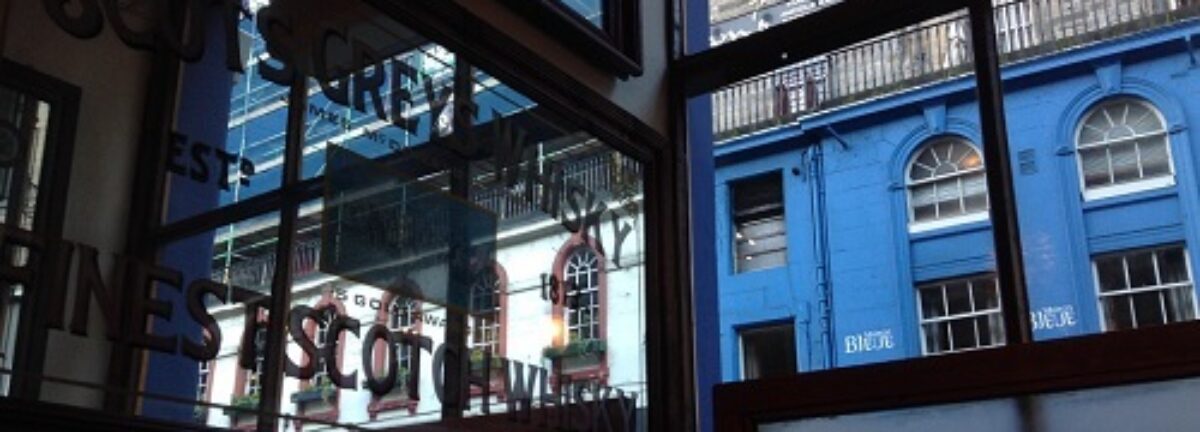
The pub is in London as I understand in a transit hub Waterloo Station. So you are already dealing with captive audience pricing of a sort. But that base price is nuts.* You know, if I were you… I would walk a few steps to Mamuska! which, yes I disclose, is run by a college pal but also the beer is a little cheaper – but you can order a Placki Ziemniaczane to go with it!  Ask for Ian, say you know Big Al and you may get a slap on the back, too. There. You’re set.

What else… well, some bad news for those of you rootin’ for booze. The NYT reports that US drinking has hit an all time low – and its not just the kiddies this time:

The Gallup poll found an especially pronounced drop in drinking among middle-aged respondents: Just 56 percent of respondents 35 to 54 said they drank alcohol, falling from 70 percent in 2024. That “suggests the message is sinking in across the board, not just with young people,” said Johannes Thrul, an associate professor at the Johns Hopkins Bloomberg School of Public Health. The share of adults 55 and older who said they consumed alcohol increased slightly from 2024 to 2025, but is still lower than in 2023. Only 50 percent of those aged 18 to 34 said they drank alcohol, the same as in 2024 and down from 59 percent in 2023.

Jeff has his own thoughts but clearly people are not doing their part. Perhaps relatedly, Mr. Mudge wrote about the planned drop in acceptable blood alcohol limit from .08 to .05 in England and he argues against it:

Whatever the safety implications, such a policy would inevitably have a significant effect on the pub trade. While those who inhabit an urban bubble may be reluctant to acknowledge it, nationwide there are a very large number of pubs to which a majority of customers travel by car. There will be several thousand where that accounts for over 90% of their trade. Every week, hundreds of thousands of people drive to pubs and consume alcohol within the legal limit. Yes. a few customers do break the law, as people still will with a lower limit. But, given the severe potential consequences, the vast majority of drivers abide by it, and indeed generally leave a wide margin below it. 

Sadly, having practiced criminal law including as duty counsel, I can report that deaths from drunk drivers aren’t statistical matters. Neither is crime. We can as easily say “every week, hundreds of thousands of people go about and and all aspects of their lives within legal limits.” In all cases, crime is perpetrated by the few and upon the not quite so few but in each case the act and loss is a singular event. As a result, deterrence is one of the greatest benefits of criminal law. So making driving under the influence itself a crime deters many – indeed by a wide margin – from taking the step that, yes, only sometimes leads to tragedy just because some asshole decided to take the chance.

And, as reported in the Morning Advertiser, BrewDog has pushed back on the story that is has lost access to customers at about 2,000 pubs with industry voices speaking out from both sides of the fence:

“Wetherspoon trades with Brewdog on the basis of a long-term contract, which is the normal case for our regular suppliers. “BrewDog has always been a reliable trading partner and draught Punk IPA, available in almost all of our pubs, continues to be a popular craft beer, as do their bottled products; Hazy Jane, Elvis Juice and Punk AF.” All pubs within the Tim Martin-chaired business serve one BrewDog product on draught and a number of BrewDog bottled drinks too. Meanwhile, a spokesperson for Star Pubs said: “We have not supplied BrewDog products to our pubs since the end of 2023.”

PR v PR. On this side of the Atlantic but not dissimilarly, there were two interesting stories last week from Beer Marketers’ Insights, the first one being about an outreach from a group of AM distributors saying without at all be coaxed that AB is great. Then, in summary from the weekly newsletters, the response from other AB distributors:

None echoed the endorsements so pervasive on the call. Most saw this as an AB-directed initiative. “This has AB written all over it,” said one AB distrib. Another remarked: “This reminds me of the current state of politics. Everyone is scared to say something negative, knowing they will be attacked by a party at some point. If you praise your allegiance to the party, then you will be rewarded.” Some responses were angry and disbelieving that so many distribs espoused a party line. “I can’t believe what’s occurring,” said one long-term observer. “I was just appalled.”  

A free press is a wonderful thing. Speaking of appalled, have you seen the prices of things?  Sam Tierney wrote this very week thusly:

Mexican 2-row seemed mildly interesting until I saw that it was 30% more expensive than domestic or Canadian. In this economy!?! I can get German pils for that price.

And aluminum is, again, a topic at the check out this week. The Brewers Association issued a notice on the addition of beer can tops to the list of things subject to US tariffs this week noting “The Brewers Association continues to monitor developments around aluminum trade policy…” Hurrah! My two cents were these:

Consider us. Canada exports 88% of bulk aluminum the US uses. It’s sent south, gets hit with a 50% US tariff, turned into packaging, cans come back north and get another 25% tariff from Canada. So the 75% tariff will see us redevelop our can factories. Not sure the US can replace our bulk aluminum.

So, US consumers should not expect any relief soon unless someone gets into the bauxite smelting game and can replicate Quebec’s cheap hydro power to fuel the industrial process at scale. Up here, we just need to retool the manufacturing line.**

Speaking about shopping, Lew Bryson has announced that this week’s offering at Seen Through a Glass is going to be about…

Next episode will be about the great local grocery stores in central PA, everything from four aisle markets to ten-store chains with full-service butcher shops and fresh seafood. They aren’t Whole Foods or Wegmans, but they’re not 7-11s either, and they’re out here where central PA actually lives. Let’s go shopping!

Excitement reigns! Back when people published (and bought) books about beer, Lew’s guides were great support of family trips when the kids were little. Not because I would drink my face off but he included shopping and side trip hints that kept everyone happy. How else would I have learned about the garbage plate?

Note: traditional German naked ass wine. Not sure I want naked ass wine but now I know I could if I would even if I won’t.

Luxembourg! How many of you have clamoured in the comments and emails for more Luxembourgian news. Well, Jessica M found a way this week to fill that need:

Brasserie Nationale de Luxembourg, the country’s largest brewing company, has told bar operators that they will soon be able to stock beers from craft brewers without violating their contracts. While leading breweries Brasserie Nationale de Luxembourg and the AB InBev-owned Diekirch currently own many of the venues and the attached alcohol licences, it gives them exclusivity rights for stock, but things may change in the coming months. According to Finance Ministry, the country’s two largest breweries hold about a third of the nearly 3,300 bar licences and 40% of the alcohol licenses in use.

Freedom!!! Sorta. For the double, Jeff raised an eyebrow to the first list of entrants into the Craft Beer Hall of Fame:

I dunno. A “landmark” anything is always going to be a semantic/definitional category. If I were to consider American brewing in the past half century, I’d be looking at where we are and how we got here. Only one of the beers on this list played a role in that. Steam beer is a basically defunct 19th century style. Witbier is a commercial success, no thanks to Celis (Blue Moon and Allagash get the credit there.) Boston Lager was another commercial success, but the beer was also just an all-malt European-style lager (as the brewery has always proudly proclaimed).

I would add backdating to any lucid notion of “craft”, a term only widely adopted a bit over 20 years ago. If it is anything, Boston Lager is a micro… even if it’s now a macro micro.  It reflects the 1980s intention to mimic imports, not to take on big beer. But, also, where is Pete’s Wicked Ale, a top seller until it wasn’t? Does “fame” in this case really speak more to the identifiability of the brewery owners who survived?  If so, that’s craft for you.

Finally, in the weekly feature, Rachel Hendry brings it all back to where it matters, the individual experience. And she frames it with one of the most humble aspects of the beer fan’s joys – the beer mat:

A small pile sits on my desk whilst I write: vintage Double Diamond and Babycham given to me as gifts by friends—‘I saw these and thought of you’—a Beamish emblem from a trip to see family in Ireland; another of a brewery I associate with a recent romantic encounter. When I am nervous I trace their cardboard circumferences with my finger. They punctuate the bar I work in, propping up tables, ripped into shreds by skittish or destructive hands, knocked to the floor, stolen as mementos. They see so much, these beer mats. They suffer for it. It wasn’t always like this.

What a lovely bit of writing. For more of that, please also check out Boak and Bailey every Saturday and sign up for their entertaining footnotes, too. Look out for Stan when he feels the urge now that he’s retired from Monday slot… maybe … maybe not. Then listen to a few of that now newly refreshed Lew’s podcasts and get your emailed issue of Episodes of my Pub Life by David Jesudason on certain Fridays. And Phil Mellows is at the BritishBeerBreaks. Once a month, Will Hawkes issues his London Beer City newsletter and do sign up for Katie’s wonderful self-governing totes autonomous website featuring The Gulp, too.  Ben’s Beer and Badword is out there with the all the sweary Mary! And check out the Atlantic Canada Beer Blog‘s weekly roundup. There is new reading at The Glass which is going back to being a blog. Any more? We have Ontario’s own A Quick Beer featuring visits to places like… Michigan! All About Beer offers a range of podcasts and there’s also The Perfect Pour. Plus follow the venerable Full Pint podcast! And there’s the Craft Beer Channel on Youtube. Check out the archives of the Beer Ladies Podcast. That’s quite good and after a break they may well be are back every month! Such is life. Such is beer podcasting and newslettering… which, as Ray says, are blogs! And he’s right.

*Yet, I wouldn’t notice at all if the pint was served at this gem Martin visited in Edinburgh.
**Did you know that 25% of the world’s bauxite comes from Guinea? Me neither. Trump has, it is worth noting, not tariffed Guinea. 15% for New Guinea. 15% for Equitorial Guinea. None for Guinea. Perhaps he thinks he did.

The Much Abbreviated But Apparently Almost Drought Resistant Beery News Notes For A Thursday

Welcome to August. No rain to speak of. Not for weeks. Lawns look like Nabisco Shredded Wheat testing plots. I’ve spent days and days schlepping the garden hose and watering can all over the estate. Which has reminded me  of how wise it was to buy 6,500 square feet of land back in 2006. Once upon a time I had four acres to take care. Now? No mow no mo… practically speaking. As a result, I have barely looked at the beer news which is good as there is barely any beer news these days. That up there? A very nice ferry last Saturday night, a side trip I took on 87 seconds notice after a desperate call from across the waters. A very pleasant inconvenience.

First up… is there history in North America?  I ask this as a writer, if lapsed, of history. So first, consider this unexpectly deep and oddly twisty history of the word “dude“:

“They were young. They were vacuous. They were effeminate — and they were drawing a bit of attention from the humorists and the cartoonists,” Cohen told NPR. He says this crowd had a certain way of dressing — usually over-the-top and fancy — and leaned into an Anglophile lifestyle that was often perceived by many as fake or trying-too-hard. Eventually, these men became known as “dudes,” likely in reference to Yankee Doodle, who, as the old war song goes, was an unsophisticated American who “stuck a feather in his cap” in an attempt to parade as a kind of European “dandy” in high society.

The very next paragraph or two takes you through cowboy dude ranches and then on to slacker dudes of today, each phase of the word’s meaning being largely unrelated to the last. None of which is retained culturally knowledge. Which makes one wonder about one’s awareness of such things. I raise this in relation to beer by way of intro to Jeff’s lamentations on the state of US brewing history:

“Craft breweries” were a peculiarly American kind of thing. If you don’t have a past, you’re not bound by it. Lacking a native beer tradition—domestic lagers were functionally German beers—Americans were freed up to do what they do. We made beer styles from elsewhere, borrowing and almost immediately riffing on them. This improvisational style would become hugely influential, and it was never going to start the way it did in a traditional brewing country like Germany or Britain. Much like Americans were never going to found a club that merely venerated an old brand of beer.

What is weird is that the land mass that is now the United States has over 400 years of brewing history but, as Jeff says, has no sense of brewing tradition. So it is possible to speak of IPAs being new even though they have been brewed for coming up on a couple of hundred years, winning awards overseas in the early 1900s and at least as good a continuity as Belgian strong ales. Why does no one care? Because no one cares. It’s that deep. A tradition of amnesia.

Speaking of forgetting, someone in Dalton, England has been breaking the law and the neighbours aren’t having it:

People living near a pub have claimed that their privacy is “under threat” after the business began expanding its beer garden without permission. Residents of Dalton, near Huddersfield, have complained to Kirklees Council after the Brooks Arms began extending its garden towards the pavement, including erecting fencing and 10ft poles with fairy lights. Stonegate Group, which owns the pub, said it was in contact with the council and contractors had paused work while they “reviewed the next steps”. Kirklees Council confirmed there was no planning permission in place for the works.

Interestingly, the property owners have claimed the “works undertaken relate to fencing and posts to hang festoon lighting” which leads to that important legal question – are they fairy or festoon lights?

Do you stand up against bigots in pubs or elsewhere? I am lucky because I am such an ox that I’ve always been able to grunt some version of fuck off and people generally, you know, fuck off. But I am older now so paid attention when noted thoughtful folk who may well be less ox-like than me considered this the other day. I admired this exchange:

DJ: “The idea of challenging someone being anti-inclusionary is really interesting. A friend was in a Kent pub and a landlord used a racist slur about an East Asian in conversation. He said you ‘can’t say that’ and left it at that. That’s all that’s needed tbh to make sure it’s not ever unchallenged”

B+B: “We would certainly be quicker to do it if we were actually in conversation with the person. We’ve had some practice at that. When it’s happening on the other side of the pub, getting up and going over to have a word with a stranger takes some nerve.”

Speaking of standing up, Anaïs Lecoq wrote on the poor conditions brewery workers in France can find themselves working under. There is a paywall on this one but, especially as I am working on my French, I thougt it worth noting in case any of you lot have a work around:*

Quand je dis que je suis brasseur, tout le monde trouve ça stylé, mais quand je rentre dans le détail, beaucoup ne se rendent pas compte de ce qu’implique le métier », déplore Sam*. En 2022, le trentenaire a quitté un travail de bureau dans lequel il ne trouvait plus de sens pour une brasserie située en Île-de-France.

Update!! Paywall begone! Here is the full story care of the author herself.

Question #1: did craft try to be champagne? Above a beer?

Question #2: Ron’s been in Australia… did he try the beer?

Question #3: was the GBBF really as dead on trade day as Will Hawkes felt it was? (Another Update: correction on my assumption from Will received vai Bluesky!)  Some were doing their part, according to Bluesky after the trade day events…

Forget the adults… what is up with teens today? Apparently not levels of drinking of Beer Marketer’s Insights is to be believed:

The largest federal survey on alcohol consumption confirmed continued declines in underage drinking alongside relatively consistent levels of adult use. The National Survey on Drug Use and Health, fielded to tens of thousands of Americans aged 12 and up, once again found a substantial decline in the prevalence of past month alcohol consumption by 12-20 year olds. Reports of any past month alcohol consumption by 12-20 year olds steadily declined from 15.6% in 2021 to 13.3% in 2024.

That’s crazy. I mean it’s not a crisis and it’s probably good but, speaking as one who drive the kids to Quebec to drink legally at 18, it’s still a bit crazy.

Who will take our empties? That’s the question in Ontario these days as the expansion of the retail market to grocery stores has left the good old Brewers Retail aka The Beer Store rapidly shutting down locations. Will charities benefit?

With more and more Beer Stores closing across Ontario, charities and non-profits that rely on bottle collection are hoping to cash in on your empties. The Beer Store currently processes about 1.6 billion empty alcohol containers per year. But it has closed dozens of locations across the province since the arrival of beer in convenience stores, and plans to shutter still more this September. At least five of the actual or planned closures are in Ottawa, including one in the Glebe, where Operation Come Home runs a bottle drive as part of its BottleWorks social enterprise. Executive director John Heckbert hasn’t noticed any impact yet — but he’s hoping more residents will call on BottleWorks to collect their empties.

Hockey? Who the hell talks about NHL hockey in August?  The Athletic, that’s who. And the talk is about beer:

Charlie Coyle had yet to be drafted when Tony Amonte, his cousin, concluded his NHL career in 2007. But what the veteran of 1,174 NHL games shared years ago with Chuck Coyle, the center’s father, left an impression. “You go out, you drink, you have a good time, you won’t be the same for a month. That’s what I always remember him saying when I was younger,” the Columbus Blue Jackets forward recalled his dad’s telling of Amonte’s belief. “Maybe that’s an exaggeration. Maybe not. But I have that in my head.” Amonte’s formula may not be scientific. But part of the reason the 33-year-old Coyle rarely drinks during the season is that he wants to avoid, whenever possible, any disruption to a key part of his life as an athlete: sleep.

Bad sleep for a month?!? Who do they think they are? Gordie Howe?

Martin came across an odd scene in Stannington, a district of Sheffield when he was hunting out new spots:

Of the 3 Stannington pubs, this looks the smartest, like an M & B all day diner, and perhaps at 3:30pm the lunch trade has gone home, as it’s empty. Completely empty, bar me. Two bars, no-one behind them, or any sound at all. If I was still ticking the GBG I’d have been panicking, but “finishing a Sheffield suburb” isn’t that important, and after five minutes I consider starting the 40 minute walk home. But then I notice the bell. And ring it, instinctively deadening the noise almost immediately like I do in my Waterbeach local. Nothing. I walked out, stared into the distance, then returned, unwilling to be beaten. Oooh, they’re out of Guinness. And Moretti. That’s worrying. And at that moment, a young man emerged from the kitchen, replete with tales of minor injuries I probably shouldn’t trouble you with. He puts on Aerosmith “Love In An Elevator“, then turns it down. Good lad.

Speaking of finding oneself in a pub, Jess aka the B in B+B returned to their former home of Cornwall to report on the role that popular new brewers Verdant have changed the scene and in doing so made a confession:

Now close observers of our blog and social media, or subscribers to our Patreon, will know that I have a particular aversion to beers with mosaic hops and similar. At best, I find they taste of onions and, at worst, something I can only describe as rank armpit. And that’s all I can taste, with none of the juicy tropical fruit flavours that people talk about. I get that this is a me problem, that other people don’t taste these hops this way, and that Verdant are an extremely popular and rated brewery. However, they do tend to like using these hops and as a result I’ve never really got on with them. And the first evening, I’m afraid, did little to convince me otherwise. That the beers looked like water that had been used to clean paintbrushes didn’t help.

And Pellicle‘s feature this week is an interesting story by Mike Clarke of a pub that was lost and reborn, demoished and rebuilt – the Vulcan of Cardiff in Wales:

Until 2012, this building housed a pub in Cardiff City centre—a very ordinary pub that had stood for over 150 years serving an eclectic urban community. Its interior, crammed full with fruit machines, a jukebox and an outsize ship’s wheel on the wall, was a sanctuary from the relentless redevelopment and expansion of the capital city—development that eventually forced its demolition… The Vulcan Hotel reopened in May 2024, having been demolished, transported, and rebuilt brick-by-brick in the museum, restored to its appearance a century ago within the curated historic village. Even though rebuilding it took just over a decade, the Vulcan still holds fresh memories. Many visitors around me point out familiar architectural features, like the two front doors or the two-room layout, and remark that it feels like “only yesterday” since they last visited.

It’s an interesting approach to pub preservation but has led to questions about whether the urinals are correctly glazed (yes) and what beer should be sold (Ron sticks his toe in… not in the beer, in the topic) and whether it is still a pub or has that changed.

Well that is it. Not as short as I feared and there was plenty of reading once I had a look. While there is a lot up there, please also check out Boak and Bailey every Saturday and sign up for their entertaining footnotes, too. Look out for Stan when he feels the urge now that he’s retired from Monday slot… maybe … maybe not. Then listen to a few of the now rarely refreshed Lew’s podcasts and get your emailed issue of Episodes of my Pub Life by David Jesudason on the (sometimes even but never) odd Fridays. And Phil Mellows is at the BritishBeerBreaks. Once a month, Will Hawkes issues his London Beer City newsletter and do sign up for Katie’s wonderful self-governing totes autonomous website featuring The Gulp, too.  Ben’s Beer and Badword is out there with the all the sweary Mary! And check out the Atlantic Canada Beer Blog‘s weekly roundup. There is new reading at The Glass which is going back to being a blog. Any more? We have Ontario’s own A Quick Beer featuring visits to places like… Michigan! All About Beer has given space to some trade possy podcasts and there’s also The Perfect Pour. Plus follow the venerable Full Pint podcast with an episode three weeks ago!. And there’s the Craft Beer Channel on Youtube. Check out the archives of the Beer Ladies Podcast. That’s quite good and after a break they are back every month! Such is life. Such is beer podcasting and newlettering… which, as Ray says, are blogs! And he’s right.

*Here’s the blurb in English: “Precarious and dangerous working conditions, unpaid overtime and exploitation: the daily lives of employees producing artisanal beer are sometimes at odds with the values conveyed by the sector and the positive image it enjoys.”

Your Sum-Sum-Summah-time Beery News Notes For The Last Thursday Of June 2025

Who knew? See, I now do all those NYT puzzles now, along with my 6:37 am big black coffee, as I try to wake up my brain cells first thing in the morning. This was never my thing. Ever. Until I joined the Wordle covid coping crew. Yet there it is – a clever observation in a Connections solution this week. Those who head out and those who stick around are both the left. Leavers v. leavings. I suppose you knew that one. I spot some sneaky things in this life but miss plenty of the obvious. We all do, I suppose. Just not the same things. We are all framed by our own individual gaps. Which I was thinking about this week when I noticed something this week, bits of writing about writing. Not meta blogging. Just a few little observations. Like Phil Cook who wrote this comment on Boak and Bailey’s on them not spilling all the beans:

I’ve been fascinated by that piece. I guess I still don’t understand why you’d keep those concerns as subtext — or cover them at all, if you didn’t feel you could be more plain about them. The rise and fall of Fox Friday in Australia (rapidly expanding, slickly designed, all that) when the law finally caught up with their shady financier haunts me as a comparison. Lots of people got burned in that collapse. In that case, there wasn’t a Wikipedia page full of priors to point to that might encourage people to be more on guard. But when there is, why not highlight it?

My two cents is that their habit of keeping a few things back helps make their writing so good. A polite but informed reticence. It’s part of their tone that, frankly, keeps you connected as a reader. Conversely, have you ever get a PR email like I did this week – and you know they’ve never read your beer related website?  One that says…

We thought a roundup story of Canadian long weekend brew pairings could be of interest to your audiences…

Lordy. I never though I would have multiple audences. Sweet! Identify yourselves!! Their client will go unnamed. It’s not their fault. (See I can do it, too. I can be restrained.) Somewhat similarly and adopting a stream of consciousness fantasy futurist approach, Dave Infante thinks someone somewhere is willing to pay for a generic PR media campaign for draft beer because it worked for milk a few decades back:

…a cold glass of beer? Normal. Better than normal: aspirational. Colorful in the glass; dynamic with an effervescent head. Emphatically not weirdo sh*t. “Got Milk?” was brilliant because the dairy industry — the f*cking dairy industry — was able to harness the power of marketing to convince the American drinking public that milk — f*cking milk — was glamorous. That was a very deep hole to climb out of! And “Got Milk?” did it. With such a built-in advantage, don’t you think a beer-industry analogue boosting draft beer, which people already like, might be able to generate sales in addition to goodwill?

Lordy Lordy. Who’s paying for that? Not quite as unrestrained this week – yet perhaps also a tad wild eyed – was one Mr. Beeson on the beery business story of the splitting of the UK’s Signature Brew, they now putting the debt in one half and the assets in another to see if some part of the overall thing survives. He posted his story in The Grocer with a 23 June dateline, as he announced on BlueSky as an exclusive, which included a quote from co-founder of said division in progress, Tom Bott, that the “restructure allows us to finally put the challenges of the past behind us and focus on building the future we know Signature Brew is capable of…” mentioning the need to address the “legacy debt” – aka debt. But then on the very same day, Jessica Mason had her story on the same subject published in The Drinks Business:

Speaking exclusively to db about the ordeal that the company has faced to stay afloat, Bott explained: “This restructure allows us to finally put the challenges of the past behind us and focus on building the future we know Signature Brew is capable of. We have built a business that is profitable, resilient and unique, blending great beer with incredible live music experiences. By addressing legacy debt in a controlled way, we are…

Much of the quoted wording attributed to the same Mr. Bott in each story is identical to the other.* Now, we can’t find fault that part of the team guiding Bott and Co. through insolvency restructuring includes a PR / comms specialist who handed out very firm speaking points – but why give both Beeson and Mason the expectation that these were exclusive interviews when they simply were not? No need to leave that hanging implication.

But there is more. The beating that truth and good sense get even worse in this brave new world – as Lars found out this week:

I’ve been preparing for our upcoming holiday in Georgia, and was looking for beer places in Kutaisi. Georgia still has farmhouse brewing, but it’s not 100% clear where, so I was really excited to read this on a site about tourism in Georgia. So excited, in fact, I emailed a woman in Kutaisi who… wrote a bar guide. She’d never heard of it, and suggested it might be AI hallucinations. The moment I read that my doubts about this photo (that’s not a traditional Georgian cauldron) came back with full force. Looking at the page again I see that the whole thing is AI garbage… It’s depressing really. It used to be that you could be fooled by people deliberately lying to you, but now you can even be fooled by a bunch of numbers employed by lazy assholes. They’re not even trying to fool you, just randomly bullshitting.

Wow. Yet, if we reflect upon this, it is even less than bullshitting, too, as there is no intention behind the formation of the falsehood. No thinking mind. It’s less than a lie, less than even the PR fluff stuff we choke upon every week. It all reminded me of something Jordan wrote me a few weeks back:

Do you realize how lucky we were to get into the sweet spot of the internet with Ontario Beer? You couldn’t research it now. The AI has gummed up the works.

Truuf. There was a golden era but this ain’t it. Speaking of modernity induced head scratchers, this set of 1967 interviews on the introduction of drunk driving laws in the UK includes a few suprememly nut-so arguments:

The pedestrian could have too much to drink. He could cause an accident. He doesn’t get tested. It’s the driver who gets tested, and I think that’s unfair… For many many years, I’ve drove with far more liquor in me than I have now…

Would one name and shame now? Or just fondly remember: “… and right there – that’s your great aunt Peggy right there, son, after she came back from Africa and before she went to jail.” Personally, I may not have driven in Kenya or Uganda but I remember working with a guy in 1982-ish Nova Scotia who had cut a hole in the floor of his truck’s cab just below his steering wheel that let him drop the beer cans down to the road at the end of the work day. The past is a foreign land. Or is it?

Moving to the same sort of themes today, Reuters reports that it’s going to be yesterday once more for the US when it comes to the government’s recommendations for healthy drinking:

The U.S. government is expected to eliminate from its dietary guidelines the long-standing recommendation that adults limit alcohol consumption to one or two drinks per day, according to three sources familiar with the matter, in what could be a major win for an industry threatened by heightened scrutiny of alcohol’s health effects. The updated Dietary Guidelines for Americans, which could be released as early as this month, are expected to include a brief statement encouraging Americans to drink in moderation or limit alcohol intake due to associated health risks…

Is that so wrong? We may not have to concern ourselves with the counting of fingers and who’s wiser than who if the focus moves to the results rather than how many got you there. After all, no one argued that this or than number of ciggies or cheese burgers shorten your life… it was just confirmed that they did.

Speaking of science, I really liked this post by Jeff and the woodland secrets of yeasty studies by two brewers in Oregon including Ferment Brewing’s Dan Peterson:

…he started tinkering. He started by putting the microbes he collected in an incubator, and then growing up little colonies.

“Then, some of them you could start identifying like, yep, these are bacterial colonies, these are yeast colonies. And then there’s always mold at that point, trying cover everything. So as they’re growing, it’s a a race to get colonies [established] before the mold takes over. But once those are split up and on their own petri plates, they’re free of mold and completely isolated from each other.”

Speaking of yeast coated containers, Chimay is selling cans of the good stuff:

The Chimay Dorée, Rouge and Triple – ranging in alcohol content from 4.8% to 8% – are now available in 33cl cans. The heavier Bleue and Verte varieties will remain bottled for the time being. “You don’t drink those in just a few gulps,” said CEO Pierre-Louis Dhaeyer. The abbey has been developing the canned versions for over three years, and has already conducted initial market trials in the United States and Japan, where canned craft beer is far more common.

Can o’ Triple? Mmmm… refreshing. That’s not going to lead to any problems, no sir-ee!

And speaking of the fine arts, this week’s feature in Pellicle has many good paragraphs but this one by Robin Vliebergen in her piece “The Apples of Limburg”  is among the finest paragraphs on the drink I have read this year:

The older they are, the higher these trees grow, and therefore it becomes more difficult to pick their fruit. As their owners also grow older, this creates a very practical problem: the trees become too difficult for them to harvest. They are left with a glut of high-quality local apples, in need of young fit people to pick them. Reinier mentioned this problem to Bonne and Job, and so the first vintage of Cidre Sauvage was born.

Fabulous. The only tweek I might have added would be somehow weaving in “high quality on high limbs” but, as you know, I am a bit of a wag. And finally remember – speaking of waggery – this very weekend is the exact time to post your thoughts in response to Laura Hadland‘s question for The Session this month:

It doesn’t matter whether you have hosted a pub quiz, or just attended one. Or maybe you’re vaguely aware that pub quizzes exist, but you’ve made it your mission to steer clear. What is the best, most entertaining set of questions or challenges that can be posed to the punter? What single topic has engaged you the most? What is it that makes a great pub quiz stand out head and shoulders above the rest? What might tempt you into attending if trivia night is something you usually swerve?

I know what I’m going to say… but I’m not saying it yet! And it isn’t “name that smell!”  You. You should submit something. Do it? Tell your grandchildren when you are old that you did, too. They will be both flatout amazed and rippling with pride.

That’s it. I am settled in for summer now. Canada’s next week. Brace yourselves. In the meantime, please check out Boak and Bailey every Saturday. Look out for Stan as he is posting irregularly now that he’s retired from Monday slot. Then listen to a few of the now rarely refreshed Lew’s podcasts and get your emailed issue of Episodes of my Pub Life by David Jesudason on the (sometimes even but never) odd Fridays with the new addition of his Desi Food Guide now on Tuesdays. And maybe The British Food History Podcast. Maybe? And Phil Mellows is at the BritishBeerBreaks. Once a month, Will Hawkes issues his London Beer City newsletter and do sign up for Katie’s wonderful newsletter, The Gulp, too, now relocated to her own website, Katie Mather Writes.  Ben’s monthly Beer and Badword is on its summer break but there’s plenty to catch up on! And check out the Atlantic Canada Beer Blog‘s weekly roundup. There is new reading at The Glass which is going back to being a blog. Any more? We have Ontario’s own A Quick Beer featuring visits to places like… Michigan! All About Beer has given space to some trade possy podcasts and there’s also The Perfect Pour. Plus follow the venerable Full Pint podcast with an episode just last month!. And there’s the Craft Beer Channel on Youtube. Check out the archives of the Beer Ladies Podcast. That’s quite good but, hmm, they’ve also gone a bit quiet this year. The rest of these are largely dead. And the long standing Beervana podcast …except they have now stood down.  As has We Are Beer People. The Share looked to be back with a revival but now its gone quiet. And the Boys Are From Märzen podcast appears suspended as does BeerEdge, too. VinePair packed in Taplines as well. All dead and gone.  There is more from the DaftAboutCraft podcast, too. Nope – that ended a year ago.   The Moon Under Water is gone – which is not surprising as the ask was $10 a month. Pete Brown’s one cost a fifth of that – but only had the one post. Such is life. Such is beer podcasting and newlettering!

*Far more obvious than the big news in rice v. the big news in rice, right?

Your Thursday Beery News Notes For The Best Week Of The Year

Yup. The weather this spring has been good so far, thanks for asking.  The air has stayed cool. And a wobbly fence has been replaced and a basement corner refit turned into the revelation that we owned a cast iron heritage sink needing keeping after all. The bugs have yet to hit and I bought that new lawn mower. One that isn’t powered by me. It still feels very twentieth century if I am honest. Power tools always do. This week, Barry has taken us in another direction, pulling some lovely old examples of scythes out of his barn:

I’ve been thinking about scythes again. I think it’s about time I got one, though we have a collection of old handles in the barn, and a fancy metal snath (that’s what the shaft is called, and I only know that because I just searched it). The stems (the bit that sticks out of the snath that the grip is attached to) on two of these are quite wobbly and worm-eaten. Actually, I guess these broke fairly often, as I found a little stack of them on top of a beam in the barn years ago. The third one is rather fancy looking.

I start with this for a few reasons. It illustrates that sort of curiosity about the knowledge that imbues the best sort of worthwhile yet somewhat idle writing. In troubled times access to good idle writing is vital. And focused knowledge drawn from idleness is usually more interesting that personal experience. Not unlike your photos of your meal or child, a lot of the personal is most often best kept personal as, believe it or not, we are all already persons. By contrast, the knowledge gained that leads to a “who knew?” needs sharing.

As a helpful illustration, David’s latest Desi Food Guide piece on Indian food in Britain as exemplifed by the beginnings of Jay Patel’s shop Budgens describes a key moment in any meeting of cultures:

…it’s this food that makes the shop so special in 2025. It’s cooked by Meghana, the wife of Jay’s eldest son, Pratik… “People were wondering ‘how do you eat Indian food?’,” says Pratik. The answer was to show them at a few tastings and this blossomed into holding stalls at local fetes. The clamour was huge but so was the generosity with the family (and its loyal workers) even dropping off free samosas at parents’ evenings and school quizzes. “It snowballed and because the public wanted it we did it more,” says Pratik. “Now people will go for a walk and have a samosa.”

Yes. Samosas came into my life at a very clear point in 1988 when I went back to university to study law. The Grad House at Dalhousie, a side benefit pub near the law school, got a fresh delivery every morning from a home kitchen. Even though my family had a particular connection to a sort of curry going back to the late 1800s, these samosas were the first things I had which were so laced with that much cumin. Who knew peas and potatoes with cumin were that good? There are lots of things I want to learn, a lot of them about what to eat and drink. But that’s about me, isn’t it. Or is that the knowledge. Hmm.

But did I really need to know that Rick Astley was in business with Mikkeller, now seemingly fully excused? Not sure. Did I need an impenetrably indulgent fog of words? Pretty sure on that one. Nope. Let’s face it: much of beer has lost that bit of thrill that can’t compare to a samosa in 1988 or a barn full of antique scythes today. Stan provided a particularly helpful if really sad example this week of how bad it’s gotten:

I did not receive the press release about how Sam Calagione (Dogfish Head), Bill Covaleski (Victory Brewing), and Greg Koch (Stone Brewing, now retired) are “bringing their legendary friendship, their boundary-busting brews, and a rock-and-roll spirit that can’t be tamed” to Manhattan later this month. But… I’m sorry, but although these are founders of breweries that make really good beer who have spent decades in the trenches (and, full disclosure, Sam Calagione wrote the foreword for “Brewing Local”) I won’t be booking a flight to be there June 26. For one thing, that poster is, well, I have no words …

That there’s a bit of a pathetic display – especially given that sort of “rock star” shit was, you know, shit back in the day, too. Fortunately, Stan also gave us a hopeful glimpse of the opposite that may soon be found at the Carnivale Brettanomyces fest coming up at Utrech in the Netherlands:

“Take a sip of beer and you will notice aromas and flavors that remind you of the world around you. Some of these play crucial roles in our physical environment by interacting with the atmosphere, oceans, and geology. We will explore some of the ways common compounds in beer reflect natural processes in our environment and climate, and how life could have evolved to use those compounds to regulate the environment to its benefit in Gaian ways.”

A bit freaky and maybe not entirely my thing but at least it’s actually promising to be about something interesting. Something you and/or I didn’t know much about yet. What else is there to learn about? BrewDog (ie “who cares”) is claiming its changing its brand and vision – as if Martin Dickie hasn’t been there all along:

“2025 marks a new era for BrewDog,” the site states. “A fresh look for our beers. Fresh faces at the heart of the company.” The erstwhile Caledonian revolutionaries are now the official beer suppliers to Lord’s, the home of English cricket, where blazers rather than baseball caps are de rigueur. Lauren Carrol, the newly-installed chief operating officer, confirmed that the UK’s most unruly company has been tamed. “When people hear the name BrewDog they expect us to shock, disrupt and, let’s be honest, probably offend,” she said. “But we wanted to do something even more radical.

Yawn. Didn’t need to know that. Much more interesting was watching the family of a contestant for Britain’s best pub pianist of over four decades ago, one Peggy Fullerton:

It was absolutely mind blowing. The family of Peggy Fullerton spoke to #BBCBreakfast after watching footage found by BBC Archive of her playing the piano and being interviewed by BBC Look North in 1981…

Watch the video under that link: “There’s Grannie Peg!” Fabulous. Speaking of fabulous, there has been actual jostling to get a place as the host for the June edititon The Session, thanks to the whipping up of frenzy by Boak and Bailey:

@morrighani.bsky.social has bagged this month but you should definitely get lined up for next month, or the month after. @beerinthecity.bsky.social is also interested in hosting a future session.

And I liked Jeff’s complaint about the cacophony of styles being pushed by the Brewers Association for the 2025 Great American Beer Festival:

No one needs 108 categories! No one needs 108 categories that balloons to around 200 styles with sub categories! The ever-finer slicing and dicing does not result in clarity, it results in six (!) types of smoked beers… Style fragmentation also leads to an inevitable auroboros exemplified by a category like “international amber lagers” in which Mexican amber lagers will be judged with polotmavý and Franconian rotbier. What?

Remember, as Stan recently reminded us, when folk said styles were important to help consumers understand what they were buying? Not so much now. Elsewhere, someone wrap Jessica Mason in asbestos* as she has been on fire this week asking all sorts of clear questions. Like “why have Belgians stopped drinking as much beer?” and “why have the Irish stopped drinking as much beer?” and “why are UK drinks makers enjoying a rise in profits?“:

“Anecdotally, what we’re hearing from some of our customers is that Q1 brought welcome windfalls. Some tariff-affected international customers have turned to UK firms to do business, while others raced to order more before tariff pauses came off. That’s delivered a shot in the arm for some firms, but more importantly we’re hearing that steadily falling bank rates are starting to stimulate the economy, which obviously is very welcome to UK manufacturers who’ve posted a really strong start to the year.” The data has also highlighted how profitability is improving as manufacturers have held off from buying new stock, instead preferring to use up inventory reserves where possible.

That’s interesting. And David, also in TDB, has added his own question – “what’s wrong with cheap beer?“:

… with my honest hat on, most beer drinkers under retirement age know there’s better options at the bar. And I really wished that those who write about problematic drinking in the media showed the same discernment. Because it isn’t sessionable pints that are the issue here but how pub chains profit from alcoholism. That substance abuse might be from excess beer drinking but it’s also more likely from much higher ABV drinks. Especially because I see morning drinkers drinking their Bells but I rarely see them ‘enjoying’ it.

That’s also a bit of clear observation right there. I like how TDB has been exploring all angles of the trade – the good news and the not so good news – without necessarily making a lot of noise about how that they doing just that. What else is going on? I really liked this observation by Steve of Beer Nouveau in reponse to Katie on gastropubs:

It’s fair to say I don’t like them. But my 81 year old dad does. And his new 82 year old wife (yeah, they got married last year!) does… They know when they go in that there’ll be a menu with favourites like cod and chips, beef wellington, steak, roast chicken and maybe a sticky toffee pudding to follow. They know they won’t be confronted and bamboozled by “dirty fries” whatever the frag they are. They know they won’t need a spoon to help them eat a burger. And they know that they can order a pint of “bitter” and not be interrogated as to which variety of yeast they want that fermented with. Oh, and they’ll also sell Chardonnay as a standard. These are not places for us. These are places for them.

Yup. It’s OK that people don’t like the same things. I like how “it’s not for me” can mean a quick judgement or, more usefully, a realization. Knowing that makes life easier. For example, I had a bit of a moment realizing I wasn’t warming to the tale told by Will Hawkes this week in Pellicle about the brewery German Kraft at London’s  Elephant and Castle food hall called Mercato Metropolitano. Was it phrases like “a no-holds-barred business” and “this is our USP” that reminded me a bit of something I didn’t like? I really don’t think so. I think it’s just a good description of a place that’s probably just not for me. Which is fine.

Speaking of fine, there was some plain speaking over in one corner of the wine world that could equally apply to good beer:

There is no question that wine faces significant issues. I was talking to a leading port producer, who is in a state of near panic (not without good reason, I’d be panicking if I made port!). He was convinced that the anti-alcohol lobby would put him out of business. I suppose that’s easier than admitting you make something that nobody seems to wants to drink any more, but there is no question that the health lobby is reducing wine sales, especially with young professionals, where, if they don’t stay alcohol free they are often turning to cocktails.

And, finally, the details of memorial services for the late Martyn Cornell were posted at his website by his brother David:

For those that wish to attend his funeral it will be held at: Hanworth Crematorium (TW13 5JH) Monday 30th June 2025 @ 12.20 with a small wake at a local pub afterwards to celebrate Martyn’s life. For those that can’t make it we will be having a small wake at Poppyland Brewery, Cromer on Sunday 06 July between 13.30 – 16.30. The family request no flowers.

Still… being that I was raised by a florist and worked in the shop myself perhaps I will still plant something good looking out in the yard in remembrance, something nearby when I need to have a shady sitting spot to sip a beer this summer.

Next week I am on the road so who knows what will be please check out Boak and Bailey every Saturday. Look out for Stan when he feels the urge now that he’s retired from Monday slot. Then listen to a few of the now rarely refreshed Lew’s podcasts and get your emailed issue of Episodes of my Pub Life by David Jesudason on the (sometimes even but never) odd Fridays. And maybe The British Food History Podcast. Maybe? And Phil Mellows is at the BritishBeerBreaks. Once a month, Will Hawkes issues his London Beer City newsletter and do sign up for Katie’s wonderful newsletter, The Gulp, too.  Ben’s Beer and Badword is out there with the all the sweary Mary! And check out the Atlantic Canada Beer Blog‘s weekly roundup. There is new reading at The Glass which is going back to being a blog. Any more? We have Ontario’s own A Quick Beer featuring visits to places like… Michigan! All About Beer has given space to some trade possy podcasts and there’s also The Perfect Pour. Plus follow the venerable Full Pint podcast with an episode just last month!. And there’s the Craft Beer Channel on Youtube. Check out the archives of the Beer Ladies Podcast. That’s quite good but, hmm, they’ve also gone quiet this year. The rest of these are largely dead. And the long standing Beervana podcast …except they have now stood down.  As has We Are Beer People. The Share looked to be back with a revival but now its gone quiet. And the Boys Are From Märzen podcast appears suspended as does BeerEdge, too. VinePair packed in Taplines as well. All dead and gone.  There is more from the DaftAboutCraft podcast, too. Nope – that ended a year ago.   The Moon Under Water is gone – which is not surprising as the ask was $10 a month. Pete Brown’s one cost a fifth of that – but only had the one post. Such is life. Such is beer podcasting and newlettering!

*Please don’t. It’s actually not very good for you. Though, to be fair, neither is actually being on fire. So perhaps we can agree that you will deal with the situation as necessary should the occassion arise. 

Your Beery News Notes For The Start Of The Last Month Of Spring

Here we are. Growing season. Well, it’s been hovering between 11C and 14C in these parts mid-day so perhaps not very much growing but at least there is no frost. That’s my Pinot Noir there. I hacked out most of the Concord this year to let the swankier sibling get more sunlight. That pink edging fades soon enough but it’s a great guide to assist with what lives and dies. Is that why I garden? To judge? To dispense edict? That and salads, sure why not?

First, and sticking with the theme vinous, Katie Mather has been reporting from the front lines of the wine trade and has a discovery to share – well, two after her thoughts on what was once all in black is now very much back:

Ice in wine is becoming a *thing*. Don’t believe me? Do a couple of shifts in your local pub. Over the past year I’ve noticed more and more women (it has been primarily women) ordering white or rose wine and insisting on having ice in their glass. Perhaps it’s because they don’t really like the flavour, and the ice dulls it down. Perhaps pub fridges aren’t cold enough. Perhaps — and this is what I think — it reminds us of being on holiday. Oh god, I am doing everything I can at the moment to pretend I’m not really here. Aren’t you? The world is a nightmare, a giant morality eclipse, and if a little clinky-clinky in my glass helps lift me out of it even for a second, I am going to do it. Black Tower is an ideal icy wine, because it’s heavy in syrupy flavours. And also because you don’t really want to taste it.

Viva cheap sweet wine on ice! Our government is also all about the viva! This week as there was good news for good beer this week was in Ontario’s provincial budget:

The beer, cider, and premixed cocktails you buy at the LCBO could be a lot cheaper as of August 1, with the government cutting the markup rates the LCBO charges for those products. So long as manufacturers don’t increase their prices, the cost of beer, cider and ready-to-drink beverages could drop between 21 per cent to 50 per cent. For example, the government is slashing the markup on Ontario craft beer by 50 per cent. It’s a move that is going to further impact already falling revenues. LCBO revenues are down sharply since the Ford government started allowing the sale of alcohol in convenience stores. 

Really? Booze prices could drop 50%? Really?? Jordan ran the numbers and noticed that is not quite correct:

…for every six pack sold, the LCBO gets $1.836…  That’s not really helpful math since most breweries sell 473 ml cans. Translated, that’s $0.0939 cents per can. Going by the earlier example of 2,000 hL of cans sold, you’re actually doing better by about $39,700. If you were a larger regional like a GLB or Nickel Brook doing 10,000 hL in cans, you’re looking at a couple hundred grand. The government gets a nice win, because they can say they cut a tax by 50%. No one really wants to understand what I just explained, so there won’t be any probing questions about tax vs. retail markup.

Interestingly, the budget also weakened the regulations around what arrangements qualify as craft beer, as changes “would permit microbrewers to enter into a contract with another brewer that is not a microbrewer” while retaining its status.  Don’t know who in particular will benefit from that change…

There was also not so great beer related news from Ontario. Unlike those high hopes I mentioned a couple of weeks ago, on Monday morning I found my Leafs jersey on the basement floor. Inside out. In a bundle. In the corner. You know, it’s reasonable – mathematically speaking – to say that the only team that loses in the seventh game of the quarter finals is the fifth best team in the playoffs. Didn’t feel that way. They certainly did better than I’ve done in the Pellicle FPL pool where me, I sit by myself at 36th out of 55 in the table – but at least I didn’t do what people at the game did:

On Sunday, the Florida Panthers ran the Maple Leafs out of their own building to the tune of a 6-1 blowout. It’s the second 6-1 loss in a row the Maple Leafs have sustained on home ice in this series and Toronto’s 2025 Stanley Cup hopes have officially ended thanks to this defeat… It’s safe to say that Maple Leafs fans have had enough of the disappointment. In the middle of Sunday night’s Game 7, multiple jerseys were thrown onto the ice and beer was reportedly thrown at Toronto’s bench as well.

I’ve seen baseball fans throw beer onto the field in Toronto but never hockey fans. At the prices they charge, it means they have to have been seriously pissed off.*

Could be worse, of course. You could be a US craft beer exporter who had to listen to this sort of weirdly denialist argument from a rep of the US Brewer’s Association as reported in VinePair:

…the in-person attendance of Chinese and Canadian buyers in last month’s 2025 Craft Brewers Conference as proof of the “lasting reputation of U.S. craft beer for quality and innovation — even amid ongoing trade uncertainty for markets,” while conceding that importers from those two countries in particular have scaled back or stopped down on ordering in the opening months of Trump’s trade war. This, after craft exports saw a 15 percent decline in 2024, outpacing the category. Still, Parr argues, “for breweries with a long-term, quality-driven approach, global markets continue to offer meaningful opportunities.”

That’s a funny thing to say. Seeing as the largest importer in the world is our very own LCBO and (i) that 15% drop was pre-Trump and (ii) for the last ten weeks with no sign of a pending policy reversal, the LCBO has entirely cut off your all your exports (in coordination with other Canadian booze commissions), well, I am not quite sure where the “meaningful opportunity” is to be found in Canada. But, you know, it’s the BA! Beer Market’s Insights continues to tell a different story for US trade:

For 4 weeks, beer biz looks a little better. Down 2.9% for 4 weeks thru 5/4, -4.6% for 12 weeks. Wine down just 2% for 4 weeks (including Easter this yr), spirits up 5.6%.

By “a little better” read “not as bad” perhaps. Note the reverse is happening in the UK with the news this week of a UK-EU trade deal as noted in TDB:

Miles Beale, chief executive of the Wine and Spirit Trade Association welcomed the reset, noted that anything that improves the relationships and practical arrangements with the EU is “great news”. However he warned that “as ever the devil is in the detail” and he looked forward to seeing the legal texts over the coming weeks. “For the UK wine sector, where imports account for 99% the wine enjoyed by UK consumers, we want to ensure that any new rules and obligations work for the UK market,” he said.

Well, that’s looking like actual opportunity. Viva! Speaking of which in only the most oblique sense which I will let you figure out on your own, this week’s feature in Pellicle is a postcard from local author, Ewen Friers, who introduces us at a pace to the pubs about the town, as illustrated by some lovely photos from MC Himself:

Quite rightly, Kelly’s and The Crown have changed little over the years, but that’s not to say Belfast and its beer is an entirely fixed concept. The place brims with lively modern bars like any small touristic city in Europe, and new takes on age-old traditions have been popping up more and more. This is true for smaller breweries too. The now sadly defunct ABV Festival and the aforementioned more recent Belfast Beer Festival have been crucial in pulling the beer environment forward. Whilst some small breweries have come and gone in recent years, like the much missed Farmageddon, the scene has continued to grow.  

Entirely contrary to that sort of familiar stability and reassuring comfort, Evan Rail followed up on that weird SNPA as ESB story for VinePair this week, sensibly seeking some common sense:

For Chris Williams, competition director at World Beer Cup, SNPA’s win as an ESB shows how well Sierra Nevada Brewing Co. understood the character of its beer, as well as the changes in the pale ale category over the years. For about a decade, the competition’s otherwise English-focused ESB category has included an additional set of style guidelines for an “American-style ESB” subcategory, into which Sierra Nevada Pale Ale fits perfectly. “They looked at the specs, they looked at how their beer stacks up, and they were like, ‘That American-style ESB category is a match for our beer…

I’ll ruin Evan’s punch line: “…fans didn’t seem to notice.” Which is definately fair comment… even maybe when taken out of context. For me the whole thing is a bit of a mini-mummer of a muddle that mainly points out that it’s hard to have 1257 styles (or so) and sub-styles (or whatever) then have them shift around over time and space, then expect a clear outcome… or even a useful one! Once again, it’s good to remember this sort of judging is a nice hobby interest for all the participants. Jeff added his thoughts but, I have to say and with respect, the entire discussion has only convinced me again that the main goal of this sort of approach to style is the perpetuation of this approach to style.  Does that qualify as what the kids these days are calling propaganda? Me, if I have a SNPA in front of me, I am really only concerned with the taste of the thing in front of me, not whether it has hit the bullseye on the shifting dart board of style. Still, it’s quite a nice hobby for all involved. Nothing wrong with that.

Speaking of what is in the glass itself, still on the run… err… on vacation, Boak and Bailey have been drinking a lot of lager and have come to some conclusions as discussed at and within their monthly newsletter:

When we’re drinking these half-arsed efforts we find ourselves thinking: “Why didn’t they just give that tap over to a lager from another craft brewery that knows what it’s doing? Or to the best of the local mainstream products?” This would, at least, demonstrate good taste. It’s an opportunity to ‘curate’ and to guide. And, yes, some of the national brands in Romania and Bulgaria struck us as pretty decent beers – as if they’ve been overlooked for so long that someone forgot to make them bad. We’d be happy to see them in offer in craft beer bars. If your £6-a-pint in-house lager isn’t better than something we can buy at a normal pub for half the price, or pick up from a cornershop in a scuffed brown bottle for a quid or two, what’s the point?

And The Beer Nut has been considering what to have in his glass (though not yet pouring a cheap sweet wine on ice) as he finds himself right here at the very toe tippy verge of another hot summer, and also drew conclusions:

Probably to be expected given the lactose, it tastes mostly like lemon curd, and can only make the woolliest of claims to being sour. It’s barely even bitter. Half way down I decided to add ice, and honestly I think it improved it. The flavour became less blurry, more spritzy, although less beery as well. I suppose that with “limoncello sour” it’s unsurprising that it would taste quite like an alcopop. As such, it’s a nice and undemanding summer drink, but it doesn’t press the beer buttons. And doesn’t even know where the sour buttons are. I’m unimpressed but I see what they were trying to do.

Is that so very far from Black Tower on ice?  Hmm? Well, except for the price I suppose.

Finally, a fond farewell to actor George Wendt who played TV’s favourite guy at the end of the bar, Norm. His obit in The Hollywood Reporter including this explanation of how he managed the role:

The portly, curly-haired Wendt was self-deprecating about his well-honed delivery, contending that the toughest part of his job was drinking the “beer,” a warm, flat, non-alcoholic concoction that was layered with a pinch of salt in every mug to create a TV head. “There I was slamming those down for a whole day. It not only tastes disgusting, I was afraid of keeling over from high blood pressure,” he told The Washington Post in 1985. “Then I got the knack. I didn’t have to put all those brews away. It only mattered when the camera was pointing my way. It took a couple of years, but now I watch the camera. That’s how I make my money. That’s acting.”

Well, there you go. See you, Norm!  And until we (not George and me… you and me!) meet again, please check out Boak and Bailey every Saturday (…as long as all their holiday fun doesn’t get in the way…) and Stan (….not quite every week but yes, he was there this time…) each and every Monday. Then listen to a few of the now rarely refreshed Lew’s podcasts and get your emailed issue of Episodes of my Pub Life by David Jesudason on the (sometimes even but never) odd Fridays. And maybe The British Food History Podcast. Maybe? And Phil Mellows is at the BritishBeerBreaks. Once a month, Will Hawkes issues his London Beer City newsletter and do sign up for Katie’s wonderful newsletter, The Gulp, too.  Ben’s Beer and Badword is out there with the all the sweary Mary! And check out the Atlantic Canada Beer Blog‘s weekly roundup. There is new reading at The Glass which is going back to being a blog. Any more? We have Ontario’s own A Quick Beer featuring visits to places like… Michigan! All About Beer has given space to some trade possy podcasts and there’s also The Perfect Pour. Plus follow the venerable Full Pint podcast with an episode just last month!. And there’s the Craft Beer Channel on Youtube. Check out the archives of the Beer Ladies Podcast. That’s quite good but, hmm, they’ve also gone quiet this year. The rest of these are largely dead. And the long standing Beervana podcast …except they have now stood down.  As has We Are Beer People. The Share looked to be back with a revival but now its gone quiet. And the Boys Are From Märzen podcast appears suspended as does BeerEdge, too. VinePair packed in Taplines as well. All dead and gone.  There is more from the DaftAboutCraft podcast, too. Nope – that ended a year ago.   The Moon Under Water is gone – which is not surprising as the ask was $10 a month. Pete Brown’s one cost a fifth of that – but only had the one post. Such is life. Such is beer podcasting and newlettering!

*Superior reportage from The New York Post: “The Maple Leafs’ alternate captain, Marner, is set to hit free agency this offseason and is expected to depart. After the Maple Leafs allowed three unanswered goals in Game 7, completely taking the air out of their raucous building, Marner yelled at his team on the bench, screaming “wake the f–k up.””

The Beery News Notes You Need To Get You Through Victoria Day Weekend

If we are honest, we should celebrate the Georges as much as Queen Victoria.* Sure she invented the fifth version of Canada but it was the Georgians who made us, they being the people (and, yes, their red clad dutiful doers) who kept us from being just another slice of Americana. Timely thoughts, you will agree. Some call this coming long weekend not Victoria Day but May Two Four – my greatest gift to Linguista Canadiana being the alt, May Too Far. When the Georgians were running the place, the birthday of the monarch was one of the greatest spectacles in the year as the account of 12 and, I suppose, 13 August 1827 at Guelph, Ontario on the celebration of the King’s birthday bears witness:

…all sat down and enjoyed a hearty meal. “After the cloth was removed,” toasts were drunk to everybody and every conceivable thing, the liquors, of all imaginable descriptions, being passed round in buckets, from which each man helped himself by means of tin cups, about two hundred of which had been supplied for the occasion… those who remained continued to celebrate the day in an exceedingly hilarious manner, most of them, who had not succumbed to an overpowering somnolency, celebrating the night too, many of them being found next morning reposing on the ground in the market place, in loving proximity to the liquor pails, in which conveniently floated the tin cups…

Always solid advice. By the way, the 200th anniversary of that event on the Guelph frontier is just two years and three months away. We need to recognize that boozy bicentennial! Time to apply for those government grant to celebreate our great heritage for celebration. I just hope the application form has a space for indicating the number of tiny tin cups required for the event. By the way, just seven years later, as explained up there in the Kingston Whig newpaper of 12 August 1834, not so much fun. None at all. But the advice still stands today: lay off the opium, buster.

Enough of then! What of the now? First up, Rebecca Crowe shared some of her love for her local, the The Little Taproom on Aigburth Road in Liverpool in Pellicle this week, a place of cheery activity and welcoming hosts, Si and Aggie:

If you’re in the Tap on a Wednesday night, you’ll be greeted by groups of people staring at their phones. However, this isn’t an unsociable act—it’s the Big Quiz in the Little Taproom. When you look around the regular teams, you see couples, groups, solo players, university-aged friends, alongside seasoned quiz addicts, and people just looking for some time out of the house. Si mentions how quickly the quiz has grown as a regular pub fixture. “At first, it was just a regular event to increase revenue on an otherwise relatively quiet Wednesday night,” he says, with his trademark full-hearted honesty.

Next, and perhaps quite conversely,  a bit of disappointing news for the efforts being undertaken to have cask ale and pubs recognized as Intangible Cultural Heritage by UNESCO as explained in Pellicle by lobbying leader Jonny Garrett:

During brief discussions with the civil servant in charge of the project, I was told there would be a “relatively low bar of entry” to the national list, but that there was no intention to put any submissions to UNESCO for the first few years. The reasoning was that the government was not certain how to select which cultures should be submitted, but it also feels like they are reluctant to do so until they fully comprehend the implications for governance of any that make the grade.

Seems that as the UK is late to ratifying the underlying treaty, the government has to determine how to prioritize the many claims to being awarded the designation. So cask beer is up against things like all of Scotch Whisky (a good bet to beat out cask), Welsh mens’ choirs (obvs ahead of cask) and all those charming English fetes on the village green on lovely summer Saturdays that we see on TV, the ones  where half the upper middle class villagers who live there are murdered – and it was the church choir master, jilted by school teacher all those years ago, who was to blame after all!!

If, however, any evidence of the vibrant Life on Cask is required for  governmental purposes, the entirity of reportage from Martin is right there for the taking. Just this week he visited wrote about his recent trip to The Castle Hotel of Manchester providing us with a lovely photo essay – including this image of the entry way like something from one of those episodes of Time Team where they uncover a Roman mosaic in a farmer’s field. Heritage.

More bad news for the US booze and craft trade. BeerBoard reported that “total alcohol sales declined -7.3% year-over-year across same-store locations during the May 2–5 weekend” as Beer Marketer’s Insights shared:

Craft beer sales continue to soften in tracked retail channels thru first few wks of April. As total beer sales “improved” a bit to $$ down 2.2%, craft beer softened to $$ down 6.3% for latest 4 wks thru Apr 20 in Circana multi-outlet + convenience channels. Keep in mind, that’s excluding non-alc craft brands tracked in separate NA segment by Circana.

It’s interesting how heavily those still wishing on that star rely on non-alcohol beer stats to prop up the decline while also squeezing that Bourcard report** dismissing the demographics hard. If all the energy to ignore the trend was employed in addressing the trend… would the outcome change? Speaking of tinier trends, has anyone actually noticed the rise of Thai beer in America?

According to reports via The Manual, Group B USA has claimed to be the first and only Thai craft beer distributor in America and now it has also started brewing stateside too. Beer lovers and Thai cuisine connoisseurs have previously only been familiar with Singha and Chang beer brands, but in a deep dive interview with Group B CEO Bamee Prapavee Hematat there is now a growing Thai craft beer movement featuring IPAs and beers flavoured with dried bananas.

Despite all those Thai beers coming it, less is still more for the rest of the US beer trade, as Evan Rail reported in VinePair this week:

“That was the height of craft beer—it was easy to keep 28 handles on tap,” says Zak Rotello, the bar’s third-generation owner. “Now, fast-forward 10 years and I have less beer on tap than ever: 21 beers out of a total of 30 handles. The others are wine and spirits.” It’s not just Rockford. Across the country, a number of bar owners are moving away from the massive tap lists of the craft era. Back in the days of what Rotello calls “rotation nation,” enthusiastic beer drinkers were always hoping to find something new on tap—and bars were happy to oblige. Instead, many bars today are offering fewer draft beers, often using those same lines for pre-mixed cocktails, bulk-packaged wine or other beverages.

And Alistair shared some related thoughts over at Fuggled, too, as he bimbled in his dotage:

Maybe I am just entering my curmudgeonly dotage as I creep ever closer to my 50th birthday later this year, but I have found little joy of late browsing the aisles and shelves of the beer retailing world, whether supermarket or specialist. Of course there are beers, usually seasonally available lagers such as Tröeg’s Little Nator, that I happily stock up on when they are available, but usually my little bimbles are more a ritual performed through a misplaced sense of duty, with a hint maybe of self-flagellating hope of something other than yet another “innovation” in the form of an IPA.

Getting a bit legal for a moment, I came across some excellent discussion of  an important topic in the hospitality trade from a team of Australian academics, thoughts about the alleged “perks” in the tavern and grub trade and how they undermine hospitality workers’ rights:

As one chef put it: “Free steak dinners don’t pay my rent or stop my boss docking pay for smoke breaks.” Our data also show that workers with formal agreements were significantly more likely to receive their legal entitlements, including proper rest breaks and overtime pay, compared to those without. Why does this matter? Because protecting rights is not just about fairness. It is about safeguarding the sustainability of an industry we all rely on. Research shows when businesses rely on unpaid labour or ignore basic entitlements, they undercut fair competition, contribute to worker burnout and drive talent out of the sector.

Remember when craft brewing workers were expected to be more interested in passion than pay? What? Still?!?! Boak and Bailey (much to the contrary being unfailingly fair competators in the weekly beer new update scene***) have taken time out from their eastern European sojourns to discuss the source of skull iconography in the craft beer scenic landscape:

David Ensmiger, quoted above, suggests that in the context of punk music and skateboarding, skulls and skeletons represent a certain ‘apartness’ from mainstream culture. To paraphrase his argument, skaters, punks and bikers are monsters created by society, who delight in horrifying and repulsing ‘normies’. There’s also a more obvious sense in which skull imagery is about confronting death, and embracing life. People who fly skull flags see themselves as fearless risk takers, in both physical terms (skateboarding accidents hurt) and in terms of their cultural status. Again, this is exactly the kind of attitude craft beer producers either wanted to tap into (appropriate) or which actually reflected their lifestyles.

Fabulous stuff from they themselves, as is so often the case. I added my two cents that there was an association of the imagery with the Motörhead influenced X-treme beer era which picked up 1980s Mad Max post apocalyptic cool. Rock. On.

Speaking of the 1980s, I had no idea that stubbies were a thing outside of Canada before 40 years ago but here were are… or rather there we are according to Anthony Gladman:

The area around Fressin, known as Les Sept Vallées, is nice enough in a damp kind of way, but it’s not exactly what you picture when you hear ‘holiday house in France’. It soon became clear Dad had chosen it just to be close to the Wine Society’s outpost in nearby Hesdin. Still, when I think back to my visits there — which took me from callow teen to knackered young dad myself — what I remember drinking with Dad was beer. Or stubbies, to be precise: little 250 ml bottles of Kronenbourg, bought dirt cheap by the slab from the local hypermarché.

Are you a curious person? I know I sure am and I also know you probably are because you are here reading this very sentence. This one too. Well, in order to compensate for your undoubtedly regular sense of disappointment founded here week after week, Eoghan Walsh has a plan designed just for you – and for you and especially just for you:

Before the big announcement, a slightly smaller one – Brussels Notes turns 100 next week! That’s 100 newsletters from me to you since I first started sending them out over four years ago, and since I revived the format at the beginning of last year. A huge thank you to every one of you who’ve signed up to get them in your inbox, and to everyone who’s reading this or has read an article in the past. To mark the occasion, I thought I’d do an Ask Me Anything edition for newsletter #100. What’s my favourite bar? My favourite building? Best beer? Worst beer? The worst thing about Brussels? The best thing? Weirdest thing that’s ever happened to me in the city? Oddest thing I’ve ever seen. Best sandwich? How I actually pronounce my name?

My bet it’s pronounced “Ewan”, right? Jason Wilson is actually also possibly pronounced “Ewan” but that is entirely not the point. The point is he made a very interesting observation on US wine buying habits these days as it relates to place:

These days, in the middle of a worldwide wine crisis, it’s never been tougher to sell wine based on place. In fact, over the past couple of years, I’ve observed that a certain type of wine influencer/educator has begun to steer completely clear of talk about terroir. At the low end, the focus is on a certain populism focused on, say, wine in cans or alternative packaging. But much of the higher-end natural wine chatter also avoids a deep discussion of place. While the best natural-wine producers are committed terroirists, a lot of the derivative, middling natty wine talk is way more about winemaking technique and philosophy…

The comments are in the context of the risks inherent in the German legal wine standards adding concepts equivalent premier cru and grand cru to the labels of their bottles. The risks being that the promise better be fulfilled. Does this relate to good beer? “Local” in terms of a beer made of things from this or that “here” (or even a “there” for that matter) has never really taken off even when the best examples ring true. In a trade where popular populisit “IPA” branding has devolved to a euphemism for “maybe better” how could that little old charmer “local” have ever hoped to rise to the top?

Question: is there value in Vittles?

Finally, as you can see to the right, Mr. DJ made all my dreams come true with this post on BlueSky.  And that is it! Until we meet again, please check out Boak and Bailey every Saturday (…as long as all their holiday fun doesn’t get in the way…) and Stan (….not quite…) each and every Monday. Then listen to a few of the now rarely refreshed Lew’s podcasts and get your emailed issue of Episodes of my Pub Life by David Jesudason on the (sometimes even but never) odd Fridays. And maybe The British Food History Podcast. Maybe? And Phil Mellows is at the BritishBeerBreaks. Once a month, Will Hawkes issues his London Beer City newsletter and do sign up for Katie’s wonderful newsletter, The Gulp, too.  Ben’s Beer and Badword is out there with the all the sweary Mary! And check out the Atlantic Canada Beer Blog‘s weekly roundup. There is new reading at The Glass which is going back to being a blog. Any more? We have Ontario’s own A Quick Beer featuring visits to places like… Michigan! All About Beer has given space to some trade possy podcasts and there’s also The Perfect Pour. Plus follow the venerable Full Pint podcast with an episode just last month!. And there’s the Craft Beer Channel on Youtube. Check out the archives of the Beer Ladies Podcast. That’s quite good but, hmm, they’ve also gone quiet this year. The rest of these are largely dead. And the long standing Beervana podcast …except they have now stood down.  As has We Are Beer People. The Share looked to be back with a revival but now its gone quiet. And the Boys Are From Märzen podcast appears suspended as does BeerEdge, too. VinePair packed in Taplines as well. All dead and gone.  There is more from the DaftAboutCraft podcast, too. Nope – that ended a year ago.   The Moon Under Water is gone – which is not surprising as the ask was $10 a month. Pete Brown’s one cost a fifth of that – but only had the one post. Such is life. Such is beer podcasting and newlettering!

*See also 2024, 2019 and 2008 for more Vicky Vicky fun fun fun.
**It’s terrible sweet how, in part, Bourcard relies on a theory that it’s cell phone photos and tracking by parents that has deterred youth drinking – but that they will snap back to act and drink like good boomers as soon as they get their own iPhone accounts.
***According to an unsolicited report authored by something called BB Consulting Associates International that I received by email spam filter in, umm, June 2024.

These Be Your Mid-April Mid-Life And Perhaps Even Fairly Mid Beery News Notes

Easter week! You’d be right in thinking it was a month ago with all the talk this week of of green beer here and green beer there. But no, it is the time of the bunny who lays eggs which happen to be made of chocolate. Christ! And each Easter is also reason to revisit this 2008 post of mine on the lack of Easter beers – which included, as illustrated, perhaps the oddest thing I have ever published on this here blog of mine. But, of course, the main event of the long weekend is the old man’s birthday, me being the old man in question. Thank you for all the cards! Sixty-two. Whaaaaa Hoooooo! Said no one never. This very evening I am celebrating by going to a ukelele orchestra concert. I have authorized myself to slip out early just in case. Still, I do hope it is silly enough to justify the price of admission.

Enough about me! First off this week, have I mentioned the global economic mood?  The CEO of Mexico’s Constellation Brands Bill Newlands has:

About half of Constellation’s beer sales are from Hispanic consumers… with the demographic accounting for 78% of its total revenue last quarter. The Wall Street Journal report noted that many immigrants in Southern California and Texas have begun avoiding liquor stores, where they are often forced to show identification. Many people have stopped shopping at supermarkets after 6 p.m., hoping to avoid immigration raids… While Modelo, Corona and Pacifico are exempt from the Trump administration’s 25% tariff on Mexican imports, the company is not able to dodge the 25% tariff on aluminum when it comes to their canned beer imports.

Being from somewhere matters apparently. And speaking of tariffs,* James Beeson posed an interesting question in The Grocer: is local a liability in these trade war times? And then he helpfully explored the implications:

These liquids command a hefty price premium thanks to protected geographical indicators (PGIs) which guard the product’s name from misuse or imitation… PGI status offers “clear authenticity and product differentiation in consumers’ eyes”, and plays “a crucial role in premiumisation”… Tariffs certainly look like bad news for Rémy, which generated 38% of its sales in FY24 from the Americas. Thanks to its overexposure to cognac, it also sells 62% of its PGI spirits outside the market in which they enjoy this status.

So being from somewhere can be quite damaging. Plus… never thought over exposure to cognac could be a good thing but there you are.  But then in TDB, David Jesudason was arguing that things should be more clearly from somewhere:

It’s especially concerning because most drinkers cringe at the thought of Madri – the supposed soul of Madrid – being brewed in the UK by Coors – while this unnamed beer is actually being brewed at a renowned British craft brewery. The type of brewery that brews a lot of award-winning tipples that define modern British beer for discerning drinkers prepared to pay premium prices. And this beer is no exception. Which shows there’s no need to lie. But here’s the payoff: by claiming a beer is brewed in Germany not Great Britain what exactly is a British beer company saying? Bavaria has better water than Burton? Hamburg has better brewing techniques than London? Perhaps all British brands will proudly say where their beer is brewed if cask were to become UNESCO recognised and we took our heritage seriously.

THEN… Will Hawkes considered in his latest London Beer City monthly how beer from somewhere might not really be about that somewhere at all and this might not be very good in these times:

American influence – and, more specifically, American hop flavour – has fuelled London’s brewing renaissance over the past few decades. From Neck Oil to Pale Fire, London brewers have paraded their passion for (and understanding of) Obama-era American craft brewing. American Pale Ales on London bars have become legion. Wham bam thank you Uncle Sam. The world, though, has changed. To paraphrase Oscar Wilde, to elect Donald Trump once might be regarded as misfortune; to do it twice is just fucking stupid. Trump’s introduction of tariffs, the bovine threats to Canada and Denmark, the increasingly aggressive way in which visitors to the USA are being treated: this points in one direction and one direction only. America acknowledges and wants no allies, and that includes Britain. MAGA is unleashed and obnoxious.

Interesting. Will the world reject US craft just as it’s rejecting the Tesla? It is also interesting that making booze under licence was one of the solutions mentioned by Mr. Beeson while is the problem for Mr. Jesudason. Hmm… Speaking of critical thinking, Katie M. took immediate and visceral objection to this article in The Guardian:

Is the editorial team all on holiday leave or something? There are SO many talented writers out there looking for an opportunity like this, and so many editors who do their jobs with skill. How can a national paper be so careless as to publish something so unpolished. The writer isn’t even to blame here, the whole process is, from commission to upload.

There was a lot of unhappiness in the susequent BluesGuy comments all of which confused me a bit until I got to this one that shared a correction to the online edition: “This article was amended on 13 April 2025 to replace some words that were omitted during the editing process.” Yikes!  The post repair job was still a bit much. As ripe with superlatives as the worst of beer writing. Very much overly rouged, as the kids might say. So much unhappiness. Good thing, then, that Gary shared the good news – the Clark’sroast beef sandwich is back in Syracuse NY!

For longtime locals, the main event is the return of a Syracuse bar legend: the Clark’s Ale House roast beef sandwich. Clark’s Ale House, which operated in two locations from 1992 to 2016, was famous for its roast beef sandwich. It was simple — just medium-rare top round, thinly-sliced red onions, cold cheddar cheese between an onion roll from Di Lauro’s Bakery — but it was legendary. And when Clark’s closed for good, its devoted fans were left craving. “We’ve missed this sandwich so much,” Beach said, standing in the Crooked Cattle’s kitchen earlier this week. ”But now it’s back.”

That artisic rendering up there is the sandwich I ate at Clark’s over twenty years ago. Now… if they can just bring back the house ale and the pub’s layout.

Note #1: Katie Mather has returned to owner operated blogging.

Note #2: do you like salt in beer. People have. Since at least 1835.

Stan also spoke of an ingredient this week – specifically the hop – in his Hop Queries edition 8.12 and shared this about the return to work of two US government employees:

Two USDA-ARS employees involved with public hop research were among thousands of probationary employees who went back at work after the Merit Systems Protection Board (MSPB) issued a 45-day stay on their termination (see Hop Queries Vol. 8, No. 10). Francisco Gonzalez, a hop horticulturist, is one of four scientists central to the public hop research program. Brandon Sandoval is a technician assisting Gonzalez… That’s not to say that things are “back to normal” at research facilities in Oregon and Washington. Not all support staff has returned to work and what happens after a hiring freeze lifted is not clear. Also, the USDA has warned employees that a significant reduction in force is likely.

Some chat this week about what was micro then craft now independent. As exhibit A we have Pete of The Times* who gave a quite reasonable explanation how craft was lost to bigger interests… just as, I suppose, micro fell to the avarice of big craft:

To my palate, Beavertown’s Neck Oil and Gamma Ray, and Camden Hells — now owned by corporations that brew as cost-effectively as they can — don’t taste as good as they did. Quality hops are costly. And proper lagering means storing beers in chilled vats for weeks. So what are drinkers to do if they want beer that’s well made by small players? Trade bodies such as Siba, which once promoted craft beer, now champion “indie” beer instead. Siba defines an indie brewer as one that’s UK-based, has less than 1 per cent of the UK beer market and is not connected with any other business bigger than that size. It issued a logo for breweries such as Fyne Ales, Vocation and Five Points to use on packaging and pump clips.

Then, as exhibit B, consider Phil Cook who gave what can only be described as commentary from a view from (Ed.: *…checks map…*) well below my feet:

‘Independent’ remains the adjective of choice in promoting and organising the many Australian breweries that might otherwise be grouped under ‘craft’ or (in earlier times) ‘micro’. But companies who persist in waving it around as they take part in the recent string of mergers, consolidations, and various other entanglements are straining the word to breaking point. It’s too much like someone insisting “being single is really important to me, that’s why I married another bachelor!”

Does it matter? Well, “it” isn’t any one thing. First, locally the word “independent” never really took off in Canada. Even well past “craft” we are… still craft. And if we look at the UK standard of 1% of the market that has little use for the US trade where the small guys got co-opted long ago to falling into line helpfully to support the aspirations of the large ones. These things, too, will not save craft beer. And does any of this matter so much as we continue on the human race’s continued shift away from the bottle? Consider this startling news from The Guardian on the state of the global wine trade:

The OIV said the consumer was now paying about 30% more for a bottle now than in 2019-20 and overall consumption had fallen by 12% since then. In the United States, the world’s top wine market, consumption fell 5.8% to 33.3m hectolitres. Delgrosso said tariffs ordered by the US president, Donald Trump could become “another bomb” for the wine industry. Sales in China remain below pre-Covid levels. In Europe, which accounts for nearly half of worldwide sales, consumption fell 2.8% last year. In France, one of the key global producers, 3.6% less wine was consumed last year. Spain and Portugal were among the rare markets where consumption increased.

Still on the holiday in Romania and pushing back against that trend by all accounts, Boak and Bailey took time to send out their monthly newsletter in which they shared thoughts on one way the pub trade can respond – reduce the congnitive load:

In the context of a holiday, a slight increase in cognitive load can be pleasurable, and part of the fun. It’s about the line between stress and stimulus… How can pubs and breweries reduce cognitive load? The experience of a Wetherspoon will rarely be thrilling but at least (kliche Klaxon) “You know where you are with a ‘Spoons”. All sorts of venues could, and can do, do some of the same things… the single greatest way to reduce the cognitive load of any experience is to keep doing it. However weird and complicated your local pub might be, by the time it is your local, you’ll know how it works and won’t find it weird at all.***

Does a gay bar at a zoo convey significant cognitive load? David Jesudason explains how you might have found that out if you visited the Hotham Park Zoo in Bognor Regis, West Sussex in the 1980s:

…this magical and enchanting period spawned the Safari Bar, a gay bar playing high NRG music, hosting drag queens and causing merriment that could be heard from considerable distances. The night was the idea of DJs Barrie Appleyard and Ian Harding, who had met at a club in Littlehampton. Ian knew the manager of the zoo and Ian phoned Barrie saying “shall we try something with the zoo, you know, gay nights or something?” They found a cafeteria (originally built as a small mammal house) that was tucked away in the back of the zoo and transformed this functional space into a jungle-themed gay bar on Wednesday, Friday and Saturday nights.

What went on each Thursday? Hmm. Speaking more or less on whether less is maybe more or maybe not, at the beginning of the month Retired Martin shared his thoughts on coming changes to the Good Beer Guide based on this motion that was before the gathering last weekend:

“MOTION 7 : This Conference instructs the National Executive to reduce the number of pubs in the Good Beer Guide from the 2027 edition onwards, to ensure only quality pubs are featured.“

Have the results been published beyond the shadowy membership cabal? I don’t see any reference on the so-me’s.  What the heck could “quality” mean in such a context? By total contrast, I give you the best line written about beer of the week – if not to this point in the month – must be this one:

The best location for a beer, by far, was at the sausage stand near the city incinerator plant.

And, perhaps relatedly, Tom Morton, who I met through his former BBC Scotland radio show, shared a story of a dubious newpaper restaurant reviews which is… detailed:

The worst meal I’ve ever had was at a café I’ll call Les Vomiteurs in the then seriously untrendy, ungentrified, occasionally unsafe area of Glasgow called Finnieston. This was 1979 and the late Jack House was still writing restaurant reviews in the Evening Times. He’d recommended the tripe at Les Vom and as I’d never tried this intestinal delight, and fancied myself an adventurous junior gourmand, I thought I’d have a go… The formica tables of Les Vomiteurs matched the unwelcoming hardness off the proprietor, who served me up a bowl of white gunge. Boiled tatties and slimy tendrils of cow gut in milk. It was unchewable, the bits of stomach slipping about my mouth like frisky tapeworms. I swallowed, inhaled the potatoes and just made it out of the door in time to throw up the entirety of my lunch in the Argyle Street gutter. So much for acting on restaurant reviews.

I don’t know what to say about that… other than my folks grew up on the Clyde and that is the sort of keen tales of humanity that I grew up with.  And speaking of the unexpected, Jeff wrote an intersting exposé of a bootleg beer he injested in Oregon named Corona Mega – and also provided some details on a resulting lawsuit:

The mystery deepened the more I dug into it. Whatever I bought that night was definitely not regular Corona. For one thing, it was a vastly superior beer. It was a tenth of a point weaker in strength at 4.5%…  The label listed Oz Trading Group of Hidalgo, Texas as the importer, which was an oddly bold move for, to quote the economist Stringer Bell, “a criminal [expletive] enterprise.” (As a spicy aside, the apparent owner of Oz Trading is Oziel Treviño, a Hidalgo city councilperson who was found to have committed voter fraud in 2016.) Curiouser and curiouser, in other words.

And, finally, Pellicle published a piece by David Nilsen on depression and loss,  a tough read that carries the disclaimer that “this article makes frequent and detailed references to suicide and severe depression, therefore reader discretion is advised.” The essay is primarily about the life and the passing of a brewer, Brad Etheridge, at age 43 based on conversations with his wife, Julie Etheridge but it also speaks to the broader context. It also contains this passage:

Cindy Parsons is a psychiatric nurse practitioner and an associate professor of nursing at the University of Tampa in Florida. In 2019, she and colleague Jacqueline Warner Garman (who co-owns Hidden Springs Ale Works in Tampa and is a psychotherapist) gave a presentation at the Craft Brewers Conference, held that year in Denver, on addressing mental health issues in the craft beer industry. She thinks the image of craft beer can make its workers and supporters reluctant to acknowledge the complications of mixing mental health issues and alcohol. “We’re supposed to be the happy people,” she tells me. “Do we really want to address this in our industry?”

My profession, lawyering, also has a significant mix of mental health issues and alcohol and much of what’s written by David rings true. Only by way of one example among many I’ve met, the family friend who was my first articling principal now thirty-three years ago quickly upon my arrival revealed themselves to be drinking a quart of rum to get them through each day. Drank to the death. Grim.

There you have it. A huge range of reading this week. Take your time and until next time when I will be, I promise, older and wise… please check out Boak and Bailey every Saturday (…as long as all their holiday fun doesn’t get in the way…) and Stan going strong again each and every Monday. Then listen to a few of the now rarely refreshed Lew’s podcasts and get your emailed issue of Episodes of my Pub Life by David Jesudason on the (sometimes even but never) odd Fridays. And maybe The British Food History Podcast. Maybe? And Phil Mellows is at the BritishBeerBreaks. Once a month, Will Hawkes issues his London Beer City newsletter and do sign up for Katie’s wonderful newsletter, The Gulp, too.  Ben’s Beer and Badword is out there with the all the sweary Mary! And check out the Atlantic Canada Beer Blog‘s weekly roundup. There is new reading at The Glass which is going back to being a blog. Any more? We have Ontario’s own A Quick Beer featuring visits to places like… Michigan! All About Beer has given space to some trade possy podcasts and there’s also The Perfect Pour. Plus follow the venerable Full Pint podcast with an episode just last month!. And there’s the Craft Beer Channel on Youtube. Check out the archives of the Beer Ladies Podcast. That’s quite good but hmm they’ve also gone quiet this year. The rest of these are largely dead. And the long standing Beervana podcast …except they have now stood down.  As has We Are Beer People. The Share looked to be back with a revival but now its gone quiet. And the Boys Are From Märzen podcast appears suspended as does BeerEdge, too. VinePair packed in Taplines as well. All dead and gone.  There is more from the DaftAboutCraft podcast, too. Nope – that ended a year ago.   The Moon Under Water is gone – which is not surprising as the ask was $10 a month. Pete Brown’s one cost a fifth of that – but only had the one post. Such is life. Such is beer podcasting and newlettering!

*Did I? Was I?
**I forgot this: I knew him and apparently drew him way back when.
***Pardon all the ellipsises… ellipsi… but the point was worth making.