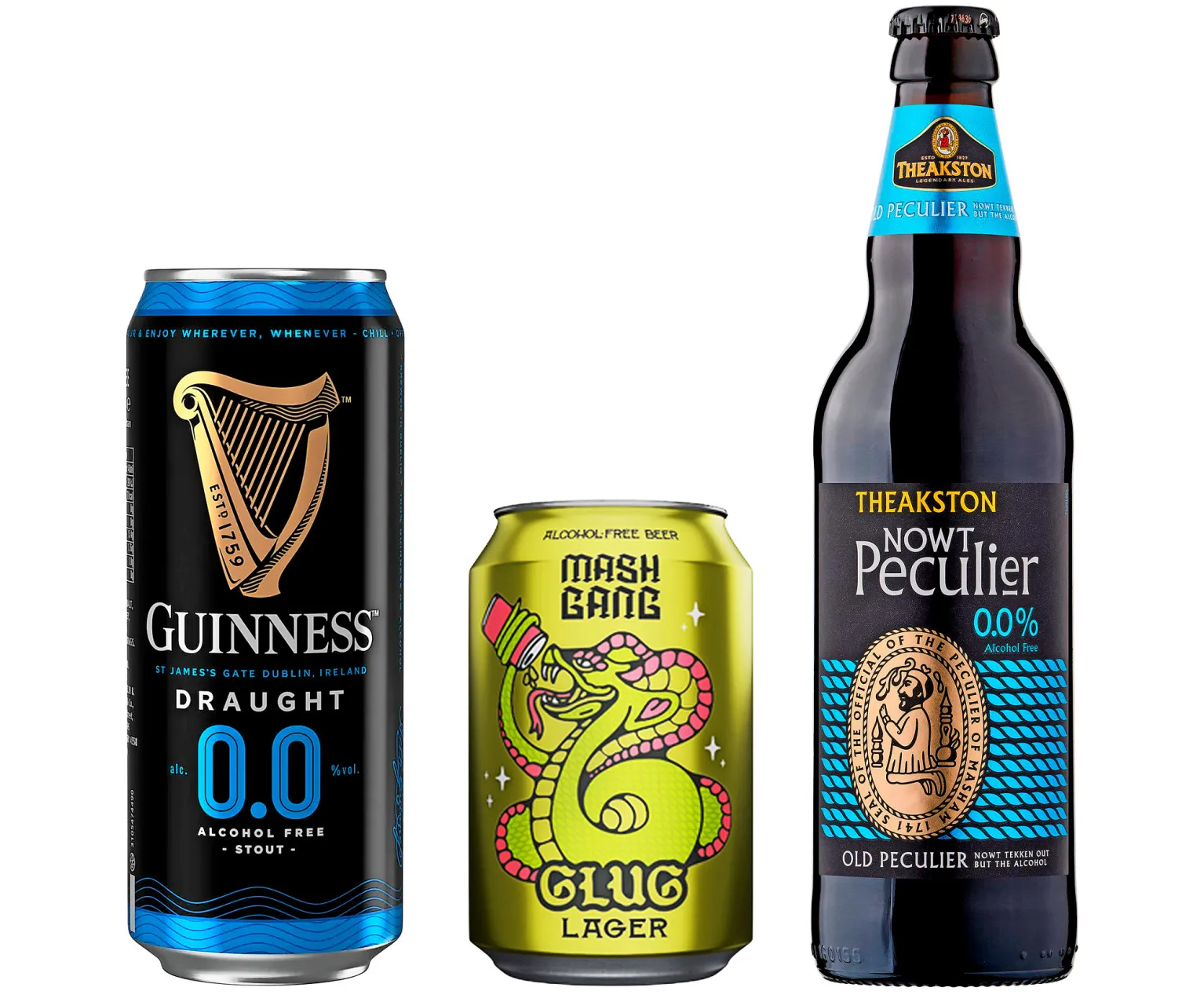

The Beery News Notes For The November Lull Marking The Five-Sixths Mark of 2025

It’s Canada up here and I gotta tell you we have entered the lull.  Pals who work in the hospitality trade in these parts know that between Halloween last week and Remembrance Day next week there is a bit of a drop as we perhaps contemplate some bigger things. Like tightening up the house before the snow flies. Like those final chores to put the garden to bed. Like finding about 35 pounds of tomatoes under just one frikkin’ tarp. Holy smokes. Any recipe suggestions for green tomato chutney can be left in the comments and will be seriously considered… given the circumstances.

First up, I liked this recent brief New Yorker review of Barcade, a joint video game and craft beer bar:

If you play it right, a visit to the new, FiDi outpost of Barcade—the hybrid arcade and craft-beer bar that originated in Williamsburg twenty-one years ago—leads to a quasi-inter-dimensional portal. Your first move, after entering, is to advance to the stone countertop on your left. Survey the chalkboard menu, rich in I.P.A.s, and choose according to your mettle. If that means the Evil Twin Pink Pineapple, prepare for a goblet of roseate brew whose tartness zaps the mouth like a laser. Explore your surroundings. 

I particularly like how the intergallactic laser theme is the tie between the beer and the games. Ten years ago, the same bar was featured in a Jack Black vignette in the same mag but the only the food was mentioned:

He took a bite of his burger, and his eyebrows soared imperatively: “Dude, this Barcade burger? Awesome!” 

Reaching even further back, Liam shared the results of some recent research on efforts by Guinness in 1896 to exert control over the Irish stout market:

This appears to be a damning (if clunkily written*) indictment of a new policy by the Guinness brewery to force those who choose to use the Guinness label to only bottle their stout porter and no other. These days this might be dismissed by many with a shrug and a comment about Guinness just being Guinness but it appears that at the time the other breweries in the city were rather incensed by this behaviour to the point where they issued what could be seen as a full page proclamation under the title ‘Protest of the Dublin brewing Trade Against the New Guinness Label’ where they called out Guinness on what the claimed to be its attempt to establish a monopoly under the guise of wishing to stop adulteration, plus the mislabelling of others’ product as their own.

And The Beer Nut was also sharing this week, this from BlueSky: “What psychopath thought jackfruit Maibock was a good idea?” Indeed. The perils of judging. Possibly relatedly but quite possibly not, David Jesudason pointed me to another peril related to beer scribbling under UK law that I had not been aware of – the taxman cometh:

In news that will have seen some beer writers crying into their gifted Fuller’s Vintage Ales, HMRC has recently clarified that content creators must declare all donations as income on their self-assessment tax return. That’s right. Those crates of beer, jets to foreign breweries and VIP festival passes will now have to be taxed at their market value. (Disclaimer: this is HMRC so some of the guidelines are as muddy as a drain pour smoothie IPA.) It’s caused a few privileged writers to heroically proclaim that they are now refusing unpaid press trips and goodie bags. These virtuous announcements can only mean that a period of austerity will have to be endured; if you see a downtrodden freelance scribe at the bar, maybe buy them a half.

Yup, tax dodging is a serious thing as the makers of Campari have recently found out:

The Italian authorities allege that the holding company, Lagfin, which is controlled by the Garavoglia family, committed tax fraud. The value of the shares seized equates to the tax in question. They will be held until the case is resolved. Lagfin controls 51.3% of the shares in Campari and 38.8% of the voting rights of Davide Campari Milano NV, which is now registered in the Netherlands. The drinks group moved its formal registration to Amsterdam in 2020 to benefit from advantageous tax laws and to exercise tighter control of the company through Dutch company law.

Oopsies!! I have to admit, this next story has me a bit confused. It appears to be an assertion that the British Beer and Pubs Association (BBPA) that the sum total of Britons’ feelings of loneliness relate to the closure of pubs, relying on numbers which appear to exceed perceptions of societal isolation during the pandemic lockdowns:

Research, gathered from new polling by the British Beer and Pubs Association (BBPA) has shown that two out of three (67%) people see pubs as “vital” in the fight against isolation. According to the results, one in three (33%) revealed that they, or someone they know, have experienced increased loneliness as a direct result of losing their local pub… According to the most recent Office of National Statistics (ONS) figures from October 2025, it was discovered that 26% of Brits report feeling lonely at least some of the time, a figure that has remained consistently high since records began in 2020, during the Covid pandemic.

CAMRA presented the same line. I suppose the pandemic is far enough in the past now that co-opting it for commercial purposes isn’t seen as an appropriation of, you know… death. What an odd way to present the poll. Surely, then, it was just coincidence that the NYT had a story on the dangers of placing trust in single issue poll results:

Policy proposals very often overperform in issue polls, according to a recent study that looked at available polling and ballot measure data across 11 topics from 1958 to 2020. The findings apply to both liberal and conservative causes. The more popular a policy is in polls, data showed, the more likely it is to underperform on Election Day. These polls distort our democracy in important ways. Political parties shape their agendas and priorities based on polls that appear to overestimate support for these ideas in the real world. This can make politicians more extreme; if they believe their causes have public support, they will be less likely to moderate.

[You know, I should quote from “a recent study” more often. They’re great.] Still… loneliness for the pub of youth? Makes sense. Was all this the reason that Matty L came out of cryo-hiberation (literarily speaking) and wrote a portrait of a particular Preston pub in peril? Probably not:

The sole survivor of a Victorian terrace, it’s on the side of of a Y-junction, surrounded by sketchy-to-cross roads and large retail units,  There’s very little chance a bog-standard pub with a bog standard drink selection would survive long there, and indeed the vast majority of pubs in the area have closed down in the last 30 years.  Luckily, at this time the whole “craft beer” thing was taking off.  Rich duly installed microbrewed cask ales on the pump, and probably Preston’s first ever “craft keg” selection on the taps.  It duly opened in May 2014, to so much local publicity that even I went there for the opening… I assume keeping all these balls in the air must get exhausting after a decade or so, and a couple of days ago Rich announced he was moving on from The Moorbrook in January.  As such, the future of the pub is up in the air…  

And Boak and Bailey also had a honest evaluation of – and even a yearning for – one former favourite pub near them in Bristol, the Swan with Two Necks:

The bogs at the Swan aren’t its best feature (soap and water on this visit, but no dryer) and the roast potatoes aren’t exhibition quality. But who cares when (a) the atmosphere and (b) the beer list are so bloody good? We think there was certainly a wobble over the summer when punters were thin on the ground and the management was having to disentangle itself from a reliance on beers from Moor. But, yeah, it’s still a great pub, and it’s definitely going to be in our 2026 Bristol pub guide.

No dryer? Me, I take an old fashioned handkerchief for such moments. Because I am old. On a similar theme in terms of noticing the details, ATJ also wrote of a moment at anthother pub past:

The fluffy cockerpoo wagged its tail as it looked at me, while I noticed a couple sitting at the bar; meanwhile a bulky man in Irish rugby shirt rushed past to the gents, disturbing the dog. The music had changed and it was now an almost electro version of (Don’t Fear) The Reaper. Outside the light continued its fall from grace and it was time for me to go to the Albion.

I could quite easily be lonely for those sorts of things, too, I suppose. Maybe. The cockerpoo. A bulky man?!? Speaking of one’s local, Jeff shared a recollection of running into both Evan and diacetyl in Prague:

Typical for any immigrant who lives in an adopted city long enough, Evan long ago absorbed the preferences of Czech drinkers. One of these was an indifference to diacetyl. Or perhaps more accurately, an agnosticism to it. He explained it to me as we sipped buttery pale lagers at his local. Czechs don’t take a position on diacetyl. Like any drinking public, Czechs have certain considerations about what makes a good beer. It should have some meat on its bones, some hop bite in the finish. It should be crystal clear. Above all, it should encourage another sip, another half-liter, and another after that. Diacetyl is just not one of the things it must have or must exclude.

Exactly. What is accepted is real but real is such a cultural construct. For example, we see that Pellicle published a set of top tips for the English pub goer from the good crew that gathers at the magazine – but a few of these have me scratching the old brain bucket. First, the intro in which the scene is set:

….a certain level of pub decorum must also be preserved. All good pubs have unwritten codes of conduct that, over time, become instilled in the people who use them regularly. It is the responsibility of those who live by these codes to pass them on to others. Pubs are for everyone—but not everyone who visits a pub is aware of the particulars that make it hospitable for patrons and staff alike.

I think it is important that we are talking about “codes” rather than a code as a few of the rules the article suggest seem to be particularly placed – and some even may contradict each other. We see that it is important not to shush (“…what possesses people to enter lively social spaces and insist on monastic silence?“) yet don’t take that lively noise too far (“…put your device on silent…“)  Also, know what you want to drink based on the menu (“…the majority of your questions may be dispensed by the clearly legible and reasonably sized board directly in your line of sight…“) but don’t order a cocktail even if it’s on the menu (“…but some pubs have a cocktail menu,” I hear you whimper. It doesn’t matter…“) . Further, I’ve worked in pubs and, yes, dropped many glasses and even a full case of beer bottles and still clap a little bit when a glass smashes. Sorry David. The article is very helpful in many ways, including a warning that there is a minefield awaiting just past the pub door for those unlucky enough to be unfamiliar with the particular local variant of the code.

See, we each have all our ways, we tribes. For further example of this, I would suggest that “fake wine” is such a dirty phrase for that regulatory cultural wonder that is “Canadian wine“:

Free Trade? California, Washington and Oregon are out of the wine business in Canada. They were taken off the shelves because of President Trump’s trade war.  Yet becuase of a series of past trade agreements, more than fifty million gallons of quote, “Canadian wine” is shipped into the U.S. each year that isn’t made with grapes – it’s made with grain alcohol at a cost of $1.08 a gallon. This so-called ‘Canadian wine’ is shipped into the U.S. and is blended into spirits products. It’s a cheap alcohol base used with vermouth, some port-style wines, wine-based cocktails, wine-based margaritas, and wine-based spirits replacements. It’s blended into distilled spirits products “with natural flavors.”

What is it? Seems to be the base for RTD alcopops and crap like Fireball and Southern Comfort. The stuff my kids snuck and chugged in high school. Also seems to fit right in with “Canadian bacon” and “Canadian tuxedo.” Bulk base booze. Vino del Norte! Viva!!

Speaking of “what is it?” Beer Marketers’ Insights has an interesting observation on the NA* beer market – the price at retail is dropping:

…it’s notable that biggest change is in hottest segment. Avg NA beer prices down 72 cents, almost 2% for 4 weeks, while category $$ sales still up 15% and volume up 17% in this data set. That includes a nearly $1 per case drop for Athletic and almost a $4 per case drop for Heineken 0.0. Athletic is still almost $42 per case and Heineken NA is at almost $39 per case. So they ain’t exactly cheap. Corona NA down a couple bucks per case too. Some of that’s due to mix shifts toward larger pack sizes. Some due to recent promo activity on brands like Heineken 0.0. But could some of these price cuts also be because of pressure created by Michelob Ultra Zero, avg price of $32.36 in last 4 weeks?

Finally, an update on a story I posted in 2010.** A story wherein I included these very quoted words: “Allsopp. That name will live for ages in the recollection of all Polars…” Recollect no more, Polars:

A brewer plans to open up a 150-year-old bottle of beer, made for an Arctic expedition, so a modern version can be created. The original Allsopp’s Arctic Ale was bottled in Burton-upon-Trent for Sir George Nares, when he set out to reach the North Pole in 1875. It was later discovered in a box in a garage in Gobowen, Shropshire, and sold at auction for £3,300 in 2015. The buyer was Dougal Gunn Sharp, founder and master brewer of Edinburgh-based Innis & Gunn, and he now plans to use the ale to seed a new limited-edition beer.

What will it be? Will they also rely on their Sylvester warming apparatus as part of the brewing process? Merryn noted another attempted recreation has already occurred. One may have to wait to find out this time to learn if it is reasonably authentic or “inspired by.” God save us from the beers labled  as “inspired by.

That is it. Next time, the post-lull madness begins. In the meantime, please also check out, Boak and Bailey on this and every Saturday and then sign up for their entertaining footnotes, too. Look out for Stan when he feels the urge now that he’s retired from Monday slot… maybe … maybe not. Then listen to a few of Lew’s podcasts and get your emailed issue of Episodes of my Pub Life by David Jesudason on certain Fridays. And Phil Mellows is at the BritishBeerBreaks. Once a month, as noted, Will Hawkes issues his London Beer City newsletter and do sign up for Katie’s wonderful self-governing totes autonomous website featuring The Gulp, too.  Ben’s Beer and Badword has returned from his break since April so you can embrace the sweary Mary! There is reading at The Glass which is going back to being a blog. Any more? We have Ontario’s own A Quick Beer and All About Beer is still offering a range of podcasts – and there’s also Mike Seay’s The Perfect Pour. Plus follow the venerable Full Pint podcast! And there’s the Craft Beer Channel on Youtube. Check out the archives of the Beer Ladies Podcast. That’s quite good and after a break they may well be are back every month!

*Not Actually?
**Notable also was this recent news item about 1890s brewing in Margate that pairs well with my 2016 story of Margage brewing in the 17th and 18th centuries: “This town much consists of brewers of a certain heady ale, and they deal much in malt…

This Week’s Fantastically Even Dramatically Encouraging Beery News Notes For W3Oct25

Usually I have something to share at the outset. Something cheery. But as the garden is on its last legs, as the month slips toward Halloween and then we deal with the changing of the clocks, it seems that any pretense that the year isn’t beginning the final act is fading fast. But… but… before all that, there is one more bit of baseball. One of the most exciting ALCS runs ever now turns into the World Series between a startlingly strong Blue Jays against the defending Dodgers led by the semi-deity known as Mr. Ohtani.  Look at him!  He’s the perfect player. Kyusung Gong of the AP took it and it sums up Ohtani neatly. He barely looks like he’s putting in any effort. His batting is the same. Yet… the Jays look good. So, even though neither of the two are my team, I will be feet up this Friday evening for game one. If you have never watched baseball you may want to watch this. One more thing. The Jays celebrate with US beer brewed under license in Canada. Lordy:

The Toronto Blue Jays are sponsored by Labatt Brewing Company, the Canadian-headquartered brewery that represents big-name booze brands like Corona, Stella Artois, Palm Bay and, yes, Budweiser. That’s why, upon the win, you could see an icy barrel stocked to the brim with bottles and cans of Budweiser within an arm’s reach of every Blue Jays player at any given time.

As I say, not my team. Next, some beery news from the world of British fitba. First up, we have Jessica Mason’s report on the new brewery being build at second tier Wrexham, Wales care of those struggling team owners Reynolds and McElhenney:

Since the duo bought Wrexham AFC five years ago, the club has risen up the ranks from the non-league to England’s second tier. Added to this, the brand has also found fame via a Disney+ documentary Welcome to Wrexham, which followed the club’s story and focused global attention on the area, also boosting tourist numbers. Then, last year, Reynolds and McElhenney acquired a majority stake in local brewery Wrexham Lager…. now there are plans afoot for other drinks brands, including Wrexham Lager to have a boosted presence with the proximity of the new brewery being developed nearby. The application reads: ‘The Wrexham Lager proposals, consisting a brewery and associated taproom and museum, will utilise existing buildings on the site.’

But then we read of the news out of England’s seventh tier as reported by Phil Hay of the newsletter, The Athletic FC:

The club were Bracknell Town, based 35 miles to the west of London. Their video drew attention because in it, their coach — the recently-appointed Matt Saunders — hammered a number of his senior players, criticising their conditioning, their attitude and their tendency towards alcohol. “I’m not going to let this football club be dragged down by people that can’t run, can’t look after their body, want to go and drink after games,” he said. “It ain’t happening.” Bracknell are having a time of it. They’re bottom of the Southern League Premier South with six points from 11 matches, and Saunders’ arrival hasn’t picked them up. 

Difference? Maybe five tiers? Boak and Bailey have also made a call via an alert on Patreon, asking for a boost to the next level:*

It’s been a while since we tackled a big question like where did lager louts come from, what’s the deal with nitrokeg beers or when did video games in pubs become a thing? We’ve got an idea to write something about The Prospect of Whitby but beyond that, what are some other questions we might tackle? We like to add the sum of collective knowledge – to pull facts together into one place where they can be found. Suggestions welcome.

In a time when some other voices have gone a bit silent or seem a little discouraged, this reminder of the need to add to the sum of collective knowledge is encouraging. Solidarity friends! Send then your ideas or even scribble your own somewhere and let us know. Similarly, The Pellicle feature this week is by Lily Waite-Marsden, a portrait of Macintosh Ales of London which, at the outset, does not offer an initial encouraging prospect:

There’s a small yard a moment away from Stoke Newington Church Street in North East London. At its entrance an entirely perfunctory and heavily battered railing protects the square of overgrown cobbles from the pavement beyond. On the first floor of the old stable buildings on three sides, four green doors lead to nothing but a 10-foot drop; the yard is hemmed with various shades of green paint—faded and flaking patchwork grass, darker, glossier army-surplus vehicle paint. But for a hand-painted sign and a number of planters giving the game away, passing on a quiet morning or late at night it might look a little tired, unloved.

But then… it was encouraging. And, turning to brewing history, Andreas Krennmair wrote about a favourite topic of mine, Schenkbier. Except when I looked at the stuff it was from the perspective of what was brewed by German speaking immigrants to the USA. Schenk was referenced regularly descriptions of the brewing trade in the third quarter of the 1800s and was described as one of three species of German beer which had crossed the ocean: lager, bock and schenk.  Andreas found some information from a few decadeds earlier that helped him unpack what was in the glass:

What’s surprising is how different the beers were in terms of original gravity and attenuation. OGs between 11 and 12.6 °P are absolutely solid, and while some of these beers didn’t have nearly as much alcohol as modern lager beers, they’d still be alright to drink, although probably on sweeter side for modern tastes. Especially the beer from Heller stands out, with a respectable 11.5 °P but only 2.9% ABV and a very high residual extract. Doing the calculation, the real attenuation was less than 40%, so this beer must have been a sweet mess. Compare this with modern lager beer, with real attenuation around 65%.

Perhaps syrupy low kick gak is the next big thing. It could be already. There is going to be a next big thing, right? Maybe not. North America’s oldest brewer, Molson, is laying off staff. And not just any staff – the white collar staff of MCBC:

Beer maker Molson Coors Beverage Company said on Monday it would cut about 400 jobs, or nine per cent of its salaried workforce in the Americas by year end as part of a corporate restructuring plan. The company’s Americas workforce consists of employees in the U.S., Canada and certain countries in Latin America. A spokesperson for the company told CBC News in an email that the restructuring “only applies to salaried non-union employees across the Americas.” The company is not providing a breakdown by country or province at this stage, and no offices or breweries will shut down as part of the restructuring, the spokesperson added.

It’s always the suits who suffer. The trends in beer are not comforting. Last week’s noting that craft might need saving** not only got some chatter going but I played Mr Smil and dipped my toe into the math that we are living with seeking to compare those apples to apples:

Interesting to note that 2024, Athletic NA beer alone was 400,000 bbl. Is NA beer a comparable to other booze? Is it booze? We should probably compare alcohol sector to alcohol sector. Take just that one brewery’s production out, the drop is more like 14%…  Worse news if we believe Beer Marketers Insights (Oct 1): “Craft beer trends (ex non-alc) steepened over the summer to volume -8.4% and $$ -6.4%; several pts below total beer volume -5.6% and $$ down 5.1% for 18 wks thru Sep 20 vs yr ago.” So 2019-24 at -14% (non-NA) could be down -20% for 2019-25.

Or more *** The Guardian wrote about another aspect of the retraction from alcohol – the loss of a cornerstone element of overall profitability for restaurants:

The industry standard markup on alcohol in a high-end restaurant is anywhere from 150% upwards, making it one of, perhaps the only, high-margin products on the menu. As people drink less, it could leave restaurants in a precarious position. For every restaurateur willing to go on the record to discuss the shifting tide, there were an equal number who refused to be interviewed for this story. Some because they say they’ve witnessed no change in customer behaviour, and others because the subject matter is at odds with promoting a hospitality business. While it doesn’t necessarily do wonders for the bottom line, diners drinking less at the table does create a more harmonious environment for restaurant workers. Fewer drunk bodies means less risk overall.

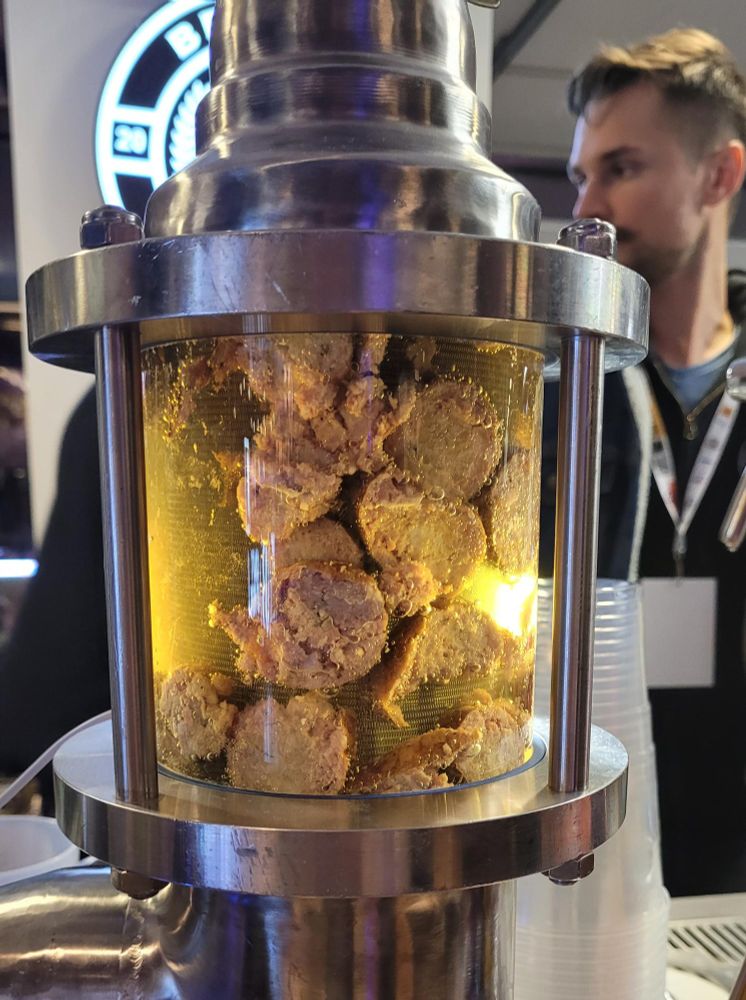
Me, I usually just have water but still try to tip like I’ve had a bit of booze. Where will this all lead?  What can be relied upon to get the attention of the public. Innovation? The Beer Nut himself spent last weekend in Warsaw and spotted one of the more innovative cultural expressions of beer culture – a sausage randall as illustrated in thumbnail format… in consideration of some of your delicate constitutions. Much consternation was found in the comments which followed his Bluesky post – but I really can’t see the difference between a lager washed through sausages and sausages washed down with lager. Much depending of course on the quality of the sausage.

Speaking of quality, Matty C. has written about the return of Boddingtons for CAMRA’s What’s Brewing and has placed it in the moment:

Being honest for a second, this beer is not reinventing the wheel – there are far more interesting and flavourful pints available, even from JW Lees itself. But I consider the resurgence of Boddingtons is about more than flavour. Reports are already coming in from Manchester venues that are not able to keep up with demand, turning away disappointed drinkers who want to be seen with a pint of it in hand. This is significant, because those who are drinking it are young, fashionable, and about as far away from the cask beer stereotype as you can possibly get. This can only be considered a positive. For many drinkers, especially younger ones, a row of handpulls featuring a range of products they’ve never heard of can be incredibly intimidating. In Boddingtons, a brand has been revived that people can easily trust.

Heritage as maybe heritage? Maybe. Speaking of maybe, there is always the potential for maybe not – as one liquor dome in Northern Ireland found out recently:

Planners order the business to remove shipping containers used as a bar and storage, as well as a takeaway food cabin with a serving hatch on a Skipper Street – a side road that runs past the beer garden. Also to go are steel boundaries with wood covering that include an access gate and windows, an enclosed walkway entrance, a “tent structure”, boundary fencing in excess of two metres in height not adjacent to a road, and storage areas for bins and beer kegs. City planners say they’ve reached their verdict as “it appears there has been a breach of planning control” on the site.

Finally and probably relatedly, here is an interesting snippet of an unlocked article from the Financial Times written by Charles Spencer (Princess Di’s brother) on the question of authenticity which includes this:

When, in 1992, I inherited Althorp, my family’s ancestral home, I felt a responsibility to return it to how it had been for much of its 500-year history. For, over the previous decade and a half, the interior had been lavishly redecorated by my stepmother, Raine, whose taste and palette were inherited from her flamboyant mother, romantic novelist Barbara Cartland… I turned to John Cornforth, perhaps the leading British architectural historian of the time, to help me return things to how they should be. We toured Althorp’s principal rooms, assessing them for Raine damage. Cornforth’s kind reassurances dwindled as we went. Finally, on entering the South Drawing Room — a cacophony of clashing pinks (on the walls, on the floor, in the curtains) — Cornforth rocked back in his tightly drawn lace-ups. “Goodness,” he mused. “I really can’t help you here .  As he departed Althorp that afternoon, he lobbed me a catch-all mantra that he hoped might help: “Good taste is authenticity — and authenticity is good taste.”

The point is excellently made. But what does this have to do with beer? Only on the idea of how his hunt for authenticity based on that saying became for Spencer a no-doubt very expensive exercise in conformity. Realizing that, he argues for a balance between respect for what has come before with a realization that you need to live in the present, too. Can we compare the return of Boddingtons or the sweet mess that was historic schenk or that sausage randall with the clashing pinks of a devotee Barbara Cartland’s fashion sense?  Obviously even the “don’t yuk their yum” level of junior beer expert might balk at the more garish, the most lurid of these pleasures. But where to draw the line?

While we consider that over the week ahead, please also check out, Boak and Bailey on this and every Saturday and then sign up for their entertaining footnotes, too. Look out for Stan when he feels the urge now that he’s retired from Monday slot… maybe … maybe not. Then listen to a few of that now newly refreshed Lew’s podcasts and get your emailed issue of Episodes of my Pub Life by David Jesudason on certain Fridays. And Phil Mellows is at the BritishBeerBreaks. Once a month, as noted, Will Hawkes issues his London Beer City newsletter and do sign up for Katie’s wonderful self-governing totes autonomous website featuring The Gulp, too.  Ben’s Beer and Badword has been on hiatus since April but the archives are out there with the all the sweary Mary! There is new reading at The Glass which is going back to being a blog. Any more? We have Ontario’s own A Quick Beer and All About Beer is still offering a range of podcasts – and there’s also Mike Seay’s The Perfect Pour. Plus follow the venerable Full Pint podcast! And there’s the Craft Beer Channel on Youtube. Check out the archives of the Beer Ladies Podcast. That’s quite good and after a break they may well be are back every month!

*Formatted to fit, to protect the innocent perhaps but mainly to fit.
**Jeff updated his thoughts, by the way, but it did make me wonder why what one wants should be limited to what some producers feel they can provide. Perhaps the former suits of Molson now share that feeling.
***A bear of beer! 

Your Totally Excited And Entirely Distracted Beery News Notes For Wildcard Week

Just in case, you didn’t know the baseball playoffs are brutal. Four rounds of MLB games take place between last Tuesday and end no later than November 1st. By way of comparison, hockey takes months and months and months to figure out who gets their names on the cup. So… I have been distracted and annoyed. Distracted because my Red Sox are playing October baseball for the first time in a while and annoyed by all the instant Toronto fans who think Canadians all have to root for the Jays. If the gods will it so, the Sox will get past the Yankees* and will then see off Toronto around about October 10th. If not… oh well.

Sticking with sports, over at Real Ale, Real Music the story from Chris was about a trip away to a fitba match at Southend and all the beers along the way:

We finished our beers, and set off walking to the football ground. It was about a 20 minute walk as we moved out of the city centre into the suburbs, passing modern blocks and more traditional housing as we approached the ground. We were directed around to the away end by a couple of friendly bobbies, and we got in pretty quickly, and immediately spotted one or two familiar faces. Roots Hall is very much a traditional football ground, with individual stands on each side of the ground with the one behind the goal opposite the away end having an upper level.   The club though would win no awards for their catering, the cheeseburger we sampled having the consistency of a hard rubber disc, and it was presented in a dried-out, crumbling defrosted bun.

I really like the pace of those pieces. On the other hand, the Netflix series “The House of Guinness” has received some disappointed reviews from those well placed like Liam – “ludicrous and pointless” – but perhaps none so well placed as the one provided by Ms. Molly Guinness as reported in The Times:

We hooted with laughter through the first two episodes. As Sean Rafferty, Norton specialises in lines such as “Oi’ve worked for your family for 20 years and I know that inside every one of yous there’s a woild, woild black cat.” Alas, I suspect this characteristic has been bred out of us over the generations. When a corseted lady (great-great-aunt Olivia, since you ask) says, “I can take your money, but I don’t have to take your cock,” unlike all modern Guinnesses, she is not talking about poultry.

Speaking of disputes, another week and another question of law in the world of beer, this time over the right to the word “wor” – if, you know, it is even a word and not a sound… ok, fine… it’s a word:

A dispute has erupted between two breweries over the trademark of the word Wor on beer associated with a group of football fans. Tyneside-based Wylam Brewery re-branded its Wor Flags beer to NCL Flags last week – the sales of which support the Wor Flags fan group best known for creating Newcastle United banner displays. Anarchy Brew Co, also based in Tyneside, said it registered the trademark for beer products in 2022 during its own similar partnership with Wor Flags, which ended before the start of the new season. Wylam Brewery said it was “disappointed” to be put in that position. Anarchy said it could have been avoided if the other company did its due diligence.

Conversely and more about getting it right, I enjoyed this excellent and detailed potrait of Master Sommelier Agnieszka Swiecka in The Buyer which describes the years of work it took for her to earn the designation this year:

I was fortunate to pass the blind tasting and practical parts of the MS exam at my first attempt in 2023, but the theory was my achilles heel. I have created self-limiting beliefs in my head that hindered my chances to pass. For example, I was telling myself that, to pass the exam I don’t need to have a deep knowledge of spirits and cocktails, as this is a sommelier not a bartender certification. It wouldn’t be fair to ask too many spirits questions. Or things along the lines – if last year there were questions about Chile maybe it’s better to focus on Argentina for this year’s exam? Can I skip studying about Bulgaria? It’s likely that I will get one question if any, and I need 75% to pass. You get the idea.

Skip Bulgarian wine? Come to think of it, as a teen I often thought somewhat after the fact that it might have been wise for me had I done just that.

Speaking of unpleasant drinking habits, I found this graph from the AAWE on BlueSky useful in detailing how big wine coolers were in the 1980s. It also got me thinking of where that segment of drinker preference has gone, say, since the early 1990s. People who want sweet trendy gak.  Jordan helpfull reminded us back in 2020 how Mike’s Hard Lemonade arose starting around 1996:

Michelle Shephard, writing in the Toronto Star on April 19, 1998, clutches pearls magnificently: “It looks like lemonade. It tastes like lemonade…” Shephard interviews two female Ryerson students who are quoted as saying “we went to the bar downtown and just decided it was a night to drink Mike’s. We had one then oh, this is gone. Then, oh this one’s gone so let’s get another…” and “They’re just so easy to drink you don’t even know you’re getting drunk.” One feels as though this might have backfired somewhat.

Jordan was comparing Mike’s to the White Claw boom of the early pandemic months of 2020. But haven’t the fruit flavoured craft alcopops called kettle sours also played that same role? Discussed in VinePair in 2018, I know from the archives that I had my first overly fruity IPA in 2014 and maybe the first sweetie pie kettle sour around 2016 at Folly Brewing, both in Toronto.** So were there gaps in the candy coated timeline or has there always been a form of sweet gak that lets kids say “oh this one’s gone so let’s get another” while having fun? Or put it this way… was there ever not a cheap sweet gak of choice and head cracking aches?***

Slightly related, I had never heard of the UK’s Boring Beer Index until this week which I suppose is good. But as it appears to be some sort of PR counter-insurgency I suppose that indicates something about it isn’t all that good, as perhaps clarified in the Morning Advertiser:

Some premium lager brands have seen sharp increases, such as Madri, which has seen the number of respondents claiming to be bored of it almost double since the previous report. John Smith’s topped the survey’s list of so-called boring ales while Guinness was cited as the most unexciting stout brand…

Very unpopular, that Guinness stuff. Out and about the planet, The Beer Nut was in Germany and hunted out some beers in Dusseldorf other than their famous Alt with much success except at…:

…Schumacher. This was my first time in their downtown pub, Im Goldenen Kessel. It was crowded, the service surlier and less responsive than anywhere else in town, and I got stuck at a table where there probably shouldn’t be a table. To top that off, their Alt alternative was… an Alt. Now, 1838er is 5% ABV and claims to be brewed with Cascade hops, but it’s the clear dark brown of an Alt and has the same medium-roast base. Unfortunately, it also has diacetyl in spades, and tastes more like a Danish butter cookie than anything else. This smacks up against a sharp gastric acidity, rendering it a complete mess and somewhere close to undrinkable. The brewery advises us to look out for the hint of lemon in the aroma. Nah mate; that ship has sailed. It’s just as well Schumacher’s proper Alt is pretty decent.

And Ron was on the road again, this time (again) he headed to Singapore to judge (again). His description of his arrival on the otherside of the planet leaves me a bit boggled myselg given, you know, I’d be more inclined to nap for 36 hours:

The arrival gate isn’t quite in Malaysia this time. It’s not so far to immigration and baggage retrieval. My bag comes out pretty quickly. Soon I’m speeding towards my hotel in a taxi. I’ve a couple of hours before the welcome dinner. Which I kill with some internet fiddling and duty-free whisky. It’s a pretty nice hotel with a decent-sized room. At 18:30, we take a bus to the venue. Which is a rooftop restaurant in a small hotel. With stunning views of the city. There’s just the one downside: no bogs. You have to go down to the ground floor for toileting purposes. Which is a bit inconvenient. Especially for oldies like me.

Back here at home, an interesting discussion is going on hereabouts about the retail rules. It’s on the question of whether big grocery chains in Ontario are going to be forced into participating in the return of recyclable empty beer bottles as part of their right to sell beer, cider and wine, as reported on by TVO Today:

…there are, legitimately, some small grocers who face some real hardship from being forced to choose between stocking beer and wine or accepting empties. That’s why the province’s current policy exempts stores under 4,000 square feet — if your local convenience store or small green grocer has added some beer fridges in the past year, they’re almost certainly fine. Nevertheless, maybe that number needs to be modestly increased; I’m certainly not going to vouch for the Ford government’s perfection in rule-making. Ultimately, however, the question of what to do about small stores is a distraction. The actual fight in Ontario this year is over whether big grocers will, once again, get the province to bend and relieve them of any obligation to collect empties.

And ATJ got the nod for Pellicles feature this week and provided a protrait of Proper Job, an early English clone of a hoppy US IPA. I really like this description from the brewer who makes it now:

“If you want an IPA but have never had one, this is the one to get,” Georgina Young, Roger’s successor as St. Austell head brewer, tells me when we meet at one of St Austell’s Exeter pubs, the Mill on the Exe. “It’s a great example of a punchy, hoppy IPA. To me it represents a real ‘god I really want a Proper Job lightning hop tingling on the tongue’ moment, it’s an exciting beer to drink and I think that is the draw of it.” “If I am going out for a ‘watering’ pint I will go for a Tribute,” she adds. “If something is going to excite me then it will be a Proper Job. Roger was very much into his Def Leppard, AC/DC, metal, he loved it. When you sit and drink Proper Job you can feel that. It is quite heavy metal, a bit scratchy.”

Finally, Japanese brewer Asahi has been hit with a pretty dramatic cyber attack which has led to some serious consequences:

Asahi Group Holdings has not been able to resume production at domestic factories a day after a cyberattack and cannot foresee when it can be resumed, a company spokesperson said on Tuesday… The maker of Asahi Super Dry Beer, Nikka Whisky and Mitsuya Cider last night said its group companies in Japan suspended operations, including order processing, shipping and call centre functions, due to a cyberattack-caused system outage, although no personal information leakage has been confirmed.

How odd. Who gains from that? Economic terrorism or just pesky teens messing around on the internets. Gotta keep an eye on that one. But now I need to get back to the baseball. As you root root root for whichever is your home team of choice, please also check out Boak and Bailey every Saturday and sign up for their entertaining footnotes, too. Look out for Stan when he feels the urge now that he’s retired from Monday slot… maybe … maybe not. Then listen to a few of that now newly refreshed Lew’s podcasts and get your emailed issue of Episodes of my Pub Life by David Jesudason on certain Fridays. And Phil Mellows is at the BritishBeerBreaks. Once a month, as noted, Will Hawkes issues his London Beer City newsletter and do sign up for Katie’s wonderful self-governing totes autonomous website featuring The Gulp, too.  Ben’s Beer and Badword has been on hiatus since April but the archives are out there with the all the sweary Mary! There is new reading at The Glass which is going back to being a blog. Any more? We have Ontario’s own A Quick Beer and All About Beer is still offering a range of podcasts – and there’s also Mike Seay’s The Perfect Pour. Plus follow the venerable Full Pint podcast! And there’s the Craft Beer Channel on Youtube. Check out the archives of the Beer Ladies Podcast. That’s quite good and after a break they may well be are back every month! Such is life. Such is beer podcasting and newslettering… which, as Ray says, are blogs! And he’s right.

*Tuesday’s Game 1 result? Sox sorta evicerate the Yanks after seven innings of a pitcher’s duel. UPDATE: Wednesday had a similar plot but the Yanks were the beneficiaries. Great baseball.
**No comment as to the relation to the 2025 Blue Jays… perhaps…
***I am reminded of my late great parents and confirming the nickname for cheap sweet gak in the 1950s just to the west of Glasgow was “electric soup”!

The Very First And Initial And Even Inaugural Beery News Notes For Autumn 2025

Once again, take a moment to consider the words recommended this time every year, the words of Mr. J.Keats first posted to blog twenty-two years ago:

Season of mists and mellow fruitfulness,
Close bosom-friend of the maturing sun;
Conspiring with him how to load and bless
With fruit the vines that round the thatch-eves run…

Load and bless! I like that. People fret about autumn coming. As if, you know, it’s February. But you get both loaded and blessed these days. I have been blessed with a load of produce including the tomatoes discussed a few weeks ago. But there’s also the easiest and laziest crop of green onion to be brought in. All winter we save the bottoms of the onion bunches and keep the roots going in jars of water. Come spring, plunk them in a pot or in the ground and you have a perpetual green onion crop to be saved in the freezer. Free free free. Never abandon your roots.

Speaking of free, Dr Christina Wade is doing a free online talk about her book Filthy Queens and the history of Beer in Ireland for the Dublin Festival of History on Sept 30th from 5pm Irish time. Here is the link to sign up. Unrelated, I give you drinking with Brian Eno, circa 2015:

My best wine experiences have been with French wines, so I think the best French wines are the best wines. But there are also so many bad French wines – there’s such a range. A long time ago I wrote an essay called “Wines Classified According To Their Effects” because I was convinced there was a different type of drunkenness from each kind of wine. That was the reason I got into Burgundy, because I noticed Aloxe-Corton in particular made people laugh. Bordeaux is a bad drunk for me. I think Bordeaux wines are largely responsible for the decline in French philosophy in the last fifty years. I think the problem is that Bordeaux makes you think that everything you are saying is really quite important.

Is there an alcohol that doesn’t? Perhaps we should do a survey of our significant others. Speaking of studies, suddenly the stats on the lower levels of drinking by the kids in America* is to be relied upon after yoinks of denials. I dunno what happened – but Kate B reports on the numbers:

The kids are alright. New federal data shows young people ages 12-18 showed statistically significant decreases in alcohol use, cannabis use, major depressive episodes, and suicidality compared to four years ago. Why? Changes to the way kids socialize… It’s partially a COVID ripple effect: With kids more isolated, teens’ reported use of almost all measured substances decreased dramatically between 2020 and 2021. Notable: Teen drinking and drug use have remained low—or continued to decrease—since the pandemic, even as public spaces have reopened.

It’s all about the damn numbers, isn’t it. [See also Mr. Gladman on the grasphical representation of data as it relates to matcha: “The green bar makes it look like we’re gulping down matcha-flavoured fluids by the bucketful…“] And David J is also on the question of “youth ‘n’ booze” for CAMRA’s What’s Brewing with a focus on cask ale and who is interpreting the numbers:

I’m very sceptical when anyone speaks about Gen Z or any demographic cohort with seeming authority. Usually the characteristics of each generation seem very similar to the previous one and a lot of these supposed behaviour patterns could be just attributed to anyone who is lucky enough to be young… So when I read that Gen Z could save cask beer from extinction, I raised an eyebrow. I then raised the other eyebrow – a unique skill – when I read in the same article an industry grandee being quoted as saying Gen Z want variety when they drink, like they’re one homogeneous person tapping their beer order into the app on their phone to avoid the queue.

It would have been better if Mel in Braveheart had shouted “METHDOLOGY! METHODOLOGY!!!” wouldn’t it.

Changing topics with abandon, we see that Boak and Bailey posted their thoughts on holding Oktoberfests in England and added a few more in a footnote that was in addition to their weekly footnotes. Therein, they offered five observations but I was caught on the fourth:

Fourthly, we recall someone suggesting that Oktoberfest events in the UK were a form of cultural appropriation. This is a fair challenge although we tend to think that countries or cultures which had empires and colonies probably don’t get to complain about that.

I shared that I wondered where the limit of cultural appropriation should sit. Here in Canada, it’s mainly illustrated by people pretending to be Indigenous for advantage. So if Germans are selling a welcome product into Britain as they have been (as your excellent book proved) why not celebrate it? If you have seen 1983’s Strange Brew you will know that Ontario’s twin cities of Kitchener-Waterloo, the former once named Berlin, has the second biggest Oktoberfest in the world. Because we had many German-speaking immigrants in the 1800s. And as the Bs wrote about in their Gambrinus Waltz there was also heavy marketing of German lager into the UK at around the same time along with the rest of the globe. Cultural expansion can’t then be relabled as an appropriation. That’s a bit too colonial for me.

Merryn linked to another archaeological report that seems to be bending backwards to not find evidence of brewing in pre-historic Britain:

An early Neolithic settlement on the small island of Wyre, Orkney, where a huge amount of carbonised grain on a clay floor was discovered. Interpreted by the excavators as a granary. But I reckon it could’ve been a malting floor and a grain barn.

Here is the report on the study referred to. Note the passage: “But why would a drain begin under a hearth? We can find no logical explanation.” Because maybe it had a log gutter sat in the stone channel drawing off the wort? In my work I am aware that as late as the 1970s pipes made of wood were found in the oldest serviced areas of my fair City. So that could be it. Beats the heck out of “no logical explanation.”

Speaking of science and explanation, Lars took the “monkey fruit booze” story mentioned by me last week as a goof and disassembled the story to create some serious observations on the nature of the human beast itself… ourselves:

…about 10 million years ago, a mutation made that gene much more efficient at breaking down ethanol, the ordinary alcohol that makes us intoxicated. This suggests that we started consuming alcohol already then… the story that our relationship with alcohol began before we were human, at the time we came down from the trees, seems to hold up very well. We have other adaptations against alcohol as well, some of which seem to have appeared when agriculture began, but that’s another story.

As a practicing lawyer, one is never surprised by the news about what hasn’t been pulled off by other lawyers:

Cole Palmer rarely tastes defeat on-the-field, but the Chelsea and England star has lost a bizarre battle off-the-pitch with a French vineyard. The tussle in question has been over his attempts to trademark his ‘Cold Palmer’ nickname and using that to launch his own wine company under that moniker. Last year, Palmer made a move to trademark both his ‘ice cold’ celebration and the name ‘Cold Palmer’, in the hope of using it to sell a number of different products. These include clothes, food, toys, toiletries, razor blades, diet drinks and alcohol. However, the latter was opposed by a revered vineyard in the south west of France. Chateau Palmer, which is in the Margaux region in Bordeaux, believed a trademark of the name would be a threat to its own image.

Having distanced myself from Mr. Palmer in the Pellicle-run FPL league I can take issue with the first proposition set out above but, even having distanced myself from Ch. Palmer economically, I can’t disagree with the outcome. Palmer is to Bordeaux as Mcdonalds is to fast food in terms of notariety. What were they thinking?

Evan has suggested what might be the hot new thing is Czech beer service – řezané pivo:

Roughly translated as “cut beer,” řezané pivo includes both dark lager and pale lager, often (though not always) poured in two separate layers, giving each glass plenty of visual appeal, just like mlíko. (Starting with the famously difficult Ř sound, the full name sounds a lot like “rzhez-on-eh pee-voh,” depending on how many of them you’ve ordered.) As with the all-foam pour, řezané fits perfectly into the burgeoning craft lager movement. But unlike mlíko, řezané is more clearly rooted in Czech tradition, feeling less like a parlor trick, at least for some locals.

I no more have a stash of Chateau Palmer than I have what would be called a “parlor” but, really, wouldn’t that be the best place for a good trick? And a somewhat familiar one as I recall seeing – both in Scotland with a cousin as well as in my old hometown of Halifax, NS – bartenders who could float Guinness on a lighter ale. As Even notes, a half and half is a fun thing.

And on the theme of things formerly sipped gingerly, Alistair wrote about and old fabourite beer, Leffe Blonde. I won’t ruin his findings but his remembrance of the ale past starts out very specifically:

Back in the days when I was a college student in Birmingham, I got the train from New Street early one Saturday morning to go to Esher in Surrey. The main purpose for the trip was to spend the day at the Sandown races with my eldest brother, who lived down that way back then. Having spent the day frittering money away on thoroughbreds of varying uselessness, we headed into central London for dinner at a non-descript curry house, non-descript in the sense that I don’t have the foggiest as to what I ate, but weirdly 2 beers are lodged in my memory, the Żywiec I was drinking and the Leffe Blonde that was my brother’s choice that night.

I got a similar heads up about the state of Cantillon sales from Jeff who directed me to an article in VinePair by Aaron Goldfarb in which he speak of the blip in time when lambic was really cool:

…by 2013, everything had changed and the U.S. beer landscape was now ready for such challenging flavors. By then, Beer Advocate’s top 250 beers list included 11 Cantillon beers. highlighted by Fou’ Foune at #11, the brewery’s Lou Pepe – Kriek at #28, Saint Lamvinus at #36, and the European-only release Blåbær Lambik at #39. Today, it seems hard to imagine a time when Belgian lambic was possibly so hot. If you’re in your 20s or early 30s, it’s possible you’ve never even tasted one. And it wasn’t just Cantillon. Among a list then dominated, as it still is today, by IPAs and big, boozy stouts, a shocking number of sours beers — mostly Belgian lambic but also American wild ales — dot the top 250.

I was definitely into sours in the sense that I created a category for sour beer studies in around 2005 but I wasn’t always a big fan. From the archives, I see that I really liked Lindemans Gueuze in 2005, Kriek De Ranke in 2007 and loved Girardin Gueuze in 2008 but, man, I really really didn’t like Bruocsella 1900 Grand Cru by Cantillon in 2006:

Quite plainly watery at the outset then acid and more acid…then one note of poo. Not refreshing to slightly sub-Cromwellian stridency. Annoying. Then at the end a hint of apple cider. Foul. I wonder if this is an example of mass reputation piercing the veil of reality – mob craftism. I cannot hate it. Yet I am sure it hates me.

Check the comments to that post! By 2012, I had coined the phrase “to be Shelted” once my studies had gotten into the economics of what was going on.

Finally, Jeff also announced that he is taking a bit of a  well earned break. He explain a bit about the moment he finds himself as he does so in through this post:

Journalists cover a broad range of topics, and reporting about the actions of their elected leaders and government officials is an important load-bearing wall in any democracy. It’s why, during democratic backsliding, one of the first things the aspiring autocrat does is taking control of the media. I write about beer, and to a small, niche audience, so there’s little worry the government would come after me. (Trump, famously, is not a drinker, so my hot takes about icy beer is unlikely to draw his ire.) Yet as a citizen and as a freelancer, all of this feels very personal. Written speech is not just my livelihood, but it has been a central part of my life. I wasn’t surprised to see these developments, but they did cut me deeply.

Something to think on for all of us. And that’s it for now. A bit shorter this week but I have been hammered with a late winter cold for over a week now and I just want to go to bed. Can I please just go to bed ?!?!?  As you consider Jeff’s decision and my simple request over the next few days, please also check out the below mentioned Boak and Bailey every Saturday and sign up for their entertaining footnotes, too. Look out for Stan when he feels the urge now that he’s retired from Monday slot… maybe … maybe not. Then listen to a few of that now newly refreshed Lew’s podcasts and get your emailed issue of Episodes of my Pub Life by David Jesudason on certain Fridays. And Phil Mellows is at the BritishBeerBreaks. Once a month, as noted, Will Hawkes issues his London Beer City newsletter and do sign up for Katie’s wonderful self-governing totes autonomous website featuring The Gulp, too.  Ben’s Beer and Badword has been on hiatus since April but the archives are out there with the all the sweary Mary! There is new reading at The Glass which is going back to being a blog. Any more? We have Ontario’s own A Quick Beer and All About Beer is still offering a range of podcasts – and there’s also Mike Seay’s The Perfect Pour. Plus follow the venerable Full Pint podcast! And there’s the Craft Beer Channel on Youtube. Check out the archives of the Beer Ladies Podcast. That’s quite good and after a break they may well be are back every month! Such is life. Such is beer podcasting and newslettering… which, as Ray says, are blogs! And he’s right.

*Not these Kids in America… that was me and mine. It probably was suppose to be “We’re the Kids In North America” but, you know, the suits…

The Thursday Beery News Notes For The End Of Summer 2025

There are good views out there. Lots of golden hour sunlight finishing up the days as we face the reality that, yes, winter is coming. Out and about that evening, I saw a frog and a hedge of jewelweed – but you’d expect that, wouldn’t you. I like how the angle of the shadow makes something of a right angle with the tree. I didn’t notice that when I took the photo. But even saying that makes it too artsie, less just see-ie. Similarly, writing about hops, Jeff wrote about a limitation but its really about two limitations. And it’s all a bit like dancing about architecture… but what isn’t:

The thing about adding more is at a certain point you don’t get more. We learned this when breweries were putting eight pounds per barrel of hops in their beers and making them taste like lawn clippings. To get more, you have to add different. And here I give you fresh hop beers. They offer a dimension of flavor that is different from regular kilned hops. Trying to describe them is hard because rather than just reaching for another adjective, we grope toward different realms of experience. Drinking a very good fresh hop beer is to experience synesthesia and encounter the taste of iridescent green.

Conversely yet still on the question of different, not as charming an experience was an airport sandwich sold to Matt Gross under the presumably personally seductive name “the Matthew”, it of the 10 slices of prosciutto:

…laid flat, one on the other, with no space between them, to form a dense, unchewable mound of salty protein. Look, sandwiches are all about architecture, and the meat, especially a powerfully flavored one like prosciutto, needs air. Each slice, thick or thin, should be separated from its brethren, folded gently and laid haphazardly (within reason) upon the bread. You want to feel the texture of the slices, the regular irregularity of the bite as your teeth pass through the layers. That sandwich needs to breathe. If it can’t breathe, it’s dead on the plate, limp and heavy, boring. R.I.P. Matthew. The great thing about this approach is that you can actually use less prosciutto per sandwich and at the same time make the sandwich taste better.

It’s funny. As I go through the week’s saved links I can get interested about someone writing about a crappy sandwich but, for example, can’t be bothered with anything anyone is writing about THC drinks. What could it be? Bad writing? Maybe.* Compare how, for CAMRA’s What’s Brewing, yet another Matthew wrote about beer pubs and heritage in the nearby local layered landscape under development in Manchester’s core, writting in a way which contextualizes more than lobbies:

“We believe regeneration should enhance, not diminish, the city’s heritage. The Marble Arch deserves to be protected as part of Manchester’s future, not pushed aside by it.” On the subject of heritage, one brand looking to capitalise on the city being the national centre of attention this summer is the iconic Boddingtons. Brand owner AB-InBev has decided to return the brand to cask production after it was discontinued in 2012. The news follows hot on the heels of reported investment in another of its heritage beers, Bass…

I like the tone. While one can get numbed by the beating of a drum, an invitation to think about survival and revival in face of modernity is instructive. Speaking of which, maintaining an interest in more than listicles, Laura Hadland‘s** (slightly paywalled) column in The Telegraph takes on a useful discussion for those with a modest to moderate interest in beer – serving temperature:

… some people adore the sharp thrill of bitter flavours. If that’s you, West Coast IPAs should scratch the itch. This US style of beer is hop-led. Citrus and pine flavours are underpinned by intense bitterness, balanced with a light touch of malt… An American brewer may be horrified to see this beer style served any other way but well chilled. However, there is an argument that they could be served fractionally warmer: research shows that as temperature rises, our perceptions of bitterness usually increase. The real connoisseur of bitter flavours should consider ordering a West Coast IPA (such as Elusive Brewing’s Oregon Trail) on cask, served at a cellar temperature of 11-13C, as opposed to the keg-dispensed version that will be around 5-8C.

While there is a reference to the dubious tale of the hyper-efficient expectorating wine judge, this is exactly the sort of writing that there should be more of. An explanation of an idea. An invitation to try something out. Which may be why the comments are not (entirely) focused on slagging the author. Speaking of context and understanding, I like this piece by Jason Wilson about old vines and the disasterous 2025 harvest in Rioja and what keeps the winemakers… making:

I asked Oxer why he thinks people can be so skeptical about the concept of old vines. “In some way,” he said, “we’ve lost our connection with the old world, the spiritual world. We think too much about the scientific world rather than the spiritual world, but we should join both worlds.” He added, cryptically as always: “Soil is darkness, but always in the darkness, there’s light. Soil is a world we don’t really understand. It’s mix of magic and microbiology.” As we finished our meal with a Basque style cheesecake, Oxer told me that 2025 will be a different story than 2024. He’d lost at least 60 percent of this year’s grapes to the summer hailstorms.

Note: if you think you are dedicated to the drink, consider Big Jim. Talk about pacing your drinks. Conversely, The New York Times ran an (somewhat paywalled) article this week that had me shaking my head over the level of alcoholism being decribed and the introduction of a new concept:

Withdrawal from alcohol, though, felt like a direct hit. I looked to my bedside table and saw the glass of “bed wine” from the night before. “Bed wine” is something I promised myself I would quit this year. It’s the last glass of wine I bring with me as I climb into bed to watch TV or do the crossword puzzle. I tell people that my relationship with alcohol is “complicated,” but it’s not. I love drinking wine and a good cocktail, but booze is horrible to me. In my world, there’s always an excuse to drink: celebration, disappointment, stress.

A habit of “bed booze” seems to me to be a pretty alarming cry for help. Which the piece sorta admits it is. But still… Lordy. What’s so wrong with warm milk?  But things could be worse… maybe. Last Friday, Will Hawkes circulated his latest edition of London Beer City and included this gem of remembrance of a shit pub past:

In 1998/99 I lived about two minutes’ walk from the Finn and Firkin, an imposing 19th-century boozer on the Pershore Road in Birmingham. I remember Dogbolter, a beer I avoided because it was too strong. I remember the L-shaped bar, and the smelly loos next to one entrance. I remember the huge dance hall/concert venue attached to the back. And I remember, for reasons I still can’t truly understand, being unnecessarily rude to a Stoke-supporting friend when he entered the pub one Saturday evening having just watched his team lose 3-0 (although, checking Stoke’s results, they didn’t actually lose 3-0 in 1997-98. Maybe it was 4-0? Or 4-1).  (The pub stopped being a Firkin soon after and is fully shut now).

Nice. Exactly what one looks for in every establishment. Or is it? Some Americans go to Italy in search of an English dispense system… well, at least one did:

Today, from my count, there are at least fifteen locations in Rome serving beer via handpump. And while a number of British breweries send their casks here, there are a several Italian breweries like Hilltop Brewery, Shire Brewing, and Linfa Brewery that are regularly cranking out casks for the pubs. Beyond Rome, you can find handpumps in most Italian city at establishments with an interest in selling anything beyond the standard Peroni or Moretti. Even in Sicily. However, I suspect most of these are serving kegged beer hooked up to a handpump (i.e., they’re not serving cask conditioned beer). To my knowledge, I didn’t have any of that on this trip.

Massimo Internazionalismo!! And perhaps being a bit massimo medievalismo, the feature in Pellicle this week by Thomas Soden is on the topic of gale, the herb that hops destroyed. AKA myrica gale scientifically or sweet gale, sweet bayberry, dutch myrtle or sweet willow.  Or even bog myrtle like when I had a beer brewed with it back in 2008 brewed by Beau’s right here in eastern Ontario. Soden shared:

A wild plant, it often featured in the herbal gruit which flavoured beers from low countries before hops became commonplace in brewing. The shrubs require the specific soil acidity of bogland areas, which although once abundant, are increasingly scarce today. Nothing, however, is stopping modern British brewers from utilising gale as a flavouring agent. In an age in which ‘natural’ beers and wines, and fermented drinks like kombucha are gaining popularity, this seems like it has potential. In 2017, the now sadly defunct Treboom brewery in Shipton-by-Beningbrough near York made a wheat beer flavoured with Gale named “Myricale,” and acknowledged it was a homage to the style. So why has it died out?

Hmm… might I suggest the whole “tastes like a bog” thing?

And for Stan because we share the love of such things, a story of how much alcohol chimps consume:

Someone have a word with the chimps? Observations of the apes in the wild show them imbibing the alcoholic equivalent of a half pint of beer a day through the vast amount of fermented fruit in their diet. Researchers arrived at the first estimates of wild chimp daily alcohol intake after measuring ethanol levels in fallen fruit that the apes gather from the forest floor in Kibale national park in Uganda and in Taï national park in Ivory Coast. While individual fruits contained less than 0.5% alcohol, the chimps’ daily intake swelled as they devoured the ripe fruit pulp. The apes were particularly fond of figs, which contained some of the highest levels of alcohol the team recorded.

Speaking of the pre-hop universe of gale and chimps and… stuff… to conclude this week I am going to try a new weekly feature, featuring old stuff every week. I realized the other day that not only had I been writing this… whatever this is… for over two decades but a lot of my history writings are well down the lastest posts lists. So I am going to try to give a nod to a few things that you might find interesting and perhaps new to you if you weren’t reading this sort of beer stuff back then. Let’s start off with a few links to posts under the 1400s tag:

a. from 2016, check out The Steelyard, Stillyard, Stylyard and Spelling about the Hanseatic League’s foothold in central London
b. from 2015, read all about the brewing dynasty of The Hillars Of Golden Lane, Cripplesgate Without and
c. from 2019, a survey of England’s Increasing Concern Over Beer Brewing, 1430s to 1580s.

That is it for now. Enjoy these last days and golden hours of this summer and as you do please also check out the below mentioned Boak and Bailey every Saturday and sign up for their entertaining footnotes, too. Look out for Stan when he feels the urge now that he’s retired from Monday slot… maybe … maybe not. Then listen to a few of that now newly refreshed Lew’s podcasts and get your emailed issue of Episodes of my Pub Life by David Jesudason on certain Fridays. And Phil Mellows is at the BritishBeerBreaks. Once a month, as noted, Will Hawkes issues his London Beer City newsletter and do sign up for Katie’s wonderful self-governing totes autonomous website featuring The Gulp, too.  Ben’s Beer and Badword has been on hiatus since April but the archives are out there with the all the sweary Mary! There is new reading at The Glass which is going back to being a blog. Any more? We have Ontario’s own A Quick Beer and All About Beer is still offering a range of podcasts – and there’s also Mike Seay’s The Perfect Pour. Plus follow the venerable Full Pint podcast! And there’s the Craft Beer Channel on Youtube. Check out the archives of the Beer Ladies Podcast. That’s quite good and after a break they may well be are back every month! Such is life. Such is beer podcasting and newslettering… which, as Ray says, are blogs! And he’s right.

*Yet we do recall the wise words of Boak and Bailey in last weekend’s footnotes: ” “Beer fandom is infested with know-all-ism.” To expand on that briefly, it’s the tendency to respond to any post or article with something like “Old news, already knew this” or “And of course, [supplementary fact]…” Worrying about whether what they’re saying adds anything new to the conversation is one thing that inhibits people from writing and sharing. Yes, there are certain topics that have been hashed out a million times. But when you write about it, it’ll be different because you have a different perspective, and because new evidence has emerged, or things have changed, since it was last written about. Don’t write for the know-alls, because you can’t please them. Write for yourself, and for people who like what you do.” “
**For the double, Laura on pockets at the Beeb.

Your Beery News Notes For The End Of July And The Beginning Of The Back To School Ads

The last day of July. It’s one of the first endings of the year. Well, there is the end of winter but no one regrets that. And the switch from late spring to early summer never really leaves a ripple. But… July. Spent the other evening watching dusk arrive at a nearby conservation area, listening for bobolinks and kingbirds as they snabbed a few last bugs out over the field. Saw a raven. Heard it croak.  Mr. Nature. That’s me. Five Saturdays to Labour Day. But even that date’s lost its sting as it’s the first September that not one kid is in the public school system for twenty-three years. What milestone is left? Last day of July.

First up, David J. announced the roundup for the July edition of The Session with a pretty interesting set of submissions this month, interruping his reguarly scheduled broadcasting:

Today’s Substack is ‘free to air’ – like Test cricket and Premier League football should be – so that the people who have contributed can gain the widest readership possible. (Also a desi publican I was going to interview suffered a bad injury and had to postpone. He’s fine, though, and I’ll be bringing his story soon.) On July 11, I asked various participants to write a blog, web post, newsletter (like this one) or even a SM thread on the subject of food in pubs. I’ve rounded up their work and at the bottom have written about the dangers of being a go-to voice on pub food.

Go have a look. Plenty of good reading. Also well worth a read, Ruvani de Silva has announced the launch of her course hosted by CAMRA on American Heirloom Cider Apples and it is good to see the historical context at the forefront:

Settlers, noticing the tribes’ bountiful orchards and the quality of the land they were cultivating on, were keen to claim it for themselves, unafraid to use violent displacement to do so. In one particularly horrific example, future President George Washington took a break from fighting the British in 1779 to send Generals Clinton and Sullivan to implement a scorched-earth policy across the Six Nations of the Iroquois’ beautiful, fertile Fingers Lake land in upstate New York, burning their flourishing orchards to the ground.

This lines up from some of what I found when researching upstate New York history over a decade ago including Lord Selkirk’s 1803 description of apple orchards around Geneva NY from before the Sullivan raids as well as this description from 1797:

…a person from Scotland has established, at Geneva, a very respectable brewery, which promises to destroy in the neighbourhood, the baneful use of spirituous liquors. The apple and peach orchards, left by the Indians, yield every year abundance of fruit, for the use of the inhabitants, besides making considerable cyder; so much so, that one farmer near Geneva sold cyder, this year, to the amount of one thousand two hundred dollars.*

Speaking of solid research, after last Saturday’s news update was posted by Boak and Bailey, I rushed to their footnotes at Patreon which included this tidbit:

…we’re entering the era of ‘normalism’. People want to drink normal beer, in normal pubs or bars, while eating normal food, and wearing normal clothes… Perhaps because they don’t have the headspace to cultivate less mainstream tastes, or maybe because standing out as an individual feels like a dangerous business in 2025. Or just pointless. We keep seeing young couples dressed head to toe in formless matching beige. 

I thought of that Monday evening when I saw a young man waiting for the lights to change, standing at an intersection in beige Sperry Top Sider clones. They had to be clones, right? I also thought of this when I read Jessica Mason‘s news about the recent rise  in Heineken’s fortunes:

Speaking about the results, Heineken CEO and chairman Dolf van den Brink said: “In the first half, we delivered solid results as organic operating profit grew 7.4% as the operating margin expanded by 26 bps and net revenue increased 2.1%…” Highlighting the strides the business has made, van den Brink pointed out how Heineken’s “volume performance improved across all regions in the second quarter and continued to be of high quality…  Describing how the company has achieved this, van den Brink explained: “Our advantaged geographical footprint helped us to adapt to ongoing macro-economic challenges which impacted consumer sentiment and expenditures.**

Is that so bad? Perhaps green is as much the new beige as beige is. Normal. Makes more sense than spinning in your sheets over and over thinking of all the coulda woulda shouldas. The trend is evident in the US craft scene as summarized by Keith Gribbins at Craft Brewing Business the other day:

The Brewers Association’s 2025 Midyear Report shows an industry still facing strong headwinds. Yet, pockets of growth remain — especially for the smallest on-site brewers. As of June 2025, 9,269 craft breweries were operating in the U.S. — down 1% from a year ago. Closures continue to outpace openings, led by a 3% decline in microbreweries. Taprooms dipped 1%, while brewpub and regional brewery counts remained flat. Craft beer volume also shrank. The BA estimates a 5% year-over-year decline in production. 

Five percent cut in production in the last 12 months is not a “maturing” or any sort of “sideways” something. As one would say in my youth, the arse is out of it. Doug Veliky shared some thoughts about where those buyer might be heading and why the trip isn’t that difficult:

Low-dose THC beverages offer the same qualities that have made light beers, spritzes, and canned cocktails so popular. They are social, easy to enjoy, and deliver a consistent experience every time. Because these drinks are made to be consumed more than once in a sitting, they help establish rituals that lead to frequent, repeat purchases. Instead of being one-and-done, the format allows consumers to stack their way toward their preferred level of buzz.

So, craft may have lost its hook. By which I mean that idea of the ritual habitual. People are still doing things, sure. They’re just not doing those things because they now have the option to do these other things. Or is that the new habit? Being what B+B call normal. It might actually just mean not needlessly complex. Manufactured difficulty. Life’s hard enough without made up difficulties.

Note: not only do the top 40 breweries in the world not include much that can be called craft, onely one and a half seem to be American.

By way of comparison but really only as juxtaposition, Jeff continued his explorations into what makes a saison a saison, following up on his article on the style in Craft Beer & Brewing, illustrating once again that blogging about beer is always superior to the store bought stuff. I particularly liked how he moved the discussion from the romantic (ie lazy / fibby) explanation that saison is “something you feel” to getting to the elements of they stuff including the importance of a coarseness of character to the grains, as decoratively mentioned by Alex Ganum of Upright Brewing of Portland, Oregon:

Not sure if I ever shared this story, but back when we were running Old Salt, our hog rancher kept bugging me about using his triticale, which was the animal feed. He grew it himself and was proud of the quality, but I dismissed it early on thinking, ‘How good can animal feed be? ‘Well, that was dumb, because he eventually just dropped off a bag and it turned out to be incredible (which probably explained part of why his pork was delicious). So we asked him for a pallet and worked it into the Five for about a year or so.

Sixteen years ago, when I had the time to do so, when the kids were little enough that they couldn’t get too far, I grappled with the idea of these sorts of beers and their cousins, back when I could take a Saturday to contemplate such things in the shed. But that right there is as good an explanation as ever I’ve seen: beer made from bits fit for the livestock. Farm yard as much as farm house. Normal may not have time for farm yard.

Speaking of simple pleasures, Katie shared a lovely bit of recollection, a remembrance of Wetherspoons past involving herself and her staff access to discount chips:

When I worked at Wetherspoons many thousands of years ago, the one redeeming feature of the job other than the wage was access to a staff menu, off which we could also take a 50% staff discount. My favourite shift tea from this reduced selection of kitchen scraps was sausage and chips. It was not served with vegetables of any kind. A person can talk shit about Wetherspoons all day, and I will join in, but their chips have always been godly, the best of all the frozen chips. I am certain they are coated in semolina for extra crunch, leaving the centres fluffy and light. With mayonnaise, this dish, which cost me around £1.30 in 2008, was my favourite food. It didn’t make the pub I worked in any better, however. You can’t judge a pub by its chips—sometimes they are simply angels sent to soften the blow.

Normal likes chips and especially good discount chips. Quite right, too. Also alarmingly normal is Martin who has admitted to falling behind in his pub reporting and is trying to catch up which some of the highlights (*ahem*) of his continued touring:

Admit it, you’ve never heard of Cockerton, have you? Neither had I, even though this small Durham village is virtually contiguous (great word) with Darlington and only a few minutes from Piercebridge and my best-read blog post. And it’s got a free space for my campervan from which I can finish Durham’s Guide entries for another year. What Cockerton doesn’t appear to have is much actual character. though it does have excellent podiatry.

Note: at the Vytopna in Prague a little train set delivers your beer…

Finally and for the double, David Jesudason wrote the feature in Pellicle this week, the story of a thriving community pub at the edge of London that makes room for many and much:

Artist Neal Vaughan believes my snap judgment about Carshalton being a bit of a sleepy backwater is wrong. He explains how it’s a hub of creativity, which the Hope is at the centre of. Citing a memory from 2016, Neal recalls when Rodger encouraged him to set up Carshalton Artists’ Open Studios with all meetings and post-event drinks held in the pub. Tuesdays are described as a sacred weekday at the pub by Neal. It’s when folk musicians play an open session, board-game enthusiasts battle against each other at Scrabble, chess and Magic: The Gathering, and on occasion a leather maker taps away while seated on a chair. The pub even has a sailing crew that charters yachts, and when I visit they’re off for 10 days in the Adriatic.

There we are.  The end of trends, the end of a week’s news and the end of the month. It’s sorta normal. And as the sands trickle on down in your personal hourglasses, please check out Boak and Bailey every Saturday. Look out for Stan when he feels the urge now that he’s retired from Monday slot… maybe. Then listen to a few of the now rarely refreshed Lew’s podcasts and get your emailed issue of Episodes of my Pub Life by David Jesudason on the (sometimes even but never) odd Fridays. And Phil Mellows is at the BritishBeerBreaks. Once a month, Will Hawkes issues his London Beer City newsletter and do sign up for Katie’s wonderful newsletterThe Gulp, too.  Ben’s Beer and Badword is out there with the all the sweary Mary! And check out the Atlantic Canada Beer Blog‘s weekly roundup. There is new reading at The Glass which is going back to being a blog. Any more? We have Ontario’s own A Quick Beer featuring visits to places like… MichiganAll About Beer has given space to some trade possy podcasts and there’s also The Perfect Pour. Plus follow the venerable Full Pint podcast with an episode three weeks ago!. And there’s the Craft Beer Channel on Youtube. Check out the archives of the Beer Ladies Podcast. That’s quite good and after a break they are back every month! Such is life. Such is beer podcasting and newlettering… which, as Ray says, are blogs! And he’s right.

*See also History of Tioga, Chemung, Tompkins and Schuyler counties, New York. With illustrations and biographical sketches of some of its prominent men and pioneers at page 13: “The army was to march from their winter quarters on the Hudson to Wyoming; thence up the Susquehanna to Tioga, where another division, under General James Clinton, marching via Otsego Lake, after a diversion into the Onondagas country was to effect a junction, when the combined army, consisting of four brigades of infantry and riflemen, and a park of artillery, was to proceed through the valley of the Chemung; thence northward to Genesee River, destroying crops and houses and everything of value to the Indian as far as could be reached on either side of the trail of the army. The success of the expedition was most complete. Forty towns and more than 200,000 bushels of corn were destroyed, besides vast quantities of pumpkins, beans, melons, and other vegetables, and peach and apple orchards, and a most desolating march executed through the richest portion of the enemy’s country, with small loss to the invaders. Washington was afterwards called by the Indians Hano- dogarear, ” the town destroyer.”
**Oddly, The Independent reports Heineken has suffered losses in the first half of 2025. Who can you trust these days? Other than, you know, me.

Your Fascinating But Still A Bit Sticky And Humid Mid-July Beery News Notes

Summer. Heat waves. Heat warnings. Smoke warnings. Drought. We got it all. Including sugar snap peas. I’ve adoped the Canadian old fart posture this week, when facing a comment on the blistering sun, as I just reply “at least I ain’t shoveling it!” Which is, of course, hilarious. Roar! Tape me ribs! No wonder all of comedy in Hollywood is run by Canucks! The heat in England heat has even driven Boak and Bailey off the beer, according to themselves in their monthly supplement:

…we had some beer at home, so it wouldn’t be too bad, right? Except however much we chilled it, it never quite seemed to refresh us. After a couple of lagers we gave up and switched to iced water. Apparently our bodies were telling us to hydrate and beer, unfortunately, has very much the opposite effect. When we have made it to the pub during heatwaves, we’ve often found cask ale to be a write off. Partly because not all pub cellars are capable of withstanding extreme heat, and partly because people switch to lager leaving ale to lose its sparkle.

Reporting from a land more used to the stinking heat, Pellicle‘s feature this week is a feature by Ruvani de Silva on the Green Bench Brewery in St. Petersburg, Florida. Which is, of course, another part of American utterly infested with we Canadians including, twenty years ago, by my late parents who would occassionally lunch at the welcoming Don CeSar with other welcomed snowbirds from all over. Wasn’t always like that:

Rewind seventy years or so, however, and our experience of St Pete’s would have been very different. The Sunshine City might have been a holidaymakers’ paradise, but only if you were the right kind of visitor. The city’s unwritten law that people of colour were not permitted to sit on its famous green benches evidenced how St Pete’s did not escape Florida’s vicious segregationist policies of the time. This unofficial ordinance was more than simply a physical imposition—it was a restriction that entrenched systemic racism for generations of Black Floridians. It’s for the memory of this injustice that Khris Johnson, founding brewer and co-owner of Green Bench Brewing and Florida’s first Black brewery owner, chose to name his business.

Speaking of establishments, one of the swellest images that passed before my eyeballs this week was this one to the right. At first I thought it was a fire insurance map but there isn’t enough detail.  It’s was posted at a local history group over on FB, Woodlesford and Oulton History, and seems to be a diagram that accompaned a 1933 planning application to update the New Masons in Oulton:

In October 1933 Fred applied to the Hunslet Rural District Council to make major alterations to the layout of the pub and add a new frontage and windows. The work involved knocking down part of the old front wall and fitting a rolled steel joist to support the upper floor. The new layout was then much the same as it remains today.

And here is the pub, still there. The photos help explain the map including the location of the fireplaces, the scale of the room. But the one thing I don’t understand is why the bar is in the passageway. Did you go there from one of the three rooms, get your pint and go back in to find your chair or was the passageway itself a drinking area? These are the things that haunt me.

In more somber news, we have received the sad news the passing of Jack McAuliffe. In remembrance, John Holl has republished a tribute from All About Beer from 2017 to the founder of the New Albion Brewery Company in California which opened in 1977.  And Maureen‘s comment on BlueSky is a wonderful tribute that tells a lot about the man:

Ah. This saddens me. Not unexpected, but I’m sad i won’t see him again. He was hilarious, among other things. I was humbled by the fact that I was one of the very few people Jack likes and respected. That meant a lot to me. Godspeed, Jack. 

Just two weeks ago, Gary shared an anecdote from the earliest days of Jack’s brewery which is worth revisiting to get a sense of how this brewer helped start the change that led on to micro and craft brewing working with very basic resources.

Stan has shared the latest edition of his Hop Queries and explained the dire situation facing hop growers in the Tasman region of New Zealand, including Brent McGlashen of Mac Hops:

“Statistically and visually, we hit above the 1 in 100-year flood level, with also highest ever recorded river flows in a number of parts in the Motueka river… Both our farms have water everywhere, fences with damage and some debris scattered around, but we are fortunate compared to others who have had significant damage and loss due to the flooding. Was this predicted, well yes it was. Forecasters said over 200mm and we sure got that. We have had a wet winter and the ground can’t absorb more so it has to go somewhere.” One hop farmer died as a result of the storm. Peter Lines was clearing flood damage from his property in Wai-iti, southwest of Nelson, when he was hit by a tree.

Rain came again the next week “leaving fields under water and dumping mud, gravel and sand on facilities that had just been cleaned up…” 

Writing about disasters of the unnatural sort, The Beer Nut brought his lucidity to a review of an unknown Dutch brewery, to which he added a key question on BlueSky: “how long can a brewery keep up a sequence of nautical-themed beers flavoured with fruit syrup?” The answer is apparently “too long“:

My report card for Stadshaven says “must try harder”. A sampler pack of fruit syrup does not make for a vibrant range of modern beers, for one thing. I sense an ability to do plain-spoken beers quite well, testified by the red and blonde in particular. Whether the decision not to steer that course is a creative one or a management one, I cannot say. The low price point is very much in these beers’ favour, though I’m still not sure I got my money’s worth from them. 

Speaking of the low, Matty C wrote for What’s Brewing on the most obnoxious retort around: “stick to…” with the line filled in by the obnoxious. In this case, it was about the position being taken him and by many other drinkers in the UK on the Palestinian-Israel war – and in doing so makes this very lucid argument:

In modern political discourse it’s perhaps the first approach to go out the window when things get a little spicy. But it is because of compassion, not malice or spite, that the volunteers of Trafford and Hulme CAMRA opted to have the donation box in the first place, and it is compassion that motivated attendees to make a donation as they leave. It is compassion that triggered the response from customers when they found out beer from breweries they admired were selling beer into a market they didn’t. And it is because of compassion that you’ll struggle to find Moor Beer on tap in Bristol at this very moment. It would be far easier, surely, to stick to beer, and leave the politics to the politicians. But in fact, sometimes the most compassionate thing you can do is stick your head above the parapet and say, “I don’t think this is okay.”

Politics is for the people. All the people. No matter what the cause or the position, being active and acting on compassion is a good thing.

You know what also gets people losing their composure, their perspective? Beer glassware. Do you have a go to glass for beer? I do… well, one for inside and one for the yard. Kevin at Casket Beer advocated in favour of simplicity and recommended a basic four:

…while the shaker isn’t as bad as many make it out to be, it really shouldn’t be a major player either at a beer bar or your home bar. But having a respectable selection of glassware doesn’t need to break the bank or become unmanageable. There are four widely available glass styles that are affordable, cover a wide array of styles, and will satisfy the most discerning beer drinker. Here they are.

You can go see which four they were. Jeff then picked up the theme and advocated for one fewer: “Give me a mug, a goblet, and either a snifter or tulip—both is overly fussy…  I like a handle, and I find a beer looks great when it’s in a wide vessel—the clarity and color is easier to see. Facets bedazzle and please me (recall, I am one of the few fans of glitter beer).” Wow. I was with him there until those two last words. Just… wow.

And staying with the wow,* Alistair has been staying (practically) true to his promise to bust his writer’s block by writing every day (almost) over at Fuggled. Wednesday’s story this week was about the Austrio-Hungarian schnitt of 1900:

The writer continues to berate their fellow German Austrians that a single “schnitt” fewer every day wouldn’t be so bad and that the savings would build up to a sizeable fund for civic associations tied to the ethnically German population of the Empire. And here we have again an example of the cross pollination of cultures that was Bohemia and Moravia in the 19th century, evidenced today through the use of a transliteration of “schnitt” into Czech, “šnyt” as the name for effectively a half pour of beer and lots of foam. “Schnitt”, if you know your German means “cut”, because it is a cut down pour of beer, that is “better than nothing”, at least according to Bohumil Hrabal, or was it Karel Čapek, when he wasn’t inventing the word “robot”?

And the colonial history of the beer gardens of Bulawayo, Zimbabwe was the subject of research for Prof Maurice Hutton of the Global Development Institute, University of Manchester who shared some findings for The Conversation:

The more picturesque beer gardens began to emerge in the 1950s, reflecting the developmental idealism of Hugh Ashton. The Lesotho-born anthropologist was educated at the Universities of Oxford, London and Cape Town, and took up the new directorship of African administration in Bulawayo in 1949. He was tuned into new anthropological ideas about social change, as well as developmental ideas spreading through postwar colonial administrations – about “stabilising” and “detribalising” African workers to create a more passive and productive urban working class. He saw a reformed municipal beer system as a key tool for achieving these goals. Ashton wanted to make the beer system more legitimate and the venues more community-building. He proposed constructing beer garden complexes with trees, rocks, games facilities, food stalls and events like “traditional dancing”. So the atmosphere would be convivial and respectable, but also controllable, enticing all classes and boosting profits to fund better social services. As we shall see, this strategy was full of contradictions…

Finally, like you, I am a regular reader of the Greenock Telegraph the newspaper of record of my paternal peeps. This week they publised an editorial from by the local member of the Scottish Parliament Stuart McMillan on alcohol in the workplace:

Too often there is a conception that people living with drink dependency can’t hold down a job – but when one in four people in the UK worry about their drinking, it’s clear this is a myth. I’m not suggesting 25 per cent of the adult population in the UK have an alcohol addiction. However, these figures indicate that increasing numbers of people are concerned about the impact alcohol has in their lives… For most of us, though, we don’t need specialist support. But we do need to be more open about how alcohol impacts us, and try to foster healthier habits. The popularity of alcohol-free products shows that many people are looking for alternatives – whether that’s alcohol-free beer, wine, spirits or mocktails. Locally, one idea that has been suggested to me is a ‘sober bar’ – which would give people a place to go that feels like a pub, but without the presence of alcohol.

I decided to include this piece not because I agree or disagree. Not even because health and booze is always a worthwhile conversation. But… I can’t imaging a Canadian politician writing this. Because I can think of many other alternatives to alcohol which include, say, playing a banjo or reading a book or going for a walk or staring at a bird in a tree or making a pot of tea – none of which need to simulate the drink or the pub. Which is one of my things about pricy NA not-booze. Just go for a soda. We even have a song about it.

So there you are. Staring at the little screen in your hand as the A/C hums. Until the weather breaks, please check out Boak and Bailey every Saturday. Look out for Stan when he feels the urge now that he’s retired from Monday slot… maybe. Then listen to a few of the now rarely refreshed Lew’s podcasts and get your emailed issue of Episodes of my Pub Life by David Jesudason on the (sometimes even but never) odd Fridays. And maybe The British Food History Podcast. Maybe? And Phil Mellows is at the BritishBeerBreaks. Once a month, Will Hawkes issues his London Beer City newsletter and do sign up for Katie’s wonderful newsletterThe Gulp, too.  Ben’s Beer and Badword is out there with the all the sweary Mary! And check out the Atlantic Canada Beer Blog‘s weekly roundup. There is new reading at The Glass which is going back to being a blog. Any more? We have Ontario’s own A Quick Beer featuring visits to places like… MichiganAll About Beer has given space to some trade possy podcasts and there’s also The Perfect Pour. Plus follow the venerable Full Pint podcast with an episode just last month!. And there’s the Craft Beer Channel on Youtube. Check out the archives of the Beer Ladies Podcast. That’s quite good and after a break they are back every month! The rest of these are largely dead. And the long standing Beervana podcast …except they have now stood down.  As has We Are Beer People. The Share looked to be back with a revival but now its gone quiet. And the Boys Are From Märzen podcast appears suspended as does BeerEdge, too. VinePair packed in Taplines as well. All dead and gone.  There is more from the DaftAboutCraft podcast, too. Nope – that ended a year ago.   The Moon Under Water is gone – which is not surprising as the ask was $10 a month. Pete Brown’s one cost a fifth of that – but only had the one post. Such is life. Such is beer podcasting and newlettering… which, as Ray says, are blogs!

*Forced, I know. I’ll try to do better. My footnote game isn’t the best either. It’s the heat. Well known fact. Asides suffer in the summer. Researchers are on it.

Are These Beery News Notes About The Here And Now Or The There And Then?

Summer shouldn’t be when peas take off around here but a regular dousing of cold watering plus seed stock bought from further south than usual seems to have done the trick. That’s a purple velvet Magnolia Blossom pea tip just about to burst. I really don’t concern myself whether it’s going to be tasty or not if it all looks that good. Rabbits? You ask about the rabbits? Well, suffice to say the foxes that moved into the neighbourhood have culled the squirrels… but rabbits? Some radical chicken wire applications have been applied. Treatments which offer fewer treats. Rabbits? Hah!!

Speaking of me and mine, I can’t let the week pass without mentioning a visit by ferry to a really great bar restaurant called Spicer’s Dockside Grill on Wolfe Island just off of my fair city. The place even have a cabana style bar on a dock right where the Great Lakes meet the great St. Lawrence River. A fabulous spot. I’m sharing below a few thumbnails circa 2011 style. I hope they render for you as they render for me… which is essentially the Bloggers’ Prayer, innit. Click for bigger and clearer views.


Back in the basement, on Monday Stan got me thinking. It’s not often that I admit to thinking but Stan did it. He went and got me thinking this very week about times gone by.  Because he quoted a piece about the beginning of blogging that diverged from my understanding. It wasn’t gatekeepers and curators. It was hawkers, carnies even shouting “hey look at this… I have no idea what it is but it’s all free!” But these things happen. Time shapes the past. And the beginnings of blogging are events from over thirty years ago, half my life ago. It was 9/11 that really caused the broader introspection on display that fed the hobby I kept up with this here site, now about twenty-two and a half years in operation. That is a bit of a thing.  So as we move forward again through the beery news note trust me on this one point: not curated, just gathered and dumped at your feet.

Next up, I came across this excellent explanation of the role and the value of a sommilier by Michele Garguilo that I am not sure quite entirely translates to beer given the scale of markups – except perhaps at the taproom:

The myth persists that a beverage director is a high-ticket hire, a luxury reserved for Michelin stars and major market darlings. But what if I told you that a skilled somm can turn your backstock into liquid gold? That we can reduce spoilage, increase check average, and train your servers to sell smarter in under a month? That our average salary is less than your linen bill, but our impact reaches every guest, every night? We manage theft, negotiate prices, find off-label steals that taste like first growths. We’re part strategist, part magician. But because we don’t always wear chef coats or burn ourselves on the line, we’re treated as “nice to have.” Meanwhile, we’re making you 10–30% in beverage profit on every ticket. You don’t need to afford a sommelier. You need to afford not having one.

I mention that about taprooms given, as I hope you know, the 1987 article in The Atlantic called “A Glass of Handmade” by William Least Heat Moon. It was, personally speaking, a highly influential take on the contemporary micro brewing scene which can be now found at page 31 in the compilation of his essays Here, There, Everywhere. Therein at page 51, Bill Owens of Buffalo Bill’s Brewpub is quoted as saying:

My cost to make a glass of lager – and that’s all I brew now – that lager cost seven cents. I sell it for a dollar and a half.

Screen shot of a portion of a beer review column by Laura Hadland in The Telegraph with a one star review for Beavertown Cosmic Drop Watermelon Punch Beer Speaking of value, Laura has had another fine set of reviews published in The Telegraph and, once again, provided clear guidance on the value proposition:

The light red beer looks attractive but I found the flavour sickly like melted down gummy bears. It suggests watermelon but is too sweet to be refreshing. No thanks.

Fabulous. If someone never tells you what is bad, you really can’t trust their opinion on what is good.

Still… I do get pushed around.  All the time. I’m used to it so it’s no big whoop but this week the powers that be behind DC Beerrecommended” that I consider share this tale by Andy MacWilliams on the 60 hours he and herself spent in Italy:

Having been to more than 80 countries and having sought out craft beer in all of them, the Italian scene seems dialed in. Sure, I avoided the obvious potholes, like the one or two smoothie sours I saw on menus. As I reflect on everything I sampled, only one item was bad. Everything else was either true to style or uniquely Italian. Most offerings honored tradition, even the new school traditions. Those that didn’t felt like they embraced the unique agricultural ingredients Italy has to offer. I suppose I’m slightly impressed. Very few things are truly worth the wait, but Fortunata is. Deirdre has the classic ragu while I get one of the dishes they are known for, carbonara. Savoring a bite of mine, Deirdre wonders what makes the carbonara so creamy, which I assume is roughly 17 egg yolks.

That is a lotta yolk. A whole lotta yolk. Conversely, somethings are less. I’ve mentioned before how Canada has cut US wine imports as a “thanks but no thanks” to the orange glow to the south  – now looking like a mind boggling 97.2% drop from May 2024 to May 2025 – but what does that looks like in terms of the internal market? Robyn Miller of the CBC reports:

“Ontarians are increasingly committed to buying local and Canadian products,” an LCBO spokesperson said in a statement. “VQA wine (made from 100% Ontario-grown grapes) has seen a sales increase of over 60%, with VQA reds and whites seeing growth of 71% and 67% respectively, and VQA sparkling wine growing by +28%.” From the beginning of March until early June, total wine sales dropped by 13 per cent, the LCBO added.

Which is nice. No jingoism is better than clinky drinky jingoism.

And Matty C cleared himself for takeoff in this week’s feature at Pellicle with a portrait of the White Peak Distillery in Ambergate, Derbyshire – yes, English whiskey makers! Check it out:

As of May 2025, around 2,700 barrels are in-situ at White Peak Distillery. It has since added a second core bottling, a full maturation ex-bourbon barrel English single malt, alongside its Shining Cliff Gin and White Peak Rum. It also regularly releases limited, often more experimental whisky bottlings, from a full port barrel finish, to showcasing heritage barley varieties, and even collaborations with local breweries for which barrels have been swapped and shared. It was on hearing about the latter that I decided to visit White Peak and meet Max and Claire, before leaving with a sense this might be one of the most exciting distilling projects in the country—full stop.

I would note that the “e” should only be dropped for Scotch… and maybe Canadian rye. But I won’t because that wouldn’t be nice. (Maybe even incorrect. But I will not be moved.) I would also note – and actually will note – that Derbyshire should be an excellent spot for this sort of thing as 350 years ago it was the hot spot in England for malt production and strong ale brewing, as careful readers of the archives will recall.

What else? As noted by B+B in their handy dandy footnotes, Mike Seay has shared a bit of slang that is worth remembering:

I ordered a couple of light lagers at Out Of The Barrel the other evening. I didn’t really want to, but they were near 4% and that is what I was after – keeping my wits about me while still enjoying a beer. It’s harder to find low ABV Ales than it is Lagers, which sucks for me. But I will manage. That brings me to this, something I like to call: slow roasting a beer. This is one of the new things I am learning as a single dude sitting at the bar. A guy with nowhere to be and not enough money to keep drinking whatever I want. I have to become better at milking a beer. You get to stay longer without spending more money. It’s camping at the bar.

In my day, that was called rotting. Rotting in a tav. Somewhat connected is the trepedation felt by at the US wholesale beer buying market, even in the lead up to last week’s Fourth of July, as reported by Beer Marketers’ Insights:

…looking ahead to the “last week of pre-holiday” data (thru Jun 29), Circana evp of bev alc Scott Scanlon “would expect to see at a minimum stability across [alc bev] categories with potential build as we head into holiday week data results,” he wrote in latest update. Gotta note, beer’s going up against particularly easy comps in Circana MULC for the last week of Jun due to calendar timing of last yr’s stock-up for July 4 holiday shifting into Jul: beer $$ slipped 11% with volume down 13% for 1 wk thru 06-30-24 vs yr ago. “Given poor Memorial Day performance all eyes will be on the 4th of July to see if we can recapture lost sales,” Scott underscored.

Recapturing lost sales is never going to happen. Doubling up on the second national binge when the first was a dud requires a doubled binge. Perhaps a replication of the “FESTIVAL!!!” on Star Trek’s “Return of the Archons“! A pop culture reference no doubt drilled into each of your minds. Which, given the times, is not outside the realm of the possible now that I think of it.

Speaking of flops, consider this article in VinePair on Enigma a long lost beer produced by Guinness from 1995 to 1998. The TV ads that ran for it for the first few months could well be one of the reasons it was no great success:

To promote the release, Guinness tapped Parisian advertising agency Publicis Groupe, and the resulting campaign featured a dream-like, surrealist TV ad depicting a man walking through a shapeshifting desert before being offered “a glass of the unusual” by a dapper server. The drinker remarks that the beer is “very smooth,” and then the server turns into a Dali-esque piano and vanishes in a burst of flames. Lastly, the words “a lager born of genius” slide onto the screen in the final few frames… Rather than spend more money on advertising or reformulating the product, Guinness simply dropped the price of the beer, making it more affordable, but also damaging its image as a premium offering. 

As an interesting juxtaposition – purely for educational purposes – here is a bit of current writing in the trade pep rally style that really got my head shaking this week:

A couple weeks ago, I laid out how Japanese culture is influencing a wide range of U.S. beverage categories, from beer to canned cocktails, and more than a few things in between. Since then, the pace of new launches and collaborations hasn’t slowed, it’s accelerated. What started as a snapshot is now beginning to feel like a full-blown movement. So here’s a fresh batch of recent releases and observations that continue to borrow from Japan, whether through ingredients or origin stories. Some are subtle nods, while others are straight-up love letters.

Wowsers. I’ve often wondered how this sort of thing and its kin damage the understanding of the actual factors facing brewers in this downturn. Irrational exhuberance.  Isn’t this sort of reporting out of the Adnams Annual General Meeting (AGM) by Jessica Mason ultimately more helpful even if the message is a bit of a tough one?

As confirmed in the Southwold-based pub, beer and spirit company’s statement ahead of its AGM, Adnams was able to reduce its level of debt over the previous 12 months and has lowered its borrowings by a further £7 million compared to June 2024. Despite these accomplishments its current debt, however, still stands at £11.5 million… db has contacted Adnams urging the business to offer more information on its proposed route out of the situation it finds itself in and how it will navigate the debt pile… Hanlon insisted that “the board of Adnams, and those who work throughout our business, are focused on delivering with openness and transparency as we move ahead in the second half of 2025″. Despite these claims, the company has remained silent on questions over how it is reducing costs and also how it will secure funds to avoid either sale or closure.

No exhuberance there, rational or irrational.  Like the discussion of sommeliers as value proposition, the drilling into a brewery’s financial statements is a great way to get past the spin to find out where things actually stand.

And that’s it for now. If I cast my eyes up, I see that there was a lot about veracity and value. I trust my own part in this bears some resemblance to both. Until we meet again, please check out Boak and Bailey every Saturday. Look out for Stan when he feels the urge now that he’s retired from Monday slot… maybe. Then listen to a few of the now rarely refreshed Lew’s podcasts and get your emailed issue of Episodes of my Pub Life by David Jesudason on the (sometimes even but never) odd Fridays. And maybe The British Food History Podcast. Maybe? And Phil Mellows is at the BritishBeerBreaks. Once a month, Will Hawkes issues his London Beer City newsletter and do sign up for Katie’s wonderful newsletterThe Gulp, too.  Ben’s Beer and Badword is out there with the all the sweary Mary! And check out the Atlantic Canada Beer Blog‘s weekly roundup. There is new reading at The Glass which is going back to being a blog. Any more? We have Ontario’s own A Quick Beer featuring visits to places like… MichiganAll About Beer has given space to some trade possy podcasts and there’s also The Perfect Pour. Plus follow the venerable Full Pint podcast with an episode just last month!. And there’s the Craft Beer Channel on Youtube. Check out the archives of the Beer Ladies Podcast. That’s quite good and after a break they are back every month! The rest of these are largely dead. And the long standing Beervana podcast …except they have now stood down.  As has We Are Beer People. The Share looked to be back with a revival but now its gone quiet. And the Boys Are From Märzen podcast appears suspended as does BeerEdge, too. VinePair packed in Taplines as well. All dead and gone.  There is more from the DaftAboutCraft podcast, too. Nope – that ended a year ago.   The Moon Under Water is gone – which is not surprising as the ask was $10 a month. Pete Brown’s one cost a fifth of that – but only had the one post. Such is life. Such is beer podcasting and newlettering!

The Thursday Beery News Notes For That Lull Between Canada Day And The Fourth Of July

1780s Loyalist soldier reenactors at Bath Ontario Canada Day parade

Living on a border makes you aware of the similarities and differences. Even when the border gets more opaque than usual. As illustrated, we saw musketeers but in red and green not the more often seen blue. Most years, especially when the fourth of July falls on a Friday, I’d have gotten my butt down in a seat at the Syracuse Mets AAA stadium, eating a snappy griller white hot, watching the game then sticking around for the fireworks. Not this year. Due to… conditions. So maybe this Canada Day 2025 last Tuesday was a bit more noted and acted upon. We took in a parade even. One with reenactors with muskets. Then we made burgers.

Speaking of… conditions, I really like this bit of thought on meaning of the stubby and its effectiveness as an economic tool:

By 1962, the year after the stubby was introduced, Canada’s Big Three brewers controlled about 95 per cent of the Canadian beer market… When the stubby was made a packaging requirement for all beer sold at its stores in Ontario, Thompson argues, the Big Three effectively locked all foreign brewers out by creating an extra hurdle for entry into the market. “To bottle in the stubby, [American brewers] are going to have to make their own line at their plant to bottle specifically for Ontario,” she said, noting any cost savings for American brewers through the reusable stubby would be eaten up in transportation costs by first shipping the beer to Canada then shipping it back the U.S. for a refill. 

PS: a Caeser is better than a Bloody Mary. Fact.

image of text from Nov-Dec 1979 edition of the Beer Can Collectors New ReportGary shared a great record of the earliest days of US micro at the end of last week that he found in in the “Golden State Newsletter” column in the Nov-Dec 1979 edition of the Beer Can Collectors New Report found at the Internet Archive. That’s a snippet of the text to the right. I like the live action detail of the first encounter at New Albion:

Greg entered the barn and was surprisingly greeted by three bustling employees involved in 20th Century brewing efficiency: After labels were scraped off what appeared to be recycled Schlitz and Bud bottles, they were washed and singularly hand filled at one tap. The bottles were then hand capped and placed in cases. Boxes of Ale, Stout and Porter stood ready to be loaded onto a used Dodge pick-up truck and delivered world wide. Greg spoke to the Brewmaster (bottle filler). This informative fellow mumbled something about being retired from the Navy, liking to drink ale, and not having time to talk. Greg left.

Lovely vignette. And there’s an interesting note on the state of US drinking trends on the next page: “When color TV became a standard fixture in the home, beer drinking moved out of the bar and into the family room. Two-thirds of all beer is consumed at home—that’s 16 million six-packs a day.” This all speaks to the point made last week about the loss of reliable records – but also shows how there is still good stuff to be found.

What else is going on? Well, Laura published a great roundup from the June edition of The Session last weekend. Plenty of good reading there. David Jesudason is covering the editorial duties for July and Joey at Beer In The City is our host for August.

Line graph showing rise of wine consumption in China then a dramatic slumpYou think beer has it bad in terms of slumping sales? Look at this chart from the American Association of Wine Economists describing the rise and slump of wine consumption in China over the years 1994 to 2024. Consumption is now below 1995 levels. Mirrors the slump in new home sales there. Makes sense.  And that slump in beer has been described in a form worth sharing:

…the industry faces threats from ”sheep, parasites and wolves,” a reference to the way former Coca-Cola Co. Chief Executive Doug Ivester once described competition in the soft-drink industry in the early 1990s. “For the beer industry, spirits are wolves, winning share of throat and now pushing more directly into beer occasions with ready to drink,” the analysts said. “Energy drinks are parasites, successfully using beer distribution as a platform to sell to soft drink companies. Beer players are sheep, ceding customers and attention while beer consumption continues to decline.”

Note: lager larks. And another note about a visitor to a pub caught my eye this week, a visit in this case that took place in 1789* that still resonates today in a particular part of the world where my geneologicals place one quarter of my genomics:

When Scotland’s national bard stopped off for a drink in Sanquhar, there was only one place he found acceptable. Robert Burns liked the inn run by Edward Whigham so much that he immortalised it in verse, with At Whigham’s Inn, Sanquhar. The prominent property in the heart of the south of Scotland town has become much less welcoming in recent years and has fallen on hard times. However, the local community has now stepped in with the hope of bringing the building back into use – with a nod to the poet who found it such a pleasant hostelry.

I found this bit of social science interesting but not, to be honest, convincing. If, as we saw above, the new fangled colour TV was another nail on the coffin of the US neighbourhood bar circa 1979, are pub crawls in the UK really going to rescue of the industry today? Here’s a clip from the study’s abstract itself:

Pub crawls are a phenomenon which are part of the hospitality sector and contribute to consumer experiences within the Night Time Economy. We show the current state of knowledge in this immature field via a Systematic Literature Review methodology. Building on this we provide a novel theoretical typology of pub crawl classification based on levels of organisation, supervision/accompaniment and geography. Highlighting the processional nature of pub crawls, where consumers move through multiple individual contexts and as a spatially embedded hospitality experience, we delineate the experience into antecedents, processes and outcomes. Our analyses lay foundations for further fine-grained theorisation. 

So… more of an invitation for further investigations. Less compelling was the survey discussed in Decanter, another effort to explain away the younger set not being the boozers their parents were:

Gen Z is known for turning up its nose at alcohol, but more young adults in this group may now be enjoying a drink, according to an international survey by drinks industry research group IWSR. In March 2025, 73% of Gen Z adults said they had consumed alcohol in the previous six months, found the IWSR Bevtrac survey.  That’s up from 66% when the same question was posed two years ago. IWSR said its Bevtrac survey included legal-drinking-age adults in 15 markets and defined Gen Z as up to 27 years of age. In the 2025 survey, 70% of Gen Z respondents in the US said they had drunk alcohol in the past six months, up from 46% in 2023.

It would be very helpful if the methodology for these sorts of stats wasn’t (i) a self-declaration about (ii) something you did once maybe in the last half year. A generation that has a drink a few times a year is not going to be the savior for anything more than pub crawls could be. Aside from the “rootin’ for booze” bias, isn’t the real story still that this story isn’t really a story?

Speaking of non-story, Alistair is in a rut but he is going to work himself out of it:

…here is my crazy idea, I am just going to write whatever random boozy thoughts pop into my head each and every day for the rest of July, including when I am in Florida on vacation. Maybe I will find something new in the Austrian newspaper archive that I love to trawl, maybe it will be a few lines of total tosh that just needs someone to comment that I am completely wrong, or right, or that you’ve been feeling the same but unable to say it. Maybe I won’t stress myself out…

The story about Justin Hawke semi-formerly from Moor is odd and, I’m going to admit, made up of threads some of which are outside of my regular reading. But nothing was missed about the “intent” that was meant.  Apparently things were known for years but now ties have severed and attendees cancelled and it all reminds me, also oddly, of Rod Stewart… who also was at Glastonbury. UPDATE: see Boak and Bailey’s on the ground reporting.

And over at Pellicle, Katie has published a story on the wines of Tenerife, the largest of the Canary Islands:

I head across town to Vinoteca Con Pasión, which has the largest selection of Canarian wine in the region. Thankfully, most are available by the glass from the shop, or from the restaurant next door. It’s from here that I buy a bottle of Listán Blanco pét-nat, made by La Orotava winemaker Dolores Cabrera… Her wines named La Araucaria are her most expressive—bottles made exclusively with indigenous Listán Negro or Listán Blanco grapes, from vines between 50 and 100 years old. Her vines are also trained in the cordón trenzado method, trailing long, woven tails across the breadth of her personal sections of paradise.

This is interesting for anyone who has spent a part of their life poring over newpaper notices and other documents from the 1600s and 1700s looking for beer references as “Canary wine” is another product you see regularly referenced. The wines of those times could well have borne a strong resemblance to what Katie experienced today. Though there are clear suggestions of the old stuff being heavy and sweet and boozy.

The New York Times in its Wirecutter column presented a set reasonable arguments from reasonably well informed people for the Teku beer glass… with an interestingly blunt conclusion:

All that said—and as we found in our own tests — most people probably won’t be able to detect significantly more flavors and aromas when they drink a beer out of a Teku compared with other glassware. It takes years of experience and training to develop that much nuance in your senses of smell and taste. But you might notice some subtle improvements while appreciating the other benefits of the glass, such as its versatility and good looks.

So my Mason jar habit remains a solid option. Speaking not of which, was it in a biography of Vita Sackville West that I read the comment from some member of the English aristocracy that he didn’t understand the Great War given all the customers from Germany who were being killed. Are the Trump immigration orders causing an analogous effect?

“A lot of Hispanic consumers are apprehensive to leave their house or … deviate from their routine or go out,” Dave Williams of Bump Williams Consulting told Yahoo Finance. “That results in fewer opportunities and occasions where beer would slot into the mix.” “The abruptness of this slowdown … makes me feel like there’s a lot more of it tied to the cyclical aspect of these consumer behaviors due to the recent ICE raids or deportation scares, whether you’re legal or not … that’s on top of the other structural aspects that beer brands in general,” Williams added.

Well, there you go. We started at the northern end of the current… conditions and ended up at the south. These are the times. As you contemplate that… again… please check out Boak and Bailey every Saturday. Look out for Stan when he feels the urge now that he’s retired from Monday slot. Then listen to a few of the now rarely refreshed Lew’s podcasts and get your emailed issue of Episodes of my Pub Life by David Jesudason on the (sometimes even but never) odd Fridays. And maybe The British Food History Podcast. Maybe? And Phil Mellows is at the BritishBeerBreaks. Once a month, Will Hawkes issues his London Beer City newsletter and do sign up for Katie’s wonderful newsletterThe Gulp, too.  Ben’s Beer and Badword is out there with the all the sweary Mary! And check out the Atlantic Canada Beer Blog‘s weekly roundup. There is new reading at The Glass which is going back to being a blog. Any more? We have Ontario’s own A Quick Beer featuring visits to places like… MichiganAll About Beer has given space to some trade possy podcasts and there’s also The Perfect Pour. Plus follow the venerable Full Pint podcast with an episode just last month!. And there’s the Craft Beer Channel on Youtube. Check out the archives of the Beer Ladies Podcast. That’s quite good but, hmm, they’ve also gone quiet this year. The rest of these are largely dead. And the long standing Beervana podcast …except they have now stood down.  As has We Are Beer People. The Share looked to be back with a revival but now its gone quiet. And the Boys Are From Märzen podcast appears suspended as does BeerEdge, too. VinePair packed in Taplines as well. All dead and gone.  There is more from the DaftAboutCraft podcast, too. Nope – that ended a year ago.   The Moon Under Water is gone – which is not surprising as the ask was $10 a month. Pete Brown’s one cost a fifth of that – but only had the one post. Such is life. Such is beer podcasting and newlettering!

*That’s a nice bit of verse: Envy, if thy jaundiced eye / Through this window chance to spy / To thy sorrow thou shalt find / All that’s generous, all that’s kind / Friendship, virtue, every grace / Dwelling in this happy place.

E

Your Sum-Sum-Summah-time Beery News Notes For The Last Thursday Of June 2025

Who knew? See, I now do all those NYT puzzles now, along with my 6:37 am big black coffee, as I try to wake up my brain cells first thing in the morning. This was never my thing. Ever. Until I joined the Wordle covid coping crew. Yet there it is – a clever observation in a Connections solution this week. Those who head out and those who stick around are both the left. Leavers v. leavings. I suppose you knew that one. I spot some sneaky things in this life but miss plenty of the obvious. We all do, I suppose. Just not the same things. We are all framed by our own individual gaps. Which I was thinking about this week when I noticed something this week, bits of writing about writing. Not meta blogging. Just a few little observations. Like Phil Cook who wrote this comment on Boak and Bailey’s on them not spilling all the beans:

I’ve been fascinated by that piece. I guess I still don’t understand why you’d keep those concerns as subtext — or cover them at all, if you didn’t feel you could be more plain about them. The rise and fall of Fox Friday in Australia (rapidly expanding, slickly designed, all that) when the law finally caught up with their shady financier haunts me as a comparison. Lots of people got burned in that collapse. In that case, there wasn’t a Wikipedia page full of priors to point to that might encourage people to be more on guard. But when there is, why not highlight it?

My two cents is that their habit of keeping a few things back helps make their writing so good. A polite but informed reticence. It’s part of their tone that, frankly, keeps you connected as a reader. Conversely, have you ever get a PR email like I did this week – and you know they’ve never read your beer related website?  One that says…

We thought a roundup story of Canadian long weekend brew pairings could be of interest to your audiences…

Lordy. I never though I would have multiple audences. Sweet! Identify yourselves!! Their client will go unnamed. It’s not their fault. (See I can do it, too. I can be restrained.) Somewhat similarly and adopting a stream of consciousness fantasy futurist approach, Dave Infante thinks someone somewhere is willing to pay for a generic PR media campaign for draft beer because it worked for milk a few decades back:

…a cold glass of beer? Normal. Better than normal: aspirational. Colorful in the glass; dynamic with an effervescent head. Emphatically not weirdo sh*t. “Got Milk?” was brilliant because the dairy industry — the f*cking dairy industry — was able to harness the power of marketing to convince the American drinking public that milk — f*cking milk — was glamorous. That was a very deep hole to climb out of! And “Got Milk?” did it. With such a built-in advantage, don’t you think a beer-industry analogue boosting draft beer, which people already like, might be able to generate sales in addition to goodwill?

Lordy Lordy. Who’s paying for that? Not quite as unrestrained this week – yet perhaps also a tad wild eyed – was one Mr. Beeson on the beery business story of the splitting of the UK’s Signature Brew, they now putting the debt in one half and the assets in another to see if some part of the overall thing survives. He posted his story in The Grocer with a 23 June dateline, as he announced on BlueSky as an exclusive, which included a quote from co-founder of said division in progress, Tom Bott, that the “restructure allows us to finally put the challenges of the past behind us and focus on building the future we know Signature Brew is capable of…” mentioning the need to address the “legacy debt” – aka debt. But then on the very same day, Jessica Mason had her story on the same subject published in The Drinks Business:

Speaking exclusively to db about the ordeal that the company has faced to stay afloat, Bott explained: “This restructure allows us to finally put the challenges of the past behind us and focus on building the future we know Signature Brew is capable of. We have built a business that is profitable, resilient and unique, blending great beer with incredible live music experiences. By addressing legacy debt in a controlled way, we are…

Much of the quoted wording attributed to the same Mr. Bott in each story is identical to the other.* Now, we can’t find fault that part of the team guiding Bott and Co. through insolvency restructuring includes a PR / comms specialist who handed out very firm speaking points – but why give both Beeson and Mason the expectation that these were exclusive interviews when they simply were not? No need to leave that hanging implication.

But there is more. The beating that truth and good sense get even worse in this brave new world – as Lars found out this week:

I’ve been preparing for our upcoming holiday in Georgia, and was looking for beer places in Kutaisi. Georgia still has farmhouse brewing, but it’s not 100% clear where, so I was really excited to read this on a site about tourism in Georgia. So excited, in fact, I emailed a woman in Kutaisi who… wrote a bar guide. She’d never heard of it, and suggested it might be AI hallucinations. The moment I read that my doubts about this photo (that’s not a traditional Georgian cauldron) came back with full force. Looking at the page again I see that the whole thing is AI garbage… It’s depressing really. It used to be that you could be fooled by people deliberately lying to you, but now you can even be fooled by a bunch of numbers employed by lazy assholes. They’re not even trying to fool you, just randomly bullshitting.

Wow. Yet, if we reflect upon this, it is even less than bullshitting, too, as there is no intention behind the formation of the falsehood. No thinking mind. It’s less than a lie, less than even the PR fluff stuff we choke upon every week. It all reminded me of something Jordan wrote me a few weeks back:

Do you realize how lucky we were to get into the sweet spot of the internet with Ontario Beer? You couldn’t research it now. The AI has gummed up the works.

Truuf. There was a golden era but this ain’t it. Speaking of modernity induced head scratchers, this set of 1967 interviews on the introduction of drunk driving laws in the UK includes a few suprememly nut-so arguments:

The pedestrian could have too much to drink. He could cause an accident. He doesn’t get tested. It’s the driver who gets tested, and I think that’s unfair… For many many years, I’ve drove with far more liquor in me than I have now…

Would one name and shame now? Or just fondly remember: “… and right there – that’s your great aunt Peggy right there, son, after she came back from Africa and before she went to jail.” Personally, I may not have driven in Kenya or Uganda but I remember working with a guy in 1982-ish Nova Scotia who had cut a hole in the floor of his truck’s cab just below his steering wheel that let him drop the beer cans down to the road at the end of the work day. The past is a foreign land. Or is it?

Moving to the same sort of themes today, Reuters reports that it’s going to be yesterday once more for the US when it comes to the government’s recommendations for healthy drinking:

The U.S. government is expected to eliminate from its dietary guidelines the long-standing recommendation that adults limit alcohol consumption to one or two drinks per day, according to three sources familiar with the matter, in what could be a major win for an industry threatened by heightened scrutiny of alcohol’s health effects. The updated Dietary Guidelines for Americans, which could be released as early as this month, are expected to include a brief statement encouraging Americans to drink in moderation or limit alcohol intake due to associated health risks…

Is that so wrong? We may not have to concern ourselves with the counting of fingers and who’s wiser than who if the focus moves to the results rather than how many got you there. After all, no one argued that this or than number of ciggies or cheese burgers shorten your life… it was just confirmed that they did.

Speaking of science, I really liked this post by Jeff and the woodland secrets of yeasty studies by two brewers in Oregon including Ferment Brewing’s Dan Peterson:

…he started tinkering. He started by putting the microbes he collected in an incubator, and then growing up little colonies.

“Then, some of them you could start identifying like, yep, these are bacterial colonies, these are yeast colonies. And then there’s always mold at that point, trying cover everything. So as they’re growing, it’s a a race to get colonies [established] before the mold takes over. But once those are split up and on their own petri plates, they’re free of mold and completely isolated from each other.”

Speaking of yeast coated containers, Chimay is selling cans of the good stuff:

The Chimay Dorée, Rouge and Triple – ranging in alcohol content from 4.8% to 8% – are now available in 33cl cans. The heavier Bleue and Verte varieties will remain bottled for the time being. “You don’t drink those in just a few gulps,” said CEO Pierre-Louis Dhaeyer. The abbey has been developing the canned versions for over three years, and has already conducted initial market trials in the United States and Japan, where canned craft beer is far more common.

Can o’ Triple? Mmmm… refreshing. That’s not going to lead to any problems, no sir-ee!

And speaking of the fine arts, this week’s feature in Pellicle has many good paragraphs but this one by Robin Vliebergen in her piece “The Apples of Limburg”  is among the finest paragraphs on the drink I have read this year:

The older they are, the higher these trees grow, and therefore it becomes more difficult to pick their fruit. As their owners also grow older, this creates a very practical problem: the trees become too difficult for them to harvest. They are left with a glut of high-quality local apples, in need of young fit people to pick them. Reinier mentioned this problem to Bonne and Job, and so the first vintage of Cidre Sauvage was born.

Fabulous. The only tweek I might have added would be somehow weaving in “high quality on high limbs” but, as you know, I am a bit of a wag. And finally remember – speaking of waggery – this very weekend is the exact time to post your thoughts in response to Laura Hadland‘s question for The Session this month:

It doesn’t matter whether you have hosted a pub quiz, or just attended one. Or maybe you’re vaguely aware that pub quizzes exist, but you’ve made it your mission to steer clear. What is the best, most entertaining set of questions or challenges that can be posed to the punter? What single topic has engaged you the most? What is it that makes a great pub quiz stand out head and shoulders above the rest? What might tempt you into attending if trivia night is something you usually swerve?

I know what I’m going to say… but I’m not saying it yet! And it isn’t “name that smell!”  You. You should submit something. Do it? Tell your grandchildren when you are old that you did, too. They will be both flatout amazed and rippling with pride.

That’s it. I am settled in for summer now. Canada’s next week. Brace yourselves. In the meantime, please check out Boak and Bailey every Saturday. Look out for Stan as he is posting irregularly now that he’s retired from Monday slot. Then listen to a few of the now rarely refreshed Lew’s podcasts and get your emailed issue of Episodes of my Pub Life by David Jesudason on the (sometimes even but never) odd Fridays with the new addition of his Desi Food Guide now on Tuesdays. And maybe The British Food History Podcast. Maybe? And Phil Mellows is at the BritishBeerBreaks. Once a month, Will Hawkes issues his London Beer City newsletter and do sign up for Katie’s wonderful newsletter, The Gulp, too, now relocated to her own website, Katie Mather Writes.  Ben’s monthly Beer and Badword is on its summer break but there’s plenty to catch up on! And check out the Atlantic Canada Beer Blog‘s weekly roundup. There is new reading at The Glass which is going back to being a blog. Any more? We have Ontario’s own A Quick Beer featuring visits to places like… MichiganAll About Beer has given space to some trade possy podcasts and there’s also The Perfect Pour. Plus follow the venerable Full Pint podcast with an episode just last month!. And there’s the Craft Beer Channel on Youtube. Check out the archives of the Beer Ladies Podcast. That’s quite good but, hmm, they’ve also gone a bit quiet this year. The rest of these are largely dead. And the long standing Beervana podcast …except they have now stood down.  As has We Are Beer People. The Share looked to be back with a revival but now its gone quiet. And the Boys Are From Märzen podcast appears suspended as does BeerEdge, too. VinePair packed in Taplines as well. All dead and gone.  There is more from the DaftAboutCraft podcast, too. Nope – that ended a year ago.   The Moon Under Water is gone – which is not surprising as the ask was $10 a month. Pete Brown’s one cost a fifth of that – but only had the one post. Such is life. Such is beer podcasting and newlettering!

*Far more obvious than the big news in rice v. the big news in rice, right?