Ummm…What Was It I Was Going To Do…

Oh yea, watch the Mets. Go bullpen! Woot, let’s see the bullpen in the fourth! After, get the real news from the game at Deadspin. Like the news Alec Baldwin is an utter loser.

I got my hat like Willie’s but I want Tom’s hat, too. And what is that pitch Tom is pitching? You know I’d drop that one on the wind-up.

Warning: Business Writer Having Fun

I have never embraced the idea that one should not say anything if you have nothing nice to say. This is the ethic of the charlatan and the git. This is not to say that one should not use good manners as problems are honestly surveyed. Yet one has to admire the particular gusto with which this Toronto Star writer takes on the tale of the ending of corporate thingie BCE announced yesterday:

…The die may have been cast in the gradual decline of a great company on April 28, 1983, when Ma Bell was reinvented as BCE by then-Bell CEO Albert Jean de Grandpré. Bored by the regulated phone business, the trained lawyer and erstwhile classmate of Pierre Trudeau at Montreal’s Jean de Brebeuf College refocused one of North America’s most consistently well-run phone utilities away from its core business. His almost comically maladroit diversification campaign took Bell into natural gas pipelines, a trust company, women’s magazine publishing, banknote and other commercial printing, office towers and shopping centres in Canada and the United States and far-flung cable operations in the United States and Britain.

De Grandpré’s successors were left with the unenviable task of unloading that grab-bag of troubled assets at an enormous loss. But Jean Monty, CEO in the 1990s, was the equal to de Grandpré as an ambitious and ill-starred empire builder, snapping up fibre-optic giant Teleglobe Inc., CTV Inc. and The Globe and Mail, and leaving it to Sabia to endure huge writeoffs on Teleglobe, Bell Canada International Inc. and other chronic red-ink generators.

Feckless diversification takes its toll in two ways…

I think that is what someone having fun looks like.

Oh No! Not Torynomics!

I had hope that we had seen the last of the habitual bad math but this report does little to give comfort:

Ottawa itself could lose as much as $218-million in annual hotel tax revenue alone, he said…”Talk about shooting yourself in the foot,” Mr. Pollard said. The value of international tour groups and conventions in hotels was $1.28-billion last year, he said. Canada’s convention business as a whole is worth more than $2-billion a year, another industry official said. The government cancelled the Goods and Services Tax rebate program late last month. It said the move would save $78.8-million and that less than 3 per cent of foreign visitors applied for the rebates anyway. But Mr. Pollard believes the government didn’t include conferences and group travel in its calculations because convention planners get the GST rebates up front, not after the fact.

These number may not pan out as the actuals – do they ever – but as the looming bubble burst approaches doing things to make bits of the economy less competitive is an odd approach for a traditionally pro-business party. The whole tax policy thing is odd when you think about it: increasing income tax, the big-talk do-little GST shift, the uncertainty about moving around tax credits between levels of government, the beer and popcorn money tht makes my kids pay for your kids and now this.

It raises the more interesting and non-partisan question of “why is tax hard?” One likely reason is that it is used as a mechanism for other social and economic policy. It is a tool. If the policy is not well scoped out, perhaps difficulties will show in the tax side of the matter. But what policy goal is achieved by adding $78.8-million to the cost of international business and travel into Canada?

Acces…reaking….up…an’t…Post

What to do? What to Do? Access being denied. I have my rights you know!

OK, that seemed to work. We’ve been having mainly good access but once in a while the sympatico high speed still cuts out. How is it that the phone never cuts out like this, the electricity never cuts out like this, the water never does but high speed is at the whim?

While we are suffering these technical difficulties, check out Mike’s tribute to 80s Can Rock via YouTube, aka “the technology that killed the blogs.”

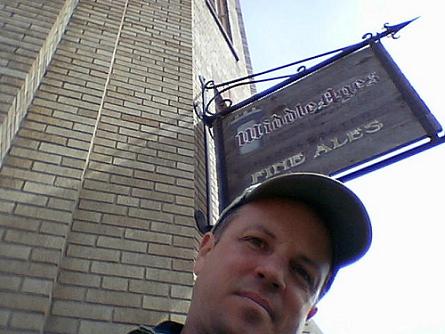
Middle Ages Brewing By Shoe Cam

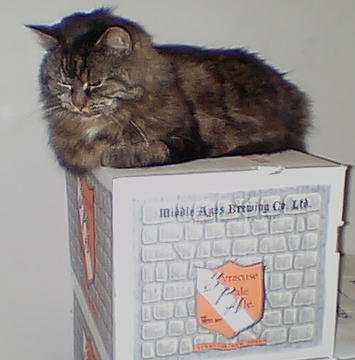
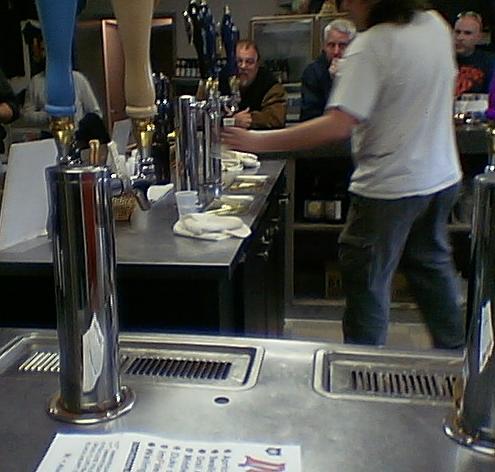
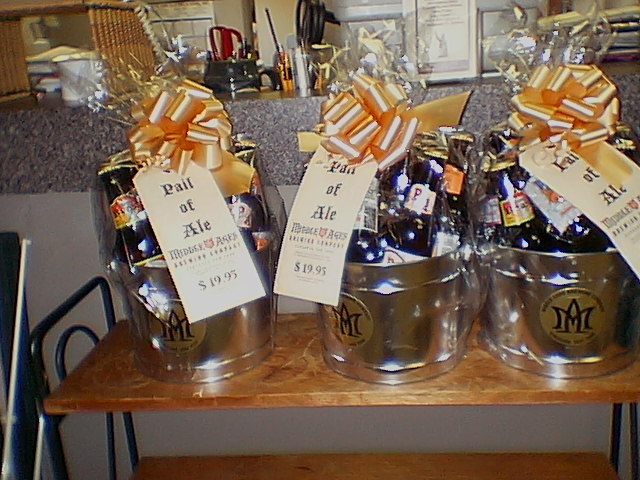
We had a bit of a beer blog break through as Gary and I met at Middle Ages Brewing in Syracuse NY as part of his day of two tailgates and my introduction to NCAA football. It was a perfect place to meet to start the day. Gary filled in when my camera’s memory card let it be known that it was not about to cross international borders this weekend. The effect was top notch shoe camera.


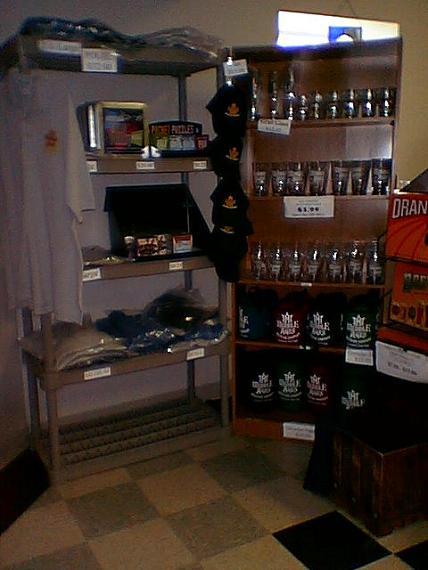
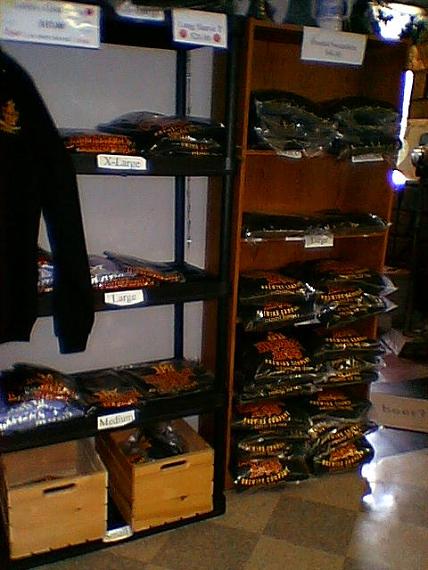
Let me start by saying, this experience is fairly foreign to Canada but not unknown. Middle Ages opened its doors on Saturday at 11:30 am. Gary was there at the bell and reports that there were a couple of dozen beer fans lined up with growlers to be filled. Once those guys were served, two happy gents behind the bar asked what we wanted and sold us – no, gave us free 4 oz shots of their excellent fresh ale. I tried their porter, IPA and the double IPA. All were as good as I remembered. So good I bought the baseball hat. I figure that if a brewer is good enough to go into business, make great ale and then give it to you for free, you ought to buy the hat. Note also Gary’s uncanny capture of the original portrait of the wench who wails. Gary also showed me the first beer blog award pottery component which now just needs me to forward the brass plaque for the 2006 award to be announced later in the year – though I already am pretty sure I know who is getting it.


I mention that I have not seen exactly this sort of thing in Canada before but I have almost seen it. In the days before the beer blog, I lived in the Maritimes and Halifax’s Garrison Brewery would serve all you want. But it had to be booked and was a private affair for attendees only. You got to pour and hang around asking the happy patient brewer lots of repetitive questions and also get a tour of the place but it was not a moment to meet other beerfans and you did have to stick around for the time booked. I like the Middle Ages approach better.

So a return for the tour is definitely in order as are more secret assignments with Gary and the shoe phone.

My Nova Scotia Home

I am quite proud to say I grew up in Nova Scotia as often it seems like it lives in another world where you can do things that just make sense:

Borrowing from a similar project started at the University of Toronto several years ago, the N.S. government wants its 10,000 employees to leave their desks at lunch — to eat, exercise, run errands, even power nap — in hopes of making people more productive in the afternoons. To drive the point home, the N.S. Public Service Commission sent out postcards proclaiming, “Take back the lunch break” with orders to “relax, refocus, refresh, re-energize.”

Pete Brown: The Interview

pbboI like my non-job here at A Good Beer Blog. One thing I get to do – other than never have a second beer of the same type – is meet interesting people involved with beer over the internet. Consider this exchange about beer and language between me and beer book author Pete Brown:

Pete: Hi Alan, What’s a dink?
Alan: Hmm. A dink? A dink is a minor league jerk. A child’s word for penis. Actually it has a beer angle as in the Nova Scotia of my youth a six-pack was called “a dink pack” now that I think if it. A dink is a bore who is also a newbie.

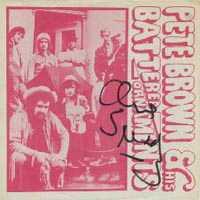
Wow. Gripping linguistic drama. More to the point was the more thoughful exchange Pete provided to questions put to him by both me and guest writer Knut of Norway. Pete (no relation to the lead singer of the illustrated Pete Brown and his Battered Ornaments) has recently published a great book on his global beer travels called Three Sheets to the Wind and Knut and I thought it would be great if we could have a few questions answered in a three-way North Atlantic quiz as part of our review of his new work. You will recall I reviewed his last beer book Man Walks Into A Pub back in July 2003. In that book Pete considered some of the trends and brewing history of Britain. In this year’s book, he takes a stab at getting a hold of the global beer culture. I will review the book separately in a few days but for now, here is the interview.

+++++

Alan: You speak quite strongly about CAMRA. We do not have an equivalent in Canada though there are outposts. In “Three Sheets to the Wind” you visit Portland Oregon and experienced an expression of the North American real ale culture and appeared to love it. How would you compare the two?

Pete: I was so surprised by the US approach to craft beer – they’re really passionate about it, and the key thing is they want you to be passionate about it as well. The thing I always say about Portland is that if I was talking to a brewer about his beers and how much I liked them, he’d tell me six other beers from “competitive” brewers that I should also try. When I go to CAMRA events, I always get the sense that if you don’t already know what you like, there’s very little effort made to draw you in and help you. This is starting to change now, but there’s still an attitude about “I know more than you.” In North America, it’s more like, “I want you to know as much as me.”

Knut: Do you think CAMRA still could be used as a platform to fight for good beer, or have they painted themselves too much into a corner? Could an alternative be to start anew, based on a support for new and coming micro breweries instead of focusing on the techicalities of brewing?

Pete: Of the two alternatives, the one I’d like to see is that CAMRA reform themselves. They’ve got a terrible image problem, but they have so much stock in terms of public awareness, I still think they’re very powerful. As I’ve hung around the beer scene longer I’ve got to know more people. There are a great many executives within CAMRA who have exactly the right ideas, who know they need to reform in order to move forward – and they’re really nice people. But policy is dictated by committee and volunteers, and a lot of these guys are just professional activists – it’s not enough to be for something, you also have to be against something. I believe a lot of these guys couldn’t give a shit about getting more people into great-tasting beer; they simply enjoy the process of arguing about technicalities and being pissed off for a living. I’d like to believe the more sensible factions will eventually win the day, and we’re seeing some signs of CAMRA taking steps into the twenty first century, but there’s still a long way to go. The biggest problem is that CAMRA hardliners interpret any criticism of CAMRA as a criticism of cask ale, which is not only wrong, it’s breathtakingly arrogant, and kind of stops any really useful constructive debate from emerging.

Knut: After travelling the world, where do you see the best potential for beer tourism? I know Ireland has managed to do this based on one beer (!), and you have the mass hordes descending on Munich. But how about bicycling holidays in Bamberg and Denmark, micro breweries offering bed, breakfast and rare cask ales etc?

Pete: I’d love to see that in loads of countries. What I’m discovering now is that you can stick a pin in a map, and there’ll be interesting, often new, breweries not very far away. But I think in terms of holidays, you’d start with Belgium. I’ve been back a few times now since I went there for Three Sheets, and you can go from village to village, each with its own brewery, trying amazing beers, and it’s beautiful country – at least when the sun is shining!

Knut: Carlsberg is responding to the challenge of craft beers by a) trying to control the Danish import market and b) by setting up a micro of their own, putting a lot of prestige in it and linking it up with their brewery tours. Is this the way to go for the other big European brewers?

Pete: I think so. Big corporations in any market tend to play to the lowest common denominator with consumer tastes. You forget that to get a job as a brewer in a really big brewery, you have to be at the top of your game – the people who brew Budweiser are some of the best brewers in the world! What Carlsberg have done is give their brewers a bit of creative freedom and – surprise surprise – people can’t get enough of it. In the US, Anheuser Busch are responding to the growth of craft beers by launching some of their own, and much as I hate to say it, some of them are very good – they would be. The only thing that worries me is when big corporations react by simply trying to strangle interesting small breweries, denying them distribution and so on. This is very idealistic of me, but I wish brewers would simply let their beer do the talking – produce the best beer you can and try to sell more than your smaller competitors without resorting to dirty, underhand tactics.

Alan: I have been trying to figure out how you would approach Canadian beer culture. For me, so much about beer is centered on the kitchen party, the garage fridge or the cottage/camp as opposed to the pub or bar. In his book “Travels with Barley”, Ken Wells notes that bar bought beer in the US has gone from 75% of all sales to 25% over the last 20 years. This is a startling figure. Do you see this as a global trend? Do you also see that these sorts of home-based drinking is something that you ought to include if you extend you study to a “Son of Three Sheets to the Wind”?

Pete: That would be a great idea! An excuse to go and do the whole trip again. What we see now across the world is a consistent set of trends in markets that are “mature”, where beer has been around for ages, and a different pattern in new and emerging markets, such as Asia and Russia. In mature markets there’s a general thing about “staying in is the new going out” – we spend a greater portion of our money on interior design, big screen TVs, Playstations, cookbooks and so on – we invite friends over more than arranging to meet up with them. I think the pub or bar will always be the gold standard – you’re getting a whole experience, not just a beer. But we will all increasingly be doing more of our drinking at home.

Alan: Your references to cultures with respect for or even celebration of the three-beer buzz is really interesting to me. How, though, can an industry promote the idea that what I might call “getting a jag on” rather than “getting loaded” is the point of beer and one that we should all embrace? Doesn’t english-speaking puritanism somewhat snooker that opportunity leaving beer prone to being effectively represented as something you take to enter a fantasty land of TV advertised sports, pals and bikini-clad teens?

Pete: The reason people drink beer is to help social interaction – and you’re not allowed to say this, or even hint at it, in any promotion or advertising for beer – it’s one category where you are not allowed to tell the truth about the main product benefit. But I’ve done quite a bit of work in the UK on this subject. Many brewers now are pushing these “please drink responsibly” messages, which is fine, but a lot of people are drinking precisely because they want a break from behaving responsibly all the time. We need people to show that moderate drinking can actually be fun, rather than simply telling people not to drink as much. There’s a new campaign in the UK by Amstel that does a half-decent job of this. It ties the beer back to the laid-back attitude of the Dutch, and has lines like “drinking is just something we do between talking”, and “why rush your beer? The bar is open all night.” I think there’s a lot more that could be done along these lines. I’d like to see campaigns focusing on sentiments like “surely the best nights out are the ones you can remember.”

Again with the “Wow!” It is amazing no one is pouring big advertising money down upon my head with quality stuff like this. We remain open to offers.A big thanks to Pete for both his book and his time as well as to Knut who is one of the guys who make this beer writing stuff fun. As I said, a proper review of Three Sheets to the Wind will be up in a few days.

Week Four With Brendan Carney

OK, I have to admit I missed the game on TV as I was at the concert. And then I never got around to figuring out how Brendan did in the 34-14 win over Miami of Ohio. Our man does not appear in any of the reports I can find even though his performance was a notch above of last week. Most of the focus is on the loss of the surprisingly good Taj Smith. There was this exchange in the Syracuse Post’s sports mailbag:

[Comment]…Finally, say what you want about Brendan Carney – he rarely delivers the big kick when you need it most – that will keep him out of the NFL….

[Answer]…As for Brendan Carney, I exchange emails with one fan that absolutely hates him. But consider this – Miami had one of the top punt returners in the nation in Ryne Robinson. Did you know Robinson did not have a single return in the game? Carney either got hang time to force a fair catch or kicked them away from Robinson. – DW

Attaboy. Carney is doing everything that is asked of him and puts the “N” in orange as far as I am concerned. Here are his numbers for 23 September:

Kickoffs
No.
Yds
TB
OB
Avg
CARNEY,Brendan
7
449
1
0
64.1

Punting
No.
Yds
Ave
Long
In 20
TB
CARNEY,Brendan
5
203
40.6
50
1
0

My eldest brother was telling me to mix up the photos in this series and I said no. Then I read that Sophomore Patrick Shadle for SU was named Big East Special Teams Player of the Week after popping two field goals to average 1.5 a game. And who holds the ball? Mr Unsung Hero, Number 47.

Next week, we are live at the Carrier Dome for the Wyoming game. Woot. If you want to say hi, I will be the guy in the orange t-shirt in the cheap seats.

More Brendan Carney here.

Cheese 2020

Just so we are clear, I am pro-cheese. I use these little observational techniques like what if it was like this and then – voom – nothing but emails from cheesemakers. But do they hold Cheese 2020 think tank get togethers, too?

The internet will be a thriving, low-cost network of billions of devices by 2020, says a major survey of leading technology thinkers… More than half of respondents had a positive vision of the net’s future but 46% had serious reservations. Almost 60% said that a counter culture of Luddites would emerge, some resorting to violence.

That is odd. Seeing as the persent lot of luddites who would terrorize us back into the medieval rely largely upon the internet to discuss this way and that way to remove rights though violence, why would they attack the internet? Where can this foolisness being coming from?

“Today’s eco-terrorists are the harbingers of this likely trend,” wrote Ed Lyell, an expert on the internet and education. “Every age has a small percentage that cling to an overrated past of low technology, low energy, lifestyle.”

“Of course there will be more Unabombers,” wrote Cory Doctorow of blog BoingBoing. Some commentators felt that the violence would either be tied to the effects of technology, rather than the technology itself, or possibly civil action around issues such as privacy.

Oh. My. God. Cory figured out a new one. And soon Dave Winer will take credit for it. [Ed.: rimshot! Yawn.] Of course there will be more. How else to get on conference speaker lists? There really should be a 20% of a year’s income deposit for these sorts of statements. If only because they should be pulled out and made accountable. And you should have to make six- and eighteen-month predictions along with the long term ones so we can judge the actual skills of the foreshadowing futurist. And for the creation and neato-sourcing of an idea like “the Unabomber of the Internet” so that 27 jerks can now start day dreaming about it.