
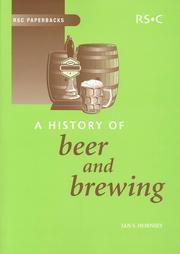
 I have been working thought my review copy of this 632 page paperback published by the Royal Society of Chemistry for the best part of a month now. It is fascinating. Likely the best book on beer I have ever read. Clear, comprehensive and incredibly well-researched, this book contextualized beer and related beverages in the cultural and scientific world contemporary to any given era from pre-historic cave dwellers to the modern era and CAMRA. Yes, insert your joke of convenience now…
It is this latter aspect, the context, that really is a treat. As we learn how beer and brewing evolved, we also learn about about such things as potting techniques, movements of peoples across continents as well as how scientific advances such as in the Enlightenment came about. I had no idea that Ancient Egypt was pretty much a society on the bottle all of the time or that the Stuarts in the 1600s were the originators of much of the alcohol related law that still exists today – including taxing drinking as a mechanism for reducing drunkenness…outside of the Egyptian-esque Court of King James I, that is.
This is such an expansive work that it is really hard to write a review of this length. It has a certain scale others I have read do not. For example, Hornsey describes 15 different peoples between the Israelites and the Celts over almost 50 pages to trace the likely route of beer making from its birthplace in Egypt and Babylon to north-eastern Europe and Britain at the time of Christ. In addition to such anthropology, there is plenty of archaeobotany where the stuff in the pot found in the grave or the newly uncovered early medieval basement as well as review of primary documentary sources going back to the beginning of writing. Also, this is a peer-reviewed sort of scientific text which both adds to its trustworthy completeness compared to some of the recent pop histories on beer as well as to its practical status as a benchmark against which other histories are measured. For the casual reader, it should serve as either a dispute settler in itself or at least as a pointer, though its extensive bibliography, to most solutions to the questions that can arise between nerds.
I may think of more to add later as I get through the last third of the book but I can leave it here by saying this is the best history I have encountered to date.