The Intern’s Beery Links For Mid-July

Ah, the mid-July week off. Nothing teaches you more about how life is a fleeting interim stage than July. The poppies and irises are already in the past. The last of the early radishes have long been dug under. Time is passing. One day you wake up and discover you are a 54 year old intern for some guy named Stan. Hmm.

What’s gone on this week in beer?

When The Selling Out Game Has Some Weird Players

The BeerCast has posted an excellent unpacking of the sale of the discount shelf of London Fields (mothballed) brewery by an experienced guest of the Queen to those oddest of flatmates, the Danes of Carlsberg and the Empire State folk at Brooklyn Brewery. Expect a shedding of everything associated now with the name and then a massive leveraging of the name. For a mere four million pounds, most owners of craft beer won’t get out of bed in the morning. Given the situations of all involved, this deal looks like and smells like money all around.

Cheery Not Niceness

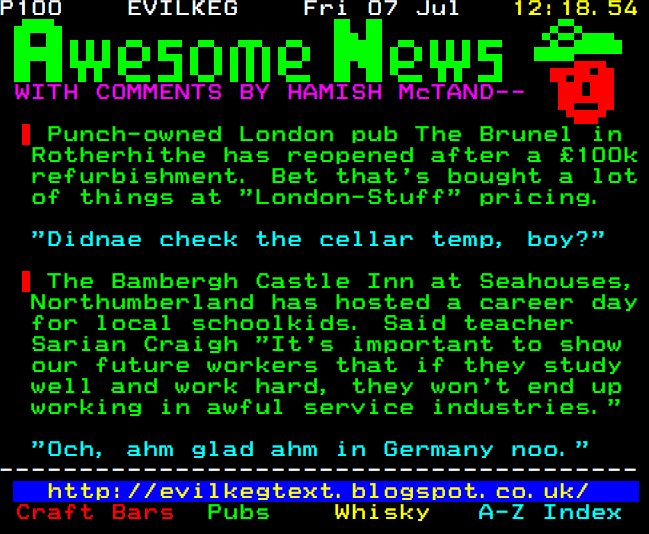
I enjoy these teletext messages from Matthew Lawrenson on Twitter. They retain his snappy direct humour but it’s like the words are coming out of the mouth of Tinky-Winky. I love the format he is developing. Thirty years ago visiting family in Scotland, I would sneak into the TV room to play with the remote, exploring teletext. Checking the weather forecast for Skye in multi-colour dot matrix… then checking out the soccer scores. All while the TV plays on underneath the text info. Magic. As a form of brewing and craft commentary this singular and effective. This one was posted Friday morning my time here in North America. Note the author. And the cheeky image.

Being Nice

I am less certain about this conversation one Twitter – while making no comment on the particular conversation.  It’s the pattern. You see it quite often, a double form of delicacy. The desire to speak discretely of a brewery or bar doing something wrong being jumped upon for either (1) not name the names or (2) raising the real issue without naming the names. I am never quite sure what makes folk more upset, not getting all the juicy gossip or finding fault with a craft community member without first satisfying a level of procedural test for bringing evidence before a criminal court. Yet, it is only beer. I dunno. Folk seem happy to slag airlines and coffee shops. It seems a particularly southern Ontario concern but you see it pop up in England, too. In this case, the misapprehension that brewery or bar staff have some deep loyalty if not a monogamous bond with the boss seems the root of the problem.

Oliver Grey expanded on this concern mid-week. He primarily discusses the tribal divide between big craft and big beer, framing it from the perspective of Campbell’s narrative structure:

I get it, the hero of the story needs a villain to triumph over. I wrote about it at length. But it’s important to remember that to the villain, the hero can often look like a terrorist. For every story a perspective, for every perspective a truth. Therein, the issue slumbers.

Seeing as he has to deal with fools like this, I get the point. But there is the greater risk that is engaged with far too much in beer – the Hosannas, all the Hosannas. Given alcohol makes you initially feel good, it is not unexpected that people like saying nice things about it but taking the next steps of treating it like something beyond criticism and discord has always struck me as a bit weird, leaving ideas and interests unexamined. Give me cheery naughtiness anytime.

Mentioning the Bad

Jeff Alworth made a promise on Friday that definitely borders on the niceness question:

…enough of the excuses: Boak and Bailey are right, I should be writing about bad beer more often. I’m actually going to start looking for them. Rather than just writing scathing reviews, though, I’ll use it as an opportunity to discuss why I think the beer is bad, because “bad” is in many dimensions an objective evaluation. A good brewer may fail to execute on a vision, which is one kind of bad. A mediocre brewer may compose an uninspiring recipe, a different kind. Or the beer may have faults and off-flavors, a kind of bad that is now rarer, at least in these parts. Beer may be bad because of technical, aesthetic, or other reasons–and there’s actual value in discussing the nature of the problems.

I am delighted by this declaration, if only because it is framed as contrary to the Jacksonian model we have inherited. I would note that it is not what was first given that was inherited but what was later devised. Change is good. Let’s change some more, please.

Jet Setting

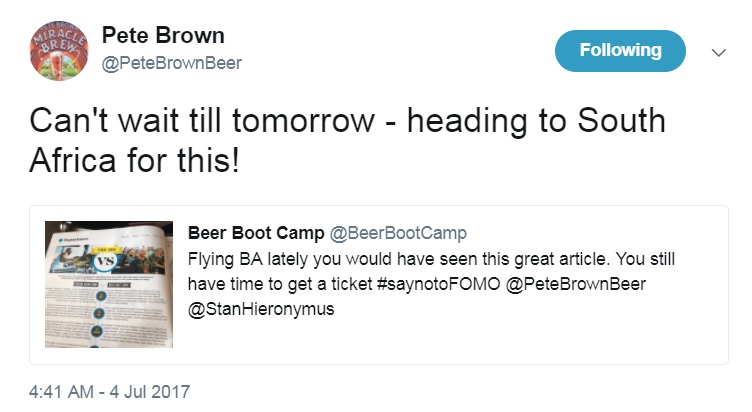
In an effort to bite the hand that feeds me (not), I wonder about this tweet:

It’s not that I equate this sort of event with junketeers who dash off to lap up the gravy and PR before regurgitating some or all, then claiming to be clever. My question is whether this is simply another form of the internationalization of commodity craft, that globalist mono-culture that leaves nothing local in its wake. I would be thrilled to hear about what local beer questions and successes were discussed in South Africa by South Africans. Not sure I will.

Other Stuff

Interesting to see that Diageo via Guinness USA has a money flow to another beer site on the internets. GBH calls it underwriting. Beervana calls it sponsorship. This pays for interesting writing. Good. Also interesting that this goes largely uncommented upon especially compared to other funds flowing from other big drinks empires into smallish bank accounts. Just to be clear, I have happily spent sometimes shockingly generous sums for running ads on this website and its predecessor. To be fair, they were largely from outside the brewing world due to my (way back then) huge following. I call them ads. In the glory days, it paid for a lot of travel. Still, interesting quiet little pay packet play.

Yes, Mirella. Very good tee.

And finally, the best use of a GIF ever. Thanks Zak. This is going to end up dumber than “crafty” isn’t it.

Your Monday Morning Beer Links For Canada Day Weekend

As threatened and then oddly certified, I am stepping in for July as Stan has scampers off somewhere. And it seems Boak and Bailey are putting their feet up, too. So my July 2nd and a bit of the 3rd will be spent pounding the keyboard for your sideward glance – instead of focusing on the can of Bud and Coors Light like most beer loving Canadians will be doing. No rush. I have to make the best use of that lawn chair out back. Hmm… has there been anything going on worth discussing?

Wine News

As is Stan’s habit, I begin the week’s highlights with news from Clarence House. Prince Charles and herself spent a part of last Friday about an hour’s drive west of me partaking of the wines of Prince Edward Co., Ontario. I have written a few posts in the past about the region which you may wish to review before checking out the story as covered by the UK’s Daily Mail. Excellent exposture to the greater world market likely means my local prices go up. Thanks, Chuck.

In other wine news, Eric Asimov in The New York Times has made the case for simplicity and pleasure in his regular “Wine School” column:

That is especially true with the thirst-quenching wines we have been drinking over the last few weeks. These easygoing wines are primarily focused on the No. 1 task of any wine: to refresh. They do so deliciously, but these wines don’t offer much to think about. They are the lawn-mower beers of wine, ready to stimulate, energize and invigorate. They provoke physical reactions, and do not leave much room for contemplation.

I can hear the teeth grinding but being honest – for 99% of the time 99% of beer drinkers don’t sit around and contemplate 99% of their sipping anyway. Thinking about such things might include less thinking about such things. Think about it.

The Logo

Once again, the US Brewers Association PR committee has made a bit of a botch of a well meant bit of communications. At the start of the week, they revealed a new logo for their organization, then limited its use to only members who signed the special pledge and watched as their plans for market share demarcation got ripped. Given these folks came up with the fabulous failure of “craft v. crafty” what were we expecting? So many fonts for one image – is it five? And that weird outline. And an upside-down bottle.

The really problem the BA faces is that it can’t use the proper word that beer fans are really interested in – local. This is because it has spent a decade chasing the false promise of national craft with truckloads of California beer selling in New York gas stations and corner stores while Maine brewed Belgian-styled ale sell in Hong Kong and Dubai. So, the campaign and the logo have to fall back on second rate concepts.

The key concept in the messy logo is something called “INDE… PEN… DENT” which sits uneasily along with inordinate use of a “TM” and “CERTIFIED” given the limited visual geography. [Note: I couldn’t find the image’s trademark registration when I looked for 47 seconds and nothing about the logo relates to certification.] The problem with “independent” as a core message is that big industrial macro is independent too and the diversity of small local brewers can hardly be expressed with the “one ring to rule them all” approach that centralized trade industry branding offers. Plus anything can be “independent” can’t it.

Jeff Alworth takes a different approach which is quite compelling, separating message from branding. He argues that by moving away from “craft” and embracing “independent” as the core concept, the BA is taking back control of the debate. Bryan Roth also explores “independence” more from just the branding angle. But, for me, both these approaches (as both Jeff and Bryan state) are not without long term issues. Consider Mr C. Barnes at The Full Pint who is even less hopeful.

The Video

This is even sillier. Andy called it correctly when he called it “whining and whinging.” You may have more thoughts on the thing but I don’t see why anyone would bother. Why make that sort of ad when you have made this fabulous one?

Other things

The Sun newspaper-like thing reports that hipster craft is causing an inflationary effect on the price of lager. Who saw that coming?

The Sammy Smith “no swearing in our pubs” rule has led to at least one pub closing up for an evening due to naughty bad bad people being rude. Pete Brown, no fan apparently, called Humphry Smith, the head of the company behind the scheme to wipe out bad language the “nastiest, most unpleasant person in the brewing industry” by way of his introduction to a story on Humph in The Guardian which discloses this tidbit:

Smith’s eccentricity is the source of local legend and seems to know no bounds. Regulars inside Smith pubs claim he habitually dresses up as a tramp and poses as a customer to make sure his rules are being enforced. Punters in the Commercial Inn in Oldham claim Smith once sacked a bar worker for not handing him the correct change – another tale of summary sacking it has not been possible to confirm.

Quite the nut – but it is his ball so he can take it home whenever he gets in a huff, I suppose.

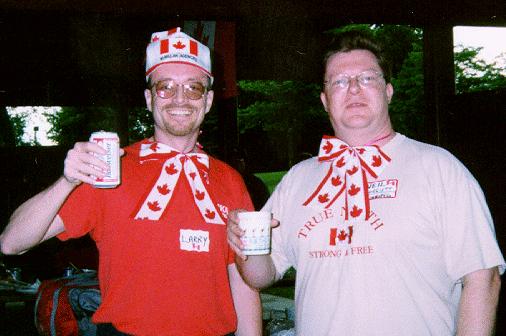
Finally, happy to report that the Canada Day long weekend was celebrated with Ontario made regional and local small brewery beers from Perth, Riverhead, Beyond the Pale, Great Lakes and Side Launch. Those two gents up there with their Buds? They are the 90%. It’s everywhere.

Fine. That’s enough for this week, Stan. Time to hang up the bloggers smock. Send your complaints and spelling correction suggestions to him via Twitter.

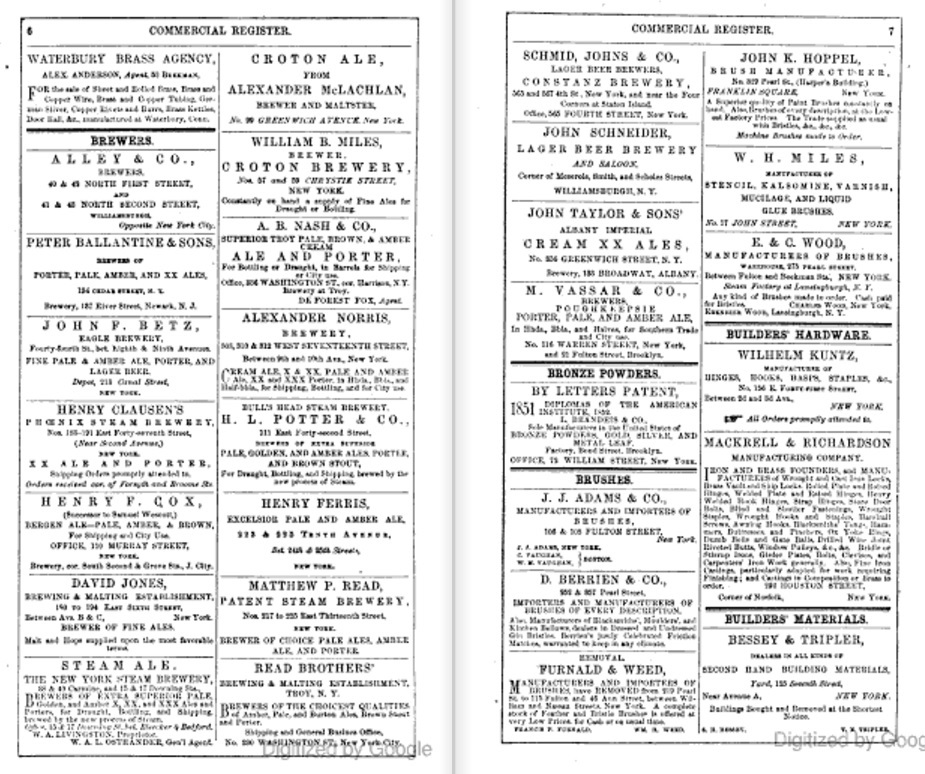
Imperial, Yes, But Cream Ale Was Also Light As Well As…

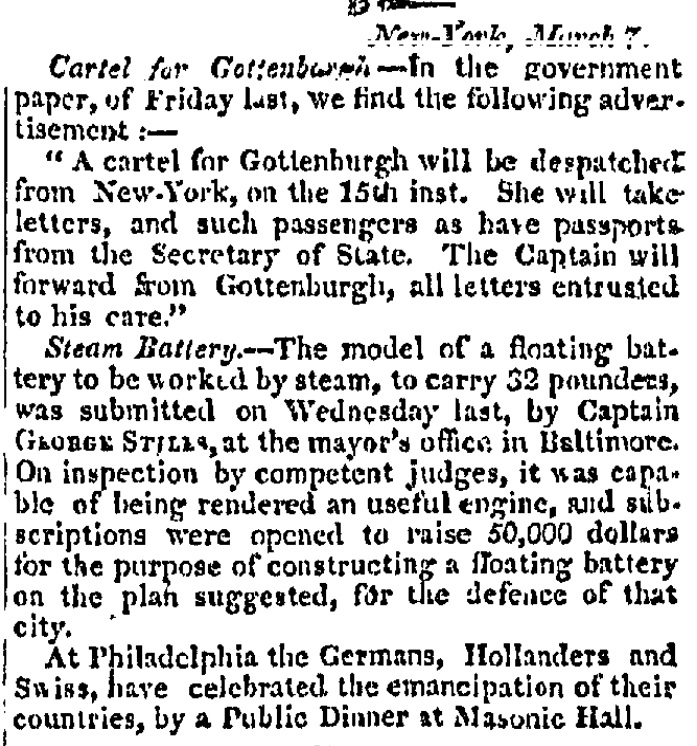
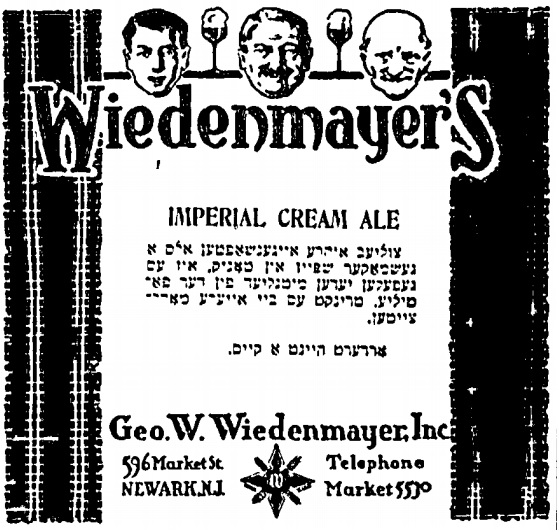
The more I get into the records referencing cream in 1800s New York brewing, the more obvious it is that the term was pervasive. It illustrates excellently, as a result, how branding existed independent of those claims to copyright we suffer from today. In law, there is an excellent and better word for such stuff that applies as much now as then – puffery. Claims made as to quality that are never ever really expected to be challenged. Look at that ad from the Jewish Daily News of 30 November 1916 again. Imperial Cream Ale. Is that the same as the Imperial Cream Ale of the Taylors of Albany from the early 1830s to the late 1860s? Or is the cream just a puff?

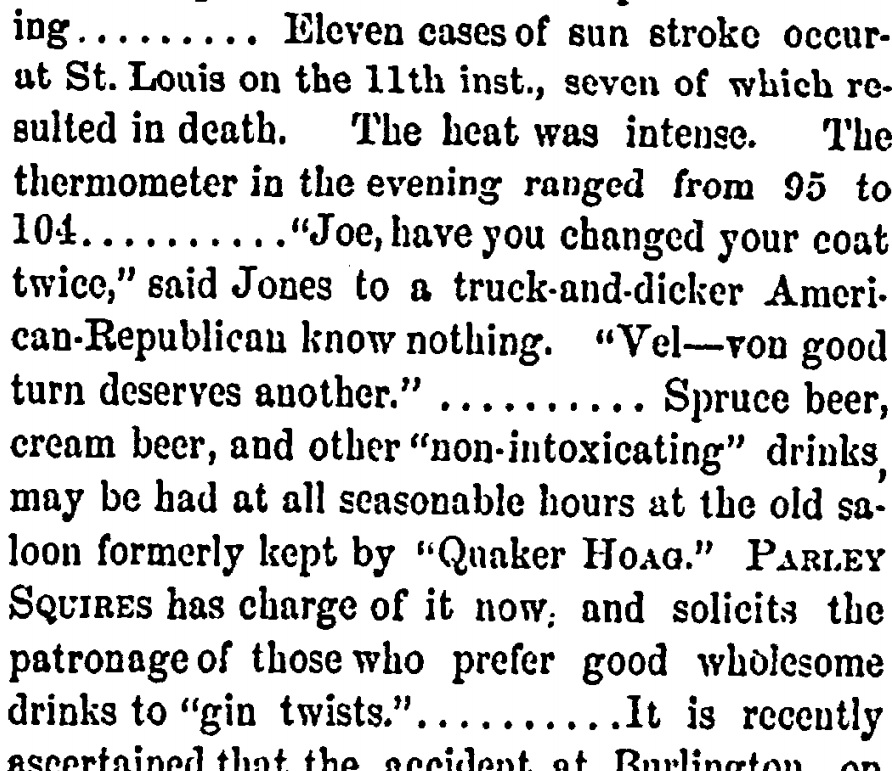
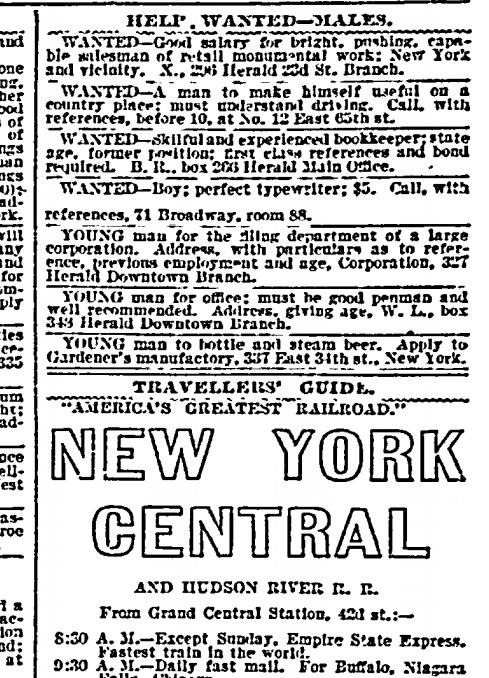
That image to the upper right? It’s a part of a column in the Plattsburg Republican from 21 August 1858 entitled “Items: or Crumbs for all kinds of
Chickens.” Is that puffery? Seems a bit more than that. Cream beer is being lumped into a class: non-intoxicating drinks. Sounds like a bit of a vague concept but at the same time the courts in New York State were struggling with the same term as it related to lager and the wider issues related to acceptance of the German immigrant wave in the middle third of the 1800s.

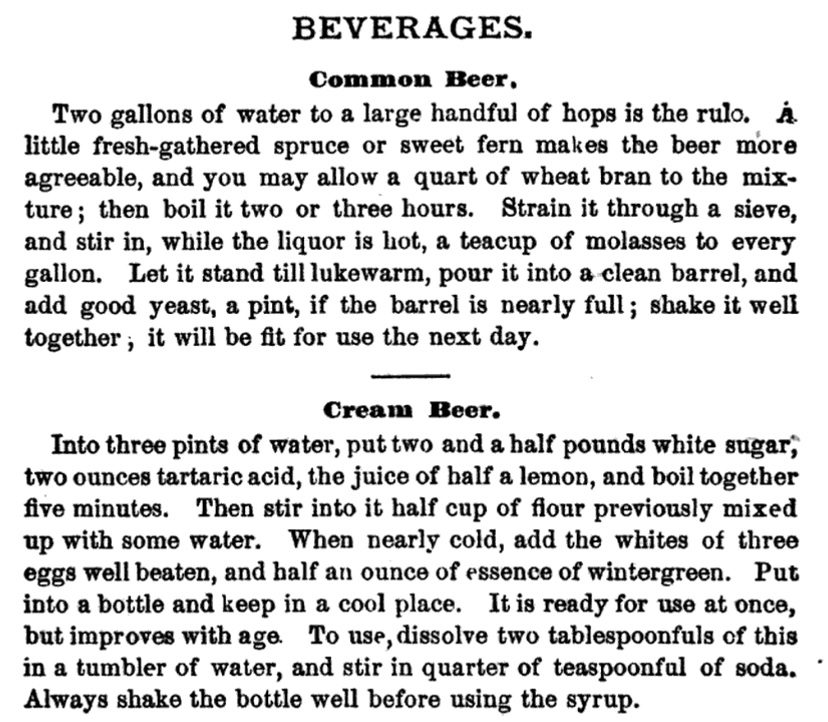
The book De Witt’s Connecticut Cook Book, and Housekeeper’s Assistant from 1871 includes these two recipes, one after the other, on page 100. The first for “common beer” has yeast added, the second, for “cream beer” doesn’t. Is “cream” then code for no alcohol? When I was a kid out east in Nova Scotia, one of my favourite things was cream soda. There were two types as I recall. Pink or clear. Pink was like drinking candy floss. Clear was like drinking candy floss… but was not pink. I hated pink cream soda. I was a clear cream soda man. Crush, if you have it… but only in Canada. Pop… soda… soda pop… was a class of soft drink that morphed out of beer. In the 1850s you could speak of California Pop Beer. In the 1830s you could speak of the Lemon Beer of Schenectady. In the excellent short book Soft Drinks – Their Origins and History by Colin Emmins, small beer is described as a progenitor of British soft drinks along with spa waters, syrupy uncarbonated cordials and that favourite of George III, plain barley water. [Continuum. Perhaps continua.] Consider the simple lemon…
The earliest English reference to lemonade dates from the publication in 1663 of The Parson’s Wedding, described by a friend of Samuel Pepys as ‘an obscene, loose play’, which had been first performed some years earlier. The drink seems to have come to England from Italy via France. Such lemonade was made from freshly squeezed lemons, sweetened with sugar or honey and diluted with water to make a still soft drink. 

It appears that 1660s lemonade plus small beer could be a cause of that fancy 1830s upstate NY lemon beer. Could be. There would be other intermediaries and antecedents. Think of how the sulfurous spas of Staffordshire in the late 1600s, saw the invention a drink introduced the local hard to swallow spa water into their beer brewing. Is this how it works? Isn’t that how life works?

When you consider all that, I am brought back to how looking at beer through the lens of “style” ties language to technique a bit too tightly for my comfort. The stylist might suggest that in 1860, this brewery brewed an XX ale and in 1875 that brewery brewed an XX ale so they must be some way some how the same thing. I would quibble in two ways. Fifteen years is a long time in the conceptual instability of beer and, even if the two beers were contemporaries, a key point for each brewery was differentiation. The beers would not be the same even if they were similar.

Layered upon this is the fact that “style” is an idea really fixed somewhere in the 1980s after Jackson’s original expression which was altered in the years that followed. The resulting implications are important given how one must obey chronology. This means if (i) Jackson’s 1970s “classics and cloning” idea didn’t last more than ten years until (ii) the more familiar “corner to corner classification” concept comes into being then the application of “style” to brewing prior to the 1970s (if not 1990) is also a challenging if not wonky practice. Brewers brew to contemporary conventions even though they are but points in a fluid continuum. You can’t conform to an idea that doesn’t yet exist.

All About Beer published the article “How Cream Ale Rose: The Birth of Genesee’s Signature” by Tom Acitelli on 17 August 2015 which, as we can see above, contains an origins narrative for cream ale which (though very condensed so somewhat unfair to parse) is now really not all that sustainable:

Cream ale is one of the very few beer styles born and raised in the United States. Predating Prohibition, the style grew up as a response to the pilsners flooding the market via immigrant brewers from Central Europe. Cream ales were generally made with adjuncts such as corn and rice to lighten the body of what would otherwise end up as a thicker ale; brewers also fermented and aged them at temperatures cooler than normal for ales.

I think I am good until to the word “the” in the second sentence after the comma. If style can be applied to the concept at all, cream ales at best probably represented styles. They were not a response to pilsners as they predate Gillig and were in mass production happily in their own right though the mid- and latter 1800s. They became made with “adjuncts such as corn and rice to lighten the body” but so did ales as our recreation of Amdell’s 1901 Albany XX Ale illustrated. The last sentence may well be fine.

BUT! – now notice the gem of a wee factual trail actually setting out as the specific origin of Genesee Cream Ale as related to Acitelli:

His father and grandfather, a German immigrant, had been brewers in Belleville, Illinois, about 15 miles southeast of St. Louis. Bootleggers had approached his father, in fact, about brewing during Prohibition, but he demurred. Clarence Geminn himself was completely dedicated to the craft, according to his son, a fourth-generation brewer. “Saturday and Sunday he would go into check on things,” Gary Geminn told AAB from his home in Naples, New York. “Summer picnics had to wait until the afternoon; any outing had to wait.” As for the exact formula behind his father’s most enduring beer, no one’s talking—obviously not the brewery itself, nor did the beer’s progenitor.

Mid-west Germans? Now that starts sounding more like the parallel universe of cream beer than cream ale. Does its DNA include Germans moving to Pennsylvania in the 1700s, then on inland into Kentucky in the early 1800s then into the Mid-West later that century only to back track to upstate NY by the mid-1900s? Can we draw that line? Either to connect or perhaps delineate? Maybe we need to be prepared to do both if we are seeking to understand events prior to the point of conceptual homogeneity that is achieved with the crystallization of style when MJ meets what becomes the BA.

As for cream? It’s a lovely word. So many meanings. So many useful applications. So many more leads to follow.

Cream Ale, Cream Beer And Creamy Goodness

This ad in the Jewish Daily News of 30 November 1916 published out of New York has my wee brain spinning – and not only due to the works I can read and those I cannot read. I am starting to think “creamis a nugget of a folk tale, an indigenous memory that keeps appearing generation after generation from, as Gary proposed, the later 1700s to today in the northeastern US for no other reason than its useful pleasantness.

Gotta think about this.

Would I Go To A Tap-and-Pay Beer Pump Place?

This is news? This is what folk want?

Pay@Pump allows drinkers to order and pour their own pint and pay with a contactless card or device touched on a pad at the base of the pump. The technology has been devised by Barclaycard – and a prototype designed and installed in a Central London pub, Henry’s Café Bar – to help reduce queuing time for customers buying drinks during busy periods.

What is a place like that even called? A tap room? No, a tap room is the sorta thing you find in a back room at a place like the Laxfield Low House. This is just a tap. And, the weird thing, is that its is only that – a tap. One. Click on the photo. So you are getting the last guys beer left overs in the space between the one spigot works its way back into the stand. That might be an ounce. Fine if its all macro gak but, like one of those soda guns behind a bar, everything is getting served through the same nozzle. A bit of stout in your wit? One nozzle. Which no one wipes down between fill-ups. Which means it’s like an elementary school water fountain that spews beer. And whatever else is on that nozzle.

Yum.

AGBB’s Proof of Pumpkinness Assurance Certificate

pump1The tweeted response from Nickel Brook Brewing this morning read “how bout them pumpkins?” It was sent in reply to today’s hurried announcement of A Good Beer Blog’s Pumpkinness Assurance Certificate Program. The program was launched after many many minutes of study and consumer outreach consultancy upon reading this post by the venerable Boing Boing which explains:

Pumpkin is too watery and stringy to can, and the USDA has an exceptionally loosey-goosey definition of “pumpkin,” which allows manufacturers to can various winter squash varieties (including one that Libby’s specially bred to substitute for pumpkin) and call it “100% pumpkin.”

WHAT??? Boing Boing was/were just quoting an article at Food + Wine which contains this bombastic statement: “pumpkin puree is not pumpkin. It’s squash.” Oh gourd – no… we live in a land of LIES!!! Now, as Stan testified a few days ago, pumpkin beers are more popular than the chorus of complaints would have us understand. He told us to look at what people are putting in their shopping carts. Sounds like he should have told us to look at what brewers are putting in their mash tuns.*

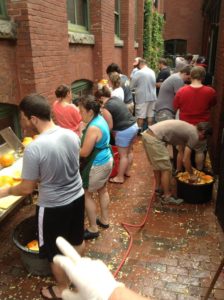
pump2How many pumpkin ales are actually being made of this year’s pumpkin patch crop as opposed to last year’s bucket of miscellaneous variety gourd glop? How many other ingredients in your beer could be treated with such callous disregard? I posted a tweet bearing witness to the scene at Cambridge Brewing Company near MIT in Massachusetts on 18 August 2013. See the volunteers at work. How many other craft brewers put in the effort that Nickel Brook and CBC are putting in? Speak up! Do you know of one? Send in some compelling evidence and we can issue an official Proof of Pumpkinness Assurance Certificate Notification. For an unnecessarily large fee I am sure I could even draw, sign and mail a certificate to someone. And make sure you ask to see the paper before you buy your next pumpkin ale. Accept no imitations.

*By the way, I get it. I have seen a Blue Hubbard Squash. I have even grown them. Ugly as sin even if tasty as all get out. No wonder they keep them hidden from view. Might make the greatest ale in the history of mankind but no one is putting that on the label.

Not So Much A Bursting As A Great Dissipation

monkey4Ah, Mr. Chimphead. A serious point must be about to be made. But being August, there is not much out there to read, not much worth writing about. People rightly have other things to do. But Bryan Roth has posted a useful examination of the use of the word “bubble” that gets the juices flowing. He did so hard upon Stan posting a piece pleading (maybe rhetorically) for the cause of “craft” based on its persistent use. And he did so perhaps not coincidentally after Lew was quoted extensively on the need to kill off the word. For Stan, the mere fact of use conveys a certainty of some meaning. For Lew, there is simply no need for the word: “I’m holding a smart phone in my hand. If I want to know, I just thumb it in.” To be honest, I find these sorts of conversations appear amongst the All About Beer set rather regularly and I usually assume they are fillers until a real topic comes along. Quantity sometimes is a quality. What we have at this moment, however, is an opportunity to discuss how words are used to see if we can see what might actually be going on. So… let’s do just that.
I have looked back into this blog’s archives and those of others to see what can be found of assistance – not to mention making sure I did not write something entirely contrary to what I am suggesting here. It is easy to trace to way that “craft” was thrown away. It’s illustrated in one sentence from 2012 that I discussed here:

The large, multinational brewers appear to be deliberately attempting to blur the lines between their crafty, craft-like beers and true craft beers from today’s small and independent brewers.

“Craft” was botched by the Brewers Association in two main ways. First, it was made mutable. It could be uniquely redefined by their sole higher authority – and then was redefined regularly. Second, as we see above, like the man who lends his rake to the new neighbour never to see it again the BA extended “craft” to big beer by attaching a mere “y” to it. And the BA did not just give large multinational brewers the gift of “crafty” but they reinforced the point by creating the concept of “craft-like” too. Prior to that point no legitimate voice on the small brewer side was admitting that big beer was making a product similar to the beers of BA members. Then their very voice of authority confirmed that some of the Evil Empire’s beers were like craft. No one remembered the underlying intention of drawing a line. As Jordan wrote two years ago there is no such thing as an evil milkshake. All that the BA achieved with “crafty” was bringing macro into the club. Way to go.

Since then, we have seen “craft” not only extend to include these beers of big brewers but also things which were not considered well-crafted beer just a few years ago. Beers with facile fruit flavours to attracts folk who have no interest in beer. Beers made so poorly that the question is now legitimately discussed as to whether “murk” is now a style. The concept of “craft” takes in such a wide range of beverages now – even casually invading the distinct realms of cider and sake by times – that its meaning has been diluted and dissipated. It now includes so much meaning – so many meanings – that it no longer has little specific meaning. If you doubt that such a thing is possible, look up the word “jack” in the dictionary.

“Bubble” is starting to reach “craft”-like meaninglessness. Look again at Bryan’s post. In it he discusses, quite acceptably, that the measure against which the posited “craft beer bubble” is to be judged is the growth in the number of craft breweries in the United States and their ability to sell expensive beer. He does not mention the ability of most of those brewers to sell and actually rely upon revenues from relatively inexpensively priced good beer. He also quotes from the BA’s Tweeter-in-Chief, Bart, for whom I have a growing fondness largely based on his intelligent responsiveness to inquiries. When he was discussing bubbles last week, I asked a few questions to narrow exactly what he meant when he used the word “bubble” in this context. His answer was that “most common usage in econ is an asset price bubble” in relation to “collective brewery equipment” as it covers both number of breweries, their capacity and level of investment. He indicated his understanding was that lots of breweries [were] using equipment as collateral for loans.

We can see that “bubble” is being used in two very different ways by Bryan and Bart. And they are not mutually incompatible. The increase in the number of small entrants to the good beer market should be expected to be a pre-condition to a later “asset price bubble” in relation to “collective brewery equipment.” There may be other meanings. Retail price collapse is one. We have seen a form of that with the slowing or even halting of inflation. Craft beer prices hikes five to eight years ago would not be accepted today. But that was a time when people could suggest with a straight face that value was not to be a consumer’s consideration when approaching craft beer. “Bubble” can also mean a conceptual collapse. Craft’s bubble could burst were the sector to splinter along the faults seen now: macro crafty, big, craft, actual local micro continue to have less and less in common. The word would burst in the sense that it no longer had a center upon which the all these different forms could latch onto and hold.

For me, “craft” has suffered a conceptual dilution in the same way that “IPA” has. I wrote about this three years ago. The success of the word as a word is in large part due to its failure in maintaining precision. Has the same thing happened to “bubble”? In the rush to set up straw man arguments “bubble” gets trotted out, defined to the proponent’s convenience and then knocked down in yet another moment of triumph for craft… whatever that is… too? Think about it. Isn’t discussing the bubbles in the craft beer market about as precise as a discussion of positives in politics? How useful is that? You know, in many contexts and for a number of purposes – very.

The Government Store Has Bad Branding News

Ah, the liquor control system. Government stores controlling the marketplace and then pretending that it’s still a marketplace. The sort of system that announces growlers will be sold in Ontario and then builds one growler stand in just one Toronto store to serve the entire population of 13 million or so. Once in a while, however, it comes up with a great idea:

Several LCBO stores, including the location at Wonderland and Oxford in London, have moved oodles of Ontario craft beer by refusing to tell customers what exactly they are buying. The store puts random cans in plain brown bags and prices the mystery bags for about $12, give or take, depending on what’s inside. An LCBO store in Waterloo recently claimed credit for starting the surprise suds marketing phenomenon, fuelled by young adults seeking to recapture some birthday party-style grab bag excitement.

Planning a career in branding? Maybe you should switch to marketing instead. Because sometimes covering up what’s in the package sometimes is an improvement. Think about it. Folk seem to be unhappy about this year’s new beer brand, America. For the life of me, I don’t see the issue. But I am Canadian so maybe I wouldn’t.

Maybe it’s going to be OK. Maybe it’s this summer’s new thing. Beats the hell outta X-treme, crafty v craft or treating buy-outs like identity theft. Could 2016 be the year that we just want a beer?

Still Not Backing Down For Four Hundred Years

What a great ad. It basically sums up everything about American brewing for the last four hundred years. It’s so absorbing you hardly notice how weird the music is. Part movie soundtrack when Gene Hackman smashes the Mopar though downtown. Part Eminem run through the graphic equalizer. It sounds like it starts at a point about a minute, fifteen seconds into the crescendo that started in last fall’s “Choices Have Consequences” ad. And the message builds, too. Poor widdle cwaft thinks that it is all about the big bad brewer running scared but it’s not. It’s gleeful assertion meeting commercial reality. The upstretched middle finger to some. The assertion of tribe to many others. An umbrella for those who buy the 80% or more of beer that is still light, inexpensive and easy to drain. It’s lovely. The greatest part of the loveliness is, however, not just its in the design elements of the presentation but that it addresses the same set of themes which have consistently sprung from or imposed upon brewing on this continent ever since warmed water was poured over cracked grain by our first founders around four hundred years ago.

=> Beer creates aggregation. Obviously the ad is about might. Brewing in North America has always been about the generation of might. A powerful place within the industry. Leveraging the wealth it generates out into society. It took a few generations of the pre-industrial pre-Revolutionary Dutch brewers of New York state to achieve it. It took brewers like John Taylor a lifetime in Albany of the mid-1800s. It took E.P. Taylor about a few decades in the mid-1900s. And it took a decade for microbrewing to spawn millionaire and billionaire big craft from 2005-15. Through co-operation, collusion and control brewing creates the opportunity to generate wealth, independence and even power. This is good as it is success. Sipping is not so good for success.

=> Beer is a means to an end. Not only does brewing aggregate but it does so in a repeated similar pattern. If you follow Michigan brewer Larry Bell on Facebook you will notice he spends a lot of time not brewing in Michigan. He in on a boat in the Gulf of Mexico or some such place. Interestingly, members of the mid-1750s Dutch brewing dynasties did the same thing. Anthony Rutgers IV was a privateer and lived on Curacao tending to the Hudson valley Dutch plantation trade that extended well past the British invasion as well as the American Revolution. Beer actually appears to dislike folk not improving their station in life. It attracts money too readily. Big craft branch plants on the east coast or in Europe are just another form of expansive market control that beer has always undertaken.

=> Beer is cyclical. Just as Mr Bell is retracing the wake in the warm water Mr Rutgers sailed in the 1700s, brewing repeats itself in overlapping cycles. Anything that imposes on the production of grain seems to restart the clock. The Hessian fly causing the deprivations and hardships of 1788-90 are not unlike the relationship between the Civil War and, as with the standard rules of baseball, the development of a homogenized taste for premium lager… not to mention the later dominance of industrial light lager after World War II. It also takes on and defeats – or at least holds down – the challenges of traditional brewsters’ beer houses, self-sufficient estate brewing, temperance drinks, imports, brew-your-own operations, micros, home brewing and now new nanos as they come forward each in their turn. These things come in waves but brewing continues. It knows it needn’t back down.

=> Beer is responsive. It needs to react to external forces. The overlapping cycles are not determined by brewing. It is the natural response of brewing to reassert itself in the face of crisis to maintain production and profit. It also reflects simple cultural change. It’s not by chance that micro brewing takes off in the 1980s concurrent with factors like the variety of cable TV and androgyny in pop music. It’s the decade that the range of choice explodes. Micro brewing follows that greater trend. Had the pioneers of micro not come forward rest assured other pioneers of micro would have come forward in the same cities in pretty much the same way. Beer responds in the late 1700s and early 1800s to scientific advances in agriculture in the same way. The Agricultural societies which arose after the end of the War of 1812 gave stability to the new farming lands and spread the news about scientific brewing just like cable TV informed consumers that they wanted the new beer because they wanted new cheese. Beer is responsive because it is one man – the ancient everyman – now carrying the keg, now armed with stainless steel at scale. He (or she) is fighting ocean going container ships stacked with uniformly Heineken green cargo boxes.

=> Beer is pervasive. Because brewing has transitioned in response to societal change over and over it has earned its place. Unlike, say, the mustards on the grocery shelf the aggregating tendency of beer needs a team. It asks for loyalty and gets it. Why would inexpensive joy juice not? It’s the mild affordable anesthetic that gets you through life. Tribal affinities are natural whether they are constructed of the cult of craft or light lager in the NASCAR stands. It’s heavy metal and new country. Craft and social media. Trains in the late 1800s sent out the message of better cheaper beer than the local brewer was making or charging. Trains from places like St. Louis and London, Ontario carrying casks branded with names like Anheuser-Busch and Carling reaching out from larger and larger breweries placed near those other train tracks which reach out into the grain fields. Beer informs you about both progress and legacy. It’s where you’ve been and where you are going. Get in line.

=> Beer resists. Because beer wants to keeps its rewards it pushes back and fights. If the fluid in the Bud ad up there was Sierra Nevada Pale Ale you would not have to change out many of the other elements. The boosters would just have to swap places. It does not like to hear other points of view. Big craft – including its co-opted communicators – is as much in lock step as the Bud ad as much as the 1600s to 1700s Dutch then 1800s to 1900s German brewing dynasties, each taking care to include all the cousins in the benefits. The business formula is too certain, too successful to do otherwise. No wonder we have identatext book after identatext book. Beer likes puff. We already see discussion in craft like this has fallen away. Disagreement is now disagreeable. It’s all the Borg. Bud is truly not backing down. No beer backs down. Because? America.

I love it. I had a Bud on Thursday night. I have one a couple of times a year. About as often as I have mashed turnip. They are both unpleasantly bitter and they are both cultural touchstones. Neeps are the ultimate statement of Scots cuisine. Bud is America. I get four clear phases: sweet rice, lumber, dirty bitter hop and a stale finish which more of that sweet rice quickly remedies. You are not supposed to like it. Turnip? It’s not yummy either. You are supposed to accept it like the other realities of life and be grateful for the comfort it brings. Bud tells you about North American life, too. It’s not fussy. Lemon flick. It meets you on the level. Given the existing kit that’s long paid off, it’s easy to make following instructions out of readily available resources – even as it tells you it’s difficult to make. You need to rely upon its word on that point even though you can make an acceptable substitute for less in your own kitchen. You can actually make good beer easily in your own home. But you don’t. Because you are part of something bigger. Something that works. The same way. Every. Time.

Are We Approaching Peak Hard Cider?

The All About Beer column by John Holl posted today begins “[h]ard cider continues to climb in popularity and now the largest producer in the country, Angry Orchard, has its own place to welcome customers….” This is odd because of the following news as reported by The Motley Fool a few weeks ago:

Similar to last quarter, Boston Beer’s founding chairman, Jim Koch, opted to be the bearer of bad news: “Our total company depletion trends of 6% in the third quarter of 2015 matched our year to date trends, but represent a slowing from our expectations, primarily as a result of weakness in our Samuel Adams brand due to increased competition and a slowing in the cider category”… Boston Beer CEO Martin Roper elaborated: “During the third quarter, we […] saw a slowing of the cider category, but believe Angry Orchard maintained its share even as competitors continue to enter or increase investment. We remain positive about the long term cider category potential, but short term growth is less certain. We are planning continued investments in advertising, promotional and selling expenses, as well as in innovation, commensurate with the opportunities and the increased competition that we see.”

I’ve heard a bit about cider in the lead up to American Thanksgiving like this piece on NPR’s Science Friday that focuses on Albany’s Nine Pin Cider. Like the All About Beer column, however, there was nothing indicating that the market for hard cider is softening in the way that Boston Beer has admitted. While most stories last year were all about the boom in cider, The Motley Fool saw clouds on the horizon as early as in May of 2014. That concern continues:

Total U.S. cider sales were down 3.4 percent in the 13 weeks ended Nov. 7, and the rate of decline accelerated to about 7 percent over the past four weeks, according to Nielsen. Four and five years ago, the rate of growth was in the heady triple-digits. Even a year back, the pace of growth was nearly 50 percent. “It’s been getting a lot of attention, because of all the huge growth rates in the past three to five years,” said Danelle Kosmal, vice president of the beverage alcohol practice at Nielsen. “It’s obviously difficult to sustain those triple-digit growth rates.”

So is it a case as I tweeted earlier today just that, “basically, Sam Adams bought a pretendy farm to suggest their cider-like product isn’t industrial” or is it worse? Is the farm one form of “the new packaging and advertising expenses taken on in the second half of 2015” in an effort to retain sales in a shrinking cider market? We get no guidance from the All About Beer column other than the oblique observation that the “vast majority of the company’s main brands will be produced at the Boston Beer facility in Ohio, with the focus of the new location being experimentation and small-batch only recipes.” As Jeff found in June 2014, getting a straight answer about Angry Orchard can be difficult. But at least he asked the questions. If the market for cider continues to shrink, it’ll be interesting to see how long it takes for the farm to be re-purposed or even sold off.