The Thursday Beery News Notes For May Two-Four 2022!

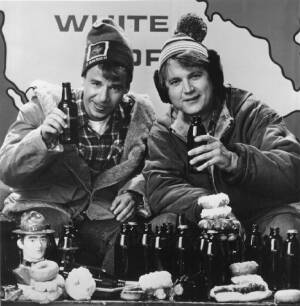
May two-four. Back again. I explained it back in 2014 when I included the photo to your right (my left) of Bob and Doug McKenzie who were Canada’s #1 export forty years ago and whose 1983 movie, Strange Brew, is the last cultural statement about beer before microbrewing struck in earnest. Even though the movie isn’t set on the Victoria Day holiday in the second half of May, you can see many aspects of our drunken mildly retro-pro-monarchist celebrations replayed in Canadian homes as well as at campsites and cottages throughout the land this weekend as people feign gardening and practice inebriation. And it’s a big year for our top dog, our numero uno, our favourite anti-Nazi. Speaking of which… you know what broke? That cap thing on my whippersnipper that keeps the weedwhacker’s string coil in place. How the hell does that break? Spool went flying and the lawn’s all half haggy still. Didn’t so much break as ‘sploded. Now I have to hunt down a replacement lawn trimmer line cap or I have to buy a whole new thing-a-ma-jig. Pray for me.

Now… to the beer news. First up, a set of photos posted by the Glasladies Beer Society of a recent Glasgow beer fest set up in what looks like a somewhat permanent outdoor space. Being who I am, a child of children of the Clyde, the event looks like a mass gathering of aunties and uncles and masses of cousins. The use of steel container boxes is interesting as a relatively cheap but cheery but secure set up. Looks like it was held at the Glasgow Beer Works in the Queenslie Industrial Estate. This may be a common site for some of you but sometimes that’s still remarkable.

Next, Ron wrote a piece he titled “The Future of Mild” which serves as an interesting counterpoint to the fan friendly writings on the style mentioned two weeks ago. Ron provides an interesting set of thoughts about Mild itself and how styles may or may not make a comeback:

I’d love to go to Cross Green and drink 10 pints of Tetley’s Mild again. But it isn’t going to happen. The world has moved on. Beer styles come and go. And almost never return. I’ll just cherish the memories of a time that’s gone forever. Like a Porter drinker in the 1940s. The same fate, incidentally, awaits Pilsner and IPA. All styles have their day.

The fate of Mild has been formed he suggest as “it’s harder to throw all sorts of random shit into a Dark Mild.” That would seem to be where we are at. The post also lead to an interesting considered discussion on the nature of revivals. Jeff wrote:

…I wonder if a style that was once quite popular ever came back as a major style, perhaps not as popular as it was during its heyday, but with significant production. It’s probably happened, but I suspect it’s very, very rare. Once fashions change, styles sunset.

TBN reminded us of the classic example of style revival – Hoegaarden. I expect this is as much framed by the word “style” and its imposition limiting structure but the entire micro (1980-2003)) and craft eras (2003-2016) were based on revival of lost beers. Hoppy malt rich ales were descendants of earlier strong ales like Ballantine IPA and Dominion White Label as much as they were clones of imports.  So… revivals common enough in the days when brewing was not so wound up with novelty and amnesia. We always have to remember how quickly we forget. As recent at 2011, SNPA’s place in the pantheon was still somewhat speculative. Now, of course, it was always the source of all things including those that came before it – thanks to the nation’s PR professionals!

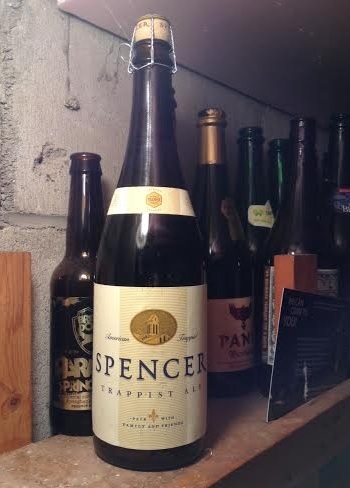
Speaking of perhaps one revival or perhaps homage that has not lasted, one bit of news that I was a bit surprised to learn about this week was how St. Joseph’s Abbey of Spencer, Massachusetts is no longer brewing its beer. This was all the news in 2015 and I reviewed their first beer as you can read here. The monks announced:

After more than a year of consultation and reflection, the monks of St. Joseph’s Abbey have come to the sad conclusion that brewing is not a viable industry for us and that it is time to close the Spencer Brewery. We want to thank all our customers for their support and encouragement over the years. Our beer will be available in our regular retail outlets, while supplies last. Please keep us in your prayers.

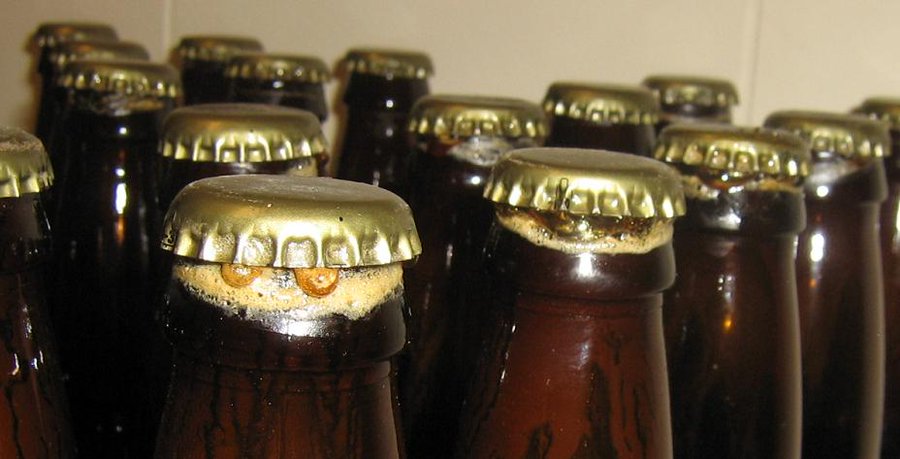
Jordan thought it a particularly worrying development based on their low labour expenses. Greg reported that the equipment was already listed for sale before the announcement. I gratuitously added the 2015ish image up there from the celler’s stash for Stan. Pretty sure the bottle has move about six inches in seven years.

Des generated a wonderful cascade of comments related to cellered casks with this big barrelled beery buttery – including these cautionary ones:

Not being funny, but going on that photo, “immaculate” is a strong word. Serviceable, cleaner than many, maybe. And as I’m sure has been pointed out, a 36 (massing the best part of 200kg) is a H&S nightmare. You romantic.

Note: please don’t send out bleggy emails saying “ I don’t have limitless cash on hand to subsidize this project, but it’s reality nonetheless. I need at least [XXX number of] paid subscribers…” Listen to the wind… the marketplace of ideas is speaking… write for joy or get a job to support your hobby interest in booze.

Boak and Bailey elaborated something at their Patreon widget-a-thing  that was evident in their (lovely and highly recommended) account of Ray’s out for hike and stopping at rural pubs with pals:

…at least part of the joy we took in drinking it on this occasion must be down to having “earned it”. The same goes for that first beer of the weekend, after a tough week at work. Or, as many people have observed, almost any mediocre lager you drink on holiday. How do you compensate for this effect? Well, you don’t, unless you’re a Top International Beer Judge. Instead, you report the context when you give notes on a specific instance of drinking a specific beer. And you make judgements about the overall quality of a beer based on mutliple encounters in multiple contexts. A beer that tastes good every time you bump into it is probably a good beer, full stop.

I wonder if we have become so enthralled with these beer judging events for hobbyists that we miss the obvious – that those beers actually do taste good in those contexts. And that judging contexts make beer taste bad. Because they are geared to ensure failure. Because that is what institutionalizing human experience does, makes you distrust and then outsource your own experience of life. Stop feeling bad because someone who has a certificate for passing the equivalent of a grade 11 history class says so.* Not to suggest TBN is not correct when he explains “Beer is weird. You’re lucky to have me here, putting things straight.” It is. We are.

Handy example: print off and cut into separate burger and beer images. Throw all in air and match the beer with the nearest burger. Equally valid. Every. Time.

Rolling Stone put out a story about beer prices this week under their “Culture Council” tab, not something I have notice from them in all my years at the coal face. The author, Kevin Weeks of Anderson Valley Brewing (who actually follows me on Twitter so I feel extra bad for not noticing before), argues interestingly that any increased costs faced by brewers are likely not going to justify the level of price increases that consumers are going to see on the shelf from the big brewers so…

For the smaller craft breweries facing this dynamic, this is an excellent opportunity to differentiate their brands by both managing pricing and clearly conveying priorities to the consumer. The most obvious tactic is to hold price (or implement only slight increases) to create an opportunity to increase market share through a comparable pricing advantage over the larger brewers that are grasping for margin.

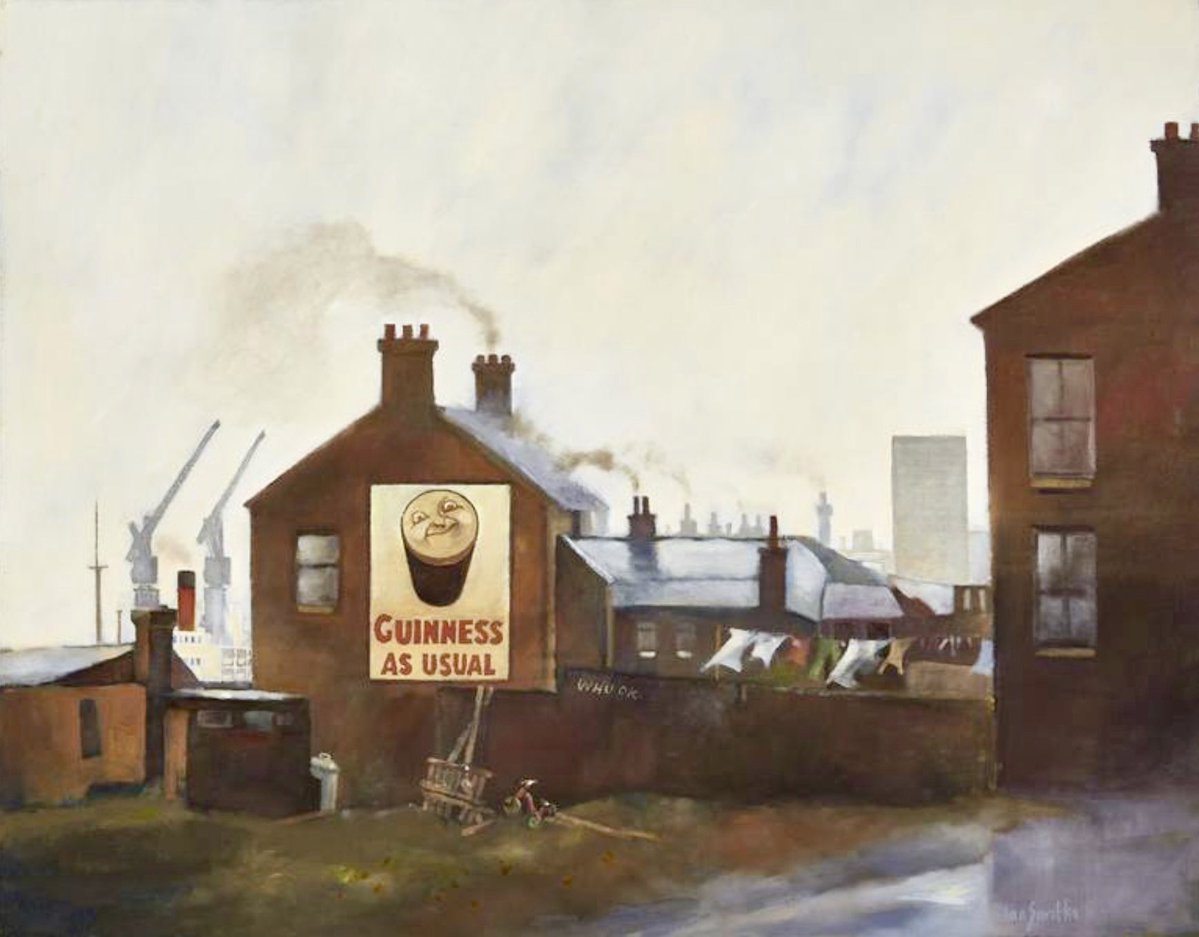
And this passed by my eye this week, “It always rains on Monday” by Ian Garstka. More of his work can be found on IG. Prints available from the artist.

Perhaps relatedly at least atmospherically, Gary posted about “Birmingham Beer Detectives, 1937” who in plain clothes were sent out to protect the interests of the beer-drinking public and augment lab testing quality controls:

It seems therefore, at least for a time, a two-track beer-tasting inspection system existed, city and industry, to control beer quality in pubs. Perhaps the whole thing, at city level, collapsed with the Second World War – bigger fish to fry, if you will, but this remains to be known. Certainly at industry level, tasting onsite continued into the postwar era. A number of press reports, one pertaining to Ansells in 1949, attest only too graphically, a conviction of an inspector for drunk driving.

There’s a BBC historical drama script right there for the taking. I can smell the damp tweed and ashtrays now.

Note: “Finnish brewery release new beer celebrating Finland joining NATO“!

Note also: “TikTok star says Wetherspoons ‘scammed’ him out of £2,000 of food and drink.” Star!

Finally and falling under Stan’s reminder “no one cares what you think, Alan” I upset Maureen a bit a tiny bit (which I never like to do) when I commented about this article on Hogarth’s Gin Lane and Beer Street as I mentioned it amounted to was a bit of a sneeky apology for mass drunken frenzy. My observation was quite specific so I should explain so that all you all can correct me. The first half of the article is fairly straight forward GBH-style with loads of quotes from other sources framing the well understood topic. But then it goes in an odd direction mid-essay with the statement that those “in positions of power in England sought to create an all-around negative image of gin.” According to the article’s own previous paragraphs rightly describing the generally understood hellscape unleashed by gin at the time, I was left wondering if it could also be said that people in power now are perhaps creating an all-around negative image of the Covid-19 virus. My wonderment didn’t last. I found this key angle within the article odd. Odder still the suggestion that the works of Hogarth were for an elite:

Because of the timing, “Gin Lane” and “Beer Street” are often viewed as a work of moral propaganda, and some have speculated they were commissioned by the government to help reach gin’s working-class imbibers. Tonkovich points out this is not the case, however, because that working-class target couldn’t have easily accessed these prints. “These prints would not have been affordable for the working class,” she says. “They might have seen them in a tavern or through a window, but they couldn’t buy prints, so who is the audience for these? People of the press and the merchant class.”

The thing is… I just don’t think that is correct. Because I don’t think that is how mass communications and specifically those on virtue and vice worked at the time. If you look about at English political pamphleteering in the 1600s and 1700s, you see a wide-spread, robust and even salacious debate within a highly literate population. Vibrant grassrootism. You also see in the first bits of the 1700s, the development of the First Great Awakening and proto-Methodists sermonizing to many millions.** Consider, too, 1751’s Essay  on the Characteristicks and the “frenzy” of gin. Ideas related to a proper and healthy society were flying about. These and other Hogarth pieces fit into that scene. And, as the Royal Academy explains, fit into it in a very specific and intentional way given Hogarth’s process:

Hogarth aimed the prints at the popular, rather than fine art market, stating in his prospectus for the prints that: ‘As the Subjects of those Prints are calculated to reform some reigning Vices peculiar to the lower Class of People in hopes to render them of more extensive Use, the Author has published them in the cheapest Manner possible’. As a result the line in these prints is thicker and less sophisticated than in other prints engraved by Hogarth, both to enable the printing of more impressions without significant loss of quality, and to approach the characteristic style of popular prints.***

We are assured, via the hive, that the two prints were in wide circulation and that Hogarth’s works were even used for moral instruction by schoolmasters. So if they are not luxury items but rather something of a targeted public service announcement to those at risk, the paragraphs that follow seem strained, racing through the Victorians and US Prohibition then on to us today with a suggestion of the elites guiding government overstep. And, on the rebound, inappropriately sewing  doubts as to Hogarth’s good faith intentions under the guise of some sort of shadowy social engineering as opposed to improving public health. Had gin been slandered? Seems all a bit goal oriented.****

There. More fodder for a good general public debate. Away you go! And for more, check out the updates from Boak and Bailey mostly every Saturday but no longer from Stan every Monday as he’s on another extended leave of absence. Plus more with the weekly Beer Ladies Podcast, and at the weekly OCBG Podcast on Tuesday and sometimes on a Friday posts at The Fizz as well. There is a monthly sort of round up at The Glass. (Ed.: that seems to be dead now.) There is more from DaftAboutCraft‘s podcast, too. And the Beervana podcast. And sign up for Katie’s irregular newsletterThe Gulp, too. And check out the Atlantic Canada Beer Blog‘s weekly roundup. Plus follow the venerable Full Pint podcast. And Fermentation Radio with Emma Inch. The AfroBeerChick podcast as well! And also look at Brewsround and Cabin Fever. And Ben has his own podcast, Beer and Badword (Ed.: …notice of revival of which has been given)  And remember BeerEdge, too, and The Moon Under Water.

*If you are unaware of this phenomenon, I recommend the works of Ivan Illych to you, starting with 1973’s Tools for Conviviality.
**and they themselves mocked in return.
***See also “The marketing techniques of William Hogarth (1697-1764), artist and engraver” by Mark McNally at page 170 “The conscious decision to set the price of prints according to the theme and the intended audience was further demonstrated with the distinctively didactic Gin Lane, Beer Street and the Four Stages of Cruelty which were advertised twice in the widely read London Evening Post on 19 and 26 February 1751 priced at one shilling each being ‘done in the cheapest manner possible in hopes to render them of more extensive use’ with an alternative set priced at 1/6d being done ‘in a better manner for the curious’. Despite the relative lack of sustained advertising for these key prints, which formed the basis of Hogarth’s campaign with his friend and magistrate Henry Fielding to draw attention to the moral decline of the lower classes, they became as popular as many of his more heavily publicised prints. This was perhaps due to the fact that they were primarily meant as social commentary and evidence of the need for reform rather than for commercial interest…” and also especially at footnote 123: “Hogarth noted with satisfaction in how ‘some masters gave their apprentices sets of the prints as Christmas gifts’ and that ‘he had even heard of a sermon preached on the prints’.”
****PS: a word about disagreement. If we are going to take beer writing seriously at all, we need to get used to the idea that a reader may either (i) disagree with aspects of what they read (as I have above with backing supporting research) or (ii) call out poor writing (which I have not done above.) One of the saddest things in good beer culture is the “hooray for everything!” mantra and, its cousin, the abusive response for those who who don’t buy in to the hooray. Let’s be honest – rooting for booze is weird. I blame too much booze and good folk struggling for not enough money as the commissioning organs do just fine. In this case, my comment to Maureen attracted the less than attractive, the dropped turd. Let’s be honest. I get negative comments and labels all the time and have for a couple of decades from publications high and low,***** sometimes from people I can’t imaging deserving one’s full respect. One scribbler who has my respect once even told me “hear that – that’s all the beer writers in Toronto mocking you” to which I responded “who gives a fuck about beer writers in Toronto?” We don’t worry about such things, especially now that the beer writers in Toronto either either have moved on now and are mowing the lawn somewhere in the suburbs, arguing with themselves. None of which relates to the article above that, in small part, I disagreed with. It is a well enough written if skimmy summary with a mild expression of the standard beer writer political slant on public health (“…nanny state! …neo-prohibitionists!! …folk putting my income at risk but mentioning health!!!“) but, no Maureen, it is not an example of something that did not exist before. The wheel that was invented long ago still turns round and round. Which is good. Because it gets thoughts going and leaves conversations enriched. Which is why I do this every week – to think about what is being written. If you aren’t doing that, why do you bother?
*****Funny ha-ha joke…no really… just kidding… footnote to a footnote, too! Very light and amusing, right?

Your Beery News Notes For The Easter Long Weekend

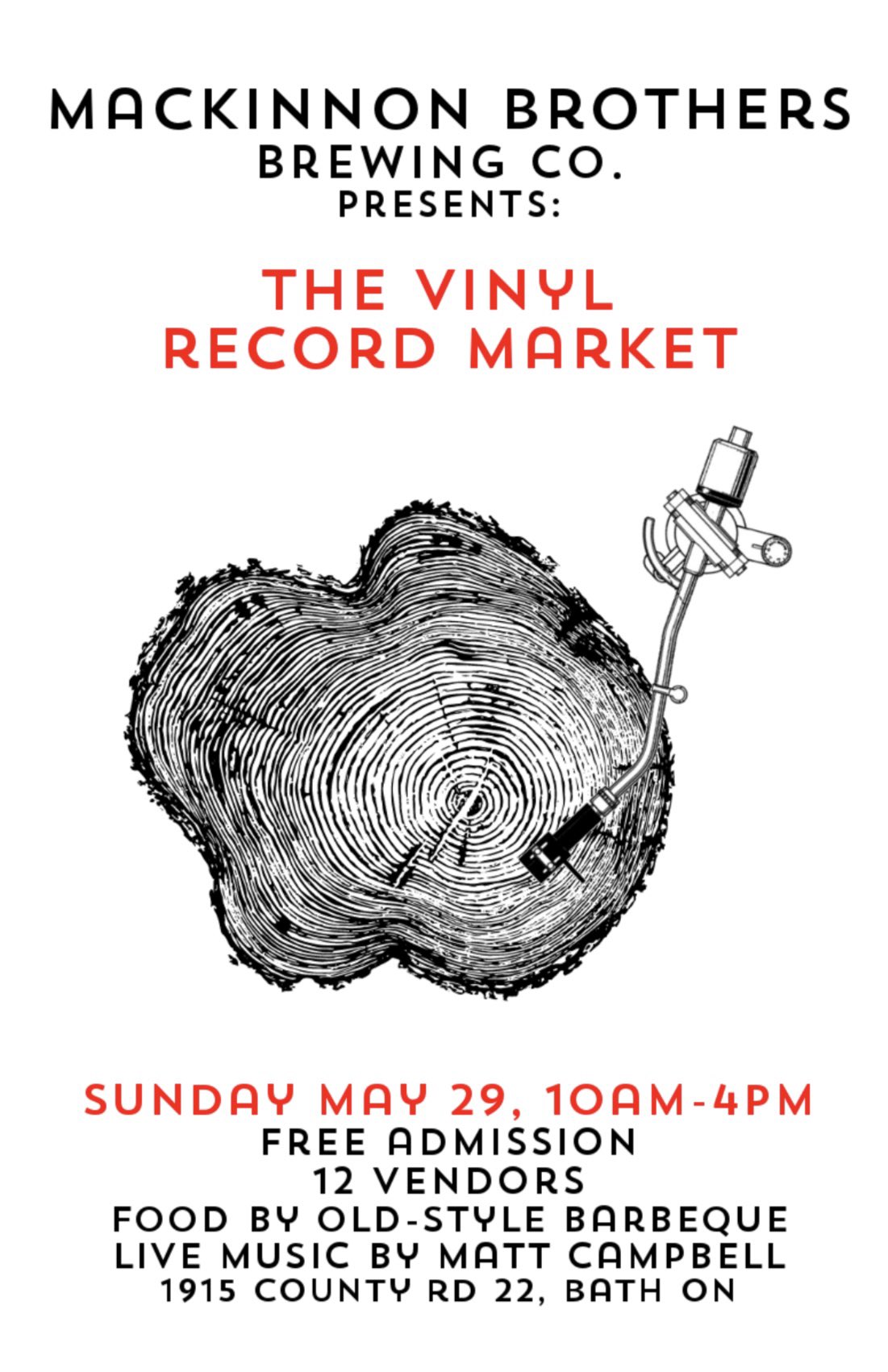
Four days off at Easter in mid-April is quite sensible. March is too dodgy with the threat of snow. This weekend promises, on average, at least one day of decent half-assed yard work with tasty drinks. Spring is here and soon the lands will be dry. Events too are coming soon. The annual revival is on at nearby Church-Key on May the 7th. Things are happening. I like this event three weeks later at nearer nearby MacKinnon Brothers – and I really like this poster which is a play on their Crosscut brand of ale. Doing things outside. Sprong has spreenged!

First, after the weekly news went to press last week I read an obit from The Times which was worth noting. It was for a young policeman man, Flight Lieutenant Douglas Coxell, who, by just 24, became one of Britain’s most accomplished bomber pilots serving both on D-Day and at Arnhem. This is a great line:

A jovial man, Coxell brewed his own beer and was known by his RAF colleagues as “the Soak of Peterborough”

This second beer related recollection in the obit is also worth noting:

Coxell had been mentioned in dispatches for his daring sorties in Norway, but his greatest feeling of achievement in the war came in early 1945 when he and his brother Peter joined their father and his fellow First World War veterans at the snug bar of the White Hart pub in the Cambridgeshire village of Old Fletton. “It was the proudest moment of his life to present two commissioned air force officers, one flying Spitfires with the 2nd Tactical Air Force in northern Europe and one flying Halifax modified bombers on supply drops to the Norwegian Resistance,” Coxell recalled with tears in his eyes. Much drink was taken.

I am a regular reader of Retired Martin‘s posts from the road as you all know but this week he pulled back the curtain on the exciting exotic life of a pub ticker:

… it’s actually quicker to get from Waterbeach to Guyana than Gunton, home of my next tick, a first newbie in more than two (2) weeks. Gunton has a station, right next to the Suffield Arms, which is convenient as the road is closed due to it being inconvenient to close it that week. The GBG reckons it’s in Thorpe Market (this year, watch it move to Southrepps in 2023). Work that one out. I’ve marked two other GBG entries either side of the Suffield. They’re all called “odd name Arms“; I was TORMENTED by the the fear I’d go in the wrong Arms, particularly as they’re all the sort of rustic gastropub that exist entirely for holidaymakers from Overstrand.

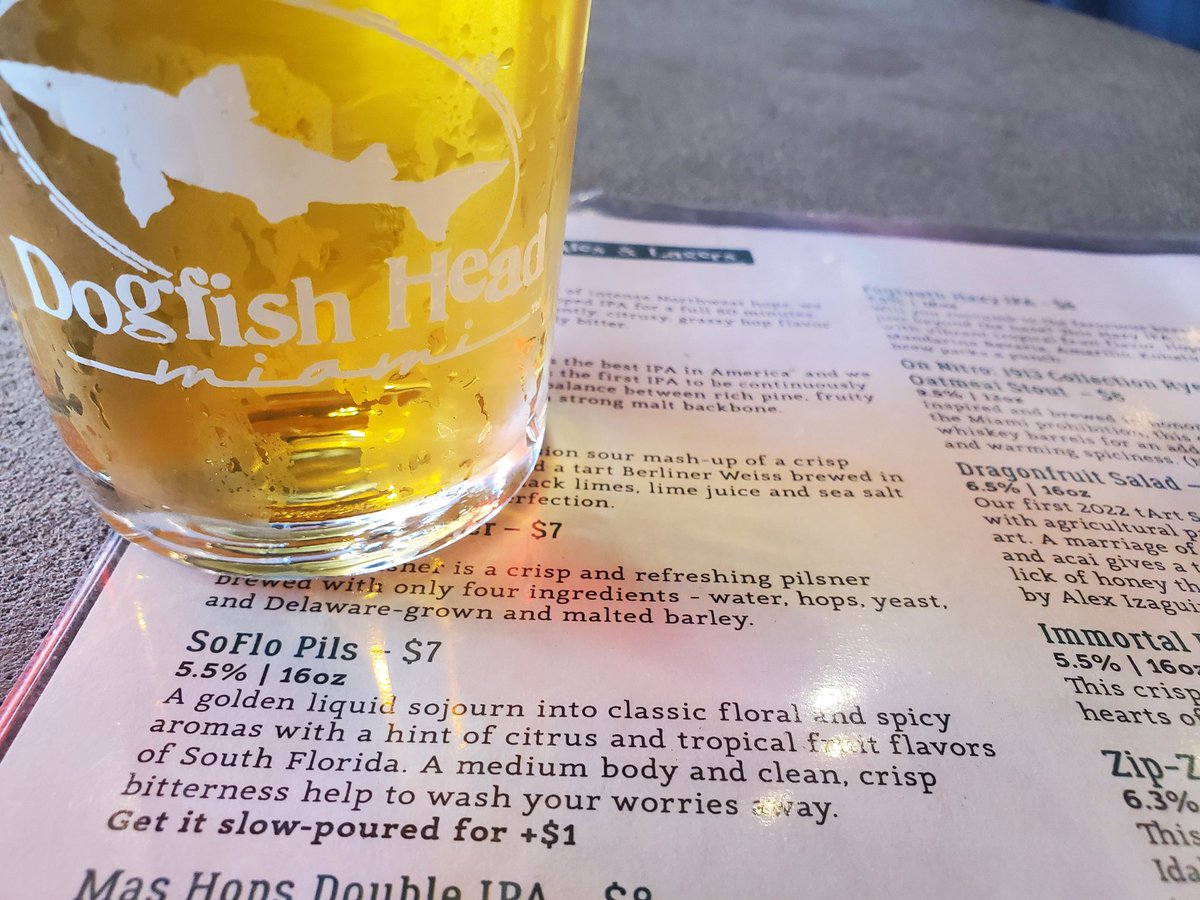
Legal notes this week include Brendan P sharing how Stone is being sued for pinching the trademark of another brewery. I’d be suing for around 50 mill. In other asset lightening news – this time related to your wallet – John Hall encountered a new form of gouge. Being asked to pay more for the sort of tap the beer is poured from. The rip is on at Dogfish Head. Shocking. Not shocking.  Also, Guinness settled a 2015 claim related to the Irishness of beer not brewed in Ireland resulting in a rather modest settlement:

The outer packaging of six- and 12-packs of Guinness Extra Stout sold in stores between 2011 and 2015, McCullough’s suit alleged, led consumers to believe that the beer was brewed at the historic St. James Gate brewery in Dublin, Ireland. It was, in fact, being brewed in New Brunswick, Canada — something that was noted in small print on the side of each bottle…  Those who filed a claim before a deadline last year will receive 50 cents for each six or 12-pack of Guinness Extra Stout purchased between 2011 and 2015, up to a total of $10 without proof of purchase, or up to $20, if a claimant can provide proof of purchase.

The Mudge has reported that England has joined the rest of us in the 21st century and now requires calorie to be listed by all but the smallest restaurants and pubs:

It probably won’t make much difference to obesity, but then the entire government anti-obesity strategy is misconceived anyway. And of course calories are only one figure in the overall mix of nutrition. But what it will do is to give consumers the facts to make informed decisions – it is treating them as adults. It is hard to believe now that, going back forty years, the strength of alcoholic drinks was never declared. When CAMRA first published figures of original gravity – which is a rough approximation to alcoholic strength – in the 1970s, there was an outcry from the brewers, but it is now accepted is routine. I would expect that, in twenty years’ time, we will look back with surprise that calorie figures were ever not stated.

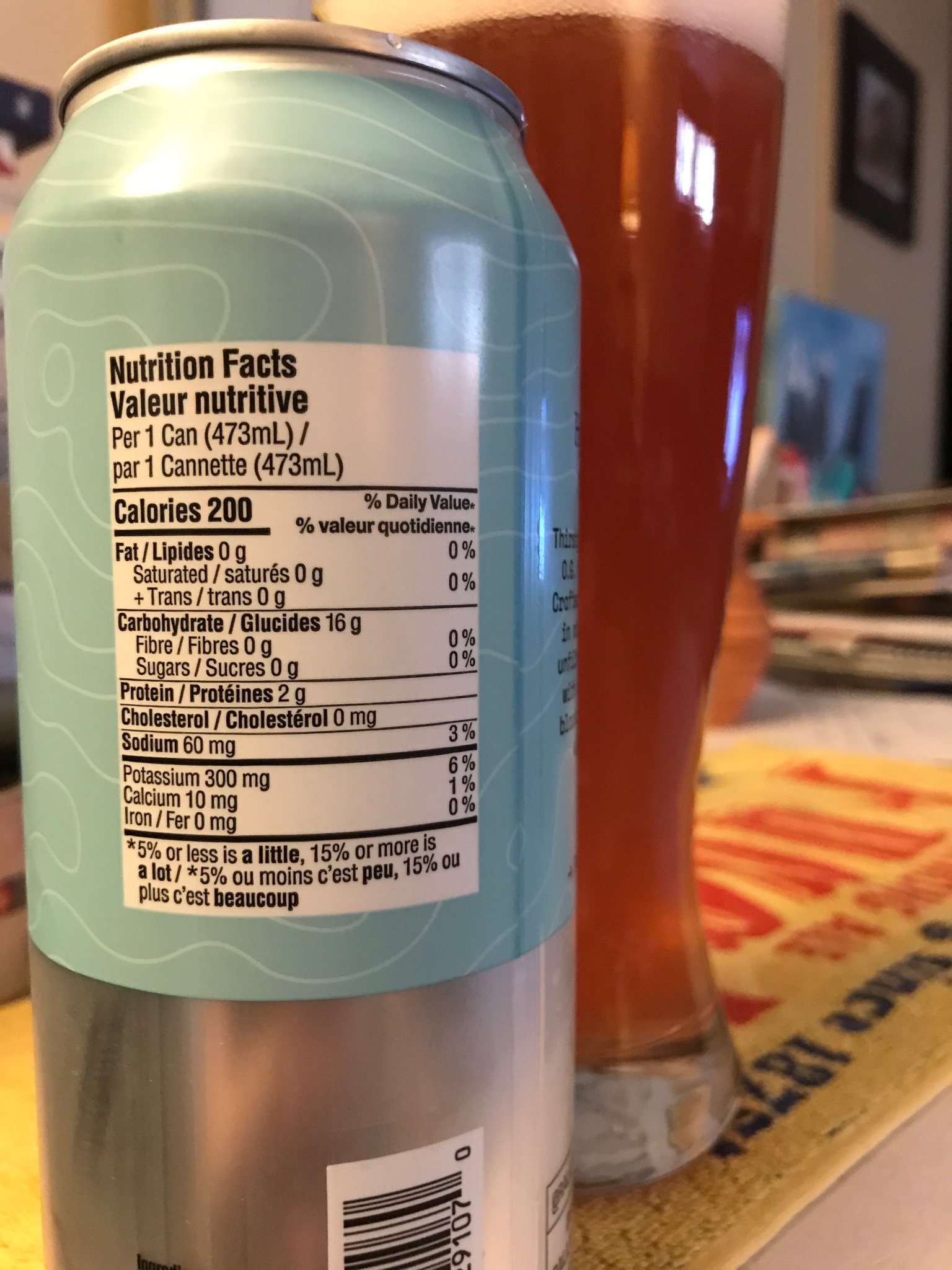
On a related note, I came across one Canadian brewer doing what every pro beer scripto-consult-p/t dishwasher-expert said was impossible: a beer can with a nutritional info label. From a can of Rally Golden Ale made in Thornbury, Ontario. Nice. Treating people as adults.

This is an interesting graph posted ten weeks ago by Dr. McCulla. I am not so much interested in the graph as the footnotes. Utterly unreliable guesstimates. It is so odd that the US still has no grasp on its own brewing history before the mid-1800s.

Ron has, as mentioned, be involved with some extended travel and (finally!) has rid himself of the burden of beer writing to get down to a more essential topic in a twoparter, the eggy breakfasts on Cartagena, Columbia:

As with many restaurants we visited early doors, it was deserted. Almost. One table was occupied by a group of men. One of whom was so load, that he literally made me jump. And hurt my ears. While being right over the other side of the room. And me having my back towards him. I was so glad when they fucked off and I could eat my breakfast in peace. But I’m getting ahead of myself. I was delighted to see fried eggs on the menu. But worried they’d come hard fried again. That would be such a downer. I tried to make clear I wanted the yolks runny when I ordered. “Huevos fritos. Liquido, por favor.” See how fluent I am in Spanish. Almost like a native. At least the waitress understood, as two beautifully fried eggs arrive a little later. I’m so happy. Even though they’re served with nothing other than toast.

This was a helpful lesson. An article on a return to the what has been called the toughest pub in Britain, Walthamstow’s Tavern on the Hill (described as  featuring scary customers, random acts of violence and grim facilities) has discovered a very different scene:

I find an impressive 5-star food hygiene rating sticker on the door (something even some popular upmarket chains can’t claim to have); a friendly Scottish barman in a bright pink shirt; and a large collection of impeccably-tended houseplants. A quick scan of the pub’s Twitter reveals it has changed hands, seemingly not long after the YouTube video was shared… and it’s new look couldn’t be more different from its old one. It’s a Tuesday lunchtime and the atmosphere inside is calm and communal. A few locals sit chatting near the bar. The bartender is giving one of the older customers advice about his National Insurance, while other customers are having an amicable debate about the latest Downing Street scandal.

I even read a beer book this week. I am on a bit of a book reading spree, having organized myself a bit, now on my 19th book of the year. The 18th book was 2010’s The Search for God and Guinness by Stephen Mansfield. A good and reasonably quick read, it’s more a book on the family than the brewery and focuses on their Christian and otherwise ethical good works over the centuries. There is also a helpful bibliography. Here is an interview with the author from the time of publication from a faith-based point of view. It reminds us of how subject to mannerism beer writing is, how formulaic. While a bit of a hagiography it is at least an attempt to discuss the haigo and not the more common happy clappy booze trade PR.

Finally, a new form of beer: illegality and political crisis beer.

For more, checking out the updates from Boak and Bailey mostly every Saturday and from Stan every Monday, plus more with the weekly Beer Ladies Podcast, and at the weekly OCBG Podcast on Tuesday and sometimes on a Friday posts at The Fizz as well. There is a monthly sort of round up at The Glass. (Ed.: that seems to be dead now.) There is more from DaftAboutCraft‘s podcast, too. And the Beervana podcast. And sign up for Katie’s irregular newsletterThe Gulp, too. And check out the Atlantic Canada Beer Blog‘s weekly roundup. Plus follow the venerable Full Pint podcast. And Fermentation Radio with Emma Inch. The AfroBeerChick podcast as well! And also look at Brewsround and Cabin Fever. And Ben has his own podcast, Beer and Badword (Ed.: …notice of revival of which has been given)  And remember BeerEdge, too, and The Moon Under Water.

Your Beery News Notes For The Beginning Of A Grim March

I used to celebrate March and look forward to what is coming but this horrible week makes me look back at 2021 with envy. Events north of the Black Sea are utterly horrifying and in line with what we see in Yemen and Burma and elsewhere. Not much of a cold war left these days. My ignorance is not complete but what could one add other than it is heartening to see the solidarity that may put a beating on the Russian economy swiftly as spring itself comes forward to help save Ukraine. We here in safer lands are particularly aware that our Canadian population includes the third largest Ukrainian community  in the world.

In local response, the provincially own LCBO monopoly is removing Russian made booze from the shelf. The LCBO is one of the biggest booze buyers in the world so that is good.  Carlsberg may be taking a more direct approach with their bottles.

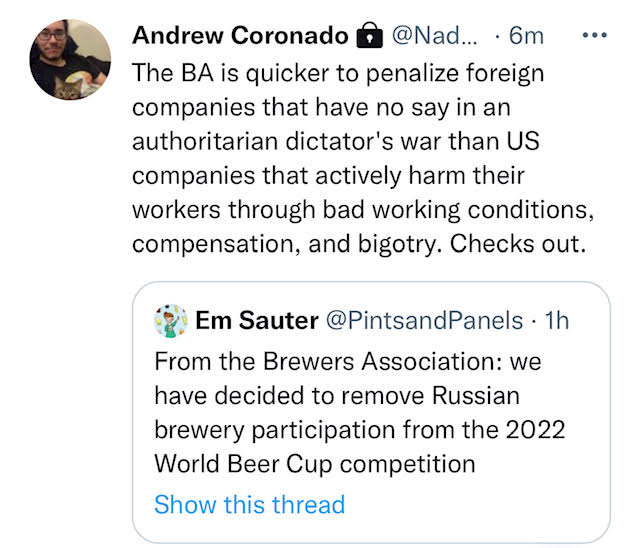
Elsewhere, some in the beer nerd world are apparently unable to contextualize the biggest risk of WWIII since glasnost without some kick at current issues in craft. I am not sure this approach illustrated in the tweet to the right is one I would take. I would have though praise was due for the BA (and the LCBO) taking an immediate stance that would propagate quickly back to the staff of breweries and distilleries in Russia, good folk who may not be getting fed the facts from their local tyrant-owned media.

Jeff shared some excellent thoughts on an awful week but, conversely, this sort of thing is a little sad. Feels like coopting a murderous war crime to promote trade. Maybe a bit too soon?

From a happier place and time, Boak and Bailey wrote a fabulous post on a late 1960s Swingin’ Englan’ sort of place called The Chelsea Drugstore and then, in true modern style,  elaborated even more elaborately on Twitter. An excellent example of how blogs and social media are far superior to the printed page. Anyway, it was a place:

“The day they opened, we were all so damn high we ran around putting handprints all over it until owners had to set up a roadblock to keep stoners off,” Beverley ‘Firdsi’ Gerrish is quoted as saying in a biography of Syd Barrett. Apart from the visual aspect of the design, the business model was new, too. Bass Charrington needed to recoup its investment and intended to sweat the premises for every penny. So, as well as selling its beer in two bars, they also sold breakfast, lunch and dinner; records; tobacco; soda; delicatessen products; and, of course, drugs, in a late night pharmacy.

Go and see the clip from A Clockwork Orange that B+B include in the post for a sense of what the place was like. Looks like a small smart shopping plaza that you’d see in sci-fi TV of the time. Where the second incarnation of Doctor Who might shop for his jelly babies. Except it was the fourth that really handed out broadly so would have needed a good supply.

Reaching back further, Liam posted an interesting set of thoughts on Mild in Ireland and neatly unpacks an advert from 1915:

Here we see that under their O’Connell’s Dublin Ales brand they were selling a Dark Extra Strong ale and a Pale Mild on draught – and let us not forget a rare mention for an Irish Best Bitter for bottling! Allowing for dubious marketing and the leeway that advertisement writers have with the truth this might be a nice mention for a Strong Dark Mild? Even if I am stretching terminology, styles and descriptions to the limit then if nothing else it is a nice record of what D’Arcy’s were brewing at this time. 

On the ethical gaps beat this week, we learn from a “team update” that NYC’s three bar chain Threes Brewing’s CEO stepped down as CEO after pushback from his comparison of the local proof-of-vaccination policy to the Holocaust and segregation in the Jim Crow South. His self-congratulatory resignation was due to, and one quotes, “his duties as a parent and a citizen” which, in the scheme of things, don’t matter all that much. Except if you are taking any comfort or congratulations in the resignations. It is good to remember this: a CEO is the head of staff, the Chair is the head of the board of directors who tell staff what to do and the shareholders tell the board what to do. No word that he is leaving his role as a director or as a shareholder.  BTW: never heard of them either.

Ron is back in Brazil. His last junket** there seemed to be a bit miserable but back he went despite the quality of the entries last time: “The Viennas are as expected. Almost all riddled with faults. Except for the only decent one I judged on the first day.“. The hotel breakfast buffet coverage is amongst his finest work, like this from just last December:

No need to rise early. So I don’t. It’s just after 9:30 when I finally wander down. The breakfast room is pretty much empty. Just one other punter. Not someone from the contest. Daringly, I give some of the cheese a try. And the ham stuff. The thrill of the unknown. The orange cheese is pretty tasteless. Doesn’t have much in the way of texture, either. I’ve not been missing much. I feel the fruit working its magic. Or perhaps that’s just a fart coalescing in my gut.

Sounds magical. This time? It’s raining. But at least the currency is gently collapsing and Martyn‘s there to share the joy.

Beth Demon is blogging wonderfully and generously at her substack, Prohibitchin, featuring the underrepresented in the drinks trade. This month, she interviewed Michelle Tham, the head of education at Canada’s venerable Labatt:

As the largest brewer in Canada, Labatt is an inextricable part of Canadian identity, and as a Chinese-Canadian woman, it’s something Michelle finds herself deeply rooted in. “Millennials like to joke that Labatt is ‘Dad beer,’ but it literally was my dad’s beer and still is today… it is a bit of a symbol of the Canadian experience,” she says. “Canadians Google more about beer than any country… It shows they’re interested in wanting to know more about it, and I believe the more you know about it, the more you’re going to enjoy it.”

Through writing Ontario Beer it became clear that Labatt was always one of our most progressive breweries – from focusing almost a hundred years ago on women as valuable customers worth reaching to having honest Dudley Do-rights for shipping clerks.

This week, Stan sent out the latest edition of his Hop Queries newsletter, number 5.10. This is a great set of facts about one of the great US beers:

Bell’s buys 500,000 pounds of Centennial each year – which amounts to about 14 percent of the Centennial harvested in the US Northwest – from multiple farms. Most of those hops go into their iconic IPA, Two Hearted Ale. But you aren’t going to hear drinkers discuss the merits of Two Hearted hopped with Centennial from Segal Hop Ranch versus Centennial from John I. Haas, because the hops all end up in a master blend. The largest blend any facility can process at one time is 200,000 pounds, so it takes three passes during several months after harvest. That’s scale.

Note: not the #1 and #2 craft breweries in Canada.  Also… if one entity buys out another, they both can’t continue to claim to be independent.

Finally, one attentive reader emailed me with interesting link related to a proposed oddly modest bond issue by GBH. It was not so much the fact that they were looking for a small amount of money – $100,000 to be repaid over 5 years at 5.5% – that interested me so much as they publicly filed four years of financial statements as part of their effort to get the bonding put in place. The financials tell a few interesting stories. Most obvious is how the vast majority of their income is from consulting services so the writing is subsidized but, before the pandemic, GBH lost 32% of that income flow from 2018-19. We also see that subscriptions to their blog run at well under 10% of their total income and under 3% 2021 at $24,044. They are moving more and more to “underwritten” stories and events, funded by the subject matter. In fact, subscription income for GBH seems to be about half than that of Pellicle as the latter is apparently close to £3,000 per month or  around $48,000 USD a year. (I send a paltry two figure amount to Pellicle every month.) Note worthy, too, is how GBH also took in a bit over $153,000 in pandemic loans and paid out $133,000 or so in 2021 as members’ distributions – both larger figures than the goal of the bond.* These matters are not highlighted in the information provided by GBH but they are disclosed.

There we are. Pray for peace. For more check out the updates from Boak and Bailey mostly every Saturday and from Stan every Monday, plus more with the weekly Beer Ladies Podcast, and at the weekly OCBG Podcast on Tuesday and sometimes on a Friday posts at The Fizz as well. There is a monthly sort of round up at The Glass. (Or is that dead now?) There is more from the DaftAboutCraft podcast, too. And the Beervana podcast. And sign up for Katie’s irregular newsletterThe Gulp, too. And check out the Atlantic Canada Beer Blog‘s weekly roundup. Plus follow the venerable Full Pint podcast. And Fermentation Radio with Emma Inch. The AfroBeerChick podcast as well! And also look at Brewsround and Cabin Fever. And Ben has his own podcast, Beer and Badword (which I hope is  revived soon…)  And remember BeerEdge, too, and The Moon Under Water.

*Why effectively borrow around $130,000 (bond amount plus interest) right after drawing out more than that? 
**Particularly miserable in terms of cheapskate reimbursement for making effort to give free PR, according to the disclosure: “The organisers of the Brasil Beer Cup paid for my accommodation and food during the period of judging (four nights and three days) Beer, too, which was provided by one of the sponsors. I had to pay for my own cocktails. And all other expenses, such as flights and extra hotel nights.” As usual, I agree with whatever Doris says about all this.

With The End Of February Comes These Beery New Notes

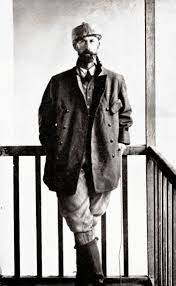
That was a bit much last week. All that talk of rice and here’s me trying to be more keto. I’ll try to be more sensible this week. It was, after all, a long weekend last weekend which kept me from reading all that much about beer. Read a book about third-wave ska instead. Now I’m halfway through another, Exploration Fawcett, by British military surveyor Percy Fawcett pre-WWI (aka the quasi-nutso as illustrated) in the jungles of South America. What a horrendous place. Murderous concentration camp slave-based rubber plantations along the Bolivian Brazilian border, a recent war zone, set in the murderous Amazonian jungle populated by murderous Indigenous people defending themselves against murderous imperialist Euro-losers at the end of the world. There are beer references like this one, when an actual ocean-going steamer appears entirely unexpectedly deep up a tributary:

As we glided past we saw the name Antonina in faded letters on her bow. A steward came out on the deck under the bridge, emptied a bucket of slops overboard, to watch us and straightened, his half-naked figure a small man with a mop of tow-coloured hair and narrow pinched shoulders. No one else appeared, and there was no activity ashore, but it was the hour when Europeans would be lunching. Stained canvas wind-catchers were stretched over the high boiler-room ventilators and from open scuttles air scoops protruded. On her counter appeared her name again, Antonina Hamburg, and a blade of her single screw showed beneath. “Hey!” ejaculated Dan. “What about going aboard her and having a beer? I bet they have real German beer fresh from the cask!” It was too late. Already the current had carried us past, and to drive back alongside would be difficult. We should have thought of that before instead of standing like fools and looking at her “Wonder what she’s doing here?” murmured Chalmers. “Rubber,” Dan said. “She’s come to load rubber.*

Cheery.** Like something you might read in Pellicle. Just like it. Fawcett passed thought Santa Cruz de la Sierra, Bolivia at one point. It now has a brewpub. Speaking all of which – and nothing really like it except it’s another form of exploration – Stephanie Shuttleworth revisits her old home town:

Ducking down so her dad, who played the piano for the crowd inside, wouldn’t spot her. If he did, someone would be sent to collar her and bring her in, to sing for the room. Now, my grandma could sink a rum and pep (that’s dark rum and peppermint cordial mixed together with a few ice cubes, if they have any) with the best of them. But sing, she could not. I can no longer sit down for a meal with my sadly missed grandma in that pub. Just as much as I couldn’t literally see her running under the giant sandstone window. I am thankful, however, that I can still look at the building (now a shop), step inside, and remember. 

Meanwhile, Alistair wrote this week about something that I had no idea was a thing – communal brewing in Bohemia:

The word that leapt from the page as I was reading something completely unrelated in Der Böhmische Bierbrauer was “braucommune”, which translates as “brewing commune”. Naturally, given Czechia’s proximity to Zoigl country over the border in the Oberpfalz, I wondered if what I was seeing here was the remnants of a Zoiglesque communal brewing setup in Bohemia?  Digging further, I discovered that in 1895 there were just 4 “braucommune” breweries operating in Bohemia that produced more than 10,000hl…***

Speaking about none of which in no way no how… don’t you love it when real medial people bait craft beer weirdos – chef’s kiss headline! It’s a BA Bart PR puff piece but still…

New research tool opportunity! Hunting through British Library Sounds audio archive reference to pub, beer, ale, “headbutting…” “all those wasted years…”!!

Real news time:

“This month posters will be displayed in all of our members pubs informing people to how seriously we take this matter. It has been agreed between all members that an automatic one-month ban will be issued to anyone caught urinating in public. “North Wales Police are backing Ruthin & District Pub Watch’s campaign and will be given permission to issue the one-month ban to any offender caught at the incident as well as any other penalties NWP have in their power to issue.” Mr Vaughan added: “This subject might generate a snigger from some and possible outrage from others who feel it is too much, but we agree that behaviour like this is just Taking The Pi**(****) when all of our establishments have toilet facilities, there is no excuse.

Unrelated – a new beer blog: Beer Nerdery. Speaking of British beer blogs, RARM went down to Liverpool to relive a moment and caught one, too:

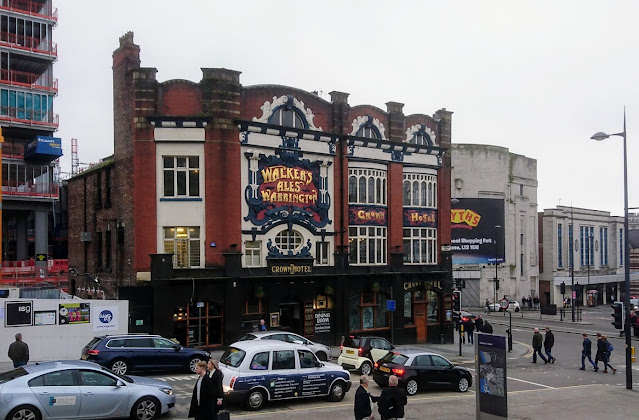
The last time I had visited Liverpool was back in 2017 when a group of us stopped in the city for an hour or two on our way to see Halifax Town get hammered at Tranmere Rovers across the Mersey in Birkenhead. We had called in a few pubs, one of them being the Crown, whose gloriously-decorated exterior beckons you as you emerge from Lime Street Station.

I mention this mainly to share a thought. One of the problems with beer and pub and brewery porn is it is decontextualized. See that image of the Crown? Ugly street scape. I like that. An actual view… except not to scale… it’s just a photo.

Q: if the Royals are just normal folk why have so many Royals?

In their downtime in Norfolk the family are known to have enjoyed family pub lunches (a clandestine photograph showed them eating burgers in a pub beer garden) and trips to build sandcastles on Holkham beach.

And in the second of a two part series, Jordan shared more information on Toronto’s 1904 brewery strike presented with a key dates sticker tape news headline approach:

At issue here is the demand of a union wage across all breweries in the city for approximately 700 brewery workers. We have, for background, figures related from the Brewers Association to the Toronto Star on May 6th. At this point, 105 workers for Reinhardt and O’Keefe (including drivers, helpers, stablement, labourers, bottlers, wash-house, cellar, and kettle men and coolers) have walked out after finally receiving confirmation from the head office in Cincinnati.

Finally, yet another reasons to be disgusted with fearful wee Mr. Putin:

Analysts have warned that since Ukraine, which is among the top five global producers of barley, is in the middle of a major geopolitical crisis, international supplies of raw materials would inevitably be affected. The period between March and July accounts for 40-45% of annual beer sales, and barley is the mainstay ingredient used in beer. According to reports, even for brewers who source barley locally, prices could go up with rise in global prices and supply disruptions.  

There. Done. Once again… nice. Really good job on my part. Really. And no rice talk. None. For more check out the updates from Boak and Bailey mostly every Saturday and from Stan every Monday, plus more with the weekly Beer Ladies Podcast, and at the weekly OCBG Podcast on Tuesday and sometimes on a Friday posts at The Fizz as well. There is a monthly sort of round up at The Glass. (Or is that dead now?) There is more from the DaftAboutCraft podcast, too. And the Beervana podcast. And sign up for Katie’s irregular newsletterThe Gulp, too (… back this week!) And check out the Atlantic Canada Beer Blog‘s weekly roundup. Plus follow the venerable Full Pint podcast. And Fermentation Radio with Emma Inch. The AfroBeerChick podcast as well! And also look at Brewsround and Cabin Fever. And Ben has his own podcast, Beer and Badword (which I hope is  revived soon…)  And remember BeerEdge, too, and The Moon Under Water.

*Long quotations… that’s the trick this week. None of that guff about rice… or research. Padding.
**I’m still passing on a trip to Ribeirãozinho during this lifetime. Note: Edwardian Brazilian trade journals have a lot in common with craft beer trade journalists. No talk of the glaringly obvious downsides.
***That’s a lot of Zs.
***Note: two non-footnoting indicating asterisks, can be confusing.

Your Mid-February 2022 Edition Of The Beery News Notes And That Odd Problem With Rice

What a week! A trip to the dentist and the Federal imposition of the Emergency Measures Act!! It could drive one to drink. Except I haven’t. Had a couple of really good beers on Saturday, though. Stone City’s Ships In The Night. Oatmeal stout is rarely not a good call. But I have acquired my protest gear as illustrated, should any protests come my way. One must be prepared.

What else? Super Bowl. Stupor Bowl. Superb Owl. It also happened this week. Unlike much of the continent, me I had not one beer. I paid little attention to the game itself on TV which ended up as a bit of a yawner even with the close final score. But would it be better live? Well. it’s not exactly for the snack bracket me and my peeps, is it?

…a double measure of Don Julio, Ciroc or Tanqueray 10 would set punters back US$25. Meanwhile, the craft beer selections clocked in at $19, which would get drinkers a serve of Kona, Golden Road Mango Cart or Elysian Space Dust. The premium beer serve was Michelob Ultra, which was priced at $17. And it’s fair to say that fans were taken aback by the prices.

More breweries closed this week. As Jeff reported, Hair of the Dog and Modern Times -both of the US West Coast wound down in whole or in part. The latter announced it this way:

Today is the most difficult day we’ve ever had at Modern Times. Over the last two unimaginably challenging pandemic years, we’ve done everything we could to keep all of our newly-opened locations afloat in a landscape we never could have imagined when we began building them. As new leadership has stepped up and taken the helm over the last few weeks, it became clear that the financial state of the company that we are now tasked with directing is not just unsustainable, but in immediate and unavoidable peril

Hair of the Dog is/was one of the greats that never had dreams of delivery fleets and HR departments. Retirement is well earned. I put the last cardboard box from the fabulous HOTD misadventure of 2006 out with the recycling just last Sunday.

Elsewhere, building on the momentum to challenge the ethics within Ontario’s brewing industry led by Erin Broadfoot,  Mallory Jones the brewer and co-owner of my beloved Matron Fine Beer in nearby Prince Edward County on behalf of herself and fellow brewer and co-owner Jessica Nettleton, shared experiences of their lives in beer, starting with this remarkably concise statement:

Behind the ‘good times and camaraderie’ there is a dark underbelly, a booze-fuelled side, a sexist and skewed patriarchal side, a side that desperately needs to change.

Note in particular this statement: “…beer events often (read: all of them) result in over consumption which always equals disgusting behaviour from a wide variety of individuals on both sides of the bar…” It boggles the mind how it took so long for such obvious and open behaviours to be simply and plainly stated after years of the trade and trade writers telling us how it’s all one community and craft beer people are good people. I am very careful who I buy from now as well as whose word I take.

There was a great short video of a Polish railway standup tavern car on Twitter this week. One of my favourite memories of working in Northern Poland thirty years ago was the the Polish railway standup tavern car from Kołobrzeg to Gdansk. The good old PKP (“puh-ka-puh”). There is even “fruit syrup for beer” now.

Over in India, the government has taken a very sensible approach to the healthier regulation of the beer market that would be a great first step towards the listing of ingredients:

The Food Safety and Standards Authority of India (FSSAI) will soon come out with fresh regulations for two important everyday consumption items – bread and beer. Beer brands will have to disclose the calorie count per bottle or can while bread makers will be allowed to label products as ‘multigrain’, ‘whole wheat’, and ‘brown’ bread only if the items have specified amount of multigrain or whole wheat in them, FSSAI CEO Arun Singhal said.

There will be boo-hooing from the please-do-nothing crowd but calculation of beer calories is a reasonably straight forward matter. The only problem is how surprised the beer buying public might be.

Everyone one loves a story about a truck load of beer crashing across the roadway. I think only a load of fish thrown upon the hot asphalt is considered more remarkable but that’s because of the gross immediate squishy slippy driving conditions.

Martin wrote this week about the experience at a little investigate site of beer imbibations – a fitba corporate hospitality suite  – and found it… a bit sad:

£6.50 your pie and mash and peas from memory, and beer not much above Northern Quarter prices (double Kelham prices, of course). This is the cheaper end of the hospitality market, giving you a nice seat with your pre-match pie and pint, and seems to be a treat for the old fellas and the well-off bloke dragging his girlfriend to the match. And then you walk from the social club style bar to your padded seat and get distracted by Caitlin Jenner and goal flashes from Blackburn.

He then had a bit cheerier but also reflective experience with his Pa, down at the Plough & Fleece:

Across the road, we could see the nondescript cafe at Scotsdale Garden Centre busy as usual. The coffee and cake at the garden centre has long replace fish and chips and a pint at the pub, even though the pub is often cheaper and always the more homely option.

Lars as usual used social media to the fullest this week to discuss the role of alder wood as a filtering tool in Norwegian farmhouse brewing undertaking both hallmark mapping excellence and scientific journal review enroute:

I found a modern scientific paper which extracted substances from alder bark that they found to be antibacterial. Unfortunately, they were also antifungal and very effective against yeast, so clearly the concentration in beer isn’t enough to have an effect.

Q: has beer historian Amy Mittelman returned to beer blogging?

And just before the long last topic,  this week we received the sad news of the death of one of the leaders in the early years of the UK’s craft beer movement of 12-15 years ago. Dave Bailey was the owner of the Hardknott Brewery which was founded in 2006 and closed in 2018. He was sought out and sought out others who were thinking about beer, like we see in 2009. Alistair at Fuggled interviewed him in 2010. Dave’s brewery was as well known and certain as central to the scene as BrewDog in those years. He was only in his mid-50s when he passed. Dave was a great friend to those interested in discussing good beer and was a regular chatting in social media. My earliest Twitter chats go back to 2009. He kept an excellent beer blog that gave the straight story about life as a small scale brewer like when in 2017 he shared painful business realities connected to the question of how far to capitalize his venture. He had announced in 2020 that he was living with cancer. Very sad news of the loss of a pioneer. Thoughts are with his partner in life and business, Ann.

Finally, there was a bit of faff over the weekend about something claimed to be “Japanese Pilsner” which was neatly summed up by Jenny Pfäfflin this way:

Anyway, brewers using rice in their beer =\= a “Japanese Lager”—it’s a made-up style in that sense—but I don’t think you can write off the possibility there are distinct ingredients and processes that make Japanese-made rice lagers a style of its own…

I called it a fiction and some poor widdle cwafters went a bit boo-hoo. But were they right? It is always important to understand you may be 100% wrong 100% of the time. So let’s see.

First, the thing is even with that narrowing of focus that Ms. Pfäfflin recommends, we have to consider how late brewing beer came to Japan as well as how rice came to be in beer. Until around the time of the US Civil War in the mid-1860s, Japan was governed under a feudal system which had a strict cultural and economic isolationist policy that the western powers were actively seeking to break down. Breweries founded in the ensuing Meiji period were European and even American affairs. As I mentioned last November, the Spring Valley Brewery, founded in Yokohama in 1869 by Norwegian-American brewer, William Copeland. That brewery later becomes the Japan Beer Brewery Company and then Kirin. In line with the new general national policy of opening up to industrialization, what is now Sapporo was founded by what looks like a government agency, the Hokkaido Development Commission which hired Seibei Nakagawa, a Germany-trained brewer, as its first brewmaster in June 1876. Sapporo still brews Yebisu a Dortmunder/export lager, and Yebisu Black, a dark lager which were  first brewed in Tokyo in 1890 by the Japan Beer Brewery Company. These breweries were brewing German beers. As the CEO of Kirin Brewery, Kato Kazuyasu, in 2011 stated:

The Japan Brewery Company shared its primary objective of brewing authentic German beer. Veteran German brewmasters were recruited and the most advanced equipment and steaming systems of the time were acquired, all under the mantra of providing Japanese consumers with the most authentic quality and satisfying taste possible…

Now… consider Japan’s next few decades. Expansionist military imperial government leading through the Russo-Japanese War of 1904-05 through to the end of WWII. European influence continued in partnership with government industrialization policy as described in the 2014 article “Structural Advantage and the Origins of the Japanese Beer Industry, 1869-1918” by Jeffery W. Alexander*:

Like Kirin Beer, the firm that we know today as Sapporo Breweries Ltd. underwent a rather complex evolution – one that would take twice as long to unfold and would involve four unique phases through 1949. The first three of those phases are of interest to us here, for between its founding as a government-directed and development project in 1876, its reestablishment by private investors as a limited company in 1888, and its merger with two major rival brewers in 1906, the brewery received extensive technical assistance from a variety of foreign experts.

Through this merger, the Dai Nippon (Greater Japan) Beer Company, Inc. was created on 26 March 1906. It was only broken up in 1949 as the Allied Occupation forces sought to reverse the imperial policy of concentrated economic power. And, as Alexander states, beer in Japan “was brewed, advertised, and sold in Japan as a proudly German-styled commodity into the late 1930s.

After WW2, the United States occupied Japan from 1945 to 1952. There was an economic boom starting in 1950 due to the UN using Japan as it base for the Korean War. Starting at this time, breweries like the smaller Orion shifted from German style brewing to beers which more reflected American tastes. Not much of a vernacular brewing tradition to this point. For the next few decades that consolidated industrial approach continued as a handful of macro industrial brewing supplied the market (as Alexander states elsewhere**) “until Japan’s government decided in 1994 to again permit small-scale brewing.” Kirin held over 60% of the market during those years and competition was primarily related to draft innovations, packaging design and the dry beer market. Japan’s generic international-style macro adjunct lagers which required a minimum of 67% barley malt*** were joined by sub-standard happoshu starting in 1994 and in 2004 sub-sub-standard zero-malt dai-san biiru, a third-category beer all to feeding, one supposes, the salaryman market.

As Lisa Grimm explained in her 2018 Serious Eats article, early Japanese small breweries replicated the adjunct lagers:

The first craft brewery to open in Japan was Echigo Beer, and they struck something of a balance between the entrenched ‘dry’ beer trend and German- and American-influenced craft brewing techniques. In addition to pale ales and stouts, they also made (and continue to make) a rice-based lager that competes with the bigger players in the market—something of a gateway beer.

By twenty years ago, the Japanese branch of the globalist craft beer movement was moving at pace. Created in 1996 as the brewing division of an establish sake maker, Kiuchi, Hitachino Nest is one of Japan’s best known craft brewers. Its Red Rice Ale is first logged by a reviewer at the BeerAdvocate in 2002. So it’s done… even if only as a recent thing. But whatever is done, like German lager brewing in the later 1800s as well as US macro brewing in the mid-1900s, it is being done on the crest of another wave of globalist economic and technological innovation – craft.

So when you read about an American-made Japanese pilsnerbrewed with rice in the Japanese tradition” you have to understand this is really a sort of untruth. And a bit of cultural appropriation, I suppose. Rice in beer is an American innovation. American restructuring of the economy of Japan in the mid-1900s introduced rice into beer brewing because that is how Americans brewed. But that may make it actually a sort of truth as long as we set aside the fibs of craft and look at the situation with a more open mind. Let’s continue to look around a bit more.

When does rice get into beer? In Ambitious Brew, Maureen Ogle tells us in detail how Adophus Busch in the 1870s experimented with a form of what looks like a decoction brewing method which had eight pounds of rice to every five bushels of high quality barley.**** Light and bubbly beer. Tremblay and Tremblay explain how rice is used in the best US adjunct beers still to produce the effect they call “crisp” with again a fairly limited amount being all that is required. Budweiser, Coors and Miller Genuine Draft all having just under 5% rice in the mash which include +/-20% other adjuncts.***** They also explain how around 1950 US national advertising of beer hits its stride with Anheuser-Busch, Pabst and Schlitz being the premium brands.****** What America wanted. Home or away. It is so popular that the brewers of Canada in the mid-1920s******* during US Prohibition started brewing rice beer to serve the huge and very lucrative bootleg market. Including in Japan where they were the occupying government restructuring the economy including a oligarchical macro brewing industry that stayed in that form of few players, big players for the next 45 years. Which makes Japanese premium rice lager US premium rice lager.

Not only does rice make beer crisp, it makes production cheap. Barley malt is the best barley, the rest going to cattle feed and Scottish soups. Rice for brewing, however, is broken rice:

As brewing adjunct, rice has a very neutral flavor and aroma, and when properly converted in the brewhouse it yields to a light clean-tasting beer. Rice for brewing is a by-product of the edible rice milling industry, any kernels that may get fractured during the milling process (~30%) are considered undesirable are therefore sold to the brewing industry at a cheaper price. ********

The adoption of rice in brewing was part of a general move over decades to move away from heavier foods and drink, what Tremblay and Tremblay call “the growing mass appeal of lighter beer which drove most of the domestic brewers of dark beer out of business.“********* Short-grained or japonica rice is preferred in brewing.+ Japan’s brewer ride that wave, too, as part of the globalization of US macro industrial adjunct lagers that made Carling out of a Canadian beer, gave Kenya Tusker, gave Australia Fosters, etc. etc.

One more thing. How does rice get to the US to get later into the beer? In The Cooking Gene Michael W. Twitty explains how the Asian strain of rice came to colonial America in 1685  care of a very lost ship from Madagascar. Captured and enslaved people from Africa who knew how to grow rice were used forced agricultural labour and by 1770 150,000 acres of the US eastern shoreline were slave labour concentration camp rice plantations with 66 million pounds produced annually.+* After the US Civil War, about when Japanese isolationism policy weakens, rice production drops with emancipation but then shifts inland and become mechanized in Louisiana and Texas which, by the 1890s, are producing 75% of the US rice crop.+** Which creates a lot of broken rice for brewers, notably quite distinct from the top quality rice used in sake.+***

So if, starting in 1685, short grain japonica rice comes to the US, becomes a massively valuable cash crop with a very useful by-product of broken rice that is found to have a role in US macro brewing and then is taken to Japan as part of the post-war era of US Occupation… hasn’t that strain of rice circled the globe over about 260 years? And hasn’t the history of Japan been so affected by these global influences… even if they are arguably economic colonial or even technological hegemonistic influences… that their culture legitimately has a tradition of international rice adjunct premium lager that could be called “Japanese rice pilsner”? Hasn’t Japan’s brewing history been almost entirely based on international influence from the 1860s to now? But can you have a national tradition which is not… vernacular? I will leave that question with you as you next look at a bottle of craft beer labelled Japanese traditional rice pilsner which says “made in the USA” on the back. +****

Nice. There. Done. For more check out the updates from Boak and Bailey mostly every Saturday and from Stan every Monday, plus more with the weekly Beer Ladies Podcast, and at the weekly OCBG Podcast on Tuesday and sometimes on a Friday posts at The Fizz as well. There is a monthly sort of round up at The Glass. (Or is that dead now?) There is more from the DaftAboutCraft podcast, too. And the Beervana podcast. And sign up for Katie’s irregular newsletterThe Gulp, too (… back this week!) And check out the Atlantic Canada Beer Blog‘s weekly roundup. Plus follow the venerable Full Pint podcast. And Fermentation Radio with Emma Inch. The AfroBeerChick podcast as well! And also look at Brewsround and Cabin Fever. And Ben has his own podcast, Beer and Badword (which I hope is  revived soon…)  And remember BeerEdge, too, and The Moon Under Water.

*Brewery History (2014) 158, 19-37.
**Brewed in Japan – The Evolution of Japanese Beer Industry” (UBC, 2013) sample introduction at page 5.
***Not the main ingredient as some claim.
****Ambitious Brew (Harcourt, 2006) at pages 76-77.
*****The US Brewing Industry (MIT, 2005) at page 7.
******Ibid., page 52-53.
*******The King v. Carling Export Brewing & Malting Co. Ltd., 1930 CanLII 46 (SCC), [1930] SCR 361 at page 373.
********The Use of Rice in Brewing” in Advances in International Rice Research (InTech, 2017) by O. Marconi et al. at page 57 as well as this at page 51: “Usually, brewer’s rice is a byproduct of the edible rice milling industry. Hulls are removed from paddy rice, and this hulled rice is then dry milled to remove the bran, aleurone layers and germ. The objective of rice milling is to completely remove these fractions with a minimal amount of damage to the starchy endosperm, resulting in whole kernels for domestic consumption. The broken pieces are considered esthetically undesirable for domestic use and sold to brewers at a low price. Rice is preferred by some brewers as adjuncts because of its lower oil content compared to corn grits. It has a very neutral aroma and flavor, and when properly converted in the brewhouse it results in a light, dry, clean-tasting and drinkable beer.”
*********Tremblay and Tremblay, supra, at page 107.
+O. Marconi et al., supra, at page 50.
+*The Cooking Gene by Michael W. Twitty (Amistad HarperCollins, 2017) at page 243.
+**See Wikipedia article “Rice production in the United States” at section on 19th century.
+***See MTC Sake and Home Brew Sake websites.
+****Heck, name a brand “1685+1876+1945+1994=???” if you like.

Here We Are! February!! A New Month Of Beery News Notes!!!

Last week I was doom scrolling about the Ukraine. Earlier this week, it was about Ottawa.* Now it’s just about the blizzard. Today? Well, if my last name was “Event” I could have named a kid “Snow” and enlisted them in the army to remind me of today: Major Snow Event. Nasty stuff all over eastern North America. Good thing I have my internets to keep me warm. Just look at that up there. Bet that didn’t spend useless days blaring its horn to protest nothing and everything. Sweet. From Brewing Heritage, it’s a…

…handsome steam lorry was built in 1916 by Alley & MacLellen Ltd. of Glasgow, and first registered in February 1917.

Neato. Well, what is going on? Dry January is over. That’s something. The Times of London reported (probs paywalled) that…

A record number of Britons have given up meat, dairy and alcohol for January, with demand for vegan foods and non-alcoholic drinks rocketing over the month, according to data from Britain’s biggest supermarket.

An interesting story, actually. Virtue is in… for a few weeks at least. And the British of Britain** are buying things like “Nozeco Spumante, alcohol-free fizzy wine” (sales up over 200%) and “Gordons 0.0%, a no-alcohol gin”! Yikes. Alcohol-free gin sounds like gin-free gin to me. But I own a juniper tree so I can just suck on a few berries for free if I am desperate. Why pay 20 pounds a litre for flavoured water? Holy moly! NA brewers are missing out on a good payday.

Very conversely, this is great news as we walk away from another lockdown. I can now relive the glory of my beery life fifteen years ago and head to a new beer store in Syracuse, NY just two hours to my south:

The store occupies 9,500 square feet, split primarily into two large rooms. On Monday, Singh’s inventory list showed more than 14,000 “items,” such as 4-packs, 6-packs or cases. And there’s still unused space to fill… “They’re definitely making an effort to provide a wide selection,” Hagner posted recently to the Syracuse Craft Beer Enthusiasts Facebook page. “There’s lots of local stuff, some timely national releases (my first sighting of Hopslam), the biggest SN (Sierra Nevada) assortment I’ve seen. … Personally I was pleased with the import/German section as well as traditional stuff that’s often hard to find.”

Elsewhere, the old is also new again in London where Guinness is creating a new destination brewery with some very good  timing:

Guinness sales in Great Britain have grown by over 30 per cent in the last six months and one in every 10 pints sold in London is now a Guinness. The new site, to be called Guinness at Old Brewer’s Yard, will include: A microbrewery producing limited edition beers and offering tours with Guinness beer specialists; event spaces and central covered courtyard; a Guinness store selling rare items, and a open-fire kitchen, restaurant and 360 degrees glass rooftop space.

I can’t link to every one of the excellent posts in Eoghan’s most excellent series A History of Brussels Beer in 50 Objects can I? I will, however, for this week’s story connecting Belgian colonial brewing in the Congo with the fight for freedom in the late 1950s:

Brasseries du Congo, or Bracongo, were known for the slender green bottles of their Polar brand. In September 1957 Bracongo hired a former postal worker recently-released from prison following an embezzlement conviction to help sell them. Patrice Lumumba not only grew Polar’s business in the capital, he also used his salesman skills and his client network to advocate for Congolese independence. 

Look at this. We all suffer from the unending spam from the glassmakers of each and every nation. Here, however, we see the reality of fancy glassware according to The Times Of New York:

Most wine drinkers, admittedly, will neither want nor need such rarefied glasses. Many casual drinkers are happy these days to use inexpensive goblets or even stemless glasses, which I would not seek out, though I am happy enough on occasion to drink wine from a tumbler.

Speaking of which, Jancis on Boris… who is clearly a tumbler man:

For months, while millions of ordinary people were deprived of a convivial after-work drink with friends, the staff at 10 Downing Street partied on. It could seem, not least because of the late-night dashes to the supermarket, that the aim was chiefly to drink as much as possible. Connoisseurship appears to have played little part. I feel thoroughly ashamed of how this must look to the rest of the world. Downing Street behaviour looks like binge drinking. 

Bingy Boris. A notch or two more sophisticated is Gary who noticed his modernist Montreal in 1950s promotional material created for the Dow brewery by Albert Edward Cloutier (1902-1965):

The use of pastels in commercial art was a trend internationally at the time, as, say, some European beer posters show, or those dreamy pink, blue and yellow posters advertising holidays on the Riviera. Cloutier rendered a Platonic picture of 1950s Montreal, one rather removed, as I suppose for any city, from the reality in street and district, whether rich, poor or otherwise for that matter. (We were entre les deux chaises). When I think back, it is his Montreal I will remember, family apart.

And Jim Koch thinks cider is a sort of beer. “Fluids I make profit from” appear to be beer to Jim Koch.

Finally, know your medieval English plowing practices. There’s a good explanation of how it worked – and still works in some localities in BBC’s 2010 series The Story of England. Also learn how Piers the Plowman was worth writing about in 1378 as he is the technical wiz of his day even if he shuns the “best brown ale” unlike those young whippersnappers.

That’s it for now. A quieter maybe saner week in beer land. For more check out the updates from Boak and Bailey mostly every Saturday and from Stan every Monday, plus more with the weekly Beer Ladies Podcast, and at the weekly OCBG Podcast on Tuesday and sometimes on a Friday posts at The Fizz as well. There is a monthly sort of round up at The Glass. (Or is that dead now?) There is more from the DaftAboutCraft podcast, too. And the Beervana podcast. And sign up for Katie’s irregular newsletterThe Gulp, too (… back this week!) And check out the Atlantic Canada Beer Blog‘s weekly roundup. Plus follow the venerable Full Pint podcast. And Fermentation Radio with Emma Inch. The AfroBeerChick podcast as well! And also look at Brewsround and Cabin Fever. And Ben has his own podcast, Beer and Badword (which I hope is  revived soon…)  And remember BeerEdge, too, and The Moon Under Water.

*Organizer“!!!
**Scottish“!!!

Addendum: Cream Beer Was Once Cream Beer

Over five years ago now I wrote the last of a few posts on the question of cream beer.  It co-existed with cream ale and Imperial Cream Ales and all the other creamy drinks. I traced it from Ohio in the 1840s back to NYC and Pennsylvania in the 1820s. It has been referenced as a predecessor to Kentucky Common. It was a thing until it wasn’t:

‘The scent of roses clings round it still.’ Cream beer, which was brewed by our best brewers, is, like the ale-sangaree, is a thing of the past. The rich cool beverage has gone out of use…*

Note: cream ale as not “a thing of the past” when that was written. One of the puzzles was whether it was something from Germany. One of the records I came across referenced “…cream beer, or Lauderschaum…” My problem was I thought there were two waves of German immigration to the USA which did not line up with this timing: the Pennsylvania Dutch from before the American Revolution in the mid-1700s and then the Germans of the 1840s escaping the backlash against other revolutions like George Gillig, bringer of lager.

So much pleased was I to come across that notice up at the top from the Pittsburgh Weekly Gazette of 19 Nov 1816. A notice for the sale of indentured servants, or German Redemptioners. To the right is another notice for Redemptioners from New York City in 1785. No brewers were mentioned in this group unlike the notice from thirty one years later. According to Wikipedia, redemptioners were continental European immigrants in the 18th or early 19th century who sailed most often to  Pennsylvania by selling themselves into indentured servitude to pay back the shipping company for the cost of the ticket. Including brewers.

Which means there was a third sort of immigration, one with a supply of brewers with contemporary brewing skills within the right time frame who would be able to make “…cream beer, or Lauderschaum…” just like Gillig was able to bring his lager brewing skills a few decades later.

Update: I should also link to this 2018 post about schenk and Bavarian beer.

*What the hell is ale-sangaree?

The Thursday Beery News Notes For Remembrance Day 2021

Today is Remembrance Day, a fairly significant thing here in Canada which is largely apolitical even now well past a century after the end of WW1. The image to the right is a photo I took in 2005 at the naval memorial downtown. We’ve had a naval presence here in town since 1673.  And here’s a bit of what I wrote in 2014 about the day on Facebook:

…There are no politics with our vets. More than hockey and donuts, we all actually love our square do-gooder Dudley Do-right military and RCMP. I am lucky to be in a congregation at 51 years of age with a man* who commanded CFB Greenwood near Kingston in NS where I lived when I was 9 years old – and who attended the church where Dad was a minister. We remembered today that when I was a kid and he was in his 40s that all the vets were WW1 and there was even likely a Boer War soldier in the pews…

We government workers in Ontario have the day off but it isn’t a general holiday like it was when I grew up in Nova Scotia. Schools and shops are open. Feels weird.  Vets will be at Legions again this year after being shut in 2020. Drinking beer. I’ll donate a few coins into the little cardboard box and, once again, buy maybe the 7th poppy of 2021 – they seem to disappear within four hours after putting one on.

Elsewhere, Mudgie took a trip into the city centre of Manchester and posted a bit of a travel piece on a certain sort of pub. I was taken by this photo to the right, the absolute dream seat, right there in a wee nook in the tiny Circus Tavern. Fabulous:

It has two small cosy rooms with bench seating. The one at the front always seems to have a vault character and is frequented by the regulars, while the one to the rear is more of a snug. I managed to take a snap of the seating opposite in the brief interlude between it being occupied by groups of customers. Understandably, the Circus didn’t reopen until social distancing restrictions were lifted in July, and anyone concerned about getting too close to others would do well to avoid it. 

Note: another photo of the Circus Tavern with people added won the top prize in our 2012 Yuletide Beery Photo contest.

The other week I was correctly corrected about the lack of a certain beer fest holding a meeting in person – so giddy was I to realize that an update on another and rather gentle in person event was posted by The Beer Nut this week. The live action photo at the end is helpful for scale:

From Zwolle, we set off further westwards on Saturday morning for Gramsbergen, a small town about 3km from the border with Germany. G-berg, as nobody calls it, is home to the Mommeriete brewery, set in a rustic canalside inn, all oak beams and porcelain fireplaces. We missed getting to see it as its normal cosy self since they were gearing up for a beer festival: one organised to celebrate 20 years of the Dutch beer consumers’ organisation PINT, onto which was tacked the official 30th birthday bash for EBCU. It was a modest affair, beginning in the the afternoon and finishing at 7pm, and only three guest breweries were in attendance.

Note: cheese cutting diagrams.

Beer experts don’t really exist like wine experts do. Well, a very few of the former might while a few more of the latter do. If you don’t believe me and still think your website generated certification means anything like expert, consider the career path of Kevin Zraly including this:

That any American restaurant would have a cellarmaster or a sommelier was a rare thing in those days. In 1978, Frank J. Prial, the wine columnist for The Times, wrote an article about the virtual disappearance of the sommelier in restaurants, citing Mr. Zraly as one of a very few good young ones in New York, “the knowledgeable type, not the wine hustler…”

I followed this link to his courses at Wine.com. Look! No phony academic rhetoric, no layers of prerequisite that would shame a Scientologist. Just accessible authoritative information at a plain price and presented directly and on the level. Why can’t beer do that?** We need to consider the relationship between access to information along with inclusion and levelling and the commonality of those who opposed them.

Resulting question: why do wine educators start with the premise that wine is not as complex as we consumers have been told while beer educators seem to start with the premise that beer is more complex than we have been told?**

Much to the contrary, I spent bits of last Sunday watching presentations from the Beer Culture Summit 2021 produced by the Chicago Brewseum. I found the structure refreshing as there was none of the Masonic mystery gatekeeping guild approach to information that is a hallmark of what passes for too many claims expertise in good beer culture. The difference? The focus on professional and personal experience as a pathway to leveling and inclusion. Call it cred. The presenters had cred. I particularly liked “Under-Attenuated: Women, Beer History Studies and Representation” session: Dr. Christina Wade, Tiah Edmunson-Morton, and Atinuke “Tinu” Akintola Diver on their careers researching brewing history. And not only because of Dr. Wade’s defense of the value of blogging brewing history – depth, accessibility, primary citations and immediacy both in terms of time and audience** even if Stan is still standing there at the graveside.  In a time when we see bland generalities devoid of citation but plenty of errors*** win awards for best beer history, it was a call for quality within a call for, you got it, levelling.

Best tweet with beer and meat.

Crop-wise, we saw the 150th anniversary of the first sale of Fuggles this week, as Martyn reminded us:

Today, November 8, marks 150 years  since the Fuggle hop first went on sale, in a field in Paddock Wood, Kent, after Richard Fuggle and his brothers Jack and Harry had spent ten years propagating the variety until they had enough, 100,000 sets, to sell commercially.

Wonderful. And we are also seeing a second crop of the heritage barley variety bere in Scotland this year. Isn’t nature wonderful! More on bere here and here.

Taking a break on his book tour, Jeff wrote excellently about what he has seen in America’s downtowns in late 2021:

Most of my adult lifetime downtowns have been shiny, clean, and fun. They’ve always been a bit artificial, but we social beings flowed into these hubs to see shows, get a meal, buy something nice, and mostly, to feel the exciting hum of other people doing the same thing. Now downtowns are listless and depressing, and many of the businesses are boarded up or on long-term hiatus. There’s less and less reason to visit them.. When cities become nothing more than storefronts for the rich, they teeter on a narrow balance point. Did Covid just disrupt that balance?

Possibly the winner for Generic Praise-Laced Brewery Owner Bio Template of 2021.  B.O.B.s are the best. But this one has the header “A World-Class Pairing” which really takes it over the top.

More B.O.B. as a Euro male led publication hires Euro male writer to speak to a Euro male bar owner about diversity in the beer scene in BC’s Okanagan. I’d have more trust in the editorial call if the statement “…only a couple of people in the BIPOC community that even lived here when I was growing up…” was fact checked. While there is a reference to a Indigenous family business, here’s the map of Indigenous communities (aka the “i” in BIPOC) for BC. The communities of the Syilx Okanagan Nation are right there in the south centre. The Central Okanagan Local Immigration Partnership Council formed in 1983 seems pretty active, too. Question: why do writers of B.O.B.s never check in with customers or staff to find out if the claims are correct? The subject in this case could be fabulous… but we don’t know.

Beer prices are going up. Beer prices are going down.

Finally, I was sad to see a dismissive response to my comments about Pellicle’s decision to run and highlight a childish cartoon image about an actual ambush of soldiers where many died. Part of a story that is still recalled hurtfully in my region which touches on both my actual job and my brewing history research. It’s also an entirely unnecessary image and adds nothing to the story. At best, it is just a failed analogy. In an era when we are trying to drive out misrepresentation, appropriation and negativity from the good beer discussion, this sort of hyperbolic grasping for aggrandizing analogies is more than unfortunate. Do better.

Oh… and somebody sold their brewery.  Good beer. Nothing much will change.

There’s plenty to chew on. To complain about. For more, check out the updates from that same Boak and Bailey mostly every Saturday and from Stan now on a regular basis again every Monday, plus more with the weekly Beer Ladies Podcast, and at the weekly OCBG Podcast on Tuesday and sometimes on a Friday posts at The Fizz as well. There is a monthly sort of round up at The Glass. There is more from the DaftAboutCraft podcast, too. And the Beervana podcast. And sign up for Katie’s weekly newsletterThe Gulp, too. And check out the Atlantic Canada Beer Blog‘s weekly roundup. Plus follow the venerable Full Pint podcast. And Fermentation Radio with Emma Inch. The AfroBeerChick podcast as well! And also look at Brewsround and Cabin Fever. And Ben has his own podcast, Beer and Badword which may revive some day.  And remember BeerEdge, too, and The Moon Under Water.

*This is he
**We appreciate that folk have ambitions but actual earned and experienced knowledge is always more helpful than insta-recognition by those editors with creditors. BTW, EWCs are not levellers. BTWx2: what even is a “certified pro“?
***1500s Flemish farmers? 

Your Thursday Beery News Notes For The First Frosty Nights

First up this week, reality. We still had a fig tree out in the backyard with all its leaves on Wednesday. Doubt it will have them today. Have to check once it is light out.  One way or another it’s almost an eight month growing season here by balmy Lake Ontario. Not something you could say even ten miles to the north. Harvested another load of parsley Monday. Pulled up a frisée endive that was mixed into supper, too. No snow yet. With any luck most of the leaves will be off the trees before it comes. Don’t want to have to deal with sawing fallen limbs. I plan to chop the willow back Saturday, saving the long branches for a bit of wattling next March. Suburban peasant.  Suburban pleasant.

Next, the coolest thing of the week was seeing that small object to the right. It’s a 1,000 year old, 14-sided die from Korea with carved instructions for a drinking game. One side says “let everybody hit you on the nose” while another says “drink a big cup and laugh loudly” all of which indicates a state of civilization far advanced from my youth spent playing caps and sticking playing cards on my forehead. DSL was pleased at the find.

Good news. Movement on the unionization of craft front with the creation of the Brewery Workers Union in the UK under the IWW banner. A bit of a manifesto explains why now:

Why do we need a union? As the interest in and sales of craft beer has risen significantly in the past 10 years it has also meant more workers are being exploited, suffering harassment and abuse, working in unsafe conditions, working long and unsociable hours leading to serious injuries all on insufficient pay, leading to physical & mental strain, burnout and fatigue.  We have seen the ongoing issues with BrewDog and a wealth of other breweries in the UK, as well as active organising from other trade unions, in the US and across Europe.

On the other side of the economic divide, Brewdog has updated* that its plans for global domination are well on track:

Despite facing numerous challenges in 2021 we have managed to continue growing strongly and our UK wholesale sales for October are up 48% on October 2020 (which was also in growth). As well as growing strongly we have also created over 600 brand new jobs this year. We are determined to continue to share our passion for great beer with as many people as possible and to do all we can as a business to fight climate change. And we are determined to use every challenge we face as a catalyst to become better as a business.

Passion. Climate Change. Better. Growth. Perfect setting for a union. Relatedly, this message from Ren is the same as it ever was. Craft is a haven of cheapskates:

“Hi! Can you basically give us a ton of free info that we can use to improve our brewery, our charitable endeavor, and help us make more money?” *Sends them my rates* *Crickets* I would love for this to stop happening once a week. Pay Black people for our knowledge.

See also Ron circa 2014 when it was shocking for brewing history research to be considered a paid consultancy. Speaking of whom, he has some good advice if you happen to live in an empire a few months away from total collapse. Pay attention to the beer supply:

The more observant among you might have noticed that I’ve started writing about Germany and Austria in WW I. There’s a good reason for that. One that I’m not going to tell you quite yet. It is very revealing, though, to look at the war from the other side. The food and booze situation at home for the Central Powers made Britain look like the promised land, overflowing with milk and honey, Or at least bread and beer.

Ever look at a small brewery tax credit regulation? He’s one recently issued in Ontario, good old Ont. Reg. 711/21. All you really need to know is the formula [(A × B) ∕ F + (C × D) ∕ F] × G × H × J × K!  Works on a sliding scale from more than 4.9 million litres but not more than 20 million litres of beer. Which is a lot of beer for businesses called small beer manufacturers. Is there anywhere where small means small?

As mentioned the other week, the Chicago Brewseum’s Beer Culture Summit is happening this weekend. Here is the list of events. I’ve signed up for Sunday if anyone wants to chat in the comments. Looking forward to this presentation:

Archaeologist and historian Dr. Christina Wade, archivist Tiah Edmunson-Morton, and organizer, attorney, author and documentarian Atinuke “Tinu” Akintola Diver discuss the unique experiences (both successes and roadblocks) they have seen throughout their careers researching, collecting and documenting beer and brewing history in a man’s world. This session is moderated and hosted by co-founder of the Albany Ale Project, Craig Gravina.

Speaking of the “ye” and the “olde” did you ever wonder why there is still so much old oak still around in the forests for booze barrels? It’s not because of booze barrels.

Once upon a time, I used to make home brewed ginger beer at about 1.3% based on a recipe from Clone Brews by the Szamatulskis. Great slurping by the bucket out in the garden. I was reminded of that by this rather extended commercial business news item on one Jamaican drinks maker bringing a similar if stronger sort of thing to market. I am not sure how you could ever make money on the 1.3% version – except it was so simple to make yourself who would bother buying it?

Stan and Jeff are having a bit of a parallel chat about the hop varieties which most attract a buyer’s attention. I have to admit something. I don’t have any interest in which hop varieties which most attract a buyer’s attention. I find folk rhyming off hop varieties as they sip a beer to be entirely missing the points. Most beer drinkers don’t care. But govern yourselves according to your own interests. Me, I like 1400s beer shipping records from the Baltic Sea. So go figure. Here are Stan’s questions:

Jeff Alworth posted a question yesterday from Atlanta (hey! we used to live there); more than one, in fact. So here are two I am thinking about: a) Is Citra/Mosaic becoming a marker of style in the way Saaz is in Czech pilsners or EKG in bitters? and b) Do [brewers] feel like the pairing has become so successful it’s constraining the style?

Beer price hikes coming in the US, in France and around the globe. I think things may be worse than this bit of PR gobbiltygook from Sam Adams might suggest, especially given their botch of the seltzer market by over-producing their Truly gak:

Truly is still in a premium position in the fastest-growing area of the alcoholic beverage industry, and it will be a strong platform to use in launching other products. “We are well positioned to succeed in 2022 and beyond,” founder Jim Koch said, “as consumers look to drink more ‘Beyond Beer’ products.” That success will come partly from raising prices across its portfolio by 3% to 6% in 2022. Those hikes reflect rising costs on raw materials like aluminum and glass, but they’re also designed to shore up its profitability now that the industry is maturing. Management had been prioritizing growth and market share, but now that focus is shifting toward achieving a stronger earnings profile.

See that? Raising prices to “shore up profitability” means paying more for less and covering up mistakes with the new cash. Craft. Reminds me of an ancient Korean saying: “let everybody hit you on the nose”!

Once again, a week of the good, the bad and (just above) the uh-guh-lee.  For more, check out the updates from that same Boak and Bailey mostly every Saturday and from Stan now on a regular basis again every Monday, plus more with the weekly Beer Ladies Podcast, and at the weekly OCBG Podcast on Tuesday and sometimes on a Friday posts at The Fizz as well. There is a monthly sort of round up at The Glass. There is more from the DaftAboutCraft podcast, too. And the Beervana podcast. And sign up for Katie’s weekly newsletterThe Gulp, too. And check out the Atlantic Canada Beer Blog‘s weekly roundup. Plus follow the venerable Full Pint podcast. And Fermentation Radio with Emma Inch. The AfroBeerChick podcast as well! And also look at Brewsround and Cabin Fever. And Ben has his own podcast, Beer and Badword which may revive some day.  And remember BeerEdge, too, and The Moon Under Water.

*Where did I put that link. Nov 1 at 11:20 am if you have it handy. Along these lines, it was. What a crap news service this is. No, here it is. Martin Dickie on LinkedIn. Why the hell do I follow him on LinkedIn. Why the hell am I on linked in?

The Beery News Notes For The End Of 2021’s 10/12ths

Here we are. November looms. I’ve never thought Halloween was all that scary given November is right there behind it.  The dreariest month. If it snows, winter will be too long. If it rains, the rain is bone achingly cold. Dreich. But a big month for beer. Big beers, in fact. I’ve been laying off but maybe it’s time to lay on again. Treat yourselves nice in November. It’s like it needs its own month to celebrate itself. Like gag-tastic #RauchBeerMonth but with, you know, the prospect of someone actually being made happier. And that’s what we want. To be happy. Despite the dreich.

This November marks the seventh anniversary of perhaps the high point in the craft phase of good beer, circa 2003 to about 2016. The cover of The New Yorker from November 3, 2014. Mere months after the publication of the cult classic The Unbearable Nonsense of Craft Beer. Josh Noel‘s comment was spot on – a moment in time before hard seltzer. And perhaps a moment that had some aspects we are well rid of – if this article on Colorado’s New Image brewery is anything to go by:

The idea that brewery employees should expect less money because they are “doing what they love” is a cliché that needs to go away, he adds. “We are trying to take that out of craft-beer culture. It’s about damn time we have good benefits and good pay for people making beer.” Having a second taproom with higher margins on sales will help that effort as well, Capps says. And New Image is now “aggressively” seeking out locations that it can buy to add a third or even a fourth taproom.

The past is a foreign land. Conversely, there are a lot of words that come to mind in this story of today. Gall. Cheek. Privilege. Arseholes probably the correct term as the Manchester Evening News reports:

The Pack Horse, which is in the Peak District village of Hayfield, was visited by a group who didn’t flag any problems with their food when staff checked in with them, but chose to complain when they’d already eaten most of the meal, staff said. They allegedly tried to demand a new dish – which was refused – and eventually left without paying their bill. Owner and chef Luke Payne said that one member of the group then had the nerve to wink at him as they left.

The article goes on to suggest that manners have dropped in these later pandemic months. Arseholes, I say. Matt C. explored other forms of late pandemic angst in an article in Pellicle this week:

Before the pandemic, one place in particular I would find both solace and kinship was at a beer festival. In my search for remembering what it was like to feel more normal, I fondly recalled the deep-seated warmth I felt from head to toe as I travelled home from Cloudwater Brew Co.’s Friends & Family & Beer in February 2020. While there I had a wonderful time enjoying many delicious beverages, and spending quality time with friends old and new—some who had travelled half-way across the world to attend. The festival took place in Manchester, too: a city my partner and I had decided we would soon make our home. I felt ready for the next chapter. Then the wheels came off, the world grinding to a halt at the mercy of the bastard virus. 

I’ve never liked beer fests myself. Don’t miss them.  Too many drunks. Perhaps I differ in this regard from The Beer Nut who celebrated 30 years of the European Beer Consumers Union, the sort of institution North American beer culture lacks. No fest to back up the celebration, however. Just Zoom.

Another venue for drinking that’s much more to my liking is also disappearing as The New York Times reports:

Several decades ago, the beer bar, with its dozens of draft options and deep bottle lists, delivered a liquid education in bitter I.P.A.s and monk-brewed Belgian ales alike. They were places “where customers discovered craft,” and helped the genre grow, said Bart Watson, chief economist for the Brewers Association trade group. But with growth of the taprooms, craft-bar release parties for special beers dried up. What was once “a prime way of bringing people into bars was gradually taken away by the breweries themselves,” Mr. Black said.

No, beer bars were not where folk discovered craft. They predate craft. (You’d think people would get it. Obey the chronology.)  In their finest form they are a dive with very good stock. Like Max’s in Baltimore. Conversely, craft is the taproom. But it is true. Craft killed the beer bar. Including by aggressively opening new taprooms, as we read above. (I know… I’ve been quoted as an expert in the subject. Sorta.) But I was quoted by Stan who posted a follow-up post (a post that poses possibilities predicated on the prior post) on the question “wuzza beer bar?“:

Two names I heard more than others were Rino Beer Garden and Finn’s Manor. Finn’s has a shorter tap list — curated, as the kids say — and a cocktail menu. Rino has more than 60-plus taps. Would both be classified as beer bars? Pat Baker provided a definition in his “Beer & Bar Atlas” in 1988. His classifications included classic bar, neighborhood bar, beer bar, Irish bar, German bar, English Pub and fern bar. (Yes, neither wine bar nor sports bar.)

At this point, I pause to consider this week’s candidate for the wonderful graph award. Gaze upon this for a moment:

Look at that graph. I have stripped a few identifiers from it to get to the nub of the matter but it is from Colin Angus as posted under his handle @VictimOfMaths and came with this message:

The UK’s approach to taxing alcohol is stupid. In the budget next week there is a strong possibility the chancellor will overhaul it. Before we find out what he has planned, here’s a thread on what is the current system and what exactly is wrong with it? 

Thread. And it does all look stupid when put that way. Why is beer taxed at a higher rate as it strengthens while wine moves in the opposite direction? The actual changes to taxation were announced Wednesday. CAMRA wrote of games being changed. Matt had a summary as well as  particular view as to the taxed event within the supply chain which is useful:

…the consumer doesn’t pay that duty, nor does the pub. The producer does. So on a 9 gallon cask of 72 pints, that’s £2.16 off costs. Maybe a bigger saving if its below 3.5%…

Speaking of the graphical representations of data, Lars has updated his yeast family tree based on a number of recent studies and included lots of wonderful graphs as well as new info:

They also found a separate subgroup of African beer yeasts, which is very interesting. Africa has an enormous variety of traditional farmhouse brewing going on in many different countries over much of the continent, and many of those brewers still maintain their own yeasts. (Martin Thibault spoke about Ethiopian brewers and their yeast at Norsk Kornølfestival in 2020.) Now it looks like they, too, have their own genetic subgroup of yeasts.

Note: be flexible.

Finally, Boak and Bailey’s post this week on the Stokes Croft Brewery, Bristol, 1890-1911 contains this fabulous image which goes a long way to explain the gradation of late Victorian stouts and ales. I got all excited when I saw it. Lovely. Place a laminated copy in your wallet for handy reference.

There you go. A bumper crop this week. For more, check out the updates from that same Boak and Bailey mostly every Saturday and from Stan now on a regular basis again every Monday, plus more with the weekly Beer Ladies Podcast, and at the weekly OCBG Podcast on Tuesday and sometimes on a Friday posts at The Fizz as well. There is a monthly sort of round up at The Glass. There is more from the DaftAboutCraft podcast, too. And the Beervana podcast. And sign up for Katie’s weekly newsletterThe Gulp, too. And check out the Atlantic Canada Beer Blog‘s weekly roundup. Plus follow the venerable Full Pint podcast. And Fermentation Radio with Emma Inch. The AfroBeerChick podcast as well! And also look at Brewsround and Cabin Fever. And Ben has his own podcast, Beer and Badword which may revive some day.  And remember BeerEdge, too, and The Moon Under Water.